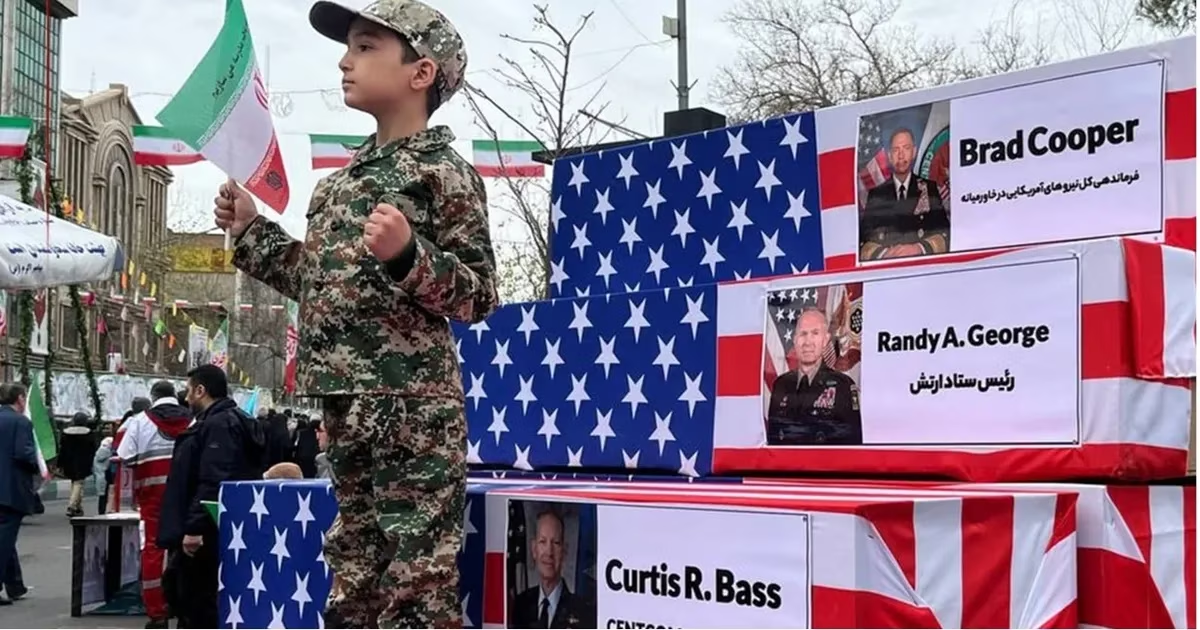







The complex relationship between the United States and Iran is subject to a deep conceptual framework that transcends mere traditional geopolitical calculations, with the intense recent use of the term 'absolute evil' emerging. This interpretive framework redefines the Iranian adversary not as a state that can be contained, but as an entity that goes beyond the logic of interests to become an existential threat requiring zero-sum confrontation.
The shift in American political discourse has moved Iran from the category of a regional state with explainable behavior to a metaphysical actor not subject to traditional deterrence rules. This change was not accidental but resulted from the concerted efforts of pressure groups and think tanks that sought to establish a sharp dichotomy precluding any possibility of compromise or gradualism in positions.
Some political literature uses extreme historical comparisons, where Iranian behavior is measured against the model of Nazi Germany, transforming the conflict from a competition for influence into a struggle for survival. This type of framing primarily aims to close the door to diplomacy, as negotiating with an entity described as absolute evil becomes an act lacking political and moral legitimacy.
This approach found wide resonance among currents within the American establishment that, in the post-Cold War era, sought to find an alternative 'strategic enemy'. This imagined enemy provides sufficient justification for the continued American military superiority and widespread global presence, and intersects with the interests of regional allies, primarily Israel, to adjust the balances in the region.
From the perspective of the realist school in international relations, this slide towards sharp moral concepts represents a deviation from political rationality, which assumes that states seek to maximize their security. Researchers like John Mearsheimer argue that dealing with states as uncontainable entities inevitably leads to failed escalatory policies instead of wisely managing the international balance.
Experience has shown that 'maximum pressure' policies based on this perception did not weaken Iran but contributed to strengthening its deterrence motives. This strategic paradox indicates that the inflation of the threat in political discourse makes reality more complex and less containable, leading to continuous confrontational dynamics.
Furthermore, the excessive preoccupation with the Iranian file within this narrow moral framework has led to a massive drain on American strategic resources in the Middle East. This drain came at a sensitive time when the international system is undergoing major transformations, most notably the rapid rise of China and Russia's restoration of its active role on the global stage.
This policy raises fundamental questions about 'opportunity cost', where foreign policy is guided by ideological considerations rather than pure national interests. Reliance on simplistic narratives reduces decision-makers' options and turns manageable crises into open confrontations that do not serve long-term international stability.
Despite the interplay of other factors such as concerns about nuclear proliferation and the security of allies, the dominance of the concept of 'evil' remains the biggest obstacle to any political breakthrough. This concept acts as a filter that prevents seeing realistic shifts in the adversary's behavior and confines interaction to tools of hard power and economic sanctions that often harm civilians.
The true strategic cost lies in the erosion of the strategic thinking structure itself, where complex analysis of international reality is replaced by emotional slogans. This simplification of complex international issues prevents the United States from building a flexible strategy capable of adapting to the rapid regional and international changes in the twenty-first century.
Analysts indicate that overcoming this dilemma requires a strong return to realistic logic that recognizes that all international actors, no matter how great the disagreement with them, remain governed by the logic of interests. Recognizing Iran as a rational political actor seeking its security is the first step towards formulating an effective containment policy away from closed metaphysical classifications.
Extreme moral views in foreign policy lead to a kind of 'strategic blindness', where available diplomatic opportunities are ignored in favor of continuous escalation. This approach does not necessarily weaken the adversary but may push it towards adopting more radical options to protect its existence, increasing the risks of sliding into a comprehensive military confrontation.
Ultimately, the biggest challenge facing Washington remains balancing the protection of its allies' interests with maintaining the stability of the international system without being drawn into costly ideological narratives. Restoring rationality in managing the conflict with Tehran requires political courage to review the assumptions that have governed American discourse for decades.
Building a sustainable strategy in the Middle East requires abandoning 'good and evil' dichotomies in favor of a realistic vision that understands the complexities of the region and its power balances. Without this review, American policy will remain hostage to concepts that hinder its ability to maneuver and drain its status as a great power in a multipolar world.
Negotiating with 'absolute evil' loses its legitimacy within the American conceptual framework and is reinterpreted as weakness or unwarranted concession.

Share your opinion
Metaphysical Concepts in American Politics: The Cost of 'Absolute Evil' in Confronting Iran