







Washington – Saeed Arikat - 12/3/2026
News Analysis
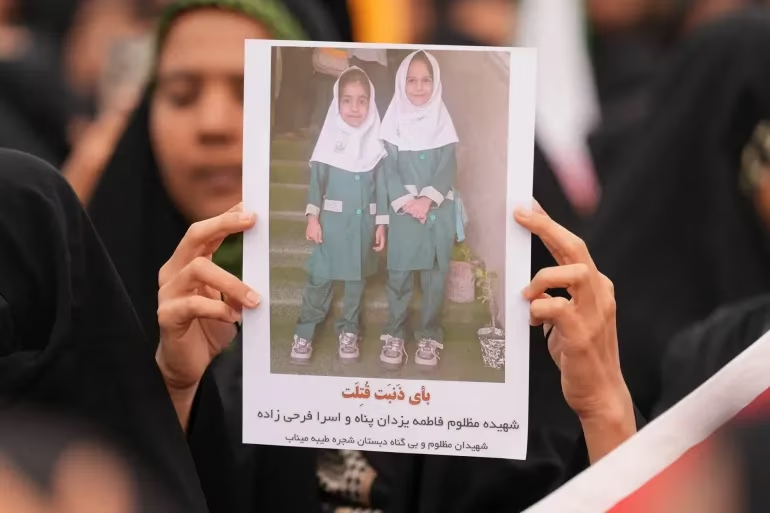
The strike that targeted an elementary school for girls in the city of Minab, southern Iran, in the early hours of the US-Israeli war against Iran on February 28, raises profound questions about the nature of war management and the limits of political and military responsibility in the use of force. According to a preliminary US military investigation and leaks reported by The New York Times, the United States appears to bear responsibility for bombing the school, an attack that resulted in the deaths of 175 people, most of them children.
Initial information indicates that the US Central Command relied on outdated intelligence data to identify the target. The building hit by the missiles was part of an Iranian Revolutionary Guard Corps facility in the past, but it was converted into a school between 2013 and 2016. This transformation apparently was not reflected in the intelligence database used during target identification.
The seriousness of this incident lies in its revelation of a structural flaw in the military decision-making mechanism, not just an isolated tactical error. Modern warfare increasingly relies on the integration of artificial intelligence and human intelligence analysis to identify targets. However, the preliminary investigation suggests that the strike was most likely the result of “human error,” despite the use of advanced systems to assist in target selection.
Satellite images reviewed by the newspaper showed clear changes at the site, such as the removal of old watchtowers, the opening of public entrances to the building, and the reconfiguration of courtyards into school playgrounds. These indicators were sufficient — in principle — to raise doubts about the military nature of the site, which raises a question about the level of scrutiny that preceded the strike.
The tragedy of the incident is compounded by reports of two separate strikes on the site. According to medical accounts reported by Middle East Eye, a number of children took refuge in the school's prayer hall after the first strike, but a second strike hit the same location, leading to a large number of casualties among those sheltering there.
Despite these reports, no official American confirmation of two strikes has been issued yet. However, the timing analysis published by the newspaper indicates that the nearby Revolutionary Guard base was targeted again about two hours after the first strike, leaving open the possibility of a second attack in the area.
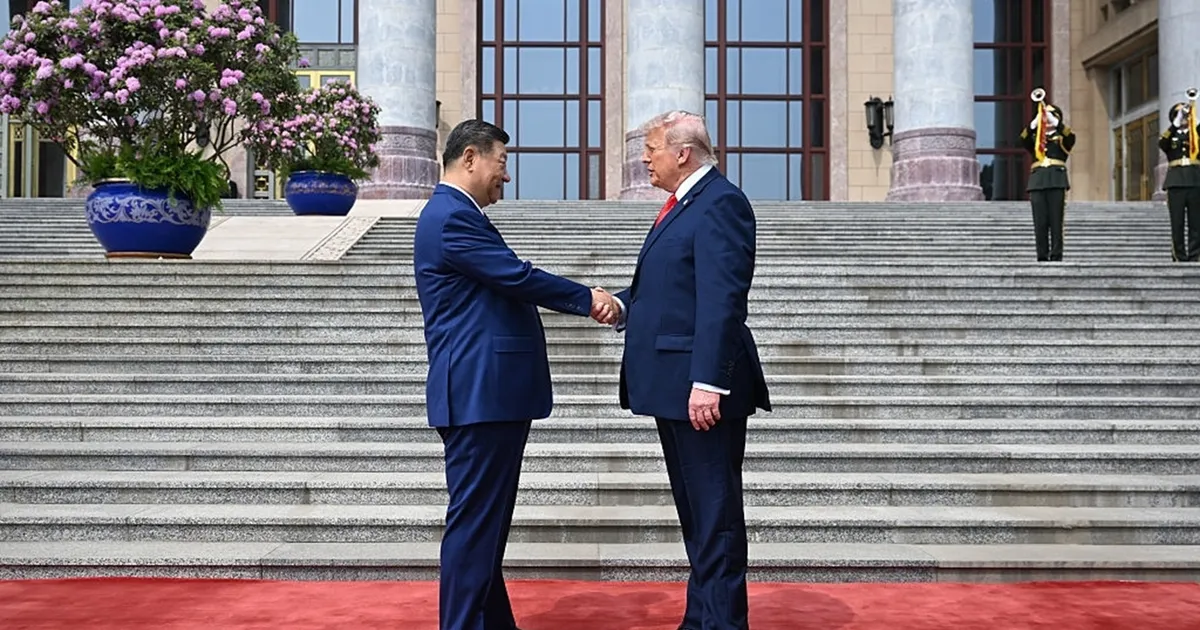
Politically, the repercussions of the incident were no less significant than its humanitarian dimensions. From the first moments, US President Donald Trump tried to blame Iran for the explosion, even going so far as to claim that Tehran possessed “Tomahawk” missiles. But this claim was quickly met with widespread skepticism, and the president later had to admit that he did not have enough information to support this claim.
When later asked about The New York Times report, Trump said he was unaware of it, which in turn raised questions about the level of briefing the president receives regarding ongoing military operations. At the same time, US Secretary of War Pete Hegseth refrained from confirming or denying the US military's responsibility, merely stating that the incident was “under investigation.”
But Hegseth's previous statements during the military campaign add a troubling dimension to the scene. He affirmed that the US military operates “without ridiculous rules of engagement” and “without mercy,” a rhetoric that reflects a shift in the political language accompanying the war and raises concerns about the erosion of traditional constraints on the use of force.
When this incident is placed in a broader context, it becomes clear that it reveals a growing dilemma in modern warfare: the excessive reliance on outdated intelligence databases in a rapidly changing operational environment. The problem is not only the existence of outdated information but also the mechanism for verifying it before carrying out strikes. If a building has been converted into a civilian facility for nearly a decade, the military system's failure to detect this reflects an institutional flaw in the information gathering and analysis cycle. Such a flaw not only leads to tactical errors but also undermines the credibility of American discourse about so-called “precision strikes.”
The way the American leadership dealt with the incident after it occurred also raises sensitive political questions. Instead of opening a transparent investigation from the outset, official discourse first tended to try to shift responsibility to Iran. This pattern of crisis management reflects a priority of protecting the political narrative of the war at the expense of admitting error. However, such strategies seem short-lived in an era of open satellites and unprecedented information flow, where it becomes difficult to conceal facts for long without their political cost rebounding later.
On a broader strategic level, the Minab incident could become a turning point in the image of the war itself. Wars are not measured solely by their military outcomes but also by their ability to maintain a degree of moral legitimacy in the eyes of international public opinion. The killing of over a hundred children in a single strike — even if it was the result of an error — could change the nature of the global discussion about this war. In past conflict experiences, such incidents were enough to gradually shift political and diplomatic momentum against the force that carried them out, regardless of their original military objectives.
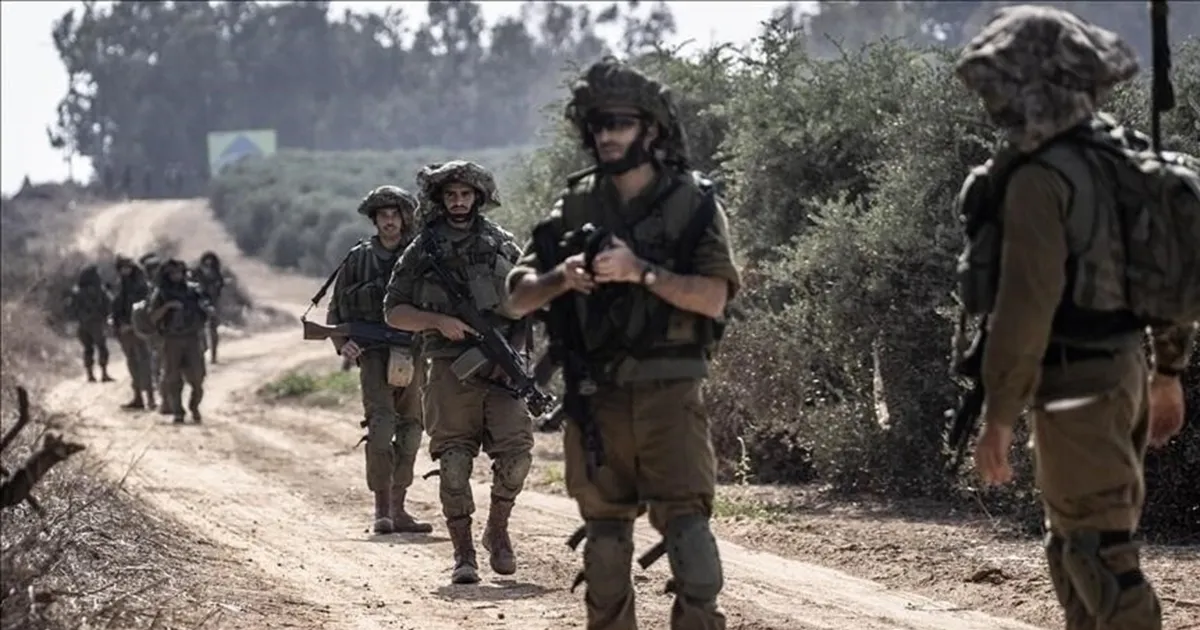
In a broader context, it is noted that the pattern of American justification that emerged in the Minab incident closely resembles the approach repeatedly used by Israel during its war on Gaza. In many cases, schools, hospitals, and health facilities were bombed, and thousands of Palestinian children were victims, while the strikes were justified by saying that these sites were used by Palestinian fighters or concealed military structures. Attempts to blame the Palestinians themselves were also repeated. The similarity of rhetoric and justification in both cases raises profound questions about the transfer of this model in war management and the interpretation of civilian losses.

Share your opinion
Minab School Massacre: When an American Strike Kills Over a Hundred Girls, Then the Narrative of Denial Begins