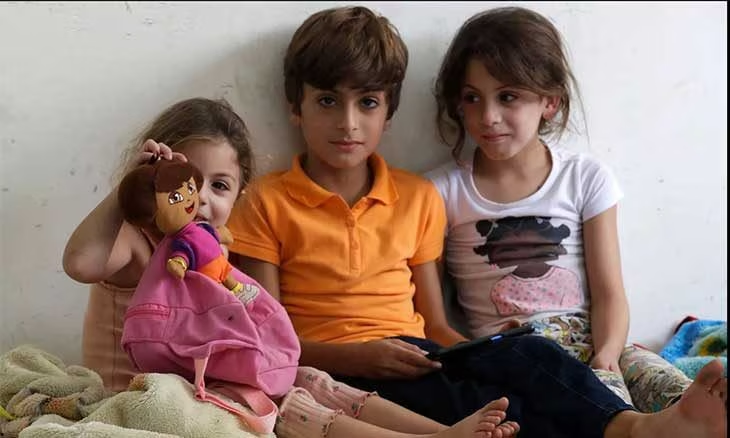







Lebanese regions in the South, Bekaa, and the southern suburbs of Beirut are experiencing a state of paralysis and destruction due to intense airstrikes, which have turned peaceful villages into walls open to the wind. Field sources reported that thousands of families hastily left their homes without carrying their belongings, forming long human convoys on the roads leading to safer areas, a scene that brings back the harshest memories of previous wars.
Amid severe overcrowding, hundreds of displaced people, including children and the elderly, were forced to sleep on sidewalks, public squares, and schools that could no longer accommodate the increasing numbers. The humanitarian suffering is exacerbated by the cold weather and the inability of many families to secure the basic necessities of life, amidst bitter questions about the fate of civilians who always find themselves on the front lines, paying the price for conflicts they have no will in.
The crisis was not limited to Lebanese citizens but extended to migrant workers under the sponsorship system, who face double marginalization and a lack of legal protection or social safety nets. Humanitarian reports documented cases of migrant women who walked long distances exceeding 11 hours in search of shelter, amid the depletion of the capabilities of NGOs that are striving to distribute limited food and medical aid.
This military escalation comes at a time when Lebanon is reeling under the weight of one of the worst economic crises globally, which weakens the state's and society's ability to withstand. As rockets continue to fall, political discussions recede, and the fundamental issue becomes the human right to survival, amidst an uncertain future enveloping a country that has become an open arena for regional score-settling.
Why do Lebanese always pay the price for decisions they did not make? And how does an entire nation turn into an open arena for the wars of others?
Share your opinion
Lebanon Under Fire: Children Sleep on Roadsides, Displacement Convoys Fill Streets