







An objective evaluation of the Palestinian resistance's performance is a strategic necessity to draw lessons, improve performance, and overcome field shortcomings. This scientific approach aims to protect achievements from distortion attempts led by lurking forces that seek to highlight negatives and ignore the harsh conditions in which the resistance operates.
The resistance in Palestine is characterized by a wave-like behavior that rises and falls but never stops since the launch of the first military organization in 1919. Considering 'Al-Aqsa Flood' as the end of the resistance is a methodological error, as history proves that each wave is usually stronger than the previous one, as happened between the 1987 and 2000 intifadas leading up to the current battle.
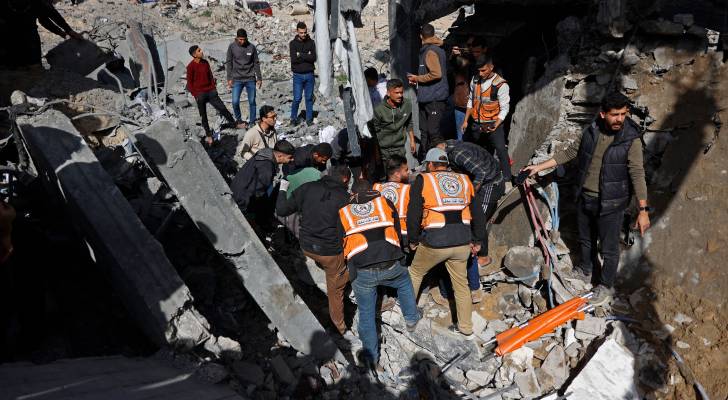
Any strategic evaluation based solely on current data or the severity of humanitarian conditions in the Gaza Strip will be inadequate and unsuccessful. One must look at the overall trajectories that caused a violent shock to the very idea of the occupation's existence, its functional role, and the collapse of its moral legitimacy before the entire world.
The battle achieved unprecedented results in terms of reverse migration, with approximately 550,000 Jews leaving in the first six months alone. The Palestinian issue also topped the global agenda, and the number of countries recognizing the State of Palestine rose to 159, placing the occupation in suffocating international isolation.
Before the launch of the Flood, the occupation government sought to implement a 'decisive plan' by accelerating Judaization and annexing Al-Aqsa Mosque and the West Bank. This was clearly evident in Netanyahu's speech at the United Nations two weeks before the battle, when he presented a map that completely eliminated the existence of the West Bank and Gaza.
The decision for Operation Al-Aqsa Flood came to disrupt attempts at a quiet and free erasure of the Palestinian issue amidst a rapidly accelerating regional normalization environment. Despite the heavy costs, the operation proved to the world the impossibility of bypassing the will of the Palestinian people and their right to self-determination.
Observers believe that those who criticize the resistance 'with retrospective wisdom' ignore that the alternative would have been a complete Zionist monopolization of Jerusalem and Al-Aqsa. The resistance assessed the risks according to the available capabilities amidst a suffocating siege and international complicity, and fulfilled its defensive duty to prevent the liquidation of the cause.
Field facts confirm that the resistance was not defeated, as the occupation admitted its failure to achieve its stated goals of crushing its military capabilities. The Israeli army also failed to free a single prisoner by force, and the resistance maintained field control in areas from which the occupation withdrew.
Estimates from informed sources indicate that the resistance was able to replenish its human numbers, as the truce began with it possessing more than 30,000 fighters. This steadfastness prompted Chief of Staff Eyal Zamir to recommend pursuing a political solution due to the absence of a horizon for military decisive action in the Gaza Strip.
Matters should not be evaluated as if the page has been turned, as Palestinian history has witnessed difficult stations in 1948, 1967, and 1982, and each time the resistance rose again. It is a matter of right, justice, and freedom, and the movement of history ultimately moves in favor of struggling peoples.
One must be wary of consecrating the 'catastrophe complex' or attempts at 'consciousness manipulation' that the occupation seeks to entrench by focusing only on the extent of losses. Evaluation in liberation movements stems from the centrality of sacrifice to achieve grand goals, not from the logic of surrendering to the status quo.
The Palestinian resistance is not a narrow local case, but rather the first line of defense for the Arab and Islamic nation in confronting the Zionist project. When it defends Jerusalem and Palestinian identity, it acts on behalf of the nation and places everyone before their historical and moral responsibilities.
International political projects, including the Trump plan, are not an inevitable fate; they carry the seeds of their failure amidst current regional and global changes. What is required is to gather the elements of strength among the Palestinian people and the free people of the world to resume the path of liberation in all its available forms.
In conclusion, critical reviews remain a necessity for building and advancement, provided they do not turn into a demolition tool that serves the enemy's narrative. The epic written by the Palestinian people will remain a great human school in patience, steadfastness, and military and political creativity.
Al-Aqsa Flood was the strongest wave since the establishment of the Zionist entity, and we are now in a state between two waves, and there is no closure of the resistance file.



Share your opinion
A Strategic Reading of the Palestinian Resistance's Performance: Al-Aqsa Flood as a Historical Turning Point