








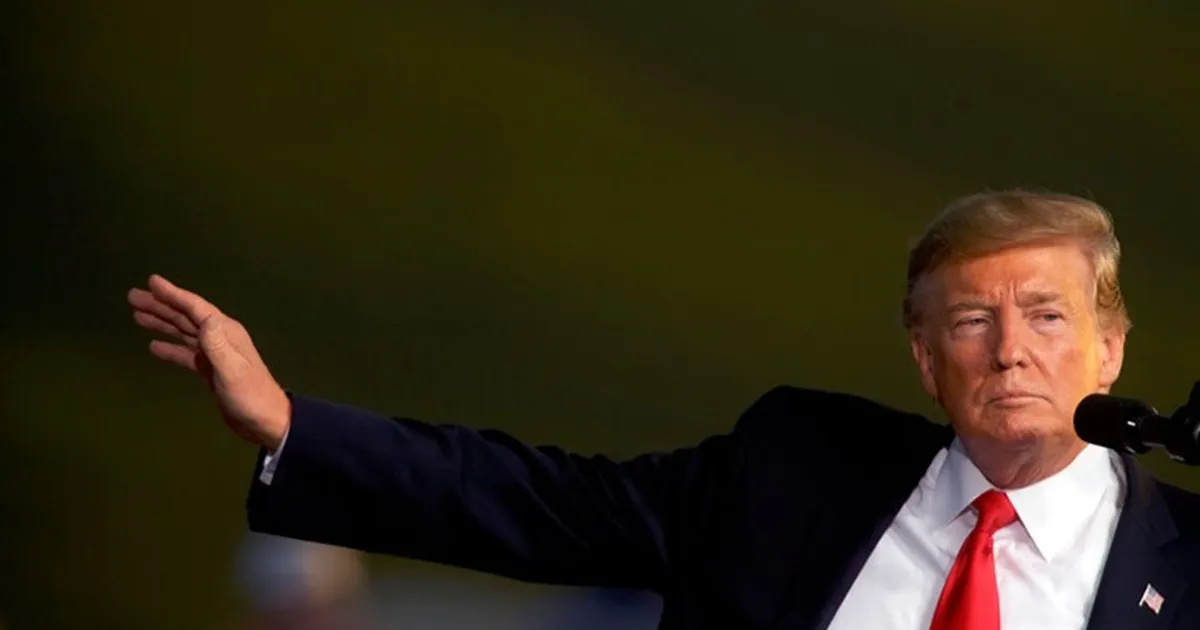
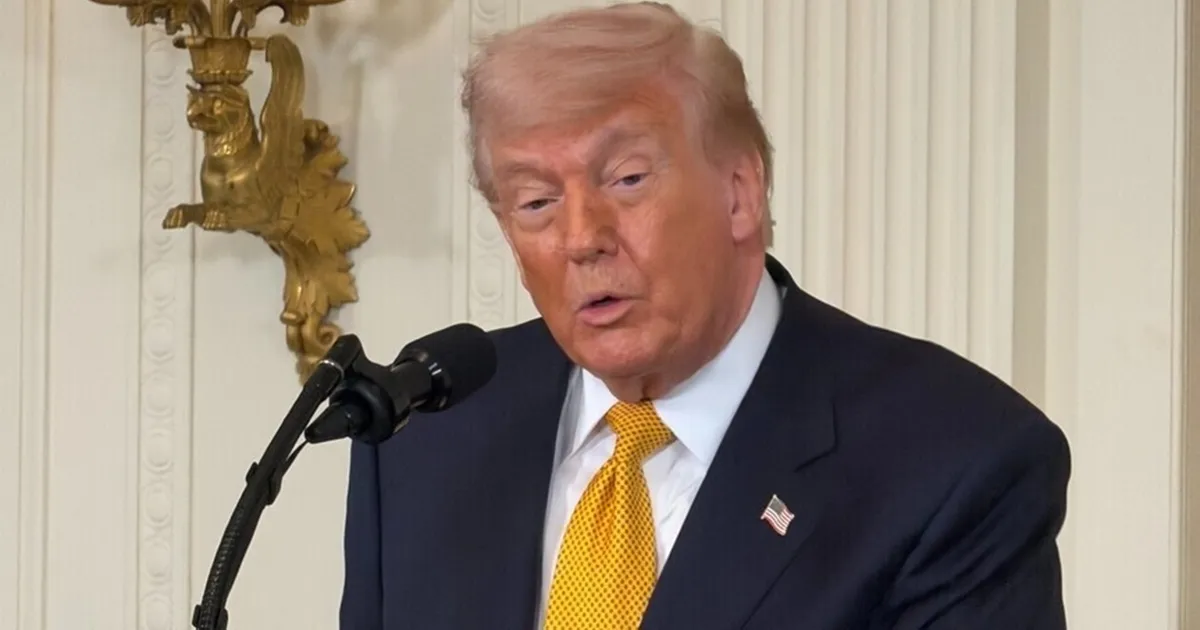
US President Donald Trump said Saturday that he hopes Iran will reach an agreement with the United States to abandon nuclear weapons, asserting that Tehran is "holding serious talks" with Washington, while keeping the threat of military force on the table. Trump's statements, made aboard Air Force One, once again reflect the American approach based on combining conditional diplomacy with military escalation, in an attempt to impose a new negotiating equation with Iran.
However, this talk about the necessity for Iran to abandon its nuclear program to avoid war highlights a stark political paradox, indeed a fundamental contradiction in American discourse. President Trump had explicitly declared, on June 22, 2025, following the American bombing of the Fordow, Natanz, and Abadan facilities, that the Iranian nuclear program "was completely destroyed." If the program was indeed eliminated, as Trump said then, then the return today to conditioning its dismantling through negotiation raises serious questions about the credibility of the official narrative, and whether the Trump administration is treating the nuclear file as a security reality or as a flexible political tool that is re-formulated according to the requirements of pressure and negotiation.
When Trump was asked (on Saturday) about the latest developments in his stance on Iran, he initially appeared reserved, before indicating that the United States had sent "significant military reinforcements" to the region. He added: "I hope they negotiate something acceptable," an expression that reflects a desire to achieve a political gain without sliding into an all-out war, while keeping the military option present as a means of deterrence and blackmail simultaneously.
In response to statements by Saudi Defense Minister Khalid bin Salman, who said that not striking Iran militarily might encourage it to continue its regional policies, Trump merely said: "Some people think that, and some people don't think that." According to experts, this brief response does not hide the extent of disagreement within the American-regional camp regarding the utility of escalation, and at the same time reflects American hesitation between satisfying allies and pushing Iran to the negotiating table.
Trump affirmed that reaching a "satisfactory" negotiated agreement without nuclear weapons is still possible, adding: "They should do it, but I don't know if they will." Despite the tone of doubt, he stressed that the Iranians "are talking to us, and they are talking seriously," referring to existing communication channels, whether directly or through regional and international mediators.
In contrast, a high-ranking Iranian security official said that progress had been made in the negotiation process with the United States, in parallel with a warning issued by the Iranian army commander, cautioning Washington against the consequences of any new military strike. This divergence in Iranian discourse reflects an internal struggle between a pragmatic current that sees negotiation as a means to alleviate economic pressures, and another ideological current that considers American escalation an opportunity to strengthen the discourse of confrontation and fortify the domestic front.
On the ground, Washington continued to display its military might, deploying warships led by the aircraft carrier "USS Abraham Lincoln" off the Iranian coast. This move came in the context of threats made by Trump of military intervention, against the backdrop of Tehran's crackdown on anti-government protests, which added an additional human rights dimension to the crisis, albeit selectively in American discourse.
Analysts believe that the Trump administration seeks to leverage military and economic pressure to redefine the rules of political engagement with Iran, not only on the nuclear issue, but also regarding its ballistic missile program and Tehran's regional role. However, the contradiction between the previous announcement of "destroying the nuclear program" and the return to using it today as a negotiating chip weakens the American position and gives Tehran room to challenge the credibility of American intentions.
While the door to negotiation remains theoretically open, the continued military buildup and fluctuating political rhetoric leave the scene open to dangerous possibilities. The relationship between Washington and Tehran does not move along a clear diplomatic line, but rather oscillates between contradictory narratives, where war is sometimes used as a threat, and sometimes as an already accomplished achievement, while the entire region remains hostage to this American strategic confusion.
The fundamental problem in the Iranian file is no longer about proven nuclear capabilities, as much as it is related to a contradictory political narrative. Trump's announcement of destroying the program and then returning to conditioning its dismantling through negotiation weakens the American position and transforms the "nuclear threat" into a rhetorical tool. This fluctuation gives Iran an opportunity to question American intentions and undermines any serious negotiation path.
The Trump administration relies on a mix of military pressure and opening the door to negotiation, but this approach carries high risks. Coercive diplomacy may bring an adversary to the table, but it rarely produces stable agreements. In the Iranian case, excessive threats may strengthen hardline currents within the regime instead of weakening them.
The region is paying the price for the absence of a coherent American strategy. The contradiction in rhetoric, along with the military buildup, raises the level of concern among both Washington's allies and adversaries. Any miscalculation could ignite a confrontation that goes beyond the nuclear file, affecting regional security and the stability of global energy markets.
Share your opinion
The Iranian Nuclear Program: Between Trump's Contradictory Rhetoric and the Crisis of American Credibility