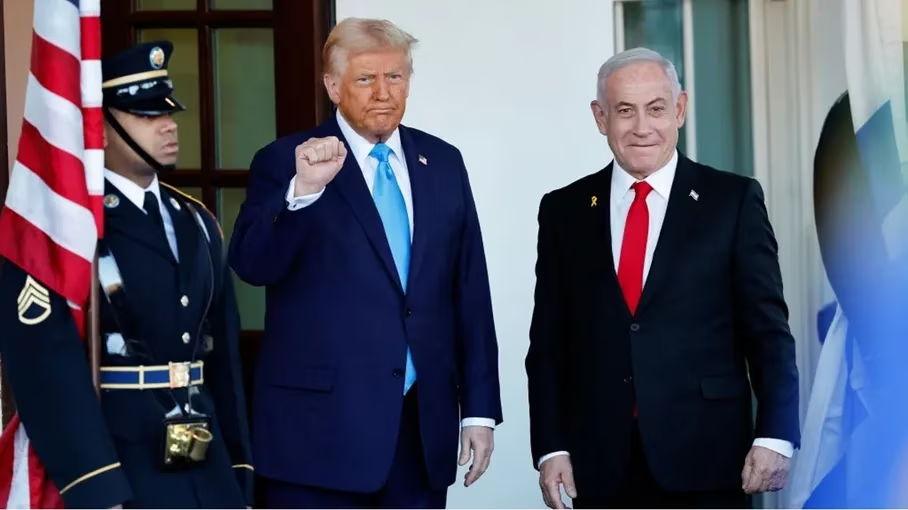







In recent days, Israeli discussions have intensified regarding the issues that Prime Minister Benjamin Netanyahu will discuss with US President Donald Trump, particularly Gaza, Lebanon, Syria, Iran, and Turkey, which will be the focus of the summit, amid Israeli calls for Netanyahu to distinguish between areas where flexibility can be shown to the American administration and issues that he must not touch, especially those related to Israel's vital security interests.
Major General Giora Eiland, former head of the National Security Council, noted that 'these five main issues: Gaza, Lebanon, Syria, Iran, and Turkey, have a gap, even tension, between the American and Israeli positions. This does not necessarily mean that this summit will lead to a crisis; on the contrary, Netanyahu will act correctly if he shows flexibility in at least two issues, or even if he knows how to reach an agreement on the other issues as well. Nevertheless, it is important not to compromise on the important principles of the occupation.'
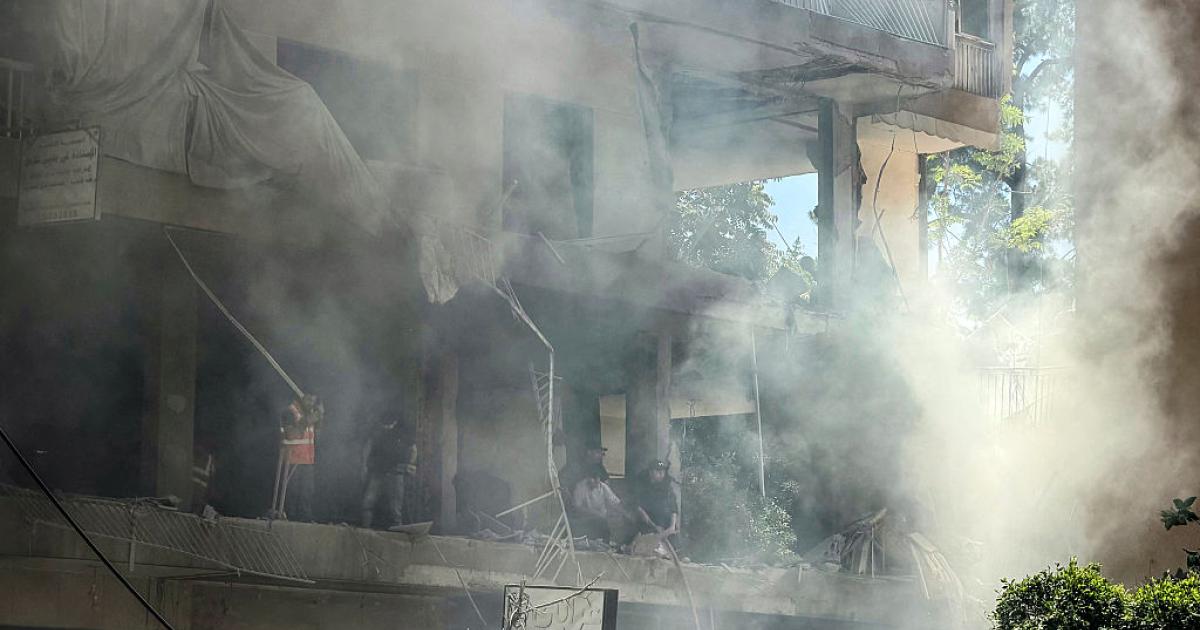
He added in an article published on the Walla website that 'the first issue under discussion at the Trump-Netanyahu summit is Lebanon, coinciding with the imminent holding of the summit with the recent escalation of voices threatening war on Lebanon from the Israeli side, whether from the right-wing government leadership or from military security sources. Supporters of renewing the war against Hezbollah base this on the lesson learned from Hamas's attack on October 7, which is the necessity for Israel to prevent organizations like Hezbollah and Hamas from strengthening their power.'
Eiland explained that 'according to the Israeli position, since the party seeks to rebuild its strength, and the Lebanese government is unable to completely disarm it, renewing the war is the optimal option. As for the American position, it is the opposite; it sees that combining political and economic pressure on the Lebanese government and weakening the party after the war will ultimately lead to neutralizing it as a threatening military force. In this regard, it is correct to accept the American position and not consider it a concession, because Israel's interest also lies in avoiding another unnecessary war in this region.'
The former general affirmed that 'the second issue under discussion is Syria, where the American administration tends to support the new Syrian president, who recently visited Washington and was given an opportunity to consolidate his rule and control over most of the country. The United States shows interest in Damascus and Tel Aviv reaching a security agreement under which the latter withdraws from most of the Syrian territories it controlled about a year ago.'
He pointed out that 'Israel's security need to retain large areas inside Syria is minimal, given that the official border line is ideal from a military perspective, as it allows it to have full control over Syria. Unlike Lebanon, there are no hostile Syrian villages near the border, and the permanent presence of Israeli forces inside Syria will inevitably lead to escalating tension with the local population, and incidents of gunfire have already occurred, resulting in injuries to soldiers.'
He added that 'the third issue that the summit will discuss is Gaza, and here Israel's interests must not be touched, unlike Syria and Lebanon. The occupation cannot accept all the American administration's demands regarding the Gaza issue, which seeks to move to the second phase of Trump's ambitious plan for Gaza's future, consisting of three parts: first, disarming Hamas and its ability to govern; second, rebuilding Gaza according to a massive plan costing $112 billion; and third, withdrawing military forces from most of the territories it controls inside Gaza.'
Eiland continued that 'the problem with this plan lies in the sequence of operations; the Americans are interested in starting the reconstruction of Gaza, while at the same time, Egypt, Qatar, and Turkey, the mediating countries, demand the withdrawal of the Israeli army. Meanwhile, Israel's supreme interest is to oppose these two demands before Hamas disarms itself. In this issue, Netanyahu must not retreat or make any concessions, because surrender means losing most of the gains of the war in Gaza.'
He clarified that 'the fourth issue is the Iranian threat; the United States, like Israel, is determined to prevent Iran from obtaining nuclear weapons, and there is no disagreement between them on this issue. However, it is not as concerned about Iran's efforts to produce a large number of ballistic missiles and their launchers. These missiles, each carrying a warhead weighing half a ton and characterized by high accuracy, caused significant damage to Israel in the war that took place six months ago.'
He added that 'Iran is seeking to build a capability far superior to what it had in the previous war, and from Israel's perspective, this represents an existential threat that must be prevented from materializing. Here, Netanyahu will have to make a great effort to convince Trump and his team of the validity of this matter.'
Eiland concluded by saying that 'the fifth issue under discussion at the Trump-Netanyahu summit is the Turkish threat, and it seems that the biggest gap between Tel Aviv and Washington relates to Turkey's behavior and ambitions. Trump admires strong leaders with expansionist tendencies and views President Recep Tayyip Erdogan in this light, as he believes his declared promises to seek stability in the Middle East in general and Gaza in particular.'
He claimed that 'it is important for Netanyahu to know how to demonstrate the threat that Turkey poses not only to the occupation, but also to Cyprus and Greece. It will be important to emphasize to Trump that regarding the future of Hamas, Turkey will certainly act against American interests, specifically dismantling the movement.'
It is important not to compromise on the important principles of the occupation.

Share your opinion
Israeli Discussions on Issues of Netanyahu-Trump Summit: Gaza, Lebanon, Syria, Iran, and Turkey