






Political analyses have warned that Israel's current policies are hindering US efforts aimed at calming the situation in the Middle East, particularly in the files of Gaza, Lebanon, and Syria, confirming that the continuation of military operations and refusal to engage in comprehensive political paths threaten the chances of establishing a ceasefire and transitioning to broader settlement phases in the region.
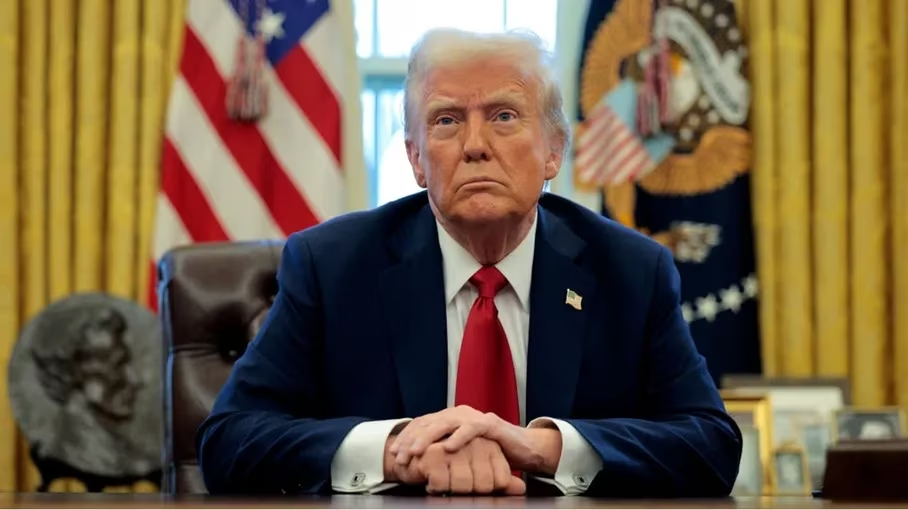
An article by Nimrod Novik, who worked as a political advisor and special envoy to the former Israeli Prime Minister Shimon Peres, was published, in which he said that President Trump deserves praise for his efforts to stabilize three tension hotspots in the Middle East - Gaza, Lebanon, and Syria, and yet, Israel, the strongest player in the region and seemingly the closest ally to the United States, undermines Trump's strategy in the Middle East on all three fronts.
He added in the article that after the shock of Hamas's attacks on October 7, Israel adopted the principle of "no risk-taking" which prioritizes the use of force and control over territories at the expense of diplomacy. The contradiction is stark: the policy of continuous preemptive strikes increases the risk of escalation - which is the opposite of the "no risk-taking" principle.
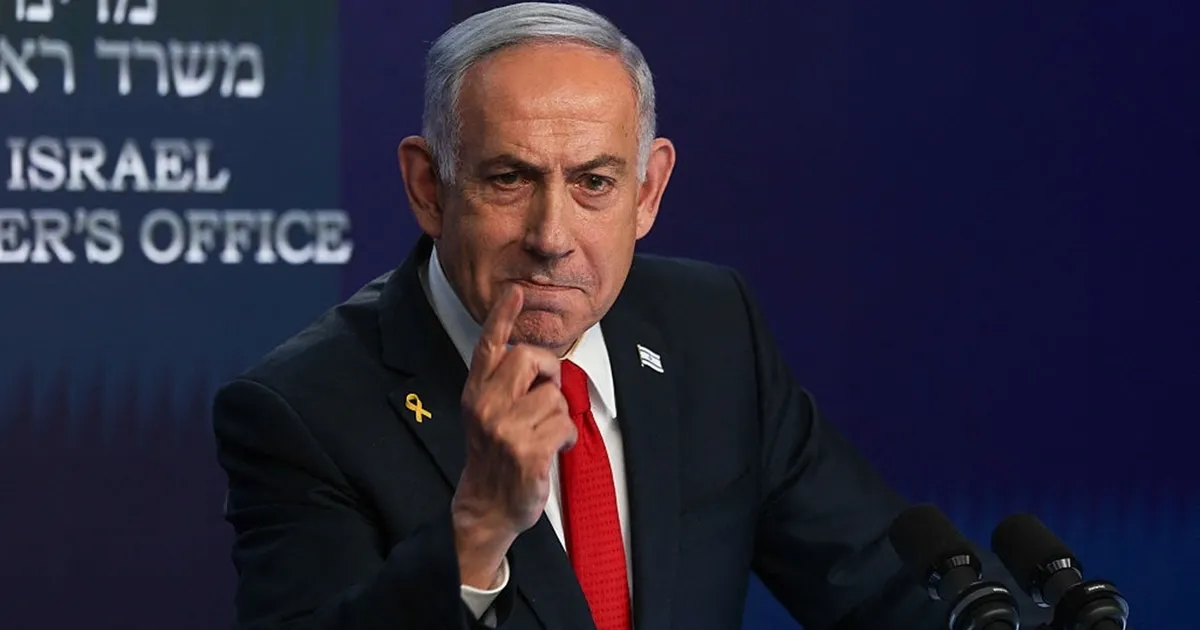
He continued that Israeli Prime Minister Benjamin Netanyahu intends to meet Trump in the United States on December 29, and to prevent slipping back into war again, the American president should be clear and firm with Netanyahu, and he should detail the requirements for regional stability, and show his expectations from Netanyahu to act accordingly, and before this meeting, it would be better for Arab leaders to show their support for Trump's program, and to make the transition to the second phase of his peace plan in Gaza a priority.
He added that in Lebanon, the call from the American administration to disarm Hezbollah, the strongest military and political force in the country and Israel's arch-enemy, was ignored almost immediately, the global norms for disarmament as a gradual process, and set unrealistic expectations. And when these expectations were not met, Israel threatened the possibility of launching a large-scale military operation, despite the ceasefire mediated by the United States and France for a year. And Israel already occupies five settlement points inside Lebanon, and conducts daily raids and incursions.
He continued "In Syria, Israel conducts repeated military incursions, while demanding the disarmament of the entire area between Damascus and the Golan Heights, adjacent to its northeastern border" and at the same time, it clings to what it considers a security zone inside Syrian territory".
The article's writer said that the Gaza Strip remains the most dangerous tension hotspot. Netanyahu's refusal of any role for the Palestinian Authority in the sector threatens to undermine Trump's 20-point plan that led to the October ceasefire agreement, and his objection has nothing to do with national security, but relates to threatening the annexation groups he chose as partners in government to withdraw from his coalition if he accepts a role for the Palestinian Authority in Gaza, which would end his term.
He pointed out that Trump's plan calls for an international stabilization force as a necessity for disarming Hamas, enabling more Israeli withdrawals, protecting the civilian committee that will manage the sector, and providing security for the subsequent reconstruction process. However, the Arab countries, most of which have a Muslim majority, that may contribute forces to this force, consider the participation of the Palestinian Authority necessary, no matter how symbolic at first.
He continued that without it, the residents of the participating countries in the stabilization force, along with many others in the Arab world and Gaza, will view this force as merely replacing Israeli occupation with another occupation. No agreement can be legitimized except by invitation from the Palestinian Authority, and its participation from the beginning. The Arab countries also see the Authority's participation as a step towards unifying Gaza and the West Bank, which is a fundamental condition for a two-state solution.
He added that the second phase of Trump's plan - disarming Hamas, the complete Israeli withdrawal from the remaining half of Gaza that it still controls, reconstruction, and forming the stabilization force - is stalled in the absence of Arab participation. And at the same time, the ceasefire, which represents the core of the first phase, is at risk. Daily clashes threaten it, while two million Gazans suffer inhuman conditions.
The article's writer added that Israeli officials received Washington's optimistic announcements about the imminent start of the second phase with skepticism and doubt, and with a position that suggests "if we don't disarm Hamas, no one will" - which implicitly indicates readiness to resume the war. And with the return of all living Israeli hostages and the dead except for one hostage, an important incentive for Israel to fulfill its commitments in the first phase has disappeared.
He said that "Realizing that Israeli escalation threatens his entire regional structure, Trump intervened, so in a phone call on December 1, reports indicated that he urged Netanyahu to "take it easy" in Syria, Netanyahu responded with gestures aimed at showing "I'm listening to you" without real change in policy.
Based on this principle, he agreed to reopen the Rafah crossing to Egypt, one of the most important crossings from and to Gaza, but in one direction only: there are exits, but no return or passage for humanitarian aid, which completely contradicts what was stated in Trump's plan, which called for allowing the movement of people and humanitarian aid in both directions.
He added that regarding Lebanon, Netanyahu softened his talk about imminent escalation, and sent a civilian liaison official with a limited economic mission. As for Syria, the Israeli government claimed the possibility of reaching an agreement - provided that Israel's maximum security demands are met.
These meager concessions may explain the reason for Trump's call for a direct meeting with Netanyahu, which is the sixth for him during his second term.
The article's writer pointed out that over the past year, whenever Middle Eastern leaders presented Trump with a united front, an implementable plan, and readiness to bear the greater burden while praising him for success, he would take the initiative to act. On the eve of his inauguration, they guaranteed Hamas's agreement to a ceasefire if Trump obtained Netanyahu's approval, and he did. In March, they supported an Egyptian reconstruction plan that ignored Trump's dream of a "Gaza Riviera", so he agreed. In July, a Saudi-French initiative linked Gaza's stability to broader Israeli-Palestinian negotiations and regional integration. These elements were incorporated into his 20-point plan.
He continued that it can be repeated, Arab partners and Europeans and others should present a concise list to the White House including changes in Israeli policy necessary to activate the second phase. This list may include accepting the participation of the Palestinian Authority and more Israeli withdrawals in parallel with the gradual disarmament of Hamas. It may also include increasing humanitarian aid and reopening the Rafah crossing in both directions, in addition to agreeing on a list, under Egyptian supervision, including independent Palestinian experts to work in the committee tasked with managing Gaza.
The article's writer continued that until Trump agrees to impose these conditions on Netanyahu, he must receive a clear message from these leaders: "If you deliver Netanyahu, we will deliver Hamas. And if Israel commits to the terms of your peace plan, we pledge to provide contributions to the international stabilization force and the Gaza reconstruction fund".
He concluded that the choice facing the President now is clear without ambiguity: either impose discipline on America's closest regional allies, or watch a fragile structure collapse under the weight of Netanyahu's gradual escalation. The opportunity to avoid another war is shrinking.
Israel's current policies are hindering US efforts aimed at calming the situation in the Middle East, particularly in the files of Gaza, Lebanon, and Syria.
Share your opinion
Political Analyses: Israel's Policies Hinder US Efforts to Calm the Situation in the Middle East