






Tharwat Zaid: Each student must be accurately diagnosed individually and classified according to clear levels, with flexible remedial programs that combine face-to-face and digital education.
Joudat Sisan: Compensating for educational loss under these circumstances cannot be achieved through traditional methods, but rather through a human and creative approach based on flexible alternatives and educational innovations.
Suhar Al-Khafsh: The return of university students to study seems difficult at the moment, necessitating greater reliance on electronic education as a primary option.
Dr. Mohammed Al-Aboushi: One of the most prominent solutions is to activate remote learning mechanisms and involve volunteers from university students and graduates to support the educational process and bridge the existing gaps.
Khaled Al-Shahatit: A database for each subject should be created, subject to monitoring and evaluation by subject teachers, to enhance the individual follow-up process for students.
Dr. Sadiq Al-Khodour: The ministry has actually begun studying the field situation of schools to assess the extent of the damage they have sustained, and the return to face-to-face education is a top priority.
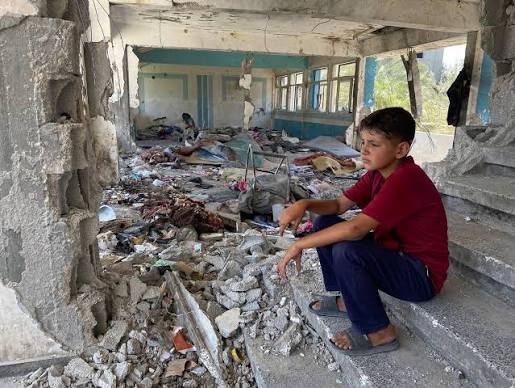
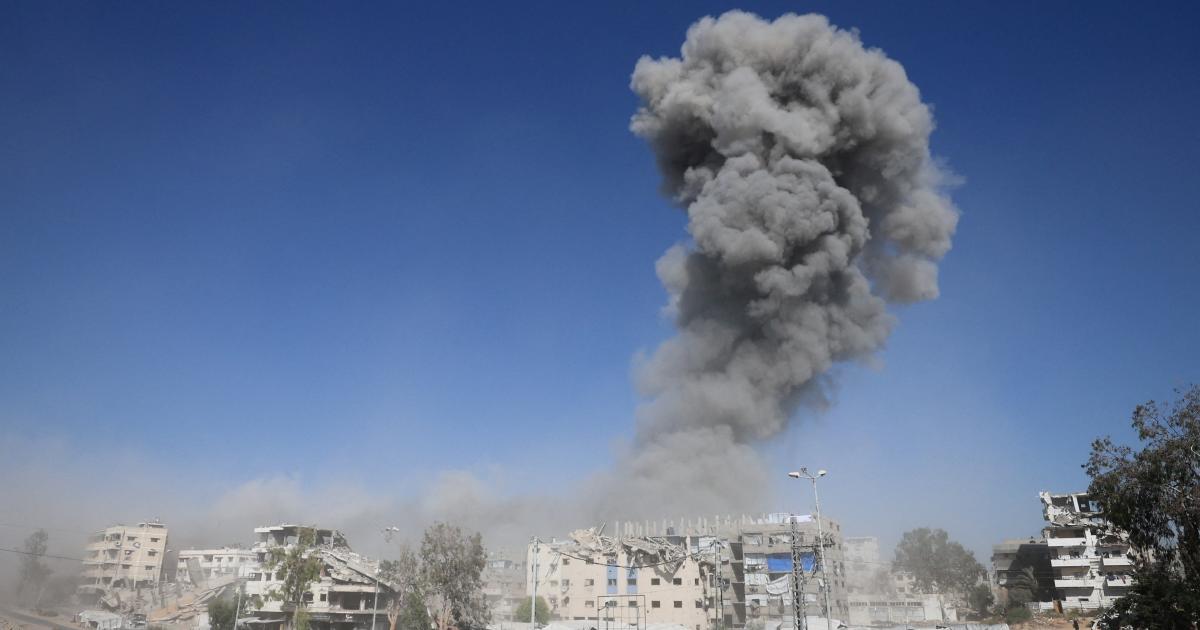
Despite the significant destruction inflicted on the educational infrastructure in the Gaza Strip, efforts are renewed after the ceasefire agreement to restore the educational process as a national and humanitarian step that goes beyond merely opening classrooms.
Educational experts and officials confirm, in separate conversations with "Y," that the scale of the disaster is unprecedented, as schools and universities have suffered almost complete damage, and thousands of students and teachers have been martyred, making schools and universities today spaces for collective healing and restoring psychological and social balance, before being mere places for academic learning.
They emphasize that the educational process faces a complex reality that requires urgent and innovative solutions, starting from providing alternative educational centers such as tents and caravans, through activating electronic education via digital platforms and simple applications, to building long-term reconstruction plans.
In light of the long interruption from education that has left significant gaps in basic skills, educational experts and officials stress the importance of community education and small gatherings within homes or shelters, with intensified focus on reading, writing, arithmetic, and psychological support, especially for early grades.
At the same time, they believe that universities must transform into symbols of intellectual resilience, with the need for practical alternatives such as temporary digital universities, adopting open education and distance learning to compensate for losses until institutions are rebuilt. Despite the challenges, educators and officials affirm that the strong will of Gaza's students and teachers represents the primary pillar to overcome the ordeal, and that education has indeed become a form of resistance in itself, and a bridge that carries Palestinian generations from beneath the rubble towards a new horizon of life and dignity.
A comprehensive national and humanitarian project
The educational expert Tharwat Zaid asserts that the return of study in Gaza's schools after the recent aggression does not merely represent the opening of classroom doors, but rather constitutes a comprehensive national and humanitarian project to reshape education as a tool for life and resilience in the face of social and psychological breakdown.
According to Zaid, the scale of destruction is unprecedented, with 97% of school buildings damaged, more than 18,512 students martyred, and about 27,000 others injured, while 791 teachers lost their lives and more than 3,251 were injured, making schools today spaces for collective healing and restoring balance, not just places for academic learning.
He explains that the educational infrastructure faces an extremely complex reality, as schools vary between those that can be quickly rehabilitated, those that require medium-term repairs, and those that need complete new construction. To address this, Zaid calls for a three-phase emergency plan: an urgent one to restart functional schools, a temporary one relying on alternative schools such as community centers and tents, and a long-term one for reconstruction and equipping with the latest technologies. Zaid emphasizes the importance of investing in educational technology, through digital platforms, recorded content, and distance learning, to ensure the continuity of education and alleviate pressure.
Zaid points out that the educational staff represents the backbone of the process, necessitating the provision of intensive psychological support for teachers and training them to manage overcrowded classrooms and deal with students affected psychologically.
Zaid recommends distributing teachers according to specialization and need, adopting flexible mechanisms such as supportive education, remedial classes, small groups, and accelerated learning, along with providing incentives to ensure staff stability.
Zaid affirms that the long interruption has left significant gaps in basic skills and disparities in ages and levels, especially in early grades.
Therefore,
Share your opinion
Education in Gaza... Searching for a classroom seat amid the rubble