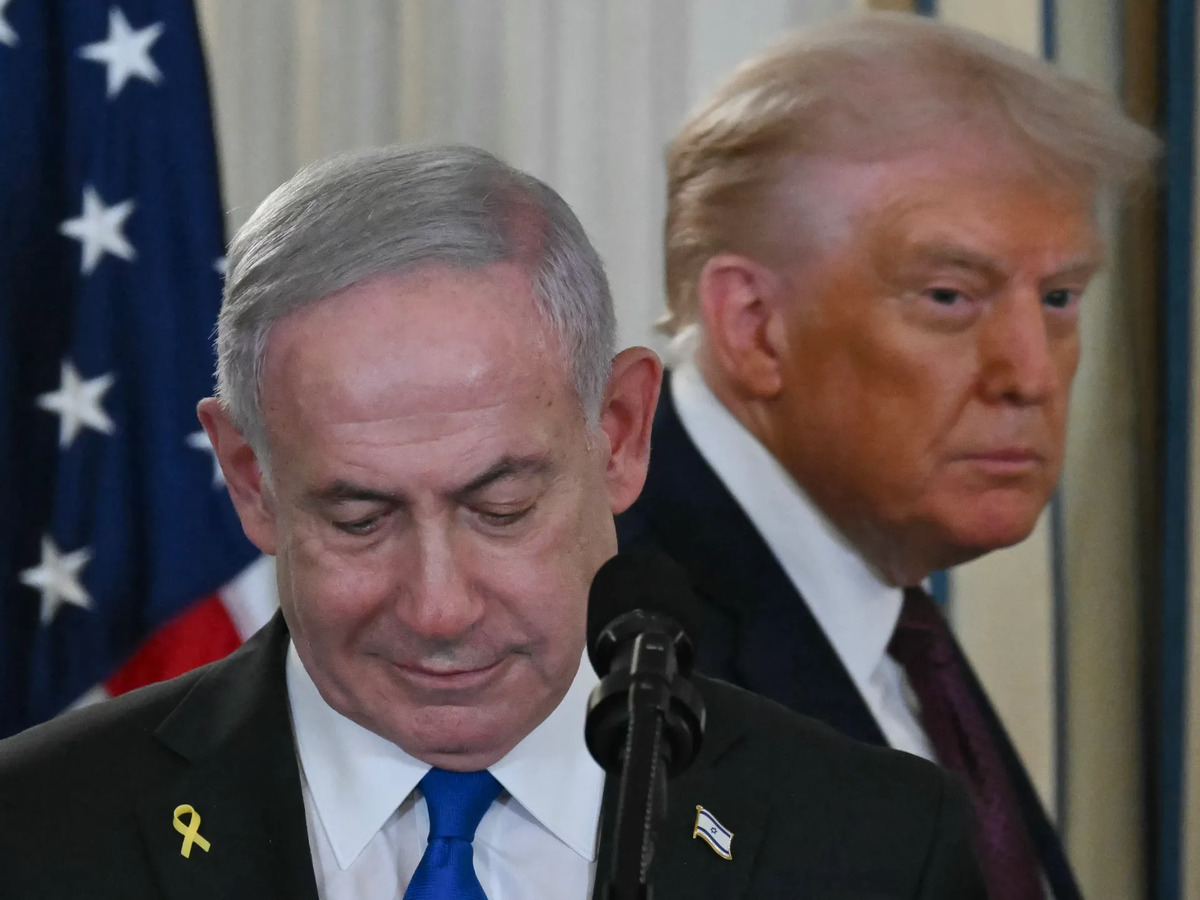







David Halbfinger, the New York Times bureau chief in occupied Jerusalem, stated that Israeli Prime Minister Benjamin Netanyahu now finds himself in a complicated position after what he thought was a guaranteed diplomatic victory has turned into a new political and security crisis.
Halbfinger continued that U.S. President Donald Trump recently presented a peace plan described in Israel as a "political gift" to Netanyahu, as it gave Tel Aviv the green light to continue the war if Hamas rejected the offer of "complete surrender."
The plan stipulates that Hamas must release all Israeli prisoners within 72 hours, lay down its arms, and relinquish any role in the future of the Gaza Strip; otherwise, Israel would be free to destroy it militarily, according to the writer.
However, in a surprising development - Halbfinger continues - Hamas announced yesterday, Friday, its acceptance of Trump's plan, stating that it is "ready to release all prisoners," confirming its desire to "discuss the details of the plan" with mediators and the Trump administration.
He emphasized that this position has confused the political scene in both Washington and Tel Aviv, as Republican Senator Lindsey Graham - one of Netanyahu's prominent allies in Congress - considered Hamas's statement a "convincing rejection."
Former Israeli ambassador to Washington Michael Herzog described it as "no, disguised in a yes."
But the U.S. president chose to adopt a completely different stance, writing on Truth Social: "Based on the statement from Hamas, I believe they are ready for a lasting peace. Israel must stop the bombing immediately so we can get the hostages out quickly and safely."
The writer clarifies that this American position has put Netanyahu in a real dilemma, as after hours of silence, his office issued a statement at three in the morning Israeli time confirming the country's readiness for the "release of all hostages."
The statement merely confirmed that Israel would cooperate with the White House "to end the war according to the principles set by Israel and consistent with President Trump's vision."
The writer noted that Trump's call for the Israeli army to implement an immediate ceasefire and begin negotiations with Hamas contradicts Netanyahu's vision, which is based on continuing military pressure until "complete victory" is achieved.
He quoted Eran Etzion, former deputy national security adviser of Israel, saying that Netanyahu "will find himself with the whole world applauding, and he will be asked to explain why he opposes that."
Indicating that these negotiations will take place under ceasefire conditions, which contradicts Netanyahu's plans.
He continued that the ruling coalition in Israel has become threatened, as Netanyahu's partners, who had hoped to expel Palestinians from Gaza and annex the strip to Israel, now see Trump's plan as a "painful retreat" from their goals.
Bloomberg had confirmed that Trump's plan calls for ending Israeli military operations and sending "full aid immediately" to Gaza, which is suffering from killing and starvation.
In addition, the plan also promises to rebuild and develop Gaza, ensuring that Israel will not occupy or annex the strip, and that Israeli forces will gradually withdraw.
There is also a promise not to force any of Gaza's residents to leave the strip, after Trump raised concerns earlier this year by suggesting that the U.S. government take over Gaza after displacing its residents and turning it into a tourist resort.
The complete plan calls for the return of the remaining detainees, believed to number 48, including 20 who are alive, and calls for the disarmament of Gaza under the supervision of independent monitors to ensure it cannot pose a threat to Israel in the future, according to the agency.
A survey published by Maariv showed that 66% of Israelis support Trump's proposal, while only 11% oppose it.
Additionally, 41% of participants viewed the chances of the plan's success as "limited," while 30% considered its chances of success "very low."
Netanyahu will find himself with the whole world applauding, and he will be asked to explain why he opposes that.






Share your opinion
New York Times: Netanyahu in a difficult position after Trump's stance