





Dr. Basim Al-Zubaidi wrote an article in the "Jerusalem" newspaper that touches on the essence of the Palestinian predicament: Is the struggle aimed merely at a formally sovereign state, or is it a liberation project that opens a new horizon for historical justice and human dignity? At first glance, his answer seems clear and decisive: a state, if not built on the values of liberation, becomes a political trap or a soulless entity. This idea is correct in principle, but it remains suspended in the void unless translated into a tangible political project.
Al-Zubaidi cleverly captures the predicament of reducing the Palestinian struggle to the "two-state solution" and points out its dangers: a besieged state, fragmented, without real sovereignty, and its tools inherited from the colonial control system. However, his article quickly slips into an abstract discourse that drowns in grand values (justice, freedom, dignity) without providing a cognitive or political plan to transition from analysis to action.
The problem with the article lies not in what it proposes but in what it overlooks: how do we strike a balance between the universal dream and the material reality filled with siege, division, and structural Palestinian weakness?
The importance of what Al-Zubaidi says lies in his transfer of the Palestinian cause to a universal arena, where it becomes a criterion to test the world's sincerity towards liberation issues. But here too lies the danger of universal discourse: if it is not linked to the Palestinian reality, the Palestinian becomes merely a symbol in the book of global philosophy, while remaining a prisoner of the wall, the settlement, and the military checkpoint. Universality without local rooting turns into an intellectual luxury that satisfies the intellectual but does not change reality.
From my perspective, there are two illusions that haunt the Palestinian today:
• The illusion of the state: the belief that mere recognition or raising a flag is enough to achieve independence. This is what Al-Zubaidi warned against, and he is right.
• The illusion of universality: the belief that the Palestinian cause, when presented as a global humanitarian issue, will be sufficient to impose justice. This is an illusion no less dangerous, as it ignores the material balance of power and the actual ability to change realities.
Liberation is not achieved by universal slogans alone, but by the Palestinian's ability to rebuild his national project on solid political and organizational foundations, balancing between the discourse of universal justice and local resilience needs.
Independence is neither an ideal dream nor a formal shell. It is a dialectical project:
• It needs a universal discourse that exposes colonialism and places it before the world.
• At the same time, it needs to build realistic resistance institutions, from education to the economy, capable of making the Palestinian an "actor" rather than just a "symbol."
Here, education emerges as a central condition for liberation. Education is not a secondary social service; it is the infrastructure that creates critical awareness and graduates a generation capable of resisting colonialism intellectually before being militarily or politically.
• The experience of the prisoners' movement is a good example: prisoners turned the occupation's cells into alternative universities and wrote a global model of how education can become a strategic weapon that solidifies identity and keeps memory alive.
• Education is also the only tool capable of connecting the universal with the local: through it, the Palestinian can address the world in a universal legal and intellectual language while maintaining his national roots and field priorities.
In other words, we cannot envision a horizon of true independence without placing education at the heart of the liberation project: education that liberates the mind from dependency and reproduces the Palestinian as a cognitive, political, and moral force.
Dr. Basim Al-Zubaidi's article succeeds in dismantling the most dangerous illusions that have lured Palestinians for decades: the illusion of the formal state. But it simultaneously opens up to another illusion: the illusion of abstract universality. Between these two illusions, the Palestinian needs a new philosophy of independence that recognizes that liberation is not achieved through romantic discourse or political deals, but by reproducing the Palestinian self as a cognitive, political, and moral force capable of asserting its existence despite all conditions of oppression.
Here, education stands out as the backbone of this project: it equips the Palestinian with tools for critique and resistance, transforming the horizon of universal justice into a practical project rooted in the land. There is no independence without awareness, and no awareness without liberating education, formulated as part of the struggle rather than as cultural luxury.
Critique, then, is not a diminishment of Al-Zubaidi's proposal, but a call to complete it: to move beyond the realm of slogans and to place the horizon of independence in a practical

OPINIONS
Wed 01 Oct 2025 1:05 pm - Jerusalem Time
From the Illusion of the State to the Horizon of Independence: Education as a Condition for Palestinian Liberation.. A Critical Reading of Dr. Bassem Al-Zubaidi's Article
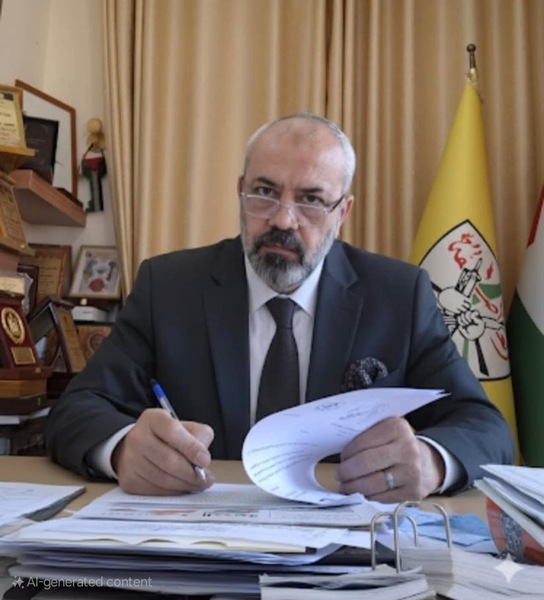
By: Yasser Abubakr
Opinion Writer
Share your opinion
From the Illusion of the State to the Horizon of Independence: Education as a Condition for Palestinian Liberation.. A Critical Reading of Dr. Bassem Al-Zubaidi's Article