







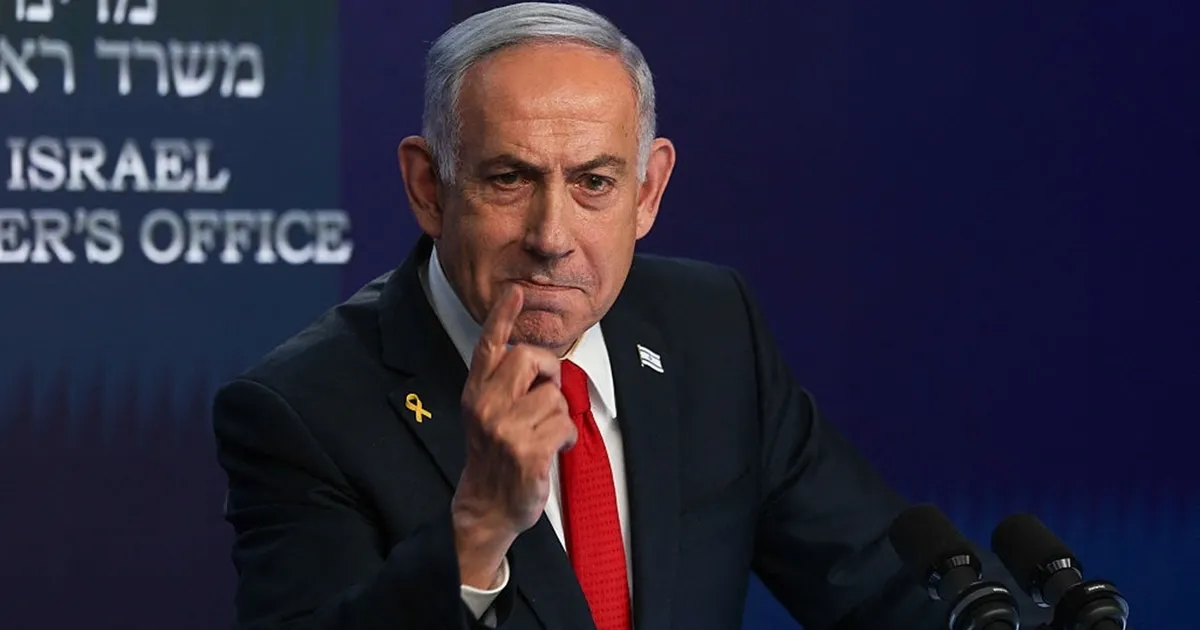
A close reading of Israeli Prime Minister Benjamin Netanyahu's stance on the "peace" plan proposed by U.S. President Donald Trump regarding Gaza reveals that the plan is nothing more than a political maneuver aimed at buying time and polishing Israel's image before the international community. Despite being promoted as a roadmap to end the war and achieve a "comprehensive solution to the conflict," as stated by Trump, its provisions appear blatantly biased in favor of Israeli interests, while offering the Palestinians nothing substantial regarding sovereignty, justice, or the right to self-determination.
The plan includes a gradual ceasefire, a conditional withdrawal of Israeli occupation forces, and the disarmament of Hamas and its removal from power in Gaza. However, these provisions are rendered meaningless when viewed alongside the conditions for implementation and Netanyahu's public statements, as he continues to reject the principle of establishing a Palestinian state. Despite announcing his support for the plan, he insists on maintaining full Israeli security control over Gaza and its surroundings, which practically means that any settlement will be under the guise of Israeli occupation, rather than a fair or balanced agreement.
Many analysts believe that Netanyahu's acceptance of the plan does not stem from a conviction in a political solution, but rather from his need to alleviate the political pressures he faces domestically due to ongoing protests and declining popularity, in addition to rising international criticism of the Israeli aggression against Gaza. In this context, the plan gives Netanyahu the appearance of a leader open to solutions, without requiring him to make any actual concessions. It emphasizes the conditions imposed on the Palestinians while simultaneously maintaining Israeli military and political dominance.
What further undermines the fragility of this plan is the complete exclusion of Palestinians from its formulation. No official or factional Palestinian entity was consulted in its preparation, prompting Hamas and several Palestinian factions to consider it a biased initiative that does not rise to the level of a peace initiative. Additionally, the amended plan has sparked significant discontent among several Arab countries, which expressed concern over the absence of any guarantees to protect Palestinian rights or to put an end to the ongoing displacement and aggression against Gaza for the past two years.
Media reports, notably what was published by Axios, revealed that the version announced by Trump at the White House on September 29, 2025, differs significantly from the one circulated with several Arab leaders during the United Nations General Assembly in New York on September 23, on the sidelines of the General Assembly. According to leaks, the original version included guarantees against the annexation of the occupied West Bank, as well as references to the possibility of establishing a Palestinian state in the future. However, the amendments made later, at the direct request of Netanyahu and Strategic Affairs Minister Ron Dermer, completely eliminated these provisions and instead focused on issues such as ceasefire, prisoner exchanges, dismantling Hamas's rule, and disarming it.
These sudden amendments provoked widespread anger among Arab allies, who viewed them as a denial of initial understandings and a serious retreat from the principles that have long formed the basis for any fair settlement, foremost among them the establishment of an independent Palestinian state. According to the North Star newspaper, Qatar warned the White House against announcing the plan in its amended form without consulting the partner countries and requested a postponement of the announcement, but the U.S. administration ignored these demands and proceeded with presenting the plan tailored to Israeli demands.
In a more controversial development, the final plan did not include any reference to the establishment of a Palestinian state, but rather gave Hamas a short period to accept its conditions, resembling an ultimatum under the threat of "severe consequences" in case of refusal. This shift in tone and content has revived old doubts about whether U.S. "peace plans" are political pressure tools aimed at rearranging the facts on the ground to serve Israeli interests, rather than serious initiatives to resolve the conflict.
In the absence of any addressing of core issues—such as ending the occupation, the right of return, and holding Israel accountable for war crimes—the Trump plan can only be viewed as a blatant attempt to reproduce the status quo. Behind the misleading diplomatic rhetoric lies an intention to perpetuate war and entrench dominance, rather than a roadmap to just peace, as it is promoted. Thus, serious questions arise about the credibility of any initiative that does not start from a clear acknowledgment of Palestinian rights and does not put an end to the conflict.

Share your opinion
Netanyahu and the Deception of Peace: Why Trump's Plan for Gaza Seems Like a Political Illusion