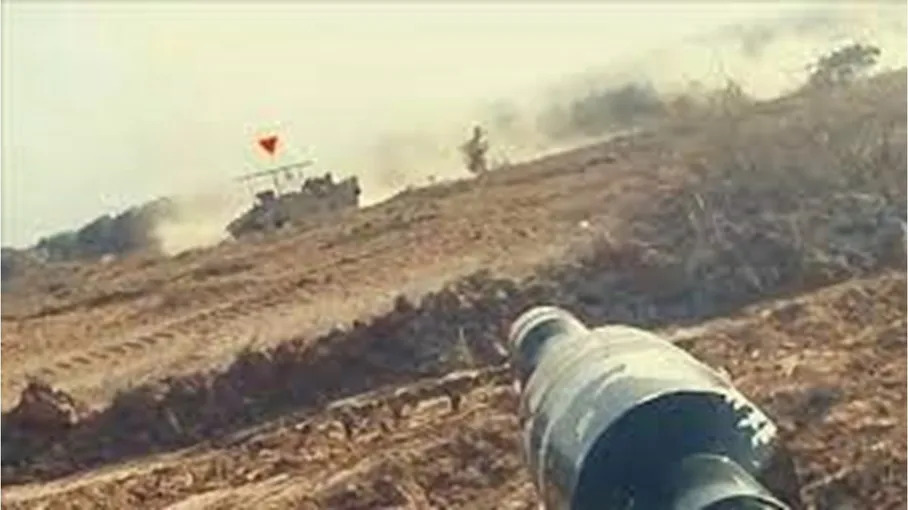







The Israeli newspaper Yedioth Ahronoth reported that despite nearly two years having passed since the occupying state launched a war aimed at dismantling Hamas following the attacks of October 7, the movement remains the dominant force in the besieged Gaza Strip, continuing to govern, fight, and even pay the salaries of its fighters, largely unaffected by the suffocating blockade and the damage inflicted on its infrastructure.
The newspaper added in a lengthy report that Hamas is entrenched in Gazan society, having adapted financially and militarily to withstand the aftermath of the assassination of its senior leaders and the intense pressure exerted by the occupying army within the enclave of the Gaza Strip. Resilience.
The newspaper quoted analysts as saying that Hamas's resilience is not mere coincidence, but rather the result of an organization that has deeply integrated into the fabric of Gazan society, militarily adapted, and developed its financial methods to survive one of the fiercest conflicts in the modern history of the region.
Michael Milstein, head of the Palestinian Studies Forum at the Moshe Dayan Center, stated that Hamas is not just a military wing or a political party, but a broader entity deeply rooted in Palestinian society. Over the past twenty years, it has managed to build strong ties through education, charitable work, mosques, youth clubs, and women's associations.
Milstein believes that the social infrastructure of the movement is the main reason for its continued support, even as reports emerge about its loss of thousands of fighters. He explained that the essence of Hamas's organization is based on flexibility and repetition, and they remain the dominant force in Gaza, possessing thousands of elements and supporters ready to intervene.
On the other hand, Ihsan Attaya, head of the Arab and International Relations Department in the Palestinian Islamic Jihad Movement, stated that Hamas's strength comes from ideological commitment and operational structure, which is the secret to its success in maintaining its political control amid a campaign of genocide and starvation.
He added that they operate within a tight organization and a strong security apparatus that helps maintain internal order even under the harshest conditions. Contrary to rumors of a sharp division between its leadership in Gaza and its exiled political office, the cohesion of its unified leadership structure is one of the main reasons for its resilience.
From a military planning perspective, Milstein noted that since mid-2024, Hamas has adopted the principle of attrition, shifting from just the Al-Qassam Brigades to cells of three, five, or seven fighters at most, executing ambushes and attacks.
Attaya confirmed that military operations remain intensive and coordinated, with fighters planting explosives, preparing ambushes, and maintaining tactical communication between their units, despite the dominant aerial and ground presence of the occupying state.
The experts point out that Hamas's underground tunnel network remains essential to its ability to endure, allowing the movement of fighters, weapons, and even leadership figures across vast areas of Gaza.
Perhaps most surprisingly, Hamas continues to pay its members' salaries even amid financial blockade, albeit through innovative means, finding ways to ensure some compensation for its members, according to Attaya, who confirmed that this has caused significant frustration for the Israeli leadership.
Milstein stated that there is no doubt that Hamas is suffering from financial distress, but it has always been characterized by its ability to adapt and find solutions to crises, whether through the use of drones, smuggling routes via Bedouin networks, or back channels in Rafah, they find ways to transfer money.
The newspaper's report indicated that Hamas's current strategy relies on enduring against the enemy, focusing not on achieving a quick military victory but on undermining the occupying state's ability to endure and its global legitimacy.
This was confirmed by Milstein, who stated that Hamas is betting on attrition, pushing to raise the costs militarily, economically, and politically until the occupying state can no longer continue the war; it is a long-term game.
Attaya sees this as the only viable option under the current circumstances, stating that with no political horizon, stalled ceasefire talks, and the absence of alternatives, Hamas is compelled to engage in a long-term war of attrition, battles that undermine the stability, image, and sense of control and superiority of the occupying state.
Milstein concluded by saying that Hamas remains resilient, even if weakened by the war, continuing its work, ideology, and social services, and its operational flexibility enables it to survive in a war zone that most people would find difficult to control, demonstrating their deep-rootedness in the reality of Gaza.
After the occupying state failed to achieve its war objectives against Gaza, which included eliminating Hamas and recovering its captives held by the movement, Netanyahu is seeking to fully occupy the



Share your opinion
Hebrew newspaper: Hamas still holds power in Gaza despite the fiercest war in modern history.