






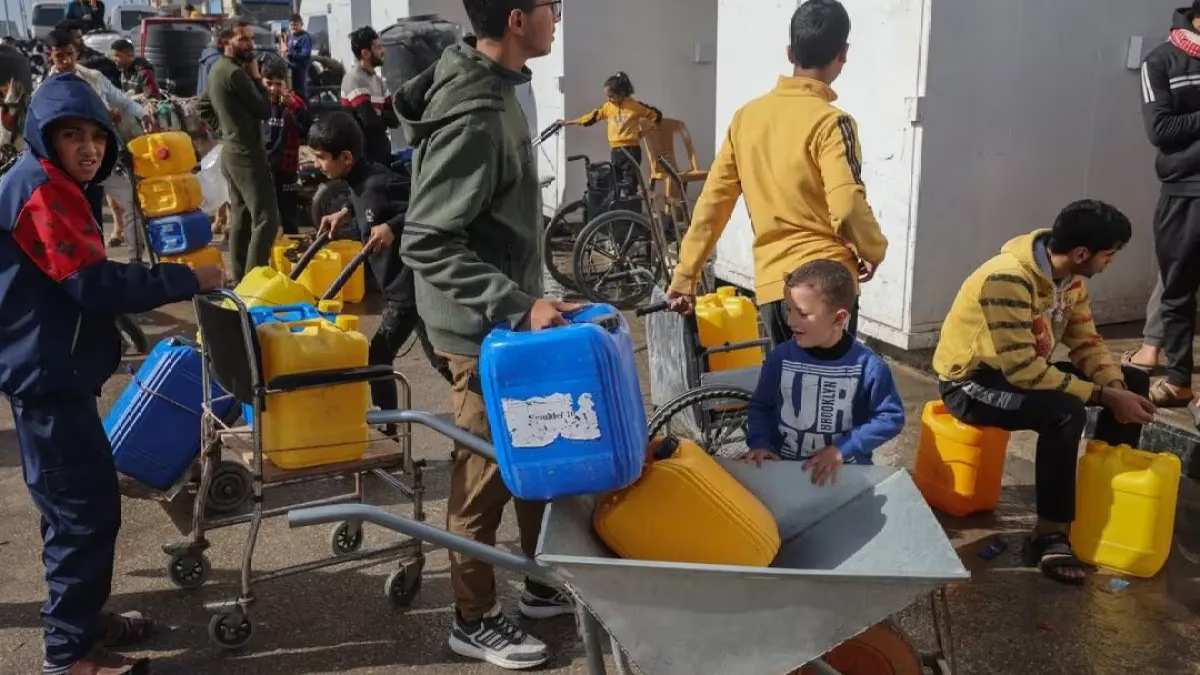
The severity of the humanitarian suffering is escalating in the displacement camps spread across the sands of Mawasi Khan Yunis, south of the Gaza Strip, where escaping bombardment is no longer the only concern for the displaced. Hundreds of thousands there face a harsh daily battle to secure the most basic necessities for survival: drinking water, which has become extremely scarce.
This coastal area hosts about 200,000 displaced people who were forced to leave the city of Rafah, with tents distributed in more than 118 camps lacking the minimum infrastructure. Fears of an environmental and health catastrophe are growing with the approach of summer and rising temperatures, which increase the population's need for water.
Field sources reported that obtaining a few liters of water has turned into an arduous journey that drains the energy of children, women, and the elderly alike. Displaced people spend long hours of their day in queues or walking long distances in search of a usable water source.
_The roots of the crisis lie in the severe shortage of fuel, oils, and spare parts necessary to operate the already dilapidated water wells and pumping stations. Strict restrictions on the entry of these essential materials into the Strip have caused an almost complete paralysis in the water supply system within the overcrowded displacement areas.
At the heart of this suffering, the scene of children carrying heavy gallons and walking more than two and a half kilometers to reach 'Zannoun Well' stands out. This well is the only available source for thousands of families who are forced to rely on highly saline water to manage their daily affairs.
One of the displaced children recounts that his family of ten relies entirely on what he brings in four to six arduous daily trips. He explained that these small quantities run out very quickly, forcing them to ration water use to critical levels that affect their hygiene and health.
Testimonies from inside the camps indicate that the water crisis is not new, but rather an extension of continuous suffering for more than a year and three months. Residents await simple technical solutions, such as extending direct water lines to tent clusters, to alleviate the physical and psychological burden on the displaced.
In an attempt to make their voices heard, thousands of displaced people organized protests to demand an increase in water quotas reaching the camps and the provision of fuel for pumps. Participants in these events affirmed that their demands have not yet received any tangible response from international bodies or relief organizations working in the field.
For his part, Moein Sheikh Al-Eid, an official in the displaced camps, stated that appeals and official messages have been sent to all relevant parties without success. He warned that the continuation of the current situation threatens the spread of epidemics and skin diseases due to the forced lack of personal hygiene caused by water scarcity.
Sheikh Al-Eid considered the thirst crisis to be part of a broader context of living pressures, including food shortages and declining medical services. He affirmed that preventing the entry of generators and essential operating materials aims to exacerbate the humanitarian crisis and push the population towards the brink of total collapse.
In turn, Abu Ibrahim Mansour, an administrative official in the camps, explained that the crisis has reached unprecedented levels in recent weeks. He pointed out that reliance on dilapidated engines and insufficient wells has made it impossible to meet the needs of thousands of families who completely lack fresh water.
Mansour proposed urgent solutions, such as increasing the number of distribution tankers or establishing mobile desalination plants in the most densely populated areas. He stressed that a single tanker cannot, under any circumstances, satisfy the thirst of dozens of camps teeming with thousands of people suffering from thirst.
In the 'Knees Square' area, officials there describe the situation as extremely difficult, as the area lacks the most basic elements of a dignified life. Children there are forced to undertake arduous tasks to transport water from distant areas, negatively affecting their physical development and depriving them of their childhood amidst war conditions.
Attention is directed towards international organizations to intervene urgently by digging new wells or providing permanent water networks that reach directly to the tents. With the absence of radical solutions, the displaced in Mawasi Khan Yunis remain hostage to a bitter reality, where a sip of water becomes a dream difficult to achieve under a suffocating siege.
The water crisis is no longer just a shortage of services; it now threatens the health and human dignity of the population amidst a lack of hygiene and the spread of diseases.

Share your opinion
Thirst Threatens Thousands of Lives: Water Crisis Suffocates Displaced Camps in Mawasi Khan Yunis