





Episode 2
• Statements by Israeli decision-makers wove a narrative that most of the people of the Gaza Strip were responsible for October 7.
• One of the main tasks of the occupation is to prevent self-determination, suppress manifestations of Palestinian identity, and eliminate the idea of an independent state.
• All Gazans, especially children, suffer from physical and psychological trauma of varying degrees of severity.
• Ethnic cleansing in Gaza has become one of the official war goals...and an unprecedented policy of displacement and theft in the West Bank and Jerusalem.
• It cannot be claimed that there are armed fighters inside the hospitals in the Gaza Strip, and this is often raised without providing any evidence.
Ramallah - B'Tselem publishes a 70-page report on the reality of the people in the Gaza Strip, their circumstances, conditions, and the horrors of the war over the course of 666 days of ongoing genocide, which left hundreds of thousands dead, wounded, and hungry.
The report documents mass killings and the creation of catastrophic living conditions that make the Gaza Strip uninhabitable.
———
Report methodology
The purpose of this report is to outline the offensive Israel has been waging since October 2023 against Palestinians in all areas under its control, with a focus on the ongoing genocide against Palestinians in the Gaza Strip.
Over the past 20 months, B'Tselem has collected data, information, and documentation on thousands of incidents resulting in killing, wounding, displacement, forced displacement, the demolition of homes, buildings, and infrastructure, and a long list of other human rights violations perpetrated by the Israeli regime against Palestinians in the Gaza Strip, the West Bank (including East Jerusalem), and inside Israel. In order to reflect the extent of the harm caused to Palestinians, as comprehensively and on a wide scale as possible, this report includes information and data collected from external sources. We chose to rely on these sources for several reasons, including the difficulty of documenting Israel's practices in the Gaza Strip. Since the beginning of the current offensive, Israel has imposed unprecedented restrictions on various organizations and media outlets' access to the Gaza Strip, as part of its efforts to deepen the Strip's isolation from the world. B'Tselem's field researchers in the Gaza Strip, who managed to survive the long months of displacement, suffering, and imminent danger to their lives and the lives of their families, continued to record testimonies from hundreds of Palestinian residents of the Gaza Strip via phone calls and voice messages, even though communicating was a constant challenge.
In keeping with our commitment to maintaining high standards of reliability and credibility, we note that all the information contained in this report, which B'Tselem has not directly investigated and verified, was compiled from the following sources: publications and reports by human rights and aid organizations and UN agencies; journalistic investigations conducted by well-known media outlets committed to journalistic ethics and a methodology of cross-referencing; advisory opinions submitted by international experts in their respective fields; and primary sources, such as witness testimonies and field documentation. In addition, we drew on diverse literature that delves into historical genocidal events around the world, as well as the work of researchers who have documented phenomena occurring during the ongoing war in the Gaza Strip and published their findings in prestigious journals. B'Tselem analyzed all of this information, drawing on years of experience in gathering and verifying information and conducting research into human rights violations.
For all data on Palestinian casualties in the Gaza Strip, this report is based on publications by the Palestinian Ministry of Health in the Strip. These figures, not only considered reliable and relied upon by numerous organizations and researchers, are also conservative compared to the actual number of casualties during the offensive. This is due to the methodology followed by the Ministry of Health in the Gaza Strip when calculating casualties: Regarding the casualties, the Ministry of Health only includes in its lists bodies that arrived at hospital morgues or those whose relatives reported their deaths to the authorities. As a result, the lists published by the Ministry of Health do not include those whose bodies have yet to be recovered from the rubble of destroyed buildings, those whose bodies have not yet been identified, those who were buried in makeshift graves without being reported to the authorities, or entire families who were killed without anyone remaining to report their deaths. The same applies to the wounded, as the lists only include those who were transferred for medical treatment at official medical facilities. Due to the systematic destruction of the health system in the Gaza Strip, many of the wounded are unable to reach, or are themselves reluctant to reach, the few health facilities still operating in the Strip, which are burdened by the massive number of dead, sick, and wounded.
Given the limitations mentioned above, and because the number of cases is massive and unprecedented, this report only partially reflects the extent of the damage inflicted on every aspect of Palestinian life in the various areas controlled by Israel. We believe that documenting and investigating the true extent of the destruction caused by the aggression (which is ongoing as of this writing) will require many years, including estimating the long-term damage—personal, cultural, social, and political—that Palestinians living in the various areas are expected to suffer in the future.
4. Israeli genocide against Palestinians
Nearly two years after the start of the Israeli offensive, the Gaza Strip has been largely destroyed. Updated estimates, as of mid-July 2025, indicate that approximately 58,026 people have been killed, the vast majority of them civilians who did not participate in the fighting. An estimated 138,520 have been injured. All hospitals are either destroyed or only partially functioning, as is much of the civilian infrastructure. It is likely that the entire population of the Gaza Strip, especially children, who constitute approximately half of the population, are suffering from varying degrees of physical and psychological trauma. Many more are expected to die or suffer serious physical and psychological damage as a result of the ongoing fighting and the consequences of Israel's deliberate starvation of the population and the denial of humanitarian aid. Since Israel violated the ceasefire in March 2025, hundreds of Gazans have been killed and injured daily—from aerial bombardment, gunfire, and artillery shelling around aid distribution centers, as well as from malnutrition, the concomitant spread of disease in Gaza, contaminated water, and the destruction of medical infrastructure.
This reality is a direct result of Israel's policy in the Gaza Strip since October 2023 and cannot be justified or explained as an attempt to eliminate Hamas's rule and military capabilities in the Strip. Statements by a number of Israeli decision-makers regarding the nature of the attack on the Gaza Strip throughout the period expressed genocidal intentions. These intentions were also embodied in numerous statements made by military commanders of various ranks, soldiers in the field, military and security experts, and Israeli media and intellectuals. All of these expressed a shared view among decision-makers and a significant portion of the Jewish-Israeli public that all, or at least most, residents of the Gaza Strip are responsible for, or at least support, the crimes committed on October 7. Accordingly, and in accordance with the position of many decision-makers and many military commanders and soldiers in the field, the aspiration to eliminate Hamas' rule and military capabilities, along with the need to prevent a recurrence of an event like that of October 7, was translated into an attack on the entire Gaza Strip and its population. The absolute dehumanization of the Gaza Strip's population has led to the fact that their lives are still considered by large segments of the Israeli-Jewish public to be worthless compared to the value of these national goals, and sometimes even completely worthless.
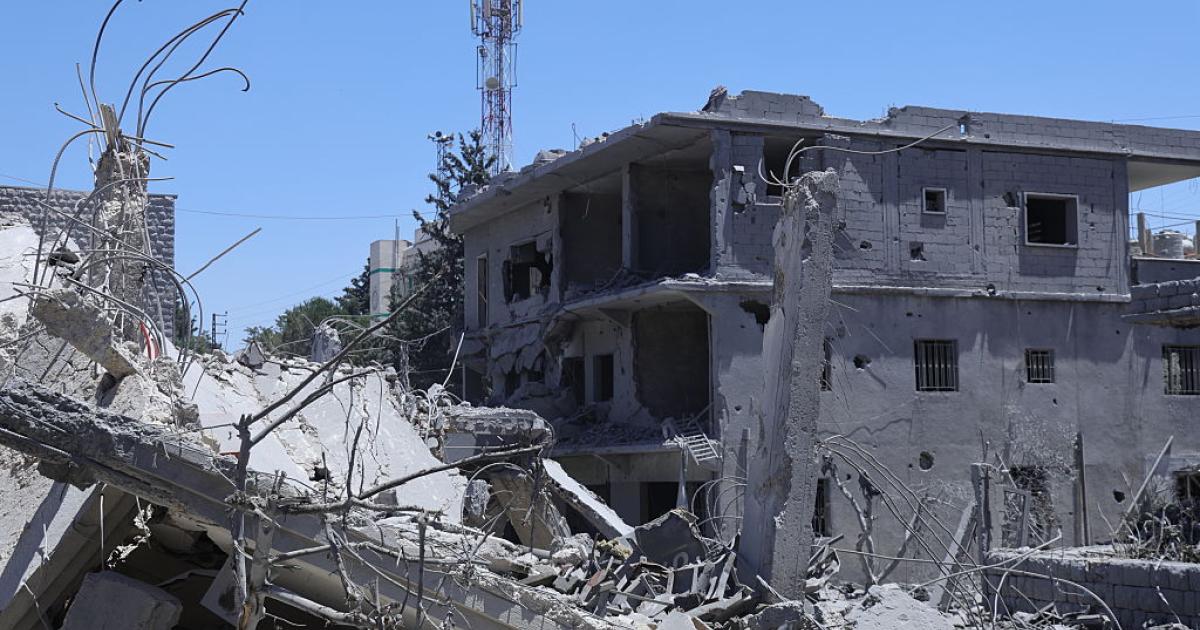
These perceptions were embodied in the nature of Israel's military action in the Gaza Strip. This included, among other things, the massive and indiscriminate bombardment of civilian areas and the use of starvation of over two million Gazans as a weapon of war; attempts at ethnic cleansing, including making ethnic cleansing of the population an official war objective; the systematic destruction of hospitals and other medical facilities—which enjoy special protection under international law—along with much of the civilian infrastructure in the Gaza Strip; and the unprecedented killing of medical and relief workers, civil order personnel, and journalists. In any case, the Israeli claim that Hamas or other Palestinian armed factions were present inside medical facilities and civilian buildings—often made without any evidence—cannot justify or explain such systematic destruction.
The clear picture that emerges from these patterns of action, which we will discuss in detail later, is that of a widespread, coordinated, and deliberate attack on the Palestinian residents of the Gaza Strip, aimed at destroying Palestinian society in the Strip as a population group. Since its inception in October 2023, this policy has enjoyed the support, legitimacy, and normalization of most of Israeli-Jewish society, as well as the Israeli judicial system.
The issue of intent, which constitutes one of the components of the definition of genocide, emerges decisively in light of several aspects: the Israeli leadership's awareness of the foreseeable consequences of the policy of fire and starvation that was implemented; the systematic destruction of civilian infrastructure that sustains life; the decision to continue and even escalate the attack despite countless warnings and evidence of its consequences for the civilian population of the Gaza Strip; and numerous statements by decision-makers that made it clear that Israel was acting against the entire population of the Strip.
The in-depth legal examination of suspicions of Israeli genocide is evident in the Amnesty International report published in December 2024, “You Feel Like You Are Subhuman: Israel’s Genocide Against Palestinians in Gaza,” as well as in the work of Physicians for Human Rights, which is being published today, and in the work of the South African prosecution team, the main findings of which were published in the prosecution document (and in the evidentiary annexes added to it over the months of the attack) submitted to the International Court of Justice (ICJ), as well as in reports submitted by UN experts.
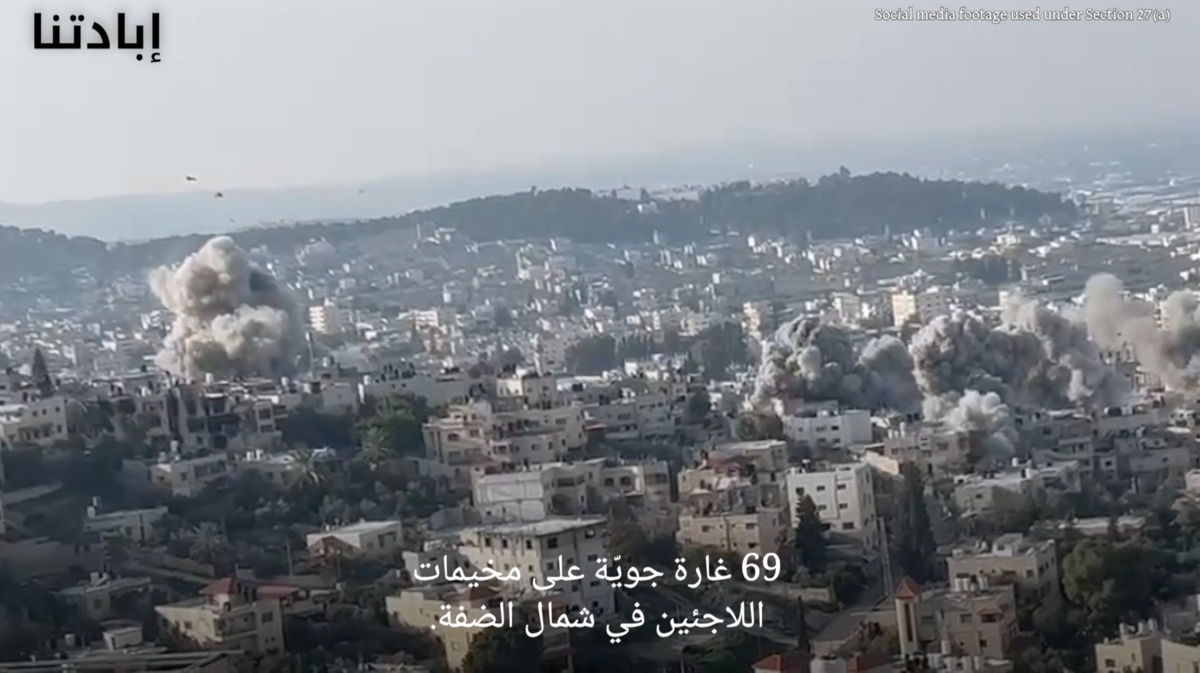
As Israel's genocide against Palestinians in the Gaza Strip continues unabated, it cannot be separated from the escalation of Israeli violence against Palestinians under its control in the West Bank, including East Jerusalem, and within Israel itself. The regime and army carrying out the genocide in the Gaza Strip are the same regime and army that are simultaneously waging a bombing campaign in refugee camps, killing hundreds of Palestinians, and implementing an unprecedented policy of displacement and dispossession throughout the West Bank, including East Jerusalem. This is the same regime that is implementing a similar policy of displacement, dispossession, and neglect in the Negev region, and a policy of intimidation and silencing Palestinian citizens of Israel who want to protest Israel's actions in the Gaza Strip, or simply express solidarity with the suffering of its inhabitants. This is the same regime whose primary mission is to prevent Palestinian national self-determination and suppress expressions of Palestinian identity. All of this indicates that the escalation of Israeli violence in the Gaza Strip is gradually spreading to other areas; That Israeli forces that engage in such violence in one area become more accustomed to and less restrained in engaging in unprecedented violence in other areas as well; and that a society that legitimizes genocide in the Gaza Strip—whether through participation, support, turning a blind eye, or denial—is naturally inclined to grant similar legitimacy to the escalating violence against all Palestinians.
The following pages address the broad assault on Palestinians as a group—first by describing Israel's genocidal practices in the Gaza Strip, but also by describing the escalation of violence against Palestinians throughout the areas under Israeli control, focusing on four main areas: killing, destruction, displacement, and social, political, and cultural disintegration. This is followed by an explanation of how Israel, within the framework of genocide, undermines Palestinian identity by attacking refugees and their refugee status. Finally, we present the main aspects of the effort to dehumanize Palestinians in the Gaza Strip and incite against them.
A. Murder and causing serious bodily and psychological harm.
A.1. Killing and causing severe physical and psychological harm in the Gaza Strip
The death toll from the Israeli military offensive on the Gaza Strip, as of July 2025, has exceeded 58,000 people, according to data from the Gaza Ministry of Health. The breakdown of data released by the Ministry of Health in June 2025 indicates that 10% of the dead were women, 18% were minors, and 5% were elderly. A study published in February 2025 estimated that life expectancy for men in the Gaza Strip fell by 51.6% during the first 12 months of the Israeli offensive, to 40.5 years—a loss of 34.9 years compared to the pre-war average. Life expectancy for women in the Gaza Strip fell by 38.6%, to 47.5 years—a loss of 29.9 years.
A number of studies published over the past year indicate that the above figures represent an incomplete estimate of the death toll, and that the actual number of victims inflicted by the Israeli offensive is likely much higher. The duration and continuity of the offensive, the massive scale of infrastructure destruction, and the restrictions on the entry of relief and rescue organizations into the Gaza Strip are only some of the factors that contribute to this partial estimate, which does not fully reflect the extent of the crimes committed by Israel in the Gaza Strip since October 2023.
A. 1. 1. Air strikes and population evacuation
These figures are a direct result of Israel's open-fire policy, which systematically violates fundamental principles of international law, such as distinction and proportionality. This policy has allowed the military to hit an unprecedented number of civilians not participating in the fighting while attacking targets that Israel has defined as military objectives. In the current offensive, Israel is extensively using unlawful technological tools to create and criminalize targets, enabling attacks based on the judgment of soldiers and secondary military commanders in the field. These practices allow for an increased frequency of attacks at the expense of precautionary measures aimed at minimizing harm to innocents.
The evacuation orders Israel imposed on civilians in the Gaza Strip—which, under international humanitarian law, are supposed to provide residents with advance warning of airstrikes or military incursions—were often unclear or misleading, and did not allow sufficient time to leave. Furthermore, after informing residents of the need to leave their homes, Israel repeatedly bombed the “safe passages” through which displaced persons were supposed to move toward “humanitarian areas.” Testimonies given to B’Tselem by residents of the Gaza Strip and video footage published in international media revealed scenes of bodies lying by the side of the roads, likely those of displaced persons attempting to leave their homes in the north and head for the “humanitarian areas” in the south.
Living conditions in the "humanitarian zones," which were supposed to be safe for the displaced, were unbearable and were also subjected to systematic bombardment. A BBC analysis found that Israeli attacks on the "humanitarian zone" in Al-Mawasi had intensified since May 2024—the month the displaced were asked to move there. From that month until January 2025, the area was bombed 97 times.
Muhammad Ghurab, 32, a resident of Gaza City who had fled to the al-Mawasi area west of Khan Yunis, gave a testimony to B'Tselem describing an attack he witnessed on July 13, 2024. This attack, which involved two consecutive airstrikes, and which Israel claimed was targeting Muhammad Deif, head of Hamas's military wing, and another senior military wing official, was the deadliest attack on the al-Mawasi "humanitarian zone" in those months. A large number were killed and wounded after the first airstrike. After rescue workers and civilians arrived at the site to try to rescue the wounded, the Israeli Air Force bombed the area again. In total, 90 people were killed and 300 wounded in the two airstrikes.
“Suddenly, a terrifying belt of fire formed [...] The sky was completely covered with clouds, dust, and dirt. People started running in all directions. [...] We started pulling out the injured as best we could. Some had their hands and legs cut off. [...] Some of the injured we pulled out died in our hands. When we went inside to check on the tents that remained, we saw that they were filled with corpses, mostly women and children. What we saw that day, at that hour, was the embodiment of madness. Something incomprehensible. It was as if pieces of hell were falling on us. It really cannot be described, because language is incapable of expressing and will not comprehend the horrors we witnessed. What I am describing here is just a small part of the horrors that took place. [...] Since that day, I have been afraid all the time. I expect at every moment that they will bomb our tents, that they will bomb me and my family.”
In various incidents, fires have been reported to have spread through IDP tent complexes as a result of the intense and violent bombardment. In many documented cases, people burned to death. Ahmed Al-Dalu, 44, a resident of Gaza City, described an airstrike on the IDP camp where his family was staying in October 2024. As a result of the fire that broke out in the tent, his 20-year-old son Shaaban burned to death right before his eyes:
“When I returned to the entrance of the tent, I heard the loud sound of a drone hovering in the sky above us. Its loud sound scared me greatly, and I became anxious and nervous. I asked God to protect us and prayed that nothing bad would happen to us, but I wondered who among us would die tonight. Suddenly, a ball of fire fell on the tent and hit my children. I looked at them and saw that they were not moving, and in an instant I decided to go in and save them. I think my paternal instinct drove me to do so. I threw myself into the fire and managed to pull out Abdul Rahman, Rahaf, Farah, and my wife, who was sleeping next to her. I saw the fire burning the body of Shaaban, who was sleeping on a wooden chair directly adjacent to the point that had been bombed. I saw his face melt from the flames. It was a horrific scene. At that moment, I reached the peak of defeat and brokenness. I told him, “Forgive me, my dear son, but I cannot help you.”
After violating the ceasefire in March 2025, Israel returned to a pattern of aggressive and indiscriminate attacks throughout the Gaza Strip, including "humanitarian zones" and other areas where tens of thousands of destitute displaced persons are concentrated. As of July 14, 2025, the Ministry of Health in Gaza reported more than 7,450 deaths and over 26,000 injuries since the ceasefire was violated.
To be continued tomorrow

ARAB AND WORLD
Thu 31 Jul 2025 10:12 am - Jerusalem Time
B'Tselem opens Pandora's Box... 70-page report documents daily genocide
Tags
MORE FROM ARAB AND WORLD





Share your opinion
B'Tselem opens Pandora's Box... 70-page report documents daily genocide