






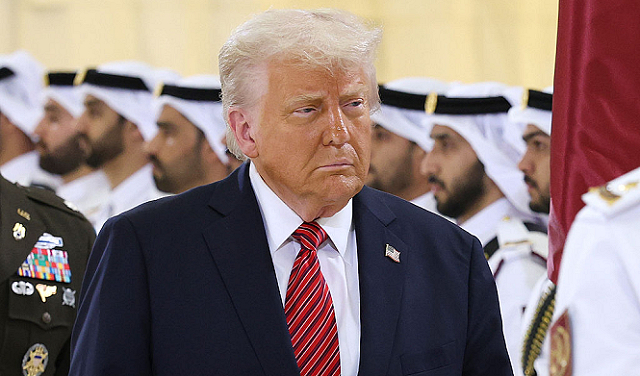
Muhammad Abu Allan: The Saudi position, based on peace with the Palestinians first, is what is hindering the implementation of Trump's plan, as he attempted to expand the circle of normalization during his first term.
Dr. Ahmed Younis: The Trump plan is part of a larger regional equation: normalization in exchange for nothing, appeasement in exchange for perpetuating control, and promises of investment in exchange for Arab silence.
Dr. Tariq Ziad Wahbi: The option of a Palestinian state is no longer viable, and the only possible solution is the establishment of a single state for two peoples within a legal framework that respects both parties.
Dr. Ilham Shamali: The situation in Israel is ripe for a deal and an end to the war, and the field indicates that the Israeli army no longer has anything to do in Gaza.
Attorney Moein Odeh: The Israeli Bar Association and politicians considered Netanyahu's request to Trump to publish a "pardon tweet"—if proven—a criminal offense.
Contrary to the facts on the ground, which show continued Israeli escalation and crimes in the Gaza Strip, the West Bank, and even on the Lebanese front, a secret plan developed by US President Donald Trump and Israeli Prime Minister Benjamin Netanyahu was recently revealed. This plan aims to expand the circle of normalization with a number of Arab countries, including arrangements for Gaza and Syria.
The Israeli newspaper Israel Hayom, which is close to Netanyahu, reported that the parties involved have agreed on a set of principles to end the war in the Gaza Strip. These principles include ending the Israeli aggression within two weeks, with the administration of the Strip being transferred to four Arab countries, including Egypt and the UAE, instead of Hamas.
The vision includes exposing the remnants of Hamas' leadership in other countries and releasing Israeli detainees in the Strip. The plan also stipulates that several countries would receive large numbers of Gaza residents wishing to emigrate.
The Hebrew newspaper claimed that, as part of the expansion of the so-called "Abraham Accords," Syria, Saudi Arabia, and other Arab and Islamic countries are expected to recognize Israel and establish formal relations with it.
She added: Tel Aviv is expected to express its willingness to reach a solution to the "Palestinian-Israeli conflict" based on the two-state solution, in exchange for reforms within the Palestinian Authority, while Washington recognizes the application of a portion of Israeli sovereignty in the West Bank.
Israel Hayom newspaper quoted two political sources as saying that there is intense US pressure on Israeli Prime Minister Netanyahu to end the military campaign in the Gaza Strip.
Writers, academics, and experts who spoke to "I" said that the Trump plan is part of a larger regional equation: normalization in exchange for nothing, appeasement in exchange for perpetuating control, and promises of investment in exchange for Arab silence. They emphasized that the option of a Palestinian state is no longer a viable option, and that the only possible solution is the establishment of a single state for two peoples within a legal framework that respects both parties.
They explained that the Saudi position, based on prioritizing peace with the Palestinians, is what is hindering the implementation of Trump's plan, as Trump attempted to expand the scope of normalization during his first term.
American policy to throw dust in the eyes
Israeli affairs expert Mohammed Abu Allan said, "The establishment of an independent Palestinian state is an American policy that can be described as 'throwing dust in the eyes.' The United States has always talked about a two-state solution without implementing anything tangible on the ground. On the contrary, US President Donald Trump, in his first term, proposed the 'Deal of the Century,' which effectively destroyed the two-state solution at its roots."
He explained that "American policy, through successive administrations, has never been serious about establishing a real Palestinian state, but rather treats this issue as a political card to be used when necessary."
Abu Allan pointed out that everyone, including the US administration, realizes that Israeli settlement activity has destroyed any possibility of establishing an independent Palestinian state. Currently, the US administration is talking more about allowing the occupying state to annex the West Bank or parts of it than about the two-state solution, rendering any discussion of this solution meaningless.
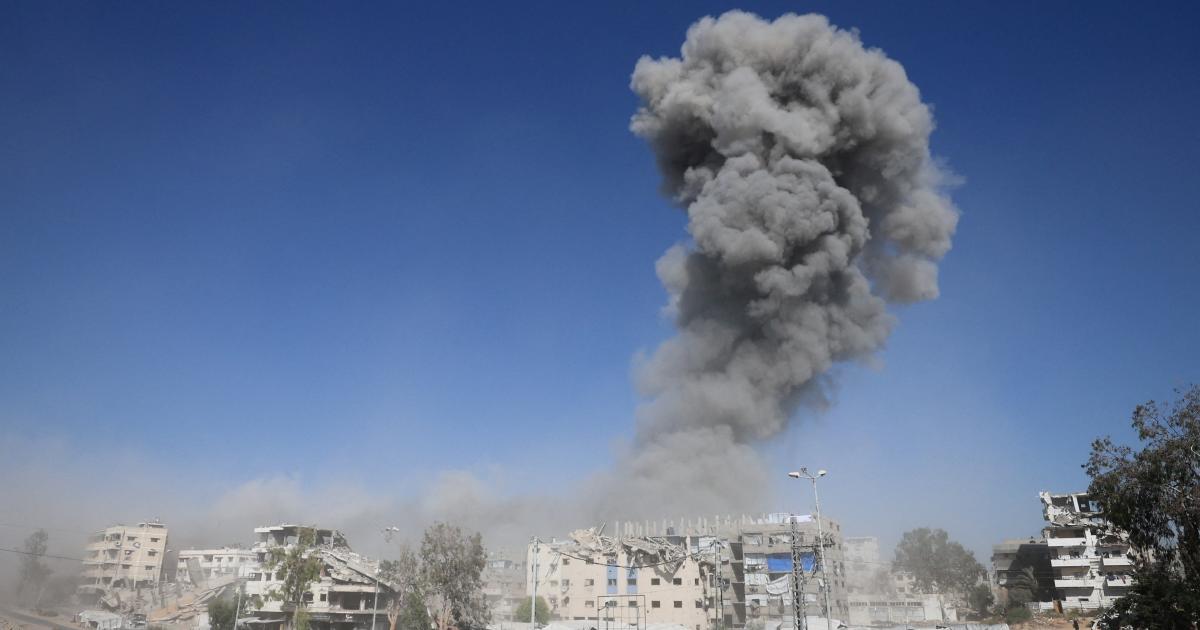
Regarding Trump's statements about halting the war on Gaza, Abu Allan viewed them as merely a "political maneuver." While Trump is talking about the possibility of reaching a ceasefire within the next week, the Israeli army continues to expand its military operations and issues orders aimed at encircling Palestinians in Gaza in the smallest possible area.
Trump gives Netanyahu another chance to continue his war
He considered these developments to constitute an additional opportunity provided by Trump to Netanyahu and the occupation army to continue their war of genocide against the Gaza Strip, despite some indications of intentions to cease fire.
He said: "So far, there is no clear position from Netanyahu indicating his acceptance of a ceasefire, and he remains adamant about rejecting any settlement that could lead to calm.
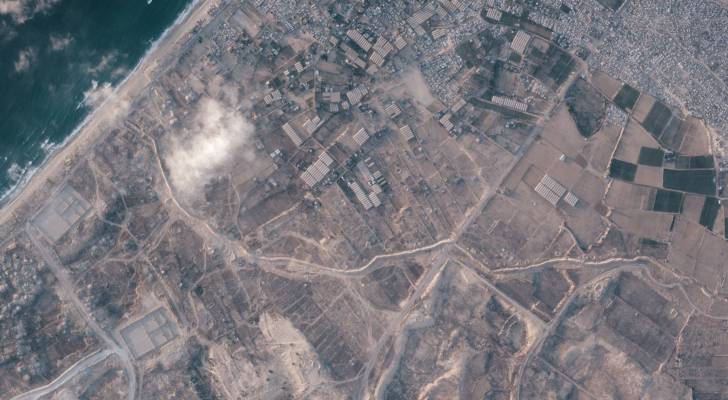
Abu Allan added, "My personal belief is that the decision to stop the war is in Trump's hands. He can say within minutes, 'We want an immediate end to the war,' and it will happen." However, it's clear that Trump is giving Netanyahu more time to complete his goals, especially after the Israeli army's chief of staff announced that his forces now control approximately 75% of the Gaza Strip and that they are close to achieving the goals of the Gideon Armoured Vehicles.
He stressed that Israel, in its view, is still far from achieving its goals, whether in terms of recovering prisoners or defeating Hamas, and that this could serve as a pretext for continuing the war for an additional period.
Regarding the expansion of the normalization agreements known as the "Abraham Accords," Abu Allan said that Saudi Arabia represents the "key" in this matter. If Riyadh continues its position of rejecting normalization without the establishment of an independent Palestinian state on the June 4 borders with East Jerusalem as its capital, most Arab countries will not move forward with these agreements.
He stressed that the Saudi position, based on prioritizing peace with the Palestinians, is what is hindering the implementation of Trump's plan. Trump attempted to expand the scope of normalization during his first term but failed, primarily due to the unwavering Saudi stance.
Trump demands pardon for Netanyahu to avoid prosecution
Regarding Trump's demand to pardon Benjamin Netanyahu, Abu Allan considered this to be part of a "joint game" between Trump and Netanyahu aimed at enabling the latter to escape the trials he has faced for years. He noted that Netanyahu had previously attempted to circumvent these trials through a judicial coup within Israel, but the outbreak of war disrupted this process. Today, he is exploiting the current circumstances to attempt to revive this project with Trump's support.
He added, "Trump is trying to trade the fate of the Israeli prisoners in Gaza for a pardon for Netanyahu, as if he is offering the Israelis a choice: 'If you want to end the war and return the prisoners, you must support a pardon for Netanyahu so he can complete his achievements and return the Israeli prisoners.'"
Abu Allan considered this to be blatant and unprecedented interference by Trump in Israel's internal affairs. Nevertheless, he welcomed it from Netanyahu and his supporters, stressing that the success of this initiative is not guaranteed, given the legal and political complexities within Israel.
An unprecedented strategic shift
For his part, academic researcher and political analyst Dr. Ahmed Younis said that recent developments in the region point to an unprecedented strategic shift, one in which politics intersects with security, and economics with ideology.
He added: "After the ceasefire between Iran and Israel, under US-Qatari sponsorship and with broad international support, it became clear that the Trump administration, seeking to return forcefully to the international stage, is not content with merely extinguishing the flames of war, but rather wants to draw a new map that combines the idea of so-called economic peace with establishing Israel as a natural regional player, even at the expense of pending sovereign issues, foremost among them the Palestinian issue."
Younis pointed out that within this context, the Trump administration has proposed a multi-dimensional plan that, on the surface, includes a de-escalation and an end to the conflict, but in essence, it is based on the logic of political bargaining: a comprehensive ceasefire, a prisoner exchange, and the reconstruction of Gaza through massive international projects involving American and Gulf companies, in exchange for public normalization steps with key Arab countries such as Saudi Arabia, Lebanon, and Syria, leading to the internal containment of the Netanyahu trial file, under the pretext of preserving Israeli stability and preventing the collapse of the government.
A historic opportunity to create a new Middle East!
He pointed out that Trump is presenting this plan not just as a deal, but as a historic opportunity to create a new Middle East. In a statement, he described Gaza as "a promising tourism project similar to the Mediterranean Riviera," a reference to American intentions to transform Gaza into a gateway to economic peace under Israeli-Arab security protection.
Younis emphasized that this proposal raises fundamental questions about the feasibility of transforming a devastated and besieged area for decades into a successful economic model without addressing the root causes of the political problem: occupation, displacement, and the right of return.
He said: While international and regional parties have agreed to support the plan in theory, most notably Qatar and Egypt, the Palestinian position has appeared cautious, particularly from Hamas and Islamic Jihad, which consider any plan that does not include a full withdrawal and the right to self-determination to be merely a decoration and entrenchment of the occupation.
On the domestic Israeli front, the Lebanese analyst explained that signs of a split have begun to emerge between those who view the Trump plan as a golden opportunity to consolidate military gains in Gaza and Lebanon, and those who object to the blatant American interference in the Israeli judiciary. This is particularly true after media outlets revealed that pressure was exerted on the court to postpone or cancel Netanyahu's corruption trial, a move his opponents considered a coup against judicial independence and an attempt to undermine democracy.
The success of such a plan depends on several interconnected elements.
Younis believes that the success of such a plan in ending the conflict and imposing a permanent settlement is very complex, as it depends on several interconnected factors, most notably: the extent to which the Arab parties are willing to make concessions without a real guarantee of the establishment of an independent, sovereign Palestinian state; the position of the Palestinian factions on any potential normalization; and the cohesion of the Israeli domestic front in light of the judicial crisis and partisan divisions. Regarding the Arab countries, he noted that Saudi Arabia remains committed to the Arab Peace Plan, which links any normalization to the establishment of a full Palestinian state, and it does not appear prepared to make this political concession for free.
He added: As for Lebanon, which is governed by the refugee issue, the occupation of the Shebaa Farms and the Kfar Shuba Hills, and the Israeli violations that emerged after the end of the Israeli war through the deployment of Israeli occupation forces at five points inside Lebanon on the Lebanese border, and the security breaches that it is committing in the southern regions and the Beirut suburbs, and the sharp internal Lebanese division, which prevents Lebanon from engaging in a normalization plan.
He continued: "As for Syria, mired in the complexities of its internal conflict, it is not ready for any normalization process. It can barely reach an understanding with Israel regarding border control between the two countries."
Putting Palestinians in the position of recipients, not partners
In light of these facts, Younis considered the US plan an attempt to redefine the regional balance of power, impose a declared normalization that places the Palestinians in the position of recipients rather than partners, and offers economic incentives as a substitute for national rights.
He said, "If the Trump administration believes the time is right to implement this plan, given the exhaustion of the Iranian axis and the depletion of the resistance in Gaza and Lebanon, the reality indicates that any settlement based on breaking the national will, without justice, will only generate new tensions or postpone the explosion to a later stage."
Younis concluded his statement by stressing that "Trump's plan is not just a political initiative, but rather part of a larger regional equation: normalization in exchange for nothing, appeasement in exchange for perpetuating control, and promises of investment in exchange for Arab silence. But it is also a risky venture, because it ignores that the core of the conflict in the Middle East is not economic or even security-related, but rather political and identity-related. Unless the roots of Palestinian grievances are addressed, any plan, no matter how embellished, will be nothing more than a break between two wars."
Trump's plans are nothing but games.
For his part, international relations researcher Dr. Tariq Ziad Wahbi said that Trump's plans are nothing more than games that cannot be classified as political, as long as they are built on purely commercial foundations, where the fates of peoples are bought and sold.
He emphasized that President Trump has a big ego and strongly believes that everything he says is made of gold and diamonds, but the truth is much more complex. All players in the Middle East calculate profit and loss, and this is the foundation of construction.
Wahbi pointed out that normalization is a definite complement, and perhaps the most profitable project for Trump, because it binds everyone, pushing them to make him the first and last influencer, striving to be the one making the right decisions, even if the peoples upon whom normalization is imposed are far removed from understanding what might happen next!
Regarding a Palestinian state, Wahbi believes it has become an elusive dream in light of Israeli extremism and Palestinian intransigence. He explains that the issue is no longer one of a "two-state solution," because Israeli governments, backed by popular extremism, have destroyed this idea through continued settlement expansion in Palestinian territories, as well as the ongoing return to biblical rhetoric that rejects any concession of occupied land.
He added, "The option of a Palestinian state is no longer viable, and the only possible solution is the establishment of a single state for two peoples, within a legal framework that respects both parties. Such a solution could constitute a form of mutual and shared protection for Jews and Arabs."
Netanyahu has become a hero to the majority of Israelis.
As for Netanyahu, Wehbe believes he has become a hero, in every sense of the word, to the majority of Israelis, who see him as nothing more than a fierce defender of Israel. Therefore, despite the criticism, it is the political extremism within the Israeli political "mosaic" that has so far prevented any prosecution of him, under the slogan that he is "the decision-maker who protects Jews before Israelis."
He said, "Since the beginning of his project to tamper with Israeli law, particularly by curtailing the powers of the judicial authorities, Netanyahu has been able to evade all prosecutions, under the guise of 'savior' or 'hero.' But all these theories could collapse if the political forces supporting him decide to abandon him in exchange for other privileges. This is where Trump and his 'agents' come in, fulfilling the dream of some circles within Israel."
Wahbi asserted that the case had become a kind of bargain: either trial or acceptance of all the extremists' demands.
He wondered whether the Gaza war would end even after the last prisoner and body held by Hamas and Islamic Jihad were handed over. "Definitely not," he said, because building peace on a zero-sum basis might be realistic, but it would perpetuate the cycle of violence and resentment among all parties.
Wahbi concluded by saying, "Trump, who dreams of a Nobel Prize, will continue to try with all parties that dream of nothing but fighting and destruction, because what unites them is the land on which life is worth living."
America rewards Netanyahu with the normalization file
For her part, Dr. Ilham Shamali, a writer on the Arab-Israeli conflict, asserted that conditions within Israel are now ripe for a deal and an end to the war, particularly at the government level.
She said: If there is an objection to the truce, the fact that it coincides with the Knesset's annual recess means that the agreement does not require a broad parliamentary vote.
Shamali added that the normalization process at this stage is being led by the United States, not from an investment perspective as it was previously, but rather as a "reward" for Israeli Prime Minister Benjamin Netanyahu for his achievements in the region. This is evident in the frequent praise directed at him by US President Donald Trump, who sees himself as the "king" of these issues.
Shamali explained that the reality on the ground indicates that the Israeli army no longer has much to do in Gaza, having taken control of more than 80% of the territory. It has also deployed armed groups in the southern Gaza Strip, specifically in Rafah, and is working to form new cells in the center and north, with the goal of destabilizing the Palestinian internal front and creating further chaos. It has also allowed humanitarian aid to enter and prevented any Palestinian entity from organizing or securing it.
The decline of the role of the "resistance" axis
She explained that Saudi Arabia has been pushing for normalization with Syria since Ahmed al-Sharaa's visit to the kingdom, in the presence of Trump, who in turn lifted sanctions on Syria as part of strengthening his regional standing. Israel later recovered the belongings of Israeli spy Eli Cohen, under direct US sponsorship.
She also noted that the Israeli strikes on Iran were carried out from Syrian airspace, without any condemnation or objection from the Syrian side, reflecting the declining role of the so-called "axis of resistance," which Netanyahu has been dismantling, country by country. This has helped pave the way for a new normalization equation after the Gaza Strip was effectively separated from the "unity of arenas" strategy promoted by Palestinian factions, but which has not been practically achieved during the two years of war.
Shamali emphasized that the primary supporters of Hamas and Islamic Jihad have been subjected to severe military strikes and violent internal upheavals, weakening their regional presence.
She believed that separating Gaza, Lebanon, Syria, and Iran would contribute to ending the war and shaping a new Middle East, as envisioned by both Trump and Netanyahu, based on a regional Arab alliance with a clear security front and a strategic goal in which Israel would prevail.
Netanyahu's indictment won't be dropped with a tweet from Trump
Regarding the issue of dropping the charges against Netanyahu at Trump's request, Shamali explained that this cannot be done via a tweet, but rather requires an official request from the President of the State of Israel, who alone has this right. She added that Israel, despite being an occupying state, is a state with judicial, legislative, and executive institutions, which makes implementing such a request difficult, especially in light of the existence of several cases against Netanyahu before the Israeli judiciary, which he is trying to stall while waiting for a political event that will allow him to move beyond these files.
Shamali concluded by saying, "All of Netanyahu's justifications for continuing the killing and genocide in Gaza, and expanding the war beyond the borders of Palestine under the banner of the 'October 7th attack,' are aimed at keeping the war raging, as its end would mean halting the flow of military and political aid to Israel. Consequently, the continuation of the war has become closely linked to Netanyahu's personal calculations that ensure the continuation of his government and his continued leadership of his party."
Pardoning Netanyahu is very difficult at this stage.
For his part, lawyer Moein Odeh, an expert on Israeli affairs, said that discussing a potential pardon for Israeli Prime Minister Benjamin Netanyahu is extremely difficult at this stage, noting that linking the normalization process with Arab countries to the establishment of a Palestinian state is more closely related than linking it to Netanyahu's trial.
Odeh explained that pardoning Netanyahu would require either a conviction by the court, which is a long-term process, or Netanyahu's admission of guilt and filing a pardon request, which he described as "almost impossible."
He stressed that the Israeli Public Prosecution does not file an indictment against a prime minister unless it is fully confident in its ability to prove the charges.
He added that US President Donald Trump's interference in the Israeli judicial system through a tweet about pardoning Netanyahu sparked a wave of criticism within Israel, noting that some politicians and the Bar Association considered that "Netanyahu's request for Trump to publish that tweet, if true, constitutes in and of itself a criminal offense."
He pointed out that discussions within the Israeli Public Prosecution and judiciary expressed strong opposition to this foreign interference, considering it an unacceptable precedent, which reinforces the impossibility of dismissing the indictment at this time.
Trump's project is not new
Regarding normalization with Arab countries, Odeh said that Trump's project in this context is not new, as he had previously presented it as part of the so-called "Deal of the Century," in which he linked normalization to the establishment of a Palestinian state. However, he asked, "Who has the right to accept or reject such an offer on behalf of the Palestinians?" He pointed to the absence of an elected Palestinian leadership, the internal division, and the ongoing war in the Gaza Strip.
Odeh doubted the Palestinians would accept any new offer, questioning the nature of the proposed Palestinian state: Would it be a truly sovereign state or a collection of disjointed cantons? Would it have an airport, borders, and an army? He argued that these questions open the door to profound disagreement.
He believed that the future of normalization hinges on two factors: the first is the existence of a serious path toward establishing a Palestinian state or returning to the negotiating table, and the second is the outcome of the recent war between Israel and Iran, with each side claiming a major victory over the other.
Attorney Awda concluded by saying, "Assessing the veracity of these allegations will take months, and the results will determine Arab states' positions on moving forward with normalization, or backing away from it, should the strength of Iran's response and its ability to impose a new balance in the region prove."



Share your opinion
Trump's Normalization Plan: A Flashback to the First Chapter of the Story