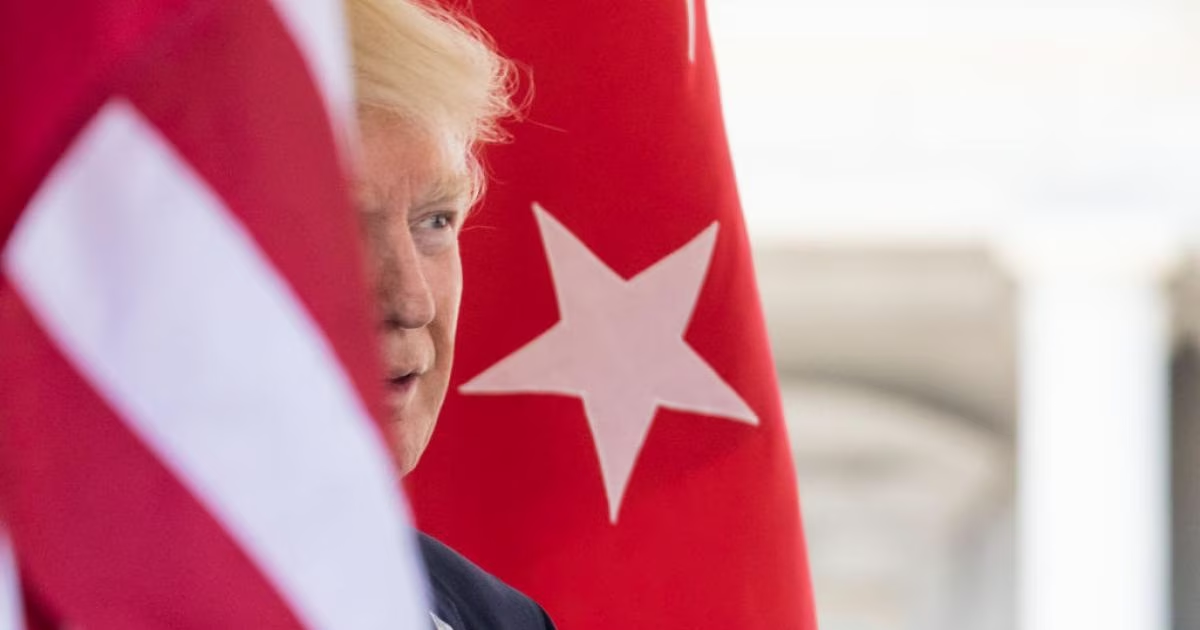







The administration of US President Donald Trump has officially informed Congress of its decision to proceed with a massive military deal with Turkey, which includes supplying Ankara with dozens of engines for fighter jets. The total value of this deal exceeds $700 million, a move that reflects the White House's desire to strengthen defense cooperation with its Turkish ally despite existing tensions.
The US State Department, in its official notification to lawmakers dated June 24, stated that the decision came after a comprehensive evaluation of a range of political, military, and economic considerations. The administration affirmed that it takes into account human rights standards and arms control before granting final export licenses for these sensitive components.
This step comes at a sensitive political time, serving as a clear signal of support from Washington to Ankara ahead of the NATO summit that Turkey will host next month. Observers also see the deal as a strong political boost for Turkish President Recep Tayyip Erdoğan, who has close ties with President Trump.
In contrast, this approach faces fierce opposition within Congress, specifically from Democratic lawmakers who refuse to make defense concessions to Ankara. Opponents base their stance on Turkey's continued possession of the Russian S-400 missile defense system, which has caused a deep diplomatic crisis since 2019.
Informed sources reported that Democratic Representative Gregory Meeks, the ranking Democrat on the House Foreign Affairs Committee, expressed explicit objections during initial reviews. Meeks refused to grant his approval for the deal, accusing the administration of ignoring the implications of this decision for US national security and strategic relations in the region.
In press statements, Meeks criticized what he described as the administration's failure to provide sufficient clarification on key aspects of US policy towards Turkey. He pointed out that the required components would not be delivered for years, yet the administration insists on proceeding with the procedures without addressing the unresolved issue of the Russian system.
Technically, these engines, produced by General Electric, are slated to power the 'Kaan' fighter jet, Turkey's first domestically produced stealth aircraft. This project represents a cornerstone of Ankara's ambitions to enhance its defense independence and reduce reliance on Western suppliers in the distant future.
Despite progress on the 'Kaan' project, Turkish officials acknowledge that the new aircraft will require many years of development before it is ready for actual service. US F-16 aircraft will remain the backbone of the Turkish Air Force for at least the next decade.
US law grants Congress a 15-day period to act collectively and introduce a joint resolution aimed at stopping or delaying the deal. However, the success of this endeavor requires the approval of a majority of members in both the House and Senate, with the presidential veto right remaining available to Trump to override any parliamentary objection.
It is worth noting that defense relations between the two countries have significantly deteriorated since Turkey's exclusion from the advanced F-35 fighter jet program as a punitive measure for the S-400 deal. Current US legislation prohibits the sale of those fighter jets to Ankara as long as the Russian system remains in its possession, claiming it poses a technical threat to US aircraft.
The US government is preparing to grant an export license for these components after considering political, military, economic, human rights, and arms control considerations.
شارك برأيك
Trump Administration Defies Democratic Opposition, Proceeds with $700 Million Aircraft Engine Deal for Turkey