






The joy of thousands of graduates in the Gaza Strip upon completing their academic journey was incomplete, as they found themselves facing a solid financial wall preventing them from obtaining their university degrees. After years of study and diligence under harsh conditions, accumulated tuition fees have become an obstacle preventing them from entering the job market or applying for scholarships.
Field data indicates that the financial crisis has worsened unprecedentedly due to the ongoing war of annihilation, which has deprived families of their sources of income and shifted living priorities towards securing food and clothing. This reality has made paying university dues an act beyond the financial capacity of most Palestinian families in the besieged Strip.
At the Islamic University of Gaza, statistics show that 5,808 graduates have been unable to receive their certificates due to debts amounting to approximately $5.7 million. These graduates find themselves in a vicious cycle, where they need the certificate to get a job, and they need a job to pay for the certificate.
Al-Azhar University, on the other hand, is suffering from a deeper crisis, with the number of stranded graduates reaching 5,588, with total outstanding fees exceeding $10.8 million. These huge figures reflect the extent of the economic collapse that has affected the middle class and students who relied on their families' savings.
Al-Aqsa University leads the scene in terms of the number of affected individuals, with an estimated 12,000 graduates who have not received their documents. The total value of accumulated fees at this public university is approximately $9.9 million, which places the university administration before major operational challenges.
At the University College of Applied Sciences, 4,127 graduates have not completed their official graduation procedures due to financial dues amounting to $1.7 million. Added to these amounts are other obligations related to higher education loans that pursue graduates and increase their psychological and financial burdens.
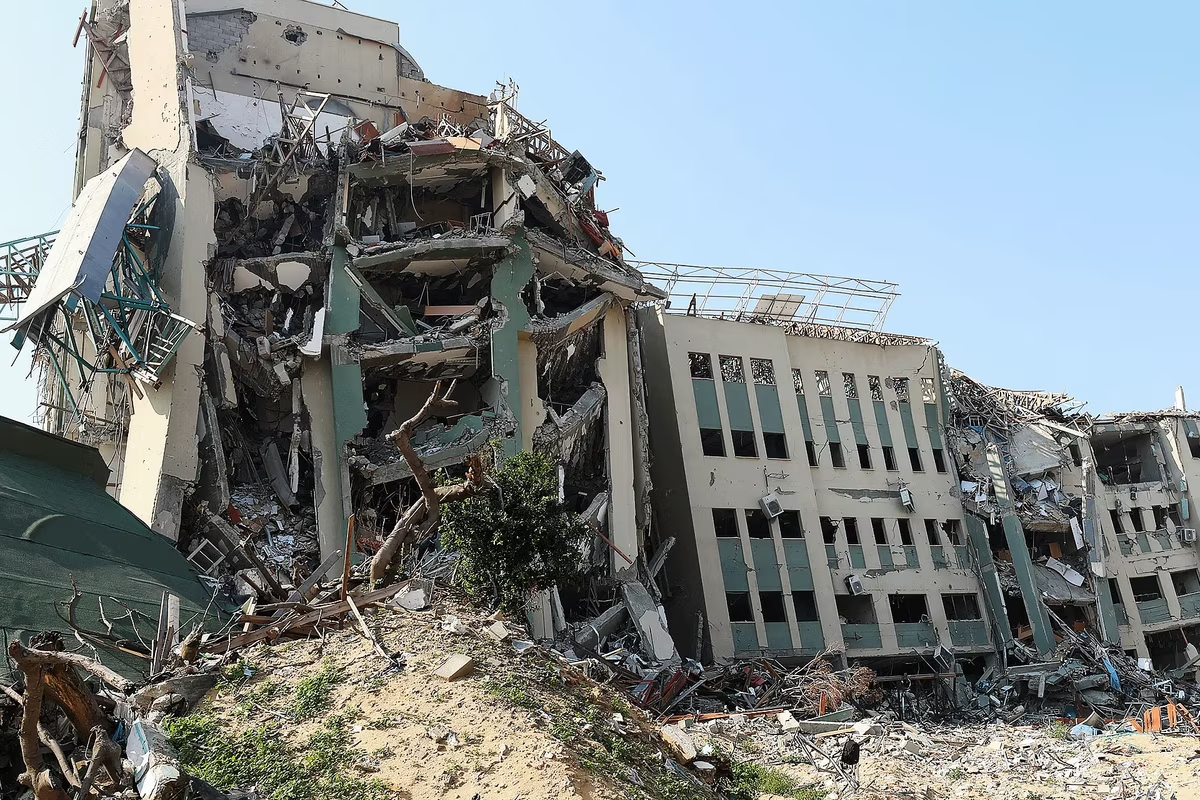
Academic sources reported that Palestinian universities in Gaza are themselves experiencing an existential crisis, as their buildings and facilities have suffered widespread destruction during the war. These institutions primarily rely on student fees to cover staff salaries and essential operating expenses necessary for the continuation of the educational process.
Mahmoud Atallah, Director of Student Affairs at Al-Aqsa University, explained that the university is trying to alleviate the burden on students by providing grants and exemptions that have benefited thousands of students. He pointed out that the university allowed students to register for credit hours without immediate payment to help them continue their education despite the lack of income.
For his part, Dr. Mohammed Hamdan from Al-Aqsa University affirmed that the university is making efforts to attract funding projects to release certificates in cooperation with international institutions. However, these initiatives remain limited and cover only a small percentage of graduates due to the strict conditions set by funders.
Khulood Al-Othmani spoke about the suffering of her son, Firas, an information technology graduate, whose certificate has become hostage to a sum of money that the family cannot afford. She explained that her husband's loss of his job as a tailor due to the war made securing a livelihood the top priority, which led to the freezing of her son's professional dreams.
Specialists believe that the continued withholding of certificates contributes to increasing unemployment rates among youth and deprives society of idle scientific competencies. Many job opportunities and external scholarships require the presentation of original documents, which thousands of graduates currently lack.
Sources at the University College of Applied Sciences indicated that the war led to a sharp increase in the number of financially struggling students compared to previous years. They confirmed that the gap between students' financial needs and the ability of relief organizations to intervene is widening alarmingly daily.
The universities find themselves in a difficult equation between preserving the student's right to obtain their certificate and their need for money to ensure their survival as educational institutions. This financial struggle reflects one aspect of the silent suffering experienced by the higher education sector in Gaza under the weight of aggression.
Thousands of graduates in Gaza remain waiting for a radical solution to end the 'hostage certificates' crisis, whether through governmental interventions or widespread international donations. Without the release of these documents, the dreams of an entire generation of Palestinian youth will remain suspended behind the walls of debt-ridden universities.
The certificate has become trapped in university drawers, awaiting payment of fees that my family cannot afford under the suffocating economic conditions.



شارك برأيك
Certificates Held Hostage by Fees.. Financial Crisis Besieges 27,000 Graduates in Gaza