







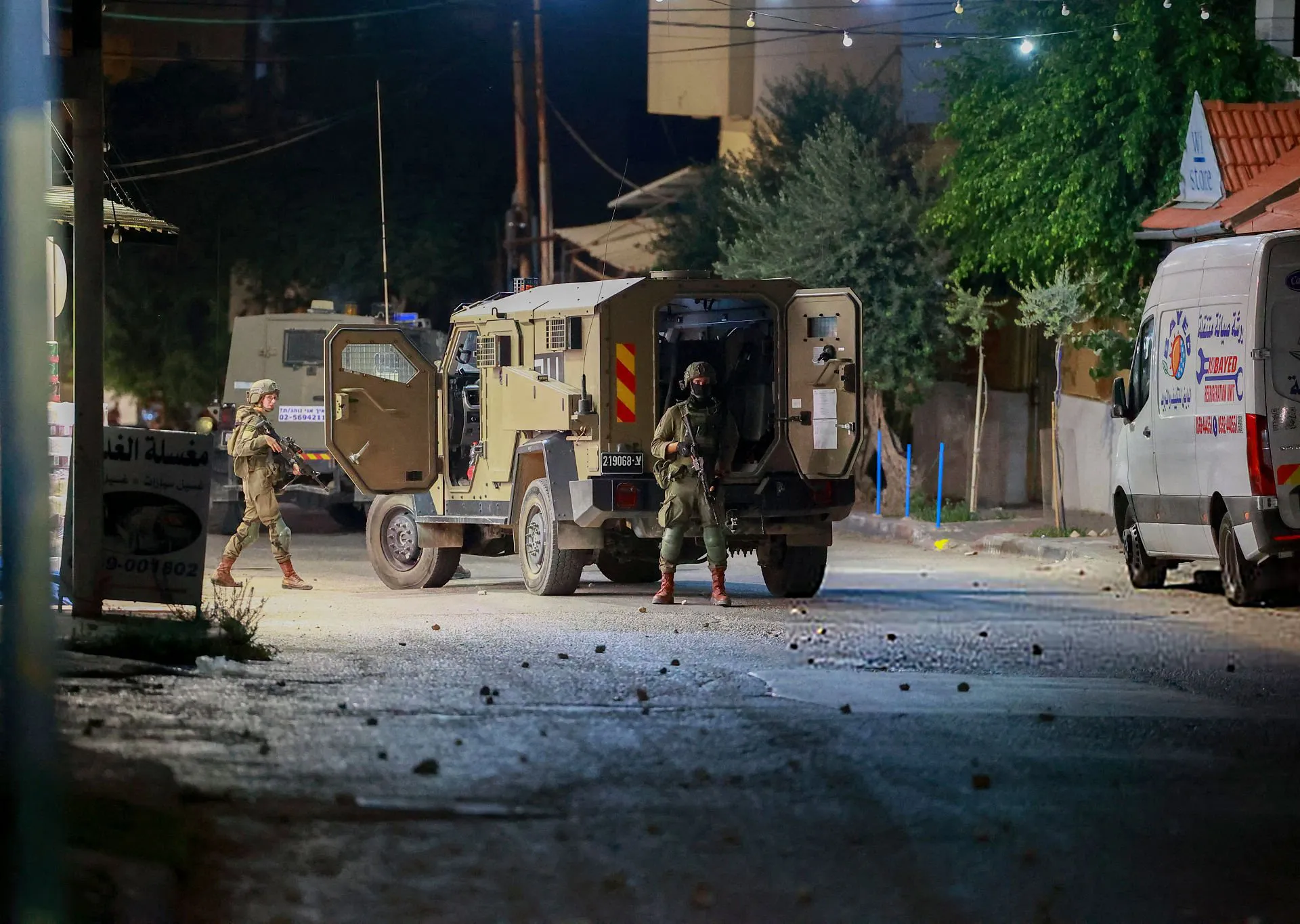
Israeli occupation authorities today, Friday, completely closed the holy Ibrahimi Mosque in the city of Hebron, south of the occupied West Bank, to Palestinian worshippers until further notice. Local sources reported that army forces forced guards, custodians, employees, and worshippers present to immediately leave the mosque's corridors under threat of arms.
The acting director of the Ibrahimi Mosque, Hammam Abu Markhiya, confirmed that this sudden closure began in the early morning hours and was accompanied by unprecedented military tightening around the Old City. He explained that the occupation had tightened the closure of military checkpoints and electronic gates leading to the mosque, preventing any access for citizens to the area.
Abu Markhiya described the Israeli measures as a blatant assault on the sanctity of the Ibrahimi Mosque and a provocative transgression that affects the natural right of Muslims to practice their religious rituals. He pointed out that this step falls within the ongoing attempts by the occupation to change the religious and historical features of the place and impose absolute control over it.
For its part, the Palestinian Ministry of Awqaf and Religious Affairs condemned this closure, considering it a serious violation of freedom of worship guaranteed by international laws. The ministry warned that this policy aims to establish a new reality inside the mosque that serves settlement plans, calling on the international community to intervene immediately to stop these transgressions.
In a related context, occupied Jerusalem witnessed the arrival of about 60,000 worshippers at the blessed Al-Aqsa Mosque to perform Friday prayers, despite the tightened security measures imposed by the occupation forces. Police elements were heavily deployed at the mosque's gates and in the alleys of the Old City, where they checked the identities of young men and prevented hundreds from entering.
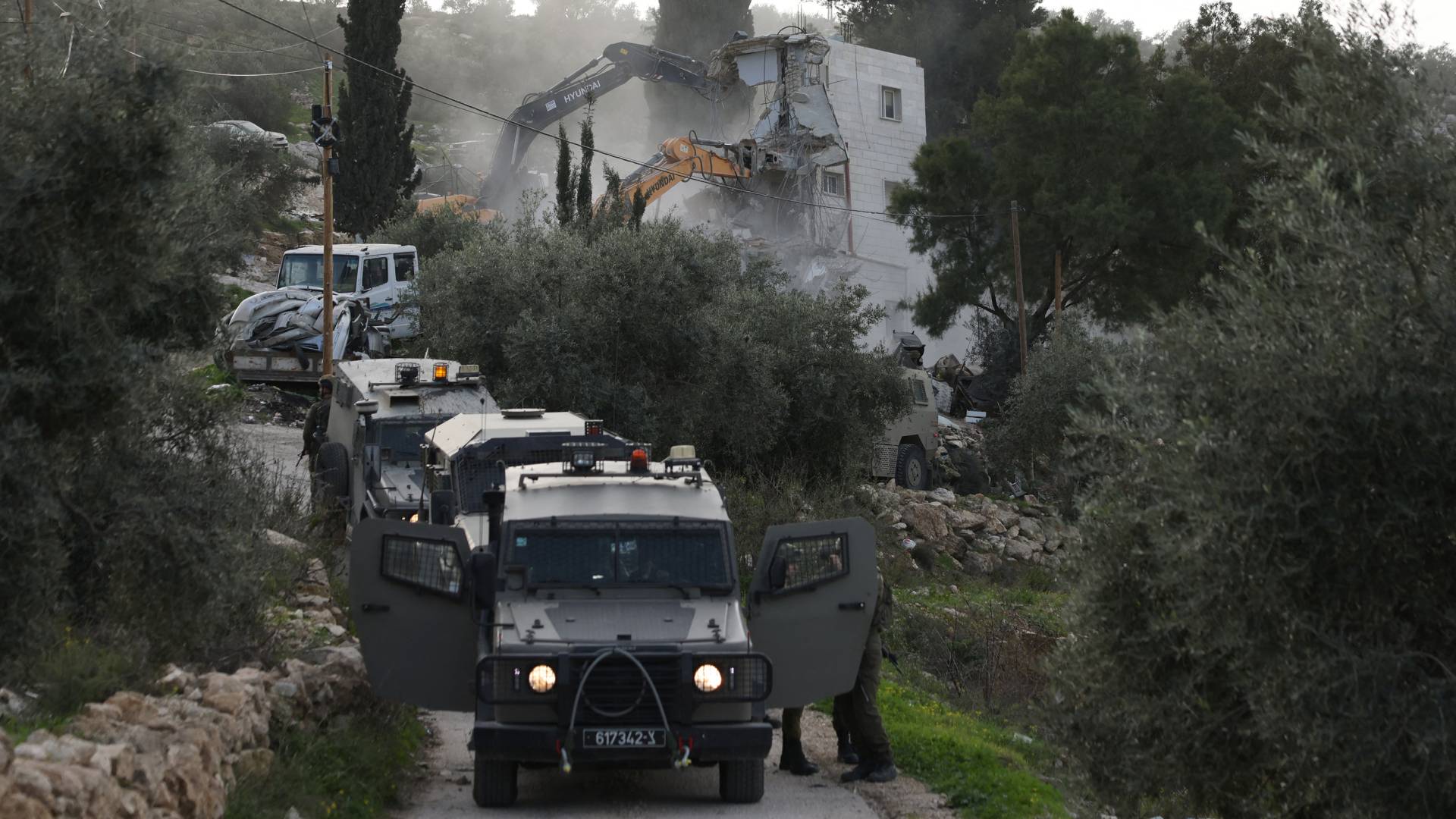
On the ground in Jerusalem, occupation authorities forced citizen Raafat Awadallah to self-demolish his home in the eastern area of Qalandia village, north of the city. The forced demolition came after the citizen exhausted all legal means to protect his home, as authorities threatened him with heavy fines if occupation machinery carried out the demolition.
In the West Bank, occupation forces launched a wide arrest campaign that included a child in Kafr Aqab town, north of Jerusalem, after severely beating him. The forces also stormed the city of Qalqilya and deployed their snipers on the roofs of high-rise buildings, arresting four citizens before withdrawing and leaving threatening leaflets for residents.
Nablus governorate was not immune from the escalation, as occupation forces arrested a citizen and a woman during a raid on Al-Ain camp west of the city. These raids coincided with attacks carried out by extremist settlers at dawn today, targeting Palestinian properties in the towns of Sebastia, An-Naqoura, and Beita, resulting in the smashing of a number of vehicles.
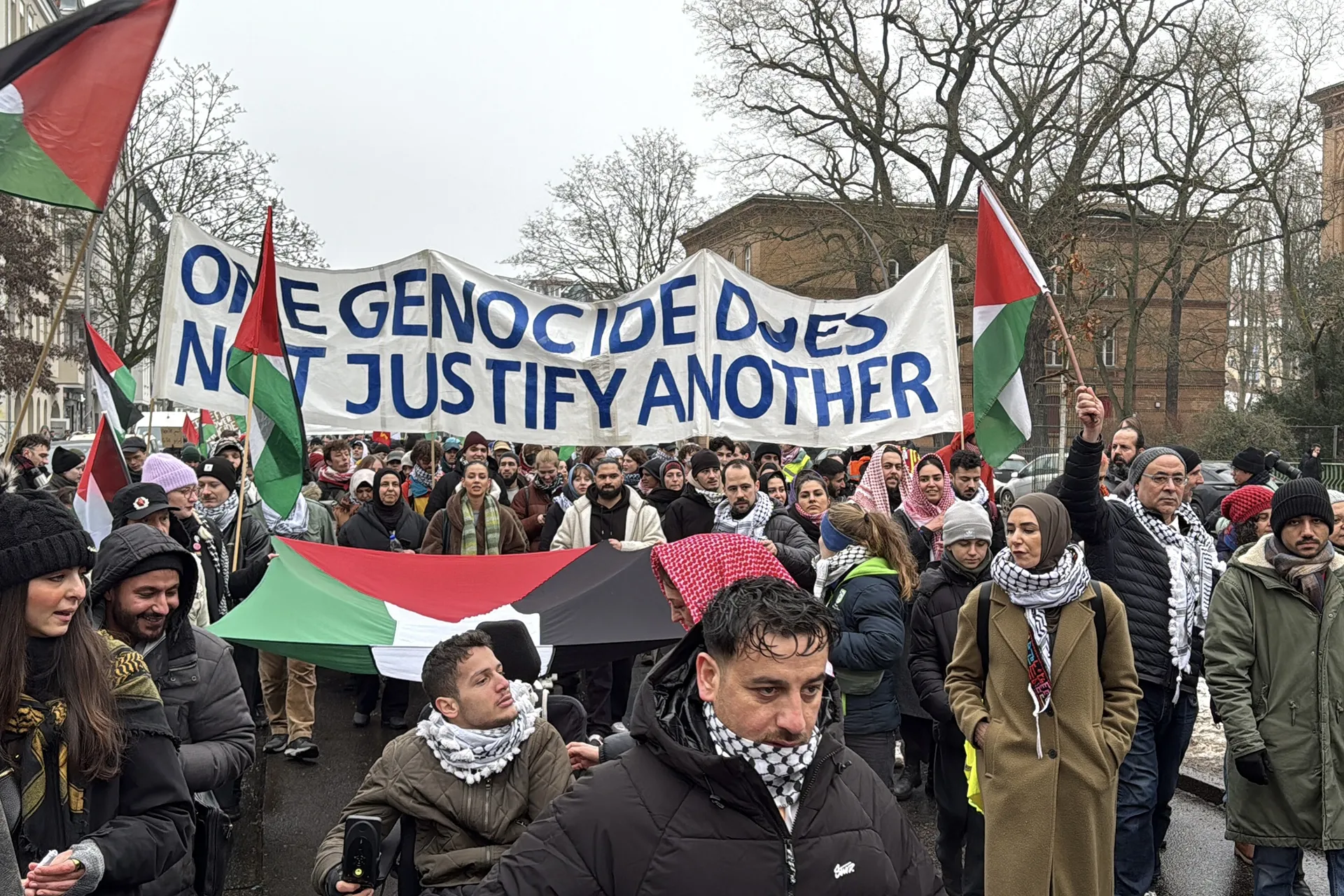
Hamas, in a statement, considered the closure of the Ibrahimi Mosque a heinous crime and a blatant assault on Islamic holy sites. The movement said that these practices come within the framework of the systematic Judaization policy pursued by the occupation government to change the Arab and Islamic identity of Hebron, calling on Palestinians to intensify their presence at the mosque.
The movement called on the United Nations and international human rights organizations to take urgent action to stop repeated Israeli violations against places of worship. It also stressed the need for the Palestinian people to confront attempts to impose Israeli control over holy sites, affirming that these measures will not change historical and religious facts.
The Ibrahimi Mosque has been subject to spatial and temporal division since 1994, following the massacre committed by settler Baruch Goldstein, which led to the martyrdom of 29 worshippers. Since then, Israel has controlled about 63% of the mosque's area and allocated it to settlers, while imposing suffocating restrictions on the remaining 37% for Muslims.
The Old City of Hebron lives under exceptional circumstances, where about 400 settlers reside in settlement outposts protected by thousands of Israeli soldiers. These outposts cause a tightening of the noose on the lives of thousands of Palestinians who face daily military checkpoints and continuous attacks aimed at displacing them from the area.
Local reports warned that the closure of the mosque 'until further notice' might be a prelude to broader Judaization steps coinciding with Jewish holidays or political occasions. Sources indicated that the occupation is exploiting current circumstances to accelerate control operations over archaeological and religious sites in the heart of Palestinian cities.
In conclusion, tension remains the master of the situation throughout the Palestinian territories, where demolition and arrest operations intertwine with restrictions on religious freedoms. These developments confirm the continuation of the escalating approach adopted by the occupation authorities in Jerusalem and the West Bank, which portends an explosion of the situation in the absence of any political horizon or international protection.
The closure of the Ibrahimi Mosque is a blatant assault on its sanctity and a provocative transgression of the right of Muslims to access places of worship.
شارك برأيك
Israel closes Ibrahimi Mosque 'until further notice' and tightens restrictions in Jerusalem and the West Bank