






Recently, fears have been escalating among Palestinian residents in the Bedouin community of Khan al-Ahmar, located east of occupied Jerusalem, regarding the implementation of an immediate eviction order issued by Israeli Finance Minister Bezalel Smotrich. This step comes amidst widespread Palestinian warnings that the true goal is to pave the way for the implementation of the massive settlement project known as 'E1', which aims to connect the 'Ma'ale Adumim' settlement with the city of Jerusalem.
Field sources reported that the community is located in a strategic area alongside the road connecting the Palestinian Jordan Valley and Jerusalem, where approximately 200 Palestinian citizens have resided for many decades. These residents face severe restrictions imposed by the occupation authorities, forcing them to use rough and dangerous dirt roads to reach their homes and secure their basic daily needs.
In light of these threats, activists and solidarity supporters from the Wall and Settlement Resistance Commission have begun to arrive at the community to strengthen the steadfastness of the residents and prevent any attempt to implement the eviction order by force. Observers believe that this popular presence represents the first line of defense against plans aimed at liquidating the Palestinian presence in areas classified as 'C' in the occupied West Bank.
For his part, Abdullah Abu Rahma, Director General of the Popular Action Department at the Commission, stated that the decision to evict Khan al-Ahmar comes at a sensitive time when regional tensions and wars occupy the attention of the international community. He affirmed that the occupation authorities are exploiting this preoccupation to pass settlement projects that were previously frozen due to international pressure, warning of the seriousness of the current stage.
Abu Rahma explained that systematic attacks, demolition operations, and displacement have witnessed an unprecedented escalation since the events of last October 7th, with more than 80 Palestinian communities displaced in various areas. He also pointed to the expansion of settlement outposts, which have reached approximately 380 outposts, in an attempt to impose full Israeli sovereignty over Palestinian lands.
Minister Smotrich is leading an extremist government trend aimed at legitimizing and expanding settlements, having recently boasted about approving 103 new settlements in the West Bank. The Wall Resistance Commission considers that this policy aims to undermine any future opportunity for the establishment of a Palestinian state by tearing apart Palestinian geography and transforming it into isolated enclaves.
Abu Rahma stressed that attempts to displace Khan al-Ahmar are not new, as popular steadfastness and international pressure thwarted them in 2018, making the community a national symbol of popular resistance. He warned that the fall of Khan al-Ahmar would necessarily mean the fall of dozens of other Bedouin communities surrounding the city of Jerusalem, which face the same fate.
The 'E1' settlement plan aims to create geographical contiguity between the major settlements surrounding Jerusalem, which will practically lead to the complete separation of the northern West Bank from its south. This scenario will make the establishment of a geographically contiguous Palestinian state technically and politically impossible, which is what the right-wing currents in the Israeli government seek.
On the humanitarian level, Haj Abu Ismail, one of the residents of the community, recounts that his family settled in Khan al-Ahmar in the 1950s after their first forced displacement from their original lands. He affirmed that five generations of his family were born and raised on this land, making their connection to it an existential matter that cannot be compromised or bartered.
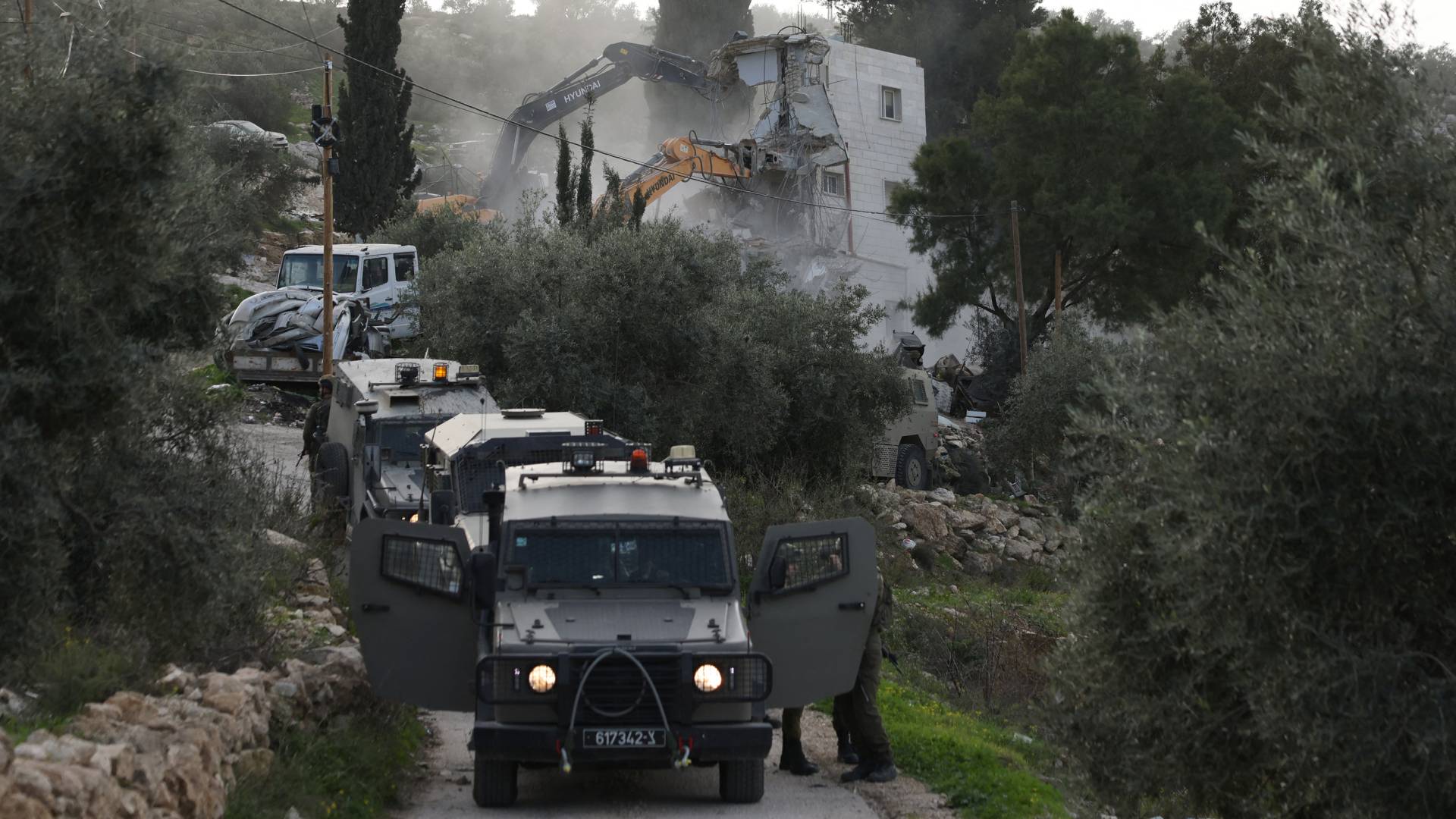
The residents affirm their categorical rejection of all temptations or pressures exerted by the occupation authorities to move them to other areas such as Al-Eizariya or Nuweima. Residents describe the displacement attempts as 'slow death', affirming their determination to stay even if tents and houses are demolished over their heads, preferring to live under the sun rather than leave again.
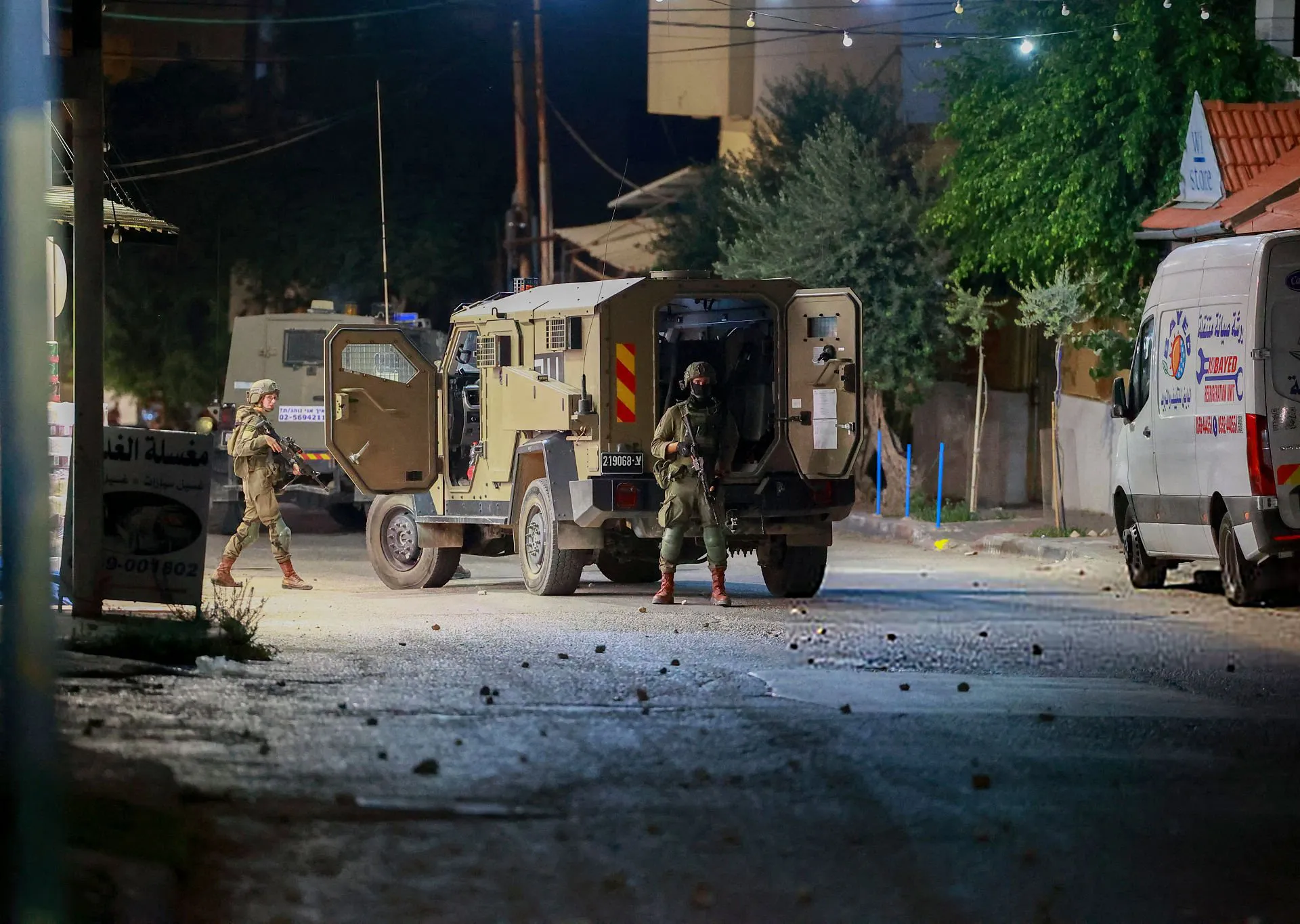
Daily violations by settlers against residents continue under direct protection from the occupation army, with these attacks including intimidating children and vandalizing property. Residents reported that these harassments continue day and night with the aim of driving them to despair and voluntarily leaving the area, but this has only increased the residents' attachment to their locations.
Khan al-Ahmar is currently surrounded by approximately five new settlement outposts established in recent years to tighten the siege on the Bedouin community and isolate it from its Palestinian surroundings. These outposts act as field pressure tools to confiscate pastures and prevent residents from raising their livestock, which has been their sole and primary source of livelihood for decades.
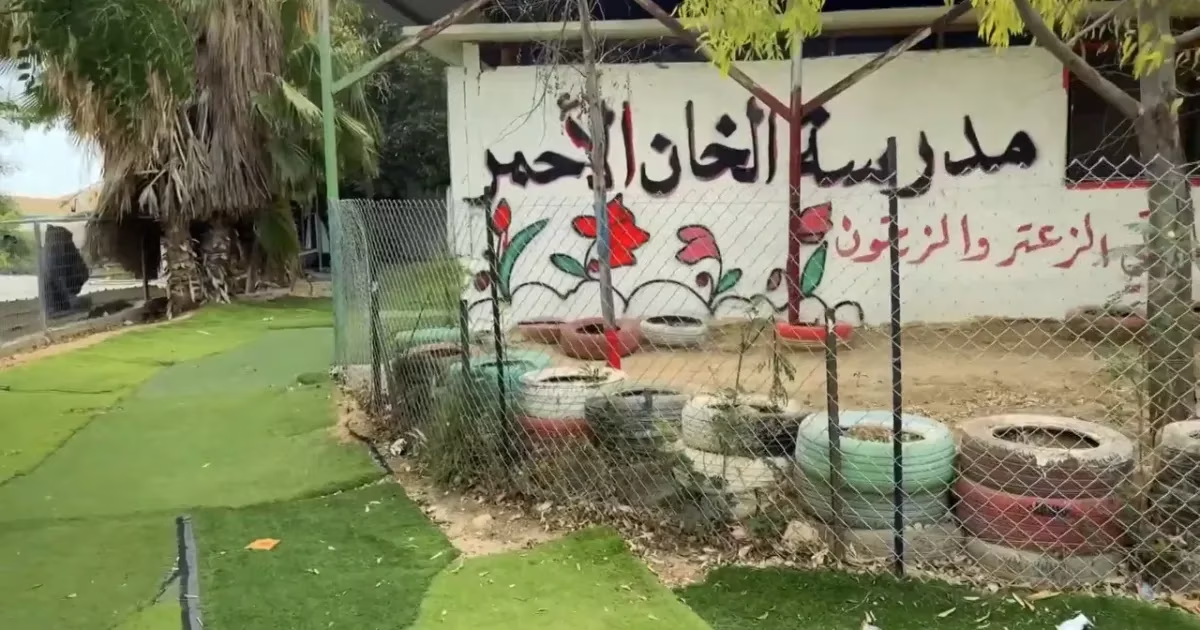
Despite these harsh conditions, the Khan al-Ahmar primary school remains steadfast and receives dozens of students from neighboring communities, despite several demolition orders issued against it. This school represents an educational and political challenge to the occupation, as teaching staff and residents insist on the continuation of the educational process as part of the battle for survival.
Israel exploits the Oslo Accords classifications of 'C' areas to justify demolition and displacement operations under flimsy security pretexts, while the reality on the ground confirms that it is a policy of settlement expansion. Khan al-Ahmar remains today in the eye of the storm, as it represents the last obstacle to the completion of the Greater Jerusalem project and the liquidation of the Palestinian presence east of the holy city.
Displacement is death... if they demolish all the houses, we will stay here and sit under the sun.

شارك برأيك
Khan al-Ahmar Displacement Plan: Israeli Efforts to Impose a New Settlement Reality East of Jerusalem