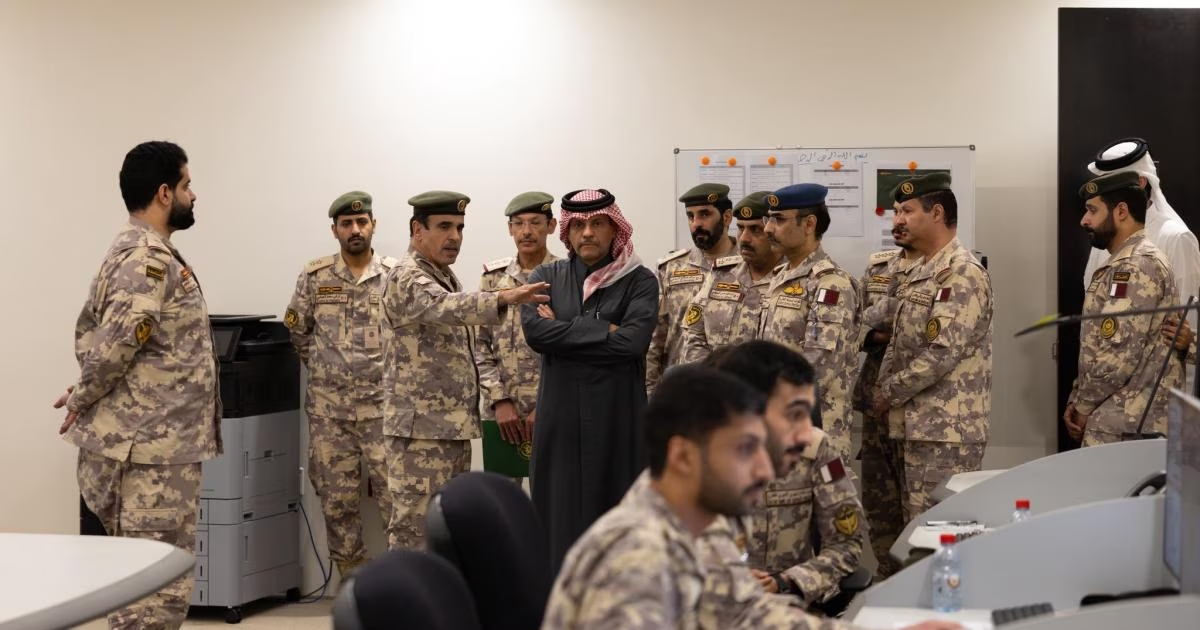







The Qatari Ministry of Defense announced, early Friday morning, that its air defense systems successfully intercepted an attack carried out by drones targeting Al Udeid Air Base. These developments come amidst unprecedented security tensions in the region, with armed forces in several Gulf states raising their alert levels to maximum to confront the increasing aerial threats.
In Kuwait, the Ministry of Defense confirmed that air defense units effectively dealt with airspace violations carried out by what it described as hostile missiles and drones. Field sources reported fires breaking out in parts of Ali Al Salem Air Base, which hosts American forces, as a result of the attacks targeting the vital military facility.
Reports indicate that eight Arab countries, including Saudi Arabia, the UAE, Jordan, and Iraq, have been subjected to a series of Iranian attacks since early last Saturday. This escalation follows the commencement of widespread military operations launched by Israel and the United States against targets within Iranian territory in recent days.
For its part, Tehran justified these military operations as targeting what it described as 'American interests' in the region, in response to attacks that targeted its leaders and facilities. Some of these strikes resulted in casualties, including dead and wounded, in addition to causing severe damage to civilian assets and commercial ports in several Arab capitals.
In a related context, Tehran continues to launch missile barrages and drones towards Israeli territory, leading to deaths and injuries among settlers. Iran considers these actions a direct response to attacks that led to the deaths of hundreds, including Supreme Leader Ali Khamenei, in previous airstrikes.
On the Saudi front, the Ministry of Defense announced the interception and destruction of three ballistic missiles and two drones in the Kingdom's airspace early today. The ministry clarified that the missiles were directly aimed at Prince Sultan Air Base, before defense systems were able to neutralize the threat and destroy the targets in the air.
Saudi sources also indicated the destruction of a drone in the eastern regions of the Kingdom, in addition to the interception of another aircraft east of Al Kharj Governorate, part of the Riyadh region. These operations confirm the continued military pressure on vital facilities and military bases in various regions of the Kingdom as a result of the current regional escalation.
In Bahrain, the Ministry of Interior reported that airstrikes targeted a hotel and two residential buildings in the capital Manama during Thursday and Friday nights. Bahraini authorities confirmed that the attack caused significant material damage to the targeted sites, but no loss of life among civilians has been recorded so far.
Bahraini civil defense teams managed to control a fire that broke out in one of the residential apartments as a result of the aerial bombardment that hit the buildings. Manama had previously announced that its main oil refinery was subjected to a missile attack that caused a large fire before firefighting teams were able to contain it and prevent its spread.
These successive developments paint a complex picture in the Middle East, where direct confrontations between Iran and Israel intertwine with the targeting of American bases in the Gulf. International fears are growing that the region could slide into a full-scale war that would affect global energy supplies and the regional security of Arab countries participating in countering these attacks.
Air defenses deal with hostile missile and drone attacks that have penetrated regional airspace.
شارك برأيك
Widespread Regional Escalation: Gulf States' Defenses Counter Iranian Attacks, Raids Target Civilian Areas in Manama