







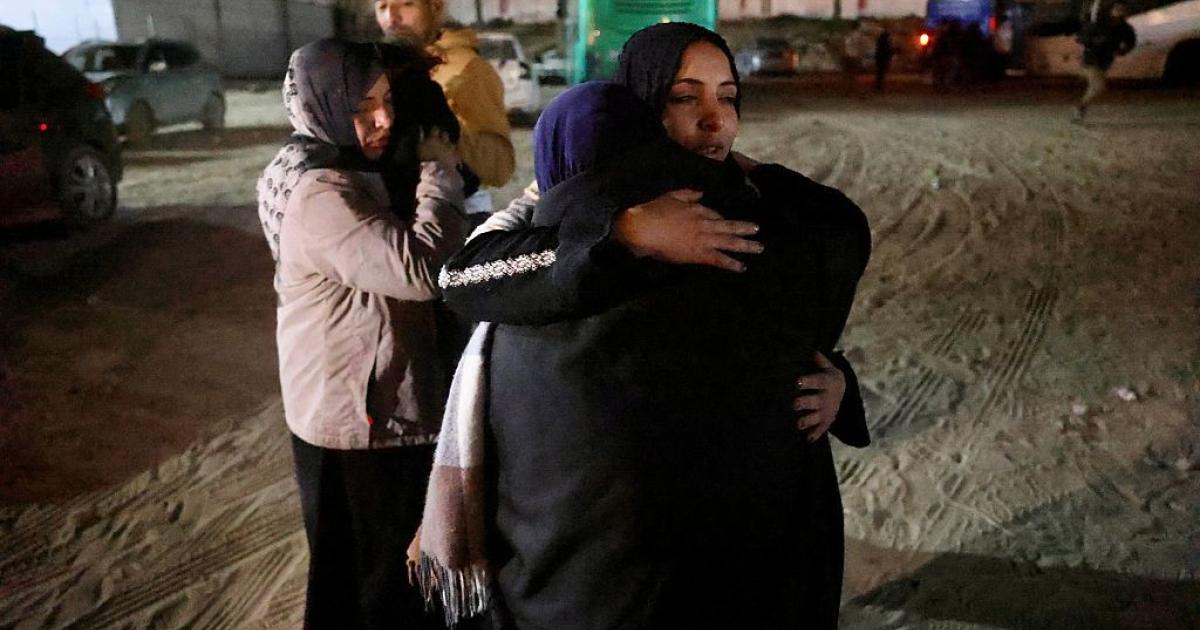
Samar Al-Mahr cries bitterly as she leaves Nour Shams camp east of Tulkarm city in the northern West Bank, after the Israeli occupation allowed her to enter with her sister and brother on Wednesday morning to remove their belongings from their home, which the occupation notified for demolition at the beginning of this week.
"I wish I hadn't entered and hadn't seen what I saw" says Samar (40 years old) as she wipes her tears, while her sister tries to gather some belongings she managed to take out of the house, arranging them in a large blue bag, to transport them to Samar's house in Nablus in the northern West Bank, where her mother and the families of her brother and sister have been displaced for about a year.
Samar adds, "Our memories in my family's home, all our gatherings, evenings, and photos, all ended. The house is ashes, everything is broken and burned, even my sister's house, we tried to enter it and take out some belongings, but everything is broken, the house is like animal manure and waste, the electrical appliances are broken".
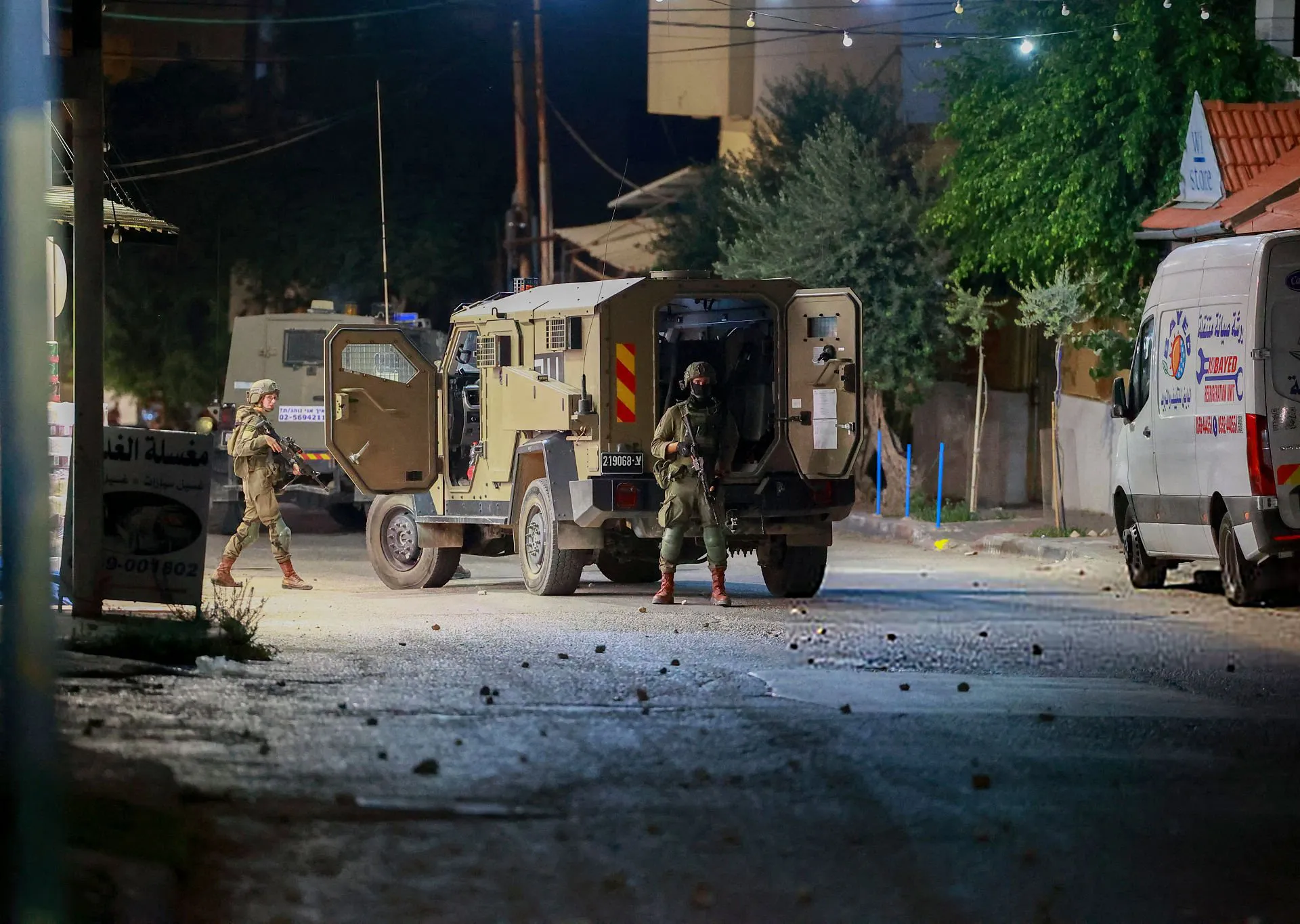
At the eastern entrance to the camp, a number of residents stood waiting for permission to enter their homes, which the occupation's bulldozers will begin demolishing this Thursday morning, while the occupation forces allowed another group to enter the southern area of the camp last evening.
Samar speaks about what she saw: "The destruction in the camp cannot be described in words, the houses are demolished or burned, the streets are bulldozed, and the occupation has built new streets and paved them on the ruins of our homes. None of us knows how our problem will be solved, and how long we will remain without shelter".
She adds, "The crisis has lasted for a very long time, and throughout all these months, we have not heard any reassuring news about the fate of all these families displaced from their camps. Returning to our homes in this way is only to bid them farewell. What can we take with us? Most of the displaced now live in one room. How can we move a two-story house into one room? Does it fit!"
On the other side of the street, Ahmed Al-Masri (59 years old) stood regretfully after the occupation soldiers prevented him from entering the camp, despite obtaining coordination to enter, and he says, "My house is among the houses notified for demolition, and I got an entry permit, but the soldiers at the gate prevented me. My building will all be demolished, and it consists of 5 floors. There is no greater bitterness than this".
He describes his situation after his displacement with his family for about 11 months, saying, "I displaced with 30 people to Shuweika suburb, I live with my wife in a house unfit for habitation, and the rest of the family members are scattered in different places, my young sons with their families, and since the beginning of the crisis, they have not found work, and rents are high. I hoped to take some necessities from the house before its demolition, but I was prevented".
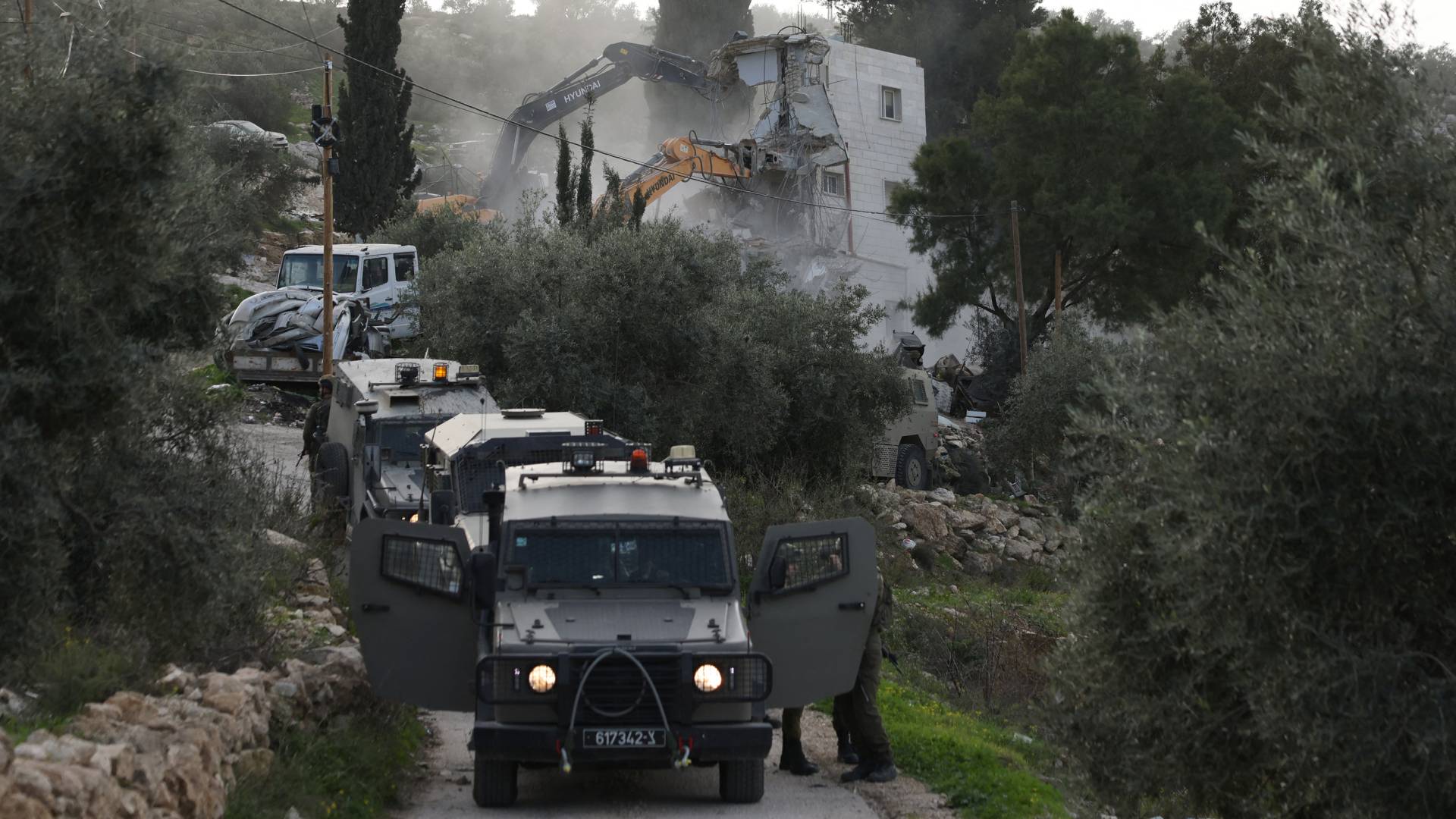
The Israeli occupation had announced its intention to demolish 25 additional housing units in Nour Shams camp, meaning the loss of homes for about 100 new families in the camp.
For the residents, the continuation of demolition operations represents the actual end of Nour Shams camp and the camps of the northern West Bank, especially with leaks indicating that Israel conditions several matters for withdrawal from the camps and ending the "Iron Wall" operation that it started at the end of January/February last year, including removing the term "refugee", and ending the role of the United Nations Relief and Works Agency for Palestine Refugees "UNRWA" in them.
From time to time, a number of residents returned from deep inside the camp carrying small plastic bags containing some clothes, while others carried photos of their loved ones and family members that were hanging on the walls of the houses threatened with demolition.
However, the limited time allowed to the families prevented them from transporting their electrical appliances, bedroom furniture, and blankets from inside the houses, as they only had three hours, and the abundance of rubble in the camp hinders the entry of trucks that could transport the heavy furniture.
Among the waiting residents was Nahida Al-Jundi, a member of the Nour Shams camp services center, trying to reach her home from which she was displaced and had not entered since the moment she was forced to leave it on February 9th last year.
She explains her situation and that of about 13,000 displaced people from the camp's residents, saying, "We were forced to leave the camp and were not allowed to enter it, even my official and identity papers, I could not, until today, take them out of the camp, and until today, after 300 days of our displacement, the occupation does not allow me to enter to check on my home and my family's home. The situation of the displaced is very difficult, and their condition is difficult, and all of Nour Shams is demolished".
According to Al-Jundi, 3,500 families are now homeless in Jenin city and its suburbs, living in mosques and shelters, and she says, "Our Nakba has not ended since our exit from our lands in 1948, it is renewed and repeated in different forms".
Al-Jundi confirms that the efforts made by official institutions and the relief agency do not exceed being relief only, and that they must be developed and focused on finding solutions for housing the displaced, and pressuring landlords to reduce house rents, or paying rent allowance to families living in residential apartments in the city.
The destruction in the camp cannot be described in words, the houses are demolished or burned, the streets are bulldozed, and the occupation has built new streets and paved them on the ruins of our homes.

شارك برأيك
Families of Nour Shams camp bid farewell to their homes before their demolition