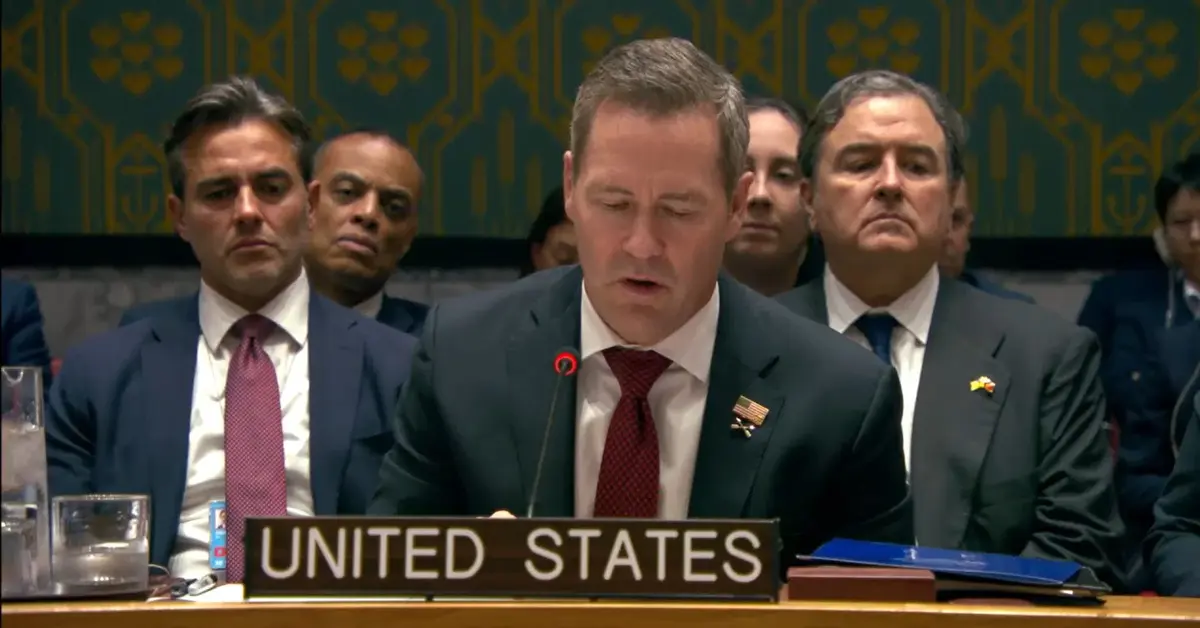







Diplomatic sources revealed to Axios on Wednesday that U.S. Ambassador to the United Nations, Mike Waltz, held a meeting on Tuesday in New York with Palestinian diplomats to discuss a U.S. draft resolution in the Security Council that calls for the establishment of an international security force in the Gaza Strip. This meeting is considered a rare step in direct communication between the United States and the Palestinian Authority regarding "post-war" arrangements in the sector, which is witnessing frantic efforts to redraw its political and security reality.
The significance of the meeting stems from it being the first direct communication in nearly years between Washington and the Palestinian Authority, following a long period of political estrangement that began during the presidency of former President Donald Trump, when the U.S. administration closed the Palestine Liberation Organization office in Washington and cut off aid to the Authority in protest against its rejection of the "Deal of the Century" plan.
The U.S. draft resolution indicates Washington's intention to create an international stabilization force in Gaza for no less than two years, tasked with maintaining security during a transitional period that is supposed to witness a gradual withdrawal of Israel, alongside implementing reforms within the Palestinian Authority that pave the way for its long-term return to managing the sector.
Washington emphasizes that the Palestinian Authority's participation at this stage will be conditional on substantial reforms in its security and administrative apparatus, while Israel sees any immediate role for the Authority in Gaza as completely unacceptable, whereas Arab and European countries consider the participation of the Palestinian Authority as a key element for the success of any U.S. plan regarding the future of the sector.
According to a source familiar with the meeting between Waltz and the Palestinian diplomats, the atmosphere of the meeting was relatively positive, as the Palestinian delegation requested clarifications on some provisions of the draft resolution and expressed preliminary support for the idea of ending Hamas's rule in Gaza, with the gradual return of the Palestinian Authority to a position of responsibility there.
However, the Palestinian side stressed, in turn, the importance of having the Authority play an active and immediate role in managing the sector, rather than limiting its mission to a later stage after the required reforms are completed. In Ramallah, this initiative is viewed as a test of the credibility of the U.S. shift in dealing with the Authority, more than it is a practical opportunity to re-empower it in Gaza.
Although the Palestinian Authority is not an official party in the drafting negotiations within the Security Council, the positions of some European countries, such as France and Britain, reflect a desire to expand the role of the Palestinian Authority within the final text of the resolution. Diplomatic sources indicated that Paris requested an amendment to the U.S. draft that enhances this role, but Washington and Tel Aviv strongly opposed the proposal, considering that any haste in involving the Authority could hinder general consensus on the plan.
In contrast, the U.S. position estimates that Russia and China may request limited amendments to the text, but these will not reach the point of obstructing the passage of the expected resolution. According to the same sources, Ambassador Waltz briefed representatives of the ten non-permanent members of the council on the details of the draft on Wednesday, in a step aimed at expediting the proposal for a vote within two weeks.
These U.S. moves reflect a notable shift in Washington's approach to the Palestinian issue after years of marginalization. The renewed communication with the Palestinian Authority at this time comes in the context of a U.S. effort to find "post-Hamas" arrangements without getting dragged into direct confrontation with Israel.
The plan is also linked to sensitive regional balances, as countries like Egypt, Jordan, and Qatar view any international force in Gaza as a risky step if it does not guarantee a fundamental and legitimate Palestinian role in managing the sector.
For the Palestinian Authority, its potential participation in any future arrangements represents an opportunity to reposition itself politically and diplomatically, but it realizes that this cannot be achieved without renewing the lost trust with Washington and reaching a broader understanding with active Arab capitals.
It is worth noting that the U.S. draft resolution to form an international security force in Gaza is still in its early stages, but it reopens channels of dialogue between Washington and Ramallah after a years-long estrangement, and puts the Palestinian Authority before a dual test: between the desire to return to Gaza and the ability to achieve that within complex regional and international arrangements that are still taking shape.
شارك برأيك
A U.S.-Palestinian diplomatic meeting at the United Nations for the first time in years.