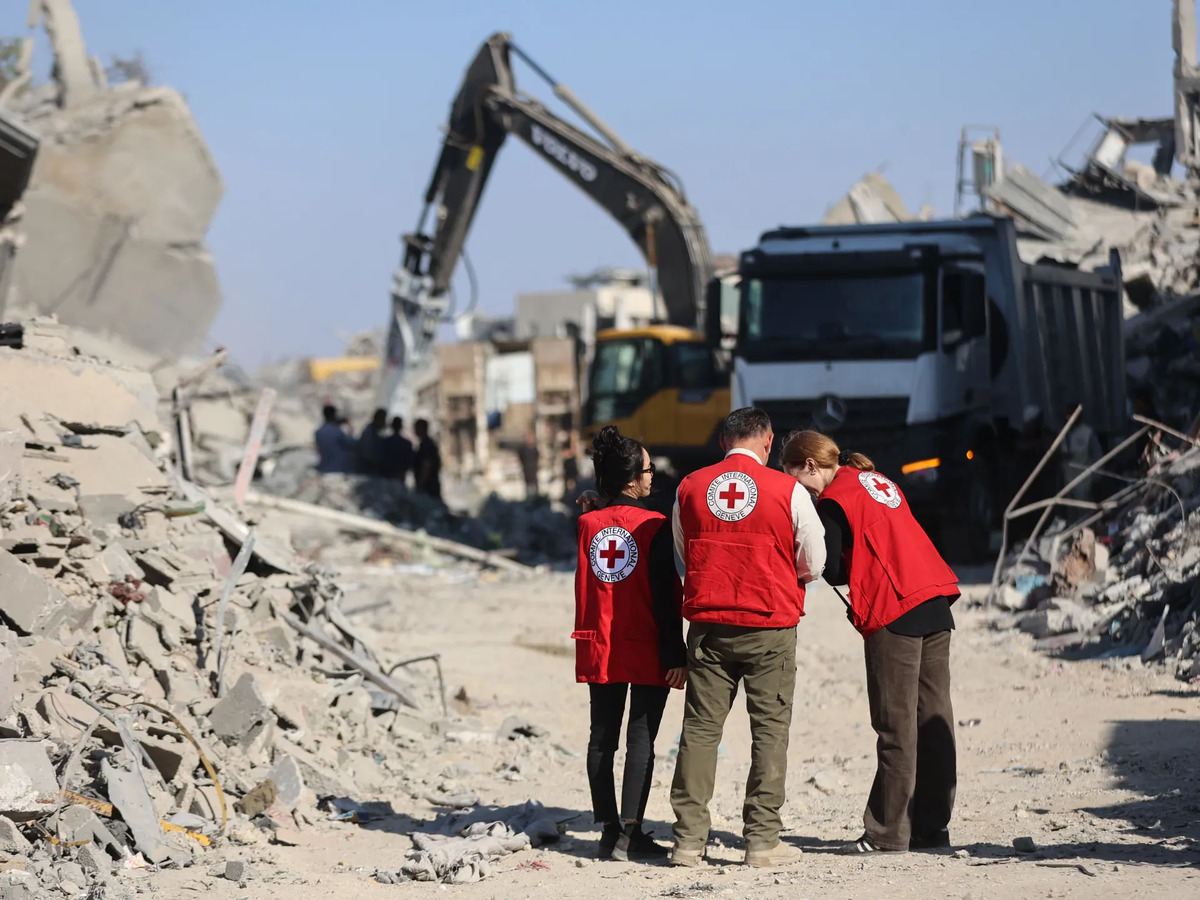







More than three weeks after the ceasefire agreement in the Gaza Strip came into effect, rescue and civil defense teams are still searching for the bodies of the missing under the rubble, including the Israeli prisoners who were killed by the occupation's airstrikes throughout the two years of war.
The occupation government justifies the delay in delivering the remains of the Israeli prisoners or claims to deliver bodies that do not belong to them, according to what the agreement stipulates based on the plan of U.S. President Donald Trump, to violate the ceasefire with airstrikes that often kill and injure dozens of Palestinians, or to prevent the entry of aid trucks.
The Islamic Resistance Movement (Hamas) has repeatedly confirmed its commitment to delivering the bodies of the Israeli prisoners and closing this file, but logistical challenges and the reality of the sector after the war pose obstacles to retrieving, identifying, and delivering the bodies to Israel.
So far, Hamas has returned the bodies of 17 out of 28 Israeli detainees. The bodies of 10 Israelis captured during the attack on October 7, 2023, remain in the Gaza Strip, in addition to the body of a soldier killed during the war in 2014.
The most obvious reason for the difficulties in retrieving the bodies of the Israeli prisoners is the unprecedented level of destruction caused by the Israeli genocide since October 7, 2023.
According to a report from the United Nations Development Program released last month, the amount of rubble in Gaza is estimated at more than 61 million tons, following the destruction of thousands of buildings, homes, and civil infrastructure.
The United Nations Office for the Coordination of Humanitarian Affairs confirmed that thousands of bodies remain under the rubble in the Gaza Strip, including those of the Israeli prisoners, whom Hamas warned could have been killed during the two years of war due to the continuous airstrikes of the occupation.
The civil defense is forced, amid this massive destruction, to search slowly for the bodies due to the need to dig tunnels through layers of rubble, in a process that may take hours to locate the bodies.
However, the difficulty in searching for the bodies is not only related to having to dig through layers of rubble but also to the severe shortage of heavy machinery and the fuel needed to operate them, amid the occupation's failure to allow the entry of the necessary machinery or aid trucks and goods as stipulated in the agreement, which is 600 trucks daily.
Moreover, the occupation's fire has destroyed most of the bulldozers and excavators, and what remains has gone out of service due to a lack of maintenance and mechanical parts, and the equipment that Israel has allowed to enter since the ceasefire began on October 10 has not met the field needs.
On the personnel level, hundreds of rescue team members have been martyred or injured during the war, which has reduced the human resources needed to manage precise and complex operations such as retrieving bodies from deep layers of rubble.
In addition to the rubble and the lack of equipment, civil defense teams are forced to work in an environment filled with unexploded ordnance.
Data from the United Nations and field estimates from relief organizations indicate that the quantity of unexploded ordnance in the Gaza Strip exceeds 7,000 tons, making any attempt to clear rubble or dig under destroyed buildings fraught with danger.
Sources quoted by Israeli newspapers suggested that some of the bodies of the detainees are buried in unsafe areas that require engineering surveys before rescue teams can enter, or the removal of ordnance to prevent explosions during the search.
The absence of DNA analysis capabilities is also one of the main obstacles to identifying the remains in Gaza, whether they belong to Palestinian martyrs or Israeli prisoners.
There are no specialized laboratories in the sector capable of conducting accurate tests on human samples, and Israel does not allow the entry of the materials needed for these tests.
Thus, the lack of laboratory infrastructure becomes a decisive factor in the slow process of delivering the bodies of the Israeli prisoners, as remains may be delivered only to later find out that they do not belong to detainees.
Additionally, the current division of the Gaza Strip according to the first phase of the U.S. president's plan makes it difficult for Hamas and rescue teams to search for the bodies of the prisoners in the area known as "the yellow line," where occupation forces are still present, although Israel has allowed some teams to enter beyond the line to search for the remains.
Hamas has also announced that it does not know the burial locations of all the Israeli prisoners, as some officials responsible for that information were martyred during the war.
Israel has refused the entry of a Turkish relief team that

شارك برأيك
Why is it impossible to retrieve the bodies of Israeli prisoners despite the ceasefire in Gaza?