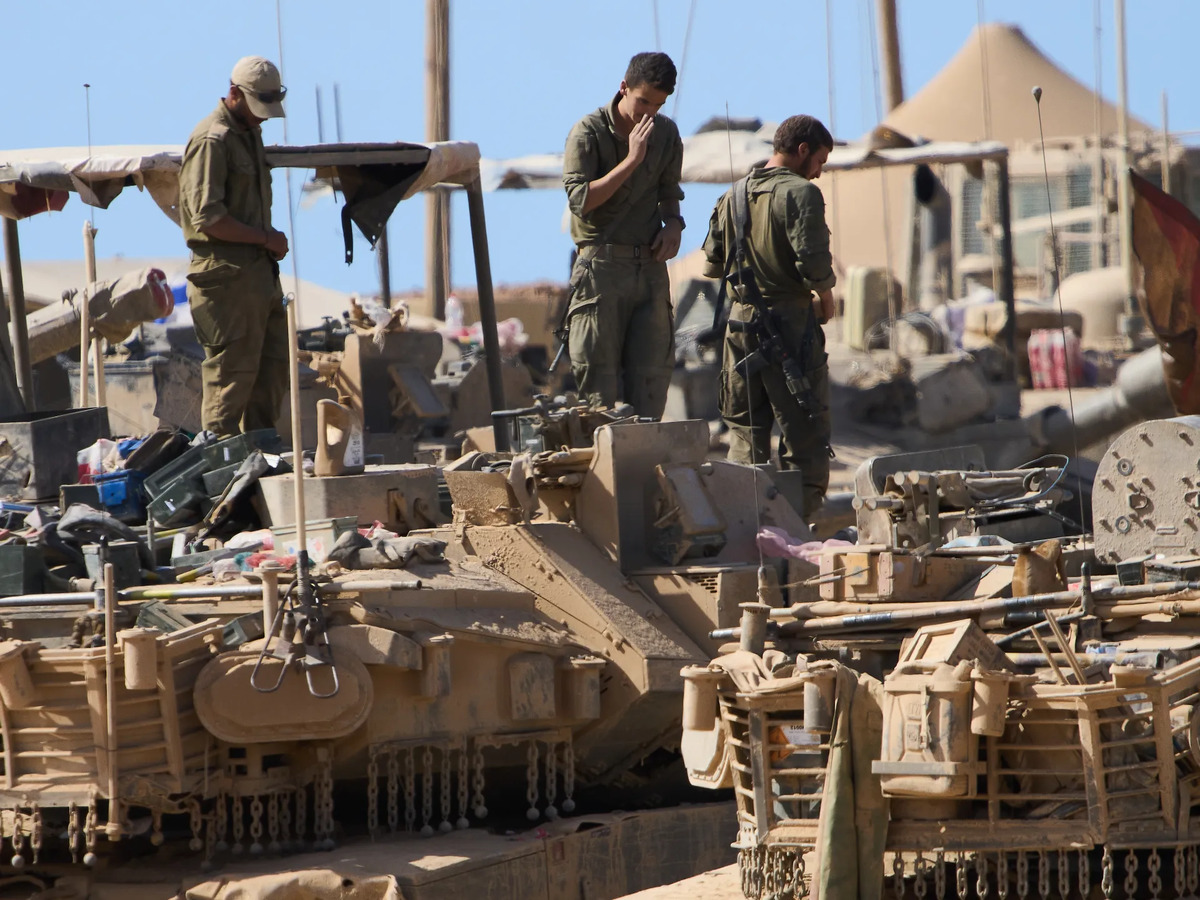







Israeli analysts have stated that the ceasefire agreement regarding the Gaza Strip has become a reality, and it is difficult for Benjamin Netanyahu's government to return to war. They emphasized that the threats from Israeli officials regarding this matter are not serious.
Other analysts predicted that the process of recovering the bodies of Israeli casualties will take a long time due to the difficulty of locating them amid the extensive destruction in the besieged Palestinian territory.
The military affairs correspondent for Channel 13 in Israel, Or Heller, described the upcoming period as "very complicated," noting that the mission in Gaza has not been accomplished.
However, "I haven't heard anyone speak seriously about resuming the war, not even Defense Minister Israel Katz, who enjoys making threats," according to Heller.
He also expressed his conviction that the Hamas movement will not give up its weapons, suggesting that the current situation will remain as it is until the remaining bodies of the deceased Israeli captives are recovered.
For his part, the political affairs correspondent for Channel 12 in Israel, Yaron Abraham, stated that he did not find clear answers from officials regarding the penalty for not disarming Hamas, pointing out that the priority in Israel remains to continue the first phase of the ceasefire agreement and the exchange of prisoners.
Israel finds itself constrained by U.S. President Donald Trump's policy regarding the margin of maneuver to respond to the rehabilitation of Gaza's tunnel network and other measures, according to Aviv Bushinsky, former media advisor to Netanyahu.
According to Bushinsky, Israeli security leaders say they "do not know the margin of maneuver available to them."
He concluded that Trump "is the one who decides whether it is legitimate or not," noting that "the Lebanon model (Israel's freedom of movement) exists because Trump allowed us this model."
But in the Iranian model, Trump said, "Enough, it's over," forcing Netanyahu to bring the planes back from the air, according to Bushinsky.
For his part, the head of the negotiations unit in the General Staff, Drone Hedar, believes it is a mistake to start the second phase of the agreement before recovering the bodies of the deceased, but he acknowledged that there will be casualties whose locations Hamas and Israel will not know because those who know have been killed.
In the same context, Channel 12 reported that Israeli estimates indicate that the file of the bodies of deceased captives may take weeks due to objective difficulties such as the rubble that must be searched under, in addition to non-objective difficulties, referring to what it considered "manipulation by Hamas."
Additionally, the New York Post quoted U.S. envoy Steve Witkoff as saying he is confident of recovering all the remains of the deceased captives from the Gaza Strip.
Witkoff's statements come after the movement has so far handed over 10 of the Israeli casualties' bodies it holds out of 28 bodies in implementation of the ceasefire agreement.
Hamas confirmed in a statement that the return of the bodies of the Israeli captives may take time, as some are buried in tunnels destroyed by the occupation and others are under the rubble.
Netanyahu's government bears responsibility for any delays as it prevents the provision of the necessary resources for that.
Trump is the one who decides whether it is legitimate or not.
شارك برأيك
Israeli media: The Gaza ceasefire agreement has become a reality, and our margin for maneuver is in Trump's hands.