PALESTINE

Sat 30 Sep 2023 3:02 pm - Jerusalem Time

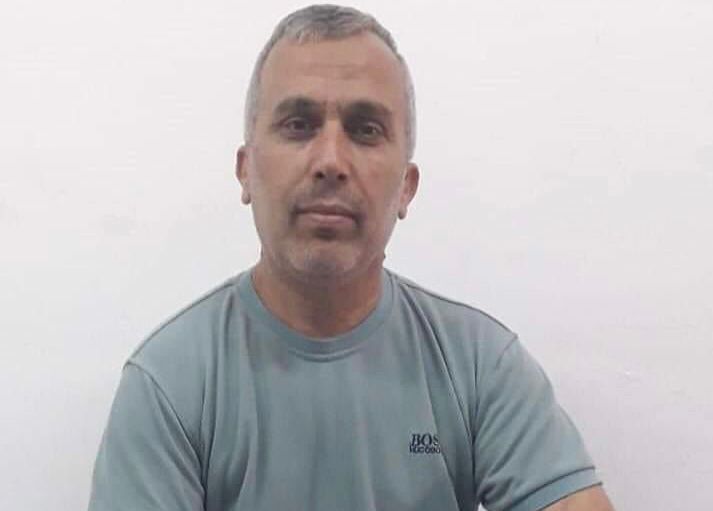
Prisoner's Club: Medical examinations of prisoner Ali Al-Haroub revealed the appearance of new tumors in his body

The Palestinian Prisoners' Club said today, Saturday, that the recent medical examinations of prisoner Ali Al-Haroub (50 years old) from the city of Dura in Hebron showed the appearance of new tumors in his body, after they were initially diagnosed under the armpit and chest, more than two years ago.


The Prisoner's Club continued in its statement that the prisoner of war who is currently in the "Naqab" prison is one of at least (24) prisoners who suffer from cancer and tumors of varying degrees in the occupation prisons, and are facing the crime of medical negligence.


PALESTINE

Sat 30 Sep 2023 2:37 pm - Jerusalem Time

Trump Wanted to Condition Aid to Israel on Peace Deal With Palestinians, New Book Claims

The former U.S. president expressed annoyance when told he couldn’t leverage U.S. military aid to Israel to encourage Netanyahu to broker a peace deal with the Palestinians, a new book claims.


Conditioning U.S. aid to Israel is a non-starter for the many Republicans and Democrats who require an ironclad guarantee for the U.S.-Israel alliance. But former President Donald Trump, fresh off a trip to Israel in 2017, expressed annoyance when told he couldn’t leverage U.S. military aid to Israel to broker a peace deal with the Palestinians, a new book claims.

“I was told ‘there’s no connection,’” Trump told a group of journalists during a dinner at the White House, according to Collision of Power: Trump, Bezos, and The Washington Post, which is scheduled for release on Tuesday.

“No connection?” Trump added in disbelief.

The book’s author, Martin Baron, was executive editor of The Washington Post at the time of the dinner, which he attended with other journalists from the newspaper.

Top of Form

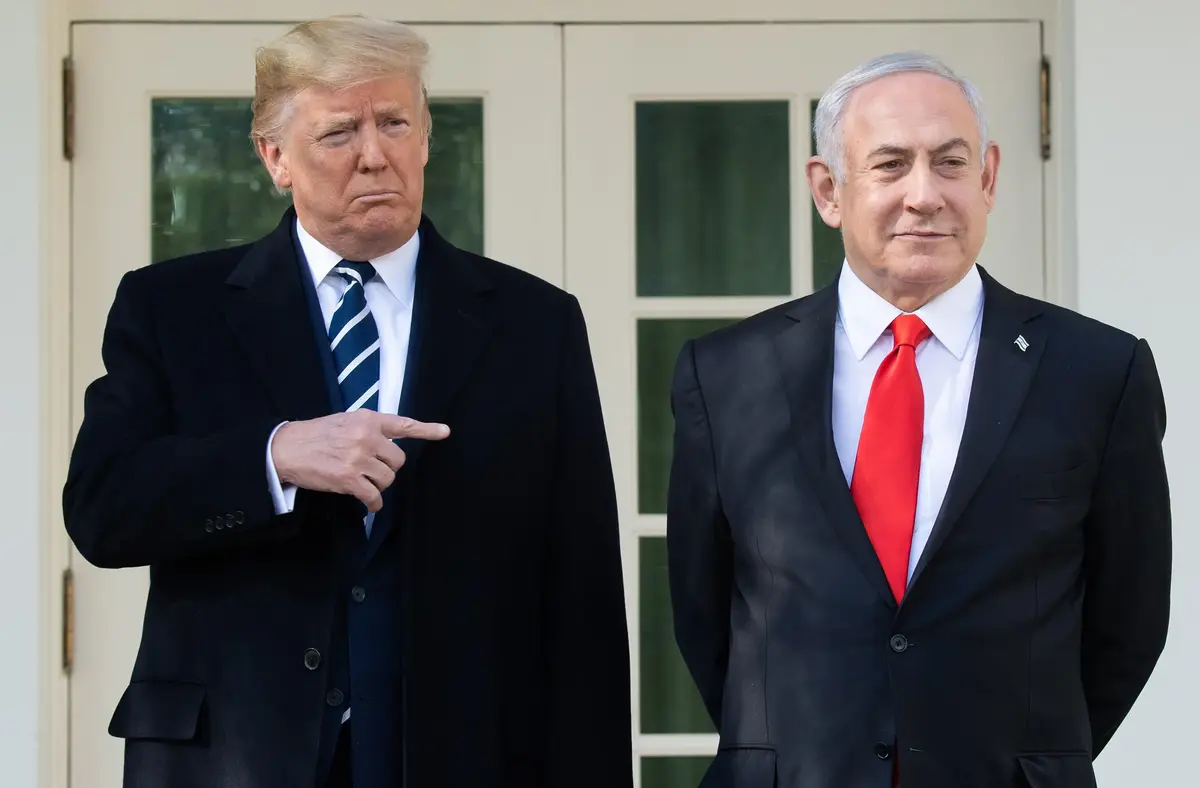
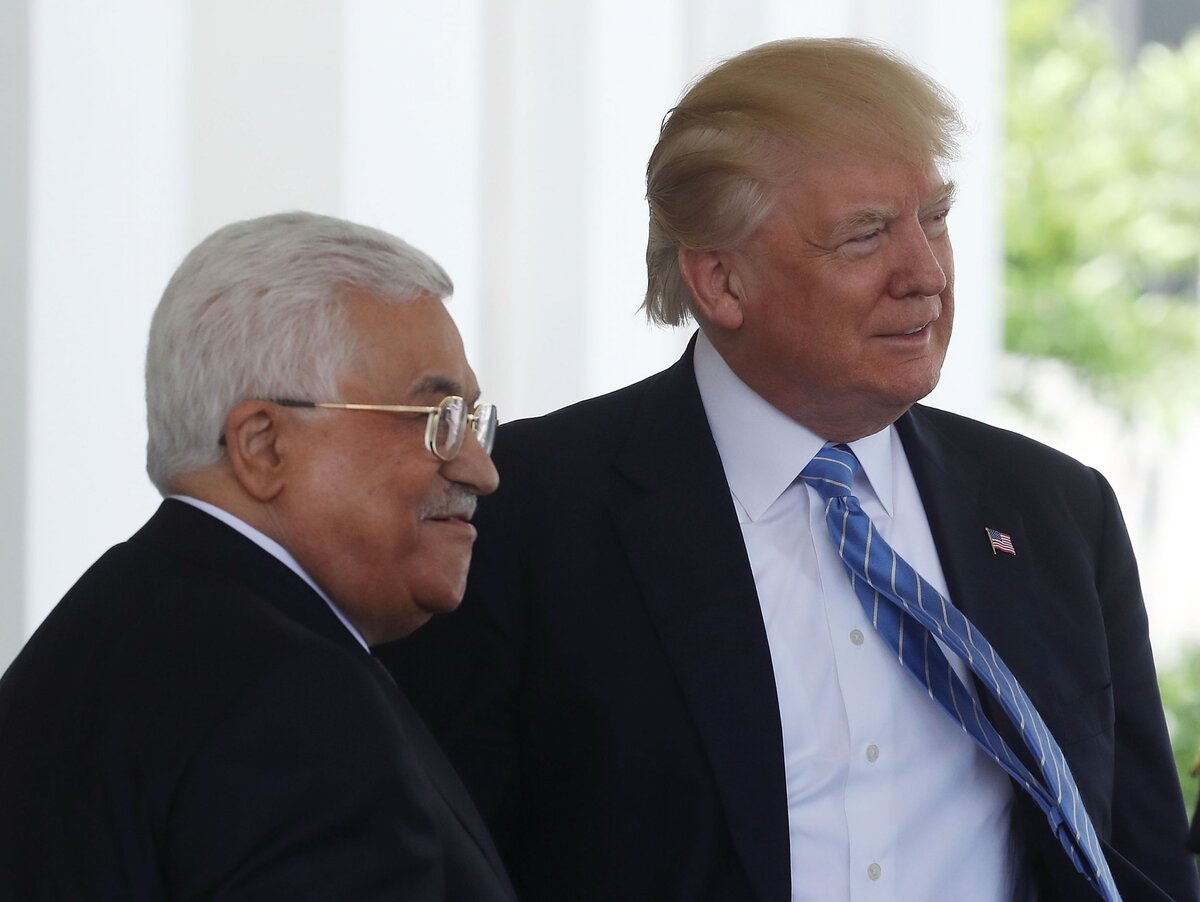
Trump’s inquiry about conditioning the annual $3.8 billion in U.S. assistance to Israel came after he met with both Israeli Prime Minister Benjamin Netanyahu and Palestinian Authority President Mahmoud Abbas on that June 2017 trip.

According to a recent book by Israeli journalist Barak Ravid, Trump was more impressed with the Palestinian leader. “I thought he was terrific,” Trump said of Abbas in an interview with the author. “I thought he wanted to make a deal more than Netanyahu.”


Trump also complained to then-Israeli President Reuven Rivlin that “Bibi doesn’t want peace,” according to Netanyahu’s recent memoir.

Trump repeatedly groused about Netanyahu’s refusal to go along with his idea for an “ultimate deal” with the Palestinians. He expressed frustration that he had to postpone the rollout of his Middle East peace plan, blaming Netanyahu’s failure to form a government after several rounds of elections. When the plan was unveiled at the White House on Jan. 28, 2020, Netanyahu caused an uproar by suggesting the U.S. initiative was a green light for the annexation of the occupied West Bank.

Despite his suggestion to condition military aid, and the sometimes-rocky relationship between the two leaders, Trump was hailed by Netanyahu as “the greatest friend that Israel has ever had in the White House.” During his tenure, the U.S. embassy was relocated from Tel Aviv to Jerusalem, the U.S. formally recognized Israel’s control over the Golan Heights and withdrew from the Iran deal, and four Arab countries signed normalization deals with Israel.

A 2019 Pew Research Center poll showed 71 percent of Israelis had faith in Trump’s leadership and 55 percent approved of his policies.

Trump is the frontrunner for the Republican Party’s presidential nominee in 2024 and is in a statistical tie with President Joe Biden, according to recent polls. GOP presidential candidate Vivek Ramaswamy recently came under fire for pledging to end Israel’s dependence on U.S. assistance.

PALESTINE

Sat 30 Sep 2023 2:18 pm - Jerusalem Time

Specialists called for using “X” platform to publish violations of Israeli occupation

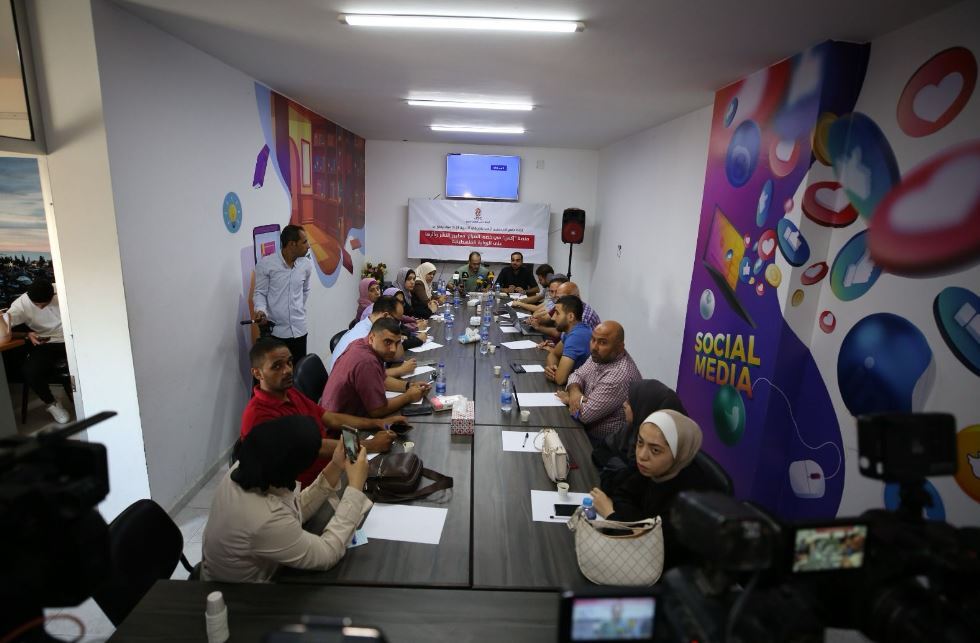
Human rights activists and digital media specialists called for the necessity of directing Palestinian activists and journalists to create accounts on the “X” platform, (formerly Twitter), and publish all current events in a way that serves the Palestinian cause so that the idea reaches the world faster and more widely, and to publish through unified “hashtags” about the Jerusalem issue Al-Aqsa and the prisoners.


During a blog post organized by the Journalists Support Committee on Saturday, entitled: The “X” Platform in the Midst of Conflict: Publishing Standards and Their Impact on the Palestinian Narrative, specialists and jurists called for investing in the “X” Platform to address all the peoples of the world in all languages and publish violations related to Palestinian civilians, including murder and genocide. And bombing homes, as happened in all the wars launched against the Gaza Strip.


They confirmed that the “X” platform committed hundreds of violations against Palestinian content, including banning, deleting, and restricting access to Palestinian pages during the last three years, at the request of successive occupation governments, to block the Zionist narrative from reaching the world.


The speakers agreed that the occupation leaders have an important role in censoring, deleting and restricting Palestinian accounts, to restrict the reach of the Palestinian narrative.


They pointed out that Israel stands behind deleting Palestinian content from the Twitter platform, to prevent the Palestinian narrative from reaching the Arab and international world, especially during events and escalation, as happened during the aggression of May 2021, and elsewhere.


They unanimously agreed that the “X” platform deals with double standards, as it provides a large space for the dissemination of Israeli propaganda, while limiting the reach of the Palestinian narrative, claiming that it does not agree with the standards set for the social site.


They recommended that the publishing process should not include scenes of killing or blood, which are classified according to “X” as violent, which would prompt the platform’s management to delete the publisher’s account immediately and retroactively.


They pointed out that the occupation is investing in the “X” platform to publish on it in all languages of the world, and it also uses fake Arab and foreign accounts, so that its “propaganda” narrative reaches all parts of the world, which reflects negatively on the Palestinian narrative, which the platform works to restrict its access through deletion.

PALESTINE

Sat 30 Sep 2023 2:18 pm - Jerusalem Time

Israeli forces storms Palestinian town, Jalboun, near Jenin

Today, Saturday, Israeli occupation forces stormed the village of Jalboun, northeast of Jenin.


According to local sources, the occupation forces stormed the village, raided a number of shops, destroyed a surveillance camera in one of them belonging to a citizen, damaged a vehicle’s tires, and caused damage to it.


The sources added that the village is exposed almost daily to raids, raids, and searches of homes and shops, in addition to seizing rooftops and turning them into military points.

PALESTINE

Sat 30 Sep 2023 1:53 pm - Jerusalem Time

Water: A matter of cooperation or conflict among Jordan, Israel, and Palestine

A study published recently by Stimson Centre located in USA and prepared by Asma Shabab on water issues between the most affected countries in Middle east and the potential of cooperation or conflict between them.


The Middle East and North Africa region is one of the most water-stressed in the world. The Levant area, comprising Israel, Lebanon, Jordan, Syria, and Palestine, was once part of the fertile crescent, known as the cradle of civilization. But water scarcity compounded by climate change has caused enormous stress and contributed to social and political turmoil. Tensions have risen between neighbors over shared water resources, but conflict can be avoided and there is an opportunity for more cooperation. 

According to a UNICEF report in 2022, Jordan is one of the most water-scarce countries, with less than 100 cubic meters available per person, well below the 500 cubic meters threshold for “absolute water scarcity.” Jordan is forecast to hit critical water insecurity by 2100, as indicated by a 2021 study estimating that around “90 percent of Jordan’s low-income population will endure water insecurity by the end of the century.” These households are expected to receive less than 40 liters per capita per day, significantly falling short of the World Health Organization’s recommended threshold of 100 liters per day, essential for meeting basic human needs.

Jordan’s limited water supply and influx of refugees escaping turmoil and poverty in neighboring countries has exacerbated the crisis.  Climate change has only made matters worse by causing record low levels of rainfall, increased rates of evaporation due to high temperatures, and sudden extreme weather events such as flash floods and droughts. 

Israel also lies in an arid climate with limited access to freshwater reserves, but its situation is very different from that of Jordan. With direct access to the sea, around 75 percent of Israel’s drinking water is desalinated from the Mediterranean. Israel also repurposes nearly 90 percent of its wastewater for agricultural purposes, an impressive feat. 

That does not mean that Israel is immune from the impact of climate change. Indeed, this past winter was the driest in over 60 years according to data collected from the Israel Meteorological Service. With water scarcity likely to continue, Israel has taken precautionary measures and constructed the National Carrier Flow Reversal Project. Completed in December 2022, this pipeline brings desalinated water from Israel’s Mediterranean shores to the Sea of Galilee, the country’s largest freshwater lake and historic primary source of water. 

The water situation in Israeli-occupied Palestinian territories is much worse than in pre-1967 Israel. With limited access to river water and reduced groundwater due to decades-long Israeli exploitation, Palestinians have been left in a desperate situation. 

In 1967, Israeli authorities issued Military Order 158 which states that Palestinians are not allowed to construct any new water infrastructure without obtaining a permit from the Israeli Army. Such permits are nearly impossible to obtain, and Palestinians are also denied access to the Jordan River and freshwater springs. As a result, Palestinians consume an average of 73 liters of water a day per person, well below the World Health Organization’s minimum recommendation of 100 liters per day. This is in sharp contrast to 300 liters of water used daily by an average Israeli. 

In Gaza, the situation is even more desperate. Water is drawn from a coastal aquifer which has been severely depleted and contaminated with seawater as well as raw sewage that is dumped in the ocean. In fact, 90 to 95 percent of Gaza’s water supply is considered unfit for human consumption. Israel restricts water movements from the West Bank to Gaza and continues its siege of the city. 

Opportunities for Cooperation

The Levant has a history of water-related tensions among neighbors, often driven by military and political objectives. Yet, agreements on water sharing have been signed. The 1994 peace treaty between Israel and Jordan allocated 50 million cubic meters to Jordan from the Sea of Galilee and assigned Jordan 75 percent of the water from the Yarmouk River. However, the treaty excluded other potential beneficiaries of the Jordan River including Lebanon, Syria, and the Palestinian territories.

In recent years, Israel has doubled the amount of water it sends annually to Jordan from 50 million cubic meters to 100 million. This amount is expected to rise due to the Israeli National Carrier Flow Reversal Project. 

The introduction of a so-called Green Blue Deal in 2020 by the NGO EcoPeace Middle East,  a group of Palestinian, Jordanian and Israeli environmentalists, provides a more optimistic outlook for cooperation on water and renewable energy. The deal aims to generate trust and equitable distribution of water and energy between Israel, Jordan, and the occupied Palestinian Territories. It envisions the construction of a 600-megawatt solar park in Jordan which would trade energy with Israel in exchange for 200 million cubic meters of potable water. The project also aims to improve water management, biodiversity preservation, and public awareness and education.

The Green Blue Deal has gained traction. A Memorandum of Understanding was formalized during COP27, and the plan is expected to be a major topic of discussion during COP28 in the United Arab Emirates this fall. However, Palestinians have been excluded from high-level regional agreements, prompting efforts by EcoPeace and other groups to ensure equitable water access in the Occupied Territories.

One way to provide unbiased information is through the use of remote sensing. Addressing the water data gap in the Levant can empower local communities and NGOs to raise awareness and potentially facilitate transboundary water negotiations to allow for a more equitable distribution of water among all parties.

In conclusion, while progress has been made in cooperation between Israel and Jordan on water issues, challenges persist for Palestinians. The political landscape, particularly with the current right-wing Israeli government, adds complexity. Continued efforts are needed to address water disparities and promote equitable solutions, emphasizing the importance of shared environmental interests in achieving sustainable peace in the Middle East.


ARAB AND WORLD

Sat 30 Sep 2023 1:22 pm - Jerusalem Time

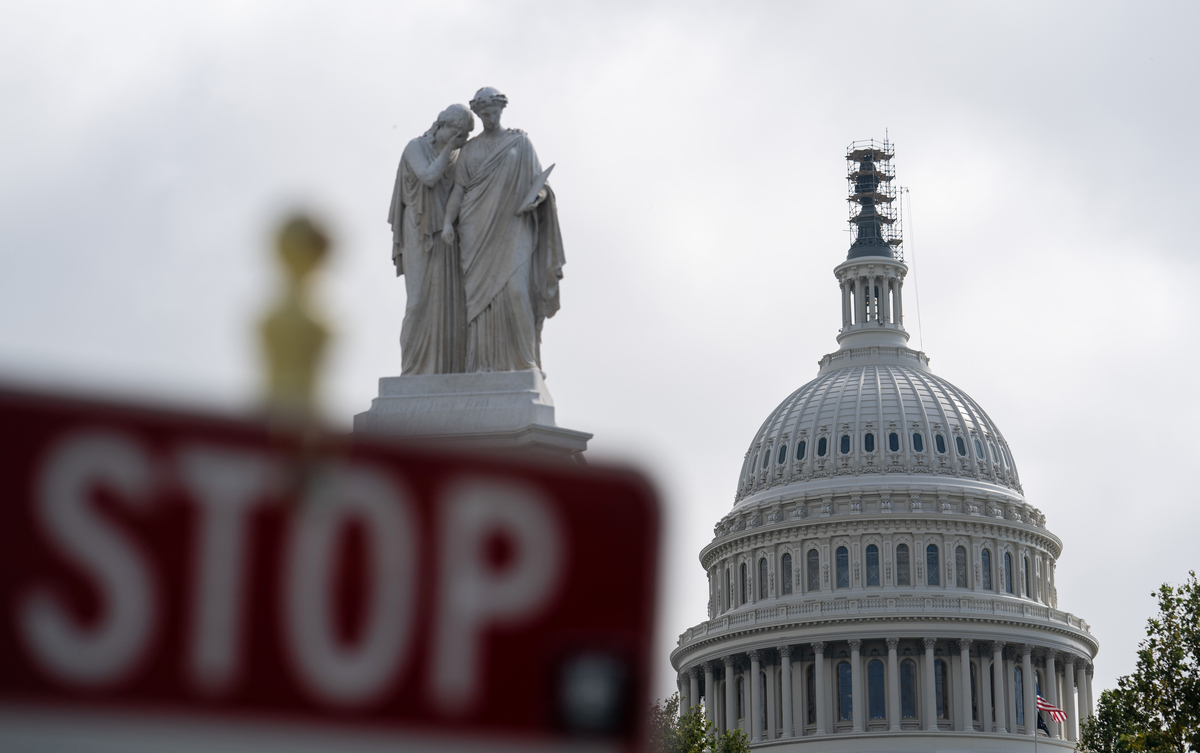
What is a federal shutdown in the United States?

The United States is approaching the closure of federal institutions at the end of the week, with the chances of avoiding it diminishing as lawmakers reach an impasse in terms of agreeing on a short-term spending bill.
The US fiscal year begins on October 1, but sharp disagreements among Republicans over the size of the federal debt have prevented the passage of bills needed to keep the government funded and open.
Credit rating agency Moody's warned this week that the closure would be "negative" for US sovereign debt, threatening its top-tier rating and raising the possibility of higher borrowing costs.


Here's what will happen if a federal shutdown occurs in the United States.
Hundreds of thousands of federal employees will be on unpaid leave, while military personnel and other employees deemed “essential” will continue to work but without pay.
The American Federation of Government Employees estimates that the complete shutdown will deprive about 1.8 million federal employees of their salaries throughout its duration.
Nearly 850,000 non-essential employees will be placed on leave without pay, according to the Committee for a Responsible Public Budget, an independent organization.
When a financing agreement is reached, these restrictions will be lifted and salaries will be paid to all employees retroactively, according to the union.

Only services classified as essential will continue to operate.
During previous closures, welfare checks continued to be paid, and air traffic controllers, border guards and hospital staff remained on the job.
But many services are likely to be affected, including new applications for Social Security and Medicare, food and environmental site inspections, as well as national parks.
The impact will be greater the longer the closure period.
Economists at Goldman Sachs estimate that the shutdown will hurt economic growth in the fourth quarter by 0.2 percentage points for each week it lasts.
It may take two or three weeks to lift the closure, according to a note by Goldman Sachs economists in which they ruled out “that either party will make immediate concessions.”
According to the memo, “While the funding cuts were quickly lifted, the political environment leading up to the (current) deadline is more reminiscent of the situation that preceded previous long-term closures.”
Assuming the end of the closure before the end of this year, Goldman Sachs estimated that the growth rate at the beginning of next year would be similar to the decline in the fourth quarter, while researchers at Oxford Economics expected it to compensate for half the loss.
Oxford Economics estimated that the loss of government employee production would irreparably cost annual economic growth about 0.1 percentage point per week.
The shutdown may also indirectly affect the economy as federal workers who are not receiving salaries will cut back on their spending.
The potential shutdown is beginning to impact Wall Street, with major stock indexes falling as the deadline approaches.

Economists fear that the closure will also stop the publication of federal government data.
This constitutes a source of concern for the Federal Reserve, which said that it will be guided by this data to approve possible adjustments to interest rates. The Federal Reserve has recently slowed the pace of raising interest rates as it addresses inflation.
In the absence of new data, the Central Bank will be forced to make decisions with repercussions affecting the American economy, without having a clear picture of the situation.
While the impact of a short-term closure will be limited in the long term, it could become a major problem if representatives fail to reach an agreement quickly.

PALESTINE

Sat 30 Sep 2023 11:48 am - Jerusalem Time

Two Palestinian fishermen injured by Israeli gunboats off the coast of Gaza

Two fishermen were injured, on Saturday, as the Israeli occupation forces fired rubber bullets at them off the coast of the Sudaniya area, northwest of the Gaza Strip.


According to the Union of Fishermen's Committees, the injured are Atef Muhammad Bakr and Mahmoud Saed Bakr, and they were transferred to Al-Shifa Hospital to receive treatment.


The Israeli Navy deliberately targets fishermen on an almost daily basis.

ARAB AND WORLD

Sat 30 Sep 2023 11:37 am - Jerusalem Time

Washington calls on Serbia to withdraw forces from border with Kosovo

The United States called on Serbia to withdraw forces deployed on the border with Kosovo, including tanks and artillery, stressing work to strengthen the presence of NATO forces in the former Serbian region with an Albanian majority, in light of the tension that is among the most severe in recent years.


The White House revealed on Friday that Serbia, which still refuses to recognize the independence declared in 2008 for the region, deployed infantry forces and armored vehicles at the border, after an armed clash in northern Kosovo on September 24, which led to the killing of a Kosovo police officer and three Serb gunmen.


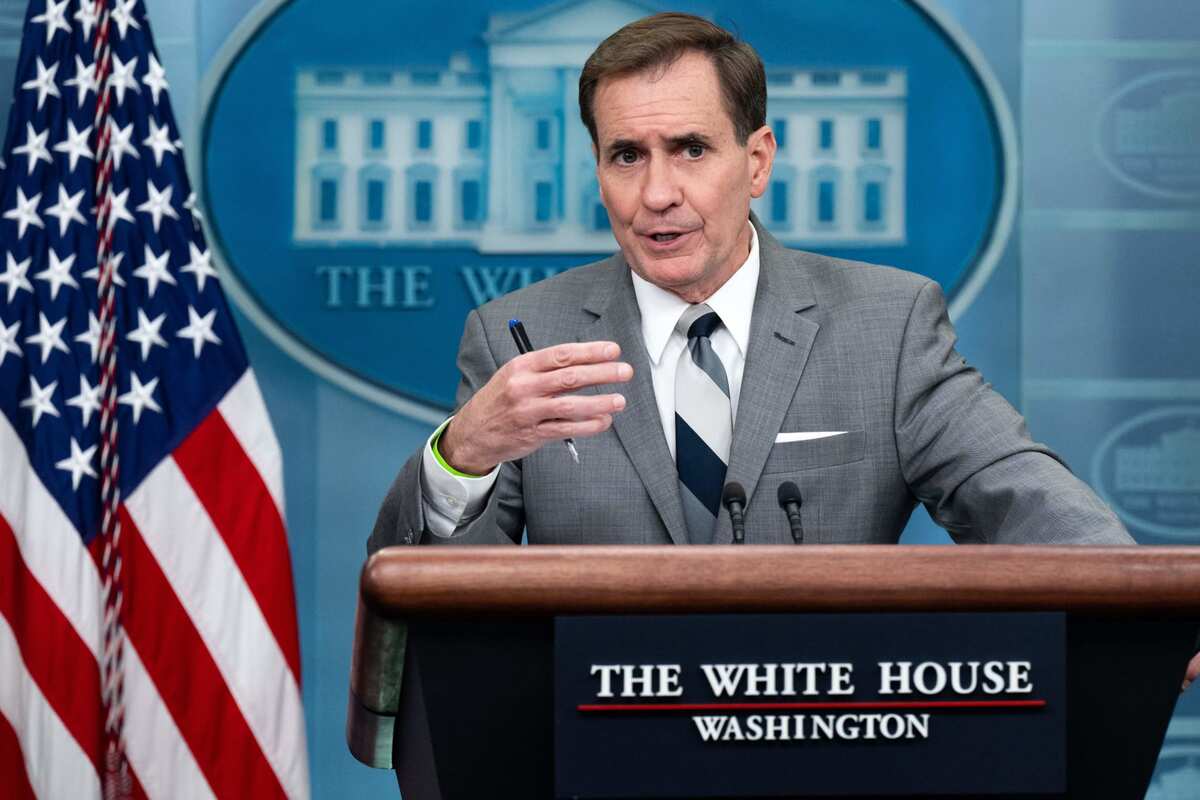
White House National Security Council spokesman John Kirby said on Friday, “We see a large Serbian military deployment along the border with Kosovo,” explaining that it includes an “unprecedented” deployment of artillery batteries, tanks, and infantry units.
While Kirby considered this a "very destabilizing development," he did not want to address the risk of a new invasion of Kosovo in light of the tension that has prevailed for days.


The spokesman explained that US Secretary of State Anthony Blinken called Serbian President Aleksandar Vucic on Friday and informed him of his country's "concern" and the need for "an immediate reduction in tension with a return to dialogue."


Vucic did not explicitly deny the recent military deployment at the border, but he confirmed that his country's forces were not on alert.
He said, "I denied the false allegations that talk about placing our forces at the highest level of combat readiness, because I simply did not order that and this is not accurate," stressing that the number of forces deployed on the border currently "does not even reach half of what it was two or three months ago." ".


Serbia announced on Wednesday that its Defense Minister and the Commander of its Armed Forces had inspected a “deployment area,” without additional details.


In addition, US National Security Advisor Jake Sullivan consulted with Kosovo Prime Minister Albin Kurti.


Washington confirmed that Sullivan expressed his "concern about Serbian military movements" and discussed with Kurti "the dialogue between Kosovo and Serbia facilitated by the European Union," considering it "the only long-term solution to ensure stability in Kosovo."

Serbia refuses to recognize the independence of its former southern province with an Albanian majority, which was declared in 2008 after a decade of bloody war between Kosovar separatists and Serbian forces.


News of a military deployment comes after a Kosovar policeman was killed on Sunday in an ambush in northern Kosovo, where Serbs constitute a majority, followed by gunfire between police special forces and an armed Serb group. The clash claimed three members of the group, who took refuge in an Orthodox monastery in the village of Bangska, near the border.


Kirby stressed that "due to recent developments", the NATO force deployed in Kosovo (KFOR) "will enhance its deployment" in the north of the former province.


He did not specify whether the matter was related only to the repositioning towards northern Kosovo, or to an increase in the number of military personnel in KFOR.
NATO also expressed its readiness to strengthen the number of this force with the aim of "confronting the situation."


NATO Secretary-General Jens Stoltenberg said in a statement on Friday, “Yesterday (Thursday), the North Atlantic Council (the political decision-making body in the alliance) approved the deployment of additional forces to confront the situation,” without specifying what forces could be deployed if necessary.


But the British Ministry of Defense stated that a battalion of between 500 and 650 members had been placed at KFOR's disposal when necessary, adding that it had "finally arrived in the region" to conduct training exercises scheduled earlier.


Stoltenberg stressed that the alliance will take "all necessary measures to maintain a safe environment, as well as freedom of movement for all those living in Kosovo."


A NATO official, who requested to remain anonymous, explained that KFOR had already strengthened its presence in Kosovo in May by deploying about 500 Turkish soldiers, who were later replaced by elements from Bulgaria and Greece.


He pointed out that the force is ready to make "additional adjustments" if necessary, to enable it to carry out the mandated tasks given to it to maintain peace in Kosovo.


The Kosovo government accused Belgrade of supporting the attack that killed the policeman.


For his part, Milan Radojicic, one of the Kosovo Serb political leaders, confirmed that an armed group he formed without Serbia's knowledge was behind the killing of the policeman.


Kosovo police arrested three people involved in the clash, which lasted about an hour and involved dozens of gunmen.
Kirby believed that the attack was "highly complex" and involved about 20 vehicles, in addition to equipment, weapons and expertise "at a military level."


"It is worrying," he added.


Pristina declared its independence from Serbia in 2008, a decade after NATO helped expel Serbian forces from the former province in a bloody war that left about 13,000 people dead, most of them of Albanian origin.


Serbia, with the support of its allies Russia and China, refuses to recognize the independence of Kosovo, where a Serbian community numbering about 120,000 people lives mainly in the north, and some of them refuse allegiance to Pristina.


On Monday, Russia held the Kosovo government responsible for the clash, warning that "bloodshed" could get out of control.

PALESTINE

Sat 30 Sep 2023 11:12 am - Jerusalem Time

National Bureau: UN monitors settler terrorism in Palestinian territories and remains idle

The National Office for Land Defense and Settlement Resistance, affiliated with the Palestinian Liberation Organization, said on Saturday that the United Nations monitors settler violence in the Palestinian territories, and does nothing to stop their terrorist practices.


He touched on the latest report issued a week ago by the United Nations Office for the Coordination of Humanitarian Affairs in the Palestinian Territory occupied in 1967, which sheds some light on the escalating settler violence under the Israeli government, led by Benjamin Netanyahu, as three settler-related incidents occur per day on average during the months. The first eight incidents of the year 2023, compared to an average of two incidents per day during the year 2022 and one incident per day in the year 2021. This is the highest level of settler-related violent incidents since 2006. This violence resulted in the displacement of 1,105 people from 28 Palestinian herding communities, representing about 12 percent of the population of pastoral communities, from their places of residence since 2022.


Most of the displaced were in the governorates of Ramallah, Al-Bireh, Nablus, and Hebron, which also have the highest number of Israeli settlement outposts. The report states that since 2022, the residents of four communities have been displaced and are now empty, and more than 50 percent of six communities, and more than 25 percent of seven other communities, were distributed among the following governorates in the West Bank: 77 from three communities in Tubas Governorate, 276 from Seven communities in Nablus Governorate, 15 from one of the communities in Qalqilya Governorate, 30 from one of the communities in Salfit Governorate, 410 from six communities in Ramallah and Al-Bireh Governorate, 53 from one of the communities in Jerusalem Governorate, 35 from one of the communities in Bethlehem, and 209 from Nine communities in Hebron Governorate, due to escalating settler violence.


The reasons for the total or partial migration of these communities are clear. About 93 percent of these communities reported that the reasons were due to an increase in settler violence, and 90 percent of them indicated an increase in the intensity of this violence since the beginning of 2022.


All of this is happening, according to the United Nations Office for Humanitarian Affairs, in the absence of accountability for settler violence. In 81 percent of the communities that were exposed to settler violence, residents filed complaints with the Israeli police in some or most of the incidents of settler violence to which they were exposed.


ARAB AND WORLD

Sat 30 Sep 2023 9:52 am - Jerusalem Time

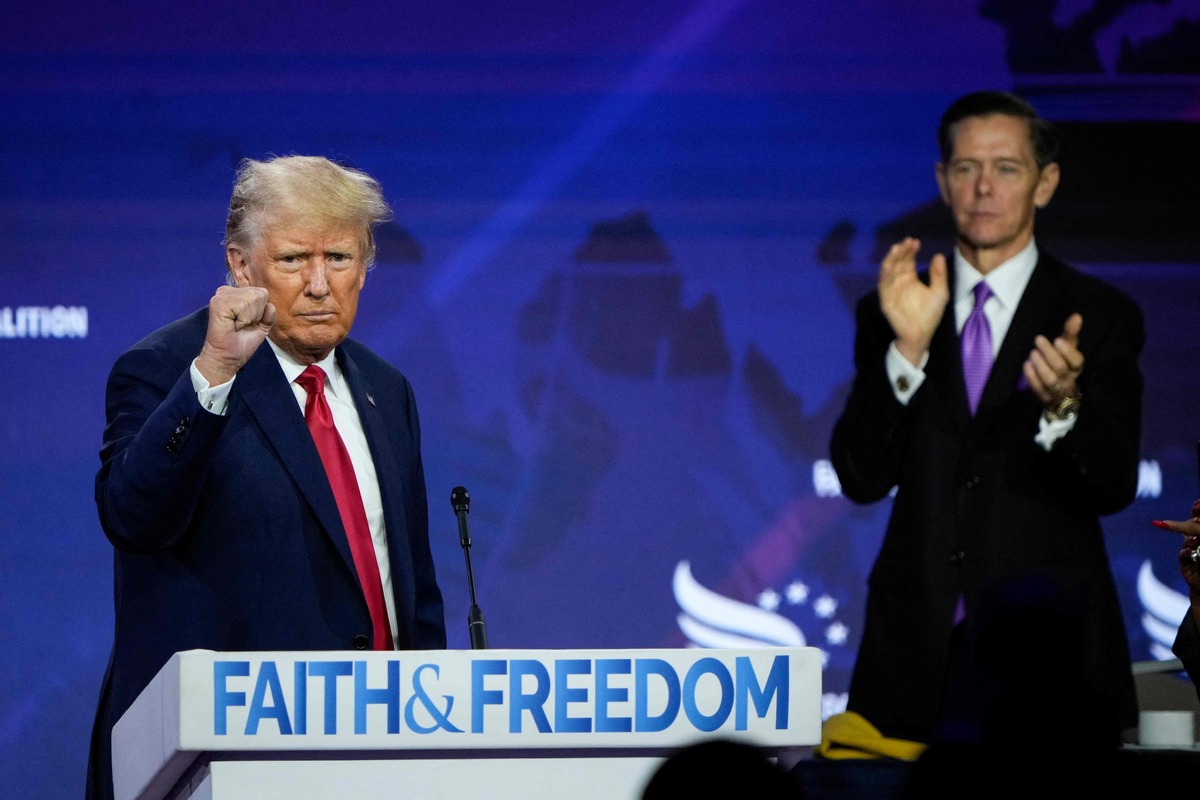
Trump mocks his Republican rivals in California

Former US President Donald Trump attacked his rivals for the Republican Party nomination for the 2024 presidential elections, especially Florida Governor Ron DeSantis, in front of a supportive audience on Friday in Anaheim during the California Republican Party convention.


The former president said, "I was the one who brought red back to Florida (the Republican color), not him," referring to DeSantis. Recalling the support he provided to him in 2018 in his campaign to obtain the position of governor of Florida, Trump asserted, “Without me, he would be dead.”


According to a recent NBC News poll, Trump has a landslide lead in the Republican primary with 59% voting intentions compared to 16% for DeSantis, his closest competitor.


In Anaheim, Trump also called Chris Christie, the former governor of New Jersey, a "loser."


The former president did not participate on Wednesday in the second debate for Republican candidates organized in California, preferring to campaign among auto industry workers in Michigan (northeast of the country).


Trump (77 years old) once again mocked the physical appearance of Joe Biden, whom he hopes to replace in the White House, telling his audience that the 80-year-old Democratic president “cannot even get off a podium.”


Trump has been criminally charged in four cases ranging from his handling of classified documents after leaving the presidency to his alleged attempt to overturn the outcome of the 2020 presidential election, and has again presented himself as a victim of justice he views as being in the hands of Democrats.


He promised that if he returned to power, he would order a comprehensive reform of the Ministry of Justice to “investigate every extremist prosecutor in America.”


The former president also spoke about immigration, saying he wanted to "close the border" with Mexico and "launch the largest deportation operation in the country's history."


He did not forget to address issues of concern to the state of California, from the water wars linked to the drought, to managing the homeless issue, to resuming the exploitation of oil that was abandoned due to the priority given to renewable energies.


Dozens of his supporters waved the American flag and banners bearing his name for the 2024 elections.


Among them, some appeared to be challenging his party, in California, which is considered very liberal and regularly votes Democratic.


Karen Anthopoulos said indignantly, "It is unfortunate that the mainstream Republican Party, which is organizing this conference, is not making more efforts to support President Trump."

PALESTINE

Sat 30 Sep 2023 9:52 am - Jerusalem Time

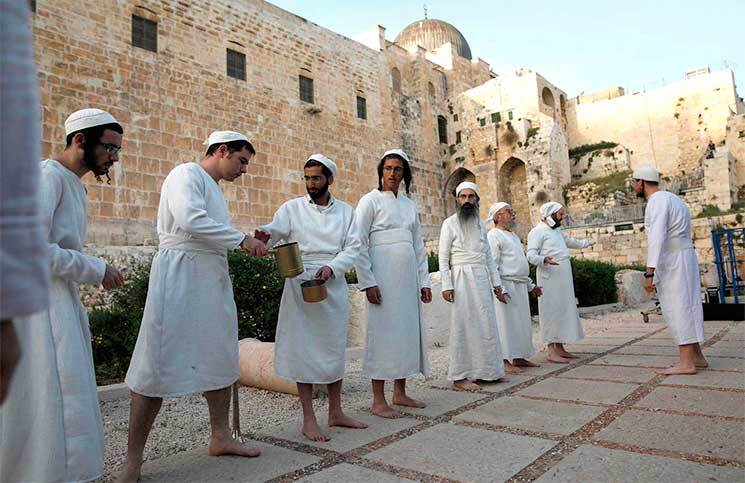
Israeli Settlers perform Talmudic rituals in occupied Jerusalem

On Saturday morning, dozens of settlers performed Talmudic rituals in the Old City of occupied Jerusalem.


According to local sources, dozens of settlers performed Talmudic rituals at the gates of Al-Aqsa Mosque and in Souq Al-Qattanin, coinciding with the first day of the Jewish Throne Day.


The sources added that the occupation police forced merchants on Al-Wad Street and Al-Qattaneen Market to close their shops, to facilitate the settlers’ raid.


The occupation exploits the Jewish holidays to disturb the Palestinian people, in conjunction with major violations committed by the occupation forces, including imposing a siege, tightening military measures at checkpoints, and obstructing citizens’ access to the holy places in occupied Jerusalem.

ARAB AND WORLD

Sat 30 Sep 2023 9:36 am - Jerusalem Time

EU aid to Ukraine worthing 81 billion euros since start of conflict

The European Union has provided aid worth 81 billion euros (85.95 billion US dollars) to Ukraine since the start of the conflict with Russia, Ukrinform news agency reported on Friday, citing EU Commission President Ursula von der Leyen.
The amount includes financial support, military and humanitarian aid, according to the report.


Since the beginning of this year, Ukraine has received 13.5 billion euros in total financial aid from the European Union, according to the Ukrainian Ministry of Finance.


The conflict between Russia and Ukraine began in February 2022.

PALESTINE

Sat 30 Sep 2023 9:33 am - Jerusalem Time

The Ministry of Foreign Affairs welcomes the position of the UN Commission of Inquiry

Today, Saturday, the Ministry of Foreign Affairs and Expatriates welcomed the position paper issued by the United Nations International Commission of Inquiry on the Occupied Palestinian Territory, including East Jerusalem and Israel.


The Ministry considered that this position, which was issued by an impartial UN investigation committee, falls within the framework of many international reports, positions and recommendations that document and confirm the gravity of Israeli violations and crimes against the Palestinian people, which often do not find a listening ear from the occupying state and deal with them with great disdain and do not pay them any attention. It is also conclusive evidence of the illegitimacy of the occupation, and that the international failure to adopt these positions and reports encourages the occupying state to continue with impunity and commit more crimes and violations, and undermines what remains of the credibility of the international system and its legitimacy based on international law.


It is noteworthy that the committee confirmed yesterday the gravity of the Israeli violations against the Palestinian people, especially their right to self-determination, by perpetuating its long-term occupation, settlement, and annexation of the Palestinian territories occupied in 1967, in which it also held the occupying state responsible for the legal consequences of its violations.


It stressed the illegitimacy and legality of the Israeli occupation, and that Israeli violations require legal consequences. The committee called on the occupying state to put an end to them. It also called on all countries and the United Nations to take urgent action to force the occupying state to stop its violations.

OPINIONS

Sat 30 Sep 2023 9:14 am - Jerusalem Time

The Middle East remains and is not what Netanyahu wants

op-ed Al Quds dot com

op-ed Al Quds dot com

Opinion Writer

They imagine in Israel that the Middle East will be as they want it, and Prime Minister Netanyahu, while delivering a speech at the United Nations, carried a map of this Middle East, in which he ignored the existence of Palestine or the people of Palestine, and spoke about Israel and the new Middle East, and we do not believe that anyone who listened to this speech understood He believed what was stated in it or was convinced by what this delusional leader said because everything he said was not consistent with reality and logic.


Our Palestinian people have existed on their land, Palestine, since the beginning of human history, whether Netanyahu wanted it or tried to ignore it, and they will remain strong and steadfast on this land of theirs and for the sake of their future and the lives of their grandchildren. Whether Netanyahu wants to or not accepts this fact, it will not be long until all his illusions are gone and his rootless arrogance ends.


The Middle East that Netanyahu spoke about is a different Middle East, and if force pushes this arrogant person to talk as he wants, then the reality is completely different, and if Israel is strong and has widespread influence at this stage, then the future belongs to us, the original owners of this land, and let Netanyahu speak as he does. He wants and fantasizes as he wants. We are staying and clinging to our land, and to the Middle East, which is crowded with Arabs and hundreds of millions of them, and we are at the forefront.

A positive position of the Evangelical Church in South Africa and various institutions
The highest decision-making body in the Evangelical Church in South Africa adopted a position declaring Israel an apartheid state or “apartheid.” The Permanent Regional Committee adopted, at the conclusion of its annual meeting, support for the position taken by the Executive Committee of the South African Council of Churches regarding this positive decision, and said that many human rights organizations International Human Rights, including Amnesty International and the Human Rights Organization, agreed that Israel is an apartheid state.


In the final statement of the Communications Committee for Coordinating International Aid to the Palestinian People, which was issued by the presidency of the donors’ meeting and the Minister of Foreign Affairs of Norway, which was held in New York with the participation of Prime Minister Muhammad Shtayyeh and the presence of forty representatives of countries and international institutions.


This statement called on Israel to stop its arbitrary measures against the Palestinians, and the international community to increase financial and other aid to the Palestinian people and increase its efforts to build the Palestinian state.

ARAB AND WORLD

Sat 30 Sep 2023 9:07 am - Jerusalem Time

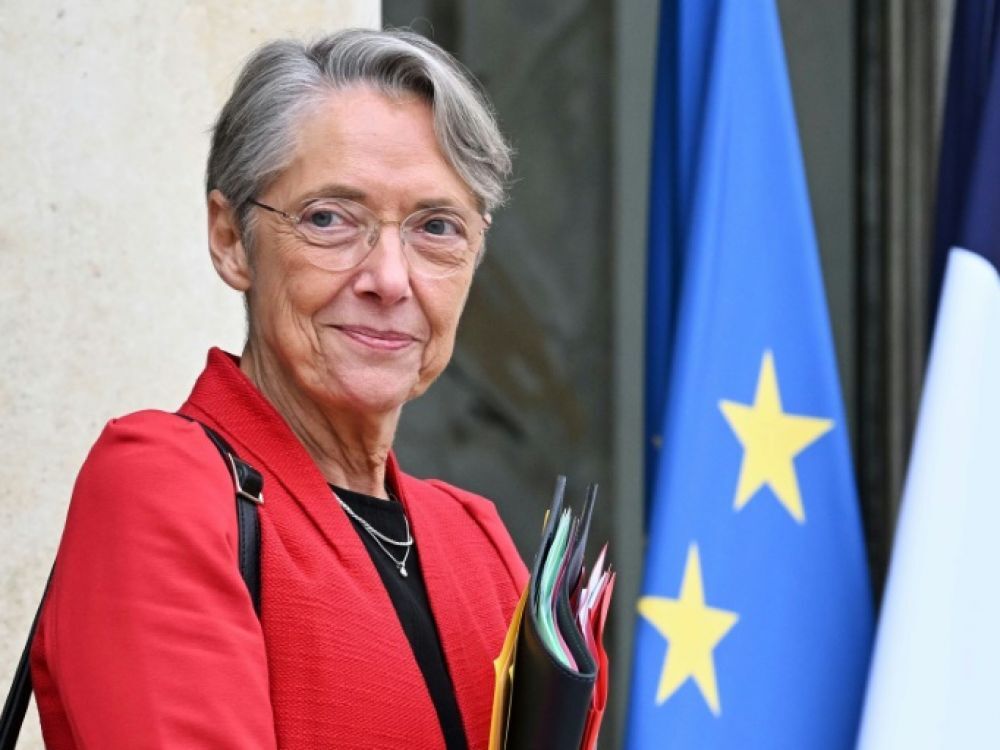
French Prime Minister wins vote of no confidence in National Assembly

French Prime Minister Elisabeth Bourne comfortably won a vote of no confidence in her government in the National Assembly after she resorted to passing the budget without a parliamentary vote.


The vote of no confidence, which was held on Friday night, was put forward by the left-wing “NOB” coalition, which is the eighteenth that Bourne has faced, and it came after she resorted to the constitutional mechanism known as Article 49.3, to pass the draft budget law without voting on it in the National Assembly.


The motion of confidence received the approval of 193 deputies out of the 289 votes required for its passage, a result that was largely expected in light of the proposal not receiving support from the center-right in the House of Representatives.


In practice, this means passing the draft budget for the period between 2023 and 2027 and submitting it to the Senate for approval.


The spokesman for the "NOP" coalition, socialist MP Philippe Bran, accused the Borne government and President Emmanuel Macron of "favoring, with the greatest degree of subservience, a minority of well-off Frenchmen" despite a "massive inflationary crisis" in the country.


He pointed out that Macron "is trying to hide Parliament by repeatedly resorting to Clause 49.3," which allows the executive authority to approve draft laws without voting on them before the National Assembly.


The far right supported the left's motion of no confidence in the government, accusing Borne of resorting to "repeated and exploitative use" of this constitutional mechanism.
Macron had previously resorted to Article 49.3 to pass his controversial project to reform the retirement system after widespread protests.

PALESTINE

Sat 30 Sep 2023 9:07 am - Jerusalem Time

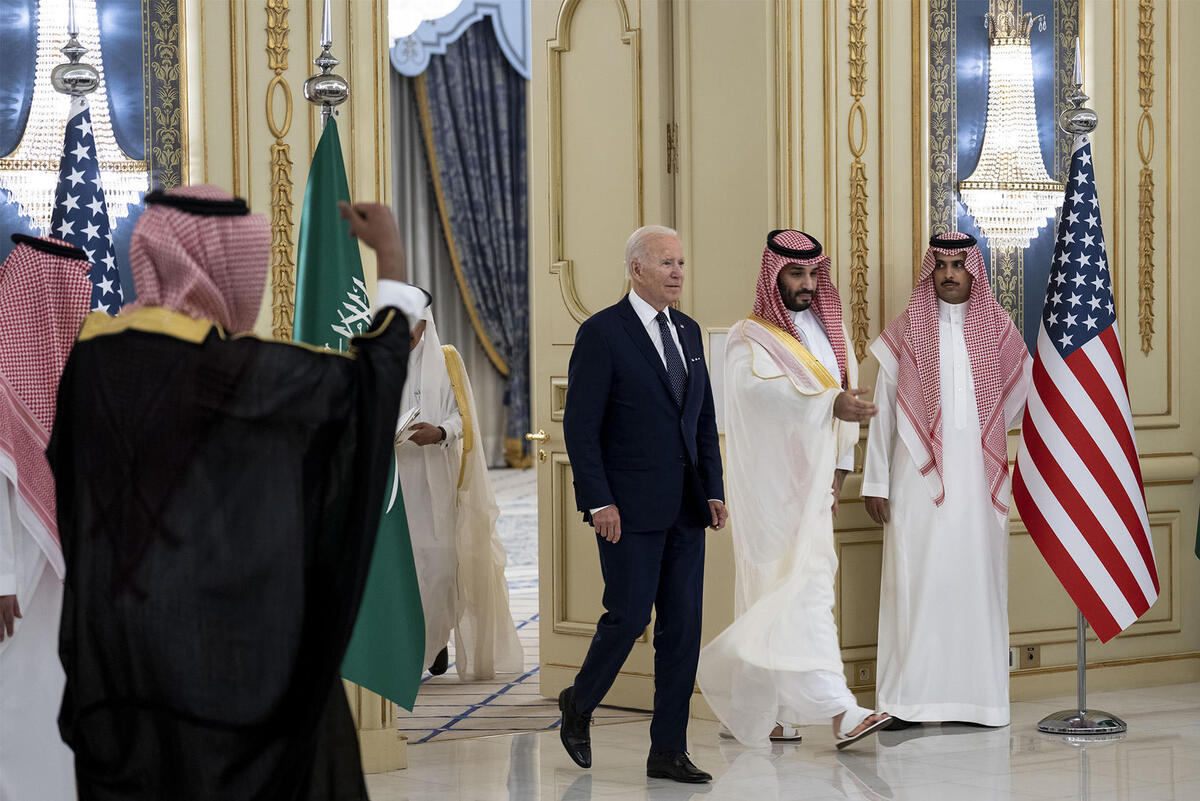
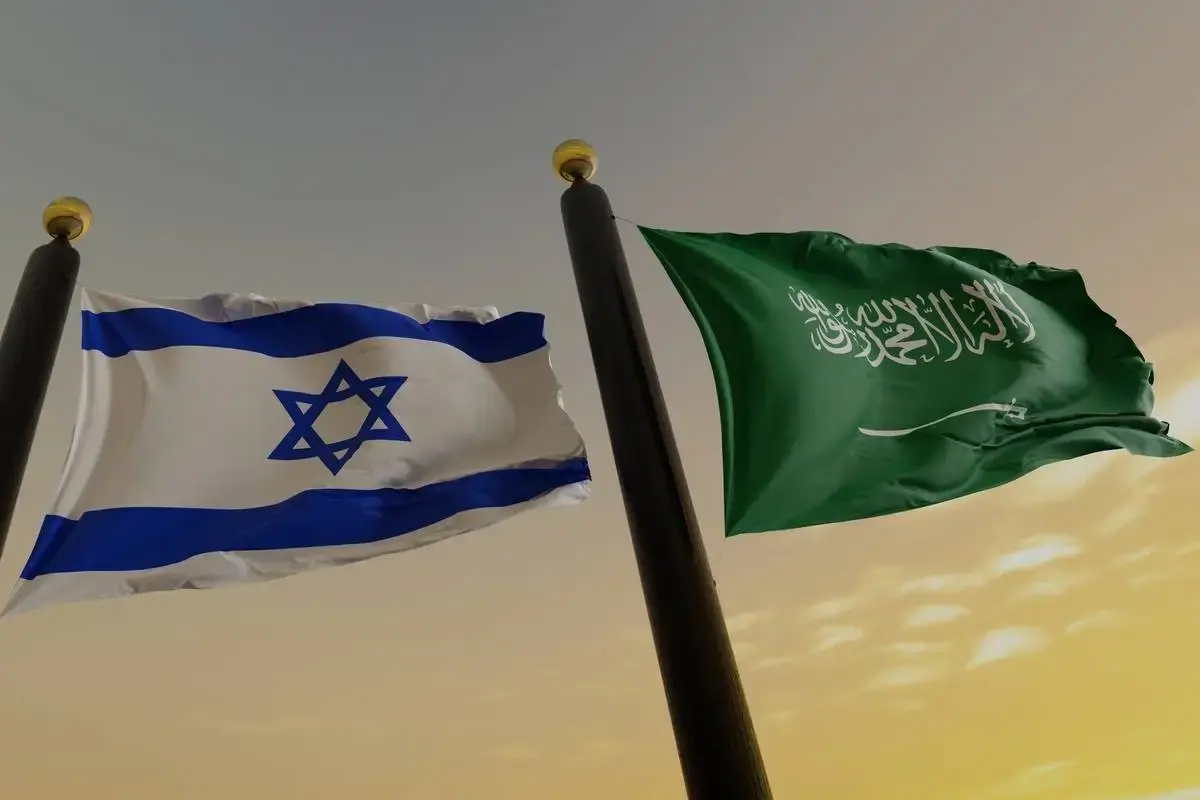
Is a Saudi-Israel Normalization Agreement on the Horizon?


While progress has reportedly been made in talks, there are many complicating factors to securing such an historic deal.


In recent months, a drumbeat has built around the U.S. effort to negotiate a normalization agreement between Israel and Saudi Arabia. The deal would be a tectonic shift in Middle East geopolitics, but also carries major implications for other actors beyond the three negotiating parties. Israel would, of course, benefit from normalized relations with the Saudis — long seen as the “holy grail” of potential normalization agreements for the country. The Saudis, in turn, would see their interests advanced through strengthened U.S partnership in key areas. But this deal could also have serious implications for the future of the Palestinian national movement and, further afield, for the role of China in the Middle East.


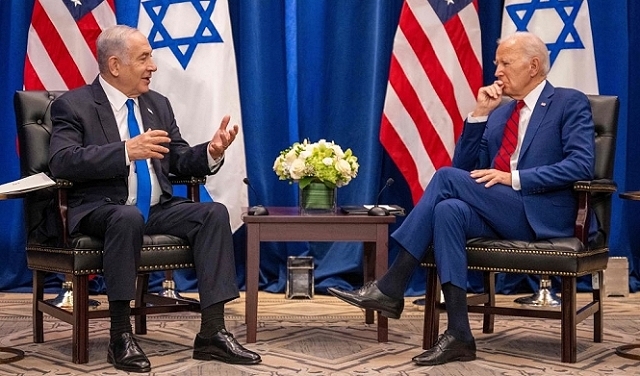
The speculation that the agreement is around the corner received an adrenaline shot last week as both Israeli Prime Minister Benjamin Netanyahu and Saudi Crown Prince Mohammad Bin Salman (MBS) indicated that progress had been made. But major obstacles remain in a deal that aims to address shared interests while requiring each of the major parties to make compromises that could meet strong domestic headwinds.

USIP’s Lucy Kurtzer-Ellenbogen, Hesham Youssef, Robert Barron and Adam Gallagher explain what this deal would look like, the obstacles to achieving it, how it compares to the Abraham Accords and how China factors into the U.S. pursuit of this agreement.


What do we know about the respective interests, potential contours of and roadblocks to a Saudi-Israel normalization agreement?  

Kurtzer-Ellenbogen and Barron: At the heart of the potential deal lie Saudi asks of the United States: chiefly, formalized U.S. security guarantees and U.S. support and cooperation for the development of a Saudi civilian nuclear program. In parallel, Saudi Arabia and the United States are expected to require Israeli concessions that minimally provide benefits to the Palestinians and that maximally reinforce the shared Saudi and U.S. position of preserving the possibility of a two-state solution to the Israel-Palestinian conflict.


For the United States, this would be seen as a major foreign policy win, advancing regional integration by building on the Abraham Accords with the most sought-after player; re-injecting momentum, or minimally focus, on a political horizon for the Israeli-Palestinian conflict; and all while creating opportunity to push back on China’s rising influence in the region. For Israel’s part, normalization with the Saudis would not only bring untapped economic benefits, but fundamentally reshape its place in the region, and potentially broader Islamic world.


But there are major challenges to consummating such a deal between a triangle of actors whose interests don’t neatly align and, in key areas, starkly diverge. Indeed, the obstacles to this agreement are baked into the respective sides’ asks. There are those for whom the Saudi request for an American security guarantee seems more risk than reward. Agreeing to protect the Saudi monarchy with American troops in a historically unstable region of the world runs counter to a common assessment that the American public is averse to foreign entanglements and any prospect of American “boots on the ground.” Relatedly, should such an agreement be framed as a “treaty” it would require affirmative votes from two-thirds of the Senate. 


The Saudi request for Israeli concessions toward the Palestinians — concessions that could explicitly reset the horizon toward a two-state solution — seem impossible for the current Netanyahu-led Knesset to withstand. On the flip side, should the Saudis settle for less than what some might consider meaningful concessions to the Palestinians — actions that would move beyond improving lives to rolling back the occupation — this too would raise challenges to U.S. approval of the deal.


The Saudi request for allowance to enrich its own uranium with minimal international oversight seems difficult for the United States, Israel and many other actors to swallow, given the broad opposition to a Middle East nuclear arms race. Finally, the American desire to see the Saudis distance themselves from China and Russia and embrace human rights and democratic standards could run up against the Saudi government’s seeming desire to cherish strategic flexibility, independence in energy decisions and reform on its own terms.


Still, it’s clear the principals — Biden, MBS and Netanyahu — are motivated to reach a deal if appropriate terms can be reached. To this end, over the past few months, but with seeming acceleration over recent weeks, potential avenues toward overcoming obstacles and mitigating the kaleidoscope of concerns have begun to emerge. On a security arrangement, the sides seem to be exploring an arrangement similar to U.S. security relationships with South Korea and Japan, rather than the guarantees offered under NATO. On the nuclear program, the United States and Israel are reportedly working together on a proposal that satisfies each side’s oversight concerns.


The Palestinian issue may be an ultimate determining issue for this process. Both the Biden administration and the Saudi leadership have been clear that they expect the agreement to result in positive steps toward resolving the Israeli-Palestinian conflict through a two-state solution, which both endorse. The Palestinians have been actively engaged with the Saudis in this process, reportedly delivering a list of requests for the Israelis and Americans. Politics in the United States, and Saudi domestic and regional considerations seem to require progress in this regard and the Palestinians have internalized lessons from their reaction to the Abraham Accords and sought to proactively shape and benefit from what they believe may be an inevitable agreement.


The barrier to creative solutions may be within Israeli politics, where major parts of the right-wing coalition would forego normalization with Saudi Arabia should such an agreement require ceding land to the Palestinians. At the same time, with the UAE having made suspension of annexation a condition for entering the Abraham Accords, the Saudis will be hard pressed to not minimally meet, let alone exceed, a territorial requirement for granting full normalization. Thus, some have speculated that current efforts may be laying the groundwork for an agreement with a future, more centrist Israeli government. Netanyahu has pushed back on speculation that this will be necessary to seal a deal. It is also no foregone conclusion that the politicians necessary for Netanyahu to shape a new coalition would be willing partners.


Still, as the question mark hovers over the deal’s viability, the primary parties are clearly engaged in piecemeal efforts to signal intent, build confidence and offer sweeteners that could blunt opposition where it exists, or engender agreement and cooperation where skepticism and reticence reign. This week has witnessed some parallel firsts when Saudi Arabia’s first ambassador to the Palestinian Authority presented credentials to President Mahmoud Abbas in Ramallah, and Israel sent an official delegation to Riyadh for a U.N. conference. The United States also granted Israel long-sought entry into the visa waiver program, verifying that the latter had met key requirements over the course of the pilot period, including granting Palestinian-American visitors to Israel the same entrance and movement rights as all other Americans. For their part, seeking to mitigate potential losses and maximize potential gains, the Palestinians reportedly pledged not to publicly criticize any potential deal.


What are the similarities and differences between this process and the Abraham Accords?

Youssef: The two situations are difficult to compare as the Abraham Accords were successfully concluded three years ago and the effort to achieve Israeli-Saudi normalization is ongoing and facing huge challenges as indicated above. However, some comparisons are readily apparent in terms of process, significance and room for maneuvering.


While the Abraham Accords were concluded in complete secrecy and the Palestinian leadership was not consulted throughout the negotiations, this is not the case in the current negotiating process where the Palestinians have been put “on notice” of what may come. Therefore, contrary to the sharp impulsive Palestinian overreaction against the Abraham Accords, they have sought to engage to make their interests heard.


On this point, both the United States and Saudi Arabia recognize that there has to be a significant Palestinian component in this process. As articulated in recent days by Emirati former Minister of State for Foreign Affairs, Anwar Gargash, the Palestinian issue was not instrumental in motivating the Abraham Accords, even if the UAE had previously contended that they were “really about stopping annexation and saving the two-state solution.”


The Abraham Accords were signed when Netanyahu was more in control of the Israeli government. Now, with the most extreme government in Israel's history, he no longer commands the same level of control or ability to decide on Israeli concessions for the normalization that he prioritized. It also remains to be seen whether the current U.S. administration will be as willing to respond to the demands presented by the parties as the previous administration was.  


Finally, Saudi ambitions in the region and more broadly in the Islamic world will necessitate that the Palestinian component in the normalization agreement be seen as significant from a Palestinian, Arab and Islamic perspective.

As for the similarities, it is recognized that Saudi Arabia is more significant for Israel than the Abraham Accord countries. That said, both agreements would rightly be considered transformational in their impact on relations between Israel and countries of the region and beyond.


Last but not least, both approaches are not in conformity with the sequence spelled out in the Saudi-inspired Arab Peace Initiative (API) of 2002, which indicated that normalization would take place in the context of achieving the two-state solution with the creation of a Palestinian state, “on the territories occupied in 1967” and with East Jerusalem as its capital, it can be argued that an agreement with Saudi Arabia is the last chance to leverage meaningful progress toward a two-state solution. However, both have not to date diverged from commitment to the broad contours of the API end-of-conflict requirements, even as the sequencing has been compromised.

How does China factor into the U.S. efforts to secure this deal?


Gallagher: There’s no denying that U.S.-China competition is also a major factor in Washington’s ardent pursuit of this deal. While Southeast Asia is generally considered the primary vector of U.S.-China rivalry, the Middle East has increasingly become a key geopolitical theater. And China has made major inroads in the region in recent years. Just last week, Syrian President Bashar al-Assad inked a “strategic partnership” with Beijing while in China, Kuwait’s crown prince visited with Xi Jinping, and $23.4 billion in deals were signed at the China-Arab Trade Expo.

But it’s the China-Saudi relationship that has really taken off. The Saudis are leveraging these ties in normalization talks with Washington. Riyadh is considering a Chinese bid to build a civilian nuclear-power plant in the Kingdom with no conditions on nonproliferation issues. Washington has said that U.S. nuclear assistance for the Saudis would be contingent on nonproliferation restrictions.


In December 2022, Xi made one of his first post-COVID trips to Saudi Arabia, where he signed a number of bilateral deals on technology, infrastructure and security. China helped broker Saudi-Iran détente this March, after decades of enmity between Riyadh and Tehran. The Saudis are joining the BRICS grouping — made up of China, who led the push for BRICS expansion, and Brazil, Russia, India and South Africa — in 2024 and, Riyadh became a dialogue partner of the China-led Shanghai Cooperation Organization in 2021.


Saudi Arabia was China’s top crude oil supplier in 2022 and China is the biggest purchaser of Saudi oil. They have also discussed the Saudis pricing oil in Chinese yuan, which Washington has expressed considerable concern over. Since the 1970s, the Saudis have helped ensure the dollars’ dominant status as the global reserve currency by agreeing to price oil in greenbacks.

Beyond oil, the China-Saudi economic relationship has blossomed in recent years, particularly in areas like construction, technology, water and weapons. MBS also surely prizes China’s policy of “non-interference” in domestic affairs, particularly in light of tensions with the Biden administration over Saudi human rights abuses and the high-profile murder of journalist Jamal Khashoggi.


Washington isn’t being coy about its desire to pull Saudi Arabia away from China’s orbit. The security guarantee that the Saudis seek is a serious and weighty commitment for the United States. In return, on the China front specifically, the United States wants assurances that Saudi Arabia will: move away from China economically and militarily; agree to not build Chinese military bases in Saudi Arabia; limit the use of Huawei technology; and continue to use the U.S. dollar to price oil. 


It may seem that China has the upper hand with the Kingdom, but there is a reason that the Saudis are asking Washington for security guarantees. Even as China has expanded its relationships and economic influence in the Middle East, countries in the region still see America as the ultimate security guarantor and partner. China itself recognizes that the United States is the key security provider in the Middle East and is in no position to supplant it, for now.


As U.S.-China rivalry intensifies, so-called middle powers, like Saudi Arabia, will continue to leverage geopolitical competition to advance their interests. Washington should be mindful that it doesn’t give up too much in this complicated diplomatic struggle. 

 

OPINIONS

Sat 30 Sep 2023 9:06 am - Jerusalem Time

When will political decline reach its peak?

Bakr Abu Bakr

Bakr Abu Bakr

Opinion Writer

Political decline reaches its peak when a politician justifies all his actions with what the public wants! Like a trivial singer mimicking instincts? He is not a leader who seeks to elevate the dignity and freedom of the people.

Political decline reaches its extent when the political leader justifies what he does by saying that it is for the benefit of the people and their livelihood, as if he were the Lord of the peoples? Political decline only reaches its extent when this leader believes that he possesses knowledge, correct opinion and decision-making that his predecessors and those of his generation did not possess!
Political decline reaches its extent when the sultan, king, or president thinks that he owns the land and the people, so he controls them, playing with instincts, and belittling intellectuals, thinkers, reformers, and scholars, raising his image in every corner of the country, and in the corners of people’s minds and homes.


Political decline reaches its peak when selfish, personal interests overwhelm public ones, no matter how much the leader rants that he works hard and stays up all night! For the benefit of the people or the nation?
A tyrannical leader lies, a self-deceived leader is a liar, an adulterous leader is a liar, and a leader who sells principles, values, and religion is a liar and destined to fall.


They watch over the interests of those they call “their people,” not by serving them, to bring knowledge to its level, but to bring ignorance to its level.


Yes, a politician descends when he promotes drugs among what he calls his people! He numbs them with livelihood, whether they get it or they run daily after it and do not get it, or with other contexts that have taken them beyond the stage of luxuries that, with his immoral propaganda, become indispensable basics, so they are captured and humiliated.


Political immorality reaches its peak when fear is linked to shame. And when looking into the leader's eyes brings imprisonment.

Political decline becomes complete when the political leader abandons the cultural, moral and ethical immunity, so morality becomes at his disposal, meaning that he reshapes it not according to what are the fixed goals of the people or the nation, but rather for what is in the interest of the deified self, or for the benefit of his immoral political regime that practices drugging its people, lying to them, and then stealing from them. in public.


We have never been part of the colonial West. We will not be able to extricate ourselves from the depths of ignorance, laziness, dependency, and fascination with any of his values that are alien to us. It is not through these distorted values that the genie comes out of Aladdin’s lamp, nor does the brave and intrepid advance.


The Arab giant has great civilizational values that never change.


The Arab giant, the Islamic giant, and the Eastern Christian giant have their sacred values and principles, the most important of which is Palestine. Yes, holy Palestine, gentlemen. If it is not there, then he is in political decline until the decline reaches its extent, and it will not benefit him to follow the footsteps of those who preceded him in the gutter, such as (Sultan Abu Al-Fadhil Badr Al-Din Lu’lu’, nicknamed the King.) Al-Rahim, nicknamed the Rod of Gold. He is the foreigner that contradicts his name and all his ridiculous titles. He is the father of all vices. He is the murderous, immoral, liar, devious, and traitorous ruler of Mosul, who extended his hand and foot to (Hulagu) to occupy Baghdad and destroy the Islamic State!


The Arab giant has its great civilizational values that never change, and if it were able to draw them with one unified sword (around Holy Palestine), it would be able to emerge from the cloak of its political decline and moral decline just as it emerges from worshiping its master or humiliating itself under the feet of the racist colonial West, which is the West itself. Who still sees himself as the center around which things revolve, and sees the margins only as a small gap in the box of his values, to export to other civilizations the abnormalities of his thought protected by iron and fire.


The politician reaches his decline when he puts the Qur’anic facts to the test! Thinking that he can change it, and change the law of the universe and the constants of the faith, and Palestine in this era is one of the pillars of the faith.


Political decline is a faithful consequence of intellectual decline, and a faithful consequence of moral decline, and moral decline is the consequence of those who tear up the pages of the Holy Qur’an to satisfy the pleasures of their fleeting authority, their selfishness, and their arrogance.
Whenever the descendants imbibed the civilization of others, went along with its vices, denied their civilization, and believed in the collapse of their thought, religion, and comprehensive culture, they became lost, and then they tasted from the other two things that dominate them through their collapse.


Political decline only reaches its extent when the political leader puts himself before the nation, and then he sees his fake media only through his nostrils, where he breathes them inhale or throws them in the exhale of dust, so they become noseless!


The decline of a politician reaches its greatest extent when the politician searches for a basis for himself outside his cultural sphere! Outside his thought and outside his geopolitical region, he sees the light coming from the north or west as a savior for his head, and he is powerful with what he has, if he reaches it, he is great, and he is capable, with what he has, if he achieves it.


The political decline does not reach its extent until Palestine is behind us, and the matter becomes even more deteriorating when the tyrants grow arrogant, applaud, kneel, and prostrate themselves to the idols of the Zionist West.


If we continue to watch the misguidance and immorality of the rulers, the tyranny of the sultans, their lies, the fall of the leaders, and their disobedience, we will fall with them, and future generations will stone us, so there is no distinction between the fallen and the silent.
If we continue to watch, we will devote ourselves to a nation of begging the idols of Zionism and the feet of the West, and we will worship all of their products, from the material to the spiritual. Do we remain kneeling, dazzled, submissive consumers of the industries of the dominant West, thriving on culture as we thrive on science, and thriving on technology, enjoying only use without the talent of industry, creativity, and grasping the coils of progress and civilization?


Political decline reaches its peak when we are most ignorant of our own capabilities.


How can we neglect our many wealth, including our wealth of lands that say, “Come to me,” and you find only a few who respond from the callers, and when the civilizational thought associated with the great religion incites with knowledge, you find from the lying sultans, leaders, politicians, and rulers nothing but crumbs of knowledge, with daily incitement to subservience to the corrupt media. And running after corrupt consumerist thought.


Humiliation reaches its extent when the ruler mortgages his country and his people to foreign will, and to Zionism, and the size of the Arab Zionists, the Christian Zionists, and the Muslim Zionists grows, under the justification of feeding the economy, or under the justification of fighting terrorism, or under the justification of following fashion while they receive an amount of other people’s material and cultural products and even spiritual absurdities that do not befit any Muslims. Nor are there any Eastern Christians in our civilizational region with a thousand and one blessings.


Political decline reaches its extent when the Zionist occupier of Holy Palestine becomes an enthralled master, with his feet on the chest of the nation by the will of tyrants, tyrants, liars and scribes, and when Herzl in his grave becomes a revered master by the will of the trembling, trembling and fallen.


Ignorance only reaches its peak when scholars, thinkers, writers, and media professionals stop holding political sheikhs and tyrants accountable, and when parliaments turn into screaming clubs only. When intellectuals turn into applauders of power, rule, and the sole leader without any glimmer of hope that they will come to their senses!

PALESTINE

Sat 30 Sep 2023 9:01 am - Jerusalem Time

White House: Normalization progresses between Israel and Saudi Arabia

A White House spokesman said that negotiations aimed at normalizing relations between Israel and Saudi Arabia continue to advance, indicating that a “basic framework” for a future agreement has been reached.


In a chat with journalists, National Security Council spokesman John Kirby said, “The two parties have, I believe, established a basic structure for what we can move toward.”


He added, "Like any complex agreement, (...) everyone must make concessions," without giving further details.


US President Joe Biden and his administration are pushing towards normalizing relations between Israel and Saudi Arabia.


Several recent developments indicate that negotiations are intensifying.


The Saudi-Israeli talks address the issue of Saudi Arabia obtaining security guarantees and its assistance in a civilian nuclear program, according to officials familiar with the talks who spoke to Agence France-Presse on condition of anonymity.

OPINIONS

Sat 30 Sep 2023 8:58 am - Jerusalem Time

The unity of the detainees' movement is the secret of victory

Prisoner Assem Barghouti

Prisoner Assem Barghouti

Opinion Writer

The sticks refuse to break when they come together, and when they separate, they won't break into pieces
And the Lord of Glory says: “Hold fast to the rope of God all together and do not become divided.”


These verses and this poetry have always been translated as a reality and not a slogan. If bodies were united, arms joined together, and spirits and souls merged between the factions and members of the captive, free national movement, then the colors disappeared, the color of fighting emerged, the narrow factionalism vanished, and the free Palestinian was named under one flag, and the fighting spirit rose with the tightening of the forearms, so we breathed. We sighed, relished the euphoria of victory, achieved our goal, and proceeded from one stage to another.


From the stage of division, humiliation, and singling us out individually, to a stage in which we took away our rights, in which we found ourselves, our pride, and in which we discovered the sources of our strength, to the point that we gained the upper hand, and raised our ceiling, which yesterday was a dream, and we are no longer willing to give it up, and we will not give up our unity. Which led us to the path of our victory. On the contrary, we bit our fingers in regret for the days in which we were divided, each singing the night before, while the enemy played the strings of our band and danced with joy over it, and reveled in our pain and wounds, of which we were a major cause through our ignorance.


True unity and sincere interconnectedness of hearts. I will not be satisfied until my brother is satisfied, and I will not sleep until he sleeps, and I will not be safe until he is safe, and they will not reach me, over my corpse, as I hold him tight and he is the belt on my back. This is the true, free, revolutionary, and proud Palestinian prisoner, and this is what We discovered it and achieved it with our unity under the leadership of the Supreme National Committee for the Prisoner Movement, which derives its strength from the strength of its soldiers and individuals. We repelled the attack of religious Zionism, and the attack of Ben Gvir and his government, which wants to see us as humiliated, broken, divided, and without rights, even the most basic ones. However, these criminals were hit by a wall. Our unity, their plans were shattered on the rock of our interconnectedness, their dreams were scattered under the rugs of our guerrillas, and they were defeated in disappointment by the grace of God Almighty. We asserted our rights and stopped their attack, and we became an impenetrable dam and an example to be followed by all the lost people searching for narrow personal glories with no good in them.


Unity, oh sons of our great people, and I would love for every Palestinian to follow our example in all places and arenas, unity of the fronts, and unity of the field, is a trust that only the greats can carry, and search for the highest interests of their people, and whoever conspires against them will be held accountable by our people and history, so learn, oh sons of our people with all their spectrums, For what we paid as a price in our flesh and blood, just as you pay every day with your division, there is no salvation for us or for you except through our sincere and strong unity, and here it was tried, and it was victorious. Is there anyone who counts?

UNCATEGORIZED

Sat 30 Sep 2023 8:52 am - Jerusalem Time

Palestine activist: Israel minister’s arrival in Saudi means normalization actually exists

An Israeli minister’s arrival in Saudi Arabia this week shows that normalization between Tel Aviv and Riyadh already exists, the head of the Boycott and Normalization Campaign (BAN), Bassem Na’eem, said yesterday.

Na’eem stated that Israel’s Tourism Minister Haim Katz is directly responsible for the storming of Al-Aqsa Mosque, and its desecration by extremist settlers.


He added the Israeli delegation’s participation in a UN event in Saudi, leaves “no room for doubt that official normalization between Saudi Arabia and Israel is already in effect.”


“We don’t need to wait for ceremonial announcements to recognize this dangerous agreement, which is being described as the largest and most significant since the end of the Cold War.”


Na’eem condemned the secretive attempts to push through the agreement and the efforts to convince Arab and Muslim communities to “accept this shameful relationship with Israel". He added that normalization is a grave sin that history will not forgive and it will not bring security, stability, or prosperity to anyone.


On Tuesday, Katz made what his office called the first public trip to Saudi Arabia by an Israeli cabinet member to attend a UN tourism conference.

PALESTINE

Sat 30 Sep 2023 8:20 am - Jerusalem Time

Strike in Ramallah and Al-Bireh to mourn the martyr Rummana

Today, Saturday, a comprehensive strike took place in Ramallah and Al-Bireh Governorate, in mourning for the soul of the martyr Muhammad Jibril Rummana, who died yesterday evening, Friday, as a result of being shot by Israeli occupation bullets in Jabal Al-Tawil in the city of Al-Bireh.


The strike included all aspects of commercial life and the public and private sectors, including educational institutions in the governorate.


The Fatah movement in the Ramallah and Al-Bireh region called in a statement for a comprehensive strike and a general mobilization, following the ascension of the martyr Rummaneh.


Rummana was martyred after the occupation forces opened fire on a vehicle in which he and another young man were traveling, near the “Psagot” settlement established on the lands of Jabal al-Tawil, in the city of Al-Bireh, wounding the two young men before they were arrested.

PALESTINE

Sat 30 Sep 2023 8:14 am - Jerusalem Time

Palestinian Injuries and arrests in Israeli raid campaign in the West Bank

A number of citizens were injured last night during a campaign of raids carried out by the occupation forces in various areas of the West Bank.


According to local sources, a young man was shot in the right leg during confrontations with the occupation forces on Amman Street in central Jericho, and he was taken to the hospital.


The occupation forces stormed Jericho from its eastern entrance, set up a military checkpoint in the middle of the city, and fired live and rubber bullets at the young men.


Meanwhile, a number of citizens suffocated with toxic gas, after other forces stormed the village of Jalboun, northeast of Jenin.


These forces fired poison gas bombs at homes and citizens while they were participating in a wedding, causing many to suffocate.


They set up a military checkpoint at the entrance to the village, and stopped citizens' vehicles and searched them.


The young man, Muhammad Ahmed Yahya, was arrested from the village of Al-Arqa, west of Jenin.


Meanwhile, leberated prisoner, Islam Abu Shanab, was arrested while passing through the Shufa military checkpoint, southeast of Tulkarm.


The outskirts of Tulkarm camp witnessed armed clashes between the resistance fighters and the occupation forces, which were forced to withdraw after the infiltration of a special force was detected.


In the town of Shuyoukh in Hebron, the occupation forces confiscated two vehicles from the town.


Other areas of Nablus, Qalqilya, and others also witnessed a campaign of raids, without any arrests being reported.


PALESTINE

Fri 29 Sep 2023 9:18 pm - Jerusalem Time

Israeli army arrests two young Palestinians one of them injured in Al-Bireh

On Friday evening, the Israeli occupation forces arrested two young Palestinians in the Al-Tawil area of Al-Bireh.


According to Al-Quds.com's correspondent, these forces fired bullets at the vehicle in which the two young men were traveling near the "Psagot" settlement, wounding one of them.


Al-Quds.com's correspondent indicated that the nature of the young man's injury is not yet known.


PALESTINE

Fri 29 Sep 2023 9:08 pm - Jerusalem Time

Israeli forces arrest a freed Palestinian prisoner from Tulkarm

On Friday evening, the Israeli occupation forces arrested a freed prisoner from the city of Tulkarm.


According to local sources, these forces arrested the editor, Islam Abu Shanab, while he was passing through the Shufa military checkpoint southeast of Tulkarm.

PALESTINE

Fri 29 Sep 2023 8:12 pm - Jerusalem Time

UN Commission of Inquiry: Israeli violations require legal consequences

A position paper issued by the United Nations Independent International Commission of Inquiry on the Occupied Palestinian Territory, including East Jerusalem, and Israel concluded that Israel has violated and continues to violate the right of the Palestinian people to self-determination through its long-term occupation, settlement and annexation of the Palestinian territory occupied since 1967. .


The committee issued the paper, which was published today, Friday, under the title “Legal Consequences Arising from Israel’s Policies and Practices in the Occupied Palestinian Territory, Including East Jerusalem,” and within the framework of the United Nations General Assembly resolution requesting the International Court of Justice to issue a fatwa (advisory opinion). Concerning the Israeli occupation of Palestinian land.


The International Commission of Inquiry noted that “the legal consequence of violating the right of the Palestinian people to self-determination, which is an obligation towards everyone, lies with the State of Israel.”


She added that "the Israeli occupation, which has lasted 56 years now, is illegal under international law," stressing that the result of illegal acts requires legal consequences for Israel to put an end to the "internationally wrongful act." She also stressed that all countries and the United Nations are obligated to act urgently to put an end to these illegal acts.


The UN Human Rights Council granted the Commission of Inquiry its mandate on May 27, 2021 to investigate “within the occupied Palestinian territory, including East Jerusalem, and inside Israel all alleged violations of international humanitarian law and all alleged violations and abuses of international human rights law that preceded April 13.” April 2021 and has occurred since this date.”


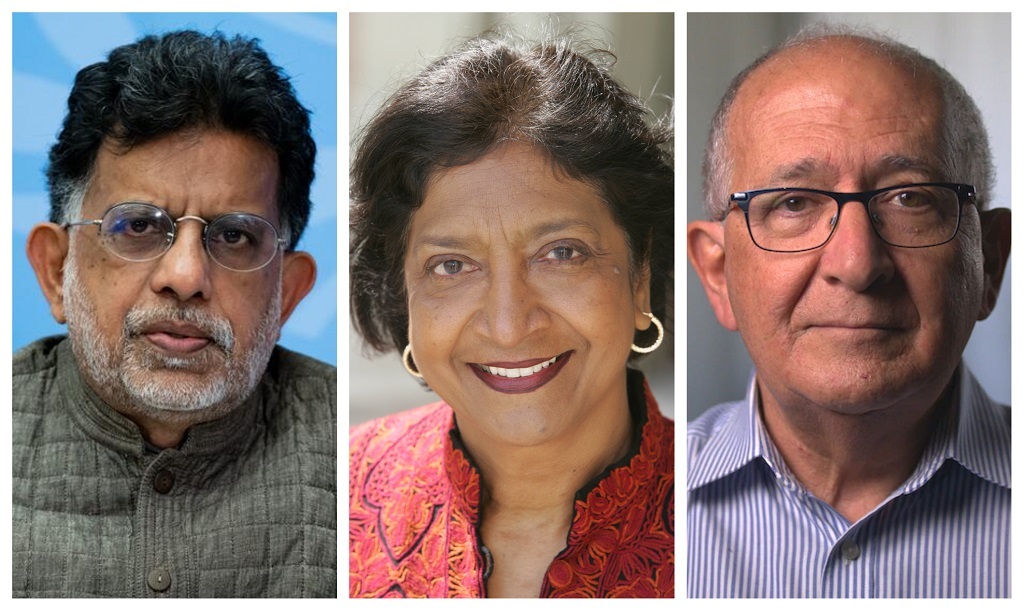
In July 2021, the President of the Human Rights Council announced the appointment of Navanethem Pillay (from South Africa), Milon Kothari (from India) and Chris Sidoti (from Australia) to be the three members of the Commission of Inquiry.


It is noteworthy that, on December 30, 2022, the United Nations General Assembly adopted, by a majority, the draft resolution on Israeli practices that affect the human rights of the Palestinian people in the Occupied Palestinian Territory, including East Jerusalem.


Despite the political pressure exerted by Israel, the occupying power, and some of its friendly countries, 87 countries voted in favor of this resolution, 26 countries opposed it, while 53 countries abstained from voting.


In adopting this resolution, the United Nations General Assembly referred the request to the International Court of Justice to provide a legal advisory opinion on the legal consequences resulting from Israel’s continued violation of the right to self-determination of the Palestinian people, its long-term occupation, settlement and annexation of the Palestinian territory occupied since 1967, including measures Aiming to change the demographic composition, character and status of the city of Jerusalem, in addition to how Israel’s policies and practices affect the legal status of the occupation and what are the legal implications of this status for all countries and the United Nations.


On January 17, 2023, the International Court of Justice received a request from the United Nations General Assembly to submit its legal advisory opinion (fatwa), through a letter sent by the Secretary-General of the United Nations, António Guterres.


On February 3, 2023, the International Court of Justice set July 25, 2023, as a deadline for receiving written pleadings from states, the United Nations, and the State of Palestine, and for submitting all information and papers related to the question contained in the resolution of the United Nations General Assembly, while Relates to the issue of the legal fatwa on the nature of the Israeli occupation.


The International Court of Justice is the main judicial body of the United Nations. It was established under the United Nations Charter in June 1945 and began its activities in April 1946.


The court consists of 15 judges elected by the United Nations General Assembly and its UN Security Council, for a term of nine years. The court is headquartered in the "Peace Palace" in the Dutch city of The Hague.


The Court plays a dual role in settling legal disputes brought before it by states, in accordance with international law, and through binding and non-appealable rulings by the parties concerned, in addition to issuing advisory opinions (advisory opinions) on legal issues referred to it by the organs and agencies of the United Nations authorized by it. Assets.

UNCATEGORIZED

Fri 29 Sep 2023 7:08 pm - Jerusalem Time

Palestinians condemn US congressional hearing as unfair and misleading

Palestinian officials in Ramallah on Thursday described a US congressional hearing that accused the Palestinian Authority of supporting violence against Israelis in the occupied West Bank as “misleading and unfair.”


  1. Only pro-Israeli figures were invited to the hearing, which discussed a law banning US aid to the Palestinian Authority because it “rewards Palestinians to murder Israeli citizens”

  2. Palestinian minister Qaddura Fares said such hearings treat Israel and its supporters as the only sources of information about Palestinian issues


As reported by Arab News, only supporters of Israel were invited to attend the hearing of the House Foreign Affairs Subcommittee on the Middle East, North Africa and Central Asia on Wednesday, which discussed the implementation of the Taylor Force Act, a 2018 law that bans the provision of US financial aid to the PA on the grounds that the authority “rewards Palestinians to murder Israeli citizens.”


Palestinian officials told the Arab News that the organizers of the hearing failed to invite them to present the views, and in doing so had revealed its “bias” in favor of Israel and the anti-Palestinian sentiments of some members of Congress.


The hearing was led by Joe Wilson, a Republican member of the House of Representatives who chairs the subcommittee. He accused the Palestinian government of operating a system of “pay to slay,” in which Palestinians are rewarded for killing Israelis, an allegation Palestinian officials vehemently denied in comments to Arab News.


Eliot Abrams, a pro-Israel former deputy assistant to the president and national security adviser, and several other members of the subcommittee also accused the PA of participating in a system that “honors and rewards terrorists.” Several representatives of right-wing, pro-Israel US organizations who spoke during the hearing made similar claims and called on US President Joe Biden to halt financial aid to Palestinians.


Palestinian officials said such allegations are “totally untrue” and “misleading.” Qaddura Fares, the Palestinian minister of detainees’ affairs, told Arab News that such US hearings treat Israel and its supporters in the US as the only sources of information about issues involving the Palestinians or their cause.


He described the hearing as “misleading and one-sided” given that Palestinians were not invited to present their side of the story or even consulted. The subcommittee should have asked Palestinian officials or their representatives to participate, he added, in the interests of balance and fairness.


Fares said the welfare-payment system to families of people killed or imprisoned by Israel, which lies at the heart of the “pay to slay” allegations, operates in accordance with Palestinian law, under which the government is obliged to provide financial support to any family that loses its breadwinner as a result of Israel’s actions as an occupying state.


Wasel Abu Yousef, a senior Palestine Liberation Organization official, told Arab News that successive US administrations and Congress have often engaged in “covering up for the Israeli crimes against the Palestinian people” instead of supporting the peace and security of both sides.


“The issue of financial and moral support for the families of martyrs who were killed by the Israeli occupation forces, and those who were detained by it, cannot be neglected or bypassed by any Palestinian official,” he added

According to Abu Yousef, 260 Palestinians have died as a result of Israeli actions so far this year, and about 220 were killed last year.


Fares, whose ministry helps to support the families of Palestinian detainees in Israeli jails, said there are about 5,200 Palestinian prisoners in Israeli prisons, including about 1,200 administrative detainees who are being held without charge or trial, and 170 children under the age of 18.


Israeli authorities imprison thousands of Palestinians each year, he added, for nonviolent actions such as raising a Palestinian flag, participating in anti-occupation protests, or political activism on college campuses.


He said only 10 percent of Palestinian prisoners, about 500 in total, are serving life sentences in Israeli jails, indicating that they were convicted of involvement in the killing of Israeli citizens. In accordance with Palestinian law, Fares said, the families of those people should not have to suffer, be held responsible for their relative’s crimes, or be deprived of social support services provided by the government.


Jibril Rajoub, a senior Fatah official, told Arab News the issue of Palestinian support for the families of martyrs and detainees will only end when the Israeli occupation of Palestinian land ends.


“It appears that some members of the US Congress only care about supporting the continuation of Israeli occupation, not an equitable peace between the two peoples,” he said.


“This issue is very sensitive for the Palestinian people because it touches the core of their existence and their struggles to free their country and end the Israeli occupation.”

PALESTINE

Fri 29 Sep 2023 6:27 pm - Jerusalem Time

Bipartisan Push to Strengthen U.S. Security Coordinator Role in Israel-Palestine Relations

A bipartisan group of senators led by Jon Ossoff (D-Ga.) is introducing a bill that aims to strengthen the position of the U.S. security coordinator for Israel and the Palestinian Authority and protect it from being downgraded by future administrations, according to the text of the bill shared by Axios.


A bipartisan group of U.S. Senate lawmakers is prompting a call to action to bolster the U.S. Security Coordinator for Israel and the Palestinian Authority. The move comes in the wake of a previous contemplation by the Defense Department to downgrade the position. The coordinator, a U.S. military officer, heads a multinational group that facilitates coordination between Israel and the Palestinian Authority’s security forces.


In response to the potential downgrade, the lawmakers have proposed a new bill, the Middle East Security Coordination Act. The legislation aims to underscore the significance of the coordination for regional stability. It proposes an annual funding of $75 million for the mission over the next five years. Additionally, the proposed law seeks to codify the coordinator’s role, thereby giving it a legal basis and official recognition.


Despite the bipartisan backing for the bill, there’s a growing skepticism due to the Palestinian Authority security forces’ struggles to contain escalating violence within the West Bank. These security challenges have raised concerns about the effectiveness of the coordination and the ability of the Palestinian Authority to maintain law and order.


The U.S. Security Coordinator’s role involves leading a multinational group that coordinates between Israel and the Palestinian Authority’s security forces. The coordinator serves as a crucial liaison, fostering cooperation and promoting peace and stability in the region. The position is critical to protecting American interests and deescalating conflicts in Israel and the Palestinian territories.


The Middle East Security Coordination Act could play a crucial role in shaping the future of the U.S. Security Coordinator for Israel and the Palestinian Authority. If passed, the legislation will ensure the coordinator’s role is legally recognized and adequately funded. However, the success of the role will also depend on the ability of the Palestinian Authority to effectively manage security issues within its territories.

PALESTINE

Fri 29 Sep 2023 6:23 pm - Jerusalem Time

Israeli security session will be held by Netanyahu to assess security situation

Next Sunday, Israeli Prime Minister Benjamin Netanyahu will hold a security session to assess the deteriorating conditions on various fronts.


According to the Hebrew Channel 13, the session will discuss the security situation on the Gaza front and other fronts, with the participation of various security agencies, and evaluate the situation.

PALESTINE

Fri 29 Sep 2023 6:02 pm - Jerusalem Time

Almost 40% of Israelis contemplating emigrating in judicial reform protest

The number of Israelis intending to emigrate underscores the deepening crisis within Israel and raises questions about the nation's resilience, according to the Jewish People Policy Institute. 


The Jerusalem Post newspaper reported that about 37% of Israelis currently hold or plan to acquire a foreign passport with the intention of emigrating, according to the Jewish People Policy Institute (JPPI) new 2023 Annual Assessment, published on Wednesday.


According to the institute, this alarming figure underscores the deepening crisis within Israel and raises questions about the nation's resilience.


In a year marked by significant turmoil and polarization, due to the judicial reforms in Israel, as well as turbulence in areas of religion and state, the JPPI report paints a troubling picture of Israeli society. While the report acknowledges Israel's remarkable progress in its 75th year of independence, including economic, military, and political achievements, it highlights the erosion of mutual respect among Israelis from different ideological backgrounds.


Perhaps most concerning is the dramatic decline in Israelis' comfort levels living in their own country. Over the past year, the percentage of those who don't feel comfortable has surged from 20% to 32%, while those who do feel comfortable have dwindled from 76% to 65%. Even right-wing supporters, traditionally a more cohesive group, have seen their comfort levels decrease from 55% in February 2023 to 43% in July.


These trends have led many Israelis to contemplate emigration as a potential solution to the challenges they perceive in their homeland. Close to 40% of Israelis considering acquiring a foreign passport and leaving the country represent a significant portion of the population, and this figure is even higher among conservative Israelis and individuals holding foreign passports themselves.


American Jews anxious about Israel's crises

In a parallel survey conducted among American Jews regarding their feelings toward the political and social crisis in Israel, the dominant response was "anxiety" no matter which ideological/political scale they identified with. Among those who defined themselves as "very liberal," 19% said they felt disgust, and among those who defined themselves as "center," 21% expressed bewilderment. Among those who identified as Conservatives and Reform, 24% expressed "anger" toward the current crisis in Israel.


When asked about how the events in Israel would affect their attitude towards the country, the responses varied depending on their religious and political affiliations. Orthodox and Conservative respondents predominantly believed that there would be no change in their attitude towards Israel, viewing their connection as unwavering. However, among Reform and Jews not affiliated with any specific religious stream, the dominant response was "depends on the outcome." Even among a third of Conservative and nearly a quarter of Orthodox respondents, the answer was "depends on the outcome."


Despite the significant challenges outlined in the JPPI Annual Assessment, it is crucial to acknowledge the remarkable progress Israel achieved in its 75th year of independence. The nation demonstrated substantial growth on multiple fronts, including its economy, military prowess, and political standing. Israel has cemented its position as a regional power with a resilient economy, and it continues to foster increased cooperation with neighboring and regional countries, offering a glimmer of hope amidst the complex issues it faces.


The report also underscored the need for “courageous leadership,” to address these divisive issues and heal the rifts within the Jewish community, both in Israel and abroad. 


According to Prof. Yedidia Stern, the President of JPPI, "The dramatic change in 2023 is that, for the first time in our history, it is evident that the dispute over Israel's identity as a Jewish and democratic state is tearing apart our covenant of unity and common destiny, creating rifts within it.


ARAB AND WORLD

Fri 29 Sep 2023 4:52 pm - Jerusalem Time

Website: Biden and Netanyahu agreed to keep the two-state solution alive

Axios revealed on Friday morning that US President Joe Biden and Israeli Prime Minister Benjamin Netanyahu agreed last week that “the huge deal with Saudi Arabia must be based on the principle of preserving the possibilities of reaching an Israeli-Palestinian peace agreement in the future, according to an Israeli official.” Another source saw the meeting, but the details still need to be worked out,” according to the website.


The Biden administration is seeking to reach a massive deal with Saudi Arabia and Israel before the 2024 presidential campaign takes over Biden's agenda.


The White House made clear to the Israeli government that it would have to make significant concessions to the Palestinians as part of a deal with Saudi Arabia that includes normalization between the kingdom and Israel.


Secretary of State Tony Blinken claimed that Saudi leaders told him that the Palestinian issue would play a central role in any future agreement with Israel.


“The White House official in charge of the Middle East file, Brett McGurk, and Biden’s senior advisor, Amos Hochstein, held a preparatory meeting with Netanyahu’s aides on Tuesday, September 19, the night before the two leaders’ meeting, two American and Israeli officials told the website.


McGurk and Hochstein asked Netanyahu's aides what the prime minister would tell Biden about the concessions he wants to make to the Palestinians as part of the mega deal with Saudi Arabia.


The site claims that, according to American and Israeli officials, Netanyahu's aides refrained from going into details and said that the prime minister would talk about the matter privately with the president. According to the site, American and Israeli officials (later) said that when Biden and Netanyahu met, a large part of their meeting focused on... It continued for an hour on the Palestinian element of the deal.


Biden did not present Netanyahu with a list of demands for concessions to the Palestinians, but he told the prime minister that he wanted Israel to take steps that would keep the option of a two-state solution with the Palestinians open, according to an Israeli official and an Israeli official, and that Netanyahu agreed to the idea of ​​taking steps to keep the door open for an agreement. A future peace with the Palestinians.


It is noteworthy that after his meeting with Biden last week in New York, Netanyahu said publicly that "the Palestinians should be part of the agreement between the United States, Israel and Saudi Arabia, but they should not have the right to object to it."


Netanyahu has long shied away from expressing his support for the idea of ​​a two-state solution, and has been talking instead about granting the Palestinians “limited sovereignty” in the West Bank, with Israel retaining control over the security aspect.


In turn, the US State Department confirmed, on Tuesday (9/26), that “the Saudi and Palestinian demands regarding any final agreement between the Kingdom and Israel included an important Palestinian element, which must be present in any potential normalization agreement.”


Ministry spokesman Matthew Miller indicated, in response to a journalist's question, that "the US President and the Secretary of State spent an important time working on the issue of normalization" between Saudi Arabia and Israel.


“One of the things we have heard in our engagement with the Palestinians and which we have communicated on their behalf to our Israeli counterparts is that ‘there must be a significant Palestinian element in any final agreement,’” Miller added.


He added: "The Saudi government has made this clear publicly and made it clear to us privately... and this is certainly an issue on the table."


Miller's statements came in conjunction with the first public visit to Saudi Arabia by a senior Israeli official, Tourism Minister Haim Katz, who visited Riyadh to participate in a conference of the United Nations World Tourism Organization.