UNCATEGORIZED

Fri 06 Oct 2023 2:08 pm - Jerusalem Time

Israel’s embargo made donkeys critical to Gaza. Now it may take them away.

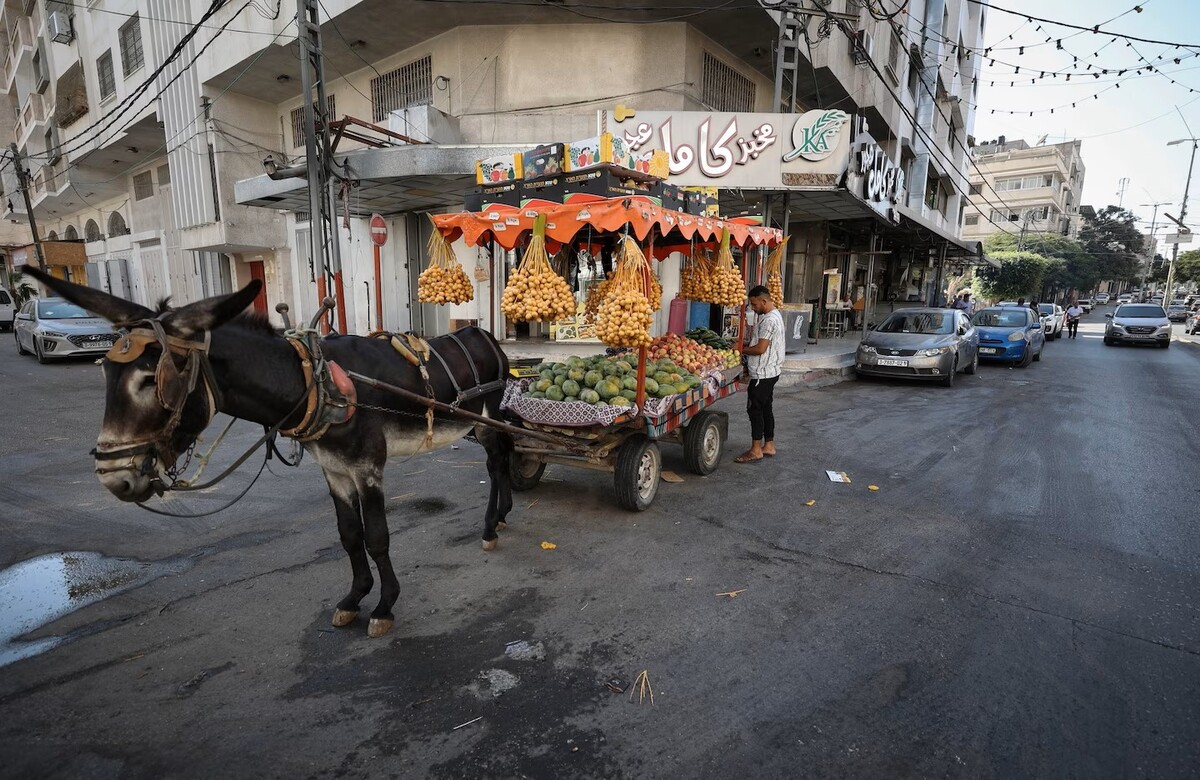
Donkeys are everywhere in Gaza. Israel’s more-than-15-year-old economic embargo limits the supply of trucks and fuel, so Gazans have reverted to donkey carts to haul produce, building materials, bomb debris and garbage. Even in the center of Gaza City, hundreds of carts add a 19th-century clip-clop to the chaotic traffic.


But now, al-Nadi and other livestock dealers say, donkeys are hard to come by, a consequence of the same kind of Israeli economic controls that made them such a fixture.

The change began in December 2021, when al-Nadi went to clear the arrival of 30 donkeys being shipped from Israel. A Palestinian Authority agriculture agent broke the news: “They told me that Israel had decided it was now forbidden to import donkeys into Gaza,” he said.


Israel officials, he was told, were acting at the behest of animal welfare groups after they complained of widespread mistreatment of donkeys in Gaza — including overcrowded shipping containers, abusive workloads and malnutrition. He called his dealer in northern Israel, Tzvie Kimelman, who confirmed it. “Because all those groups objected and made noise and reached people in the government,” Kimelman said, “they closed the transfer of donkeys.” “Half of my business went away,” said al-Nadi, who also brokers cattle.


Israel has controlled the movement of goods and people in and out of Gaza since the Hamas militant group took power here in 2008. The 140-square-mile territory, home to more than 2 million Palestinians, is one of the most impoverished, densely populated enclaves in the world.


Al-Nadi said the donkey market in Gaza has gone haywire, with the price for a single animal having skyrocketed to almost $1,000 — putting them out of reach for most of the vendors and haulers who depend on them.

“The demand has doubled now,” said Omar Akal, 44, who raises donkeys, camels and other livestock in northern Gaza. “I have to tell people ‘no’ all the time.”


His 15 jennies and one jack make him the biggest donkey breeder in the enclave. But the 10 to 12 foals they produce each year can’t come close to replacing the animals that used to be shipped across the border.

“One day there will be no donkeys in Gaza,” said al-Nadi.


It would mark a significant shift here, where the squat, muscular and often very loud creatures have long been part of the crowded landscape.

The animals have a colorful history in Gaza, and a black-and-white one, too: In 2009, zookeepers painted black stripes on white donkeys to stand in for the zebras they were unable to import.


Some market carts — hawking dates, bananas and figs — are fitted with awnings and trimmed in fringe, the donkeys in beaded harnesses. Some carry children to school or families to the beach. Most carts are piled high with sand, bags of cement or bales of plastic bottles.


All of them share traffic lanes, and parking spots, with Mercedes, Kias and Toyotas. It is not unusual to see young boys driving the carts, and whipping the donkeys with sticks or hoses. 

“I was shocked when I saw how many donkeys are here in the city,” said Rana Batrawi, a Gazan artist who returned to the enclave after living for several years in Saudi Arabia. “I worry about how hard they work, but they are very much a part of how I see Gaza.”


Not everyone appreciates the donkeys, seen by many as a symbol of poverty and repression. Drivers make their frustration obvious, and pedestrians have one more thing to look out for.


“I am always very careful where I step,” Batrawi joked. “But this is a way people can sustain life with what is available.”

The government relies on the animals to fill gaps in its own vehicle fleet. The carts are the first line of debris removal after periodic air attacks by the Israeli military. For $6 a load, they haul collapsed building rubble to recycling plants.

And half of the enclave’s municipal garbage collection is done by contract donkey owners, said Abdraheem Abu Qomboz, the director of Gaza City’s Health & Environment Department. More than 900 of them gather Gaza’s solid waste and haul it to transfer stations, paid $300 for seven-hour shifts. Without them, the collection would overwhelm the government’s 120 trucks, most of which are decades old, he said.

“They work one day and are in the shop for two days,” Abu Qomboz said. “Israel prevents us from getting bulldozers and compactor trucks, and now they prevent us from getting donkey carts.”


Israel’s donkey policy is vague, in keeping with the ever-changing rules governing the Gazan border. Earlier this month, Israel blocked all shipments from the enclave for four days after finding explosive materials being smuggled out in a load of blue jeans.

The Israeli military unit responsible for policing imports and exports, COGAT, has not officially listed donkeys with other banned items, such as certain fertilizers and batteries. It said in statement to The Washington Post that any requests to import them “would receive appropriate consideration.” The unit did not respond when asked when the last import permits were approved.


Kimelman, the Israeli livestock merchant, said that he and other dealers recently reached an agreement to resume sales, but now there are almost no donkeys to ship and none that Gazans can afford.

The animal welfare campaign, in which Israeli groups buy donkeys to keep them off the market, has all but eliminated the trade, he said. “It is like a product that disappeared from the shelves.”

Ofer Storch, a lawyer with Starting Over, a donkey rescue group, said it wasn’t his organization that persuaded the government to block exports to Gaza. “I wish we had that influence,” he said.


But the group has worked to end the trade of donkeys across Israel and the Palestinian territories because of their often “horrific” treatment, he said. Starting Over has purchased and rescued hundreds of donkeys that were underfed, overworked, beaten and transported in inhumane conditions, including in the trunks of cars.

“I’m sorry for the people in Gaza, but they can breed all the donkeys they need if they take care of the ones they have,” Storch said.


Al-Nadi denied that donkeys are routinely abused in Gaza, saying they are too valuable to their owners. But others acknowledge that mistreatment is common.

Since the animals stopped arriving from Israel, Akal has built his breeding business by buying sick and malnourished donkeys, nursing them to health and reselling them to laborers.


“They take the money from the work and feed themselves and forget about the donkeys,” he said. “That is Gaza.”


By Steve Hendrix and Hazem Balousha


PALESTINE

Fri 06 Oct 2023 1:49 pm - Jerusalem Time

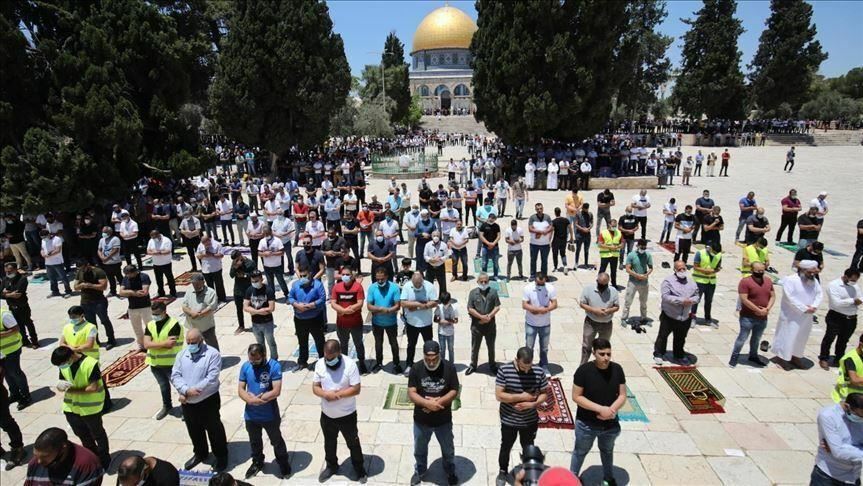
Around 50,000 worshipers perform Friday prayers at Al-Aqsa Mosque

50,000 performed Friday prayers in the blessed Al-Aqsa Mosque, despite the strict military measures imposed by the Israeli occupation forces at the gates and entrances of the Old City in occupied Jerusalem.


The courtyards and courtyards of Al-Aqsa Mosque were crowded with thousands of worshipers, who came from the governorates of the West Bank, including occupied Jerusalem, and within the 1948 territories.

the

The occupation forces deployed in the streets of the city and the vicinity of Al-Aqsa Mosque, and were stationed at its gates. They stopped the worshipers, checked their ID cards, and obstructed many of them from entering the mosque.

PALESTINE

Fri 06 Oct 2023 1:43 pm - Jerusalem Time

Several Palestinian injuries during Israeli attack on funeral of Dhamidi in Huwwara

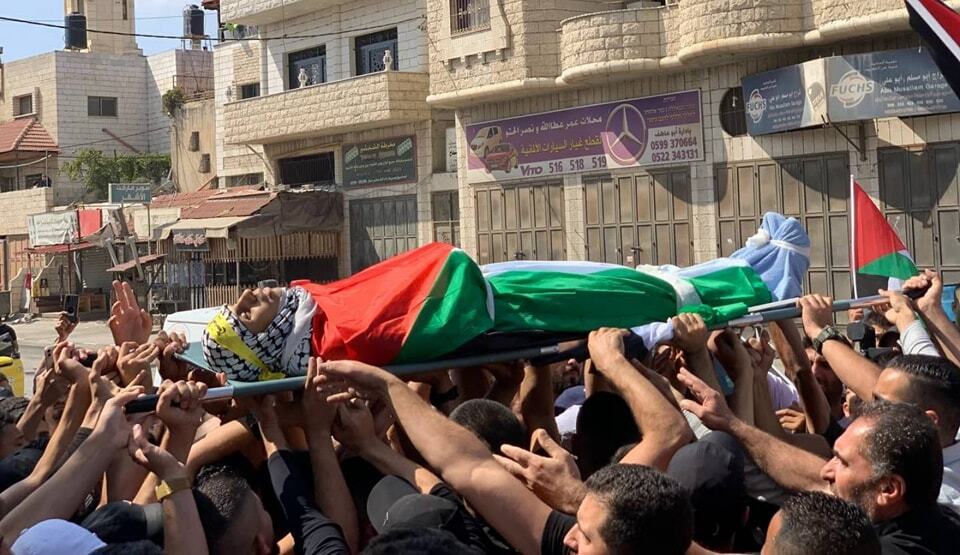
A citizen was injured by live bullets, and seven others were injured by rubber-coated metal bullets, during violent confrontations that broke out after the Israeli occupation forces attacked, today, Friday, the funeral of the martyr Labib Dhamidi (19 years old) in the town of Huwwara, south of Nablus.


The occupation soldiers attacked the participants in the funeral, while they were heading to the cemetery, after performing prayers for the martyr in the center of the town, and fired live bullets, rubber-coated metal bullets, stun grenades and toxic tear gas at them. They were confronted by the mourners, who carried the martyr’s body on their shoulders in a solemn scene. Amid chanting of takbirs and angry chants.


Violent confrontations broke out as a result, leading to 8 citizens being injured, one of whom was shot in the foot with live bullets, in addition to dozens of people suffering from suffocation.


The occupation forces also attacked the press crews, firing sound bombs and poisonous gas at them, to prevent them from covering the event.


Thousands of citizens carried the body of the martyr Dhamidi to his final resting place, starting from Rafidia Hospital in the city of Nablus, all the way to the martyr’s birthplace in Huwwara. The mourners prayed over his pure body, before he was buried.


The young man, Dhamidi, was killed by a bullet in the heart fired by a settler at him last night, in Huwwara, while citizens were responding to an attack launched by dozens of colonists on their homes and property, with the protection of occupation soldiers.

PALESTINE

Fri 06 Oct 2023 1:05 pm - Jerusalem Time

Israel prevents Palestinian family picking olives south of Nablus

On Friday morning, Israeli occupation forces prevented a family from picking olives and detained them for hours in Awarta, south of Nablus.


Awarta Village Council member, Naseer Loulah, told WAFA that the occupation forces detained citizen Asaad Loulah and his family for hours, before allowing them to leave after preventing them from picking olives on their land.


Lawlah added that the land is located south of the village where they are usually allowed to work, and they harvest olives from it every year.

PALESTINE

Fri 06 Oct 2023 1:03 pm - Jerusalem Time

Israeli forces storm the suburb of Artah, south of Tulkarm

Today, Friday, Israeli occupation forces stormed the suburb of Artah, south of Tulkarm.


Local sources reported that foot forces from the occupation army roamed the streets and alleys of the suburb, and conducted a combing operation in the vicinity of homes and agricultural lands.


The sources added that the occupation soldiers stopped passing vehicles and searched them, checked the identities of their drivers and passengers, and subjected some of them to interrogation.


The suburb of Artah recently witnessed almost daily raids by the occupation forces, who seized the building of the Artah Women’s Club, affiliated with the Rural Women’s Development Association for Agricultural Relief, and prevented citizens from entering it, and they have been present in its courtyards since last Wednesday.

ARAB AND WORLD

Fri 06 Oct 2023 11:52 am - Jerusalem Time

US Pentagon announces downing a Turkish drone in Syria

The Pentagon announced on Thursday that the US military shot down a Turkish armed drone after it approached US forces stationed in Syria earlier that day.


During a press conference, Pentagon spokesman Pat Ryder said that American commanders estimated that a Turkish drone flew “less than half a kilometer away from American forces” stationed in Syria.


Ryder added that according to these estimates, American F-16 fighters shot down the Turkish plane “in self-defense,” considering that the plane constituted a “potential threat,” noting that the Pentagon “has no indication that Turkey was targeting the American forces intentionally.” 

PALESTINE

Fri 06 Oct 2023 11:22 am - Jerusalem Time

Palestinian movement Hamas calls on Arab countries to back down from normalization path

On Friday, the Hamas movement called on the Arab and Islamic nation, as the strategic depth of the Palestinian people and their national cause, to stop sliding into the path of normalization with the occupation, and to review this path that does not serve Jerusalem and Al-Aqsa.


Hamas said in a statement, on the occasion of the fiftieth anniversary of the October 6 War, that normalization provides cover for the continuation of the occupation and encourages it to commit more crimes against our people, our land, and our Islamic and Christian sanctities, most notably the blessed Al-Aqsa Mosque, the first qibla for Muslims. As stated in the text of its statement.


Hammas stressed that "the Zionist enemy poses a real danger to Palestine and the nation, in terms of its security, stability, resources, and capabilities." According to the text of the statement.


It considered that the continued occupation of the historic land of Palestine, and its escalation of open war against the Palestinian people, their rights, national principles and sanctities, constitutes a clear violation of all international laws and conventions, which requires all countries and forces that are fair and biased towards justice and the rights of peoples to freedom and dignity, to support and enable the Palestinian people to Defending himself, extracting his rights, liberating his land, and achieving a return to it. As stated in the statement.


Hamas said that the October 6 War “will remain a witness that will and resistance are the way to deter the usurping occupier and destroy its false claim that it is an invincible army, and it will remain a symbol from which our people will draw inspiration from the signs of continued comprehensive resistance against this entity and its fascist government, until its defeat and demise.” According to the text of the statement.

PALESTINE

Fri 06 Oct 2023 11:12 am - Jerusalem Time

50 Palestinian prisoners begin open hunger strike in Israeli jails

On Friday, 50 prisoners from “Raymond” Prison who were transferred to “Nafha” Prison submitted a letter to the Israeli Prison Administration including their declaration of an open hunger strike.


The prisoners explained in their letter that this step comes in protest against the arbitrary transfer process launched by the prison administration against them, isolating them en masse in Section (10) in (Nafha) prison until today, and detaining them in harsh conditions.


The Raymond prisoners and those who were transferred to Nafha prison announced early last week that they would begin protest steps against the prison administration’s procedures, which come in the context of the ongoing aggression against the prisoners.

ARAB AND WORLD

Fri 06 Oct 2023 10:56 am - Jerusalem Time

Syria: Funeral ceremony for the victims of the Military College in Homs in sad atmosphere

Amid an atmosphere of great sadness and grief, dozens of families of the victims of the attack carried out by drones on the Military College in the city of Homs gathered early on Friday morning. The attack that targeted an officers' graduation ceremony on Thursday resulted in the death and injury of dozens, including women and children.


On Friday morning, Syria carried out the funeral of the first batch of victims of the attack carried out by drones on the Military College in the city of Homs immediately after the end of the officers’ graduation ceremony on Thursday, which caused dozens of casualties, including soldiers and members of their families.


Amid an atmosphere of great sadness and grief, in front of the military hospital in Homs, dozens of victims’ families gathered since the early morning. Funeral ceremonies were held in groups for approximately 30 dead soldiers and civilians, in the presence of Defense Minister Ali Mahmoud.


A woman who wore a black dress dotted with white flowers and covered her head with a white scarf was unable to control herself, and seemed to be delirious with intense grief over the killing of her son.


She said while one of the officers was calling on the families to escort the bodies of their children into the ambulances, "My son, do not get in the car. Do not go, my love. Stay near me. This sleep is not worthy of you."


It is noteworthy that drones targeted the courtyard of the Military College in Homs during the graduation ceremony of officers and the presence of a large number of their families. Video clips circulated on social media showed a state of panic and chaos during the targeting, with victims falling to the ground and wounded people crying out for help.


According to Syrian official media, on Friday morning, at least 89 people were killed, including 31 women and five children, in addition to 277 others being injured.


The Syrian Observatory for Human Rights, for its part, reported a new toll higher on Friday, documenting the killing of 123 people, including 54 civilians, including 39 children and a woman related to officers. It was also estimated that 150 others were injured.


So far, no party has claimed responsibility for the attack, while the Syrian army on Thursday accused "armed terrorist organizations supported by known international parties" of being behind the targeting "via drones carrying explosive ammunition." He stressed that he "will respond with full force and firmness to these terrorist organizations wherever they are found."


Jihadist factions controlling part of Syrian territory sometimes use drones to target military sites.


In response to the attack, since Thursday, government forces began bombing areas under the control of Hay'at Tahrir al-Sham and other factions allied with it in Idlib Governorate (northwest) and the neighboring western Aleppo countryside, according to what the Syrian Observatory reported, resulting in the killing of 15 civilians, a new toll.


Spokesman for the Secretary-General of the United Nations, Stephane Dujarric, said in a press briefing on Thursday that António Guterres is "deeply concerned" about the attack on the military college, expressing at the same time his concern "about the retaliatory bombing by pro-government forces on several sites in northwestern Syria."


In a rare step since the outbreak of the conflict in 2011, the government announced official mourning and lowering flags for three days, starting Friday, to mourn the souls of the victims. The Ministry of Endowments called on all mosques in the country to hold absentee prayers for the souls of the victims.


PALESTINE

Fri 06 Oct 2023 10:46 am - Jerusalem Time

Hebrew media coverage on latest developments in the situation in West Bank

The Hebrew media, published on Friday, focused on developments in the deteriorating security situation in the West Bank in recent days.


In a report, the Hebrew newspaper Yedioth Ahronoth reported that the Israeli army has recently focused its operations in Tulkarm to prevent it from turning into another Jenin, especially since it was described as a relatively calm city since the second intifada.


The newspaper pointed out that the Israeli army monitored an increase in the number of attacks from the Tulkarm and Nur Shams camps in the governorate, noting that there is a clear influence on what is happening in the Jenin and Nablus camps, and there are attempts in Tulkarm to imitate what is happening there, especially with regard to manufacturing explosive devices and burying them on the side. roads, turning them into a refuge for “terrorists” working under the influence of Hamas and Islamic Jihad.


The newspaper indicated that the Israeli army focused its activities on the infrastructure in Tulkarm and carried out extensive operations to uncover the places where explosive devices were manufactured, where they were planted, and to destroy them, pointing out that there are real fears that these devices and explosives will be transferred to neighboring cities and used against settlers and their vehicles.


The newspaper pointed to the recent focus on arresting a large number of wanted persons with the aim of preventing the spread of these armed cells from Jenin to the cities of Tulkarm and Qalqilya, which are two cities close to the contact line with the Green Line and pose a greater danger to the settlers than others.


The newspaper pointed out that the Israeli army recently increased the deployment of surveillance devices in the vicinity of Tulkarm, especially in the vicinity of the settlements and the security fence, and deployed more rapid response forces to prevent shooting operations, as happened yesterday in Shufa.


In another report by the newspaper, the newspaper noted an increase in shooting operations, noting their escalation during the past 24 hours, amid fear among the Israeli army that the year 2024 will be the most difficult, with clashes, attacks, and casualties becoming a routine matter, which has increased the situation. Pessimism among the security services, especially regarding the way to deal with them.


The newspaper saw that the great challenge for Israel today is to operate inside the Palestinian territories, especially since armed cells have become more experienced in detecting the camouflage methods adopted by Israeli units, which are considered limited in the way they are disguised and used, and technological progress helps these cells detect Infiltration attempts are easier, but none of the special forces suffer almost any losses, even though the battles are short.


The newspaper suggested that the number of deaths from mutual attacks will rise to numbers close to the years of the Second Intifada, as since the beginning of the year the number of Israeli deaths has reached 33, while more than 185 Palestinians have been martyred compared to 155 last year, the majority of whom are between 19 and 30 years old. There are large numbers of detainees.


It explained that the armed cells currently operating in the West Bank are leading a war of attrition in a different way, and their goal is quantity and not necessarily quality, noting that Iran is funding them either directly or through Hamas and Islamic Jihad.


In light of these conditions, senior Israeli army leaders show their pessimism if no change occurs outside the military field, and it is expected that the situation will escalate in 2024, which may be more difficult, and therefore the solutions proposed are either supporting the Palestinian Authority to be strong and allowing the passage of weapons Limited American access to it, or increasing economic facilities so that the Palestinian economy is stronger, in addition to closing the borders from Jordan to prevent the smuggling of weapons and explosive devices, and increasing more effective military operations.


For its part, the Hebrew newspaper Haaretz said that the events that took place yesterday indicate similar events that occurred during the days of the Intifada, although it has not yet been called by its name, indicating that the security tension may increase and continue, in light of the Israeli army’s insistence on allowing settlers to enter Joseph’s Tomb. , which increases the state of friction with the Palestinians.


Haaretz pointed out that the Israeli army was forced once again to allocate at least 3 battalions and many means that it used to secure the settlers’ storming, which ignited the Nablus front again. Incidents of stone throwing occurred at Huwwara, and a settler vehicle was shot at. During the storming process, confrontations took place and explosive devices were used. .


It pointed out that there is a new situation in the West Bank that is no longer limited to Jenin alone, but has moved to other cities and regions. This is the culmination of a number of operations that extend for years and are also linked to the continuous weakening of the Palestinian Authority. One of the main reasons for the escalation of tension is the nature of the composition of the current Israeli government, especially the minister. In the Ministry of the Israeli Army, Bezalel Smotrich, who continues to grant settlers licenses to build settlement outposts and units in the West Bank, and implements a policy aimed at annexing the West Bank, and granting the settlers protection and security during their attacks on the Palestinians from the extreme right ministers in the government.


Haaretz believed that the serious incident in Tulkarm yesterday expresses a worrying trend that has been continuing for more than a year, related to arming Palestinian organizations with ordinary weapons and explosive devices, some of which are ordinary, but this time the exchange of fire was from a very short distance, which caused an error in throwing the hand grenade. In addition, armed cells continue to plant explosive devices on the roads, which increases the risks to which Israeli forces are exposed when they storm any area.


Haaretz believed that this increase in the number of attacks was also the result of external factors, such as Iran, Hamas, and Hezbollah, which are the entities that transfer money and weapons as well as issue instructions to militants in the West Bank.


The newspaper says: The army and Shin Bet know that the margin of error has narrowed. Any group that plans an attack and is not arrested inside Nablus, Jenin, or elsewhere will carry out a deadly attack in the West Bank, and perhaps its members will reach Tel Aviv.


For its part, the Hebrew newspaper Israel Hayom said that the events in the West Bank have reached their peak and could escalate, noting that Israeli operations in the West Bank do not receive much attention among Israelis unless casualties occur, as happened yesterday in Tulkarm.


The newspaper saw that there are several factors driving the continuation of escalation, the first of which is the weakness of the authority and the increasing strength of the militants, Iranian financing to carry out the attacks, and internal Israeli disputes in which “Israel’s enemies” see it as an opportunity to attack it with all force.


It pointed out that the Israeli solutions are not strategic and have not changed for many years, and sometimes are represented in strengthening the authority on the one hand, and fighting armed cells on the other hand, considering the calls to launch a wide military operation to occupy the West Bank unrealistic, and that Israel cannot return to ruling the 3 million Palestinians in the West Bank, And 2 others in Gaza.


The Hebrew newspaper indicated that the Israeli army and security services are focusing more on thwarting armed attacks, but there is still no solution to the stone-throwing operations that have increased recently, prompting the army to deploy more of its forces in areas of friction.

PALESTINE

Fri 06 Oct 2023 10:40 am - Jerusalem Time

Dozens of Israeli settlers attack a Palestinian town of Huwwara, northern West Bank

On Thursday, dozens of Israeli settlers attacked Palestinians in the town of Huwwara, south of Nablus, in the northern occupied West Bank, under the protection of the Israeli occupation forces.


Eyewitnesses reported that settlers spread out on the main road in the town of Huwwara, amid acts of orgy and provocation, and attempts to attack Palestinians and their homes, with the protection of occupation soldiers.


Palestinian sources indicated that extremist Israeli Knesset member Zvi Scott set up a tent in the middle of the town, under the pretext of ensuring protection for the settlers.

Earlier tonight, a young Palestinian man was killed by Israeli occupation forces’ bullets in the town of Huwwara.


Eyewitnesses said that the occupation forces shot a young man after surrounding him in a building near Al-Zaytouna roundabout, in the center of the town, and prevented ambulance crews from reaching him, leaving him to bleed until he died as a martyr. They seized his body and transported it by an Israeli ambulance.


Earlier, the occupation forces forced shop owners in Huwwara to close their doors, and tightened their procedures at the military checkpoints spread around the city of Nablus, which led to stifling traffic jams.

PALESTINE

Fri 06 Oct 2023 10:29 am - Jerusalem Time

Palestine demands the Conference of Left Parties in Latin America to consider Israel an apartheid state

The Palestine Liberation Organization delegation participating in the Conference of Leftist Parties, held in the Mexican capital, "Mexico", succeeded in submitting a recommendation for a vote next Saturday by adding a paragraph to the final statement of the conference that considers Israel an apartheid state and calls for launching a global movement to confront apartheid, and the formation of an anti-apartheid committee at the level of Latin American countries.


This came after the Palestinian delegation participating in the Conference of Leftist Parties in Latin America, which began yesterday, held dozens of meetings with leftist parties in various Latin American countries.

OPINIONS

Fri 06 Oct 2023 10:13 am - Jerusalem Time

The closure of the Erez crossing hits Gaza's economy hard

Mounir Al-Ghoul

Mounir Al-Ghoul

Opinion Writer

The Beit Hanoun checkpoint, known as the “Erez Checkpoint,” is located in the far north of the Gaza Strip, in the town of Beit Hanoun. It is considered the only land corridor through which pedestrian movement is allowed, and it connects the Gaza Strip, the West Bank, Jerusalem, and the occupied interior. This checkpoint is completely under the control of the occupation, and the General Authority for Civil Affairs is responsible for coordinating the issuance of the necessary permits to cross through it. The Israeli occupation controls the entry and exit of individuals through it. Certain categories are allowed to pass through it, including patients from the Gaza Strip, merchants, workers inside the occupied territories, some employees of international organizations, and exceptional humanitarian cases.


People passing through the Erez checkpoint suffer from complications that limit the ease of their movement, such as the difficulty of obtaining permits, or refusal to grant them in most cases, travel bans, long waits at the checkpoint to pass, inspections, returns without justified reasons, and ill-treatment.


In 2020, entry permits through the checkpoint were reduced; Due to the Corona pandemic and the resulting closure at all levels. This has negatively affected all groups forced to travel, especially patients receiving treatment in hospitals in the West Bank, Jerusalem, and the occupied interior.


With the return of the checkpoint to work as usual, and despite the complex Israeli procedures, it remained the only outlet for the movement of workers searching for their livelihood inside the Palestinian territories, but the challenges that cast a shadow on this movement are many and grave. In every wave of escalation or tension, Israel closes the checkpoint (the crossing) and deprives thousands of people. Palestinians are unable to work, as happened last September when the occupation authorities decided to close the checkpoint for 12 consecutive days in response to the demonstrations carried out by revolting youth on the border fence.


This closure affected Gaza's already fragile economy and caused very large material losses estimated at millions of dollars. However, the economy is not considered the only gateway exhausted as a result of this closure. Rather, the matter goes beyond this aspect to many other challenges that force citizens in the Gaza Strip to remain in the crossfire as a result of the ongoing conflict. The Israeli measures are suffocating the sector and depriving it of any chance of recovery, as the fate of the Gazan worker has become dependent on the security situation. If calm prevails, prospects for work and livelihood open, and if tension prevails and doors and crossings are closed, then the danger is grave because it strikes the Gazan citizens deeply and deprives them of many advantages.


In light of the outbreak of confrontations on the border fence due to the delay in disbursing the Qatari grant to the citizens of the Gaza Strip and the pressure on Israel to raise the quota for workers to enter the workplace from approximately 18,000 workers to 20,000 workers, this condition must be fulfilled on the ground this time, as expectations indicate approval. An implicit statement to Israel regarding this, that in the coming times it may not be achieved and therefore demonstrations and protests will return, which will cause the closure of the barrier and perhaps the imposition of other Israeli sanctions such as reducing the fishing area in the Mediterranean and other measures that directly affect the lives of citizens..


The Erez checkpoint is considered the vital gateway between the Gaza Strip and the Palestinian interior, and it constitutes a true lung and outlet for the workers of the Strip. Therefore, this part must be preserved and the workers allowed to go to their workplaces daily without obstruction or prevention measures, as happened last month, and the workers and citizens of the Gaza Strip should be spared successive Israeli sanctions, especially the recent, It results in material losses amounting to more than five million shekels per day.


Gaza workers are reeling between the hammer of the occupation and its closures and the anvil of unemployment, hunger and poverty. If Qatar does not provide the monthly grant on time and if Israel does not allow an increase in the number of workers allowed to enter the occupied interior and Jerusalem to work, then the same problem that has been occurring for several years and was repeated last month will be renewed once again. Gaza workers themselves are victims of tensions and conflict that may extend for many years.

PALESTINE

Fri 06 Oct 2023 9:27 am - Jerusalem Time

Palestinian Presidency: Israeli authorities crossed all red lines

The official spokesman for the presidency, Nabil Abu Rudeina, said that the Israeli occupation authorities crossed all red lines, by insisting on the policy of killing and raids on our cities, villages and camps.


Abu Rudeina added, in an interview with Palestine TV, last night, that the Israeli occupation government and the American administration bear responsibility for the serious crimes committed by the occupation soldiers and colonizers throughout the Palestinian territories, the latest of which is the colonizers’ attack on citizens, their homes, and their property in the town of Huwwara, south of Nablus, and the execution of four young men in Tulkarm and Hawara, and the continuous raids on the blessed Al-Aqsa Mosque and the holy places.


He pointed out that the Israeli occupation is waging a relentless war against our people, in front of the world, stressing that this continuing Israeli aggression will not deter our people from continuing their legitimate struggle and adhering to their principles and rights, until the establishment of their independent state with Jerusalem as its capital, and “either peace for all or no peace for anyone.” Either there is security for everyone or there is no security for anyone.”


He stressed that the Palestinian leadership, led by President Mahmoud Abbas, will take measures and steps in Arab and international forums, and at all levels, to confront the ongoing occupation aggression.

OPINIONS

Fri 06 Oct 2023 9:19 am - Jerusalem Time

Ben Gvir justifies attacks on Christians...and the world is silent!!

Hadith of Jerusalem

Hadith of Jerusalem

Opinion Writer

Someone known as the Israeli Minister of National Security, Itamar Ben Gvir, said that attacking Christians is a normal tradition to be practiced and does not violate any laws or concepts. This is an extremely irresponsible or even personal statement, because it justifies and encourages these attacks, which were carried out and are being carried out by a number of extremist Jewish extremists. After these statements, we do not rule out the multiplication of attacks of this kind and the feeling of the aggressors that they are doing something natural and normal that does not violate any concepts.


These statements of Ben Gvir must not pass without accountability, not only from Christians but from the international community and global institutions, which are many and constantly call for not harming any rights of any sect or different parties, but they remain silent regarding statements like this coming from a responsible person in a position. How long will this crazy silence that encourages aggression and contempt for others last?!

What is Blinken carrying?!
US Secretary of State Anthony Blinken will visit Israel and the West Bank within a short period, and according to various news reports, his talks on the Israeli side will revolve around the normalization agreement with Saudi Arabia and its requirements, first and foremost American-Israeli coordination on the steps that Israel must implement, first and foremost providing facilities for the benefit of the Palestinians and Israel’s approval of Saudi Arabia’s request for Uranium enrichment on its territory.


According to the same sources, the American administration informed Israel that without implementing important steps for the Palestinians, it will be difficult for the Senate to approve the security-military deal with Saudi Arabia, which includes normalization, while the Israeli government continues to underestimate Palestinian demands.


Washington did not demand Israel’s withdrawal from the West Bank, starting from Jerusalem, nor the establishment of a Palestinian state, but rather the provision of facilities, which are just talk in the air, because what our people are asking for is not merely the provision of facilities, but a complete Israeli withdrawal from the West Bank and considering East Jerusalem as the capital of our promised state and the removal of the settlements that fill the West Bank and devouring the land and working to displace our people and make the establishment of a state impossible.


Blinken is coming to facilitate the path to normalization between Israel and Saudi Arabia, but our people, who bear all the aggressions of the occupation and its expansionist plans and resist them with all their capabilities, will not accept what Blinken is planning nor the attacks carried out by Israel, and will remain steadfast, patient and strong, defending their right to establish a state and live in peace and stability. No matter how long or short the time is, the future is ours, no matter the challenges and obstacles.

OPINIONS

Fri 06 Oct 2023 9:17 am - Jerusalem Time

Al-Aqsa Mosque: A religious and national symbol

Dr. Walid Al Shomali

Dr. Walid Al Shomali

Opinion Writer

The importance of Al-Aqsa Mosque as a symbol of Palestinian resistance against the fierce Israeli occupation and its connection to Palestinian identity is highlighted in light of Israeli attempts to Judaize the natural and cultural landscape of the city of Jerusalem. It may seem at first glance that the defense of Al-Aqsa is of a purely religious nature, but in reality it represents a national symbol for all groups of the Palestinian people, Muslims and Christians. As soon as the Palestinian senses any upcoming danger, Christians and Muslims uprise as one man to defend him.


Michel Foucault believes that resistance exists when there is an authority that possesses power and dominance and engages in hidden and apparent conflicts, and therefore resistance is a natural reaction to the dominance of authority. As for the Palestinian situation, it is characterized by the fact that the dominant and controlling authority is a foreign authority and occupier of land, people, natural resources, water, holy places, and others. Therefore, it is natural that the form, nature and goal of the Palestinian resistance is to defeat the occupation and extend Palestinian national sovereignty, at least over the Palestinian territories occupied by Israel in 1967, which are represented by the West Bank, the eastern part of the city of Jerusalem, and the Gaza Strip.

We can say that the battle against the Israeli occupation is a battle against settler colonialism and that it is not a religious war over holy sites and holy places. Rather, Christian and Islamic holy places constitute national, cultural and religious symbols as well as a cultural heritage and part of the Palestinian identity.


The thinker Azmi Bishara described the Al-Aqsa Intifada in 2000 by saying: “The Palestinian national liberation battle is not a religious war, nor is the Jerusalem and Al-Aqsa uprising an ideological war, despite its religious dimension and religious symbols... There is almost no liberation war without a religious or symbolic dimension added to the motivations of the mujahideen.” The fighters and the symbols of homeland and patriotism... The battle of the Palestinians is a battle of colonized against colonizer. The Al-Aqsa Intifada is not a religious uprising, but rather a comprehensive national uprising that took the Noble Sanctuary as its symbol. Al-Aqsa is sacred to religious and non-religious people as a Palestinian national symbol, and the dispute with Israel is not over its sanctity for Muslims, but rather on its occupation by Israel.”

As for the Israeli plans to Judaize Jerusalem, they are based on two paths: The first path consists of obliterating the traces of Arab landmarks in Jerusalem and attacking the Christian and Islamic holy places in the city by various means. For example, some time ago Israel attempted to impose a property tax on Christian churches, while this tax had not been imposed on properties belonging to religious endowments since the time of the Ottoman occupation of the city. As for the fierce attack on Al-Aqsa Mosque, the whole world is witnessing the frenzied and repeated attacks of settlers, their storming of its courtyards, and their attempts to assault it, which are always met with confrontation by the people making sit-ins, who are ready to sacrifice what is dear and precious in defending Al-Aqsa Mosque and the Dome of the Rock.


Israel is always trying to escalate its repeated incursions into Al-Aqsa Mosque, in order to change the status quo so that Jewish settlers can pray there. The Israeli authorities are also obstructing the work of the Islamic Endowments Department in Jerusalem, affiliated with the Jordanian Ministry of Endowments, and disrupting maintenance and restoration projects for the Bab al-Rahma chapel, as well as the rest of the chapels and the southern western wall, from which stones fell some time ago. The Islamic Endowments Department also pointed out that there is Israeli targeting of the Bab al-Rahma area and the eastern region, as that area constitutes the main element and the spearhead in dividing the place so that the Israeli settlers have a stable and permanent foothold to hold their Talmudic prayers collectively and publicly under the protection of the occupation forces.


As for archaeological excavations, the large excavations carried out by the occupation authorities pose a danger to the buildings of Al-Aqsa Mosque, especially in digging tunnels underneath it under the pretext of searching for traces of the alleged Temple of Solomon. It is worth noting that Israel has embarked, especially since 1996, on a project called the “Holy Basin” Judaization project, which begins in the Sheikh Jarrah neighborhood in the north, passing through the Old City and arriving at the town of Silwan, where they claim that the City of David was built, and ending at the foot of Mount Mukaber, with the aim of giving the city a Jewish character. Therefore, this project will lead to erasing the traces of the city’s Arab and Islamic landmarks and suffocating the old city with paths and buildings of a Jewish character to obliterate the identity of the city and its holy places, the most important of which is Al-Aqsa Mosque. The Holy Basin Project also aims to make the Old City of Jerusalem similar in its details to the alleged Biblical description of ancient Jerusalem according to Jewish beliefs, noting that the proposed buildings of a Jewish character will be built on the ruins of Jebusite, Greek, Roman, Byzantine and Arab antiquities, as the area of that basin will be about 15 thousand square meters 
and contains buildings containing a Talmudic museum containing antiquities stolen from the excavations surrounding Al-Aqsa in order to promote the Jewish narrative. 


Israel also follows a systematic policy of changing the names of places in the city to give it a biblical, Talmudic character. We will not forget how the youth of Jerusalem scored a victory over the occupation when the latter submitted to their heroic stand of steadfastness by not using the electronic gates that the occupation authorities had installed a period of time ago in front of Al-Aqsa Mosque to force worshipers to enter the mosque through them. The occupation authorities were finally forced to remove those gates, which constituted a major victory not only for the people of Jerusalem, but for all the Palestinian people.


The second path is represented by these Israeli plans towards Jerusalem specifically to obliterate national identity and culture by Judaizing education and imposing Israeli curricula in Arab schools in the city in an attempt to distort Palestinian history in general and the history of the Holy City in particular, and impose the Jewish narrative on Arab students. In this regard, we cannot help but stand in reverence and respect for the teachers with the blue identity who renounced the financial temptations of teaching the Israeli curriculum and adhered to teaching the Palestinian curriculum.


Finally, we can summarize the characteristics of the Jerusalemite movement and the steadfastness of the resistance of youth in Jerusalem against the Israeli occupation measures in Jerusalem and Al-Aqsa Mosque as being spontaneous and not belonging to a specific political faction, which gives it a comprehensive character and gives it the character of a social movement that expresses the conscience and conscience of every Jerusalemite and Palestinian. This resistance has become a daily lifestyle to which Jerusalemites have become accustomed, especially those stationed in Al-Aqsa Mosque, who daily confront all forms of movements and incursions against Al-Aqsa Mosque, whether by settlers or by the official Israeli institution. Not to mention the legendary steadfastness of the residents of the Old City of Jerusalem against the emptying and displacement policies carried out by the Israeli authorities against them.
In summary, the battle to defend Jerusalem and its religious sanctities, including Al-Aqsa Mosque, is becoming more fierce day after day in light of the raging Zionist attack to erase history and geography, in addition to American support, which was recently represented by the deal of the century and the legalization of settlements, which made the battle in Jerusalem an issue of existence or annihilation. .

OPINIONS

Fri 06 Oct 2023 9:16 am - Jerusalem Time

Intimidation...and disgust: two Israeli weapons for ethnic cleansing

Dr. Asaad Abdel Rahman

Dr. Asaad Abdel Rahman

Opinion Writer

The Palestinian people, whether in the areas of 1967 or 1948, who suffer from Zionist atrocities, have proven that they cling to their soil, just as their number on their land is increasing. The new Palestinian generation, which the Israelis bet on “forgetting or despairing,” embodies multiple resistances from time to time that surprise the Israelis, such that the youth of this generation have become able to find a kind of mutual balance of power, even if it is unequal, in the face of the Israeli occupation practices. This steadfastness is achieved despite the continued killing, persecution, starvation, and siege, whether in the West Bank or the Gaza Strip, and whether with the spread of organized crime in Palestine 1948, where the Zionist state adopted a policy of continuing ethnic cleansing, behind which it “hopes” to force the Palestinians to leave, whether through intimidation or disgust as weapons of ethnic cleansing.

In the West Bank, the monster of colonialism/settlement continues to dispossess lands with the intensification of settler attacks with clear support from the occupation army and security services. According to the report issued by the United Nations Office for the Coordination of Humanitarian Affairs in the Palestinian Territories (OCHA): “More than 1,100 Palestinians have been displaced from their residential areas in the West Bank due to Israeli settler attacks since 2022, in light of the increase in settler violence throughout the West Bank over the past years.” “There were three settler-related incidents per day on average during the first eight months of 2023, compared to an average of two incidents per day in 2022 and one per day in the previous year.” The report stated that this is the highest daily rate of settler-related incidents affecting Palestinians since the United Nations began recording this data in 2006.

As for the Gaza Strip, there is no problem! The severe sea, land and air blockade that has continued since 2007, which has turned the Gaza Strip into “the largest prison in the world,” has made the situation in it a place unfit for living. The Gaza Strip, according to several parties, is likely to witness an increase in the number of young people wishing to immigrate despite the risks of travel and the lack of clarity about the future in the country of immigration, insisting on leaving, in search of better opportunities that they did not find in the Gaza Strip. Indeed, the sea swallowed dozens of them, not to mention the continuous bombardment of every stray and incoming person, which made life in the entire Strip almost impossible.

In Palestine 1948, the Zionist state facilitates organized crime in Arab society, which is an old/new policy towards the Arabs, whom it deals with as a hostile community. The catastrophe of violence and weapons chaos is caused by the Israeli president and his facilities, his spread of mafias and drugs, and the ease of obtaining weapons, leaving the line open to further bleeding of Palestinian blood without following up on these crimes or arresting their perpetrators. It is noticeable the large quantity of weapons in Arab society, which, according to the Israeli press, are of the type available to the occupation army and Israeli security forces, which are difficult (close to impossible) to obtain.

Intimidation... and disgust... are two Israeli weapons for ethnic cleansing in historic Palestine, leading to “more Jews and fewer Arabs”! However, awareness and resistance are, at the same time, Palestinian weapons for survival and steadfastness.

OPINIONS

Fri 06 Oct 2023 9:13 am - Jerusalem Time

Jabotinsky doctrine?! And the Palestinian doctrine!!

Wassef Erekat/military expert and analyst

Wassef Erekat/military expert and analyst

Opinion Writer

Jabotinsky's doctrine was called the "Iron Wall" after Ze'ev Jabotinsky, the Ukrainian Zionist, leader of the Zionist Etzel gangs and one of the most important founders of the Jewish National Fund and the Jewish Legion, who participated in the First World War alongside Britain. He is one of the opponents of the East Africa project as a solution to the Jewish question, and an advocate of not limiting Israel's borders on Palestine but to go beyond it.


This doctrine emerged when Jabotinsky wrote an article and published it in Russian in November 1923 under the title “The Iron Wall.” It later became a law. Some people think that the wall means dividing borders, but it is not so. Rather, it is much deeper and represents the ideology of the military and political doctrine of the extreme Zionist right that is now applied on the ground. It means Jewish immigration and a settlement majority, building a state allied with a superpower, and pushing the Arabs and Palestinians to lose hope of defeating Israel and subjecting them to Israel’s acceptance. Since there is no room for the Palestinians to accept the presence of the Zionists on their land, Jabotinsky said that we will not seek to reach an agreement with the Palestinians as long as they have a glimmer of hope to get rid of us. Therefore, it is necessary to use all means of self-military, material, and international force to subjugate the Palestinians. If military and material force does not succeed, more force will succeed until the Palestinians lose any hope of the ability to confront. Jabotinsky continues: “Zionism must gain approval, not from the Arabs of Palestine, because that is impossible, but from the rest of the Arab world, from Syria, Mesopotamia (Iraq), the Hijaz, and perhaps Egypt, if this is possible... All of this is not enough, if we are able to convince the Arabs of Mecca and Iraq that Palestine is not their land, and that it is not important to them. However, for the Arabs of Palestine, it remains their country and their only homeland, the center of their lives and their national self-existence. Therefore, colonization cannot be practiced except by force against the will of the Palestinians. The military force that Jabotinsky talks about is not exclusively a Jewish force, but rather “the military force of a foreign country like Britain.” ".


Israeli leaders adopted this doctrine, just as the Polish Zionist David Ben-Gurion's security doctrine in the 1950s and 1960s was based on it, and he added methods of trickery and deception to it, even though Ben-Gurion considered Jabotinsky his opponent. Accordingly, Israel fought its wars against the Arab armies to force them to abandon their war ambitions under the slogan that wars do not end with good intentions but with victory. With the establishment of the Zionist entity in 1948, the United States of America (which was the first to recognize it and its largest supporter with money and weapons) became a strategic ally, which was translated into reality by supporting Israel in the tripartite aggression of 1956, the 1967 aggression, 1973, and 1982. It also supports all of its steps, including non-recognition of a Palestinian state.


There were successive military campaigns and plans based on Jabotinsky's doctrine, including the Breaking Bones, Breaking Waves, and Lawn Mowing Campaigns, the Gideon Plan of former Israeli Chief of Staff Ghazi Eisenkot, the Tnuva Plan of Aviv Kochavi, and the Ma'alot Plan of current Chief of Staff Herzi Halevy, which stipulates superiority over enemies by possessing Modern weapons and combat means, and climbing step by step to new heights, and its four items: the first is taking care of individuals and the army, then Iran and the multiplicity of fronts, then maneuvering and defending the borders, and the fourth is improving the military and organizational culture.


All Zionists competed to see who would kill the most Palestinians and commit the most horrific massacres and crimes. They used their destructive capabilities, along with the American capabilities of military equipment, which led to the rise of more than 100,000 martyrs since the Nakba in 1948. Israel still holds hundreds of their bodies in Israeli cemeteries and refrigerators.


Data indicate that the prisoner movement presented 233 martyrs, including 79 who were martyred under Israeli torture, 74 who died due to deliberate medical negligence, and 7 who were assassinated by direct live bullets.


Despite all these sacrifices and despite all the atrocities, the Palestinian people remained steadfast on their land and dedicated themselves to defending it and themselves. Their resistance developed and established a new reality that Israel cannot deny or ignore, which is that every aggression has a price and pain is matched by pain.


The Palestinian people always affirm their determination to persevere and confront with their modest capabilities, no matter how great they are. Sacrifices, which thwarted the doctrine of Jabotinsky and his iron wall, and its secrets of military and combat plans. On the other hand, spontaneous military and combat plans emerged in response to their crimes, and despite their modest nature, they were creative, painful, and fulfilled their purpose. We mention, for example, a memorandum of protest from the notables of Jerusalem against Jewish immigration that was presented to the Grand Vizier in Istanbul in 1891, demanding that he intervenes to prevent immigration, this was followed by an armed attack by the people of the village of Hadera and the town of Petah Tikva on the emerging Jewish settlements. After the issuance of the Balfour Declaration in 1917, in which the British government pledged to work to establish a national homeland for the Jews in Palestine, a revolution was launched that began in Jerusalem in 1920, and in 1929 another revolution was launched to protect Al-Aqsa Mosque from Zionist incursions, and in 1935 Izz cells emerged. The Qassam religion and the armed Green Palm, then came the war of the Arab armies in 1948, the launch of the Palestinian revolution and guerrilla operations from the border in 1965, the Samu mine in 1966, the war of the Arab armies in 1967, the Battle of Karama in 1968, the invasion of the Litani in 1978, the siege of Beirut in 1982 to expel the Palestinian resistance, then the first and second intifadas. 


Between them is the uprising of the tunnel inside occupied Palestine, the confrontations between Jerusalem and the Al-Murabitun in Al-Aqsa Mosque, and the Gaza wars (2008-2023), and every time Israel escalated its attacks, the resistance took more comprehensive and more violent forms. The manifestations of Palestinian resistance and individual operations in the depths of occupied Palestine diversified, and resistance brigades were formed for a generation. The youth, and the Palestinian people united in the trenches of resistance, and the absolute conviction of the ability to continue confronting Zionist projects and defeating Israel was firmly established, and that it was a matter of time.


On the other hand, Israeli society is in a state of anxiety about its fate and lacks confidence in the capabilities of its army, and internal disputes threaten to disintegrate their social fabric, which could lead to civil war. The bottom line is that Jabotinsky's doctrine is fleeting, while the Palestinian's doctrine remains.

PALESTINE

Fri 06 Oct 2023 2:16 am - Jerusalem Time

Damage caused by gunfire towards a settlement near Jenin

After midnight, at least one settler's house was damaged as a result of gunfire from Jenin towards the Ram On settlement adjacent to the border.


According to the Hebrew website Ynet, at least one bullet penetrated the window of the settler's house following the shooting, but no injuries were reported.


It pointed out that large forces from the Israeli army are conducting combing operations in the area.


PALESTINE

Fri 06 Oct 2023 1:36 am - Jerusalem Time

A Palestinian youth killed by Israeli settlers in Huwwara, south of Nablus

A young Palestinian was killed, after midnight, by settlers' bullets who stormed the town of Huwwara, south of Nablus.


According to the Ministry of Health, the martyr is Labib Muhammad Dhamidi (19 years old). He died as a result of being shot in the heart after gunfire from settlers.


Meanwhile, Israeli sources claimed that he was shot by the Israeli army following confrontations between Palestinians on the one hand and settlers who stormed the town on the other hand.


It indicated that a settler was injured by stones thrown by Palestinian youths.


Previously, an unidentified young Palestinian was killed after the occupation forces chased him under the pretext that he opened fire on a settlers’ vehicle, causing damage to it but no casualties.


PALESTINE

Thu 05 Oct 2023 11:31 pm - Jerusalem Time

Netanyahu orders to accelerate opening of the new Hawara road

On Thursday evening, Israeli Prime Minister Benjamin Netanyahu instructed to accelerate the opening of the new Hawara bypass road.


According to Israeli Army Radio, Netanyahu held a quick security assessment session, with the participation of his Defense Minister Yoav Galant, his Forces Chief of Staff Herzi Halevy, and senior officers, and demanded accelerating the opening of the new road that will isolate the Palestinians from the Israeli settlers.


This project aims to try to limit Palestinian operations, including stone throwing.


Hawara is an important road that both sides pass through and serves as a target for those carrying out operations.


On Sunday, Netanyahu will hold a special security session to discuss developments in the situation in the West Bank.

PALESTINE

Thu 05 Oct 2023 11:24 pm - Jerusalem Time

Israeli settlers' bus came under fire in Jordan Valley


A settler bus was damaged on Thursday evening as a result of gunfire near the Jordan Valley.


According to the Hebrew website Ynet, the shooting led to the bus's windows being shattered, but no injuries were reported.

PALESTINE

Thu 05 Oct 2023 11:19 pm - Jerusalem Time

Israeli army arrests two young Palestinians on the Gaza border

On Thursday evening, an Israeli force arrested two young Palestinians who attempted to infiltrate from the borders of the southern Strip towards the cover settlements.


According to an Israeli military spokesman, the detainees were transferred for investigation, and no weapons were found in their possession.

PALESTINE

Thu 05 Oct 2023 10:26 pm - Jerusalem Time

Israeli army arrests two young Palestinians from Bethlehem

On Thursday evening, a special unit of the Israeli occupation army arrested two young Palestinians from the city of Bethlehem.


According to local sources, a special unit of the occupation army raided a sweets shop on Al-Mahd Street in the city center, and arrested the two young Palestinians , Ahmed Youssef and Abdel Hamid Ayesh.

PALESTINE

Thu 05 Oct 2023 9:59 pm - Jerusalem Time

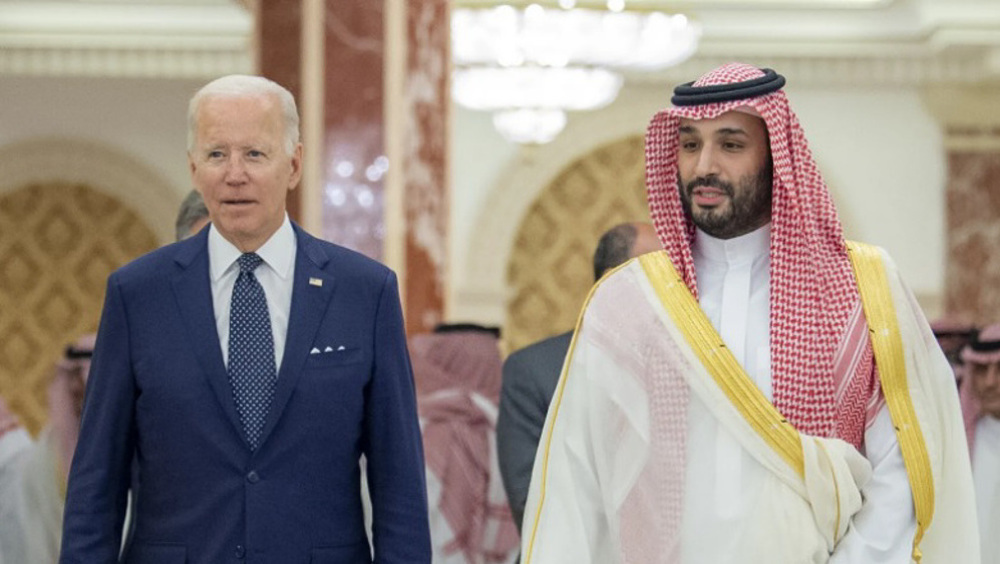
Israeli Experts weigh advantages and risks of Saudi normalization deal

The Israeli Forces launched a study this week to analyze the security implications of a normalization deal between Israel and the Kingdom of Saudi Arabia. The study is being administered by a number of army branches, including intelligence, strategic planning, the Iran department and the air force. It seeks to clearly outline the advantages of the deal, including possible opportunities for partnership, along with the security risks of potential concessions that may be required of Israel to secure such an agreement. 


The findings will be presented to army Chief of Staff Herzi Halevi and Israeli Defense Minister Yoav Galant before being examined by the Cabinet. There is currently no confirmed timeframe for the study. The long-touted normalization deal has received the full backing of the United States and is a central campaign promise of the current Israeli government under the leadership of Prime Minister Benjamin Netanyahu. 


The Saudi deal is seen as the logical continuation of the Abraham Accords, which tripled the number of Israeli-Arab peace deals in the span of four months in 2020. Netanyahu has on many occasions praised the advantages of such a deal, and has stated that it would lead to a “quantum leap” in regional stability and peace. However, experts say that there are multiple nuances to such a deal which may present both great security advantages as well as potential dangers.


According to experts, a central security advantage of Saudi-Israel normalization would be the potential cooperation between the two countries on a litany of defense issues. “A deal between us will allow us to cooperate on intelligence, share techniques and strategies and work together in any way that helps defend both countries,” former Israeli National Security Adviser Maj. Gen. (res.) Yaakov Amidror told JNS. “Both countries already exist under the umbrella of U.S. Central Command, and share many common threats; there is a natural place for partnership and cooperation,” said Amidror, who is currently a fellow at the Jewish Institute for National Security of America (JINSA).Avi Melamed, a former Israeli intelligence official, author and Middle East analyst and educator, further expanded on this point, telling JNS that some of the central threats that can be partnered on include Iran and “the complex operations in southern Syria which smuggle drugs and weapons into Jordan that then flow into the Gulf state, as well as sometimes Israel and Egypt. ”According to Melamed, the current political reality has made “Israel’s physical borders secondary when Israel looks at its big interests. 


When Israel looks at the overall big picture, Yemen and the Indian Ocean emerge as the southern geostrategic border. ”In this context, Saudi Arabia’s outsized influence in places like the Red Sea and the Bab al-Mandab Strait makes it “enormously important in stabilizing and strengthening Israel’s southern geostrategic border,” he said. Melamed further explained that “all along Israel’s borders, including Jordan, Egypt and the Red Sea, there are domestic players that are attuned to the Saudis’ interests, and incorporating these players into a mutual partnership of give and take could greatly benefit Israel’s security. ”Beyond the direct defense implications of a normalization agreement, such a deal is also expected to cause major changes in Israel’s international standing and have a positive effect on its economy. 


Both of these factors can indirectly impact Israel’s broader security paradigm, said Amidror. “Having an agreement with Saudi Arabia will automatically enhance Israel’s international standing, possibly open the door for future agreements with other Muslim states and remove Israel from its isolated status facing a hostile and threatening Muslim world,” said Amidror. “The essence of Israel’s position will be totally different,” he added. From the economic side, “The combination of the technological giant, Israel, and the economic giant, Saudi Arabia, has huge potential for increasing the stability and richness of the Middle East,” said Amidror.


Despite the numerous potential security advantages of a normalization deal, there are also several risk factors. One of Saudi Arabia’s central negotiation demands has been the establishment of a nuclear program, including a uranium enrichment operation. 


This request has raised concern in Jerusalem, with the Israeli Prime Minister’s Office stating that “Israel never agreed to a nuclear program for any of its neighboring countries, this was and remains Israel’s policy.” Israeli political leaders have on multiple occasions said that they are uncomfortable with the idea of a Saudi nuclear program, which they believe will open the door to other Middle Eastern countries making similar requests. Despite these concerns, many believe there is room to negotiate with Riyadh, and that a consensus can be reached that doesn’t threaten Israel’s security. “The nuclear question does not need to be a problem. 


I think [the United States]can deliver many concessions, including mining uranium, milling uranium, exporting uranium and setting up fuel banks in Saudi Arabia, as long as [Saudi Arabia] is willing to move on the enrichment question,” Richard Goldberg, a senior adviser for the Foundation for Defense of Democracies, told JNS.Amidror emphasized the necessity of proper oversight to ensure that red lines are not crossed, however he agreed that a deal was possible.  “We need strict oversight to make sure that the Saudis do not develop nuclear military capabilities, without that the risk is not worth it. 


If Israeli security experts are comfortable with the oversight guarantees so that the deal will not be violated, then we can move forward,” said Amidror. Regarding the general threat of nuclear proliferation throughout the Middle East, Melamed presented a pessimistic picture. “It’s not about prevention anymore—if Turkey or Egypt decide tomorrow that they want a nuclear program for civilian purposes, who’s going to stop them?” said Melamed. “Today it has to be looked at from a different perspective. We have to separate the players we can play ball with and negotiate with, like Saudi Arabia, Turkey and Egypt, and the problematic players like the mullah regime [of Iran]who are a real threat,” he added. A further security concern surrounding normalization efforts with Riyadh is the dilution of Israel’s “qualitative military edge” compared to its Middle Eastern neighbors. 


As part of the Abraham Accords Israel conceded the sale by the United States of F-35 fighter jets to the United Arab Emirates. Similar concessions to Saudi Arabia are expected as part of a future normalization deal. However, experts say that there are ways of getting around these concerns. “We have a lot of experience with the United States in solving similar problems. It has been decades since the United States made its commitment to keep Israel’s qualitative edge, and all that is needed are some discussions between Israel and the United States about how we adjust our partnership to allow for Saudi demands,” said Amidror. “This is a question of technical detail,” he added. Melamed went even further, saying that “today, the military reality is completely different, and the significance and meaning of Israel’s qualitative edge is completely different. Israel will need to be compensated for major changes in Saudi Arabia’s military technology, but the calculation of what exactly keeps Israel’s qualitative edge is not as simple as [it was]40 years ago, when any major weapon sales to Saudi Arabia fundamentally threatened Israel’s security. ”The final factor in the U.S.-Israel-Saudi negotiations that may have a destabilizing effect on Israel’s security is potential concessions to the Palestinians. 


Although no official concessions have yet been articulated, multiple sources confirm that certain concessions are almost guaranteed to be part of the framework of a deal. In a recent interview with Fox News, Saudi Crown Prince Mohammad bin Salman notably did not mention a two-state solution as a prerequisite for normalization, however, at a minimum the deal is expected to include a large influx of money to the Palestinian Authority.  


The security implications of a normalization deal from the Palestinian perspective remain unclear. “Nobody knows how the Palestinians will react. It might ignite the Palestinian territories … or it may lead to no reaction. There are a lot of moving parts and a lot of factions in a very volatile situation. It is impossible to tell,” said Melamed.


PALESTINE

Thu 05 Oct 2023 9:24 pm - Jerusalem Time

A young Palestinian killed by Israeli bullets south of Nablus

A Palestinian was killed this evening, Thursday, as a result of the occupation forces shooting at him in the town of Huwwara, south of Nablus. His identity has not yet been known.


The occupation army claimed that the young Palestinian opened fire on a settlers' vehicle in the town, causing damage to it but no injuries.

ARAB AND WORLD

Thu 05 Oct 2023 9:05 pm - Jerusalem Time

President of the UAE receives the Speaker of Iranian Shura Council

On Thursday, Sheikh Mohammed bin Zayed Al Nahyan, President of the UAE, received Mohammed Baqir Qalibaf, Speaker of the Iranian Shura Council, in the presence of Ghobash, Chairman of the Federal National Council.


During the meeting that took place at the Beach Palace in Abu Dhabi, Sheikh Mohammed bin Zayed welcomed the Speaker of the Iranian Shura Council.


The two sides discussed the relations of the two countries and ways to enhance them, especially at the parliamentary level, in addition to a number of issues and topics of common interest and exchanged views on them.


The meeting discussed the importance of the role of parliaments in strengthening relations between peoples and consolidating the values of coexistence, understanding, cooperation and rapprochement between them.


The meeting was attended by Sheikh Mohammed bin Hamad bin Tahnoun Al Nahyan, Special Affairs Advisor at the Presidential Office, Ali bin Hammad Al Shamsi, Secretary-General of the Supreme National Security Council, Anwar Gargash, Diplomatic Advisor to the President of the State, Khalifa Shaheen Al-Marar, Minister of State, and a number of members of the Federal National Council and officials.


It was also attended by the delegation accompanying the Speaker of the Iranian Shura Council.


PALESTINE

Thu 05 Oct 2023 7:12 pm - Jerusalem Time

British FM kept quiet after Israel barred him from entering West Bank village

Israeli authorities in September barred UK Foreign Secretary James Cleverly from visiting a West Bank village whose entire Palestinian population had been expelled by Israeli settlers, according to Middle East Eye (MEE).

Cleverly intended to visit the town of Ein Samia while on a three-day trip to the occupied Palestinian territories in September, with Norwegian Foreign Minister Anniken Huitfeldt and Irish Foreign Minister Micheal Martin also prevented from entering the village in Area C of the West Bank.


"The decision was made in consultation with security figures, and it was decided not to permit them to arrive at these points,” an Israeli foreign ministry spokesman told MEE.  


The natives of Ein Samia, a community of about 200, were forced to leave the town after Israeli settlers made their lives unbearable.  


Between violence at the hands of the Israeli army, settler violence, and restrictions on building homes and infrastructure, Israel left the residences of Ein Samia with no choice but to leave. 


Cleverly made no mention of his travel restrictions during his three-day trip despite funding sent from the UK to the West Bank. These funds include an elementary school in Ein Samia that was demolished in mid-August after 170 residents fled following heightened settler attacks.  


"Cleverly should have spoken out,”  director of the Council for Arab-British Understanding, Chris Doyle, said. “To remain silent in the face of such injustice is inexcusable. It has happened all too often." 


B’Tselem’s international advocacy lead, Sarit Michaeli, called the security concerns mentioned by Israel a farce.  

“We got there easily; it's not a problem," Michaeli said. "There's plenty of options to guarantee to safeguard the ability of internationals to visit these places.”  


Area C covers over 60 percent of the West Bank and is home to about 300,000 Palestinians who live in 532 residential areas.  

PALESTINE

Thu 05 Oct 2023 7:02 pm - Jerusalem Time

Israeli former officials: Israel-Saudi peace can't happen without Palestinian progress

Over 500 former high-ranking officials from the army, Mossad, Shin Bet (Israel Security Agency), Foreign Ministry and others on Thursday endorsed a call by 20 US Senators for any normalization between Israel and the Saudis to be conditioned on progress with the Palestinians.

The NGO, Commanders for Israel's Security (CIS), said they support "Senators Van Hollen, Murphy, Welch and Majority Whip Durbin, as well the other co-signatories, for their insistence that the Saudi-Israeli normalization process serves to change dynamics on the Israeli-Palestinian track as well."

In a statement, they said that "the possibility of normalizing Saudi-Israel relations holds the promise of contributing to Israel’s security, prosperity and regional integration, as it enhances regional stability and opens the door to further breakthroughs with other Arab and Muslim countries."


'No normalization with changes to West Bank policy'

However, the statement also said, "no normalization and no regional integration is likely to be sustainable and reach its full potency absent major changes in Israel’s West Bank policy and Palestinian Authority’s conduct. As such changes are vital for Israel’s national security, incorporating them into the normalization process serves both objectives."

Next, they said, "continued Israeli annexation and settlement expansion, settler violence, extremists’ provocations at holy sites, all spell more violence en route to an ever-conflicted one-state reality. Concurrently, Palestinian resolve to fight terrorism is essential in stemming the endless cycle of violence, and PA avoidance of futile provocative gestures at international forums could help restore a measure of confidence."


"CIS has long advocated – and presented specific plans for – an Israeli government initiative to reduce friction between the two peoples. Our plan calls for civil separation while maintaining continued overall Israeli security responsibility until a political agreement is reached," said CIS.

Moreover, "Such measures, coupled with steps to strengthen and reform the PA as well as to enhance the role of the USSC in solidifying anti-terror security coordination between the Palestinian security agencies and Israel’s, are essential for short term stability and for keeping the door ope


ARAB AND WORLD

Thu 05 Oct 2023 6:51 pm - Jerusalem Time

Biden delivers 'important speech' on aid to Ukraine

US President Joe Biden said on Wednesday that he will deliver an "important speech" about his country's support for Kiev. This comes in light of sharp political divisions within Congress that prevented Washington from allocating new funds to help Kiev. Ukrainians and US allies fear that US aid to Ukraine will be temporarily cut off due to the murky political scene in Washington. A small group of conservative MPs also oppose providing more money to Ukraine.


While Washington is witnessing sharp political disagreements that are reflected in its aid to Ukraine, US President Joe Biden revealed on Wednesday that he will soon deliver an “important speech” about his country’s support for Kiev. At the same time, Ukrainian President Volodymyr Zelensky confirmed that his country is doing “everything in its power” to obtain more air defense systems in the next few months. Biden is facing pressure to allay the fears of allies after Congress reached a budget agreement that does not include allocating new funds to Ukraine.


Biden told reporters at the White House, "I will very soon give an important speech in which I will address this issue and why it is so important for the United States and our allies that we maintain our commitment."


On Tuesday, the US House of Representatives removed its Republican Speaker, Kevin McCarthy, in a precedent in US history that reflects the severity of the divisions plaguing the Republican Party.


For the first time in its 234-year history, the House of Representatives voted by 216 votes to 210 in favor of a memorandum proposed by the hard-line wing of the Republican Party stating that “the position of Speaker of the House of Representatives is considered vacant.”


“This concerns me, but I know that there are a majority of officials in the House and Senate in both parties who have said they support funding aid to Ukraine,” Biden said, adding that he is “always concerned about any dysfunction.”


He stressed that "it is in (the United States') interest for Ukraine to prevail" over Russia, stressing that "it is very important for the United States and our allies that we fulfill our promises."


"Other ways to save money"

The Democratic President did not want to specify how long the United States would continue to provide military and financial aid to Ukraine if Congress did not adopt a new aid package requested by the White House.


He merely indicated that Washington has the necessary means to finance the “next tranche” of aid, noting that there are “other ways” to provide funds, that is, without going through parliamentary procedures.


The federal government faces the risk of closing again by November 17 if Congress does not adopt the annual budget.


Even before McCarthy's impeachment Tuesday, budget discussions had been stalled over the issue of aid to Ukraine, which some lawmakers who are supporters of former President Donald Trump want to end.


In this regard, Biden said, "We have brought together more than 50 countries (...) to support Ukraine. We are the ones who organized this."


He spoke on Tuesday with the leaders of a number of countries allied with the United States to try to reassure them, including German Chancellor Olaf Scholz, who said Thursday that he was “convinced” that US support would continue.


Biden added, "I don't think we should allow petty political tricks to get in the way" of US commitment to Ukraine.


The Kiel Institute for the World Economy, a German institute that tracks aid to Ukraine, estimates that the United States has so far spent just under $75 billion supporting Ukraine, including more than $42 billion in military aid.


This makes Washington the world's largest shareholder in absolute terms.


Zelensky: "We are doing everything we can"

Ukrainian President Volodymyr Zelensky announced on Wednesday that his country, which is witnessing a devastating conflict, is doing "everything in its power" to obtain more air defense systems in the next few months.


“We are doing everything we can to ensure that Ukraine is equipped with more air defense systems before winter,” he said in his usual evening speech, adding, “We are now awaiting some decisions from our partners.”

He believed that the Ukrainian regions must protect vital facilities and carry out the necessary reconstruction work “as soon as possible.”


Kiev had said that Moscow was resuming a campaign of air attacks on energy infrastructure facilities that last year deprived millions of people of heat and water for long periods.

This week, German Foreign Minister Annalena Baerbock called for developing a strategy to protect Ukraine from the repercussions of a Russian bombing campaign on its energy system.