ARAB AND WORLD

Fri 20 Oct 2023 1:40 pm - Jerusalem Time

Moody's and Fitch review Israel's credit rating

Moody's and Fitch announced that they had placed under review the rating of Israel's long-term sovereign debt (currently A1), in preparation for the possibility of lowering it due to the ongoing war between the Hebrew state and the Hamas movement.


Moody's announced this decision in a statement (Thursday), two days after a similar move by Fitch, which placed under negative monitoring Israel's long-term and short-term sovereign debt in foreign and local currencies.


Fitch justified the possibility of downgrading the rating (Tuesday) “by the increasing risk that the current conflict in Israel will expand to include widespread military clashes with many actors, for a long period.” “Hezbollah, other regional armed groups, and Iran,” the agency reported.


For its part, Moody's said, "This review was decided due to the sudden and violent conflict between Israel and Hamas," warning that the most dangerous repercussions of this conflict are its "human cost." She stressed that this announcement is “related to the repercussions of recent incidents on credit.”


Recalling that its expectations for Israeli sovereign debt “were previously stable,” Moody’s said that it would study during the review the future of the current war and its repercussions.


She said that during this review, she will “assess whether it is possible for the conflict to move toward a solution, or whether there is a possibility of a significant and prolonged escalation.”


Moody's explained, “The review will focus on the potential duration and scope of the conflict, and on evaluating its effects on Israeli institutions, especially the effectiveness of its policies, public finances, and economy.”


Moody's noted that "the review period could be longer than the usual three months." She particularly noted the unusual nature of this war compared to previous ones.


Moody's warned that “the longer and more intense the military conflict is, the greater its impact on the effectiveness of policies, public finances and the economy” in Israel.


Moody's added, "Even if the dispute is short-term, it could have an impact on credit."


Fitch said that the rating may not be downgraded if there is “de-escalation, which reduces the risks of a long-term material impact on the economy and public finances” of Israel.

PALESTINE

Fri 20 Oct 2023 1:30 pm - Jerusalem Time

Today: Israeli settlers intensify attacks on Palestinian farmers’ lands in the West Bank.

Today, Friday, settlers launched attacks on farmers and citizens’ lands in the West Bank.


In Jericho, today, Friday, settlers established a separation trench in the endowment lands of Al-Auja, north of the city of Jericho.


An activist in the Popular Resistance Committees in the Jordan Valley, Ayman Gharib, said that a group of settlers in the area built a trench separating the lands, in preparation for seizing hundreds of dunams.


In Salfit, today, Friday, settlers fired live bullets at olive pickers in the village of Yasuf, east of Salfit.


Local sources reported that settlers from the “Taffuh” settlement established on village lands, and under the protection of the occupation army, prevented farmers from reaching the “Al-Karam” area east of the village, shot those present there, and forced them to leave the place.


Settlers, protected by the Israeli occupation army, prevented citizens in the town of Kafr al-Dik, west of Salfit, from picking olives.


Local sources reported that settlers prevented the owners of lands adjacent to the “Brukhin” colony, established on town lands in the “Al-Mawares area,” from picking olives.

PALESTINE

Fri 20 Oct 2023 11:50 am - Jerusalem Time

Israel tightened their military procedures at the gates of Al-Aqsa Mosque before friday prayers

The Israeli occupation forces turned the city of Jerusalem and its old town into a military barracks before Friday prayers.


Eyewitnesses reported that the occupation forces placed iron barricades at the gates of Al-Aqsa Mosque and the Old City, while hundreds of soldiers were deployed around the city.


The occupation forces tightened their military procedures, searched citizens, checked their identities, and prevented a number of them from reaching Al-Aqsa Mosque, while allowing only Jerusalemites living in the Old City to enter through the gates of the Old City.

PALESTINE

Fri 20 Oct 2023 11:43 am - Jerusalem Time

Bernie Sanders Blocks Ban on U.S. Aid to Gaza as Pentagon Sends More Materiel to Middle East

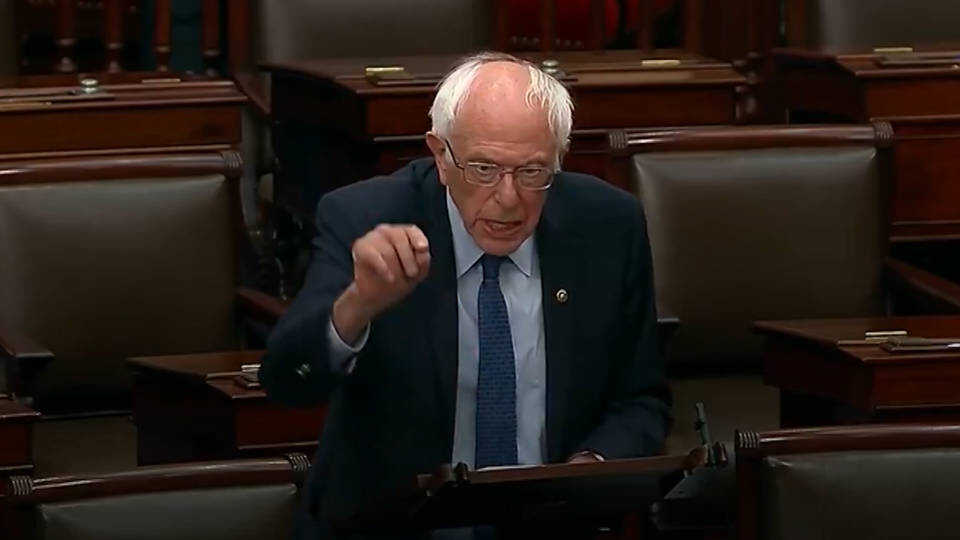
In Washington, D.C., Vermont independent Senator Bernie Sanders has blocked legislation that would have effectively barred U.S. humanitarian aid from reaching Gaza. On Wednesday, Sanders objected when Florida Republican Senator Rick Scott tried to pass the so-called Stop Taxpayer Funding of Hamas Act by unanimous consent. 

Sen. Bernie Sanders: “Right now there are hundreds and hundreds of thousands of innocent men, women and children in Gaza who have lost their homes. They’ve been thrown out of their homes. They have no food. They have no water. 

They have no fuel. And I remind my colleagues that half of those people are children.” 


Pentagon chief Lloyd Austin has ordered an additional 2,000 U.S. troops to deploy to the Middle East in support of Israel. The order builds on a rapid response force of 2,000 U.S. Marines sailing for the eastern Mediterranean, along with two U.S. Navy carrier strike groups.


This evening, President Biden is giving a primetime address where he’s expected to ask Congress for $100 billion in emergency funds to ship more weapons to Israel, Ukraine and Taiwan, and to further militarize the U.S.-Mexico border.


PALESTINE

Fri 20 Oct 2023 11:38 am - Jerusalem Time

Israeli Knesset Suspends Lawmaker Ofer Cassif for Criticizing Israel’s War on Gaza


An Israeli parliament ethics committee has suspended Knesset member Ofer Cassif for 45 days after Cassif criticized Israel’s assault on Gaza. His suspension comes as Israeli authorities have arrested more than 100 Israeli citizens over social media posts supporting Palestinians in Gaza. At least 70 Israeli university students face suspension or other disciplinary action for posting pro-Palestinian sentiments online.


PALESTINE

Fri 20 Oct 2023 11:16 am - Jerusalem Time

Israel abducts 80 Palestinians in the West Bank

Last night and at dawn on Friday, the occupation forces arrested at least 80 citizens from the West Bank, including representatives from the Legislative Council, former prisoners, and two journalists.


The arrests were concentrated in the governorates of Hebron and Bethlehem, while the rest of the arrests were distributed in the governorates of Ramallah, Nablus, and Tulkarm.


Thus, the number of arrests since October 7th has risen to more than 930 cases, in light of the comprehensive aggression and systematic mass revenge operations against our people.

OPINIONS

Fri 20 Oct 2023 10:40 am - Jerusalem Time

Israel misread Iran’s way of war. A proper understanding could help predict Hezbollah’s next moves.

Ramallah - “Al-Quds” dot com

Ramallah - “Al-Quds” dot com

Opinion Writer

Author: David Daoud

In perhaps the Israeli political echelon’s first—and, to date, highest ranking—admission of failure to preempt the October 7 Hamas-led attack on southern Israel, National Security Council chairman Tzachi Hanegbi said misunderstanding the group’s intentions was “my mistake, first and foremost.” Hanegbi explained that Israel “believed Hamas internalized the lessons” of Operation Guardian of the Walls “when it was dealt a heavy blow” in 2021.

As proof, he pointed to Hamas’s seeming indifference to Palestinian Islamic Jihad’s (PIJ) “pleas for help”—as he put it—when PIJ clashed with Israel in August 2022 and May of this year. “Hamas decided to remain outside the battle,” Hanegbi said. Though accurate on a technical level, Israel’s analysis of Hamas’s intentions, as reflected in Hanegbi’s statement, demonstrates a fundamental failure in understanding how Iran and its proxy forces operate, cooperate, and make war.


Iran’s proxies have long ceased to work as geographically contained entities or in isolation. Particularly with the onset of the Syrian civil war, Tehran has worked on integrating its various extensions and proxies into a mutually reinforcing and symbiotic regional alliance—a true “Axis of Resistance.” This also applies to Hamas, both within the Palestinian Territories and outside them.

Inside the Gaza Strip, the group has operated as a first among equals among the twelve-member Joint Operations Room of the Palestinian Resistance Factions since 2018, an umbrella organization coordinating the activities of all Gaza-based terror groups. More broadly, Hamas and this entire Gaza-based umbrella organization have become integrated into the regional, Iranian-led Axis of Resistance.


It is critical to understand how these forces symbiotically operate. First, to the extent that this is possible, they have set aside their differences. This was most evident with Hamas in the Syrian civil war. At the conflict’s outset, the group’s Sunni loyalties led it to oppose Bashar al-Assad’s brutal assault against his people. However, in time—circa mid-2017—Hamas became more agnostic on the Syrian conflict, neither fighting to save Assad like Iran’s other extensions nor commenting on the war at all. Indeed, from 2017 until Hamas reconciled with Damascus in 2022, the Syrian civil war did not exist as far as the group was concerned. 

The Axis of Resistance had decided to set aside these differences, which were dividing their forces and weakening them through infighting, and focus on their greater, shared goals: eroding American regional influence and the eventual destruction of the State of Israel.


The Axis of Resistance’s constituent organizations also cooperate militarily. In countries like Syria, they fought alongside each other. But their cooperation can take different forms, like sharing intelligence, military knowledge, and experience, joint planning and coordination, and, at times, the more experienced groups loaning forces or attaching advisors to more junior counterparts.


The final point relates to the tension between the desire of the Axis of Resistance to ceaselessly pursue its larger objectives and the constraints of reality that may prevent any of its constituent forces from acting freely at any given time. In a practical sense, this has meant that the Axis groups will figuratively pick up the slack for each other.

This is most relevant to Hanegbi’s observation that Hamas abstained from involvement in the two recent rounds of fighting between PIJ and Israel. Hamas had not been permanently nor temporarily deterred by Israel. Likelier, PIJ could simply afford to absorb the consequences of the clash at the time. Alternatively, Hamas had capabilities that the group and Iran wanted to preserve for a more critical date. Or Tehran and its Gaza-based proxies wanted to keep the round of fighting limited, which was possible if PIJ alone entered the fray—not if Hamas joined.


The Axis of Resistance has adopted this approach in other arenas where it holds sway—most noticeably in Lebanon. There, the country’s ongoing and worsening economic crisis has constrained Hezbollah’s ability to directly attack Israel over the last four years. Out of concern for eroding its public support or making itself the focal point of Lebanese anger, the group cannot be seen to compound Lebanon’s dire economic straits with a security conflagration or war (particularly since recovery aid will likely not be forthcoming once the war concludes). Rather than halt or suspend its ideologically motivated fight against Israel, Hezbollah has transferred the battle to its Palestinian partners, both inside Lebanon and Israel, more capable of absorbing Israeli retaliation.


Iran’s relationship with its proxies is a top-down hierarchy. But Tehran does take into account the input, local conditions, and needs of its proxies. In that manner, the overall objective of the Axis of Resistance—to destroy Israel—can continue to be pursued without endangering or risking the destruction of one of its constituent forces, especially if it has been made particularly vulnerable by its current circumstances.

Understanding this can help predict—to whatever extent that is possible—Hezbollah’s, Iran’s, and the broader Axis of Resistance’s next steps as the war between Israel and the Gaza-based factions unfolds. And here, so far, the Axis, but particularly Hezbollah, have been sending contradictory messages.


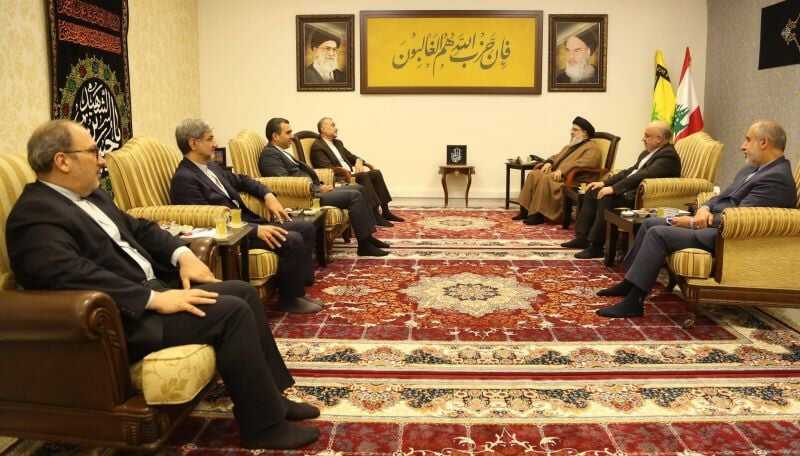
While Hezbollah’s typically loquacious Secretary-General Hassan Nasrallah has been unusually silent since the war’s outbreak, Iran has taken point on the Axis of Resistance’s messaging. Foreign Minister Hossein Amir-Abdollahian—expectedly, from Beirut, which has become a hub of the regional alliance’s meetings and decision-making—has now twice threatened broader Axis intervention, promising “a very likely preemptive strike by the Resistance within the next few hours” on October 16, which never materialized. Supreme Leader Ayatollah Ali Khamenei conveyed a similar message the following day.


It is important, however, to distinguish between the Axis’s bellicose bluster and genuine threats and the form they will take. Amir-Abdollahian’s second, more jingoistic, statement occurred three days after his October 13 meeting with Nasrallah, where the two undoubtedly discussed Hezbollah’s ability to intervene and the limitations that local circumstances placed on the group’s freedom of action. This includes, as noted, Lebanon’s economic collapse, the improbability of post-war economic recovery aid, especially if hostilities are initiated by Hezbollah, and the inevitable Lebanese public backlash against the group after the war.


Indeed, Hezbollah promised Lebanese officials—to the extent it can be taken at its word—to avoid involvement in the war unless Israel “harasses” Lebanon. Meanwhile, Prime Minister Najib Miqati has been conducting ongoing “contacts domestically,” referring to Hezbollah, “and externally” to keep Lebanon outside of the war, stressing “the adventurism of opening a new front [against Israel] from south Lebanon is in no one’s interest because the Lebanese cannot bear [the consequences].”

Caught between its obligations to Tehran and its interest in quite literally not burning the ground under its feet, Hezbollah has so far chosen a now-familiar middle ground: facilitating attacks by Palestinian groups. This allows Hezbollah to continue bleeding Israel while providing it enough plausible deniability to avoid the full consequences of Israeli retaliation and very limited direct harassment.

Admittedly, Hezbollah has exploited Israel’s concentration on the Gaza Strip to carry out more severe and daring attacks that recall the group’s pre-October-2019 posture—some of which have even resulted in Israeli military casualties—but even these have occurred within its established “rules of engagement” with Israel. Most of the attacks have been directed at the Shebaa Farms—long accepted by both sides as a permissible arena for fighting—while Hezbollah conveyed to Al-Araby al-Jadeed that, for the time being, it was reverting to its old equation of “no war, but blood for blood.”

Unaltered, Hezbollah’s current approach would force Israel to split its efforts between the north and Gaza rather than focusing undivided attention on the coastal enclave. This would slow the pace of an Israeli incursion into the Gaza Strip, buying time that the Axis of Resistance could be hoping would result in a premature ceasefire. This would allow Hamas, PIJ, and their other terrorist allies to live to fight another day. Meanwhile, Hezbollah can leverage its threats of entering the conflict to prompt the creation of lifelines for its Gazan allies, buying them more time.

However, an element of uncertainty remains attached to the seriousness of Iran and the Axis’ threats to intervene, if and when Israel’s war evolves into a ground invasion that threatens the existence of the Gaza-based militant groups.

Iran—through Hezbollah—has spent almost two decades and considerable effort and funds building the Gaza Strip into the Axis of Resistance’s Southern Front against Israel. It has spent even more time and energy propping up Hamas, PIJ, and other Palestinian proxies. On October 7, the Axis leveraged this build-up to launch the meticulously planned “Al-Aqsa Flood” attack (likely to torpedo Saudi-Israeli normalization talks). Indeed, as far as can be deduced, the Axis planned the massacre to be even bloodier, judging from the size of the force (1,500 alone were killed inside Israel, which is roughly equivalent to two battalions) and the quantity and quality of weapons they were carrying. 


The groups seriously underestimated the intensity of Israel’s response, perhaps assuming the Jewish state’s internal divisions over the past year would blunt its response or even bought into their own propaganda regarding Israeli society’s fragility. And now the Axis of Resistance could stand to risk losing its Southern Front in the face of a determined Israeli onslaught.


Iran’s next steps would then depend on the importance it places on preserving its Gaza-based proxies and military investment in the coastal enclave, particularly if alternatives to ordering Hezbollah to directly enter the fray—like igniting fighting between Palestinian factions and the IDF in the West Bank or stoking Jewish-Arab tensions into violence inside Israel—fail to achieve their desired results. Non-intervention could risk not only the Southern Front’s demise, but also damage Iran’s credibility on the Palestinian question. On the other hand, ordering Hezbollah to intervene puts the brightest star in Tehran’s constellation of regional forces—and its most loyal extension—at risk of direct harm from Israeli military retaliation, not to mention postbellum Lebanese ire. And of all of this would be to save its militarily inferior proxies whose loyalty to the Iranian regime is relatively more questionable.


David Daoud is a nonresident fellow at the Atlantic Council.


PALESTINE

Fri 20 Oct 2023 10:22 am - Jerusalem Time

Experts react to Biden’s ‘inflection point’ address on Ukraine and Israel

By Atlantic Council experts


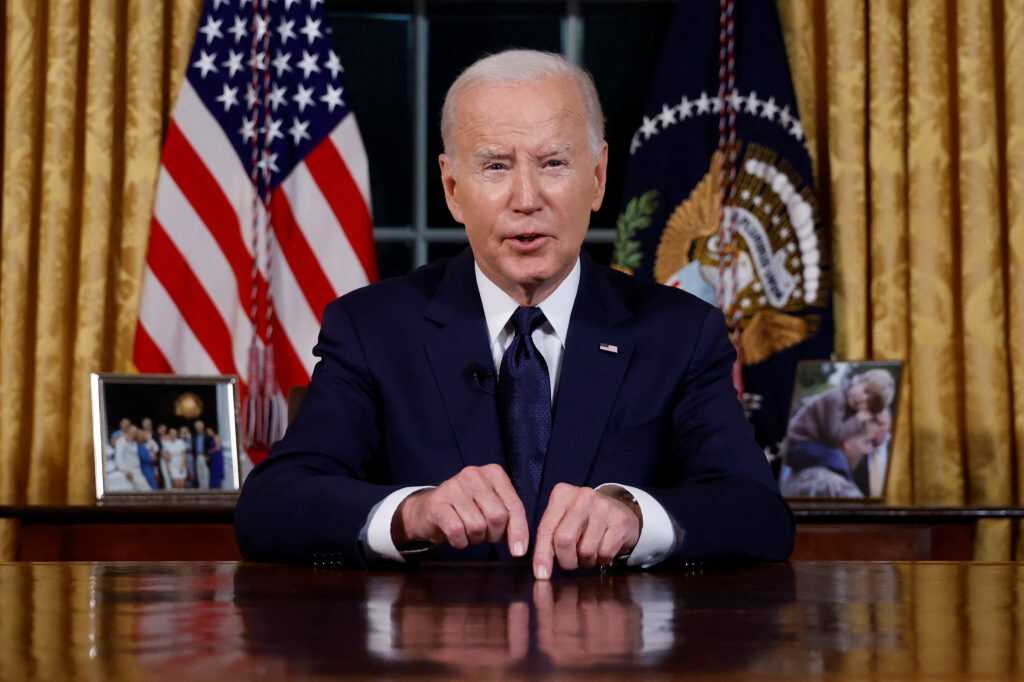
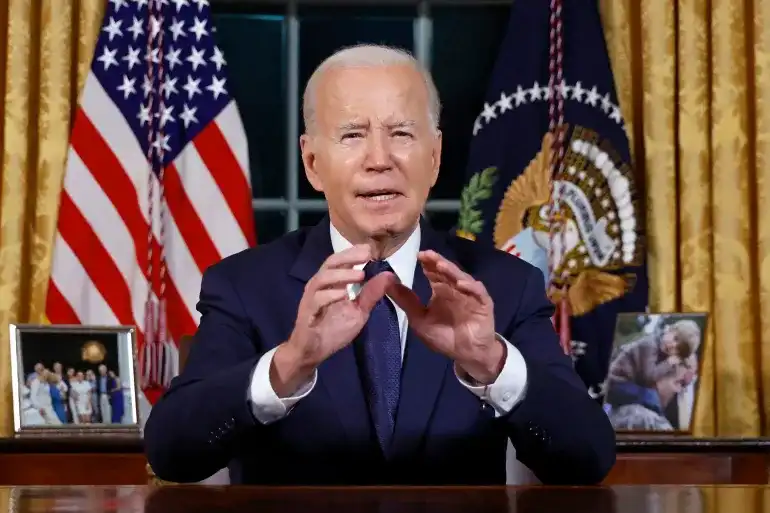
“We are facing an inflection point in history.” On Thursday evening, US President Joe Biden spoke to Americans from the Oval Office—in only the second such address of his presidency—to tie together the conflicts in Israel and Ukraine as part of a larger struggle for democracy and freedom. Biden made the case that US leadership in these global crises will make the United States safer. He leveled with Americans that this safety will come at a cost, calling on Congress to pass an “unprecedented” aid package for Ukraine and Israel. But he also told Americans that the cost of walking away from these wars would be much higher.


Below, Atlantic Council experts assess Biden’s big speech and what to expect next.


John E. Herbst: Biden’s second bravura presidential moment in two days is a legacy-builder

Jenna Ben-Yehuda: Biden rallies Americans as global defenders of democracy. Will it work?

Thomas S. Warrick: It’s all about the money—and vital US national interests

Shelby Magid: Biden gives arguments both parties can embrace for a Ukraine-Israel aid package

Daniel Fried: This was an application of US grand strategy from Truman to Reagan

Matthew Kroenig: Biden made strong points, but failed to explain why Ukraine and Israel matter to everyday Americans

Jonathan Panikoff: Biden backs his allies’ wars of necessity


Biden’s second bravura presidential moment in two days is a legacy-builder

It has been a good week for Joe Biden. In a tour de force, he visited Israel and delivered a pitch-perfect message of support for its embattled people and some careful observations on how to deal with the challenges ahead. Then one day after that trip, he gave a powerful speech from the Oval Office laying out the major dangers presented to global order, vital US interests, and US leadership by Vladimir Putin’s aggression to subdue Ukraine and Hamas’s savage attack on Israel. US presidents are usually elected for reasons related to the economy and other domestic issues, but presidents often establish their legacy at moments of international peril.

Even before Putin launched his massive invasion of Ukraine in February of 2022, the Biden administration laid out a sensible policy to deter Russia and then to make sure it did not succeed: 1. major sanctions on Russia; 2. political isolation of Russia; 3. the provision of substantial military and economic support to Ukraine; and 4. strengthening NATO defenses in the east. It took great effort to implement this successfully. 


But one thing the White House had not done was to explain to the American people why the United States was leading this major effort. Biden checked that box tonight. He explained that if Putin wins in Ukraine, he might march west and attack our NATO allies, which the United States would be obliged to defend. He reminded the American public that Ukraine was only asking for the means to defend itself. Providing the military and economic assistance that Ukraine needs is therefore the smart and economical way to protect the United States and its allies. He pointed out that if Putin wins in Ukraine, it would also embolden aggressors elsewhere. That would erode American leadership. He noted too that Ukraine and Israel are democracies attacked by authoritarians bent on their destruction. Stopping them is consistent with our values as Americans. 

To help defend our interests, the president noted that he was sending a request to Congress for substantial aid to Ukraine and Israel, and he expected us to overcome our divisions in dealing with these challenges. That aid is essential to defend American interests, and his handling of it was a smart, statesmanlike way to address the disorder in the US House of Representatives. 

It was Biden’s second bravura presidential moment in two days. In its clarity, strategic focus, and sunny summons of American values and leadership, it recalled Ronald Reagan at his best. This is good for Biden and better for us.


—John E. Herbst is the senior director of the Atlantic Council’s Eurasia Center and a former US ambassador to Ukraine.


Biden rallies Americans as global defenders of democracy. Will it work?

Biden’s Oval Office address to the nation sought to answer one central question regarding the conflicts between Israel and Hamas and Russia and Ukraine: “Why should the American people care?” Against the domestic political backdrop of a speaker-less Republican Party, a barely avoided government shutdown, and a deeply divided nation, Biden sought to unify the American people as global defenders of democracy. 

The rhetoric was about more than drawing important parallels between the wars in Ukraine and Israel. Biden is hoping that his message will compel lawmakers—under pressure from their constituents—to pass the forthcoming package of direct military aid to both nations that he previewed tonight. An omnibus aid package could offer something for a spectrum of Israel supporters and Ukraine skeptics alike. Or, alternatively, some could weaponize its sticker shock to draw the nation inward. But this is where Biden’s appeal for support rightly extended beyond the theoretical: Just twelve days after Hamas’s terrorist attack on Israel, American Jews and Muslims have begun to face heightened threats to their safety as a result of anti-Semitic and Islamophobic violence across the nation—with deadly consequences already in Illinois, where a six-year-old Palestinian-American child was brutally murdered for his faith.

The big question is whether Biden’s case was strong enough to move Republican lawmakers reluctant to cede any perceived win to a president with just thirteen months to go in his quest for reelection. The unity that the United States experienced after the 9/11 attacks seems a distant memory. Can Biden, who has invoked 9/11 to describe the aftermath of Hamas’s terrorist attack in Israel, summon the same resolve that followed that national trauma? The forthcoming funding request will serve as a test, and US allies and foes alike will be watching to see if the United States passes it.

—Jenna Ben-Yehuda is the executive vice president of the Atlantic Council, and the former president and chief executive officer of the Truman National Security Project and the Truman Center for National Policy.


It’s all about the money—and vital US national interests

There was one important takeaway from Biden’s speech beyond his strong words of support for embattled democratic allies Ukraine and Israel, his words of support for innocent Palestinians caught in the crossfire between Hamas and Israel, and his warnings denouncing both anti-Semitism and Islamophobia in the United States.

It was the money—and the link to vital US national interests.

Over the years, administrations of both parties have written brilliant strategies that have failed because no one appropriated the funds needed to turn those strategies into reality. In today’s Washington, “thoughts and prayers” has become a cynical cliché about doing nothing real to address the nation’s problems.

So what made tonight’s speech especially important was that the president said he would ask for serious money—reportedly one hundred billion dollars for the next year—for the “arsenal of democracy,” a phrase he has brought forward from President Franklin Roosevelt in 1940. Of this, roughly sixty billion is for Ukraine, ten billion is for Israel, and the remaining thirty billion is for Taiwan, the Indo-Pacific, and border security.

Biden’s speech linked support for Ukraine and Israel to the United States’ vital national interests. Ukraine is under attack by Russia, which, as Biden reminded everyone, seeks to destroy Ukraine as an independent nation and to re-establish the Soviet empire. Israel is under attack by a terrorist group intent on Israel’s destruction, with two million Gazans caught in the crossfire. These are among the United States’ most vital national security interests.

The cost of doing nothing in these areas is far greater than what the president is asking from the Congress. Asking for billions of dollars to achieve vital US national interests is how you show seriousness in today’s Washington.


—Thomas S. Warrick is a senior fellow and director of the Future of DHS Project at the Atlantic Council. He served in the Department of State from 1997-2007 and as deputy assistant secretary for counterterrorism policy at the US Department of Homeland Security from 2008-2019.


Biden gives arguments both parties can embrace for a Ukraine-Israel aid package

Moscow may have been pleased over the past couple weeks as it watched the government scramble in Washington to commit to Ukraine aid, while the crisis in the Middle East took over the news cycle, but Biden’s powerful speech from the Oval Office should be a strong reality check—US support for Ukraine is not waning.

Biden’s long-awaited Ukraine-focused Oval Office speech made it clear to the American public and the world that support for Ukraine, as well as Israel, is a national security priority and firmly in American interests. As the president said, “American values would be at risk if we walk away from Ukraine.” That’s not a stance the US government or people will back down from lightly.

The president’s speech came at a critical time as support for Ukraine aid was coming into question on Capitol Hill, mainly in the House, despite polls, including one from Quinnipiac released this week, showing that the majority of voters understand supporting Ukraine is in the national interest. While directly linking Hamas’s brutal attack on Israel and Russia’s invasion of Ukraine, Biden gave a thorough overview of the reasons that supporting our allies Israel and Ukraine remains necessary and urgent.

Biden squarely acknowledged that these conflicts can feel far away and, feeling disconnected, the public questions why what happens in Israel and Ukraine matters for Americans. Biden provided strong arguments that both parties can use to back up the argument that this effort is in the US interest, as he announced that he’s sending an urgent request to Congress for a substantial package of aid for both Israel and Ukraine—which will require support from both Democrats and Republicans to become law.

Perhaps smartly, he did not mention the exact price tag for the aid package (reportedly around one hundred billion dollars), but the compelling arguments coupled with the inclusion of aid to Israel make it far more difficult for those who might oppose passing Ukraine aid on its own to go against this presidential request. For as Biden said, we cannot let terrorists win. And if we don’t give Ukraine and Israel the aid they need to defend themselves, we’re putting them deeply at risk—as well as ourselves.


—Shelby Magid is the deputy director of the Eurasia Center.


This was an application of US grand strategy from Truman to Reagan

Biden’s Oval Office address laid out the case for US support of Israel and Ukraine, framing the argument in terms of American power and responsibility: “American leadership is what holds the world together” was the core of the argument—i.e., that the United States has responsibilities to back its principles and its friends against terrorist groups and dictators. He weaved together strategy, values, and US interests, linking “the idea of America, the promise of America” with American interests in supporting Israel and Ukraine. This was an application of US grand strategy from Truman to Reagan.

The problem is that neither this speech nor any fifteen-minute Oval Office speech could do justice to the complexities of the two wars, especially the Israel-Hamas war. Biden rightly referred to the rights of Palestinians and cautioned against acting in anger but did not outline a way out of the conflict. He did not attempt to define the precise goals the United States seeks in supporting Ukraine. He didn’t do a lot of other things in the speech and critics will have a field day pointing out various “he could have said’s.”


But Biden’s purpose seemed different: This was a speech to rally US support for an internationalist agenda and the funding for Israel and Ukraine to back it; he asserted, like Franklin Roosevelt, Harry Truman, John F. Kennedy, and Ronald Reagan before him, that US interests and US values are interwoven and then argued that both are at stake in the two conflicts. It was a speech rooted in a belief in American leadership in the world, in a conviction that the US national interest requires not just transactional deals but a higher purpose. It’s a tough case to make to a skeptical US public, with cynical isolationism coming back as a political force for the first time in generations, but a critical one.

—Daniel Fried is the Weiser Family distinguished fellow at the Atlantic Council and a former US assistant secretary of state for Europe.

Biden made strong points, but failed to explain why Ukraine and Israel matter to everyday Americans

Biden deserves praise for making his case directly to the American people. He made some strong points, including “American leadership holds the world together,” and “American values make us a partner that other countries want to work with.” He also clarified some important misconceptions, explaining that much military aid goes to drawing down US stocks, while fueling defense production in the United States and the ultimate replenishment of American stocks. 

Still, ultimately, I believe the speech fell short. Biden needed to explain what he hopes to achieve in Israel and Ukraine, how he plans to do that, and why the outcome of these conflicts matters to the kitchen table concerns of everyday Americans. He did not do that.


—Matthew Kroenig is vice president and senior director of the Atlantic Council’s Scowcroft Center for Strategy and Security.


Biden backs his allies’ wars of necessity

Tonight, against the backdrop of his own political and domestic challenges, Joe Biden demonstrated what US leadership in the world looks like. Biden’s speech is best viewed in the context of an age-old question: How many times must we repeat the same mistakes?

This Saturday will mark two weeks since the deadliest attack on the Jewish people since the Holocaust. The lessons the world learned from that atrocity, and from World War II more broadly, resonate today more than ever. Peace should always be the goal. But while a peace achieved by the appeasement of autocrats and terrorists may calm tensions temporarily, it is likely to lead to a far bigger conflict in the future. We are, as the president said, at an “inflection point.”

There are times when the United States can shape the reality of the world, and times when the United States must live within the world’s confines; this is an opportunity to do the former. US allies are not always democracies, nor are they always inclined to hedge toward the liberal international order. But if the United States does not stand up to support democracies such as Israel and Ukraine, no matter how imperfect they are, then the message its other global allies will receive is that the United States will certainly not stand up for them when their country is threatened and their security challenged.


Perhaps worse is the signal such an outcome would send to the United States’ biggest adversaries. Not supporting Israel would tell Iran that it is free to continue empowering terrorists and that its quest for Israel’s annihilation is within reach. Not supporting Ukraine would signal to Russia that Moscow is free to pursue its goal of reunifying the Soviet Union. And it would send a message to China that the United States’ retreat from its role as a global leader, even one in a multipolar system, is complete and that Beijing is now free to grab and occupy that opening.


There is a difference between a war of choice and a war of necessity. And what Biden highlighted tonight is that Israel and Ukraine are both engaged in wars of necessity—wars required to ensure the security of their people, to defend their homelands, and to safeguard democratic ideals.


—Jonathan Panikoff is the director of the Scowcroft Middle East Security Initiative in the Middle East Programs and a former deputy national intelligence officer for the Near East at the US National Intelligence Council.


Source: Atlantic Council 

OPINIONS

Fri 20 Oct 2023 9:55 am - Jerusalem Time

What was Hamas thinking? And what is it thinking now?

Ramallah - “Al-Quds” dot com

Ramallah - “Al-Quds” dot com

Opinion Writer


By Alan Pino

The size, scale, and brutality of Hamas’s October 7 assault on Israel suggests that the group’s aim was to fundamentally change the strategic dynamic with Israel and the Palestinian Authority, and probably in the larger region, as well. 


Hamas may have believed Israel was weakened, distracted, and divided by its internal political turmoil over the past year, making this a good time to strike. Perhaps Hamas thought a surprise attack would widen political divisions in Israel, upend the Israeli government, and sap the resilience and determination of the Israeli people to prevail, rather than produce the unity and resolve the world is currently seeing. 


Hamas may also have calculated that it had an opportunity to deal a knockout blow to the Palestinian Authority. The popularity of President Mahmoud Abbas and the Authority itself had been plummeting, and hardline factions, including Hamas cells, had begun to gain traction in the West Bank by taking the fight to Israel. The October 7 attack appears to have been specifically timed to coincide with the fiftieth anniversary of the 1973 Yom Kippur war—in which Israel’s apparent invulnerability was called into question by successful surprise attacks from Egyptian and Syrian armies—to catch the Jewish state off guard and deal it a major blow.


Hamas and its Axis of Resistance partners expect that rising pro-Hamas and anti-Israeli sentiment in the Arab world will prompt Saudi Crown Prince Mohammed bin Salman to halt efforts to openly embrace Israel for the indefinite future.


It also appears that a key aim of the attack was to derail the ongoing Saudi-Israeli talks aimed at normalizing relations between the two countries. Hamas, Hezbollah, and Iranian officials have publicly condemned the Saudi-Israeli discussions, and Hamas and Hezbollah officials reportedly also have cited the talks—which they view as a sellout of resistance to Israel’s presence in Muslim lands and a betrayal of the Palestinians—as a major motivation for Hamas’s October 7 assault on Israel. These groups recognize that the establishment of normal relations between Saudi Arabia and Israel poses a strategic threat to their cause that would strengthen the pro-Western countries in the region and leave the Iran-led “Axis of Resistance” isolated. 


Concern over the apparent progress of the Saudi-Israeli talks appears to have prompted the Axis of Resistance to pursue greater unity of effort to combat the threat they believe it poses. According to media reporting, Hamas coordinated its attack plans with Iran and Hezbollah, and officials from all three organizations met in Beirut on several occasions in recent months to discuss the operation. Hamas probably had the final call on the specifics of its operational plan and the timing of its attacks, but Iranian funding, weapons, and training over many years have been key to Hamas’s increased military prowess. 


Hamas leaders probably recognize that their attack on Israel—undoubtedly supported and endorsed by their Iranian patron—will heighten Saudi fears of Iran and desire for an eventual alliance with Israel to counter the Iranian threat. However, Hamas probably also believes that the Arab public will be cheering its attack and will rally behind Hamas in the face of large-scale Palestinian civilian casualties from Israeli military operations. Hamas and its Axis of Resistance partners expect that rising pro-Hamas and anti-Israeli sentiment in the Arab world will prompt Saudi Crown Prince Mohammed bin Salman to halt efforts to openly embrace Israel for the indefinite future.


After the October 7 attacks

Hamas probably calculated that Israel would respond with a major ground invasion to the horrific attacks the group has carried out, and most likely it has made preparations to bleed Israeli forces when they enter Gaza. Hamas probably also has placed its communications centers, fighters, and munitions among the civilian population, which will inevitably increase the number of civilian deaths. Hamas may have assessed that it can achieve a replay of previous wars with Israel, in which mounting Israeli military casualties and a rising death toll among civilians in Gaza resulted in domestic pressure in Israel and calls from the international community, including the United States, for Israel to accept a ceasefire. Hamas undoubtedly also plans to use the many hostages it has taken as leverage to get Israel to stop operations with Hamas still intact and able to claim victory. 


However, Hamas may have misjudged both the international support it will enjoy and Israeli determination to sustain the fight. First, the sickening news of innocent men, women, children, and elderly people being kidnapped and murdered has undermined sympathy around the world for the group’s claims to be the defender of Palestinians against Israeli oppression. These acts have also bolstered support for Israel’s claim that it must respond with great force to the threat Hamas poses. Even so, to avoid losing international backing for its military response, especially as its ground invasion of Gaza unfolds, Israel will need to show continued concern to minimize casualties and help preserve adequate humanitarian conditions for Palestinian civilians in Gaza.


Second, unlike in the past, the Israeli government probably will not face domestic pressure in the near-to-medium term to halt its offensive. The Israeli public and all major Israeli political parties have united right now behind destroying Hamas, as is evident in the formation of a unity government that includes key centrist opposition leader, Benny Gantz, a former defense minister and chief of the general staff of the Israel Defense Forces. As a result, Israel is likely to approach this situation much as the United States did Afghanistan and Iraq, grinding it out over the long term to try to crush Hamas and remove it as a threat.


Source: Atlantic Council

PALESTINE

Fri 20 Oct 2023 9:34 am - Jerusalem Time

Israel Bombards Gaza with Airstrikes and Readies Troops for a Ground Assault

Israeli airstrikes on Gaza continue and Israel's defense minister has told troops to be ready for a ground assault on the Palestinian territory, although he has not said when that will begin. More than 1 million Palestinians, roughly half of Gaza’s population, have fled homes in the north and Gaza City after Israel told them to evacuate. The airstrikes continued overnight Friday in southern Gaza and ambulances transported the wounded to Gaza’s second-largest hospital, Nasser, in Khan Younis, The Associated Press said.


The office of Israeli Prime Minister Benjamin Netanyahu said Wednesday that limited humanitarian aid would be allowed into Gaza from Egypt following a request from US President Joe Biden.


The war that began on Oct. 7 after Hamas militants stormed into Israel has become the deadliest of five Gaza wars for both sides. The Hamas-run Gaza Health Ministry said Thursday that 3,785 Palestinians have been killed and nearly 12,500 others have been wounded.


More than 1,400 people in Israel have been killed, mostly in the initial attack. An Israeli military spokesperson said Thursday that the families of 206 people believed to have been captured by Hamas and taken into Gaza had been notified. Israel has vowed to destroy the militant group.


PALESTINE

Fri 20 Oct 2023 9:20 am - Jerusalem Time

China's Mideast envoy urges guarantees for Palestinians

China's special Mideast envoy pinned the cause of the Israel-Gaza crisis on the lack of guarantees for Palestinian rights and urged greater coordination with Moscow in a meeting with his Russian counterpart in Qatar, a key go-between in the conflict.


In the first leg of his tour in the region, China's envoy for Middle East issues Zhai Jun landed in Qatar on Thursday where he reaffirmed with his Russian counterpart Mikhail Bogdanov Beijing's alignment with Moscow in their efforts to help de-escalate the Gaza crisis.


China and Russia share the same position on the Palestinian issue, Zhai was quoted saying after meeting with Bogdanov in Doha, a day after Russian President Vladimir Putin held talks with his "dear friend" President Xi Jinping in a rare meeting in Beijing.

"The fundamental reason for the current situation in the Palestinian-Israeli conflict is that the legitimate national rights of the Palestinian people have not been guaranteed," Zhai said.


On Oct. 7, Hamas gunmen stormed into southern Israel from the Gaza Strip, killing at least 1,400 people. In response, Israel has retaliated with air strikes, putting the Gaza Strip's 2.3 million people under siege.

A week later, Chinese Foreign Minister Wang Yi, while condemning "all acts that harm civilians" without naming Hamas, declared that "Israel's actions have gone beyond the scope of self-defense."


'ROOT CAUSES'

The crisis has also increasingly put China and Russia in separate camps from the United States. President Joe Biden said he would seek extra funding, estimated to be in the billions, to help Israel fight Hamas.

Russia, which has ties with Iran, the Hamas militant group, major Arab powers as well as with the Palestinians and Israel, has repeatedly said the United States and the West have ignored the need for an independent Palestinian state within 1967 borders.


A Brazil-drafted U.N. Security Council resolution that called for a humanitarian ceasefire failed to pass on Wednesday, with the United States vetoing the resolution.

Twelve other members of the council voted in favor, while Russia and Britain abstained. Washington traditionally shields its ally Israel from any Security Council action. "China is deeply disappointed at the U.S. blocking the Security Council resolution," said a spokesperson at the Chinese foreign ministry on Thursday.

A Russian-drafted resolution that called for a humanitarian ceasefire also failed to pass on Monday.

"The biased attitude of the U.S. is one of the root causes of the long-standing Palestine issue, and it acts as a catalyst for escalating the conflict when it erupts," China's nationalist tabloid, Global Times, wrote in an editorial.


QATAR

In Qatar, Zhai said China was ready to maintain communication and coordination with Russia in an effort to calm the Israel-Palestinian conflict. The tiny Gulf state of Qatar has been an essential stopover for foreign diplomats seeking to mediate in the Israel-Gaza conflict in recent days, having direct communication channels with Hamas, which has had a political office in Doha for more than a decade.


A week ago, U.S. Secretary of State Antony Blinken visited Doha on his Middle East tour and told the Qatari prime minister that Washington was working to secure the release of hostages held in Gaza.

Blinken also urged Israel to take every possible precaution to avoid harm to civilians.


PALESTINE

Fri 20 Oct 2023 9:12 am - Jerusalem Time

Palestine West Bank a potential 'third front' for Israel

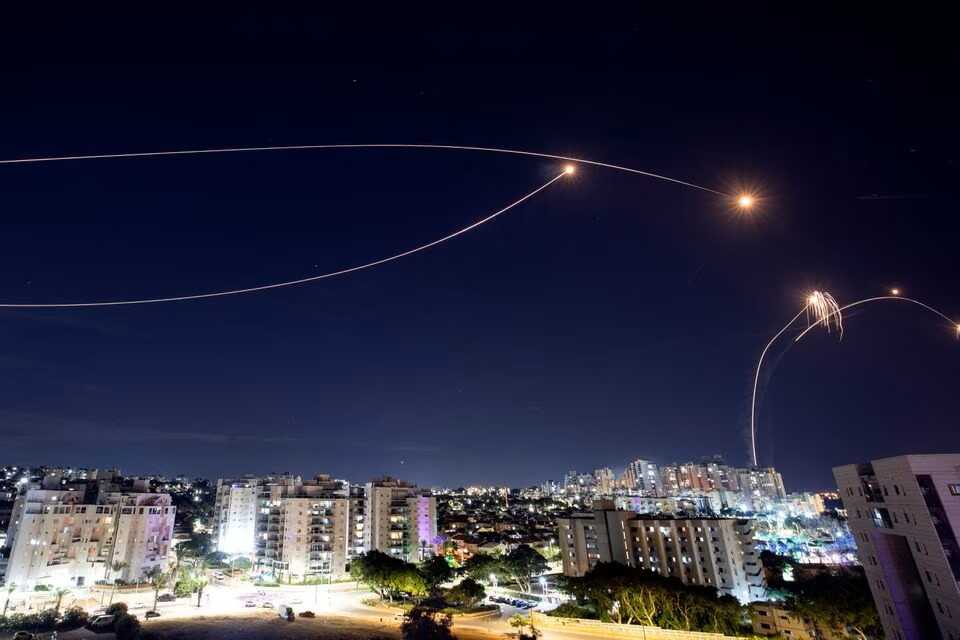
Violence in the occupied West Bank has surged since Israel began bombarding the Gaza Strip and clashing with Hezbollah at the Lebanon border, fueling concerns the flashpoint Palestinian territory could become a third front in a wider war.


Israel is waging war against the militant Hamas group in the Palestinian enclave of Gaza, but Israeli soldiers and settlers pulled out of Gaza in 2005. Israel still occupies the West Bank, captured with Gaza in a 1967 Middle East war.


Hamas, which controls Gaza, killed more than 1,400 people in a surprise attack in Israel on Oct. 7, prompting an Israeli bombardment that has killed 3,500 in Gaza. Israel is preparing a full-scale ground assault on Gaza to destroy Hamas.

Western countries supporting Israel fear a wider war that would open up Lebanon, with its Iran-backed group Hezbollah, as a second front and the West Bank as what Israeli media call a potential third front.


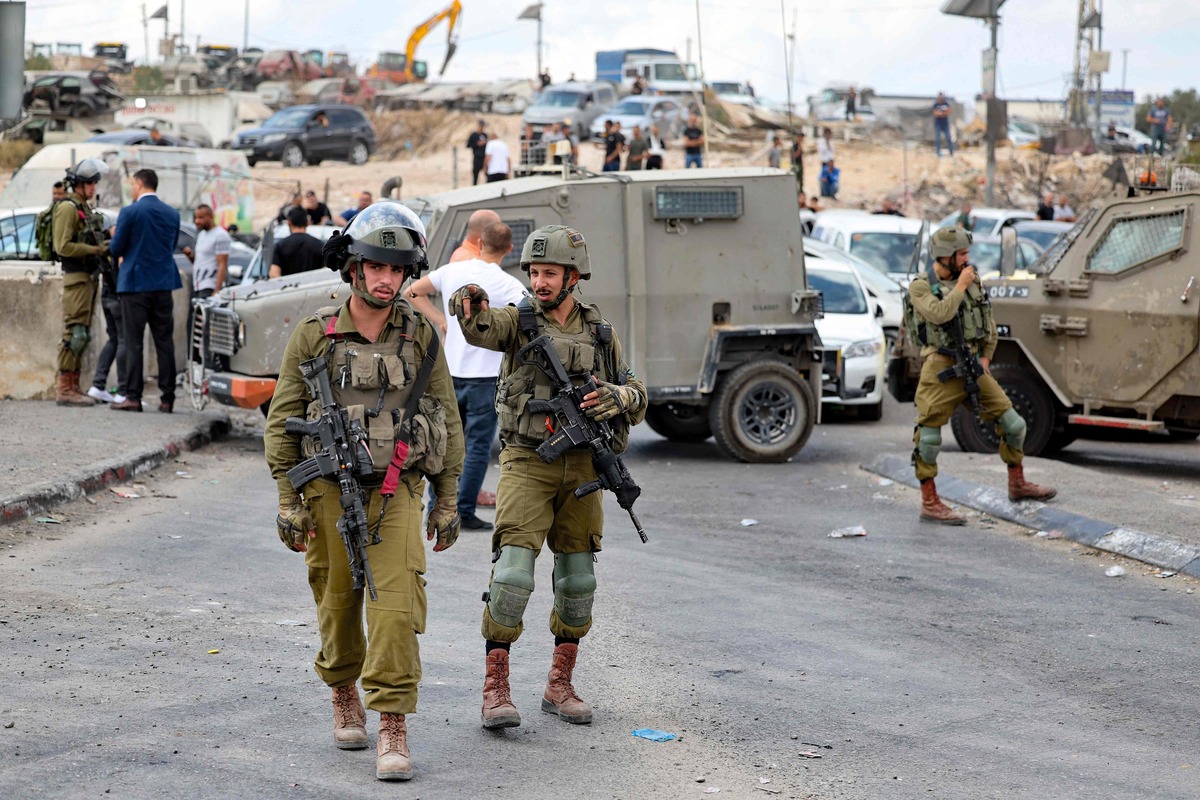
Clashes between Israeli soldiers and settlers and Palestinians have already turned deadly. More than 70 Palestinians have been killed in West Bank violence since Oct. 7 and Israel has arrested more than 800 people.

Israeli forces raided and carried out an air strike in a Palestinian refugee camp in the West Bank on Thursday, killing at least 12 people, Palestinian officials said, and Israeli police said an officer was killed during the raid.


The violence poses a challenge to both Israel and to the Palestinian Authority (PA), the only Palestinian governing body recognized internationally which is headquartered there.

The Israeli military said it was on high alert and bracing for attacks including by Hamas militants in the West Bank.

Hamas was trying to "engulf Israel in a two- or three-front war", including the Lebanese border and the West Bank, military spokesperson Lieutenant Colonel Jonathan Conricus told Reuters. "The threat is elevated," he said.

'GIVE PEOPLE WEAPONS. LET THEM CLASH'

In Ramallah, rare chants this week supporting the military wing of Hamas - a rival of the PA's ruling Fatah party - showed a growing appetite for armed resistance.

"Give people weapons. Let them clash. We'll show what we can do," said Salah, a 20-year-old demonstrator who gave only his first name.

Fatah official Mowafaq Sehweel told Reuters: "We should let go of the reins and use whatever means to fight occupation."

Others are less ready to fight.

Nizar Mughrabi, owner of an architecture firm, said he was disgusted by Israel's assault on Gaza but not ready to pick up a gun.

"Netanyahu wants to fight, Haniyeh wants to fight - put them in the desert with guns and let them shoot each other," he said, referring to Israeli Prime Minister Benjamin Netanyahu and Hamas leader Ismail Haniyeh.

Palestinian officials and Israeli analysts say a number of factors are both helping to ignite tensions, but conversely also limiting their scope, for now.

One is the hundreds of arrests Israel has made.

Hamas cited attacks on West Bank Palestinians and arrests this year as part of its reason for attacking on Oct. 7.

But the arrests have also limited West Bank violence, said Mustafa al-Khawaja, a 52-year-old anti-settlement activist.

"In Gaza, there's enough time (for Hamas) to organize militarily," he said. "Here, the occupation (Israel) can clamp down on a daily basis. It leaves no space to build up military or political forces."


WEST BANK A COMPLEX PATCHWORK

While Hamas tightly controls besieged Gaza, the West Bank is a complex patchwork of hillside cities, Israeli settlements and army checkpoints that split Palestinian communities.

Israel occupied the territory in 1967 and has divided it into large areas it controls, small areas where Palestinians have full control and areas where Palestinians and Israeli forces divide civil and security duties.

Between the seat of power in Ramallah and poorer peripheral areas, there are multiple views on the benefits of violence.

Desperate young men in refugee camps are more willing to fight than those in Ramallah where businessmen and senior Palestinian officials stand to lose from a spiral of violence.

"My business is already suffering because of the unrest," Mughrabi said.

Another key factor in stemming violence is Israel's security agreement with 87-year-old President Mahmoud Abbas's PA.

Abbas condemned Israel's assault on Gaza while his security forces cracked down on demonstrations. Fatah has not issued public calls for armed resistance.

"The PA wants to keep peace and is worried that marches of thousands of people could quickly turn into hundreds of thousands," said Palestinian political analyst Hadi al-Masri.

He added that PA officials do well financially and rely on arrangements with Israel to get paid.

Should Abbas lose his grip or become ill in his old age, the situation could deteriorate, he said.


'LONE WOLVES'

Lior Akerman, a former officer in Israel's internal security service the Shin Bet, said fears over West Bank unrest predated the Hamas war.

Hamas for years had been trying to "do all it can to activate terrorists in the West Bank," he said.

Akerman acknowledged, however, that security measures had been tightened since the Gaza bombardment began, saying that the most recent round of arrests might not have happened under normal circumstances.

"Last night the army ... took around 100 terrorists in the West Bank. In regular days ... the Shin Bet would arrest only those they knew were preparing terror attacks," he said.


One worry for Israel in the West Bank is "lone wolf" attacks from among Palestinians who have disparate local loyalties but an overall contempt for Israeli occupation, analysts say.

Recent surveys have shown overwhelming public support among Palestinians for armed groups, including local militias that include members from traditionally separate factions.


Even before the current Gaza crisis, the West Bank had seen a surge in violence.

Israel stepped up military raids and a spate of Palestinian attacks targeted Israelis. The 2023 Palestinian death toll until Oct. 7 was over 220 and at least 29 people in Israel had been killed, according to UN records.


PALESTINE

Fri 20 Oct 2023 8:54 am - Jerusalem Time

War in Gaza doubles aches and pains of Palestinian pregnant women

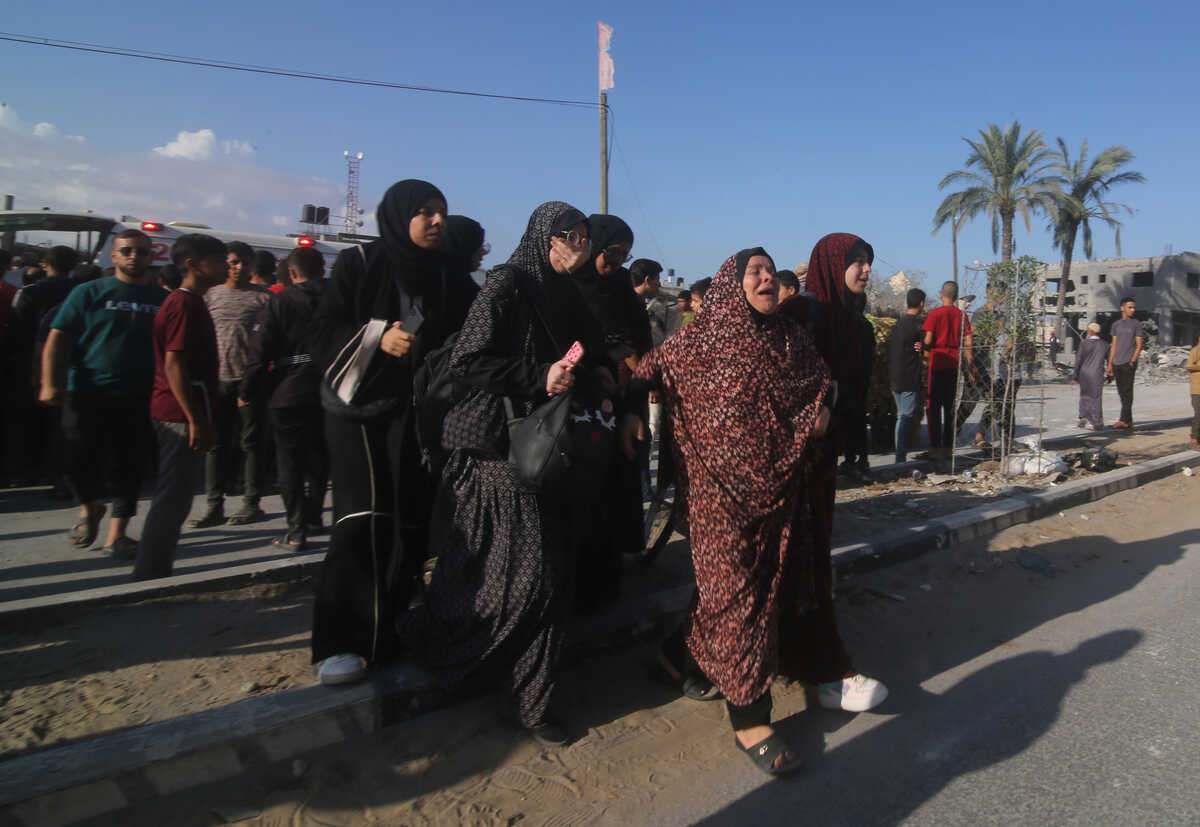
Israel's ongoing intense attacks on the Gaza Strip for the second week double the suffering of women there, after leaving more than 50,000 pregnant women without health care.


A UN report confirmed that pregnant women face unimaginable challenges, especially in light of the presence of more than 5,000 women who will give birth this month, and many of them are at risk of facing health complications after giving birth.


In Nasser Governmental Hospital in the south of the Gaza Strip, Palestinian Hadeel Skaik gave birth weeks before the scheduled date in the maternity ward, but others were killed or miscarried as a result of the Israeli attacks.


As for pregnant women in Gaza, the violent Israeli attacks and the tight siege on the Strip caused them much fear and horror, and most of them lost the most basic types of health care and necessary protection.


Mrs. Skaik, 29, who fled Gaza City with her family to the south of the Strip last week, told Xinhua News Agency, "My child is fine, but I don't know if we will escape death or not."


She added, "We are terrified. We fled from Gaza to here (Khan Yunis) on Friday, and two days later they took me to the hospital and I was dying from intense pain. May God protect me and my son."


Sukayk gave birth to a child, whom she named Muhammad, last Sunday afternoon after undergoing a caesarean section. She remained with her newborn under intensive medical care for about 24 hours before the doctors gave her permission to leave the hospital.


Skaik now lives with her husband, parents, and three children in a rented apartment in the center of Khan Yunis, the largest city in the southern Gaza Strip, and all the time she embraces her infant and children to calm them down from the sound of the non-stop explosions.


Her mother-in-law said while leaning on a pillow in the middle of the narrow apartment, “What God wrote, we will see...”


She added, "We (we) are better than others, but (just) take care of yourself, your health, and your baby, and (leave) the rest to God."


Israel began its air attacks on the Gaza Strip, which is inhabited by 2.3 million people, after the Islamic Resistance Movement (Hamas) launched an unprecedented attack on towns in southern Israel, killing 1,300 people on October 7.


Last Friday, the Israeli army asked all civilians to leave the northern Gaza Strip and Gaza City and head to the center and south of the Gaza Strip.


The Israeli bombing led to the death of 3,785 Palestinians within 13 days, while the death toll continues to rise around the clock.


The obstetrician and gynecologist at Nasser Governmental Hospital in Khan Yunis, Muhammad al-Raqab, said, “The demand of pregnant women, especially those displaced from Gaza and the north, in the maternity ward is very high, and we are trying with the existing capabilities to provide services for the most serious cases.”


Al-Raqab added, "Most cases arrive needing early delivery, as they are subjected to caesarean sections and their newborns are placed in incubators."


The Hamas government office in Gaza reported that more than a million Palestinians, including 50,000 pregnant women, have fled their homes, and more than half of them live in schools and facilities run by the United Nations Relief and Works Agency for Palestine Refugees (UNRWA).


Palestinian Ahmed Mushtaha from Gaza City is still in shock after his wife died days before she gave birth to her first child due to health complications she suffered at the beginning of the Israeli attack.


Mushtaha, 36 years old, said, "We fled our home and took shelter with our relatives. At night, my wife started screaming and we were not able to move her due to the Israeli bombing until the morning, but she died from severe pain."


The United Nations Population Fund in Palestine said on the (X) platform earlier this week that pregnant women in Gaza have nowhere to go and face “unimaginable” challenges.


In the Rafah camp on the border with Egypt, the family of Palestinian Tahani Taha, who gave birth last week, is keen to provide the necessary necessities of life for the new baby and his mother.


Despite this, the new baby does not stop screaming while his siblings, the eldest of whom is nine years old, play in front of the family room that has been displaced for three weeks.


Taha's husband said while puffing on a cigarette in a shelter center, "The situation here is unbearable. You have to wait half an hour or an hour to enter the bathroom. You have to wait your turn for everything, and even the food and water provided are not enough.."


The school has 22 toilets, but there is no running water all the time.


Displaced people describe their conditions inside the shelter centers as catastrophic. A man who identified himself as Abu Salim and lives in a room adjacent to the Taha family said, “People cannot eat or drink, and most of them have not bathed in a week... Look, they are all scratching.” They rub their skin.”


In a hospital whose construction was funded by the United Arab Emirates in Rafah, the maternity ward does not stop receiving pregnant women who are about to give birth or who have suffered bleeding as a result of panic and running in fear of Israeli bombing.
Midwife Aziza Nofal, who has worked at the hospital since its opening in 2006, said, "More than ten women lost their fetuses, and one died during a caesarean section during the last three days."
Nofal added, "Throughout my service here, I have never seen such a horrific situation."

ARAB AND WORLD

Fri 20 Oct 2023 8:47 am - Jerusalem Time

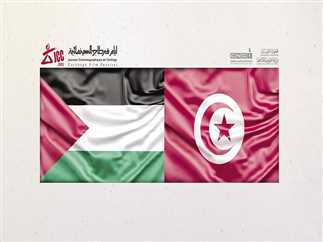
Tunisia cancels Carthage Film Festival in solidarity with Gaza

The Ministry of Cultural Affairs in Tunisia announced the cancellation of the 34th session of the “Carthage Film Days” Festival, which was scheduled from October 28 to November 4, in solidarity with the Palestinian people who have been subjected to continuous Israeli aggression on the Gaza Strip since the 7th of the month. The current one.


This festival dedicated to Arab and African directors is a major annual cultural forum in Tunisia.


A statement by the Tunisian Ministry of Cultural Affairs said, “In solidarity with our brotherly Palestinian people, and taking into account the critical humanitarian conditions witnessed in the Gaza Strip and all the occupied Palestinian territories as a result of the brutal Zionist aggression, the Ministry of Cultural Affairs decided to cancel the organization of the 34th session of the Carthage Film Days.”


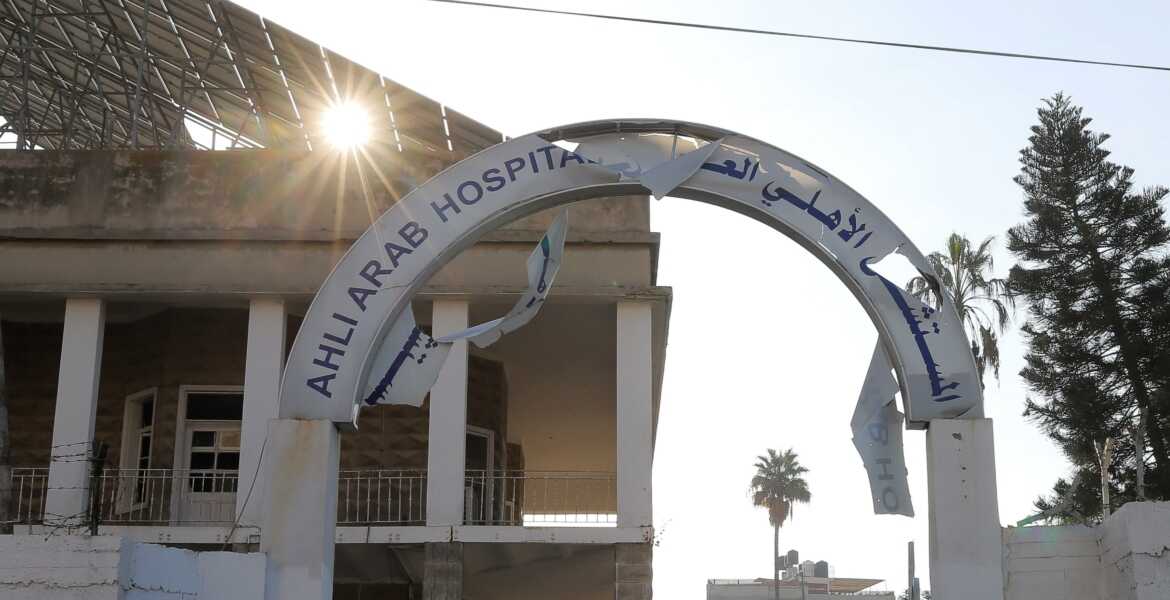
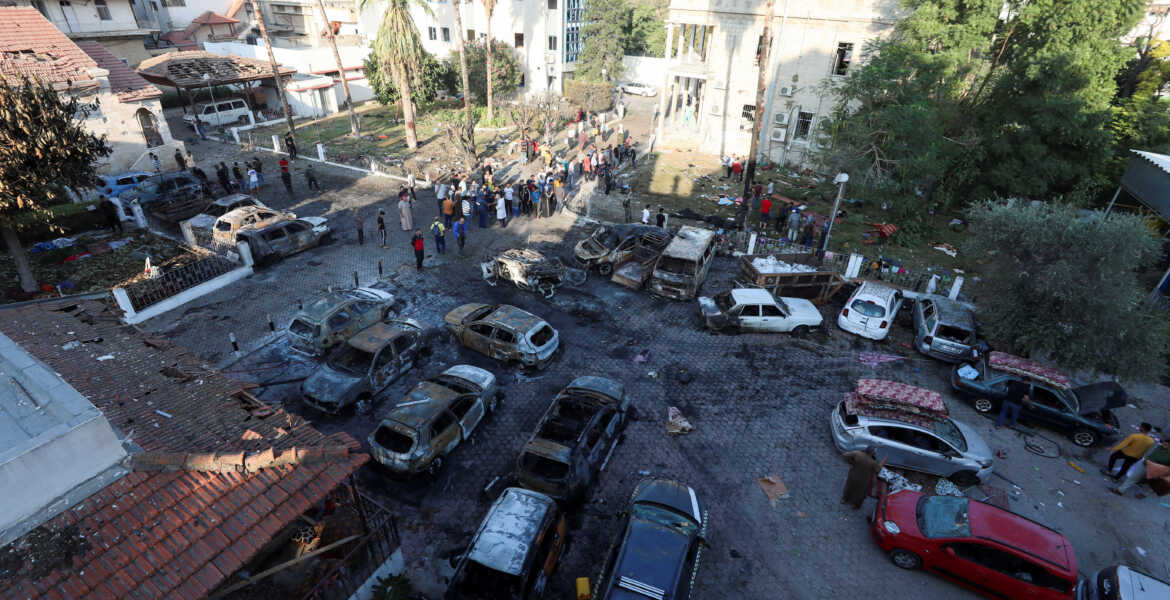
Several demonstrations were organized in different regions of Tunisia to denounce the occupation forces’ bombing of the Baptist Hospital in Gaza, which resulted in hundreds of civilian deaths in the hospital courtyard, a large number of whom were children and women.

PALESTINE

Fri 20 Oct 2023 8:46 am - Jerusalem Time

A large Israeli forced army storms Ramallah and Al-Bireh

At dawn on Thursday, Israeli occupation forces stormed the cities of Ramallah and Al-Bireh from several directions.


Local sources reported that a large force of the occupation army stormed several neighborhoods in the two cities, and drove its vehicles through the neighborhoods of Ain Misbah, Al-Irsal, Batn Al-Hawa, and Ramallah Al-Tahta.


The sources confirmed that confrontations broke out in the Ramallah Al-Tahanta area, during which the occupation forces fired bullets and stun grenades, but no injuries were reported.

PALESTINE

Fri 20 Oct 2023 8:25 am - Jerusalem Time

Israel defense announces evacuation plan for Kiryat Shmona city near Lebanese border

Israel has ordered the evacuation of residents of Kiryat Shmona, a northern town close to the Lebanese border, the defence ministry said on Friday.

Kiryat Shmona has a population of more that 20,000 and is some 2 km (1 mile) from the border fence.

OPINIONS

Fri 20 Oct 2023 8:14 am - Jerusalem Time

Will Israel succeed in dragging Iran into a regional war?

Translation for "Al-Quds" dot com

Translation for "Al-Quds" dot com

Opinion Writer

Author: Adel bin Hamza


Tomorrow, the Middle East region enters a new week of the war launched by Israel against Gaza in response to the “Al-Aqsa Flood” operation launched by Hamas on October 7, and talk is still ongoing about a ground operation in the Gaza Strip to achieve the goal announced by Israel. , which decrees the final elimination of the Hamas movement, because aerial bombardment, despite its destructive power, cannot be decisive without ground intervention. But the delay in the ground operation reveals the extent of the complications involved.


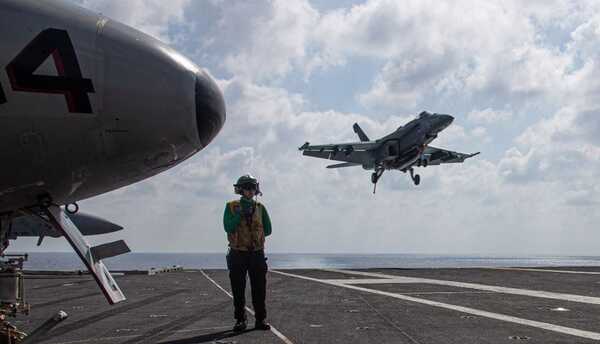
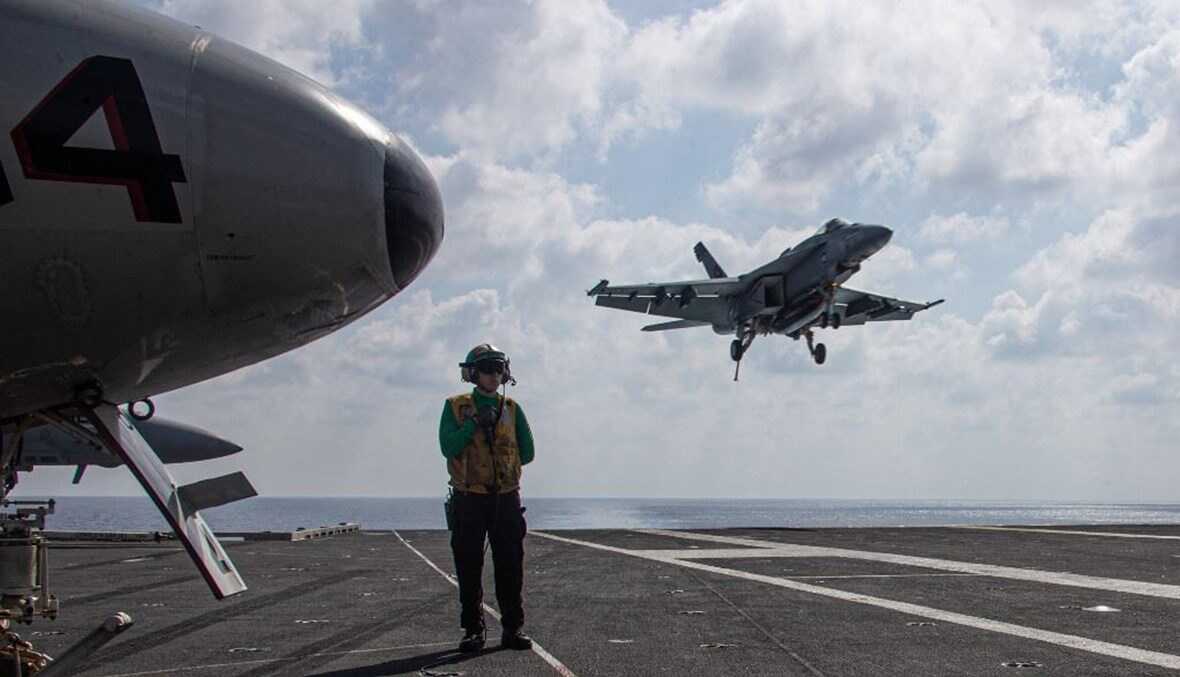
Israel is moving with comprehensive political and military cover from the United States, Britain, and Germany. It became clear from the first hours of the outbreak of the war that Israel's undeclared goals go beyond simply eliminating Hamas. On the other hand, the American administration has clearly demonstrated that it does not want the war on Gaza to turn into a regional war, especially the interference of Iran and its allies in what is known as the “Axis of Resistance,” and perhaps moving the aircraft carrier “Gerald Ford” to the eastern Mediterranean and strengthening it with a second aircraft carrier, “the Axis of Resistance.” USS Dwight Eisenhower,” as announced by the US Department of Defense, is intended to provide maximum deterrence signals to regional parties so that they do not interfere.


It seems that the American deterrence weapon is giving good results up to the moment, as Iran has been threatening Israel since the outbreak of the war. This was stated by Revolutionary Leader Ali Khamenei and the President of the Republic, Ebrahim Raisi, and it was confirmed by Foreign Minister Hossein Amir Abdollahian during a press conference in Beirut last Saturday, following his meeting with Hezbollah Secretary General Hassan Nasrallah, when he said, “Israel must stop its war crimes immediately.” Because after several hours it will be too late,” he added, adding that “Hezbollah has prepared many escalation scenarios that will cause an earthquake in Israel.” It does not matter that Al-Lahiyan was speaking from Beirut and threatening war with Israel from a country that is supposed to have sovereignty and is thousands of kilometers away from Iran, thus exposing Lebanon to what Israel threatened to return to the Stone Age. 

The Iranian minister met on the same day in Beirut with the United Nations Middle East envoy, Thor Wensland, and repeated Iran's threat to intervene.


These statements, messages, and threats have been around for nearly a full week today, during which the Israeli bombing witnessed greater violence, the humanitarian crisis escalated, the Baptist Hospital was bombed, and the issue of displacement began to take a serious course. In general, it can be said that Gaza is being completely annihilated, so where are the hours that Abdullahian talked about?


Anyone who follows the events knows that Washington and Tel Aviv are on opposite sides when it comes to viewing Iran. While Israel sees it as an existential threat, the United States sees it as a horse that can be tamed, even if only temporarily. Here we recall Israel's strong opposition to the Joint Comprehensive Plan of Action (JCPOA), which is known as the nuclear agreement that the US administration under Barack Obama signed with Iran on July 14, 2015, along with China, Russia, France, Britain, and Germany. Benjamin Netanyahu described the agreement at the time as a “historic mistake,” and many Israeli politicians and security personnel considered that this agreement would strengthen Iran’s position, especially in traditional military aspects such as ballistic missiles, in addition to the certainty that Tehran would use the revenues from lifting sanctions to tighten the cordon around Israel through... Its allies in Syria, Lebanon and Gaza. 

Some Israeli estimates even went further when they considered that the continuation of the civilian nuclear program in Iran would eventually enable Iran to possess nuclear weapons, even if this was achieved after 10 or 15 years. Therefore, Israel continued to target the US Congress to overthrow the nuclear agreement, which was achieved with the Donald Trump administration and which Joe Biden’s administration has continued to do to this day despite all the attempts made by the Europeans. Contrary to this, some senior Israeli Mossad officials (Amos Yadlin, Ephraim Halevy) were of the opinion that the nuclear agreement would enable Iran to delay Iran’s ability to possess nuclear weapons, something that would be achieved at the lowest cost, in reference to avoiding a war with Iran.


In general, the Iranian nuclear program crisis showed that Washington and Tel Aviv do not have identical agendas in dealing with the Iranian threat. This matter was repeated in the recent agreement between Washington and Tehran regarding the release of 5 American prisoners in exchange for Iran obtaining $6 billion of its funds frozen within the framework of American sanctions. 

Through this new step towards Iran, Washington demonstrated that it seeks to neutralize Tehran or at least push it to take balanced positions that do not seek escalation in the hotbeds of conflict in the region. The American vision appeared clearly from the first hours of Operation Al-Aqsa Flood. At a time when Israel was clearly and explicitly accusing Iran of its involvement in the planning and decision to attack, Washington was seeking with all its effort to remove Iran from the circle of accusation. US Secretary of Defense Lloyd Austin had stated that Washington had no evidence of Iran’s involvement in the sudden and large-scale attacks it launched. Hamas movement, saying: “In this particular case, we do not have any evidence of direct involvement in planning or carrying out this attack,” which is the same assessment that the US State Department concluded, although it left the door open to the possibility of Iranian involvement. We conclude this from what was stated by US State Department spokesman Matthew Miller, when he said in a press statement: “Our experience in these matters indicates that it is too early to draw any final conclusions in this regard.” He added: “We will look at additional intelligence in the coming days and weeks” to see “whether some in the Iranian regime have a clearer picture” of the planned operations or “contributed to aspects of the planning.”


In summary, it can be said that Washington is trying to push Iran and its tools in the region away from an open war against all possibilities in Gaza, whether through the carrot of the lucrative deal that pumped $6 billion into the coffers of a bankrupt regime suffering from a long siege, or through the stick. 

They are represented by the American aircraft carriers in the eastern Mediterranean, which will undoubtedly intervene directly if Iran intervenes in the war, whether through southern Lebanon or the Syrian Golan. On the other hand, and contrary to what many believe, Tel Aviv seems to be rushing Iranian intervention to resolve the only serious existential threat it will face in the region in the coming decades. Will Israel succeed in dragging Iran into a regional war that could spell the end of the Ayatollahs’ regime?


Source: Annahar Al araby


PALESTINE

Fri 20 Oct 2023 8:07 am - Jerusalem Time

Colombian President Petro: Colombia to open embassy in Palestine

Colombian President Gustavo Petro announced late Thursday that his country will open an embassy in the central city of Ramallah in Palestine.

Petro issued the statement after meeting with Israel’s Ambassador to Colombia, Gali Dagan, and Palestinian Ambassador Raouf Al-Maliki.

“I have expressed my position to achieve an international peace conference that opens the way for two independent and free states. I reiterated my solidarity with Israeli and Palestinian children, who must and have the right to live in peace," he said on X following the meeting.


“We will send a plane with humanitarian aid to the outskirts of Gaza waiting for a humanitarian corridor to open. Colombia will open its embassy in Ramallah, Palestine,” he added.


In a statement posted on X on Oct. 9, Petro criticized the way Israel responded to the attack launched two days earlier by the Palestinian group Hamas.

He said “the only way for Palestinian children to sleep in peace is for Israeli children to sleep in peace” and vice versa.


“That will never be achieved by war, only by a peace agreement that respects international law and the right of both peoples to coexist freely,” he said.

He also shared images of Palestinian children who had lost their lives as a result of the Israeli-Palestinian conflict.

The conflict in Gaza, which has been under Israeli bombardment and a blockade since Oct. 7, began when Hamas initiated Operation Al-Aqsa Flood, a multi-pronged surprise attack that included a barrage of rocket launches and infiltrations into Israel by land, sea and air.


The Israeli military then launched Operation Swords of Iron against Hamas targets in the Gaza Strip.

Gaza is experiencing a dire humanitarian crisis with no electricity, while water, food, fuel and medical supplies are running out.

UN Secretary-General Antonio Guterres has called for an immediate humanitarian cease-fire to ease the “epic human suffering.”

At least 3,785 Palestinians have been killed in Israeli attacks on Gaza, while more than 1,400 Israelis have been killed in the conflict.


Source: Anadolu

ARAB AND WORLD

Fri 20 Oct 2023 7:53 am - Jerusalem Time

1 journalist killed, another injured by Israeli machine guns in southern Lebanon

The Lebanese Army announced in a statement that one person was killed and another injured in an Israeli targeting of a media team in southern Lebanon.


The army said, “The media team consisted of seven people and was carrying out media coverage near the Al-Abbad site on the Israeli side in the outskirts of the town of Hula when members of the Israeli forces targeted them with machine guns.”


He added: “An army patrol, in coordination with the United Nations Interim Force in Lebanon, worked to transfer the martyr and injured person to a hospital and transfer the rest of the team members to a safe place.”

PALESTINE

Fri 20 Oct 2023 7:49 am - Jerusalem Time

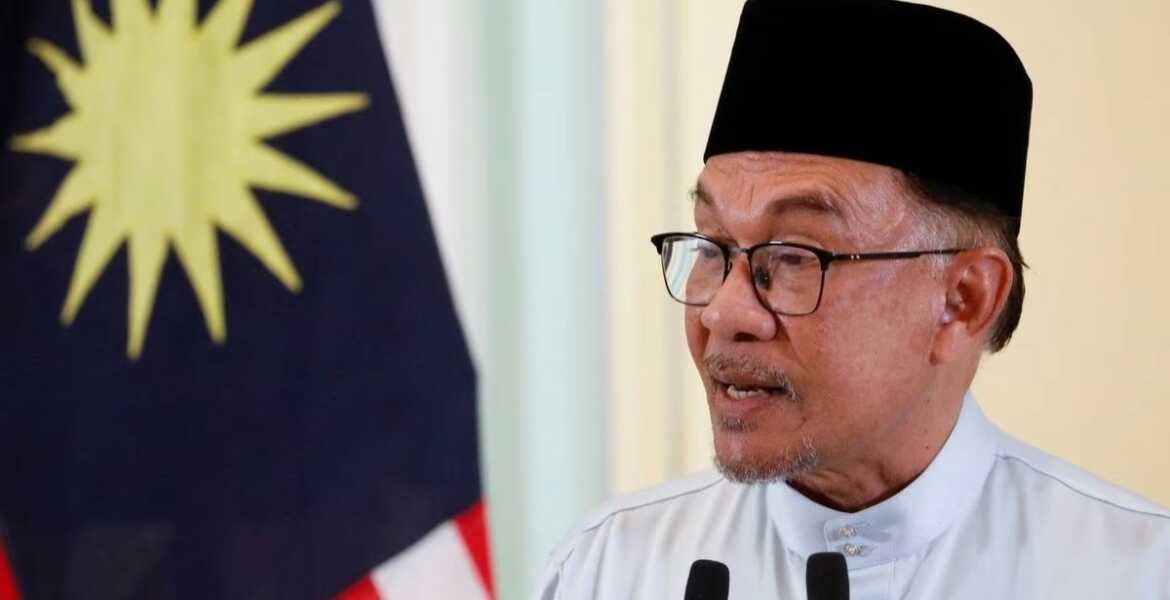
During a call with Abbas, Prime Minister of Malaysia confirms his country’s support of Palestine

Malaysian Prime Minister Anwar Ibrahim affirmed his position of support for the Palestinian people and his solidarity with them in the ordeal they are going through. He stressed the importance of stopping the escalation, expressing his readiness to provide assistance to the Palestinian people, during a phone call with Palestinian President Mahmoud Abbas.


The Palestinian News Agency "Wafa" said that the President of the State of Palestine, Mahmoud Abbas, received a phone call on Thursday, October 19, 2023, from Malaysian Prime Minister Anwar Ibrahim.


The agency also added that "Mahmoud Abbas briefed Anwar Ibrahim on the latest developments in the Israeli occupation's aggression against our people in the Gaza Strip." He affirmed his position calling for "an immediate halt to the Israeli aggression against our people, and his complete rejection of the displacement of citizens, because that would be tantamount to a second Nakba."


While the Palestinian President stressed the need to open safe corridors for the entry of relief, medical and food supplies and to provide water and electricity. The President stressed that the policies, programs and decisions of the Palestine Liberation Organization are "the sole legitimate representative of our Palestinian people."


In previous statements, Anwar Ibrahim said that “deploying peacekeeping forces in Palestine will require consensus among neighboring countries.” This came in a speech Ibrahim delivered before the Malaysian Parliament, the contents of which were published by the government agency Bernama News.


In response to internal criticism about only sending aid to Palestine, Ibrahim said: “Some parties in the country claim that we refuse to send our military forces to Gaza.” He explained: "Our military leaders also asked me to clarify the matter."


He also stressed: “Without consensus among the countries neighboring Gaza, aircraft carrying Malaysian peacekeeping forces or humanitarian aid will not be allowed to land there.”


He continued, "This is not an easy decision, so I hope there is a better understanding of the current situation." Anwar Ibrahim called on the Malaysian people to pray for the suffering Palestinians.


PALESTINE

Fri 20 Oct 2023 7:26 am - Jerusalem Time

Mcdonalds-franchises-in-middle-east-at-odds-over-israel-hamas-war

McDonald’s Israel’s announcement of free meals for Israeli military sparks backlash from franchises in Arab countries.


Pulitzer Prize-winning commentator Thomas Friedman in the late 1990s famously claimed that two countries with McDonald’s outlets had never gone to war.

But as fighting rages between Israel and Hamas, the iconic American fast food chain is at war with itself.


McDonald’s franchises in the Middle East have weighed in on opposing sides of the conflict, with branches in Muslim countries disavowing a decision by McDonald’s Israel to provide free meals to the Israeli military.

Franchises in Saudi Arabia, Oman, Kuwait, the United Arab Emirates, Jordan, Egypt, Bahrain and Turkey have issued statements distancing themselves from their Israeli counterpart and collectively pledging more than $3m to support Palestinians in Gaza, which is being bombarded by Israel in response to Hamas’s October 7 attack on the country.

“Let us all combine our efforts and support the community in Gaza with everything we can,” McDonald’s Oman, which has pledged $100,000 towards humanitarian relief efforts in Gaza, posted on X on Sunday.

“We ask God Almighty to protect our beloved country and all Arab and Muslim countries from all the evil and hate.”


Since announcing its support for the Israeli army, McDonald’s Israel has changed its Instagram account to “private” following a backlash from consumers in Arab and Muslim countries.

While McDonald’s ranks among the most iconic American brands, most of its restaurants worldwide are locally owned and operated.


McDonald’s headquarters in Chicago, the United States did not respond to Al Jazeera’s request for comment.

The case of McDonald’s highlights the tricky geopolitical dynamics that globe-spanning brands must navigate in an era where businesses are often expected to weigh in on hot-button social and political issues.

The controversy has also revived discussion of the so-called Golden Arches theory of conflict prevention, popularized by Friedman in his 1999 book The Lexus and The Olive Tree.


The theory – that countries with enough wealth and stability to support a major chain like McDonald’s do not go to war with each other – has been widely discredited following conflicts among countries with the brand, including the 1998-99 Kosovo War and Russia’s invasion of Ukraine. McDonald’s does not have any outlets in Gaza or the occupied West Bank but Israel has clashed with Hezbollah fighters in neighboring Lebanon, which does have the American chain. “We’re in a post-‘Golden Arches Theory of Conflict Prevention’ world now for sure,” Paul Musgrave, an associate professor of political science at the University of Massachusetts Amherst, told Al Jazeera.“Even though Russia and Ukraine both had McDonald’s in 2022, they still went to war. Now, conflicts within the McDonald’s empire mirror the real stresses and passions of the region. ”McDonald’s is not the first global brand to be drawn into controversy due to its stance on the Israel-Palestine conflict. United Kingdom-based multinational Unilever came under fire from investors last year for failing to disclose that its ice cream brand subsidiary Ben and Jerry’s had decided to boycott Israeli-occupied territory in the West Bank and East Jerusalem in 2021.Spanish retailer Zara was boycotted by some shoppers last year after the chairman of its Israeli franchise, Canadian-Israeli businessman Joey Schwebel, hosted a campaign event for far-right Israeli minister Itamar Ben-Gvir at his home. Major brands have also found themselves drawn into controversies about the human rights records of other countries such as China. In 2021, Japanese retailer MUJI faced criticism after publicly endorsing cotton grown in China’s Xinjiang region, where human rights activists say ethnic minority Muslims are exploited for forced labour. Musgrave said that “the dream that capitalism and trade would quiet nationalism and other forms of fervour has been revealed to have some holes”. “Having different franchises of McDonald’s end up on different [rhetorical] sides is another example of how politics permeates everything.”


SOURCE: AL JAZEERA


PALESTINE

Fri 20 Oct 2023 6:50 am - Jerusalem Time

Biden says US ‘holds world together’ as he condemns Putin and Hamas

President addresses US in rare Oval Office speech and explains why country should back Ukraine and Israel.


United States President Joe Biden has said he will ask Congress for more money to support Israel and Ukraine, asserting in an impassioned speech that both nations were fighting enemies of democracy.

Speaking to  Americans from the Oval Office, Biden sought to make a link between the actions of Hamas in Israel and those of Russian president Vladimir Putin who sent his troops into Ukraine for a full-scale invasion in February 2022.

Biden said stopping such aggression was crucial not only for the security of the US but also for the wider world.

“Hamas and Putin represent different threats but they share this in common; they both want to annihilate a neighboring democracy,” he said.


He said if the US walked away and aggressors succeeded, others might be “emboldened to try the same” spreading the risk of conflict to other parts of the world.


“American leadership is what holds the world together,” the president said during the 10-minute speech, only the second he has made from the Oval Office during his administration. “American alliances are what keep us, America, safe. American values are what make us a partner that other nations want to work with.”


Biden was speaking hours after returning from a whirlwind trip to Tel Aviv, where he reiterated US support for Israel even amid its total blockade of Gaza and relentless bombardment of the Palestinian enclave of 2.3 million people.


The visit had been meant to include a meeting with Arab leaders but the talks were cancelled after Gaza’s Al-Ahli Arab Hospital was hit hours before, killing some 500 people.


Amid calls for a ceasefire, Biden was able to secure a commitment from Israel and Egypt to open the Rafah crossing for desperately needed humanitarian aid.


Biden said he would be lodging an urgent request to Congress to support Israel and Ukraine on Friday.  He did not put a value to the security package, but reports have suggested it could be as much as $100bn.


“It’s a smart investment that will pay dividends for American security for generations,” the president stressed.


Biden’s address comes amid paralysis in Congress where Republicans, who control the lower house, have struggled to appoint a new House of Representatives Speaker after removing Kevin McCarthy earlier this month.


He said politicians needed to rise above “petty, partisan, angry politics” and meet their responsibilities.


A small group of ultra-conservative Republicans have become increasingly vocal about their opposition to continued funding for Ukraine, but analysts said the US public remained broadly supportive of the initiative and Biden’s speech would probably win over more people.


“This dysfunction in the House is viewed very unfavorably by the US people and I suspect that the Republicans will be forced, if only for concern about their electoral chances next year, to resolve this within the next two weeks,” John Herbst, senior director at the Atlantic Council and a former diplomat, told Al Jazeera.


‘Tragic loss’

The conflict in Gaza erupted on October 7, when Hamas launched a surprise attack against Israel, killing more than 1,400 people and taking dozens captive.


At least 3,785 Palestinians have been killed in the bombing campaign.


Biden accused Hamas of unleashing “pure, unadulterated evil” on the world, and stressed that there was “‘no higher priority” for him as president than bringing home the US citizens being held by the armed group.


While making clear his support for Israel, Biden said he was “heartbroken” by the “tragic loss” of Palestinian lives and that he had spoken with Palestinian Authority President Mahmoud Abbas to reiterate that the US remains “committed to the Palestinian people’s right to dignity and right to self-determination”.


He stressed the urgent need for humanitarian assistance to the enclave and noted the agreement secured to get food, water and medicine into Gaza.


“We cannot give up on peace,” he said. “We cannot give up on the two-state solution. Israel and the Palestinians equally deserve to live in safety, dignity and peace.”


Biden’s speech at the Oval Office came after he again reassured Ukrainian President Volodymyr Zelenskyy of US support for Kyiv in its bid to push Russian forces from Ukrainian territory.


He noted that the US was an “essential” part of a group of about 50 countries that have backed Ukraine since the start of Russia’s full-scale invasion.


Will make sure Ukraine has the “weapons they need to defend themselves”, he said, stressing to his domestic audience that there were no plans to send US troops to Eastern Europe.


“When Putin invaded Ukraine he thought he could take Kyiv and the whole of Ukraine in a matter of days, but Putin has failed, and he will continue to fail,” Biden said. “Kyiv still stands because of the bravery of the Ukrainian people. Ukraine has regained more than 50 percent of the territory Russian troops once occupied.”


SOURCE: AL JAZEERA

PALESTINE

Fri 20 Oct 2023 6:38 am - Jerusalem Time

Israel-Palestine war: 76 percent of Britons want an immediate ceasefire

Two polls this week show Great Britain's public diverging from their government's stance on the ongoing war in Israel-Palestine


A fresh poll shows that 76 percent of adults in Great Britain think there should be a ceasefire in the Israel-Palestine war.

The United Kingdom, led by Prime Minister Rishi Sunak, has given the Israeli government its full backing for the bombardment of Gaza and has yet to call on any party to implement a ceasefire. 

When asked, "From what you've read and heard, do you think there should or should not be an immediate ceasefire in Israel and Palestine?", 58 percent answered that "there definitely should" with 18 percent saying that "there probably should".


Only eight percent of respondents said there shouldn't be a ceasefire with 16 percent saying they didn't know.

The poll was conducted on 19 October by UK-based YouGov polling company and surveyed 2,685 adults.


Another YouGov poll from earlier this week asked Britons which side they supported in the Israel-Palestine conflict and found a slim margin among 2,574 adults with 21 percent saying they backed the "Israeli side" while 17 percent backed the "Palestinian side".


The highest support for Palestinians was in Scotland at 30 percent, with the highest support for Israelis coming from northern England. But most respondents chose not to explicitly choose a side as their government had, with 29 percent saying they support "both equally" and 39 percent saying they "don't know".


On 7 October, Palestinian fighters attacked southern Israel near the Gaza Strip. Around 1,400 Israelis were killed. Nine British nationals have been confirmed as killed during the attacks.

Relentless Israeli air strikes, meanwhile, have killed more than 3,800 Palestinians, including more than 1,500 children and 1,000 women. Around one million Palestinians have also been displaced and forced to take shelter in hospitals and schools as Israel tightens its siege of the enclave.


When the poll regarding a ceasefire was broken down by gender, a higher number of women, 81 percent, backed an immediate ceasefire compared with men at 71 percent. 

Around 88 percent of those who affiliate themselves with the centre-left Labour Party want a ceasefire as do 73 percent of those who affiliate with the right-wing Conservative Party.

According to the poll, the older the respondent, the more likely they were to want an immediate ceasefire. 


Divergence

The polls represent a fairly large divergence between the British public, its government and even other political parties not in government.

Sunak is currently in Saudi Arabia after making a visit to Israel where he said Britain would "stand with you in solidarity, we will stand with your people and we also want you to win".


There is also growing pressure on the government's unequivocal support in the UK parliament, where on Wednesday 40 members of parliament urged a ceasefire in the war and backed access to medicines, fuel, food and water in Gaza. The Israeli government has laid a total siege on Gaza, which had already been under a blockade for 16 years, not allowing in food, water, electricity, fuel, medicine or supplies.


On Thursday, Sunak welcomed the decision to allow routes into Gaza for aid.   

Tens of thousands have also come out on the streets in London to protest the bombardment of Gaza and show solidarity with Palestinians. Protests have also taken place in Manchester, Liverpool, Edinburgh, Glasgow and Aberdeen.

The UK government has faced sustained criticism from anti-war groups for its support for Israel, a position that has also faced backlash from some former British diplomats.


"I find the British government's knee-jerk endorsement of everything that Israel does obscene and a departure from previous stances in which we have sought some fairness in these dreadful situations," Sir Richard Dalton, a former UK ambassador to Iran and Libya, told Times Radio.


The opposition Labour party in the UK has also not been immune to the backlash. On 17 October, a number of Labour party councillors resigned in protest at comments made by party leader Keir Starmer, for what he described as Israel's "right" to cut power and water supplies to Palestinians living in Gaza.


Oxford City Councillor Shaista Aziz announced her resignation on X (formerly Twitter) on 13 October. A former international aid worker, Aziz has worked in the occupied West Bank, Israel and refugee camps in Gaza.

"The Labour [arty leader's stance on not being able to condemn collective punishment of Palestinians in Gaza was the final red line for me," Aziz told Middle East Eye for a previous article.


A UK-based legal centre has also announced its intention to seek to prosecute British government officials over alleged complicity in Israeli war crimes in Gaza.


The International Centre of Justice for Palestinians issued a notice to Sunak over the UK providing "military, economic and political support to Israel, which has aided Israel's perpetration of war crimes". 

It said that Israel's efforts at a forcible transfer of more than one million people in northern Gaza to southern parts of the enclave in less than 24 hours may amount to both "a war crime and a crime against humanity".


Source: Middle East Eye

OPINIONS

Fri 20 Oct 2023 6:18 am - Jerusalem Time

Israel-Palestine war: The wheels are coming off the cart of US Middle East policy

David Hearst

David Hearst

Opinion Writer

Washington has made a series of key blunders since the conflict erupted, taking the region to the brink of a broader war.


Joe Biden is not having a good war. Three days after the Hamas attack, the US president gave a speech that had even Donald Trump’s former ambassador to Israel, settler-lover David Friedman, eating out of his hand.

Biden falsely endorsed the claim that Hamas had beheaded babies, in remarks that the White House had to row back later; he promised US support for giving Israel everything it needed to “respond to this attack”; and he falsely asserted that civilians in Gaza were being used as human shields.


In those three days, the leadership of Israel made it crystal clear that the gloves were off, and that the state would not be bound in its response to the Hamas attack by the rules of war.

Events played out accordingly, as Israel dropped the equivalent explosive power of a quarter of a nuclear bomb on Gaza in 10 days.


As Biden was about to take off for his latest Middle East trip, Israeli forces struck a hospital in Gaza, which they had attacked a few days before, amid a warning to evacuate. Around two dozen other hospitals have received such threats.


This time, close to 500 people were killed. The carnage at al-Ahli, one of Gaza’s oldest hospitals, so delighted the Israeli national security minister, Itamar Ben Gvir, that he prematurely claimed responsibility: “As long as Hamas does not release the hostages in its hands - the only thing that needs to enter Gaza are hundreds of tonnes of explosives from the Air Force, not an ounce of humanitarian aid.”


So did Hananya Naftali, who worked for Israeli Prime Minister Benjamin Netanyahu’s digital team, posting on X: “BREAKING: Israeli Air Force struck a Hamas terrorist base inside a hospital in Gaza.” He quickly deleted the post.

Later in the day, a spokesperson for the Israeli army said that an “enemy rocket” en route to Israel misfired and hit the hospital. Such rockets lack the explosive power to kill 500 people. The army initially appended footage showing an Islamic Jihad rocket, but after it was discovered that this video was recorded 40 minutes after the bombing took place, the army removed the footage.


Someone appears to be working overtime at their laptop to kick over the traces of the hospital attack. There is even audio that purports to reveal Hamas operatives discussing the failed missile launch - except according to Channel 4, it’s fake, using the wrong tone, syntax, and accent.


Bright green light

By the time Biden landed in Israel on Wednesday, much of the regional tour he had planned had been cancelled. Such was the rage in the occupied West Bank, Jordan, Iraq, Lebanon, and Egypt, that no Arab leader could agree to see him - for their own safety.

With hundreds of people gathering outside the US and Israeli embassies in Jordan, demanding the expulsion of the Israeli ambassador and the revocation of the peace treaty with Israel, the visit to Amman was off. 


But shortly after arriving in Israel, Biden only dug himself further into the deep hole he was already in, telling Netanyahu of the hospital attack: “Based on what I’ve seen, it appears as though it was done by the other team, not you.”

Behind the scenes, the wheels really do appear to be coming off the cart that carries US Middle East policy.

To be clear, the actions that the US took behind the scenes in the immediate aftermath of the Hamas attack paved the way for the crisis the region is now in.


The US not only gave the brightest of green lights to a bombing campaign aimed at pushing more than one million people in the northern half of the Gaza Strip down towards the Egyptian border. It not only gave Israel JDAM bombs and several thousand 155mm artillery rounds, according to defense officials.


It also, according to multiple credible reports, tried initially to persuade Egypt to take one million refugees from Gaza. Al Akhbar first reported that the US tried to coordinate with the UN and “international organizations receiving EU funding” to persuade Cairo to open Rafah. A bribe was of course involved.


Sources spoke of the US willingness to provide significant funding to Egypt, exceeding $20bn, if it agreed to the operation. They pointed to a request from Cairo to “facilitate the transfer of large teams of organizations working in the relief field to the border with Rafah without entering Gaza”.

The Egyptian website Mada Masr also reported that Egyptian officials had been in talks about the displacement of a significant part of Gaza’s population. Such was the sensitivity of this claim that Egyptian authorities came down on the website like a tonne of bricks: The editors were summoned and an investigation was started by the Supreme Council for Media Regulation over publishing “false news”. 

Undoubtedly, these talks took place before Egyptian President Abdel Fattah el-Sisi realized how explosive they would be to him in a re-election year. 


Israel's 9/11

The US made three key blunders in its response to the Hamas attack. It encouraged Israel to attack Gaza without restraint; it initially entertained the scenario of a mass exodus of Palestinians to Egypt; and it brought the Middle East to the brink of a regional war. 

Right from the start, the narrative used by both Israel and the US was that the Hamas attack was Israel’s 9/11 moment; that Hamas was no different than the Islamic State; and that Israel had the moral duty not only to reply to Hamas’s attack, but to eradicate the whole movement.

This allowed Israel to think it could use air strikes on Gaza not only to wipe out Hamas but also to make structural changes to the balance of power in the Middle East, which would mean dealing with Hezbollah and eventually Iran.


Netanyahu and opposition leader Benny Gantz have both alluded to a plan that would, in Gantz’s words, “change the security and strategic reality in the region”. It is not clear to me if the US would have allowed Israel to go ahead with a plan wider than Hamas and Gaza, but the plan was clearly there.

Michael Milshtein, head of the Palestinian Studies Forum at Tel Aviv University’s Moshe Dayan Center, wrote: “This war is much more than a conflict between Israel and Hamas. In the West, an understanding is developing that the Iron Swords War is a defining moment and a one-time opportunity to reshape the Middle Eastern architecture - which is expected to also affect the relations of power in the entire world.”


For a few days, it looked as if the forced expulsion of half of Gaza, under the guise of setting up humanitarian corridors, would work. The northern border with Lebanon remained quiet. Hezbollah did not initially react. The western media accepted the plan to conquer Hamas and reoccupy Gaza.

The turning point came when US Secretary of State Antony Blinken apparently realized that another Nakba on the scale of what happened in 1948 was a red line. 


Jordan’s deputy prime minister, Ayman Safadi, said all Arab countries pledged collective action against any attempt to expel Palestinians from their homeland after a meeting of foreign ministers. The same message was conveyed by King Abdullah II of Jordan on his recent European tour.


Such was the outcry from Jordan, Egypt, Turkey, and Saudi Arabia that Blinken had to concede it was a “non-starter”. Biden has also said that the re-occupation of Gaza would be a “big mistake”. British Prime Minister Rishi Sunak has said that everyone should avoid escalation. 


These were accompanied by other clear warnings. Iranian Foreign Minister Hossein Amir-Abdollahian warned that the axis of resistance would open “multiple fronts” against Israel if the attacks on Gaza continued, telling Iranian state television: “Time is running out very fast. If the war crimes against the Palestinians are not immediately stopped, other multiple fronts will open and this is inevitable.”


If the US still did not get the message, all it had to do was look out the window at the record mass demonstrations across the region.


Regional war

As Biden arrived in Israel on Wednesday, the region was boiling. Quite apart from moral issues, the US military is clearly unprepared for such a venture, having spent the last several years drawing down its military assets.

According to the Wall Street Journal, it withdrew more than eight Patriot missile batteries last year from Iraq, Kuwait, Jordan, and Saudi Arabia, as well as a Terminal High Altitude Area Defense (Thaad) system from Saudi Arabia. It emptied its stockpiles of 155mm rounds in Israel to give to Ukraine. It moved its naval assets to the Asia Pacific. 


It has had to reverse most of this in short order. One carrier group is in the Mediterranean, and another is on the way. The last time the US had two carrier groups in the Middle East was in 2020. Along with ships, it has had to move A-10 attack aircraft and F-15 and F-16 fighters back to the Gulf. 


There is an argument circulating in Washington that the nature, speed and extent of the Hamas attack changed the US-based Middle East system.


All this is supposed to deter Iran. It won’t. I don’t often refer to the analysis of New York Times columnist Thomas Friedman on Israel, but on this occasion, I will break the habit of a lifetime.


Friedman wrote: “If Israel goes into Gaza now, it will blow up the Abraham Accords, further destabilize two of America’s most important allies (Egypt and Jordan), and make normalization with Saudi Arabia impossible - huge strategic setbacks. It will also enable Hamas to really fire up the West Bank and get a shepherd’s war going there between Jewish settlers and Palestinians. Altogether, it will play directly into Iran’s strategy of sucking Israel into imperial overstretch and in that way weakening the Jewish democracy from within.”


Hamas does not need to fire up the occupied West Bank, as there are huge demonstrations in all of its major cities calling for President Mahmoud Abbas to go, after Palestinian Authority (PA) forces used live fire on demonstrators. But on the strategic point, I agree with Friedman, although it pains me to say so.


He is also right to say that a ground invasion of 360,000 aggrieved Israeli soldiers is a recipe for even worse, and more wide-scale, massacres than we have seen up until now.

Losing support

There is an argument circulating in Washington that the nature, speed, and extent of the Hamas attack changed the US-based Middle East system. James Jeffrey, a former US ambassador in the region, told Middle East Eye: “Hamas’ ability to overcome an entire Israeli military defense line puts this war at the level of Yom Kippur (the 1973 Middle East war). No recent war has threatened the US-based Middle East system so much as this, and that is how the administration views it.”


But this analysis starts the clock at the attack itself, not at all the warnings that went before it - the collapse of the PA, the Israeli encroachments on Al-Aqsa Mosque, the impossibility of negotiations, the attempts to make a deal with Saudi Arabia over the heads of the Palestinians, and the impossibility of all Palestinians being able to break out of their collective cages.


Could it also be that the “US-based Middle East system”, the foundation of which is blind support for Israel, is broken? The resignation letter of Josh Paul, a senior official at the US State Department, who quit over his administration’s stance on the Gaza War makes for interesting reading.


Paul called the Hamas attack the “monstrosity of monstrosities” but continued: “This Administration’s response - and much of Congress’ as well - is an impulsive reaction built on confirmation bias, political convenience, intellectual bankruptcy, and bureaucratic inertia. Decades of the same approach have shown that security for peace leads to neither security nor peace, The fact is that blind support for one side is destructive in the long term to the interests of the people on both sides.”


Biden might finally have gotten the message. But having released the brakes on Israel’s collective rage 12 days ago, he is going to have a tough job trying to apply them now.


I said earlier that the wheels have come off the cart - and it really is a rickety, horse-drawn cart. What these past 12 days have demonstrated more than anything else, is the inability of the US to be a world leader. It lacks the requisite analytical skills, regional knowledge, and brainpower. It shoots from the hip and thinks about the consequences later. It is led into wars for which it is patently unprepared.


Blinded by dogma, ever keen to divide the world into Manichean opposites - democracy versus autocracy, the Judeo-Christian world versus Islam - America has lost touch with the values it claims to uphold. Is lying on Israel's behalf about the war crimes it is perpetrating, helping to defend it?

Washington is losing the support of its allies. No one looking at US actions can have much confidence that they have been thought through. The consequences of these 12 days, and the days to follow, will send tremors far and wide. 


Biden has every interest in shutting this episode down now, by stopping the ground assault and forcing the opening of Gaza to basic humanitarian aid. 


Only then could negotiations with Hamas take place over a prisoner exchange. If he does not achieve these basic goals, he too will find out how much damage an unfettered Israel can inflict on itself, the region, the US, and indeed the world. 


Source: Middle East Eye

PALESTINE

Fri 20 Oct 2023 6:08 am - Jerusalem Time

Drones target American base in Iraq, and missile interception over the Red Sea. Pentagon: They may have been destined for Israel.

The Pentagon confirmed, on Thursday, October 19, 2023, that an American warship shot down 3 missiles and drones in the northern Red Sea, while drones and missiles targeted the Ain al-Asad air base, which hosts American and international forces in Iraq.


The Pentagon said it could not be said specifically whether the missiles were targeting him, but they may have been destined for targets in Israel.


Earlier Thursday, American officials said that a US Navy warship sailing near Yemen intercepted many missiles, indicating that there were no casualties, while it was possible to shoot down a number of missiles, including drones, near the destroyer "Carney." .


Meanwhile, the American website Axios quoted an Israeli official as saying that Tel Aviv has indications that the missiles launched from Yemen were directed towards Israel. Washington is on high alert as regional tension escalates during the war between Israel and Hamas.


Targeting the "Ain al-Assad" base

In a related context, two security sources indicated to Reuters that drones and missiles targeted, on Thursday evening, the Ain al-Asad air base, which hosts American and international forces in Iraq.

The two sources added that several explosions were heard inside the base located in Anbar Governorate in western Iraq.


Meanwhile, the Syrian SANA agency said that sounds of explosions rang out in the vicinity of the Konico gas field in Deir ez-Zor, where American forces are stationed.


On Wednesday, American forces in Iraq were subjected to two separate drone attacks, one of which caused minor injuries to a small number of soldiers, although the forces were able to intercept an armed drone.


The United States sent a large naval force to the Middle East last week, including two aircraft carriers, support ships, and about 2,000 Marines.


While the White House says there are "no plans or intentions" to use them, this means US military assets will be there to provide support to protect US national security interests if necessary.


The United States has 2,500 soldiers in Iraq and another 900 soldiers in neighboring Syria, on a mission to provide advice and assistance to local forces in the fight against ISIS, which in 2014 took control of large areas of territory in the two countries.

PALESTINE

Fri 20 Oct 2023 5:48 am - Jerusalem Time

British Channel 4: Most likely Israel involved in the Baptist Hospital massacre.(video)

A report by the British Channel 4 showed the falsity of Israeli claims accusing the resistance of responsibility for the massacre at Al-Ahly Baptist Hospital in Gaza, which claimed the lives of more than 500 martyrs and hundreds of wounded, Tuesday, October 17, 2023.


In its report, Channel 4 suggests that the Israeli attack was carried out by a missile that exploded in the air. This is because there is evidence confirming that there are no huge craters usually caused by missiles, and the minor damage to the surrounding buildings also suggests this.


The channel also indicated that an examination of television footage and missile launch sites confirms that the resistance missile launch site conflicts with the hospital site.


The channel also indicated that the occupying state had gained authority in denying its crimes in the beginning, and cited this as evidence of what happened with the martyr, journalist Sherine Abu Aqla.


Hamas refute

The Hamas movement had issued a memorandum to refute the Israeli occupation’s allegations regarding its disavowal of responsibility for the massacre of the National Arab Hospital “Al-Baptist” in Gaza City.


In its memorandum, the Hamas movement provided conclusive evidence that the occupation committed this crime, noting that the occupation, since the beginning of the aggression, did not distinguish between civilian and military targets. The bombing systematically targeted emergency services, ambulances, civil defense, schools, mosques, and churches. It also sent several warnings to several hospitals, warning to evacuate in the past few days.


Among the evidence provided by the Hamas movement, hospital directors in Gaza confirmed that the occupation had contacted them and demanded their immediate evacuation, under the pretext that the hospital was located within the “geographical scope of Israeli military operations.” The most prominent hospitals that received calls from the occupation were (Al-Awda, Kamal Adwan, the Indonesian, and Al-Quds, And the Baptist, and the Kuwaiti).


According to the statement, on October 14, at exactly eight-thirty in the evening, the occupation fired two shells towards the Baptist Hospital, then the occupation army called the hospital director, Dr. Maher Ayyad, asking him: “We warned you yesterday with two shells, so why did you not evacuate the hospital until now?” .


The hospital director also informed the bishop of the Evangelical Church in Britain about the occupation army's contact, who in turn contacted international organizations before sending the hospital a message reassuring them that they could remain in the hospital.


The statement also indicated that the military spokesman for the occupation army quickly published a statement on the X and Telegram platforms immediately after the massacre occurred, in which he said: “We had warned the evacuation of the Baptist Hospital and five other hospitals so that the Hamas organization would not take them as a refuge,” but he quickly deleted it.


The statement also confirmed that before and during the event, the resistance factions did not fire any missiles towards the occupation, the occupation sirens did not activate, and the Iron Dome anti-tank weapons did not launch.


While the statement confirmed that the occupation's reconnaissance aircraft are photographing and monitoring every inch of the Gaza Strip, so if the missiles were caused by resistance missiles, let it be published to the world with one picture proving that.


The statement also questioned the occupation's claim that the massacre was caused by "Islamic Jihad" missiles. How was the occupation able to identify and distinguish between the resistance missiles immediately after they were launched (as it claims)?


The statement also indicated that the resistance missiles are locally made missiles, and do not have the destructive power that kills hundreds in one strike.


The statement also said, “The occupation military system documents and records all its operations by day, hour, minute, and second. And in all previous times, its media system came out to announce or deny anything less than these massacres, so what made it wait more than 4 hours other than to spin scenarios?!”


Yesterday, Tuesday, the Baptist Hospital in Gaza was subjected to “an Israeli massacre that left 471 people dead, 28 of whom were in critical condition,” according to the Ministry of Health in Gaza.


The massacre sparked widespread global outrage and strong condemnations in several capitals, as it was considered a “war crime,” with accusations of the international community being in collusion with Israel, and calls for “the necessity of providing international protection for the Palestinian people.”


Since October 7, Israel has continued to launch intensive raids on Gaza, cutting off the supplies of water, electricity, food, and medicine to the Strip. This sparked local and international warnings of a double humanitarian catastrophe, in parallel with intense Israeli raids and arrests in cities and towns of the occupied West Bank.


In response to “daily Israeli attacks against the Palestinian people and their sanctities,” Hamas and other Palestinian factions in Gaza launched Operation “Al-Aqsa Flood” on October 7, at the beginning of which they stormed Israeli settlements and military sites surrounding the Gaza Strip.


Source: Arabic Post


PALESTINE

Fri 20 Oct 2023 5:44 am - Jerusalem Time

Israel targets a church in Gaza in which Palestinians took shelter from the bombing

A woman and a girl were martyred and dozens of civilians were injured, on the evening of Thursday, October 19, 2023, as a result of a “new massacre committed by the Israeli occupation forces” by targeting the Greek Orthodox Church in Gaza City, which was sheltering hundreds of people displaced from their homes as a result of the barbaric bombing that has continued since October 7. .


The official Palestinian News Agency, Wafa, said that a girl and a woman were killed, and dozens of citizens were injured, in the Israeli air strike on the Greek Orthodox Church of St. Pophilius in Gaza, where hundreds of displaced people took refuge.


Wafa pointed out that "the occupation aircraft bombed the Church of St. Pophilius in the Al-Zaytoun neighborhood in southern Gaza, which led to severe material damage to parts of the church building, and a building next to it was destroyed."


The agency quoted local sources as saying that the bombing led to the complete collapse of the building of the Council of Church Stewards, which housed a number of Palestinian families, both Christian and Muslim, who took refuge in the church in search of a “safe place.”


The agency also pointed out that "martyrs and wounded are still under the rubble, and rescue and ambulance crews are trying to reach them."


On Thursday evening, the Ministry of Interior in the Gaza Strip announced the killing and wounding of “large numbers” of civilians as a result of “a new massacre committed by Israeli forces” against hundreds of displaced people inside the church.


The ministry said, in a brief statement on Telegram: “A new massacre committed by the occupation against hundreds of displaced people inside the Greek Orthodox Church in Gaza City, and large numbers (without specifying a number) of martyrs and wounded.”

PALESTINE

Fri 20 Oct 2023 5:40 am - Jerusalem Time

“Axios”: America will send Ukraine’s share of artillery shells to Israel, requested by Israel

The US Department of Defense (the Pentagon) plans to send tens of thousands of 155 mm artillery shells to Israel, which were allocated to Ukraine from the US emergency stockpile, according to what the American website “Axios” reported on Thursday, October 19, 2023, citing three Israeli officials.


Officials explained that "the Pentagon plans to send tens of thousands of 155 mm artillery shells to Israel, which were allocated to Ukraine from the US emergency stockpile several months ago."


According to the American website, “The Israeli Ministry of Defense informed the Americans that it is in urgent need of artillery shells to prepare for the ground attack on Gaza, fearing a possible escalation by Hezbollah along the Israeli-Lebanese border.”


The website also reported that US officials "indicated that transferring missiles from Ukraine to Israel would not have an immediate impact on Ukraine's capability."


The Israeli Ministry of Defense recently received from the United States an initial batch of armored vehicles, replacing those it lost during the recent military escalation.


Before Iranian Foreign Minister Hossein Amir Abdollahian left the Saudi city of Jeddah, he confirmed that the region had become a powder keg that could explode at any moment.


The Russian Foreign Ministry also announced that Moscow and Beijing intend to closely coordinate efforts regarding the escalation of the Palestinian-Israeli conflict.


Since October 7, Israel has continued to launch intensive raids on Gaza, leaving thousands of civilians dead and wounded, and cutting off its supplies of water, electricity, food, and medicine. This sparked local and international warnings of a double humanitarian catastrophe, in parallel with intense Israeli raids and arrests in cities and towns of the occupied West Bank.


In response to “daily Israeli attacks against the Palestinian people and their sanctities,” Hamas and other Palestinian factions in Gaza launched Operation “Al-Aqsa Flood” on October 7, at the beginning of which they stormed Israeli settlements and military sites surrounding the Gaza Strip.

PALESTINE

Fri 20 Oct 2023 5:36 am - Jerusalem Time

Greek Orthodox Patriarchate of Jerusalem denounces the bombing of one of its buildings in Gaza

The Greek Orthodox Patriarchate of Jerusalem denounced the occupation's bombing of one of its church buildings in Gaza City, late on Thursday night, October 19, 2023. The Hamas movement also condemned the bombing and demanded a strong stance and condemnation from the international community of the occupation's crimes.


The Ministry of Interior in the Gaza Strip announced the death and injury of civilians as a result of a "new massacre" committed by Israeli forces against hundreds of displaced people inside the Greek Orthodox Church in Gaza City.


While the church said in a statement: “The Greek Orthodox Patriarchate of Jerusalem denounces, in the strongest terms, the Israeli bombing that targeted one of its church buildings in Gaza City.”


It added: "Targeting churches and their affiliated institutions, in addition to the shelters they provide to protect innocent citizens, especially children and women who lost their homes as a result of the Israeli bombing of residential areas during the past thirteen days, constitutes a war crime that cannot be ignored."


And continued: “Despite the clear exposure to the facilities and shelters of the Greek Orthodox Patriarchate of Jerusalem and other churches, the Baptist Hospital, schools and other social institutions, they, along with the rest of the churches, are determined to continue performing their religious and moral duty to provide assistance, support and shelter to people who need it, even amid continuous demands from the side.” "Israel's decision to evacuate civilians from these institutions, and the pressure exerted on the churches in this regard."


The Patriarchate affirmed that it will not abandon its religious and humanitarian duty derived from its Christian values to provide everything necessary in times of war and peace alike.

PALESTINE

Thu 19 Oct 2023 11:01 pm - Jerusalem Time

Israel-Gaza: Israeli military has 'green light' to move into Gaza, official says

The Israeli army announced Thursday that it is about to begin a ground operation in the Gaza Strip, while Prime Minister Benjamin Netanyahu and other officials expected a difficult and long battle with the Palestinian resistance.


The Israeli military spokesman said in a press conference in Tel Aviv that tens of thousands of soldiers are fully prepared to begin ground entry into Gaza.


The military spokesman added that the army has confirmed information about 203 Israelis detained in Gaza and about 100 missing persons.


He added that no aid has entered Gaza yet, and that the army will announce that it will allow it to enter the Strip when the political leadership takes a decision to do so.


For his part, Israeli Defense Minister Yoav Galant said, addressing his soldiers on the Gaza Strip borders, “You see Gaza now from afar, and soon you will see it from within. The order will be issued,” indicating that the Israeli ground attack is imminent.


Gallant added that the potential battle on land would be long and difficult.


Shortly after the Defense Minister's statement, Israeli Prime Minister Benjamin Netanyahu published a video clip in which he appeared with the forces near the border and promised them victory.

Netanyahu said during a press conference with British Prime Minister Rishi Sunak that the war in Gaza will be prolonged.

The Israeli Defense Minister addresses his soldiers gathered near the border with the Gaza Strip (Anatolia)


Green light

Meanwhile, the American ABC network quoted an Israeli official as saying that the Israeli army had received the green light from the Israeli government to move towards Gaza.

For his part, Commander of the Southern Brigade of the Israeli Army, Yaron Finkelman, said that his forces are waging a war against what he described as a “fierce enemy,” in reference to the Palestinian resistance.

Winkelmann added that the maneuver will now be transferred to enemy territory despite the difficult situation, and that his forces will win, as he put it.

The Israeli Broadcasting Corporation reported on Wednesday evening that the Israeli army was preparing to move ground into the Gaza Strip, after US President Joe Biden left Tel Aviv yesterday, Wednesday, at the end of a visit in which he renewed his country’s support for Israel.


In contrast to the Israeli statements, the Palestinian resistance confirmed that it was prepared for a long battle, and that it would turn the sands of Gaza into a graveyard for the Israeli occupation forces.


Despite repeated statements about the approaching ground operation, reports indicate that Israel is hesitant to enter the Gaza Strip for fear of suffering a setback after the blow it received when the Palestinian resistance launched Operation Al-Aqsa Flood on October 7.