ARAB AND WORLD

Mon 23 Oct 2023 5:05 pm - Jerusalem Time

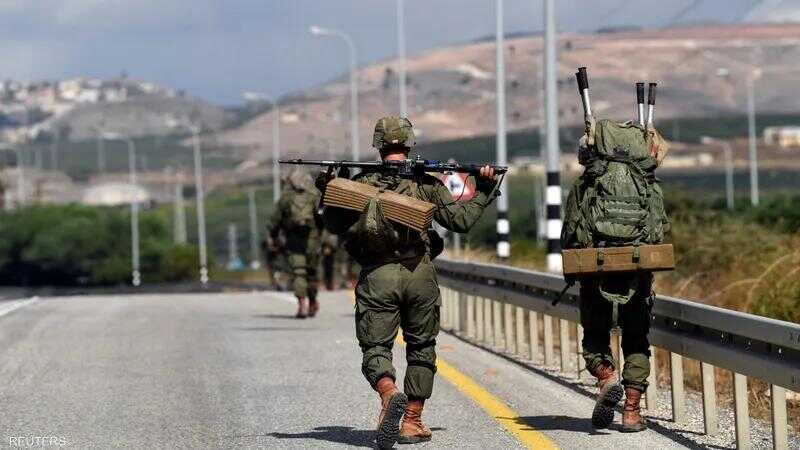
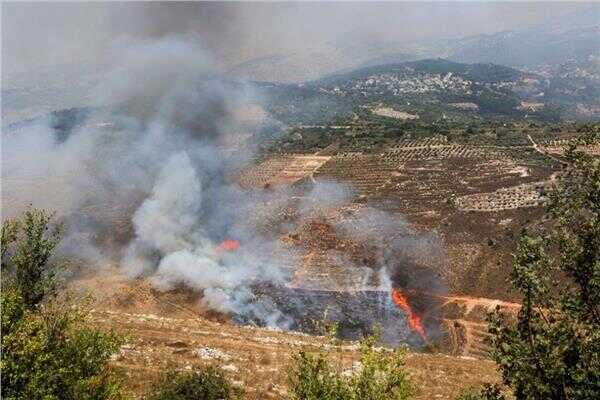
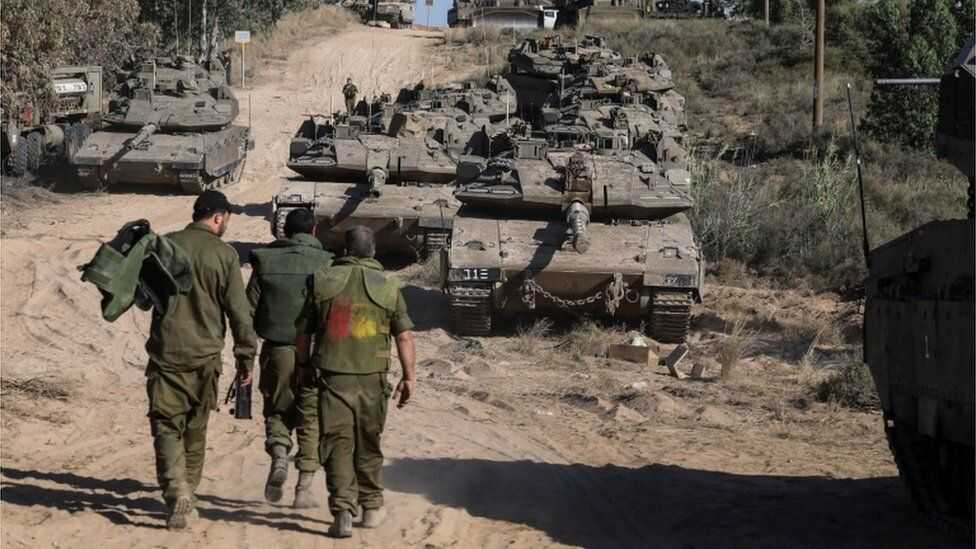
More than 19 thousand displaced people in Lebanon as a result of the escalation with Israel

More than 19,000 people were displaced in Lebanon as a result of the military escalation between Hezbollah and Israel in the border area coinciding with the ongoing war in the Gaza Strip, according to what the United Nations International Organization for Migration reported Monday.


The organization stated in a report that “a rise in incidents across the border between Israel and Lebanon” led to the displacement of 19,646 people “within the south and other areas of the country.”


The organization indicated an increase in the number of displaced people daily since the start of the escalation in Lebanon, the day after Hamas launched an unprecedented bloody attack on Israel on October 7, and Israel responded to it since then with violent bombing of the besieged Gaza Strip.


A regional spokesman for the organization, Muhammad Ali Abu al-Naga, told Agence France-Presse, “We expect an increase in numbers” if the situation continues or escalates further in the border region.


The majority of the displaced, according to Abu al-Naga, joined members of their families, while others took refuge in three schools that were turned into shelter centers in the southern city of Tyre.


An Agence France-Presse correspondent reported on three schools crowded with displaced people in Tyre, where the local authorities, which received more than four thousand displaced people, are working to open a new shelter center.


The Israeli army says it bombed two Hezbollah cells in Lebanon

For two weeks, the border area has witnessed an exchange of bombing, especially between Hezbollah and Israel, and Palestinian fighters have carried out several infiltration operations towards Israel.


The escalation resulted in the killing of 40 people on the Lebanese side, the majority of whom were Hezbollah fighters, in addition to 7 fighters from Palestinian factions and 4 civilians, including a photographer for the Reuters news agency.


At least 4 people were killed on the Israeli side, according to Agence France-Presse.


Abu Al-Naga warned, “In light of the economic deterioration and the significant increase in poverty rates...in Lebanon, displacement may increase pressure on the resources of host communities.”


He said, "The health sector is facing a severe shortage of resources, including medicines... in addition to doctors and nurses who left the country as a result of the economic crisis," adding, "In this context, the response to widespread displacement... may overwhelm an already fragile health system," according to Agence France-Presse.


Caretaker Prime Minister Najib Mikati announced on Sunday that his government is working to develop an “emergency plan... out of caution” in case the situation worsens, although he referred to international, Arab and local contacts to work to “prevent the spread of the war” in Gaza to Lebanon.

ARAB AND WORLD

Mon 23 Oct 2023 4:45 pm - Jerusalem Time

The British Broadcasting Corporation decides to label Hamas as “terrorist”

The American Fox News website said that the British Broadcasting Corporation (BBC) announced a change in its editorial policy after violent reactions, and will henceforth describe the Islamic Resistance Movement (Hamas) as a "terrorist organization."


The website said - in a report - that the BBC initially refused to use the term “banned terrorist organization” to describe Hamas in its coverage of Israel’s war on Gaza, as after the “Al-Aqsa Flood” operation it used the phrases “freedom fighters” or “ "Armed men" or "militants", not "terrorists".


The report added that as the situation developed into a war, viewers became increasingly frustrated with the BBC's refusal to use the term "terrorists," especially after reports of "brutal" practices against civilians for which they said Hamas was responsible.


Fox News stated that although the BBC originally defended its decision, the Board of Deputies of British Jews wrote - in a press release last Friday - that the director-general of the corporation, Tim Davie, has since agreed to the change.


The Commission confirmed - in a press statement - that it is committed to continuing the dialogue, and that it will no longer use the term Hamas fighters and, instead, will describe the movement as a “terrorist organization banned by the British government” and others, or simply in the name of Hamas.


Davy is also scheduled to meet with members of the British Parliament on Wednesday regarding the authority’s coverage of the war between Israel and Gaza.

PALESTINE

Mon 23 Oct 2023 4:34 pm - Jerusalem Time

Israel reveals the number of its dead and prisoners, and Hamas warns Israel against invading Gaza

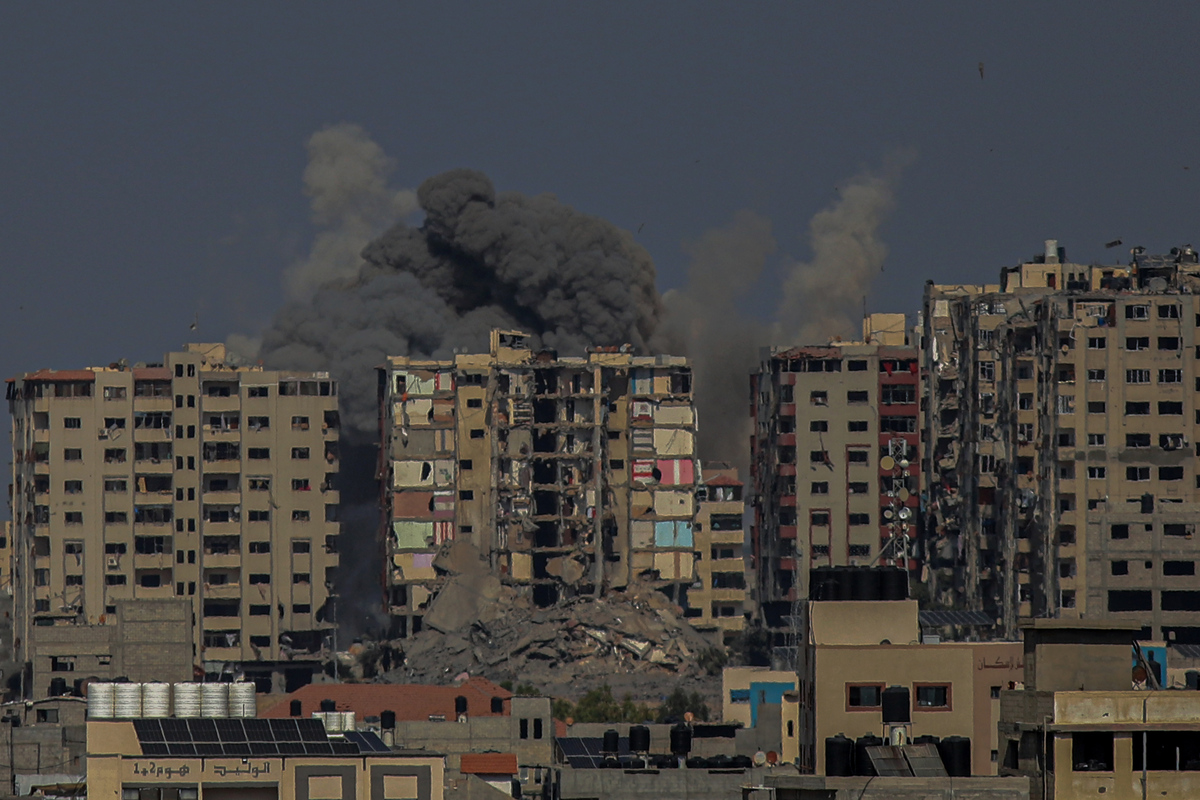
Meanwhile, the Israeli army announced on Monday that the number of Israeli prisoners in Gaza is 222, and that the number of soldiers killed since the start of the aggression against Gaza on October 7 has reached 308.


Army spokesman Daniel Hagari said in a press conference: “The families of 222 kidnapped people in the Gaza Strip have been informed. This number is not final,” he said.


He also announced that the number of Israeli soldiers killed since the start of the war had risen to 308.


He added: "We will continue to work in all possible ways to return the prisoners to their homes safely, whether military, intelligence or political."


Hagari continued: “This is the goal of this war, in addition to the goal of ending Hamas’ authority and Hamas’ capabilities, and the goals will be achieved,” he said.


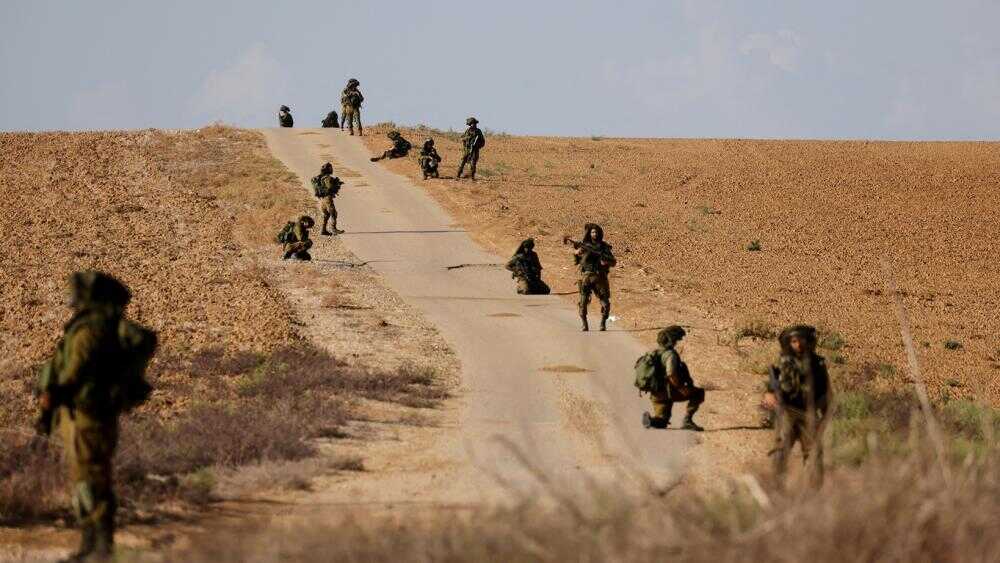
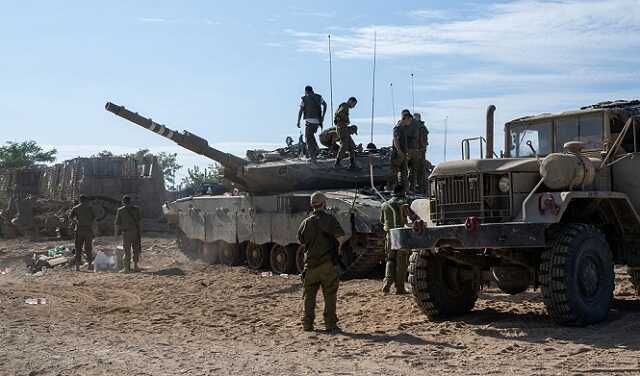
He stated, "During the night (Sunday-Monday), armored and infantry forces carried out an incursion with the aim of eliminating armed cells that are being prepared for the next stage, and also to determine information about missing persons and kidnapped persons."


On the other hand, he indicated that 14 humanitarian aid trucks were allowed to enter Gaza, but he stated that “it was confirmed that fuel would not enter the Strip.”


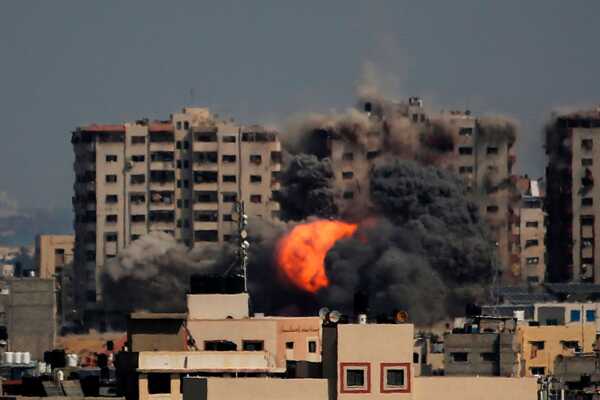
He added: "The military readiness of the Israeli army is present and strengthening. Even as we speak now, there is a plane attacking dozens of targets where there are militants, in preparation for the next phase of the war."


Earlier Monday, Israeli Army Radio said that Tel Aviv decided to “delay the ground war” in the Gaza Strip pending the arrival of additional American forces to the region.

The Islamic Resistance Movement "Hamas" warned on Monday that the Israeli occupation's ground entry into the Gaza Strip would be an opportunity to inflict losses, including deaths and captivity.


Hamas spokesman Abdul Latif al-Qanou said in press statements: “If the occupation makes a ground entry, this is a good opportunity to inflict losses in killing and captivity.”


He continued, "The Kissufim operation yesterday (Sunday) is one of the messages he received."


On Sunday, the Israeli army announced, “A soldier was killed and 3 others were injured, as a result of an anti-tank missile fired from the Gaza Strip at a military force in the Kissufim area in the south of the country.”


Al-Qanou stressed that the resistance is cohesive, strong, capable of managing the battle, and is highly prepared to confront any ground aggression against Gaza.


The Hamas spokesman said: “The madness of the criminal, fascist Zionist occupation in bombing civilians demonstrates the state of confusion in which it is still experiencing and the confusion of its army leadership in managing the battle.”


He pointed out that the occupation's operations to destroy the Gaza Strip and commit massacres against civilians will not achieve its goals or give it the image of victory.


Al-Qanou stressed that "our people are triumphing over the state of agony, pain, killing and destruction in order to thwart the displacement plan and liquidate their just cause."


OPINIONS

Mon 23 Oct 2023 4:21 pm - Jerusalem Time

Hebrew Papers: A new regional and global architecture: This is the larger goal behind the war in Gaza

Gaby Siboney  and  Kofi Michael

Gaby Siboney and Kofi Michael

Opinion Writer

One of the goals of the war decided by the Israeli government is to destroy the military and authoritarian capabilities of Hamas and other “terrorist” organizations in the Gaza Strip. This is the first phase of the war, and the Israeli army is working to implement these political directives. As for the people of Israel and the peoples of the region and the world, they are waiting to see whether Israel will act with the required strictness. It is clear that the results of the war in Gaza will affect the region, which will, in turn, affect the international arena. What we see before us now is a historic opportunity to reshape the Middle East in a way that improves Israel's strategic position.


It seems that there are no responsible parties in Israel prepared to return to the situation that Israel was in, on the eve of the deadly attack on October 7. The State of Israel faces a regional and international challenge, as it is not fighting this war alone. Israel is fighting the free world's war against "murderous barbarism." Israel has become the last stronghold, the last dam, in the face of the “barbarians” invading the heart of Western civilization. This is how we should look at this war, and this is how we should present it.


These days, everyone must draw clear dividing lines between deadly darkness and humanity, between good and evil, and between right and wrong. Hamas is only one component of the radical axis led by Iran, which is supported by both Russia and China. Therefore, the results of this war will necessarily affect the system of global powers, and any achievement short of its complete destruction and turning Gaza into a wasteland before the eyes of the world, forever, will represent an achievement for the axis of resistance, and lead to its strengthening and the continuation of its deadly conflict aimed at undermining the two regional and international systems. 


The State of Israel should not only destroy Hamas, but rather assume full security responsibility for the Gaza Strip for the coming years. Only in this way can the security of citizens and the army be restored, and only in this way can the return to prosperity of the towns in the Western Negev be guaranteed. But this alone is not enough.


The Gaza war should turn into a demolition machine that digs into the foundations of the existing order and undermines it, leading to the establishment of a new regional order. This will be reflected in a new regional architecture, based on normalization processes between Israel and the Arab world, led by Saudi Arabia. This new regional camp, supported by America, must become a strong and protective wall against the spread of the Iranian resistance axis, or even its weakening.


The new order requires strictness against countries that oppose the new order and deceive the free world. One example of such countries is Qatar. It is a small emirate that maneuvers, thanks to its huge oil and gas reserves, and by operating the island’s network, as if it were a regional superpower. It provides assistance to Hamas, but it enjoys its connection to all parties, and positions itself as an important and influential player in the game of nations. We must not allow Qatar to continue to “evade.” The United States should also give Qatar the option of separating from Hamas, expelling all of the movement’s activists from its territory, and completely curbing the Al Jazeera network. Otherwise, the United States will lift its protection from Qatar. Attempts to use Qatar as a mediator vis-à-vis Hamas and Iran, and any agreement to continue working on current policies, will be a disruption to the new system that is supposed to be implemented, and will also be a driving wind in the sails of the Iranian ship.


The process of releasing the two kidnapped women who hold American citizenship once again raises scenes of selectivity in our history...Hamas took this step in order to gain legitimacy to continue pushing Western countries, in order to pressure Israel to postpone the ground invasion of the Gaza Strip. Instead of her detention of the kidnapped people turning into a burden on her, this liberation process shows that the kidnapped people have turned into an asset. And here is Qatar, once again, reaping the fruits of glory, and consolidating its position as an important mediator and a major, legitimate regional player.


Voices will rise demanding the liberation of the kidnapped, by replacing them with security prisoners. We must remember that the one who planned and carried out this “terrorist” attack was none other than Yahya Sinwar, who was liberated as part of the Gilad Shalit deal, and other prisoners liberated in this deal led the deadly attack. By the time the deadly attack was carried out, which cost Israel a heavy price in blood, about 90 Israelis had been killed by liberators in that deal. Any additional prisoner release deal means the release of thousands of “killers” who will kill Israelis later. Any prisoner exchange deal will raise morale in the resistance axis.


The new regional order requires breaking away from outdated models, such as the need to support the Palestinian Authority, without this authority undergoing changes in its essence. The war in Gaza highlights, more and more, the laxity of the Palestinian Authority and its lack of connection with reality. Talking about the return of the Palestinian Authority to rule in Gaza is separate from reality. This authority is unable to control the sector, due to its “weakness, corruption, and lack of legitimacy.”


Controlling the Gaza Strip the day after the war requires a settlement that rehabilitates the conditions for the future return of the Palestinian Authority to the Strip, after proving its ability to govern in the West Bank, and a complete cessation of incitement, glorification of “saboteurs,” “terrorist activities,” and “support.” "Material income for terrorists and their families." In any case, and under any circumstances, Israel must reserve for itself complete freedom of security action in the Gaza Strip, similar to the freedom of action available to it in the areas of the West Bank. Israel must also maintain its operational freedom of movement. This means the ability to carry out military action of all sizes, with the aim of immediately eliminating any attempt at a rise by Hamas or Islamic Jihad.


The Gaza war is also considered a historic opportunity to dismantle UNRWA, an organization that represents an active partner in perpetuating the conflict, by instilling the spirit of armed resistance, the myth of the return of refugees, and for playing an active role in the deadly incitement against Israel. This organization has worked alongside the Palestinian Authority, as a leading body in rehabilitating souls and crystallizing awareness of the struggle against Israel among the younger generation, since the beginning of the Oslo process.


Underestimating the importance of combating incitement, the importance of changing the Palestinian school curricula, and the issue of paying salaries to “terrorists” and their families [salaries to prisoners and families of martyrs], is what created this “rotten fruit” represented in the broader Palestinian narrative, especially among the younger generation of Palestinians, who This generated widespread popular support for Hamas and its “murderous and barbaric” operations. We must not allow the revival of the Palestinian Authority, without it making a fundamental change that affects everything related to the contents that are taught in the educational system and in the Palestinian media.


The Gaza war must end with a clear and clear achievement that not only weakens and deters the Iranian axis, but also constitutes a gateway to the next stage, which is the disarmament of Hezbollah, as it is the most important forward front for Iran. Israel cannot long tolerate Hezbollah's threats, which represent a blazing danger from the northern border, affecting all parts of the State of Israel. Hezbollah's fate must be one and no other: dismantling the party to its foundations. Dismantling Hamas in the Gaza Strip would consolidate the belief, not only in Israel, but also in the United States and the free world, of the necessity of undermining Hezbollah later in this battle.


However, even after this happens, the great war against the Axis of Evil will not end. Israel and the free world are required to continue relentlessly pursuing the leaders and activists of organizations around the world. The world has known how to unite against ISIS and define the organization as a global threat. The goal at this stage must be to unite the free world behind the slogan of war aimed at ending Hamas, Hezbollah, and all the other organizations within Iran’s orbit, until Eliminate them completely, and all these organizations must be defined as a global threat. In parallel, all efforts must be seriously unified against Iran, with a focus on the realistic military option against it.


The war in Gaza turns Israel, and behind it important American support, into the spearhead of the necessary global struggle against the “killer” axis of resistance. This war will be long and painful, but there is no alternative. The end of this war must be an unequivocal victory that also serves to consolidate the international and regional position of the United States, as it resolutely leads the free world and represents the greatest threat against the other camp. According to many concepts, Israel is now living the continuation of the 1948 war, and there is no war more just than this one.


Source: Maariv newspaper


PALESTINE

Mon 23 Oct 2023 4:11 pm - Jerusalem Time

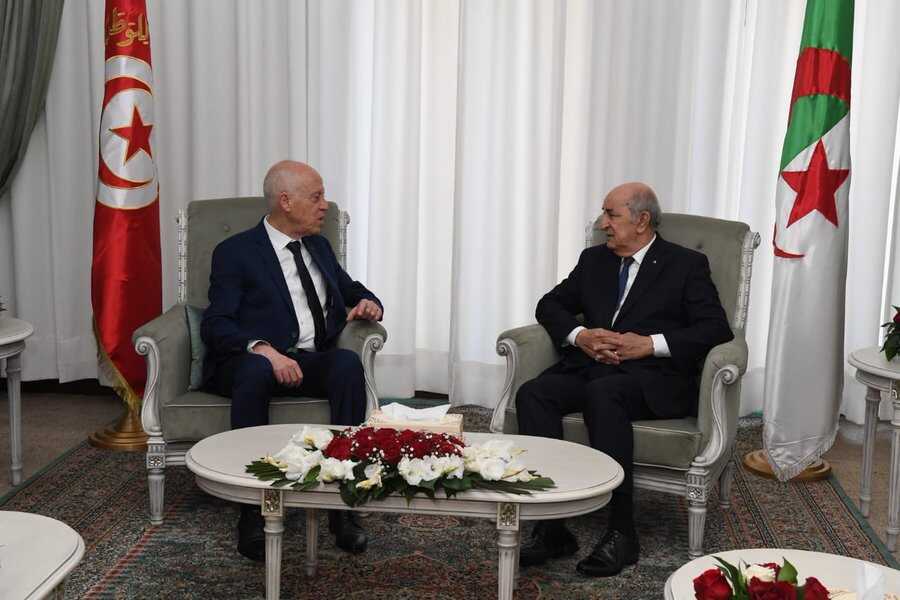
In response to the “genocide” against the residents of Gaza.. Sources: Algeria and Tunisia are preparing to withdraw from the Arab Peace Initiative

Informed sources revealed to "Arabi Post" that Algeria is on its way to announcing its withdrawal from the Arab Peace Initiative, which was presented by the Arab League in 2002 with a Saudi proposal based on land for peace.


According to the same source, Algeria has come to the conclusion that Israel does not believe in the two-state solution, especially after its attempt to displace the people of Gaza to Egypt to liquidate the Palestinian cause.


According to the information obtained by “Arabi Post”, Algeria no longer sees the benefit of the Arab initiative, which stipulates the establishment of a Palestinian state on the 1967 borders with East Jerusalem as its capital.


The same source added that Tunisia may take the same decision in coordination with its neighbor Algeria, and other Arab countries may join in what looks like a collective withdrawal from the initiative, in response to the genocide being committed against the Palestinians in Gaza in front of the world.


Algeria's withdrawal from the peace initiative

An informed source told “Arabi Post” that Algeria refused to participate in the summit hosted by Egypt, on Saturday, October 21, in the New Administrative Capital, in the presence of 30 countries and regional international organizations.


Algeria, according to the same sources, refused to attend this summit, which aimed to prevent the displacement of Palestinians, stop the war, and revive the two-state solution project, in line with the decision it is preparing to announce soon, which is to withdraw from the Arab Peace Initiative.


Previously, Algeria had opposed and had reservations about issuing the recent Arab League resolution, and issued a statement in which it said it had reservations about what was stated in it as it equated the Islamic Resistance Movement Hamas with the state of the Zionist entity.


Normalization increased her conviction

The wave of Arab normalization has increased Algeria's conviction that the Arab Peace Initiative is outdated, and most Arab countries are no longer committed to it except in their speeches, since, according to the initiative, normalization will be automatic once the State of Palestine is established on the 1967 borders with East Jerusalem as its capital and is recognized by Israel.


But Algeria believes, according to informed sources, that what is happening today is normalization without the Palestinians obtaining their rights. Which means gradually liquidating the Palestinian issue.


Algeria has repeatedly expressed its rejection of Arab normalization with Israel apart from the Arab initiative, describing what is happening as rushing towards Israel. This caused tension in its relations with the normalized Arab countries, especially the United Arab Emirates.


What is the Arab Peace Initiative?

The Arab Peace Initiative was presented by the late Saudi King Abdullah bin Abdulaziz when he was Crown Prince, at the “Beirut Summit” in 2002, and aims to establish a Palestinian state, the return of refugees, and withdrawal from the Golan Heights, in exchange for peace with Israel.


Based on the Arab countries’ conviction that the military solution to the conflict did not achieve peace or security for any of the parties, the League Council asked Israel to reconsider its policies and lean towards peace, declaring that a just peace is its strategic choice, according to the “text of the initiative.”


The initiative called on Israel to "completely withdraw from the occupied Arab territories, including the Syrian Golan up to the line of June 4, 1967, and the territories still occupied in southern Lebanon."


The Arab Peace Initiative, which was signed in Saudi Arabia, called for reaching a “just solution to the Palestinian refugee problem” agreed upon in accordance with UN General Assembly Resolution No. 194.


It also called for accepting the establishment of an independent, sovereign Palestinian state on the Palestinian territories occupied since June 4, 1967 in the West Bank and Gaza Strip, with East Jerusalem as its capital.


If Israel responds to these demands, the Arab countries will consider the Arab-Israeli conflict ended, and will enter into a peace agreement between them and Israel, while achieving security for all countries in the region, according to what was stated in the text of the initiative.


The Arab countries "establish normal relations with Israel" within the framework of this comprehensive peace, as well as ensure the rejection of all forms of Palestinian settlement in the host Arab countries.


The League said at the conclusion of the Arab Peace Initiative that this “enables the Arab countries and Israel to live in peace side by side, and provides future generations with a secure, prosperous and stable future.”


Source: Arabic Post

ARAB AND WORLD

Mon 23 Oct 2023 4:02 pm - Jerusalem Time

The risk of a new Arab-Israeli war become highest in decades? Here are the countries closest to entering the battle

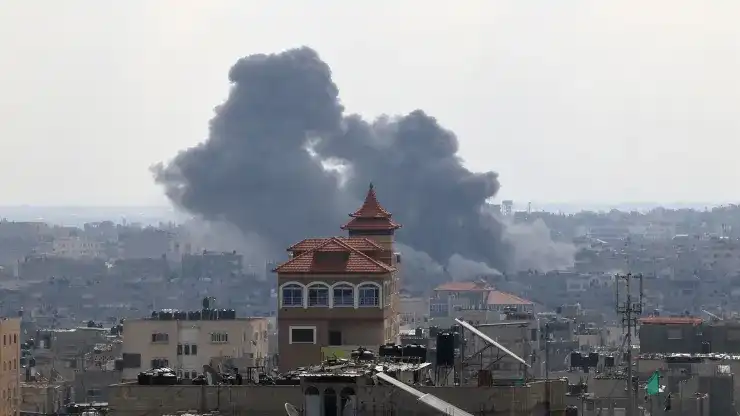
For the first time in decades, the threat of war between Israel and the Palestinians has become a candidate for spreading to neighboring countries, and the outbreak of a large-scale war in the Middle East has become an issue that is not excluded, in light of the national security of many Arab countries being exposed to danger as a result of the current crisis. In fact, there are battles that have already occurred, albeit in a small way. Limited in some neighboring countries.


This comes in light of Israeli talk, sometimes explicit and sometimes implicit, about Tel Aviv’s intention to occupy Gaza and force its people to forcibly leave to Egypt, while it seems that it has received a Western green light in the war. It also seemed that for a period of time there was Western acceptance of the idea of deporting civilians to Sinai under the pretext of protecting them.


The war has already spread to some neighboring countries

The war between Israel and Hamas has already spread to neighboring countries in the form of street protests and even cross-border strikes, according to a report by the American website Axios.


Israel's neighboring countries fear the possibility of internal unrest and the influx of large numbers of refugees as the conflict worsens. At the same time, Israel fears the possibility of opening a second front on the border with Lebanon.


Each of the neighboring countries has already been drawn into this conflict in one way or another.


Lebanon.. Hezbollah has its hand on the trigger, and says it will not allow the Palestinian resistance to be eliminated

If a second front opens in the war between Israel and Hamas, it will most likely be on the border between Israel and Lebanon.


Daily skirmishes occur along the border, with Iranian-backed Hezbollah fighters in Lebanon launching dozens of rockets, and the Israeli army launching strikes. At least three Lebanese citizens and an Israeli citizen were killed, along with a number of Israeli soldiers and Hezbollah militants.


Hezbollah has pledged to support Hamas, which has much greater military capabilities than Hamas, and the White House is discussing the use of military force if Hezbollah joins the fighting in Gaza.


Hezbollah views the war between Israel and Hamas from a broader perspective, and considers that the defeat of the resistance in Gaza may mean that Israel seeks to eliminate it and the rest of Iran’s allies in the region.


Accordingly, Lebanon has become, in one way or another, at the heart of the escalation that the region is witnessing as a result of Operation Al-Aqsa Flood, even if it is not a direct and open military war, and the opening and igniting of fronts from Lebanon and Syria, but in the political and strategic sense it is a battle in the context of integrating the path of unity of the fronts that he spoke about in a way Hezbollah officials and Iranian leaders elaborated.


In the broader picture, Hezbollah may find in what is happening a golden opportunity, which cannot be allowed to be wasted within a clear framework, which is to prove the seriousness and strength of the “unity of the squares” project, and even if the internal price in Lebanon is large and unexpected, considering what is happening as a historical moment, not interacting with it. It will lead to multiple losses. Also, active participation in this war will lead to the imposition of conditions and concessions from Israel that no one has been able to obtain before, especially since from Hezbollah’s point of view, Israel is at the worst stage in its history since 1948, meaning that Israel is forced to make concessions in the end. According to a report by Al Jazeera.


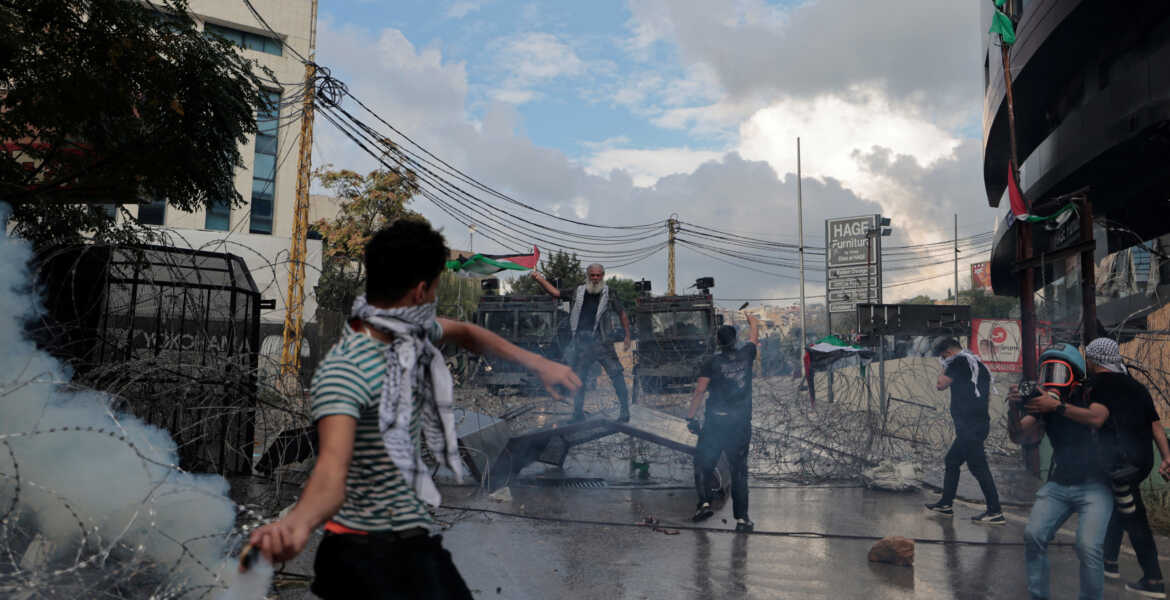
In addition to the clashes between Hezbollah and Israel, large pro-Palestinian demonstrations were held in Beirut, including a demonstration on the evening of Wednesday, October 18, in front of the US Embassy, which Lebanese security forces used tear gas and water cannons to disperse.


Egypt.. Sisi warns of the danger of war with Israel

Egypt has long played the role of mediator between Israelis and Palestinians, shares a border with Gaza and was the first Arab country to recognize the State of Israel.


Israeli forces struck the Rafah crossing between Egypt and Gaza – the only crossing point for civilians into Gaza – in the days following the Hamas attack on October 7.


This week, President Biden succeeded in pressuring Egypt and Israel to agree to allow humanitarian aid into Gaza through the crossing. First aid trucks began crossing into Gaza on Saturday, October 21.


A massive demonstration at Al-Zahr Mosque in solidarity with Palestine / Anatolia

Egypt refuses to open the fortified borders to allow refugees to leave. President Abdel Fattah El-Sisi also said that he fears the entry of armed men among civilians, and Egypt and the Palestinians alike fear that Israel will exploit the crisis to force the residents of Gaza to leave in preparation for the liquidation of the Palestinian cause.


The Egyptian President stressed that the idea of displacing Palestinians to Sinai means dragging Egypt into a war against Israel, during a joint press conference with German Chancellor Olaf Schulz.


Al-Sisi explained that “transferring Palestinian citizens from the Gaza Strip to Sinai means transferring the idea of resistance and fighting from Gaza to Sinai,” noting that the Egyptian peninsula “will therefore become a base for launching terrorist operations against Israel, which has the right to defend itself,” as he put it.


Jordan considers the expulsion of refugees a declaration of war

Jordan - which already has a large Palestinian population - says it will not allow more refugees.


Like Egypt, Jordan fears that a large influx of Palestinians will undermine the demand for a Palestinian state, an issue to which Jordan and most of its population are committed.


Jordan also fears that if Israel's alleged plans to displace the Palestinians of Gaza to Egypt succeed, they will soon be implemented in the West Bank, which Israel aspires to annex to its fertile lands.


Jordanian Deputy Prime Minister and Minister of Foreign Affairs and Expatriate Affairs, Ayman Safadi, said last Tuesday that any attempt to displace Palestinians means war for Jordan.

Al-Safadi added, in media statements, that a new catastrophe and setback will not be allowed, and the crisis will not be allowed to spread to neighboring countries.

Jordanian King Abdullah II also warned against any steps that seek to push the residents of the Gaza Strip toward forced displacement within the Palestinian territories or to neighboring countries, considering that this matter is unacceptable and is considered a red line for Jordan.

Pro-Palestinian protests have erupted in front of the Israeli embassy in Amman since the start of the war, especially after the explosion in the Baptist Hospital in Gaza.


Jordan's monarch, King Abdullah, quickly condemned Israel for striking the hospital, and canceled a scheduled four-way summit with Biden, Sisi and Palestinian President Mahmoud Abbas. The United States claims that Israel is not responsible for this explosion.


Syria...a potential arena for fighting between Israel, America, and Iran's allies

Syria fired artillery into Israeli territory, and Israel responded with fire a few days after the Hamas attack.


According to Syria, Israel bombed the Syrian airports in Damascus and Aleppo shortly after the outbreak of the conflict, and they were put out of service. Reuters reported that the aim of these strikes was to disrupt the flow of Iranian supplies and weapons to Syria.


Meanwhile, a US military base in Syria was attacked by a drone on Thursday, October 19, US officials told the Associated Press, without naming the attacker. American forces were targeted in similar attacks in Iraq, indicating the possibility of escalation in the region.


Iraq...a base for possible confrontation with the Americans

A military base in western Iraq, which includes American forces, was attacked by at least one drone, according to an Iraqi security source and another military source, without recording casualties or damage, as the war between Israel and Hamas continues.


The attack came as Iraqi factions loyal to Iran threatened US interests in Iraq against the backdrop of Washington's support for Israel in the war with Hamas, in a confrontation that has so far resulted in thousands of deaths.


The "Islamic Resistance in Iraq", via Telegram channels affiliated with Shiite factions loyal to Iran, claimed responsibility for a drone attack on the Ain al-Assad base on Saturday afternoon. But the Pentagon reported that it was not aware of any such attack.


Iraqi factions loyal to Iran had accused Israel and the United States of committing a “massacre” in Gaza, including the Hezbollah Brigades - one of the most prominent factions of the Popular Mobilization Forces - which stressed in a statement the necessity of “these evil people leaving the country,” in reference to the Americans, and threatened them if They did not do this because “they will taste the fire of hell in this world before the afterlife.”


The Iraqi Popular Mobilization Forces are considered Tehran’s largest agents in the region in terms of numbers, with some estimates of the number of its forces reaching one hundred thousand fighters. It can attack American targets in Iraq, and it can also operate from an already destroyed Syria against Israel, especially since Bashar al-Assad’s authority in the country is limited. Russia, which shares control over Syria with Iran, is also concerned with the escalation. To retaliate for US support for Ukraine.


Two sources close to the Iraqi groups loyal to Iran told the Persian-language Radio Farda, “A meeting was held in Baghdad on October 8, after Hamas’ attack on Israel, and this meeting was attended by Iranian officials and the heads of some Iraqi groups supported by Tehran.”


According to the information, at the meeting, Iranian officials called for the establishment of a center to register volunteers for the war against Israel, and asked the Iraqi armed groups to prepare, but they stressed the need to be careful not to take any action “until the order is given.”

The entry of Iran's allies into the battle may lead to American intervention against them or even Iran, which may spark a wide regional war that may also include the Houthis. Russia may even support Iran to spite America.


Yemen.. The Houthis are able to cause a problem for the Americans and Israelis in the Red Sea

Iran-backed Houthi fighters in Yemen appear to have joined the conflict between Israel and Hamas with the Pentagon announcing that the US Navy destroyer USS Carney in the Red Sea was able to intercept and shoot down a number of cruise missiles and drones that may have been heading towards Israel on Thursday.


Although the Houthis are very far away to be influential in the conflict, at the same time, Yemen's strategic location at the entrance to the Red Sea enables them to target American and Israeli ships or even disrupt global navigation, especially since they are holed up in the rugged mountains of Yemen, and targeting them is a difficult issue, as was evident from the campaign. The long military campaign carried out by Saudi and Emirati military aviation for years in the country.




PALESTINE

Mon 23 Oct 2023 3:50 pm - Jerusalem Time

Israeli ground invasion into Gaza now seems inevitable. The big question is what comes next

By Sam Meredith


KEY POINTS

  • _The prospect of an imminent mass incursion has raised questions about what a post-war future could look like, particularly since Israel’s military strategy does not appear to have a clear endgame.

  • _Samuel Ramani, associate fellow at the Royal United Services Institute think tank, said Monday that a ground assault by Israel into Gaza now seemed inevitable — albeit not likely over the next 48 to 72 hours or even the rest of the week.

  • The bigger question, Ramani said, may be what comes next.

Israel is widely expected to embark on a major ground incursion into Gaza, seeking to wipe the Palestinian militant group Hamas “off the face of the Earth” in response to a devastating and coordinated terror attack earlier this month.

The prospect of an imminent mass incursion has raised questions about what a post-war future could look like, particularly since Israel’s military strategy does not appear to have a clear endgame.

It comes just over two weeks since Hamas launched its Oct. 7 assault on Israel, killing 1,400 people and taking more than 200 hostage. More than 5,000 people have been killed in Gaza and over 15,000 injured since the Israel-Hamas war began, according to Palestinian authorities.

Samuel Ramani, associate fellow at the Royal United Services Institute think tank, said Monday that a ground assault by Israel into Gaza now appeared inevitable — albeit not likely over the next 48 to 72 hours or even the rest of the week.

The bigger question, Ramani said, may be what comes next.

Asked whether there is a danger that Israel may end up in a position that it can’t then get out of, Ramani replied, “That’s actually what some of the Israeli officials have even been saying, you know, off the record and privately to various media outlets: We don’t really know what will happen next.”

“One thing that the Israeli political establishment seems to be firmly united against is the notion of occupying the Gaza Strip or reoccupying it,” Ramani told CNBC’s “Squawk Box Europe.”

“But the big question is when you remove the Hamas leadership, what exactly do you replace it with? Do you replace it with the Palestinian Authority, which has extremely low levels of popularity in the Gaza Strip?”

Ramani highlighted a Hamas senior political leader, Ismail Haniyeh, is more popular among Palestinians than Palestinian Authority President Mahmoud Abbas “by a significant margin,” since many view Abbas as a corrupt pillar of the status quo.

Meanwhile, the Palestinian Authority is likely to be reluctant to look like they are collaborating with Israel, Ramani said.

“So, it is very, very hard to understand what will happen once Hamas goes, and the risk is that many civilians die in this war, Hamas could be going underground, or new extremist movements could develop and Israel’s security could be threatened once again,” he added.

A spokesperson for Israel’s government did not immediately respond to CNBC’s request for comment.

The Israel Defense Forces, meanwhile, has said a full surrender of Hamas and the return of Israeli hostages could end the war in the Gaza Strip.

“The aim here is to totally dismantle Hamas from its military capabilities. If that can be done from the air, and with standoff measures, with very limited exposure to our troops and less damage on the ground, that would be great,” IDF spokesperson Jonathan Conricus told ABC Radio Melbourne.


‘Violence will just breed more violence’

The United Nations has previously called for an “immediate humanitarian cease-fire” amid the Israel- Hamas war, pushing for Hamas to immediately and unconditionally release those it is holding captive and urging Israel to allow unrestricted access of essential basic supplies to Gaza.

The Gaza Strip is a narrow portion of land sandwiched between Israel, Egypt and the Mediterranean Sea. It is one of the most densely populated places in the world, with more than 2 million people living in conditions that human rights organizations have equated to an “open-air prison.”


Yossi Mekelberg, associate fellow at Chatham House, said Monday that there was “no magic wand” to bring an end to this kind of war, a conflict which he said had been left “to fester for way too long.”

“I think right now, gradually everyone understands that wiping out Hamas is not a matter of just bombing Gaza and not a matter of even a ground offensive. You have to deal with Hamas as a military force, Hamas as a political force and also Hamas as an idea,” Mekelberg told CNBC’s “Street Signs Europe.”


“At the same time, we see the magnitude of destruction and death among Palestinians right now. It is not a crisis anymore, it is a disaster … which is unacceptable,” he continued.


“How you reconcile between all of this, reducing the casualties, the suffering of Palestinians but at the same time ensuring that Hamas is not capable of hurting Israel the way it did is a challenge,” Mekelberg said. “It probably won’t be resolved in a matter of days or weeks in just one operation.”


To find a political solution to the Israel-Hamas war, Mekelberg said, policymakers would need to take a fresh approach to the root cause of the conflict. “You need new leadership in both political entities. You need people to think along peaceful co-existence,” he said.


“You need innovative and creative ideas, and you need a new generation that understands that violence will just breed more violence and bloodshed and won’t improve the life of either side one iota.”


Source: CBC


PALESTINE

Mon 23 Oct 2023 3:43 pm - Jerusalem Time

Aid that entered Gaza is far less than the population's need

The number of humanitarian aid trucks that entered Gaza within two days reached 34, and United Nations sources report that this amount does not exceed 4% of the volume of daily aid that entered the Strip before the outbreak of the war.


Fourteen trucks loaded with food supplies and drinking water bottles entered Gaza on Sunday evening from the Rafah crossing after being delayed for several hours, according to what Palestinian sources say was due to armed clashes between fighters from the Al-Qassam Brigades and the Israeli army, as a soldier was killed and three others were injured when armored vehicles entered in a limited manner. Within the territory of the Strip, Al-Qassam says.


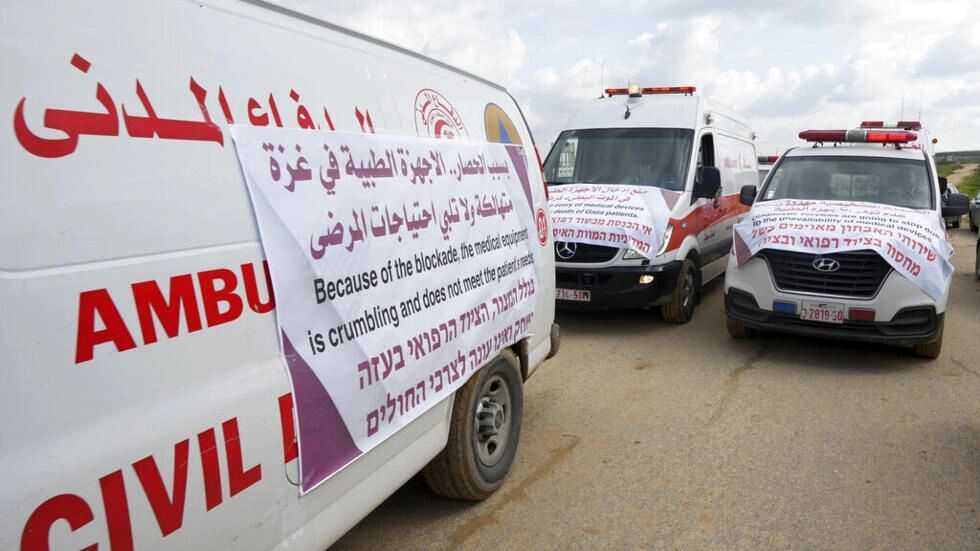
The total amount of aid that arrived in Gaza over two days was 34 trucks, which the government media says is far less than the Strip’s urgent need for medical, food and logistical supplies, at a time when seven hospitals were out of service and lacked the most basic components of the medical system, according to the Ministry of Health.


The situation becomes more disastrous and tragic as the number of displaced people increases, which, according to the United Nations, has reached about one and a half million displaced people, many of whom have no place to stay, no food, no drink, no medical service, no electricity, and no horizon for a solution.

PALESTINE

Mon 23 Oct 2023 3:40 pm - Jerusalem Time

Blinken rejects the ceasefire in Gaza despite heavy child casualties

US Secretary of State Anthony Blinken rejected the idea of calling the United States for a ceasefire in Gaza despite the huge number of child casualties in the unprecedented Israeli bombing of the Gaza Strip.


In response to a question posed to him by broadcaster Margaret Brenyan on the “Face the Nation” program on CBS, regarding the “UNICEF” report that at least 1,524 children were killed in the Gaza Strip during this bombing, “Why does the United States not call for a temporary halt to the launch of... “At least fire,” Blinken answered, evading the question by saying that the death of children on both sides hits him “right in the heart,” avoiding criticism of the ferocious Israeli bombing campaign. He pointed to American efforts to persuade Israel to allow aid trucks to enter Gaza via Egypt.


When Brennan followed up with, “Why doesn’t the United States push for at least a temporary ceasefire,” Blinken said, “Israel must do everything in its power to make sure this does not happen again,” referring to the Hamas attack on October 7. “Freezing things in their current place will allow Hamas to remain where it is and repeat what it did at some point in the future, and no country can accept that.”


Blinken claimed that the reason for the inability of the Gazan Americans is due to Hamas preventing them from leaving, despite the fact that the Strip is under a tight Israeli siege and that Egypt has not allowed people to enter its territory from its only border crossing with Gaza.


“People have come to Rafah, the crossing with Egypt,” he said. “So far, at least, Hamas has prevented them from leaving, which once again shows its complete disdain for civilians of any kind - stuck in Gaza, so the ball is really in Hamas’ court, in terms of allowing "For people who want to leave, and for civilians from third countries, including Americans, to leave Gaza."


Despite Blinken's claim, it was reported in recent days that dual nationals were asked to go to the Rafah border crossing but were not allowed into Egypt. According to a report by NBC News, there are about 600 Americans stuck in Gaza, and they say they are not receiving help from the United States to get out. Amir Qaoud, a Palestinian American at the Rafah crossing, told NBC: “America is not helping us, Biden is not helping us, and the embassy is not helping us.”

OPINIONS

Mon 23 Oct 2023 3:25 pm - Jerusalem Time

The Roots and Consequences of Hamas' Strategy

Ramallah - “Al-Quds” dot com

Ramallah - “Al-Quds” dot com

Opinion Writer


Daniel Sobelman

That the current war in the Gaza Strip poses a clear existential threat to Hamas and potentially to the entire Palestinian cause is abundantly clear. But the current conflict, Israel’s pronounced intent to wipe Hamas off the face of the earth, even if this means a months-long war will have profound long-term implications for any actor with a stake in the postwar balance of power and regional order in the Middle East. Israel’s purpose and identity as a viable country for and protector of the Jewish people are at stake. But the vital interests of the entire Iranian camp in the Middle East—the self-described “axis of resistance,” of which Hamas has become a key member in recent years, are also hanging in the balance. 

Spearheaded by Iran—its primary supplier of military hardware, know-how, and technology—the “axis of resistance” mainly consists of the Lebanese Hezbollah, the Gaza Strip, Syria, Yemen’s Houthi rebel movement Ansar Allah, and multiple Iran-backed Shiite groups in Iraq. Together, they have gained critical mass as a coordinated and synchronized strategic community. In recent years, these actors have become a regional bloc, thinking in geopolitical terms and sharing the aspiration for an anti-Western regional order in what Iran calls “West Asia.” 

In addition to their quest to defeat Israel and Western powers from the Middle East, “resistance” actors from Gaza, Lebanon, and Iran share a similar strategic concept. In essence, the basic underlying logic of the strategy of “resistance” accepts that superior actors such as Israel, the United States, and Saudi Arabia will always be able to visit immense civilian pain on their countries. However, although these actors exhibit severe civilian vulnerability, their military apparatuses, command-and-control systems, and continued conventional second-strike capability remain secure. This is precisely the logic behind the reliance of the “axis of resistance” on vast stockpiles of stand-off weapons such as rockets, precision-guided missiles, long-range attack drones, and shore-to-sea missiles.

In the Gaza Strip, Lebanon, Yemen, Iraq, and Iran, these military capabilities are secured in underground tunnels and facilities—what Iran calls “missile cities.” In every one of these conflict zones, the “resistance” actors have harnessed these capabilities in the service of subjecting their superior adversaries to what they call “rules of the game,” deterrence “equations,” and “rules of engagement.” Significantly, although all these originate with Iran’s advanced military industries, the strategic lexicon and mindset of the “resistance” originates not with Iran but with Hezbollah. Indeed, when it comes to “resistance” as a coherent asymmetric strategy, the primary “laboratory” has been the Israel-Hezbollah conflict.

On multiple occasions over the years, Hezbollah’s long-time Secretary General Hasan Nasrallah, who is a key, integral part of Iranian decision-making, explained the strategic logic of “resistance.” According to Nasrallah, rockets and missiles are the weaker “resistance” actor’s means of offsetting the stronger side’s aerial supremacy. Thus, as long as the stronger actor’s offensive continues, so do the weaker actor’s rocket barrages continue to impact its own cities. As Nasrallah explained, ultimately, the stronger side might be forced to unleash a land invasion—something that is supposed to level the playing field. A military invasion is thus seen as a desirable outcome.

For the “resistance” actors, this very strategy is currently at stake, which was rightly perceived as having withstood Israel’s military might in several conflicts in Lebanon in the 1990s and the thirty-four-day-long 2006 Lebanon War. In all these conflicts, Israel fell short of inflicting a decisive military blow or otherwise impacting its critical vulnerabilities. In all cases, what Israel failed to accomplish militarily, it was also unable to accomplish diplomatically. This meant that in the day after, Israel, despite its immense military superiority, was deterred. As a result, it was forced to abide by certain “rules of the game” and effectively tolerate continued violence and Hezbollah’s accelerated military build-up. 

Hezbollah later actively exported this model to the Gaza Strip, where Hamas drew on its experience and adopted its vocabulary. Thus, the same phenomena have applied to Israel’s conflicts in the Gaza Strip since Hamas’s June 2007 takeover. Hamas is now attempting to deter Israel and subject it to “deterrent equations” whereby Israeli assaults beyond a certain threshold are retaliated against with heavy rocket fire on Israel’s commercial capital, Tel Aviv. Calling the prospect of an IDF invasion of the Gaza Strip “laughable,” the spokesperson of Hamas’s Izz ad-Din al-Qassam Brigades military wing stated that “nine-tenths of the Al-Qassam army” were eagerly waiting to confront any invading army. 

In the years after the 2006 Israel-Hezbollah war, Hezbollah has established itself as Israel’s primary military threat. Ever since that war, which Hezbollah cast as a “divine victory,” Iran provided it with many of its advanced capabilities in a way that has in recent years diminished the Israeli Air Force’s freedom of action over Lebanon. Hezbollah’s current military capabilities, and those of Iran as well, are now far more advanced. As then-U.S. Central Command Chief Kenneth McKenzie admitted in 2021, “Iran’s strategic capacity is now enormous…. They’ve got overmatch in the theatre—the ability to overwhelm.” McKenzie’s successor, Michael Kurilla, stated in 2023 that the IRGC “of today is unrecognizable from just five years ago.”

Hamas undoubtedly drew courage and inspiration from its cooperation with Iran and Hezbollah, which has increased significantly since 2021, and from its sense that the entire “axis of resistance” had its back. Hamas’s military spokesman confirmed that Hamas’s “level of coordination with the brethren in the axis of resistance had increased and developed in terms of mobilizing the efforts with respect to the future of the conflict.” Nowhere was this more evident than in a recent interview by Salih al-Aruri, Hamas’s second-in-command, who stated in late August that a “decisive” multi-front regional war with Israel was not only desirable but, in fact, “necessary” in “the near term.” 

Warning that the Palestinians had between two to three years before Israel’s right-wing government increased the number of Jewish settlers in the West Bank to two million, the Beirut-based Al-Aruri said that there is currently a regional “interest that there be a regional war…there are parties who are extremely active in this regard, and who are discussing this.” Al-Aruri concluded that if war broke out, “Israel would be dealt a defeat that is unprecedented in its history. We are certain of this. And it will be subjected to new realities. Its standing, the way in which it is viewed by the world…their own belief in themselves…and also those in the region who have hopes that Israel will serve as a guarantor and protector—all of this will change.” 

One week after Hamas dealt Israel what its leaders are already calling the worst catastrophe inflicted upon Jewish civilians since the Holocaust, Al-Aruri’s words ring more prescient than anyone would have given him credit for before October 7, 2023. In order to disprove his prediction, Israel will engage in actions and behaviors that will likely clash with its enemies’ vital interests, thereby increasing the likelihood that the current war will become far broader. Already now, they are on the cusp of a regional war. Whichever way things develop, the regional repercussions will be formative. In more than one way, this could very well change not only the Middle East, as Israel’s prime minister Benjamin Netanyahu has pledged, but Israel itself. 


Source: Harvard Kennedy School’s Belfer Center


PALESTINE

Mon 23 Oct 2023 3:21 pm - Jerusalem Time

How did the Al-Aqsa flood endanger American global interests?


In light of the ongoing war between the Palestinian factions and the Israeli occupation, the so-called “axis of resistance” in the Middle East is facing moments that may be the most difficult in its history, which may spell the end of this bloc that Iran built for 40 years and from which it penetrated into several Arab capitals.


The “Axis of Resistance” refers to an informal, anti-Western, anti-Israel military-political alliance between Iran, the Syrian regime, the Lebanese Hezbollah, the Yemeni Houthi movement, as well as the Iraqi Shiite militias, which are part of the Popular Mobilization Forces, officially linked to the government.


Although the coalition has different ideologies, such as secular Baathists and Shiite Islamists, they are united by their goal of opposing the activities of pro-Western parties, Israel, the Gulf states, and Sunni Islamists in the region.


The current war has shown that the unification of the arenas, even at the level of the popular movement, was only a rhetorical issue for Iran and its allies, and this may later leave its impact on the orientations of the Palestinian factions, and the danger of sacrificing the Sunni axis in favor of the so-called “resistance axis.”


A threatened fate

With the outbreak of the “Al-Aqsa Flood” on October 7, 2023, in response to the crimes of the Israeli occupation against the Palestinian people, Muhammad Al-Deif, Commander-in-Chief of the Izz al-Din al-Qassam Brigades, the military wing of the Islamic Resistance Movement - Hamas, called on what is known as the “Axis of Resistance” to Enter the battle.


The guest said in his audio speech, “I call on our brothers in the resistance in Lebanon, Iran, Yemen, Iraq, and Syria to unite with the resistance in Palestine, so that this terrible occupier understands that the era of assassinating scholars and leaders and the almost daily bombing in Syria and Iraq has ended.”


In response to a question about southern Lebanon and the statements of Iranian officials about the expansion of the war front if the aggression on Gaza continues, Meshaal said, “There is preoccupation in southern Lebanon from the factions and Hezbollah, but in my estimation, the battle requires more than that.”


He stressed that “Israel poses a danger to everyone, and part of its military strategy is to monopolize its enemies, and the war must be fought together.”


Meshaal believed that what is happening from the resistance axis “is not enough, and that history is not made by games and specific, timid, and hesitant steps, but rather by well-thought-out adventures, such as the October 7 storming that was carefully prepared for.”


He added: “Today the war has occurred, and Iran has two choices: Either it implements what it has been saying for 40 years, and if it does, then what it said is true. The second thing is that if it does not do that, it cannot come and say that it defends Jerusalem and Palestine, because “This is our neglect.”


Khanfar believed that their non-participation in the battle now “means the end of all the theory that Iran has built for itself, because today’s war is on the ground. Either it applies its theory, or after that each of these parties finds its own alliances in the region, because there is no longer a narrative called the axis of resistance.” “.


Continuous threat

But Iran and the so-called “Axis of Resistance” respond to all these calls made by the leaders of the “Hamas” movement, by issuing threats and talking about not allowing the Israeli occupation to be alone in Gaza, and that if the Israeli crimes there do not stop immediately, new fronts will be opened against the Zionist entity.


Iranian Supreme Leader Ali Khamenei said, during a speech before Iranian elites, on October 17, that “no one can prevent Muslims and resistance forces (from responding) if the crimes of the Zionist entity in Gaza continue.”


Khamenei added, “The Zionist entity, no matter how many crimes it commits, will not be able to compensate for the scandalous defeat it suffered,” stressing that “this entity is committing genocide in Gaza before the eyes of the world, and its leaders must be tried.”


The Lebanese Hezbollah also vowed to expand the arena of war against Israel, which resulted in some guided missile launches, which were launched by the former towards targets of the latter in the occupied areas of northern Palestine, during which an Israeli officer was killed, compared to about 5 deaths from the Lebanese militia until October 18.


As for the Shiite militias in Iraq, the military spokesman for the Hezbollah Brigades, Jaafar al-Husseini, announced on October 18 that the “resistance” in his country had entered the battlefield from today and directed its strikes at American bases.


Al-Mayadeen TV, which is close to the Lebanese Hezbollah, quoted Al-Husseini as saying, “The resistance in Iraq today achieved the first casualties,” stressing that “operations will continue at a higher pace.”


“Iranian deception”

Regarding the extent of Iran’s participation, which leads the so-called “resistance axis,” in the war against the Israeli occupation, the Iraqi researcher interested in Middle East affairs, Maytham Muhammad Sahib, said, “This axis will not enter into any open war with the Israeli occupation, for several reasons.”


He explained, “As for Iran, it is betting on the victory of Hamas without participating directly, for religious and geopolitical reasons. It wants to throw stones at the Palestinian resistance on more than one side, but the latter, I believe, is aware of such a matter.”


He continued: “It is true that Hamas called on the axis of resistance to participate in the fighting, but individual attempts do not change Iran’s policies, at a time when Hezbollah, the Houthis, the Syrian regime army, and the Popular Mobilization Forces have an opportunity to polish their ugly face, and they must move, even by bombing from a distance.”


Since the 1980s, and for more than four decades, both Iran and Syria have considered themselves representatives of the resistance in the Middle East region, and they claimed that one of their priorities was to support the steadfastness of the Palestinian people against the Israeli entity, until the liberation of Al-Aqsa Mosque.


But this axis committed several tropes, starting with Iraq after the American occupation of the country in 2003, and passing through the Syrian revolution in 2011, until the stage of ISIS’s invasion of these two countries in 2014, by displacing millions of residents and killing hundreds of thousands on a sectarian basis, targeting Sunnis and those opposed to the Syrian regime.


Source: Aqlam Al Hora

ARAB AND WORLD

Mon 23 Oct 2023 3:17 pm - Jerusalem Time

Israel bombs 20 Lebanese towns, killing 25 citizens and displacing 15,000 others

Cairo News Channel reported in urgent news today, Monday, that 25 Lebanese were martyred, and 20 towns were damaged in Israeli raids on Lebanon, in addition to the displacement of 15,000 others from villages and towns in southern Lebanon.


It added that the caretaker Prime Minister in Lebanon, Najib Mikati, said earlier today that the diplomatic contacts that Beirut is conducting internationally and in the Arab world, and the local meetings, are continuing with the aim of stopping the Israeli attacks on Lebanon and its south in particular, and preventing the spread of the war in Gaza to it.

PALESTINE

Mon 23 Oct 2023 2:22 pm - Jerusalem Time

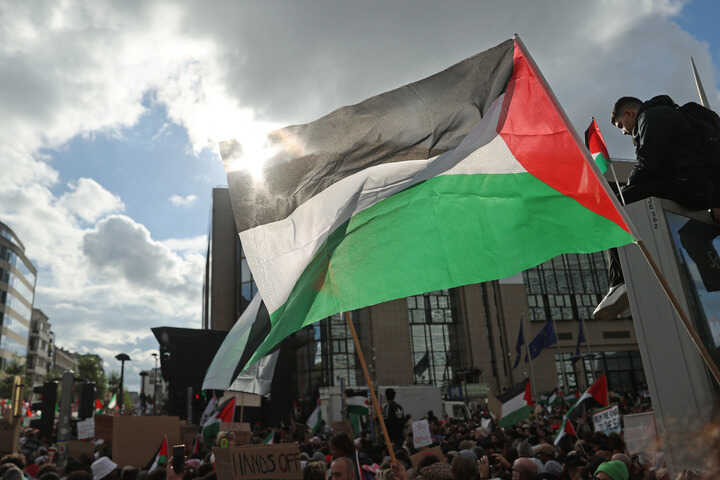
Thousands gather in Brussels to demand Gaza ceasefire

The police explained that more than 12,000 people from more than 34 institutions and organizations participated in the demonstration to support the innocent Palestinians who suffered from the recent conflicts between Israel and Hamas in the Gaza Strip two weeks ago.


Many demonstrators, heavily protected by local police, stayed for more than two hours in Robert Schuman Square in front of the European Commission headquarters. Some of them also accused the European Union of being complacent with the Israeli bombing of the Gaza Strip.


Many of them called for respect for the rights of all peoples in accordance with international humanitarian law and international human rights law.

PALESTINE

Mon 23 Oct 2023 2:20 pm - Jerusalem Time

Israel issues a decision to temporarily amend administrative detention

The Commission for Ex-Prisoners' Affairs reported on Monday that the Israeli occupation authorities issued a military order with temporary amendments regarding administrative detention.


The authority stated that the first decision is to increase the period of detention of the detainee to examine the possibility of issuing an administrative detention order, to become 6 days instead of 72 hours. The second decision is to amend the detainee’s presentation to the first confirmation session to become 12 days instead of 8 days previously.


In this context, the Prisoner’s Club stated that a large portion of those who were arrested after the outbreak of the aggression on Gaza were transferred to administrative detention until today, and the total number of orders issued amounted to more than 300 orders, including new orders and renewal orders for former detainees, but most of them are new orders. Issued against new detainees.


He pointed out that since the beginning of the aggression, the number of arrests in the West Bank to date has reached (1,215) arrests, including Jerusalem, and the arrests were concentrated in the Hebron Governorate, where the total number of arrests exceeded about 370 arrests.


He continued: The level of abuse is very high, and the threats have reached the point of shooting, and using families as hostages, in addition to the large amounts of sabotage and destruction, while the majority of those arrested were severely beaten, causing some of them to suffer injuries as a result.


The Prisoner's Club confirmed that the occupation imposed laws and military orders, and implemented military orders, which only contribute to facilitating arrest operations, abusing detainees, and restricting the work of legal teams.


He added: There are no accurate updates available about the number of detainees until today, but the estimates available to institutions reach more than 6 thousand detainees, and this number does not include the number of workers whose detention the occupation announced, and those of Gaza workers who were arrested in the West Bank, and the occupation was in Earlier it was announced that it detained 4,000 workers from Gaza.


ARAB AND WORLD

Mon 23 Oct 2023 1:09 pm - Jerusalem Time

Lebanese Official: Hezbollah will not intervene in the war unless Gaza invasion is major

The Minister of Foreign Affairs in the Lebanese caretaker government, Abdullah Bou Habib, said that Hezbollah will not intervene in the war unless the Gaza invasion is major or in the event of a major attack on Lebanon.


Bou Habib warned, in an interview with the local MTV channel, that “from any potential war, Hezbollah will emerge stronger, similar to the 2006 war, so our friends in the West must pressure Israel to cease fire and refrain from waging a war against Hezbollah, as it claims.” Israeli Defense Minister Yoav Galant.


He pointed out that "all the provocation comes from Israeli officials, while Hezbollah has not issued any provocative speech. The evidence is that its Secretary-General, Hassan Nasrallah, has not made any statement yet, which means that he is against escalation and our dialogue is permanent with the party, and it is afraid for Lebanon."


He revealed that "Hamas informed Iran and Hezbollah that it is able to withstand for months during the ground battle, so Hezbollah will not intervene once Gaza is invaded unless it is major or in the event of a major attack on Lebanon. The party and Iran told us that they were not previously aware of Operation 'Flood'. Al-Aqsa, and Blinken (US Secretary of State) acknowledged this.”


Bou Habib, on the other hand, said, "Lebanon was not invited to the Cairo summit, and we do not know the reason. I hoped that the summit would succeed and come out with a unified statement, and that the Americans must put pressure on Israel to prevent a regional war, as they will not be able to eliminate (Hamas)."


The Lebanese caretaker Prime Minister, Najib Mikati, confirmed earlier today that external and internal communications would continue to protect his country, stop Israeli attacks, and “prevent the expansion” of the Gaza war into Lebanon, noting that the government was preparing “an emergency plan to confront what might happen in an essential preventive step out of caution.” ".


It is noteworthy that armed clashes had escalated on the border between Lebanon and Israel after Hamas launched Operation “Al-Aqsa Flood” two weeks ago, as the border witnesses daily intermittent bombing and shooting operations between Hezbollah, Palestinian movements, and the Israeli army, resulting in deaths and injuries on both sides.

PALESTINE

Mon 23 Oct 2023 1:02 pm - Jerusalem Time

Charged with incitement: Israel arrested 109 Palestinian Jerusalemites since 7th of October

On Monday, the Israeli occupation police announced the arrest of 109 Jerusalemites since the start of the Israeli occupation’s aggression against the Gaza Strip, under the pretext of incitement on social media.


The occupation police in Jerusalem claimed that, since the seventh of this month, they had dealt with 228 posts that they described as “inflammatory” on social media pages, and as a result, 109 citizens were arrested, including 90 who are still in detention, and 11 indictments have been filed so far.


Tomorrow, Tuesday, the occupation police will file an indictment against a mosque preacher from the town of Al-Issawiya, north of occupied Jerusalem, after another indictment was filed against one of them in the city of Jerusalem.

PALESTINE

Mon 23 Oct 2023 1:01 pm - Jerusalem Time

Palestinian Foreign Ministry warns against Israel using its aggression against Gaza to implement its expansionist plans in West Bank

The Ministry of Foreign Affairs and Expatriates called on the international community, especially the Security Council, to pay attention to the racist, expansionist colonial plan implemented by Israel to swallow up the lands of the West Bank behind its continuing aggression on the Gaza Strip, and to take the necessary decisions in the UN Security Council to stop it immediately, and to stop the implementation of this plan prepared in advance, And stopping the implementation of this pre-prepared plan, which makes it difficult to talk about peace and the principle of the two-state solution with its implementation.


In a statement issued today, Monday, the Ministry warned of the consequences and repercussions of implementing this plan on the explosive conflict arena, as well as on the security and stability of the region and the world.


It condemned the destructive war, crimes of genocide, ethnic cleansing, and forced displacement committed by the Israeli war machine for the 17th day in a row against our defenseless people in the Gaza Strip, especially the brutal bombing that the Gaza Strip was subjected to during the past 24 hours, which targeted many areas, leading to the death of 400. A Palestinian citizen, dozens injured, and more destruction to homes and infrastructure.


It also strongly condemned the violations and crimes of the occupation forces, settler gangs, and their armed terrorist elements against Palestinian citizens, their land, property, homes, crops, and sanctities in the occupied West Bank, the latest of which was the ongoing bloody incursions, which are now accompanied by deliberate shooting at Palestinian citizens with the aim of killing. This also happened in many areas of the West Bank, bringing the number of martyrs during this devastating war to 95 so far.


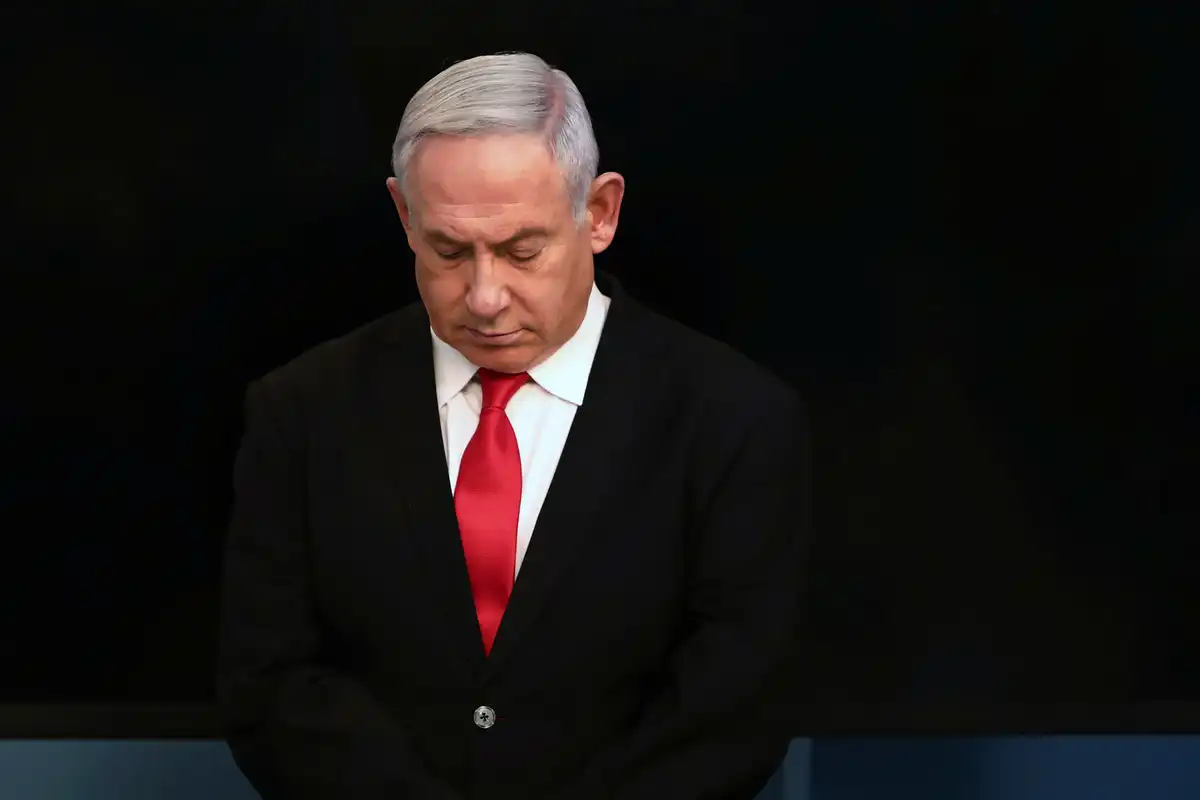
The Ministry believes that Netanyahu’s promotion of prolonging the war on the Gaza Strip has become clear that he aims to attack, liquidate and displace more than two million Palestinians living in the Gaza Strip, and destroy their homes and the foundations of their existence, turning the Gaza Strip into an uninhabitable environment, in a hideous Israeli exploitation of the cover that the occupation took from some powerful countries under the slogan of “self-defense”, so that Netanyahu sets long-term strategic goals for this slogan that lead to the destruction of the Gaza Strip, killing the largest possible number of its residents and displacing those who remain, or turning it into a displaced person with no shelter except tents.


the Ministry noted that at the same time, the occupation forces and settlers are abusing the occupied West Bank and abusing the citizens, imposing a stifling siege on them that paralyzes their lives, and deepening the gradual annexation of the occupied Palestinian territory, in an attempt to resolve the future of the Gaza Strip through a destructive and comprehensive war, and also to resolve the future of the West Bank through Swallowing and annexing the larger area, all under the pretext of (self-defense).


OPINIONS

Mon 23 Oct 2023 12:50 pm - Jerusalem Time

About the declared Israeli political goals of the war on Gaza!

Ramallah - “Al-Quds” dot com

Ramallah - “Al-Quds” dot com

Opinion Writer

Despite the high military ceiling set by Israel for its operation, which turned into a bloody war against the Gaza Strip, which is expressed in statements such as “eliminating and crushing Hamas” and “dismantling Hamas and undermining its ruling authority,” the political goals of this war, as he sees it, are To many commentators and observers, it is still marred by ambiguity and lack of clarity, and thus it opens the door to many different and even contradictory interpretations and interpretations of military objectives and missions, and makes its announced high ceiling an open and debatable issue.


The "Ynet" website, affiliated with the "Yedioth Ahronoth" newspaper, reported that some of the ministers who are members of the "Extended Security Council" complained that the plan related to the continuation of the war and ground maneuvers is too abbreviated, while deep differences of opinion emerged among the ministers who are members of the mini-security council (Cabinet). War) who defended this plan, and among the ministers who are not members of it, while the Minister of Defense, Yoav Galant, made it clear that Israel is not interested in occupying the Gaza Strip.


The delay in moving to the ground operation raises many question marks related to the hesitation and fear of the Israeli army and the political leadership, led by Netanyahu, that this operation will falter and cause great losses among its soldiers, which will add another failure to the failure that befell them and was the cause of the war.


In this context, political analyst in the newspaper "Haaretz", Yossi Verter, reported that various circles in the ruling Likud Party are not confident that Netanyahu will go to the end this time and implement what he promised in 2008 to eliminate Hamas, and they say that he is "afraid of doing so." . These circles expressed their fear that Netanyahu would maneuver so as not to complete the mission in the Gaza Strip, as they put it. Haaretz quoted a Likud source familiar with security and intelligence issues as saying, “Netanyahu intends to carry out a serious operation in the Gaza Strip, but it is local. He talks about a strategic and historical process, but from what I hear from various sources, that will not happen.”


The source added that Netanyahu will say, “We undermined, eliminated, and brought calm for generations to come,” but he will again do only partial work, which was confirmed to Haaretz by a Cabinet member who is not from Likud. He said that he does not see a correspondence between the statements and the military plans, while another Knesset member mentioned From Likud, what happened during Operation Protective Edge, when the public demanded a large-scale operation, so Netanyahu leaked a slide indicating that 400 soldiers were killed in such an operation, which led to fear and a decline in popular pressure.


In Israel, they blame Netanyahu and hold him responsible for the growing power of Hamas, as he is the one who has a tendency to strengthen Hamas and weaken the Palestinian Authority. In fact, his policy is part of the strategy of the Israeli right, which is based on dismantling the Palestinian issue by perpetuating the Palestinian political and geographical division and thus isolating Gaza and annexing large parts of the West Bank to Israel. And eliminating the possibility of establishing an independent Palestinian state.

In addition to the presentation of this strategy to Netanyahu in dealing with the war on Gaza, despite the great motive for revenge, he is the only one among the political and military leadership who did not acknowledge failure and take responsibility upon himself, as others did, and he looks at the aftermath of the war on Gaza and its impact on His political future, especially since he failed to include all opposition parties in the emergency government he formed, led by the largest opposition party, Yesh Atid, which conditioned its entry on the removal of the religious Zionist parties, Smotrich and Ben Gvir, from it, which Netanyahu rejected.


In this context, Yossi Melman said in response to the resounding Israeli statements that the feeling of revenge is not a substitute for strategy and making rational decisions based on the soundness of opinion and not on what is possible or desirable. He believes that the overwhelming desire of Netanyahu, Gallant and other ministers for the necessity of killing Hamas members and annihilating their weapons, It aims primarily to satisfy the desire of Israeli public opinion in the wake of the anger, shock, and loss of balance that befell it.


The expert in security issues points out in an article published by “Haaretz” that Israel is standing still, despite the recruitment of 350,000 soldiers and the passage of nearly two weeks, and the ground operation has not yet come to light, and he believes that this waiting reflects weakness and hesitation and weakens the mandate and global legitimacy. granted to Israel so far.


Melman says that Hamas has 20,000 fighters and 30,000 missiles. With a simple calculation, eliminating its manpower and missile force would require two months of fighting in the heart of the Gaza Strip. The question here is: Can Israel recruit a reserve of 350,000 soldiers for two months? Does it guarantee that the outcome of the war will be the elimination of Hamas’ human and missile power and that at the end of the war, it will not launch rockets into Tel Aviv again? In this context, it is mentioned that previous battles in Lebanon and Gaza began with a loud thud and ended with weakness and defeat.


Source: Arab 48

ARAB AND WORLD

Mon 23 Oct 2023 11:14 am - Jerusalem Time

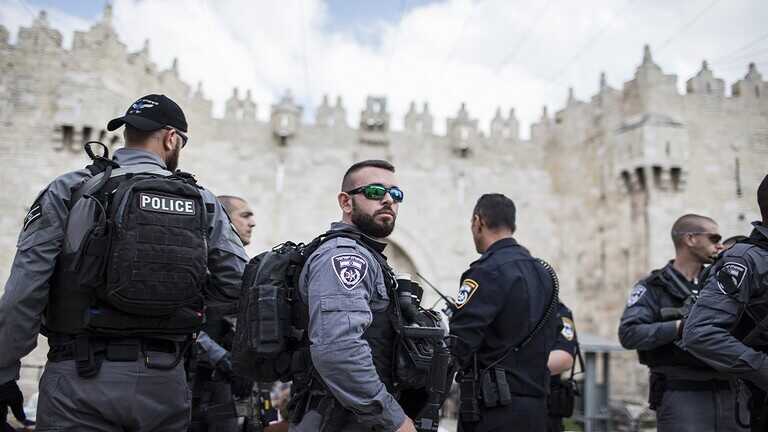
“For ethical reasons.” An Indian company suspends contract to supply uniforms to Israeli police

The Indian company "Marian Apparel", one of the main companies that supplies the Israeli police with uniforms, announced that it had terminated its contract due to the raids on Gaza, attributing the matter to reasons "of an ethical nature."


Marian Apparel has been supplying the Israeli police with about 100,000 uniforms annually since 2015, according to its data.


Agence France-Presse quoted the company's CEO, Thomas Olekal, as saying that the decision to suspend, which was taken after a raid on a hospital in Gaza that left many dead, was "of an ethical nature."


The Israeli army and the "Hamas" movement are exchanging accusations of responsibility for the bloody attack that targeted the Al-Ahly Arab Hospital "Al-Mamadani" in Gaza City on Tuesday, which led to the death of 471 people, according to the Ministry of Health affiliated with the "Hamas" movement, which confirmed that the bombing was Israeli.


However, Israel said that the bombing was the result of a missile launched by the "Islamic Jihad" movement that deviated from its course, and Washington adopted this narrative. European and American intelligence sources have questioned the death toll announced by Hamas, indicating that it is less than that.


"We will agree to resume our business (with Israel) when peace returns," Olekal explained. He added that if this fails, his company will implement its current contract, which expires in December, but will not renew it.


Marian Apparel, which employs about 1,500 people, also deals with the Philippine army and the Saudi government.


Source: AFP


OPINIONS

Mon 23 Oct 2023 11:12 am - Jerusalem Time

Thomas Friedman: To win the war stop settlements

Ramallah - “Al-Quds” dot com

Ramallah - “Al-Quds” dot com

Opinion Writer

I have great admiration for how President Joe Biden has used his empathy and physical presence in Israel to convince Israelis that they are not alone in their war against the barbaric Hamas, while also trying to reach out to moderate Palestinians. Biden, I know, tried really hard to get the Israeli leadership to pause in their rage and think three steps ahead — not only about how to get into the Gaza Strip to take down Hamas but also about how to get out — and how to do it with the least civilian casualties possible.

Although Biden expressed deep understanding of Israel’s moral and strategic dilemma, he pleaded with Israeli military and political leaders to learn from America’s rush to war after 9/11, which took our soldiers deep into the dead ends and dark alleys of unfamiliar cities and towns in Iraq and Afghanistan.

Nevertheless, U.S. officials left Jerusalem feeling that although Israeli Prime Minister Benjamin Netanyahu understands that an overreach in Gaza could set the whole neighborhood ablaze — and is probably the most cautious of Israel’s leaders today — his right-wing coalition partners are eager to fan the flames in the West Bank. Settlers there have killed at least seven Palestinian civilians in acts of revenge in the past week, and the Israeli military is even more hawkish than the prime minister now and is determined to deliver a blow to Hamas that the whole neighborhood will never forget. Meanwhile, Israel’s right-wing minister of finance is refusing to transfer tax money owed to the Palestinian Authority, sapping its ability to keep the West Bank under control, which it has done up to now.

Color me very worried. No, color me extremely worried.

Because in the first week of this war, the Supreme Leader of Iran and the leader of the Hezbollah militia in Lebanon, Hassan Nasrallah, appeared to be keeping very tight control on their militiamen both on the border with Israel and in Iraq, Syria and Yemen. But as the second week has gone on, U.S. officials have picked up increasing signs that both leaders may be considering letting their forces more aggressively attack Israeli targets, and maybe American targets if the United States intervenes.

Have no doubt: The possibility of a regionwide war that could draw the United States in is much greater today than it was a few days ago, senior U.S. officials told me. As I write on Thursday night, The New York Times is reporting that a U.S. Navy warship in the northern Red Sea on Thursday shot down three cruise missiles and several drones launched from Yemen that the Pentagon said might have been headed toward Israel. More missiles probably from pro-Iranian militias were fired at U.S. forces in Iraq and Syria and at Israel from Lebanon.


Israel is not likely to let Iran use its proxies to hit Israel without eventually firing a missile directly back at Tehran. If that happens, anything can happen. Israel is believed to have submarines in the Persian Gulf.

What makes the situation triply dangerous is even if Israel acts with herculean restraint to prevent civilian deaths in Gaza, it won’t matter. Think of what happened at Gaza City’s al-Ahli hospital on Tuesday.


As Israeli columnist Nahum Barnea pointed out to me, Palestinian Islamic Jihad, or PIJ, achieved more this past week with an apparently misfired rocket “than it achieved in all of its successful missile launches.”

How so? After that rocket failed and fell on the Palestinian hospital in Gaza, killing scores of people, Hamas and the PIJ rushed out and claimed — with no evidence — that Israel had deliberately bombed the hospital, setting streets ablaze across the Arab world. When Israel and the United States offered compelling evidence a few hours later that the PIJ accidentally hit the Gaza hospital with its own rocket, it was already too late. The Arab street was on fire and a meeting of Arab leaders with Biden was canceled.

Imagine what will happen when the first major Israeli invasion of Gaza begins in our wired world, linked by social networks and polluted with misinformation amplified by artificial intelligence. No wonder pro-American Arab leaders are beseeching Biden to beseech the Israelis to act in ways that leave them some space to continue to work with Israel.

That is why I believe that Israel would be much better off framing any Gaza operation as “Operation Save Our Hostages” — rather than “Operation End Hamas Once and for All” — and carry it out with surgical strikes and special forces that can still get the Hamas leadership, but also draw the brightest possible line between Palestinians in Gaza and the Hamas dictatorship.

Hamas has not only taken Israelis hostage; it has taken Palestinians in Gaza hostage as well. They did not have a vote in Hamas’ savage kidnapping of Israeli grandmothers and babies. Take a moment and listen to a Center for Peace Communications and Times of Israel series “Whispered in Gaza” from January — interviews with Palestinians in Gaza about what they really think of Hamas’ corrupt and despotic leadership. Israel has to respect and build on their views if it hopes to build anything sustainably positive in Gaza from this war.

But Israel today is in raw survival mode. We Americans can advise, but Israel is going to do what it is going to do.

Where I have a vote — just one — is in America. Biden, in his prime-time speech Thursday, vowed to ask Congress for an additional $14 billion in assistance for Israel to get through this war, along with an immediate injection of $100 million in new funding for humanitarian assistance to Palestinians in Gaza and the Israeli-occupied West Bank.

I’m all for helping Israelis and Palestinian civilians at this time — but not without some very visible strings attached.

If Israel needs weapons to protect itself from Hamas and Hezbollah, by all means ship them. But in terms of broader economic aid for Israel, it should be provided only if Israel agrees not to build even one more settlement in the West Bank — zero, none, no more, not one more brick, not one more nail — outside the settlement blocs and the territory immediately around them, where most Jewish settlers are now clustered and which Israel is expected to retain in any two-state solution with the Palestinians. (Netanyahu’s coalition agreement actually vows to annex the whole of the West Bank.)

I am well aware that Hamas has been committed to eliminating the Jewish state since its inception — not because Israel has expanded settlements in the West Bank. But if Israel has any hope of nurturing a Palestinian leadership that could replace Hamas in Gaza in the long term and be an effective partner for a two-state solution, then the settlement project has to stop and it has to stop now.

As for the Palestinian Authority in the West Bank, it needs, as soon as possible, to elect or appoint a new leadership — one with the competence to build decent Palestinian institutions in a noncorrupt fashion that earns its people’s respect and legitimacy. The Palestinian Authority, which is ready to coexist with the Jewish state, needs to be able to actually win a free and fair election against Hamas in the West Bank or Gaza.

Without those two sets of conditions being met, there’s no future for moderation in this corner of the world, no chance of a sustainable peace and no chance of normalization between Israel and Saudi Arabia — no matter if Israel eliminates every single Hamas leader, foot soldier and rocket maker or no matter how sympathetic one might be to the Palestinian cause.

The keystone of Netanyahu’s 15 years as prime minister has been strategically expanding settlements to prevent any prospect for a contiguous Palestinian state ever coming into being.

In doing so, the Israeli leader knowingly and blatantly acted against U.S. interests. He was willing to destabilize United States allies Jordan and Egypt to pursue more settlements. He was willing to risk America’s biggest diplomatic achievement, the Abraham Accords, if the pact meant halting settlements. He has shown no willingness yet to halt settlements to secure a historic breakthrough with Saudi Arabia.

Folks, Israel is a wealthy country today and money is fungible. For way too long, U.S. economic and military aid has allowed Netanyahu to have his cake and eat it too — to fund the insane settlement project, and maintain an advanced military, while not having to raise taxes on the whole Israeli public to pay for it all. While Israel got U.S. aid in one hand, the budget of its Ministry of Defense paid to build roads for settlers with the other hand. Uncle Sam’s wallet, indirectly, was the slush fund for Netanyahu’s politics.

So, no, we’re not telling Netanyahu what to do in Gaza — Israel is a sovereign country. We’re just going to tell him what we’re not going to do anymore — because we happen to be a sovereign country too.

The U.S. has been indirectly funding Israel’s slow-motion suicide — and I am not just talking settlements. Look at what Netanyahu did in June. To buy off the ultra-Orthodox parties he needs in his coalition to keep himself out of jail on corruption charges, Netanyahu’s government gave the ultra-Orthodox and the settlers “an unprecedented increment in allocations … including full funding of schools to not teach English, science and math,” explained Dan Ben-David, a macroeconomist who has focused on the interaction between Israel’s demography and education at Tel Aviv University, where he heads the Shoresh Institution for Socioeconomic Research. “This budgetary increment alone is more than Israel invests each year in higher education altogether — or 14 years of complete funding for the Technion, Israel’s MIT,” Ben-David said. “It is completely nuts.”

Bottom line: Netanyahu has a completely incoherent strategy right now — eliminate Hamas in Gaza while building more settlements in the West Bank that undermine the only decent long-term Palestinian alternative to Hamas, the Palestinian Authority, which Israel needs to safely leave Gaza.

If this is the season of war, it also has to be a season for answers about what happens the morning after. I am hardly the only one who wants to know. As Israeli historian Yuval Noah Harari wrote in an essay last week in Haaretz about Netanyahu’s government: If it “does dream of exploiting victory to annex territories, forcefully redraw borderlines, expel populations, ignore rights, censor speech, realize messianic fantasies or turn Israel into a theocratic dictatorship — we need to know it now.”


source: Twin Cities. com


PALESTINE

Mon 23 Oct 2023 11:11 am - Jerusalem Time

Israeli settlers storm Al-Aqsa Mosque and the police prevent students from reaching schools

Today, Monday, dozens of settlers stormed the courtyards of the blessed Al-Aqsa Mosque, under the protection of the Israeli occupation police.


Local sources said that dozens of settlers stormed Al-Aqsa Mosque from the Mughrabi Gate, carried out provocative rounds and performed Talmudic rituals in its courtyards.


In the same context, the occupation police tightened their military measures in the vicinity of the Old City of Jerusalem and at the gates of Al-Aqsa Mosque, and prevented students from reaching their schools inside it. It also impeded the arrival of worshipers, and allowed only the elderly to enter for prayer.

PALESTINE

Mon 23 Oct 2023 10:08 am - Jerusalem Time

Israeli army launched arrest campaign abducting at least 85 Palestinians in West Bank

Since October 7, more than 1,215 arrests have been recorded


Last night and at dawn on Monday, the Israeli occupation forces launched an arrest campaign that targeted at least 80 citizens from the West Bank, with the continuation of systematic arrests and the comprehensive aggression launched by the occupation against our people. The arrest operations were concentrated in the governorates of: Ramallah, Hebron, and Beit. Lahm, and the rest of the arrests were distributed across most of the governorates of the West Bank.


The Prisoners' Commission and the Prisoners' Club stated that the occupation forces have escalated their arrest campaigns since October 7, the date of the Battle of the Resistance (Al-Aqsa Flood), in an unprecedented manner, as they arrested more than 1,215 citizens from the West Bank, and included all groups, including (children, women, and the elderly). Al-Sen), and in the arrest operations, the occupation forces adopted a policy of threats and severe beatings against detainees and their families, and vandalizing citizens’ homes.


It is noteworthy that this tally does not include detained workers and Gaza detainees whose identities and enemies have not yet been accurately known to Palestinian authorities and institutions.


The Prisoners' Commission and the Prisoners' Club indicated that since the beginning of this year, arrests have reached more than 6,500 cases.

PALESTINE

Mon 23 Oct 2023 9:58 am - Jerusalem Time

Israeli Poll: Israel must eliminate Hamas in Gaza war, 70% of Israelis say yes

A poll commissioned by the Israel Victory Project found that 70% of the Israeli public wants ‘eliminating Hamas’ to be the primary objective of Operation Swords of Iron. 54% of the respondents who said they had voted for an Arab party in the last election chose this option.

A separate answer, that the primary objective should be to ‘disarm Hamas completely,’ received 13% of responses. Only 15% of respondents chose ‘the unconditional release of captives’ as their choice for the operation’s primary objective.


The poll did not define ‘eliminating Hamas,’ but it did ask respondents who they thought ‘should rule Gaza after the overthrow of the Hamas regime.’

On this, respondents were almost evenly split into four camps: 24% said that Israel should govern Gaza, 22% chose the Palestinian Authority, 19% chose ‘Arab nations,’ and another 24% chose, simply, ‘new leadership in Gaza.’


When given a choice between ‘launching a ground operation in Gaza to eradicate Hamas’ or ‘avoiding a ground operation and finding another way to deal with Hamas,’ 68% said they would choose the ground invasion, while 25% chose the more nebulous second option. 

Asked how much consideration Israel should give to its opinion abroad, 43% of respondents said Israel must consider the perspective of allies, particularly the United States, while 55% responded that Israel ‘must ignore external demands and make its own security decisions.’

Asked whether, ‘if Saudi Arabia demands significant concessions to the Palestinian Authority by Israel as the price for formal ties,’ Israel should agree to the terms, 72% said no, while 21% said yes.


Poll supports the views of the group that commissioned it

The Israel Victory Project (IVP), which commissioned the poll, states as its purpose “to put an end to the Palestinian resistance and thus ensure conditions for ending the conflict with the Palestinians and the bloodshed.”


The group argues on its website that “Only after [the Palestinians] acknowledge the defeat of their struggle against Israel will it be possible to negotiate the final settlement.” 

In 2022, before the national elections which resulted in the current (pre-war) government, the group paid for billboards in Jerusalem and Tel Aviv depicting Arab lawmakers wrapped in Israeli flags, with the caption “This is what a picture of victory will look like.”

Condemning “leaders like [Ahmed] Tibi and [Ayman] Odeh” as “pouring oil on the fire,” Gregg Roman, Director of the Middle East Forum, said that “the violence and the bloodshed will stop only when [Palestinians] have accepted that the war against Jewish sovereignty has ended.” 


For many years prior to the outbreak of this most recent war, the IVP has been advocating a “total elimination” of Hamas. In 2021, the group sponsored a billboard outside then-Prime Minister Naftali Bennett’s house, reading “The nation demands victory!” Roman, speaking on the subject of Bennett’s inauguration, said that “the most important issue on the agenda should be to address restoring security for the citizens of Israel, and eliminating Hamas.” 


Respondents split on worst failure of Oct. 7

The poll also asked respondents “Which do you see as key mistakes leading to the catastrophic failure on Oct. 7?” With more than one answer permitted, 27% replied “A military that relies too much on defensive measures,” 29% replied “Poor intelligence capabilities,” 49% responded “Misconduct by the political echelon,” and 29% replied “The wrong ‘concept’ about Hamas.”

The poll was conducted by Shlomo Filber and Zuriel Sharon through Direct Polls Ltd on October 17, 2023. 1,086 Israeli adults were sampled with a statistical sampling error of 4.0%.

PALESTINE

Mon 23 Oct 2023 9:21 am - Jerusalem Time

Bishara: Israel is confused and targeting civilians is a price tag policy with specific goals

The Director of the Arab Center for Research and Policy Studies, Dr. Azmi Bishara, during an interview regarding the war on Gaza, conducted on Sunday evening on Al-Arabi TV, said, “There is a state of bewilderment and confusion in Israel after the humiliation that occurred on October 7.”


Bishara stated that the source of the hesitation is that Israel does not know what the resistance has prepared in the event of a ground invasion, in addition to not knowing Hezbollah’s intentions. He pointed out that there are no guarantees for Israel that it will succeed in achieving the “ultimate goal” of ending the Hamas movement, and thus creating... Another Palestinian party rules the Strip, all of which Bishara calls “the uncertainty of the ground invasion of Gaza.”


He also stressed that the occupation authorities are launching their current aggression against the besieged Gaza Strip, as if there is no context other than the recent operation launched by the resistance factions, led by Hamas. “It is as if the Gaza Strip has not been besieged for years,” and as if the Palestinian has not been subjected to continuous persecution for years as well.


Commenting on the unprecedented American bias towards Israel and its narrative, Bishara stated that the Zionist intellectual structure of US President Joe Biden goes back to the time of American presidents in the 1980s in terms of identification with Israel and viewing it as a democratic state similar to America in its “political theology” as a colonial state, and in terms of the role of religion in it as well.


He stated, "What is happening in Gaza undermines the idea of the possibility of marginalizing the Palestinian issue." Bishara pointed out that "the resistance must prepare for the worst possible scenarios."


He added that the Western media had "enlisted to support Israel, and worked to obscure the context in reporting what was happening."


Bishara said, "The Western media must be held accountable for the nature of its coverage of what is happening in Gaza." He stated that there is "intellectual terrorism" practiced by the West against anyone who dares to stand in solidarity with Gaza, noting that some of those who criticized Israeli practices lost their jobs.


He stressed that the Western media deals with the Palestinians as numbers and not as human beings, each of whom has a story, a life, relatives and a biography. As a result, Bishara described what those in solidarity with the Palestinians in the West are currently facing as “the new McCarthyism.”


Bishara stated that there were violations that occurred in the “Al-Aqsa Flood” operation, related to the kidnapping and killing of civilians, noting that “this represents a burden on the Palestinian armed movements.” However, he reminded that “this is not the starting point of the discussion, but rather the occupation and its crimes. If we condemn them, we continue the discussion and end with an evaluation of the behavior, so we condemn it or not, because the Palestinians are not God’s chosen people, but like all other peoples, they make mistakes.”
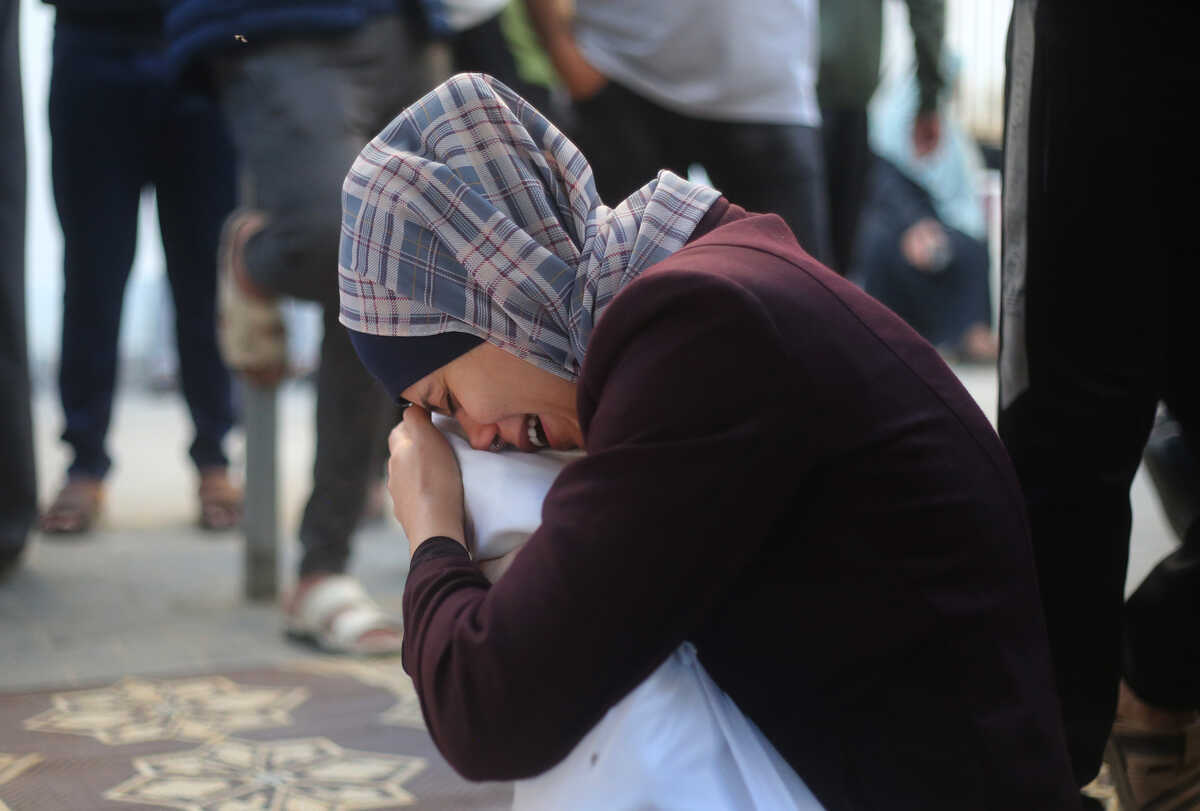

He added that "the prisoners in Gaza are not a priority for the Israeli leaders," stressing that "the intensity of the clashes on the northern front is constantly increasing, and may actually reach a state of war."


Bishara said, “Israel targets civilians as part of a price tag policy that has goals,” stressing that “Prime Minister Benjamin Netanyahu’s political career has ended, and there will be investigation committees after the war.”


He explained that the current bombing of civilian areas in Gaza is not the result of “side errors” according to American military terminology, but rather “systematic targeting to make society pay the price, and this is a racist, colonial factor that is expressed in an Israeli mentality aimed at educating the Palestinians.”


Bishara stressed, "It is surprising that the official Arab position did not demand an end to the aggression from day one." He added, "The Arab countries are able to influence what is happening in the Gaza Strip if they take serious steps against Israel."


Bishara believed that the Egyptian and Arab position rejecting the displacement of the people of Gaza is positive in itself, but he pointed out that the problem lies in considering that “only displacement is a red line,” while this red line must include massacres and targeting civilians.


He expressed his fear that Israel would understand this categorical official Arab rejection of displacement exclusively as "it is permissible to keep the residents of Gaza in this cage and kill them in it."


In answering a question about what is happening in the occupied West Bank and Jerusalem, and if Israel fears the situation in the West Bank will explode, Bishara stated that the death toll is shocking by all standards in the West Bank, which makes what is happening there resemble the heroic intifada that is being covered up because of the war in Gaza, as it occupies all the media attention. 


He stressed that Israel's targeting of civilians "is a feature accompanying the establishment of Israel with the aim of pushing Palestinians to leave their lands and emigrate, especially in the West Bank."


Source: Arab 48

PALESTINE

Mon 23 Oct 2023 9:02 am - Jerusalem Time

Israeli army: If Hamas hands over the kidnapped and surrenders, the war will end

Israeli army spokesman Yonatan Conricus addressed foreign media about the planned ground entry into the Gaza Strip, following his interview with the Australian ABC network, and said that Israel's goal is to "completely dismantle Hamas' military capabilities."


The occupation spokesman added, "If it were possible to do this from the air, with very limited exposure to IDF soldiers and less damage on the ground, that would be good," according to what the Yedioth Ahronoth newspaper reported.


At the same time, Conricus stressed that "if Hamas activists come out of hiding under the people of Gaza, release all 212 of our prisoners and surrender unconditionally, the war will end. If they don't, perhaps we will have to go inside and do it ourselves."


PALESTINE

Mon 23 Oct 2023 8:51 am - Jerusalem Time

What are the Israeli considerations delaying a ground operation in the Gaza Strip?


While society, the media, the army and political circles in Israel are pushing towards a ground operation to invade Gaza to complete the retaliatory war against the besieged Strip, Israeli reports have indicated political considerations that are pushing Netanyahu to “delay” the invasion, which seems imminent.


The Israeli Broadcasting Authority (“Kan 11”) reported, on Sunday evening, that “political considerations” are pushing Israeli Prime Minister Benjamin Netanyahu to postpone the ground military operation to invade Gaza, while the official Israeli channel indicated that the Israeli occupation army is ready for the ground maneuver and is awaiting... Orders were issued to invade the besieged sector.


This came amid reports of American pressure on Tel Aviv to conduct any ground operation to invade the Gaza Strip, in an attempt to exhaust the diplomatic efforts made by Washington with Qatar, in an attempt to push the resistance factions in the Gaza Strip to release Israeli civilian prisoners, which may happen. His frustration following the occupation army's invasion of the Gaza Strip.


"Kan 11" pointed to operational considerations that may also be a reason for postponing the ground operation that appears imminent, while it stressed that "the ground forces in the Israeli army are now ready" to invade the Gaza Strip, while it stated that the administration of US President Joe Biden is exerting pressure. To delay the ground invasion, in order to reach an agreement on "prisoners and missing persons."


This comes with escalating tensions on the northern front, with daily exchanges of fire between Palestinian factions and Hezbollah fighters, and the Israeli occupation army. It appears that the escalation at the border is still within the rules of engagement in effect between Hezbollah and Israel, but experts warn of the possibility of the war expanding into Lebanon through greater Hezbollah intervention if Israel launches a ground attack on Gaza.


The Israeli Minister of Security indicated that the violent air strikes launched by the occupation aircraft on the Gaza Strip “pave the way for the advance of ground forces,” while “Kan 11” pointed out that this did not come based on a recommendation from the military level, but rather orders that the Israeli army received from the leadership. Political.

The Israeli army spokesman, Daniel Hagari, stressed that the army is ready to invade the Gaza Strip, and will do so as soon as the decision is issued by the political level. The channel stated that “the forces have been prepared for days,” warning of “complacency and exhaustion” among the soldiers, while Netanyahu's office refuses to address any questions regarding the ground operation or its timing.


"Kan 11" pointed out the costs that might result from delaying the ground operation, and pointed to the operation carried out by the resistance factions against an occupation army force that penetrated the area adjacent to the separation fence inside the besieged Gaza Strip near "Kissufim", and resulted in the death of an Israeli soldier and the wounding of others with varying injuries. The channel said that such an operation may be repeated while forces are gathering in the vicinity of Gaza in preparation for the invasion of the Strip.


During his daily press conference, the Israeli army spokesman, Hagari, said on Sunday evening, “We are working to prepare the area to reduce the risks to the soldiers who will enter the Gaza Strip. That is why we are attacking forcefully from the air and we will continue in this manner until we carry out the invasion.” He continued, "We are ready for the maneuver, and when the political level approves of it, we will move."

Possible agreement on civilian prisoners?


On the other hand, Channel 12 and Israeli Army Radio indicated various considerations that might be behind the delay of the ground operation, which has become a popular demand in Israel to invade Gaza as part of the retaliatory war launched by the occupation authorities on the Strip, and Channel 12 stressed the issue of timing.


According to Channel 12, the three considerations that move Israeli officials regarding the issue of timing are, first: the issue of prisoners and missing persons, and whether it is actually possible to exhaust a major movement led by Washington and the countries of the region in the coming days.


The second consideration, which Channel 12 pointed out, is the escalation of threats and attacks against American interests in the Middle East, and the preparations that Washington is making to “optimally deal” with the escalation of these attacks. It also considered that the third consideration is the Israeli leadership’s awareness that the ground operation will take time, and should be initiated after reaching ideal operational conditions.


Meanwhile, a member of the Israeli cabinet and Minister of National Security, Itamar Ben Gvir, issued a brief statement in which he said, “Any approval to bring sustainable aid into the Gaza Strip without releasing all the abductees (civilian prisoners held by the resistance factions) is a continuation of the ideas and concepts that led us to this point.” Where we are today: a humanitarian (measure) only in exchange for the release of all the kidnapped people!”


In turn, Israeli Army Radio indicated two central reasons, the first of which is to give an opportunity to the efforts being made to try to reach an agreement to release prisoners held by the resistance factions in the Gaza Strip, while the second consideration is to “complete the readiness of the forces, including an attempt to obtain greater A certain amount of intelligence information about the situation inside the Gaza Strip.


To discuss all these considerations, the Israeli Prime Minister, Benjamin Netanyahu, will hold a session of the Israeli mini-war cabinet, with the participation of the Minister of Defense, Yoav Galant, and the former Minister of Defense, Benny Gantz, to hold further discussions on the development of the war waged by the occupation on the Gaza Strip.


Channel 12 pointed out that Netanyahu is conducting various security consultations even with security figures who do not participate in approved security forums, including the war cabinet and the expanded cabinet. The channel quoted Netanyahu as saying: “We need to buy time. Hamas not only planned the attack, but "I planned defense as well. Entering now would be in Hamas' interest."


During his conversation with retired General Yitzhak Brik, the latter advised him to “concentrate the intense aerial bombardment and the stifling humanitarian grip on the Gaza Strip,” considering that “the ground invasion carries within it the danger of a regional war, and therefore it is necessary to prepare for it, whether at the level of readiness of the Israeli army or at the level of The home front.


Earlier, Sunday, the Minister of Occupation Security, Yoav Galant, announced that the expected ground war in the Gaza Strip “may take months,” during his participation in a session of the Air Force Operations Command, near the border with the Gaza Strip. Gallant said: "There is nothing that can stop the army. The operational aspect of the maneuver is a combination of two things: one, air capability and the other, ground warfare."


He added: "The ground war in Gaza must be the last there, for the simple reason that there will be no Hamas after it." He continued: "It will take a month, two months, three months, but in the end there will be no enthusiasm." Meanwhile, the Israeli army announced that it was intensifying its air attacks on the Gaza Strip with the aim of “reducing the threats that may face our forces, in preparation for the next phase of the war,” in reference to a ground war.


On Sunday evening, Biden held telephone conversations with Israeli Prime Minister Netanyahu, and they agreed after a second convoy of humanitarian aid entered Gaza from Egypt that this aid “will continue to flow,” according to a White House statement. The statement said that Biden and Netanyahu confirmed during telephone conversations that “this vital aid will continue to flow to Gaza.”


Source: Arab 48


ARAB AND WORLD

Mon 23 Oct 2023 8:30 am - Jerusalem Time

Raghad Saddam Hussein was sentenced to 7 years in prison

An Iraqi court sentenced Raghad, the daughter of former Iraqi President Saddam Hussein, to seven years in prison in absentia on charges of “media promotion” of the Baath Party, according to a document seen by Agence France-Presse.


It was stated in the judicial document, the authenticity of which the agency said that the ruling was issued “for the crime of contributing to the dissemination of ideas and opinions and promoting the activities of the banned (Baath) Party in the media by appearing in the media and promoting its ideas on television channels in the year 2021.”


The law approved by the Iraqi Parliament punishes anyone who belongs to, glorifies or promotes the Baath Party with imprisonment for various periods of up to 15 years.


While the document did not specify the intended television interviews, Raghad Saddam Hussein said in an interview with Al-Arabiya channel in 2021, in response to a question about whether Iraq was the best during her father’s rule: “I hear from many people that yes, our time is a time of glory, people used to live With pride, with high esteem, no one can offend them,” adding: “In general, of course, the country was a stable and wealthy country.”


According to the document, an arrest warrant was also issued against Raghad Saddam Hussein, who does not live in Iraq, but rather has lived with her sister Rana and their children in the Jordanian capital, Amman, since July 2003, months after the fall of their father’s regime. Their brothers, Uday and Qusay, were killed by the American army.

PALESTINE

Mon 23 Oct 2023 8:15 am - Jerusalem Time

Israeli war machine: Death of about 400 Palestinian civilians during the past 24 hours in Gaza

For the 17th day in a row, Israel continues to commit massacres against civilians in the Gaza Strip, bombing residential neighborhoods and hospitals, which led to the death of about 400 martyrs during the past 24 hours.


Renewed artillery and air bombardment on the Gaza Strip


At the dawn of the seventeenth day of the ongoing Israeli aggression on the Gaza Strip, the occupation warplanes and artillery continued, at dawn on Monday, raids and bombing on several sites in the Gaza Strip.


Local sources explained that a series of raids carried out by the occupation aircraft targeted several homes in the city of Rafah, including the home of the Abu Iyada family in Tal al-Sultan, and led to a number of martyrs and injuries.


In the Al-Qaizan neighborhood, south of Khan Yunis, occupation aircraft bombed a house over the heads of its residents, killing about 7 martyrs, including children and an infant.


In the Central Governorate, the occupation warplanes targeted with several missiles the homes of the Abu Jalda family, the Al-Bayaa family, the Al-Sharafi family, and the Al-Saafin family, resulting in a number of martyrs and injuries.


In Gaza Governorate, occupation aircraft bombed the homes of the Al-Ghoul family, the Abdel Latif family on Aidiya Street in Al-Nasr, the Abu Nasser family, the Muhanna family in the Sheikh Radwan neighborhood, the Ensio family, and a house in the vicinity of the beach supply, which resulted in a number of martyrs and injuries.


In northern Gaza, the occupation forces bombed, with their warplanes, the house of the Al-Lidawi family, which led to its complete destruction and a number of neighboring houses, resulting in dozens of martyrs and wounded.


The occupation artillery also bombed the eastern areas of the Gaza Strip with dozens of shells.


Occupation aircraft bombed the vicinity of Al-Shifa Medical Complex in Gaza City


The occupation warplanes bombed the vicinity of Al-Shifa Medical Complex in the center of Gaza City, as well as the vicinity of Al-Quds Hospital, west of Gaza.


Local sources reported that the Israeli occupation aircraft bombed with several missiles the vicinity of Al-Shifa Medical Complex, which contains the largest number of wounded and medical staff, as well as the vicinity of Al-Quds Hospital in the Tal Al-Hawa neighborhood for the second time.


It added that the occupation aims to cause confusion in the health system by directly threatening hospitals with evacuation and bombing, or by bombing nearby areas.


OPINIONS

Mon 23 Oct 2023 8:09 am - Jerusalem Time

Avenge fragility through atrocity

Samir Atallah

Samir Atallah

Opinion Writer

Major Western countries have, for the first time since World War II, associated themselves with one of the worst human slaughters. I mean they did that together, but individually, there were American massacres in Vietnam, France in Algeria, and Britain in India, and Germany no longer needed any more after the Nazi killing during the same war.


Why did Western countries move in such a collective manner that was unprecedented in terms of speed and intensity? Not because of American pressure, and not so as not to appear outside of it; In many cases, Europe diverged, differentiated, or lingered, especially regarding similar policies. The reason, or the pretext, or both, is that the issue was immediately presented as an anti-Semitic existential war.


On the one hand, it was the fear caused by the scenes of the bloody ceremony, and on the other hand, it was the panic that struck the West, which saw Israel itself helpless and defeated before a guerrilla team, not a state. This was not the downfall of Israel alone. Rather, this was an event in which the West, with its technological progress and its satellites, saw it as a fragile immunity, incapable of protection, preemption, and the advantage of a first strike.


All of these considerations helped America and Mr. Biden to mobilize allies so quickly, in addition to what we mentioned more than once, that the West shuddered at the idea of a double loss in Gaza and Ukraine. Such a defeat would not mean losing the battle, but losing the war. For Israel, losing the war means losing existence and everything it has built in 7 decades of the aura of a small power superior to the big ones.


This may explain part of the precedent of Europe’s eagerness and abandonment of its policy of “slowness” in solidarity even within NATO, as happened in many cases before, but it is also likely that the Europeans did not expect Israel to drag them into such a scale of Barbaric and abusing response, on the lives, livelihood and dignity of civilians.


Former Prime Minister Ehud Barak will describe this “War of Heedlessness” as “the harshest blow since we came into existence.” This explains the European rush, but it does not explain the presence of the senior American administration in Tel Aviv at the same time: the president and the foreign minister at the same time. It is as if Washington had become devoid of any pillars of government, or as if Tel Aviv had become a parallel capital.


If the American position in the conflict is merely an increase in a familiar pace, then Europe's position is an unexpected exaggeration in the face of the scenes of disaster in Gaza, as if Europe's role and traditions in such cases tip the humanitarian scale regardless of alliances and obligations.


The European position, even after the displacement of about 800,000 Palestinians and the demolition of their roofs, seemed to be much lower than the position of the Israeli left and the groups that believe - such as Ehud Barak - that Netanyahu wanted to strengthen Hamas in order to undermine the Palestinian Authority.


The European position will be the subject of disagreements and accountability when the war ends, if it ends, but the course of events indicates that it will expand, expand, and divide arenas instead of uniting them. It was frightening that the Iraqi Sadrists gathered on the Jordanian border, of course on the way to Jerusalem.


From Al Sharq Al awsat

PALESTINE

Mon 23 Oct 2023 8:00 am - Jerusalem Time

Israeli premier accused of destroying evidence to avoid responsibility for Hamas attack

An Israeli opposition movement has accused Israeli Prime Minister Benjamin Netanyahu of destroying evidence and documents to avoid responsibility for the Al Aqsa Flood operation conducted by Hamas earlier this month.

Engaged in protests against Netanyahu, Israel’s Democracy Movement sent a letter to Attorney General Gali Baharav-Miara and described the Hamas attack as a “complete intelligence and operational surprise.”

In the letter also published on Facebook, the movement said that despite the significant impact felt by all Israeli citizens on "Black Saturday," referring to the Oct. 7 operation by Hamas, Netanyahu has refrained from accepting responsibility.


It also claimed that Netanyahu has also been obstructing any future investigative committees.

The letter urged the attorney general to intervene and recover what was burned or erased, and work to preserve information before and after the Hamas attack.


As of now, Netanyahu has not issued any statement regarding these allegations.
Israeli security officials and politicians have admitted that they could not foresee the attack.