OPINIONS

Sat 28 Oct 2023 6:51 pm - Jerusalem Time

Global Opinions| The Biden administration should rethink its Israeli-Palestinian policies

Washington Post  - “Alquds” dot com

Washington Post - “Alquds” dot com

Opinion Writer


By Perry Bacon Jr.

I voted for Joe Biden in 2020 and almost certainly will again next year. His policies on a number of issues have been very good — and I’m much closer to him ideologically than whoever the Republican candidate will be. But I’m extremely disappointed with how he and his administration have handled the aftermath of the Oct. 7 Hamas attack on Israel. The past two weeks have been far from this administration’s finest hours.


I’m glad Biden and his administration rallied to Israel’s defense immediately after the heinous attacks that killed more than 1,400 Israelis. And the Israeli government not only has the right but also the responsibility to defend its citizens. The United States should be playing an active role in preventing such an attack from ever happening again in Israel. And as The Post reported Friday, Biden administration officials have been privately discouraging Israel from starting a full-scale ground invasion in Gaza, which would likely lead to massive civilian casualties.

But I’m uncomfortable with a number of things that the U.S. government has done since Oct. 7:

Condoning a hyperaggressive Israeli bombing of Gaza that has killed thousands of people, including children. The New York Times recently described the bombing as “one of the most intense of the 21st century, prompting growing global scrutiny of its scale, purpose and cost to human life”; 

The constantly repeated refrain from administration officials that “Israel has the right to defend itself,” answering a question no one is asking (“Does Israel have the right to defend itself?”) and not giving much guidance to the actual questions (“How should Israel defend itself? How much pain and suffering should Israel inflict on Palestinian civilians in retaliation for the Hamas attacks and to prevent future ones, with the rhetorical and financial backing of the United States?”);The State Department telling its staff that it couldn’t use phrases such as “end to violence/bloodshed” and “restoring calm”; The president and his spokespersons giving statements hinting that counts of Palestinian casualties from officials in Gaza are inflated (a claim rejected by journalists and organizations not tied to the Palestinians) while not offering any alternative estimates; Secretary of State Antony Blinken reportedly urging the Qatari government to push Al Jazeera, which it owns, to dial back its rhetoric about the war in Gaza; The lack of forceful criticism of Israel cutting off access to food and electricity in Gaza, moves that former president Barack Obama strongly condemned; Callous statements, such as White House spokesman John Kirby saying that “a cease-fire, right now, really only benefits Hamas.”


A cease-fire might help Hamas but it would obviously also help everyday civilians in Gaza. In rejecting calls from progressive lawmakers on Capitol Hill for more restraint from Israel, White House spokesman Karine Jean-Pierre referred to their comments as “repugnant” and “disgraceful.”


“President Biden publicly undermining the Gaza death toll is dangerous & wrong. Questioning death tolls directly dehumanizes Palestinians. … By minimizing this, the U.S. is laying the groundwork for more death,” the U.S.-based Jewish group IfNotNow said in a tweet Thursday.


I worry this administration isn’t prioritizing Palestinian lives enough and is putting the interests of Israelis far ahead of those of Palestinians. Biden and his aides keep stating that they understand that everyday Palestinian citizens are not Hamas terrorists and had nothing to do with the Oct. 7 attacks. But their actions don’t fully line up with that. Israel’s bombing seems less a targeted effort to kill Hamas terrorists and more a general punishment for everyone who lives in Gaza in retaliation — and the United States continues to tacitly approve it.


Questioning casualty numbers, going to journalists’ bosses to get them to change their coverage, using vague talking points and carefully policing the language of underlings are signs that administration officials are not confident and proud of their policies. And they shouldn’t be.

Some progressives and Arab Americans in particular are saying they won’t vote for Biden again. I don’t know whether they will follow through on those comments and I don’t think election analysis is that important at this stage, a year from when voting starts. But there is real, serious disappointment with the actions of the Biden administration over the past few weeks. This is how I feel too.


There is also surprise and a sense of betrayal. Biden and his aides have done more than perhaps any administration ever to ensure that minority groups, including Arab Americans, Muslims and Jewish Americans, are listened to and have their interests reflected in governing. And the president himself, despite his long tenure in Washington, has seemed open to rethinking his approach on many issues. 


But his administration’s actions over the past few weeks have been both very old-guard (strongly aligning with Israel’s government) and without enough regard for the views of Arab Americans and others who are deeply hurt by the killing of so many Palestinian civilians.


I hope the president shifts his approach, especially as Israel appears this weekend to be moving into a new phase in its military response to Oct. 7. While privately prodding is useful, the U.S. government needs to be publicly and forcefully calling for greater restraint by Israel. 

The U.S. government should be acting as if Palestinian and Israeli lives matter, not as if the latter are actually important and the former should just get lip service. Time is running out for the president and his team to do right by the Israelis and also the Palestinians.


Source: Washington Post

ARAB AND WORLD

Sat 28 Oct 2023 6:29 pm - Jerusalem Time

World Health: We are concerned about our employees and there is no safe place in Gaza

World Health Organization head Tedros Adhanom Ghebreyesus said reports of intense bombing in the Gaza Strip are worrying.


The head of the World Health Organization confirmed in a tweet on the X website on Saturday morning the difficult humanitarian conditions experienced by the residents of the besieged Gaza Strip, which was cut off from water, electricity and fuel, before it was cut off from the outside world as a result of communications being cut off from it. All of this happened in conjunction with an intense bombing campaign by Before the Israeli occupation forces.


The head of the World Health Organization also spoke about the difficult conditions experienced by the residents of the Gaza Strip, as "patients cannot be evacuated in such conditions, safe shelter cannot be found, and power outages make it impossible for ambulances to reach the wounded."


Tedros Adhanom Ghebreyesus expressed his fear for the fate of the United Nations employees in the sector, especially after there was no news of them due to the isolation that the sector is experiencing, following the disruption of communication networks. He said: “We are still far from communicating with our employees and health facilities. I am concerned for their safety.”


Ghebreyesus appealed to all actors to press for a ceasefire: “The World Health Organization calls on all those who have the ability to press for a ceasefire to act now.”


The World Health Organization previously stated that its estimates indicate that there are a thousand people trapped under the rubble in the Gaza Strip. It also noted in a press conference that it had received from the Palestinian Ministry of Health a list containing the names of 6,740 martyrs who died as a result of the Israeli occupation’s bombing in Gaza.

ARAB AND WORLD

Sat 28 Oct 2023 6:26 pm - Jerusalem Time

Demonstrations in Arab and international capitals and cities denouncing the aggression

Today, Saturday, several Arab and international capitals and cities witnessed demonstrations and marches denouncing the barbaric Israeli aggression on the Gaza Strip, and supporting the Al-Qassam Brigades and the resistance factions.


In the same context, the Algerian government announced the cancellation of all celebrations, which were scheduled to mark the anniversary of the Liberation Revolution, early next month, and the National Press Day ceremony, expected next Sunday, due to the Zionist massacres, and demonstrations took place in the capital and several cities in support of the Palestinian people.


Britain

A massive march took place across the British capital, and the London police said that “up to 100,000 demonstrators gathered in a pro-Palestine march.”


This comes in light of strong warnings from the police that anyone who expresses support for Hamas will be arrested, and that it will not tolerate any act classified as a hate crime.


America

The New York City Transportation Authority said that hundreds of demonstrators demanding a ceasefire in Gaza closed Grand Central Station, one of the city's main transportation hubs, according to the New York Times.


“Grand Central Station is closed until further notice due to a protest,” the transportation authority said on its website, urging passengers to use alternative stations and take into account increased transfer times.


One of the banners raised inside the building read: “Mourn for the dead, and fight with all might for the living.”


France

In Paris, protesters went out in marches denouncing the aggression against Gaza, raising banners saying: “They shut down the Internet, but not our hearts... Stop the war.”


Indonesia

In the Indonesian capital, Jakarta, the opposition Justice and Welfare Party led a demonstration against the Israeli aggression, and student organizations and labor unions in the most populous Islamic country in the world preceded it.


Türkiye

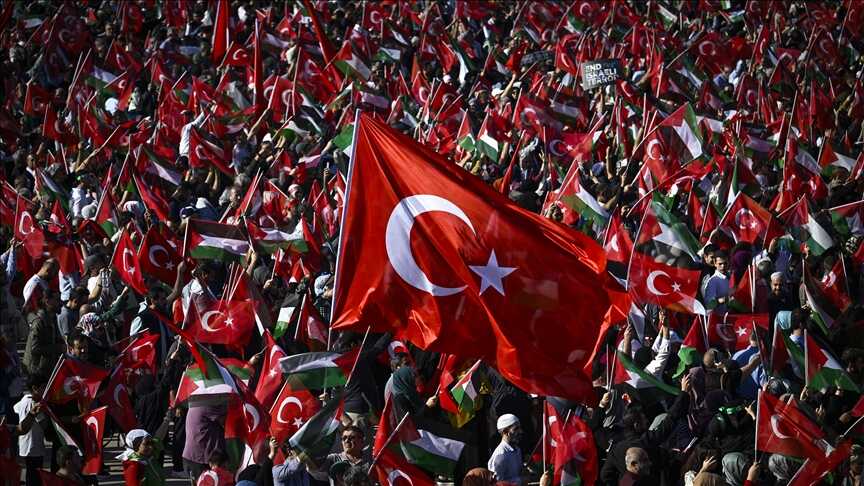
Most Turkish states witnessed demonstrations in protest against the Israeli attacks on Gaza, and in the capital, Ankara, supporters of the Anatolia Youth Association gathered in front of the parliament building, chanting slogans against Israel and its attacks on Gaza and in support of the Palestinians.


As for Istanbul, demonstrators gathered in several points, most notably in front of the Israeli consulate, in Sarash Hana Park, and in the Uskudar area.


Tunisia

Dozens of demonstrations and protest events took place in Tunisia, in support of the Gaza Strip, which is subjected to intense bombing, killing, cutting off electricity and the Internet, destroying all aspects of life, and blocking all sources of facts and information about the massacres and war crimes that are occurring.


Morocco

Last night and today, Moroccan cities witnessed massive demonstrations and protests, especially in Rabat, Casablanca, Tangier, Tetouan, Salé, Marrakesh, El Jadida, Safi, M'diq, Temara, Ait Melloul, Souk Arbaa, and others, where a number of cities witnessed more than one demonstration taking place at the same time.


Jordan

Amman and Jordanian cities witnessed popular marches, and the Website Coordination organized a stand in solidarity with the Palestinian brothers, to denounce the aggression and crimes of the occupation against the Palestinian people, the killing of innocents, and the destruction of facilities, buildings, hospitals and schools.


The Journalists Syndicate called for a solidarity stand, which it will organize next Wednesday, to denounce the aggression and crimes of the occupation against the Palestinian people, the killing of innocent people, and the destruction of facilities, buildings, hospitals and schools.


PALESTINE

Sat 28 Oct 2023 6:24 pm - Jerusalem Time

Israeli settlers attack Palestinian homes south of Hebron

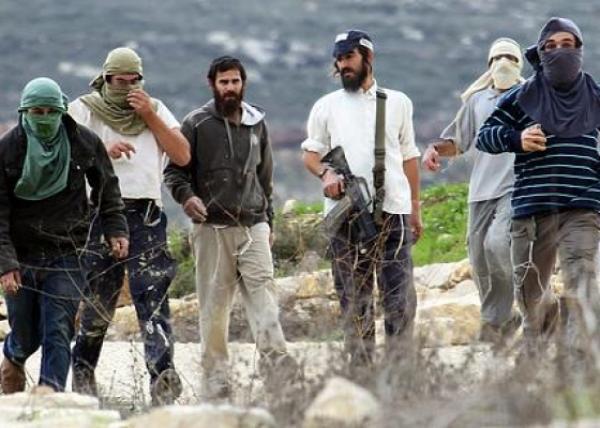
This Saturday evening, settlers attacked citizens’ homes in the village of Tuba in the town of Yatta, south of Hebron.


Our correspondent said that the settlers, protected by the occupation soldiers, attacked the homes of citizens in the village of Tuba, threw stones at them and stole them. Among the targeted homes was Issa Awad’s house.


Settlers also attacked citizens' homes in the Umm Dharit area, near the village of Sha'b al-Batm in Masafer Yatta, and carried out provocations against citizens.


Residents of the villages of Masafer Yatta stated that settler attacks have recently recorded a noticeable escalation against citizens and their property, and are now taking place almost daily, in full view of the occupation forces that provide protection for them.


The occupation forces also closed the roads leading to the villages and ruins of Al-Musafer, which connect them to the bypass line.

ARAB AND WORLD

Sat 28 Oct 2023 6:09 pm - Jerusalem Time

Erdogan: The West is responsible for genocide in Gaza and Israel is a war criminal

Turkish President Recep Tayyip Erdogan accused Western countries of responsibility for the genocidal massacres committed by the Israeli occupation forces in the Gaza Strip, stressing that Ankara is making preparations to declare Israel a war criminal before the world.


He said in a speech before a massive demonstration in support of Gaza in Istanbul, that those who were shedding crocodile tears over Ukraine are now silent about what is happening in Gaza.


Erdogan added, "We are not only condemning the massacre in Gaza here, but we are also defending our independence and our future."


The Turkish President stressed that Israel does not care about the killing of civilians in Gaza, and they say frankly and clearly, “We know killing well,” but they will pay a heavy price for that.


He stressed that Israel is an occupying state and what it is doing is not in self-defense, but rather a clear and despicable massacre aimed at eliminating the population of Gaza en masse through starvation and thirst and destroying their health services.


Erdogan reiterated that the Islamic Resistance Movement (Hamas) is not a terrorist organization.


He added, "Israel was disturbed by my statement that Hamas is not a terrorist movement, and I felt very insulted by this. I am speaking clearly because Turkey does not owe you anything, unlike Western countries."


It is noteworthy that the occupation forces are launching a violent bombardment on the Gaza Strip and yesterday began expanding ground operations, following the Palestinian resistance’s launch of Operation “Al-Aqsa Flood” on the seventh of this month in response to the ongoing Israeli violations in Jerusalem and the West Bank.

PALESTINE

Sat 28 Oct 2023 6:07 pm - Jerusalem Time

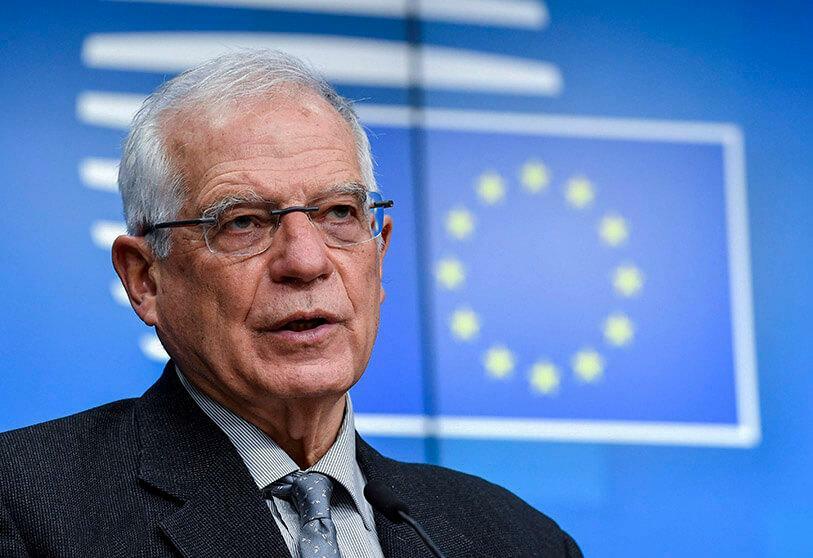
Borrell calls for a "truce" in Gaza to allow the entry of humanitarian aid

On Saturday, European Union Foreign Minister Josep Borrell called for a "truce" in the Gaza Strip to allow the entry of humanitarian aid, after a night of violent Israeli bombing.


Borrell said in a post on the “X” website, “Gaza is completely cut off from the world and isolated, while the concentrated bombing continues. A huge number of civilians have been killed, including children. This is in violation of international humanitarian law.”


The Gaza Strip has been subjected to a stifling siege since 2007, but the Israeli occupation government has tightened the siege on the Strip since the start of the aggression 22 days ago, to include cutting off electricity and water, and preventing the entry of basic materials and fuel.


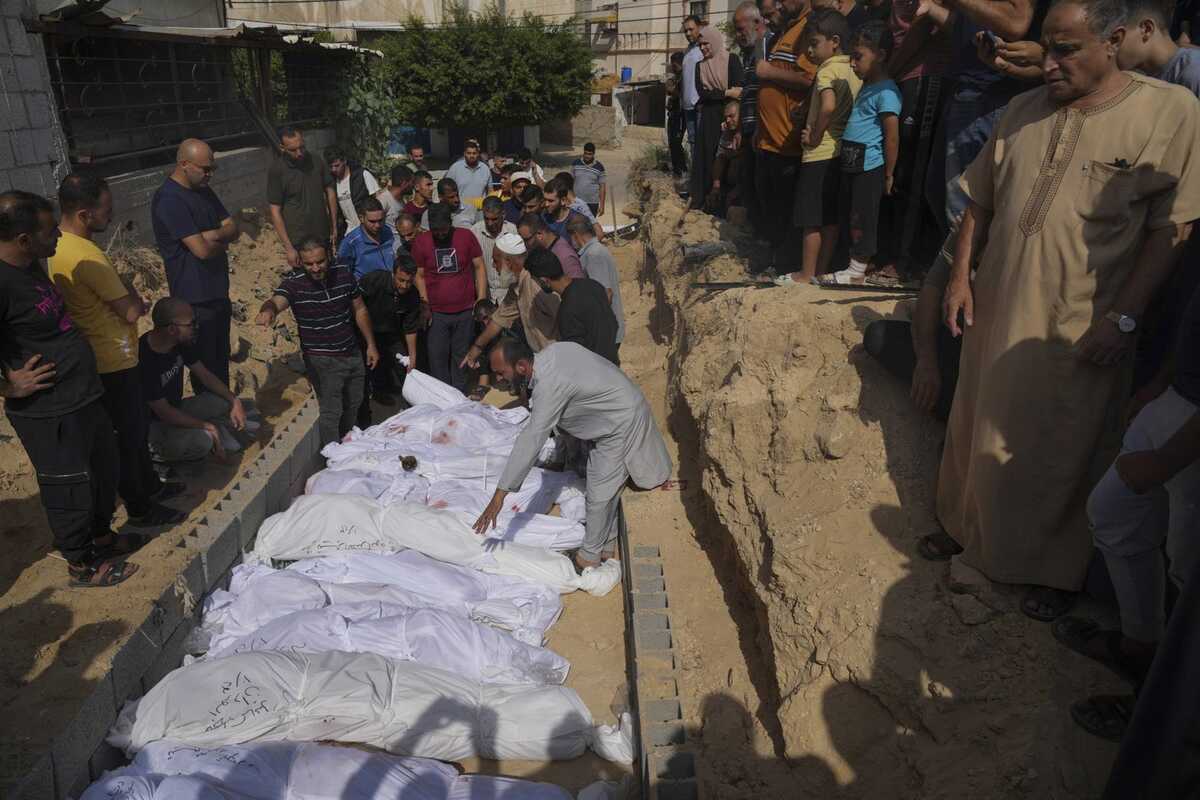
The occupation warplanes have continued to launch raids on the Gaza Strip since October 7, resulting in the death of 7,650 citizens, including 3,195 children and 1,863 women, in addition to wounding about 20,000, according to an infinite statistic.


Medical sources said that the occupation forces had committed 53 massacres in the Gaza Strip since last night and Saturday dawn, in the most violent and severe bombardment since the start of the aggression 22 days ago.


The Gaza Strip has turned into pieces of flame since the communications and Internet networks were completely cut off from the world, causing complete paralysis in the capabilities of the health system and the movement of ambulances and medical teams.

OPINIONS

Sat 28 Oct 2023 5:10 pm - Jerusalem Time

Global Opinions| Has Israel Really Changed?

by Daniel Pipes

by Daniel Pipes

Opinion Writer

An apparent sea change took place in the aftermath of Oct. 7, when Hamas massacred an estimated 1,400 Israelis. The idea of Israel attaining victory over the Palestinians went from the margins to the mainstream, from peripheral to consensual. Politicians and polls both support this idea. Israelis seem to be a transformed people. But are they?

Prime Minister Benjamin Netanyahu made victory his constant exhortation: "Victory will take time. ... Now we are focusing on one goal, and that is to unite our forces and storm ahead to complete victory." He told soldiers: "The entire people of Israel are behind you and we will deal harsh blows to our enemies to achieve victory. To victory!" And "We will emerge victorious."

"I am responsible for bringing victory." - Defense Minister Yoav Gallant

Defense Minister Yoav Gallant quoted himself informing President Biden that Israel's victory "is essential for us and for the United States." To his soldiers, Mr. Gallant declared, "I am responsible for bringing victory."

Bezalel Smotrich, the minister of finance, announced the halt "of all budgetary outlays and redirected them to one thing only: Israel's victory." He called the goal of Israel's war with Hamas to be "a crushing victory."

Benny Gantz, a member of the wartime Cabinet, deemed it "the time for resilience and victory."

But these politicians represent what is widely called "the most right-wing government in Israeli history."

What about others in the country? Many others do indeed agree that Hamas must be eliminated:

  • Naftali Bennett, former prime minister: "It's time to destroy Hamas."
  • Brigadier Gen. Amir Avivi: "We need to destroy Hamas. We need to deprive them completely from their capabilities."
  • Chuck Freilich, former deputy national security adviser (in Haaretz): "Israel must now deal Hamas an unequivocal defeat."
  • Tamir Heyman, former Israel Defense Forces intelligence chief: "We have to win."
  • David Horovitz, Times of Israel editor: "There is a war to be won."
  • Yaakov Amidror, former national security adviser: Hamas "should be killed and destroyed."
  • Meir Ben Shabbat, former national security adviser: "Israel should destroy everything connected to Hamas."

Benny Gantz, a member of the wartime Cabinet, deemed it "the time for resilience and victory."

And Israel's population as a whole? To find out, the Middle East Forum commissioned a poll on Oct. 17 of 1,086 Israeli adults. It found extraordinary support for the destruction of Hamas, for a ground operation to achieve this, and for not making concessions in exchange for formal ties with Saudi Arabia. (Shlomo Filber and Zuriel Sharon of Direct Polls Ltd. carried out the poll; it has a statistical sampling error of plus or minus 4 percentage points.)

When asked "What should be Israel's primary objective" in the current war, 70% of the public answered to "eliminate Hamas." In contrast, only 15% answered to "secure the unconditional release of captives held by Hamas" and 13% "disarm Hamas completely."

Remarkably, 54% of those Israeli Arabs (or, more technically, voters who supported the Joint List, a radical anti-Zionist Arab party), made "eliminate Hamas" their preferred objective.

Given the option of a ground operation in Gaza to eradicate Hamas or avoiding a ground operation in favor of another way to deal with Hamas, 68% chose the former and 25% the latter. This time, 52% of Israeli Arabs concurred with the majority.

A similar number of respondents, 72%, rejected making "significant concessions to the Palestinian Authority" as the price for formal ties, with only 21 percent saying yes. Here, 62% of Israeli Arabs voted with the majority.

Does this ferocity signify a fundamental shift in outlook among Jewish and Arab Israelis, or just a passing surge in emotions?

In short, a ferociously anti-Hamas and anti-Palestinian Authority mood dominates Israeli politics, with only the two left-wing parties (Labor and Meretz) in opposition. Even a majority of Israeli Arabs recognize the danger that Hamas and the Palestinian Authority pose to their safety and well-being.

The big question then is: Does this ferocity signify a fundamental shift in outlook among Jewish and Arab Israelis, or just a passing surge in emotions?

As a longtime observer and as an historian of the Palestinian-Israeli conflict, I tend to see the latter as more likely. From 1882 to the present, the two feuding parties have compiled records of remarkably sterile continuity. The Palestinians have a mentality of rejectionism (no, no, and never to everything Jewish and Israeli), while Zionists stick to conciliation (accept us and we will enrich you). The two go around and around, hardly changing or making progress.

Accordingly, I expect the inflamed Israeli mood of the moment will likely fade with time, as old patterns reassert themselves and business-as-usual returns.


Source: Middle East forum

PALESTINE

Sat 28 Oct 2023 5:07 pm - Jerusalem Time

Prisoners' Institutions: Israel is carrying out dangerous crimes against detainees in decades

Prisoners' institutions said on Saturday that the data received about the level of systematic crimes carried out by the Israeli occupation prison administration against detainees, after October 7 until today, is horrific, and reflects what was confirmed after the martyrdom of detainees Omar Daraghmeh and Arafat Hamdan.


The institutions added in a statement today, Saturday, that there is a systematic decision to assassinate detainees through systematic torture measures, in light of the comprehensive aggression against our people and the ongoing genocide in Gaza.


The institutions reviewed the most prominent measures that the prison administration continues to impose, including cutting off electricity to the detainees’ cells (their rooms), deliberately cutting off water for long periods of time, and practicing a policy of starvation, after withdrawing all food supplies from their sections, reducing meals to two meals, in addition to closing “ "Cantina", noting that meals are morsels, consisting of food that is not cooked well, inedible, and in small quantity, to the point of banning salt, sugar, and other basic needs.


The institutions explained that the heavily armed repressive forces intensified raids on all sections of detainees, accompanied by systematic abuse and severe beatings, using police dogs, stun grenades, gas, and batons, and escalated the policies of denying them treatment and transferring them to clinics or civilian hospitals for those suffering from chronic diseases.


The institutions stated that the occupation prison administration deliberately left detainees who were injured as a result of the assault on them, without treatment. It also began interrogating a number of them as a form of investigation, asking questions related to the current situation, and reduced the space available to the detainee inside the cell, after a decision by the occupation government, where the number of Detainees in one cell (room), up to more than 10.


The institutions said that the occupation administration transferred many detainees to solitary confinement cells, and has been isolating detainee Marah Bakir for more than 20 days, imposed double isolation on the detainees, and completely isolated their sections from each other.


The institutions pointed out that in the first days of the aggression, the prison administration withdrew the available television stations and electrical appliances, destroyed all the detainees’ possessions, seized their clothes, and kept one spare change for each of them, and also seized the radios, blankets, shoes, and books.


It also carried out mass transfers inside detention centers, including transferring detainees from one section to another, or one prison to another. This was accompanied by assaults and beatings on them, increased jamming devices, stopped visits by the families of detainees and their lawyers, deprived them of “freedom”, and closed the laundry, one of the most important facilities. , which they use to wash their clothes, and detainees were prevented from taking waste out of the rooms.


The institutions continued that after many attempts by institutions to submit requests for lawyers to visit detainees over the past period, the administration worked with all available tools to obstruct them, even after informing the lawyer of its approval, stressing that the visits that take place to date are very limited, and under difficult circumstances, after... The occupation deliberately assaulted and abused detainees who went out to visit a lawyer or to court, in addition to the fact that many of them suffered injuries as a result of severe beatings.

ARAB AND WORLD

Sat 28 Oct 2023 4:46 pm - Jerusalem Time

After the "complete shutdown"... Elon Musk offers to provide communications in Gaza

American billionaire Elon Musk announced that Starlink, which he owns, will support Internet connectivity for international relief organizations in Gaza.


Musk's position comes after appeals on the X platform, which he also owns, yesterday, asking him to secure the Internet for the sector following its isolation by Israel by cutting off communications and the Internet.


Local sources in Gaza and telecommunications companies confirmed on Friday that there was a complete outage of the optical fibers feeding the Internet in the Strip.


It explained that the Israeli army deliberately cut and disrupted communication and Internet lines in conjunction with violent attacks carried out by Israeli aircraft and artillery on the Gaza Strip.

PALESTINE

Sat 28 Oct 2023 4:45 pm - Jerusalem Time

The death toll from the Israeli bombing of Gaza rises to 7,700 people

The Palestinian Ministry of Health announced today (Saturday) that the death toll from the ongoing Israeli bombing of the Gaza Strip has risen to 7,703 deaths since the outbreak of war on the Strip on October 7, including more than 3,500 children so far. Palestinian Health Minister Mai Al-Kaila announced that the dead included about 70 percent of children, women, and the elderly, in addition to about 19,000 injured people, and thousands are still under the rubble, according to the official Palestinian Wafa Agency. 


The ministry said that “the occupation committed 53 massacres in a violent bombardment yesterday (Friday),” while the minister added that the humanitarian situation in the Gaza Strip is more difficult than description. Al-Kaila continued: “What is happening in Gaza is genocide. The occupation kills citizens and health teams, destroys and bombs treatment centers and ambulances, prevents the fuel needed for hospitals to operate, prevents the entry of urgent health supplies, prevents the wounded and sick from leaving the Strip for treatment, and also prevents the entry of medical teams.” On top of that, he escalated his aggression to completely separate the sector from the world by cutting off all lines of communication.”


The Minister stressed that the Ministry of Health appeals to all countries, institutions and international organizations to save the Palestinian people in the Gaza Strip, increase solidarity and international pressure to stop the aggression against humanity, and allow the immediate entry of health support in all its forms into the Strip.


Al-Kaila stated: “Citizens sheltered in shelter centers and schools suffer from the rapid spread of disease infections, lack clean water, are greatly overcrowded, and in very poor sanitary conditions, and all of this is on top of the woes they suffer as a result of being forced by the occupation to displace, bombing their homes, and killing and wounding.” “Their families.”


In a related context, Ministry spokesman Ashraf Al-Qudra said, during a press conference at Al-Shifa Medical Complex in Gaza, that the Israeli army committed 53 “massacres” during the last hours that led to the killing of 377 people in different areas of the Gaza Strip.


Al-Qudra added that medical authorities received 1,800 reports of people missing under the rubble of destroyed buildings, including about a thousand children, noting that 110 health personnel were killed and 45 health institutions were targeted in Israeli attacks, according to what the German News Agency reported. 


The spokesman for the Ministry of Health in Gaza urged the authorities Egypt agreed to open the Rafah crossing to ensure the flow of medical aid, the entry of fuel, the removal of the wounded and sick, and the entry of medical delegations to the Gaza Strip’s hospitals. Today, Israel’s war in Gaza entered its fourth week amid intense artillery shelling, an increase in ground incursions, and an interruption of communications and Internet services in the Strip.


PALESTINE

Sat 28 Oct 2023 4:03 pm - Jerusalem Time

Israeli army forces three Palestinians in Jerusalem to demolish their homes

The Israeli occupation authorities forced three Palestinian citizens, this afternoon, Saturday, to demolish their homes in the town of Beit Hanina, north of occupied Jerusalem.


Local sources reported that the houses belong to the citizens: Omar Nassar Al-Husseini, Khalil Nassar Al-Husseini, and Salah Nassar Al-Husseini.


Salah Nassar said that the three houses house about 18 people, and they will be outdoors after today, adding that the area of each house is 70 square meters.


He pointed out that the occupation authorities had notified the homes and imposed a fine on their owners after imposing a fine of 40,000 shekels.


He explained that families were forced to self-demolish their homes built 5 years ago, to avoid paying the demolition costs, which amount to about 200 thousand shekels if the occupation municipality carried it out.

PALESTINE

Sat 28 Oct 2023 3:16 pm - Jerusalem Time

Israeli settlers attack Palestinian olive pickers in the West Bank

Today, Saturday, extremist settlers attacked olive pickers in various parts of the West Bank, in a scene that is repeated every season, but this period in particular witnesses a series of brutal attacks against citizens in light of the successive developments of the Israeli aggression against the Gaza Strip and the West Bank.


In Salfit, today, Saturday, settlers from the “Beduel” settlement attacked citizens and farmers in the town of Kafr al-Dik, west of Salfit, with live bullets, and prevented them from reaching their lands to pick olives.


Local sources reported that the settlers forced all farmers in the western area of the town to leave their lands, amid heavy live ammunition, and under the protection of the Israeli occupation army.


Dozens of colonists from the “Refafa” colony attacked olive pickers in Derastiya and Haris, and forced them to leave their lands at gunpoint, with the protection of occupation soldiers.


In Hebron, armed colonists attacked olive pickers in the Sha’b al-Butm area in Masafer Yatta in the south, while they were picking olives on their lands.


Colonists also detained citizens’ sheep in the Al-Daraj area in the Badia, east of Yatta, and prevented shepherds from receiving them.


Dozens of colonists uprooted 10 perennial olive trees, accompanied by the occupation army in Qusra, even though the area where the farmers were picking olives is located in Area B, and does not require coordination.


In Ramallah, colonists raided the “Al-Shorfa” area in the village of Deir Jarir, east of Ramallah, and stole special olive-picking equipment, at gunpoint, belonging to citizen Jad Samih.


In Tulkarm, dozens of colonists assaulted citizens while they were picking olives in the Al-Qurain area, near Khirbet Al-Hamam.

ARAB AND WORLD

Sat 28 Oct 2023 2:15 pm - Jerusalem Time

Biden meets with the Chinese Foreign Minister in Washington

US President Joe Biden met with Chinese Foreign Minister Wang Yi.


Wang, who is also a member of the Political Bureau of the Central Committee of the Communist Party of China, initially conveyed Chinese President Xi Jinping's greetings to Biden.


Wang added that the ongoing visit aims to communicate with the American side to continue implementing the important joint understandings reached by the two heads of state, and to move forward from the Xi-Biden summit in Bali towards a summit in San Francisco, in order to prevent further deterioration in bilateral relations and restore relations between the two countries. China and the United States to the path of healthy and steady development soon.


Wang said that the one-China principle and the three joint communiques between China and the United States are the most important political foundation for bilateral relations, and should be adhered to without interference.


He said that China responds to the United States' hope to stabilize and improve relations with China, adding that the two sides need to work out of a sense of responsibility towards the world, history and people, and push for the steady and sound development of China-US relations in line with the three principles of mutual respect and coexistence. Peaceful and win-win cooperation proposed by Xi.


Wang said that this not only serves the fundamental interests of the two countries and peoples, but also serves the common aspirations of the international community.


For his part, Biden extended his greetings to Xi.


He explained that he pays attention to US-China relations, expressing the United States' readiness to maintain communication with China to jointly confront global challenges.
During his visit to Washington, Wang also held two rounds of talks with US Secretary of State Antony Blinken, and held strategic communications with US National Security Advisor Jake Sullivan.

PALESTINE

Sat 28 Oct 2023 2:13 pm - Jerusalem Time

Hamas leader Abu Marzouk provides clarifications regarding the fate of the nationalities of Hamas prisoners

Hamas leader Musa Abu Marzouk provided clarifications regarding the characteristics, nationalities, and fate of the prisoners of Operation Al-Aqsa Flood, which was launched by the Palestinian resistance against the Israeli occupation on October 7.


Abu Marzouk spoke about the prisoners held by Hamas, and other prisoners held by ordinary citizens and other factions.


Prisoners held by Hamas

Abu Marzouk explained that Hamas is holding about 200 prisoners, and considers them all Israelis, and does not give consideration to some of them holding other nationalities in addition to Israeli citizenship.


The Russian Information Agency quoted him as saying, "Hamas does not consider its captives to be Russian, French, or American."


"All those captured, for us, are Israelis although there is an appeal to look at their original nationalities in the hope that this will save them," he said.


Earlier, Russian media quoted leaders of the movement as saying that the movement considers all its prisoners to be Israelis, regardless of the additional passports they have, and it cannot release any of them until Israel agrees to a ceasefire.


Abu Marzouk said that Russia, the United States, France, Spain, Italy and many other countries called for the release of their citizens from among more than 200 prisoners held by Hamas.


Prisoners held by other parties

Regarding the prisoners held by parties other than Hamas, Abu Marzouk explained that “the movement needs time to search for them, classify them, and then release the civilians among them who do not hold Israeli nationalities.”


Abu Marzouk said, "After the Israeli army's defense lines were broken and the army's Gaza division fell, hundreds of citizens and dozens of fighters from various Palestinian factions entered the territories occupied in 1948 and arrested dozens, most of them civilians."


He stated, "Hamas presented from the first day its vision regarding civilian prisoners, which is that we want the release of all civilian detainees and foreigners who do not hold Israeli citizenship," adding that these "are our guests until the appropriate conditions are available for their release."


He said that these guests could not be released in light of the intense Israeli bombing, as the destructive force of the Israeli bombs that fell on Gaza during the past 20 days was equivalent to the nuclear bomb that struck Hiroshima.


The Russian newspaper Kommersant quoted another member of the Hamas delegation as saying that the movement needs time to locate all those transferred by various Palestinian factions from Israel to Gaza.


Source: Al Jazeera

PALESTINE

Sat 28 Oct 2023 1:39 pm - Jerusalem Time

Palestinian Minister of Health: Israel kills all hope of survival in the Gaza Strip

Last night was tragic and witnessed the heaviest bombing


Health Minister Mai Al-Kaila said that the Israeli occupation is killing every hope of survival for the wounded and those trapped under the rubble every day due to its barbaric aggression against the Gaza Strip for the 22nd day, after a complete cut off from the outside world.


Minister Al-Kaila stated, in a press statement issued today, Saturday, that many massacres were committed by the Israeli violence machine against our people in the Gaza Strip last night, under a complete loss of electricity and communications, which hindered the arrival of ambulance and rescue crews to the bombing sites, and completely obstructed the communication of medical teams and hospitals. And ambulance centers among them.


She explained that the humanitarian situation in the Gaza Strip is more difficult than description, as since the beginning of the Israeli aggression on the seventh of this month, more than 7,300 citizens have been martyred, including about 70% of children, women, and the elderly, in addition to the injury of about 19,000, and thousands are still injured. Under the rubble.


She pointed out that “what is happening in Gaza is genocide, as the occupation kills citizens and health teams, destroys and bombs treatment centers and ambulances, prevents the fuel needed for hospitals to operate, prevents the entry of urgent health supplies, prevents the wounded and sick from leaving the Strip for treatment, and also prevents the entry of medical teams.” On top of that, he escalated his aggression to completely separate the sector from the world by cutting off all lines of communication.”


The Minister stressed that the Palestinian Ministry of Health has appealed - since the beginning of the Israeli aggression - to all countries, institutions and international organizations to save our people in the Gaza Strip and increase solidarity and international pressure to stop the aggression carried out by the occupation against humanity, and to allow the immediate entry of health support in all its forms into the Strip.


Al-Kaila stated, “Citizens sheltering in shelter centers and schools suffer from the rapid spread of disease infections, lack clean water, and are greatly overcrowded, in very poor sanitary conditions, and all of this is on top of the woes they suffer as a result of the occupation forcing them to displace, bombing their homes, and killing and wounding them.” "Their families."


PALESTINE

Sat 28 Oct 2023 1:39 pm - Jerusalem Time

Nablus: Israeli army closes the entrance to Burqa with cement cubes

Today, Saturday, the Israeli occupation forces closed the entrance to the town of Burqa, northwest of Nablus, with cement cubes.


Local sources reported that occupation vehicles stormed the town of Burqa, accompanied by a military bulldozer, and closed the main entrance to the town with cement cubes. They also closed one of the subsidiary entrances to the town of Tal, southwest of Nablus, with dirt berms.

ARAB AND WORLD

Sat 28 Oct 2023 1:20 pm - Jerusalem Time

Russia maneuvers carefully over the Israel-Hamas war as it seeks to expand its global clout

Putin expects to distract attention from the fighting in Ukraine and erode support for Kyiv, but the war could damage its relationship with Israel.


Russia has issued carefully calibrated criticism of both sides in the war between Israel and Hamas. But the conflict also is giving Moscow bold new opportunities — to advance its role as a global power broker and challenge Western efforts to isolate it over Ukraine.


While Moscow lacks leverage to mediate a settlement in the Middle East, it could try to play on some perceived credibility problems with the West’s response to the crisis. It also expects the Israel-Hamas war to distract attention from the fighting in Ukraine and erode support for Kyiv. There are risks for Moscow, however. It could damage its relationship with Israel, which until now has kept it from sending weapons to Ukraine.Russian President Vladimir Putin has condemned the Oct. 7 attack by Hamas militants on towns in southern Israel. 

At the same time, he warned Israel against blockading the Gaza Strip, likening it to Nazi Germany’s siege of Leningrad during World War II. He has cast the war as a failure of U.S. diplomacy, charging that Washington has opted for economic “handouts” to the Palestinians and abandoned efforts to help create a Palestinian state.


Putin declared earlier this month that Moscow could play the role of mediator, thanks to its friendly ties with both Israel and the Palestinians, adding that “no one could suspect us of playing up to one party.” Despite that claim of even-handedness, a U.N. Security Council resolution that Russia submitted last week condemning violence against civilians made no mention of Hamas. It was rejected by the council. 


China was among a few countries that backed the Russian draft, reflecting a shared stance by Moscow and Beijing. Chinese and Russian Middle East envoys met last week to discuss working together to help cool the situation, noting their adherence to a two-state solution for Israel and the Palestinians.While U.S. President Joe Biden, British Prime Minister Rishi Sunak and other Western leaders visited Israel to show support, Putin waited for nine days before calling Israeli Prime Minister Benjamin Netanyahu, even though they previously had developed warm personal ties. 


Putin also discussed the war in calls with the leaders of Egypt, Iran, Iraq, Syria and the head of the Palestinian Authority. Putin offered Netanyahu condolences to the families of Israelis killed by Hamas and emphasized “his strong rejection and condemnation of any actions that victimize the civilian population, including women and children,” according to a Kremlin readout of the call. He also emphasized the need for a “peaceful settlement through political and diplomatic means,” it added.


Netanyahu’s office said he told Putin that Israel would not stop until it had eliminated Hamas. Unlike Putin, who carefully balanced his statements, other Russian officials were more blunt in their criticism of Israeli strikes on Gaza. Konstantin Kosachev, deputy speaker of the upper house of Russian parliament, said that while Hamas unleashed the war, Israel’s response was “disproportionate” and “inhumane.”

The Kremlin’s maneuvering may reflect domestic politics, with Muslims making up about 15% of the its population. The Moscow-backed leader of Chechnya, Ramzan Kadyrov, spoke strongly in support of the Palestinians, assailing Israel for capturing their lands and establishing blockades.Moscow’s stance won quick praise from Hamas, which said it appreciates Russia’s call for a cease-fire. 

Russia’s statements also play well in the Arab world, where many have accused the U.S. and its allies of squarely supporting Israel while turning a blind eye to the rising civilian death toll in Gaza. But this position also threatens Russia’s friendly ties with Israel, which hasn’t joined Western sanctions against Moscow or given weapons to Ukraine. “There is a real threat of exacerbation of our ties with Israel in the current situation,” said Andrei Kortunov, academic director of the Russian International Affairs Council.


The Times of Israel reported Tuesday an Israeli diplomat expressed “displeasure with the role Russia is playing” to Moscow’s diplomatic officials, voicing hope the Kremlin will take “more balanced” positions. Amir Weitmann, a leading member of Netanyahu’s Likud party, accused Russia of supporting Hamas. Speaking on Kremlin-funded broadcaster RT, he warned that after Israel defeats Hamas, “we will make sure that Ukraine wins, we will make sure that you pay the price for what you have done.”

Asked about Israeli criticism of Moscow’s stance on the war, Kremlin spokesman Dmitry Peskov emphasized Russia’s condemnation of terrorism and reaffirmed its push for a quick cease-fire and the need for a Palestinian state. 

Amid what Israel sees as Moscow’s pro-Palestinian stance, some prominent Russian voices have backed Israel. In a sign of the split sympathies, the head of the most popular political talk show on Russian state TV, Vladimir Solovyov, fired one expert on his televised panel who alleged in an online interview that two of Moscow’s top diplomats have anti-Israeli sentiments. Yevgeny Satanovsky, a pro-Kremlin foreign policy expert, described Russia’s Middle East envoy, Deputy Foreign Minister Mikhail Bogdanov, as leaning toward Arab countries and alleged that Foreign Ministry spokesperson Maria Zakharova detests Israel.  He later apologized.


Some commentators described the anti-Israeli sentiments as a throwback to Soviet times. “Friendship with the Arabs against Israel and the West is an important part of that legacy,” Alexander Baunov of the Carnegie Russia Eurasia Center said in an analysis. “A global rebellion against the Western order to a certain extent makes Russia and Hamas natural allies and certainly prevents them from being enemies.”


Kortunov of the Russian International Affairs Council argued that Russia could use its strong contacts with Iran and Syria to help negotiate a settlement. “Russia could be part of a multilateral coalition that would offer security guarantees,” he said. “It’s very important to maintain a well-balanced, delicate approach that wouldn’t alienate either party.” Izabella Tabarovsky, senior adviser at the Kennan Institute, noted that for Putin, Hamas’ “attack and the anticipated ground invasion of the Gaza Strip present an opportunity to shed his pariah status and elevate his profile as the Middle East faces its most dangerous crisis in years.”


Source: Elpais


ARAB AND WORLD

Sat 28 Oct 2023 1:03 pm - Jerusalem Time

Open letter to President Biden: we call for a ceasefire now, Judith Butler, Masha Gessen, Rachel Kushner, Ben Lerner, V (formerly Eve Ensler) and others

We are a group of Jewish American writers, artists and academics. We oppose what the Israeli government is doing with US assistance


President Joe Biden: We are a group of Jewish American writers, artists and academics. Being Jewish means different things to all of us, but we all have at least one Jewish parent, which means we could move to Israel and qualify for Israeli citizenship. We condemn attacks on Israeli and Palestinian civilians. We believe it is possible and in fact necessary to condemn Hamas’ actions and acknowledge the historical and ongoing oppression of the Palestinians. We believe it is possible and necessary to condemn Hamas’ attack and take a stand against the collective punishment of Gazans that is unfolding and accelerating as we write. 


Cutting off resources to more than 2 million people, demanding families flee their homes in the north, indiscriminately bombing a trapped population – these are war crimes and indefensible actions. And yet the United States government is offering “moral” and material support for the dehumanization and murder of innocent Gazans. We write to publicly declare our opposition to what the Israeli government is doing with American assistance. We call on the US government to seek an immediate ceasefire and to use our resources towards providing aid ensuring the safe return of hostages and building a diplomatic path towards peace. 


As Jews, as Americans, we will be made to feel a sense of safety in our communities, and in the world, not by unequivocal US support for Israel, but by our government’s insistence on the universal human rights that so many of us take for granted.


Timo Andres Annie Baker Nico Baumbach Susan Bernofsky Judith Butler Michael Chabon Deborah Eisenberg Madeleine George Masha Gessen Francisco Goldman Andre Gregory Nan Goldin Alena Graedon Amy Herzog Marianne Hirsch Gabriel Kahane Cindy Klein David Klion Lisa Kron Rachel Kushner Tony Kushner Ben Lerner Jonathan Lethem Sam Lipsyte Zachary Lockman Kenneth Lonergan Andrew Marantz Ben Marcus David Naimon Benjamin Nugent Howard Rodman Dana Sachs Ira Sachs Lynne Sachs James Schamus Adam Shatz Wallace Shawn Leo Spitzer V (formerly known as Eve Ensler)Paula Vogel Ayelet Waldman Laura Wexler Hannah Zeavin

ARAB AND WORLD

Sat 28 Oct 2023 12:26 pm - Jerusalem Time

Washington: We do not set red lines for Israel in Gaza

Kirby: “We have been in close contact with Israel since the beginning of the clashes,” he described, adding: “We did not hesitate to express our concerns about civilian casualties, and the approach they may choose to take. This is what friends do, and we are friends.”


White House National Security Council spokesman John Kirby said that the United States does not set red lines for Israel in its attacks on the Gaza Strip.


In a press conference at the White House on Friday evening, he expressed his country's absolute support for Israel, saying, "We continue to support Israel's security requirements, and we will continue to do so."


He stressed that the United States “has been in close contact with Israel since the beginning of the clashes,” as he described it, adding: “We did not hesitate to express our concerns about civilian casualties, civilian casualties, and the approach they may choose to follow. This is what friends do, and we Friends," according to "Anadolu" in a report published today, Saturday.


For 3 weeks, Israel has been waging a war on the Gaza Strip called “Iron Swords,” which destroyed entire neighborhoods and, according to the latest statistics available on Friday evening, killed 7,326 martyrs, including 3,038 children, 1,726 women, and 414 elderly people, in addition to injuring 18,967 others with various injuries.


ARAB AND WORLD

Sat 28 Oct 2023 12:22 pm - Jerusalem Time

Erdogan: Israel must immediately emerge from the “state of madness”

Erdogan in a blog post: The intensification of the Israeli bombing of Gaza last night, targeting women, children and innocent civilians once again, has increased the deep humanitarian crisis in the Strip.


Turkish President Recep Tayyip Erdogan called on Israel to immediately break out of its “state of madness” and stop its attacks on the Gaza Strip.


He said in a blog post on the “X” platform on Saturday that the intensification of the Israeli bombing of Gaza last night, targeting women, children and innocent civilians once again, increased the deep humanitarian crisis in the Strip.


He added: "Israel must immediately come out of the state of madness and stop its attacks."


He concluded by saying: "I invite all my brothers to the large Palestine gathering at Ataturk Airport in Istanbul today, where we will make these calls stronger and shout that we stand with the Palestinian people against Israeli oppression."


At dawn on October 7, the Hamas movement and other Palestinian factions in Gaza launched Operation “Al-Aqsa Flood,” in response to “the continuing attacks by Israeli forces and settlers against the Palestinian people, their property, and their sanctities, especially Al-Aqsa Mosque in occupied East Jerusalem.”


On the other hand, the Israeli occupation army launched Operation “Iron Swords” and continues to launch intensive raids on many areas in the Gaza Strip, which is inhabited by more than two million Palestinians who suffer from deteriorating living conditions as a result of an ongoing Israeli siege since 2006.


PALESTINE

Sat 28 Oct 2023 12:17 pm - Jerusalem Time

New York: Thousands of Jews paralyze Grand Central trains and arrest 300 demonstrators against the aggression on Gaza.

The massive sit-in was organized by the group Jewish Voice for Peace-New York City, which said several thousand people blocked the station's main hall. She confirmed that it was "the largest act of civil disobedience that New York City has witnessed in twenty years."


Hundreds of people were arrested on Friday in New York during a demonstration organized by a Jewish movement to protest the Israeli occupation’s bombing of the Gaza Strip, according to police and organizers.


The New York Police Department announced the arrest of at least 200 people, while organizers confirmed that the arrests included 300 people during the dispersal of the gathering inside Grand Central Station.


Pictures taken at the scene showed long lines of young men with their hands tied and wearing cotton T-shirts reading “Not in our name” and “Ceasefire now.”


The large sit-in was organized by the group "Jewish Voice for Peace-New York City", which said that several thousand people blocked the main hall of the station. She confirmed that it was "the largest act of civil disobedience that New York City has witnessed in twenty years."


Scenes showed the station crowded with protesters who raised banners reading “Freedom for the Palestinians” and “Mourn for the dead and fight for the living.”


The rabbis kicked off the gathering by lighting holiday candles on the Sabbath and reciting the Jewish prayer for the dead.


Rabbi May Yee said in a statement published by the organizers, “The Sabbath is usually a day of rest, but we cannot rest while genocide is being committed in our name.”


She added, "The lives of Palestinians and Israelis are closely intertwined, and security can only come from establishing justice, equality, and freedom for all."


The Ministry of Health of the Hamas movement, which controls the Gaza Strip, announced that 7,326 people were killed, most of them civilians, including more than three thousand children, in the Strip as a result of the heavy bombing operations launched by the Israeli occupation in response to the attack on October 7.


PALESTINE

Sat 28 Oct 2023 12:08 pm - Jerusalem Time

Israel arrests at least 25 Palestinians from the West Bank


Since October 7, more than 1,555 arrests have been recorded


Last night and at dawn today, Saturday, the Israeli occupation forces arrested at least 25 citizens from the West Bank, including journalist Sajoud Assi, to pressure her husband, journalist Muhammad Badr, to surrender himself. The arrest operations were concentrated in the Jalazoun camp/Ramallah, and in the Bethlehem governorate, while the rest were distributed Arrests in the governorates of: Hebron, Nablus, Tulkarm, and Jerusalem.


The Prisoners' Commission and the Prisoners' Club stated that this campaign of arrests is the smallest since October 7, the date of the start of the Battle of Al-Aqsa, compared to the previous days, noting that the occupation has arrested more than 1,555 citizens from the West Bank since the beginning of the comprehensive aggression against our people in Gaza. These data on arrest cases include those who were arrested from homes, through military checkpoints, those who were forced to surrender themselves under pressure, and those who held their family members hostage.


It is noteworthy that the occupation forces demolished the house of prisoner Bagis Nakhleh from Al-Jalazoun Camp / Ramallah at dawn today, which is the second house that the occupation forces demolished during the month of October. They had previously bombed the house of prisoner Maher Shalon from Aqabat Jabr Camp / Jericho. .


It is noteworthy that the occupation authorities escalated the crime of “collective punishment” carried out by the occupation at various levels and tools, remarkably during this year, which was one of the bloodiest years.

PALESTINE

Sat 28 Oct 2023 12:04 pm - Jerusalem Time

A Palestinian citizen was killed by Israeli settler south of Nablus

The Ministry of Health announced the death of a citizen this Saturday morning, shot by a settler in the town of Al-Sawiya, south of Nablus.


The Health Ministry explained, in a brief statement, that the citizen, Bilal Muhammad Saleh (40 years old), died from serious wounds, sustained by a bullet in the chest fired at him by a settler in the town of Al-Sawiya.


The death toll in the West Bank since the seventh of this month has risen to 111 martyrs and 1,950 wounded.

OPINIONS

Sat 28 Oct 2023 11:43 am - Jerusalem Time

Global Opinions| Israel’s War Aims and the Principles of a Post-Hamas Administration in Gaza

 Robert Satloff , Dennis Ross and David Makovsky

Robert Satloff , Dennis Ross and David Makovsky

Opinion Writer

By Robert Satloff , Dennis Ross and David Makovsky

t’s not too early to think about the “day after” the war—even preliminary planning to create an interim administration will help clarify objectives for Israel’s leaders, sustain U.S. support, provide a more positive alternative future for Palestinians, and give Arab allies a rationale to play a more constructive role.


In describing the aims of Israel’s war against an organization that perpetrated the worst mass murder of Jews since the Holocaust, Prime Minister Binyamin Netanyahu declared, “We will crush and destroy Hamas.” Precisely what that means in practice, however, is not clear.

Prominent Israeli voices—ministers, officials, and generals past and present—have offered a range of potential objectives, from disarming Hamas and stripping it of the capability to ever mount such an attack again, to retaking the Gaza Strip nearly two decades after ceding it to Palestinian control. Some current officials (such as Intelligence Minister Gila Gamliel) have said it is too early even to define these goals, noting that this should be done only after battlefield victory. But it is difficult to see how Israel will know it has achieved victory without defining it in advance and preparing for the day after.


True, Israel’s desired outcome may be forcibly scaled back by the unpredictability of war, following the adage that no military plan survives contact with the enemy. Yet it still makes sense to define an outcome now and begin planning for it even if circumstances may force change along the way. Having a clear, feasible objective will dull the critique that this war is intended solely as retribution for Hamas’s barbaric attack; it will also provide a banner around which Israel’s allies can advocate its cause, and an umbrella under which vulnerable Arab peace partners can wait out the fighting.


General Principles

Israel’s most logical objective is to end Hamas control of Gaza, since only that outcome will prevent the group’s leaders from rising out of the rubble of war to declare victory just by surviving Israel’s bruising might. Other outcomes are unlikely to meet Jerusalem’s three most critical needs:

  1. To guarantee Hamas cannot launch attacks in the future.
  2. To restore Israelis’ confidence that their government and army can provide for their security.
  3. To reestablish Israel’s deterrent power in the eyes of friends and adversaries around the Middle East.

Ending Hamas rule does not mean eliminating every Hamas supporter or every sign of the group’s influence. But it is a big goal, especially given two formidable complications on the ground—namely, Hamas and other groups are holding approximately 200 hostages, and ending Hamas rule would require enormous military effort throughout Gaza over an extended period, both on the surface and against the group’s vaunted, booby-trapped tunnel system.

In a war with a goal so defined, victory will not be swift or easy. America’s role will be threefold:

  1. To help Israel achieve that objective at the lowest possible cost of injury to Palestinian civilians.
  2. To deter Israel’s other enemies so it can focus on achieving success as quickly as possible.
  3. To help Israelis and Palestinians start planning now for the governance vacuum that would result from ending Hamas rule, so that destabilizing actors do not fill the void.

Given these needs and objectives, the following general principles should govern planning for the postwar situation:

From a U.S. perspective, Israel should leave Gaza as soon as the military task is complete and avoid reoccupying the area. At the same time, it would be a mistake for Israel to destroy Hamas and then leave Gaza as an ungoverned space without a clear sense of what comes next. With help from other actors, Washington has a unique role to play in ensuring that a plan is ready to be implemented once the IDF withdraws, such that Israel is confident about what will fill the vacuum of its departure.

The ultimate goal should be for the Palestinian Authority to return as Gaza’s legitimate government. Yet the PA lacks the will and ability to do that job in the foreseeable future—it does not want to be seen as reentering the Strip on the backs of Israeli tanks, and it is not in any shape to take on additional governmental responsibilities in Gaza given its failings in the West Bank.

Therefore, the situation demands the establishment of an interim administration to run Gaza until the PA is able to assume that role. The duration of this interim period depends on meaningful, substantive PA reform, without which neither local Palestinians nor international donors would have confidence in the PA’s ability to extend its authority to Gaza. Such reform would also have the crucial benefit of boosting the PA’s legitimacy in the West Bank.


Contours of an Interim Administration

Aproposed Gaza Interim Administration (GIA) should have three main components: (1) a civilian administration, (2) a public safety/law enforcement apparatus in which Arab state contingents play a central role, and (3) an international coalition for reconstruction and development.

The civilian administration of post-Hamas Gaza should be led and run by Palestinians. Under the leadership of a Palestinian “Chief Administrator,” the departments of a fully functioning local government—health, education, transportation, judiciary, social welfare, etc.—would be run by a mix of technocrats from Gaza, the West Bank, and the Palestinian diaspora, as well as significant local personalities from Gaza towns and clans. During the tumultuous interim period, the UN Relief and Works Agency (UNRWA) could continue to provide existing food, health, and education services—no more and no less than in the past. Its long-term status could be reviewed in the context of the PA’s eventual return to the area.


Public safety and law enforcement could be directed by a consortium of the five Arab states who have reached peace agreements with Israel—Egypt, Jordan, the United Arab Emirates, Bahrain, and Morocco. Only those Arab states would have Israel’s confidence, which is essential for this effort to succeed. Special care should be taken to ensure that this is not viewed as an “occupation force,” which both the contributing nations and local Palestinians would reject. Instead, it should be presented and structured as a “public safety force.” To that end, contributing states should send police or gendarmerie detachments, not regular military units. Moreover, the force should be commanded by an officer from a country that has no territorial connection to Palestinian areas, such as Morocco. Liaison offices could then be established with the Israeli and Egyptian militaries, the latter of which would have a special role reflecting Cairo’s unique status as Gaza’s direct Arab neighbor. These offices would provide a forum for cooperation on border issues and the flow of goods and people.


International donors, UN and other international aid agencies, and international NGOs would work with the Gaza civil administration under the umbrella of a new agency responsible for repair, reconstruction, and development. This should be an Arab-run effort, perhaps chaired by the UAE, which is a peace partner with Israel, holds the financial resources to be a substantial donor, and has the global reputation and professional acumen to manage such an operation. This agency would oversee the immediate repair and reconstruction of utilities and other public works, as well as identify major projects, raise funds for them, and execute major project development. Billions of dollars would be needed for projects such as creating a new Gaza port and building new industrial zones to provide employment options. (Israel is unlikely to readmit Gazan workers anytime soon after some apparently played a role in the October 7 Hamas assault, either directly or by providing intelligence for the attackers.) Saudi participation in the repair/reconstruction effort would also be important for the plan’s overall success, and could be framed as part of Riyadh’s commitment to reopen a path to Israeli-Palestinian peacemaking.


Although Arab administrators, officers, and officials—including Palestinians—should take the lead in all these efforts, there is also a vital role to play for the United States and other supporters of a peaceful, constructive, hopeful future for Palestinians. Numerous actors—from European partners to specialized UN agencies—will be at the table, but only America can mobilize and organize this effort and ensure that all its elements are implemented. Part of the U.S. role is financial; part is lending expertise to the processes of administration and reconstruction; part is ensuring smooth relations between Israel and the three legs of the GIA; and part is providing international legitimacy for the entire effort.

Regarding legitimacy, the best option would be to secure a UN Security Council mandate for this plan, though Russia and China would likely aim to complicate such efforts. The Security Council could also empower the Arab League to authorize this plan as an intermediate actor, but there too, actors such as Syria, Lebanon, Algeria, and Tunisia may get in the way. Alternatively, this effort could be placed within the mandate of the UN Special Coordinator for the Middle East Peace Process, which may not require further Security Council action.


Ultimately, however, it might be necessary to build the GIA as a coalition of the willing. If it has strong support from major international actors and backing from the most influential Arab states, the initiative will have a reasonable chance to move forward.

Throughout, a necessary but sensitive issue will be ongoing liaison between the GIA and Israel. In a world where Hamas is no longer a political or military force in Gaza, Israel should be willing to allow the seaport and Egyptian land border to operate with a much less intrusive inspection system for the movement of goods and services. After all, the blockade that Israel sustained to varying degrees over the years did not prevent the group from acquiring what it needed to mount the terrible attacks of October 7—rather, it produced enormous public ill will and opportunities for corruption. Still, Israel has a critical role to play at least early in the transition, when it can help with electricity provision, fuel, and the transit of goods—recognizing that the long-term goal should be for Gaza to provide these goods itself.


Intimate liaison with the GIA’s civil governance, public safety, and reconstruction legs is essential to giving Israel confidence that the new system will not allow the reemergence of Hamas or the growth of another, potentially even more radical movement. At the same time, Israel would need to retain as much of an over-the-horizon presence as possible given that the IDF will have just operated in virtually every corner of the Strip rooting out Hamas.


The GIA should also have an organic link to the PA, even though it will operate independently within the framework described here. The GIA’s initial mandate could spell out a limited duration—say, three years—after which its operation should be open for renewal and linked directly to the process of PA reform. Two colliding principles are at work here: that “nothing is as permanent as the temporary” and that “it is better to get it right than to get it over.” The United States and other major actors will be responsible for finding the right balance in this regard.


Conclusion

These principles are not carved in stone. Rather, they should be viewed as springboards for serious discussion of governance in post-Hamas Gaza, and as ideas that will almost certainly morph in different directions with input from various international and Middle East actors and under the impact of events on the ground. With Israel poised to begin ground operations in Gaza, some may believe it is premature to focus on postwar architecture. Yet now is precisely the right moment to begin this exercise so that a well-crafted plan is ready once military operations transition to political outcomes. If key actors wait for the battlefield fog to clear before engaging on these issues, it may be too late.

Robert Satloff is the Segal Executive Director at The Washington Institute. Dennis Ross, the Institute’s counselor and William Davidson Distinguished Fellow, formerly served as U.S. point man on the Israel-Palestinian peace process. David Makovsky, the Institute’s Ziegler Distinguished Fellow and director of its Koret Project on Arab-Israel Relations, formerly served as senior advisor to the State Department’s special envoy for Israeli-Palestinian negotiations.


Source: Washington Institute for Near East Policy 

OPINIONS

Sat 28 Oct 2023 11:27 am - Jerusalem Time

Global Opinions| The belief that Hamas would abandon ideology for economic gain led to disastrous consequences.

David Makovsky

David Makovsky

Opinion Writer

Whether deliberate or a cruel historic irony, it is remarkable that the Hamas’ barbaric massacre on October 7, which killed 1,400 and injured over 3,300 Israelis, came fifty years and a day after the 1973 war. That war was defined by strategic surprise: Egypt and Syria attacked Israel on the holiest day of the year. 


The postwar Agranat Commission of Inquiry investigated not just the operational surprise but the conceptual failure. This became known as the “conceptzia”: the governing assumption that convinced key Israeli military figures Egypt, unable to engage in the necessary deep penetration bombing of Israel, would not start a war it could not win.


In 1973, the conceptzia was shattered because the Israelis defined Egyptian success differently from President Anwar Sadat. Sadat believed if he were only able to cross the Suez Canal, he would shatter the aura of invincibility Israel had enjoyed since its lightning six-day victory in the 1967 war.

So what was the conceptzia of 2023? Its shattered governing assumption was that under the heavy burden of governing the Gaza Strip, Hamas would feel the need to prove itself through economic performance. Specifically, economic inducements towards Hamas would moderate its foundational belief that Israel is an illegitimate entity whose very existence must be extinguished and its citizens killed. 


This Israeli conceptzia was driven by many factors, but at its core, it was based on the idea that Hamas was undergoing an organizational evolution in which it would now value even modest increases in living standards in Gaza. Economic advancement would bring calm, as it gave Hamas something to lose. According to this view, Hamas was willing to sacrifice at least some of its ideology on the altar of accommodating itself to the reality of governance.


This basic assumption was similarly held by many American and European diplomats. Israeli officials were also hopeful that it was possible to reach what became known as the “hasdara” or arrangement. If ideology was exacerbated by miserable conditions in Gaza, then perhaps the reverse could be true. Economic improvement could modify ideological zeal. 

Tragically, this doctrine was proven a complete failure on October 7.How much of this conceptzia was built on strategic deception by Hamas, and how much by wishful thinking from Israel or other Western countries? Both likely played a role. For its part, Hamas strongly indicated that it sought stability in Gaza in order to deepen its presence and enhance its threat in the West Bank. Furthermore, it made clear that it appreciated the fact that 17,000-20,000 Gazans worked in Israel, where they received salaries ten times above the average wage in the Strip. 


As it turns out, perhaps forcibly, it used the workers in Israel to extract intelligence details about neighboring villages. How many kids are in each room? Which families have dogs? These details were part of the intelligence manuals found on Hamas terrorists who were killed on October 7. 


Finally, Hamas favored a 2019 UN and Egyptian arrangement whereby it would halt violent demonstrations at the Israel-Gaza border and stop launching incendiary balloons to burn Israeli fields in exchange for $30 million a month in Qatari funding to Gaza. This arrangement held for a few years but did not deter Hamas from its massacre in Israel on October 7. Another false signal was Hamas’s decision—twice in recent years—to stay out of the fighting between Israel and the Iran-backed Palestinian Islamic Jihad. This was taken as a sign of pragmatism, as Hamas saw Palestinian Islamic Jihad as a rival for Gazan popular affection.


For Israel’s part, Prime Minister Netanyahu indicated in his memoirs that he thought the Hamas issue was a manageable challenge and that Israel would lose too many soldiers in a ground incursion in Gaza. Netanyahu was invested in this thesis and linked it to his preference for maintaining the schism between Hamas in Gaza and the Palestinian Authority in the West Bank.


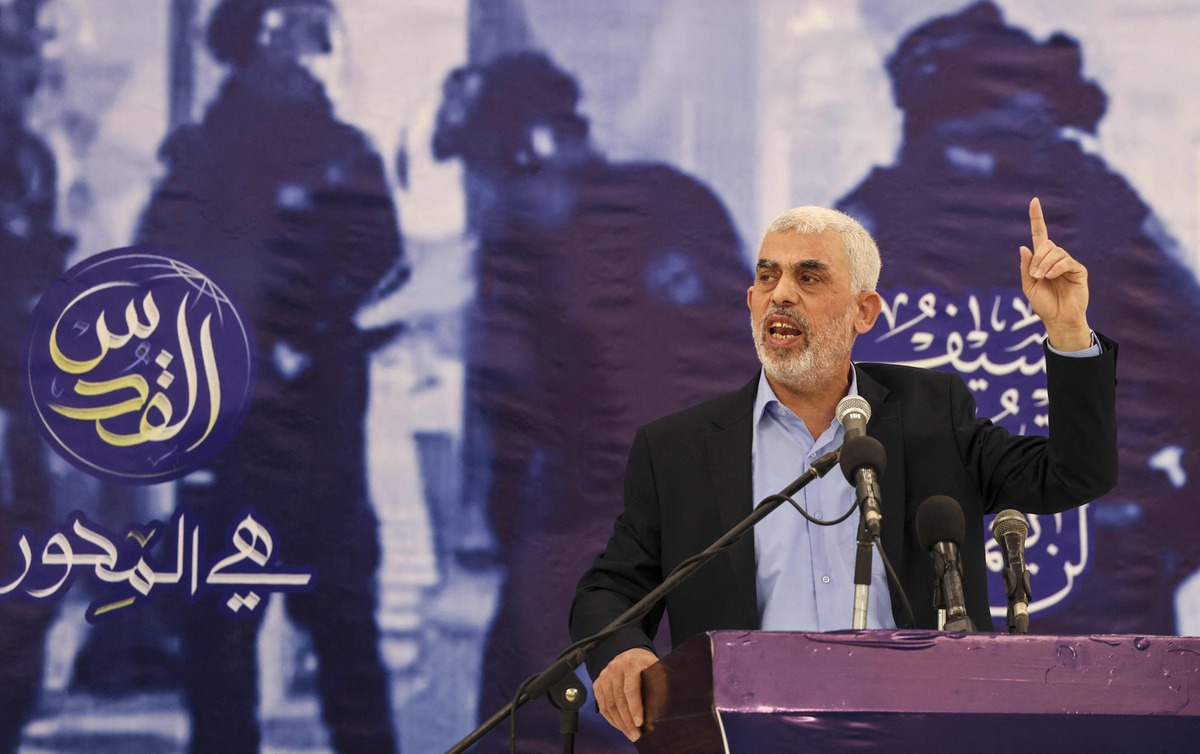
So what was missed? First, Israel underestimated the primacy of ideology for Hamas despite the serious economic needs of the Gazan population. A telling moment came in 2017 when the leader of Hamas in Gaza, Yahya Sinwar, met with Gazan students, apparently including people skeptical of Hamas. 


Sinwar vowed that Hamas would only disarm when “Satan enters paradise” and that “there’s not one minute of the day or night when we aren’t building up our military might.” Furthermore, “the discussion is not about recognizing Israel but about wiping it out.” These and many other bellicose declarations were chalked up to domestic considerations. Under the conceptzia, Sinwar was a first-hand witness to the suffering of his people in Gaza and was viewed as different and more sensitive to their concerns than his predecessor Khaled Meshal, who lived in Qatar. This misreading of Sinwar was exacerbated by the emergence of Salah Arouri as his de facto deputy. Based in Turkey and Lebanon, Arouri sought to incite attacks against Israel in Jenin and other West Bank cities. Arouri seemed to believe Hamas could have it both ways: claim to favor stability in Gaza while dramatically increasing attacks in the West Bank.


In hindsight, there were many indicators that, for Hamas, ideology trumped economics. Hamas avoided negotiations that would have seen the building of a port in Gaza in exchange for disarmament, and when faced with a choice between the financial stability of the Qatari arrangement and pressing its ideology, Hamas made its priorities clear by launching the “Sword of Jerusalem” operation in May 2021.Another clear but downplayed indicator was that Hamas used any economic gains not to improve public welfare but rather to secure armaments and build tunnels under Gaza for its fighters. Rocket production took precedence over civilian infrastructure.


After the October 7 massacre, there is now widespread agreement across the Israeli political spectrum, shared by President Biden, that Hamas must be removed from power. The President repeatedly likened Hamas to ISIS, an implacable and zealous jihadist foe whose name is synonymous with cruelty and brutality. Hamas is on Israel’s doorstep. Israel must maintain the distinction between Hamas, with whom there can be no coexistence and the bulk of Palestinians who do not share that absolutist ideology. This is bound to become increasingly difficult as the war progresses.

Reeling from the consequence of its failed conceptzia, Israel is determined not to underestimate Hamas’ dedication to its violent ideology again.


Source: The National Interest


OPINIONS

Sat 28 Oct 2023 11:16 am - Jerusalem Time

Israel revolts for its prisoners and forgets that it occupies Palestine

op-ed Al Quds dot com

op-ed Al Quds dot com

Opinion Writer

Israel is waging a massive war against the Gaza Strip from the air, land, and sea. It is destroying and sabotaging various buildings, institutions, and centers, and of course killing thousands of people in the Strip, whether they are in places of worship, such as mosques and churches, or in various medical, humanitarian, social, and other institutions. It does not take into account children or the elderly. Thousands of martyrs fell, the majority of them children and women, all under the pretext of the presence of dozens of its citizens held captive by Hamas.


A meeting of the United Nations General Assembly was held after the failure to reach any resolution in the Security Council due to the use of the veto by this or that party, and we heard in the General Assembly many speeches that were all, in general, just talk in the air without reaching any significant impact on the tragic reality that More than 2 million Palestinians live in the Gaza Strip, and thousands of them took refuge from the north, which is the direct front of the attacks, to the south in the hope of being saved from the crimes of the occupation, but that did not help much, and the raids reached the far south of the Gaza Strip, and many were martyred or wounded.


In the General Assembly, we heard many statements and speeches without any change or effect in reality from a practical standpoint, because the United Nations issued many resolutions and took many positions without this having any effect or change in reality.


Israel claims that this attack is a response to the positions of the Hamas movement and the fall of dozens of Israelis into the hands of its forces, and that it seeks to liberate them from captivity. There were estimates that an agreement would be reached on a truce as soon as possible, without any support for that.

Israel gets angry, revolts, and attacks because dozens of its citizens are in captivity and forgets that there are more than six thousand Palestinian prisoners in its prisons. It also forgets, and this is the most important and most strange, that it occupies the West Bank, including Jerusalem, establishes dozens of settlements, and confiscates tens of thousands of dunams of its land, and does not consider this to be a heinous crime that violates all international laws and concepts, and does not believe that the Palestinians have the right to defend their land and rights.
A truce may be agreed upon and the assault on Gaza will stop, but this is not the necessary and required decision to end the conflict. Rather, Israel’s withdrawal from the West Bank, including Jerusalem, and the establishment of a Palestinian state that includes the West Bank and Gaza, is the only solution that puts an end to this conflict that has continued for decades, and without that this conflict will continue for dozens and dozens of years to come. Do they realize this in Israel?

OPINIONS

Sat 28 Oct 2023 11:16 am - Jerusalem Time

An American plan for Gaza after “Hamas”

 Bakr Abu Bakr

Bakr Abu Bakr

Opinion Writer

Many Israeli channels are working hard to plan for the aftermath of “Hamas” in Gaza, between proposals and contradictory proposals, and on the premise of achieving victory! And racing on the wing of the wind are American research centers!


We did not find anyone more concerned about the security of “Israel” than the Washington Center for Near East Policy, which left tons of bombs to destroy the Gaza Strip and cause thousands of casualties in continuous massacres in Gaza and the West Bank, with the accumulation of corpses of children, the elderly, and men everywhere, blind to all but looking at the Israeli victims. 

To assure the Israelis who are busy with war that he cares about them more than them! He continues to consider how to manage Gaza after “Hamas” in the plan he presents to the Israeli and American decision-makers.
After the Center defines its historical view of the event from the first sentence when it says: “Hamas committed the worst mass murder of Jews since the Holocaust,” it does not make the slightest reference (as a matter of objectivity) to the black Zionist history and the series of massacres from the Nakba until today.
The Center does not refer to the Palestinian right, even in a state of what is available (a 22% state), in what is an exaggeration by breathing air from the nostrils of Israeli leaders only, and what is a continuation or anticipation of the Western colonial exaggeration that came to Cairo to announce the abstraction of a new Western colonial invasion of the entire Arab region, which He called on the Egyptian presidency, which was disappointed with the conference, to issue a statement that expresses sadness for human values and morals and mourns the world that only sees with one eye one of the strongest statements in support of the Palestinian cause or right.


We return to the Washington Center and to the Center’s leading trio, Robert Satloff, Dennis Ross, and David McCluskey, who worked hard to provide a solution to the Israeli occupation (https://www.washingtoninstitute.org/policy-analysis/israels-war-aims-and-principles-post-hamas-administration-gaza10/17/2023) after the fall of Hamas, and of course behind it was the idea of revolution and resistance as a whole, as we mentioned in a previous article, and they even went so far as to point out Until this solution will mean the end of the Palestinian issue between the lines.


What do the Americans want after Hamas, according to the Washington Institute?
The center poses “After Victory in Battle”! It is necessary to define the features of the next day, as planning for this will “provide a banner under which Israel’s allies can come together to support its cause, and an umbrella under which the weak Arab peace partners can take shelter while awaiting the end of the fighting.”


The Center proposes that the general principles are to end Hamas’ control over Gaza without any delay and leave it under rubble, and the three demands of the Israeli government must be met, which are as follows:
- Ensuring that Hamas is unable to launch attacks in the future.
-Restoring Israelis’ confidence in the ability of their government and army to provide them with security.
-Re-establishing Israel's deterrent power in the eyes of friends and adversaries throughout the Middle East.


The Center clearly defines the American role through:
-Helping Israel achieve this goal at the lowest possible cost in terms of causing casualties among Palestinian civilians.
-Deterring Israel's other enemies so that the country can focus on achieving success as quickly as possible.
-Help Israelis and Palestinians begin planning now for the governance vacuum that may result from the end of Hamas’ rule.


What is the plan for governance after Hamas?
In light of the previous principles and affirmations, the Center proposes the necessity of forming a “temporary administration” to rule and administer the Gaza Strip within the “transitional period” it proposes for three years, stressing unequivocally that the temporary may become permanent!?


Meaning that the idea of timing is to deceive the world and circumvent Palestinian legitimacy, whether represented by the Palestinian National Authority or the Liberation Organization, which is not mentioned, neither from afar nor from afar, and of course the Palestinian state is not mentioned, even as a courtesy!
The American plan presented by the Center is based on the necessity of maintaining the idea of two separate entities in the West Bank versus one in the Gaza Strip!? Despite the timid or evasive signs of approaching or moving away from some role for the Palestinian National Authority, which he accuses and belittles its role and does not see in it any real value.
The features of the American plan are based on three pillars: establishing a “civil administration,” a “public safety/law enforcement apparatus” (a new name for the police and security) that will be handed over to a number of Arab countries (temporarily), and third, an international coalition for reconstruction led by America, and clearly paying money. And explicitly in the center’s analysis are both the United Arab Emirates, as “the UAE, which is a peace partner with Israel, and possesses sufficient financial resources to be a major donor,” and the Kingdom of Saudi Arabia!


“Civil Administration”: They explain their solution thus, as the “Civil Administration” they are proposing for Gaza consists of: “Technocrats from Gaza, the West Bank, and the Palestinian diaspora, in addition to important local figures from the towns and clans of the Gaza Strip managing local government departments operating at full capacity...”
They add that "continued contact between the Interim Administration in Gaza and Israel will constitute a necessary, even sensitive, issue in a world in which Hamas is no longer a political or military force in Gaza." Then talk begins about a port and a weak beginning to find a break in the siege, with a clear justification for the siege. object!


Unambiguously, the “civil administration” of Gaza’s relationship with the Palestinian technocrats has a “natural connection to the Palestinian Authority,” but with a strong emphasis that the “interim administration” will “work independently within the framework described here.” This means “lying with your own eyes” and maintaining the idea of tearing apart any Palestinian connection with the same previous Israeli approach, which the Center is clearly following!


How can it be, according to the Center, that the “civilian administration” of Gaza is linked to the Palestinian Authority, and the second during the years of the temporary-permanent civil administration of Gaza according to the plan will be matched by the “process of reforming the Palestinian Authority” in a clear burying of the idea of the independence of the State of Palestine, existing by natural and legal rights and existing under occupation.
“Public Safety Apparatus”: The trio in the Washington Center propose that the Arab countries with relations with Israel send “police detachments and not regular military units” to assume the role of the “Public Safety Apparatus,” provided that “the force is led by an officer from a country that has no regional connection to the regions.” Palestinian territories, such as Morocco,” with the necessity of having “liaison offices with the Israeli and Egyptian armies.”


Reconstruction Alliance: With the participation of the Europeans, United Nations agencies, and countries charged with advancing reconstruction, the necessary American role is the greatest, as they state, and fundamental because it is “capable of achieving mobilization, organizing efforts, and even ensuring the implementation of all elements of the plan.” The trio at the center do not forget to point out the necessity of American companies, of course, undertaking reconstruction and reconstruction in Gaza after “Hamas.” America must always gain from more and more calamities, massacres, and calamities.
Out of confusion about how the world will adopt this plan, the trio proposes ideas such as authorizing the Security Council for America to do so, or alternatively authorizing the Arab League, or within the mandate of the “United Nations Special Coordinator for the Middle East Peace Process,” which may not require additional measures from Side of the Security Council,” but the Center stresses that “in the end, it may be necessary to build the ‘Interim Administration in Gaza’ as an alliance of the willing.”

ARAB AND WORLD

Sat 28 Oct 2023 10:23 am - Jerusalem Time

With the approval of 120 countries, the United Nations demands an immediate ceasefire in Gaza

The United Nations General Assembly adopted a resolution calling for a humanitarian truce in the Gaza Strip.


The resolution calls for "an immediate, stable and sustainable humanitarian truce leading to the cessation of hostilities."

The resolution also calls for the “immediate, continuous, adequate and unhindered supply” of basic goods and services to civilians throughout the Gaza Strip, including, but not limited to, water, food, medical supplies, fuel and electricity.


The resolution calls for immediate, full, sustainable, safe and unimpeded humanitarian access to Gaza.

The resolution was adopted after receiving 120 votes in favour, 14 against, and 45 abstentions.

An amendment to the draft resolution, submitted by Canada, was not adopted because it did not receive the necessary two-thirds majority of votes.

The amendment would have condemned the October 7 attack on Israel and Hamas's hostage-taking, and would have called for the hostages to be released.

PALESTINE

Sat 28 Oct 2023 9:56 am - Jerusalem Time

Palestine Presidency welcomes UN adoption of the resolution to protect civilians and adhere to legal and humanitarian obligations

The Palestinian presidency welcomed the adoption by the United Nations General Assembly, tonight, of the resolution to protect civilians and adhere to legal and humanitarian obligations.


Presidential spokesman Nabil Abu Rudeina thanked the countries that voted in favor of the resolution, confirming that the majority of the world stands with the Palestinian people, and that the Palestinian issue still enjoys a high status among the countries of the world.


He stressed that the vote of 120 countries in favor of the resolution means that the world confirms its rejection of the aggression against our people, their displacement from their land, and the creation of a new catastrophe.


He stressed that the world must take note of the voting results and deal with them seriously.


He reiterated that voting in favor of the resolution by such a large majority confirmed to the 14 countries that voted against it that the world rejects the policy of double standards.


The presidential spokesman confirmed that the majority of countries in the world still adopt the position of the Palestinian leadership calling for the establishment of a permanent and comprehensive peace by ending the Israeli occupation and establishing an independent Palestinian state with East Jerusalem as its capital, and that this can only be achieved by peaceful means, based on the relevant United Nations resolutions. In accordance with international law, and on the basis of the two-state solution.

PALESTINE

Sat 28 Oct 2023 9:55 am - Jerusalem Time

Start of winter time in Palestine

Winter time in Palestine begins at 2 a.m. today, Saturday, by delaying the clock hands by 60 minutes.


This comes based on the decision of the Council of Ministers, in its session held on October 23, to begin operating winter time in the State of Palestine from midnight on Friday - Saturday, the 28th of this October.