PALESTINE

Sun 29 Oct 2023 4:55 pm - Jerusalem Time

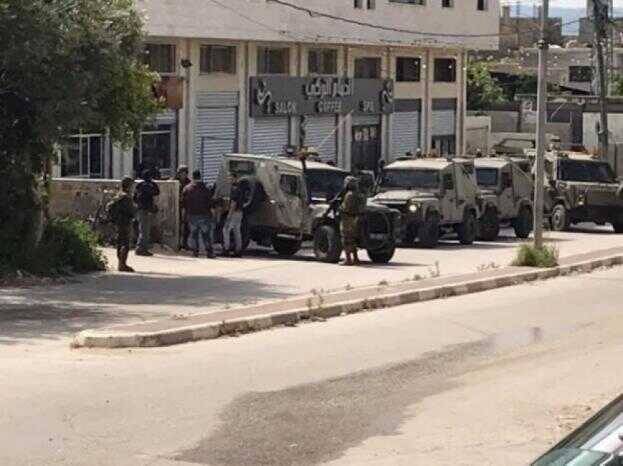
Israeli forces storm Qaffin town, north of Tulkarm

On Sunday evening, Israeli occupation forces stormed the town of Qaffin, north of Tulkarm.


Local sources reported that the occupation forces stormed the town and were stationed in the Al-Hawoz area, firing bullets and tear gas bombs from time to time, while the occupation soldiers stormed a number of citizens’ homes in the area and searched them, without any injuries or arrests being reported. .

PALESTINE

Sun 29 Oct 2023 4:51 pm - Jerusalem Time

Israeli forces bulldoze 8 dunums in Kafr al-Dik town, west of Salfit

Today, Sunday, Israeli occupation bulldozers bulldozed 8 dunums of lands in the town of Kafr al-Dik, west of Salfit.


The mayor of Kafr al-Dik, Muhammad Naji, reported that the occupation bulldozers bulldozed 8 dunums of land belonging to the heirs of the late Ayoub Ali Ahmed, in the Diriyah area, to expand the “Beduel” and “Eli Zahav” colonies built on Kafr al-Dik lands.

PALESTINE

Sun 29 Oct 2023 4:48 pm - Jerusalem Time

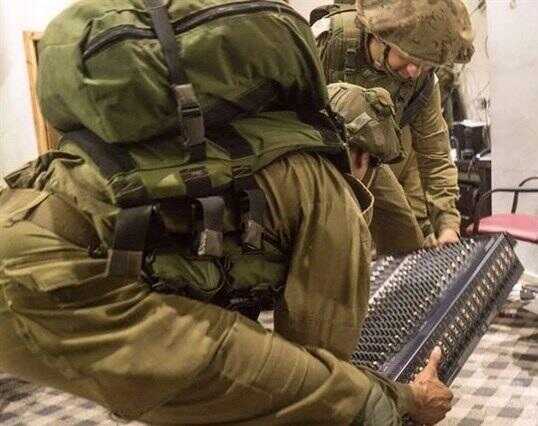
Israel closes a local radio station in Hebron

Today, Sunday, the Israeli occupation forces closed the headquarters of “Dream Radio” in the city of Hebron, and prevented it from broadcasting.


The director general of the radio station, Talab Al-Jaabari, said that the occupation authorities informed him, via a phone call, of the decision to close the radio station and stop its work, and threatened him to storm it and destroy its contents if it resumed broadcasting, under the pretext of disrupting the movement of occupation aircraft.


He added that this measure is the third in recent years, and is part of the occupation's violations against media institutions in Palestine, as it continues to commit crimes against citizens.

PALESTINE

Sun 29 Oct 2023 4:45 pm - Jerusalem Time

A young Palestinian died as a result of being wounded by Israeli army in Bethlehem

The young man, Hussein Yousef Rabie (25 years old), from the Dheisheh camp, south of Bethlehem, was killed as a result of his wounds by occupation bullets while storming the camp on Sunday.


Medical sources at the Palestinian Red Crescent in Bethlehem reported that the young man, Hussein Rabie, was shot in the head while he was on the roof of the house when the occupation forces stormed the Dheisheh camp, and he remained in the place bleeding without anyone knowing of his injury.


The source added that he was transferred to Beit Jala Hospital, where he was declared dead.


With the death of young Hussein Rabie, the number of dead who rose since dawn today during confrontations with the occupation in the West Bank to 5, and to 116 since the beginning of the aggression on the seventh of this month.

PALESTINE

Sun 29 Oct 2023 4:13 pm - Jerusalem Time

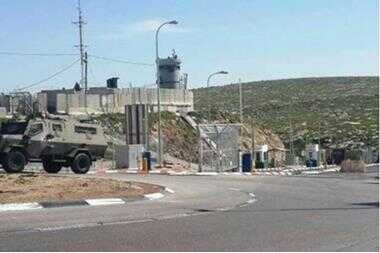
Israeli forces tighten the closure of Bethlehem Governorate

The director of the Office of the Wall and Settlement Resistance Authority in Bethlehem Governorate, Hassan Brijiyeh, said that the occupation has tightened its closure on the governorate since the seventh of this month with the start of the aggression on the Gaza Strip, by erecting 73 military barriers and stone and earth berms.


He pointed out that there are 26 dirt berms that close the side and agricultural roads that open to the main and bypass roads.


Brijiyeh said: This led to the lack of communication between the Palestinian communities and the lack of citizens’ access to their agricultural lands, while at the same time working to connect the colonial communities to each other and facilitate the movement of the occupation forces and colonists, an embodiment of the apartheid system, especially since the colonialists are now exploiting the prevailing conditions to control More private lands classified as C, and the displacement of farmers from them.

ARAB AND WORLD

Sun 29 Oct 2023 3:32 pm - Jerusalem Time

Israeli detainees families are putting pressure on Netanyahu...and demanding the release of Palestinian prisoners

With every new day, internal pressure on the Prime Minister of the occupation, Benjamin Netanyahu, increases after the Al-Aqsa Flood operation carried out by the Al-Qassam Brigades, the military wing of the Hamas movement, on October 7th.


Netanyahu faces many criticisms, whether for his failure to protect citizens, or his government’s failure in the issue of detainees held by the Qassam Brigades, due to the growing pressure within Israeli society.


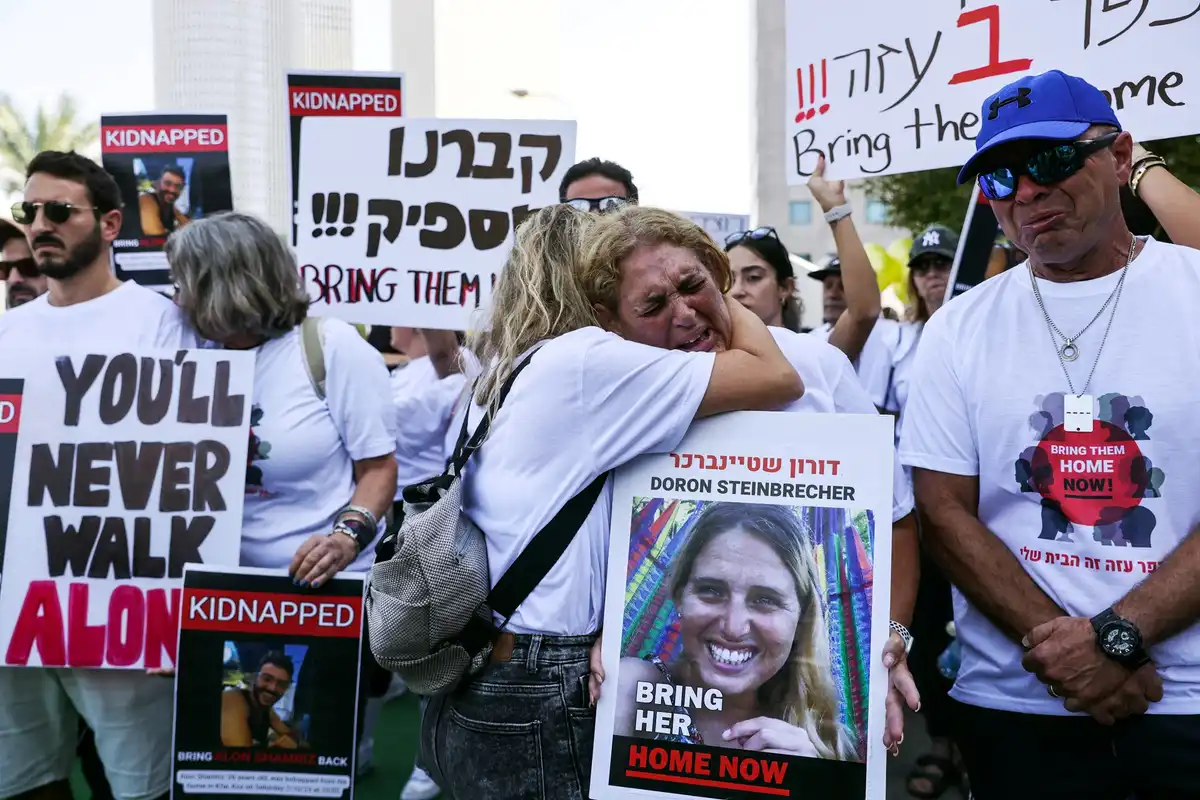
Since the first days that followed the “Al-Aqsa Flood,” the families of the detainees took part in demonstrations, demanding that Netanyahu and his government take action to save their relatives.


According to Yedioth Ahronoth newspaper, about 230 families have been informed that their relatives are detained in Gaza.


Almost daily, the families of Israeli detainees gather to demand intervention to return them. Clashes even broke out between them and supporters of the Likud Party, who support the government’s moves, in front of Netanyahu’s house.


After more than three weeks and after demands to meet him, a delegation of them met with Netanyahu yesterday, in an attempt to calm their anger, but this was to no avail.


The families of the detainees confirm that the responsibility for the fate of their relatives lies with the government, but Yedioth newspaper indicated in another report that the file of these detainees is not a priority for the government now, and that the first goal of the emergency government headed by Netanyahu is “to destroy Hamas.”


Prisoners versus detainees


Many of them demanded the release of Palestinian prisoners from the occupation prisons in exchange for the return of the detainees. The family of one of the detainees, named Jonathan Samrano, said: “Jonathan and all of them do not deserve to be there today.. Let all the imprisoned prisoners return to Gaza.”


These demands were present during Netanyahu's meeting, as many of them demanded the release of Palestinian prisoners in exchange for the return of their children, but he promised them that all options were on the table to return them.


In Caesarea, demonstrators chanted against Netanyahu, saying: “You are responsible for what happened. Resign and leave. Take responsibility for the people.”


One of the demonstrators said: “It is not possible that with all the failure here, Netanyahu will continue to run the country. He must resign and leave his position quickly. You must leave the position, and look at the parents who are protesting.”


In occupied Jerusalem, dozens gathered and chanted: “We do not want to wait until the end of the fighting because there may be no one to return.” They raised banners that included demands for the release of Palestinian prisoners in exchange for the return of the detainees as quickly as possible.


The bombing continues and detainees are ignored


In the latest statement from Al-Qassam, it announced the killing of 50 detainees as a result of the Israeli bombing of the Gaza Strip, which increased the anxiety of the families of these detainees, who went out to demonstrate, demanding clarifications regarding the government’s pledges not to expose their families to danger.


Ronen Nutra, the father of one of the detainees, said: “We demand that the war government explain how to carry out the ground operation... and not expose the kidnappers to danger.” He pointed out that the violent bombing of the Gaza Strip is also affecting detainees.


The criticism directed at the head of the detainees committee, Gal Hirsch, also continues, and Yedioth quoted a relative of the detainees: “Hirsch came to have the first conversation with us after three weeks... and he did nothing. He gave us updates, and assigned us the tasks of helping with the information mission!” And when we dared to ask what he would do to bring everyone home, he said, “We are all in the same boat!” These are statements that sparked widespread outrage.


This comes as the occupation continues its brutal aggression against Gaza, coinciding with its forces launching a ground operation in the Strip.


The brutal raids launched by occupation fighters continue, targeting the homes of defenseless civilians, in addition to targeting hospitals, mosques and churches, which has led to thousands of martyrs and wounded, while those who have survived the bombing so far are suffering from a catastrophic humanitarian situation, in light of the restrictions on them.


The death toll from the Israeli aggression rose to more than 8,000 martyrs.

ARAB AND WORLD

Sun 29 Oct 2023 3:31 pm - Jerusalem Time

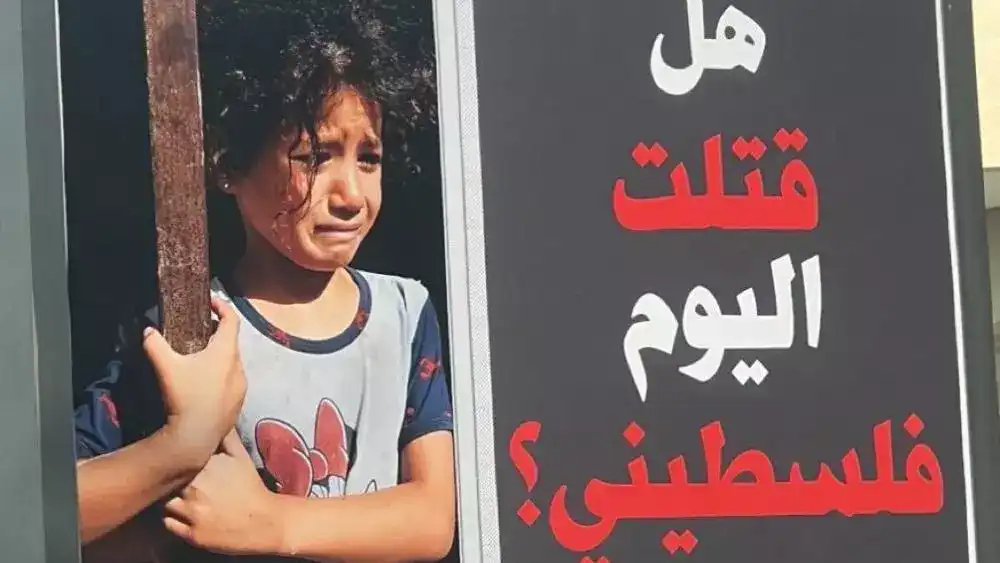
In solidarity with Gaza...an advertising campaign in Kuwait to boycott companies that support Israel

An advertising campaign was launched in Kuwait to boycott the products of international companies that support the Israeli occupation, in a move of solidarity with Palestine and the people of the Gaza Strip who have been subjected to widespread Israeli aggression for 20 days.


Video clips and pictures of the billboards were shown in the advertising campaign that filled the streets of Kuwait. The boards, which included pictures of children, were written under the slogan: “Did you kill a Palestinian child today?”, in addition to the tag “Boycotters.”


An example of solidarity with Gaza

The advertising campaign received great interaction on social media platforms. Activists praised it and considered it an example of solidarity with Gaza.


Activists from the Arab world shared the video clip depicting billboards on a street in the State of Kuwait, and some accompanied them with comments calling for a boycott of the products of American and European companies that support Israel.


Some went on to use the advertising campaign slogan, "Did you kill a Palestinian today?" He attached pictures of some products, calling for their boycott.


Some activists also shared pictures displaying some brands and products of companies supporting Israel and attached them with the hashtag “Boycott enemy products.”


Campaigns calling for a boycott

Since the start of the aggression on Gaza, Arab activists and influencers have sought to call for non-financing of the war on Gaza by boycotting the products of companies that support Israel, including baskets from American fast food restaurants, especially McDonald's, which donated tens of thousands of free meals to the Israeli army.


McDonald's reported that it donates 4,000 meals a day to the Israeli army and citizens, and also offers a 50% discount to soldiers and security forces.


The hashtag “Boycott McDonald’s Campaign” and other companies topped the most popular list on the “X” platform in a number of Arab countries.


Videos have also spread that aim to raise awareness about well-known products that are consumed daily, but they were made in Israel or by Western companies that support them, including Coca-Cola, Lays, Danone, Burger King, the American coffee company Starbucks, and others.


The Palestinian National Committee for the Boycott of Israel had called on its website to strengthen campaigns to boycott Israel at all levels: economic, academic, cultural, artistic and sports.

PALESTINE

Sun 29 Oct 2023 2:56 pm - Jerusalem Time

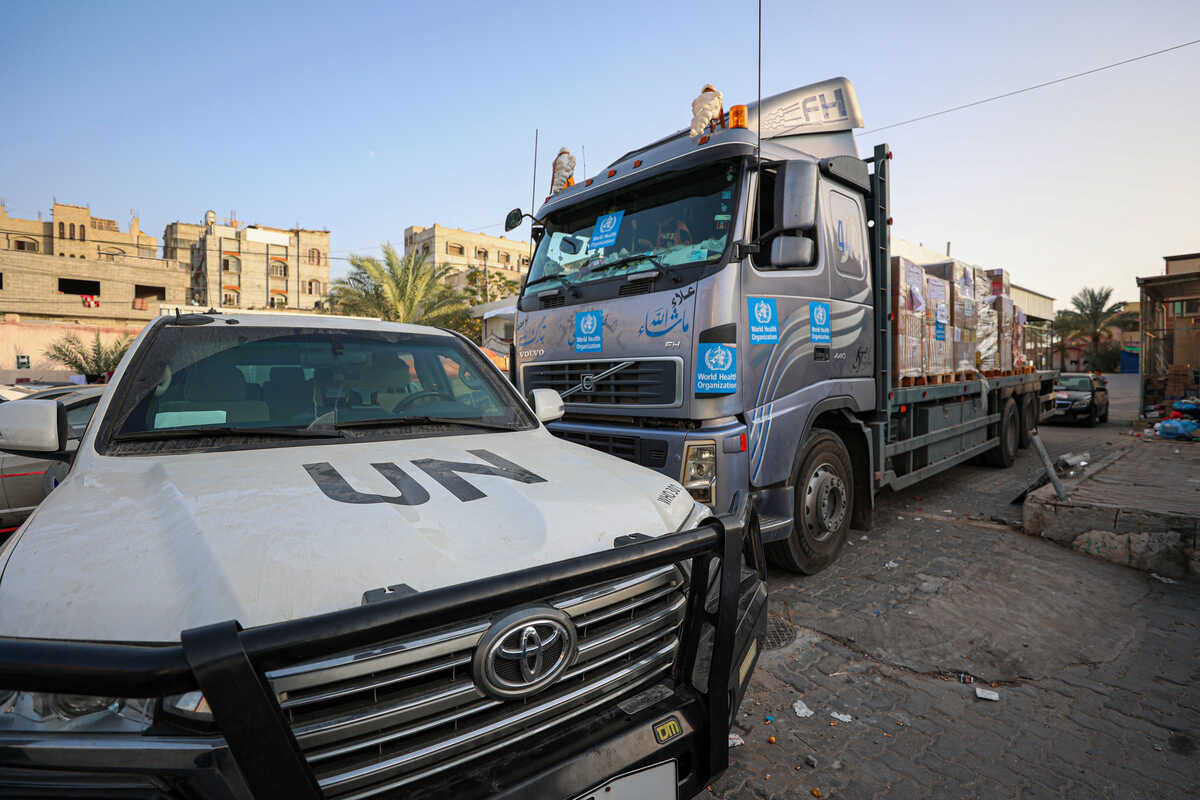
Egypt: A new aid shipment crosses the Rafah crossing into Gaza

Cairo News TV reported on Sunday that a new aid shipment, including 10 trucks, began crossing the Rafah crossing into the Gaza Strip.


The television quoted high-level sources earlier (Sunday) as saying that Cairo is intensifying its contacts with all international parties to bring large quantities of humanitarian aid into the Gaza Strip during the current week, according to what was reported by the Arab World News Agency.


A medical aid truck, accompanied by a delegation from the Red Cross, arrived at Nasser Hospital in Khan Yunis, south of the Gaza Strip, on Sunday, while the Israeli raids on the Strip entered their twenty-third day.


The head of the International Committee of the Red Cross, Mirjana Spolijaric Egger, warned on Saturday that the hospitals still working in Gaza were on the verge of collapse, and described the inability to provide adequate aid in Gaza as a “catastrophic failure” that the world must not tolerate.


OPINIONS

Sun 29 Oct 2023 2:51 pm - Jerusalem Time

Israeli Opinion| The Future of Hamas after October 7, 2023 – Part 2

Gershon Baskin

Gershon Baskin

Opinion Writer


Can Hamas be dismantled and destroyed?

The government and military control of Gaza by Hamas can be dismantled and destroyed. It will not be easy and the human costs will be great. Israel has for sure developed plans for how to smoke or gas the Hamas fighters and leaders out of the web of tunnels underneath the entire Gaza strip. If Israeli civilian hostages – the children, women, elderly, wounded and sick are not brought out under an agreement with Hamas, they will be at risk of death with all of the hostages that Israel considers soldiers. Hamas already claims that 50 hostages have been killed in Israeli bombings. We have no way to know if this is psychological warfare or the truth. There is great pressure on Israel to meet its moral responsibility to bring home all of the hostages because of the failure of Israel to provide security and protection for these citizens – which is the primary and most important duty of any state. 


While some important Israeli leaders have said that Israel should empty its prisons out of all Palestinian prisoners and send them to Gaza in exchange for all of the hostages, this seems very unlikely to happen. Israel seems to be exhausting every possible avenue to bring home the civilian hostages, but eventually the military incursion into Gaza will happen in full force.


I believe that Israel should agree to a ceasefire to allow for the civilian hostages to be freed. Israel can agree to allow fuel trucks into Gaza for the hospitals only accompanied by United Nations non-Palestinian personnel who will stay with the trucks and then stay at the hospitals to ensure that the fuel will not be stolen by Hamas. We should now allow for this issue to prevent the possibility of retrieving the majority of the hostages through agreement. It is not clear that Hamas is prepared for such a deal. It is not clear that Hamas has control over all of the hostages. It is not clear that Qatar is speaking to the people who are holding the hostages. 


It is more likely that Egypt has the ability to speak to the Al-Qassam people who are holding most of the hostages. I have spoken to Hamas political leaders in Gaza, Beirut and Doha. My sense is that they are not in control and their demands or statements on what they want are not consistent and probably cannot be trusted. It is a very complex situation. The fact that it is also not 100% clear who is the interlocutor for this on the Israeli side is also a complicating factor. 


It seems that Gal Hirsch is not in charge as the coordinator for missing Israelis. He does not seem to have the confidence of the War Cabinet and I have heard that even Netanyahu is not really engaging with him. I have grown tired of Israeli statements that “we are doing everything possible to return the hostages – leaving no stone unturned.” I heard it for five years when Shalit was in captivity when I knew that for very long periods of months and even more than a year, no negotiations were taking place at all. I have heard the same thing for years about Oron Shaul, Hadar Goldin, Avera Mengisto and Hisham A-Sayed.


So, I believe that sooner or later Israel will enter Gaza with a huge force. Many hostages may be rescued, many others may not. Many soldiers will be at risk as well. All of the people who are holding hostages will be killed. Maybe there will be some who don’t actually want to die and maybe some of them will hand hostages over to Israel. If they do, they will be granted amnesty and free passage and money to leave to wherever they want to go. Every person who had something to do directly with the capture and captivity of Gilad Shalit is no longer alive. That will be the fate of almost everyone responsible for what happened in Israel on October 7.


My final words in this (too) long article is to the people of Gaza, to the Palestinian people, and to all of us Israelis. My heart bleeds for all of the innocent people of Gaza who have been killed, many of them buried alive under the thousands of homes that have been destroyed by Israeli bombs. 


War crimes are being committed by Israel in Gaza. Killing innocent people is not “collateral damage.” We are talking about the lives of thousands of people who are victims of this conflict as well, regardless of their political opinions or their views on Hamas. If they are non-combatants, they are innocent victims. The indiscriminate bombings have to end. There will be a day after tomorrow when this war ends. There will still be two peoples living on this land and we will either look back at the horrors of what we have done to each other, or we will begin to look forward. These events are the biggest traumas for Israelis since the Holocaust and for the Palestinians since the Nakba. We will not forget. This will be the new chapters in our collective memories and narratives. The question is will we stand up from the ashes and from the pains and finally realize that everyone living between the River and the Sea must have the same right to the same rights or we will continue to say that only my side has the rights to express our collective identity on this Land?


We must wake up from this trauma and make those who have led us to this point pay the price for their failures. None of our leaders, on both sides should have the legitimacy to stay in power. 

They all have to go. We, Israelis and Palestinians need new leaders, a new generation who stand up and say “NO MORE!” We need people with new visions, new ideas, new hopes and the ability to generate support of masses of people who start paving a new path. I don’t know if we need to talk about one state, two states, three states or ten states. It begins with the mutual recognition that we all have the same right to the same rights. If we are realistic – it will probably be more talk about two states. If that is the case, two things need to happen quickly – a new peace process has to begin with the end state being up front and loud. If it is two states, then that needs to be clear from the outset, unlike the open-ended failed Oslo process. Secondly, if it is two states, then all of the countries of the world that have voiced the words “two states solution” must finally and immediately recognize the second state. They can do that with conditions, such as, when Palestine holds new elections and elects a new government.


Finally, the following are some thoughts on steps that need to be taken immediately after the war – to some extent, some of this could happen without the massive Israeli incursion into Gaza.

How to end the war with Hamas no longer in control of Gaza• Without risking wider regional war and destabilization• Without additional massive civilian casualties in Gaza• Without risking the collapse of the regimes in the West Bank, Jordan and Egypt• With the best chance of bringing home as many hostages as possible


Pre-conditions for implementing the plan

  1. • Full US buy-in and lead on the diplomacy – with the use of significant pressure
  2. • Support of Israel (even reluctant with significant arm twisting and persuasion – this is an offer you can’t refuse…)
  3. • Support from President A-Sisi
  4. • Support from King Abdallah
  5. • Support from MBS
  6. • Endorsement of the Arab League

Desired conditions

• Support of President Abbas

• Support of the democratic opposition within Fatah


General Lines of the Plan 

The Plan is based on prior (not the same) situation of the need to end the civil war in Lebanon

  1. • Ceasefire
  2. • Release of hostages – civilian hostages
  3. • Arab League decision (or just the agreement of several Arab states – Egypt, Saudi Arabia, Jordan, UAE, Bahrain, Morocco, and others) to send a multilateral Arab led force to Gaza with the mandate to take control of the military/security situation in Gaza. Qatar may have to be involved to apply pressure on Hamas to accept.
  4. • Group of Arab states to take on guarantor role agreed to sustain these principles:
  5. • Guarantee of ceasefire
  6. • Timetable for removal of Hamas leadership and/or disarmament
  7. • Issuing a plan for Civilian control of Gaza’s governance, led by the PA which will also hold immediate Parliamentary elections. Parties participating in elections will be only those which agree to the demilitarization of Gaza and the West Bank.
  8. • Prior to those elections a small group of Arab states party to this agreement will agree to take on advisory and trustee role with the PA, interfacing with Israel and the US, and guaranteeing implementation of all agreed aspects of deal.
  9. • Political reforms in the PA supported by the international community (with a lot of money) in which power is transferred from the Presidency to the Parliament from which a government is formed which governs over the West Bank and Gaza. (The shifting of power from the Presidency to the Prime Minister occurred during the Arafat period when the US forced Arafat to surrender powers to Abbas who became Prime Minister).
  10. • A regional/international peace conference advancing progress to Palestinian Israeli agreement towards the eventual implementation of the two states solution.
  11. • A Marshal Plan for the rebuilding of Gaza led by the International Donor Community.


The main question we are addressing is how is it possible to bring about the desired end result of the war (removing Hamas from its ability to rule and threaten Israel) without killing many more civilians in Gaza, lowering the risk to Israeli soldiers, decreasing the chances of destabilization of the regimes of the PA in the West Bank (to avoid uprising of more radical groups there), Jordan and Egypt.

There is probably no way of avoiding the Israeli plans to eliminate the political and military leaders of Hamas. This does not necessarily have to be done at the time of a military incursion into Gaza. Exiling them, model PLO Beirut 1982 seems very unlikely. Who would take them? Wouldn’t they continue to pose a lethal threat to Israel from wherever they relocate.


First steps towards implementing this plan

1. Selling it to the Americans – without American backing first, there is little chance of advancing it.

2. Americans have to bring Israeli support – this will also help to prepare the Israeli public for the plan.

3. Engage with Palestinian leadership in Ramallah regarding the plan and the demand for elections for the Parliament, the forming of a new government for West Bank and Gaza, with a power shift from the President to the Prime Minister (this was done with American pressure to Arafat who was forced to empower Abbas as Prime Minister and Salam Fayyad as Finance Minister)

4. Planning the administration of Gaza with the Palestinian elected leadership – civil service force in Gaza of about 50,000 people who have been on the payroll of Hamas for years and while not combatants have a certain loyalty to Hamas. They should not be fired and sent home – the lesson from Iraq should be learned. Those who are willing and able to work under the new order should remain and receive salaries from the new government.

5. After conducting a series of high level closed door meetings with Arab leaders – US convenes summit of key Arab states: Saudi Arabia, Egypt, Jordan, UAE, Bahrain, Morocco, and maybe Qatar – where the proposed Arab Multi-national force to Gaza is discussed and decided. The mandate of the force must be developed in consultation with the member states, and presented at the summit. It should not be open-ended, must have a planned exit strategy aligned with the resumption of Palestinian control over Gaza reunited with the West Bank.

6. US Convenes multi-nation summit for the reconstruction of Gaza -based on Arab multinational force, with stated political goals of renewing Palestinian-Israeli negotiations with robust international support (particularly regional Arab support – including Saudi promise for full normalization with Israel at the conclusion of the process of reaching agreements between Israel and Palestine.

7. The Israeli-Palestinian process needs to have a stated end game from the outset – whether it is two states or something else – it must be set and stated by the international community without any “constructive ambiguity.” 


In fact, all partners to this process should declare that they will recognize the State of Palestine at an agreed time based on parameters to be set, e.g. post elections in Palestine and the forming of a new government. Palestinian Israeli negotiations then conducted on the state-to-state basis.


ARAB AND WORLD

Sun 29 Oct 2023 2:50 pm - Jerusalem Time

Guterres warns that the situation in Gaza is getting more desperate “hour by hour”

United Nations Secretary-General Antonio Guterres warned on Sunday that the situation in the Gaza Strip is deteriorating rapidly, calling again for a ceasefire to put an end to the "nightmare" of bloodshed.


“The situation in Gaza is getting more desperate hour by hour,” Guterres said during a visit to the Nepalese capital, Kathmandu, expressing his regret for “Israel intensifying its military operations instead of declaring a humanitarian truce supported by the international community in light of the dire need for it,” according to Agence France-Presse.


He stressed that "the number of civilians killed and wounded is completely unacceptable," as reported by the French Agency.


The Israeli army has been waging a devastating bombing campaign on the Gaza Strip since October 7 in response to an unprecedented attack launched by Hamas on Israel.


PALESTINE

Sun 29 Oct 2023 2:47 pm - Jerusalem Time

A young Palestinian died from his wounds during the storming of eastern Nablus

Today, Sunday, a young man died as a result of wounds he sustained during the occupation forces’ storming of the Balata camp, east of Nablus.


Medical sources at Al-Najah Hospital announced the death of Rasmi Fayez Arafat, a young man from Balata Camp, after sustaining serious injuries during clashes that broke out this morning in Balata Camp.

ARAB AND WORLD

Sun 29 Oct 2023 2:44 pm - Jerusalem Time

Intensive Egyptian contacts to reach a ceasefire agreement in Gaza

High-level sources said today (Sunday) that intensive Egyptian contacts are taking place with all countries and parties concerned internationally and regionally to reach a ceasefire agreement and the exchange of prisoners and detainees in the Gaza Strip, as reported by the Cairo News Channel today (Sunday).


The sources added that Cairo is intensifying its contacts with all international parties to bring large quantities of humanitarian aid into the Gaza Strip “during the current week.”


Egyptian Foreign Minister Sameh Shoukry warned today (Sunday) of the humanitarian and security consequences of Israel’s practices of collective punishment against the residents of Gaza.


This came during Minister Shoukry’s reception today, Hajja Habib, Minister of Foreign Affairs, European Affairs, Foreign Trade and Federal Cultural Institutions of Belgium, who is visiting Egypt to consult and coordinate on ways to deal with the military escalation in Gaza, and efforts to coordinate international efforts to contain the crisis, according to Foreign Ministry spokesman Ahmed Abu Zeid.


The spokesman said, in a statement published by the ministry on its Facebook page, that “the two ministers exchanged visions and evaluations regarding the overall field and humanitarian situation in Gaza, the urgent need to deliver humanitarian aid to the residents of the Strip, and the necessity of reaching a humanitarian truce that allows for the provision of protection for civilians and facilitating the entry of relief aid.” and humanity urgently and sustainably.”


Minister Shukri was keen to welcome Belgium's decision to support the Arab resolution in the United Nations General Assembly, stressing that the decision taken by Belgium is the right decision, because it means supporting peace, stopping bloodshed, and protecting civilians.


The two ministers also discussed the risks surrounding the possibility of expanding the conflict, and the need to make all international and regional efforts to prevent this scenario.


The spokesman revealed that Minister Shukri stressed the serious risks surrounding the path of Israeli forces expanding their ground operations in Gaza, stressing the need to make coordinated international efforts and build on the discussions of government officials during the Cairo Peace Summit, in order to stop the ongoing war and provide the necessary protection for civilians, which is what The Belgian Foreign Minister agreed with him, considering this an urgent priority to ensure the access of humanitarian aid to the Strip.


The Belgian Foreign Minister also stressed her country's full awareness of the magnitude of the challenges facing Egypt as a result of this crisis, and its aspiration to hear Egypt's vision on ways to support the Palestinian cause and revive the peace process, given that Egypt is always the leader in efforts to achieve peace in the region, and has long experience in supporting... Mediation efforts between the Palestinian and Israeli sides.


The spokesman stated that the discussions between the two ministers dealt extensively with the deteriorating humanitarian conditions in Gaza, where Minister Shukri warned of the dire humanitarian and security consequences of Israel’s escalatory policies against the Palestinian people in Gaza, especially the continuous bombing, siege, and forced displacement in violation of the provisions of international humanitarian law, stressing Egypt’s categorical rejection. For these practices, or for any attempts to liquidate the Palestinian cause at the expense of the countries of the region.


The spokesman indicated that the two ministers agreed to continue consulting closely over the coming days to push for internationally coordinated efforts to contain the crisis, prevent its expansion in the region, and work with all international partners in order to restore hope in reviving the peace process with the aim of establishing an independent, effective and capable Palestinian state. To survive and achieve the aspirations of its people, alongside the State of Israel, in accordance with the vision of the two-state solution.


ARAB AND WORLD

Sun 29 Oct 2023 2:38 pm - Jerusalem Time

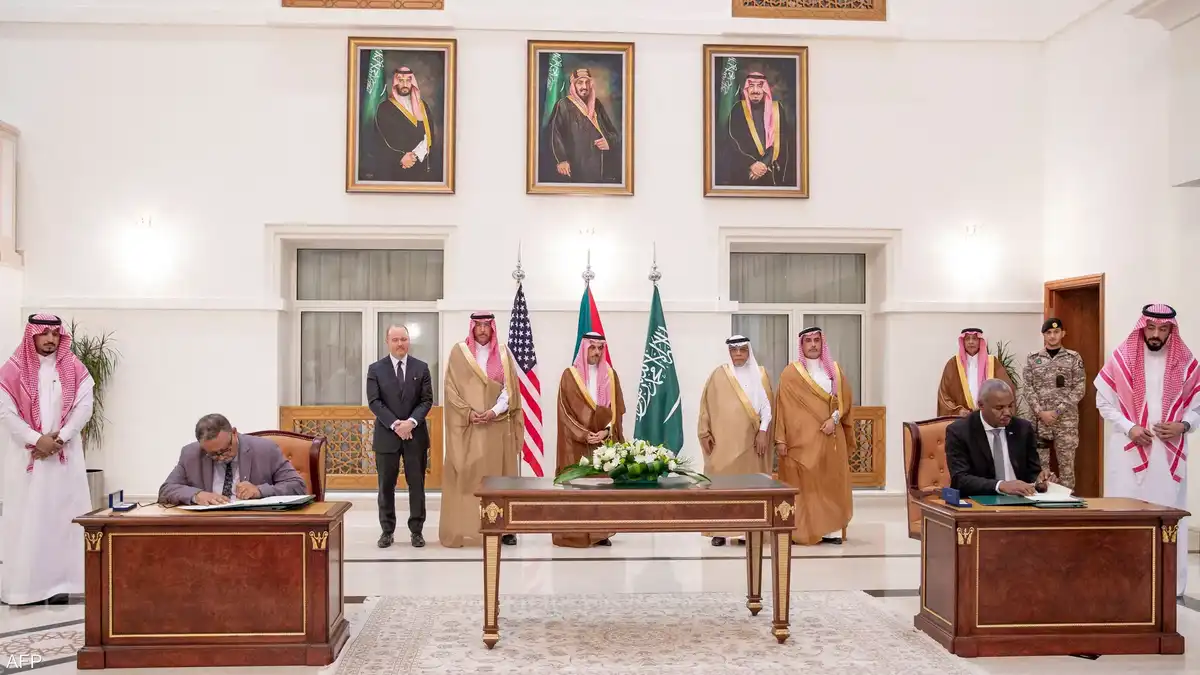
The Saudi Foreign Ministry announces the start of Sudanese talks in Jeddah

On Sunday, the Saudi Ministry of Foreign Affairs announced the start of talks between the Sudanese army and the Rapid Support Forces in the city of Jeddah.


The Saudi Foreign Ministry said that the talks between the army and the Rapid Support will not discuss any political issues, and will be limited to a ceasefire and confidence-building measures.


The talks focus on facilitating the delivery of humanitarian aid, achieving a ceasefire, confidence-building measures, and the possibility of reaching a permanent cessation of hostilities.


The two facilitators (the United States and Saudi Arabia) confirmed that they are the sole joint spokesperson for the talks, to consolidate the rules of conduct that were agreed upon by the two parties and that will guide the talks.


ARAB AND WORLD

Sun 29 Oct 2023 2:32 pm - Jerusalem Time

Pope Francis urges a ceasefire between Israel and Hamas

Pope Francis called on Sunday for a ceasefire in the war between Israel and the Islamic Resistance Movement "Hamas", and renewed his call for the release of people held by the movement in Gaza.


"No one should give up the possibility of stopping weapons," he said at the weekly Mass in St. Peter's Square.


He added, "Ceasefire... We say 'ceasefire, ceasefire'. Brothers and sisters, stop! War is always a defeat, always."


ARAB AND WORLD

Sun 29 Oct 2023 1:41 pm - Jerusalem Time

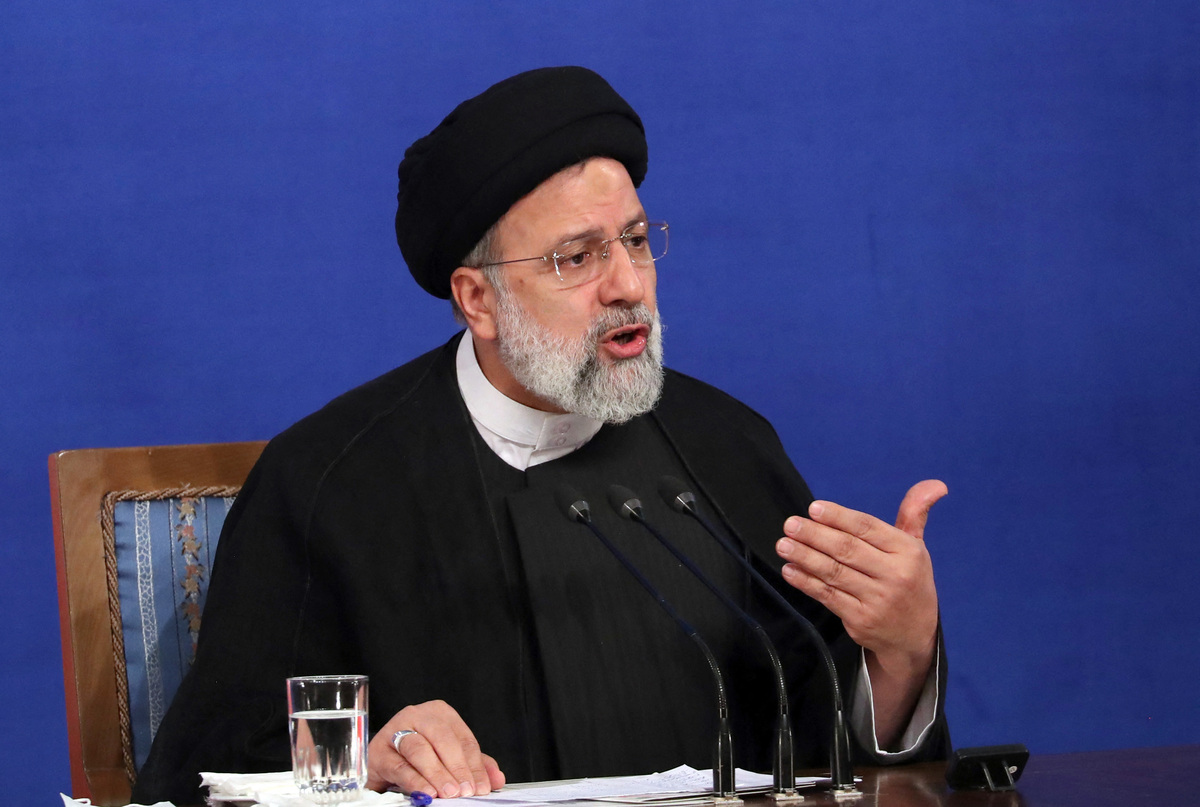
Iran warns Israel against the “action” of other parties in Gaza

Iranian President Ibrahim Raisi considered on Sunday that Israel had crossed “red lines” by intensifying its attack on Hamas in the Gaza Strip, which “may” push other parties to “take action.”


Iran supports the Hamas movement, which has been waging a war with Israel since October 7, when it carried out an unprecedented attack on this country, which responded with intense air and artillery bombardment on Gaza.


The Iranian President warned in a post on the “X” website (formerly Twitter) that “the crimes of the Zionist regime have crossed red lines, which may prompt everyone to take action.”


He added, "Washington asked us not to do anything, but it continues to provide broad support to Israel."


In an interview with Al Jazeera, Raisi explained that “Iran considers it its duty” to support the “axis of resistance,” which includes armed factions such as Hamas and Hezbollah in Lebanon. He added, "But the resistance factions are independent in their opinions, decisions, and actions."


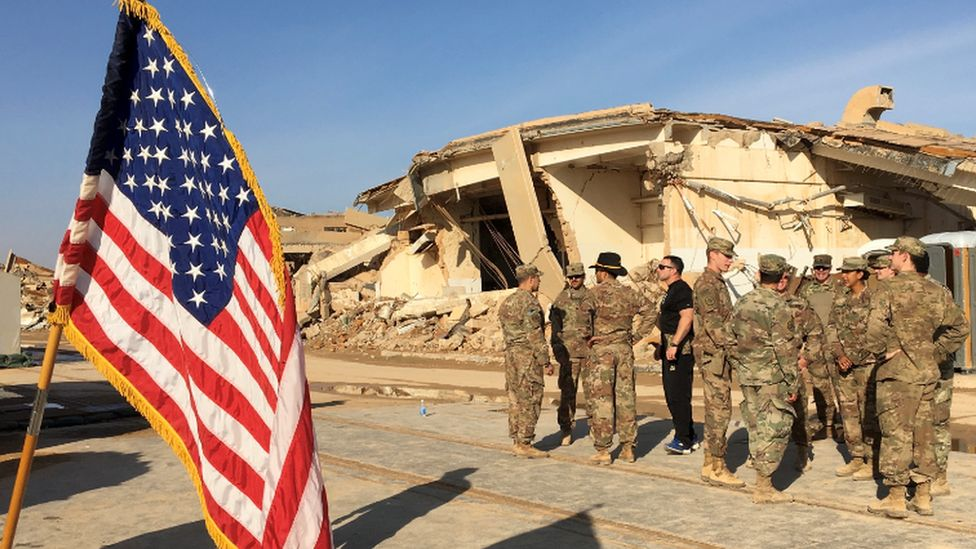
Washington held Iran partly responsible for the attacks that targeted American forces in Syria and Iraq in recent days and led to the wounding of about twenty soldiers.


President Joe Biden sent a message to Iranian Supreme Leader Ayatollah Ali Khamenei warning him of any further attacks targeting his forces.


Raisi warned in the interview with the Qatari channel that “the United States knows very well our military capabilities” and “knows that it is impossible to defeat them.”


Iran praised the "success" of the attack carried out by Hamas on October 7, but stressed that it did not participate in it.


Since this attack, more than 1,400 people have been killed in Israel, most of them civilians, according to Israeli authorities.


Hamas, which has controlled Gaza since 2007, confirms that more than eight thousand Palestinians, most of them civilians, were killed in the Israeli bombing.


Raisi believed that "countries that do not support the Palestinians should justify their failure to defend those who are killed during the legitimate defense of their country and land."


ARAB AND WORLD

Sun 29 Oct 2023 1:38 pm - Jerusalem Time

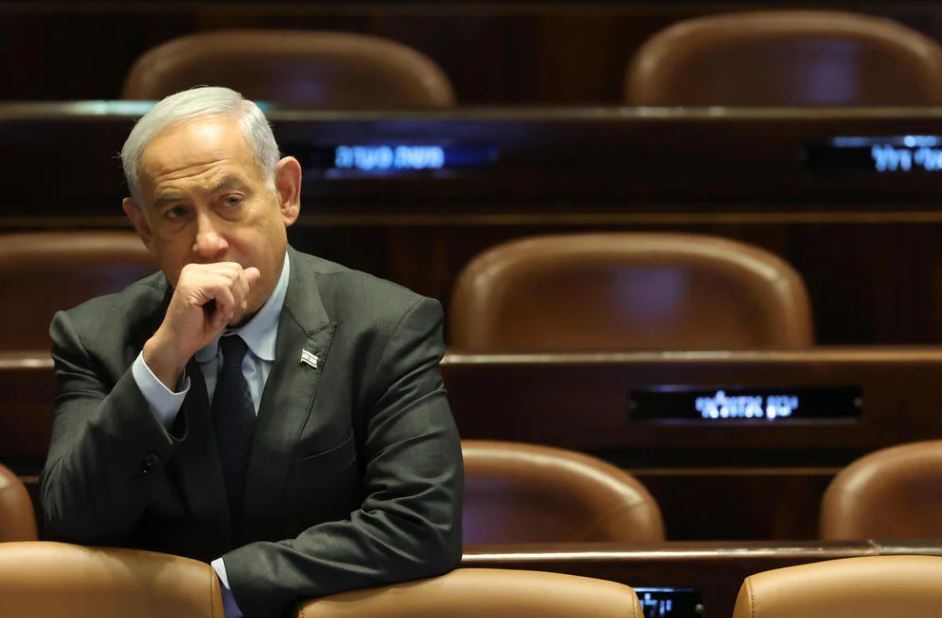
Netanyahu deletes a tweet in which he held the Shin Bet and AMAN responsible for the Al-Aqsa flood

Today, Sunday, Israeli Prime Minister Benjamin Netanyahu deleted a tweet in which he criticized the heads of the General Security Agency (Shin Bet), Military Intelligence (Aman), and the Israeli security authorities.


Netanyahu said in the deleted tweet: “No party provided him with warnings of Hamas’ intention to go to war, as their assessments were that the Palestinian factions were deterred and directed them to calm down. These assessments were presented to me time after time and to the cabinet from the security and intelligence agencies.”


Netanyahu deleted the tweet, after violent criticism was directed at him by former Defense Minister Benny Gantz, a minister in the current war government, which he reluctantly joined despite his deep differences with Netanyahu, due to the deteriorating security situation in Israel since the “Al-Aqsa Flood” operation, which she launched. Palestinian resistance on the 7th of this month.


Opposition leader Yair Lapid also criticized Netanyahu's tweet on the social media platform (X), saying that he "did not receive any notification about the intentions of the Palestinian resistance from the Shin Bet and Aman services before the war."


It is noteworthy that Lapid, a former prime minister, refused to join the war government as it emerged from a government in which there are two extreme right-wing ministers Itamar Ben Gvir and Bezalel Smotrich.


Lapid said: "Netanyahu has crossed the red line. While the soldiers and leaders of the Israeli army are fighting against Hamas and Hezbollah, he is trying to blame them instead of supporting them," calling on Netanyahu to retract his tweets.


For his part, Gantz said: “The prime minister must immediately retract his tweet.”

PALESTINE

Sun 29 Oct 2023 1:16 pm - Jerusalem Time

Health in Gaza: 116 medical personnel were killed in Israeli bombardment in the Strip

Today, Sunday, the Ministry of Health revealed that 116 medical personnel were martyred as a result of the open holocaust launched by the Zionist occupation in the Gaza Strip since October 7, which led to more than 8,000 wounded.


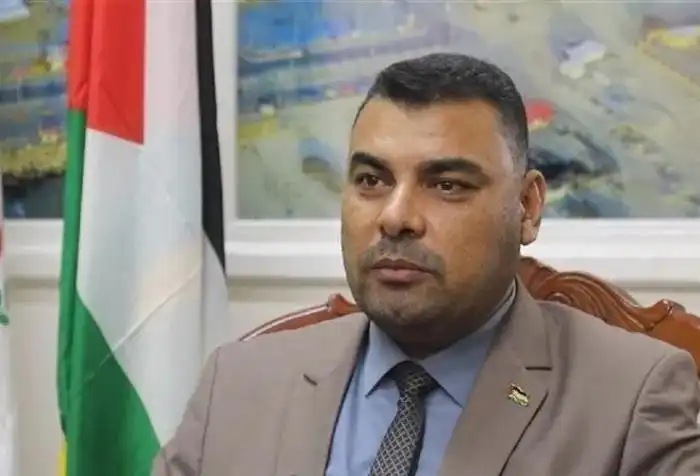
The spokesman for the Ministry of Health, Ashraf Al-Qudra, confirmed in a press conference that the number of martyrs among medical personnel had risen to 116 martyrs, in addition to the destruction of 25 ambulances and the targeting of 57 health institutions, in the continuing Israeli bombing.


Since the start of the aggression, the occupation forces have repeatedly bombed ambulances while they were working, while bombing the Baptist Hospital and the Indonesian Hospital, which led to the martyrdom of a number of medical staff and the injury of others, along with hundreds of citizens.


The occupation forces also bombed the homes of many doctors and medical staff on the heads of their residents in brutal crimes unprecedented in history.


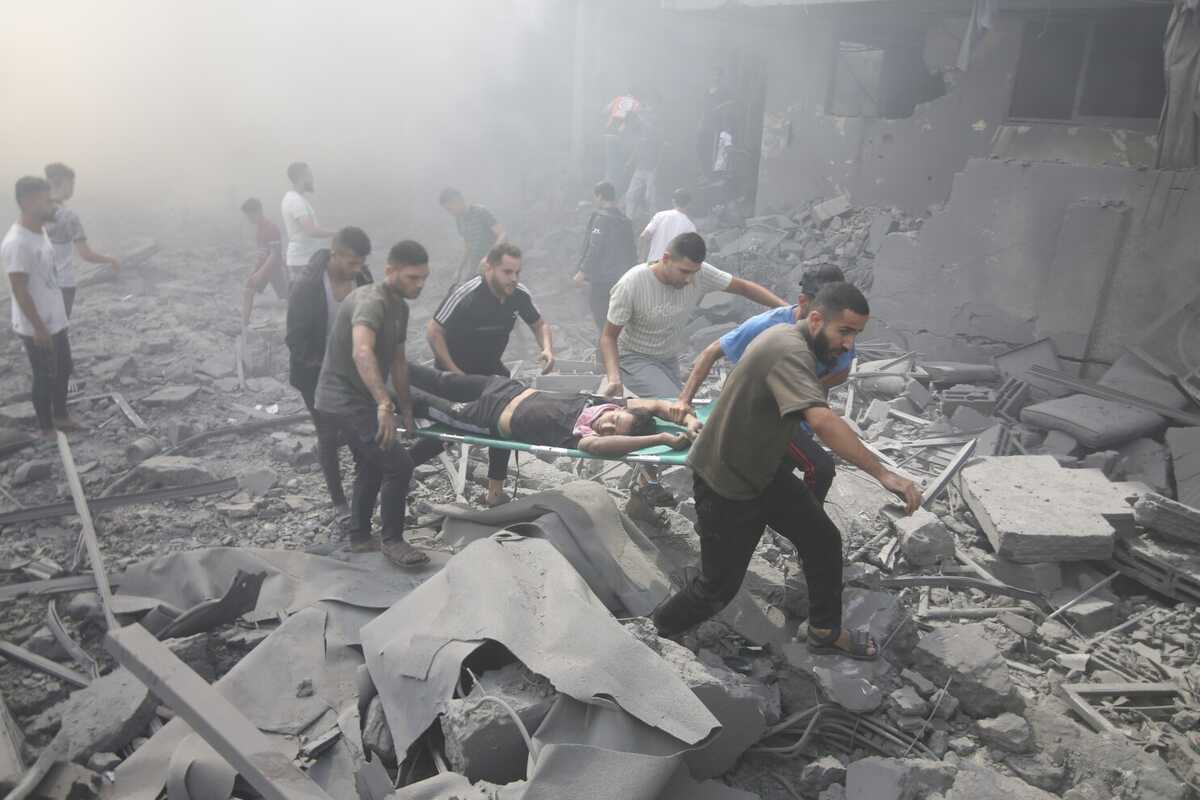
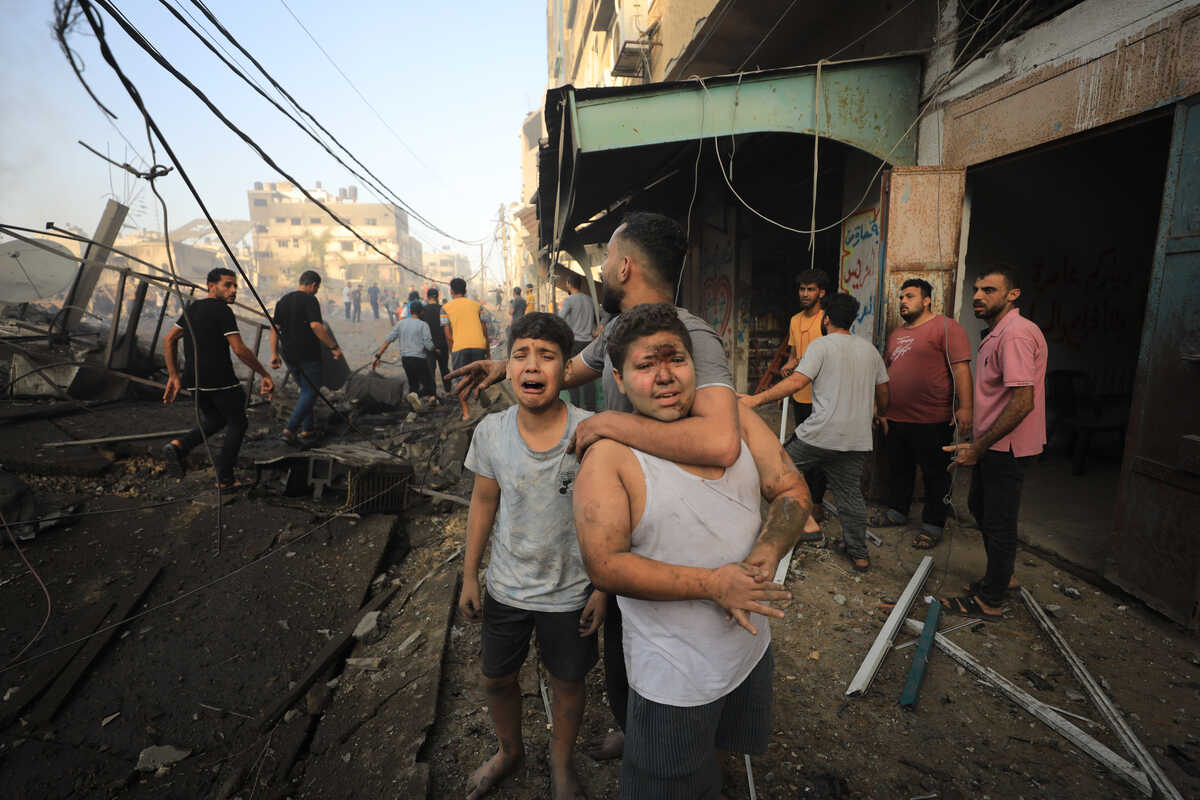
In addition, the spokesman for the Ministry of Health said: The Israeli occupation committed 56 massacres in the past hours, claiming the lives of 302 martyrs, the majority of whom were displaced.


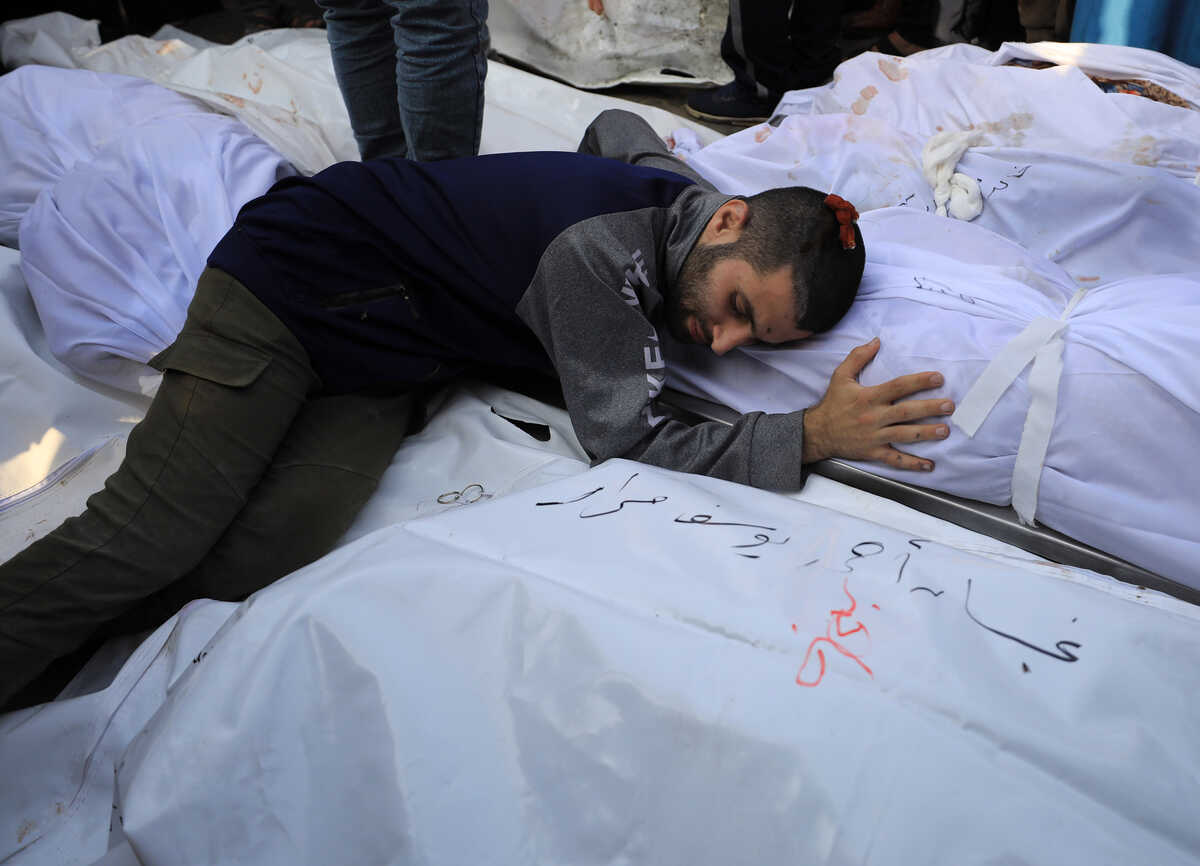
He pointed out that the number of martyrs in Gaza rose to 8,005, including 3,342 children, 2,062 women, and 460 elderly people as a result of the Holocaust committed by the occupation forces since October 7.


He stressed that the occupation forces deliberately targeted families, stressing that the occupation targeted 881 families (families, by bombing their homes over their heads).


He stressed that the return of communications (at dawn today, two days after they were interrupted) revealed the extent of the holocaust committed by the occupation and the hundreds of victims, martyrs and wounded.


He revealed that nothing new had occurred in the file of medical aid to hospitals in accordance with the needs of the Ministry of Health


The Ministry of Health spokesman warned of the rapid spread of epidemics among the displaced due to water scarcity and lack of personal hygiene.


ARAB AND WORLD

Sun 29 Oct 2023 1:14 pm - Jerusalem Time

Arab League Chief: Israel launches a scorched earth policy in Gaza for the purpose of displacement


The Secretary-General of the Arab League, Ahmed Aboul Gheit, said today (Sunday) that Israel is launching a “scorched earth” policy in the Gaza Strip for the purpose of displacement at the expense of neighboring countries.


Aboul Gheit added during the activities of the “Sixth Cairo Water Week” with the participation of regional and international organizations that the destruction of infrastructure and water networks in Gaza is “war crimes,” according to what the Arab World News Agency reported.


In another context, the Secretary-General of the Arab League stated that Arab water security still faces “growing challenges that require strengthening joint Arab action to keep pace with those challenges.”


He explained that these challenges threaten “an alarming decline in water levels.”

PALESTINE

Sun 29 Oct 2023 1:08 pm - Jerusalem Time

Gaza Media Office: 10,000 dead and missing in Israel's attacks on Gaza

The Hamas government media office in Gaza announced on Sunday that the toll from Israel's attacks on the Strip 23 days ago had risen to 10,000 dead and missing under the rubble. The media office said, in a statement, that the Israeli army continued today its intensive raids and artillery shelling on various areas in the Gaza Strip, leaving dozens dead and wounded, according to the German News Agency.


According to Palestinian sources, sounds of violent clashes were heard on the northern border of the Gaza Strip, resulting from clashes between resistance fighters and Israeli army forces trying to enter the Strip by land, and violent air strikes inside the Strip.


Amid the Israeli escalation, the Ministry of Interior in Gaza announced today that there were deaths and injuries as Israeli forces targeted a bus carrying citizens in the south of the Strip.


The Ministry said, in a statement, that the Israeli targeting occurred on a street south of Gaza City, according to what was reported by the Arab World News Agency.


For his part, spokesman for the Palestinian Ministry of Education, Sadiq Al-Khadour, announced today the killing of 2,000 students in the Gaza Strip and more than 70 educational staff so far as a result of the ongoing Israeli military operations in the Strip. Al-Khadour said that 200 schools were subjected to “occupation aggression.”


The Israeli army continues its military operations against the Gaza Strip, which has been exhausted by a siege that has been ongoing for 22 days, while the number of victims of Israeli operations has risen to more than 8,000 and 20,000 injured.


ARAB AND WORLD

Sun 29 Oct 2023 12:49 pm - Jerusalem Time

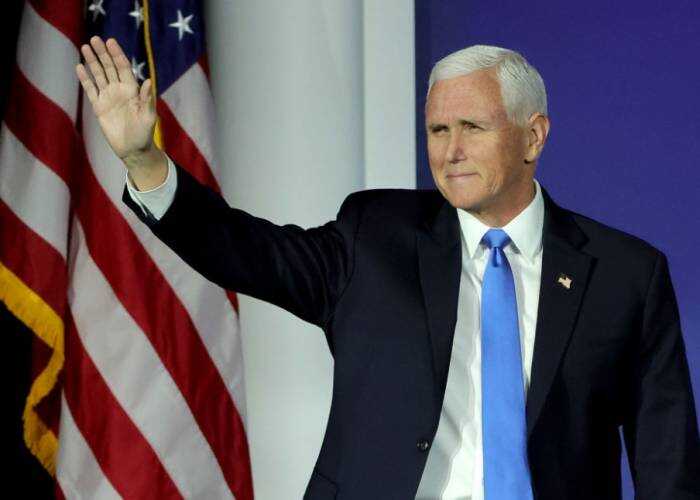
Mike Pence withdraws from the US presidential race

Former Vice President Mike Pence has abandoned his bid for the Republican presidential nomination, ending his campaign for the White House after having difficulty raising money and gaining support in opinion polls.


“After much prayer and deliberation, I have decided to suspend my campaign for president effective today,” Pence said at a Jewish-Republican Coalition rally in Las Vegas. “We always knew this would be an uphill battle, but I have no regrets.”

PALESTINE

Sun 29 Oct 2023 12:46 pm - Jerusalem Time

Israeli bulldozers continue to bulldoze dozens of dunums in Salfit

Today, Sunday, Israeli occupation vehicles bulldozed large areas of citizens’ lands in the area surrounding Ezbet Abu Basal, northwest of the city of Salfit.


Settlement affairs researcher Khaled Maali said that the occupation bulldozers continue to bulldoze dozens of dunams in the area surrounding Ezbet Abu Basal for the benefit of expanding the settlements and their infrastructure at the expense of citizens’ agricultural and pastoral lands.


His Excellency explained that this area is surrounded by the “Ariel” and “Ariel” industrial settlements, and the Ras settlement outpost, and the goal of the bulldozing work is to expand them and connect them together, stressing that what is happening in Salfit Governorate is an unprecedented process of settlement encroachment.

PALESTINE

Sun 29 Oct 2023 12:29 pm - Jerusalem Time

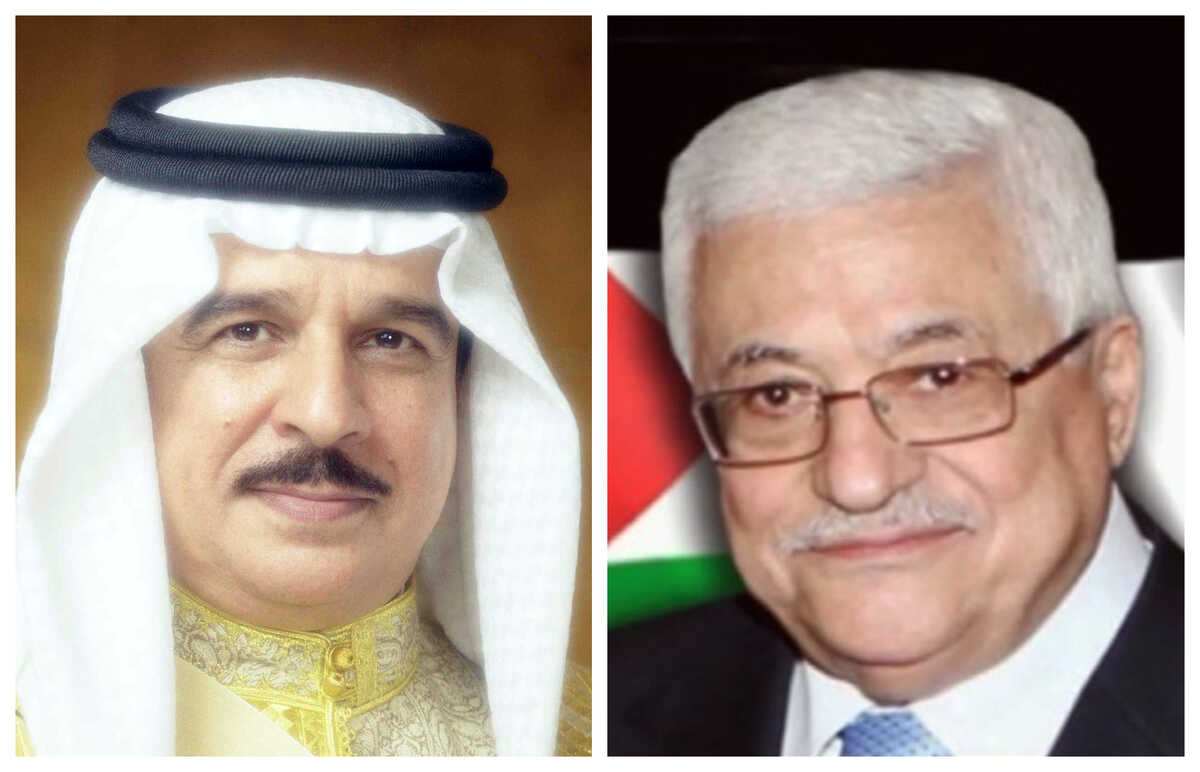
President Abbas receives the Bahraini Foreign Minister

President Mahmoud Abbas received, today, Sunday, at the presidential headquarters in Ramallah, the Minister of Foreign Affairs of Bahrain, Dr. Abdul Latif bin Rashid Al Zayani.


The Bahraini Foreign Minister conveyed to President Abbas a message of solidarity and support from His Majesty King Hamad bin Isa Al Khalifa, his Crown Prince and the Bahraini people to President Mahmoud Abbas and the Palestinian people, stressing that Bahrain, as king, government and people, stands by the Palestinian people in these difficult circumstances that they are going through.


President Abbas welcomed Bahraini Foreign Minister Al-Zayani, appreciating this visit and the solidarity message from the King of Bahrain, which expresses the strong fraternal relations that bind the two brotherly peoples.


The President reviewed to the Bahraini guest the latest developments and discussed ways to confront these dangerous conditions that the Palestinian territories are witnessing in the Gaza Strip and the West Bank, and stressed the need to immediately stop the aggression against our people, which blatantly violates international law, calling for the establishment of permanent humanitarian corridors to bring in humanitarian aid and provide water, electricity and fuel. Providing international protection for the Palestinian people, and going to an international peace conference, stressing the rejection of any partial or security solutions to the Gaza Strip or the Palestinian issue, and adhering to the comprehensive political solution based on international legitimacy, which ends the Israeli occupation of the land of the State of Palestine, with East Jerusalem as its capital, reiterating holding Israel responsible. On the ongoing aggression.


President Abbas renewed his refusal to displace our people from their homes and lands, whether from Gaza, the West Bank, or Jerusalem, stressing that we will not accept more military or security solutions, which have brought us to where we are today, which may lead the region to a regional and global war.


The President appreciated the positions of the Arab countries and their brotherly peoples, for their positions of support and support for the rights of our Palestinian people and demanding an end to the Israeli aggression, renewing the call for holding an emergency Arab summit.


The meeting was attended by Secretary of the Executive Committee of the Palestine Liberation Organization, Hussein Al-Sheikh, member of the Executive Committee of the Palestine Liberation Organization, Ziad Abu Amr, Deputy Prime Minister and Minister of Information, Nabil Abu Rudeina, and Advisor to the President for Diplomatic Affairs, Magdi Al-Khalidi.

PALESTINE

Sun 29 Oct 2023 12:09 pm - Jerusalem Time

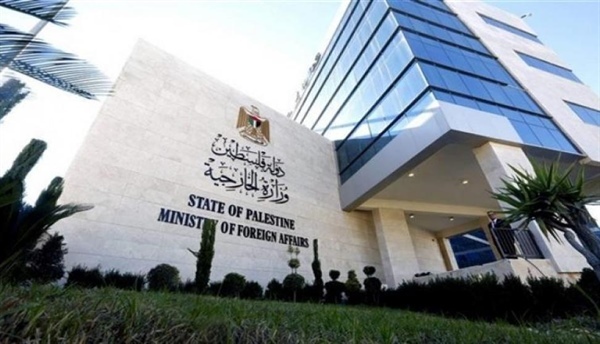
Foreign Ministry: Absence of international will to stop aggression threatens the foundations of the world order

The Ministry of Foreign Affairs and Expatriates confirmed that the failure of the international community to stop Israel’s destructive aggression to liquidate the Gaza Strip, and thus the Palestinian cause, seriously threatens the foundations of the world order.


The Ministry explained in a statement, today, Sunday, that the absence of international will to stop the aggression loses the institutions of international legitimacy, especially those based on preserving and guaranteeing the principles of human rights, and what remains of their credibility, and turns the contents of the United Nations Charter and the texts of international law and international human rights law into mere ink on the surface. Paper, and replaces it with the law of the jungle, and the logic of “the strong eats the weak.”


The Ministry condemned Israel's continuation of its destructive war against the Gaza Strip for the 23rd day in a row, and the continuation of committing massacres and crimes, and the series of bloody raids on Palestinian cities, towns and camps in the occupied West Bank, including East Jerusalem.

PALESTINE

Sun 29 Oct 2023 12:03 pm - Jerusalem Time

Palestine Ministry of Education: 2,000 students were killed in the Gaza Strip


The Palestinian Ministry of Education confirmed the death of 2,000 students due to the Israeli aggression on Gaza, and recorded more than 70 martyrs from the educational team.


The Ministry explained that 200 schools were damaged due to the aggression that has been ongoing for 23 days.


The government media office in Gaza stated that 10,000 martyrs, including at least 1,500 under the rubble, have been killed since the beginning of the Israeli aggression.

OPINIONS

Sun 29 Oct 2023 11:54 am - Jerusalem Time

Global Opinions| Why Russia and Hamas Are Growing Closer

Carnegie Endowment -"Al-Quds" dot com

Carnegie Endowment -"Al-Quds" dot com

Opinion Writer

By Milàn Czerny Dan Storyev


  • Moscow’s relationship with the militant group Hamas is part of a Middle East strategy meant to boost its standing in the Global South: an effort that has long involved building ties with both Israel and its sworn enemies.

The Kremlin purports to take a hard stance on terrorism. Yet since the massacre in southern Israel carried out by Hamas militants on October 7, it has only grown closer to the group. Despite the killing of 16 Russian nationals, and even as Muscovites laid flowers at the Israeli embassy, the Kremlin declined to condemn Hamas’s actions, expressing only “grave concerns.” Some might see its overtures toward the group as an attempt to sow chaos. In fact, Moscow’s goal is to cement its status as a friend of the Global South. 


The Kremlin’s relationship with terrorism has a complicated history. The Second Chechen War—a defining episode for President Vladimir Putin early in his rule—was justified as a response to the threat of Islamist terrorism. Not long after, Russia reacted to the 9/11 attacks by lending its support to the United States and backing the invasion of Afghanistan, to the extent that it even countenanced the deployment of U.S. troops to Central Asia. Later, in 2015, Moscow linked its intervention in Syria to the struggle against terrorism. 

In Syria, Russia claimed to be targeting “thousands” of ISIS militants from Russia and the rest of the former Soviet Union, to which it feared they would spread their ideology if unchecked. And, of course, the Kremlin has not shied away from labeling its political opponents terrorists, from supporters of the jailed opposition leader Alexei Navalny to Ukrainian activists and Crimean Tatar dissidents. 

All the while, where advantageous to its interests, the Kremlin has happily ignored or even worked with organizations labeled as terrorist, such as in Afghanistan, where the Taliban now shares a cordial rapport with Moscow.

In the case of Hamas, Moscow has long cozied up to the group, declining to designate it as a terrorist organization as many other countries have done, even after the October 7 attacks, and making clear that it is loath to sever contact with Hamas. In doing so, Russia provides Hamas with what terrorists most covet: the legitimating effect of recognition. In 2006, following the group’s historic victory over Fatah in legislative elections, Putin was among the first world leaders to congratulate it.


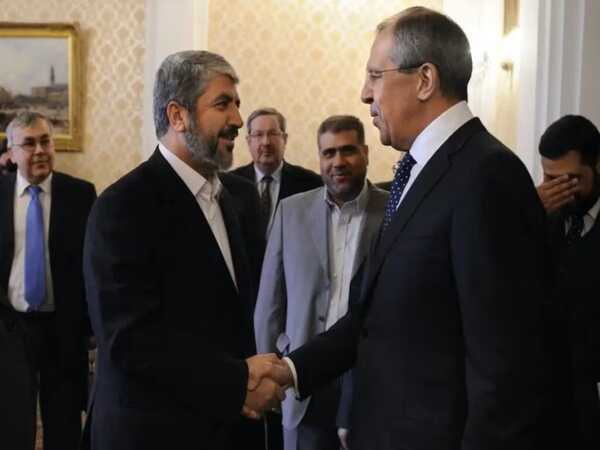
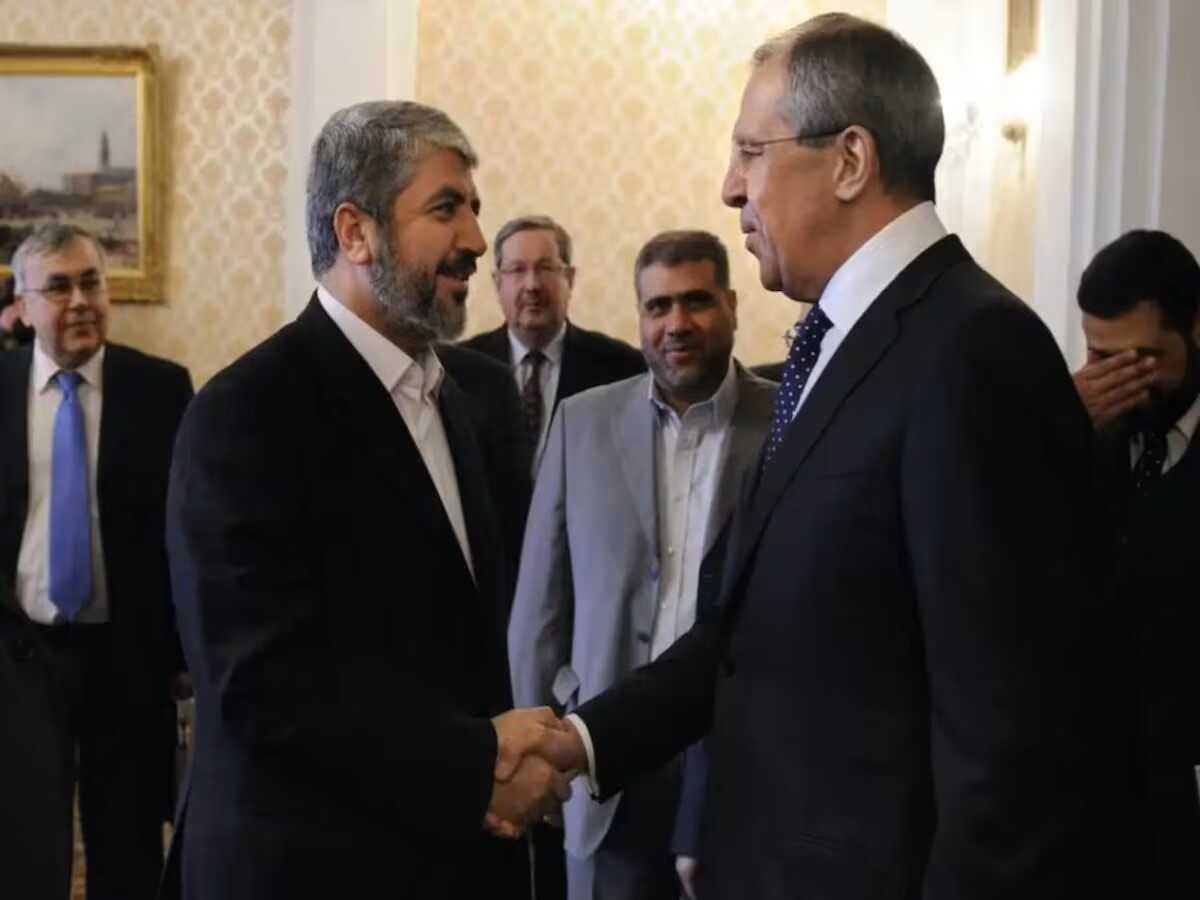
A year later, Putin hosted Hamas’s then leader, Khaled Mashal, in Moscow, receiving praise from Mashal for his “courage and manliness.” Putin was thanked again by Hamas after the October 7 attacks, this time for his “position regarding the ongoing Zionist aggression against our people.” While allegations that Russia transferred weapons to Hamas remain unproven, Russia has at the very least facilitated material support for the group: on the eve of the attacks, Hamas received millions of dollars through a Moscow-based crypto exchange.

The rapprochement with Hamas is consistent with a historical pattern. During the Cold War, Moscow armed and otherwise supported Palestinian militants, including those engaged in terrorism, continuing to do so even at the height of détente. Hamas bears little resemblance to the left-wing Palestinian nationalists with whom the Soviets did business. It was with the more secular Fatah that Hamas fought a civil war in the mid-2000s, and this month, it was an ISIS flag rather than a red banner that the Israel Defense Forces claimed to have found in a kibbutz attacked by Hamas. 

Even so, Moscow’s support for Palestinian militancy remains driven by the same motivation: the desire to boost its standing in the Global South. Russia is seizing an opportunity to bolster its claim to be challenging what Putin calls “the ugly neocolonial system of international relations.” Hence the Kremlin’s half-hearted response to the attacks and continued willingness to engage Hamas, and more broadly its outreach to Palestinians in both Gaza and the West Bank, whose capitals have a Kalinka Russian cultural center and a Putin Center, respectively. 

Similarly, Russia’s self-presentation as a peacemaker should be considered in the context of status-seeking behavior. Its message for the Middle East is that U.S. domination of the region has produced disastrous results, not least the war between Israel and Hamas itself, and that Russia would be a much better mediator and diplomatic partner than any of the Western powers. In his first comments after the outbreak of war between Israel and Hamas, made in a meeting with the Iraqi prime minister, Putin pointed to the conflict as a “vivid example of the failure of the United States’ policy in the Middle East.” Meanwhile, in a meeting with the Arab League’s secretary general, Foreign Minister Sergey Lavrov condemned Washington’s “destructive policy” on the Israeli-Palestinian conflict. 


Russia, then, is surgically targeting Middle East leaders with its messaging on the war. Yet neither this diplomatic offensive nor its support for Hamas is meant to destabilize the region.

Moscow’s approach to terrorism may be instrumental, but its fear of the spread of terrorism from the Middle East is real. Russia has repeatedly been targeted by terrorists over the years and has something to lose from chaos, even in the Middle East. In Russian, the Middle East is known as the Near East (Blizhny Vostok), testament that in Russian minds, it is not so distant a region. Whatever happens in the Middle East, it is thought in Moscow, is likely to spill over into Russia. Moscow’s lack of appetite for chaos was evident in its measured response to the Arab Spring, during which Russia unequivocally opposed the instability associated with regime change. 

It is also worth remembering that Russia has spent the past two decades building ties with Israel, striving to stay on good terms even as it has also engaged the country’s sworn enemies in Tehran, Damascus, and Gaza. Amid the international isolation of Russia following its invasion of Ukraine, Israel has notably refrained from sanctioning Moscow or arming Kyiv. Given this, the Kremlin will be keen to avoid alienating Israel, much less breaking off relations between the two countries.

As such, while Russia may grow closer still to Hamas in symbolic ways, there is little reason to expect it to increase its material assistance to the group—of which there is little evidence as it is. Most likely, these overtures will remain at the level of rhetoric.


The reality is that, for Moscow, the crisis in the Middle East is an opportunity to pitch itself to the region and the wider Global South as a diplomatic partner: a pitch that would gain nothing from the creation of further chaos in a part of the world the Kremlin regards as strategically important and to which it believes itself to be highly exposed

ARAB AND WORLD

Sun 29 Oct 2023 11:36 am - Jerusalem Time

Iraqi factions attack a US forces base in Syria with two drones

Today (Sunday), Iraqi armed factions announced that they attacked a US forces base inside Syrian territory with two drones.


The Islamic Resistance in Iraq (a group of Iraqi Shiite factions) said in a statement, “The Mujahideen of the Islamic Resistance in Iraq targeted the American occupation base (Al-Shaddadi) south of the Syrian city of Hasakah, with two drones, which directly hit their targets.”


The same factions announced in a statement yesterday (Saturday) that they attacked the American forces base in the Syrian Al-Tanf region with two drones.


The American base is located in the Al-Tanf region in southeastern Syria.


These armed factions have previously announced attacks on American military bases in Syria.


Recently, Iraqi military bases where American forces and forces from the international coalition are present as advisors and trainers were subjected to attacks with missiles and drones, after the outbreak of fighting between the Islamic Resistance Movement (Hamas) and Israel in the Gaza Strip and its surroundings on the seventh of this October.


Three weeks ago, Israel declared a state of war for the first time in 50 years, and launched a military operation called “Iron Swords” in the Gaza Strip after Hamas launched a surprise attack called “Al-Aqsa Flood,” which resulted in the deaths of 1,400 Israelis and more than 7,700. Palestinian until now.


The Pentagon announced last week that its forces were subjected to 13 attacks, 10 of which were in Iraq and 3 in Syria.

PALESTINE

Sun 29 Oct 2023 11:30 am - Jerusalem Time

Israel threatens to bomb Al-Quds Hospital in Gaza and demands its immediate evacuation

This Sunday morning, the Israeli occupation once again threatened to bomb the Al-Quds Hospital affiliated with the Palestinian Red Crescent Society in the Tal Al-Hawa neighborhood, southwest of Gaza City.


Hospital Director Bashar Murad explained, "We have now received strong threats from the occupation forces to immediately evacuate Al-Quds Hospital in the Gaza Strip because it will be bombed."


It is noteworthy that Al-Quds Hospital includes more than 400 patients and about 12,000 displaced civilians who took refuge in the hospital as a safe place, in addition to medical staff.


15 out of 35 hospitals have become idle and out of service in the Gaza Strip, mainly as a result of Israeli bombing, or running out of fuel.


Hospitals are subjected to daily threats from the occupation to evacuate them, in addition to the deliberate bombing of hospitals or their surroundings, which house thousands of citizens, as a massacre was committed in the bombing of the Arab National Hospital (Al-Baptist), in the Al-Zaytoun neighborhood in Gaza City on the seventeenth of this month, resulting in one death and one injury. Hundreds of our people.

OPINIONS

Sun 29 Oct 2023 10:51 am - Jerusalem Time

Decolonization is always a violent phenomenon. Would that it were otherwise.

Translation from Chronique De Palestine- " Al-Quds" dot com

Translation from Chronique De Palestine- " Al-Quds" dot com

Opinion Writer

By Robert Hildebrandt 

I want to believe that mass protests, strikes, and boycotts will be more effective than violence at liberating the colonized. Yet how many liberation movements have felt forced to choose violence as the only path to freedom? Would that it were otherwise.


There is a dogged insistence in both mainstream American and Israeli discourse on denying Israel’s colonial history, structures, and power. This wasn’t always the case. In the late 19th and early 20th centuries, at the height of Europe’s colonial empires, many Zionists openly proclaimed their colonial ambitions in “Eretz Israel,” creating institutions such as the Jewish Colonization Association and drawing on colonial techniques from French Algeria (as with Baron Rothschild’s coastal wineries) and from the Prussian colonization of Western Poland (as with the Jewish-only kibbutz movement). At the time, to be a colonizer, to insist on one’s need for an exclusive nation-state for one’s “people,” was to assert one’s right to be a member of the European community of nations, to be part of “the civilized world.” 

In the wake of the global decolonization movements following the end of World War II, open support for colonialism has become less socially acceptable, yet the structure of power that colonialism created, both in the U.S. and in Israel, has nonetheless survived. This structure was violently confronted over two weeks ago in Hamas’s surprise attack on Israeli civilian and military outposts; it is being re-asserted through Israel’s counter-offensive carpet-bombing of Hamas targets and civilian infrastructure in the Gaza Strip. In the process, hundreds of soldiers and militants, and thousands of civilians (a disproportionate number of them Palestinian) have been killed. In response, we (and here I’m speaking as an American to Americans) must figure out how we should respond to colonial and counter-colonial violence and our country’s role in its perpetuation.


The term “terrorist” has essentially supplanted the word “savage” in Western discourse. Both exist to reinforce the colonizers’ own sense of morality. While the colonizer has “rules of engagement” (rules that somehow still lead to killing large swaths of civilians), the “terrorist” and the “savage” are seen to have no such moral qualms about whom they target, seeking only to cause maximum death and destruction in the least predictable of ways. Consider how Natives’ raids were depicted in American discourse as wild, capricious, and vicious in their brutality — the symbol of the scalped head signifying the assailant’s inability to conduct the sort of polite violence that colonizers demand of their victims. 

But no violence is polite. Even in the Second World War, our most “just” war, U.S. military personnel convinced themselves that it was necessary to burn German civilians alive in Dresden to stop Nazism and to melt Japanese civilians into human puddles in Hiroshima and Nagasaki in order to end Japanese imperialism.

Would that it were otherwise. Would that we could have reached the Good Friday Agreement without the IRA bombings, could have had the Sepoy Rebellion without the massacre of British women and children, could have liberated Algeria without the bombing of Pied-Noir cafes and restaurants, could have liberated Poland without the mass rape of German women, could have saved Kosovo from ethnic cleansing without the bombing of Serb children, and could have freed Vietnam without killing so many American conscripts who didn’t want to be there. The list goes on. 

How many liberation movements have felt forced to choose violence as the only path to freedom? How many have had that same violence, once begun, become uncontainable once liberation was achieved? The world is full of indigenous military elites who, following a violent independence movement, found new and novel ways to exploit their populations as effectively as any colonizer once did.

Violence is never neat, is never clean, is never, cannot ever, be fully moral. Of all the Hamas militants’ attacks, the one on the NOVA music festival, in which over 200 Israeli civilians were killed, has been routinely held up as the most unequivocal proof of Hamas’s savagery, of their inability to conduct moral violence, of proof that Israel cannot negotiate with them and should therefore seek out their violent destruction. 


In Israel, there seems to always be a constant drive to treat colonization as settled, as over, as done with. That the colonized are subdued, and that life can be lived like any “normal” country. In some ways, then, we can see the attack on the festival as the most violent of anti-colonial refusals — a refusal to let the children of a nation that ethnically cleansed one’s family party on that stolen land in peace. It violently reasserts that this land is stolen and that it can only be returned to its rightful owners through bloodshed.


Would that it were otherwise. To see these attacks as an understandable response to the conditions of settler deprivations is not to condone them as moral or inevitable. This does not have to be a zero-sum game in which the taking of an Israeli life is a gain for Palestinian freedom, and the taking of a Palestinian life is a gain for Israeli peace and security. The political leaders of Israel and the United States have, more than any other group, made it so. There is an alternative. There has to be, if we are to have any sense of a higher purpose as humans in a society. 

It has just been closed off. Humans are not inherently evil or inherently cruel. Quite the opposite. Throughout these past weeks, I have watched countless videos of Palestinians and Israelis risking their lives to save members of their own communities, giving food, shelter, and medicine to those in need. The lines of compassion could cross the separation wall — indeed, some of the bravest Israelis are calling on their government to do so but have been roundly hounded by society for it — it has just been prevented. Instead, Israel is preparing its populace to accept the genocide of Gazan Palestinians, calling Gazans “human animals,” dividing the world between “the children of light and the children of darkness, between humanity and the law of the jungle.”


We have forgotten how genocide is so often seen, in its perpetrators’ minds, as a defensive act, that those who commit acts of disproportionate violence see these acts as a “just response” to an initial act of violence — a “protective measure” against further violence from the communities targeted for destruction. This language enables colonialism: Israel is not alone in naming its colonial army a “defense force” — it defends Jewish supremacy just as the Ulster Defense Force defended Protestant supremacy in Northern Ireland and the South African Defense Force defended White supremacy under Apartheid. This language enables genocide: 

The Ottomans justified the massacre of Armenians as a defense against a supposed “fifth column” of Christians who were secretly loyal to their Russian opponents in WWI; Nazis similarly saw Jews as part of a larger “Judeo-Bolshevik” conspiracy threatening to destroy the German nation; Hutu leaders justified massacring Tutsis as part of a defense against the Tutsi-led Rwandan Patriotic Front; Serb leaders justified the Srebrenica massacre as a prophylactic against Bosnian-lead ethnic-cleansing of Serbs. In each case, the taking of life was portrayed as the “protecting of life.” The same is happening now among Israeli officials and their U.S. backers.

Would that it were otherwise. I want to believe that there is another way, that mass protests, strikes, and boycotts will both be more effective than violence at both liberating the colonized and creating a just post-colonial society. The Palestinians have tried, again and again, to win their freedom through non-violent protest: through the 1976 Land Day strikes and marches in the Galilee protesting Israeli land confiscation; through the 1987-1993 First Intifada, itself sparked by the deaths of four Palestinians in the Gaza Strip; through the 2018-2019 Great March of Return, in which Gazans peacefully marching on the fence that cages them in and separates them from their grandparents’ homes were met with tear gas and snipers’ bullets; through the May 2021 protests in Shiekh Jarrah and the subsequent general strike of Palestinian citizens of Israel; through the Boycott, Divestment, and Sanctions movement that has tried to put the same non-violent pressure on the Israeli economy that anti-apartheid activists so successfully deployed in South Africa; and through the many small, daily peaceful protests around Israel, Palestine, and the world, that are led by Palestinians, Jews, and their international allies. Had those in power in the U.S., Israel, or the rest of the rich world listened, we might have been able to avoid the current bloodshed that now feels unstoppable.


The sad truth is that, for all the talk of the “complexity” of the conflict, all this death and destruction (on all sides) could have been avoided, still could be avoided, if the colonizers were willing to live with the colonized as equals. In my most optimistic moments, I wonder if most Israelis, when given a clear choice, would choose to live together with Palestinians — in one state, with a shared capital, with equal rights, and with the right of entry for all Jews and Palestinians living in their respective diasporas — if it meant a guaranteed end to the bloodshed. No more military service, no more separation walls, no more checkpoints, no more secret police, no more torture, no more rockets, no more suicide bombs, no more living in fear that you or your children might not live through the night. Obviously, the Israelis have more to lose and less to gain than the Palestinians with this. But isn’t it worth it? Maybe the one good thing to come out of all of this is that equality may start to seem like a good alternative, even for the occupiers.

The Israeli state has chosen death over equality. The death they are choosing is not only for Palestinian civilians — the parents, children, doctors, and reporters, and all the other innocent people whose lives have been ignored by America, Europe, and their media, but whose deaths have become front-page headlines these past two weeks. By continuing the war and amassing troops for a ground invasion of the Gaza Strip, the Israeli government is also choosing death for Israelis — for the hostages who could have been freed in a prisoner exchange, for the civilians who will die in new rounds of rocket fire, for the soldiers who will die fighting to eradicate something that cannot be eradicated. If Israel destroys Hamas, a new group will take its place, drawing support from this new generation of Palestinian youth who are currently being traumatized and orphaned by Israel’s bombing.


The choice, then, is not between Palestinian rebellion and submission; it is between a violent decolonization and a non-violent one. Palestinians have shown the world again and again that they will never abandon their dream of liberation, of returning home to the lands from which they were ethnically cleansed in 1948. The U.S., if it wanted, could help force Israel to accept a peaceful decolonization. By sending weapons and warships, it is throwing its support behind ethnic cleansing, genocide, and violent resistance.


We, the American people, must make it otherwise. Some of us are already fighting to do so. There are currently mass protests organized in cities throughout the country, many of which, like last week’s march on Washington, are led by Jewish Americans who refuse to let Israel and the U.S. kill civilians in their name. Already, we have seen high-ranking State Department officials resign in opposition to the U.S.’s one-sided response to the violence. 

Representatives Rashida Tlaib and Cori Bush — two women whose large black constituencies know full well the effects of colonial violence — have introduced a bill calling for an immediate ceasefire and an opening up of Gaza to foreign aid. Many Liberal representatives like my district’s Jimmy Gomez have yet to sign the bill but could be pressured to do so. 

Decolonization is never easy, but it doesn’t have to be a desperate, violent affair if we can prove to the colonized, in Palestine and throughout the world, that we are there to actively, materially, and politically support their rights to freedom.


PALESTINE

Sun 29 Oct 2023 10:39 am - Jerusalem Time

Experts react: What to know about Israel’s expanding military operations in Gaza

By Atlantic Council experts

Is this the endgame or just the beginning? On Friday, Israel announced that it is “expanding” ground operations in Gaza, with the goal of eradicating Hamas, the terror group that attacked Israel on October 7. Since then, Israeli airstrikes have pummeled Gaza, and hundreds of thousands of Israel Defense Forces (IDF) troops have amassed on the border, preparing for a ground invasion. What is Israel doing? And what does it mean for Gazans, the region, and the United States? Below, Atlantic Council experts share their insights.


Carmiel Arbit: Israelis are ready for war and will resist calls for a ceasefire

Jonathan Panikoff: Is this the start of a full ground invasion or a smaller counterinsurgency operation?

Tuqa Nusairat: Israel risks creating a newly traumatized and radicalized generation of Palestinians

Alex Plitsas: The operation will likely take months to achieve its goal

Daniel E. Mouton: A ground invasion will directly affect Israel’s long-term security

R. Clarke Cooper: Israel and its allies must stay vigilant against threats throughout the region


Israelis are ready for war and will resist calls for a ceasefire

After a three-week delay, the Israeli government is now proceeding with its ground offensive in Gaza. The operation will focus heavily on the Hamas tunnels—known as the Gaza metro—and on other Hamas infrastructure.

The human toll will be staggering. Israel accuses Hamas of using civilians as human shields and must weigh strategic assets with the humanitarian costs, particularly as international pressure mounts. In the aftermath of the al-Ahli Baptist hospital scandal, all eyes will be on al-Shifa hospital—the largest hospital in Gaza—which is said to be sheltering 40,000 people but the Israeli military has maintained for decades is the main hub of Hamas operations in Israel. 

As the casualties and devastation grow, the international pressure on Israel will mount for a ceasefire—but the appetite in Israel for a full-scale operation is so far unwavering. Israelis have banded together in preparation for a full-scale war, volunteering across the nation to support soldiers, displaced families, and others. Voices on the left that would typically demand a ceasefire have been almost entirely muted. The families of hostages—whose fate grows more precarious with a ground operation—are among the few voicing concern, not for the operation but for its impact on their loved ones.  

Significant questions remain as to how far Israel will be willing to go in its stated determination to destroy Hamas. In past operations, Israel has limited its actions and deterred rather than destroyed Hamas. Many Israelis feel this approach represented a caving to pressure from the West to adhere to international humanitarian norms rather than protecting its own security—a decision that led to the October 7 attacks. It also reflected the reality that Israel had no plans for an alternative leadership in Gaza, a reality that remains unchanged. Israel has more leeway to operate in the aftermath of October 7, but it is already starting to face the same pressure again, and the war is still in its earliest days. How far Israel’s leaders will be willing to go—and what steps they will be willing to take to balance their humanitarian responsibilities with their military ambitions—remains an open question.

—Carmiel Arbit is a nonresident senior fellow with the Middle East Programs and the Scowcroft Middle East Security Initiative at the Atlantic Council.


Is this the start of a full ground invasion or a smaller counterinsurgency operation?

It was only a matter of time before Israel’s ground operation expanded in response to Hamas’s October 7 terrorist attack, but there remains an open question still as to what the size and scope will be. Does this mark the beginning of a full-scale ground invasion or is this preparation for a more focused, smaller-footprint counterinsurgency operation? The lull that preceded this expanded military operation reflects US efforts behind the scenes to cajole Israel to not rush and think through its strategic goals and potential end states before committing to a ground operation. In the coming days, Jerusalem’s decision as to what kind of operation to undertake may be revealed.

The delay gave the United States some time to build up its own deterrence posture in the region. With the USS Dwight D. Eisenhower and its strike group in the Mediterranean and the USS Gerald R. Ford moving into the Persian Gulf, the United States is prepared for the war to escalate beyond Gaza. US strikes on Friday against Iran-backed Syrian militia sites were a direct reaction by Washington to drone and missile attacks against US personnel and bases earlier in the week. But those sorts of provocations from Iran, which risk escalating this conflict beyond Gaza, pale in comparison to what has thus far been tit-for-tat attacks between Israel and Hezbollah in the north, which have the potential to result in an unintended escalatory spiral that leads to a full-scale war in northern Israel.

But the United States, while not dictating Israel’s response, would almost certainly prefer that Israel not engage in a full-scale ground invasion. Instead, the United States would likely prefer smaller, targeted ground operations that, combined with aerial attacks, would reduce the death toll of innocent Palestinian civilians, though the numbers should still be expected to be quite high. The United States is probably assessing that this course of action, combined with its own deterrence efforts in the region, is the best chance to limit the conflict from spreading beyond Israel and Gaza, a goal shared by European and Middle Eastern countries, too, not to mention China.

In either scenario, the timeline of Israel’s effort to decimate Hamas is likely to be long—measured in weeks or months, not days. And in both scenarios, overwhelming Israeli success at destroying Hamas could bring Hezbollah into the conflict as a means to try to save the group. But regardless of how Israel undertakes its ground operation, when it’s over, the more strategic question will still have to be answered: Who is responsible for Gaza now?

—Jonathan Panikoff is the director of the Scowcroft Middle East Security Initiative at the Atlantic Council’s Middle East Program.


Israel risks creating a newly traumatized and radicalized generation of Palestinians

Analysts will say that Israel needs to conduct a ground invasion in Gaza to eradicate Hamas and establish deterrence in the aftermath of the October 7 attack. Since Hamas was elected and began to govern Gaza in 2007, Israel has engaged in four major assaults on Gaza, none of which have resulted in eliminating the threat Hamas poses. Over the past twenty days, Israel has engaged in a cataclysmic bombardment of the Gaza Strip and its 2.2 million inhabitants, killing an average of 400 Palestinians per day as the death toll exceeds 7,000, according to figures from the Gaza Health Ministry, with perhaps hundreds more still waiting to be unearthed from under the rubble. If the situation in Gaza was a humanitarian crisis before October 7, what has happened in recent days is a catastrophe that will take decades to recover from and yet is unlikely to ensure Israel’s security. 

What will remain of Gaza’s population, and among Palestinians elsewhere in the occupied West Bank and East Jerusalem and inside Israel proper, will be a newly traumatized and radicalized generation of youth, none of whom were born or of voting age when Hamas was elected. If Israel decides to maintain its occupation of Gaza with ground troops indefinitely, it too will suffer significant losses that will quickly turn an already enraged Israeli public against this attempted military “solution.” 

As images of the destruction of Gaza have emerged through on-the-ground, first-hand accounts, international public opinion has moved in favor of a ceasefire, despite the glaring opposition among Western leaders. The imminent ground invasion and the ongoing decimation of Gaza by air—which has already resulted in significant loss of life, more than 600,000 Palestinians internally displaced, and 45 percent of homes destroyed or damaged—will lead to the largest humanitarian catastrophe the conflict has not seen since 1948. As a result, Hamas’s self-declared raison d’etre—“resisting the [Israeli] occupation with all means and methods”—will only grow in the minds of Palestinian youth. This will render unsuccessful Israel’s attempts to eliminate Hamas militarily.

As Gaza plummeted into darkness on Friday night, so too will the region continue to witness dark days ahead as Israel and its Western allies continue to seek military solutions for a decades-old conflict that can only be solved by addressing the legitimate grievances of the Palestinians and their cry for an end to the occupation and for an independent Palestine. 

—Tuqa Nusairat is the director for strategy, operations, and finance at Atlantic Council’s Rafik Hariri Center & Middle East Programs.


The operation will likely take months to achieve its goal

Israel has begun the conclusion of kinetic shaping operations designed to degrade and destroy as much of Hamas military capabilities in Gaza from the air as possible. These operations have been in support of Israeli Prime Minister Benjamin Netanyahu’s stated goal of the demilitarization of Hamas and are in preparation for a ground incursion.

At the same time, Israel has begun the initial phase of a multi-phased ground incursion in which Israeli troops are likely to move into northern Gaza. There they will likely conduct a cordon and search operation in which they will go building-to-building to search for and destroy Hamas’ military capability, including command and control, weapons caches, key leaders, and Hamas fighters who decide to stay and fight. Civilians have been asked to leave the area north of Wadi Gaza, which amounts to approximately 1.1 million out of 2.2 million Palestinians in Gaza.

This operation will likely take months if Netanyahu’s goal is to be achieved and will be a bloody, difficult fight. It is estimated that Hamas has hundreds of miles of tunnels under Gaza in addition to its above-ground structures. The more than two hundred hostages taken by Hamas on October 7 could be in any of these sites.

The humanitarian situation in Gaza continues to deteriorate. A United Nations resolution overwhelmingly passed on Friday calling for a humanitarian ceasefire is a reflection of those conditions. The humanitarian situation remains a potential Achilles’ heel for the operation in Gaza.

For the past three weeks, Iranian proxy Hezbollah has engaged in cross-border fire and skirmishes from southern Lebanon with Israeli forces in northern Israel as fears of a second front remain real. It is unknown if Hezbollah will fully commit its arsenal of an estimated 150,000 rockets and missiles, many of which are capable of striking Jerusalem and Tel Aviv. If Hamas’s military capabilities are destroyed, Iran could activate Hezbollah, but in doing so Hezbollah and Iran run the risk of Hezbollah being severely degraded by Israel and potentially by the United States, if Israel were to become overwhelmed. In doing so, Iran would expend its largest proxy, limiting its ability to respond indirectly and avoid a direct confrontation.

Additionally, Iranian proxies in Iraq and Syria have struck US bases in those countries, wounding more than twenty US troops. The United States struck two Iranian-supplied weapons depots in Syria in response and publicly named Iran as being behind the attacks. 

The situation remains an unstable powder keg, and the threat for regional escalation remains real. Two factors to watch are the size and scale of a ground incursion into Gaza and the humanitarian conditions in Gaza. Those are the two things that the regional actors who may seek to escalate the conflict will seize on as justification for doing so.

—Alex Plitsas is a nonresident senior fellow with the Middle East Programs’ N7 Initiative 


A ground invasion will directly affect Israel’s long-term security

Given the recent increase in airstrikes, the recent ground incursions, and cuts to internet service, it appears that the IDF is poised to begin its anticipated ground operation into Gaza. Whether the operation begins will be a political decision as there are countervailing pressures from the White House and elsewhere for additional hostage releases, the evacuation of foreign citizens, and the amelioration of the humanitarian situation. If an IDF ground operation were to begin, then the scale and conduct of the operation will have effects far beyond the Gaza Strip. This operation, even if it accomplishes the objective of eliminating Hamas, will directly affect Israel’s long-term security.

The first effect will be whether the IDF commits such a large force to Gaza that the size of this force might allow others, such Lebanese Hezbollah or other Iranian-affiliated militias, to believe they can conduct larger opportunistic attacks against Israel. Deterring this sort of attack is one of the reasons why the United States rushed additional forces to the region. The second effect will be a product of how the IDF conducts combat operations in Gaza. Hamas will have every incentive to operate among the civilian population and create dilemmas for the IDF. The IDF will have a near-impossible task in trying to eliminate Hamas without greatly adding to the toll of Gaza’s civilian casualties. Nonetheless, failing to account for the civilian population will make it impossible to establish suitable post-conflict conditions in Gaza. The White House has correctly highlighted the importance of Gaza’s civilian population as the ground operation could create barriers to Israel’s continued normalization with Saudi Arabia and elsewhere. Israel’s security not only requires the elimination of Hamas, but it also depends on Israel living in peace with Palestinians and on expanding its diplomatic relations in the region.

—Daniel E. Mouton is a nonresident senior fellow at the Scowcroft Middle East Security Initiative of the Atlantic Council’s Middle East Programs. 


Israel and its allies must stay vigilant against threats throughout the region

Tonight, Israel’s allies and adversaries alike are closely observing and assessing the efficacy of the Israeli military offensive operations against Hamas. Beyond the immediate operational focus in Gaza, it is critical for Israel and allied states to remain diligent in their shared regional counterterrorism and security cooperation efforts. Since October 7, security threats throughout the Middle East have increased, emanating from the Israel-Hamas war. Tehran’s support to its proxies, along with Iranian production and proliferation of advanced weapon systems, such as cruise missiles, unmanned aerial systems, and ballistic missiles, require enhanced US security cooperation to counter such threats and promote an integrated air and missile defense concept of operation.

Israel’s sovereign defense may have been tested by the terrorist actions of Hamas, as well as by those who insist on drawing a moral equivalence between Hamas’s terrorist acts and the self-defense of Israel, but the ironclad strategic partnership between the United States and Israel remains.

Further, in this latest iteration of the fight against terrorism, the mutual commitment of the United States and Israel to advance support of regional security must not lose long-term strategic sight of the historic achievements and potential future opportunities of the transformative Abraham Accords.

—R. Clarke Cooper is a nonresident senior fellow with the Atlantic Council’s Scowcroft Middle East Security Initiative 


Source: Atlantic Council

PALESTINE

Sun 29 Oct 2023 10:20 am - Jerusalem Time

The New York Times: Israel halted plans for a ground invasion of Gaza and replaced them with limited ground incursions
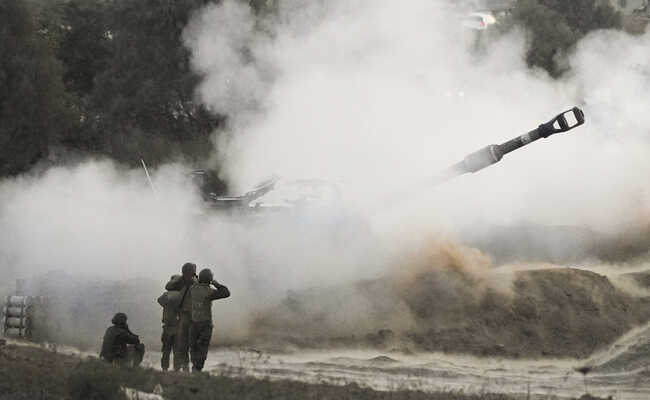
The New York Times revealed that the Israeli occupation halted plans for a ground invasion of the Gaza Strip and replaced them with limited ground incursions. The newspaper, quoting American officials, explained that Tel Aviv’s halting of plans for a broad ground invasion “is in line with the proposal of the US Secretary of Defense.”


While the newspaper said, Sunday, October 29, 2023, officials from the Biden administration warned that it is difficult to know what Israel will ultimately do, because the increasing air strikes and expanded ground incursions in the past three days indicate a more aggressive stance.


On Saturday, October 28, Israeli Prime Minister Benjamin Netanyahu claimed that Israeli occupation forces entered the Gaza Strip on Friday to begin the “second phase of the war,” although he did not describe this step as an invasion.


Meanwhile, American officials said on Saturday that the incursions carried out by the Israeli occupation ground forces in Gaza so far are “smaller in scale and more focused” than what Israeli military officials initially described to the US Secretary of Defense and other senior American military officials.


The New York Times newspaper said that in fact, the initial Israeli invasion plans alarmed American officials, who expressed concern that they lacked achievable military goals, and that the Israeli occupation army was not yet ready to launch a ground invasion.


While an American official, speaking on condition of anonymity to describe planning for the war between the allies, said on Saturday that the Israeli occupation had improved its plans after coordinated efforts by Austin and other officials.


However, Biden administration officials insisted that the United States had not told Israel what to do and was still supporting a ground invasion.


While American officials say that other factors that likely influenced Israel's war planning are the potential impact on hostage negotiations and the fact that Israeli political and military leaders are divided over how, when, and even whether to invade.


But current and former Pentagon officials, as well as former American commanders who carried out military operations in urban areas, said on Saturday that Israel appears to be carrying out a phased operation, with smaller reconnaissance units advancing into Gaza “to identify Palestinian resistance sites, engage them, and identify points.” "Her weakness."