PALESTINE

Mon 30 Oct 2023 10:15 pm - Jerusalem Time

Ministry of Foreign Affairs calls on international bodies to intervene to stop the genocide

Today, Monday, the Ministry of Foreign Affairs and Expatriates called on all international and international bodies to quickly intervene to stop the crimes of genocide against Palestinian civilians.


The Ministry affirmed, in a statement, that the absence of an international force that guarantees the enforcement of the law and obligates the perpetrators of crimes to immediately stop committing them, would turn the international justice that must be followed into mere appeals and begging the executioner, and this is considered a systematic failure of the international will for peace and the powers of the Security Council with regard to the protection of civilians wherever they may be. they were.


The Ministry condemned in the strongest terms all forms of incitement practiced by the Israeli occupation state and its various tools that attempt to demonize the Palestinian people and call for revenge without humanitarian or moral limits, or as a deterrent of law or conscience, and without giving any consideration to the lives of defenseless Palestinian civilians, and considered it an extension of the same colonialist, arrogant mentality that The Palestinian people have always suffered from it, wherever they are, and it has dealt with them as population groups that have no political, civil, or humanitarian rights, as the basis on which the occupational Israeli colonialism was based, which allowed itself to seize the land of the Palestinian, and then allowed him to be killed and facilitate his shooting by the occupation soldiers. And the colonizers and permissible his life, or expelling and displacing him.


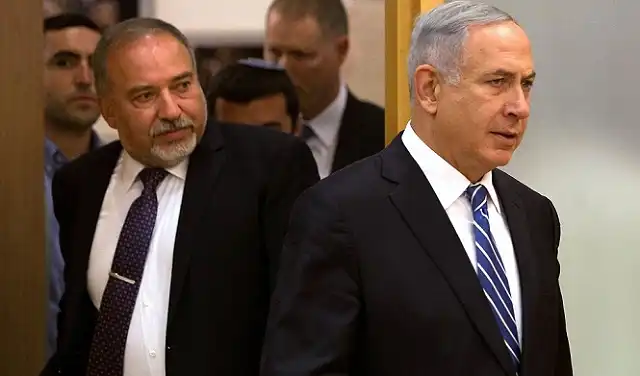
In this context, the Ministry confirmed that the slogans and statements of Netanyahu, his ruling council, and his military staff are nothing more than justifications for killing more civilians and a license to bomb and destroy everything in the Gaza Strip, including a license to bomb hospitals, shelter centers, and schools for the displaced, under false pretexts and pretexts.

PALESTINE

Mon 30 Oct 2023 9:48 pm - Jerusalem Time

Israel tightens its military measures in Jenin Governorate

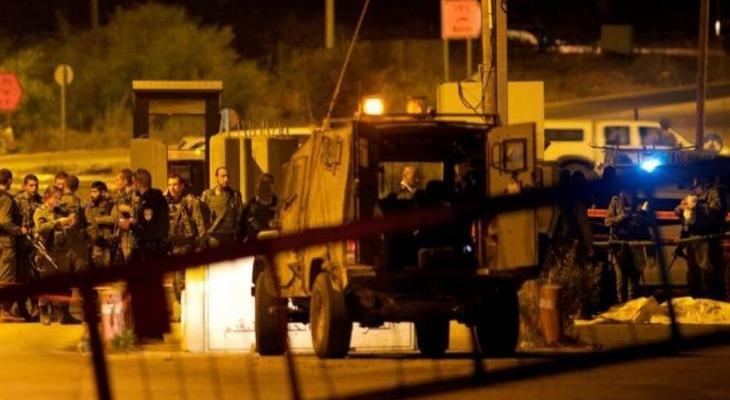
On Monday evening, the Israeli occupation forces set up military checkpoints at the intersection of the town of Arraba, Wadi Daouk and the entrance to the village of Jalboun, and intensified their presence south of Jenin.


According to local sources, the occupation soldiers stopped citizens’ vehicles, searched them, and checked their occupants’ cards at a military checkpoint that was set up at the Arraba town junction, and another on the Jenin-Nablus Road at the Fahma junction, and at the entrance to the village of Jalboun, northeast of Jenin.


The sources added that the occupation forces stormed the town of Ya'bad, raided a house for the Abu Qweider family, interrogated its residents, and also stormed the village of Jalboun.

ARAB AND WORLD

Mon 30 Oct 2023 9:40 pm - Jerusalem Time

The Arab League calls for an urgent summit to discuss the war on Gaza

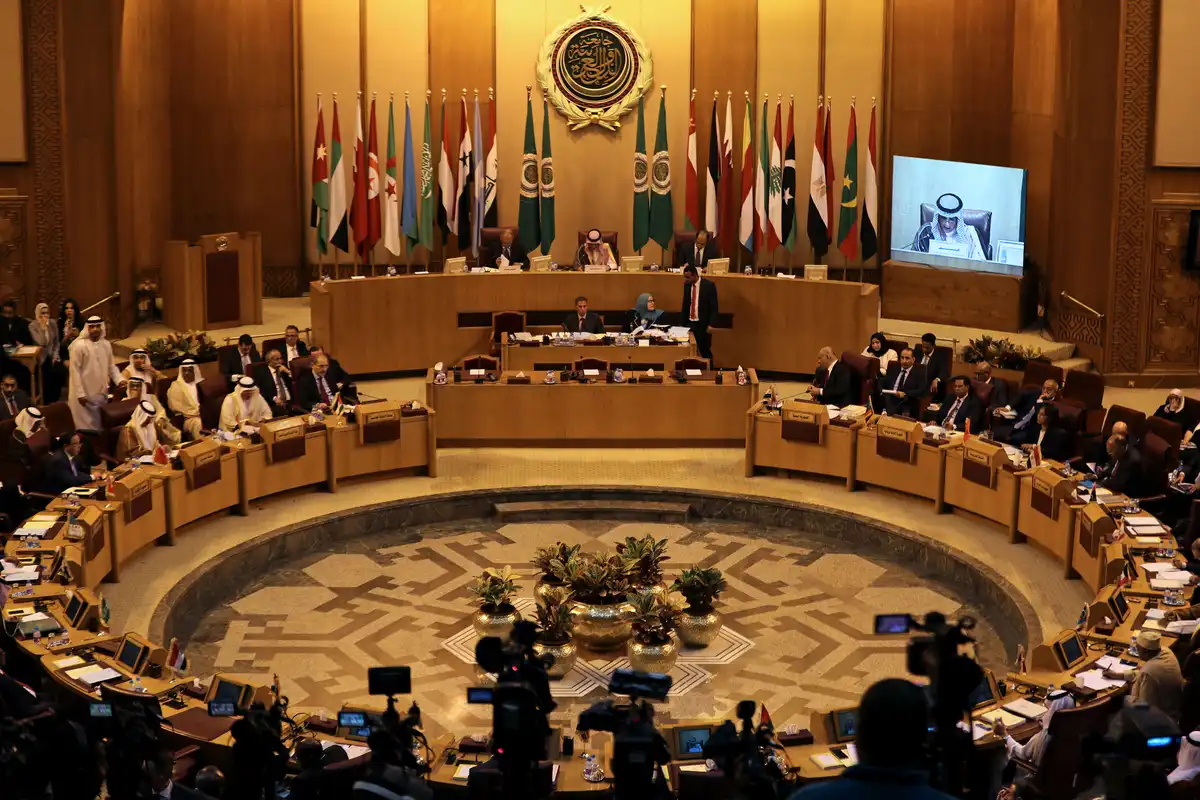
The General Secretariat of the League of Arab States announced that it had received an official request from both the State of Palestine and the Kingdom of Saudi Arabia, to hold an extraordinary session of the Council of the League of Arab States at the summit level, headed by the Kingdom of Saudi Arabia, which chairs the current (32nd) session, in the Saudi capital, Riyadh, on November 11. .


The Assistant Secretary-General of the League of Arab States, Ambassador Hossam Zaki, said that the General Secretariat received today an official request from Palestine and the Kingdom to discuss the ongoing Israeli aggression against the Palestinian people in the Gaza Strip since the seventh of October, indicating that the General Secretariat of the League of Arab States has By circulating the Palestinian and Saudi memorandums to the Arab member states.


The work of the extraordinary session of the Arab League Council was held at the level of foreign ministers, headed by Nasser Bourita, Minister of Foreign Affairs, African Cooperation and Moroccans Residing Abroad, President of the current session of the League of Arab States Council, and in the presence of the foreign ministers of the Arab countries, on October 11, 2023 at the headquarters of the General Secretariat of the League of Nations. Arabic, to discuss the Israeli aggression against the Gaza Strip, and ways of Arab action to stop this aggression.


The meeting of the League of Arab States Council at the ministerial level came at the request of the State of Palestine and the Kingdom of Morocco. During the meeting, ways of political action were discussed at the Arab and international levels to stop the Israeli aggression on Gaza and achieve security and peace based on international law and international legitimacy resolutions.


PALESTINE

Mon 30 Oct 2023 8:44 pm - Jerusalem Time

UNRWA: Gazans are now trying to survive

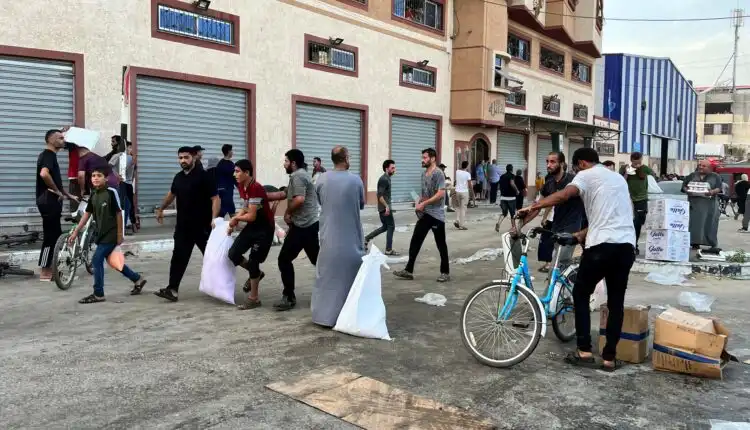
An official at the United Nations Relief and Works Agency for Palestine Refugees (UNRWA) said on Monday that the collapse of civil order led to the disruption of the work of four United Nations aid distribution centers and a storage facility in Gaza at a time when people are searching in every way for food and water.


Tom White, Director of UNRWA Affairs in Gaza, said that work at the logistical base at the Rafah border crossing, vital for distributing aid, has become very difficult because eight thousand people are sheltering there.


“With the collapse of civil order, every day we have hundreds of people trying to get into the warehouses to get flour,” White told Reuters.


He added: “People are now trying to survive.” “Their concern is to obtain sufficient flour and water.”


Thousands of Gazans stormed United Nations warehouses yesterday, Sunday, to seize flour and other materials. One of these warehouses is located in Deir al-Balah in the central Gaza Strip, where UNRWA stores supplies carried by humanitarian aid convoys coming from Egypt to Gaza.


“In effect, we lost the Deir al-Balah base,” White said. We will see to what extent we are able to get it running again, but of course it is complicated because the Rafah logistics base has now become a magnet for people looking for shelter or protection under the banner of the United Nations, or trying to enter the warehouses to get flour.”


OPINIONS

Mon 30 Oct 2023 8:18 pm - Jerusalem Time

The Post-War According to "HAARETZ”

Ramallah - “Al-Quds” dot com

Ramallah - “Al-Quds” dot com

Opinion Writer

By Anshel Pfeffer


What Is Israel’s Endgame in Gaza? These Are the Three Key Dilemmas


Assuming Israel isn’t actually planning to transfer the Palestinians, annex Gaza or permanently reoccupy it, there are three key questions about, and various solutions for, 'the day after' the war with Hamas. All of them, say experts, are highly complex and require nearly unfathomable regional coordination

Anshel Pfeffer


After nearly three weeks of what often looked like dithering – amid reports of deep disagreements and distrust both within the war cabinet and between some of its members (mainly Prime Minister Benjamin Netanyahu) and the Israel Defense Forces General Staff – the IDF finally began its ground offensive in the Gaza Strip on Friday night.


But as this stage of the offensive slowly enfolded, senior political and security sources admit that, so far, there has been next to no discussion on the endgame – the preferred solution for Israel in Gaza the day after the war, assuming the operational objectives of destroying Hamas’ military capabilities and ending its control in Gaza are achieved.


Hamas has ruled Gaza for over 16 years, since the bloody coup it carried out against the Fatah-dominated Palestinian Authority in June 2007. Officially, the PA’s civilian bureaucracy remained intact in Gaza all this time and $100 million was transferred each month for its employees’ salaries. On the ground, though, most matters were managed by a parallel Hamas apparatus.


On the day after Hamas, there will be an immediate need for a new framework, one that will ensure Israel is not attacked again from Gaza and also meets the needs of the over 2 million Palestinians living there.

Speaking before the Knesset Foreign Affairs and Defense Committee after the war had started, Defense Minister Yoav Gallant said that after the fighting ends, there will be a stage of “creating a new security regime in the Gaza Strip, removing Israel’s responsibility for day-to-day life in the Strip and creating a new security reality for Israeli citizens and residents of the border communities.”

Who exactly is supposed to supply both the security and civilian needs in Gaza? Gallant had no details for the committee.

It seems that the cabinet – there are now two of them – and other elements of the Netanyahu government are not prepared to deal right now with the day after, for fear of the far-right members in the governing coalition and the shrinking, increasingly extremist base of supporters Netanyahu still has.

A week and a half ago, when there were reports in the Israeli media of plans to transfer control of Gaza to the PA, the Prime Minister’s Office issued an immediate denial: “Netanyahu defined the objective: destroying Hamas. Any talk of a decision to transfer the Gaza Strip to the PA or anyone else is a lie.”

A senior security official complained over the weekend that the situation Israel wants to see in Gaza after the fighting ends has major implications for planning the ground maneuvers. The government’s reluctance to deal with this leaves the IDF and Defense Ministry to try to define these objectives, even though it should be the cabinet’s decision. With the ground offensive now underway, the generals have little choice but to guess what Israel’s endgame in Gaza will be.

One part of the government where there is plenty of talk about “the day after” is among the religious far right, which is dreaming aloud of returning and rebuilding the Gush Katif settlement bloc that was abandoned by Israel in 2005 as part of its Disengagement plan.

In recent days, pro-Netanyahu mouthpieces in the media have been pushing the line that the Disengagement – an event that took place over 18 years ago – is the root cause of Hamas’ murderous attack on October 7. This is both part of their campaign to exculpate Netanyahu, who was not prime minister at the time, but it also the start of a public campaign by the far right. (As finance minister in the Sharon government that carried out the Disengagement, Netanyahu voted in favor, but then resigned eight days before the first evictions of settlers began.)

Religious far-right ministers are not yet speaking of this openly but seven months ago, when the coalition passed the abolition of the Disengagement Law (largely a symbolic move) in the Knesset, National Missions Minister Orit Strock said in an interview that “there is no doubt that [the Gaza Strip] is part of the land of Israel and there will be a day when we return to it.”

The far right understands that talking about this now will cause public anger. However, in one of the expanded security cabinet meetings, extremist National Security Minister Itamar Ben-Gvir stated: “We need to hold on to the territory.”

A lawmaker from the religious Zionist wing of the coalition recently used the term “ir ha’nidachat,” or the beguiled city – an Old Testament injunction to destroy a city where most of the inhabitants have began worshipping idols and who must therefore be killed and the city flattened: “And it shall be a heap for ever; it shall not be built again” (Deuteronomy 13:17). The lawmaker expressed the wish privately that this be done to at least some of the Gaza Strip.

Even among more moderate right-wing lawmakers, there is talk of the need for Israel to “punish the Gazans” after the war by making a change to the Strip’s borders. One area being mentioned for possible Israeli annexation is the enclave’s northernmost strip, just south of the border with Israel, where there are very few Palestinians and where the settlements of Elai Sinai, Nisanit and Dugit stood before the Disengagement. These were secular communities that were not part of the largely religious Gush Katif bloc.


Another plan that seems to have emanated from part of the government is a 10-page policy paper prepared by the Intelligence Ministry, which was first revealed on the Local Call website. This paper recommends transferring the entire civilian population of Gaza to Sinai. While it has the appearance of a serious document, no one who has even a fleeting acquaintance with this government is taking it seriously.

Despite its grand-sounding name, the Intelligence Ministry has zero influence over any of Israel’s intelligence services (which are run either from the Prime Minister’s Office or the Defense Ministry) and its sole purpose is to provide disgruntled Likud politicians with a ministerial title. The incumbent, Gila Gamliel, is not in any decision-making circle and has only observer status in the broader security cabinet (and no standing whatsoever in the war cabinet). It is almost certainly something that was prepared for Likud members rather than for any serious policy purposes.


We’ve learned the hard way that nothing is out of question for the most extreme government in Israel’s history. But it’s hard to see how any of these proposals can become policy in an era where Israel has become more dependent than ever on the United States. None of these ideas are in any way being considered or taken seriously in the defense establishment. Any move toward long-term occupation of parts of the Gaza Strip, let alone rebuilding some of the settlements there, would lead to Israel’s diplomatic isolation and the cessation of U.S. support. Just talking about these ideas is damaging enough to Israel.

Three key dilemmas

So, assuming Israel isn’t planning to remove the Palestinian population or reestablish a permanent presence in Gaza, there are three key dilemmas with regard to “the day after”:

1. How will Israel maintain temporary control of the territory after most of Hamas’ military infrastructure is destroyed?

2. To whom does Israel transfer control of Gaza when its forces leave?

3. Is there a realistic plan for Gaza’s future that could prevent it becoming once again a base for attacks on Israel?

In the first interim stage, the IDF and defense establishment will have to bear responsibility for Gaza and its population. There have been some suggestions of similar mechanisms to those that existed in southern Lebanon during the IDF’s presence there between 1984 and 2000 – such as the establishment of a “security zone” within Gaza’s borders, and even a local militia that will help maintain security like the South Lebanon Army sought to do in the 1980s and ’90s.

However, few experts believe either of these are realistic. The Gaza Strip is too small for there to be a security zone that can serve as a buffer area preventing even short-range mortar launches by the remaining pockets of Hamas and Palestinian Islamic Jihad fighters against Israeli communities while not remaining inside the Palestinian cities. As for a compliant militia, it is extremely unlikely that recruits can be found for this within the Palestinian population.


IDF generals are fully aware that in the interim stage, once the ground offensive has achieved its objectives, they will have to be in charge both of security and civilian matters in Gaza. The Defense Ministry is already starting to plan how to transfer some of the personnel of the Coordination of Government Activities in the Territories, which deals with civilian affairs in the West Bank, to temporary roles in Gaza.

Responsibility for Gaza will place a major burden on the IDF, which in the not-too-distant future may also find itself in another war in the north against Hezbollah, and there will be the need to try to shorten this interim period.

The only solution the defense establishment can see is the return of the PA to Gaza. But this will be a complex task and in no way an automatic process. The PA does not have the resources to take control of Gaza, and its political will to do so is also questionable.

“There’s no doubt the PA is the only address for taking control of and rehabilitating the Gaza Strip,” says Maj. Gen. (res.) Tamir Hayman, director of the Institute for National Security Studies at Tel Aviv University and a former commander of Military Intelligence.

“It is already the address for transferring most of the funds to Gaza and, despite the weakness and corruption of the PA, it remains the only practical channel. And there is a will there. From the perspective of [Palestinian President] Mahmoud Abbas, losing Gaza to Hamas in 2007 was his biggest personal failure. He will have an historic opportunity to preside over the great reconciliation of the Palestinian people.”

But before that can happen, there will have to be yet another stage. It is highly unlikely that the handover can take place directly from the IDF to the PA. Abbas will not be prepared to be seen as returning to Gaza on Israel’s bayonets. In addition, the PA’s security apparatus will not be able to take over the entire Gaza Strip in one go and will need time to gradually deploy, as well as recruiting and training more men. There will have to be another force in Gaza, providing security in the interim and helping the PA build up.

One of the key questions that is already being asked quietly is whether, among the Arab governments with which Israel has relations, any will be prepared to contribute to a “peacekeeping force” that will manage the transition.

Jordan is out of the question due to the large proportion of Palestinians in its population and their anger toward Israel. Egypt would have to be part of any such force, but could be expected to supply at most the necessary logistical facilities in its territory across the border from Gaza. The Egyptian army harbors deep suspicion, even hatred, of the Palestinians in Gaza, whom it regards as supporters of the Muslim Brotherhood, and is therefore unlikely to supply soldiers on the ground.

The two candidates being mentioned are the United Arab Emirates and Morocco, which both have stable diplomatic relations with Israel since the Abraham Accords were signed in 2020. They also have professional armed forces that could provide the main components of an Arab peacekeeping force.

And then there are the Saudis, who would be expected to foot the bill – both for such a force and also for the long-term civilian rehabilitation and development programs in Gaza, to be administered by the returning PA.

But there is another obstacle to this stage. The return of the PA to Gaza after over 16 years of Hamas rule would almost certainly be possible only in the context of a wider agreement in which the Palestinian leadership would receive some kind of assurance of a “diplomatic horizon.” Abbas will demand an Israeli commitment to return to the moribund peace process. Israel will have to choose between continuing to spend its resources – and the blood of its soldiers – in controlling Gaza, or accepting this demand.

No one has any utopian illusions that a diplomatic process which failed to yield a solution for over three decades will suddenly succeed after the deep trauma inflicted on Israel by Hamas’ October 7 attack and the destruction being caused in Gaza with Israel’s resulting war to destroy Hamas.

However, to bring this war to an end, there will be no choice but to at least be open to such a possibility. Simply positing the two-state solution as a distant goal will not be enough. There will have to be serious thinking on how to solve the long-standing civilian problems of the Gaza Strip – an artificial geographical construct whose borders were determined by the cease-fire lines between the IDF and the Egyptian army at the end of the War of Independence in early 1949, when the original population of Gaza had more than quadrupled due to the influx of around 200,000 Palestinian refugees.

“If history teaches us anything, it’s that without a just diplomatic solution, we will continue this conflict,” says Dr. Fatina Abreek-Zubiedat of Tel Aviv University. She has spent years researching the urban development plans of Gaza that were put in place after Israel’s occupation following the Six-Day War in 1967.

“But in the interim period, before such a solution is reached, we can work on developing Gaza’s economy. Not like Israel did in the past when it was mostly a source of cheap labor, but by building shared economic areas with international investment: joint agricultural projects, a seaport and industrial zones that will create local economic value.”

But is there physical space for such economic projects in the crowded area between Gaza and Israel? Especially in the coming years, when it can hardly be assumed that the communities on either side can work together?

In the long-term, there has to be more thought given to the possibility of expanding Gaza’s territory. One plan proposed in the past by Energy Minister Yisrael Katz (Likud) was to build artificial islands off Gaza’s shore, which would house seaports and airports, electricity and water desalination plants.

Another way to expand the territory, previously outlined by former IDF colonel Yitzhak Ini Abadi (who served as Israel’s military governor of Gaza in the early ’70s), is international pressure on the Egyptian government to cede territory in Sinai. This could allow for the expansion of the Gaza Strip along the Mediterranean coast and inland in the peninsula.

Abadi insists that without a wider “vision” for developing Gaza, Hamas will return and only major civilian development can create an environment where “Hamas is dried-up from within.”

Most experts are very skeptical about this prospect, but Abadi insists that, historically, the Egyptians have not regarded Sinai as part of their sovereign territory. In the right circumstances, he believes such a proposal could work. “Egypt lost its prestigious position as the premier Arab nation during the Arab Spring revolutions,” he says. “It could have an opportunity here for regaining some of that status by becoming the great rehabilitator of the Palestinians in Gaza.”

Just about every conversation on “the day after” in Gaza, with security and political officials and experts, returns to the same point: That this Israeli government is incapable of making any of the long-term decisions that will be required. It is too dysfunctional, with Netanyahu focused on his own short-term battle for political survival, and with its far-right elements opposing any concessions to the Palestinians.

They are already trying to prevent such an outcome. Finance Minister Bezalel Smotrich announced on Monday that he is blocking the transfer of tax revenues that Israel collects on behalf of the PA because, he claims, senior figures in the PA praised the Hamas attack.

For Israel to have any prospect of achieving long-term change in Gaza that will both reduce the threat to its security and not make Israel responsible for Gaza’s population, its own government must change first.




PALESTINE

Mon 30 Oct 2023 8:01 pm - Jerusalem Time

Israeli army announces the release of a female soldier detained in the Gaza Strip... and Hamas denies it

The occupation authorities announced the release of an Israeli female soldier who had been detained by Hamas since October 7.


A joint statement by the occupation army and the Shin Bet said: “Tonight, army conscript Uri Magedish was freed after she was kidnapped by Hamas.”


The statement added, “The soldier was medically examined, and she is in good condition, and she met her family.”


The statement continued, "The IDF and the Shin Bet will continue to work to release the kidnapped people."


Hamas denies

On the other hand, a member of the Hamas Political Bureau, Izzat Al-Rishq, denied what the occupation army announced regarding the release of the female soldier.


Al-Rishq said, “With regard to the allegations of the terrorist Zionist occupation about the liberation of a female soldier, we confirm that such an announcement aims to disrupt the video of the female prisoners that Al-Qassam broadcast today, which caused a great shock to the Zionist community.”


He added, "These allegations are an attempt to escape the pressure that the file of occupation detainees represents on Netanyahu and his government."


He continued, "No one believes the false Zionist narratives, and even the Zionist community itself does not believe its leaders, and what the resistance will say is the final say."


PALESTINE

Mon 30 Oct 2023 7:36 pm - Jerusalem Time

24th day war on Gaza: 8,382 killed and 23,000+ wounded in the Israeli occupation’s aggression

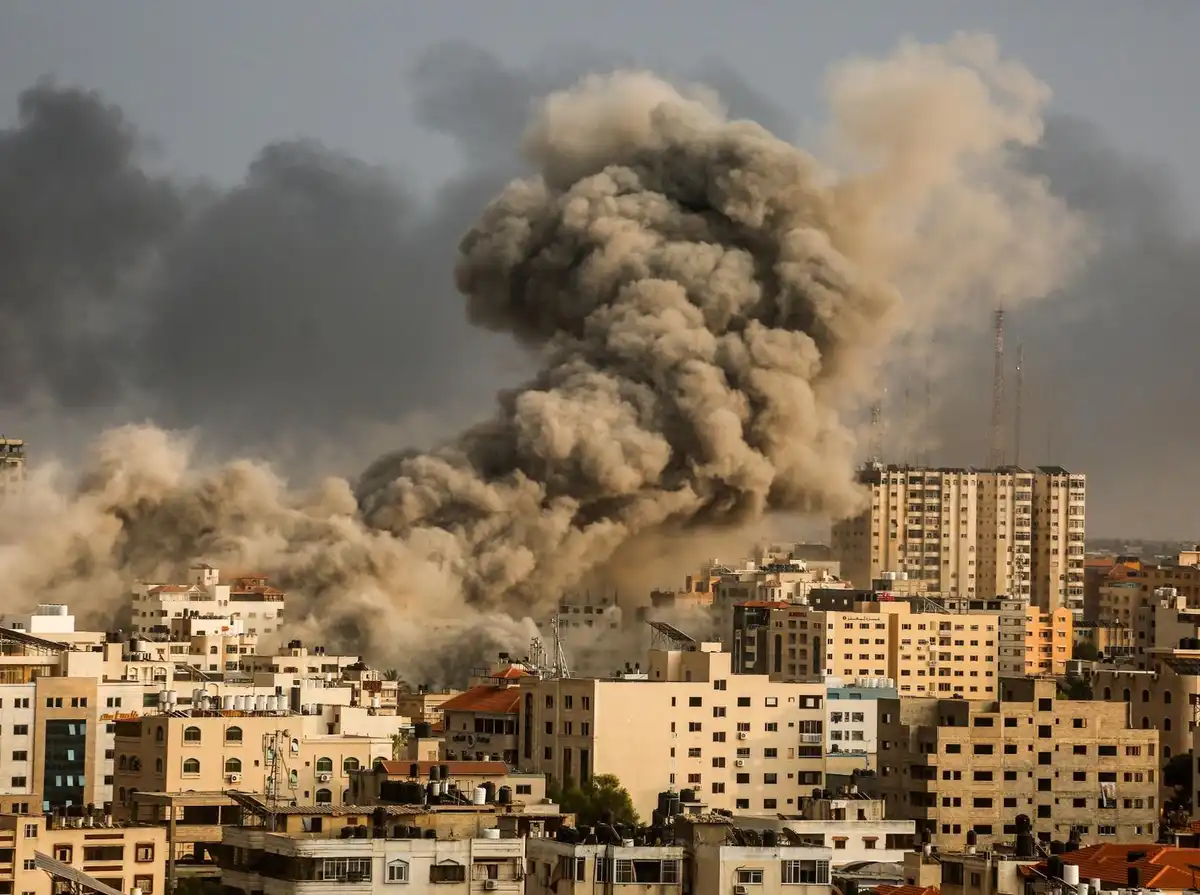
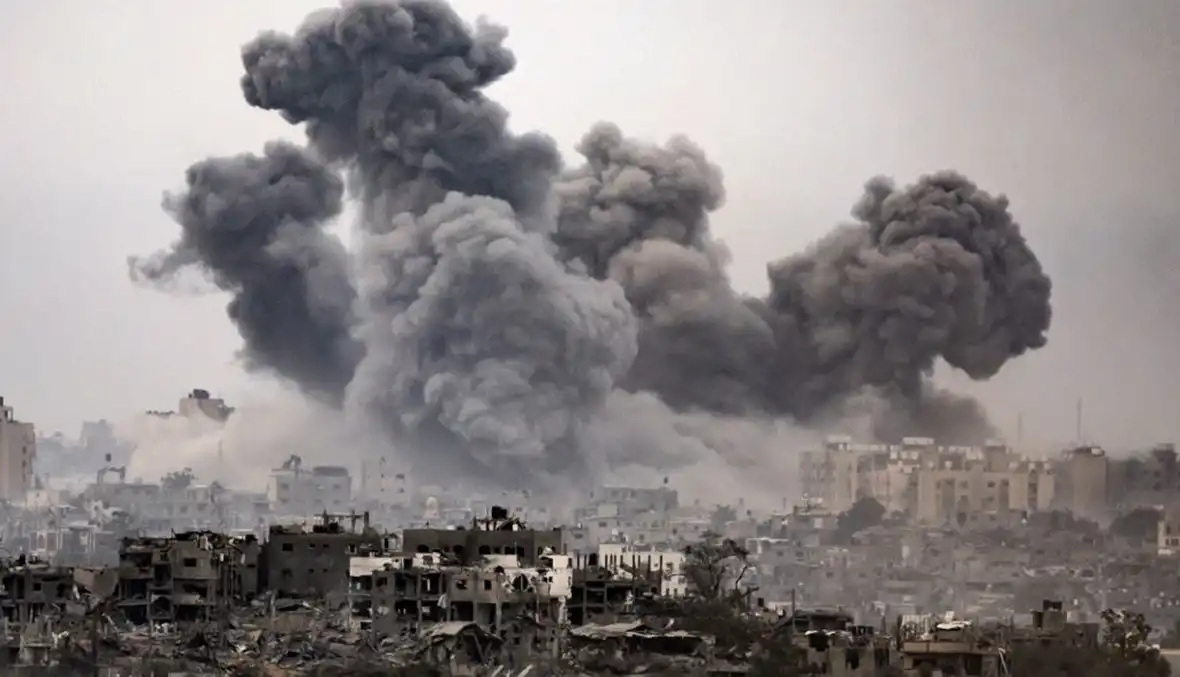
With the beginning of the 24th day of the war on Gaza, Israel continued to bomb residential neighborhoods, resulting in martyrs and wounded in several areas, in parallel with its forces’ attempt to penetrate deep into the Gaza Strip.


The Ministry of Health announced that the death toll from the ongoing Israeli occupation forces aggression against the Gaza Strip and the West Bank, since October 7, has risen to 8,382 martyrs and more than 23,000 wounded.


The Ministry said in its daily report issued today, Sunday, that 8,260 martyrs died in the Gaza Strip, and 122 martyrs in the West Bank, while more than 21,000 citizens were wounded in the Strip, and about 2,050 in the West Bank.


The Ministry stated in its report that 73% of the martyrs in the Gaza Strip were children, women and the elderly.


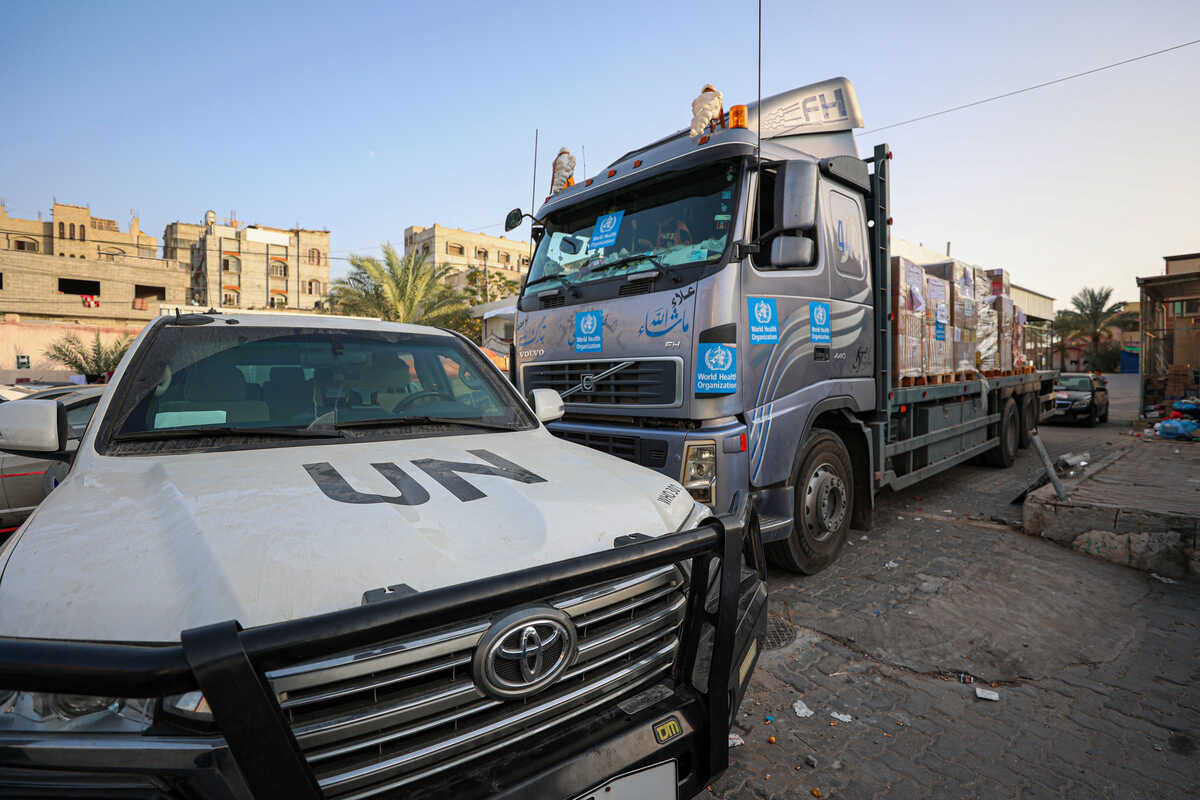
The Ministry  said that the United Nations Relief and Works Agency for Refugees (UNRWA), which is the largest provider of humanitarian aid in Gaza, has almost exhausted its fuel reserves and has begun to reduce its operations significantly, indicating that 117 trucks are the total number of trucks that have entered through the Rafah crossing since the 21st of this month, as they are working The World Health Organization is coordinating with the Palestinian Red Crescent Society to facilitate the delivery of supplies to hospitals.


The Ministry added that 34% of Gaza's hospitals are not working, and 65% of primary health care centers are closed, while more than 37,000 people among the displaced suffer from non-communicable diseases, including 4,600 pregnant women, and 380 postpartum cases requiring medical care among the displaced, and 15 % of the displaced suffer from various disabilities, and most shelter centers are not equipped and lack mattresses and medical beds.


Regarding the attack on health personnel, 124 health personnel were martyred, more than 100 were injured, and 50 ambulances were damaged, including 25 that were completely out of service.


Also, 12 of the 35 hospitals that became out of service were closed, namely the International Eye Hospital, Dar Al Salam Hospital, Al-Yaman Al-Saeed Hospital, Psychiatric Hospital, Beit Hanoun Hospital, Al-Durrah Children’s Hospital, Hamad Rehabilitation Hospital, Al-Karama Hospital, Al-Wafa Hospital for Medical Rehabilitation and Surgery. Specialization.


46 out of 72 health care centers stopped working as a result of the bombing and the depletion of fuel. It also indicated that the occupation demanded the evacuation of 24 hospitals in the northern Gaza Strip (the total capacity of these hospitals is 2,000 beds).


The Ministry  pointed to the severe shortage of medicines, equipment, and personnel needed to treat large numbers of wounded, in addition to the sharp decrease in fuel needed to operate electricity, as surgical operations are performed without anesthesia and by the light of telephones.


The Ministry of Health estimated the number of displaced people in the Gaza Strip at about one million four hundred thousand citizens, with 629,000 people living in 150 emergency shelters designated for UNRWA. Overcrowding is a growing source of concern, and the average number of internally displaced persons per shelter reached 2.7 times its capacity, with the most crowded shelter reaching 2.7 times its capacity. 11 times its carrying capacity.


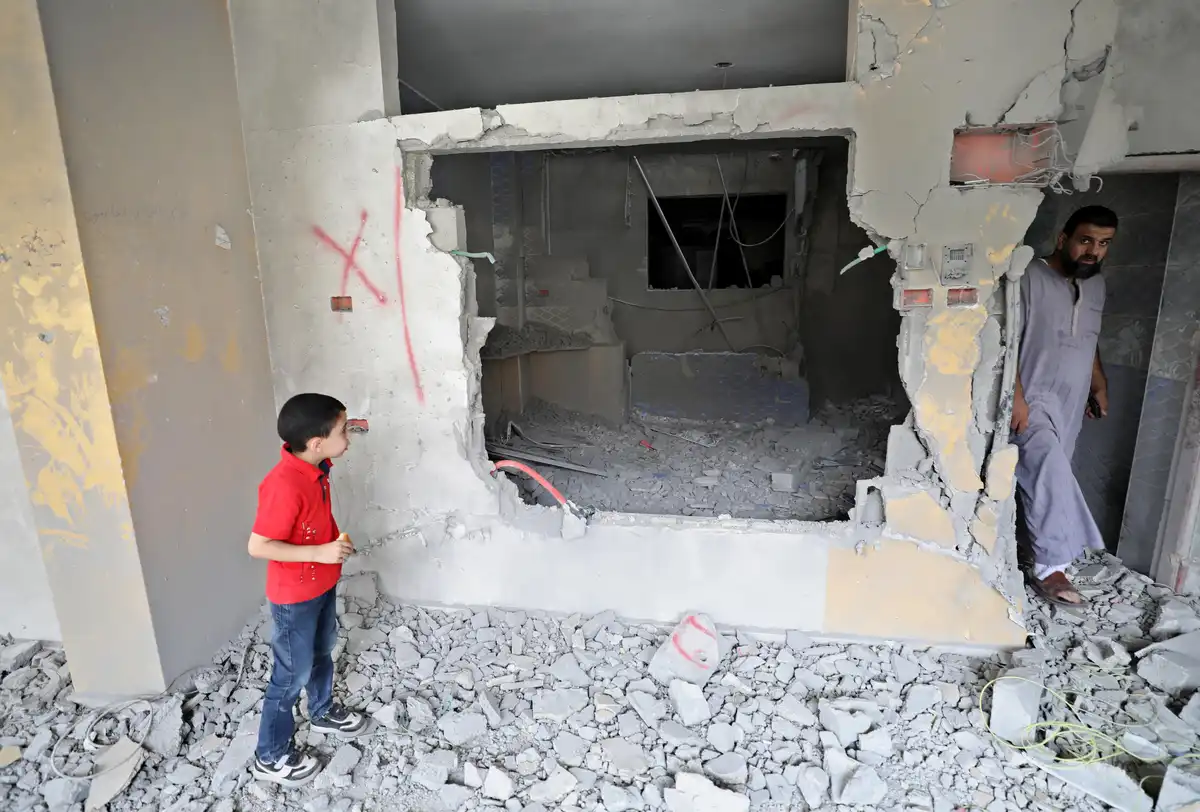
The report indicated that 45% of the housing units in the Gaza Strip were destroyed as a result of the violent bombardment launched by the occupation army by air, land and sea since the start of the aggression on the seventh of this month.


The number of completely destroyed and uninhabitable housing units reached 33,960 units, 150,000 units were partially destroyed, 12 health facilities were destroyed or out of service after their destruction, and 46 health care centers, in addition to 221 educational institutions, including 29 UNRWA schools.


The Ministry of Health stressed that the shelter centers are overloaded by 250%, which poses a risk of disease outbreaks, noting that many victims are still missing under the rubble.

She pointed out that the World Health Organization documented 118 attacks on health care in the West Bank, affecting 99 ambulances, including 67 obstructions to the provision of health care, 61 physical violence attacks against health teams, and 19 cases of detention of health employees and ambulances, and the health sector also witnessed 12 Military inspection case.


Dozens of citizens were martyred, and others were injured, since dawn on Monday, in bombing by Israeli occupation aircraft in various parts of the Gaza Strip.


Local sources said that the Israeli occupation aircraft targeted the house of the "Fatayer" family in Al-Zawaida in the central Gaza Strip, leading to the death of 11 citizens, the majority of whom were women and children.


The occupation aircraft targeted a house belonging to the “Nawfal” family next to Abu Qamar station in Jabalia camp, northern Gaza Strip, resulting in the death of 3 citizens, in addition to a number of injured people.


Three citizens were martyred in a vehicle bombing, south of Gaza City.


The intense artillery shelling intensified in the vicinity of Sheikh Zayed City and Qalibu, north of Gaza, without any martyrs or wounded being reported.

Occupation aircraft also launched intense raids on the Tal al-Hawa neighborhood in western Gaza, which is subjected daily to continuous bombing of residential buildings and shops.


Medical sources at the Indonesian Hospital in Beit Lahia, north of Gaza, announced the arrival of dozens of martyrs and wounded, as a result of the continuous bombing of the Bureij and Nuseirat camps, and the Zawaida area.

ARAB AND WORLD

Mon 30 Oct 2023 7:26 pm - Jerusalem Time

American Rabbi: Israel has nothing to do with Judaism and we pray for its disappearance

American Rabbi Israel David Weiss said that the Israelis established their state by stealing from the Arabs, and that he prays for the disappearance of their Zionist state and for Palestine to be liberated as soon as possible.


Weiss stated that there are many people who confuse Judaism and Zionism, and are confused about the matter.


It is noteworthy that David Weiss is a prominent member of the international Jewish anti-Zionist organization, known internationally as the Neturei Karta movement.

Anadolu Agency quoted him as saying that Zionism, which is the “ideology” of the State of Israel, “is trying to portray itself as a Jewish state, but it has no relation to Judaism, which is a religion,” adding that Judaism and Zionism are as separate as the earth and the sky, and contradict each other, noting. Until the commandments of the Torah stated, “You shall not kill and you shall not steal.”


Rabbi Weiss pointed out that Zionism caused the Nakba of 1948, in which the Palestinians were subjected to forced displacement. He said, "Murder and theft are clearly forbidden in our country, while these people (Israel) established their state by stealing from the Arabs. That is why we cry with the Palestinians."


Weiss stressed that Israel is an anti-Semitic state that produces and incites hatred.


He continued, "As religious Jews, we pray to the Lord every day for the demise of the Zionist State of Israel, which has caused the shedding of much Palestinian and Jewish blood as quickly as possible." He also pointed out that they are praying for Palestine to gain its freedom as soon as possible.


Backgrounds of flood and aggression

It is noteworthy that Israel was established on Arab land occupied in 1948, and annexed Jerusalem and the West Bank in 1967. Throughout its 70 years, it has continued to kill and arrest Palestinians, expand settlement activity in the West Bank, launch military operations in Gaza, and attack Islamic and Christian sanctities in Jerusalem.


On October 7, the Izz al-Din al-Qassam Brigades - the military arm of the Islamic Resistance Movement (Hamas) - and other Palestinian resistance factions launched Operation Al-Aqsa Flood against the Israeli occupation, and have so far killed more than 1,400 Israelis.


The Palestinian resistance also captured more than 200 Israelis, and announced that it wanted to exchange them for more than 6,000 Palestinian prisoners in Israeli occupation prisons.


For its part, Israel continues its aggression against Gaza, bombing homes, schools, hospitals and mosques, which led to the martyrdom of more than 8,300 Palestinians, most of them women and children, in addition to wounding 12,000, destroying entire neighborhoods and displacing most of the population.


Israeli military operations in Gaza receive broad support from the United States, which sent two aircraft carriers to the Mediterranean Sea to “deter any attempt to expand the conflict,” she said.


PALESTINE

Mon 30 Oct 2023 7:07 pm - Jerusalem Time

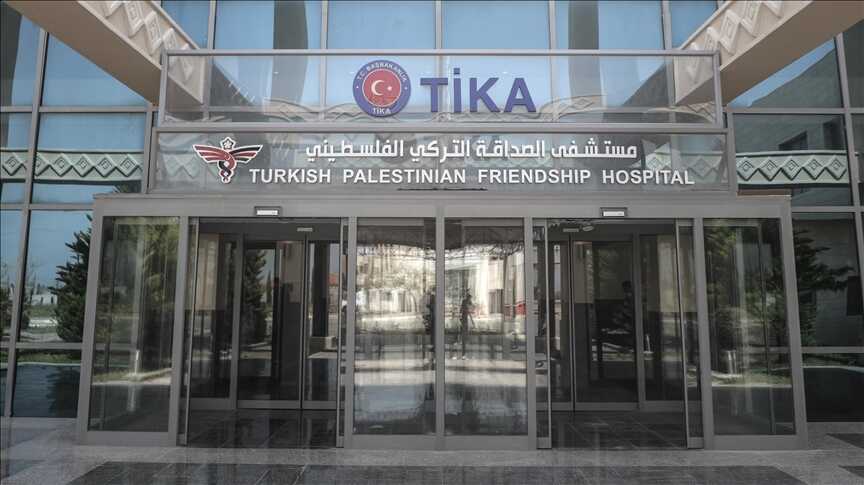
Gaza Health: Re-targeting the Turkish Friendship Hospital for cancer patients

Dr. Sobhi Skaik, Director General of the Turkish-Palestinian Friendship Hospital, said that the Israeli occupation army re-targeted the only Turkish-Palestinian Friendship Hospital for cancer patients in the Gaza Strip for the second time, causing severe damage to it, disrupting some of the electromechanical work systems, and endangering the lives of patients and staff.


Yesterday, the Ministry of Health announced that the Israeli bombing of the Gaza Strip caused damage to the only “Turkish Friendship Hospital” for cancer patients in the Strip.


This came in a press statement by the hospital's general director, Sobhi Skaik, in which he said that the Israeli army repeatedly targeted the hospital's vicinity.


According to the statement, “A state of panic afflicts cancer patients and medical staff as a result of the only Turkish Friendship Hospital for cancer patients in the Gaza Strip being severely damaged as a result of the Israeli occupation repeatedly targeting its surroundings.”


He added: “The occupation not only increased the suffering and pain of cancer patients and deprived them of medicines and travel for treatment abroad, but it now endangered their lives by targeting the hospital’s surroundings.”


In another statement, Skaik said: “The Turkish-Palestinian Friendship Hospital was built with a generous donation from the Turkish government to become a humanitarian medical model that alleviates the suffering of patients exhausted by the Israeli siege.”


He added: “Today, this occupier, with all brutality, wants to destroy this edifice, which embodies part of the Turkish people’s love for our Palestinian people.”


Skaik called on the Turkish presidency and government to “stop the Israeli orgy and protect this medical humanitarian edifice, which has constituted an important transformation in the care of cancer patients in the Gaza Strip.”


The Turkish Friendship Hospital is located at a point close to the area into which Israeli forces entered on Monday morning, before retreating to areas close to the eastern border of the Gaza Strip.


The Turkish government funded the construction of the hospital (2011-2017), which is the largest hospital in Palestine with an area of 34,800 square meters, consisting of 6 floors, and containing 180 beds.


PALESTINE

Mon 30 Oct 2023 6:09 pm - Jerusalem Time

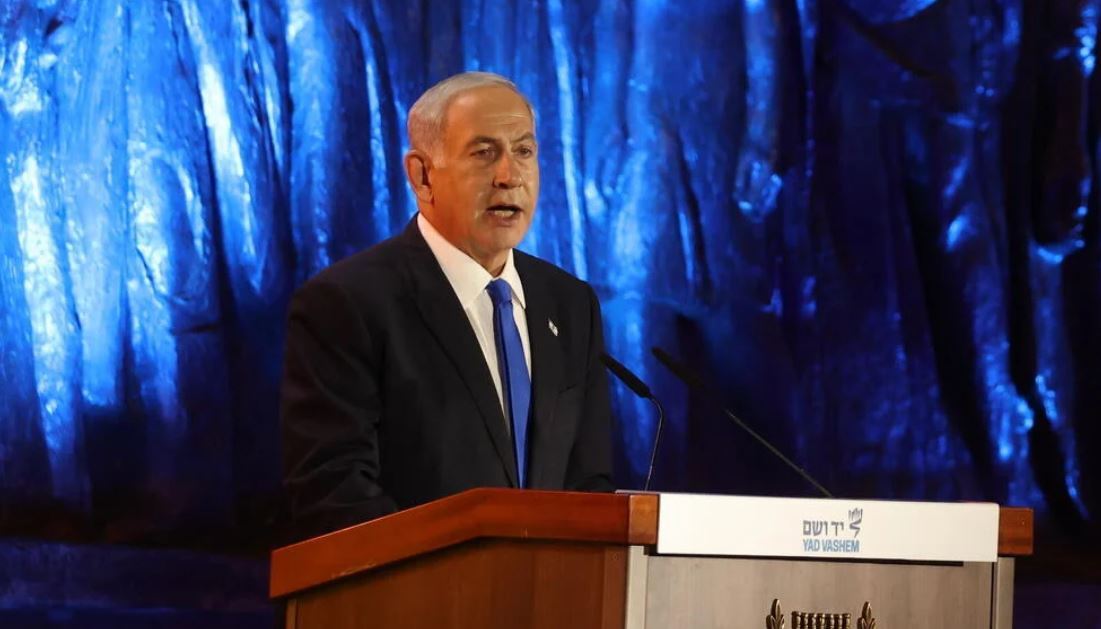
Netanyahu reply to a message from women detained by Hamas in Gaza

A reply was issued by the office of the Israeli Prime Minister, Benjamin Netanyahu, this evening, Monday, October 30, 2023, to the message of female prisoners in the Gaza Strip, which was broadcast by the Al-Qassam Brigades in a video.


Netanyahu said in his response: “This is about harsh psychological propaganda by Hamas.”


He added, "We will do everything we can to return all the kidnapped and missing people to their homes."


The Hamas movement had published a video clip showing three Israeli hostages being held inside the besieged Gaza Strip, against which the occupation's aggression continues, leaving tens of thousands dead and injured.


During the video clip, the hostages sent a message to the Israeli Prime Minister, Benjamin Netanyahu, asking him to work towards their release and release all Israeli hostages in exchange of Palestinian prisoners. 

ARAB AND WORLD

Mon 30 Oct 2023 5:57 pm - Jerusalem Time

The Lebanon front: targeting Israeli sites and Israeli bombing of southern towns

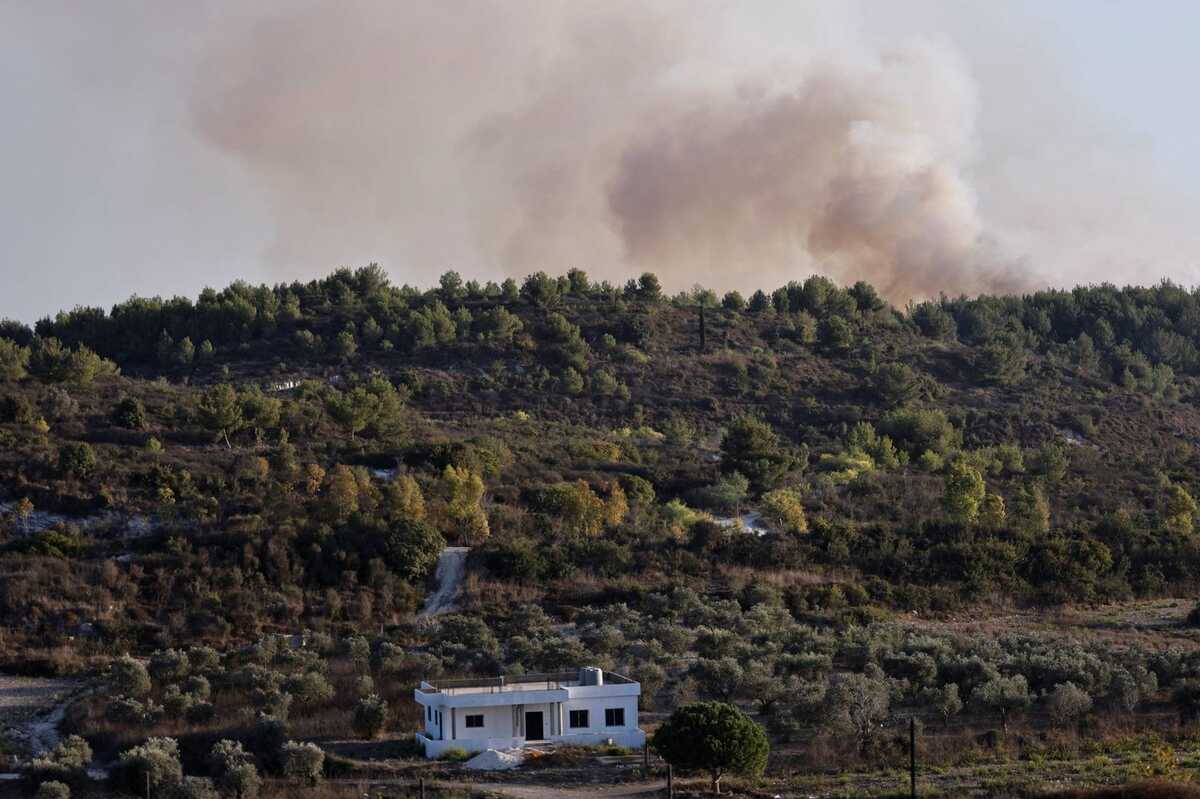
The Israeli bombing renewed on Monday morning in the western sector of southern Lebanon, as approximately 15 missiles fell this morning on the Al-Mushairfa area in Naqoura, while the vicinity of Al-Raheb Hill, opposite Aita Al-Shaab, witnessed the fall of incendiary bombs from the Israeli side.


The National News Agency in Lebanon reported that the Israeli artillery shelling on the outskirts of the villages of the western sector affected the vicinity of the army center in Ras Naqoura and the vicinity of the UNIFIL headquarters.


The Israeli attacks expanded this afternoon, affecting, for the first time since the July 2006 war, the area between the towns of Kafr Tibnit and the Hamra farm, with a 155 mm artillery shell that landed on agricultural land.


The outskirts of the towns of Shihin, Al-Jebeen and Majdal Zun were also subjected to concentrated artillery shelling by the Israeli occupation forces. The hostile bombardment targeted the center of the Labouneh area, where about 50 shells were recorded.


The occupation army targeted olive groves between the town of Kafr Kila and Dermamas with incendiary shells.


Hezbollah targets Israeli sites

On the other hand, Hezbollah announced in separate statements that it had targeted the technical equipment of the Ras Naqoura naval site with guided missiles, causing direct hits there.


The party's members also targeted "the technical equipment of the Metulla site with appropriate weapons, causing direct hits there, in addition to the technical and spy equipment of the Bayad Blida site, using appropriate weapons, its walls and garrison, and causing direct hits there."


Hezbollah also announced the implementation of operations against Israeli military sites in Ramiya, Al-Malikiyah, Birkat Risha, Al-Sammaqa, and Misgav Am.


Al-Quds Brigades and Hezbollah mourn 3 martyrs

In the same context, the Al-Quds Brigades, the military wing of the "Islamic Jihad" movement, mourned two of its members who were martyred during an infiltration operation into the Israeli Hanita site.


The Al-Quds Brigades reported that Ibrahim Muhammad Othman (23 years old) and Mustafa Ezzedine Hussein (21 years old) were martyred while carrying out a breach of the Israeli security fence at the Hanita military site in northern occupied Palestine on the Lebanese border.


On Monday, Hezbollah also mourned Mounir Youssef “Abu Zeinab” from the town of Shaqra in southern Lebanon.


Yesterday, Sunday, the border witnessed an increase in the intensity of mutual bombardment, as the Al-Qassam Brigades - Lebanon, the military wing of the Islamic Resistance Movement (Hamas), announced that it had fired 16 missiles towards the Nahariya settlement, in response to the crimes of the Israeli occupation against civilians in Gaza.


The "Fajr Forces", the military wing of the "Islamic Group in Lebanon", also announced yesterday, Sunday, that it had launched new, focused missile attacks targeting Israeli sites in the Kiryat Shmona settlement.


According to Al-Arabi’s correspondent in the Upper Galilee, Ahmed Jaradat, the occupation army is focusing on burning forest lands near its military positions on the border with Lebanon, with the aim of preventing Hezbollah fighters and Palestinian factions from hiding in Lebanon.


He added that this is the first time that resistance missiles have directly hit the Kiryat Shmona settlement since the July 2006 war.


He pointed out that the occupation army is keeping quiet about the events in the Kiryat Shmona settlement.

PALESTINE

Mon 30 Oct 2023 5:32 pm - Jerusalem Time

Updated: 4 Palestinian injuries by Israeli army in Nablus and Ramallah

Four Palestinian citizens were injured by live bullets, Monday evening, during confrontations with Israeli occupation forces in the cities of Nablus and Ramallah.


According to Medical Relief, two children were injured by live bullets, one in the head and the other in the thigh, in addition to a young man (35 years old) injured by a live bullet in his shoulder, during confrontations that broke out between young men and the occupation forces in the village of Zawata, west of Nablus.


In Ramallah, a 15-year-old child was injured by live bullets in the village of Safa, without specifying the nature of his injury.


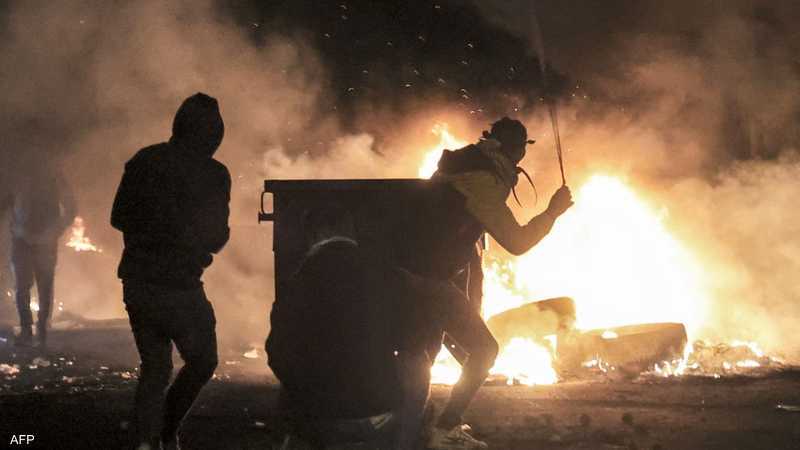
According to local sources, confrontations broke out in the village near the apartheid separation and expansion wall, during which the occupation forces fired live bullets and toxic tear gas bombs at citizens, which led to the child being injured.

PALESTINE

Mon 30 Oct 2023 5:17 pm - Jerusalem Time

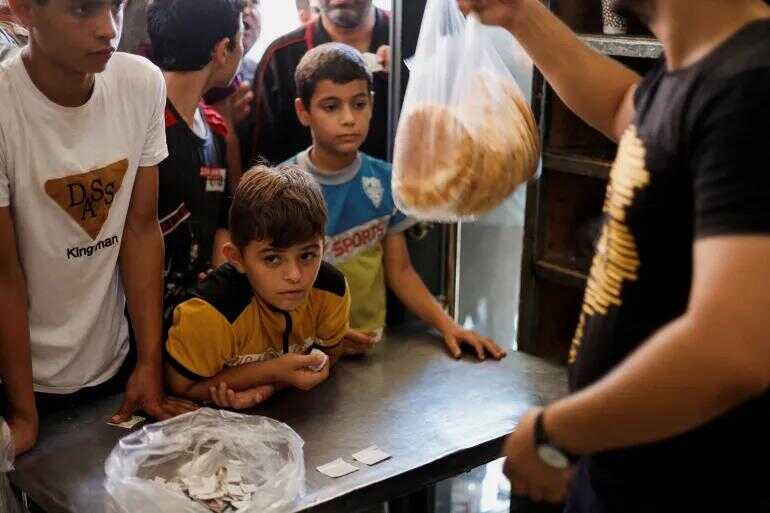
United Nations: Gaza bakeries are threatened with complete closure within a few days

The United Nations warned today (Monday) that all bakeries operating in the Gaza Strip are threatened with a complete halt within a few days, as Israel continues an unprecedented military attack for 24 days.


The United Nations Office for the Coordination of Humanitarian Affairs (OCHA) said in a statement, a copy of which was received by Xinhua News Agency, that only one of the bakeries contracted by the World Food Program and eight additional bakeries in the central and southern Gaza Strip are operating and supplying shelters with bread.


The statement stated that fuel shortages constitute the main obstacle preventing these bakeries from meeting local demand, and unless fuel is allocated to them, most bakeries will close their doors during the next few days.


It pointed out that Israel's attacks destroyed ten bakeries, six of which were in Gaza City, two in northern Jabalia, and two in the central region of the Gaza Strip, making residents struggle to obtain bread.


It was reported that there were long queues ranging from 4 to 6 hours waiting in front of bakeries, as residents were exposed to air strikes, according to the UN statement, which stated that the World Food Program estimates that the current stock of basic food commodities in Gaza is sufficient for about eight days.


However, at the store level, available stock is expected to last for five days.


Retailers face major challenges when restocking from wholesalers due to widespread destruction and insecurity.


Of the 117 trucks that entered Gaza through the Rafah crossing with Egypt since the 21st of this month, at least 57 trucks carried food supplies and three food items, including ready-to-eat foods such as canned tuna, canned meat, and other non-perishable items.


All food supplies are distributed in shelters run by the United Nations Relief and Works Agency for Palestine Refugees (UNRWA).


Since the 11th of this month, Gaza has been suffering from a complete power outage, following Israel's suspension of electricity and fuel supplies to Gaza, which in turn led to the closure of the only power plant in Gaza.


This has forced the basic service infrastructure to rely on backup generators, which are limited due to the scarcity of fuel in the Strip and the goods entering Gaza have not yet included fuel.
Meanwhile, the UN statement said Gaza's hospitals are facing an unprecedented level of devastation, primarily due to the massive number of infections, severe shortages of vital resources and fears of being targeted by airstrikes.


During the past 24 hours, on two separate occasions, the vicinity of Al-Quds Hospital in northern Gaza was bombed. This affects employees, patients, and 14,000 displaced people.


In the same period, residential buildings near the Indonesian Hospital in Beit Lahia and Al-Shifa Hospital in Gaza City were reportedly bombed as a result of air strikes.


Since the start of Israel's attacks, more than a third of hospitals in Gaza (12 out of 35) and nearly two-thirds of primary health care clinics (46 out of 72) have closed due to damage or fuel shortages, increasing pressure on the health sector.


Israel's ongoing attacks have also displaced most of Gaza's medical workers, forcing hospitals to operate at less than a third of their normal staff levels, according to the Gaza Ministry of Health.


Hospitals are still suffering from severe fuel shortages, which has led to strict rationing and the limited use of generators for essential functions only.


Furthermore, maintenance and repair of standby generators, which were not originally intended for continuous operation, have become increasingly difficult due to the scarcity of spare parts.


According to the Ministry of Health in Gaza, the total number of Palestinian deaths has risen to 8,306 since the start of Israel's attacks on the Gaza Strip on the 7th of this month.


Ministry spokesman Ashraf Al-Qudra said during a press conference at Al-Shifa Medical Complex in Gaza that among the total dead were 3,457 children and 2,136 women, in addition to 21,048 wounded.


Al-Qudra stated that Israel's continuing attacks on the Gaza Strip put 25 hospitals out of service, while 25 ambulances were targeted, calling on Gazans to go to hospitals to donate blood due to the lack of sufficient quantities of it to save the injured.

PALESTINE

Mon 30 Oct 2023 4:55 pm - Jerusalem Time

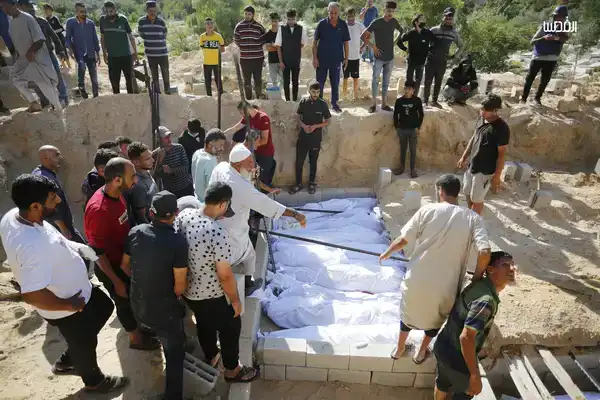
More than 20 citizens were killed in a raid on a hall housing displaced people in Gaza

Today, Monday, more than 20 people were killed in an Israeli attack on the “Tal al-Qamar” hall in Nuseirat, which houses a number of displaced people.


It is noteworthy that Israeli forces launched several raids on the Nuseirat camp in the central Gaza Strip.

PALESTINE

Mon 30 Oct 2023 4:12 pm - Jerusalem Time

Dozens of Palestinian communities in the West Bank are on the verge of a new Nakba

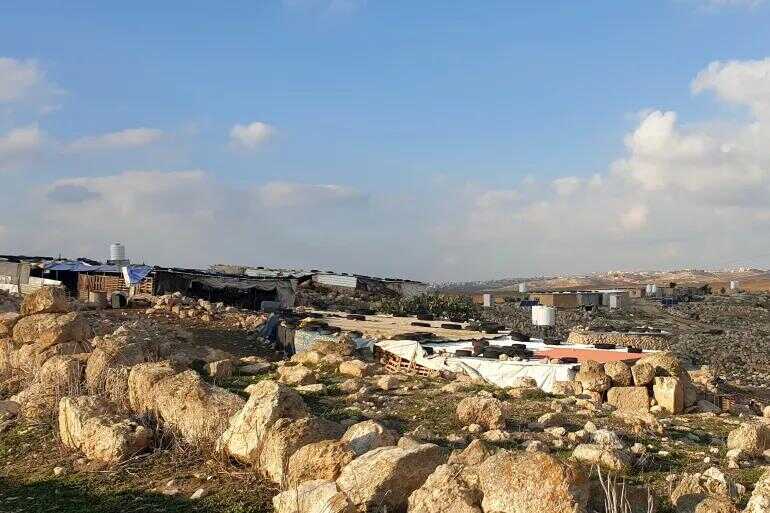
Twenty-four Palestinian families in the village of Zanuta in the south of the West Bank dismantled their primitive homes made of tin, tents, and their sheep pens, and packed their belongings to return to the town of Al-Dhaheriya, south of Hebron, after repeated settler attacks on them and their property, while remaining families requested protection.


In a scene that brings to mind the Nakba of 1948, families left, sadness and grief overwhelming their feelings, while pain and a feeling of betrayal overwhelmed 12 families who decided to stay and be patient, including the family of the young man Adel Al-Tal, who was overcome with tears, and his mother whenever anyone asked them about their fate.


Al-Tal told Al-Jazeera Net that he, his brothers, and his mother decided to stay in the village despite the risk, while 24 other families were forced to leave.


The residents of the community work in agriculture and livestock raising and own thousands of dunums (a dunum is equal to a thousand square metres) of agricultural land used for rain-fed crops and pastures for their sheep, but settlements and settlement outposts have begun to surround it from all sides.


The population's suffering began decades ago, but was doubled by settler attacks that became almost daily with the start of the Israeli aggression on the Gaza Strip on October 7th.


Sadness and helplessness

Al-Tal says that the settlers do not stop their attacks, and with the presence of the Israeli army, "with the start of the war, until today, there is no sleep, no eating, no drinking. The (dirt) roads are closed. We cannot leave or move away from the village."


The young Palestinian man, who is keen with his mother to follow the news of Gaza, does not hide that he shares his elderly mother’s crying over their condition, their helplessness, and the absence of any protection from any party, pointing out that all their contacts with Palestinian legal and official bodies did not provide them with protection or even the slightest sense of security.


Regarding the conditions that were most oppressive and forced them to leave, Al-Tal says, “The settlers came a few days ago and destroyed our house and cars and beat us all, including my mother. This was repeated with my uncle and his wife, so the conditions were stronger than the majority’s ability to endure.”


He pointed out that the students did not attend the only basic school in the village that is at risk of demolition since the start of the aggression on Gaza due to the danger to their movement on the one hand, and the inability of teachers to reach it on the other hand.


For his part, Nasr Nawajaa, a field researcher for the Israeli human rights organization B'Tselem and a resident of the Susiya community south of Hebron, which is also threatened with deportation, points to the increase in settler attacks with the start of the war in Gaza.


Settlers in army uniform

Nawajaa added that the families deported from the Zanuta community suffered from the threat of settlers for decades, and the settlers are now acting without accountability or oversight and see the current situation as an opportunity to displace the largest number of families from Area C.


Speaking to Al Jazeera Net, he indicated that a number of other families in other communities south of Hebron received warnings from settlers, including 4 families in the Anizan community near the Zanuta community southeast of Al-Dhahiriya, and two families in the Susiya community southwest of the town of Al-Samu.


He added, "In light of the current events, settler militias find an opportunity to attack Palestinian communities, harass their people, and pressure them to leave."


He said that he documented testimonies of residents in which they said that settlers known among them for their frequent attacks were raiding homes wearing Israeli army uniforms.


He continued, "Two families from the Al-Nawajaa family, numbering 24 members, received a few hours' notice to leave the village of Susiya, and 4 families numbering 35 people in the Anizan community have already left due to settlers' attacks and to preserve their safety and lives."


The human rights researcher explained that “there is no means of protection or international or human rights intervention to protect the residents.” However, he talked about consultations for legal action regarding the two families in the Susya community, without placing any hope in the Israeli courts in the current situation.


He said that the success in deporting two families later meant the deportation of the entire population of 250 people, and most of their homes were at risk of demolition from previous years.


30 thousand are threatened with displacement

According to data from the government’s Wall and Settlement Resistance Commission, about 30,000 Palestinians living in about 250 Palestinian communities in Area C of the West Bank are threatened with deportation, and some of them have already been deported.


The Authority's popular action official, Abdullah Abu Rahma, told Al Jazeera Net that settler attacks have increased significantly after the arrival of the current Israeli government in late 2022, and they increased further with the outbreak of the Gaza war.


He added, "Since the start of the aggression on Gaza, we have monitored 315 settler attacks that caused the death of 8 citizens, the last of whom was a farmer while picking olives in the northern West Bank," while the number of attacks since the beginning of the year exceeded 1,600, leaving a total of 17 martyrs.


He said that settler attacks by force of arms are largely concentrated by the "Hill Youth" settlement groups east of Ramallah in the central West Bank, to the south of Nablus in the north of the West Bank, including the Jordan Valley area, targeting farmers and Palestinian communities in an attempt to pressure them and push them to leave, and they have already succeeded. In the displacement of a number of communities.


Arming and authorization to kill

He said that most of the communities in Area C in the Jordan Valley region in the north, up to Masafer Yatta, south of Hebron, in the south, were “targeted systematically and by force of arms to force citizens to leave their lands.”


He pointed out that the Israeli government's arming of about 26,000 settlers and changing the rules of shooting allowed the killing of Palestinians even without justification.


It is noteworthy that Area C, where settlers target communities, constitutes about 61% of the area of the West Bank and is subject to full Israeli security control in accordance with the Oslo Accords, while Area B, which is subject to Palestinian civilian and Israeli security control, constitutes 21% of the area of the West Bank, and the areas represent About 18% of the West Bank is supposed to be under complete Palestinian control.

PALESTINE

Mon 30 Oct 2023 3:18 pm - Jerusalem Time

Israeli female prisoners held by the Al-Qassam Brigades send a message to Netanyahu


The Al-Qassam Brigades published a video clip containing a message sent by a number of Israeli prisoners to the Israeli government, led by Prime Minister Benjamin Netanyahu.


An Israeli prisoner says in the video clip, addressing Netanyahu: “We have been in captivity by Hamas for 23 days. Yesterday, I was at the press conference with the family of the kidnapped.”


She added, "We know that there was supposed to be a ceasefire, and you were supposed to release us."


She said, “However, we are suffering from your political, security and military failure, because of the failures you caused on October 7, because no soldier was in the place and no one came to us, and no one defended here... We are citizens who pay taxes to the State of Israel.” And now we are in captivity. You are killing us. Do you want to kill us all? You want the army to kill us. Isn’t it enough that you slaughtered everyone? Isn’t it enough for you that there were Israeli citizens killed?


She said at the end of the video: “Release us now, release their citizens and prisoners now (meaning the Palestinian prisoners), release us, release everyone, we deserve to return to our families now now now..”

PALESTINE

Mon 30 Oct 2023 3:12 pm - Jerusalem Time

Thomas Friedman advises Israel not to get lost inside Hamas' tunnels

In his article published in the New York Times on Monday, October 30, American writer Thomas Friedman, who is close to US President Joe Biden, advises Israel to follow the Indian model in dealing with the Hamas movement, calling on Israel to be patient and think carefully about the consequences of any response or a hasty action against the incursion of Palestinian resistance fighters into its territory. He referred to the infiltration of 10 Lashkar-e-Taiba fighters into India and the killing of more than 160 people in Mumbai in November 2008. Friedman: Israel should have called its military operation in Gaza “Save Our Hostages”.


Friedman begins his article, for which he chose the title: “Please do not get lost inside Hamas’ tunnels.” Friedman called on Israel to be patient and carefully consider the consequences of any hasty reaction to the incursion of Palestinian resistance fighters into its territory, and the heavy costs that any retaliation could entail. 


“I watch the war between Israel and Hamas in Gaza today and I think of one of the world leaders I admire most: Manmohan Singh,” he says. He was India’s prime minister in late November 2008, when 10 Pakistani jihadist militants from the Lashkar-e-Taiba group, which is widely believed to be linked to Pakistani military intelligence. They came to India and killed more than 160 people in Mumbai, including 61 people in two attacks. What was Singh’s military response to the events of September 11 in India? He did nothing.”


“Singh never retaliated militarily against the state of Pakistan or the Lashkar-e-Taiba camps in Pakistan. It was a remarkable act of restraint. What was the logic? In his book Options: Inside the Making of India’s Foreign Policy, India’s then foreign minister, Shivshankar Menon, explained, the reason behind this, explaining these key points: “I myself pressed at the time for clear, immediate retaliation” against jihadi bases or against the ISI, “which was clearly complicit,” Menon wrote. “Doing so would have been emotionally satisfying.” "It goes some way towards erasing the shame of incompetence shown by the Indian police and security agencies."


In his comparison between New Delhi and Tel Aviv's handling of the two incidents, Friedman believes that it is useful to reflect on the contradiction between the two countries' responses to the "terrorist" Mumbai operation and what he described as the "massacre" carried out by Hamas.


He said that the narrative of the attack on Israel quickly changed and made Hamas fighters heroes in the eyes of some people. It also forced Israel's new Arab "allies" in the Abraham Accords to distance themselves from the "Jewish state."


The writer believes that it is almost certain that after Israel summons about 360,000 reserve soldiers, its economy will suffer from a recession and shrink by more than 10% on an annual basis during the last quarter of the year, if it takes months to uproot Hamas from Gaza as expected.


The article criticized Prime Minister Benjamin Netanyahu's government for its haste in developing Benjamin's Plan B, which aims to "wipe Hamas from the face of the earth."


He explained that he closely followed former Indian Prime Minister Manmohan Singh's "unique" response to the "terrorist" attacks in Mumbai at the time. He said he immediately called for Israel's response to be goal-focused and thoughtful.


Friedman added to this by saying that Israel should have called its military operation in Gaza “Save Our Hostages,” focusing on arresting and killing the hostage takers, as he put it.


Friedman claims that the Israeli officials he spoke to told him that they knew two things for sure: that Hamas would not rule Gaza again, and that Israel would not rule Gaza after Hamas. They suggest they would establish an arrangement similar to what exists in parts of the West Bank today, where Palestinians in the enclave run daily life, while Israeli army and Shin Bet security teams provide power behind the scenes.


The American writer describes this plan as half-baked, because those Palestinians who will be recruited to implement it will be killed, as he claims, and that Israel will bear the costs of controlling Gaza and providing health care and education to its residents. Then, in his opinion, the cost of occupying Gaza could exhaust the Israeli army and economy for years to come.


He stresses that Israel does not have a viable plan to win or a leader who can overcome the pressures and complications of this crisis, adding that Israel must keep the door open for a truce for humanitarian reasons, and for an exchange of prisoners, which will also allow Israel to wait and think about the consequences of its “hasty” military operation in Gaza. And at the price you can pay in the long run.


Friedman concludes that this delay would also allow Gazans to evaluate what the Hamas attack in Israel did to their lives, their families, their homes, and their businesses.


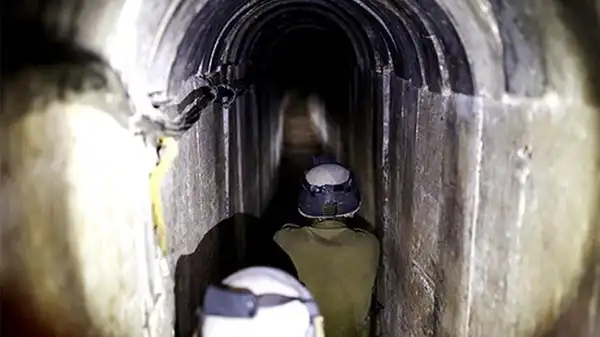
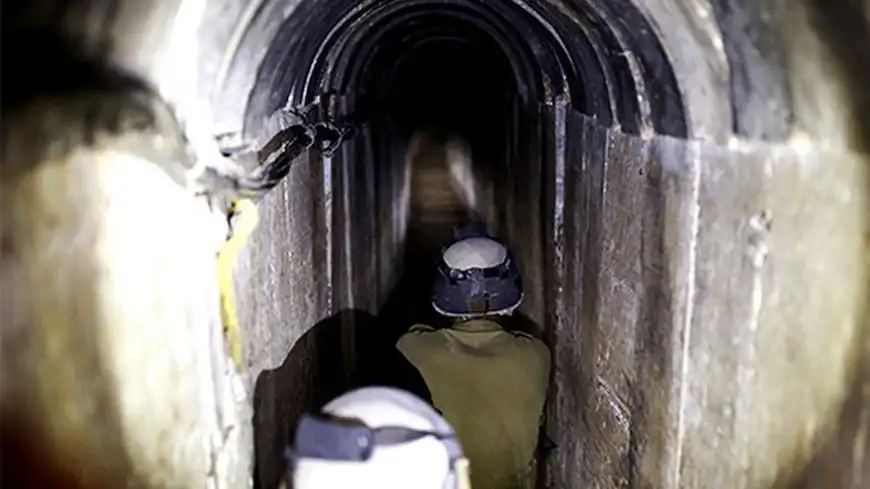
Friedman ends his article by saying that Hamas has allocated "almost all of its resources to building attack tunnels. Please, Israel, do not waste those tunnels!"

PALESTINE

Mon 30 Oct 2023 2:10 pm - Jerusalem Time

FM Malki briefs British counterpart on official Palestinian position regarding current events

Minister of Foreign Affairs and Expatriates, Riyad al-Malki, briefed his British counterpart, James Cleverly, on the official Palestinian position with regard to all the events currently taking place between Palestine and Israel, and discussed ways to avoid further deterioration.

During a telephone call, the two ministers exchanged views regarding the priorities required to be undertaken to stop the Israeli aggression on the Gaza Strip, reach a truce, open humanitarian corridors, bring in humanitarian assistance and provide it with food, water, medicine, fuel, and other basic human needs.

They further stressed during the call the necessity of preventing the recurrence of such a situation, by opening a political horizon that allows the return to the political process.


The two ministers agreed to continue making efforts, each in his own way, to reduce the severity of the violence and stop it, protect the lives of civilians, facilitate the smooth and permanent entry of humanitarian aid to the entire Strip, stop the terrorism of Israeli colonists in the occupied West Bank, as well as to prevent further military incursions of Palestinian residential communities in the West Bank.


Both parties also agreed to continue bilateral and multilateral work, in order to achieve these goals in the near future and to maintain bilateral communication due to its importance at this stage.

T.R.

ARAB AND WORLD

Mon 30 Oct 2023 2:07 pm - Jerusalem Time

OIC strongly condemns the ongoing brutal Israeli aggression against Gaza

Hissein Brahim Taha, the Secretary-General of the Organization of Islamic Cooperation (OIC), today strongly condemned the continued and escalating Israeli military aggression against the Gaza Strip, persisting for 23 days in a row.


“This relentless assault has resulted in butchering thousands of martyrs and wounding innocent civilians, including women, children, medical personnel and journalists, in addition to the deliberate destruction of buildings, hospitals, schools, places of worship, and United Nations facilities. Israel still threatens to bomb hospitals, in addition to continuing to prevent access to food, medicine, water, and electricity, which constitutes collective punishment, war crimes, and flagrant violation of international law and international humanitarian law,” he said in a statement.


The Secretary-General also affirmed the OIC’s rejection and condemnation of “the escalation of acts of murder, incitement, and organized terrorism committed by extremist settler groups and Israeli occupation forces against Palestinian citizens throughout the West Bank, including the occupied city of Al-Quds (Jerusalem). These criminal acts have tragically led to the martyrdom of more than 115 Palestinian citizens since the beginning of the month,” holding Israel, the occupying power, “fully responsible for the continuation of these criminal acts.”


At the same time, the Secretary-General renewed his call on the international community to intervene urgently to force Israel, the occupying power, to stop its brutal aggression against the Palestinian people immediately and to oblige it to respect and implement international law and relevant United Nations resolutions, and to ensure the opening of permanent humanitarian corridors to facilitate the access of medicines and food supplies and basic needs of the Gaza Strip.

PALESTINE

Mon 30 Oct 2023 1:42 pm - Jerusalem Time

Israeli ground attack on Gaza is not going according to Israeli army's plans


Bloomberg said in a report that Israel sent troops and tanks to the northern Gaza Strip in what it describes as the second and longest phase of its war against Hamas, a more cautious approach than it pledged after the October 7 attack that killed 1,400 people, including 311 soldiers, according to Israeli reports.


According to Bloomberg: “Instead of launching a large-scale ground invasion, the army started slowly, taking a day-by-day approach based on casualties, fears of the conflict spilling over into Hezbollah in the north, and internal political pressures on Prime Minister Benjamin Netanyahu. The campaign is expected to continue.” “Six weeks to six months, according to a number of officials.”


The agency quoted officials, who requested anonymity to discuss sensitive issues, saying, “Israel wants to destroy Hamas as an organization and ensure that Gaza will no longer be a source of threat to it.”


The extent to which that goal is realistic remains unclear, according to the agency, which indicated pressure from the United States and other allies on Israel to force it to be more specific about its goals, as well as to draw a vision for what will happen next.


The report explained that the decision to launch a ground invasion actually indicates a shift in focus away from negotiating the hostages, about 230 of whom Hamas has held since October 7. It also indicates the belief that Hezbollah, which is supported by Iran, will not resort to the decision to engage in all-out fighting and will be content with short-term skirmishes, and thus a battle will not be opened on two fronts.


Officials say, according to the agency, that the prevailing feeling is that Hamas was trying to buy time, aiming to release a small number of hostages per week while demanding a widespread ceasefire and prisoner exchange.


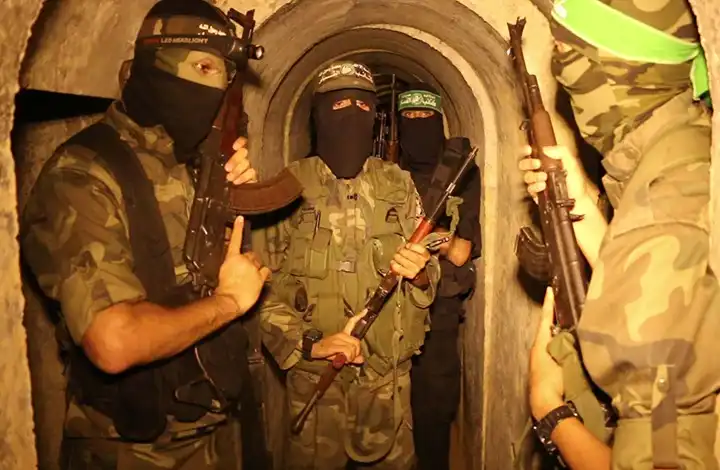
The agency reported that officials say that the security services have formed a group whose mission is to target every Hamas leader involved in the October 7 attack, “headed by Yahya Sinwar,” and “some of them have already been killed, according to the Israeli army.”


Another goal that is widely discussed, according to the agency, is that Israel will not return the entire Gaza Strip to whoever will eventually rule instead of Hamas. It plans to create a buffer zone to prevent a repeat attack, according to a number of officials.


Israel expressed its intention to besiege the main city in the Gaza Strip on Sunday, and published pictures of tanks on the western coast of the Gaza Strip 48 hours after issuing orders to expand ground incursions across its eastern borders, according to international media.


The agency says: “Israel initially sought not to reveal its current plan in its ongoing war with Hamas fighters, which has been going on for three weeks, as its forces were moving under the cover of darkness and in light of the cut off of communications from the Palestinians, but Israel later announced what it called the “second phase” of Its operations against the Iranian-backed movement.”


Some Palestinian citizens in the devastated and besieged Gaza Strip said that telephone and Internet services began to gradually return on Sunday, after a complete interruption for more than a day, which severely affected rescue operations at a time when Israel announced that it had bombed Hamas targets, especially in the north of the city. Gaza, where its government headquarters and command centers are located, according to the agency.


Hamas said it fired mortar shells at Israeli forces in northern Gaza and bombed Israeli tanks with missiles, downplaying reports that the Israeli army had made notable progress in the besieged Gaza Strip.


Israel has tightened its siege and bombed Gaza for three weeks without stopping, leading to the killing of more than 8,000 people, most of them civilians - including more than 3,200 children, according to the United Nations agency UNICEF, while 20,000 people were injured, and more than 35% of the area was destroyed. Gaza strip.


Hamas was able to detain 230 (according to Israeli sources), including at least 100 Israeli soldiers.


Western countries generally support what they say is Israel's right to defend itself, but international anger is mounting over the number of bombing victims, while calls are growing for a "humanitarian truce" to allow aid to reach civilians in Gaza and ease the humanitarian crisis.

PALESTINE

Mon 30 Oct 2023 1:29 pm - Jerusalem Time

West Bank: 122 Palestinians killed since October 7

The young man, Ahmed Nofal (23 years old), died today, Monday, as a result of wounds he sustained by colonial bullets, on the twenty-fourth of this month, in the village of Ras Karkar, northwest of Ramallah.


The martyr Nofal had undergone several surgeries since his injury, which was described at the time as very critical, and he remained connected to artificial respirators throughout this period, until his martyrdom was announced today.


It is noteworthy that a colonist rammed a Palestinian vehicle carrying four young men near the village of Ras Karkar, before firing live bullets at the vehicle, which resulted in two young men being shot, one in the head and the other in the foot, and they were transferred to the Palestine Medical Complex.


And in Hebron. A young man was killed, Monday afternoon, by Israeli occupation forces’ bullets, after suppressing a student march at the entrance to Yatta, south of Hebron.


Coordinator of the Popular and National Committees to Resist the Wall and Settlements, Ratib al-Jabour, told WAFA that the occupation forces fired live bullets at a student march that reached the Ziv Triangle at the northern entrance to Yatta, which led to the death of a young man and the injury of dozens of people to suffocation.


The Ministry of Health announced that the young man, Fouad Ismail Abu Sobha (23 years old), from the town of Yatta, south of Hebron, was killed by occupation bullets, and dozens suffered from suffocation as a result of inhaling poisonous gas.


Four citizens were injured by bullets from the occupation army during the clashes that broke out at the Ziv Triangle, the northern entrance to the town of Yatta. They were taken to Abu Al-Hassan Al-Qasim Governmental Hospital in the town to receive treatment, and their injuries were described as moderate.


With the death of the young man Abu Subha, the death toll since dawn today rises to five, and since the start of the occupation’s aggression against our people on the seventh of this October, to 122.


PALESTINE

Mon 30 Oct 2023 1:26 pm - Jerusalem Time

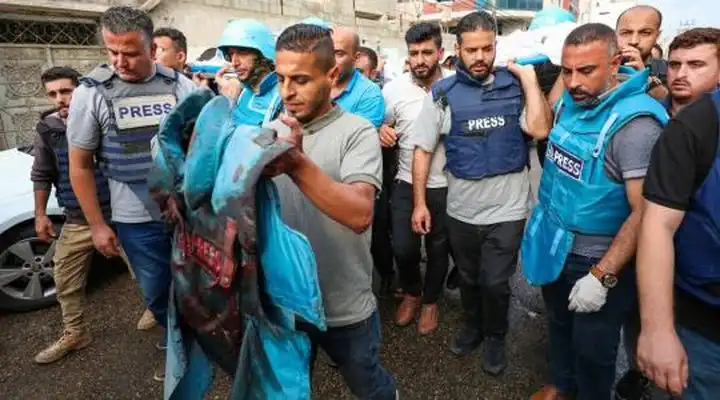
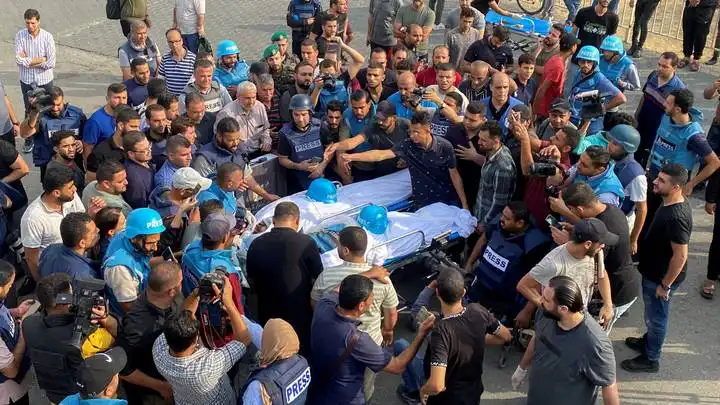
A journalist and a number of his family members were killed Gaza bombing

Today, Monday, a journalist and a number of his family members were killed in an Israeli bombing that targeted his home in eastern Gaza.


Local sources reported that journalist Nazmi Al-Nadim was killed as a result of the occupation aircraft bombing his house located in the Al-Zaytoun neighborhood, in addition to the martyrdom of a number of his family members, without further details known at the moment.


With the death of Al-Nadim, the death toll among journalists since the beginning of the occupation’s aggression against the Gaza Strip on the seventh of this month has risen to 35 journalists, while dozens were injured, in addition to the bombing of the headquarters of 50 media organizations.

PALESTINE

Mon 30 Oct 2023 1:18 pm - Jerusalem Time

Doctors Without Borders: The atrocities in Gaza have reached an extent we have never witnessed before

Today, Monday, Doctors Without Borders called for an immediate ceasefire in the Gaza Strip, to prevent more casualties and allow humanitarian aid to enter the Strip.


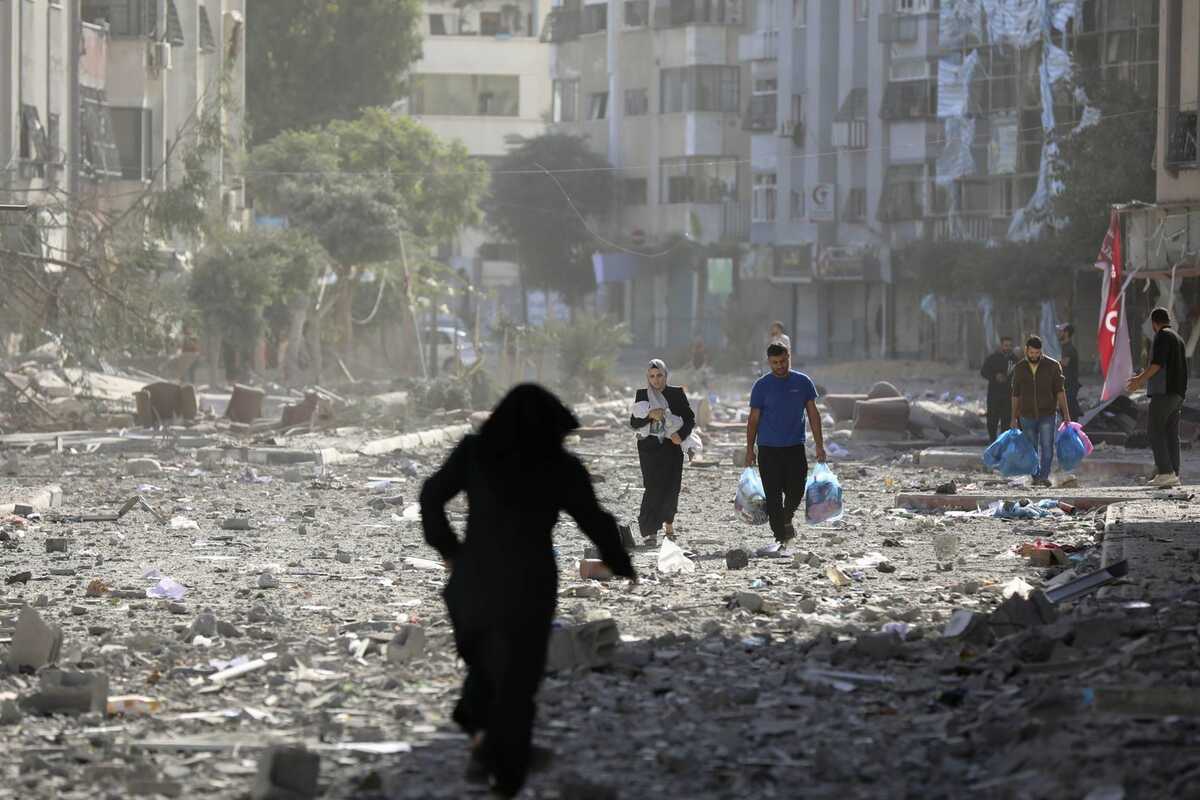
The organization added that the Israeli bombing of Gaza intensified in an unprecedented manner until northern Gaza was leveled to the ground, while all parts of the Strip were being bombarded, leaving no safe haven for civilians.


She pointed out that despite the issuance of a resolution by the United Nations General Assembly establishing a humanitarian truce, this did not achieve any results on the ground, as the violent Israeli bombing continued.


Doctors Without Borders called on the international community to take stricter measures to pressure Israel to stop its aggression, noting that civilians are being killed and forcibly displaced from their homes, and water and fuel continue to run out. While the atrocities in Gaza reached an extent that we have never witnessed before.


She continued: Medical aid began to run out in hospitals, and a few days ago, surgeon Muhammad Obaid, who works with the organization in Gaza, described the situation as follows: “Hospitals are crowded with patients. Amputations and surgeries are being performed without the use of proper anesthesia. The morgues have become overwhelmed with corpses.”


The organization pointed out that the communications outage on October 27 limited the crews’ ability to coordinate and provide medical and humanitarian assistance, while those trapped under the rubble, pregnant women about to give birth, and the elderly were unable to request the assistance they desperately needed. In light of this outage, MSF lost contact with most of its staff.


She pointed out that the number of wounded people who need urgent medical assistance exceeds what the health system can bear, as it includes about 3,500 beds. Never before had this number of casualties occurred in such a short period, even during previous Israeli attacks.


The organization confirmed that hospitals are crowded with patients, including Al-Shifa Hospital in Gaza, and orders issued by the occupation army to evacuate the hospital are an impossible and risky task. The hospital is currently operating at full capacity to provide medical treatment to patients, and shelters tens of thousands of people who have taken a safe haven there. In this context, international humanitarian law stipulates that patients, workers and health facilities must be protected at all times.


For his part, the international president of Doctors Without Borders, Christos Christou, said: Helpless people are living under the weight of horrific bombing, and there is no place for families to flee or hide after the gates of hell have been opened upon them. There must be an immediate ceasefire, and water, food, fuel, medical supplies and humanitarian aid must be re-secured in Gaza urgently.


He added that more than two million men, women and children face an inhumane siege in Gaza, which constitutes collective punishment prohibited under international humanitarian law.


Christo pointed out that the occupation authorities continue to prevent fuel from entering Gaza, even though it is necessary to supply hospitals with energy and operate desalination plants that produce clean drinking water.


He continued: Before October 7, the number of supply trucks crossing into Gaza ranged between 300 and 500 trucks every day, and most of the population relied on humanitarian aid. Today, although the Rafah border crossing is open, only 84 trucks have been able to enter the Strip since October 20, a response that is completely insufficient to meet the ongoing and growing needs in Gaza.


Christo said: We are ready to intensify our assistance in Gaza. We have a team on standby to send medical supplies and enter Gaza to support the emergency medical response when the situation allows. But if the bombing continues at its current intensity, any efforts to provide medical aid will inevitably fail.


PALESTINE

Mon 30 Oct 2023 12:52 pm - Jerusalem Time

60 humanitarian aid trucks cross the Rafah crossing into the Gaza Strip

60 trucks of humanitarian aid crossed the Egyptian Rafah crossing into the Palestinian Gaza Strip, Egyptian sources reported today (Monday).


The sources told Xinhua News Agency that the Egyptian authorities sent the eighth batch of Palestinian aid this morning to the Al-Auja commercial crossing in central Sinai, in the amount of 60 trucks.


She explained that this quantity of trucks, which is the largest to cross into the Gaza Strip, comes as compensation for the delayed entry of two previous batches.


The sources indicated that the trucks were sent from in front of the Rafah crossing to the Al-Auja crossing in central Sinai to be examined and inspected from the Israeli side, and then sent again to the Gaza Strip through the Palestinian Rafah crossing.


Yesterday (Sunday), 48 trucks of humanitarian aid crossed into the Gaza Strip, including food, water, medicines and medical supplies.


Egypt is making intense efforts to accelerate the entry of humanitarian aid into the Gaza Strip to alleviate the suffering of citizens trapped there since October 7.


Israel still refuses to allow the entry of petroleum derivatives with aid shipments, under the pretext that Hamas may seize them.
Today, the International Committee of the Red Cross delivered a shipment of medical supplies and emergency medicines to the administration of Nasser Governmental Hospital in Khan Yunis, south of the Gaza Strip.


ARAB AND WORLD

Mon 30 Oct 2023 12:46 pm - Jerusalem Time

China and Russia take aim at US at Chinese military forum

There is big news at this time amid the Russia-Ukraine war. Russia has said that it is ready for talks with Ukraine. However, Ukraine has not yet responded to Russia’s proposal. At the same time, Russian Defense Minister Sergei Shoigu has made many serious allegations against America. Shoigu said on Monday that the US was stoking geopolitical tensions to maintain its “hegemony”. He also warned about the danger of conflict between major countries.

Addressing the defense forum ‘Xiangshan Forum’ in Beijing, Shoigu also said that the US and its Asia-Pacific allies were undermining stability in the region. It is China’s largest annual event focused on military diplomacy. Shoigu said, “In order to maintain its geopolitical and strategic dominance, America is deliberately weakening the basis of international security and strategic stability.” He said that America and its Western allies of the North Atlantic Treaty Organization (NATO) ” Threatening Russia with “eastward expansion”. “The aim of Western countries is to escalate the conflict with Russia and increase the risk of confrontation between major countries,” he said. This will have serious consequences.

Russia ready to talk to Ukraine if conditions are right

Regarding Russia’s war in Ukraine, Shoigu said Moscow was ready to negotiate “if the situation warrants”. Zhang Yuxia, China’s second-ranking military officer and vice chairman of the Central Military Commission, inaugurated the three-day event in the absence of General Li Shangfu. Shangfu was removed from the post of China’s Defense Minister last week. He has been away from public for two months. The Chinese government has not given the reason for Shangfu’s removal. Military representatives from many countries are participating in this event. China sees this as an opportunity to increase military cooperation with other countries and demonstrate regional leadership.


China expressed displeasure on America

The US delegation was led by Shanti Caress, the Defense Department’s principal official for China-related matters. Zhang said China was “willing to build military-to-military relations with the United States on the basis of mutual respect, peaceful coexistence and cooperation.” China had suspended military communications with the US in August 2022, expressing unhappiness over the visit of former US Parliament Speaker Nancy Pelosi to Taiwan. Without naming the United States, Zhang criticized “those countries that continue to create problems around the world.” He also called for a “political settlement on the Ukraine crisis” and “a resolution by all parties to the Israeli-Palestinian conflict.” Called for stopping the violence and immediate ceasefire. (AP)

OPINIONS

Mon 30 Oct 2023 12:27 pm - Jerusalem Time

A German reading of the ground attack on Gaza: very complex urban warfare scenarios and the fate of the rule of the Strip

From Annahar- "Al-Quds" dot com

From Annahar- "Al-Quds" dot com

Opinion Writer

It seems that Israel has completed its preparations and expanded its ground and air operations against Gaza, despite all the talk that there is international pressure to prevent a ground attack and hopes to free more hostages held by Hamas. However, politically, it seems that there is no clear post-war plan for the Strip, where most people live. Of two million people under extremely difficult circumstances and without any real prospects. The Israeli government is facing difficult decisions, including regarding the families of the prisoners who are demanding the release of their sons, and at the same time there are calls for revenge for what happened to Israel on October 7, 2023. What are the complications of urban warfare?


4 goals and a number of complications

Carlo Massala, professor of international politics at the German Army University in Munich, said in a recent interview with the ARD news network that the Israeli government, after announcing the military mobilization, set four goals for its ground invasion: First, to undermine Hamas and get rid of the extensive tunnel network to make it It is unable to fight militarily, thus making Israel always safe for the population, and paralyzing its capabilities that allow it to launch more attacks on Israel’s borders from the Gaza Strip, not to mention making every effort to release its prisoners.


As for political analyst Christian Wagner, in an interview with Bayerischer Rundfunk, he said that destroying Hamas should not only mean killing the movement’s leaders, but all of its members, and this is impossible and will only happen in the most difficult circumstances. As for its weapons arsenal, the defect lies in the fact that it is not clear the extent of the capabilities of the secret services of the Israeli occupation to discover potential targets, and that determining their locations is difficult in the absence of reconnaissance except by means of marches. All this amid fear that a number of Israeli prisoners may have been housed inside the underground metro in Gaza, which is a dilemma for the army, not to mention the fear of explosive traps and mines. The United States bringing its forces to the region heralds an increase in the intensity of the conflict, and this also exposes the American army to danger.


This logic was also confirmed by Masala, who considered that the Israeli army must maintain proportionality, in the presence of military difficulties that threaten its armed forces, because urban warfare is one of the most complex military operations ever, and because the lives of prisoners are of importance to the Israeli people, explaining that when The Israelis attack partial targets from the air. The problem they face is the difficulty of focusing on Hamas sites.


From another angle, security experts considered that the plans of the Israeli forces are not clear exactly and what a major attack on Gaza will look like. They may rely on deploying groups of pens supported by attacks from the air, and perhaps sending tanks and infantry units to penetrate the ground. In both cases, they are at risk of suffering losses. A huge loss in the number of soldiers, considering that eliminating Hamas cannot be realistic, especially since the movement had plenty of time to prepare for ground confrontations that could take weeks or even months. Comments said that a ground attack is the only means to restore strategic deterrence in the region, and anything less than that would be a victory for Hamas and Iran.


The future of Gaza

Political readings have shown that strategic questions are being raised behind closed doors, including the extent to which Israel is able to achieve its declared goals. That is, at what point can the Netanyahu government declare the success of the ground attack and end the operation? If Hamas is eliminated, who will rule Gaza, especially since Israel does not want to extend its authority over Gaza in these circumstances and has no ability to do so, which it occupied until 2005?


This scenario was ruled out by expert Masala because it is the worst solution ever and will only fuel the movement's activity again. In this context, the scenario of the Strip being managed by the United Nations was also proposed, but Robert Bleicher of the International Crisis Group saw this as unthinkable for the Israelis. As for the third scenario, which is based on the Palestine Liberation Organization taking over the mission from Ramallah, it is illogical because it has become politically weaker than ever before, as it has lost control of Gaza to Hamas since 2007, and is not very popular in the Strip. Regarding the fourth scenario, which requires that Gaza be subject to the administration of an international group with the participation of a number of European and Arab countries, and then hand it over to a civilian Palestinian administration, this is not easy to implement because Hamas has political influence that makes it able to maneuver by imposing such a solution on it without Obligations and guarantees towards the Gaza citizen.


In the face of all these arrangements that involve uncertainty and the difficulty of predicting the development of the situation in slaughtered Gaza, the fear remains that the battle will expand in the Middle East with Hezbollah intervening more forcefully in the war and opening the Lebanon front. This is what worries Europe and the United States, because the political solution For the sector after that, it will not be easy.


Director of the Institute for Peace and Security Policy Research at the University of Hamburg, Ursula Schröder, warned that the Western and global order had reached its end, and the escalation in the region could be the final nail in the coffin of human values, noting, according to what was reported by the newspaper “Die Welt”, that the population in All parts of the world are increasingly becoming victims of violent conflicts, and this is what is happening in Syria, Yemen, Azerbaijan and others, where about 238 thousand civilians died in 2022 as a result of hostilities.


OPINIONS

Mon 30 Oct 2023 12:11 pm - Jerusalem Time

Reducing the crisis to Gaza will not solve the Palestinian issue!

Annahar- "Al-Quds" dot com

Annahar- "Al-Quds" dot com

Opinion Writer

By Youssef Badr

There are those who are pressing to stop the aggression against Gaza, including supporters of the Islamic Resistance Movement "Hamas", for fear of the expansion of the impact of this war on their lands. This was translated into practice by the visit of Iranian Deputy Foreign Minister Ali Bagheri Kani to Moscow and his meeting there with a member of the Political Bureau of the "Hamas" movement Moussa. Abu Marzouk, and talk about a ceasefire deal in exchange for hostages.


There are also those who secretly support Israel's plan to eliminate this movement, believing that with its fall, tampering hands in the region will be loosened, which was translated into practice by the political statements and media speeches that sought to distance themselves from the Iranian square, or the Al-Aqsa Flood process was translated into political explanations ignoring the Palestinian issue. Or its conspiratorial view of the plan to get involved in a war with Israel, or its reference to resistance movements as an insinuation or statement of terrorism, or confusion in describing the situation of the Hebrew state between occupation and the right to defense; The positions were mixed with security concerns and challenges for fear of slipping into a square that would take the region back to June 1967, at a time when there was much talk about the new Middle East!


But the occupying state is continuing with its plan to reshape the Gaza Strip in a way that eliminates the resistance movements, even at the expense of the lives of the Palestinian people! The occupation army's plan is still in its first phase, which is based on launching harsh air attacks that destroy neighborhoods and buildings and transform the Gaza Strip into rubble and open land, making it easier for it to carry out a ground invasion without resisting street warfare, in addition to the stifling siege and starvation to push the residents of the Strip into forced displacement and return. Shaping its demographics if it ends up being in favor of the Hebrew state’s plans; Its leaders are buying time to settle their internal affairs and trying to achieve any formal victory, if in the end they are forced to respond to pressure from their Western allies to accept a truce... but the question remains: what comes after that?!


Search for an accused

Israel is not worried about expanding the circle of war with the northern front (Syria and Lebanon on the borders of occupied Palestine). On the contrary, it is looking for an accused to justify its actions in Gaza, or to distract international public opinion with a new front that places it in the image of a victim who is in need of the support of its allies. International parties, so that the picture appears as if what happened in Gaza was a conspiracy carried out by a country like Iran to eliminate the Zionist state, which may help it in the future to evade the rights of the Palestinian people that it ignored, which is what led us to the situation that the region is experiencing now.


The veto battle that took place between Russia and the United States during the UN Security Council meeting, Thursday, October 26, indicates that the West is looking for international approval to criminalize what Israel was subjected to in the “Al-Aqsa Flood” operation and include it under the name of terrorism. To complete the scenario that the occupation will exploit later to give its plan towards Gaza international legitimacy. Russia removed the name of its ally Iran from the draft US resolution accusing the Islamic Republic of supporting armed groups that it described as terrorist!


Russia, which is waging war on Ukraine, appears to have defended Iran. Because it does not want to expand the scope of the Gaza crisis outside its territory; Officially condemning Iran in the Security Council may divert attention from Hamas and open fire on a bigger culprit, which would harm Russia, which is also facing Western sanctions, especially since Iran has turned into a regional policeman working in its interest in Syria, the South Caucasus, Ukraine, and Africa.


Alliance against terrorism

The role that we have witnessed from French President Emmanuel Macron over the past few days is that of a light-hearted godfather to promote an international project to include the Gaza Strip among the tasks of the international coalition to combat terrorism currently spreading in Syria and Iraq. Although his plan is smart in the eyes of the West, it appears stupid in the eyes of the countries of the region. ; The West seeks to minimize the Gaza crisis and reduce it to “Hamas” after including it on terrorist lists, and the mission of the international coalition is to help Israel implement its plan towards that sector under an international and legitimate umbrella.


But in the eyes of the countries in the region that do not want Hamas to exist, this plan could increase the region’s crisis. When the international coalition fought ISIS, everyone supported it, even if there were those who supported it. But for Hamas, the matter is related to angry people and parties intertwined with this movement, such as Qatar, Turkey, and Jordan. The matter is not limited to Iran.


Although it seemed as if Macron had gone out alone without discussing his partners, in reality he was throwing a stone in the water to prepare public opinion. The visit made by US Assistant Secretary of the Treasury for Terrorism and Financial Intelligence, Brian Nelson, to Qatar on Wednesday, October 25, as well as the tour of US Assistant Secretary of the Treasury, Wally Adeyemo, to Europe. It indicates the existence of joint Western cooperation to help Israel. If he does not succeed in forming an international coalition to represent its operation in Gaza; He succeeds in helping her in the post-process stage; It guarantees the drying up of the resistance movements’ financing network and supports the Palestinian Authority’s control over the Gaza Strip if Israel obtains what guarantees its security.


Confrontation with the United States!

Another mission of the French moves is to relieve the embarrassment of the United States of America, whose bases and forces in the region were subjected to symbolic attacks by armed groups loyal to Iran. Washington does not want its support for Israel to shift so that the battle with it shifts in a way that makes the crisis facing its administration internally more difficult, as indicated by the continuous communications and warnings from Washington to Baghdad after the attacks on its soldiers, as well as its intensification of security around its force bases in the Gulf, Syria and Iraq.


Thus, the mission of calling on France to form an international coalition is to form a mechanism that guarantees Israel and concerned regional and Western powers that a new front will not be opened in the region, especially by the Lebanese Hezbollah, the Yemeni Houthi group, or the Golan Front. If Iran gives them the green light to do so; Because fears of slipping into the Iranian square are everyone’s obsession with aligning themselves with revolutionary Iran in the end.


Therefore, the speech of Iranian Leader Ali Khamenei, on Wednesday, October 25, cannot be ignored, as he explicitly sought to transfer the battle with the United States, saying: “America’s hands are stained with the blood of the people of Gaza, and it is in fact managing this crime that is being committed in Gaza.”

As well as the continuous statements by Iranian military commanders, especially by the Revolutionary Guard, warning against a ground invasion of Gaza. Even if it is to save the face of the Iranian regime internally; But the experience in Iraq, Afghanistan, and Syria has proven the extent of what Iran can do against American interests.


In practice, managing the battle with America and putting pressure on it could relieve Iran of the dilemma of having to move its allies to confront Israel, and help it achieve its demands to stop the war and bring in aid, especially since the war in Gaza has somewhat shattered the mental image that was formed in the minds of supporters of the Iranian regime who have always heard A call to you, O Al-Aqsa, on the pulpits of their leaders, and now they find that the matter is subject to special calculations more than the calculations of the battle of good and evil! This is what the media machine is currently seeking to fix.


The demands of Western countries to open humanitarian corridors into the Gaza Strip indicate the effectiveness of this pressure. The issue of the hostages for Hamas represents a disturbing and embarrassing issue for the governments of these countries, which prompts them to put pressure on Israel to liberate the hostages by safe means through intermediaries such as Egypt, Qatar, or Jordan, or through specific operations that attempt to achieve a double goal: formal victory and the announcement of the hostages’ liberation.


Likewise, there is corresponding pressure on Iran regarding its nuclear file and the American threat to withdraw from the Sultan of Oman’s plan to reach an informal temporary agreement, according to which Tehran obtained part of its funds frozen abroad, and Washington also overlooked its oil exports, which lessened the impact of Western sanctions, the severity of which threaten the stability of the Iranian regime at home if it faces violent popular protests.


After 1967!

No one wants to return to the history of the June 1967 war. The countries of the region are seeking to overcome this history and its pain and restore what was destroyed by the Israeli aggression against them. But also what Israel is doing is because it believes that history and the region have stopped on that day, and that no one is moving except it. But this mentality is what brought Iran into the region.


If Israel continues to think with the same mentality after the “Al-Aqsa Flood” operation, this means that Iran will tend to expand its presence in the Mediterranean, through rapprochement with a country like Turkey, which has a crisis with the European powers over Cyprus, and also has a desire to achieve a balance. In front of Israel in the eastern Mediterranean region, especially since Turkey feels the need for this balance since the discovery of gas in that region, where German, British, French, and American forces are present to protect its interests and energy fields.


No one also accepts that Israel will continue to have the upper hand, at least there is a desire to balance it, as Turkey is geographically distant from it and manages its foreign relations in a clear and sometimes contradictory pragmatic manner. Its president, Recep Tayyip Erdogan, rejected Western efforts to describe Hamas as a “terrorist” movement. Because this harms Türkiye's interests and popularity at home and abroad.


Erdogan's statements coincided with what was said by the Iranian leader, who called on Islamic governments not to repeat Western governments' description of "Hamas" as a terrorist group.

  Also, the plans of the Western powers, which ignore the nature of the Middle East region and believe that Israel is still superior, express a crisis in their thinking. Iran will not allow the Hebrew state to repair the security and psychological defeat it has suffered, thus eliminating its ambitions towards the region.


Likewise, Turkey, which entered into a debate with Western powers because of its supportive support for the Hamas movement, will also not accept sacrificing its interests and regional balance in the interest of Israel’s superiority.


At the present time, the matter is no longer about Arab rights and a return to the 1967 borders; Rather, the matter has become more complicated for Israel, and it has wronged itself. The entry of parties geographically distant from Palestine, such as Iran, Turkey, and the Gulf states, has made the solution to the Palestinian issue a matter of a more complex network of calculations. Perhaps this matter has helped relieve pressure on neighboring countries such as Egypt and Jordan. But he managed the issue in the interests of accounts far from the solution area. The Turkish President called for holding a conference that brings together Israelis and Palestinians, similar to the Astana meeting, to resolve the Syrian crisis, and for Turkey to be a guarantor of any agreement reached. But it will not succeed if Palestine's neighboring countries, such as Egypt, Jordan, Syria, or Lebanon, are ignored, and all it will achieve is serving the agenda of any country that came from afar to support the Palestinian cause!


PALESTINE

Mon 30 Oct 2023 11:40 am - Jerusalem Time

35 journalists killed since the start of the Israeli aggression on Gaza


The government media office in Gaza announced on Sunday evening that the number of martyred journalists as a result of the war launched by Israel on the Strip since October 7 has risen to 35 journalists.


The office said in a statement on the Telegram platform: “35 journalists...the government media office publishes a list of journalists who were promoted as a result of the ongoing occupation aggression against the Gaza Strip.”


The office published the names and photos of the journalist victims, as the list included: “Mohamed Al-Salhi, Ibrahim Lafi, Mohamed Jarghoun, Asaad Shamlikh, Saeed Al-Taweel, Hisham Al-Nawajha, Mohamed Abu Rizq, Aed Al-Najjar, Mohamed Abu Matar, Rajab Al-Naqeeb, Ahmed Shehab, Abdel Rahman Shehab.” , Hossam Mubarak, Hani Al-Madhoun, Issam Bahar.”


The list also included: “Muhammad Baalousha, Abdel Hadi Habib, Ali Suleiman, Anas Abu Shamala, Samih Al-Nadi, Khalil Abu Athrah, Muhammad Abu Zarifa, Muhammad Ali, Iman Al-Uqaili, Muhammad Imad Labad, Ahmed Masoud, Rushdi Al-Sarraj, Muhammad Fayez Al-Hassani, Saed Halabi, Jamal Al-Faqawi, Ahmed Abu Mahadi, Yasser Abu Namous, Salma Mukhaimer, Doaa Sharaf, Salam Mima.”


The Israeli targeting affected the family of the director of the Qatari Al Jazeera channel in Gaza, Wael Al-Dahdouh, as 12 members of his family were martyred, including his wife, son, and daughter, in a bombing that targeted a house to which they were displaced in the Nuseirat camp in the central Gaza Strip.


Al-Dahdouh received news of the targeting of the house where his family had taken refuge while he was covering the ongoing Israeli raids on the Gaza Strip from the Al-Jazeera office.


Since October 7, the Israeli army has been waging a war on Gaza in which 8,005 Palestinians were martyred, including 3,324 children, 2,062 women, and 460 elderly people, according to the Gaza Ministry of Health.


Hamas killed more than 1,538 Israelis and wounded 5,132, according to the Israeli Ministry of Health, and holds 239 prisoners, according to the Israeli army, including high-ranking military personnel.


ARAB AND WORLD

Mon 30 Oct 2023 11:21 am - Jerusalem Time

Angela Jolie denounces the bombing of civilians in Gaza

Actress Angela Jolie denounced in her Telegram account on Saturday-Sunday night "the bombing of the civilian population in Gaza."


Jolie, who has 14.6 million followers, wrote after denouncing the attack launched by Hamas: “This does not lend credibility to the killing of innocents in the bombing of civilians in Gaza, who have nowhere to go, no food and water... There are more than two million people in Gaza.” "Half of them are children and boys who have been living under a stifling siege for more than two decades, in addition to decades of uprooting and statelessness. Preventing the provision of aid, fuel and water is collective punishment of a people. Humanity demands an immediate ceasefire. The lives of Palestinians and Israelis and the lives of all people in the world are equal." .


PALESTINE

Mon 30 Oct 2023 11:10 am - Jerusalem Time

Israeli document from 2016: “Hamas plans to liberate all Palestinian lands until 2022”


The document was prepared by Avigdor Lieberman as Minister of Defense, as part of his then effort to push Israel into a major war against the Gaza Strip under the claim of eliminating the power of Hamas, “and to ensure that the next confrontation between Israel and Hamas will be the last by launching a surprise, pre-emptive strike.”


At the end of 2016, the former Israeli Minister of Security, Avigdor Lieberman, submitted a “top secret” document to the Israeli political and security leadership, and now claims that he warned of an attack that might be launched by Hamas, and that he accurately predicted a Hamas attack on October 7. . The document stated at the time that the goal of the attack was “to eliminate Israel until 2022, and to liberate all the lands of Palestine,” according to the Yedioth Ahronoth newspaper, which published the document today, Monday.


The newspaper added that none of the officials who saw this document took it seriously, including the Prime Minister, Benjamin Netanyahu, and the Israeli Army Chief of Staff at the time, Gadi Eisenkot. It is clear from this document that Lieberman then sought to push Israel into a major war against the Gaza Strip, claiming to eliminate the power of Hamas.

The publication of the document comes in the wake of a tweet published by Netanyahu, the night before last, in which he said that he had not received any warning from security officials, especially the head of the Military Intelligence Division and the head of the Shin Bet, about the Hamas attack on October 7th. Yesterday morning, Netanyahu retracted his tweet and said: “I made a mistake. I apologize,” after severe criticism of him.


The return marches in the Gaza Strip, May 2018 (Getty Images)

The document dealt with assessments of the situation in the Gaza Strip, and Lieberman's position as Minister of Security. It stated that Israel must "ensure that the next confrontation between Israel and Hamas will be the last," and that "only if Israel surprises Hamas with a sudden, preemptive strike" and assassinates most of Hamas' military leaders.


The document added, “Postponing the decision to carry out a pre-emptive strike on Gaza until after July 2017 would be a serious mistake with far-reaching consequences, even worse than the results of the Yom Kippur War (in 1973), with regard to its effects on the home front, on the awareness of the citizens of Israel.” And on the image and status of Israel in the region.”


The document continued, "Hamas intends to transfer the upcoming confrontation to Israeli territory, by pumping large and well-trained forces, such as elite forces, into Israeli territory, occupying an Israeli town, and perhaps several towns, in the Gaza envelope and taking hostages. In addition to targeting them physically, this will lead to... "Severe targeting of the awareness and morale of the citizens of Israel."


The document considered that Hamas had set a goal of eliminating Israel until the year 2022, “during a series of deliberations within the framework of the movement’s ‘Executive Committee’ that took place in Qatar on September 25-27, 2016.” The document stated that Hamas stressed that it needs a "calm-down period" in order to complete building its strength and readiness.


According to the document, “Hamas is interested in making the next war against Israel multi-front, by building other fronts in addition to the Gaza Strip - Lebanon, Syria, Jordan, Sinai - and even against Jewish targets around the world.”


The document added that Hamas seeks to expand the ranks of its fighters to “40,000 activists by the year 2020, and strengthening its strength will be in the ground combat system,” and that “in the wake of its increasing economic distress, the movement requested from Iran assistance in the amount of 50-60 million dollars.”


The document stated: “The defensive obstacle being built facing Gaza, and all its means and capabilities, is an important element in the current security strategy facing Gaza, but it cannot constitute a strategy in itself. Contemporary history and past precedents – the Maginot Line, the Mannerheim Line, and the Bar-Lev Line – have proven that walls Fortifications do not prevent war and do not guarantee tranquility and security.”


The document continued: “If Israel waits until it achieves intelligence control and erects a security wall, all of this superiority will be completely reduced in exchange for the increasing strength of Hamas during this period.”


The document concluded that “not taking an Israeli initiative until mid-2017 would be a serious mistake that would lead Israel to a difficult strategic situation. This would lead to an unplanned deterioration, and while in such a scenario Israel would not be able to assassinate the leadership of the military arm.” To Hamas, or worse - for Hamas to open a confrontation at a time convenient for it. I believe that the consequences of such an operation on the part of Hamas would be far-reaching, and in certain respects the consequences would be more severe than the results of the Yom Kippur War.”


Lieberman had resigned from his position as Minister of Security at the end of 2018, and justified this by Israel agreeing to a ceasefire with Hamas and the entry of aid into the Gaza Strip in the amount of $15 million. Netanyahu's office did not comment on Lieberman's document.