ARAB AND WORLD

Mon 06 Nov 2023 12:44 pm - Jerusalem Time

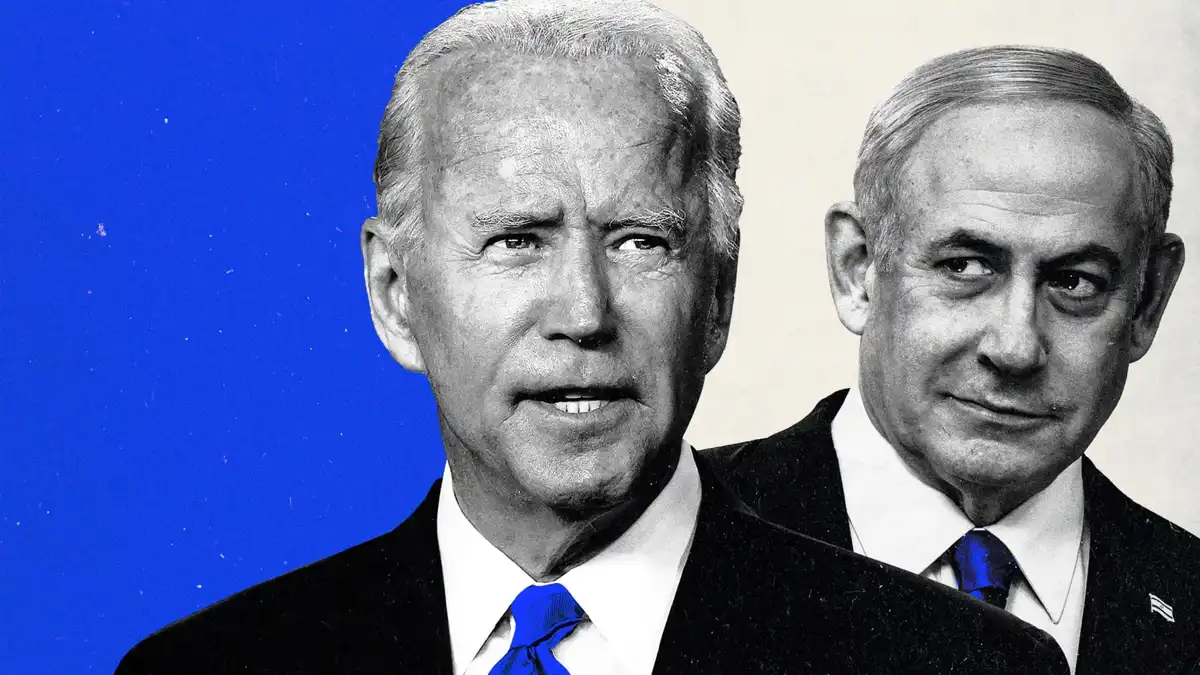
Newspaper: The Israeli attack on Gaza frustrates the White House

The American newspaper The Washington Post said in a report titled “The White House is frustrated by Israel’s attack, but sees few options.” The White House is frustrated by the Israeli attack, but sees only limited options.


The newspaper close to the Biden administration explained in its report that the United States’ calls for a temporary halt to the bombing have little effect, and the shape of the post-war Middle East is very uncertain.


According to the journalist, the administration of US President Joe Biden has come to feel that it is cornered, and it currently finds itself in a dangerous situation due to the continuation of this war.


According to the newspaper, administration officials say that the Israeli counterattack against Hamas has been severe and extremely costly in terms of civilian casualties, and lacks a coherent end and vision, but they are “unable to exert significant influence on America’s closest allies in the Middle East to change its course.” ".


According to the newspaper, “tension between the American administration and Israel has emerged recently, due to the failure of American efforts to persuade Israel to reduce its counterattack in response to the attack carried out by Hamas on October 7, which left at least 1,400 people dead, according to the Israeli authorities.”


The newspaper explains, "The Biden administration urged Israel to refrain from a ground invasion of Gaza, and specifically asked it to observe proportionality in its attacks, and called for giving a higher priority to avoiding the killing of civilians, and called for a humanitarian truce, but Israeli officials reject all of these calls."


The newspaper says, “The Israeli determination to continue the invasion of Gaza has prompted the Biden administration, as the newspaper indicated, to urgently seek to calm anger in the Arab world by making clear, publicly and privately, that the United States feels deeply saddened by the suffering in Gaza,” but Arab leaders were not “affected” by these guarantees, which makes the shape of the post-war Middle East, and the role of the United States in it, highly uncertain.


Experts believe that tension has begun to increase between the US administration and Israel, coinciding with the increased risk of collision between Washington's two crucial goals: eliminating Hamas and avoiding the outbreak of a regional war.


Experts also believe that “if the war expands to include Lebanese Hezbollah and other Iranian-backed groups, it will pose a serious threat to Israel, increase the risk of international terrorism, and will harm many American interests.”


It is noteworthy that Washington tried to quietly press for a more gradual approach to eradicating Hamas instead of launching a large-scale ground invasion, fearing that such large-scale operations would lead to a huge number of civilian casualties, according to statements from American officials before the start of the ground attack on November 29. the past.


The Washington Post claims that the Biden administration has achieved modest successes in its own discussions with Israel, according to a senior administration official who requested anonymity, including convincing Israel to restore communications and the Internet to Gaza at the end of last month, reopening water taps and persuading it to allow a small number Trucks carrying humanitarian aid enter through the Rafah border crossing in Gaza with Egypt.


When President Biden spoke with Israeli Prime Minister Benjamin Netanyahu last week, “he and his senior aides were able to secure a commitment to set a goal of allowing 100 trucks per day to pass through the Rafah crossing, which American officials say is now being achieved,” according to the newspaper.


However, the newspaper believes that these successes were overshadowed by the miserable failure of the United States to influence the course of the Israeli military campaign. Biden's senior aides have also been frustrated by the lack of clear answers from Israeli officials about the objectives of the operation and what they expect the future in Gaza to look like if they are able to succeed in their goal of destroying Hamas.

ARAB AND WORLD

Mon 06 Nov 2023 12:42 pm - Jerusalem Time

Hebrew Press| Obama slammed by Republican Jewish Coalition after likening 'what Hamas did' to 'unbearable occupation'

Although he allowed that there is no justification for Hamas's Oct. 7 terror attack on Israel, former US President Barack Obama appeared to equate the massacre to what he said was Israel's "unbearable" treatment of Palestinians.


In the interview on Pod Save America, a podcast run by four alumni of Obama's administration, the former president said, "If there is any chance of us being able to act constructively to do something, it will require an admission of complexity and maintaining what on the surface may seem contradictory ideas.


He went on to explain that "what Hamas did was horrific, and there is no justification for it. And what is also true is that the occupation, and what's happening to Palestinians, is unbearable."


Also true, he said, "Is that there is a history of the Jewish people that may be dismissed unless your grandparents, or your great-grandparents, or your uncle or your aunt tell you stories about the madness of antisemitism."


At the same time, he continued, "There are people right now who are dying who have nothing to do with what Hamas did."


"And what is true," Obama continued, "I mean, we can go on for a while."


He said that one can pretend but can't really speak the truth on social media. He added that "nobody's hands are clean" and that "all of us are complicit to some degree."


According to Matt Brooks, CEO of the Republican Jewish Coalition, it is Obama who is complicit.


When Israel faces "a barbaric attack from Hamas, Obama blames Israel," said Brooks.


"It is Barack Obama who is complicit in the death and suffering over the last month in Israel and in Gaza. His policies and those of President Joe Biden put billions of dollars into Iranian coffers, money used to fund and train Hamas and other terrorist groups whose stated goals are the destruction of Israel and the annihilation of Jews," he continued. "Obama's attempt to dilute his own culpability in this situation doesn't change the facts."


Gilead Ini, a senior research analyst at the Committee for Accuracy in Middle East Reporting and Analysis (CAMERA) watchdog, wrote that both the structure of Obama's comments and their timing were "amoral."


"The equivalence between Oct. 7 and a geopolitical conflict (one that's unsolved and no small part because Palestinian rejection of peace) minimizes the horrors of the former," wrote Ini. "We have most months of most years to pontificate about the occupation. Not now," he added.


"On the one hand, children, grandparents, and civilians [were] kidnapped, slaughtered en masse, burned and beheaded a few weeks ago. On the other hand, the land swaps in Olmert's 2008 peace offer left 0.7% difference between Israeli and West Bank lands exchanged. Stop," he said.


"Gaza, by the way, wasn't occupied on Oct. 6," he noted.


According to Israeli philosopher Yoram Hazony, it was Obama's "complexity" theory that led directly to the current situation in the Middle East.


"Yes, he's right about his own 'complicity.' He created this hell with his own hands," Hazony wrote. "Obama's theory of the 'complexity' of the Middle East – from which he concluded that Iran needs to be strengthened so it can 'balance' Israel," led directly to the current crisis, he continued.


Morton Klein, national president of the Zionist Organization of America, called the former president the "Israel-hater-in-chief," and Abraham Foxman, the former Anti-Defamation League leader, called Obama's remark that no one has clean hands "simplistic arrogance."

ARAB AND WORLD

Mon 06 Nov 2023 12:03 pm - Jerusalem Time

Queen Rania of Jordan: “Israel’s allegations are an insult to our minds.” She criticized the accusations of “anti-Semitism.”

Queen Rania Al Abdullah, wife of Jordanian King Abdullah II, wondered: How many people must die before our global conscience wakes up?? Or is this invalid when it comes to the Palestinians?”, in light of the ongoing Israeli aggression against the Gaza Strip, since the seventh of last October.


In an interview with CNN, Queen Rania denounced the "catastrophic humanitarian situation" in the Gaza Strip, and urged a collective call for a ceasefire.


She attributed the basic cause of this conflict to the illegal occupation. The basic reason for this conflict is the illegal occupation... routine human rights violations, illegal settlements, and disregard for United Nations resolutions and international law. “If these core causes are not addressed, you can kill the warrior, but you can’t kill the cause.”


She said: It is infuriating when Israeli officials downplay Palestinian victims under the pretext that they are human shields. In a place like Jabalia, which is one of the most densely populated areas in Gaza, and Gaza itself is one of the most densely populated places on Earth, the death of civilians is not “unintentional.” Or "accidental", rather it is inevitable.


She added: There are about 10,000 martyrs in Gaza since the beginning of the war, about half of them children. These are not just numbers. Every one of these children meant everything to someone.

She emphasized that being supportive of the Palestinians does not mean anti-Semitism. In recent years, the accusation of anti-Semitism has been used as a weapon to silence any criticism of Israel. Defenders or supporters of Israel who cannot defend Israel’s actions or behavior resort to ending the dialogue by equating criticism of Israel with anti-Semitism.

During the interview, Queen Rania refuted Israeli claims that they are doing everything in their power to protect civilians in Gaza, saying: “When 1.1 million people have the choice between leaving their homes, or risking their lives, this is not protecting civilians, but rather forced displacement.” And even the areas that were requested (Israelis) are unable to resort to people - what they call “safe areas” were also bombed.”

She stressed the necessity of an immediate ceasefire, and that Israel must finally realize that if it wants its security, the surest path is peace, as the strongest army, the most capable intelligence services, the Iron Dome, or the separation wall will not protect Israel’s security, as much as peace. I believe this is the path we need to follow now.

"We have a long history of peaceful coexistence. Therefore, it is not about religion, it is about politics," she said.


PALESTINE

Mon 06 Nov 2023 11:59 am - Jerusalem Time

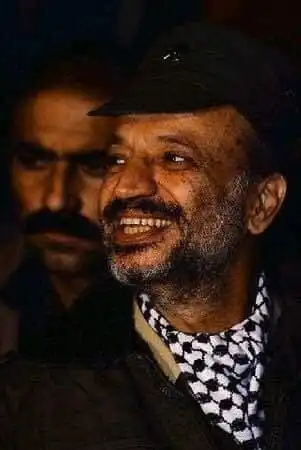
Yasser Arafat Foundation postpones commemoration of 19th anniversary of his death

The Yasser Arafat Foundation announced the postponement of the activities commemorating the 19th anniversary of the martyrdom of founding President Yasser Arafat “Abu Ammar”, including the ceremony to hand over the Yasser Arafat Achievement Award for the year 2023, to a later date, in view of the continued aggression of the Israeli occupation against our people in Gaza and the West Bank.


The Yasser Arafat Foundation said, in a press statement today, Monday, that the activities commemorating the nineteenth anniversary of the martyrdom of Abu Ammar will be limited to a pause to pray for his pure soul and the souls of the martyrs of our people, on Saturday, 11/11/2023, at one o’clock in the afternoon in the shrine square.

ARAB AND WORLD

Mon 06 Nov 2023 11:54 am - Jerusalem Time

The Biden administration's dilemma: continuing to support Israel or withdrawing the "blank check"?

Victor Chalhoub


With the passage of a month since the Gaza War, and exactly a year before the US presidential elections, the administration of President Joe Biden finds itself in a confusing situation, led to by wrong calculations. The Israeli military operation is faltering, and it has become difficult for Washington to market its continuation without a promising horizon, after it turned To a massacre that is raging in the world, especially the world of the Allies.


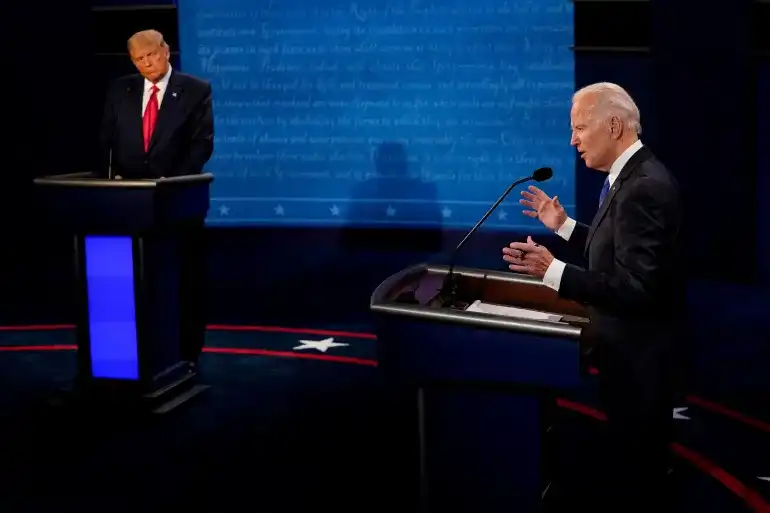
At the same time, the New York Times poll numbers revealed on Sunday that the president’s electoral situation is faltering, as his predecessor, Donald Trump, is ahead of him in five crucial states, and it is impossible for him to renew his presidency without winning them.


At this stage of the 2020 elections, Biden was ahead of Trump and remained ahead, but now the equation has been reversed, and the president’s open support for the wars in Israel and Ukraine may have contributed to exacerbating the decline in his already declining score for more than one reason, including objection to foreign wars, including the war Gaza, as recent figures revealed.


Barely half of Americans (51%) support supplying more weapons to Israel, and only 50% support the “method” of its military response to Gaza, according to a poll by Quinnipiac University, which is known for the accuracy of its polls in diagnosing the pulse of public opinion.

The president was not helped by his unlimited support for Israel, and these numbers have worrying electoral implications for the administration if the war is prolonged and its costs increase. This was reflected in the form of confusion over the past week, as if Washington was in a dilemma. It is neither able to bet on the promised Israeli military resolution in a not-too-distant time, nor to retract the “blank check” that it gave to Israel under the title of “its right, even its duty, to defend itself,” which practically means authorizing it to take open retaliation to restore dignity and restore balance in the region as it was until last October 6.


“This is its war and this is its decision,” US National Security Advisor Jake Sullivan said last week, contenting himself with other officials with reminding Israel, but without obligating it, that it must “protect civilians as much as possible.” This is an issue that was given mitigating reasons as a justification that wars have “collateral losses - civilian casualties” that are difficult to avoid, according to the Israeli ambassador to Washington, Michael Herzog, who stressed on Sunday that the military operation “is not limited by a time limit, and no one should urge us” to rush its end. , before “accomplishing our mission.”


His words were apparently directed at some American parties that began calling for a “truce,” such as Senator Chris Murphy, or that called for a “ceasefire,” such as Senator Richard Durbin, both of whom are Democrats, close to Biden, and influential in the Foreign Relations and Justice Committees. Two tasks in the Senate.


Arabic reports

Blinken fails to make progress on Gaza administration proposals

About a dozen Democrats in the House of Representatives have pushed for steps of this kind, in addition to a growing number of opinion and military, foreign, and security experts, who still doubt the ability to uproot Hamas. Doubts and fears increased after Israeli Minister Amichai Eliyahu recently called for the use of nuclear weapons, which suggested that resolving the confrontation with conventional war had become an unlikely issue, which necessitated the invocation of this destructive option that may be circulating in the kitchen of Israeli decision-making, even if only as a form of intimidation, similar to the president’s intimidation. Russian Vladimir Putin in his Ukrainian war. There was also renewed fear of the possibility of expanding the war if the military campaign in Gaza continued for a long time.


Against this background and in light of increasing domestic pressure (demonstrations increasing in size and participation in American cities, and even in the conservative South) and international, an urgent visit by Secretary of State Anthony Blinken to the region was decided to conclude a truce, which the administration claimed to “favor,” but the visit It was doomed to failure because it came first as a reaction to relieve pressure, rather than an attempt to catch a breath. On the other hand, because it left the right of veto on the issue to Israeli Prime Minister Benjamin Netanyahu, whose local calculations dictate that the raging war continue, until the goals he set for it are achieved.


It was noteworthy that the senior administration officials, Blinken, Austin and Sullivan, were absent from participating in the important Sunday news programs on the major television networks, as has been the custom in the past four weeks. In a circumstance of this kind, there is no explanation for this absence except that the administration has nothing to offer to justify the continuation of the war, and its lack of seriousness regarding the issue of a truce, which is the weakest of faith. 


That is why it contented itself with the participation of Sullivan's assistant, John Viner, in two programs, to celebrate the success of its efforts to secure the entry of humanitarian aid into the Strip, while promising to increase its flow and repeat the mantra of protecting civilians, in an attempt to turn the branch into the root of the crisis.

Source: Alaraby Al-Jadeed

PALESTINE

Mon 06 Nov 2023 11:54 am - Jerusalem Time

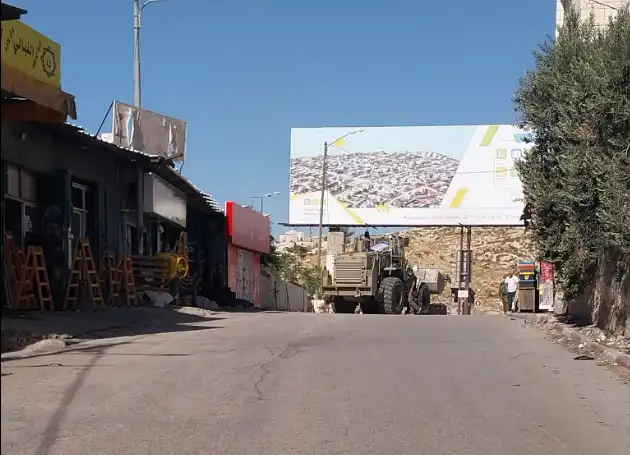
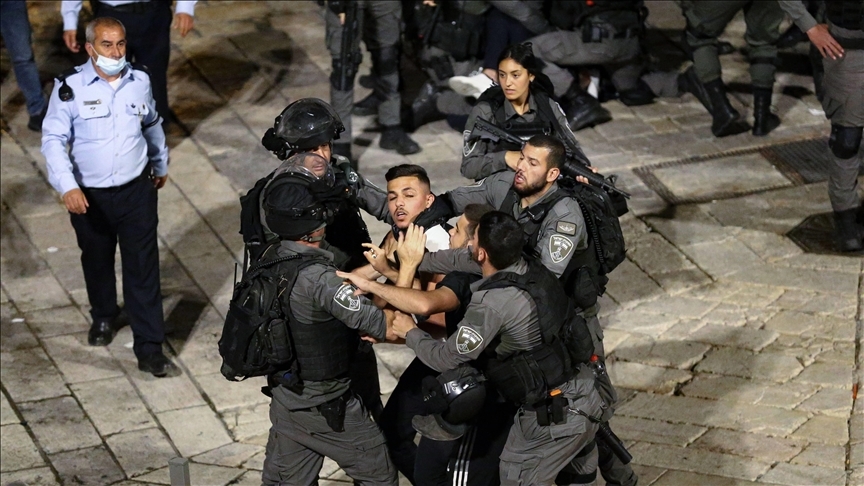
Jerusalem: Israeli army storms Al-Rashadiya School and closes the entrance to Hizma

Today, Monday, Israeli occupation forces stormed Al-Rashadiya School, near Bab Al-Sahira in occupied Jerusalem, and arrested a student.


Local sources reported that the occupation forces stormed the school and arrested the student, Muhammad Youssef Hamed.


The Israeli occupation forces closed the northern entrance to the town of Hizma, northeast of occupied Jerusalem, with dirt barriers.


Local sources in Hizma reported that the occupation forces stormed the town accompanied by a military bulldozer, and closed its northern entrance with dirt barriers.


PALESTINE

Mon 06 Nov 2023 11:49 am - Jerusalem Time

Israeli Minister demands that Palestinians be prevented from picking olives

The Israeli government approves regulations allowing the closure of foreign television channels, claiming that they support the “enemy” during war. A Knesset committee approved a draft law imposing one year in prison on someone who “systematically consumes” resistance videos.


Today, Monday, the Israeli government took steps to confirm that it is following a policy of retaliatory collective punishment targeting Palestinian civilians, in light of the war it has been waging in the Gaza Strip for a month.


The Israeli Minister of Finance and Minister in the Ministry of Defense, Bezalel Smotrich, called on both his Prime Minister, Benjamin Netanyahu, and the Minister of Defense, Yoav Galant, to prevent Palestinians in the occupied West Bank from picking olives.


In a letter he sent to them, Smotrich claimed that “cleared security zones (i.e. free of Palestinians) must be established around the settlements and roads, and Arabs must be prevented from entering them” to access their olive-cultivated lands.


He claimed that “the command of the central region of the Israeli army allows and even obligates the harvesting of olives, by allocating many forces to this mission. This is madness that I can never agree to. I will not agree to another blood being shed on my conscience due to the insistence on not absorbing the events of Bahjat Torah (attack). Hamas in the Gaza Strip on October 7) in Judea and Samaria as well.”


Smotrich demanded that the Mini-Ministerial Council for Political and Security Affairs (Cabinet) discuss, this week, the preparations of the occupation forces in the West Bank in detail, especially “the scenario of reversing the situation by the Palestinian Authority.”


In another step, the Israeli government approved, during a telephone referendum today, regulations that allow inspectors from the Ministry of Communications and the police to close foreign television channels, claiming that they support the “enemy” during the war.


In a third step, the Law and Constitution Committee in the Knesset today, Monday, approved a draft law imposing a one-year prison sentence on a person who “systematically consumes” video clips issued by the Hamas movement and the resistance factions, which include praise for the movement, solidarity with it, and encouragement of its operations, in preparation for voting on the draft. The law passed the second and third readings.


According to the draft law, “consuming publications spontaneously, innocently or for a legitimate purpose is not prohibited.”

ARAB AND WORLD

Mon 06 Nov 2023 11:44 am - Jerusalem Time

Mounting American pressure on Egypt to receive refugees from Gaza is met with rejection from military

A press report reveals a “strict rejection” in the Egyptian military establishment of Washington’s efforts to persuade Cairo to receive refugees from the besieged Gaza Strip, in light of the temptations and facilitations offered by the American administration and Western parties to the Egyptian regime.


US Secretary of State, Anthony Blinken, failed to reach understandings with Arab foreign ministers in Amman, yesterday, Sunday, on “one agreed upon vision” regarding the management of the besieged Gaza Strip after the war that Israel has been waging for 31 days on the Gaza Strip, while He renewed Washington's attempts to pressure Cairo to agree to receive refugees from the Gaza Strip, which was met with "strict rejection from the Egyptian military establishment."


This came according to what Al-Araby Al-Jadeed newspaper reported on Monday, citing Egyptian sources familiar with Cairo’s movements regarding the Israeli aggression, following the meeting that brought together Blinken with his Egyptian, Jordanian, Saudi, Qatari and Emirati counterparts in the Jordanian capital, with the participation of the Secretary of the Executive Committee of the Palestine Liberation Organization.


Blinken failed to discuss options for managing the sector

The sources pointed out that Blinken “failed to reach a single agreed-upon vision, due to the discrepancy in positions between Washington and some Arab parties attending the meeting,” while an Egyptian diplomat who spoke to the newspaper explained that Blinken’s visit to Amman was primarily aimed at discussing “scenarios for managing the Gaza Strip in Following the end of the Israeli aggression.”


He explained that Blinken's efforts were rejected by 3 parties participating in the meeting, and the Egyptian diplomat indicated that "some participants assured Blinken of the impossibility of completely eradicating the Hamas movement from Gaza, which means that the war must end first, so that thinking can begin in light of Its results, and an estimate of the magnitude of the force of the movement at that time.”


The newspaper quoted another source as saying that Cairo had received “a new proposal regarding hosting numbers of residents of the Gaza Strip,” saying that “the new proposal came beyond Egyptian fears, announced through officials in Cairo, about the possibility of those who will move from the Gaza Strip to Sinai representing a subsequent threat to Egyptian security.” If they launch attacks on the Israeli occupation from within Egyptian territory.”


The source explained, "The new proposal included transferring the numbers that could be agreed upon to the west of the Suez Canal by distributing them to the canal governorates, represented by Port Said, Suez, and Ismailia, and not to the east of the canal as was proposed to settle them in Sinai."


The source added, "All of these scenarios are met with strict rejection by the Egyptian military establishment, which refuses to respond to any of the proposals to resettle the population of the Gaza Strip or part of them in Egypt, regardless of the temptations and facilities offered by the American administration and Western parties."


The Al-Araby Al-Jadeed source revealed that “European circles have proposed, over the past few days, providing direct concessions to the Egyptian military establishment, in an attempt to move its position in favor of the proposals to dislocate the Gaza Strip for the benefit of Israel’s security.”


He explained that "Western proposals included supplying the Egyptian army with types of weapons that it had entered into negotiations over during the recent period, including air defense systems and American F-35 fighters, which are the fighters that Cairo had applied to obtain during the era of former US President Donald Trump." But that deal was halted after American circles and Israeli objections rejected it.”


The source stressed that the Egyptian military establishment “still categorically rejects the idea itself, despite the temptations offered to it in this regard,” as he put it. On the other hand, he pointed out that Tel Aviv and Washington “have not lost hope of passing their project aimed at dislocating the Gaza Strip.” And reduce the level of his threat to Israeli security.


Blinken: There will be no ceasefire until the Hamas leaders are eliminated

Returning to the foreign ministers’ meeting in Amman, an Egyptian diplomat said, “The majority of participants in the meeting confirmed that if there was something that could be agreed upon during this meeting, it was to stop the war as quickly as possible.”


He stated that Blinken “responded to that point with the difficulty of Israel stopping the war before arriving and eliminating the leadership of the Hamas movement in the Gaza Strip,” naming a number of them, most notably the head of the movement’s political bureau in Gaza, Yahya Sinwar, and Marwan Issa, who is known as the chief of staff of the Al-Qassam Brigades, the military wing of Hamas. He is also considered the second-in-command in the brigades, in addition to the commander-in-chief of the Al-Qassam Brigades, Muhammad Al-Deif.”


The source said, "The only part that can be said to have been agreed upon among those present is the increase in the number of infected people who must be removed from the Gaza Strip as soon as possible to receive treatment abroad."

PALESTINE

Mon 06 Nov 2023 11:34 am - Jerusalem Time

Israeli reports: US administration will demand that Israel stop the war during the next month

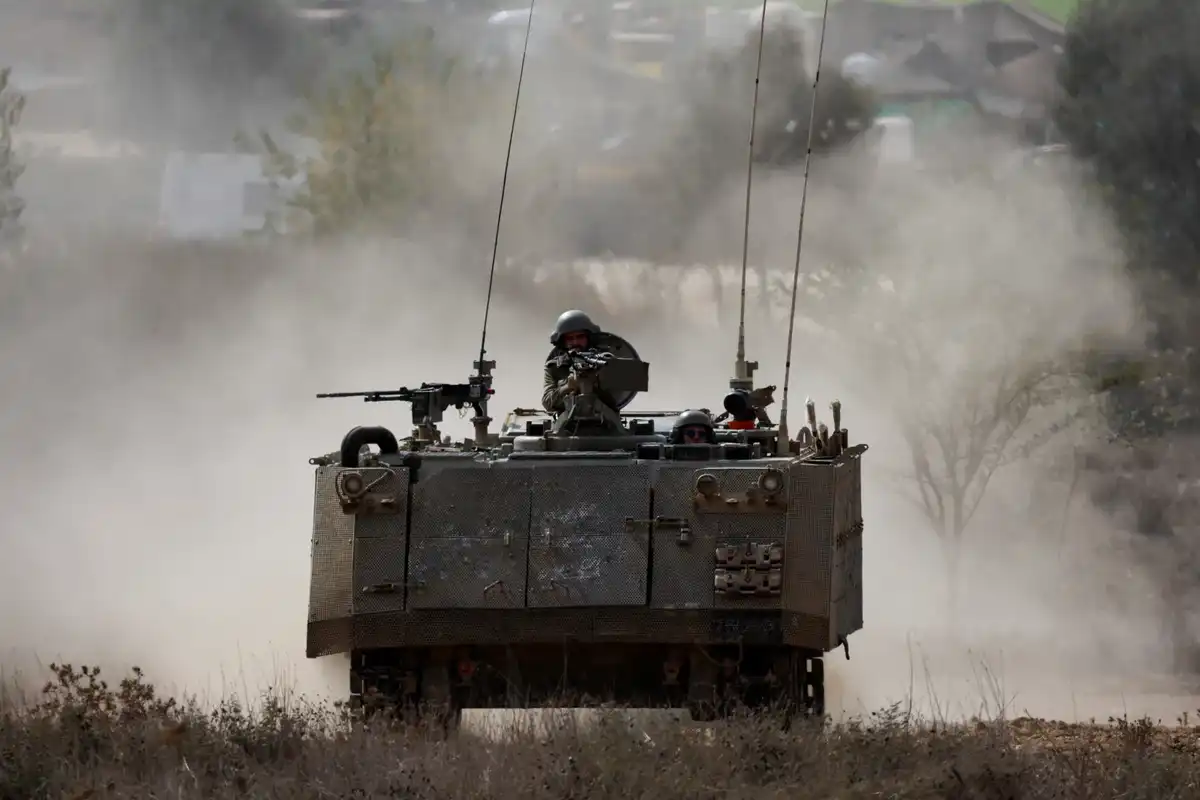
By winter, diseases and epidemics will spread in the Gaza Strip. The entry of the occupation forces into the heart of Gaza City will lead to the martyrdom of a large number of civilians. The occupation is advancing slowly for fear of losses among its ranks and Hamas targeting them with anti-tank missiles


The Israeli army claims that the intensified air strikes on Gaza yesterday were aimed at supporting its ground forces to continue advancing towards other areas, targeting Hamas tunnels in advance and trying to achieve “achievements.”


But Israel's estimates indicate that "Hamas is very far from its breaking point and it is of course not expected to raise a white flag," according to what the Maariv newspaper reported today, Monday.


The newspaper added that Israel expects the war on Gaza to continue for a long time, and its operations inside the Gaza Strip will be slow, claiming that accelerating them will pose a threat to the lives of its soldiers.


The newspaper pointed out that the “weak point” of Israeli forces in the Gaza Strip is the tunnels, “which make the fighting in the built-up area very complex, and while Hamas forces are trying to target the Israeli forces, through the tunnels, and pay them a price with deaths and injuries. Most of Hamas’ tactical successes were achieved by anti-armor shells.” ".


Israel  estimates that hundreds of thousands of Palestinian citizens are still present in Gaza City. In parallel, the Israeli campaign continues against hospitals in the Gaza Strip, claiming that Hamas is using them as shelters.


While Israel intends to move to other areas in the Gaza Strip, which will lead to the continuation of the war on Gaza for many months, the newspaper indicated that these occupation plans may clash with the position of the United States, which informed Israel that it must end the ground incursion within weeks.


According to the newspaper "Haaretz", "At the end of the thirtieth day of the war, it is better not to delude ourselves. Israel does not have unlimited time to fight Hamas. Even when the Prime Minister, the Minister of Security and other officials talk about a battle that will last as long as required, and they pledge to eliminate Hamas and kill Yahya Sinwar, the consequences of the war on the international arena cannot be completely ignored. There, the United States has considerations that it must take into account, despite its unprecedented political and military support for Israel.

The newspaper pointed out that American messages in this regard reach Israel from President Biden, the Pentagon, and Secretary of State, Anthony Blinken. The newspaper quoted Israeli officials familiar with these American messages as saying that the issue of the American administration losing its patience with Israel is “when.” It is estimated that the US administration will express its impatience to Israel during the period between Thanksgiving, on November 23, and Christmas Eve, on December 24.


The newspaper repeated American estimates that the administration is concerned about the lack of an Israeli plan to exit the war on Gaza. It added that Israeli Prime Minister Benjamin Netanyahu has long refused to discuss the situation to end the war.


Israeli  forces are still encircling Gaza City. The newspaper pointed out that “the forces’ incursion into the heart of Gaza City increases the risk of making mistakes. First, while rescuing a force, it will need air support that would target many (Palestinian) civilians. Second, because of the overcrowding in which the fighting is taking place, a larger number of civilians will be targeted.” ".


The newspaper added that the situation in the Strip will become more tragic with the advent of winter. Due to the massive destruction, the Strip will be filled with mud, and it will then be difficult to keep the water and sewage networks running. The bodies of the martyrs are still under the rubble, and this situation threatens the spread of diseases and epidemics. This danger also intensifies in the south of the Gaza Strip due to severe crowding as a result of displacement to this area.


Meanwhile, Israeli raids and artillery shelling on Lebanon, and the killing of civilians in particular, are pushing Hezbollah to escalate its attacks on the border areas. “Maariv” stated that Israeli estimates are that Hezbollah may “further escalate its reactions in the coming days, and according to developments in the war in Gaza. Expanding the firing of rocket shells to a greater range in the north of the country is a very reasonable possibility. If the fighting in Gaza continues for a long time, "The possibilities for further escalation will increase."


According to the New York Times, the Biden administration conveyed messages to Iran and Hezbollah, through regional mediators, including Turkey, that the United States is preparing to intervene militarily in the fight against them if they attack Israel.


Source: Arab48+agencies


ARAB AND WORLD

Mon 06 Nov 2023 10:32 am - Jerusalem Time

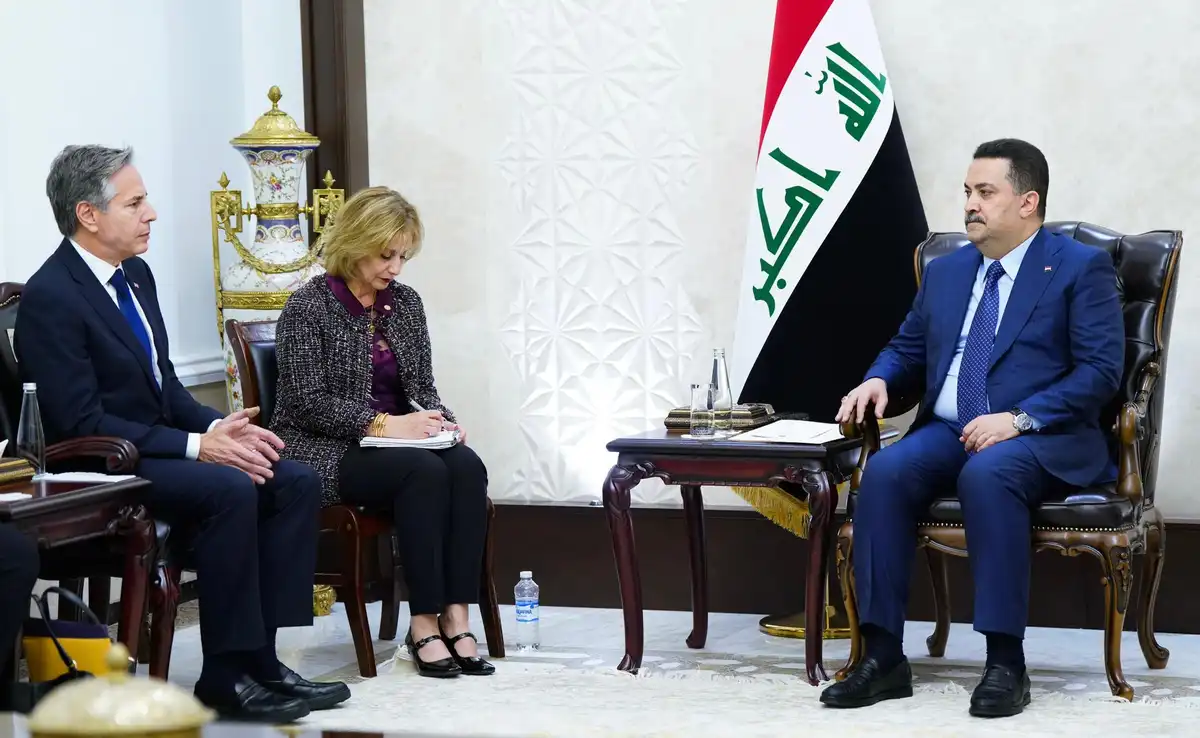
A new attack on "Ain al-Assad" base, day after Blinken's visit to Baghdad

Monday morning witnessed the targeting of the Ain al-Assad base, western Iraq, the day after US Secretary of State Anthony Blinken's visit to Baghdad, last Sunday night, and his warning to the authorities of continued attacks on American interests.


Two Iraqi officials in Baghdad confirmed that Blinken's visit to Baghdad, and his quick meeting with Prime Minister Muhammad Shiaa al-Sudani, was to deliver warnings about the continuation of attacks launched by armed factions allied with Iran on American interests in the country, and the possibility of Washington responding to them at any time.


Blinken's visit to Baghdad, which lasted a few hours and during which he wore a bullet-proof vest, a scene that Baghdad had not been accustomed to for years during visits by Western officials, was also considered an "intentional exaggeration" by Washington, which may have been directed at American and Western public opinion in general, and not Iraqi.


Today, Monday, an Iraqi government official told Al-Araby Al-Jadeed that Blinken asked Al-Sudani to “control armed factions,” adding in a phone call that Blinken informed Al-Sudani of hostile activities by armed factions affiliated with the “Popular Mobilization Forces” in Syrian territory, targeting American forces as well, warning of a broad American military response to them if these attacks cause any losses.


A member of the Iraqi parliament confirmed the same matter, indicating to Al-Araby Al-Jadeed that the Sudanese would discuss with the Iranians pressure on their allied factions to stop their escalation, stressing that “the American minister held the Sudanese responsible for putting an end to those factions before the American response to them, which is what the Sudanese will discuss in the Tehran during his visit today.


Al-Sudani arrived on Monday morning in the Iranian capital, Tehran, on an official visit, according to what his media office announced in a brief statement.


The representative of the “Coordination Framework” coalition, Muhammad Al-Sayhoud, confirmed that Iraq cannot submit to any pressure, whether from Washington or others, regarding what is happening in Palestine, and he said in a press statement, yesterday evening, Sunday, that “there is popular, governmental, and even political consensus.” , to condemn the genocide that is taking place against the Palestinian people,” pointing out that “this consensus may occur for the first time, especially with the presence of a unified vision regarding the Palestinian issue.”


In addition, US State Department spokesman Matthew Miller confirmed, in a statement, that “Blinken discussed with Al-Sudani in Baghdad the conflict between Israel and Hamas, and the need to prevent the spread of the conflict, including in Iraq,” stressing that “Blinken urged Al-Sudani to hold those responsible accountable.” On the ongoing attacks on American employees in Iraq, and to fulfill Iraq’s obligations to protect all facilities that host American employees at the invitation of the Iraqi government, stressing that “the United States will defend its interests and individuals.”


For his part, Iraqi political affairs researcher Firas Elias commented on Blinken’s visit, in his blog post on the “X” platform, saying: “Blinken’s visit to Baghdad on the eve of Sudanese’s departure for Tehran carries a clear message to Iran and its allies, especially after Iran’s support and the Lebanese Hezbollah.” For attacks on American interests in Iraq, and it may also carry American warnings to Iran, which will be conveyed by Sudanese regarding the necessity of maintaining calm and not escalation in the region.”


New targeting of Ain al-Assad base

On the ground, drones targeted, at dawn on Monday, the Ain al-Assad base, western Iraq, and Iraqi security sources in Anbar Governorate confirmed that “at least two aircraft targeted the Ain al-Assad base, and the sounds of ground anti-aircraft guns were heard from inside the base, and they were able to shoot down one of them outside the base, without knowing.” What resulted from the attack?


The "Islamic Resistance in Iraq" group had threatened to begin a new phase in "confronting the enemies, in support of Palestine," stressing that "the phase will be broader on their bases in the region."


ARAB AND WORLD

Mon 06 Nov 2023 10:29 am - Jerusalem Time

Blinken is in Türkiye to try to calm Ankara's anger

US Secretary of State Anthony Blinken began difficult talks in Turkey on Monday in an attempt to calm the anger of Ankara, a major strategic ally of the United States, over the ongoing war on Gaza.


On Monday, Blinken began his talks with his Turkish counterpart Hakan Fidan in Ankara.

Blinken's visit to Turkey, the first since Israel launched the war on Gaza in response to the Hamas attack on October 7, comes as the anger of Turkey and its President Recep Tayyip Erdogan with Israel and the West is mounting.


Police used tear gas and water cannons on Sunday to disperse hundreds of pro-Palestinian demonstrators in front of the Incirlik military base, which houses American weapons and forces, before Blinken arrived in Ankara.


Erdogan, for his part, chose to visit a remote area in the northeast of the country on Monday, in a decision that appeared to be a boycott of Blinken.

Blinken's talks with his Turkish counterpart were expected to be difficult even before Israel launched continuous bombing and a massive ground campaign aimed at "eliminating" Hamas.


The Hamas Ministry of Health reported that at least 9,770 people were killed during more than four weeks of the ongoing war on Gaza.

At least 1,400 people have been killed in Israel, according to the authorities, since the attack, the majority of whom were civilians who died, especially on the first day of the movement’s attack, which also took 241 hostages, according to the army.


This war may have major repercussions on relations between Washington and Turkey, both members of the North Atlantic Treaty Organization (NATO) and involved in Middle East conflicts.


"Crocodile Tears"

Washington is waiting for the Turkish Parliament to give the green light for Sweden to join NATO.


The United States has tightened sanctions on Turkish individuals and companies suspected of helping Russia circumvent sanctions and import equipment used in its war efforts against Ukraine.


Ankara is dissatisfied with the delay of the US Congress in approving an agreement supported by President Joe Biden that aims to modernize the Turkish Air Force with F-16 fighter jets.


Ankara has long had reservations about US support for Kurdish forces in Syria that have led the fight against ISIS jihadists, and which Ankara views as linked to the Kurdistan Workers' Party, banned in Turkey.


Ankara intensified its air strikes against Kurdish targets in Syria and Iraq in response to an attack in the Turkish capital in October, for which the Kurdistan Workers' Party claimed responsibility, during which two militants were killed.


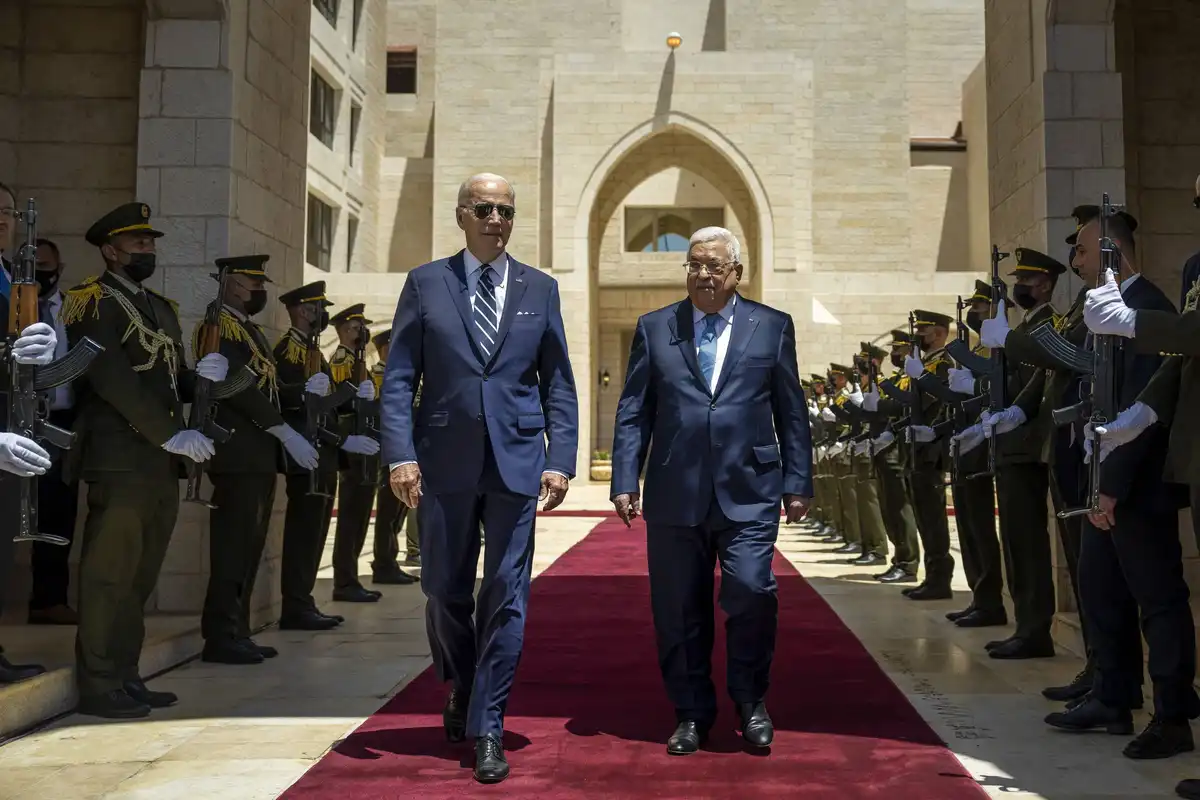
Blinken's visit comes after his quick tour in the Middle East, which included the occupied West Bank, where he held talks on Sunday with Palestinian Authority President Mahmoud Abbas.


The US Secretary of State is facing calls from Arab countries to support an immediate ceasefire.


Israel says it may accept a humanitarian truce to allow additional aid shipments in once Hamas frees the hostages.


Blinken offered his support for the Israeli position while trying to assure regional players that Washington is focused on alleviating human suffering.


Erdogan said on Sunday that it is Turkey's "duty", as a supporter of the establishment of an independent Palestinian state, to seek to stop the violence immediately.


On Sunday, Erdogan indicated that his country is “working behind the scenes” with its regional allies to try to ensure a continuous flow of humanitarian aid to Gaza.


But he cut off all contact with Prime Minister Benjamin Netanyahu and summoned Ankara's ambassador to Israel in protest against what is happening in Gaza.


Also, the Turkish President accused the West of double standards in the region. "Those who were shedding crocodile tears over the civilians killed in the war between Ukraine and Russia are today silently bearing witness to the killing of thousands of innocent children," he said last month.


PALESTINE

Mon 06 Nov 2023 10:20 am - Jerusalem Time

Israeli army carries out a new arrest campaign in the West Bank, targeting about 70 Palestinians

The total number of arrests after October 7 reached 2,150.


Last night and at dawn on Monday, the Israeli occupation forces launched a massive arrest campaign, targeting about (70) citizens of the West Bank, including two women (Manal Doudin and Muntaha al-Taweel, the wife of the prisoner Jamal al-Taweel), and the girl (Ahed Tamimi). The arrest operations were concentrated in Jerusalem and its suburbs. God, while the rest of the arrests were distributed among the governorates of: Hebron, Qalqilya, Tulkarm, Jenin, and Nablus, this was accompanied by attacks against the detainees and their families, in addition to acts of sabotage and destruction inside homes, which come within the framework of the comprehensive aggression against our people, and collective operations of revenge.


Thus, the total number of arrest campaigns carried out by the occupation after the seventh of last October amounted to (2,150) arrests, and this number does not include detainees from Gaza, including workers detained to this day, and those who were arrested from the West Bank later, and included the ongoing arrest campaigns. All groups, including children, the elderly, women, and hundreds of former prisoners who spent years in Israeli occupation prisons.


It is noteworthy that the arrest campaigns carried out are followed by threats to the families of citizens demanding that the occupation surrender themselves, as the arrests of family members as hostages constituted one of the most prominent systematic policies followed by the occupation after October 7, in addition to arrests at checkpoints and summonses.


OPINIONS

Mon 06 Nov 2023 10:09 am - Jerusalem Time

Israel-Palestine war: Israel's endgame is much more sinister than restoring 'security'

Richard Falk/ Middle East Eye

Richard Falk/ Middle East Eye

Opinion Writer

Israel has seized this opportunity to fulfill Zionist territorial ambitions amid 'the fog of war' by inducing one last surge of Palestinian catastrophic dispossession


UN Secretary General Antonio Guterres was recently pilloried by Israel because he stated a truism, observing that the 7 October Hamas attack “did not happen in a vacuum”. Guterres was calling the world’s attention to Israel’s long record of severe criminal provocations in occupied Palestine, which have been occurring ever since it became the occupying power after the 1967 war. The occupier, a role expected to be temporary, is entrusted in such circumstances with upholding international humanitarian law by ensuring the security and safety of the occupied civilian population, as spelled out in the Fourth Geneva Convention. 


Israel reacted so angrily to Guterres’s entirely appropriate and accurate remarks because they could be interpreted as implying that Israel “had it coming” in view of its severe and varied abuses against people in the occupied Palestinian territories, most flagrantly in Gaza, but also in the West Bank and Jerusalem. After all, if Israel could present itself to the world as an innocent victim of the 7 October attack - an incident that was itself replete with war crimes - it could reasonably hope to gain carte blanche from its patrons in the West to retaliate as it pleased, without being bothered by the restraints of international law, UN authority, or common morality. 

Indeed, Israel responded to the 7 October attack with its typical skill in manipulating the global discourse that shapes public opinion and guides the foreign policies of many important countries. Such tactics seem almost superfluous here, as the US and EU swiftly issued blanket approval for whatever Israel did in response, however vengeful, cruel or unrelated to restoring Israeli border security. Guterres’s UN speech had such a dramatic impact because it punctured Israel’s balloon of artfully constructed innocence, in which the 7 October attack came out of the blue. This exclusion of context diverted attention from the devastation of Gaza and the genocidal assault on its overwhelmingly innocent, and long-victimized, population of 2.3 million.


Extraordinary lapses

What I find strange and disturbing is that, despite the consensus that the Hamas attack became feasible only because of extraordinary lapses in Israel’s supposedly second-to-none intelligence capabilities and tight border security, this factor has rarely been discussed since that day. Instead of the morning after being filled with vengeful fury, why wasn’t the focus within Israel and elsewhere on taking emergency action to restore Israeli security by correcting these costly lapses, which would seem to be the most effective way to ensure that nothing comparable to 7 October could happen again? 

I can understand Israeli Prime Minister Benjamin Netanyahu’s reluctance to stress this explanation or advocate this form of response, as it would be tantamount to a confession of his personal co-responsibility for the tragedy traumatically experienced by Israel when Palestinian fighters flooded over the border. 


But what of others in Israel, and among its supporting governments?

Undoubtedly, Israel is in all likelihood devoting all means at its disposal, with a sense of urgency, to close these incredible gaps in its intelligence system, and to beef up its military capabilities along Gaza’s comparatively short borders. It is not necessary to be a security wonk to conclude that dealing reliably with these security issues would do more to prevent and deter future Hamas attacks, than this ongoing saga of inflicting devastating punishment on the Palestinian population of Gaza, very few of whom are involved with the military wing of Hamas. 


Genocidal fury

Netanyahu has lent further plausibility to such speculation by presenting a map of the Middle East without Palestine included, effectively erasing Palestinians from their own homeland, during a September UN speech, where he spoke of a new peace in the Middle East amid the prospect of Israel-Saudi Arabia normalization. His presentation amounted to an implicit denial of the UN consensus on the two-state formula as a roadmap for peace. Meanwhile, the genocidal fury of Israel’s response to the Hamas attack is enraging people across the Arab world, and indeed the world over, even in western countries. 

But after more than three weeks of merciless bombardment, total siege and mass forced displacement, Israel’s discretion to unleash this torrent of violence on Gaza has yet to be challenged by its western supporters. The US in particular is backing Israel at the UN, using its veto as needed in the Security Council, and voting with almost no solidarity from major countries against a ceasefire at the General Assembly. Even France voted for the General Assembly resolution, and the UK had the minimal decency to abstain, both likely reacting pragmatically to the populist pressures mounted by large and angry street demonstrations at home. 


It has also been forgotten in reacting to Israel’s tactics in Gaza that from day one, the extremist government has initiated a shocking series of violent provocations across the occupied West Bank. Many have interpreted this undisguised unleashing of settler violence as part of the endgame of the Zionist project, aimed at achieving victory over the remnants of Palestinian resistance. 

There is little reason to doubt that Israel deliberately overreacted to 7 October by immediately engaging in a genocidal response, particularly if its purpose was to divert attention from the escalation of West Bank settler violence, exacerbated by the government’s distribution of guns to “civilian security teams”. The Israeli government’s ultimate plan seems to be to end once and for all UN partition fantasies, lending authority to the Zionist maximalist goal of annexation or total subjugation of West Bank Palestinians.

In effect, as morbid as it seems, the Israeli leadership seized the occasion of 7 October to “finish the job” by committing genocide in Gaza, under the guise that Hamas was such a danger as to justify not only its destruction, but this indiscriminate onslaught against the whole population.

My analysis leads me to conclude that this ongoing war is not primarily about security in Gaza or security threats posed by Hamas, but rather about something much more sinister and absurdly cynical. Israel has seized this opportunity to fulfill Zionist territorial ambitions amid “the fog of war” by inducing one last surge of Palestinian catastrophic dispossession. Whether it is called “ethnic cleansing” or “genocide” is of secondary importance, although it already qualifies as one of the biggest humanitarian catastrophes of the 21st century. 


In effect, the Palestinian people are being victimized by two convergent catastrophes: one political, the other humanitarian.

ARAB AND WORLD

Mon 06 Nov 2023 9:57 am - Jerusalem Time

Israeli doctors petition for Gaza hospitals to be bombed

Dozens of Israeli doctors told the Israeli army to bomb Gaza's hospitals, saying "the people of Gaza" had "brought their annihilation upon themselves" by allowing hospitals to become "nests of terrorists."


[The Hippocratic oath governing the duties of the doctor dates back to the 4th century BC... Obviously the colonial, racist and genocidal state has not yet arrived at this level of civilization - Editor's note]


Last week, dozens of prominent Israeli rabbis had already assured Israeli leaders that they had the right to bomb al-Shifa' hospital in Gaza, and this week's letter, signed by Doctors for the Rights of IDF Soldiers, urges the bombing of all hospitals in the Gaza Strip.


The letter states, in no uncertain terms, that due to suspicions of “terrorist activity, hospitals are “a legitimate target for annihilation.” They claim that “the ambulances which evacuate patients to the south for treatment elsewhere are at their disposal”.


They do not mention that these ambulances are like the rest being bombed by Israel, nor that the south is also subject to merciless shelling.


Doctors claim that “the people of Gaza…are the ones who brought about their annihilation” – echoing the genocidal rhetoric of Israeli politicians who have even claimed that “the children of Gaza brought about this annihilation.”


Doctors use the terms “snakes,” “wasps” and “terrorist nests” to dehumanize the enemy, which seems to extend from the Hamas movement to the entire Palestinian people.


The original letter with an initial list of 9 doctors was published today by Quds News Network, and has already been signed by 83 other signatories and has been distributed by various Orthodox Jewish sites (such as here and here).


We have identified the first 9 signatories below, which include various gynecologists and pediatricians, several of whom have an obvious religious-Zionist leaning and affiliation (see some details in parentheses in the list of signatories):


We the undersigned :

Dr. Tal Nir [voted “most dedicated doctor” in COVID in 2021, Orthodox Jew and member of Chabad]

Dr. Audray Azran [Gynecologist, Haifa]

Shlomi Ben-Nun [pediatrician, retired in 2022, Afula]

Hannah Katan [Religious-Zionist gynecologist, founded the Elkana Colony Family Center, of which she is president]

Ori Attias [pediatrician, intensive care, Rambam Hospital, Jerusalem]

Hannah Kremer [family doctor at Elkana Colony Clinic]

Dr. Yeruham Priner [pediatrician, Beitar Illit colony]

Dr. Carmit Almog [specialized in nephrology, hypertension, Rabin Medical Center, Tel Aviv region]

Menuha Vilk [pediatrician, Jerusalem]


Gaza's health system has collapsed

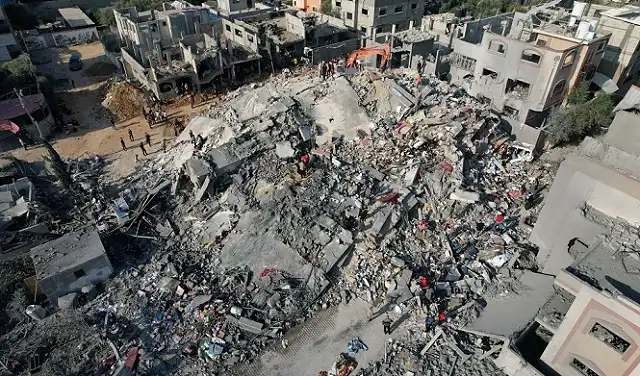
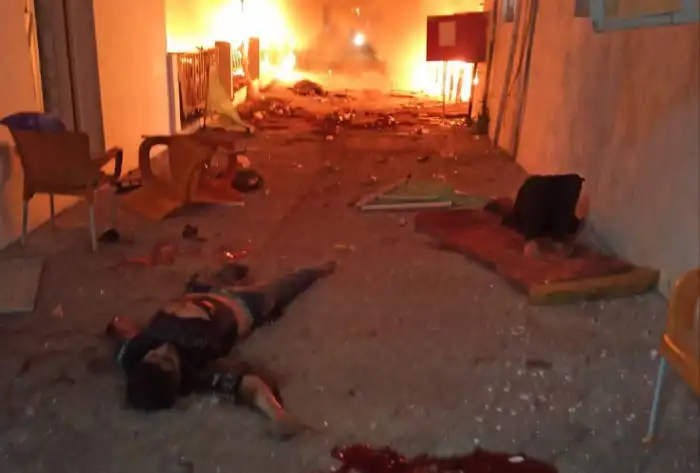
The occupying army has already targeted ambulances and hospitals, committing numerous massacres against the population of Gaza, with the death toll exceeding 9,500.


On Thursday, the director of Al-Shifa Hospital said electricity had been cut off in some sections of the hospital due to fuel exhaustion.


Following Israeli Prime Minister Benjamin Netanyahu's meeting with US Secretary of State Antony Blinken in "Tel Aviv", several Israeli media outlets quickly reported, citing Mr. Netanyahu's office or internal sources, that the decision to prohibit the entry of fuel into the Gaza Strip remained unchanged.


Electricity, clean water and fuel have all run out, and there are no more medical supplies or basic treatments. Dozens of hospitals and medical centers have been closed, meaning patients must be transferred to remaining hospitals, which are already overloaded.


The World Health Organization said Thursday it was virtually impossible to transfer medical supplies to hospitals and condemned the lack of security guarantees for sending humanitarian aid to the Gaza Strip.


Author: Tali Shapiro and  Jonathan Ofir

OPINIONS

Mon 06 Nov 2023 9:42 am - Jerusalem Time

The End of Israel’s Gaza Illusions This War Is Unlike Any Other—and Must Begin at Home

Ramallah - “Al-Quds” dot com

Ramallah - “Al-Quds” dot com

Opinion Writer


By Assaf Orion


In the nearly four weeks since Hamas’s heinous October 7 attacks, Israel has begun a deep transformation that will be felt for years to come. As Israeli forces embark on the more difficult stages of a ground campaign to defeat Hamas, two themes have become particularly important. First, it is crucial to understand that this is not just another round of conflict in Gaza. To be successful, the country must countenance a war of exceptional scope and difficulty that could last for many months. 

Israel will have to deploy military strategies drawn from long-war paradigms alongside a multiyear counterinsurgency campaign that also leverages diplomatic, informational, and economic tools. In this comprehensive mission, Israeli forces can learn much from prior campaigns, including some from earlier eras in the country’s history. But they will also need to be resolute, patient, and nimble in fighting a war that in many ways will be different from any previous one Israel has fought. 

The second insight is that the horrific massacre of at least 1,200 Israelis by Hamas death squads marked a catastrophic collapse of Israel’s existing security strategy. The failure of Israeli intelligence and security forces and of their overseers in the government cannot be overstated. The old deterrence model—which assumed that Hamas could be contained through defensive technology and occasional limited and indecisive deterrence operations in Gaza—is dead. The Israeli defense establishment will have to consider bold new approaches at every level to prevent such disasters in the future. Never again.


In this regard, Israel’s political and security leadership has much to answer for. Although the full details have yet to be uncovered, stark findings have already come to light. Potential warning signs were ignored, dismissed, or downplayed, and misguided security priorities may have made the attack more deadly. In addition to a comprehensive postwar inquiry about what went wrong, the Israeli public will demand a full accounting from Prime Minister Benjamin Netanyahu about his own role in the debacle. 

Much will depend on how well Israel can achieve its difficult war goals against Hamas and how quickly it can create a new and effective security paradigm in the conflict’s wake. Beyond Gaza, Israel will need to address the broader network of threats and armed groups backed by Iran now menacing the country on multiple fronts. These include threats from Iraq, Lebanon, Syria, and Yemen, as well as from within the Palestinian population in the West Bank.


THE DETERRENCE DELUSION

The deterrence model that previously guided Israeli security policies toward Gaza took shape over many years. After Israel disengaged from Gaza in 2005 and Hamas forcefully took control of the strip in 2007, the Israeli government sought to contain Hamas and Palestinian Islamic Jihad (PIJ), relying on intelligence early warnings, strong border defenses, and the occasional use of force to deter further aggression. Fairly frequently, flare-ups would arise that escalated to larger military conflicts, as was the case in 2006, 2008, 2012, 2014, 2021, 2022, and May 2023. In each of these operations, it became clear that Hamas was acquiring stronger and better weapons, including longer-range rockets with larger warheads, along with drones that could pose aerial and naval threats.

It was also apparent that Hamas was building a large and increasingly sophisticated network of underground tunnels. During each conflict, Hamas did its best to punch through Israel’s defenses and reach the communities around Gaza’s border. But Israel’s antirocket defenses also improved, as did its antitunnel defenses, and these Hamas operations mostly failed—on the ground, underground, in the air, and at sea.  Despite Hamas’s growing capabilities, these failures convinced Israel that its defense strategy was working: Hamas was unable to effectively strike Israel’s population; and it faced significant retribution for attempting such strikes and could be rewarded with material support for keeping calm. 

Israeli officials also concluded that trying to destroy Hamas’s forces outright would be too costly and might create dangerous new problems. That assumption was widely shared by Western officials: toppling Hamas, they feared, would result in a power vacuum that Israel would have to fill by directly ruling Gaza—a prospect that Israel has long shunned. Limiting conflict with Hamas served Netanyahu’s goal of splitting the Palestinians. Thus, the Israeli government kept conflicts with Hamas limited in scope and generally fairly short. Each flare-up lasted between several days and a few weeks—the 2014 conflict lasted almost two months—and usually ended with some kind of cease-fire arrangement mediated by Egypt and combined with economic measures. 

This limited-conflict concept, combined with Israel’s tacit acceptance of Hamas rule in Gaza, also served Netanyahu’s goal of splitting the Palestinian system: by allowing Hamas to maintain control of the strip, Israel could weaken the Palestinian Authority (PA) in the West Bank and sidestep a political dialogue with it. But this approach also allowed Hamas, supported by Qatar, to acquire the resources it needed to transform its military into a highly capable army of terror. 

Despite the growing threat of Hamas’s rocket arsenal, for example, Israel chose not to forcefully disrupt Hamas’s weapons programs except during these intermittent, short-lived conflicts. In between, Hamas continued to develop new strategies to challenge Israel without crossing the threshold into a wider escalation. For example, beginning in 2018, Hamas began organizing the so-called Marches of Return—encouraging large numbers of Palestinians to gather near the border fence with Israel. Viewed in the West as demonstrations against Israel’s blockade of Gaza, these marches provided a way for Hamas to cover up its military activities. Hamas embedded its armed fighters in the crowds, using them as a cover to reach the border fence and try to launch attacks against units of the Israel Defense Forces and Israeli communities near Gaza.

The IDF was able to repel these attackers and prevent a border breach by dispersing the crowds with nonlethal weapons and targeting the leaders, killing hundreds over many months. Yet the marches also provided a way for Hamas fighters to prepare for its October 7 offensive. Thus, in the weeks before the October massacre, there were again large gatherings of people near the border fence. Six Gazans died when an explosive device blew up on September 13 in what was very likely part of the preparations for the attack. Also in the weeks before the October 7, tractors were brought to the border area under the pretext of agricultural work and to prepare for the border protests. 

Later, these tractors would be used to tear down the fence and open the way for Hamas’s death squads.


A DOUBLE RECKONING

On the morning of October 7, the last day of Sukkot, the Feast of Tabernacles, Israel woke up to a double catastrophe. The attack by about 3,000 Hamas terrorists against Israel’s southern communities and defense forces was utterly devastating for the Israeli population, leaving at least 1,200 Israelis dead and more than 240 kidnapped in Gaza. But it was also devastating for Israeli defense policy. The government and security establishment had failed to prevent a well-known extremist group—one that it had been closely monitoring for many years—from carrying out horrific atrocities against Israeli civilians. The terrorists rampaged for hours through dozens of communities, shattering Israelis’ sense of security across the country. First responders heroically fought the attackers, many paying with their lives, but several hours passed before a more organized military response was able to reach the attacked communities. For many victims, it was too late. 

Almost instantly, the concepts, policies, and beliefs that had for so long governed Israeli security doctrine came crashing down. Among them were the assumptions that the Palestinian conflict could be contained, that Hamas had put its own governance and the economic well-being of the Gaza Strip ahead of its jihadi ideology and its genocidal plans for Israel, and that simply having a far stronger military than Hamas’s was sufficient. It had become almost axiomatic that simply employing advanced ground and air defense technologies, such as the border fence and Iron Dome, with occasional recourse to airstrikes from the outside, could prevent major attacks, allowing Israelis to contain Hamas with moderate costs and relatively limited manpower. 


Israelis know there is no going back to the old model. On November 1, the Hamas politburo member Ghazi Hamad said that Hamas will repeat such attacks until Israel is annihilated. Unless Hamas is neutralized, the horrors of October 7 could be visited upon every home in the country. Therefore, unlike in any previous Gaza campaign, Israeli forces must not just reestablish deterrence but eliminate the Hamas threat entirely.

Since the attacks, this campaign has steadily advanced, step by step. In the days after the attacks, Israel’s Southern Command closed the Gaza border, preventing additional attacks into Israel and capturing or killing any terrorists remaining on Israeli land. Central Command began arresting hundreds of Hamas members in the West Bank, where Hamas seeks to undermine the PA and promote terror against Israel, and foiling active threats from Palestinian cities and refugee camps. Meanwhile, the Israeli air force has been hitting thousands of Hamas targets in the Gaza Strip. 

Finally, on October 27, Israeli ground forces entered Gaza and began slowly advancing toward Gaza City, the center of Hamas’s political organization and terror army.  At the same time, Israel continues to face rocket and missile fire from Gaza, Lebanon, Syria, and even Yemen. The IDF’s Northern Command is engaged in continuous exchanges with Hezbollah on the northern border with Lebanon, where Hezbollah has been launching rockets missiles, drones, and deploying snipers at Israeli forces, positions, aircraft, and occasionally civilian communities, in an effort to divert Israeli defense resources away from Gaza. Since October 7, more than 50 Hezbollah fighters have been killed, as well as about a dozen Hamas and PIJ fighters who had been attacking alongside Hezbollah. Meanwhile, Yemen’s Houthis have fired drones and cruise and ballistic missiles, most of which have been intercepted by Israel, Saudi Arabia, and the United States. Israeli border communities have been evacuated, and sirens frequently send people into shelters and safe rooms across the country. These threats will continue for the foreseeable future.


MONTHS, NOT WEEKS

As Israel begins large-scale ground operations in Gaza, it is crucial to recognize that it will be impossible to defeat Hamas quickly. In contrast to most previous Israeli operations since the First Lebanon War in 1982, a long campaign will be necessary to degrade, isolate, and, over time, eradicate Hamas from Gaza, just as it took years for the U.S.-led coalition to deliver an enduring defeat of the Islamic State (or ISIS) in Syria and Iraq. To achieve lasting results, moreover, a long war cannot rely exclusively on force. It must include diplomatic, informational, legal, and economic efforts, supported by both regional and international partners.

Israel, then, will not be able to model its current campaign against Hamas on previous operations in Gaza. Instead, Israeli strategists will need to draw inspiration from the longer conflicts in Israeli history, including the 1948–49 War of Independence, the 1967–70 War of Attrition, and Operation Defensive Shield in 2002, which sought to uproot the threat of terrorism from the West Bank, after hundreds of Israelis were killed in the second intifada.

These long wars provide relevant lessons in how to conduct such a campaign. This is a model of war that involves continuous, full-mobilization and whole-of-society efforts in which military actions of varied intensity are conducted across multiple fronts and results are delivered not immediately but over a longer time span. These earlier wars also underscore the high costs and potential risks of long campaigns, including the exceptional resources needed for the war effort and war economy and the deep national resolve necessary to stay the course over months and even years.

Operation Defensive Shield, which ran from March to May 2002, for instance, was a focused operation to eradicate Hamas and PA terror cells, employing five IDF divisions in West Bank towns and cities. Effectively breaking the second intifada, this larger operation became a turning point that, along with continuing counterterrorism efforts, reduced the number of terror attacks and victims. But in contrast to what Israel faced in the West Bank in 2002, the current threat from Hamas in Gaza is much more complicated, with a heavily-armed enemy that is hidden in dense urban areas amid a very large civilian population. Thus it is necessary to bring a more powerful use of force, alongside efforts to avoid a humanitarian crisis and informational efforts to counter intense Hamas propaganda in the fight for world opinion.

To achieve lasting results, a long war cannot rely exclusively on force. Specific aspects of the current war can also draw on special operations from earlier decades. 

For example, according to reports, the Shin Bet, Israel’s security agency, has established an operations room to hunt down the perpetrators of the October 7 massacre, echoing Israel’s campaign to eliminate the Black September terrorists who murdered 11 Israeli athletes in the 1972 Munich Olympics. That effort required ongoing intelligence and operational efforts across the globe and political backing in a multiyear campaign; it resulted in some mishaps, but it established the firm understanding that Israel will not accept any such attacks on its people. Hamas leaders are naturally high on Israel’s target list, and several Hamas military leaders, some of whom were involved in the October 7 offensive, have already been killed during the fighting in Gaza. 

Of course, the long-war paradigm has pitfalls of its own. Israel’s drawn-out campaign in Lebanon offers a cautionary tale. Beginning in 1982 with the successful eradication of armed Palestinian organizations in Lebanon and the deportation of the Palestinian leader Yasir Arafat from Beirut, the operation dragged Israel into Lebanon’s quagmire and devolved into a protracted war with Hezbollah, which effectively lasted until the Israeli withdrawal in 2000. This legacy explains much of Israel’s reluctance over the past two decades to wage large and decisive ground operations, contributing to the rationale for the limited conflict approach to Gaza. 

It is thus realistic to expect that the unfolding war against Hamas in Gaza will not be limited to a single, finite offensive. Instead, it will probably take shape around an extended series of military operations, each degrading specific Hamas capabilities, until the group can be defeated. As has already become clear, the war effort is now focused on an intense offensive in Gaza, combining heavily armored ground units with extensive firepower from air, land, and sea and supported by a large array of intelligence. The ground forces are facing well-prepared enemies above and below ground, who are using civilians and sensitive locations, such as hospitals, both as human shields and as fodder for anti-Israel propaganda. Israel will need to defeat Hamas in the open and in urban areas, in the tunnels, on the beaches, in the air, and in the international media. 

But Israel cannot neglect other fronts in the meantime. In parallel to the Gaza operation, a strong defensive strategy has to be maintained to thwart all incoming threats. And given the critical support of the United States in this war, Israel also has to draw some lessons from coalition warfare, which is unusual for its military and strategic culture. Recalling British Prime Minister Winston Churchill’s words, Israel would do well to remember that the only thing worse than having allies is not having them, and it must make a continual effort to communicate and coordinate with its partners in the world and in the region. 

Defining what it means to defeat Hamas is also important. Beyond a military defeat and ending Hamas rule in Gaza, the war needs to address Hamas’s power elsewhere and in other dimensions. Uprooting the group as an ideological and social movement, one that now has deep reach in Palestinian society, will demand more than just crushing it on the battlefield. Hamas’s radical ideology and narratives, which are a threat to moderate Arab states as well as to Israel, must be countered by local and regional voices. Having Qatar’s Al Jazeera on Hamas’s side gives Hamas an important advantage among Arab populations across the region, which are stirred by constant visuals of destruction and suffering in Gaza. Initial Israeli military wins must be followed by continuous efforts to prevent Hamas’s resurgence and to allow the ascendance of a moderate alternative. In other words, Israel must find ways to rally Palestinian and regional parties to bring about a sustainable solution.

THE HUMAN STAIN

The unprecedented nature of the October 7 attacks has also left Israel with difficult humanitarian dilemmas. One is the mounting numbers of Palestinian fatalities, which the Hamas Health Ministry reports has exceeded 9,000, along with many more injured. This number does not differentiate between combatants and civilians. To uphold international law and maintain legitimacy for its necessary war in Gaza, Israel warned north Gaza residents to evacuate to the southern part of the strip, decreasing the risk of their becoming collateral damage in Israeli strikes on Hamas targets. Hamas, however, urged residents to stay put and has continued to use them as human shields.

Crucial for Israel is the question of the more than 240 hostages being held by Hamas in Gaza, including both Israelis and foreign nationals. Alongside its military operations, Israel, with the help of international and regional partners and mediators, will need to do everything it can to secure the hostages’ safe release. In this context, military operations cut both ways. On the one hand, they can serve to raise pressure on Hamas to release the hostages and they may increase the possibility of rescue operations—as was demonstrated by the rescue of one hostage by Israeli forces three days after the ground offensive began.

But military operations also raise the risk to the hostages themselves, who are used by Hamas as human shields. Hostage release deals may be conducted before the fighting ends by holding humanitarian pauses or opening safe corridors, and Hamas will do its best to exploit any suspension in fighting to unhinge Israel’s military operations and heighten the tensions between the Israeli public, the government, the armed forces, and foreign countries whose citizens are among the hostages.

At the same time, the Israeli government has had to evacuate dozens of Israeli communities from the southern border area around Gaza and the northern border with Lebanon. Currently, about 130,000 Israelis—more than one percent of the populace—are internally displaced. Israel must care for this large displaced population and guarantee its security from cross-border threats in Gaza and Lebanon before the residents are able to return. This will demand not only adopting a new and robust defense posture but also convincing Israelis that they will not find themselves in another October 7 ordeal, or worse. Some voices have already called for the IDF to establish security zones to push enemy threats away from Israel’s southern and northern borders—deep into Gaza and Lebanon.

Although Israel can do much in its current offensive in Gaza, Lebanon remains a major problem. After the 2006 war, Hezbollah blatantly crushed the concept of a buffer zone with Israel, which had been mandated by UN Security Council Resolution 1701. The growing numbers of dead Hezbollah combatants are proving both that Hezbollah’s elite Radwan units are deployed on Israel’s border and that Hezbollah poses an imminent threat to Israel’s northern communities, which are now evacuated. If diplomacy and economic tools, along with limited force, fail to remove the threat, other much more costly options will have to be considered.


NEW GAZA, NEW ISRAEL

Once Israel has achieved its military objectives against Hamas, it will need to deal with larger questions. The first is how to stabilize Gaza. Israel cannot be responsible for Gaza’s governance, but the Israeli government will have to act responsibly and allow interested parties and partners to provide for the needs of the Palestinian civilian population there and prevent the resurgence of terrorist threats. Global and regional partners, including the Gulf states, as well as the members of the Abraham Accords and Israel’s older regional partners, Egypt and Jordan, will be critical in supporting a moderate, legitimate, and responsible Palestinian administration; providing political backing and financial support; and helping it face the daunting task of reconstruction, governance, deradicalization, and stabilization.

The effort to normalize ties between Israel and Saudi Arabia, until recently the focus of much attention by the U.S. and Israeli governments, took a major hit by the Hamas attack, which aimed to derail it. Although it is less likely to make significant and formal progress while the war is unfolding, Saudi Arabia remains a relevant player in helping shape Gaza’s future and Israeli-Palestinian relations, perhaps even more so now. The role of Qatar, however, must be limited. It has funneled billions of dollars to Gaza, furnishing Hamas with resources it has used for building its terror army, supporting its cause through the powerful reach of Al Jazeera across the Arab world, and hosting Hamas’s political leadership in Doha.

In essence, Gaza must ultimately be governed by capable Gazans and Palestinians, who are provided with regional and international support, as well as careful oversight to prevent the resurgence of terrorism. The PA could have a potential leadership role there if it can pull its act together and rally popular, regional, and international support, commit to preventing terrorism, and overcome likely violent counterefforts by Hamas, which will surely try to regroup after the major Israeli operations end. Delegating security and basic governance to moderate Palestinian groups would be in line with the approach taken by Israel’s defense establishment toward the West Bank, where Palestinian security forces share Israel’s goals of countering Hamas and other extremist groups. But it is much less in line with the current Israeli government’s right-wing members, who see the PA as an agent of terror that is no better than Hamas. 

Sooner or later, the Israeli public will demand accountability and change. Although U.S. President Joe Biden has expressed his hope for a two-state solution, the current circumstances have made that vision seem beyond reach. Preserving the two-state option for the future was already a challenge, given the PA’s abysmal situation and Israel’s increasingly polarized politics in the years and months before October 7. Since then, it has become even more far-fetched. Yet Arab and Western leaders insist that the PA has to be part of the Gaza endgame. 

The PA itself, while unenthusiastic about actually governing Gaza, already links its role there with a wider framework addressing the Palestinian theater as a whole. One may assume that the aftermath of the war will include some political process with PA and regional participation, perhaps as part of wider integration efforts.

Most important for Israel will be devising a new security approach to protect its borders and keep its population safe. Ultimately, Israel’s national security begins at home. After the Netanyahu government was established in December 2022, political turmoil about the government’s judicial overhaul and protests swept the country for months, weakening its resilience, defense, and deterrence and contributing to its enemies’ sense that it was ripe for attack. West Bank strife drew forces and attention there, at the expense of the Gaza border, while maintaining understandings with Hamas about economic measures deepened the common belief that escalation was unlikely. All these factors contributed to the disastrous intelligence, military, and policy failures that allowed October 7 to happen.

Israel’s chiefs of defense and intelligence have already accepted responsibility for their part, and they will surely resign after the war ends. Netanyahu has so far declined to take responsibility for the catastrophe occurring under his leadership and continues to maneuver between deflection and denial, promising “answers after the war.” The long-war concept, so far indefinite in duration, could allow the current government to stay in power despite the unprecedented crisis in Israel. Yet although the timeline is still unknown, the Israeli public, currently mobilized for the war effort, will sooner or later demand accountability and change.


THE WAR AT HOME

Almost a month since the October massacre, the war in Gaza has just begun. Waging it, Israel will need to attain its goals and continue fighting for Hamas’s enduring defeat over years to come. Even if a wider war is avoided now, including in the north and with Iran, Tehran’s ring of terror armies around Israel will still need to be melted sooner or later, and surely before Iran attempts to become a nuclear-armed power. Israel’s next defense leadership will need to rebuild and rebolster its intelligence and early warning capability, its decisive military power, its defense forces, its civil defense and first-response capability, its border defenses, and its community protection arrangements.

Given that Iran is waging a multifront warfare against Israel and the threat of its proxy terror armies is increasing, Israel will need to make countering Iran’s “axis of resistance,” a highest national priority for years to come. At the same time, Israel must avoid triggering a “lost decade” in its economy, as occurred in the mid-1970s following the strategic surprise of the 1973 Yom Kippur War. Beyond flexing its military muscle, Israel will need to cultivate and strengthen its relations with regional and global partners, advance the U.S.-led security architecture in the Middle East, and seek bold new paths to break out of the dead-end conflict with the Palestinians.

Israel will require a long and painful healing to regain its balance, its defense posture, and its composure. But first and foremost, it will need to come to terms with the fact that this war is different from any it has fought in many years and that it must transform its approach to security. 

Both will take a long time and extraordinary effort. But unless Israel commits unwaveringly to these fundamental tasks, it could soon find itself in another terrible crisis. The unifying energy that has brought the country together since the attacks gives hope that it can rise to the challenge. 

Source: Foreign affairs

OPINIONS

Mon 06 Nov 2023 9:36 am - Jerusalem Time

How Can We Not?

Haaretz/  Author Gideon Levy

Haaretz/ Author Gideon Levy

Opinion Writer


Is there a difference between their children and our children? Do the photos of the dead children in Jabalia shock us less than the photos of the children in Be'eri? Should the pictures of dead children in Jabalia shock us at all? Is it legitimate for these images to disturb our being? Our children are the most precious things in existence. The children of the Israelis who were killed break the heart of every Israeli, more than any other child.


This is human and understandable. But it is difficult not to express our shock at the mass killing of boys in Gaza, just because our children were killed too. The killing in Gaza must be painful, especially if we remember who these children are, and who caused this catastrophe for them (the answer: Israel and Hamas); What was their life like, and what was their death like? (The answer: Children of poverty, destitution, siege, and asylum, without a present or future, and all of that is because of Israel.)


A good friend and left-wing figure, she wrote over the weekend: "In war, I cannot sympathize with both sides in the same way. Maybe in Ukraine, but not here. Gideon Levy describes a child with burns. I see the child they killed in the yoke of Oz." The child in the yoke of Oz was killed by “the scoundrels of Hamas with a brutality” that is difficult to describe. Children in Jabalia were killed by the Israeli army in cold blood, without intentional bad intentions, but in frightening numbers. But to see only the child of Nir Oz, and not the children of Jabalia, is a moral distortion, especially when the number of children killed in Gaza reaches a peak the likes of which we have never mentioned before: 3,900 dead as of yesterday, according to the Hamas Ministry of Health.


It was a bloody weekend in Gaza, and the videos that arrived from there were some of the most frightening scenes we have seen in this war. The mutilated corpses of eight children hugged in two white nylon bags, each four of them in one bag, are zipped shut forever, and taken to the mass grave. These are Gazan children. Someone killed them. It is true that it is war, but limits must be set in this war.


In clips from another video, huge rubble, screams, and dozens of bodies were distributed, including the bodies of a large number of children. Areas near hospitals in Gaza are being bombed non-stop. Yesterday, it was the turn of the Al-Nasser Children's Hospital, which houses children with cancer, where five people were killed. It is not difficult to imagine the horror felt by sick children in the hospital. This hospital has been told to evacuate, but there is nowhere they can go. Even ambulances that were on their way to the Rafah crossing were bombed by the Israeli Air Force, under the pretext that they were transporting “saboteurs.” The coastal road, along which the displaced were trying to escape towards the south, on orders from Israel, was littered with corpses, including many corpses of children. Every bombing of Gaza kills children.


All of this should not shock any Israeli, because Israel is mourning its dead. Not only should we not be shocked, but expressing our shock is forbidden. Anyone who does so is arrested, especially if he is an Arab citizen. Expressing our shock at the killing in Gaza is forbidden, even at the killing of innocent and good children, without any controversy; Protesting their killing is treason. They are the children of Gaza, and for Israel, they are not children, and they are not human beings, just like their parents, who brutally killed our children.


“How We Can Not,” US Secretary of State Antony Blinken asked as he looked at photos of dead Gazan children pulled from the rubble. Blinken spoke of his shock at seeing Israeli children killed. Then, he spoke of the children being killed in Gaza, asking: “When I look into their eyes, I see my children. How can we not see that?”

When we look into the eyes of the dead children of Gaza, we do not see our own children. There is no doubt that we see them as children.


How Can We Not?

PALESTINE

Mon 06 Nov 2023 9:25 am - Jerusalem Time

The Israeli army talks about encircling Gaza and threatens to deepen ground operations

The Israeli army announced on Sunday evening that its forces had surrounded Gaza City and separated the northern Gaza Strip from its south.


Israeli military spokesman Daniel Hagari said that the 36th Armored Division reached the shore of Gaza City and surrounded it.


Hagari added that the Israeli army was able to divide the Strip into “north Gaza and south Gaza,” indicating that Israeli forces will deepen their ground operations there.


In the words of the Israeli spokesman, “Gaza City has now completely surrendered,” and this was considered a “decisive step.”


Hagari claimed that the 36th Division was able to kill 300 Palestinian militants and bombed 50 targets within 12 hours with the support of artillery and air forces, saying that the bombing included military sites and underground facilities.

The same spokesman said that civilians still have to flee to the southern part of the Gaza Strip.


The Israeli spokesman's statements come as Gaza is being subjected to unprecedented bombing, amid a communications outage once again.


Despite the Israeli forces' incursion and arrival at the coastal Al-Rashid Street west of Gaza City, Israeli officials acknowledge that the ground battles are difficult, which was expressed by Chief of Staff Herzi Halevy by saying that his forces are facing a harsh enemy.


Within less than a week, the Israeli army acknowledged the killing of 30 of its soldiers in the Gaza battles, but the Palestinian resistance confirmed that the death toll was much higher, and the occupation threatened to turn the Gaza Strip into a cemetery for its soldiers.


Source: Al Jazeera + agencies

PALESTINE

Mon 06 Nov 2023 9:16 am - Jerusalem Time

Gaza government: We are ready for an international investigation into our hospitals

The government media office in the Gaza Strip said that the Israeli occupation army began implementing its threat against hospitals in the besieged Strip, explaining that all Israeli raids - in recent hours - targeted the vicinity of hospitals.


The media office refuted the occupation's claims regarding Gaza's hospitals, stressing that they only provide medical services, and expressing its readiness to receive a UN committee to verify the conditions of hospitals.


The same source said that the occupation relied on forgery and broadcast fabricated images to promote its claims about Gaza’s hospitals.


He added, "For 3 days, the occupation has been preventing us from removing the wounded from the Gaza Strip," noting that the Israeli forces are pursuing a policy of siege and starvation with the Gaza Strip.


The office said, "We place the responsibility of protecting hospitals, especially Al-Shifa Hospital, on international bodies, including the United Nations."


Israeli violations against the health sector in Gaza caused the death of more than 150 health personnel, the destruction of 27 ambulances, in addition to 16 hospitals and 32 primary health care centers being out of service.


Israel also constantly promotes and claims that the Islamic Resistance Movement (Hamas) operates infrastructure and tunnels under hospitals.


In its response to these accusations, the Israeli association Physicians for Human Rights said that even if this information is true, “this does not justify the bombing of thousands of innocent patients and displaced people in hospitals.”


On the other hand, dozens of doctors in Israel signed a petition in which they called on the security services and the army to bomb hospitals in Gaza. They said that anyone who confuses hospitals with terrorism must understand that hospitals are not a safe place for him, and terrorism must be fought everywhere and in every way, they said.


Source: Al Jazeera

OPINIONS

Mon 06 Nov 2023 8:35 am - Jerusalem Time

China takes cautious approach to diplomacy over Israel-Gaza war

Aljazeera. Net

Aljazeera. Net

Opinion Writer

By Frederik Kelter

As Western leaders rush to the Middle East, Beijing has taken a more low key stance to the deepening conflict.


A Chinese embassy spokesperson in July expressed confidence that Beijing was ready to play a positive role in promoting peace talks between Israel and the Palestinians, amid hopes the rapprochement between Iran and Saudi Arabia would spur a “wave of reconciliation” across the Middle East. 

The previous month, Chinese President Xi Jinping welcomed Palestinian Authority President Mahmoud Abbas to Beijing and invited Israeli President Benjamin Netanyahu to visit.

China’s role in the détente between Iran and Saudi Arabia garnered much attention with some marking it as a defining moment, a demonstration that as the United States’s star was waning in the region, China’s was rising.

Then, on October 7, the armed group Hamas launched a surprise assault on Israel, killing at least 1,400 people and abducting more than 200. Israel has responded with a relentless bombardment of the blockaded Gaza and recently launched ground attacks into the coastal strip, which is controlled by Hamas.

According to Gaza’s health ministry, at least 9,770 Palestinians have been killed so far.US President Joe Biden quickly condemned Hamas’s attack while his administration later ordered two carrier strike groups to the eastern Mediterranean and readied the deployment of 2,000 troops to deter any other actors from widening the war in the region.

Biden also visited Israel in a show of solidarity. A meeting was scheduled between Biden and several Arab leaders, but it was cancelled following a blast at the Al Ahli Hospital in Gaza in which hundreds were killed.

United Kingdom Prime Minister Rishi Sunak and French President Emmanuel Macron have also visited Israel, while Japanese Foreign Minister Yoko Kamikawa travelled to Israel and Jordan.  At the same time, Egypt and Qatar have reportedly been playing a key role in negotiating the release of the Hamas captives.  


China’s engagement, however, has looked quite different. Beijing has sent its Middle East envoy, Zhai Jun, but neither Xi nor his foreign minister, Wang Yi, have visited the region since the outbreak of fighting. Xi has called for a ceasefire while Wang has said that the source of the conflict “lies in the fact that justice has not been done to the Palestinian people” and that the “collective punishment” of the Palestinians must come to an end. Such statements follow the basic Chinese playbook when conflict breaks out between Israelis and Palestinians, according to William Figueroa, an assistant professor at the University of Groningen who has conducted research on China’s relationship with Middle Eastern countries. “They take a very cautious stance initially and then call for peace and condemn violence against civilians while primarily focusing on Palestinian grievances,” he told Al Jazeera. 

Yao-Yuan Yeh is a professor of international studies focusing on Taiwan, China and Japan at the US University of St Thomas. He agrees that in spite of an increased Chinese diplomatic engagement in the Middle East recently, this has not translated into a leading mediation role in the current Hamas-Israel war. “We have not really seen the Chinese doing something new or taking a leadership position in the current conflict.” 


Israel-Palestine in Beijing’s Middle East strategy

In the immediate aftermath of Hamas’s attack on Israel, the Chinese government was accused of responding in only vague terms and adopting a non-committal tone. “They took kind of a wait-and-see attitude at first,” said Figueroa. The Chinese foreign ministry called for calm, to exercise of restraint and refrained from condemning Hamas. 


Beijing has traditionally prioritized relations with the Palestinians in the Israeli-Palestinian conflict. During Mao Zedong’s era, Beijing considered the Palestinian struggle for land to be part of the world’s national liberation movement, according to Hongda Fan, a professor at the Middle East Studies Institute of Shanghai International Studies University. “The understanding of the Palestinian Question still largely stems from this perception,” Fan told Al Jazeera. In 1965, the Palestine Liberation Organization (PLO) was allowed to open a diplomatic mission in China, and upgraded to an embassy in 1974. Beijing was probably the PLO’s primary supplier of weapons for a time in the 1960s and 1970s, according to the Beirut-based Institute for Palestine Studies, and has recognized the State of Palestine since 1988.However, China has also expanded its ties with Israel. 


China established full diplomatic relations with Israel in 1992 and has since invested billions in its economy – its investments in the Palestinian territories being negligible in comparison. But Chinese investments in Israel are in turn dwarfed by its economic relationship with Saudi Arabia. “China has invested heavily in Saudi Arabia and the other Gulf countries,” Figueroa said. 

Beijing and Riyadh announced investment deals worth $10bn in June. Trade between the two reached $106bn in 2022 – almost double the value of Saudi Arabian-US trade. China is also the primary buyer of Saudi Arabian and Iranian oil. This is part of a larger development which has seen China become the Arab world’s main trading partner. According to Figueroa, China’s deep economic ties with the Gulf states have contributed to a Chinese Middle East outlook centered around certain Middle Eastern countries like Saudi Arabia. So when it became clear there was going to be a strong outcry from these countries following the Israeli military operations in Gaza, the Chinese rhetoric became much more clearly pro-Palestinian, Figueroa observed. Subsequently, Chinese Foreign Minister Wang accused Israel of going “beyond self-defense” in its military actions in Gaza.  


Opposing the US

This has placed the Chinese government at odds with the US. While there has been an absence of Chinese diplomatic leadership in the conflict, according to analysts, China has been more outspoken in its criticism of Washington even as the two countries try to rebuild a severely strained relationship. China helped broker a rapprochement between Saudi Arabia and Iran.

In an editorial in the government-controlled China Daily, the newspaper accused the US of “adding fuel to the fire by blindly backing Israel in the ongoing conflict”. The state-run Global Times said in its own editorial that the US was “stained with the blood of innocent civilians” after the US on October 18 vetoed a United Nations Security Council resolution, drafted by Brazil, calling for a humanitarian pause to the conflict to allow aid into Gaza. On October 27, a resolution put before the UN General Assembly drafted by Jordan received support from 120 countries. 


The US voted against it while China voted in Favour. Before that, China, along with Russia, vetoed a US draft resolution that stated Israel’s right to defend itself and demanded that Iran stop exporting arms to hardline groups. “The draft does not reflect the world’s strongest calls for a ceasefire, an end to the fighting, and it does not help resolve the issue,” China’s UN Ambassador Zhang Jun told the council after the vote. Beijing is this month’s Security Council president and has said the Israel-Gaza war will be a priority. Laying out China’s plans for November, Zhang said the council’s performance was “not as good as what the global community expects”, and that every effort would be made to guide it towards concrete actions in promoting political settlements. “To make it more specific, the top priority [this month] is to tackle the Israel-Palestine – namely Gaza – conflict that is going on,” he said. 

On Monday, at the request of China and the United Arab Emirates, the 15-member body will hold more closed-door deliberations on the conflict. “The best-case scenario for China would be for the fighting to end as soon as possible and for China to be involved in any potential negotiating process in some way,” Figueroa said. “But I am not sure they will be able to be involved at all, frankly.

ARAB AND WORLD

Mon 06 Nov 2023 8:13 am - Jerusalem Time

Netanyahu is trying to link the October 7 attack to the protests to weaken the judiciary

Netanyahu seeks to link the protest movement among the reserve forces and the announcement of refusal to comply with military service in protest against the plan to weaken the judiciary, and the motives of the Hamas leadership for launching the attack on October 7th.


Israeli Prime Minister Benjamin Netanyahu tried to link the public rejection of military service in protest against his government's plan to weaken the judiciary, with the attack carried out by the Al-Qassam Brigades, on October 7, on Israeli military sites and towns around the besieged Gaza Strip.


This came during a briefing he gave to journalists in Israeli media, on Sunday evening, during which he was asked about the extent of his “feeling of guilt” and his responsibility for the failures that preceded the Qassam attack, and the extent of the preparations he had made in light of the warnings provided by intelligence agencies of a possible attack.


It is noteworthy that the Israeli media reported what was stated in the briefing in the words of a senior official, while Netanyahu later retracted the statements of this official, whom the Minister in the “War Cabinet”, Benny Gantz, confirmed was Netanyahu himself.


Netanyahu said that he is not preoccupied with “feelings of guilt.” Rather, he is “busy with only one thing, which is managing the war.” When journalists answered him that “the public is already preoccupied with this matter,” he said: “Let the public discuss, deal with, and be preoccupied with that.”


Netanyahu sought to link the widespread public campaign to refuse military service in protest against his government's plan to weaken the judiciary, and the behavior of the head of the Hamas movement, Yahya Sinwar, in reference to the "Al-Aqsa Flood" attack.


Netanyahu believes that the expansion of the phenomenon of refusal to military service in the reserve forces and in the ranks of the regular forces, led by the Air Force, constituted an incentive for Sinwar to launch the operation on October 7th last year.


During the press briefing, Netanyahu was asked if he “felt guilty” about the attack of last October 7, and if he “prepared for war based on the warnings of the army leadership.” Netanyahu denied that he had received any warnings.


Netanyahu said that he "warned, even at the height of the protests (against the plan to weaken the judiciary), of the consequences of public refusal to serve on Israel's enemies." He added, "After the war, there will be those who will examine the relationship between the public refusal to serve and Sinwar's movements."


When he was asked to clarify his statements and whether he meant that the announcement of refusal to serve in the military in protest against the plan to weaken the judiciary had contributed to the Hamas attack, Netanyahu said: “That is not what I said. I said that this will be examined.”


Netanyahu's statements quickly caused a new uproar and a state of disapproval among the government, the opposition, and the protest movement alike. He was quick to ward off the charges against himself via a post on the "X" platform, and said, "Hamas launched a war against us because it is interested in killing us all, not because of internal disputes between us."


In response to these statements, the Minister in the “War Cabinet,” Benny Gantz, said in a post on the “X” website, “The rate of compliance with orders to call up reserves has exceeded 100%, and the exceptional recruitment of forces is the overwhelming response to all our enemies.”


He added, "Evading responsibility and defaming (soldiers and military officials) during war harms the security of the state. The Prime Minister must retract his statements in a clear and unambiguous manner."


Following Gantz’s post, Netanyahu’s office issued a brief statement saying: “The Prime Minister did not say in any way that it was the refusal (refusal to comply with military service) that prompted Hamas to attack Israel.”


He added, "The Prime Minister had said before the war that our enemies should not make mistakes. At the necessary time, everyone will prepare for military service, as has actually happened."


For its part, the "Brothers in Arms" movement, which led the reserve forces' protests against the plan to weaken the judiciary, said, "Netanyahu is once again planting a knife in the back of the fighters during the war. The whole people are an army - except for your sons - and you alone continue to tear the people apart."


In statements he issued during a tour of the “Ramon” military hall, in the south of the country, Netanyahu alluded to this, saying: “Our enemies have made a mistake against us. They thought that we would not comply (with military service) when the matter called for it.”


"We have complied (with military orders) and will now fight side by side," he continued. "I want you to know that there is one thing we will not do: there will be no ceasefire without the return of our abductees."


It is noteworthy that Netanyahu refuses, until this moment, to bear responsibility for the failures that preceded the attack on October 7, and instead said that “everyone will have to provide answers after the war, including me.”


It is noteworthy that Netanyahu had held the heads of the Shin Bet and the Military Intelligence Division responsible for the failure to anticipate the Hamas attack, in a brief statement that he quickly retracted, in which he indicated that he had not received any warnings of an attack similar to the October 7 attack.


Netanyahu said, "He was not warned, under any circumstances and at any stage, of war intentions on the part of Hamas. On the contrary, all security officials, including the head of Aman and the head of the Shin Bet, estimated that Hamas was deterred and would resort to a settlement."


He added, "These are the estimates that all the security and intelligence services presented to the prime minister and the cabinet time after time, until the moment the war broke out." The next day, Netanyahu deleted the statement he shared on the "X" platform and apologized for it.


Arab48


ARAB AND WORLD

Mon 06 Nov 2023 8:10 am - Jerusalem Time

Israeli security services suspect the participation of “foreigners” in the October 7 attack

The occupation security services suspect "the participation of foreigners from outside the Gaza Strip" in the October 7 attack on Israeli military sites and towns. The Broadcasting Corporation claims the arrest of people who speak Arabic with a North African dialect, who participated in the attack.


The Israeli Broadcasting Authority (“Kan 11”) reported this evening, Sunday, that the Israeli security services began examining suspicions of the possible participation of “foreign citizens from outside the Gaza Strip” in the Al-Qassam Brigades’ attack on military sites on October 7th last year. and Israeli towns around the besieged Gaza Strip.


The channel quoted a source it described as “informed” that during the investigations conducted by the Israeli security services with detainees who participated in the October 7 attack, “there were people who did not speak Arabic in the Gaza dialect, but rather in the dialects of North African countries,” in reference to Arab Maghreb countries.


The report stated that “contrary to rumors that spread in the early days of the war, there was no evidence of any Persian-speaking saboteurs or direct Iranian involvement” in the “Al-Aqsa Flood” attack, while noting that “this issue is still under investigation.” This hypothesis has not been completely ruled out.”


In a related context, Israeli army spokesman Daniel Hagari said on Sunday evening that the war on Gaza “will continue for a long time.” He added, “We are currently focusing our operations in the northern Gaza Strip, which is an operation to defeat Hamas, and it will take a long time.” He added, "We are maneuvering our plans to suit the objectives, but as I said, we are focusing on the north and we will strike Hamas leaders wherever they are."


He continued: “We want to liberate Gaza from Hamas,” he claimed. Hagari accused the Palestinian Hamas movement of "using 3 hospitals in the northern Gaza Strip as shelters and infrastructure," which the movement denied in a statement published on the Telegram platform.


Hamas said, in a post on Telegram, that “what the occupation army spokesman said in his press conference were mere lies, media fabrications, and blatant fabrications.”


Hagari devoted the press conference to revealing aerial photographs, which he claimed "prove that Hamas is using Al-Shifa Hospital, Sheikh Hamad Hospital, and the Indonesian Hospital to carry out operations."


Hagari's statements came after the escalation of Israeli bombing in recent days around a number of hospitals in Gaza, the most recent of which was the Indonesian Hospital in the northern Gaza Strip.


Hagari acknowledged that the Israeli army struck ambulances, but pointed out that its attacks were “based on intelligence information.”

PALESTINE

Mon 06 Nov 2023 8:03 am - Jerusalem Time

243 killed on the 30th day of war on Gaza: Intense raids targeting the vicinity of hospitals

The Ministry of Health in Gaza announced today that the death toll has risen to 9,770 dead since the beginning of the Israeli aggression, and confirmed that 70% of the victims of the aggression are women and children, noting that during the past hours Israel has committed 10 major massacres that claimed lives.


On Sunday evening, Israeli army launched more than 100 raids, within less than an hour, in a violent bombardment targeting various areas of Gaza City, coinciding with a communications and Internet outage, while Israeli aircraft continue to bomb civilians in the Gaza Strip as the war enters its 30th day. Much of the bombing was concentrated around the Gaza Strip's hospitals.


The Israeli army estimates that its forces will enter Gaza City within 48 hours, with the completion of its encirclement, while its estimates indicate that its forces in the Gaza Strip will begin fighting and engaging in clashes inside Gaza City, after completing the encirclement of the city, with the aim of reaching the Hamas fighters who were pushed back. Inside, according to what Haaretz newspaper reported.


The Israeli army believes that it is possible to achieve the goal set by the political level of the war, which is to overthrow Hamas’ rule. But he estimates that “achieving this goal will require a long period of time (which may range) from several months to a year or even more.”


The Ministry of Health in Gaza announced that Israeli army had committed 24 massacres during the past hours, resulting in the death of 243 people, and confirmed that the number of dead of the ongoing Israeli aggression on the Gaza Strip had risen to 9,770, including 4,800 children and 2,550 women, and the number of wounded reached 24,808. The Ministry’s spokesman confirmed Ashraf Al-Qudra, said that 70% of the victims of the Israeli aggression are women and children, and that the Ministry received 2,660 reports of missing persons, including 1,270 children.


Al-Qudra reported, "175 health personnel were killed, and 31 ambulances were destroyed and put out of service as a result of the Israeli aggression." He said, "Israeli army targeted more than 110 health institutions, which led to 16 hospitals being out of service and 32 primary care centers due to Israeli targeting and fuel exhaustion." Al-Qudra stated that "Gaza's hospitals are completely unable to provide any health service to thousands of wounded and sick people due to the cutting of medical supplies and fuel."


He continued, "The health system is facing critical hours where medical teams are holding their breath, as they work on secondary generators in Gaza and the north, as the fuel for the generators is almost running out." Al-Qudra appealed to all parties "to provide safe passage and the urgent flow of humanitarian and medical aid, fuel and medical delegations to Gaza." Al-Qudra explained, "There are no safe corridors in the Gaza Strip, which is a lie, and Israeli army is using them to attack our people." He said, "There are hundreds of victims, who were forced byIsraeli army to flee from northern Gaza to its south. There are a large number of victims and the bodies of martyrs on the ground, and ambulances have not yet been able to recover them." He added, "We confirm that for the third day in a row we were unable to transport the wounded to Egyptian hospitals." Because of the Israeli bombing.” He added, "The occupation deliberately targets ambulances and prevents them from transporting the wounded to the Egyptian border."


The Israeli army announced that 30 soldiers were killed and more than 250 others were injured since the beginning of the ground operation in Gaza on October 27.

PALESTINE

Mon 06 Nov 2023 7:59 am - Jerusalem Time

A senior Israeli official: Israel will take security control of the Gaza Strip after the war

A senior Israeli official says that he "does not see a situation in which Israel does not assume responsibility for security in the Gaza Strip," pointing to the Israeli government's determination to permanently deploy reinforced forces in the Gaza Strip, including doubling the security budget.


A senior Israeli political official said, this evening, Sunday, in a briefing to the Israeli media, that the occupation authorities intend to control the Gaza Strip after the war they have been waging for 30 days on the besieged Strip.


The Israeli Broadcasting Corporation (“Kan 11”) indicated that the government of Benjamin Netanyahu is seeking to postpone talks with the administration of US President Joe Biden until the day after the Israeli war on Gaza, but it has begun to outline an Israeli plan.


This came in the wake of a press briefing given by Netanyahu to political correspondents in the Israeli media, noting that the senior official whose statements were circulated in the Israeli media is Netanyahu himself.


The broad outlines of the Israeli plan include "security control over the Gaza Strip, increasing the number of army forces permanently deployed in the region, and increasing security budgets."


"Kan 11" indicated that the Minister of Defense, Yoav Galant, and the member of the "War Cabinet", Benny Gantz, support "the continuation of Israeli security control over the Gaza Strip in the future."


The Israeli media quoted the Israeli official as stressing in the press briefing that, “I do not see a situation in which Israel does not bear the highest security responsibility in the Gaza Strip.”


The official added, "It is not enough to reconstruct Gaza. It must be subjected to the process of removing Nazi ideas. This culture (the desire to kill Jews) still exists in the Palestinian Authority," as he put it.


Considering that "the talk is not about the occupation of the Gaza Strip, even in 'Zok Eitan - Protective Edge' (the war on Gaza in 2014) no member of the cabinet voted in favor of the occupation of the Gaza Strip."


Lebanon Front


The Israeli official ruled out "the possibility of an invasion from the north" and said that these possibilities had declined, considering that "Hezbollah will not be able to penetrate the border areas due to the readiness and preparedness of our forces."


"Kan 11" reported that the Israeli leadership believes that Hezbollah "wants to avoid a comprehensive war, but wants to continue border skirmishes," explaining that "Israel's main goal is to prevent the outbreak of a simultaneous war in the north and in Gaza."


The official considered that an "overwhelming victory over Hamas" would allow the return of residents of the evacuated Israeli border towns in the north of the country, and said that the Israeli army would strengthen the deployment of its forces in the border areas.


He stressed that the occupation army "will be prepared differently for the threat of breaching the border, and not just for the possibility of combat cells infiltrating border settlements."


Prisoner negotiations


The official said that the head of the Mossad, David Barnea, is responsible for communications with the Qatari side as part of the mediation efforts made by Doha to reach an agreement that allows the release of Israeli hostages in the Gaza Strip.


The responsible source denied that the former head of the Mossad, Yossi Cohen, was involved in these talks, and said that Cohen offered his services to the prime minister at the beginning of the battle, and Netanyahu instructed him to work under the leadership of the current Mossad head.


The official considered that working on two parallel axes on this file might “complicate matters,” noting that Cohen conveyed a message from an Arab leader addressed to Netanyahu at the beginning of the war on the Gaza Strip.


No ceasefire


Regarding the allegations promoted by the military and political leadership in Israel that the ground operation in the Gaza Strip will put pressure on Hamas and push it to a deal to release the hostages, the official said: “We see something that has not yet matured.”


The official explained that the position of the Israeli side is that "even if there is a ceasefire in exchange for the return of the hostages, it will be temporary and Israel will continue military action with the aim of defeating Hamas."


He said that Israeli estimates indicate that most of the prisoners and hostages are “alive,” noting that the military spokesman for the Al-Qassam Brigades had announced the killing of more than 60 Israeli prisoners as a result of the bombing in Gaza.


No fuel for the Gaza Strip


The official said that he refuses to bring fuel into the Gaza Strip, and added, "They want fuel for hospitals. I refused. I asked world leaders to send ships here to establish a field hospital in a safe place."


He continued, "The recovery left 120 wounded. We have to manage this intelligently. With God's help, we will not have to supply them with fuel."


ARAB AND WORLD

Mon 06 Nov 2023 7:57 am - Jerusalem Time

The CIA director discusses the war in Gaza with Israel and countries in the region

Upon his arrival in Israel, on Sunday evening, Burns met with Mossad chief David Barnea, and is expected to meet today, Monday, with Prime Minister Benjamin Netanyahu. In addition to Israel, the CIA director’s tour includes several countries in the region, including Egypt, Jordan, and Qatar. And the Emirates.


CIA Director William Burns began discussions in Israel about the war on Gaza, the issue of those detained by Hamas, and preventing the expansion of the scope of the confrontation that has been ongoing for about a month.


Upon his arrival in Israel, on Sunday evening, Burns met with Mossad chief David Barnea, and is expected to meet today, Monday, with Prime Minister Benjamin Netanyahu.


In addition to Israel, the CIA Director's tour includes several countries in the region, including Egypt, Jordan, Qatar, and the UAE.


The New York Times quoted American officials as saying that the United States is looking forward to expanding the exchange of intelligence information with Israel, noting that Burns will discuss during his tour the situation in Gaza, negotiations to release detainees, and preventing the expansion of the war in the region.


The newspaper said that the visit of the American official comes in light of American efforts to push Israel to make its operations against the Hamas movement in Gaza more specific, allow the truce to bring in aid, and make a greater effort to avoid targeting civilians.


The New York Times quoted an American official as saying that one of the goals of Burns' tour is to strengthen American commitment to intelligence cooperation with partners, noting his long experience in the region.


The CIA Director's tour coincides with a new tour by Secretary of State Anthony Blinken in the region.


The administration of US President Joe Biden has repeatedly confirmed that it opposes the ceasefire on the grounds that it will serve the interests of the Hamas movement, and instead supports “our humanitarian truces,” and Biden spoke about making progress towards reaching a truce.

ARAB AND WORLD

Mon 06 Nov 2023 7:52 am - Jerusalem Time

Closed session of the Security Council today regarding Gaza

The UAE mission to the United Nations announced that it and the Chinese mission called for a closed session of the Security Council to be held on Monday afternoon to discuss the situation in the Gaza Strip.


The mission stated through its account on the X platform (formerly Twitter) that the invitation comes in light of the continued deterioration of the situation in Gaza, the attack on Al-Shifa Hospital, and the repeated attacks on the Jabalia camp. She added that the session will witness two briefings, one by the UN Special Coordinator for Middle East Peace, Tor Wensland, and the second by the UN Under-Secretary-General for Relief Affairs, Martin Griffiths.


PALESTINE

Mon 06 Nov 2023 7:47 am - Jerusalem Time

Palestinian Authority links its handover of Gaza to a “comprehensive solution”


An American offer that Blinken conveyed to Abbas... and Tel Aviv refers to 20,000 Palestinian deaths... and criticism of an Israeli minister who threatened “nuclear attack.”


On the 30th day of the Israeli war on it, the Gaza Strip turned into a mass of flames, with no less than 100 air strikes recorded on its northern parts within just half an hour yesterday evening, just hours after the expiry of a new deadline for the displacement of civilians south, in an indication of the desire to... Israel is achieving a field achievement in conjunction with American talk about arrangements for after the end of Hamas’ rule in the Gaza Strip.


Palestinian sources told Asharq Al-Awsat that Palestinian President Mahmoud Abbas confirmed, on Sunday, when he received US Secretary of State, Anthony Blinken, at the presidential headquarters in Ramallah, his readiness to accept responsibility for the Gaza Strip, but “within a new atmosphere without war or Violence, and within granting the Palestinian Liberation Organization the reins of governance in all regions; Gaza Strip, the West Bank and East Jerusalem. Abbas said that the crazy Israeli war on Gaza is part of a war of annihilation of the Palestinian cause.


Blinken had explained that he was visiting Ramallah “to confirm that the American administration is thinking about what will follow this war, so that the goal will be a beacon that guides us in what we do.” Blinken indicated that there are a number of proposals for the post-war Gaza Strip, but the administration of President Joe Biden prefers a solution in which “a combination of a renewed Palestinian authority, in cooperation with international organizations, and perhaps a peacekeeping force.” Along with this, seeking to open horizons of hope for a political process that ultimately leads to a two-state solution.


In response to Blinken, Abbas said, “The Gaza Strip is an integral part of the State of Palestine, and we will bear our full responsibilities within the framework of a comprehensive political solution for both the West Bank, including East Jerusalem, and the Gaza Strip.”


On the ground, on Sunday, the Israeli army continued its attempts to advance deep into the Gaza Strip, amid reports of fierce fighting taking place from house to house, amid more air strikes that caused the death of at least 200 people in the past hours. This brings the number of victims of the Israeli attack on Gaza to nearly 10,000 dead, according to Palestinian sources, while Israel said that the death toll in Gaza actually reached nearly 20,000, half of whom were members of the Hamas movement who died in tunnels destroyed by the Israeli army.


In addition, Israeli Prime Minister Benjamin Netanyahu “punished” the Minister of Jewish Heritage in his government, Amichai Eliyahu, by preventing him from attending government sessions, after he threatened to drop a nuclear bomb on Gaza. Saudi Arabia denounced Eliyahu’s statements in the strongest terms, and its Foreign Ministry said in a statement: “Failing to immediately dismiss the minister from the government, and merely freezing his membership, reflects the height of disdain for all human, moral, religious and legal standards and values of the Israeli government.” Similar denunciations were issued by other Arab parties, such as Jordan, Qatar, and the Palestinian Foreign Ministry

Asharq Al-Awsat

UNCATEGORIZED

Mon 06 Nov 2023 7:44 am - Jerusalem Time

Has the two-state solution become an impossible task despite Biden's statements?

As the war between Israel and Hamas entered a new phase, which Israeli Prime Minister Benjamin Netanyahu described as “long and difficult,” US President Joe Biden called on the Israelis and Arabs to think seriously about the post-war phase.


Reaching an agreement on a two-state solution must become a priority. Biden said, in statements to reporters: “There will be no return to what was before October 7,” referring to the attack launched by the Hamas movement on Israel, which led to the outbreak of war. The White House stated that Biden conveyed this message to Netanyahu in a phone call last week.


Biden added: “When this crisis ends, there must be a vision for what comes after it, and the vision in our estimation is the two-state solution,” according to the Associated Press.


The push for a two-state solution, which means establishing a Palestinian state next to Israel, has been difficult for American presidents and diplomats, and since peace talks, under American auspices, collapsed in 2014 due to disagreement over establishing settlements and releasing Palestinian prisoners, the two-state solution has declined.


Biden rarely touched on the Palestinian state in the first days of his presidential term, and during his visit to the West Bank last year, Biden said that “the ground is not prepared” for the resumption of talks on a permanent peace, although he assured the Palestinians of the American position supporting the establishment of a Palestinian state. .


At the current moment when the conflict between Hamas and Israel is escalating, amid fears that it will turn into a regional conflict, Biden has begun to focus on the two-state solution must not be ignored after the end of the bombing and the ceasefire.


Until recently, the US President's focus was more on normalization between Israel and Arab countries than on reviving peace talks with the Palestinians.


Jake Sullivan, the US National Security Advisor, wrote a lengthy article shortly before October 7 explaining the Biden administration’s foreign policy, but he did not mention any Palestinian state. Later, in a modified version of the article, the US administration’s commitment to the two-state solution was affirmed.


Biden's post-war vision faces several obstacles. The extreme right in Israel believes that a state in the West Bank and Gaza Strip would be ineffective.


The Palestinian Authority, which governs parts of the West Bank, has weak credibility in the places it governs, and at the same time, the US presidential elections in 2024 will make the US president an unsuitable mediator.

Aaron David Miller, who worked as a Middle East affairs advisor in several Democratic and Republican US administrations, described Biden’s talk about the two-state solution as “ambitious talk.”


He continued: "The probability of this happening is very small. It is an impossible task." The call for a two-state solution was raised during the Jewish Republican Alliance summit in Las Vegas, where Republican presidential candidates criticized Biden's policy towards Israel, and considered it a failure by the Democratic administration to condemn "anti-Semitism" in the United States.


A White House official, who preferred to remain anonymous, said that the White House realizes that Biden’s call for a two-state solution is “ambitious, and perhaps not achievable in the foreseeable future.”


He added, “Biden believes that it is important to spread hope and confirm that his administration supports the two-state solution.”


Dennis Ross, a peace envoy during the Bush and Clinton administrations, said it is necessary to plan for what comes next, although it is not clear when the current conflict will end.


He continued: “It is no longer possible for us to go back to when we were ignoring the Palestinians.”

Biden expressed concern about the deteriorating situation of civilians in Gaza, but his insistence that he will not dictate to the Israelis how to conduct their military operation may affect his credibility as a mediator.


During Biden's meeting with American Muslim leaders in a closed meeting at the White House, attendees confirmed that Biden's silence on the "collective punishment" practiced by Israel against Gaza undermines his relationship with Arab and Muslim Americans, especially with their presence in some states that could influence the course of the elections in 2024.


They expressed their concerns about Biden's statement that he "does not trust" the death toll announced by the Hamas Ministry of Health in Gaza, which said more than 8,000 people had died, most of them women and children.


There is concern among some Democratic Party officials that Biden's handling of the war in Gaza will affect the relationship between Biden and the party on the one hand, and Arab American voters on the other hand, especially since many of them are young and have great sympathy for the Palestinians.


PALESTINE

Sun 05 Nov 2023 10:56 pm - Jerusalem Time

Senior Hamas Member: At the last minute, the occupation thwarted an agreement to release detainees in Gaza

Member of the Political Bureau of the Islamic Resistance Movement (Hamas), Khalil Al-Hayya, said that the Israeli occupation thwarted an agreement to release civilian and foreign detainees, and at the same time warned of a major Israeli massacre being prepared.


Speaking to Al Jazeera, Khalil Al-Hayya added, “We were on the verge of an agreement to release the civilian and foreign detainees, but the occupation evaded and returned to square one.” He explained that the occupation is using this file in a malicious, despicable, and immoral way to prolong the war and calm Israeli public opinion.


He stressed that the movement's direction is clear in the file of prisoners detained in Gaza by releasing them in exchange for Palestinian women and children, but the occupation places obstacles in an evasive attempt and is not harmed by the resistance's periodic announcement of the killing of an additional number of detained prisoners.


Lies and excuses

He pointed out that the occupation uses a stream of lies as a pretext to prolong its killing of the people of Gaza, indicating that it resorts to destruction with the aim of displacing the Palestinian people from their land by displacing the residents of the northern Gaza Strip to the south and then abroad at a later stage.


He expressed his confidence that the Palestinian people will thwart the displacement plans, along with all free people, and added, "We are rooted in our homeland."


Al-Hayya warned that the occupation is preparing the stage for more killings and crimes after cutting off communications and the Internet, and said that the world has failed resoundingly in the face of the values and morals that it calls for from time to time, at a time when the occupation does not pay attention to international values, decisions, or laws.


Gaza hospitals

The senior Hamas leader denied what the Israeli military spokesman said about Gaza's hospitals, and said that hospitals and places of refuge and displacement are open to the media and international organizations so that they can see the occupation's lies and slander.


He added that the occupation wants to use these lies as a vehicle to destroy the Al-Shifa Medical Complex and the more than 60,000 displaced people in it, warning of a major massacre taking place under the cover of darkness.


However, Al-Hayya expressed his confidence in the Palestinian resistance in Gaza, and said that it is lurking and waiting for him and is capable of inflicting on him heavy losses that will lead to shame and disgrace, stressing that Hamas’s priority is “protecting our people and stopping the aggression.”


He said that the American administration gave the green light to the occupation, and stressed that it is morally, politically and humanely responsible for all crimes and does not clearly tell him, “Enough killing and blood.”


He stressed that the more the occupation failed in the face of resistance strikes, the more it killed civilians. He continued that the more the occupation army lost its soldiers, vehicles, and military armor, the more it killed and destroyed children and women.


Source: Al Jazeera

ARAB AND WORLD

Sun 05 Nov 2023 10:48 pm - Jerusalem Time

Poll shows Trump ahead of Biden a year before the election

An opinion poll published by the American newspaper The New York Times on Sunday showed that the most likely Republican candidate in the upcoming presidential elections is former President Donald Trump, who is ahead of President Joe Biden in 5 out of 6 key states, amid Trump’s appearance in court tomorrow, Monday.


The poll conducted by the New York Times with the Siena Institute reported that the Republican billionaire is ahead of his Democratic rival in voting trends in the states of Nevada, Georgia, Arizona, Michigan, and Pennsylvania, which Biden won in 2020, while Biden is expected to win in the state of Wisconsin.


The results of this poll are not conclusive, but it shows that the general trend is not in favor of Biden.


67% of those surveyed saw that the country is moving in the wrong direction, while 59% did not agree with how Biden is exercising his role as president, while 71% supported the idea that he is “too incapable of being an effective president” when he is eighty years old.


Biden's popularity is declining among young voters and minorities, as the newspaper said that the demographic groups that supported Biden by an overwhelming margin in 2020 are now more fragmented, especially communities of Latin and African origin.


Biden's election campaign questioned these results, as campaign spokesman Kevin Munoz said that they would win next year's elections by focusing on work, not by worrying about the results of a poll.


Meanwhile, Trump will appear tomorrow, Monday, in court to give testimony during a civil trial in New York in which he faces charges of fraudulently inflating his wealth to enhance his real estate empire.


Trump underwent two hearings related to the investigation into this case, and in excerpts from his first testimony, he described the proceedings as “the largest witch hunt in the history of our country,” led by Democratic New York State Attorney General Letitia James.


New York Judge Arthur Engoron has proven fraud in Trump's organizations, and now he must rule on whether other violations of financial laws were committed, and issue his decision on the amount of the possible fine, after the prosecution requested fines of up to $250 million.


The judge said that the New York State Attorney General's Office, which filed a civil complaint, provided conclusive evidence that between 2014 and 2021, Trump and his children overstated their companies' assets from $812 million to $2.2 billion in Trump's annual financial statements.


Trump will have to deal with a very crowded judicial agenda during the Republican Party primaries, as he is expected to appear next March before the federal judiciary in Washington, on charges of conspiring to overturn the result of the 2020 presidential elections. But so far, Trump’s trials have not affected his dominance in the polls. opinion, and he regularly attended hearings in New York to benefit from them in the media.


Source: The French channel

PALESTINE

Sun 05 Nov 2023 9:47 pm - Jerusalem Time

Arrests, raids, and orgies of Israeli settlers in West Bank and occupied Jerusalem

This Sunday evening, Israeli soldiers and settlers continued their aggression against our people, their sanctities, and their property.


In occupied Jerusalem, the Israeli forces arrested four citizens from Bab al-Amud Square in the Old City and the town of Issawiya, north of the city.


Local sources reported that the occupation forces arrested the two young men, Uday and Qusay Zahida, after assaulting them in Bab al-Amoud Square. They also arrested the two young men, Wahib Alyan, and Hafez Derbas in Issawiya after raiding their homes.


In Ramallah, settlers attacked citizens and their vehicles north of the city.

Local sources reported that a group of settlers attacked citizens and their vehicles with stones, on the road connecting the cities of Ramallah and Nablus, near the “Eli” settlement established on citizens’ lands north of Ramallah, which led to material damage to the vehicle of citizen Ali Salahat.


In Nablus, settlers destroyed a vehicle after throwing stones at it while it was passing on the street connecting the cities of Nablus and Ramallah.


Local sources reported that a number of settlers attacked the vehicle of the young man, Iyad Atta Daraghmeh, and smashed its windows, at a time when dozens of settlers were blocking the road between Nablus and Ramallah, in the vicinity of the villages and towns of Al-Lubban Al-Sharqiya, Al-Sawiya, Qabalan, and the Zaatara checkpoint, south of Nablus.


Settlers attacked the guard of the Sebastia water well, northwest of Nablus.

The mayor of Sebastia, Muhammad Azem, said that about 15 settlers attacked the water well that feeds villages northwest of Nablus and parts of the city, and tried to attack the guard present in the area, in an attempt to kill him.


The Israeli occupation forces arrested a young man from the village of Al-Lubban Al-Sharqiya, south of Nablus.


Local sources reported that the occupation soldiers who set up a checkpoint at the entrance to the village arrested the young man, Mahmoud Abdel Nasser Nobani (25 years old), after stopping the vehicle he was traveling in and searching the passengers’ phones.


Dozens of settlers, protected by Israeli forces, participated in a provocative march near the town of Qabalan, south of Nablus.


Local sources reported that dozens of settlers set off from the “Rahalim” settlement established on citizens’ lands south of Nablus, raising occupation flags towards the entrance to the town of Qablan, with protection from the occupation army.


In Salfit, on Sunday, Israeli occupation bulldozers uprooted 70 old olive trees from the lands of the village of Haris, west of the city.


Citizen Nasser Daoud reported that the bulldozers uprooted and cut down approximately 70 long-lived olive trees belonging to the heirs of Fawaz Daoud, whose ages ranged between 100-120 years, planted on an area of 20 dunums in the “Al-Safra” area adjacent to the “Refafa” settlement.

Daoud pointed out that the occupation forces prevented them from entering the land to pick olives several days ago, noting that the area has been subjected to repeated attacks by settlers and Israeli forces for some time, including acts of sabotage, the demolition of stone chains, and attacks on the owners of the land.
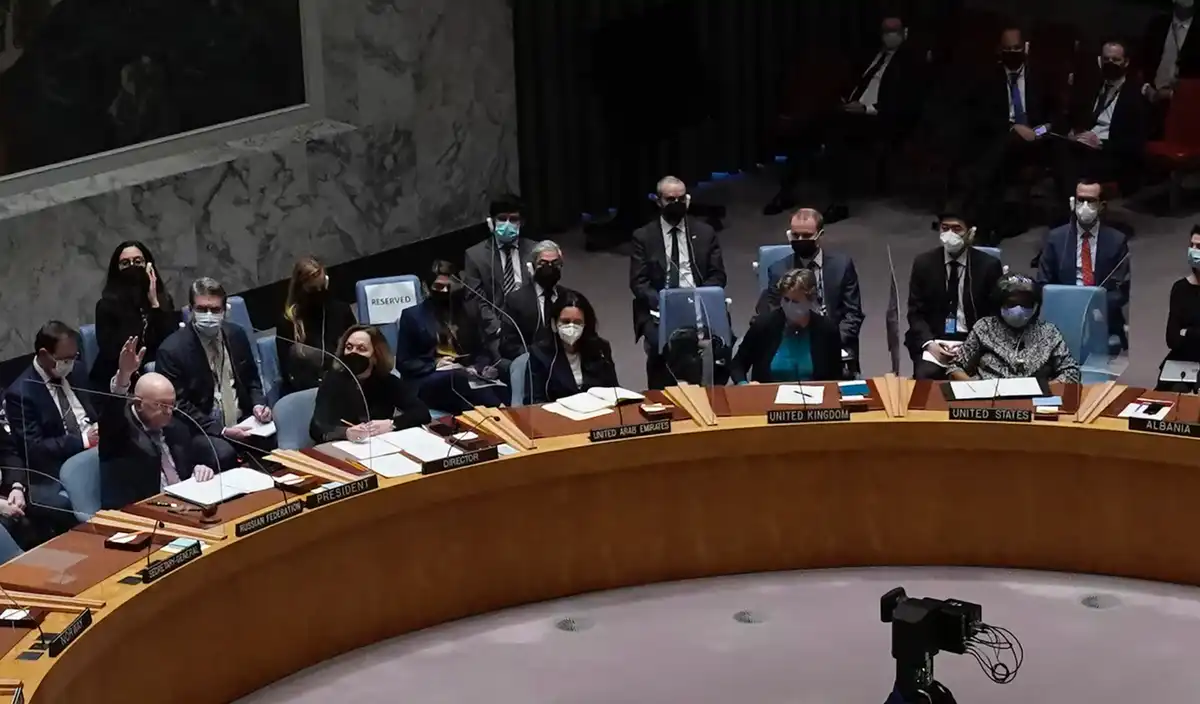
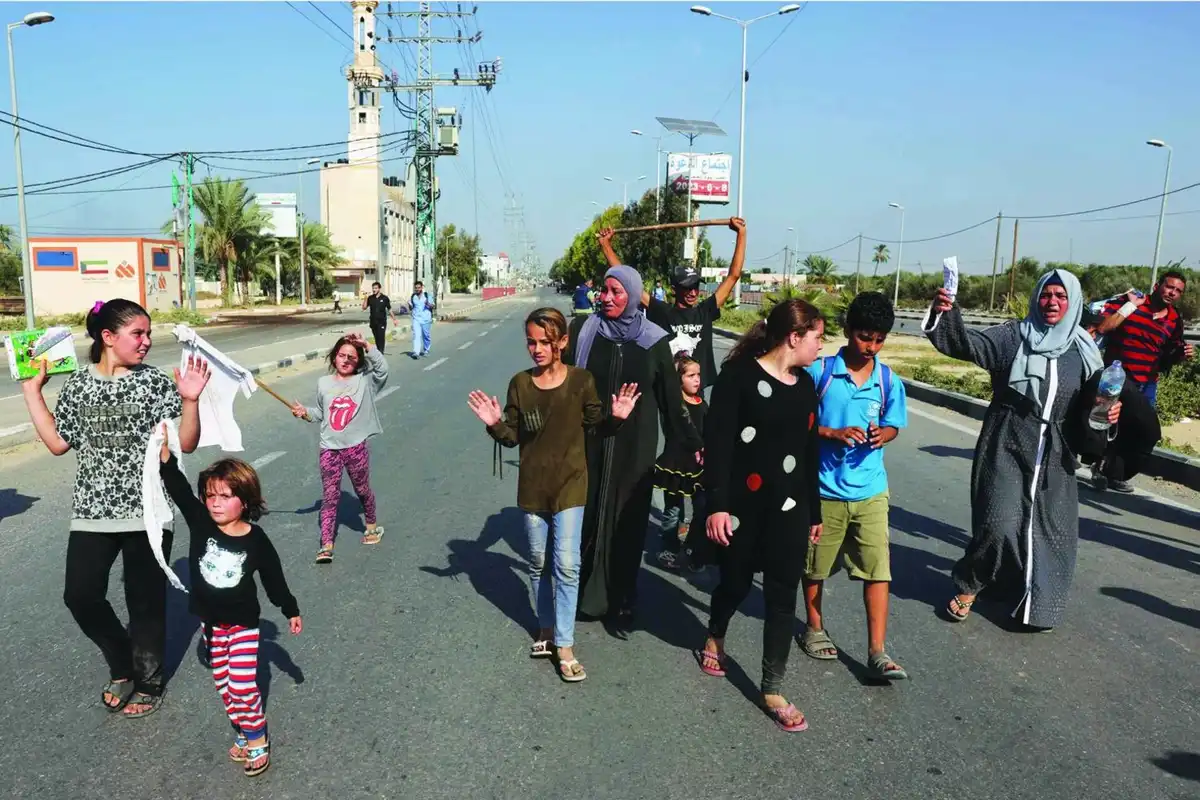

Israeli bulldozers closed the northern entrance to the city of Salfit with earth mounds.


Local sources said that Israeli army had previously closed the entrance for several weeks with an iron gate, before closing it today with earth mounds, tightening its grip on the city of Salfit, which has been subjected to a series of strict military measures, closures and restrictions in all its towns and villages since the beginning of the occupation’s aggression against our people a month ago. .


In Bethlehem, clashes broke out tonight with Israeli army after the closure of shops in the village of Husan, west of the city.


Husan Village Council Director Rami Hamamra said that the confrontations were concentrated in the Al-Muteena area at the eastern entrance, during which Israeli army fired bullets and tear gas and sound bombs, but no injuries were reported.


Hamamra added that Israeli army took observation posts from some rooftops after seizing them and turning them into military barracks.


The Israeli forces prevented citizens from picking olives in the village west of the city.


The head of the Husan Village Council, Jamal Sabateen, said that tIsraeli army prevented citizens from reaching their land in the “Wadi Al-Ghuwait” area to pick olives, and threatened them not to come again, otherwise they would put their lives in danger.


It is noteworthy that Israeli army yesterday prevented citizens from the city of Beit Jala, west of Bethlehem, from reaching their land in the Al-Makhrour area in the west to pick olives, knowing that settlers had stolen olives in that area a few days ago.


Husan Village Council Chairman Jamal Sabateen said that Israeli army stormed the Al-Muteena area at the eastern entrance, fired poison gas and sound bombs, and forced shop owners to close their doors at gunpoint.


Sabateen added that Israeli army seized the rooftops of houses and turned them into observation points in

Al-Muteena area, where the house of Samir Mahmoud Zaoul and Muhammad Hamamra was known.


In Jenin, citizens suffocated as a result of inhaling poisonous gas, during confrontations with the Israeli occupation forces in the village of Zabuba, west of the city.


Fatah Secretary Hussein Jaradat said that confrontations broke out after Israeli army stormed the village adjacent to the separation and apartheid wall, during which poison gas bombs were fired, causing a number of citizens to suffocate, while Israeli army intensified their military presence in the vicinity of villages and towns west of Jenin. On Jenin Street - Haifa.


Today, Sunday, settlers set up a mobile home “caravan” in the Tuqua Wilderness, southeast of Bethlehem.


The director of the Office of the Wall and Settlement Resistance Commission in Bethlehem, Hassan Barijiyah, reported that a group of settlers set up a “caravan” in the “Danyan” area, bringing the total number of caravans installed to five caravans, with the aim of establishing a settlement outpost.


Brijiyeh added that the settlers, under the protection of the occupation forces, are exploiting the current circumstances as a result of the aggression on the Gaza Strip since the seventh of this month, to impose illegal facts on the land, especially since it is private land.


In Hebron, Israeli occupation forces stormed the town of Idhna, west of the city.


Local sources said that the occupation forces stormed the town and deployed in several neighborhoods, raided a number of homes, and fired sound and lighting bombs in the area.