ARAB AND WORLD

Wed 08 Nov 2023 7:33 am - Jerusalem Time

Israel Bonds raises $1 billion for the Israeli government

Israel Bonds said that it has raised more than one billion dollars for the Israeli government since the start of the October 7 war with Hamas.


Most of the investments raised by the US-based company came from US state and municipal governments. Israel Bonds is the American guarantor of bonds issued by Israel. The fund was established following the October 7 attacks carried out by Hamas militants, which led to the killing of 1,400 Israelis and the taking of more than 240 hostages. This was followed by a continuous Israeli air bombardment of the Gaza Strip, as well as a ground attack.


Danny Naveh, president and CEO of Israel Ponds, said the amount represents a record for the company, which he said "demonstrates the strong support for Israel from Jewish communities and Israel supporters in the United States and around the world." It is expected that the cost of the war will be high, and Israel will need to increase capital to compensate for the deficit.


Israeli President Isaac Herzog praised the company "for helping to mobilize world Jewry to take immediate and urgent action for the State of Israel."

PALESTINE

Wed 08 Nov 2023 7:25 am - Jerusalem Time

Israel announces the killing of 348 soldiers and 69 security personnel since the start of its war on Gaza

The Israeli Ministry of Health announced in a statement on Tuesday evening that the number of wounded since the start of the war on Gaza on October 7 had risen to 7,262.


According to the statement, the number of wounded Israelis who have stayed in hospitals since the beginning of the war has reached 7,262, while the number of wounded who are currently staying in hospitals is 342, including 51 in serious condition, and 152 of them in rehabilitation departments.


Earlier on Tuesday evening, Israeli army spokesman Daniel Hagari announced that among the dead were 348 Israeli army soldiers and officers, 59 police officers, and 10 members of the General Security Agency (Shin Bet).


It is noteworthy that since the beginning of the war, the Islamic Resistance Movement (Hamas) has killed more than 1,538 Israelis, according to official Israeli sources, and has captured at least 242.


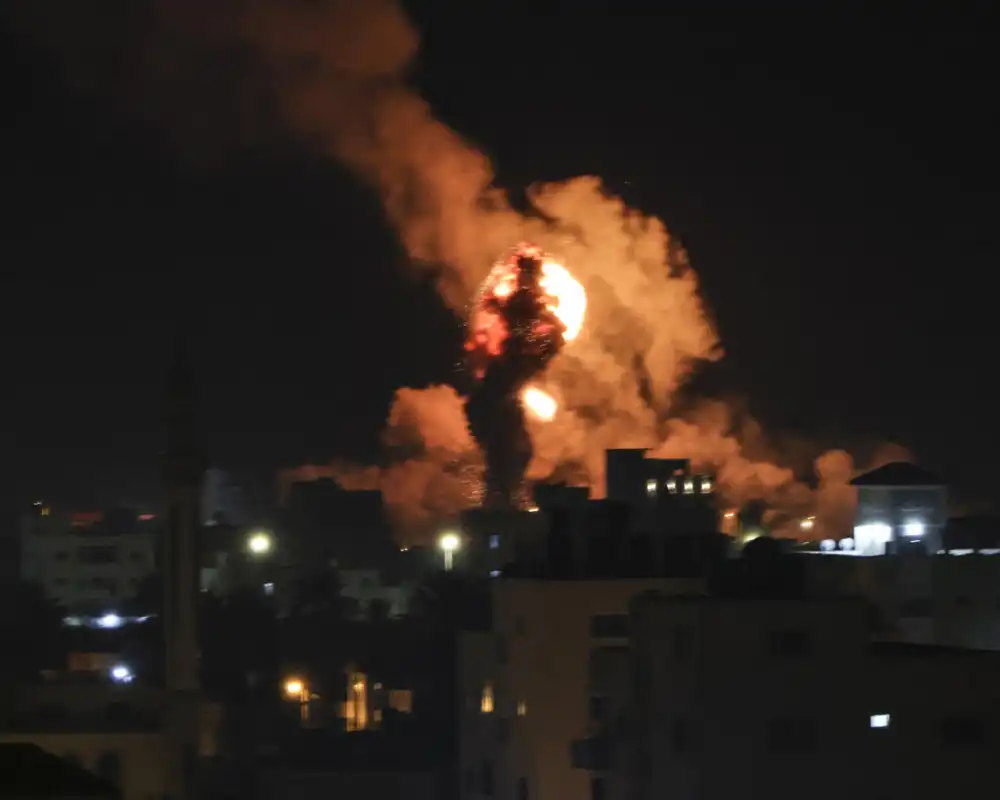
For 32 days, the Israeli army has been waging a devastating war on Gaza, in which 10,328 Palestinians were martyred, including 4,237 children and 2,719 women, and about 26,000 were injured. 163 Palestinians were martyred and 2,215 were arrested in the West Bank, according to official sources.


Source: Anadolu Agency


ARAB AND WORLD

Wed 08 Nov 2023 7:20 am - Jerusalem Time

An American-Israeli dispute over “The Day After”

Yesterday (Tuesday), signs of an American-Israeli dispute appeared over the “day after” the end of the war against Hamas in the Gaza Strip. At a time when Israeli Prime Minister Benjamin Netanyahu said that his country would assume “comprehensive security responsibility” in Gaza for an “indefinite period,” the United States was quick to confirm its opposition to the “reoccupation” of the Strip.


US State Department spokesman Vedant Patel said yesterday: “In general, we do not support the reoccupation of Gaza, nor does Israel support that,” in a comment on the Israeli Prime Minister’s statements. He added that the United States does not support any forced resettlement of Palestinians outside Gaza, and “this is not something on the table.”


The American position came after Netanyahu told ABC News that Israel would assume, for an indefinite period, “comprehensive security responsibility (in the Gaza Strip); Because we've seen what happens when we don't take care of it.”


Although this is the first time that Netanyahu has spoken about Israel’s vision for the day after Hamas is expelled from the Gaza Strip, it is not clear what he means by the extent of “security responsibility,” and whether this means the desire to occupy the Gaza Strip, or part of it in the north, and impose a security barrier. Israeli forces will remain there for some time, or he is talking about continuing operations as necessary after the comprehensive withdrawal.


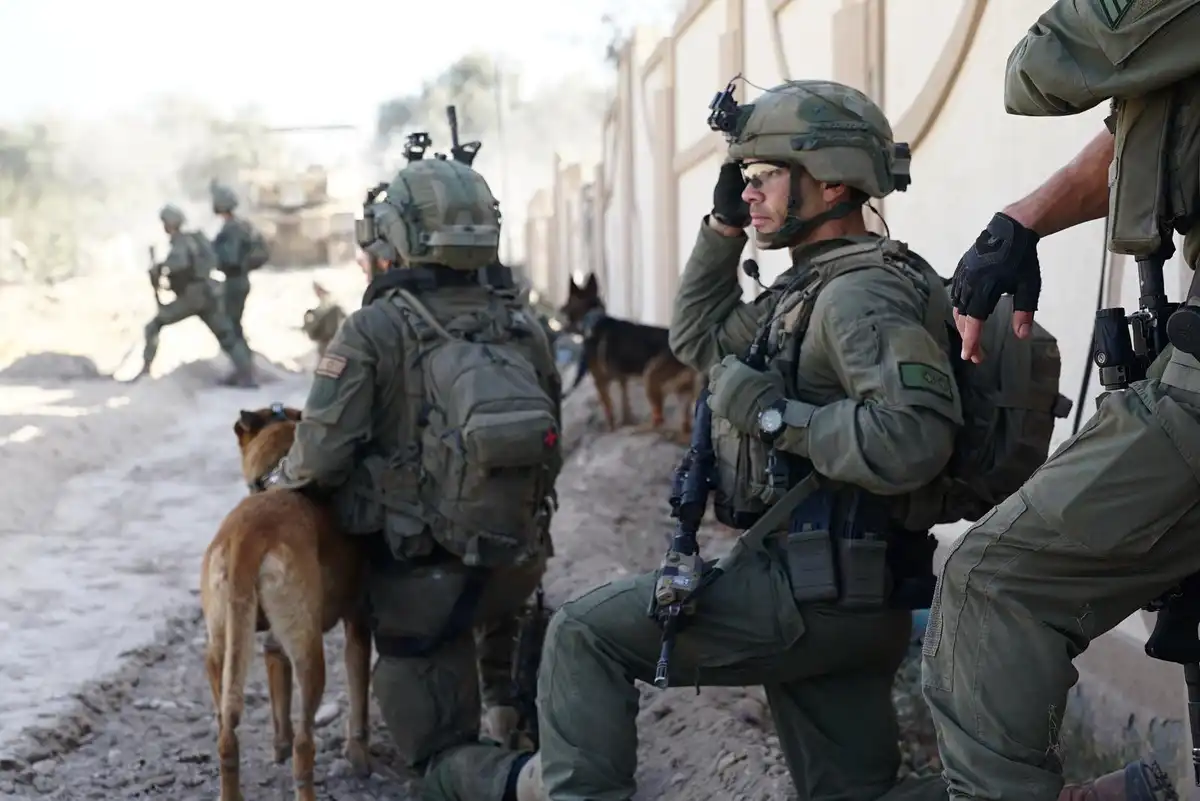
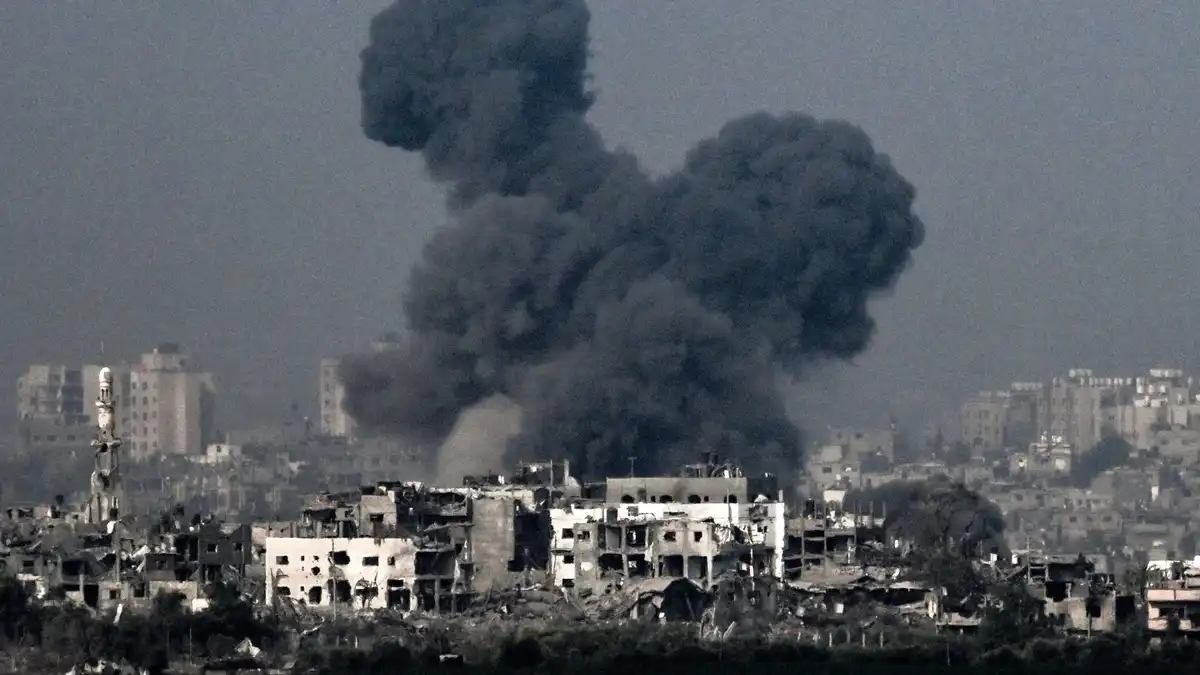
Meanwhile, Israeli forces advanced in two important axes in Gaza City: the first north of the Beach camp, and the second south of the Tal al-Hawa neighborhood, amid reports of fierce street fighting with Qassam Brigades fighters. The Israeli army and media broadcast scenes of a massive exodus of citizens from northern Gaza, the center of Hamas rule and the focus of the Israeli attack.


Israel is trying to reach the heart of the city after encircling it and taking control of “Salah al-Din” and “Al-Rashid” Streets, thus cutting off all communication between the north and south of the Strip.


Saudi Arabia confirmed, following the weekly session held by the Council of Ministers headed by the Custodian of the Two Holy Mosques King Salman bin Abdulaziz, yesterday, that it will continue its efforts with regional and international parties to achieve “an immediate ceasefire in Gaza and a return to the path of just and comprehensive peace for the Palestinian issue.”


Yesterday, Saudi Arabia also announced the postponement of the date of the fifth Arab-African summit scheduled for next Saturday in Riyadh to a later time. In view of the current developments in Gaza, which necessitated a call for an extraordinary Arab summit and an Islamic summit to discuss the current crisis.

OPINIONS

Wed 08 Nov 2023 7:10 am - Jerusalem Time

What will we do the day after the war? The millionaire question in Israel

Al Sharq Al Awsat- “Al-Quds” dot com

Al Sharq Al Awsat- “Al-Quds” dot com

Opinion Writer

By Kifah Zaboun

Netanyahu proposed security control over the Gaza Strip in the absence of an “exit strategy”... and no vision of civilian rule.


The million-dollar question in Israel that remained unanswered since the long 2014 war on the Gaza Strip was about the “day after” taking control of the Strip: What will we do on the second day? We stay there? Do we occupy the sector again? Bring back the Palestinian Authority? Or do we leave and risk Hamas regaining its power again?


These were the set of questions that were raised in the mini-security and political council, “the cabinet,” and were addressed by intellectuals, journalists, writers, security personnel, retirees, and an army of intelligence, Mossad, and Shin Bet, but they remained unanswered questions.


Today, after 9 years, Israel finds itself forced to fight in the heart of Gaza under the slogan of overthrowing the rule of “Hamas” and destroying it, but the issue of “the day after” toppling the movement’s rule is still troubling, assuming that the Israelis will succeed in this mission.


Security control without clear answers

After a month of fierce war against the Palestinians, and great American pressure, Israeli Prime Minister Benjamin Netanyahu announced that Israel would assume “comprehensive security responsibility” in the Gaza Strip for an “indefinite period” after the end of the war against Hamas.


“I believe that Israel will assume comprehensive security responsibility for an indefinite period because we have seen what happens when we do not assume it,” Netanyahu told ABC News. “When we do not assume that security responsibility, what we have is an outbreak of (Hamas) terrorism on a scale that we could not have imagined.”


Although this is the first time that Netanyahu has spoken about Israel’s vision for the day after “Hamas,” it is not clear what the Israeli Prime Minister means regarding the extent of security responsibility, and does this mean that they want to occupy the Gaza Strip, or occupy part of it in the north and impose A security strip in which Israeli forces will remain for some time, or it speaks of continuing operations as necessary after the comprehensive withdrawal.


Israeli officials say that they do not want to occupy the Strip, and the administration of US President Joe Biden has expressed its opposition to this scenario as well. What does Netanyahu mean?


Amir Tibon said, in the Haaretz newspaper, that there is no exit plan (from the current crisis) and that American officials are concerned about the lack of an exit strategy. He added that US Secretary of State Anthony Blinken asked members of the Israeli government about this during his recent visit, but his (the US Secretary’s) impression from the Israeli responses was that “the matter was not raised for discussion explicitly.”


The official Israeli broadcaster, Kan, confirmed that Netanyahu's government had begun drawing broad outlines for the day following the end of the war, and the nature and form of security control over the Gaza Strip. She added that this began under constant American pressure to take a decision on this issue.


Israeli sources said that the Israeli government is trying to postpone the discussion regarding the expected steps, but they are currently setting several broad guidelines, including security control over the Gaza Strip. Kan said that the steps being taken are expected to have military, political and economic impacts.


While Minister Benny Gantz and Defense Minister Yoav Galant support extending future security control over the Gaza Strip, a security official doubted this and said: “He believes that Israel will not have a supreme security responsibility in Gaza.”


It is clear that Netanyahu does not have other details, including civilian rule there.


Civil rule is in whose hands?

During the past 30 days, Israeli officials have proposed several scenarios, including changing the face of Gaza, reducing its area, establishing an international governing body, sending peacekeeping forces, or returning the Palestinian Authority.


At a time when American officials confirmed that discussions were continuing after Secretary of State Anthony Blinken presented ideas to Palestinian President Mahmoud Abbas, Israeli opposition leader Yair Lapid believed that the Palestinian Authority was the only party capable of assuming control of the Gaza Strip after achieving victory over Hamas. “, as he described it.


Lapid believed that control over the city should belong to the authority, while security control in the coming period would be in the hands of the Israeli army.


Why do Blinken and Lapid propose civilian control of power?

Lapid himself answers that Israel is not interested in funding the education of Gaza's children or the Strip's hospitals. He says: “Any future occupation of the Gaza Strip means that Israel will be responsible for education and hospitals. “Israel does not want that.”


It is known that any force occupying a people will be responsible for their daily lives, including education, health, municipal affairs, and others.


However, former Israeli Prime Minister Ehud Barak does not support Israeli security control, as he explained in statements to Politico newspaper that a multinational Arab force may have to control Gaza after eliminating Hamas.


It does not seem that the return of authority administratively is possible, not even as security forces. Palestinian President Mahmoud Abbas stressed that assuming a role in Gaza depends on a political solution.


Abbas’s position on the issue of governing the Gaza Strip is old and has not changed and is based on two issues. The first is that the Authority will not return on the back of an Israeli tank to the Strip, and the other is that the Authority imposing its control over the Strip is a purely Palestinian issue, and must be done within the framework that Gaza is part of the future Palestinian state. Thus, within a clear path to establishing the state.


Most importantly, the PA leaders believe that after being weakened and marginalized and the Netanyahu government working for years to strengthen Hamas in Gaza and foster division, Israel “must go to hell now when it thinks that the PA has to come and save it in Gaza,” Palestinian officials say. .


The General Political Commissioner, Major General Talal Dweikat, spokesman for the Palestinian security services, said: “President Mahmoud Abbas was unequivocally clear in his position with the US Secretary of State, which is his rejection of any security project that the United States and Israel wish to implement if it goes beyond the political solution.”


What about “Hamas”?

As for Hamas, the movement does not believe that any external force can remove it from the Gaza Strip, but it nevertheless realizes that its rule is at stake there.


It is most likely that the initiative launched by the leader of the movement, Ismail Haniyeh, in order to stop the war and launch a political path, is an important indicator of its readiness to engage in a path that it is known that the Palestine Liberation Organization will lead.


It is true that “Hamas” threatened from Beirut through its leader Osama Hamdan that it would not welcome it, but rather hinted that it would fight a “new Vichy government” (referring to the government that cooperated with the Nazi occupation in France during World War II), or whoever comes as an agent on the An Israeli or American tank, but if there is a broad national agreement to return things to what they were before the movement took control of Gaza in 2007, this may represent the least losses for Hamas, especially in light of America and Israel’s assertion that it is not possible to return to The situation before October 7, the date Hamas launched its “Al-Aqsa Flood” operation.


In light of all these scenarios and options, there is no doubt that the course of the field war will ultimately guide the compass.


PALESTINE

Wed 08 Nov 2023 7:06 am - Jerusalem Time

“ABC News”: Biden rejects Israel’s reoccupation of Gaza

The White House reiterated the refusal of the administration of US President Joe Biden to re-occupy Israel of Gaza after its Prime Minister, Benjamin Netanyahu, made statements to ABC News in which he said that he believed that Israel would supervise the security of the Strip for an indefinite period.


The American network quoted US National Security Council spokesman John Kirby as saying regarding the differences between the American and Israeli visions for the future of Gaza: “We are consulting with our Israeli counterparts about what Gaza should look like after the end of the conflict.” He added, "The president is adhering to his position that reoccupation by Israeli forces is not the right choice."

ARAB AND WORLD

Wed 08 Nov 2023 7:01 am - Jerusalem Time

News analysis | What image of victory is Israel looking for?

Netanyahu, who is searching for an image of victory at the gates of Gaza to end his now inevitable political future, will only reap disappointment because a number of political and military analysts estimate that Al-Qassam is serious about the slogan it inscribed on its flag: “Victory or martyrdom.”


The closer the Israeli army gets to achieving the alleged “victory” in Gaza, the “knives are sharpened,” as they say in Hebrew, for the “victors” from the leaders of the army, Shin Bet, and intelligence, all the way to their prime minister, who “slept on guard” and caused the events of October 7th. / Last October, which disrupted the Israeli security theory on which the entire Zionist colonial project is based.


This may be the first time in history that “knives were sharpened” to greet the “victors” in the war and “sticks of the gallows” were erected for them. Therefore, talking about an Israeli victory in and over Gaza, regardless of the results of the bloody war, is superfluous talk and devoid of any substance. Not only because what was broken on October 7 was a comprehensive collapse of the “iron wall” theory established by Jabotinsky, implemented by Ben-Gurion’s heirs, reinforced by Sharon, and whose fruits were reaped or almost achieved by Netanyahu.


Netanyahu, who is searching for an image of victory at the gates of Gaza to end his now inevitable political future, will apparently reap nothing but disappointment because a number of Israeli political and military analysts confirm that the Qassam Brigades are serious about the slogan they inscribed on their flag and took as the title of their battle, “Victory or Martyrdom.” Its fighters and leaders will not leave with their hands raised, but will continue to fight for months and even years after the Israeli army falls into the Palestinian mire in Gaza.


In this context, the Israeli writer B. Michael, that this time also will not be a victory. It will be “bombing,” “grinding,” “crushing,” “mashing,” and demolition, but not a victory. “We have defeated the Palestinians time after time and woke up again and again for the same day yesterday in a circle with no way out.” While the military analyst in the Yedioth Ahronoth newspaper, Ron Ben Yishai, writes, “Anyone who thinks that controlling Gaza and undermining Hamas’s authority in the northern Gaza Strip will achieve the necessary goal for Israel’s security is wrong, because the southern Gaza Strip is a stand-alone problem that needs an answer.” This was confirmed by the Israeli Minister of Security, Yoav Galant, who said that long days of fighting await his army.


This is while military expectations suggest that these battles will continue, perhaps for several months to come, which perhaps prompted Netanyahu to say that Israel will maintain its security control over the Gaza Strip for a long time, while the military analyst for the newspaper “Haaretz”, Amos Harel, describes the picture of the battle as different and more More complex than it was in Operation Cast Lead, over the past 14 years, he says, Hamas has strengthened the underground system in a way that no Western army has ever encountered before, while its main forces lie in the tunnels, and its leaders show no signs of being ready to surrender.


Harel says that in the absence of Hamas’s military ability to curb the advance of an Israeli armored force with large numbers of vehicles and enormous firepower; Its fighters in the tunnels attack these forces after they are positioned at fixed points.


In the absence of clear military objectives, too, the Israeli army began to focus and announce the numbers of deaths among Palestinian resistance fighters, a phenomenon that Harel considers problematic. It distinguished the American army during the Vietnam War, and it became prominent in Israel, as military affairs expert Yigil Levy says, during the Intifada. The second, and especially intensified after the case of the killer soldier, Elior Azaria, and the criticism directed at the Israeli army as a “vegetarian army,” which prompted General Eisenkot to boast before his retirement of killing 171 Palestinians in the West Bank, within two years, and culminated in the era of General Kochavi, who spoke In his coronation speech about a "killer army."


Levy believes that the use of killing turns into a goal in itself when it cannot be justified as a means of achieving goals. Therefore, he believes that this speech may be a kind of preparation of the ground for a situation in which American pressure leads to stopping the war before Hamas’s authority is undermined, where the army can then show progress. The blame is placed on politicians, he says.


The American army also followed this method in Iraq in order to justify its losses there by suggesting that the enemy is suffering greater losses, and it is not unlikely that such a discourse is developing here as well, to justify the losses of the Israeli army and to silence the voices that may demand not to continue sacrificing the lives of soldiers, as Levy says. Especially since the scenes of destruction in Gaza are no longer convincing and the majority of Gazans killed are civilians, and in the absence of clear goals that can be measured by achieving them, the number of enemy fighters killed may be a reassuring factor, at least temporarily, especially in light of the absence of a critical public that can He wonders why we kill and are killed?, he says.


PALESTINE

Wed 08 Nov 2023 6:58 am - Jerusalem Time

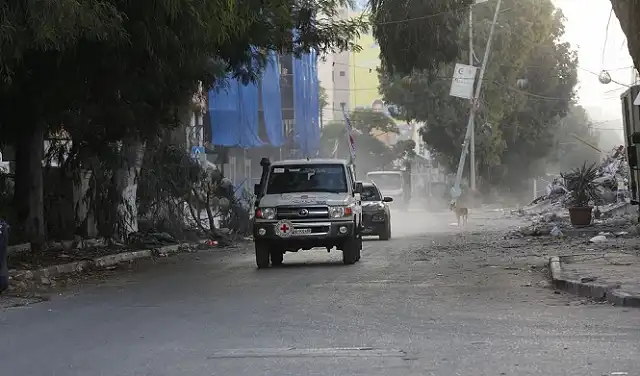
Red Cross: An aid convoy came under fire in Gaza City

The International Committee of the Red Cross said that a humanitarian aid convoy came under fire in Gaza City on Tuesday before it could deliver medical supplies to Al-Shifa Hospital.


The International Committee of the Red Cross announced on Tuesday evening that a humanitarian convoy carrying medical supplies came under fire in Gaza City, noting that the Israeli army had targeted ambulances that attempted to transport wounded people from Gaza to the southern Strip.


A statement by the committee said that the convoy, which included five Red Cross trucks and two vehicles, was transporting life-saving medical supplies to health facilities, including the Jerusalem Hospital of the Palestinian Red Crescent Society, when it was opened fire on.


The statement indicated that two trucks were damaged and a driver sustained minor injuries. The International Committee of the Red Cross did not indicate in its statement who fired the gun or the direction from which it was fired.


The head of the committee's mission to Gaza, William Schomburg, said, "These are not conditions in which humanitarian personnel can work."


He continued, "We are here to provide urgent assistance to civilians in need. Ensuring that vital aid reaches medical facilities is a legal obligation under international humanitarian law."


After the shooting, the convoy changed its route and arrived at Al-Shifa Hospital, where it delivered medical supplies, according to the committee.


The committee said that the convoy later accompanied six ambulances carrying seriously injured people to the Rafah crossing on the border with Egypt.


The spokesman for the International Federation of Red Cross and Red Crescent Societies stressed that “humanitarian aid must reach all residents of Gaza, including the northern Strip,” and explained that “we need safe, unhindered access to all parts of the Gaza Strip.”


The spokesman stressed that "civilians, doctors, nurses, hospitals and ambulances in Gaza must be protected."

ARAB AND WORLD

Wed 08 Nov 2023 6:55 am - Jerusalem Time

The G7 discusses the future of Gaza after the end of the war


Japan, the host of the summit, said in a statement that the issue was raised during a working dinner late on Tuesday evening, and that the group continues, today, Wednesday, talks on the crisis between Israel and Gaza, the Ukrainian war in Russia, and issues related to China.


G7 foreign ministers discussed how to revitalize peace efforts in the Middle East and the next in the Gaza Strip once the war there subsides, as they met for a two-day summit in Tokyo.

Japan, host of the summit, said in a statement that the issue was raised during a working dinner late on Tuesday evening, and that the group continues, today, Wednesday, talks on the crisis between Israel and Gaza, the Ukrainian war in Russia, and issues related to China.

According to identical diplomatic sources, the foreign ministers of the seven countries - the United States, Japan, France, Britain, Germany, Italy and Canada - are seeking to bridge the gap that divides their countries' positions regarding the ongoing conflict between Israel and Hamas by launching a joint appeal to establish a humanitarian truce in the Gaza Strip.


A diplomatic source said that “constructive discussions” took place between the ministers on this issue on the first day of their meeting.


He added that there appears to be "great unity" among the ministers' positions regarding the need to "urgently" increase humanitarian aid to the Gaza Strip.


Japan announced today, Wednesday, following talks held in Tokyo by foreign ministers of the Group of Seven countries, that the group is “united” in continuing its “strong support” for Ukraine in confronting the Russian invasion of its lands, “even in light of the current international situation,” in a clear reference to the ongoing war between Israel and Hamas. .


The Japanese Foreign Ministry said in a statement: “As a result of the discussions, the foreign ministers of the G7 countries agreed that the G7 will remain united in its position of imposing tough sanctions on Russia and providing strong support to Ukraine even in light of the current international situation.”


The statement added that the ministers also confirmed that they would continue to impose “tough sanctions” on Moscow, accelerate Ukraine’s reconstruction efforts in the “medium and long term,” and continue “working toward a peace process.”


Ukraine's fears are mounting that its allies' support for it will diminish at a time when its counter-attack, which it has been waging since June, has failed to achieve tangible results and the chances of the current conflict turning into a long war of attrition are increasing.


The statement quoted Japanese Foreign Minister Yoko Kamikawa as saying that despite the war that has been raging for a month between Israel and Hamas, the G7 is keen to inform the international community that its commitment to support Ukraine “will never run out.”


ARAB AND WORLD

Tue 07 Nov 2023 11:11 pm - Jerusalem Time

Report: Even if Israel defeats Hamas, it faces a strategic problem in the north

Yesterday evening, for the first time since the Second Lebanon War (2006), Hezbollah claimed responsibility for firing rockets at Israeli civilians in Kiryat Shmona. The party did not try to hide behind “Hamas,” as it did a week ago. This came in response to the bombing of an Israeli drone that caused the death of 4 Lebanese citizens “(after Hezbollah killed an Israeli civilian working as a water tanker driver with an anti-tank missile).”


Hezbollah's rhetoric is becoming more stringent, as are its operations, which have become more directed south of the border and against civilians. Yesterday, 30 missiles were launched, some of which were intercepted in an area far from the border. This range of Hezbollah missiles has not been used since the Second Lebanon War. This time, Hamas claimed responsibility for the launch, but it was clear that it was coordinated with Hezbollah.


On the other hand, the American display of power in the region raises clear concerns among the Iranian regime and the Hezbollah leadership. Yesterday, the New York Times reported in a report that the Biden administration sent a clear warning to Iran and Hezbollah, stating that the United States would actively participate in the war if Israel was attacked. Prime Minister Benjamin Netanyahu does not want such a confrontation to occur. In his meetings with the Americans, he stressed the need for Israel to focus on the attack against Hamas in Gaza. Netanyahu is trying to contain the tense situation with Lebanon and limit himself to limited attacks, in response to Hezbollah attacks, so as not to force the army to be divided on two fronts.


In the long run, Israel will face a strategic problem in the north, even if it succeeds in its operation in Gaza. It is true that the Israeli army attacks slightly pushed Al-Radwan's forces away from the Lebanese border, but this party force is still present in southern Lebanon, which contradicts Resolution 1701, issued by the Security Council, which ended the last war on Lebanon. Hezbollah still possesses a missile arsenal containing more than 150,000 rockets and missiles.


In such circumstances, it is difficult to persuade residents of the border line to return to their homes, even if the war in Gaza ends with Israeli success. After October 7, deterrence is no longer a valuable commodity in the region. On the other hand, an Israeli offensive operation against Hezbollah would be dangerous, and would lead to a harsh war and widespread damage on the home front. To date, Israeli governments and the army have refrained from doing so. Israel did not respond when Hezbollah violated the military balance, deployed an advanced anti-armor system in Lebanon, and established facilities to produce precision missiles.


After the Hamas attack on the "Gaza envelope", the priorities of the Israeli public changed, and the fear of missiles in the center of the country became much less, and was replaced by a real fear of attempts to infiltrate the settlements in the border areas and on the contact line. The "massacre" in the "Gaza envelope" settlements, the entry of "saboteurs" into homes, storming shelters, and killing and kidnapping entire families, caused a strong shock among the citizens, and completely destroyed their sense of security.

ARAB AND WORLD

Tue 07 Nov 2023 10:55 pm - Jerusalem Time

Israeli raids on villages and towns in southern Lebanon

On Tuesday evening, several villages in southern Lebanon were subjected to intense Israeli raids.


The Israeli aircraft launched raids on the Shebaa area, the towns of Yater and Kafra, and the surroundings and surroundings of the towns of Naqoura, Alma al-Shaab, Marjayoun Plain, and Khiam. The occupation artillery also bombed Ramya, Aita al-Shaab, and a house in the town of Kafra.

PALESTINE

Tue 07 Nov 2023 10:13 pm - Jerusalem Time

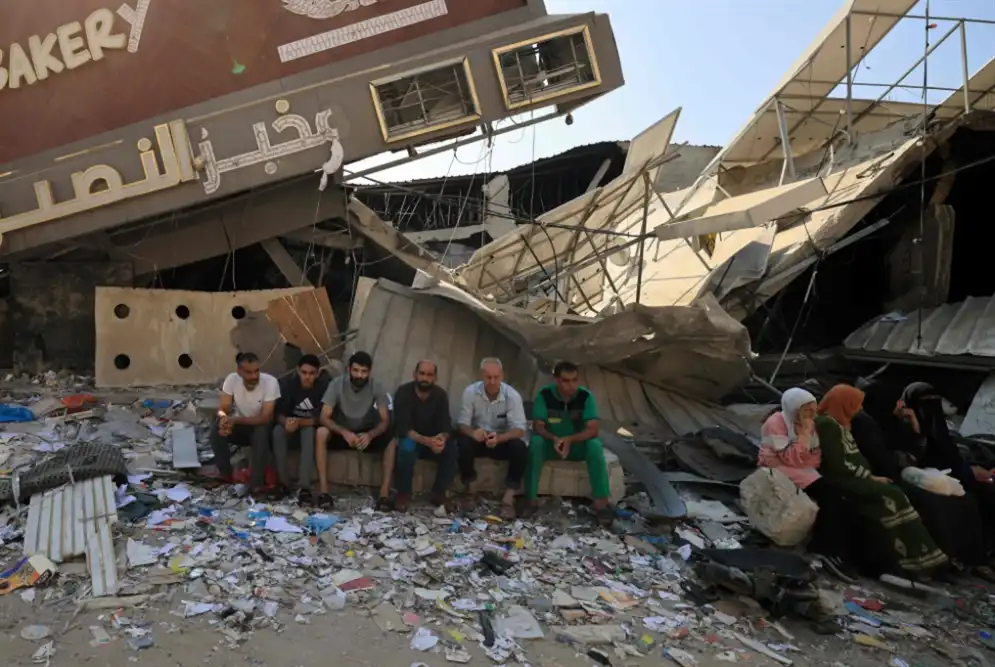
“Compared to before the war.” Terrifying numbers herald the occurrence of famine in Gaza

Serious fears are emerging about the risk of famine in the Gaza Strip - which is exposed to an unprecedented Israeli war - amid repeated warnings from local authorities and UN organizations.


The Ministry of Interior in Gaza says that all bakeries in the Gaza Governorate and its north have stopped working due to the lack of fuel and flour, but the main reason is due to the imposed Israeli siege and the continuous violent bombing of the Gaza Strip, which led to the destruction of a number of bakeries.


In turn, the World Food Program said that the program was dealing with 23 bakeries in Gaza, but there is currently only one bakery.


The United Nations had previously reported that 9 bakeries working in cooperation with it were supplying the population with bread, and warned that some of them would close within days due to running out of fuel and water outages.


The disastrous scene does not stop there; Rather, it becomes more complicated as Israel cuts off water supplies, damages stations, and closes wells due to fuel shortages, leaving only one operating desalination plant remaining.


The United Nations Relief and Works Agency for Palestine Refugees (UNRWA) also warned that people may die without water, as the World Health Organization estimates that the minimum daily water requirement for one person is 100 liters, including drinking, washing, cooking, and use.


The average water use in Gaza before the war was 84 liters per person, of which only 27 liters were suitable for human use, while the World Health Organization currently estimates it at only 3 liters.


What exacerbates the catastrophic situation in the Gaza Strip is the power outage after the only power plant stopped working due to the running out of fuel and the occupation not bringing it in.


Official figures estimate that about 80% of the buildings and facilities in the Gaza Strip are without electricity, with the exception of those containing generators, such as some hospitals and shelters, while satellite images show Gaza losing lights at night by 90%. As for humanitarian aid, it was 80% of The residents of the Gaza Strip are in need of aid. 500 trucks were entering the Strip daily through the Rafah border crossing, while only 569 trucks had entered it since the start of the Israeli war on October 7.


Source: Al Jazeera

ARAB AND WORLD

Tue 07 Nov 2023 10:07 pm - Jerusalem Time

America opposes Israel's reoccupation of Gaza and is discussing the future of post-war governance

The United States announced on Tuesday its opposition to a new, long-term occupation of the Gaza Strip by Israel, after its Prime Minister Benjamin Netanyahu said that the responsibility for “comprehensive security” of the besieged Strip falls on them after the end of the war.


US State Department spokesman Vedant Patel stated that the American view is that Gaza is Palestinian land and will remain Palestinian land, adding that they do not support any forced resettlement of Palestinians outside Gaza, and that it is not something on the table.


At the same time, Patel stressed the need for Israel and the region to be safe, and added that Gaza cannot be a base for launching attacks that he described as “terrorist” against Israel, he said.


Strategic Policy Coordinator at the US National Security Council, John Kirby, stressed that their support for Israel does not necessarily mean agreeing with it to reoccupy Gaza.


Kirby indicated that they are discussing the future of governance in Gaza in the period after the rule of the Islamic Resistance Movement (Hamas), and that they will not accept the situation returning to what it was before the war, as he put it.


The White House also stated that Hamas cannot be part of the future in Gaza, and consultations are underway regarding the form of governance there.


For his part, Israeli Foreign Minister Eli Cohen said after the US State Department's statements that Israel does not want to rule Gaza or impose civil administration in the Strip.


He added that they are looking forward to handing over the rule of Gaza to an alliance that includes America, Europe, Islamic countries, or local leaders in the Strip.


Netanyahu confirmed during an interview with the American ABC News channel yesterday, Monday, that Israel will assume, for an indefinite period, overall security responsibility in Gaza, saying that when they do not assume security in Gaza, they will face Hamas attacks on a scale they cannot imagine.

ARAB AND WORLD

Tue 07 Nov 2023 9:50 pm - Jerusalem Time

Red Cross: Killing children in Gaza is a “moral failure” for the entire world

The International Committee of the Red Cross called on Tuesday "for an end to the terrible suffering suffered by civilians, especially children" in the Gaza Strip.


The head of the committee, Mirjana Spolijaric, expressed her shock at the suffering that children are experiencing.

She said in a statement issued by the committee, “Red Cross surgeons are treating children in Gaza whose skin is charred as a result of widespread burns.”


She added, "The scenes of suffering, dead and wounded children will haunt us all. It is a moral failure."

Since the start of the Israeli aggression against our people in the Gaza Strip on the 7th of last October, 10,305 martyrs have risen in the Gaza Strip, and more than 25,000 have been injured, according to an infinite toll issued by the Ministry of Health.


The Ministry indicated that among the killed civilians were 4,237 children, 2,719 women, and 631 elderly people, while the number of missing persons reached about 2,350 citizens, including more than 1,300 children.


In its statement, the International Committee of the Red Cross called for adherence to international humanitarian law and for all civilians to be spared from military operations.


It noted that "the military siege imposed on Gaza has deprived people there of food, water and medicine," and warned that the "scarce aid" being brought in does not meet basic needs for survival.


It pointed to the “urgent need to provide safe and sustainable delivery of humanitarian aid,” stressing that “basic services such as health care, water and electricity must resume in Gaza as they are life-saving priorities.”


It condemned the Israeli bombing that targeted hospitals and health care facilities, stressing that "the scenes of damaged hospitals and ambulances are unacceptable."


Since the start of the aggression, 18 out of 35 hospitals with inpatient facilities have stopped working, and 71% of all primary care facilities across Gaza have been closed due to damage or lack of fuel, according to the Ministry of Health.


The committee noted that "the intense bombing is destroying civilian infrastructure throughout Gaza, and sowing the seeds of misery for future generations."


It said, "After a month, civilians are forced to endure enormous suffering and losses," stressing that "this must stop."

ARAB AND WORLD

Tue 07 Nov 2023 9:05 pm - Jerusalem Time

Netanyahu: We will not allow fuel to enter Gaza; Gallant: There is no humanitarian truce without the return of the hostages

Israeli Prime Minister Benjamin Netanyahu said in a press conference held this evening, Tuesday, that the Israeli occupation authorities will not allow fuel to enter the besieged Gaza Strip, and they also reject any ceasefire for humanitarian reasons in Gaza, without the release of Israeli hostages held by factions. Resistance in the besieged sector.


Netanyahu said, "We have eliminated thousands of terrorists above and below the ground. Hamas is discovering that we are reaching places it never thought we would reach." He added that Gaza City "has become encircled," noting that Israeli army forces are "operating inside the city," adding, "We will continue the war vigorously until the end."


Regarding the developments on the northern front, Netanyahu said: “If Hezbollah chooses to enter the war, it will make the mistake of its life,” noting that the exchange of bombardments continues on a daily basis between the Israeli occupation army and Hezbollah fighters in the border region of southern Lebanon, since the start of the war on Gaza after the war began. 


Netanyahu stressed that there will be no ceasefire without the return of the hostages. He told the families of the Israeli prisoners and hostages, who had begun protest measures demanding the immediate return of their children: “We are working on all fronts to return your children. Military action is an essential part of this effort.”


Galant: The Israeli army is now “in the heart of Gaza City”

For his part, the Israeli Minister of Security, Yoav Galant, said this evening that the head of the Hamas movement in the Gaza Strip, Yahya Sinwar, is primarily responsible for the attack of last October 7, claiming that Sinwar “is hiding in a basement, and has become separated from his surroundings.” ", claiming that the leadership hierarchy in Hamas is "eroding."


Galant: After the war, the Israeli army will have the freedom to exercise force without restrictions.

Gallant said, in a press conference, “We are determined to achieve our goal and accomplish the mission, which is to dismantle Hamas and its military and authoritarian capabilities and reach its leaders and fighters.” He continued, “We will fight to achieve our goal of eliminating Hamas, returning the detainees and changing the situation in Gaza.”


He claimed that the Israeli occupation army is making “advances from the north and south and is now operating in the heart of Gaza City, and we are fighting inside residential areas.” He described the besieged Gaza Strip as “turning into the largest terrorist base in the world,” noting that “a ceasefire for humanitarian reasons must be "In order to return the detainees first."


He pointed out that Israel will be exposed to mounting international pressure during the coming period, and added, "We will have to make difficult decisions," stressing that the Israeli occupation authorities are determined to continue the war on the Gaza Strip until the stated goals are achieved, and will not agree to a ceasefire for humanitarian reasons in the Strip. Gaza.


He added, "We are fighting in Gaza forcefully, and our forces are also present opposite Lebanon, and the air force is fully prepared." He added, "We are not interested in opening a war front with Hezbollah, and if (Hezbollah Secretary General Hassan Nasrallah) makes a mistake, he will implicate Lebanon and will pay a heavy price." ", noting the deployment of "thousands of regular and reserve soldiers in the West Bank to confront any confrontation."


Netanyahu: We will not stop

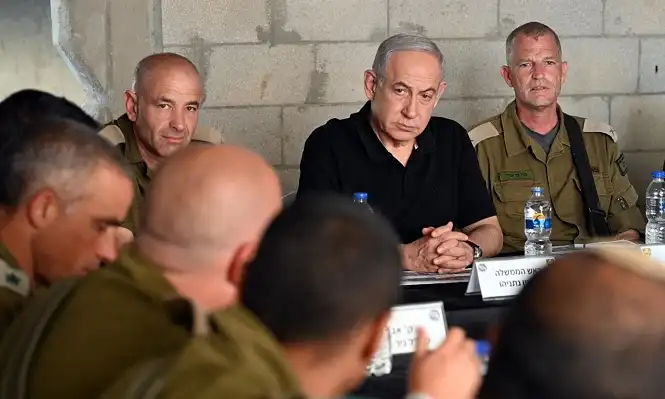
Earlier today, Israeli Prime Minister Benjamin Netanyahu stressed that Israel does not intend to “stop” in its devastating war on the besieged Gaza Strip, which has been continuing for 32 days, stressing that the occupation army “intends to continue until the end,” in statements issued About him during a tour at the “Tzealim” military base, in the south of the country.


Netanyahu: No ceasefire until the hostages are released

Netanyahu said in his speech with the forces in “Tzalim”, “First of all, you can draw lessons. You all have lessons from day one, what you did - you saved the country. But there are lessons from the field, as you know. I have now heard some "Things, and they're very subtle. You have to absorb all the lessons learned."


He added, "What we see in the field, from the reports that I receive and the war cabinet receives from talking to commanders and soldiers, is an extraordinary success. The Americans came here and explained to us what was in Fallujah, what was here and what was there. They are amazed by our achievements," and he continued. "It's true that there are some problems."


He went on to say: “There are drones (suicide drones used by resistance factions in the Gaza Strip), there are explosive devices, and there are anti-tank guns and missiles.

This is correct. There are also very painful losses sometimes, but in general the success is tremendous.” He continued, “We will not stop, we will continue until the end. We trust and believe in you and give you all the strength.”


Gantz: We will work to return the prisoners “by force and political action”

In turn, the minister in the Israeli emergency government, Benny Gantz, pledged to return prisoners held by the resistance factions in the Gaza Strip using “force and political action.”


Gantz said in a press conference held at the headquarters of the Ministry of Security, in Tel Aviv, “I promise you that we will do everything in our power to return them (the prisoners), by force and political action.”


He added, "We will fight whoever we must (fight), and we will talk to everyone we can."


We will not give up the opportunity to return anyone.” Gantz criticized the countries in which Hamas leaders reside, saying: “There will be no fortified place for them to hide.” He touched on the confrontations on the northern front with Hezbollah, and said: “The focus is on Gaza, but we are fighting defensively and offensively.” In the north and elsewhere.


He continued, "I also promise the residents of the north that you will be able to live in your homes in safety and hope," noting that the Israeli authorities evacuated more than 120,000 residents of the settlements surrounding Gaza and the towns adjacent to the northern border with Lebanon to hotels and guest houses in the center of the country.


Gantz continued, addressing the Israelis: “There will be a time for demonstrations, discussions, and investigations about everything. (But) now is the time for fighting and victory,” referring to increasing calls to investigate Netanyahu over his “failure” to anticipate the Hamas attack on the seventh of last October. And confront it.

In reference to possible disagreements or perhaps tensions between officials in the Israeli emergency government, Israeli media reported that Gantz's office asked the offices of Gallant and Netanyahu to organize a joint press conference for members of the "war cabinet," which did not happen.

While the reports pointed to the "procrastination" of Netanyahu's office in responding to Gantz's request, Netanyahu's office commented on these reports by saying, "We made statements in joint conferences and joint press conferences will be held. The Prime Minister was busy today in field events and that was not possible." .

ARAB AND WORLD

Tue 07 Nov 2023 8:00 pm - Jerusalem Time

The High Commissioner for Human Rights begins a tour in the Middle East on the war in Gaza

On Tuesday, the United Nations High Commissioner for Human Rights, Volker Türk, began a visit to the Middle East amid the escalation of massacres committed by the Israeli occupation in the Gaza Strip, coinciding with the United Nations warning that the besieged Strip is approaching a “collapse point” due to its lack of fuel.


Turk began his five-day tour from Egypt, where he arrived today. He will visit the Rafah crossing tomorrow, Wednesday, before traveling to the Jordanian capital, Amman, next Thursday. The tour also includes Israel, the occupied West Bank, and the Gaza Strip, according to a statement issued by his office.


The statement said that the tour “comes against the backdrop of the ongoing and very serious human rights and humanitarian crisis” in Gaza, noting that the United Nations High Commissioner for Human Rights will speak during his visit with government officials and civil society actors, with those affected and injured, and with his colleagues at the United Nations regarding the situation. Human rights in the region.


"It has been a whole month of carnage, continuous suffering, bloodshed, destruction, anger and despair," Türk said.


He stressed that “human rights violations are the root of this escalation,” and said that “human rights play an essential role in finding a way out of this spiral of pain.” Breaking Point In a related context, Jens Laerke, spokesman for the United Nations Office for the Coordination of Humanitarian Affairs, warned on Tuesday, He stressed that services in the Gaza Strip are approaching the "collapse point" without fuel supplies, adding that the 569 relief trucks that entered the Strip so far were not carrying any fuel for Gaza. 


Martin Griffiths, the United Nations Humanitarian Coordinator, said last week that There is progress in negotiations regarding allowing fuel to enter the Gaza Strip, which is besieged by Israel, without going into details. 


The Israeli occupation continues its war on Gaza for the 32nd day in a row, and the violent bombing has led to the death of more than 10,000 Palestinians in the Strip so far, most of whom are women and children. It also injured more than 25 thousand people.


Source: French + Reuters

ARAB AND WORLD

Tue 07 Nov 2023 7:45 pm - Jerusalem Time

Israeli Army Commander: We are fighting a difficult and complex war in Gaza

The commander of the Israeli army's southern region, Yaron Finkelman, said on Tuesday that the army is waging a complex, difficult and costly war against the Islamic Resistance Movement (Hamas) in the Gaza Strip.


Winkelman added that the Israeli army is fighting for the first time in decades in the heart of Gaza City, stressing that the Hamas attack on October 7 seriously injured them, and that the events of that day hurt him greatly. He continued that the Israeli army failed in its mission on last  October 7, saying that since that day the war has become clear with its goals of eliminating the Hamas movement and returning the detainees, he said.


For its part, the Al-Qassam Brigades, the military wing of the Hamas movement, announced that it had confronted attempts by the Israeli army to penetrate the Gaza Strip since the beginning of the ground campaign launched by the occupation, and that it had inflicted human losses and material damage on the occupation.


Today, Tuesday, Al-Qassam said that it destroyed 8 Israeli tanks and a troop carrier, in addition to “bombarding enemy crowds penetrating into the Gaza Strip with heavy-caliber mortar shells.”


The ongoing Israeli aggression on the Gaza Strip for the 32nd day in a row resulted in the death of more than 10,300 Palestinians, amid the inability of the Civil Defense to extract those under the rubble, and cutting off the supplies of water, food, medicine, fuel and electricity to the residents of the Strip.


Source: Al Jazeera + Anatolia

ARAB AND WORLD

Tue 07 Nov 2023 7:17 pm - Jerusalem Time

An American envoy makes a surprise visit to Beirut: We do not want the war to extend from Gaza to Lebanon

On Tuesday, the Israeli army and Hezbollah exchanged cross-border bombing, coinciding with an unannounced visit by a special American envoy to Beirut. The American official is holding discussions with the heads of the House of Representatives and the government, and said that Washington does not want the scabs to spread from Gaza to Lebanon.


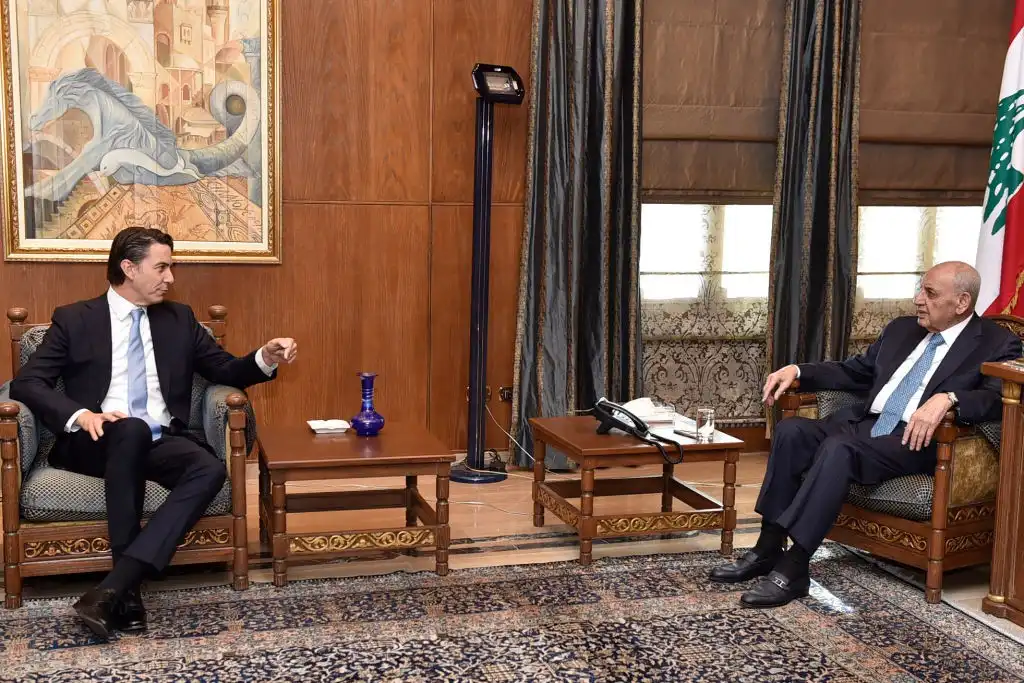
The US Special Envoy, Amos Hockstein, arrived today, Tuesday, in the Lebanese capital, Beirut, on an unannounced visit that comes against the backdrop of escalating regional tensions in the context of the Israeli war on the Gaza Strip, during which he met with the Speaker of the Lebanese Parliament and the Prime Minister of the caretaker government.


During the visit, the senior American envoy stressed that the United States “does not want to extend the escalation from the Gaza Strip to Lebanon,” and told reporters, after a meeting with the Speaker of Parliament, Nabih Berri, that restoring calm along the southern border of Lebanon is “extremely important.” As he says.

He explained that he listened to Berri's concerns about the tensions along the border areas in southern Lebanon, where Hezbollah fighters and Palestinian resistance factions in Lebanon have been exchanging fire with Israeli occupation army forces for about a month, in the wake of the devastating and violent Israeli war on the Gaza Strip.


Hockstein said, in a brief statement, that “the United States does not want to see the conflict in Gaza escalate and spread to Lebanon,” and added that he informed Berri of “what the United States is doing, which does not want what is happening in Gaza to escalate and does not want it to escalate.” It expands to Lebanon.


He continued: "Maintaining calm on the southern Lebanese border is of a high degree of importance to the United States, and it should also be for Lebanon and Israel, and this is what UN Resolution 1701 stipulates." While Berri's office said after the meeting, "The general situation and political and field developments were presented, in light of the escalation of the Israeli aggression against Lebanon and the Gaza Strip."


Later, Hockstein met with the Lebanese Prime Minister, Najib Mikati, and reviewed with him the developments, especially the military escalation on the border in the south, according to a statement from Mikati’s office. According to the statement, during the meeting, the American envoy informed Mikati that he “saw through his conversations that Lebanon and Israel do not want to escalate the situation.”


He said, "Research is underway to reach a humanitarian truce in Gaza, before moving to the other stages of the solution," without clarifying what it is. Note that Washington is content with calling for “humanitarian truces” and rejects a ceasefire. Claiming that Hamas will benefit from it by reorganizing its ranks.


On the other hand, a member of parliament for Hezbollah said today that Hezbollah will respond “toughly” to any Israeli attacks on civilians after an Israeli strike that resulted in the death of three children and their grandmother in southern Lebanon, in statements issued by Representative Ali Fayyad. During the funeral of the bodies of the four Lebanese.


In the southern village of Blida, near the border, hundreds of men and women walked in front of the four coffins wrapped in black and white flags, on Tuesday, to bury them in the local cemetery, noting that the four martyrs were killed in an Israeli strike on Sunday evening, targeting civilian vehicles in southern Lebanon.


Representative Fayyad stressed that "the resistance will not tolerate any aggression targeting Lebanese civilians. It will respond to every aggression exponentially, and it will return the blow twice," in statements that reflect the turbulent situation along the southern Lebanese border region.


Lebanese security officials say that the confrontations, which are considered the most violent in the border region of southern Lebanon since 2006, led to the death of more than 60 Hezbollah fighters and ten civilians. Meanwhile, seven Israeli soldiers and at least one civilian were killed.

PALESTINE

Tue 07 Nov 2023 5:52 pm - Jerusalem Time

Al-Qassam: Israel obstructs the release of 12 detainees of foreign nationalities

The military spokesman for the Al-Qassam Brigades, Abu Ubaida, said today, Tuesday, that Al-Qassam was about to release 12 detainees in Gaza who hold foreign nationalities, but the occupation obstructed that.


The Al-Qassam Brigades, the armed military arm of the Hamas movement, announced on Tuesday that it was about to release 12 detainees in Gaza who hold foreign nationalities, but Israel obstructed that.


The Brigades said, in a statement issued by the military spokesman for the Al-Qassam Brigades, Abu Ubaida, “Several days ago, we were about to release 12 detainees in Gaza who hold foreign nationalities, but Israeli occupation obstructed that.”


He added, "We still confirm that we are ready to release them, but the situation on the ground and the Zionist aggression that threatens their lives is what hinders this from being done."


The Al-Qassam Brigades have so far released four detainees, including two who hold American citizenship.


Abu Ubaida had confirmed in a previous interview that there was a group of detainees of different nationalities who were brought during Operation “Al-Aqsa Flood,” without it being possible to verify their identities.


He added, "We consider these people as our guests, and we seek to protect them, and we hope that they remain safe in light of the barbaric aggression against the Gaza Strip."


PALESTINE

Tue 07 Nov 2023 5:40 pm - Jerusalem Time

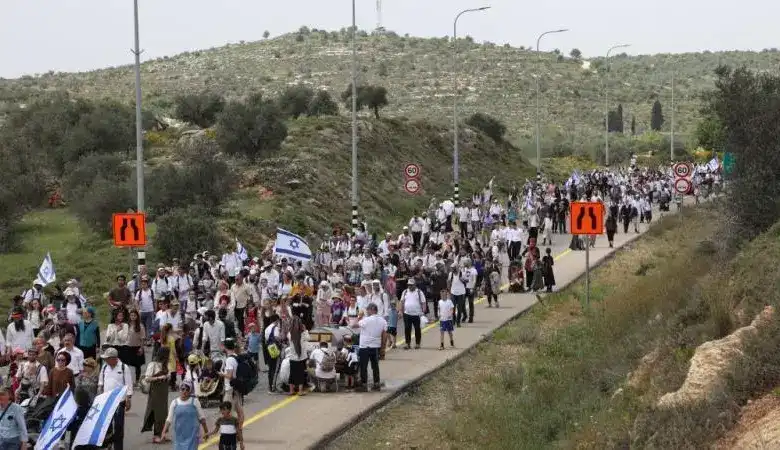
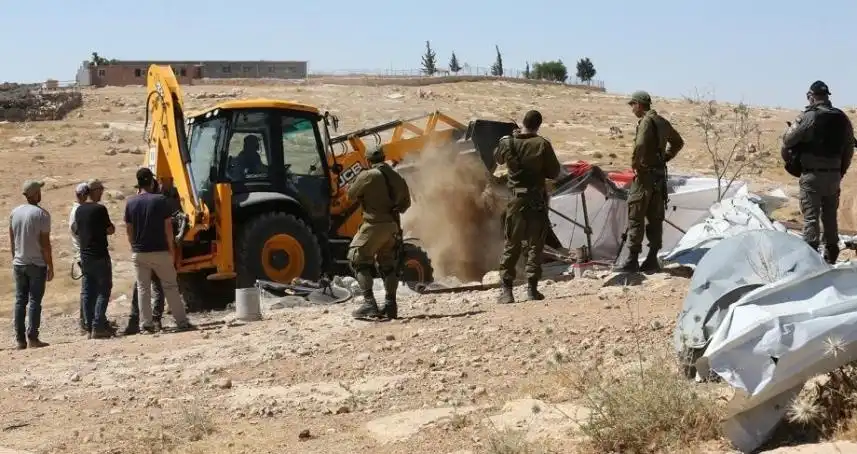
A provocative march by Israeli settlers south of Nablus

Dozens of settlers, protected by the Israeli occupation forces, participated this evening, Tuesday, in a provocative march near the town of Qasra, south of Nablus.


The mayor of Qasra, Hani Odeh, reported that dozens of colonists set out from the “Magdolim” settlement established on citizens’ lands south of Nablus, raising Israeli flags, towards the entrance to the town.


Odeh explained that the occupation army forced the farmers to leave the lands near the road that the march took

OPINIONS

Tue 07 Nov 2023 5:39 pm - Jerusalem Time

Russia’s Relationship with Hamas and Putin’s Global Calculations

Washington  Institute for Near Eat affairs

Washington Institute for Near Eat affairs

Opinion Writer

by Anna Borshchevskaya

There is no evidence Moscow knew about the October 7 attack, but it has provided support to Hamas and is taking advantage of the resultant blows to U.S. interests.


At least 16 Russian citizens died as a result of Hamas’s attack on Israel on 7 October, but Moscow did not condemn Hamas directly. And while the Kremlin labels some of its own—peaceful—political opponents as terrorists, it did not give this designation to Hamas.


Instead, President Vladimir Putin blamed US policies for the current Middle East crisis. He compared Israel’s blockade of Gaza to Nazi Germany’s siege of Leningrad—one of the most traumatic events in Russia’s history.


In this context, Putin offered to serve as a mediator between Israel and the Palestinians, while Hamas, according to Russian press reports, praised Putin’s position on the Israeli-Palestinian conflict. Russia has had a longstanding and well-documented relationship with Hamas. Still, Moscow’s response to the Hamas attack shows that it is aligning more explicitly with the global south as it seeks to erode the US-led liberal world order, what Putin claimed in June to be an “ugly neo-colonial system” coming to an end in favour of a multipolar world.


Longstanding Relationship with Hamas

Throughout the Cold War, the Soviet Union approached the Middle East through a rigid ideological lens. The KGB—the Soviet security agency— funded, trained, advised, and equipped anti-Western terrorist and militant groups in the region, including groups that saw the destruction of Israel as their primary goal.

The Soviet Union had no diplomatic relations with Israel from 1967, after the Six-Day War, until October 1991, approximately two months before the USSR ceased to exist. Throughout the 1990s and 2000s, the Russian government took a more flexible approach. It pursued good ties with Israel, styled itself as a mediator, joined the Quartet, and condemned acts of terrorism by Hamas.

Still, it did not label Hamas a terrorist organization. In February 2006, Putin invited then-Hamas leader Khaled Meshaal to come to Moscow after its legislative election victory over Fatah. Subsequently, Hamas praised Moscow for its support. Recognition of legitimacy was important to him. During his visit in March that year, Meshaal told Russian state Rossiyskaya Gazeta, “We always knew the day would come when we could visit world capitals.”


Speaking in August 2006 in Kazan, Russia’s then-foreign minister Evgeniy Primakov reportedly said that he considers Hamas a humanitarian organization but acknowledges it has a militant wing that commits terrorist acts. Since then, other Hamas visits to Russia followed and in 2010, Meshaal met with then-president Dmitry Medvedev.

Russian officials gave two reasons why they needed good relations with Hamas. First, a small number of Russian citizens, perhaps several hundred, lived in Gaza and worked at the Russian cultural center Kalinka, under the auspices of the Russian foreign affairs ministry.


In practice, though, Russian cultural centers are known to serve as intelligence fronts. Palestinian politicians, on their part, saw Moscow as a counterweight to the US.

Although Hamas opposed Bashar al-Assad during Syria’s long civil war that erupted in 2011, Russia’s position towards Hamas did not change even though it supported the Syrian regime. In November 2015, for example, Deputy Foreign Affairs Minister Mikhail Bogdanov reiterated that Russia does not consider Hamas (nor Hezbollah, for that matter) as a terrorist organization. Hamas leaders travelled to Kazan, the capital of Tatarstan, in September 2022 and to Moscow in March and September this year.


According to the Russian Foreign Ministry, the March meeting “touched on Russia’s unchanged position in support of a just solution to the Palestinian problem.” Hamas (and Iranian) officials were most recently in Moscow on 26 October after the Hamas attack on Israel.


Material Support

Russian-made weapons had found their way to Hamas for years. In May 2021, senior Hamas leader Osama Hamdan gave an interview to Russia’s investigative Novaya Gazeta.

In response to a question, “Where did Hamas get such a large number of Russian-made rockets used to attack Israel?” he said, “I think the Russian people should be proud they gave the oppressed peoples of the world weapons with which they can defend themselves. These weapons were sent to our region in the 60s and 70s.”

Putin’s Russia, for its part, at the very least, provided material support to Hamas. According to a 13 October Wall Street Journal report, Hamas-linked terrorist groups found ways to circumvent Western sanctions by utilizing Russia’s cryptocurrency exchanges.

Ukrainian Center of National Resistance said that members of the paramilitary group Wagner allegedly participated in the training of Hamas militants on “assault tactics and the use of small unmanned aerial vehicles to drop explosive devices onto vehicles and other targets.” Ukraine’s Head of Defense Intelligence, Kyrylo Budanov, said that Russia has recently supplied Hamas with weapons but did not provide evidence for these claims. Senior Hamas official Ali Baraka said in an interview that aired on Russia’s main propaganda outlet, RT, that Hamas has a license from Russia to locally produce bullets for Kalashnikovs and that Russia “sympathizes” with Hamas. He also claimed that Hamas’s attack would be taught in Russia’s military academies.


Moscow’s Global Calculus

There is no direct evidence that Moscow was involved in the 7 October attack or knew about it and looked the other way. But Putin benefits from the resultant chaos, including Western distraction from his war on Ukraine.

He is likely to use the opportunity to exacerbate this situation, including through cyber operations against US forces, disinformation campaigns, and the use of Wagner to support other anti-American actors in the Middle East. Most recently, Hamas reportedly gave access to an RT journalist to the tunnel network nicknamed the Gaza Metro. This shows the Kremlin will have added opportunities to shape the narrative with Arab audiences to fit Russia’s state objectives.

Earlier, Putin himself suggested that Western weaponry intended for Ukraine ended up in the Middle East through the black market. He said this was likely an effort to shape Arab audiences’ perceptions—to side with Russia over Ukraine and against the West over its support for Israel—to suggest that Israel is using Western weapons against Palestinians.

It may surprise some that Putin chose now to side so explicitly with Hamas after he personally cultivated Russia’s relationship with Israel for so long and jeopardized his image as a Middle East mediator who can talk to all sides. But the fact of the matter is, the Kremlin views world affairs through a narrow zero-sum prism: for Russia to win, the US and the West have to lose. This is a global vision, a challenge to the US-led liberal world order, which Putin threw most overtly by invading Ukraine, a war which Putin has cast as an existential battle with the West.


No matter the effort to cast himself as a mediator, he always leaned closer to anti-American forces in the Middle East. This trend simply accelerated after he invaded Ukraine and became more apparent.

Sure, there are risks and challenges for Putin now if the conflict between Israel and Hamas escalates and spills into other countries, but Putin has operated in less-than-ideal circumstances before. More to the point, he has not paid a price high enough to change his calculus.

Over a year and a half after the invasion, Russia has avoided global isolation. Moscow’s narrative on the war resonates outside the West, and it has been able to find avenues outside it to mitigate the effects of sanctions.


As Russia aligns closer with the global south to push for its alternative vision of a world order, it is going to seek to benefit, at a low cost to itself, from distraction from Ukraine in the West, the rise of anti-American sentiment in the Middle East, and empowering anti-American forces. In other words, it will seek to escalate with the West, either directly or through proxies. The US must do more to convince non-Western partners that Russia’s vision of the world order is a losing one and think creatively about how to impose costs on Moscow in a way that shifts Putin’s strategic calculus—that the cost of escalating with the West outweighs the benefits.

Anna Borshchevskaya is a senior fellow in The Washington Institute’s Diane and Guilford Glazer Foundation Program on

ARAB AND WORLD

Tue 07 Nov 2023 5:33 pm - Jerusalem Time

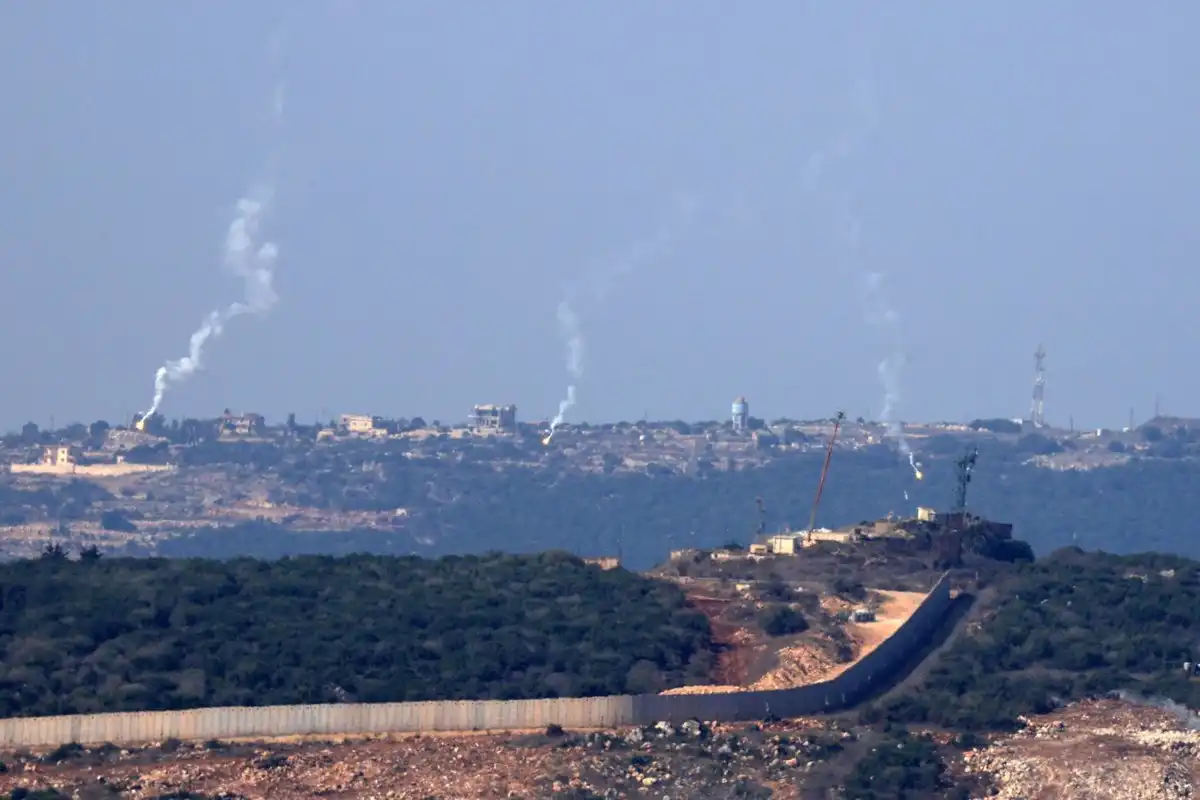
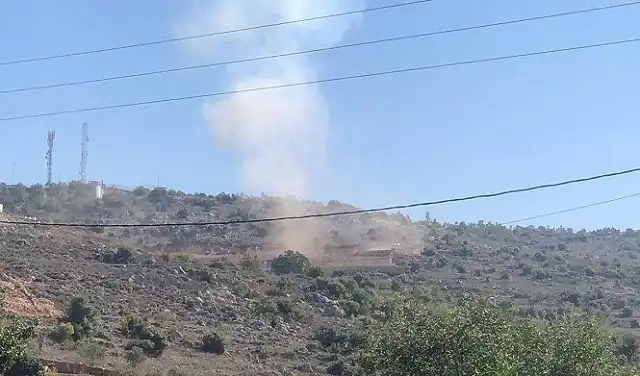
Launching missiles towards Israeli sites and occupation artillery bombing sites in southern Lebanon

Israeli artillery bombed sites in southern Lebanon, today, Tuesday, following the firing of about 20 rocket shells from the eastern sector towards Israeli sites, while Israeli air defenses intercepted a number of shells and some of them landed in open areas, after sirens sounded in Israeli border towns, and in The occupied Syrian Golan.


Earlier on Tuesday morning, the Israeli army closed several streets in the Upper Galilee, and the Home Front called on the residents of 10 Israeli towns (most of which were evacuated) to remain near “safe places.” The warning on the home front included the border towns: “Maayan Baruch,” “Kfar Giladi,” “Misgav Am,” “Manara,” “Yifthah,” “Malikiyah,” “Kfar Yuval,” “Metula,” “Margaliot,” and “Ramot Naftali.” ".


These measures come in light of Israeli fears of targeting vehicles or people moving in this area with anti-armour missiles. It is noteworthy that the Israeli army clarified that “there is no tangible security incident,” but despite this, it was decided to block the roads after assessing the situation. It is noteworthy that the roads were closed after they were opened to traffic yesterday afternoon, Monday.

For a month, the border areas in southern Lebanon have witnessed mutual and escalating bombardment between the Israeli army on the one hand and Hezbollah and Palestinian factions in Lebanon on the other hand, in light of the devastating war that Israel has been waging on the Gaza Strip since last October 7 with Western support. Absolutely, especially from the United States, France, Britain and Germany.

ARAB AND WORLD

Tue 07 Nov 2023 5:17 pm - Jerusalem Time

China proposes and America rejects an “immediate humanitarian truce” in Gaza

Security Council disagreements come to light after a closed session on the war


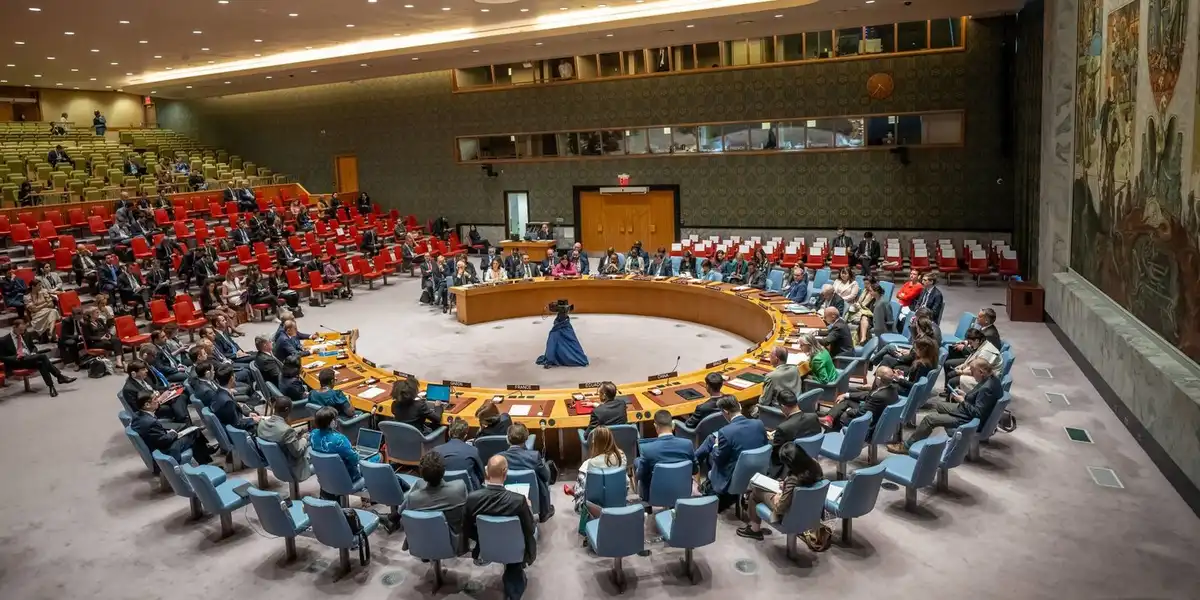
The five permanent members of the Security Council failed, during a closed consultation session that was dominated by “tension,” according to diplomats, to agree on the draft resolution proposed by the ten elected countries, due to continuing disagreements over the nature of the desired humanitarian truces, to deliver urgent aid to more than two million besieged Palestinian civilians. In Gaza, which was turned by Israeli bombing into a cemetery for children under the slogan of eliminating “Hamas.”


Asharq Al-Awsat learned from a diplomat in the Council that the President of the Security Council for the month of November, the Chinese Permanent Representative to the United Nations, Zhang Jun, proposed a minimum consensus on a group of “elements for the press” that includes “a demand for an immediate ceasefire.” In addition to “ensuring the unhindered delivery of humanitarian aid.” However, the alternative US representative for political affairs, Robert Wood, rejected the Chinese proposal.


Paris conference

Following the closed meeting, which lasted for approximately two hours, the French Permanent Representative to the United Nations, Nicolas de Rivière, stated, referring first to the humanitarian conference organized by French President Emmanuel Macron, Thursday, in Paris, with the participation of the Commissioner-General of the United Nations Relief and Works Agency for Palestine Refugees in the Near East. (UNRWA) Philippe Lazzarini, and the United Nations Under-Secretary-General for Humanitarian Affairs, Emergency Aid Coordinator, Martin Griffiths, said, “What we must do is protect civilians and provide humanitarian relief to them,” explaining that to achieve this, “we need humanitarian truces, we need to provide access to UN agencies and non-governmental organizations, and this must happen now.”


Chinese position

The French diplomat avoided answering questions about the difference in views between his country on the one hand, and the United States and Britain on the other.


Then the President of the Security Council came out with the Emirati delegate, Lana Nusseibeh. He pointed out that “Israeli attacks hit hospitals, refugee camps, schools, United Nations buildings, places of worship, and other civilian facilities in the Gaza Strip,” adding that “in the midst of this catastrophic situation, we stressed the need for the Security Council to act urgently and adopt a meaningful and implementable resolution.” ». She urged all parties to “take urgent steps towards cessation of hostilities, to ensure the protection of civilians,” calling on the parties to the conflict to “facilitate the continuous and adequate provision of basic goods and services without obstacles to all civilians throughout the Gaza Strip.” He explained that “services include electricity, water, fuel, food and sustainable medical supplies.”


The situation is “catastrophic”

Lana Nusseibeh said that in the midst of “the catastrophic situation, we stress the need for the Security Council to act urgently and adopt a meaningful and implementable resolution,” calling for “an urgent humanitarian ceasefire.” She urged “all parties to take urgent steps towards cessation of hostilities, to ensure the protection of civilians,” calling on the parties to the conflict to “facilitate the continuous, adequate and unimpeded provision of basic goods and services to all civilians throughout the Gaza Strip.” This must include sustainable and widespread electricity, water, fuel, food and medical supplies.”


The next day

The American delegate separately acknowledged that the United States is working to reach humanitarian truces. He told reporters: “We are interested in continuing the dialogue on this matter,” acknowledging that “there are disagreements within the Council.”


In response to a question about the next day after the elimination of Hamas’ rule in Gaza, Wood replied: “We have not reached this stage.” He expressed “concern about any type of violence taking place along the border with Lebanon,” explaining: “We do not want this war to spread (...) We believe that it is not in anyone’s interest for this war to extend to Lebanon.”

ARAB AND WORLD

Tue 07 Nov 2023 4:46 pm - Jerusalem Time

Trends in Israeli public opinion in light of the war on Gaza and the future of the Netanyahu government

As soon as the extent of the Israeli losses among the military and civilian ranks became clear, and the various forms of the Netanyahu government’s negligence became apparent, specialized analysts, especially senior retired military officers, on the main Israeli television channels and in other media outlets, came forward to criticize the government and Netanyahu.


introduction

As the Israeli aggression on the Gaza Strip continues, the government of Israeli Prime Minister Benjamin Netanyahu finds itself facing many internal challenges, the most prominent of which is the lack of confidence in it among a large segment of the Israeli public. The position of Israeli public opinion towards the government and its president is determined by two basic factors: the judicial coup that Netanyahu’s government has begun to implement since its formation on December 29, 2022, and the Al-Aqsa Flood operation that, on October 7, 2023, shook Israeli society and threw its leaders off balance.


First: Questions about failure

ince the beginning of the year 2023, Israeli society has witnessed a long and bitter conflict and severe political and social polarization that it had never seen before, following the Netanyahu government’s initiation of the judicial coup, which aimed to weaken the judiciary and subject it to the executive authority. To rule without checks and balances; This is despite the opposition of the majority of Israeli society and its various elites, especially the military establishment, to the judicial coup. The intense conflict between the Netanyahu government, the protest movement, and the entire anti-government camp led to a decline in the popularity of Netanyahu and his government coalition.


The Al-Aqsa Flood operation, which occurred when the conflict within Israeli society was at its most intense, did not only lead to the collapse of the Netanyahu government’s strategy and its overall perceptions and assumptions regarding the Gaza Strip, but it also led to an increase in the Israelis’ loss of confidence in the government and its president, and to a decline in its popularity and his popularity, reaching rock bottom. 

The majority of Israeli society held it responsible for the negligence and failure that occurred on October 7, and then its failure to deal with the results of Operation Al-Aqsa Flood in various areas: such as delaying access to the dead and wounded Israelis, inability to recognize their names, and confusion in identifying The number of Israeli prisoners and missing persons, and the delay in providing aid, especially economic aid, to the kibbutzim and towns that were attacked and located adjacent to Gaza.


As soon as the extent of the Israeli losses among the military and civilian ranks became clear, and the various forms of negligence of the Netanyahu government became apparent, specialized analysts, especially senior retired military officers, rose up on the main Israeli television channels and in other media outlets to criticize the government and Netanyahu, and held him responsible for the negligence and failure in confronting the Al-Aqsa flood operation, and in dealing with its consequences. 

Many specialized analysts, especially senior retired military officers, have linked the judicial coup led by the Netanyahu government to the major failure on October 7. These analysts focused on the warnings directed by the leaders of the military and security establishment to Netanyahu about the dangers of a judicial coup against the military and security establishments, and on his rejection of these warnings. They held him and his government responsible, and some of them called on him to resign immediately, before the end of the war. 

In this atmosphere, and at a time when the discourse of critics of the government remained dominant in the media, from specialized analysts or from the families of the dead and missing, and residents of kibbutzim and towns that were subjected to attacks and losses, the appearance of ministers in the central Israeli media decreased. Netanyahu or his ministers did not dare to visit these kibbutzim and towns, or participate in the funerals of the dead Israelis, or visit their families to condole them, or visit the wounded in hospitals.


Second: Public opinion trends

The first public opinion poll, conducted by Maariv newspaper after the Al-Aqsa Flood operation, showed the extent to which the operation and its results affected the popularity of Netanyahu and his government. It is clear from this poll, which was conducted five days after the operation and published on October 13, that the parties of the government coalition led by Netanyahu, which has 64 seats in the current Knesset, will obtain only 42 seats if the Knesset elections are held. As for the parties The opposition will obtain 78 seats, including 10 seats for the Arab parties, noting that the government coalition parties obtained 55 seats in the previous Maariv poll, which it conducted several days before the Al-Aqsa Flood operation, compared to 65 seats for the opposition parties[1].


This poll also showed that the Official (National) Camp Party, led by Benny Gantz, won 41 seats in the Knesset (it had obtained 29 seats in the previous poll conducted several days before the Al-Aqsa Flood operation), and 19 seats for the Likud Party (28 seats). In the previous poll), 15 seats for the Yesh Atid Party (16 seats in the previous poll), 7 seats for the Shas Party (10 seats in the previous poll), 7 seats for the United Torah Judaism Party (7 seats in the previous poll), and 6 seats for the Meretz Party (4 seats In the previous poll), 10 seats were given to Arab parties (10 seats in the previous poll). It is noted in this poll that Gantz’s party, which is supported by the military establishment, is the biggest winner after the Al-Aqsa Flood operation. In just a week, its number of seats increased by 12 seats, while the biggest loser was the Likud Party, which declined by 9 seats. The number of seats for the Jewish Power and Religious Zionist parties also declined.


This means that the rising powers are the right-wing nationalist forces with a secular-military tendency, and are led by generals who have previously criticized Israeli governments, including Netanyahu’s governments, by hesitating in wars on Gaza, and not daring to eliminate the Islamic Resistance Movement “Hamas” and being content with a balance of deterrence with it.


As for Netanyahu's popularity, it has witnessed a severe decline. In answering the question: “Who is better and more suitable for the position of prime minister, Netanyahu or Gantz?”, 48 percent answered that Gantz is better, compared to 29 percent for Netanyahu. In answer to the question: “Who do you want to be prime minister after the war ends, Netanyahu or someone else?”, only 21 percent reported that they wanted Netanyahu, compared to 66 percent who wanted someone else. It is noteworthy that only 46 percent of those voting for the Likud Party said that they want Netanyahu, compared to 34 percent of them who preferred someone else[2].


Another public opinion poll published by Maariv, on October 20, one week after its previous poll, showed similar results for the government coalition parties, which obtained 43 seats, and the opposition parties, which obtained 77 seats (including 10 For Arab parties)[3]. This poll showed that 80 percent of Israelis believe that Netanyahu should bear responsibility for the failure and negligence on October 7. 

The same thing was done, in the days preceding the survey, by the leaders of the military and security establishment, including the Minister of Security, the Chief of Staff of the Israeli Army, the Head of Military Intelligence (AMAN), and the Head of General Intelligence (Shin Bet). According to this poll, 48 percent saw Gantz as the most suitable for the position of prime minister, compared to only 28 percent for Netanyahu[4].


The results of the Maariv poll, published on October 27, 2023, were similar to its previous poll a week earlier, and its subsequent poll, published in November 2023[5].


A public opinion poll broadcast by Israeli Channel 13 on November 3 showed that 56 percent of Israelis do not trust Netanyahu in managing the war on Gaza, compared to 28 percent who trust him[6]. On October 7, 44 percent held Netanyahu responsible for the negligence and failure, while 33 percent held the Chief of Staff and senior army commanders responsible for this, and only 5 percent held it on Defense Minister Yoav Galant. 76 percent believed that Netanyahu should resign as prime minister, and 47 percent believed that this resignation should occur after the end of the war, while 29 percent believed that it should occur immediately, and only 18 percent believed that Netanyahu should continue to carry out his duties, 64 percent expressed the necessity of holding new elections for the Knesset when the war ends, compared to 26 percent who opposed holding elections before their date. 68 percent believed that the government’s handling of the economic situation after the Al-Aqsa Flood operation was not good, compared to 19 percent who said it was good. 74 percent supported the formation of an official, independent investigation committee with broad powers after the war to investigate the failure, compared to 12 percent who supported the formation of a government investigation committee with limited powers[7].


Conclusion

Israeli public opinion polls, conducted since Operation Al-Aqsa Flood and the start of the Israeli war on the Gaza Strip, indicate that Netanyahu and his government coalition continue to lose the confidence of the Israelis, and a decline in his popularity and that of the Likud Party. 

The prevailing assumption in Israeli public opinion and its various elites has become that Netanyahu's political future is almost over. Netanyahu feels in grave danger (he is still on trial in three corruption cases); not only because of the decline in his popularity and the popularity of his party and government coalition, but also because of the decline in his popularity among Likud Party supporters and voters. Public opinion polls show that more than a third of the party's voters want someone else as prime minister instead of Netanyahu when the war ends. Add to this the noticeable increase in restlessness among many members of the Knesset from the Likud Party, and some of its ministers, who criticize it and demand that it bear responsibility for failure, through numerous leaks in the Israeli media. In light of the internal conflict that Netanyahu is waging with members of his party on the one hand, and with the leaders of the military establishment on the other hand, the war on Gaza may be prolonged. If Israel is forced to stop the war, Defense Minister Yoav Galant and the military establishment are likely to accuse Netanyahu of stopping the war before it achieved its goals of eliminating Hamas and its rule in Gaza. It is clear that the alternatives currently proposed combine extreme nationalist positions, secularism, and militarism.


[1] “The coalition is collapsing, Likud is only 19, and Gantz is on the rise,” Maariv, 10/13/2023. (in Hebrew)


[2] Ibid.


[3] “Unprecedented data: Gantz opens a gap over Netanyahu in his suitability to head the government,” Maariv, 10/20/2023. (in Hebrew)


[4] Ibid.


[5] Maariv Poll, 11/3/2023.


[6] “Channel 13 News Poll: Who is responsible for the negligence, and should Netanyahu resign?”, Channel 13, 11/3/2023, viewed on 11/7/2023, at: https://tinyurl.com/2bxmnxs2 ( in Hebrew)


[7] Ibid.

PALESTINE

Tue 07 Nov 2023 4:39 pm - Jerusalem Time

Israeli authorities threaten to demolish residential facilities in the northern Jordan Valley

Today, Tuesday, the Israeli authorities notified the demolition of residential facilities in the northern Jordan Valley.


Human rights activist Arif Daraghmeh reported that the occupation forces, accompanied by the Settlements Council, stormed the Al-Malih area and were notified of the demolition of residential facilities.


The official in charge of the Jordan Valley file in Tubas Governorate, Moataz Bisharat, also indicated that the “Settlements Council” had notified of the demolition of the homes of citizens Youssef Abdel Rahman Rashid and Muhammad Abdel Rahman Rashid, in the Hammamat Al Maleh area.


He added that a force from the Settlements Council, accompanied by Israeli police, also raided Almeita community in the northern Jordan Valley and began collecting information about the residents and photographing their ID cards.

ARAB AND WORLD

Tue 07 Nov 2023 4:07 pm - Jerusalem Time

Israeli analysts and officials: Foreign media do not trust the army’s story, and clearer evidence is needed

Videos presented by the Israeli occupation army spokesman that he believes reveal the existence of tunnels under hospitals in the Gaza Strip received attention from the Israeli media, as one spokeswoman believed that the foreign media does not trust this and that clearer evidence must be presented, while another believed that the matter comes within the framework of Preparing the world for the upcoming stages.


The occupation army spokesman, Daniel Hagari, had published a video clip showing what he said was a tunnel located under the Hamad bin Khalifa Hospital, which was funded by the Qatari government to serve the residents of Gaza. This was denied by the Gaza Strip government, stressing that these allegations are part of a disinformation campaign carried out by the occupation targeting Justifying the bombing of hospitals. Channel 12 quoted Dafna, a political correspondent for the channel, that despite their confidence - in Israel - in what the army spokesman put forward, he must present more clear matters in order to be able to convince the international media. She said, “We must understand that the foreign media that he is talking to "Hajari doesn't understand things like us."


She added, "We must know how to overcome this gap... between the trust we have and the lack of trust in the global media. We must provide materials that this media can deal with."


While the channel's military correspondent, Nir Davori, believed that what Hagari presented showed the extent to which the Islamic Resistance Movement (Hamas) used hospitals in the Gaza Strip above and below ground, as he claimed, indicating his belief that this was "preparing the world for the upcoming preparations that Israel intends to make."


Meanwhile, Nimrod Sheffer, former head of the Planning Department and Air Force Command, asked Channel 13 what the government intends to do the day after the operation, after the army announced that the blow to the Hamas movement was so strong that its organization no longer poses a practical threat.


As for Channel 11, it quoted former Prime Minister Ehud Barak as confirming that while doing anything to free the detainees in Gaza, with wisdom, deep understanding and information, he said in this context, “We must understand that these people are not the same case as Shalit, who was a survivor of a killed tank crew. He was captured as a result of a failed military operation by us.”


He added in this context, "The tank crew should have killed the terrorists and not been killed by them, but in this case we are talking about people kidnapped there as a result of the negligence of the State of Israel. It is morally unacceptable to sacrifice them."


Meanwhile, political analyst Amnon Abranovich told Channel 12 that the ideal thing is to return the detainees in Gaza and “exterminate everyone who participated in the massacre, disarm Hamas and Gaza, and for another body, whether the authority or others, to restore a demilitarized Gaza,” he said. He added that the public in Israel is united, there is neither right nor left, and the majority of them are in the center, and the true image of victory is social, in addition to restoring the borders with Gaza and returning citizens to the southern borders and the northern borders.
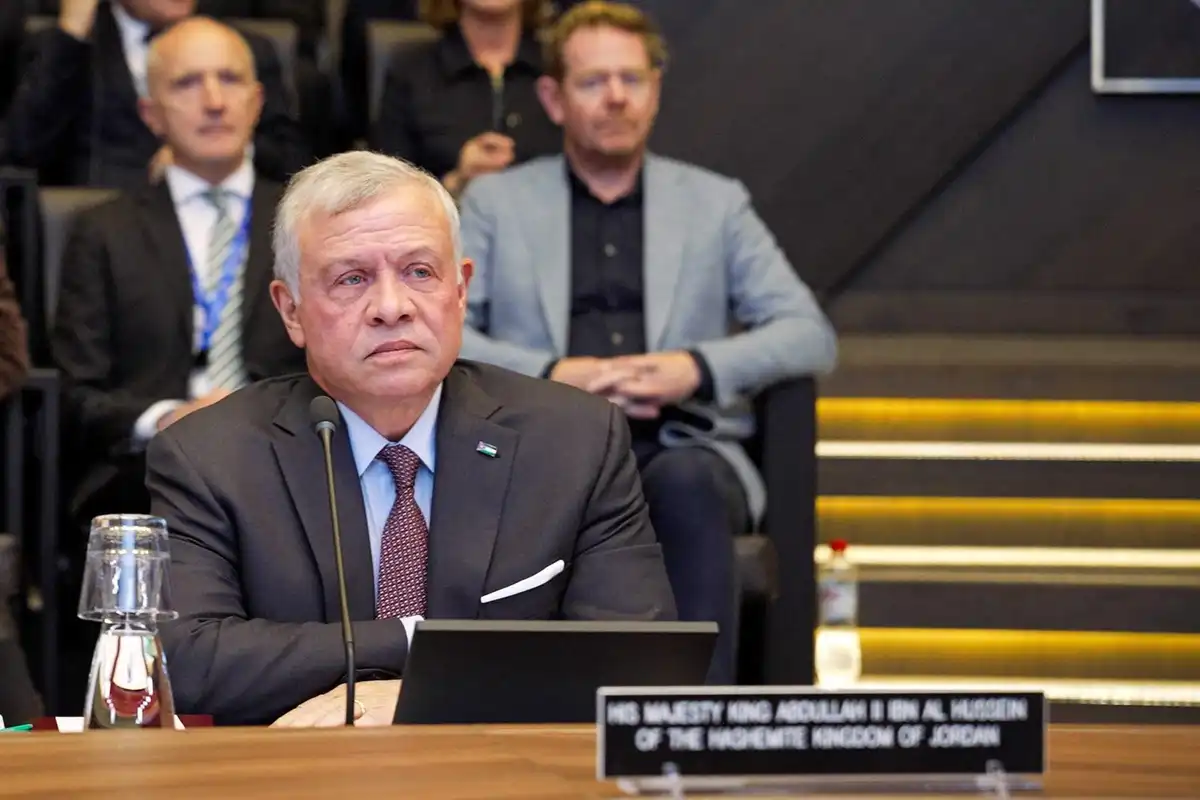

On the other hand, Yossi Keren, acting head of the local council, Shaher Hanegev, said that for the settlers of the Gaza envelope to be able to return, this must be through the army assuring them that it is possible to do so safely, because trust still exists in the army, which means the weakness of that trust is in the Politicians.


Source: Al Jazeera

PALESTINE

Tue 07 Nov 2023 3:39 pm - Jerusalem Time

The Journalists Syndicate delivers a protest note to United Nations and organizes a coffin march in Ramallah

Today, Tuesday, the head of the Palestinian Journalists Syndicate, Nasser Abu Bakr, delivered a letter of protest to the United Nations, rejecting the crimes of genocide against journalists in the Gaza Strip, and the targeting of their homes and families at the hands of the Israeli occupation forces.


This came after a "coffin march" that started in front of the Ramallah Cultural Palace towards the neighboring United Nations headquarters, with the participation of dozens of journalists, who carried empty coffins on which were placed pictures of their dead colleagues who died in Gaza during the Israeli's aggression that has been going on for 32 days.


The letter called on international institutions to assume their responsibilities in providing protection for journalists, and to put an end to the targeting of journalists and media workers, in an attempt to prevent the transmission of the image and truth of the crimes committed by Israeli forces against civilians in Gaza.


Statistics from the Journalists Syndicate indicate that 31 journalists have been killed since the start of the aggression on the Gaza Strip, the most recent of whom is correspondent for the Palestinian News and Information Agency “Wafa,” Muhammad Abu Hasira, who died today along with a number of his family members, in an Israeli bombing that targeted his home in Gaza City, in addition to 10 others of those working in the media sector, two photojournalists have been missing since the 7th of last month.

ARAB AND WORLD

Tue 07 Nov 2023 2:13 pm - Jerusalem Time

World Health: Surgical operations without anesthesia in Gaza and medical teams lose 160 people

The World Health Organization said today, Tuesday, that more than 160 health care workers have died while serving in Gaza, due to the Israeli aggression that has been continuing for more than a month, noting that surgeries are being performed on some people in Gaza without anesthesia, including surgeries. Amputation.


According to the organization's data, Israel has carried out 229 attacks on hospitals and health care centers since the outbreak of the war in the Gaza Strip on October 7.


Data published on the organization's website indicate that, as of November 6, these attacks resulted in the deaths of 509 Palestinians, including citizens, patients, and medical staff, in addition to the injury of 447 others.


The number of hospitals in Gaza is 34, of which the Ministry of Health directly manages 13 with a bed capacity of 2,011 beds, while the United Nations Relief and Works Agency for Palestine Refugees (UNRWA) provides health services to more than 70% of the population of the Strip.


Some health institutions are managed by government agencies, such as military medical services, or health organizations such as the Red Crescent, Medical Relief, and others.


Targeting and losses

The sector also includes a number of clinics and dispensaries affiliated with the Ministry of Health, and charitable societies that contribute to providing primary medical services within residential neighborhoods.


Since October 7, the Israeli army has been waging a devastating war on Gaza, in which more than 10,000 Palestinians were killed, including 4,104 children and 2,641 women, and more than 25,000 others were injured, in addition to the killing of 160 Palestinians and the arrest of 2,150 in the West Bank, according to official sources.


Many hospitals in the northern Gaza Strip have been evacuated, and the surroundings of some hospitals are being bombed, while others have stopped working because they were damaged by the bombing or as a result of running out of fuel necessary to continue their work.


Two days ago, dozens of Israeli doctors called in a petition for the army to bomb Al-Shifa Hospital, the largest in the Gaza Strip, claiming that it includes a headquarters for Palestinian militants.


These doctors were preceded by dozens of Israeli rabbis who issued a similar call to the Israeli army to bomb hospitals in the Gaza Strip, according to the Hebrew “HaMedash” website.


According to the Government Information Office in the Gaza Strip, the number of hospitals that completely stopped serving during the Israeli war reached 16 hospitals.


Meanwhile, 18 other hospitals remain, all of which are operating partially and under dire circumstances.

ARAB AND WORLD

Tue 07 Nov 2023 1:57 pm - Jerusalem Time

The King of Jordan confirms his rejection of any attempt to separate the West Bank and Gaza

The Jordanian newspaper reported on King Abdullah’s emphasis on the necessity of working to achieve a ceasefire in Gaza and protecting civilians, and the importance of respecting international humanitarian law, ensuring the delivery of relief and medical aid to the Gaza Strip, and supporting international organizations working there.


The Jordanian King also pointed out, during his meeting with the President of the European Commission in Brussels, the necessity of working towards a radical solution to the Palestinian-Israeli conflict on the basis of the two-state solution, in the post-war phase.


For her part, the European official said that she confirmed to King Abdullah her rejection of the forced displacement of Palestinians from Gaza and the European Union’s support for the two-state solution.


Von der Leyen stated through her account on the “X” platform that she discussed with King Abdullah the current situation in the Middle East, noting that he has a “vital role” in ensuring stability.

ARAB AND WORLD

Tue 07 Nov 2023 1:45 pm - Jerusalem Time

State Department officials criticize Biden's policy toward Israel in a memorandum of dissent

State Department staff criticized President Biden's full support for Israel's bombing of Gaza in a dissenting memo, according to Politico.


Politico says Tuesday it is on the memo, which said that the harsh criticism of Biden's handling of the war reflects the feelings of many American diplomats, especially at the mid-level and lower levels. The Huffington Post also previously reported that a "rebellion" was brewing within the State Department.


One of the provisions in the memorandum calls for the United States to support a ceasefire in Gaza, while the Biden administration said it supports a “humanitarian truce” but refused to use the term ceasefire.


The memo also calls on Biden administration officials to publicly criticize Israeli military tactics and treatment of Palestinians. The memo says the lack of public comments critical of Israel “contributes to regional public perceptions that the United States is a biased and dishonest actor, which at best does not serve US interests around the world, and at worst harms them.”


The memo said: “We must publicly criticize Israel’s violations of international standards, such as the failure to limit offensive operations to legitimate military targets.” She adds: "When Israel supports settler violence and illegal land seizures or uses excessive force against Palestinians, we must publicly declare that this conflicts with our American values so that Israel does not act with impunity."


The memo criticizes the United States for accepting the high rate of civilian casualties in Israeli bombing, saying that doing so “generates doubt in the rules-based international order that we have long defended.”


According to Politico, it is not yet clear how many people signed the memo or whether it was actually submitted to the State Department's opposition channel, which was created during the Vietnam War to give diplomats a way to criticize policy.


The report said that the strong memorandum is unlikely to significantly influence President Biden or his senior aides, at least not anytime soon.

ARAB AND WORLD

Tue 07 Nov 2023 1:38 pm - Jerusalem Time

Axios: The war in Gaza creates tensions in American workplaces

The American website "Axios" published a report on Monday saying that Israel's war on Gaza has begun to provoke "sharp polarization" within American workplaces due to the sharp difference in opinions, which may sometimes develop into disagreements that may negatively affect the progress of work, creating pressure on workers. And officials alike.


The website says that Arab and Muslim employees feel that "their pain is not recognized, and they fear retaliation at work. Meanwhile, Jewish employees have concerns about anti-Semitism."


The website explained that this situation adds more complexity to workplace laws related to diversity, equality, and inclusion that have become common in recent years, as managers may be forced to separate colleagues who stand on two different sides on most issues.


The polarization of opinions reached social networking sites, which employees used to express their positions on the war on Gaza, and these opinions led to a series of dismissals or other disciplinary or punitive measures in the workplace by employers concerned about their employees’ opinions about the conflict. According to the site.


Axios says that in some companies, managers have decided to issue decisions to block comments on various platforms to discourage heated conversations.


It is noteworthy that the newspaper "Politico" reported that the editor-in-chief of Artforum, David Velasco, was fired by his publisher, "Penske Media", after he published an open letter on the site calling for a ceasefire and indicating that Israel is responsible for the beginning of the genocide. Collective.


Michael Eisen was also removed from the position of editor-in-chief of the scientific journal eLife after retweeting a satirical article criticizing Israel, according to the newspaper.


The newspaper explained that the senior executive director of the Hollywood talent company Creative Artists Agency, Maha Dakhil, stepped back from her leadership roles after re-publishing a story on Instagram that implied that Israel was committing genocide.


The newspaper also noted that many law students had their job offers canceled after publicly criticizing Israeli measures. The statements range from expressions of sympathy for the Palestinians to strong anti-Israel criticism.


Axios said that at a non-profit human rights organization in New York, a group conversation about the war between Israel and Hamas became so heated that the CEO had to send an email asking his employees to be discreet.


Some workplaces have begun to make exceptional decisions to keep pace with the changes accompanying the conflict, according to Axios, who explained that the Salaam Hotel chain conducted listening sessions in companies with employees to talk about the war and to discuss combating stereotypes and building empathy when you disagree with someone.


The site indicated that for a long time, corporate cultures were relatively isolated from politics, but the matter has changed since at least 2020, after the killing of a young man of African descent, George Floyd, at the hands of members of the American police, as companies allowed conversations about social justice or racism. , or posted messages on social media to express their solidarity.


But the situation in the Middle East turned out to be much more difficult, as Salam Hotel told the site that the war on Gaza affected people and strengthened division in an unprecedented way.


The war also divided groups that were usually on the same side. In Hollywood, for example, “a bastion of progressive politics,” the war revealed divisions that many did not know existed, the New York Times reported.

In turn, Politico explained that, so far, most dismissals appear to have been due to expressing pro-Palestinian opinions, as the US-based advocacy organization Palestine Legal reported that it had responded to more than 260 cases targeting people's "livelihoods or jobs."