PALESTINE

Sat 11 Nov 2023 6:00 pm - Jerusalem Time

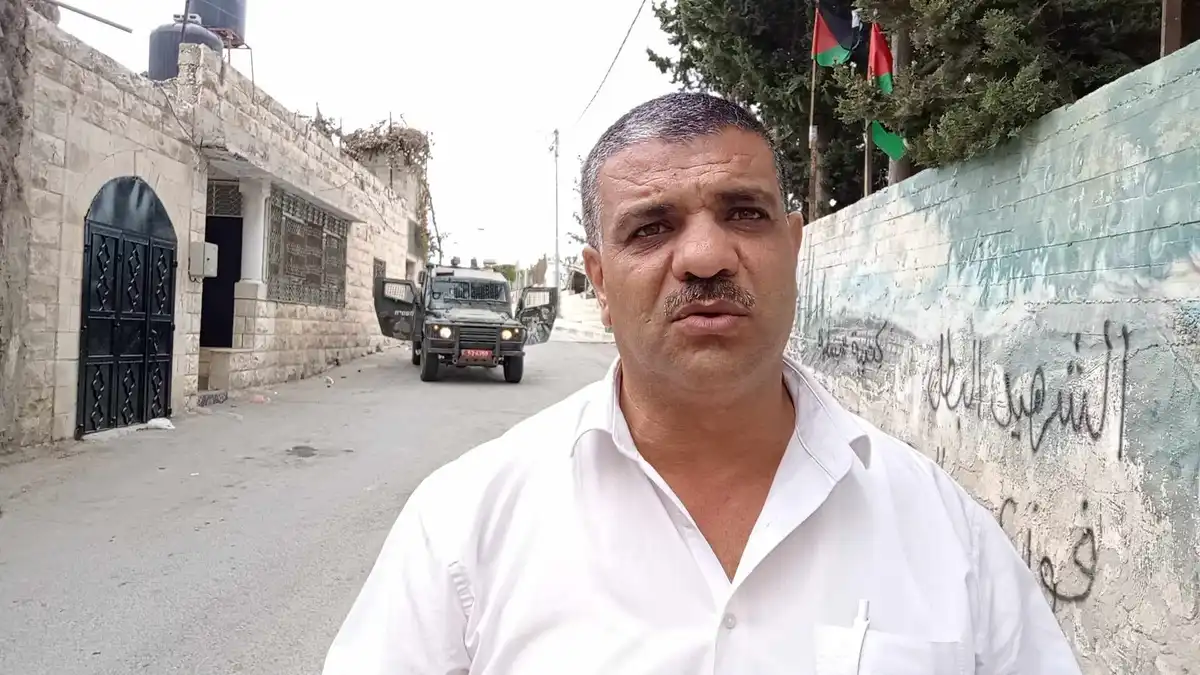
Israeli army arrests the mayor of Sebastia, northwest of Nablus

Today, Saturday, Israeli occupation forces arrested the mayor of Sebastia, northwest of Nablus.


According to local sources, Israeli occupation forces arrested Muhammad Azem, mayor of Sebastia, as he passed through a surprise checkpoint near the town of Zawata, northwest of Nablus.

PALESTINE

Sat 11 Nov 2023 5:43 pm - Jerusalem Time

A young Palestinian was killed by Israeli army south of Jenin

A young Palestinian was killed this Saturday evening by Israeli occupation forces during their storming of the town of Arraba, south of Jenin.


According to local sources, the occupation forces stormed the town of Arraba, and as a result, confrontations broke out in the southern side, during which bullets were fired at the young men, which led to the martyrdom of the young man, Wissam Jamal Hamran.

PALESTINE

Sat 11 Nov 2023 5:20 pm - Jerusalem Time

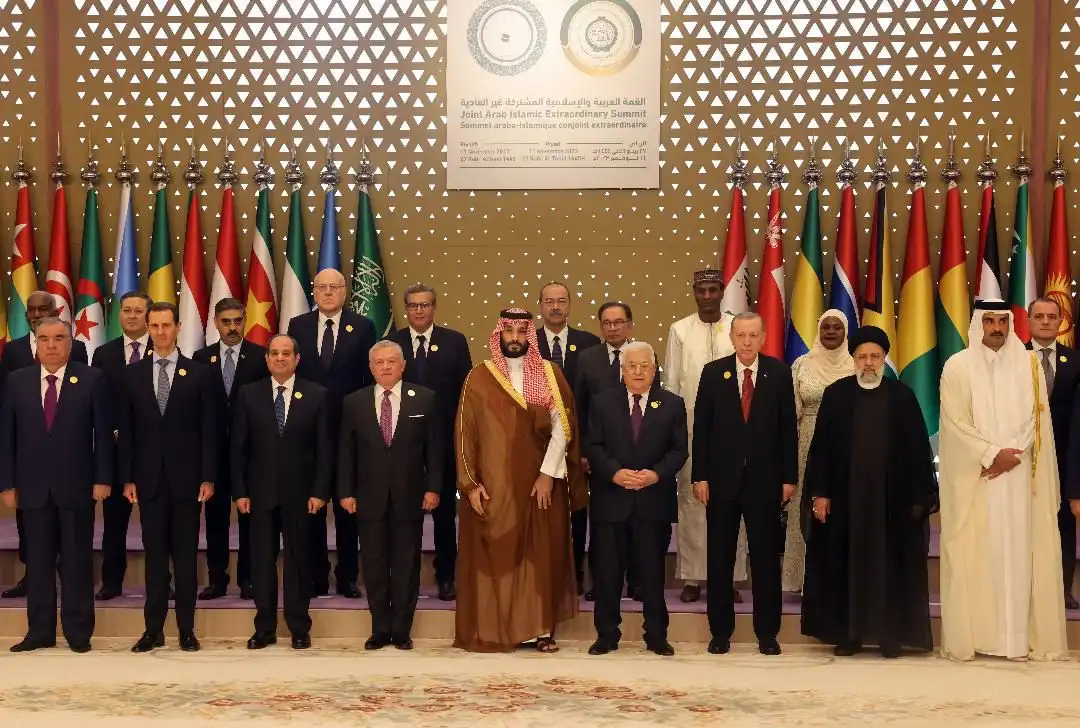
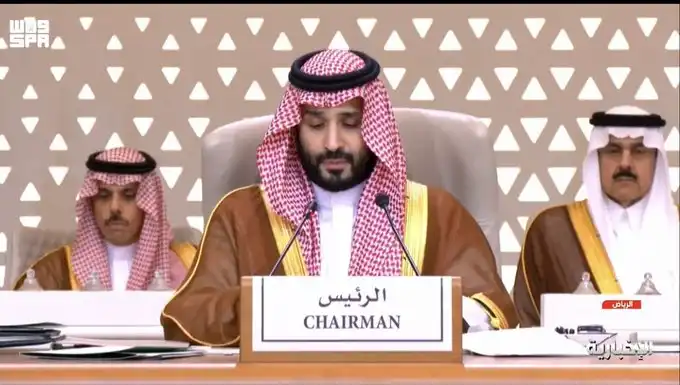
President Abbas: We call on the Security Council to stop the aggression and prevent the displacement of our people

President Mahmoud Abbas called on the Security Council to assume its responsibilities to immediately stop the brutal aggression against our people, and to secure the entry of medical and food supplies and provide water, electricity and fuel into the Gaza Strip, and to prevent the displacement of our Palestinian people in Gaza, the West Bank and Jerusalem.


President Abbas said in his speech before the extraordinary joint Arab-Islamic summit held in Riyadh, today, Saturday, that we will not accept military and security solutions, after all of them have failed, and after the occupation authorities undermined the two-state solution, and replaced it with deepening settlement, policies of annexation, ethnic cleansing, and racial discrimination. In the West Bank and Jerusalem, the siege of the Gaza Strip, and the violation of the historical and legal status of Islamic and Christian sanctities. We will continue our steadfastness in our land and will not compromise on the legitimate rights of our people.


He stressed that the Gaza Strip is an integral part of the State of Palestine, and the political solution must be comprehensive, for the entire territory of the State of Palestine, including the West Bank, Jerusalem and Gaza. We reject Israeli piracy of our money that we send monthly to the Gaza Strip, which we have not abandoned for a single day.


The President called on the Security Council to approve the State of Palestine’s full membership, hold an international peace conference and provide international protection for the Palestinian people, adopt a plan to implement a political solution based on international legitimacy and the Arab Peace Initiative, end the Israeli occupation of the land of the State of Palestine with East Jerusalem as its capital, and resolve the issue of Palestinian refugees in accordance with UN Resolution (194), with international guarantees and a timetable for implementation, is what the State of Palestine is working on, and the Palestine Liberation Organization, the sole legitimate representative of the Palestinian people, is committed to.


President Abbas called for mobilizing international support to enable the institutions of the State of Palestine to continue their tasks to support the steadfastness of our people on their land, including the reconstruction of the Gaza Strip, and the implementation of your decisions regarding supporting the government budget and providing the financial safety net that was approved in previous summits, especially in these delicate circumstances, as well as Providing resources to advance the Palestinian economy.


The President thanked the Custodian of the Two Holy Mosques, King Salman bin Abdulaziz, and the Crown Prince, Chairman of the Summit, Prince Mohammed bin Salman, for hosting this summit, and the brotherly leaders for their genuine stances to support our Palestinian people in these difficult and fateful circumstances.


PALESTINE

Sat 11 Nov 2023 4:44 pm - Jerusalem Time

Four citizens were injured as a result of settlers attacking them south of Nablus

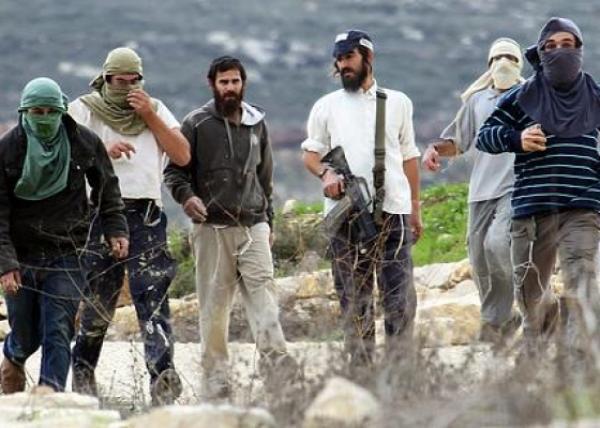
Four citizens were injured today, Saturday, as a result of settlers assaulting them while picking olives in the town of Jama’in, south of Nablus.


According to local and medical sources, two women (67 and 66 years old) were injured by stones and pepper gas, and another citizen (28 years old) was bitten by a colonist’s dog, while a fourth citizen (26 years old) was injured as a result of the fall.


The sources added that the injured were transferred to Balsam Medical Center to receive treatment.


PALESTINE

Sat 11 Nov 2023 4:12 pm - Jerusalem Time

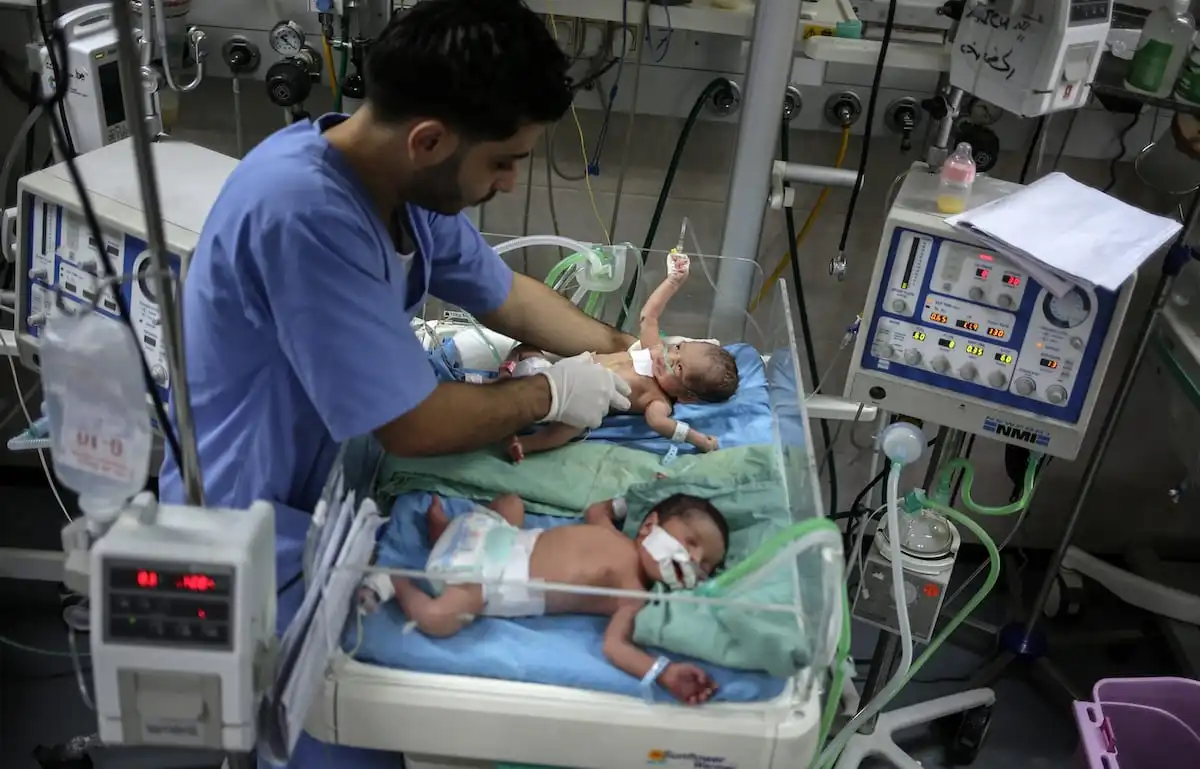
Calls for the Red Cross to take urgent action to save newborns in Gaza

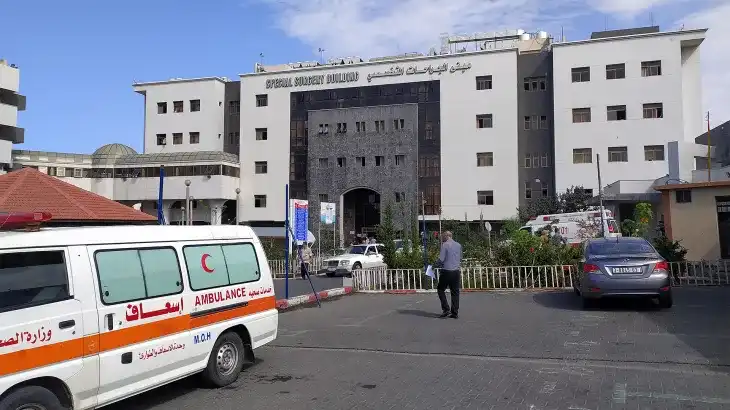
The Euro-Mediterranean Human Rights Monitor urged the International Committee of the Red Cross to take urgent action to save the lives of newborns in the Al-Shifa Medical Complex in Gaza, in light of its exposure to power outages and intense Israeli attacks.


The Euro-Mediterranean Red Cross called on the Red Cross to urgently bring an electric generator and the necessary amounts of fuel to the neonatal ward in the Al-Shifa Complex in order to save their lives in light of the threat of death that threatens them.


Newborn babies and patients who need life support devices will begin to die within minutes due to the power outage, at a time when the Shifa Complex administration announced a complete power outage to the hospitals in the complex.


Doctors announced that a newborn child who was attached to the incubators had already died, and they warned of a similar fate threatening 39 other children in the coming hours if electricity was not provided to the section in which they were located.


The Euro-Med Monitor stressed that the Red Cross must leave the box of warnings and condemnations and take urgent practical action to save the lives of children and patients in the Gaza Strip in light of Israel's renunciation of its obligations to protect civilians and prohibit siege or targeting medical facilities.


OPINIONS

Sat 11 Nov 2023 3:41 pm - Jerusalem Time

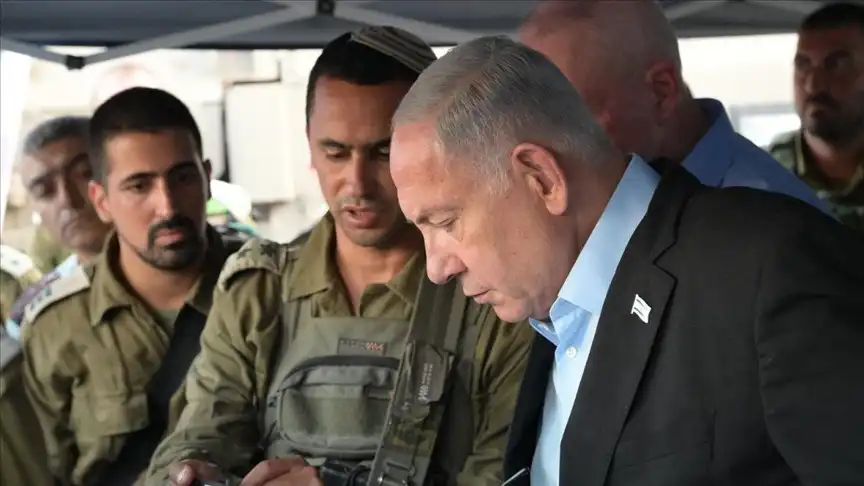
Hebrew Press: There is one solution to end the war, but Netanyahu has other plans

Ramallah - “Al-Quds” dot com

Ramallah - “Al-Quds” dot com

Opinion Writer

By Ebal Giladi

After 4 weeks of difficult war, while the army is besieging Gaza and effectively dismantling the structures affiliated with Hamas, the Israeli government has not succeeded in agreeing on its policy regarding the day after the war. 

This matter is of utmost importance, because the steps of war are derived from its strategic goal. The military does not operate in a vacuum, and its operations must be supported, even as they strengthen policies for the day after the war. There is no agreement on these policies, and therefore, the main battle is taking place in Jerusalem, not in Gaza.


The Israeli government has three options after it decided to dismantle Hamas and its military force:

1. Israel itself controls the administration of the Strip, maintains security and law, activates the education and health system, and is responsible for rebuilding the destroyed infrastructure.

2. Israel is content with annihilating Hamas' military capabilities and allowing it to be a weak party that can continue as a civilian authority.

3. Israel ends Hamas' rule in Gaza, removes its senior leaders, and then transfers population management to another party. The solution could be a multinational force, integrating the Palestinian Authority into the management of civil issues.


There are no responsible supporters in Israel for the first option, except for a small group of Messianics, so the battle is between two options. 

The second option is the continuation of Prime Minister Benjamin Netanyahu's policy over the past 14 years, which has been strengthened after the current government. Netanyahu worked to thwart the two-state solution and intentionally weakened the Palestinian Authority. He did not pass to it the clearance funds to which it was entitled, and claimed that it was not a partner in the negotiations. At the same time, he allowed money to enter Hamas leaders, built a force to confront Abu Mazen's force, and even gave them various guarantees in the arrangements that were made at the end of each combat round. 

If it were up to Netanyahu alone, he would have continued his policies today as well: Hamas would have been hit hard, but it would have been able to continue activating civilian rule in Gaza, even if the price was a round of combat every few years. The basis is not to strengthen the Palestinian Authority, and not to institutionalize it as a leadership in the West Bank and Gaza, in order to maintain the saying that there is no single address for negotiations - in a way that prevents the establishment of a Palestinian state.

However, Netanyahu and the government of Israel are not alone in this battle. The United States joined the battle, militarily, politically, and economically, and it is interfering in the management of the fighting to try to give the army the necessary time and to influence the next day of the war.

This takes us to the third option, which President Biden has been pushing Netanyahu for about 4 weeks. 

The United States actually supports the overthrow of the current regime in Gaza, and is not satisfied with just statements about dismantling Hamas, which have been heard since 2009, time after time, without merit. According to this option, management of the sector must be given to another party, because there will be no “Hamas.” The body best suited for this task is the Palestinian Authority, and Biden actually asked to see how it would be integrated the next day. But it is clear that the authority is too weak to manage the Gaza Strip after 16 years of Hamas rule, and after a war that left a severe humanitarian crisis. The authority also cannot be treated as if it had returned to Gaza with the force of the army. 

Therefore, there must be a transitional phase in which multinational forces work, with the intervention of Egypt and Jordan, to impose law and order in the sector, while the authority bears responsibility for civil cases. After some time, the authority strengthens its capabilities and, through a gradual process, assumes more and more responsibilities. This option, when Gaza returns to be under the control of Ramallah, turns the Authority into a partner in the two-state solution. This is the fundamental reason why the Israeli government opposes this option, even if it is supported by the United States, the international community, the moderate Arab camp, the majority of Israeli society, and a small majority in Palestinian society.

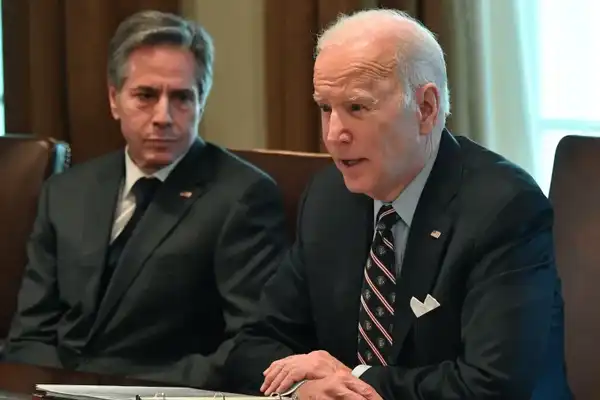
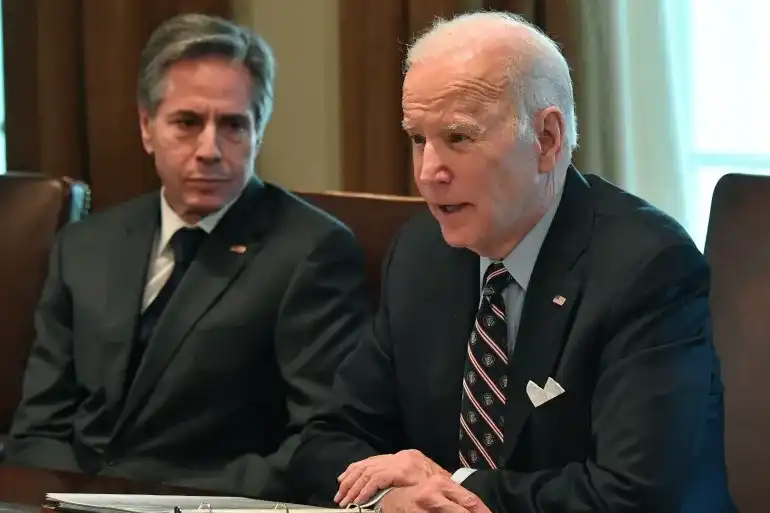
Since the beginning of the war, Israel has declared that the goal of the war is to end Hamas' rule and return the kidnapped people, but the United States demands to understand how the government plans to do this after the end of the military battle. This began politely, when President Biden asked Netanyahu about his plan for the next day, and went up a notch when Secretary of State Antony Blinken joined the war council sessions, even approving a draft of the final statement for the session in which he participated. And now, the literature is over. 

The United States does not ask Netanyahu, nor does it suggest that he discuss it. Rather, it specifies for him and the war council the humanitarian steps that they must approve, when the truce will be, and how harm to civilians can be reduced. She is still waiting for answers about the next day.

Netanyahu, who managed the past year very poorly, understands the absolute attachment to the United States, and is inclined to accept its demands. The biggest challenge facing him remains managing the government sessions in a way that allows Bezalel Smotrich and Itamar Ben Gvir to make their positions heard, without them having any influence on the decisions. Therefore, he formed a war council, where neither of them existed, and neither of them could be heard. 

However, representatives of the extreme right do not accept the situation submissively, and are trying to resist the strategy that is being formulated for the next day. Smotrich does not soften his opposition to the establishment of a Palestinian state, and he even recently said that the army would remain in Gaza for many years. The same applies to Ben Gvir, as well as Minister Orit Struk, who wants to return and settle in the Gaza Strip. 

All three of them understand what it means to bring power back into the picture. If Hamas is no longer present in Gaza, and the Authority controls all the Palestinian territories, there is someone with whom we can dialogue. In their view, this is the big danger.

There are ministers in the government who believe that the annihilation of Hamas is only a military mission. They are wrong. "Hamas" is an idea and an ideology. "Hamas" is a social and political movement, and it lives in the hearts of people. There is no missile against the idea. In order to kill the idea of Hamas, another alternative must be built and allowed to grow. 

Previously, this alternative was the authority that offered the Palestinians a state, through negotiations, and in agreement with Israel. Netanyahu's policies eliminated this alternative and turned Hamas into a strong player. Dismantling Hamas now requires economic, legal, diplomatic, media, and also military equipment. The army can dismantle all missile launchers, hit command posts, and kill people. However, weakening Hamas politically and cutting off its funds is not a military move.


The United States immediately and clearly stood by Israel on October 7, and is paying an economic and political price to allow the army the required freedom of action. In addition, the United States deployed its forces in the Middle East to deter Israel's enemies and defend its soldiers present in the region. President Biden is paying a price among his voters in the Democratic Party, at a time when Secretary Blinken is moving between Middle Eastern countries, trying to reach understandings within the moderate Arab camp regarding Israel’s steps in Gaza. 

The government should appreciate these steps, and not underestimate their importance. It must also begin to provide answers to the basic questions in this fight. For 4 weeks, the United States has wanted to exaggerate Israeli post-fighting policy, and the Israeli government has found it difficult to reach an agreement on the next day. 

If Israel does not answer US questions within a reasonable time, consistent with Washington's policies, the White House could run out of patience. In this case, Israel will have to emerge with its own capabilities from the mud it got into. Now, the Americans are giving the differences with Israel a public dimension. Following an interview Netanyahu gave to ABC in which he explained that “Israel will have security control over the Gaza Strip for an indefinite time,” a US State Department spokesman said that “Gaza is Palestinian territory, and will remain Palestinian territory.” It is true that Biden will work to approve an aid package worth $14 billion, and will not back down, but political support and maintaining legitimacy for Israeli operations could decline and disappear.


Netanyahu understands all of this, but his coalition still stands in his way. Currently, the Prime Minister is listening to America, and not arbitrarily. More than helpful, he has good reasons:

1. Everyone knew

Netanyahu knew, the government knew, the cabinet also knew, and the Security and Foreign Affairs Committee knew. They were all aware that a battle against Hamas or Hezbollah was expected to break out soon, and that the two parties were in a state of coordination between themselves. Defense Minister Yoav Galant declared, several times, that continuing on the legislative path would push Israel into a “clear, immediate and real danger to the state’s security.” Netanyahu did not take any steps to reduce the danger, but rather chose to push the laws despite the warnings. 


The Americans, who knew the intelligence materials that were presented to Netanyahu, found it difficult to believe that he preferred the cohesion of the coalition at the expense of state security. It is true that no one expected a battle in which 1,400 Israelis would be killed. Netanyahu also estimated that the talk would be about an additional round with Hamas at a cost of 100 Israeli deaths and 1,500 Palestinian deaths, at a cost of 2-3 billion shekels. Is this price reasonable? Netanyahu cannot tell the Americans, "I didn't know."


2. Relations with the United States on the eve of war

Relations between the prime minister and the administration in Washington were the worst in history. Netanyahu's extremist government and the breaking of the promises he made to the president, time after time, amounted to recklessness in the eyes of the White House, and Netanyahu was not invited to meet with Biden despite successive demands. Ministers in the Israeli government accused the American President of supporting the protests against the constitutional coup, and the Minister of Foreign Affairs mocked the Vice President, in addition to another minister who recommended that the Americans focus on their issues. 

Relations were so bad that it also affected the entire stock of the Air Force and the Army. The State of Israel went into a military battle with its eyes open, unprepared, and without immediate American assistance, it would be difficult for it to manage the war. There is great importance for relations with the United States in order to preserve the international legitimacy of the work in Gaza. To maintain this support, Netanyahu listens to Biden and Blinken, not to Smotrich and Ben Gvir.


3. Zero equipment

Although everyone knew, there were no preparations for the expected battle against Hamas and Hezbollah. The economy was not prepared for emergency hours, the evacuation of tens of thousands of Israelis from their homes was not prepared, the health system was not prepared, nor was the education system prepared. In addition, transportation was not prepared to operate during emergency hours. What's worse is the fact that there was no economic preparation. The state budget was distributed corruptly, resources were directed to inappropriate purposes, while warnings of war were ringing in the ears of ministers. It is true that Netanyahu hoped that everything would end in a short round against Hamas, Hezbollah, or both, but the government was not prepared for this either. Hezbollah, which is currently waging a suppressed battle under the roof of war, succeeded in evacuating tens of thousands of Israelis from the northern towns, and prompted the mass recruitment of hundreds of thousands of citizens, which paralyzed a large part of the state’s economy, and all of this through local and specific events only. Who expected that in order to curb Hezbollah, we would need the deployment of American aircraft carriers on the shores of Israel, and statements from the President of the United States and his Secretary of State? True, the Americans basically want to curb Iran, but this situation on the northern front has forced Netanyahu to listen to Biden.


4. US interests

Biden's immediate and clear support for Israel makes him pay a political price among his voters in the Democratic Party. It is true that we still have a full year to go until the elections, but Biden is not ignoring this issue. In addition, it must be remembered that he is committed to American interests first. This is a time when the United States is watching, with concern, the axis being forged between Russia, Iran, and Syria, while China supports them, even increasing its intervention in the Middle East. 

The Chinese President made a successful visit to Saudi Arabia, and that China was the mediator in renewing relations between Saudi Arabia and Iran. For Biden, it is very important to keep Saudi Arabia in the right position, and he is strengthening an axis that includes Israel, Saudi Arabia, and the Gulf states (the Abraham Accords) under the American umbrella. Biden is not interested in a regional confrontation that would prevent a deal with Saudi Arabia, and he expects Netanyahu to help him in consciously managing the war with Hamas, and in efforts to prevent the expansion of the battle in the north.


5. Freeing the kidnapped people

Freeing the kidnapped is a mission of the highest moral importance, which is to intensify the state’s commitment to its citizens. Not arbitrarily, the liberation of the kidnapped was set as one of the goals of the war. The talk is about a complex mission for each government, and there is no doubt that this government lacks the experience, competencies, international relations, and depth required to deal with a complex mission to this extent. 

There are voices in the government that doubt that the mission of liberating the kidnapped is a top priority, and there are those who ask: Is their blood more important than the blood of army soldiers? The assumption that all kidnapped persons can be freed in exchange for all prisoners is incorrect. Even if Israel agreed to release all security prisoners, including those who were arrested on October 7, “after they killed civilians, raped and slaughtered people in their beds,” this would not be enough to free all the kidnapped, and there would be no deal that would leave Israel free. Pursuing Hamas leaders. Simply put, they will not agree to a deal like this. Therefore, solutions must be considered such as those reached in 1982, when Arafat and Fatah were allowed to leave Beirut, or as happened in 2002, when a group of “terrorists” barricaded themselves in the Church of the Nativity and were expelled to Gaza, or abroad. Its members did not return to their homes. Egypt, Qatar and other countries must be included in resolving the issue of the kidnapped people. 

This is bigger than the Netanyahu government. The United States will have a central function in dealing with the kidnapping issue, more than it has now, and it will be strengthened the closer we get to reaching a solution.


6. Government policies

Even before the war, the United States expressed deep concern about the composition of the current government. From an American point of view, a small minority in Israel succeeded in controlling the government through its Messianic representatives, and in imposing provocative policies that increased friction with the Palestinians and inflamed the field. Ben Gvir’s statements and directives regarding the prisoners, in addition to visits to Al-Aqsa Mosque and encouraging the “Hill Youth” to confront the Palestinians, as well as the tent in Huwwara and the return to “Homesh” and talk of returning to Gaza, are all things that put American interests in the region at risk, including the “two-state solution.” ". Much attention has been paid to Smotrich's plan, which wants to transfer a million Israelis to the West Bank to thwart the two-state solution. This is what he plans to do through economic encouragement - that is why he asked to be Minister of Finance. 

This is in addition to orders to expand settlement - therefore, he was appointed Minister of West Bank Affairs in the Ministry of Security. The government's policy contradicts the policy of the United States, and now, Netanyahu must choose between a "Jewish power" or an American power.


It seems that the great hope is born from the bottom of the well: stopping the policy of lying about dismantling Hamas and preserving it as an authority that dwarfs power and prevents progress on a political path. This could be the end of 14 years of the rounds policy that led to thousands of deaths and the waste of billions, in order to return to the situation as it was before the rounds. This must end, which is why the next day is so important.


The United States' choice to stand by the Israeli government without reservation was understood by Egypt and Jordan because of their rejection of the massacre carried out by Hamas, but as the battle progressed, protests broke out against the Israeli aggression on Gaza. Jordan and Egypt have a central role in stabilizing the situation the next day, and therefore, Blinken went to Jordan after meeting with Netanyahu last Friday. 

In Amman, Blinken faced a clear request from Jordanian Foreign Minister Ayman Safadi to “stop the madness.” Egyptian Foreign Minister Sameh Shoukry, who was present at the meeting, called for an “immediate ceasefire without preconditions.” Blinken rejected these demands and adhered to “Israel’s right to defend itself,” but he also stressed that the matter must be done by “reducing harm to citizens.” Arab pressures could affect the position of the United States, and it expects Israel to take Egypt and Jordan into account the next day, and maintain the moderate Arab camp.


Therefore, the United States makes clear that the war cannot continue unless Israel allows humanitarian truces and the entry of food and medicine into the Strip, in addition to minimizing harm to civilians, and formulating an acceptable plan for the moment when the guns stop. The United States' standing with Israel, from sending troops to billions in aid, is not guaranteed forever. It would be good if Netanyahu led his government to agree quickly on the next day.

HAARETZ



OPINIONS

Sat 11 Nov 2023 3:14 pm - Jerusalem Time

A Conspiracy of Silence

Ramallah - “Al-Quds” dot com

Ramallah - “Al-Quds” dot com

Opinion Writer

MICHAEL YOUNG

As Israel speaks openly about the ethnic cleansing of Gaza’s Palestinians, Western countries are nowhere to be seen or heard.


Israel has made great efforts over the decades to redefine its ethnic cleansing of the Arab population of Palestine in 1948 as being a consequence of the Arabs’ voluntary departure from their homes, or a result of their obeying orders from their leaders to leave. In that way, Israelis have sought to undermine the accusation that their state was built on the foundations of what is considered to be a crime against humanity. Yet today, the forcible transfer of the Palestinian population of Gaza to Egypt is being openly discussed by the most senior Israeli leaders and by former officials.


The Financial Times this week reported that Israeli Prime Minister Benjamin Netanyahu has sought to persuade European leaders to put pressure on Egypt to accept refugees from Gaza. While one Western diplomat did try to qualify this by saying that Netanyahu wanted the Egyptians to take in the Palestinians “at least during the conflict,” the implications of this caveat are absurd. Netanyahu has no interest whatsoever in the wellbeing of a population his military has been massacring for the past three weeks. What he wants is that the door to Egypt be opened so that Israel can permanently close it once the Palestinians are out. That’s what happened in 1948, and only a fool would believe it can’t happen again.

Netanyahu’s lobbying comes amid reports that Israel’s Ministry of Intelligence has released a document in which it lists a series of options open to the Israeli authorities for dealing with the Palestinians in Gaza. Among these is that Israel “evacuate the Gazan population to Sinai” and “create a sterile zone of several kilometers inside Egypt and not allow the population to return to activity or residence near the Israeli border.” The document continues that Israel must strive to mobilize global support for such a project, particularly from the United States. Even admitting to an inaccurate translation from Google translate, the accuracy of the recommendation is incontestable given that Netanyahu is peddling the same idea.

That is precisely why Israel’s claims that the Ministry of Intelligence document is merely a “concept paper,” or a hypothetical exercise, is so implausible. Many unprecedented ideas in government begin below the radar, precisely because that is a sensible, bureaucratic way to ensure that they are not shot down immediately by competing bureaucracies. In fact, it is shocking on its own that Israel has admitted that ethnic cleansing is now part of its conceptual toolkit for the Palestinians.

If there are doubts about this, a repulsive article by Giora Eiland, a former head of Israel’s National Security Council, should put them to rest. Eiland proposed “options” of his own for addressing the problem of Gaza’s Palestinians. One of these is “to create conditions where life in Gaza becomes unsustainable” so that “the entire population of Gaza will either move to Egypt or move to the Gulf.” Ultimately, Gaza must “become a place where no human being can exist, and I say this as a means rather than an end. I say this because there is no other option for ensuring the security of the State of Israel. We are fighting an existential war.”

No doubt Eiland will continue to be invited by think tanks and universities around the world, even though his article endorses war crimes (collective punishment; willfully causing great suffering to body and health; destruction and appropriation of property not justified by military necessity; and unlawful deportation) and crimes against humanity, according to the ethnic cleansing definition adopted by a United Nations Committee of Experts that looked into violations of international humanitarian law in the former Yugoslavia. Therefore, the belief among Israel’s admirers that the country is a moral paragon is not only laughable, it is contradicted by the activities and musings of Israeli officials, present and former.

Eiland’s justification—security—is interesting, because it is one to which scoundrels everywhere resort when rationalizing terrible crimes. So that Israel can be secure, some 2 million Gazans need to be driven into the desert, like a lost tribe. To kill a single Hamas official and enhance Israeli security, an entire neighborhood in the Jabaliya refugee camp has to be obliterated, with heavy loss of life. To protect Israel, gangs of armed religious vigilantes on the West Bank—people who in most countries would be placed on terrorism watchlists—are allowed to force Palestinian villagers from their homes or kill unarmed Palestinians harvesting olives.

What is so surprising is that Western countries have watched all this unfold, but have used Hamas’s vicious actions on October 7 as an excuse for doing nothing about it. Even as Israel slaughters thousands of people in Gaza, with many more under the rubble of downed buildings, the United States and its European allies have either refused to impose a ceasefire or have continued to voice outrage over Israeli deaths, while appearing unmoved by the victims of Israeli retaliation. This comes despite staggering statements by Israeli military officials that for Israel “the emphasis [in Gaza’s bombardment] is on damage and not on accuracy.”


What may emerge is a foundational moment for the West’s domination of global affairs. An early victim of the Gaza war is certainly Ukraine, the defense of which was portrayed in Western countries as the equivalent of rejecting the kind of appeasement that handed parts of Czechoslovakia to Nazi Germany. 

The ethical underpinnings of the Western narrative on Ukraine have collapsed with the apartment buildings of Gaza. Who will buy into U.S. or European rhetoric about Russian evilness again when so many Western countries are indifferent to the mass killings committed by Israel’s armed forces? In this context, the Americans should be careful. They could well find themselves isolated when they make the rounds for global allies to help them prevent an eventual Chinese invasion of Taiwan.

It pains me to mention the most simplistic argument one hears in such situations, namely that the West is racist when it comes to differentiating Arabs from those peoples they regard as more Westernized, such as the Israelis. Not only do I find that line problematic on so many levels, but given the proliferating protests in Western capitals against what Israel is doing in Gaza, I can’t help but acknowledge that many Americans and Europeans, not to mention a surprising number of Jews among them, have come down on the right side in defending all the victims, without exception, since the October 7 attacks began.

However, the elites in the United States and Europe have a different perspective, one that is being challenged by growing segments of their own populations. It is a perspective that regards Israel’s establishment as compensation for what is perhaps the greatest crime in history, the Holocaust; that regards Israel as an extension of the West and a reliable ally throughout the last half-century; and that views Israel as modern, democratic, and liberal in a sea of intolerance and backwardness. Many parts of this version can be questioned, of course, so to hear Olaf Scholz declare that “Israel is a democratic state guided by very humanitarian principles, so we can be certain that the Israeli army will respect the rules that arise from international law in everything it does,” makes you wonder whether the German chancellor actually believes such nonsense, or in fact owns a television.

As the Palestinian-Israeli conflict comes to divide Western societies even more, the mood among elites in Europe and the United States is bound to slowly change. But for now, such a shift is not remotely visible. Proof of this is that the Israelis are now bluntly talking about the ethnic cleansing of over 2 million Palestinians in Gaza, while Western countries continue to engage in a shameful conspiracy of silence.

Carnegie Endowment 

OPINIONS

Sat 11 Nov 2023 3:05 pm - Jerusalem Time

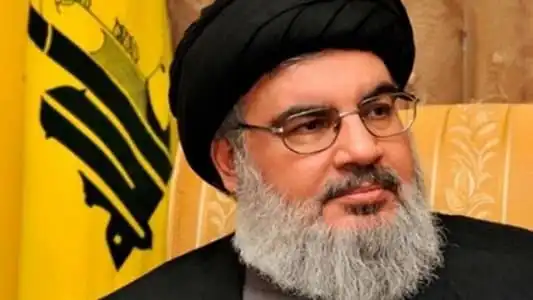
For Hezbollah, Timing Is the Essence

Ramallah - “Al-Quds” dot com

Ramallah - “Al-Quds” dot com

Opinion Writer

MOHANAD HAGE ALI


The party may escalate on the southern border with Israel, but that doesn’t necessarily mean it will reach the level of bombing cities.

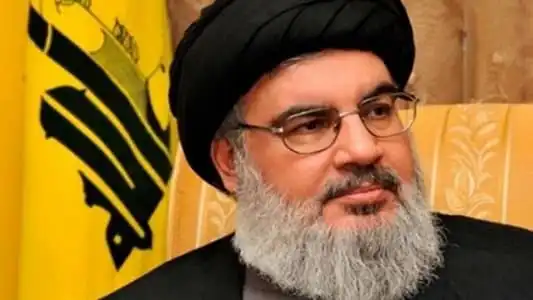
The speech last week of Hezbollah Secretary General Hassan Nasrallah left many in Lebanon and beyond relieved, as he defended his organization’s limited engagement in the Gaza war and called the Lebanese front against Israel a “solidarity and support” front. Nasrallah did so mostly to underline the party’s secondary role in the conflict, in which Palestinian fighters are taking the lead.

However, beyond the clearer points he made, there were two implicit messages in Nasrallah’s emphasis on Hamas’s independence of decision-making, its central role in the fight against Israel, and the certainty of its victory in the battle.


The first was that, since Hezbollah wasn’t aware of the operation of October 7, it also was not prepared militarily for a wider escalation with Israel. Perhaps that explains the slow build-up of violence on the Lebanese-Israeli border, and the reported movement of the party’s combatants from parts of Syria back into southern Lebanon. Engaging in a wider escalation, therefore, required better preparing the southern Lebanese front. And here, Hezbollah is not only engaged in military preparations, but also political and logistical preparations, namely for a wider displacement of Lebanese civilians out of the border region and to secure political backing from significant political actors. That effort is ongoing.

The second was that Nasrallah’s emphasis on a Hamas victory created a tacit redline around its defeat. Despite his relatively restrained tone, Nasrallah and other Hezbollah officials have stressed that Hamas will win the Gaza war just as Israel failed in its declared intention of destroying Hezbollah in the Lebanon war of 2006. The 2006 analogy means that if Hamas cannot slow down Israel’s advances in Gaza and sees its firepower diminished, northern Gaza reoccupied, over 1 million Palestinians displaced, unprecedented destruction, and tens of thousands of people killed or injured, it would be difficult for the organization to claim a victory.

Such an outcome would ultimately be costly for Hezbollah and its allies, first and foremost because Israel would most likely seek to reestablish a new deterrence equation on its northern border once Gaza has been neutralized. Hezbollah understands the profound impact of October 7 on Israel’s military doctrine, in that the Israelis have engaged in a disproportionate response so as to deter their enemies in the future. This also means they are less likely to abide by tacit rules of engagement. In light of this, a wider escalation now by Hezbollah could be better than allowing Israel to choose the timing of a confrontation to its advantage.

However, such an escalation could still remain within the current boundaries. Rather than escalating to the bombing of strategic sites and major urban areas, it could involve attacking a larger number of Israeli positions, and even perhaps conducting ground attacks along the lines of Hezbollah’s tactics in the 1990s, when fighters would take over Israeli military bases inside occupied areas of Lebanon, then withdraw before any retaliation. This escalation will probably avoid the use of medium-range missiles. Hezbollah would likely only bomb Israeli cities within the established rules of engagement, namely in retaliation for Israel’s targeting of Lebanese cities. That said, ground attacks and wider clashes along the border would definitely increase the risks of a major uptick in the level of violence.

Second, Israel has now declared that it seeks to assassinate Hamas leaders, some of whom are based in Lebanon. Given Israel’s previous assassination attempts in the country, including an attempt to kill Hamas operative Mohammed Hamdan in 2018, there is a high possibility of such an operation taking place inside Lebanese territory. While Hezbollah deterred Israel previously, this is more doubtful after the October 7 attacks and as the Gaza conflict subsides.

Third, even if Hezbollah manages to avert a wider conflict with Israel and unilaterally deescalates in southern Lebanon, a change in Israel’s leadership is likely. Prime Minister Benjamin Netanyahu may well be forced out of office in favor of Benny Gantz, which may bring with it a renewed Israeli determination to deter and weaken the party. Such a change in leadership could also be coupled with support from Western countries, especially if takes place in parallel with revived negotiations with the Palestinians, to which the Arab states would agree. This could further embolden Israel to adopt an aggressive policy against Hezbollah in order to prevent the party from derailing such a process.

Finally, Nasrallah and Hezbollah need to build a Lebanese alibi for the war, aside from solidarity with the Palestinians. This is needed both for the party’s constituency and for internal political reasons. Nasrallah’s first speech after the October 7 attack and Israel’s campaign in Gaza began the build-up for the case, threatening Israel if it decided to attack Lebanon. Now that Israel has killed Lebanese civilians, including three young girls and their grandmother, the case is growing, and will probably be the focus of Nasrallah’s next speech tomorrow.

With the current trajectory of Israel’s Gaza operation, it would be highly unlikely if a wider escalation by Hezbollah did not occur in Lebanon. The timeframe is narrowing for such an intervention to have an impact on the outcome in Gaza. If Hamas’s pushback against Israeli advances wanes in the coming weeks, Hezbollah could emerge as a target of Israel’s military.

Hezbollah and Palestinian factions are already engaging Israel’s military across the southern border. A further Hezbollah military escalation could raise the pressure on the Israelis, boost the morale of Palestinian fighters in Gaza, and perhaps pave the way for a negotiated ceasefire. Such a ceasefire in Gaza and Lebanon is Hezbollah’s preferred outcome, as the party does not want to unilaterally deescalate while Israeli retains the option of continuing to strike across its northern border. While Hezbollah is conscious that an expanded war would be catastrophic for Lebanon, it appears to believe such a war as inevitable. Therefore, it is conceivable that it may prefer to decide on the timing itself and not hand that advantage to Israel.

Carnegie Endowment 

PALESTINE

Sat 11 Nov 2023 2:55 pm - Jerusalem Time

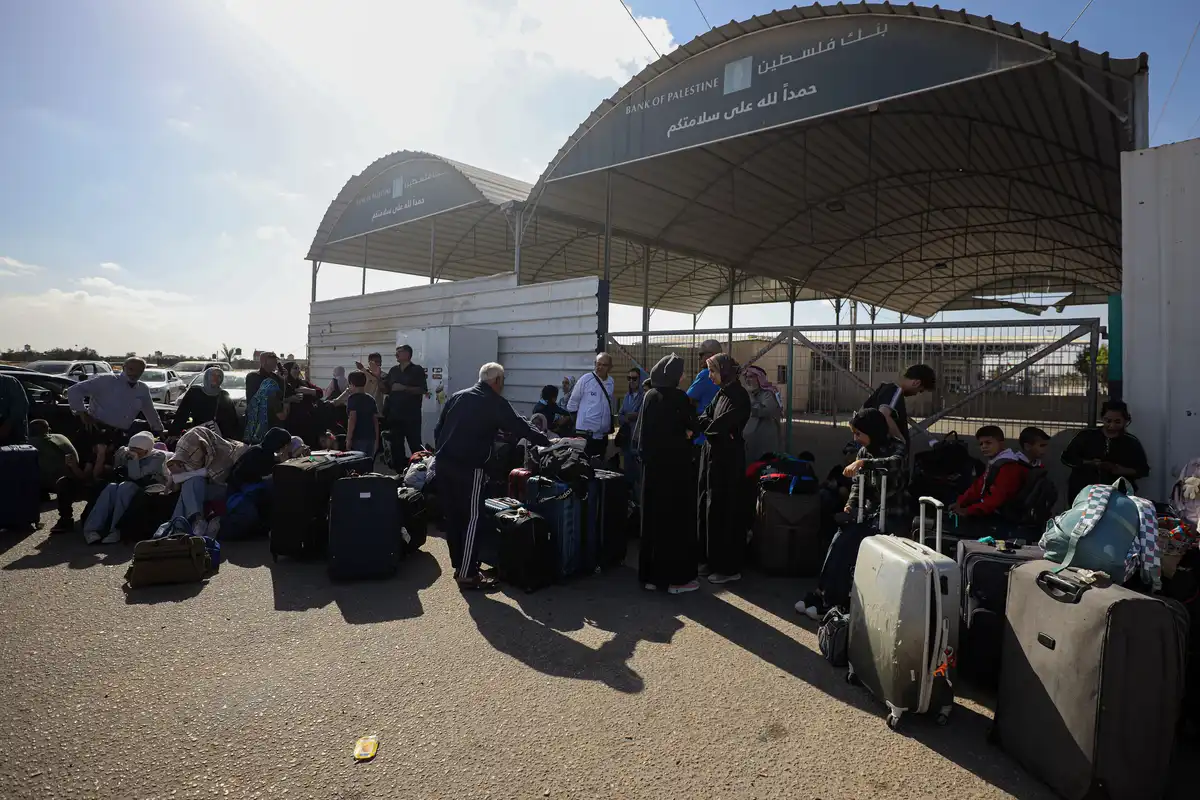
The people of Gaza are seeking to get out at any cost to escape hunger and bombing

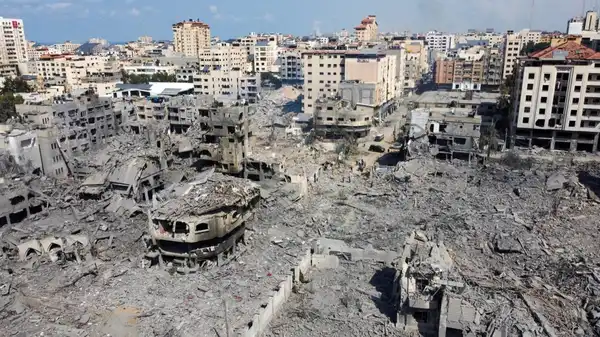
Increasing numbers of families are rushing to leave Gaza City to escape death and hunger, with the escalation of battles between Israel and Hamas to the sound of bursts of gunfire, the sound of explosions, and the roar of drones.


Destruction reigns in the place. When darkness falls in the early evening, a spot of light shines from Al-Shifa Hospital, the largest medical complex in the Gaza Strip, which has an area of 365 square kilometers and is home to 2.4 million people, and which is surrounded between Israel, Egypt and the Mediterranean Sea.


Journalist Wael Al-Dahdouh, a senior correspondent for the Qatari Al-Jazeera channel, told Agence France-Presse, “The situation is very difficult in Gaza. The bombing is affecting all areas.”


Al-Dahdouh had just left the city, where hundreds of thousands of its residents had left, in compliance with the orders of the Israeli army, which said it was now deploying its tanks in the northern Gaza Strip and in “the center of Gaza City.” Caregivers and international organizations have reported its spread at hospital doors.


"Tragedy"

Previously, the streets of the city, with a population of 600,000 people, were bustling with activity before the war began on October 7 due to a surprise attack by Hamas.


The Corniche has always been a favorite place for families who want to go out and have fun, and for runners who want to maintain their fitness. Restaurants and cafes flourished, and UN schools organized two or three class periods a day to accommodate all students, which caused traffic jams due to the crush of cars and horse-drawn carriages at the end of each class.


Now, after five weeks of unprecedented intense fighting in the Strip, despite being exposed to four wars between 2008 and 2021, nearly half of the homes have been damaged and destroyed according to the United Nations, and thousands have been killed, some in strikes that targeted UN schools or hospitals where they believed they were Safe.


Since October 7, the Hamas government's Ministry of Health has reported the killing of more than 11,000 people, the majority of whom are women and children, and the injury of more than 27,000 others.


Now, thousands are once again walking the route south.


Jawad Harouda, a Palestinian artist, finally agreed to leave the Beach camp, located on the northern coast, after the bombing approached it on Thursday evening.


He told AFP, "It is a tragedy... Last night, I did not think that my children and I would be able to get out safely, given the intensity of the bombing and the gunfire we saw."


Munir al-Rai was also displaced from the Beach camp, where his parents took refuge after the “Nakba” that followed the establishment of the State of Israel in 1948, and caused more than 760,000 Palestinians to flee or were expelled from their lands, according to the United Nations.


"nothing at all"

He told Agence France-Presse that the Israeli army launched “random” raids in the Shati camp.


While he was carrying his child on his shoulders, he added, “Houses fall on the heads of their occupants, children and women, none of whom remain in pieces.”


Israel, which announced in an amended toll on Friday that it had reduced the number of casualties since the attack launched by Hamas on its territory from 1,400 to 1,200 dead, is waging a guerrilla war in urban areas to “eliminate” Hamas, which it accuses of hiding in tunnels under civilian homes and even in hospitals.


But beyond the whirring of bullets and incessant airstrikes, food shortages have prompted many to leave.


Before continuing on his way with groups of exhausted families, Muhammad Talabani, a displaced person from Gaza City carrying his daughter in his arms and a bag on his back, said, “There is no food or drink. We go to stores to buy diapers, milk, or anything else for the girl, but we do not find anything, even canned food.” Not available at all."


The United Nations Office for Humanitarian Affairs announced on Thursday that bakeries in the northern Gaza Strip had stopped operating. The largest, in Gaza City, was closed on Tuesday when Israeli bombing destroyed the solar panels that supplied it with electricity.


The hungry residents then rushed to the flour stores, because, according to the United Nations, Gazans had nothing left to eat except raw onions.


OPINIONS

Sat 11 Nov 2023 2:54 pm - Jerusalem Time

Analysis: Can the next UN vote stop Israel’s war on Gaza?

Malta has circulated a new draft resolution focusing on Gaza’s children, Al Jazeera has learned. Will the US veto it?


By James Bays

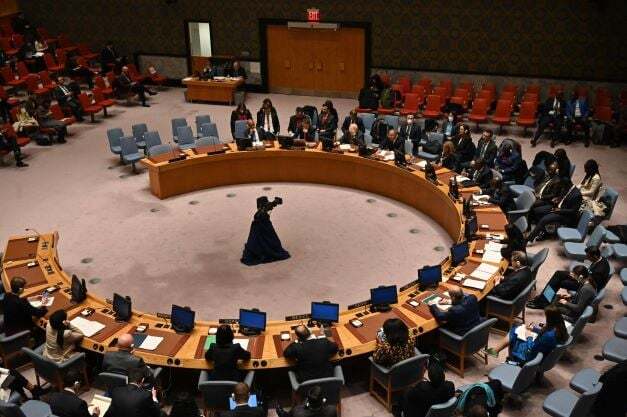
Tense and difficult negotiations continue at the United Nations Security Council in an effort to break the deadlock crippling the world’s most powerful decision-making authority – as death and despair rain down on Gaza.

Al Jazeera has learned that Malta’s ambassador to the UN, Vanessa Frazier, has circulated a new resolution among the Council members for consideration and a potential vote, hoping to finally pass a resolution on the war on Gaza, after serial failed efforts over the past month.


Malta is one of 10 elected members of the Council and has been the penholder on children in armed conflict since 2022. This position gives Malta the opportunity to play a leading role in the UNSC’s efforts to protect children in conflict zones. Diplomatic sources have told Al Jazeera that this new resolution is being drafted with a focus on children in the hopes that all 15 members of the UNSC can agree on protections for children in the ongoing conflict.

On Friday, Adele Khodr, UNICEF Middle East and North Africa regional director, said, “Children’s right to life and health is being denied.” The UN agency went on to warn that the lives of one million children in the besieged enclave are “hanging by a thread” as child health services almost collapse across the Gaza Strip.

There is renewed hope that the UNSC will finally respond to the war on Gaza, not only because there have been new attempts to find compromise language that will appeal to all its members, including the United States, but also because there has been a shift in the stance of the US itself. President Joe Biden called for a humanitarian pause to Israel’s war for the first time on November 2.The US says it is actively engaging with the elected members – Albania, Brazil, Ecuador, Gabon, Ghana, Japan, Malta, Mozambique, Switzerland and the UAE. This is significant because its veto power has been one of the reasons why several of the previous Council resolutions have failed since violence broke out on October 7.But, as ever, in the Council, there is much wrangling over the exact language of the resolution. Russia and China have vetoed a US resolution calling for a “humanitarian pause”, a phrase suggesting it would be conditional and time-limited. Most of the rest of the Council wants the resolution to include the word “ceasefire”. 

The choice of a single word in the resolution – pause or ceasefire – has meant an impasse in the UN’s top body, empowered with the maintenance of international peace and security.

With the Maltese resolution, sources told Al Jazeera, a key question that might come up for debate is the duration of the pauses in fighting. Humanitarian groups, and even US Secretary of State Antony Blinken, have said the four-hour pauses that Israel has agreed to are currently not enough to ease humanitarian suffering meaningfully. However, it is unclear whether the US will agree to pauses that last several days at a stretch.

Still, one thing has changed since the previous resolutions. The UN General Assembly – which represents all of the UN member states – has expressed its clear opinion, calling for a humanitarian truce that passed on October 27 with 120 votes out of the 193 members. Such a resolution is not binding but has moral weight as a temperature check of the world’s mood.

Why has the UN failed to agree to a ceasefire in Gaza?

Previous UNSC draft resolutions calling for a ceasefire in Gaza have failed. Two resolutions drafted by Russia did not get enough votes, with the US among the countries that voted against them. Even though a resolution proposed by Brazil received 12 votes out of the 15 member states, the US vetoed the draft. And, Russia and China vetoed a resolution drafted by the US.


While the five permanent members of the UNSC – China, France, Russia, the United Kingdom and the US – have the power to veto any resolution that they do not like, it remains reasonably rare. The US and Russia are the two countries that have exercised their veto power the most in the past. In recent years, the US has mostly used its veto to protect its ally Israel.

This was not always the case. Prior to the 1970s, the US often allowed resolutions to pass that Israel did not like. In 1956, it voted with other UNSC members to criticize Israel for a military operation in Gaza the previous year. Egypt controlled Gaza at the time.

Will Israel abide if a resolution passes?

More recently, on December 23, 2016, during the last days of the Barack Obama administration, the UNSC passed Resolution 2334.This resolution reaffirmed that Israel’s settlements in occupied Palestine, including East Jerusalem, “had no legal validity, constituting a flagrant violation under international law”. It added that the settlements were a major obstacle to the vision of a two-state solution. There was considerable pressure from Israel and within the US for the Obama administration to veto it, but in the end they abstained. The resolution passed with 14 votes.


While the Council’s resolution, which also called for immediate steps to prevent violence against civilians, is “binding international law”, it was ignored by Israel.


What happens if a country defies a UNSC resolution?

If the resolution is broken, the next step is for the Council to take punitive action. This would be done in a follow-up resolution, which addresses the breach and calls for action.

The UN has taken action in the past by sanctioning breaching countries. However, in recent years, there has been pushback from permanent members Russia and China, who are not keen on the UNSC adopting new sanctions.

Under the UN Charter, the Council can go even further and order the authorization of an international force. A notable example of this was in 1991 when a US-led military alliance was created to reverse the invasion of Kuwait by Iraqi leader Saddam Hussein.


The problem lies in any potential follow-up resolution. There are virtually no circumstances under which the Biden administration would support a punitive resolution that would take forceful action against Israel.

Currently, there are backchannel efforts from the US administration to try and get Israel to restrain its military operations and stop killing civilians. But they are not working.


Israel does not currently seem at all concerned about accountability under international law. Israel and the US are not signatories to the Rome Statute that set up the International Criminal Court (ICC).The court has made it clear that it does have jurisdiction regarding crimes committed in the Gaza conflict. Violations of UNSC resolutions and breaches of international humanitarian law, such as targeting hospitals and indiscriminate bombardment of civilians, could form part of a compelling case.


But even if the ICC takes action, there is no way that Israeli Prime Minister Benjamin Netanyahu would voluntarily surrender himself into custody in The Hague. The same way, we have not seen Russian President Vladimir Putin offer himself up to the ICC judges when an arrest warrant for war crimes was issued against him by the ICC in March.

All this does not mean that circumstances will not change at some point. And if you breach international law, there is no statute of limitation on war crimes. The ICC and a separate International Independent Commission of Inquiry, set up by the UN Human Rights Council in 2021, are gathering evidence on the current conflict. This will remain on the record for the world to see.


What has the UN done so far?

If we go back into history, the UN has established peacekeeping forces to tackle issues involving Israel. This includes the UN Emergency Force (UNEF), which deployed international peacekeepers on the border between Egypt and Israel in 1956.Two other missions are still operating, to this day. The UN Disengagement Observer Force (UNDOF) was established in 1974 after the agreed disengagement of the Israeli and Syrian forces in the Golan Heights. In 1978, the UN Interim Force in Lebanon (UNIFIL) was formed to confirm Israeli withdrawal from Lebanon and to restore international peace and security.


These forces have a mandate to report any breaches, monitor the situation and provide a calming presence.

Yet, there are limits to what these forces can accomplish by way of establishing peace. There is currently no calm on the front line between Lebanon and Israel, known as the Blue Line, with the heaviest clashes for years between Hezbollah and Israeli forces. The Golan Heights situation has also been very tense for a long time, including during the Syrian war.


But all that only matters if the UNSC can first agree on a resolution. It is about to be tested again.

SOURCE: AL JAZEERA

ARAB AND WORLD

Sat 11 Nov 2023 2:48 pm - Jerusalem Time

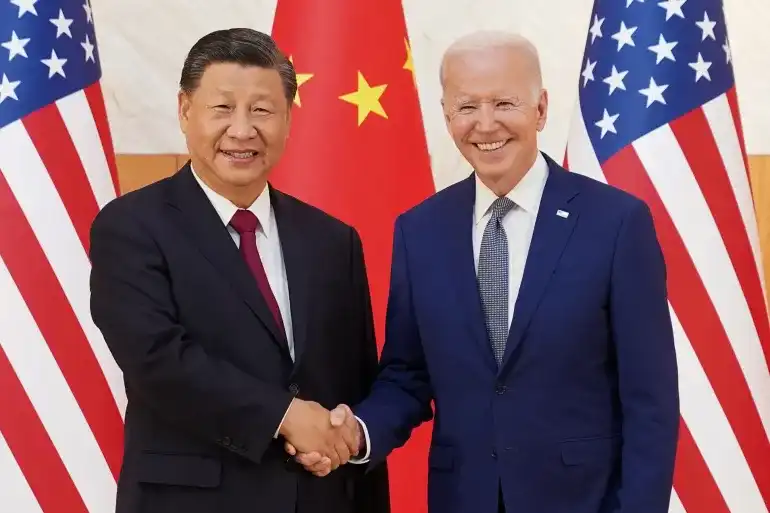
Biden and Xi to meet on Wednesday, White House says

US President Joe Biden and his Chinese counterpart, Xi Jinping, will meet on Wednesday in the United States, the White House has confirmed.

The meeting in California, the first between the leaders of the world’s two biggest economies in a year, will include talks on trade, Taiwan and managing their tense relations.

Xi plans to visit the US from Tuesday through November 17, China’s Ministry of Foreign Affairs said on Friday. He will attend the Asia-Pacific Economic Cooperation (APEC) summit in San Francisco and is scheduled to meet with Biden on the sidelines.

Xi and Biden have not met since attending the G20 summit in Bali last year.

Biden administration officials who briefed reporters on the condition of anonymity said the two presidents would meet in the San Francisco Bay Area. Thousands of protesters are expected to descend on San Francisco during the summit, which kicks off on Saturday.

White House Press Secretary Karine Jean-Pierre said in a statement the leaders would discuss the “continued importance of maintaining open lines of communication” and how they “can continue to responsibly manage competition and work together where our interests align, particularly on transnational challenges that affect the international community”.

The meeting is not expected to lead to many, if any, major announcements.

“Nothing will be held back. Everything is on the table,” a US official told reporters.

US Treasury Secretary Janet Yellen and Chinese Vice Premier He Lifeng met on Thursday in San Francisco, the latest in a string of senior level engagements between the countries in recent months aimed at easing tensions. Yellen and He are set to continue talks on Friday.

In September, the US and China launched new economic and financial working groups to enhance communication on issues of mutual interest, a move Yellen, who visited China in July, called “an important step forward in our bilateral relationship”.


But differences between the two sides have sharpened over the past year with Biden ordering a suspected Chinese spy balloon to be shot down after it traversed the continental United States and Chinese anger over a stopover in the US by Taiwan President Tsai Ing-Wen this year, among other issues.


China claims the island of 23 million people as its territory. Taiwan is to hold elections in January, an event that typically draws an angry response from Beijing.

Beijing has historically tried to influence the results through a range of tactics from online misinformation campaigns to staging military exercises in the Taiwan Strait, an overt reminder that it has not ruled out trying to take the island by force.

Biden and Xi are also expected to discuss the Israel-Hamas war, Russia’s invasion of Ukraine and the presidential election in Taiwan.


China has said it is neutral in the Ukraine war but has been accused of propping up Russia’s economy in the face of Western sanctions.

China and the US also have disputes in areas such as trade and technology.


Last year, the US introduced a series of export controls meant to hobble China’s growing microchip industry. That move prompted accusations from Chinese officials that Washington is seeking to maintain the power and influence of its tech industry by working to “maliciously block and suppress Chinese companies”. 


Biden is also likely to press Xi on using China’s influence on North Korea during heightened anxiety over an increased pace of ballistic missile tests by North Korea as well as Pyongyang providing munitions to Russia for its war in Ukraine.


SOURCE: AL JAZEERA AND NEWS AGENCIES

ARAB AND WORLD

Sat 11 Nov 2023 2:28 pm - Jerusalem Time

Poll: Americans don't want to fight for their country anymore

Newsweek magazine published a recent opinion poll that showed that a majority of American adults would not be willing to serve in the army if the United States entered into a major war, while public confidence in the armed forces appears to be declining.


The magazine pointed out that these numbers come at a time when all branches of the armed forces have struggled in recent years to achieve their recruitment goals, indicating a growing apathy towards military service.


She pointed out that the opinion poll - conducted by the research institute Echelon Insights on 1,029 potential voters in the period from 23 to 26 October last year, after Hamas led its unprecedented armed attack on Israel on the 7th of the same month - showed that 72% of respondents would not They would be willing to volunteer to serve in the armed forces if America entered into a major conflict, compared to 21% who were willing to volunteer, and the remainder were unsure.


The magazine also referred to another poll conducted by Gallup last June, which showed that confidence in the army declined for the sixth year in a row to 60%.


She added that in 2023, the army and air force failed to achieve their goals by recruiting about 10,000, while the number of conscripts in the navy was less than 6,000, and since 1987 the number of active personnel has decreased by 39%.


It quoted experts in the field that such a shortage is worrying in light of an increasingly volatile global picture, as the American leadership does not know when it will next have to use its full military power.


Experts add that there is a complex mix of factors contributing to the issue of military recruitment, including adapting the issue to a younger target generation who is more engaged with modern technology, as well as an economic outlook that is proving to be a challenging environment for recruiting efforts.


It quoted the CEO of Military Recruitment Experts, David Eustice, as saying that there were other factors in the recruitment process itself that had an impact on the number of recruits arriving at the training camp, including daily limits on the number that could be recruited, in addition to increased medical examinations and knowledge of the criminal record of the applicant for recruitment.


Newsweek concluded its report that the military also faces a high level of unfitness for service among the general population, and as of 2020 estimates indicated that 77% of those between the ages of 17 and 24 were unfit for medical reasons, drug use, or criminal records.

From Aljazeera Net

OPINIONS

Sat 11 Nov 2023 2:18 pm - Jerusalem Time

Hearst: The Gaza war undermines America's influence in the world

Ramallah - “Al-Quds” dot com

Ramallah - “Al-Quds” dot com

Opinion Writer

The editor-in-chief of the Middle East Eye website, the British writer David Hearst, said that the Gaza war undermines America's influence in the world, citing that American diplomats and intelligence leaders regularly receive testimony confirming that American support for the genocide in Gaza is destroying the image of the United States in the Islamic world.


Hearst  added - in his article - that for US President Joe Biden, Israel is an out-of-control train that has effectively destroyed the strategic military presence of the United States in the region, the Abraham Accords, and much of Washington’s authority in the Islamic world and the countries of the South.


He also said that in this war, America is not even leading from behind - Barack Obama's joke about overthrowing the late Libyan President Muammar Gaddafi - but rather it is being dragged behind.


Painful encounters

Hirst pointed out that American diplomats and intelligence leaders face painful meetings with their Arab and Turkish counterparts on their regional tours, and they are told to their faces - during meetings that last for hours - that Israel is carrying out genocide in retaliation, and that the United States supports this, and that its support for this war undermines its image in the world. Islamic.


He stressed that the Americans finally understood that their policy in the Middle East - which declared that “America is back” - is in deep trouble.


Strongest responses

The writer stated that the strongest reactions to the Israeli bombing of Gaza, despite its weakness and fragility, came from Egypt and Jordan, the two countries that recognized Israel first, as “both of them are in fact exposed to severe danger due to their dependence on aid and money from the West.” Egypt has made it clear that ethnic cleansing In Gaza is unacceptable, and they will not hand over a grain of Sinai sand to resettle Gazans.


As for Jordan's position, it was stated by its Foreign Minister Ayman Al-Safadi, who said that any expulsion of Palestinians from Gaza would be tantamount to a "declaration of war" against Jordan.


Hearst also referred to Bolivia's withdrawal of its ambassador from Israel and the severing of its diplomatic relations with Tel Aviv, and China's position opposing the bombing of Gaza, as well as the positions of Qatar, Turkey, Malaysia, and others.


Big transformation

Hearst said that most of all is that the Gaza war will produce a major transformation in the international community, with America once again ceding its influence to the rest of the world, stressing that its sphere of influence is rapidly shrinking due to its arrogance.


He concluded his article by saying that when the West was put to the test, it proved unable to modify a policy of blind and irrational support for Israel that had long passed its expiration date.


Source: Middle East Eye

ARAB AND WORLD

Sat 11 Nov 2023 2:04 pm - Jerusalem Time

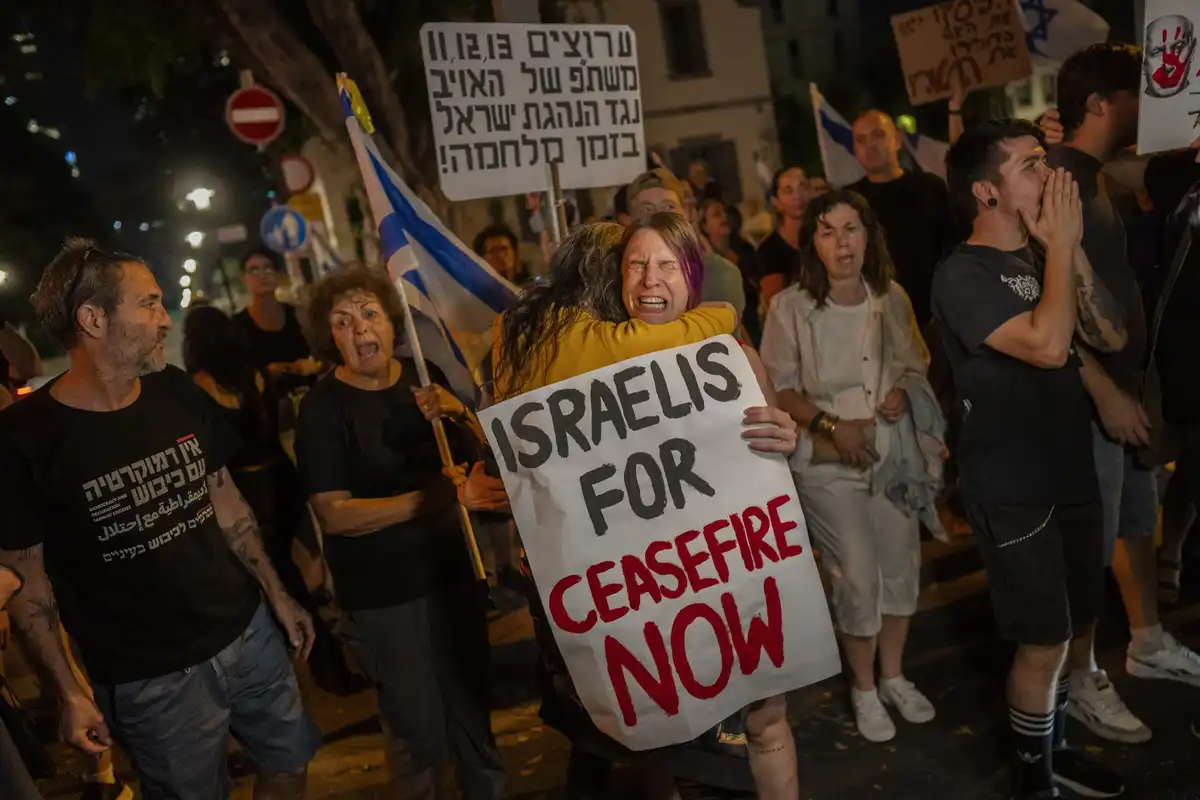
Maariv Weekly Poll: 59% of Israelis support a ceasefire in the Gaza Strip

Maariv Weekly Poll: 59% of Israelis support a ceasefire in the Gaza Strip in exchange for the release of prisoners and abductees, and the percentage of those who believe that Gantz is most suitable to assume the position of Prime Minister of Israel rises to 52%.


An Israeli public opinion poll conducted by the Maariv newspaper yesterday (Thursday) showed that if the Israeli general elections were held now, each of the party camp lists supporting Prime Minister Benjamin Netanyahu would obtain 43 seats (one seat more than the number of seats it obtained in this week’s poll). last), while the lists of the parties camp opposing him will obtain 67 seats (one seat less than the number of seats they obtained in last week’s poll). The coalition list between Hadash [the Democratic Front for Peace and Equality] and Ta’al [the Arab Movement for Change] and the Ra’am list [the United Arab List] will each get 5 seats, and the Balad list [the National Democratic Rally] will not be able to exceed the electoral threshold (3.25%).


According to the poll, the Likud Party list, headed by Prime Minister Benjamin Netanyahu, will get 18 seats, the “Official Camp” coalition list, headed by “War Cabinet” Minister Benny Gantz, will get 40 seats, and the “There is a Future” list, headed by Knesset member Yair Lapid, 14 seats.


The poll showed that the “Religious Zionism” party list, headed by Minister Bezalel Smotrich, will get 4 seats, the “Otzma Yehudit” [“Jewish Power”] list, headed by Minister Itamar Ben Gvir, will get 5 seats, and the Shas party list of Haredi Jews will get 5 seats. [Religious extremists] Easterners get 9 seats, while the ultra-Orthodox United Torah Judaism party list gets 7 seats, and the “Israel Our Home” party list, headed by Knesset member Avigdor Lieberman, gets 9 seats, and the Meretz party list gets 4 seats, while The Labor Party list, headed by Knesset member Merav Michaeli, will not be able to exceed the electoral threshold.


52% of respondents said that the head of the “Official Camp” coalition, Benny Gantz, is the most suitable to assume the position of Prime Minister of Israel, while only 26% of them said that Prime Minister Benjamin Netanyahu is the most suitable.


59% of respondents confirmed that they support a ceasefire in the Gaza Strip in exchange for the release of prisoners and abductees held by Hamas and other Palestinian factions, while 30% of them confirmed that they oppose any ceasefire without any relation to the issue of prisoners and abductees.


44% of respondents said that they support Israel’s continued presence in the Gaza Strip, after the end of the current war, while 41% of them said that they support Israel’s withdrawal from the Gaza Strip and handing over its rule to another party, either international or Palestinian.


The survey included a sample of 515 people, representing all categories of the adult population in Israel, with a maximum error rate of 4.3%.

PALESTINE

Sat 11 Nov 2023 1:47 pm - Jerusalem Time

Liquidating the Palestinian resistance will require years. Al-Monitor: Hamas still maintains most of its strength

Al-Monitor website said that despite the Israeli war on the Gaza Strip since last October 7, Israeli leaders admit that the Islamic Resistance Movement (Hamas) is still far from the point of collapse despite the destruction of the infrastructure in the northern Gaza Strip.


A senior Israeli military source told Al-Monitor - who requested anonymity - that the movement still retains most of its strength.


He added that the movement's fighters are hiding underground and can move between the south and north of the Gaza Strip through the vast network of tunnels that Hamas dug under Gaza.

The Israeli officer said that the Hamas command structure has borne the brunt of the damage so far, while most of the movement's fighters, estimated at 20,000, were not injured.

Military experts believe that eliminating Hamas is not an easy matter from a military standpoint, because the resistance factions are still capable of fighting, and it may take months and perhaps even years, according to some analysts.

The Wall Street Journal quoted an informed source as saying that the American intelligence community doubts Israel's ability to achieve its declared military goal of eliminating the Hamas movement.

The source added that the Israeli military campaign on the Gaza Strip could cause harm to the Hamas movement and its infrastructure, but it will not be able to eliminate Hamas’ ideology.

For 36 days, the Israeli occupation army has been waging an air, land and sea war on Gaza, during which it destroyed residential neighborhoods on top of their residents. 11,78 Palestinians were martyred, including 4,506 children, 3,027 women, and 678 elderly people, and 27,490 were injured with various injuries, according to official sources.

Sama News

ARAB AND WORLD

Sat 11 Nov 2023 1:08 pm - Jerusalem Time

The Saudi Crown Prince demands an immediate halt to the Gaza war and condemns the “failure of the international community”

We, the leaders of the countries and governments of the Organization of Islamic Cooperation and the League of Arab States, gathered at the kind invitation of the Custodian of the Two Holy Mosques, King Salman bin Abdulaziz Al Saud, King of the Kingdom of Saudi Arabia, and under the chairmanship of His Royal Highness the Crown Prince, Prime Minister of the Kingdom of Saudi Arabia, decided to merge the two summits that the Organization and the League had decided upon. Organizing it, in response to two generous invitations from the Kingdom of Saudi Arabia (presidency of the two summits) and from the State of Palestine, as an expression of our unified position in condemning the brutal Israeli aggression against the Palestinian people in the Gaza Strip and in the West Bank, including Al-Quds Al-Sharif, and an affirmation that we confront together this aggression and the humanitarian catastrophe that It causes, and we are working to stop it and end all illegal Israeli practices that perpetuate the occupation and deprive the Palestinian people of their rights, especially their right to freedom and an independent state with sovereignty over their entire national territory.


As we express our thanks to the Custodian of the Two Holy Mosques, King Salman bin Abdulaziz Al Saud, King of the Kingdom of Saudi Arabia, and His Royal Highness the Crown Prince and Prime Minister, His Highness Prince Mohammed bin Salman bin Abdulaziz Al Saud, for the generous hospitality.


Emphasizing all the decisions of the Organization and the League regarding the Palestinian issue and all the occupied Arab territories,


Recalling all the resolutions of the United Nations and other international organizations regarding the Palestinian issue, the crimes of the Israeli occupation, and the right of the Palestinian people to freedom and independence in all of their occupied territories since 1967, which constitute a single geographical unit.


Welcoming United Nations General Assembly Resolution A/ES-10/L.25 adopted by the tenth emergency session on 26 October 2023,


We affirm the centrality of the Palestinian cause, and that we stand with all our energies and capabilities alongside the brotherly Palestinian people in their legitimate struggle to liberate all of their occupied territories and to fulfill all their inalienable rights, especially their right to self-determination and to live in their independent, sovereign state along the lines of June 4, 1967. Its capital is Al-Quds Al-Sharif,


We affirm that a just, lasting and comprehensive peace, which constitutes a strategic option, is the only way to guarantee security and stability for all the peoples of the region and protect them from cycles of violence and wars. It will not be achieved without ending the Israeli occupation and resolving the Palestinian issue on the basis of the two-state solution.

We affirm the impossibility of achieving regional peace by bypassing the Palestinian issue or attempts to ignore the rights of the Palestinian people, and that the Arab Peace Initiative supported by the Organization of Islamic Cooperation is an essential reference.


We hold Israel responsible for the continuation and aggravation of the conflict as a result of its aggression against the rights of the Palestinian people and Islamic and Christian sanctities, and its systematic policies and practices and its illegal unilateral steps that perpetuate the occupation, violate international law, and prevent the achievement of just and comprehensive peace.

We affirm that Israel and all countries in the region will not enjoy security and peace unless the Palestinians enjoy them and regain all their stolen rights, and that the continuation of the Israeli occupation is a threat to the security and stability of the region and to international security and peace.

We condemn all forms of hatred and discrimination and all proposals that perpetuate the culture of hatred and extremism.

We warn of the disastrous repercussions of the retaliatory aggression launched by Israel against the Gaza Strip, which amounts to a mass war crime, and the barbaric crimes it also commits during it in the West Bank and Holy Jerusalem, and of the real danger of the expansion of the war as a result of Israel’s refusal to stop its aggression and the inability of the UN Security Council to enforce the law. International to terminate it.


We decide:

1- Condemn the Israeli aggression against the Gaza Strip and the war crimes and barbaric, brutal and inhuman massacres committed by the colonial occupation government during it, and against the Palestinian people in the occupied West Bank and Holy Jerusalem.

2- He rejected describing this war of revenge as self-defense or justifying it under any pretext.

3- Demanding the Security Council to take a decisive and binding decision that imposes a cessation of aggression and curbs the colonial occupation authority that violates international law, international humanitarian law and international legitimacy resolutions, the latest of which is United Nations General Assembly Resolution No. A/ES-10/L.25 dated 10/26/ 2023, and considering failure to do so is complicity that allows Israel to continue its brutal aggression that kills innocent people, children, the elderly, and women, and turns Gaza into ruin.

4- Calling on all countries to stop exporting weapons and ammunition to the occupation authorities that are used by their army and terrorist settlers to kill the Palestinian people and destroy their homes, hospitals, schools, mosques, churches and all their capabilities.

5- Demanding the Security Council to take an immediate decision condemning Israel’s barbaric destruction of hospitals in the Gaza Strip, preventing the entry of medicine, food and fuel into it, and the occupation authorities cutting off electricity, water supply and basic services there, including communication and internet services, as collective punishment that represents a war crime according to international law, and the necessity The resolution requires Israel, as the occupying power, to abide by international laws and immediately abolish these barbaric and inhumane measures, and to emphasize the necessity of lifting the blockade that Israel has imposed on the Gaza Strip for years.

6- Breaking the siege on Gaza and imposing the entry of Arab, Islamic and international humanitarian aid convoys, including food, medicine and fuel, into the Gaza Strip immediately, calling on international organizations to participate in this process, and emphasizing the necessity of these organizations entering the Gaza Strip, protecting their crews and enabling them to fully carry out their role, And support for the United Nations Relief and Works Agency for Palestine Refugees (UNRWA).

7- Supporting all steps taken by the Arab Republic of Egypt to confront the consequences of the brutal Israeli aggression on Gaza, and supporting its efforts to bring aid into the Gaza Strip in an immediate, sustainable and adequate manner.

8- Requesting the Prosecutor General of the International Criminal Court to initiate an immediate investigation into the war crimes and crimes against humanity committed by Israel against the Palestinian people in all the occupied Palestinian territories, including East Jerusalem, and assigning the General Secretariats of the organization and the League to follow up on its implementation, and establishing a specialized legal monitoring unit. A joint document documenting the Israeli crimes committed in the Gaza Strip since October 7, 2023, and preparing legal arguments on all violations of international law and international humanitarian law committed by Israel, the occupying power, against the Palestinian people in the Gaza Strip and the rest of the occupied Palestinian territories, including East Jerusalem, provided that The unit submits its report 15 days after its establishment to be presented to the League Council at the level of foreign ministers and to the Council of Foreign Ministers of the Organization, and thereafter on a monthly basis.

9- Supporting the legal and political initiatives of the State of Palestine to hold the Israeli occupation authorities responsible for its crimes against the Palestinian people, including the advisory opinion process of the International Court of Justice.

10- Assigning the two secretariats to establish a joint media monitoring unit that documents all the crimes of the occupation authorities against the Palestinian people and digital media platforms that publish them and expose their illegal and inhuman practices.

11- Assigning the foreign ministers of the Kingdom of Saudi Arabia in its capacity as the presidency of the summit (32), and starting immediate international action on behalf of all member states of the organization and the League to formulate an international move to stop the war on Gaza, and to press for the launch of a serious and real political process to achieve lasting and comprehensive peace in accordance with international references. Approved.

12- Calling on the member states of the organization and the League to exercise diplomatic, political and legal pressure and take any deterrent measures to stop the crimes of the colonial occupation authorities against humanity.

13- Denounce double standards in the application of international law, and warn that this duality seriously undermines the credibility of states that protect Israel from international law and places it above it, and the credibility of multilateral action and exposes the selectivity of applying the system of human values.

14- Condemning the displacement of about one and a half million Palestinians from the north of the Gaza Strip to its south, a war crime according to the Fourth Geneva Convention of 1949 and its 1977 Annex, and calling on the states parties to the convention to take a collective decision condemning and rejecting it, and calling on all United Nations organizations to confront the attempt to consolidate this colonial occupation authorities. The miserable inhuman reality, and stressing the necessity of the immediate return of these displaced people to their homes and areas.

15- Complete and absolute rejection and collective response to any attempts at individual or collective forced transfer, forced displacement, exile or deportation of the Palestinian people, whether inside the Gaza Strip or the West Bank, including Jerusalem, or outside its territory to any other destination whatever, considering this a red line and a crime. war.

16- Condemning the killing and targeting of civilians, as a principled position based on our humanitarian values and consistent with international law and international humanitarian law, and emphasizing the need for the international community to take immediate and rapid steps to stop the killing and targeting of Palestinian civilians, in a way that confirms that there is absolutely no difference between life and life, or discrimination over Based on nationality, race or religion.

17- Emphasizing the need to release all prisoners, detainees and civilians, condemning the abhorrent crimes committed by the colonial occupation authorities against thousands of Palestinian prisoners, and calling on all concerned countries and international organizations to put pressure to stop these crimes and prosecute their perpetrators.

18- Stop the murders committed by the occupation forces, the terrorism of settlers and their crimes in Palestinian villages, cities and camps in the occupied West Bank and all attacks on the blessed Al-Aqsa Mosque and all Islamic and Christian sanctities.

19- We call on the international community to hold Israel responsible as an occupying power, in a manner consistent with international humanitarian law, to achieve immediate, secure and sustainable access to deliver humanitarian support and basic materials to the Palestinian people in the Gaza Strip.

20- Emphasizing the need for Israel to implement its obligations as the occupying power, and to stop all illegal Israeli measures that perpetuate the occupation, especially the construction and expansion of settlements, the confiscation of lands, and the displacement of Palestinians from their homes.

21- Condemning the military operations launched by the occupation forces against Palestinian cities and camps, condemning settler terrorism, and calling on the international community to place their associations and organizations on international terrorism lists and provide protection for the Palestinian people, so that they can enjoy all the rights that the rest of the peoples of the world enjoy, including human rights and the right to protection. Development, security, self-determination, and the embodiment of the independence of his state on his land.

22- Condemning the Israeli attacks on the Islamic and Christian holy sites in Jerusalem, and Israel’s illegal measures that violate freedom of worship, and affirming the necessity of respecting the existing legal and historical status in the holy sites, and that the Blessed Al-Aqsa Mosque/Al-Haram Al-Sharif, with its entire area of 144 thousand square meters, is a place of pure worship. For Muslims only, and that the Jordanian Department of the Jerusalem Endowments and the Affairs of the Blessed Al-Aqsa Mosque is the exclusive legal authority with jurisdiction to manage the Blessed Al-Aqsa Mosque, maintain it, and regulate access to it, within the framework of the historical Hashemite custodianship of the Islamic and Christian holy sites in Jerusalem, and to support the role of the Al-Quds Committee and its efforts in confronting the practices of the occupation authorities in Holy city.

23- Condemning the acts and statements of extremist and racist hatred by ministers in the Israeli occupation government, including the threat of one of these ministers to use nuclear weapons against the Palestinian people in the Gaza Strip, a serious threat to international peace and security, which requires supporting the conference to establish a zone free of nuclear weapons and all weapons of mass destruction. The other conference in the Middle East held within the framework of the United Nations and its objectives to confront this threat.

24- Condemning the killing of journalists, children, and women, targeting paramedics, and the use of internationally banned white phosphorus in the Israeli attacks on the Gaza Strip and Lebanon, condemning the repeated Israeli statements and threats to return Lebanon to the “stone age,” the necessity of preventing the expansion of the conflict, and calling on the Organization for the Prohibition of Chemical Weapons to investigate Israel’s use of Chemical weapons.

25- Reaffirming adherence to peace as a strategic option, to end the Israeli occupation and resolve the Arab-Israeli conflict in accordance with international law and relevant international legitimacy resolutions, including Security Council Resolutions 242 (1967), 338 (1973), 497 (1981), 1515 (2003) and 2334 ( 2016), and emphasizing adherence to the Arab Peace Initiative of 2002 with all its elements and priorities, as it is the unified, consensual Arab position and the basis of any efforts to revive peace in the Middle East, which stipulates that the precondition for peace with Israel and the establishment of normal relations with it is ending its occupation of all Palestinian and Arab lands. Embodying the independence of the independent, fully sovereign State of Palestine along the lines of June 4, 1967, with East Jerusalem as its capital, and restoring the inalienable rights of the Palestinian people, including their right to self-determination, the right of return and compensation for Palestinian refugees, and resolving their issue justly in accordance with United Nations General Assembly Resolution No. 194. For the year 1948.

26- Emphasizing the need for the international community to move immediately to launch a serious and real peace process to achieve peace on the basis of a two-state solution that meets all the legitimate rights of the Palestinian people, especially their right to embody their independent, sovereign state along the lines of June 4, 1967, with East Jerusalem as its capital, to live in security. And peace alongside Israel, in accordance with international legitimacy resolutions and the Arab Peace Initiative with all its elements.

27- We stress that the failure to find a solution to the Palestinian issue for more than 75 years, and the failure to address the crimes of the Israeli colonial occupation and its systematic policies to undermine the two-state solution by building and expanding colonial settlements, as well as some parties’ unconditional support for the Israeli occupation and protecting it from accountability, and rejecting Listening to continuous warnings about the danger of ignoring these crimes and their dangerous effects on the future of international peace and security is what led to a serious deterioration of the situation.

28- Emphasizing that the Palestine Liberation Organization is the sole legitimate representative of the Palestinian people, and calling on the Palestinian factions and forces to unite under its umbrella, and for everyone to bear their responsibilities in light of a national partnership led by the Palestine Liberation Organization.

29- Rejecting any proposals that would establish the separation of Gaza from the West Bank, including East Jerusalem, and that any future approach to Gaza must be in the context of working on a comprehensive solution that guarantees the unity of Gaza and the West Bank as the territory of the Palestinian state, which must be embodied in a free, independent, sovereign state with East Jerusalem as its capital. Lines of June 4, 1967.

30- Calling for the convening of an international peace conference, as soon as possible, through which a credible peace process will be launched on the basis of international law, international legitimacy resolutions and the principle of land for peace, within a specific time frame and with international guarantees, leading to an end to the Israeli occupation of the Palestinian territories occupied in 1967, Including East Jerusalem, the occupied Syrian Golan, the Shebaa Farms, the Kafr Shuba hills and the outskirts of the Lebanese town of al-Mari, and implementing the two-state solution.

31- Activating the Islamic financial safety net in accordance with the resolution of the fourteenth session of the Islamic Summit Conference, to provide financial contributions and provide financial, economic and humanitarian support to the government of the State of Palestine and UNRWA, and to emphasize the need to mobilize international partners to reconstruct Gaza and mitigate the effects of the comprehensive destruction of the Israeli aggression as soon as it stops.

32- Assigning the Secretary-General of the Organization and the Secretary-General of the League to follow up on the implementation of the decision and present a report on it to the next session of their councils.


ARAB AND WORLD

Sat 11 Nov 2023 12:35 pm - Jerusalem Time

Organizing a pro-Palestinian march sparks a political crisis in Britain

A demonstration in which tens of thousands are expected to participate will take place in the British capital on Saturday, amid heavy security guarding, to demand a ceasefire in the month-long conflict between the Israeli army and Hamas, in a demonstration that sparked a political crisis in the country.


Since the October 7 Hamas attack on southern Israel, which responded with intense bombing of the Gaza Strip, the demonstrators, who came out in large numbers over four consecutive weekends, have been demanding a ceasefire.


Organizing the demonstration despite the government's criticism sparked a political crisis. Interior Minister Suella Braverman is now facing harsh criticism calling for her dismissal for questioning the neutral position of the police who refused to ban the demonstration.


Prime Minister Rishi Sunak warned London Police Chief Mark Rowley that he would hold him "responsible" for any unrest, especially if demonstrators disrupt the Armistice Day commemoration, which falls on the same day in the capital.


The organizers of the demonstration pledged to avoid the Whitehall area in central London, where the ceremony, which the Prime Minister will attend, is scheduled to take place.


The Chief of Operations at the London Police, Lawrence Taylor, who expects more than 100,000 demonstrators to participate, indicated that this weekend will be “particularly tense and difficult,” expressing his fear that rioters will come to the place, increasing the possibility of clashes.


On Friday, the police reported the deployment of huge forces, with about two thousand elements mobilized to ensure the security of the celebrations and the demonstration.


Interior Minister Suella Braverman described the marches calling for a ceasefire in Gaza as "hate marches," noting that police officers "make choices" when it comes to demonstrations, and considered that they ignored "pro-Palestinian mobs" during marches protesting the war between Israel and Hamas.


These statements sparked a torrent of criticism, and opposition representatives called on Sunak to dismiss her.


Opposition Labor leader Keir Starmer said Braverman was "out of control" and that Sunak was "too weak to act on it".


Braverman's tendency to stoke culture wars may be useful to the Conservative Party as it attempts to repair its significant decline to Labor in the opinion polls ahead of the election, which must be held by January 2025.


According to an opinion poll published by the conservative newspaper The Telegraph, 52% of Britons believe that the demonstration should have been banned, and this percentage stands at 72% among conservative voters.


PALESTINE

Sat 11 Nov 2023 12:26 pm - Jerusalem Time

Minister of Health: 39 premature babies are at risk of death due to lack of oxygen

Wafa - Minister of Health, Mai Al-Kaila, said, “Targeting hospitals, medical and ambulance teams in the Gaza Strip, in light of the ongoing Israeli aggression for the 36th day in a row, is a “war crime” and genocide.


Al-Kaila explained in a press conference, held today, Saturday, at the headquarters of the Ministry of Health in the city of Ramallah, to find out the latest developments regarding the ongoing aggression against hospitals and medical staff and the Gaza Strip in general, that the situation in the hospitals of the Gaza Strip has reached an unprecedented situation in history, with hospitals and staff being targeted. Medical and ambulance vehicles.


She explained that international law, international humanitarian law, and international treaties have become a dead letter after these massacres committed in the Gaza Strip, because they cannot protect the hospital from bombing, and cannot stop the Israeli machine of destruction and killing against hospitals, doctors, the sick, the wounded, and displaced civilians. .


She pointed out that the occupation bombed the Baptist Hospital, leaving more than 500 martyrs, and tried to disavow its crime, but today, in a live and direct broadcast, and in a frank confession and in front of the whole world, it bombs hospitals, cutting off fuel, medicines, medical supplies, electricity, and water, with the result being certain death for patients. Either due to thirst, burns, lack of medicine, or bombardment with lethal weapons by the Israeli occupation.


She continued, “The Israeli machine of destruction and killing is still waging its aggression against the Gaza Strip for the 36th day, as the number of martyrs since the beginning of the aggression against the Gaza Strip has reached more than 11 thousand martyrs, including more than 4,500 children, 3,000 women, and 700 elderly people, while the number of wounded has reached More than 27 thousand wounded, most of them women and children.


Minister Al-Kaila noted that Al-Shifa Hospital was bombed and targeted, and the power supply to large parts and sections of it was cut off, as the fourth floor of the Obstetrics and Gynecology Hospital and the outpatient clinics were bombed, and the power supply to pediatric intensive care, where 39 children were threatened with martyrdom, was cut off.


She added that Al-Awda Hospital was bombed and parts of the building were destroyed, and a number of ambulance vehicles and the hospital’s courtyards were destroyed. The medical staff in the hospital were informed of the need to evacuate it immediately, leaving the patients without the slightest medical care. However, the medical staff remained determinedly in the hospital, in addition to the Baptist Hospital. Al-Ahly Al-Arabi, in which the orthopedic and surgery department remained functioning after the bombing, with the available capabilities.


PALESTINE

Sat 11 Nov 2023 12:05 pm - Jerusalem Time

The occupation forces besiege Al-Shifa Medical Complex in Gaza and directly target it

Since dawn today, Saturday, Israeli occupation forces have surrounded the Al-Shifa Medical Complex, west of Gaza City, which is being subjected to violent and intense bombardment, amid a complete power outage.


According to medical sources, an infant died due to exposure to the cold in the nursery, and four patients in the intensive care unit died due to a power outage in the Al-Shifa Complex, the surroundings of which are subject to continuous bombing.


According to eyewitnesses, the occupation tanks targeted a medical team that was heading to inspect the martyrs and wounded inside the compound’s courtyards, and a group of displaced people who tried to leave it, a short while ago, with shells.


The pediatric intensive care departments and oxygen machines stopped working in the Al-Shifa Complex, and the occupation forces bombed the surgery building on the fifth floor, resulting in many wounded, and there is no communication between the departments, or even movement within it.


Medical teams have also been working with 37 premature babies in incubators manually for 3 hours, amid warnings that others will be martyred in the coming hours.


Occupation vehicles have been besieging the complex since dawn today, as all the neighboring buildings were bombed, and thousands of wounded and displaced people are trapped inside, without electricity, food, water, or fuel, and dozens of martyrs’ bodies are piled up in its courtyards, and a fire broke out next to the kidney department, and in IDP camps, amid fears that it will spread to other places.


According to eyewitnesses, the occupation vehicles are only 500 meters away from the Al-Shifa Complex, targeting anyone who moves inside its courtyards.


The Journalists Syndicate has warned of a massacre that may occur against journalists present in the vicinity of Al-Shifa Hospital in Gaza City, in light of the targeting they are being subjected to, after communication with them has been cut off.


According to the International Committee of the Red Cross, there is difficulty evacuating Al-Shifa Medical Complex, because there are more than 60 patients in intensive care, more than fifty infants in the premature and incubation departments, and more than 500 patients in the dialysis departments.


Occupation tanks, which entered overland a few days ago, surrounded four hospitals west of Gaza City.


According to the Ministry of Health, 198 health personnel and 36 civil defense personnel were martyred, and more than 130 were injured, while 60 ambulances were damaged, including 53 that were completely out of service, and 51 out of 72 primary health care centers due to damage resulting from the bombing or lack of fuel. 24 hospitals were asked to evacuate in the northern Gaza Strip (the total capacity of these hospitals is 2,000 beds).


55% of health sector partners also suspended their operations due to major damage to infrastructure, while the ongoing aggression led to the displacement of most health personnel, forcing hospitals to work with less than a third of the necessary capacity to treat the large number of wounded, and hospitals are still suffering from a severe shortage of fuel, leading to strict rationing and limited use of electricity generators for essential functions only.


She noted the possibility of stopping the neonatal incubators that house 130 children, pointing out that there are 350,000 patients with non-communicable diseases, and 1,000 patients in need of dialysis, as 80% of the dialysis machines are in hospitals in northern Gaza.


The ongoing Israeli aggression on the Gaza Strip since the seventh of last October has resulted in more than 11,078 martyrs, including 4,506 children and 3,027 women, in addition to the injury of 27,490 citizens, the majority of whom are women and children, an infinite toll.


PALESTINE

Sat 11 Nov 2023 12:04 pm - Jerusalem Time

19 years since the martyrdom of the leader and symbol Yasser Arafat

Today, Saturday, November 11, marks the 19th anniversary of the martyrdom of the iconic president and leader Yasser Arafat, “Abu Ammar.”


“Abu Ammar” was martyred under difficult internal and external circumstances, from which our people and their liberation cause are still suffering, as a result of the occupation, aggression, and the ongoing Israeli siege... martyrs, wounded, and thousands of fighters languishing in detention centers, the spread of colonialism, the demolition of homes, and the dismemberment of the homeland.


The date of November 11 of every year will remain a painful memory that remembers the passing of a leader who fought a liberation struggle for our national cause for decades, and faced countless military and political battles for it, until it ended with his martyrdom in 2004, after an Israeli siege and aggression. It lasted more than three years for its headquarters in the city of Ramallah.


The various stages of the national struggle since the beginning of the contemporary revolution have benefited from the great skill of the leader and martyr, Yasser Arafat, and his will and steadfastness in the face of all challenges, as he turned many setbacks into victories that were recorded in history and that future generations will remember for a long time.


In this way, the martyr Yasser Arafat was physically absent from Palestine, but his legacy of struggle is still firmly established among our people and their leadership.


The late President “Abu Ammar” was born in Jerusalem on the fourth of August 1929, and his full name is “Muhammad Yasser” Abdul Raouf Daoud Suleiman Arafat Al-Qudwa Al-Husseini. He received his education in Cairo, and participated as a reserve officer in the Egyptian army in confronting the tripartite aggression against Egypt in 1956. .


The late leader studied at the Faculty of Engineering at Fouad I University in Cairo, and participated since his youth in the resurrection of the Palestinian national movement through his activity in the ranks of the Palestine Students Union, of which he later assumed the presidency.


He also participated with a group of Palestinian patriots in establishing the Palestinian National Liberation Movement “Fatah” in the 1950s, and became its official spokesman in 1968. He was elected Chairman of the Executive Committee of the Palestine Liberation Organization in February 1969, after the position had been previously held by Ahmed Al-Shugairi and Yahya Hamouda.


In 1974, Abu Ammar gave a speech on behalf of our Palestinian people, before the United Nations General Assembly in New York, and then said his famous sentence: “I came to you carrying the revolutionary’s rifle in one hand and an olive branch in the other, so do not drop the green branch from my hand.”


As Commander-in-Chief of the Joint Command of the Palestinian Revolutionary Forces and the Lebanese National Movement, Abu Ammar led the battle against the Israeli aggression against Lebanon during the summer of 1982. He also led the battles of steadfastness during the siege imposed by the invading Israeli forces around Beirut for 88 days, which ended with an international agreement requiring the departure of Palestinian fighters. From the city, and when journalists asked Yasser Arafat the moment he left by sea to Tunisia on a Greek ship about his next stop, he answered, “I am going to Palestine.”


Leader Yasser Arafat and the leadership and staff of the Liberation Organization were guests in Tunisia, and from there he began completing his diligent steps towards Palestine.


On October 1, 1985, Yasser Arafat miraculously survived an Israeli raid targeting the “Hammam Al-Shat” suburb in Tunisia, which led to the death and injury of dozens of Palestinians and Tunisians. By 1987, things began to relax and become more active on more than one level. After reconciliation was achieved between the opposing Palestinian political forces in a unified session of the Palestinian National Council, Arafat began to lead wars on several fronts. He supported the legendary steadfastness of the Palestinian camps in Lebanon, directed the stone intifada that broke out in Palestine against the occupation in 1987, and fought political battles at the international level in order to enhance recognition of the Palestinian cause and the justice of their aspirations.


Following the declaration of independence in Algeria on the fifteenth of November 1988, the late, on the thirteenth and fourteenth of December of the same year in the United Nations General Assembly, launched the Palestinian Peace Initiative to achieve just peace in the Middle East. The General Assembly at that time moved to Geneva due to its refusal to The United States granted him a travel visa to New York, and this initiative was based on the decision of the American administration headed by Ronald Reagan on the 16th of the same month, to initiate a dialogue with the Palestine Liberation Organization in Tunisia as of March 30, 1989.


Yasser Arafat, at the head of the PLO cadre, returned to Palestine, in accordance with the Oslo Accords, which was signed in 1993 between the organization and the Israeli government in the White House, on the thirteenth of September.


On January 20, 1996, Yasser Arafat was elected President of the Palestinian National Authority in general elections, and the process of building the foundations of the Palestinian state began from that time.


After the failure of the Camp David negotiations in 2000 as a result of Israeli intransigence and Yasser Arafat’s keenness not to neglect Palestinian rights and violate their principles, the Al-Aqsa Intifada broke out on the twenty-eighth of September 2000, and occupation forces and tanks surrounded President Arafat in his headquarters, under the pretext of accusing him of leading the uprising, and invaded several cities in an operation. It called it the “defensive wall,” and kept the siege imposed on it in a narrow space that lacked the minimum conditions for human life.


PALESTINE

Sat 11 Nov 2023 9:47 am - Jerusalem Time

Palestinian Syndicate warns of a massacre against journalists in the vicinity of “Al-Shifa” hospital in Gaza

The Journalists Syndicate warned of a massacre that might occur against journalists present in the vicinity of Al-Shifa Hospital in Gaza City, in light of the targeting they are being subjected to.


The head of the union’s freedoms committee, Muhammad al-Laham, said in a statement on Friday evening that the union had lost contact with dozens of male and female colleagues who were covering the Israeli aggression on the vicinity of Al-Shifa Hospital.


Al-Lahham added that there were many attempts by the union to communicate, without any response from any male or female colleague who remained until Friday afternoon in the vicinity of the hospital, which portends a serious danger to their lives and makes their fate unknown until this moment.


Al-Laham called on Red Cross crews and international organizations present in Gaza to intervene and provide protection for journalists in light of the escalation of their targeting and incitement campaigns against them.

ARAB AND WORLD

Sat 11 Nov 2023 9:40 am - Jerusalem Time

Brazil slams Israel for linking unresolved terror case to Hezbollah

Brazil arrested two this week over a potential ‘terrorist threat,' with Israel soon claiming the suspects were part of a Hezbollah cell seeking to attack 'Jews and Israelis'


Authorities in Brazil harshly criticized Israel’s recent claim that Hezbollah was involved in “terrorist” activity in the South American country, chastising Tel Aviv for using this case to “promote their own interests.” “The case is ongoing and must not be used by outside governments to promote their own interests,” Brazilian Justice Minister Flavio Dino said on 9 November. “The warrants served yesterday regarding a possible case of terrorism are derived from decisions by the Brazilian Judiciary. If evidence exists, the Federal Police must investigate, to confirm or not the investigative hypotheses,” Dino added. The minister expressed Brazil’s appreciation for “international cooperation” but rejected “any foreign authority considering directing Brazilian police bodies, or using investigations that we are responsible for to promote their political interests.” He emphasized that the ongoing investigation began before the outbreak of the Gaza-Israel war. Brazilian police on 8 November arrested two individuals suspected of planning “terrorist attacks.”


The two were detained in an operation to “disrupt the preparation of terrorist attacks and secure evidence on the possible recruitment of Brazilians to carry out extremist acts in the country,” police said. The arrest was allegedly carried out in coordination with Israel’s Mossad intelligence agency. In a statement on 8 November, the office of Israeli Prime Minister Benjamin Netanyahu said: "Security forces in Brazil, together with the Mossad and its partners in the Israeli security community, as well as other international security and law enforcement agencies, thwarted an attack in Brazil that Hezbollah, under the direction and funding of Iran, was planning to carry out." The statement claimed that the alleged Hezbollah cell was planning attacks on “Jews and Israelis” in Brazil. "These days, against the backdrop of the war against the terror group of Hamas, the terror group of Hezbollah and the Iranian regime continue to operate worldwide to carry out attacks against Israeli, Jewish, and western targets." 


This is not the first time Israel claims it thwarted Iran-linked attacks in foreign countries. Several Latin American countries have downgraded diplomatic relations with Israel in response to the ongoing genocide in the Gaza Strip. In late October, Brazilian President Luiz Inacio Lula da Silva said that what is happening in Gaza "Is not a war. It is a genocide that led to the killing of [thousands of] children who had nothing to do with this war. They are the victims of this war.”

Source: The Cradle

ARAB AND WORLD

Sat 11 Nov 2023 9:34 am - Jerusalem Time

The Security Council discusses the deteriorating health situation in the Gaza Strip

Last night, the Security Council discussed the health situation in the Gaza Strip.


Members listened to two briefings from the Director-General of the World Health Organization, Tedros Adhanom Ghebreyesus, and from the Director-General of the Palestine Red Crescent Society, Marwan Al-Jilani.


Ghebreyesus said, "Since October 7, the World Health Organization has documented the occurrence of about 250 attacks on health care in Gaza and the West Bank, in which about 100 United Nations employees in Gaza were killed."


He added, "As we speak, there are reports of gunfire outside Al-Shifa and Al-Rantisi hospitals," in addition to the fact that half of Gaza's hospitals and two-thirds of its primary health care centers are out of service, and even other facilities are operating beyond their maximum capacity.


"The health sector in Gaza is collapsed, but it is still providing some life-saving care," he said.


He explained that the best way to support health workers and those who serve them is to provide the tools they need to provide care, such as medicine, medical equipment, and fuel for hospital generators, noting that field hospitals and emergency medical teams can complement and support the work of hospitals and medical workers in Gaza, but they cannot To replace them.


For his part, Al-Jilani called on the council members via video technology to “do everything in their power to prevent more deaths and more suffering,” speaking about the situation in Al-Quds Hospital in Gaza City, which was exposed to gunfire on Friday.


Al-Jilani called on the Security Council and the international community to ensure the implementation of an effective and immediate ceasefire, and the immediate arrival of fuel to Gaza “to prevent further deaths and unnecessary suffering,” and the need to increase humanitarian aid and ensure unconditional relief reaches the northern Gaza Strip, where hundreds of thousands of refugees remain there. They have no safe places to go.


Al-Jilani expressed his hope that the Council and the international community would listen to the “blood-soaked cries of children,” stressing that “the health sector is under attack in Gaza.”


In turn, the Permanent Representative of Palestine to the United Nations, Ambassador Riyad Mansour, said that the Palestinians bear “death, displacement, pain and suffering in a way that the human mind cannot comprehend, and greater than any human heart can bear.”


Mansour added, “Bombs fall everywhere: north, south, east, west, and on schools, universities, hospitals, United Nations shelters, cars, convoys, people walking, and ambulances, and kill civilians, doctors, journalists, United Nations employees, and humanitarian rescue teams,” wondering where the Palestinians should go. ?.


Mansour called on the Security Council to “stop the massacre now,” stressing the need to implement the General Assembly’s resolution.


ARAB AND WORLD

Sat 11 Nov 2023 9:23 am - Jerusalem Time

Majority of Israelis support ceasefire to release prisoners: Poll

As Benjamin Netanyahu has remained steadfast in opposing a ceasefire, up to 80 percent of Israelis say they want the premier to resign after the war


Nearly sixty percent of Israelis are in favor of a ceasefire in Gaza to secure the release of prisoners held by Hamas, according to a new poll published by Hebrew newspaper Maariv on 10 November. “Against the backdrop of increased American pressure and raising the issue of prisoners to the top of the list of priorities among the public, 59 percent of Israelis conditionally support a humanitarian ceasefire in Gaza, with the main condition for them being the return of all the prisoners,” Maariv said. 

The poll adds that only three percent of Israelis believe an unconditional ceasefire should exist. The Maariv survey comes as Prime Minister Benjamin Netanyahu has ultimately rejected calls for a general ceasefire unless all prisoners are released. Israel has instead agreed on daily “humanitarian pauses,” the White House said on Thursday. Washington is reportedly pushing for a pause of at least three days to make way for prisoner release talks – which are currently being mediated by Egypt and Qatar. 

Hamas recently released several Israeli prisoners in exchange for the entry of aid into Gaza. The Palestinian Islamic Jihad (PIJ) movement’s Quds Brigades said this week that it is willing to release two prisoners for humanitarian purposes. However, the resistance has said that it will only agree to release all its prisoners in exchange for all of those who are being held in Israeli jails, amounting to over 10,000 Palestinians. Per recent polls, 70 to 80 percent of Israelis say they believe Netanyahu should resign after the war for his responsibility in the 7 October attack by the Gaza resistance. 

The Israeli army has faced unprecedented resistance during its ground invasion of the Gaza Strip. Israel has admitted to the deaths of 38 soldiers since expanding ground operations on 27 October and is believed to be hiding many more casualties. According to the Maariv poll, “41 percent support leaving the Gaza Strip, compared to 44 percent who want Israel to remain in control of it.”


A recently leaked intelligence document details an Israeli plan to force the Gazan population into the Sinai desert and reoccupy the strip after the war is over. Israel has denied claims that it plans to reoccupy the strip. However, a US official said on Wednesday that it is likely to impose an initial security presence in Gaza following the war. The poll has also further reflected Israeli society’s dwindling support for Netanyahu. “On the question of suitability for the Prime Minister position, Minister Benny Gantz (former defense minister) … receives 52 percent support compared to 26 percent support for Prime Minister Netanyahu.”

Source: the Cradle

ARAB AND WORLD

Sat 11 Nov 2023 9:10 am - Jerusalem Time

With increasing threats from "Iranian proxies"... Israel is on "high alert"

Southern Israel was on high alert, Friday, after attacks by armed groups in Yemen and Syria, reflecting, according to the New York Times, the growing regional threats that Israel faces from Iranian-backed militants throughout the Middle East.


On Thursday, the Israeli army said that an organization in Syria launched a drone that hit a school in the city of Eilat in the south.


The army did not mention the name of the organization that launched the drone towards Eilat, which overlooks the Red Sea and is about 400 kilometers away from the nearest point on Syrian territory.


'Multiple fronts'

The Yemeni Houthi group, allied with Iran, has also been launching missile and drone attacks on Israel since October 7, but they were either shot down or failed to hit their targets.

The Houthis, who control vast areas of Yemen, including the capital, Sanaa, announced on Thursday that they had fired ballistic missiles at various Israeli targets, including what the group’s military spokesman described as “military targets in Eilat.”


Israel said it used its "Arrow" defense system to intercept ballistic missiles about 96 kilometers off the coast of Eilat, but did not specify their source.


The Israeli army said this month that it deployed boats armed with missiles in the Red Sea as part of its military reinforcements, the day after the Yemeni Houthi movement announced launching missile and drone attacks on Israel and pledged to carry out more.


The recent attacks, according to the New York Times, came amid growing concern about the ability of Iranian-backed militias to open multiple fronts against Israel.


These interconnected militias form the so-called “Axis of Resistance” and also include Hezbollah in Lebanon and groups in Syria, Yemen and Iraq, and allow Iran, according to the newspaper, to project power and influence throughout the Arab world, while also acting as a deterrent against any Israeli strike on Iran and its nuclear program. .


Israeli Defense Minister Yoav Galant accused Iran of being behind the recent attacks, saying that "all roads lead to one place: Tehran."


Regarding the Houthi strikes on Israel, Mohammed Al-Basha, chief Middle East analyst at the American Navanti Consulting Group, says that the group “seeks to achieve strategic goals through its participation in a regional conflict, including ensuring political influence in Yemen and the region.”


Al-Basha explained to Agence France-Presse that the rebels are seeking “to gain recognition and legitimacy as an important player in regional conflicts,” in addition to “renewing and mobilizing their popular base.”


The Houthis have controlled the Yemeni capital, Sanaa, since they seized it in 2014 during the country's ongoing devastating civil war.


Since then, the Houthis' ties with Iran have grown, enabling the group to increase its weapons capabilities. The militants are now able to launch more accurate and longer-range missiles, according to the New York Times.


In Syria, which has long had tense relations with Israel, Iranian-backed groups have flourished since the Syrian regime lost control of a number of areas of the country at the beginning of the Arab Spring uprising in 2011. These groups, trained by Hezbollah, have given them important proxies. For Iran in Syria, according to the same source.


"Share the burden"

By launching attacks on Israel from Syria and Yemen, the newspaper notes, “Iran is using its proxies to share the burden of retaliatory strikes.”


Maha Yahya, director of the Carnegie Middle East Center in Beirut, said, “The axis of resistance is a loose alliance,” noting that it is “like NATO... the battle of one member is the battle of all.”


The New York Times explained that Hezbollah is largely viewed as "the most advanced militia in this axis, as it possesses missiles and missiles that can penetrate deep into Israel and precisely target important infrastructure."


While Hezbollah fired missiles at northern Israel, it mostly refrained from fully joining the fighting and opened a second front against Israel, according to the newspaper, which indicated that analysts believe that “Tehran likely considered Hezbollah a very important card that it did not want to use.” "It's there now."


Washington warned Iran and its allies against expanding the scope of the conflict, and deployed a submarine and two aircraft carriers in the region to “deter” the entry of other parties into the war.


Iran denies its involvement in the attacks that targeted Israel and American forces in the Middle East.


Tehran's ambassador to the United States, Amir Saeed Irawani, said on Thursday that separatist groups are responding to the Israeli attack that killed more than ten thousand Palestinians in Gaza.


"It is a natural reaction from resistance groups. It is their choice and their direction," Irawani said in an interview with CNN.


However, the White House rejected the ambassador's assumptions.

Source: Alhurra

PALESTINE

Sat 11 Nov 2023 9:05 am - Jerusalem Time

Does Israel have a road map for Gaza's future?

Despite the Israeli army's advance in northern Gaza, the long-term Israeli strategy regarding the Strip remains "shrouded in ambiguity" for most Israelis, Palestinians, as well as Israel's allies, according to a report by the Financial Times.


When Israeli Prime Minister Benjamin Netanyahu sent army forces to the Strip last month, he pledged that Israel would “eliminate” Hamas.


In the past few days, Israeli forces have completely surrounded Gaza City, and the Israeli army has said for days that its forces are fighting Hamas in the heart of the city, according to Reuters.


The war broke out between Israel and Hamas after a surprise attack launched by the movement on military sites and residential areas adjacent to the Gaza Strip on October 7, which led to the killing of 1,200 people, most of them civilians, according to a revised toll published by the Israeli authorities on Saturday, and 239 people were kidnapped.


In response to the deadliest attack inside Israel since its founding in 1948, Israeli forces launched the most devastating attack on Gaza since they withdrew from the Strip in 2005.


Since then, Israel has responded with intense air, sea and ground bombardment on the besieged Gaza Strip, followed by a ground operation that is still ongoing. The death toll in Gaza reached 11,078 dead, including 4,506 children, 3,027 women, and 678 elderly people, and 27,490 people were injured, in addition to 2,700 missing under the rubble, according to the report. What the Hamas Ministry of Health announced on Friday.


When and how will the war end?

As Israeli forces push deeper into the besieged Strip, there remains “lack of clarity about Gaza’s post-war future.” No one knows when or how the war will end, the Financial Times asserts.


The newspaper notes that "it is also not clear what it means in practice to destroy an organization with both political and military arms, which over the past 16 years has been an integral part of the bureaucracy and provision of public services in Gaza."


The picture is made more ambiguous by the fact that the American, Israeli, and Palestinian leadership could change during what is likely to be a “prolonged campaign.”


No one knows what will be left of Gaza, home to 2.3 million people and already devastated by month-long bombing and blockade, when the fighting finally ends.


Emile Hakim, director of regional security at the International Institute for Strategic Studies in London, believes that what Israel does now will determine what you can do next.

While Israeli officials are tight-lipped about their long-term plans, some Western officials wonder whether such plans actually exist.

A Western official whose name was not mentioned by the Financial Times said, “The Israelis haven’t really thought about it. This makes it very difficult for anyone else to plan.”

The future of Gaza after the war

As international pressure for a ceasefire mounts, Netanyahu this week gave the clearest signal yet about his government's thinking about the immediate post-war period.


He said in an interview with Fox News that Israel “has a clear plan for what it is working to achieve through the war against Hamas,” ruling out “occupying or ruling Gaza” or a ceasefire at the present time.”


“I think it is clear what the future of Gaza should look like. Hamas will disappear,” Netanyahu said, adding, “We must destroy Hamas, not just for our sake, but for everyone’s sake. For the sake of civilization, for the sake of Palestinians and Israelis alike.”


Netanyahu explained, “They must see Gaza demilitarized, free of extremism, and rebuild it.” He added, “We do not seek to rule Gaza. We do not seek to occupy it, but we seek to give it and ourselves a better future. We have to make sure that this does not happen again.” .


Israeli officials acknowledge that this may include forces stationed in Gaza after the end of the war, according to the Financial Times.


A senior Israeli official, whose name was not mentioned by the Financial Times, said, “We will have to deploy our forces in different areas to enable operational flexibility,” adding, “We all woke up on October 7 to a new reality...and this means for all of us not to think from the perspective of the past.” .


Some in the Israeli security services believe that “a situation similar to what is happening in parts of the West Bank,” with Israeli forces exercising security control alongside the Palestinian civil authority, is the most likely outcome.


“There are two practical things you need to do to prevent the buildup of terrorism in Gaza,” says Amir Avivi, former deputy commander of the IDF's Gaza Division.


You need to control the Egyptian border, and you need something like Area B in the West Bank, where you can go in and out and arrest “terrorist cells like we do there,” Avivi adds.


Does Israel control Gaza?

But others on the Israeli right have called on Israel to exercise more open control over Gaza, and even reintroduce Israeli settlements, which most of the international community consider illegal, into the Strip.


“There is no status quo, and nothing is sacred,” Israeli Education Minister Yoav Kisch said earlier this week.


Such talk, coupled with Israel's displacement of hundreds of thousands of residents from the northern Gaza Strip, has raised fears among Palestinians that Israel may eventually end up controlling Gaza.


One Palestinian analyst, whose name the newspaper did not mention, asked, “Who is the Israeli politician who will launch a campaign to withdraw from northern Gaza?” adding, “It will be another West Bank, but worse than that, because there will be no Palestinians.”


But the Israeli leadership denies this, and the senior Israeli official says: “I do not think we want to control two million Palestinians.”


Regarding the future mechanisms for Gaza, there are two conditions: the first is that it cannot be Hamas under any circumstances, and secondly, we must maintain operational superiority,” according to the Israeli official.


Different scenarios

Although the UN played a key role in running Gaza's public services before the war, such as schools, few believe it will be able to take over the entire civil administration of the Strip.


As the war progressed, many Israeli officials accused the United Nations of "siding with the Palestinians."


The former head of the research department in the Israeli army, Yossi Kuperwasser, says, “No international force will do this,” speaking about what he calls “the failure of the United Nations mission in Lebanon to prevent clashes along the Lebanese-Israeli border.”


Kuperwasser asks, “Where are the UNIFIL forces when Hezbollah launches attacks on us?”


The Arab countries have no desire to accept what they consider the "poisoned chalice" of playing any role in Gaza, according to the Financial Times.


But the bigger question is whether any attempt to reinstall the Palestinian Authority in Gaza would create more problems than it solves.


“No Palestinian agency, including the Palestinian Authority, can take over Gaza in the context of the alliance between us and Israel against Hamas,” says a senior Palestinian official.


He and Arab officials insist that the only viable option to "neutralize Hamas' armed ideology is to create a Palestinian state alongside Israel."


“The only positive thing is that everyone realizes that there has to be some kind of push toward establishing a Palestinian state, otherwise none of this will improve,” the Western official says.


However, this possibility seems to be a “far-fetched aspiration.”


The official points out that reaching a settlement to the intractable Israeli-Palestinian conflict requires three main elements: “a committed American administration and Israeli and Palestinian leaders who are serious about peace.”

Source: Alhurra

OPINIONS

Sat 11 Nov 2023 8:57 am - Jerusalem Time

Israeli historian Avi Shlaim: War on Gaza is meaningless and the West is biased towards Israel

Ramallah - “Al-Quds” dot com

Ramallah - “Al-Quds” dot com

Opinion Writer

London - The anti-Zionist Israeli historian Avi Shlaim does not give up on reading what is happening in Palestine starting on October 7th. Rather, he insists that what happened has its roots since 1967.


In an interview with Al Jazeera Net, Shlaim emphasized that the only way to understand the Israeli war on Gaza is to understand the historical context, before explaining the reasons that lead him to be convinced that this war is “meaningless.”


The professor of international relations at St. Anthony's University, affiliated with the University of Oxford, confirmed that the "revenge" approach used by Benjamin Netanyahu's government "will not lead to any results," presenting his expectations for Netanyahu's political fate, as well as his vision of the Western response to the war on the Gaza Strip and the reasons for support. Absolute for Tel Aviv.


Historian and academic Shlaim belongs to the elite of new Israeli historians who are working to reread the origins of Israel and confront the narratives that it promoted. He believes that Israel after 1967 has become a brutal colonial power whose army’s mission is to protect the security of the occupation, and it practices the apartheid system. He expressed his ideas In his books, including “The Politics of Partition” and “A Brief History of War and Peace in the Middle East” (1995), and “The Iron Wall: Israel and the Arab World” (2001).


In your opinion, what are the real reasons behind the situation we are living in?

The point I want to emphasize is that this conflict did not begin on October 7. People do not ask why Hamas carried out this attack. The answer will be found in the historical context, and the answer to everything that happens is in history, which takes us back to the year 1967, the date of the occupation of Israel. for the Palestinian territories.


The Israelis claim that they gave the Palestinians the opportunity to turn the Gaza Strip into the Singapore of the Middle East, which did not happen. They turned the Gaza Strip into an open prison.


Media attention focused on the Hamas attack. Although, in my opinion, the Israeli reaction is completely disproportionate. I condemn both matters. I condemn the Hamas attack. Because it also targeted civilians, and killing civilians is wrong, but on the other hand, the Israeli reaction was cruel, brutal and completely disproportionate. Then, revenge is not a policy, and is not considered a solution. What Israel is doing is state-sponsored terrorism, and it is much more dangerous than attacking... Israel.


How do you evaluate Netanyahu and the West’s handling of this war?

I expect that Netanyahu will not be able to survive politically, and then there is the Western handling of this crisis, which is characterized by hypocrisy and double standards.


A clear example of Western hypocrisy is what happened in January 2006 when Hamas won in free and transparent elections, but Israel refused to recognize the Hamas government, and the European Union and the United States decided to support Israel in its decision, by imposing economic sanctions in order to weaken Hamas. And force it to voluntarily relinquish power in Gaza.


In 2007, Israel imposed a siege on the Gaza Strip. This siege is illegal and illegitimate, because it is considered a form of collective punishment against civilians. Now Israel is taking more dangerous steps similar to a medieval siege when it says it will prevent water, food, medicine and fuel from more than 2.3 million people in the Gaza Strip.


Until now, the Western powers are still completely biased towards one party. On the one hand, they condemn Hamas and describe it as a terrorist organization, but on the other hand, they do not look at the Israeli reaction, nor do they direct any criticism at it, and for this reason they are complicit in the attack on Gaza and on civilians. In practice, they gave Israel the green light to do the most horrific things instead of calling for a ceasefire.


Will what is happening lead to more confrontations and conflicts?

We must note that Jewish hostility to Arabs in Israel is no longer the same as before, but has increased significantly over the past 20 years, since Israel began moving more towards the right politically.


The current government, which has forces of religious Zionism, is the most extreme right-wing government, the most chauvinistic (fanatical), and the most racist government in the history of Israel. As a result of the current war in Gaza, the public will move more toward the right, and become more hostile to the Arabs.


What do you think of the attempts to silence all voices critical of the occupation under the pretext of anti-Semitism?

Israel and its friends around the world confuse “anti-Semitism” with anti-Zionism. I define “anti-Semitism” as hatred of Jews only because they are Jews, and this has nothing to do with Israel.


As for anti-Zionism, it is a completely different matter. It is criticism and opposition to the Zionist ideology, which is the official ideology of the State of Israel, especially with regard to the policies dealing with the Palestinians, including occupation, the apartheid regime, and the harsh and violent use of force as we are experiencing these days in Gaza.

Source: AlJazeera

PALESTINE

Sat 11 Nov 2023 8:48 am - Jerusalem Time

UNICEF: The lives of a million children in Gaza are “on the brink of the abyss”


UNICEF: “The lives of one million children in Gaza are hanging by a thread, with health services for children almost collapsing across the Strip.


The United Nations Children's Fund (UNICEF) said that the lives of one million children in Gaza are "hanging by a thread" with health services for children almost collapsing across the Strip.


UNICEF added in a statement, Friday evening, on her website, “The almost complete collapse of medical and health care services throughout the Gaza Strip, especially the northern regions, threatens the life of every child in the Strip.”


UNICEF: explained: “During the past 24 hours, medical care in Al-Rantissi and Al-Nasr Children’s Hospitals almost stopped, as there was only a small generator supplying energy to the intensive care and neonatal intensive care units.”


UNICEF: continued: “There are reports of attacks and intense hostilities near Al-Rantisi Hospital, where, according to reports, there are children undergoing dialysis and in intensive care.”


Reports said that Al-Nasr Children's Hospital was damaged again yesterday (Thursday) in an attack, including life-saving equipment. Another children's hospital in the north has already stopped operating due to damage and lack of fuel, and a specialized maternity hospital is in dire need of fuel to continue its work.”


“Children are being deprived of their right to life and health,” said Adele Khodour, UNICEF Regional Director for the Middle East and North Africa. “Protecting hospitals and delivering life-saving medical supplies is a duty under the laws of war, and both are required now.”


The population of Gaza belongs to an unusually young group, as UNICEF estimates indicate that there are approximately one million children living in the Gaza Strip, which means that approximately half of Gaza’s population are children.


For 35 days, the Israeli occupation army has been waging its devastating air, land and sea war on Gaza, during which it annihilated entire residential neighborhoods on top of their residents, killed 11,078 Palestinians, including 4,506 children, 3,027 women, and 678 elderly people, and injured 27,490 with various injuries.

PALESTINE

Sat 11 Nov 2023 8:38 am - Jerusalem Time

168 countries vote in favor of the right to self-determination for the Palestinian people

Yesterday, Friday, 168 countries voted on a resolution supporting the right of the Palestinian people to self-determination, in the Third Committee, the “Committee on Social, Humanitarian and Cultural Affairs” of the United Nations General Assembly.


(5) countries opposed the resolution (Israel, Marshall Islands, Micronesia, Nauru, and the United States), and (9) countries abstained from voting.


The resolution reaffirmed the right of the Palestinian people to self-determination, including the right to have their independent state, Palestine. It urges all states, specialized agencies and organizations of the United Nations system to continue supporting and assisting the Palestinian people to achieve their right to self-determination as soon as possible.


The resolution stressed the urgent necessity to end, without delay, the Israeli occupation that began in 1967, and achieve a just, lasting and comprehensive peace settlement between the Palestinian and Israeli sides, based on the relevant United Nations resolutions, the Madrid terms of reference, the Arab Peace Initiative, and the road map plan, to find A permanent solution to the Israeli-Palestinian conflict based on two states.


The Permanent Representative of the State of Palestine to the United Nations in New York, Riyad Mansour, praised the overwhelming support for the resolution, considering it the only option for all countries committed to international legitimacy. He also stressed that the support of many countries for the right of the Palestinian people to self-determination reflects their experience and struggle against colonialism, and just as these countries achieved their freedom and independence, Palestine will not be the exception and will take its natural place among nations as an independent state with East Jerusalem as its capital.


ARAB AND WORLD

Sat 11 Nov 2023 8:31 am - Jerusalem Time

Macron urges Israel to stop killing civilians in Gaza

French President Emmanuel Macron urged "Israel to stop" the bombing that kills civilians in the Gaza Strip.


In an interview with the BBC, Macron said, “We share (Israel’s) pain and we share its desire to get rid of terrorism, but in reality today there are civilians being bombed, these children, these women, these elderly people are being bombed and killed,” and "There is no justification or any legitimacy for this. Therefore, we urge Israel to stop."


The French President added that what he called the reaction must be in accordance with the international rules of war and international humanitarian law.


In response to a question about Israel violating international law in its war on the Gaza Strip, Macron stressed that he is “not a judge,” expressing his concern that the “intensive bombing” of Gaza would lead to “discontent” in the region.


These statements came after a “humanitarian conference” organized Thursday in Paris at the initiative of the French President, during which he called for working to achieve a ceasefire in Gaza. He also stressed that “there is no other solution except a humanitarian truce first” to move towards “a ceasefire that allows the protection of... "All civilians who have no connection to terrorists."


More than 11,000 people, including more than 4,506 children, were martyred, according to the latest toll announced by the Ministry of Health in Gaza on Friday, as a result of the Israeli bombing of the Gaza Strip since the start of the war on October 7.


Source: French