PALESTINE

Sat 18 Nov 2023 7:05 am - Jerusalem Time

“Entering fuel” into Gaza sparks controversy within Netanyahu’s government.. Ministers rejected the decision, and thus the occupation justified its position

The decision of the Israeli Military Ministerial Council, on Friday evening, November 17, 2023, to enter quantities of fuel into the Gaza Strip, sparked a controversy within the occupation government between supporters and opponents.


Ministers from the extreme Israeli right opposed the decision taken at the request of an American, while other ministers supported it.


For the first time since the start of the war on October 7, Israel agreed to bring fuel into the Gaza Strip, which it said was aimed at “preventing the spread of epidemics” into its territory, and after pressure from the United States, according to a statement from an Israeli political source.


For his part, Finance Minister Bezalel Smotrich, leader of the far-right Religious Zionism party, and National Security Minister Itamar Ben Gvir, leader of the Jewish Power Party, opposed the decision to introduce fuel.


Smotrich said in a statement: “Bringing fuel into Gaza is a grave mistake, and contradicts the decision of the Council of Ministers,” considering that the decision “injects the enemy (Hamas) with oxygen, and allows (Hamas leader in Gaza Yahya) Sinwar to sit comfortably in an air-conditioned bunker, watching the news.” And continue to manipulate Israeli society and the families of the kidnapped, instead of beating him, his men, and his partners.”


In a tweet on the “X” platform, Smotrich said: “In light of the decision to pump fuel into the Gaza Strip, which contravenes the government’s political and security decisions, I have now sent a letter to the Prime Minister (Benjamin Netanyahu), demanding that the composition of the war government be changed.”


He added: "The fuel import scandal must stop. This is not how you win a war."


The Military Ministerial Council includes Prime Minister Netanyahu, Defense Minister Yoav Gallant, Minister without Portfolio Benny Gantz, Minister without Portfolio Gadi Eisenkot, and Minister of Strategic Affairs Ron Dermer.


In turn, Ben Gvir said in a tweet on the “X” platform: “Once again, political decisions are being made in the war cabinet, which leads Israel to a wrong perception.”


He added: "As long as the kidnapped people are not visited by the Red Cross, there is no point in giving the enemy humanitarian gifts, and this is like a finger in the eye of the Israeli army soldiers, the bereaved families, and the families of the missing and kidnapped."


He added: “The policy change must take place in the expanded Council of Ministers, not in the ministerial councils,” and continued: “I will ask the Prime Minister to submit policy-related decisions to the Council of Ministers.”


As for the leader of the opposition “Israel Beytenu” party, Avigdor Lieberman, he wrote on the “X” platform: “The statements that a drop of fuel will not enter the Gaza Strip have turned into the actual entry of tens of thousands of liters of fuel unilaterally, without any humanitarian gesture towards our kidnapped. I call for "An immediate halt to the security chaos."


On the other hand, Minister in the Ministerial Council, Benny Gantz, defended the decision, and said in a statement, a copy of which was obtained by Anadolu: “The Military Ministerial Council decided, based on the opinion of all its members, to supply international organizations with fuel (60 thousand liters), within the next 48 hours.”


He added: "The approval for the transfer came once, at the request of international parties, for the purpose of operating desalination and sewage facilities, and for the additional needs of institutions operating in the southern Gaza Strip."


For his part, the head of the Israeli National Security Council, Tzachi Hanegbi, said in a press conference on Friday: “We have responded to a special request from the United States to deliver two fuel tankers to Gaza daily, to prevent the spread of epidemics.”


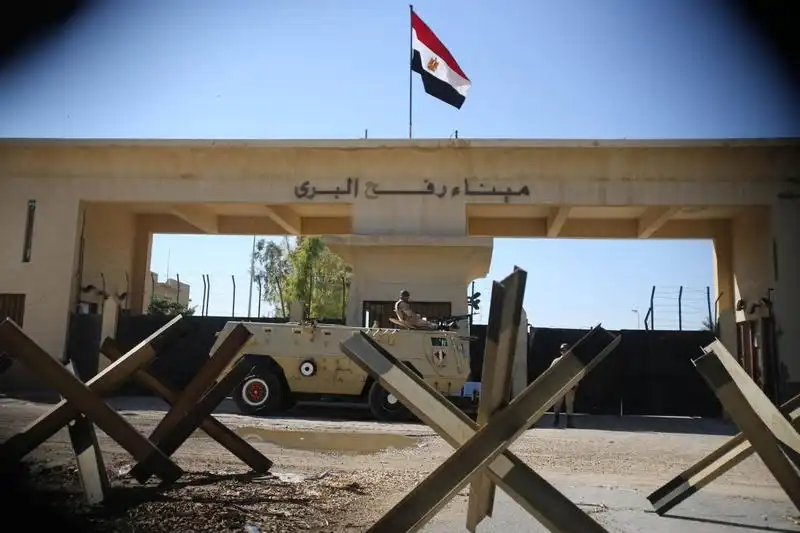
On Wednesday, Egypt brought in a truck loaded with 25,000 liters of fuel, provided to operate UNRWA vehicles.


Data from the General Petroleum Administration in the Palestinian Ministry of Finance indicate that the Gaza Strip’s monthly need for fuel (gasoline and diesel) amounts to approximately 12 million liters.

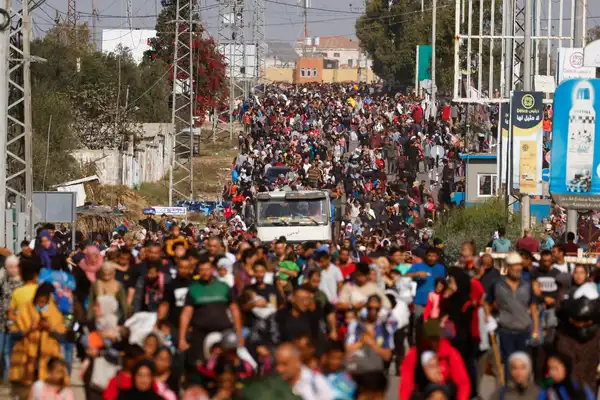
The loss of fuel constitutes a catastrophic crisis for the Gaza Strip, which is inhabited by about 2.3 million people, as it depends on it as a source of energy to operate ambulances and civil defense vehicles necessary to transport victims of the Israeli bombing, to generate electricity for hospitals, and for telecommunications company exchanges, and to pump water from underground wells, water treatment plants, and others. In order to meet minimum human needs.


For 42 days, the Israeli army has been waging a devastating war on Gaza, leaving more than 11,500 martyrs, including 4,710 children and 3,160 women, in addition to 29,800 injured, 70% of whom are children and women, according to the latest official Palestinian census issued on Wednesday evening.

Source: Anadolu+Arabic Post

OPINIONS

Sat 18 Nov 2023 6:32 am - Jerusalem Time

The Lebanon War is approaching... and its timing depends on the results in Gaza In light of Israeli threats... and despite Iran's hesitation

Translation for "Al-Quds" dot com

Translation for "Al-Quds" dot com

Opinion Writer

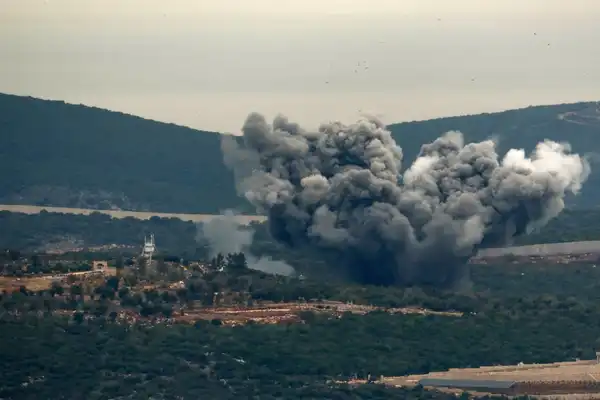
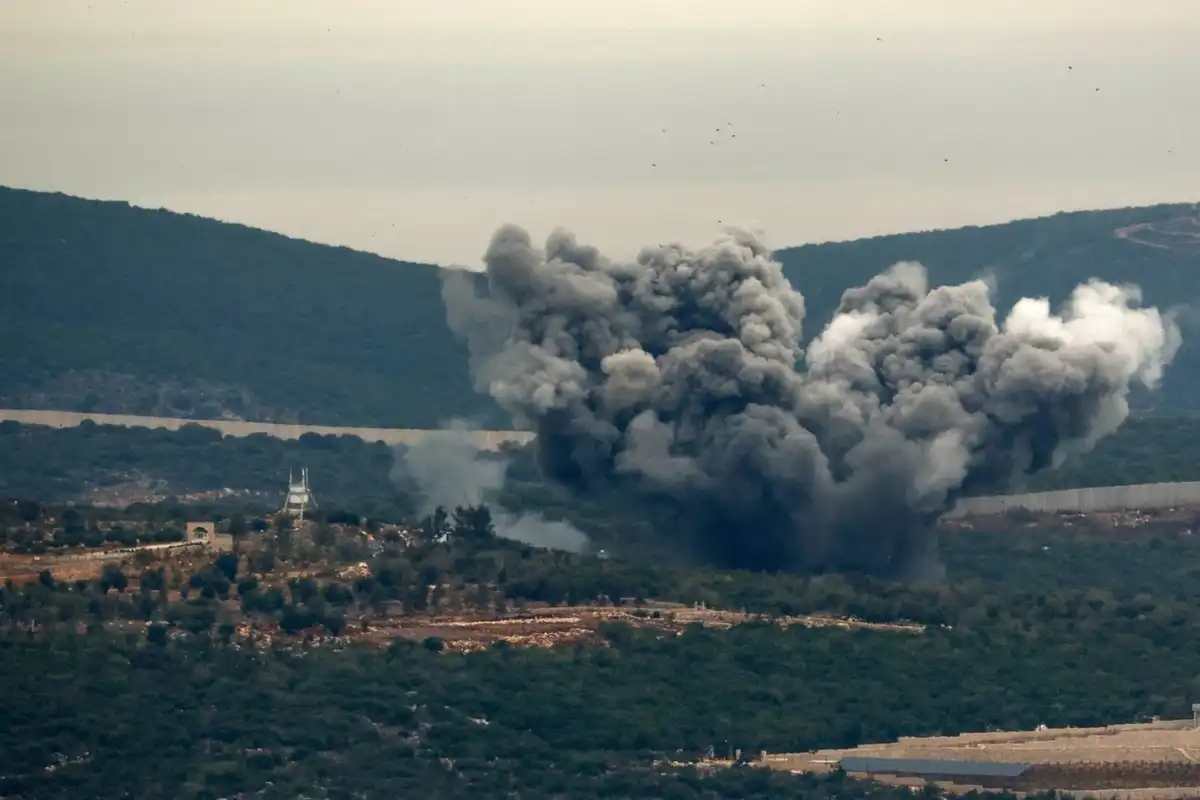
Israel and the Lebanese Hezbollah have entered into a state of continuous daily clashes, the first of its kind since the end of the July 2006 war. Despite this situation, the breakthroughs that have occurred have not led - so far - to a comprehensive confrontation on the Lebanese-Israeli border. Observers and analysts believe that the ignition of the front remains dependent on the developments of the Gaza battle and the results it will lead to. Currently, estimates are converging that “the scenario of war with Lebanon still exists, and its chances have even increased after Israel reconsidered its defense policy following the Al-Aqsa Flood operation, and its refusal to return to managing the conflict according to the equation that was approved before October 7 last.” 


During the past few days, Israel crossed the “red lines” drawn by the Secretary-General of the Lebanese Hezbollah, Hassan Nasrallah, and he warned that crossing them would ignite the front on a large scale, the most important of which is carrying out operations outside the “rules of engagement” and targeting Lebanese civilians, and the military advance in Gaza.


However, Nasrallah did not carry out his threats, despite the heavy costs and the loss of 75 of his fighters in the south. In this context, there are those who believe that there are factors pressuring Hezbollah not to go too far, including that Iran - as it seems - does not want to open a new front, before the picture of the war in Gaza becomes clear.


Here, former MP Ali Darwish, who is close to the Lebanese caretaker Prime Minister Najib Mikati, believes that “the meetings and contacts conducted by Prime Minister Mikati before and during the Arab Summit have relatively protected Lebanon from sliding into war, but there are no firm guarantees to avoid falling into the forbidden.”


Darwish confirmed to Asharq Al-Awsat, in an interview with him, that the Prime Minister “discussed during the meetings he recently held with Arab leaders and international officials Lebanon’s official and popular position, and he informed everyone that no one has an interest in expanding the scope of the conflict, because its results will be disastrous for the region, but this will not prevent Lebanon from defending itself against Israeli attacks.” He then pointed out that “the countries concerned with what is happening seemed to understand the Lebanese position and President Mikati’s demand to curb Israeli recklessness... but they did not provide permanent guarantees.”


Preemptive strike

On the other hand, it is true that the two speeches delivered by the Secretary-General of Hezbollah during the past two weeks were characterized by a calm tone, but they did not dispel concern about the possibility of continued escalation in the south, which portends that matters will go down the drain. Dr. Sami Nader, Director of the Levant Center for Strategic Affairs in Beirut, does not rule out the possibility of war breaking out with Lebanon as a result of the Arab uprising due to the humanitarian catastrophe taking place in Gaza and the high number of victims. Nader explains to Asharq Al-Awsat, “What is worrying for us lies in Israel’s reassessment of the security issue and the panic experienced by the residents of the northern settlements and the psychological effects of the Al-Aqsa Flood operation on them, and how they imagine that Hezbollah will enter their areas as happened in the settlements surrounding the Gaza Strip.” ». Nader added that Israel “has entered the stage of reconsidering all of its defense policy and security doctrine,” stopping at what was leaked by Israeli Defense Minister Yoav Gallant about “the possibility of launching a pre-emptive strike on Lebanon, but American intervention is still curbing this possibility until now.”


The big confrontation

Meanwhile, Israeli officials are not content with military threats, but rather are waging psychological warfare against the Lebanese people. Indeed, the statements of Benjamin Netanyahu, his Minister of Defense and the Chief of Staff were almost devoid of threats to strike Lebanese infrastructure and bomb the capital, Beirut, if Hezbollah fulfilled its promise to strike Tel Aviv and strategic sites deep inside Israel. Regarding this matter, Dr. Riyad Kahwaji, Director of the “Near East and Gulf Foundation for Military Analysis,” said in an interview with Asharq Al-Awsat, explaining that “the hypothesis of the outbreak of war between Lebanon and Israel is still very strong and capable of combustion at any moment.”


Kahwaji continues, stressing that “as long as there is daily bombing on the border between Lebanon and Israel, the possibility of a mistake occurring that leads to a slide towards war and a major confrontation remains.” Then he continues: “There cannot be daily bombing operations and we expect things to remain under control.”


According to Qahwaji’s opinion, “Hezbollah, like Israel, violated the rules of engagement that had prevailed since the end of the July 2006 war... and this happens when one of them finds himself suffering from enemy strikes.” He also pointed out that “(Hezbollah) dealt harsh blows to Israel by targeting its exposed sites, based on its ability to monitor the movements of Israeli soldiers, and killed a number of them, and this is a painful matter for the Israelis.”


Establish the balance of power

In any case, “the period after October 7, 2023 will not be the same as before,” in the words of some observers of the developments of the war on Gaza and Lebanon fronts. The Israeli army, which received the strongest blow since its founding, will seek to restore its shattered image in front of its society. Within this framework, Dr. Sami Nader stresses that “there is a conviction among the political and military leadership in Tel Aviv that it is not possible to return to managing the conflict as it was before, and this puts on the table the resolving of security files by force... From here comes the internal and external warning to Hezbollah not to fall into the Israeli trap.”


Nader then points out that Iran “has no interest in engaging in the war, because it now finds itself winning points, and it is now seeking a ceasefire and stabilizing the balance of power that prevailed before last October 7.”


While there are many questions about what Iran will do if Israel succeeds in eliminating the Hamas movement in Gaza, and whether it will use the Lebanon front through widespread intervention by Hezbollah, Dr. Nader believes that Iran “is not ready to sacrifice Hezbollah.” even if Hamas loses the war.” However, he added, saying: “Iran may sacrifice the party in one case, which is if Tehran itself comes under fire, and (Israeli Prime Minister Benjamin) Netanyahu goes so far as to direct strong military strikes inside Iran... but so far US President Joe Biden is still curbing this Israeli impulse.”


Excessive force

On a parallel level, Israel realizes that the war on the northern front is no picnic, and its cost will be double compared to its battle in Gaza, but the Israelis may accept paying the prices instead of remaining in constant anxiety. This is precisely what was mentioned in reports and studies prepared by decision-makers in Tel Aviv.


In this regard, Dr. Riyad Qahwaji notes that “the Israeli army is seeking to restore its prestige after Operation (Al-Aqsa Flood), and resorts to excessive use of violence, exaggeration in response, and committing massacres against civilians in Gaza, but its biggest problem remains on the northern border, as it has not yet been able to dealing with it... These fears are increasing among the residents of the northern settlements, who refuse to return to them as long as the threat (Hezbollah) is still present.” Here, Qahwaji stresses that “these fears have begun to push the Israelis to demand an end to the party’s presence as a basic condition for their return to these settlements.”


Worst case scenario

What is worth noting here is that since the start of Operation “Al-Aqsa Flood,” the Israeli army has evacuated more than 10,000 Israelis from the settlements located near the Gaza envelope to the city of Eilat overlooking the Red Sea in southern Israel, and also evacuated 60,000 settlers from compounds near the border with Lebanon into Israel.


According to Qahwaji’s opinion, “the settlers’ anxiety about returning to their areas in the north may push Israel to carry out major military action with (Hezbollah) immediately after the end of the battle in Gaza,” warning that “we may find ourselves facing this scenario when Israel feels that it is now in control” on the situation in Gaza.


Destructive war

Also regarding the situation on the Lebanese-Israeli border, Israeli Defense Minister Yoav Galant warned, during his recent tour on the northern front with Lebanon, that “(Hezbollah) is close to committing a major mistake, which will lead to turning Beirut into a second Gaza.” Gallant continued: “I say to the citizens of Lebanon that (Hezbollah) is dragging Lebanon into a war that may break out, and it is making mistakes... And if it makes these mistakes here, who will pay the price? Firstly, they are the citizens of Lebanon, and what we are doing in Gaza we know how to repeat in Beirut.” . Then he continued, threatening that Israeli pilots “are sitting inside the cockpits of planes preparing to head north, and we have everything necessary to do the same thing we do in the south.”

It is true that these threats by Gallant come in the context of psychological warfare against the Lebanese people, but they may turn into a reality. Hence, military experts agree that the potential war will be a devastating war, given the advanced weapons that will be used by both sides, that is, Israel and Hezbollah. Therefore, Qahwaji warns that “(Hezbollah) will use all the strategic weapons available to it, including precision missiles, drones, artillery, and perhaps an air defense weapon.” He points out that “Israel will resort to intense aerial bombardment and fire belts like the ones it uses in Gaza, in addition to destroying residential complexes and buildings, striking Lebanese infrastructure, committing massacres, and using a scorched earth policy.”


The element of surprise

This dark picture is depicted in the minds of the Lebanese who are watching around the clock the massacres in Gaza, the suffering of its people, and the destruction of hospitals, schools, and places of worship. Therefore, voices are growing louder warning “Hezbollah” against being lured into a disastrous war.


Once again, Kahwaji warns that Israel “will benefit from the Lebanese divisions over the war, to reinforce internal division and increase pressure on the party, especially since a large part of the Lebanese people will hold them responsible for engaging in the war, and of course, Israel will exploit that and exacerbate the suffering of the Lebanese people.”


Israel realizes that the war on the northern front is no picnic and its cost will be double compared to its battle in Gaza


On the other hand, observers of developments in military operations on both the Lebanese and Israeli sides assume that the Hebrew state has become more prepared than ever before for the possibilities of war. This is because it no longer fears the element of surprise that exhausted it in Operation “Al-Aqsa Flood.” Rather, it monitors any movement, not only at the line separating it from Lebanon, but also in the Lebanese villages and towns close to occupied Palestine. Therefore, Kahwaji recalls that “the Israeli army has mobilized more than 200,000 soldiers on the front with Lebanon, in addition to declaring a major alert in the air force and missile force. As for the worst scenario, according to estimates, it is an Israeli incursion into a ground invasion of Lebanon.”


...and immigration

Finally, the Hebrew state is currently facing the dilemma of the migration of thousands from its land to other countries. Information indicates that more than 230,000 Jews have left Israel since Operation Al-Aqsa Flood, and the number of departures is expected to rise with the continuation of the war on the Gaza Strip, the escalation of tension on the northern front with Lebanon, and the continuing confrontations in the occupied West Bank.


Here Qahwaji says: “If war breaks out, God forbid, Israel will announce its readiness to enter by land.” It is expected that “it will resort to creating a new reality in the area south of the Litani River, so that this war will be more fierce and bloody than the 2006 war, especially since the Israelis will work to return the settlers to their areas in the north, and prove to them that it is capable of protecting them, and it will also try to restore confidence in its ability.” The army will deter, protect Israeli society, and encourage those who immigrated from Israel to return to it again.”


The state’s plan for confrontation... “ink on paper”

> In parallel with the efforts made by caretaker Prime Minister Najib Mikati to spare Lebanon the danger of an Israeli war and its devastating repercussions, the specialized ministries and departments have placed their employees in full readiness in anticipation of any emergency. However, these preparations do not rise to the level of imminent danger, and remain in vain in the absence of the necessary equipment.


In this regard, the head of economic bodies in Lebanon, former Minister Mohamed Choucair, said during an interview with Asharq Al-Awsat that these preparations “are still ink on paper... If war occurs, we will not have a basic foundation to stand on.”


Choucair added, “People do not have the money to be able to withstand, and merchants do not have sufficient capital to import goods and store them for a long period, and the materials stored in warehouses are not sufficient for more than a month or two in the best of circumstances, but the biggest disaster lies in the scarcity of fuel.” Which is not enough for more than two weeks. I believe that if a naval blockade is imposed on Lebanon, we will fall into a major catastrophe, and then all the factories that need fuel will stop working.”


Indeed, the damage resulting from the interruption of fuel is not limited to stopping laboratories and factories, but will also hinder the movement of citizens between regions, and will inevitably lead to a power outage. Choucair - who served as Minister of Communications between 2018 and 2019 - believes that “the major catastrophe will be the communications outage and the inability to operate electricity generators in the main exchanges and in the two cell phone networks, which may lead to the isolation of Lebanon from the world.”


Economic bodies are currently holding weekly meetings on a regular basis to keep pace with developments and research the options presented in light of the state’s resignation from its mission, or its inability to deal with developments due to the lack of material and logistical capabilities. According to Choucair, “The plan drawn up by the state is insufficient to deal with the disaster if it occurs, and it is difficult to implement it in the absence of funding. Moreover, more than half of the Civil Defense ambulances and firefighting engines are out of order, and the government says that it will allocate $700,000 to the Civil Defense if war breaks out, but unfortunately these mechanisms need between one and two months to be repaired... Does it make sense for the amount to be allocated when War will happen?


Then the former minister points out that “all the machinery and equipment belonging to the municipalities are out of service, including the municipality of Beirut, which is considered the largest and most responsible among all the municipalities in Lebanon.”


If Lebanon is unable to keep up with the war, how can it deal with its consequences?


Here Choucair states that “Lebanon’s situation in 2023 is completely different from what it was in 2006, and therefore it will be in a major and unaccounted for crisis after the war.” He adds, “During the war, brotherly and friendly countries may prevail over the humanitarian factor and try to help civilians through field health institutions, medicines, and treatments for the sick and injured, but the difficult question is, who will rebuild Lebanon after the war?... We are now in a different situation and circumstances than we were before.” 

Source: Asharq Alawsat

PALESTINE

Sat 18 Nov 2023 6:23 am - Jerusalem Time

Israeli bombing of a building in Balata camp leaves 5 Palestinians killed .. another 2 Palestinians shot dead in Tubas and Jenin

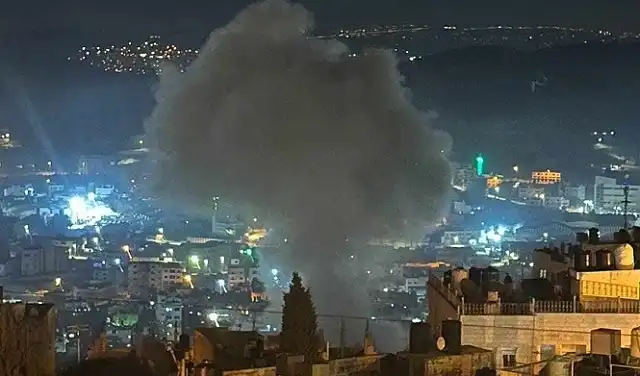
An Israeli bombing targeting a building in the center of Balata camp resulted in 5 dead, bringing the death toll in the occupied West Bank since October 7 to 212 dead.


Five young men were killed and two others were injured as a result of the occupation bombing of a building in the center of Balata camp, east of Nablus. A short time later, a young man was shot dead by Israeli forces in the city of Tubas after midnight on Friday - Saturday.


The Palestinian Red Crescent reported that its crews dealt with 5 very serious injuries to two young men aged 20, two others aged 19, and a young man aged 25 as a result of the bombing of the building in Balata camp.


In detail, an Israeli drone targeted the Fatah headquarters in Balata camp with a missile, resulting in 5 dead, two young men injured, and major damage to the place.


In Tubas, the young man, Omar Al-Shahrouri, was shot dead, while two other young men were injured after being shot by Israeli forces during their storming of the city after midnight.

The details stated that three young men were injured by live bullets during confrontations with the occupation forces. The injury of one of them was described as serious, and doctors declared his death upon his arrival at the hospital.


The Israeli forces stormed the city in large numbers, accompanied by a military bulldozer, from the eastern side, amid heavy gunfire, reconnaissance drones flying over the city, and snipers deployed on the roofs of some buildings.


In Jenin, the young man Jamal Mahmoud Abdel Rahman Masharqa (21 years old) was dead on Friday evening, days after he was shot by Israeli occupation forces.


Thus, the death toll in the occupied West Bank since October 7th rises to 212 martyrs.


Earlier today, 3 young men were shot, one of them seriously, during clashes that broke out with Israeli forces in the town of Kafr Dan, west of Jenin, and at the western entrance to the city of Jenin.


In Qarawat Bani Hassan, west of Salfit, a young man was shot and dozens suffered from suffocation after the occupation forces stormed the town.


The occupation forces randomly fired bullets at citizens and their homes, wounding a citizen with a bullet in his hand, and dozens suffered from suffocation during confrontations that followed the occupation's storming of the town.


PALESTINE

Fri 17 Nov 2023 10:44 pm - Jerusalem Time

Clashes with Israeli forces broke out in Ya`bad, southwest of Jenin

Confrontations broke out between citizens and the Israeli occupation forces, Friday evening, in the town of Ya`bad, southwest of Jenin.


Local sources said that an occupation army force stormed the town and raided several neighborhoods, including Abu Shamla, Al-Salama, and the vicinity of schools, which led to the outbreak of confrontations during which the occupation soldiers fired rubber-coated metal bullets and stun grenades.

ARAB AND WORLD

Fri 17 Nov 2023 10:40 pm - Jerusalem Time

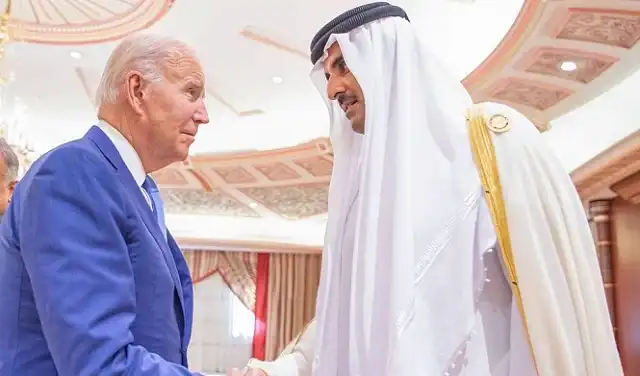
Emir of Qatar and Biden discuss the situation in Gaza, the hostage issue, and humanitarian aid

The Emir of Qatar, Tamim bin Hamad Al Thani, discussed with US President Joe Biden the latest situation arising from the ongoing Israeli war on the Gaza Strip, including the issue of detained hostages and the issue of humanitarian aid.


The Qatari Emiri Diwan said that the Emir of Qatar discussed with the US President during a phone call the developments in Gaza.


The White House said that Biden raised with the Emir of Qatar the urgent need to release “all hostages” taken by Hamas in its attack on Israel last month.


The US presidency explained that Biden and Tamim discussed during a phone call the urgent need to release all hostages held by Hamas without any delay.


The two officials also discussed Israel's agreement to allow the entry of two fuel trucks daily into the Gaza Strip based on an American request, and touched on "the efforts made to increase the flow of urgent humanitarian aid to Gaza and Israel's decision to resume fuel shipments for life-saving aid."


On Wednesday, Biden expressed "moderate optimism" that Israel and Hamas could reach an agreement on the release of a portion of the hostages it is holding in Gaza.


Qatar is leading mediation between Israel and Hamas in the issue of the hostages it kidnapped and took with it to the Gaza Strip during its surprise attack on October 7, after which Israel launched war on Gaza.


Israel is launching an intense air and artillery bombardment campaign on the besieged Gaza Strip, and began carrying out ground operations as of October 27. The Government Information Office announced on Friday that the war's death toll exceeded 12,000 martyrs, including five thousand children.

OPINIONS

Fri 17 Nov 2023 9:37 pm - Jerusalem Time

Pariah or Not Pariah?

Carnegie Endowment

Carnegie Endowment

Opinion Writer

MICHAEL YOUNG

In the absence of a political horizon for Palestinians, Israel may opt for the most terrible alternative of all


October 7 was many things for Israel, but above all it was a confirmation that the ambitions of the country’s present leadership are at an impasse. Hamas’s attack against Israeli towns and military bases showed that the idea of circumventing the Palestinians to make deals with Arab countries was an illusion. The problem in and around Israel remains the same: Without a political horizon for Palestinians, Israel will remain a state build on a foundation of structural oppression, in which Palestinians are permanently subjugated, disregarded, and humiliated. 

As Israelis come to realize that this situation is unsustainable, they will be left with one of two choices: either to conclude a durable peace agreement with the Palestinians, or to find a way of transferring by force Palestinians in the West Bank and Gaza (and conceivably, those inside the 1948 borders) to neighboring Arab countries.


While peace is the better route, Israelis are more likely to prefer its alternative: ethnic cleansing. What we are seeing today across the Israeli political spectrum is an apparent consensus that October 7 showed that coexistence between Jews and Palestinians was an impossibility. Therefore, the only solution left is to get rid of as many Palestinians in Israel’s vicinity as possible.

The notion of an Arab “transfer” out of Palestine has always been present in the Israeli discussion, and was a centerpiece of Zionist thinking, as the historian Nur Masalha showed in his groundbreaking book Expulsion of the Palestinians: The Concept of “Transfer” in Zionist Political Thought, 1882–1948. The demographics today only make Israeli deliberation along these lines more acute. We have lately seen Israeli leaders, as well as present and former policymakers, discussing openly the idea of transferring Palestinians out of Gaza, with Israeli Prime Minister Benjamin Netanyahu asking European leaders to put pressure on Egypt to accept Gaza’s Palestinians, who would be pushed into the Sinai by Israel.

Since the International Committee of the Red Cross (ICRC) is, according to its own description, one of the organizations most involved in “humanitarian protection and assistance for victims of war and armed violence,” and “takes action in response to emergencies [promoting] respect for international humanitarian law and its implementation in national law,” it would be useful to begin with its definition of ethnic cleansing. The ICRC defines it as “a purposeful policy designed by one ethnic or religious group to remove by violent and terror-inspiring means the civilian population of another ethnic or religious group from certain geographic areas.” Israel’s Ministry of Intelligence has prepared what the authorities have downplayed as a “concept paper,” providing options for what to do with the Palestinians in Gaza. 

It proposes that Israel “evacuate the Gazan population to Sinai” and “create a sterile zone of several kilometers inside Egypt and not allow the population to return to activity or residence near the Israeli border.” Under the ICRC definition, the ministry’s proposals, and evidently Netanyahu’s actions, are unequivocally steps in what is a project to ethnically cleanse the Palestinians living in Gaza.

When there was pushback against the Ministry of Intelligence’s paper, some Israelis tried another approach. Two Israeli politicians, Danny Danon of the Likud party and Ram Ben-Barak of the more centrist Yesh Atid Party, published an opinion article in the Wall Street Journal in which they called on countries around the world to take in what they called “limited numbers of Gazan families who have expressed a desire to relocate.” On the face of it, this appeared to be a humane gesture favoring Palestinians, but the reality was quite different. Given that Israel has destroyed large swathes of Gaza, making them uninhabitable, we can assume that quite a few Gazans would probably choose to leave the territory if given the opportunity to do so. 

In other words, what the authors disingenuously chose to portray as a plan affecting limited numbers of Palestinians is one that would more likely end up appealing to a far larger number of people whose lives have been ruined.

Not surprisingly, this softcore ethnic cleansing tactic was endorsed by more extremist elements of Israel’s political establishment, with Bezalel Smotrich, the leader of the far-right National Religious Party—Religious Zionism, approving of the proposal. 


Smotrich had himself presented a so-called “Decisive Plan” in 2017 in which he called for a massive expansion of settlements in the occupied territories, so that “the Arab dream of a state in Judea and Samaria is no longer viable.” This would leave Palestinians with two possibilities: “Those who wish to forego their national aspirations can stay here and live as individuals in the Jewish State,” or “those who choose not to let go of their national ambitions will receive aid to emigrate to one of the many countries where Arabs realize their national ambitions, or to any other destination in the world.” One can hear echoes of Smotrich in Danon’s and Ben-Barak’s article, which appears to reflect mainstream views. 


Let’s examine one possibility. Assuming Palestinians surrender their national aspirations and choose to live in a Jewish state, what actually awaits them? If the past is prologue, then Palestinians who remain in Israel and the occupied territories would very probably be fated to accept a permanent secondary status under a legal system that treats Jews and Palestinians unequally, the legal definition of apartheid.

Saying such a thing apparently constitutes an example of antisemitism, according to the European Union’s foreign policy chief Josep Borrell, adopting the controversial definition of the term by the International Holocaust Remembrance Alliance. 

The only problem, however, is that an increasing number of Israelis appear to agree with the term. This includes the Israeli Law Professors’ Forum for Democracy, an ad hoc and voluntary group of Israeli legal experts, in a report it published in March 2023. The report examines how the civil administration in the occupied West Bank has, through a government power-sharing agreement, been subordinated to the additional minister in Israel’s Ministry Defense, meaning Belazel Smotrich. This represents a break with the past, when the occupied West Bank was ruled by the Israeli military under belligerent occupation, not by Israel’s government.

According to the law professors, the agreement, by placing management of the West Bank in the hands of a cabinet minister, “deepens the differences that already exist between Israelis residing in the West Bank and Palestinians residing there, insofar as concerns the legal frameworks and applicable law governing them, and intensifies the discrimination between these populations. 

The agreement is an overt and formal measure that validates claims that Israel practices apartheid, which is prohibited under international law.” Others have concluded the same thing, including Amnesty International, Human Rights Watch, and the United Nations Special Rapporteur on the Palestinian Territories Occupied Since 1967.Gaza has taught the Israelis several lessons when it comes to dealing with the Palestinian population in its midst. 

The first is that when Israel is perceived as a victim, the international community has no hesitation in allowing it to violate international law, in this case the perpetration of war crimes, including collective punishment. Second, humanitarian actions can easily act as camouflage for more sinister objectives. Had Egypt acquiesced to a humanitarian corridor to allow Palestinians to seek refuge in Sinai, this would have potentially given Israel an opportunity to close the door and bar their return to the territory. That is why the Egyptians, from the beginning, rejected the idea of a humanitarian corridor.

And third, October 7 was perceived by many Israelis as posing an existential threat to their state (which its enemies never denied), making them more determined to deal with the presence of the Palestinians through radical, violent measures. The fact that there has been little outcry against five weeks of bombing in Gaza in which perhaps as many as 15,000–20,000 people have been killed, many of them children, shows just how far fear can push people to approve of the reprehensible.

It is only natural that Israel should think in these terms. The rightward shift of the Israeli electorate, the extremism of the Netanyahu government, and the United States’ facilitation of Israel’s most contentious policies, have led Israelis into a wall. In refusing to consider a Palestinian state, in undermining the Palestinian Authority, in backing the illegal activities of Jewish settlers in the occupied territories, in suffocating Gaza, in pushing Palestinians into ever smaller enclaves in the West Bank, and now Gaza, Israel has become a state whose primary aim, it seems, is to deny rights to the millions of Palestinians under its control.

In other words, Israelis, as they contemplate whether to embrace the path of ethnic cleansing or simply retain an apartheid system, must consider whether they want to consolidate what a rising number of people around the world view as a pariah state. The answer may be yes, but what security lies in this, and for how long? In recent decades, Israel’s enemies have improved their weapons and strategies, while the United States, Israel’s strongest ally, has found itself more isolated. The refusal of Israeli leaders to give Palestinians a state—even one that is mangled and garrisoned by an abusive military, where Israel controls all access points, all resources, all lives—is no longer tolerable to a rising generation of young people worldwide.

Israelis must feel besieged and many are facing a rising tide of antisemitism. Given the significant numbers of Jews in Israel and outside who reject the pitiless logic of Israel’s occupation, antisemitism is not only an odious reaction to what Israel is doing, it is also an especially stupid one. As Israel stands before the two alternatives of a just peace with the Palestinians or ethnic cleansing, they have to be persuaded to select the first. There are those in Israel, many of them in power, who reject peace, which is precisely why those in the Arab world and elsewhere who want a settlement must find common cause with Jews all over who seek the same thing.

When the reactions to October 7 finally die down, many will realize what should be obvious by now. Jews and Arabs have no choice but to coexist since neither people will ever manage to get rid of the other, even as striving to do so diminishes each.

Source: Carnegie

PALESTINE

Fri 17 Nov 2023 9:17 pm - Jerusalem Time

830 thousand displaced Palestinian in UNRWA facilities in Gaza

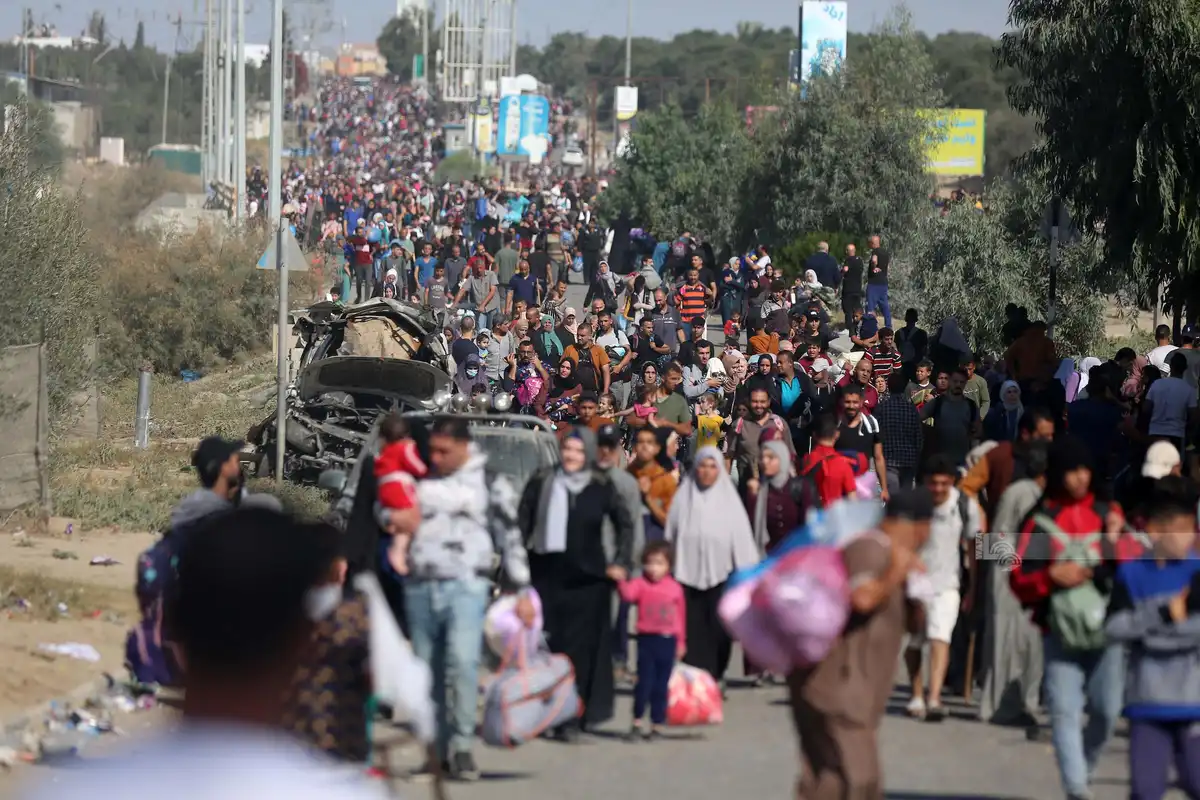
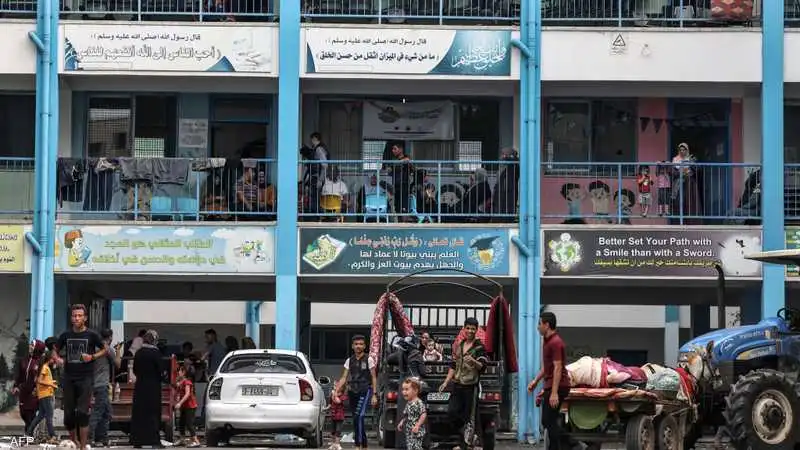
The United Nations Relief and Works Agency for Palestine Refugees (UNRWA) revealed that about 830,000 displaced people are currently staying in 154 facilities affiliated with the agency in all governorates of the Gaza Strip, including the north.


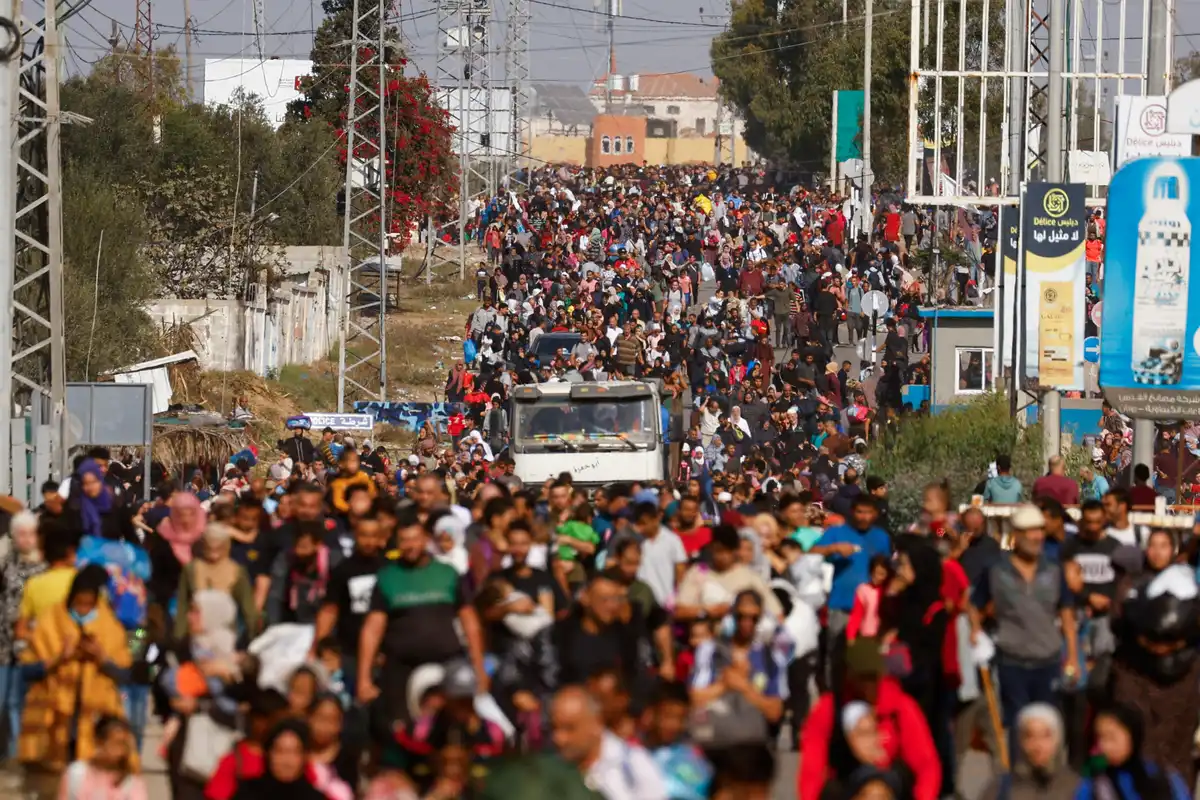
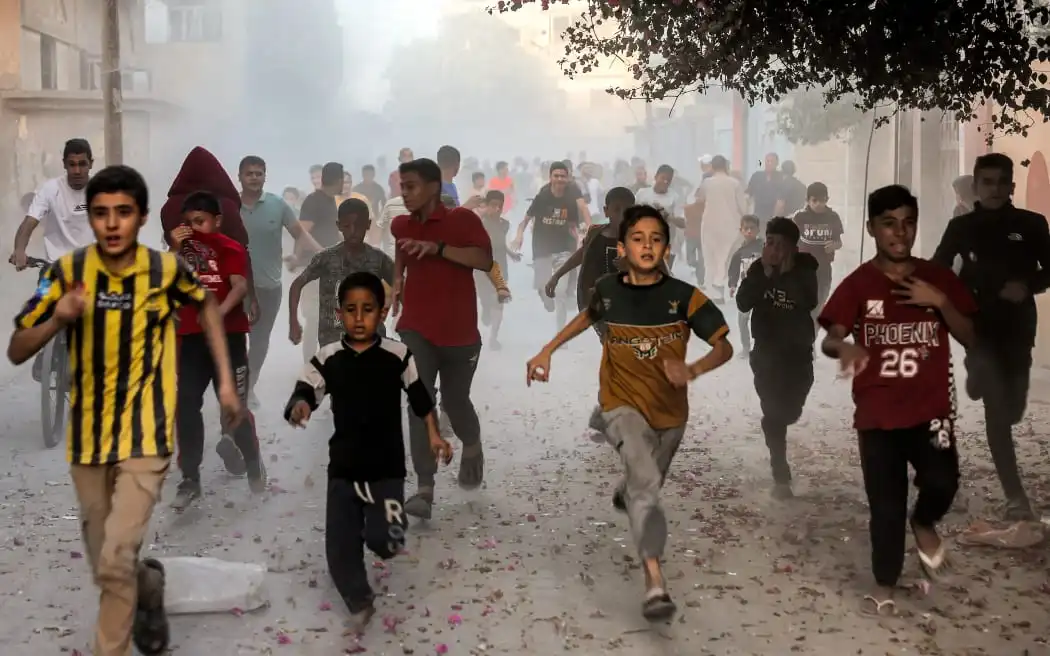
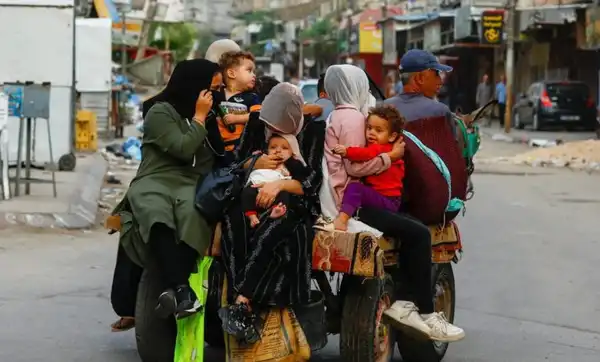
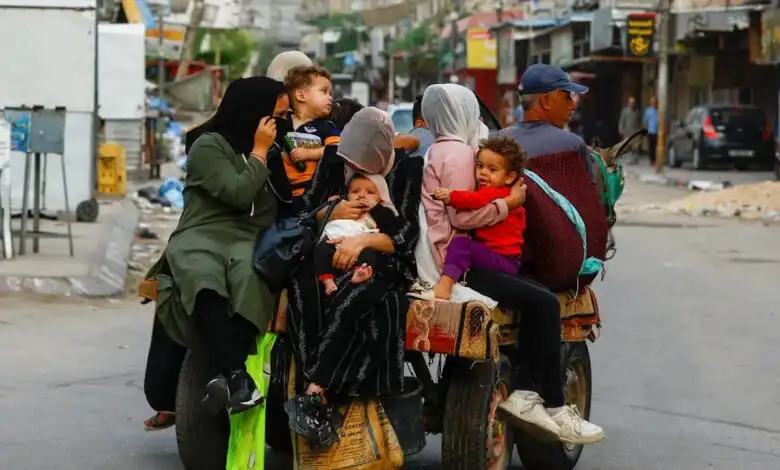
The agency added that approximately 1.6 million people throughout the Gaza Strip have been displaced since October 7.

PALESTINE

Fri 17 Nov 2023 9:15 pm - Jerusalem Time

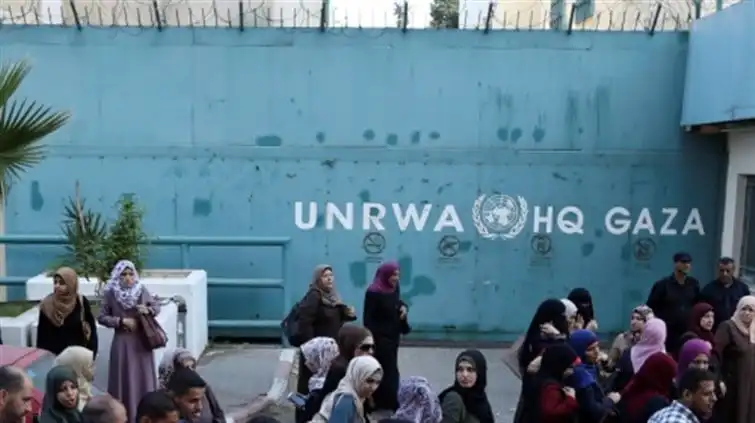
UNRWA operations in Gaza are completely paralyzed

The United Nations Relief and Works Agency for Palestine Refugees (UNRWA) announced that its operations in the Gaza Strip had been completely paralyzed due to a lack of fuel and a communications outage.


UNRWA Director of Communications and Media, Juliet Touma, said that their work has become impossible in light of the current circumstances in which the besieged sector is experiencing, stressing that the humanitarian situation should not have reached what it is currently.

PALESTINE

Fri 17 Nov 2023 9:13 pm - Jerusalem Time

Gaza Health: We lost 55 patients due to running out of medicines and the siege of hospitals

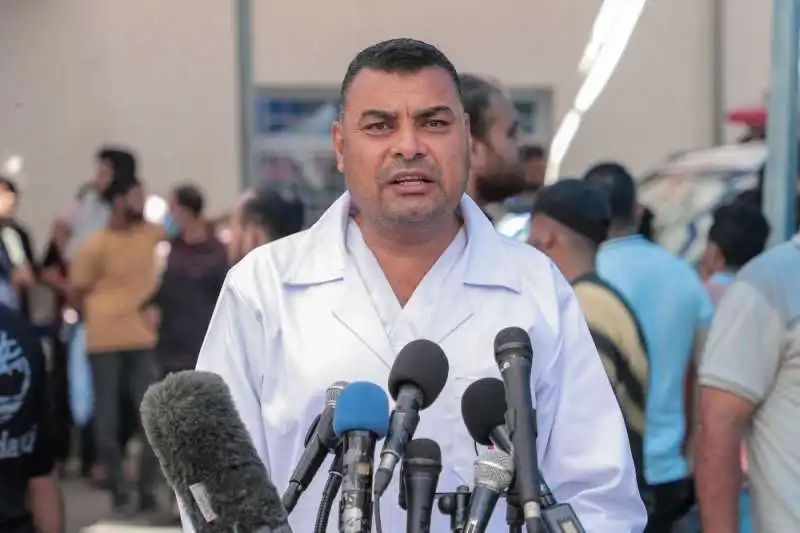
The spokesman for the Ministry of Health in Gaza, Ashraf Al-Qudra, said that 50 patients, including 4 kidney patients and 3 premature babies, were martyred in the past days due to the running out of medicines and the Israeli occupation forces’ siege of hospitals.


He stressed that the depletion of fuel and the power outage caused the death of 20 intensive care patients due to the cessation of life support, stressing that 35 kidney failure patients had not received treatment for a week.


He added that the occupation forces must provide a safe passage that allows the entry of living and medical supplies and fuel to the hospitals they are besieging in the northern Gaza Strip, especially Shifa.

PALESTINE

Fri 17 Nov 2023 8:55 pm - Jerusalem Time

A young Palestinian died as a result of being wounded by Israeli soldiers in Jenin

The Ministry of Health announced, this Friday evening, that a young man died as a result of being shot by Israeli occupation army about a week ago in Jenin.


The Ministry reported the death of the young man, Jamal Mahmoud Abdel Rahman Masharqa (21 years old), from Jenin camp, as a result of critical wounds he sustained by occupation bullets about a week ago.


The young man, Masharqa, was wounded by Israeli army in the chest and leg during the occupation’s aggression against the city of Jenin and its camp on the ninth of November. He was transferred to Ibn Sina Hospital, where his injury was described as critical, and he underwent surgical operations in an attempt to save his life, until his death was announced this evening. .


With the death of young Masharqa, the number of dead in the West Bank since the start of the comprehensive aggression against Gaza on the seventh of last October has risen to 206 martyrs.

ARAB AND WORLD

Fri 17 Nov 2023 8:19 pm - Jerusalem Time

"Politico": Democrats' support for Israel will cost them at the ballot box

The American newspaper Politico reported today that “the generation gap with regard to Israel and Palestine is widening” within the United States, explaining that young voters are “diverging sharply from older members of the Democratic Party, which creates a challenge for the party.”


According to the American newspaper, the generational divide constitutes a “problem for the Democratic Party,” which relies on young voters as a major bloc in its coalition.


Party strategists and elected officials are concerned that Democratic support for Israel, led by current President Joe Biden, "will cost the party at the ballot box."


The newspaper added that American divisions are becoming more widespread as the war in Gaza continues, which threatens to distance the Democratic Party from its younger voters, whose support for the Palestinians is “much greater than the support shown by other age groups.”


While “most Americans say they are more sympathetic to Israelis,” according to Politico, the number of voters more sympathetic to Palestinians rose from 13% to 24%, compared to a poll conducted by Quinnipiac University last month.


This shift is largely due to participants under the age of 35, who overwhelmingly said they do not agree with the Israeli aggression on the Gaza Strip, at 66%. 52% of respondents say that they sympathize with the Palestinians more than the Israelis, while 50% of them believe that the United States supports the Israeli occupation to an exaggerated manner.


On the other hand, older voters, especially those over the age of 65, are likely to take opposite positions, being more supportive of Israel, as is the case with Republican voters, according to the newspaper.


After young voters were “evenly divided over who they sympathized with,” last October, they tended to support the Palestinians, with an increase from 26% to 52%, in a return to “a long-term trend that led to the division of the Democratic Party.” ".


In one month, the number of young voters who were more sympathetic to Israelis than Palestinians decreased from 41% to 29%, according to the newspaper.

ARAB AND WORLD

Fri 17 Nov 2023 7:55 pm - Jerusalem Time

World Health Organization calls for regular entry of sick and injured from Gaza into Egypt

The World Health Organization called on Friday to allow regular entry of sick and injured people from Gaza to receive treatment in Egypt, to relieve pressure on the Strip’s hospitals.

The organization said that a system must be established to remove priority cases from the besieged sector.


26 out of 35 hospitals in the Gaza Strip are out of service, while the rest of the hospitals are struggling to provide health services, and are operating partially in light of the power outage and the exhaustion of the fuel needed to operate the generators.


The representative of the World Health Organization in Palestine, Richard Peppercorn, stressed that "this is not enough to support the endless needs" that arose due to the Israeli aggression on the Gaza Strip.


In a press conference held via video communication technology from occupied Jerusalem, Peppercorn called for daily, sustainable, unhindered, and safe medical evacuations of the sick and seriously injured to Egypt.


He stressed that between 50 and 60 patients should be transferred daily to Egypt, where they "will receive the appropriate and deserved treatment and care."


Regarding the Israeli occupation’s storming of Al-Shifa Medical Complex and the military siege imposed on the complex, Peppercorn said: “We are deeply concerned about the safety of patients and health workers, not only in Al-Shifa Hospital but in other hospitals as well.”


He stressed that "health facilities, health workers, ambulances and patients must be protected."

According to Peppercorn, before the start of the aggression on October 7, there were about 3,500 beds in the Gaza Strip’s hospitals. Now there are approximately 1,400 beds.


He estimated the current needs at "about 5,000 beds."


According to the UN official, the organization’s communication with its employees on the ground in Gaza has become “extremely difficult” due to the communication breakdown in the Strip.


Peppercorn also expressed deep concern about the spread of diseases in the besieged Strip, including acute respiratory infections, chicken pox, skin rashes, and hepatitis A.

OPINIONS

Fri 17 Nov 2023 7:52 pm - Jerusalem Time

Forever war?... Israel faces the risk of a long, bloody rebellion in Gaza

Translation for "Al-Quds" dot com

Translation for "Al-Quds" dot com

Opinion Writer

American and Arab officials, diplomats and analysts said that Israel risks facing a long and bloody insurgency if it defeats Hamas and occupies the Gaza Strip without a credible plan to withdraw and move towards establishing a Palestinian state in the post-war period.

Two American officials, four officials from the region and four diplomats familiar with the discussions said that all the ideas put forward by Israel, the United States and Arab countries so far for managing the post-war phase in Gaza have not received widespread support, raising fears that the Israeli army may be exhausted in the future in a long-term security operation.


While Israel maintains control over northern Gaza, some officials in Washington and Arab capitals believe that Israel is ignoring the lessons learned from the US invasions of Iraq and Afghanistan, when rapid military victories were followed by years of violence and extremism.

Diplomats and officials say that if the Hamas-run government in Gaza is overthrown and its infrastructure and economy destroyed, an extremist fundamentalist trend among an angry population could lead to an uprising targeting Israeli forces in the Strip's narrow streets.


Israel, the United States and many Arab countries agree on the need to overthrow Hamas after its attack on southern Israel on October 7, killing about 1,200 people and taking about 240 hostage. But there is no consensus on an alternative to replace it.


Arab countries and their allies in the West have said that the Palestinian Authority, which governs parts of the West Bank, is the natural candidate to play a larger role in Gaza, which has a population of about 2.3 million.


But the credibility of the authority, which is run by the Fatah movement led by President Mahmoud Abbas (87 years old), was severely damaged by its loss of control of Gaza to Hamas in the 2007 conflict, and by its failure to stop the spread of Israeli settlements in the West Bank, and its accusation of corruption and inefficiency.


Israeli Prime Minister Benjamin Netanyahu said at the weekend that the Palestinian Authority in its current form should not take responsibility for Gaza. He stated that the Israeli army is the only force capable of eliminating Hamas and ensuring that terrorism does not return. Following Netanyahu's statements, Israeli officials insisted that Israel does not intend to occupy the Gaza Strip.


Mohammed Dahlan, who was a security official in Gaza until the Palestinian Authority lost control of the Strip to Hamas and whose name was suggested to take over the post-war government there, said Israel was wrong if it thought tightening its control over Gaza would end the conflict.


Dahlan added from his office in Abu Dhabi, where he now lives, that Israel "is an occupying force and the Palestinian people will deal with it as an occupying force."


He added that Hamas leaders and fighters will not surrender, but will prefer to blow themselves up rather than surrender.


Dahlan pointed out the lack of vision for the future of Gaza among Israel, America and the international community, calling on Israel to stop the war and begin serious talks about a two-state solution.


US President Joe Biden warned Netanyahu on Wednesday that occupying Gaza would be a "big mistake." Diplomats say that the United States and its allies do not yet see any clear road map from Israel regarding the exit strategy from Gaza, except for the stated goal of eliminating Hamas. American officials are pressuring Israel to present realistic goals and present a plan on how to achieve them.

The Israeli government did not respond to requests for comment on its post-war plan in Gaza. The United Nations and the Red Crescent say that the operation launched by Israel in Gaza in response to the October 7 attack has led to the death of more than 12,000 people so far and the displacement of more than a million.


While some American officials insist on Israel's right to defend itself, they worry that the rising civilian death toll could radicalize more Palestinians and push new fighters into the arms of Hamas or armed groups that will emerge to replace it in the future, according to a source familiar with  American policy making process.


More than a dozen Gazans interviewed by Reuters said that the Israeli invasion is generating a new generation of militants.

Abu Muhammad (37 years old), a government employee in Jabalia refugee camp, stated that he would prefer death to the Israeli occupation.


He told Reuters, refusing to reveal his full name for fear of reprisal: “I am not (a member of) Hamas, but in days of war we are all one people, and if they eliminate the fighters, we will carry rifles and fight... The Israelis may occupy Gaza, but they will never feel safe, not for a day.”


US-led talks

Two American officials, who spoke on condition of anonymity, said that US discussions with the Palestinian Authority and other Palestinian parties and allies such as Egypt, Jordan, the UAE, Saudi Arabia and Qatar about a post-war plan in Gaza are still in their early stages.


A senior American official said: “We have certainly not yet reached the stage of making any effort to promote this vision to our regional partners, who will ultimately live with it and implement it.”


While Biden insisted that the war must end with a “vision” for a two-state solution, which would make the Gaza Strip and West Bank a Palestinian state, neither he nor his senior aides provided any details on how that would be achieved and did not even suggest resuming the talks.


Some experts believe that any effort to revive negotiations is far-fetched, for reasons including, in particular, the poor morale of the Israelis after the atrocities committed by Hamas on October 7, as well as the morale of the Palestinians after the Israeli retaliation in Gaza.


Jonathan Panikoff, a former senior US intelligence official who specializes in Middle East affairs and currently works at the Atlantic Council think tank, said: "One of the many tragedies of the terrorist attack carried out by Hamas is that it fundamentally undermined the Palestinian cause and caused a setback (in terms of the effort) to establish an independent, sovereign state."


According to an informed source, Biden may decide on a more modest initiative that could include a path to eventually resume negotiations. Biden's aides realize that Netanyahu and his far-right coalition government, which rejects the idea of establishing a Palestinian state, have little desire to resume talks.


As Biden seeks re-election as president next year, he may be reluctant to lose pro-Israel voters who will see him pressuring Netanyahu to make concessions to the Palestinians.


In a speech he delivered last week in Tokyo, US Secretary of State Anthony Blinken clarified Washington's red lines in Gaza, saying that the administration opposes the forced displacement of Palestinians from the Strip, or any reduction of its area, or its occupation, or Israel imposing a siege on it. He also said that Gaza cannot become a platform for terrorism.


Blinken has repeatedly stated that Washington would like to see a “revitalized” Palestinian Authority eventually manage the Gaza Strip unified with the West Bank.


The credibility of the Palestinian Authority has diminished under Abbas, who has run it since 2005, with the decline of hope for a path leading to achieving the two-state solution stipulated in the Oslo Peace Accords in 1993.


American officials say that these mechanisms need to be changed. Some diplomats have stated that a leadership change within the Palestinian Authority may be possible with Abbas remaining in a ceremonial position. A senior European diplomat said another step under discussion is to give the Palestinian Authority a major role in distributing post-war aid in Gaza to revive its legitimacy.


In response to a question about these discussions, a senior official in the Palestinian Authority said that the return of authority to Gaza is the only acceptable scenario and will be discussed with the United States and other Western powers. He refused to comment on the proposal that Dahlan or someone else take over the leadership of a Palestinian government.

Some senior Palestinian officials, including Prime Minister Muhammad Shtayyeh, said that the Palestinian Authority would not return to ruling Gaza on the back of Israeli tanks.


Diplomats said that Western partners and some Middle Eastern countries had submitted a proposal to form a transitional administration of technocrats in Gaza for two years, supported by the United Nations and Arab forces.


But diplomats said there is resistance from major Arab governments, such as the Egyptian government, for fear of being drawn into what they see as the Gaza quagmire.


Regional powers fear that any Arab forces deployed in Gaza will be forced to use force against the Palestinians, and no Arab country wants to put its army in this position.


No agreement on leadership

Although Abbas is not very popular among many Palestinians, there is no agreement on who will replace him in the future.


Dahlan is likely to be accepted by Egypt and Israel, but although he worked closely with the United States during his period in charge of security in Gaza, an American source said that Washington would have some doubts about his return to power. There is a long-term hostility between him and Abbas, the inner circle of officials in the Palestinian Authority, and also with Hamas supporters.


Dahlan led a wave of arrests and repression against senior Hamas leaders in 1996 after a series of suicide bombings against Israel.


An Emirati official said that Abu Dhabi will support any post-war arrangements agreed upon by all parties to the conflict and supported by the United Nations to restore stability and achieve a two-state solution.


Marwan Barghouti, a Fatah leader who has been imprisoned in Israel since 2002 on charges of murder, is very popular among many Palestinians, but some in Washington consider it an impractical proposal because the Israeli government will not want to release someone it accuses of having “blood on his hands.” .


A US official said that choosing a leader for Gaza would be complicated because each regional player has his own favorite personalities and interests. The United States will ultimately support any leader who has the support of the Palestinian people, allies in the region, and Israel.


“There is clearly a dire need to rejuvenate Palestinian leadership, but getting into that again is very difficult,” said Joost R. Hiltermann, director of the Middle East and North Africa Program at the International Crisis Group.


He said that Arab countries could use their veto power against any candidate they did not like, and Hamas, which portrays itself as the leader of the struggle for Palestinian independence, would likely win any elections.


There are great risks that the conflict could spread to the occupied West Bank and outside Israel.


Arab officials and diplomats say that no such amount of concern has been shown about the spread of military action across the Middle East since the US invasion of Iraq in 2003.


Whatever Biden's diplomatic decisions, his aides say he has no interest in drawing the United States into a direct military role in the conflict, unless Iran or its regional proxies threaten American security interests.


“There are no plans or intentions to deploy US military forces on the ground in Gaza, either now or in the future,” White House National Security Council spokesman John Kirby told reporters this month.


Source: Reuters + Annahar Alaraby


PALESTINE

Fri 17 Nov 2023 7:48 pm - Jerusalem Time

International Criminal Court: Five countries requested an investigation into war crimes in the Palestinian territories

Karim Khan, Prosecutor of the International Criminal Court, said on Friday that he had received a request from five countries to investigate the situation in the Palestinian territories.


Khan said the request came from South Africa, Bangladesh, Bolivia, Comoros and Djibouti.


The ICC is already conducting an ongoing investigation into the “situation in the State of Palestine” in relation to war crimes allegedly committed since June 13, 2014.


PALESTINE

Fri 17 Nov 2023 7:17 pm - Jerusalem Time

War death toll exceeds 12,000, including 5,000 children, and more than 3,750 are missing under the rubble.

More than 12,000 martyrs, including 5,000 children, while 3,750 are still missing under the rubble since the start of the war on the Gaza Strip on October 7.


The death toll from the ongoing Israeli war on the Gaza Strip has risen to more than 12,000 martyrs, including 5,000 children and 3,300 women. The war also resulted in 3,750 missing persons who are still under the rubble across the Strip, while clashes continue between Israeli army forces and the Palestinian resistance in several areas.


This comes as the Israeli army continues to bomb several areas and homes inhabited by residents and displaced people in the Gaza Strip, leaving martyrs and wounded, not to mention massive destruction.


The “War Cabinet” approved the entry of two solar tankers daily into the Gaza Strip, and in this context, the head of the Israeli National Security Council, Tzachi Hanegbi, said, “The decision to introduce fuel into the Gaza Strip was taken in accordance with a special request from the United States of America in order to allow the work of United Nations facilities and prevent the spread of epidemics.” Not only among the citizens of Gaza, but also among the soldiers in the Strip.”


Hanegbi pointed out, "We will agree to a very short ceasefire in exchange for the release of a large number of hostages, knowing that there is no agreement yet on a deal to release hostages from the Gaza Strip."


The Israeli army announced on Friday that its forces and members of the Shin Bet had returned the body of female soldier Noa Murciano from the Gaza Strip. Hamas fighters captured the female soldier during the October 7 attack on the “Gaza envelope,” and earlier this week she was killed in an Israeli raid, according to what Hamas announced.


According to the Israeli army statement, Merciano's body was found in a building near Al-Shifa Hospital in Gaza, and information about the location of the body was provided by the Shin Bet. The statement added that members of the Military Rabbinate identified the body and transported it to Israel last night.

Source: Arab48

PALESTINE

Fri 17 Nov 2023 7:15 pm - Jerusalem Time

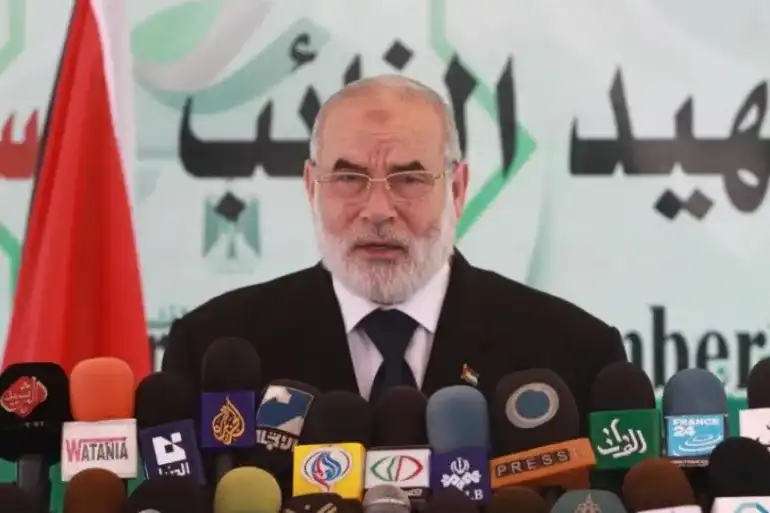
Gaza: Death of Dr. Ahmed Bahr, Vice President of the Palestinian Legislative Council

Dr. Ahmed Bahr, Acting Speaker of the Palestinian Legislative Council, died today, Friday, as a result of his injuries resulting from a previous air strike by the Israeli occupation army during the war it was waging in the Gaza Strip.


Hassan Khraisha, the second deputy speaker of the Legislative Council elected in 2006, mourned the martyr Bahr, saying: “On my behalf and in the name of the members of the Legislative Council elected in 2006, we mourn with all pride and honor the acting Speaker of the Legislative Council, Dr. Ahmed Bahr (Abu Akram), who rose as a result of the occupation’s bombing.”

ARAB AND WORLD

Fri 17 Nov 2023 7:14 pm - Jerusalem Time

A march by families of Israeli prisoners arrives in Jerusalem ahead of a major demonstration in Tel Aviv

A march of families of Israeli prisoners detained by the Palestinian factions in the Gaza Strip arrived on Friday in occupied Jerusalem, a day before a major demonstration expected in Tel Aviv, in an attempt to pressure Benjamin Netanyahu's government to return them.


The march reached the entrance to West Jerusalem and was made up of thousands of Israelis who accompanied it since its launch from the Ministry of Defense headquarters in Tel Aviv a few days ago.


A major demonstration is scheduled to be held in Tel Aviv tomorrow evening, Saturday, to support the demands of the families of the prisoners, and the number of participants is expected to reach about 300,000 Israelis.


The families of the prisoners demand that the war government - led by Netanyahu - work immediately to release their children and reject any partial deals, according to what was reported from the body that follows up on their affairs.


The march arrived in West Jerusalem at a time when Netanyahu is facing accusations of procrastinating in concluding a prisoner exchange deal with Hamas, as he says that his forces will continue their war on the Gaza Strip until these prisoners are “liberated” by force.


Israeli estimates indicate that there are 240 prisoners held by the resistance factions in Gaza. Abu Ubaida, spokesman for the Izz al-Din al-Qassam Brigades, the military arm of the Islamic Resistance Movement (Hamas), previously confirmed that the brigades have about 200 prisoners, dozens of whom were killed in an Israeli bombing, and the rest are with the Jerusalem Brigades. The military wing of the Islamic Jihad Movement, and other factions.


The Hamas movement reported that the Israeli government is delaying concluding a deal to release the prisoners, as Hamas is offering Israel a truce for several days, the entry of fuel and food into Gaza, and the release of prisoners from Israeli prisons in exchange for the release of a number of Israeli prisoners who hold foreign nationalities.


Exchange deal

Meanwhile, Israeli National Security Advisor Tzachi Hanegbi said on Friday that there is no prisoner exchange deal.


Hanegbi added during a press conference in Tel Aviv that Israel will not stop the fire in Gaza without liberating those he described as kidnapped.


Israeli Prime Minister Benjamin Netanyahu said in an interview with the American CBS network that Israel is closer to recovering the hostages than it was before the start of the ground operation in the Strip on October 27.


The Israeli occupation army said that it found near the Shifa Medical Complex in Gaza the body of an Israeli female soldier who the Al-Qassam Brigades announced a few days ago had been killed as a result of an Israeli bombing.


In the past few days, there have been reports that talks on a possible prisoner exchange deal mediated by Qatar and the United States have reached an advanced stage.


However, Reuters quoted a Palestinian official as saying that Hamas suspended negotiations regarding the prisoners after the actions of the Israeli army in Al-Shifa Hospital.


Political analysts believe that Netanyahu's government is not actually concerned with the issue of prisoners or civilian detainees in Gaza, and that it refuses to approve humanitarian truces for fear of being forced little by little to stop the war without achieving its goals, which it considers more important than anything.


In this context, Reuters today quoted a source as saying that Pope Francis will meet next week with relatives of Israeli prisoners in Gaza.


Cardinal Pietro Parolin, the Vatican's second-in-command, said that the Vatican believes that the release of the "hostages" and a ceasefire are essential points for resolving the crisis.

The movement called on the families of Israeli prisoners to put pressure on the Netanyahu government before it is too late.

OPINIONS

Fri 17 Nov 2023 7:03 pm - Jerusalem Time

Israeli expert: Why is Netanyahu undermining Biden's strategy in Gaza?

Translation for "Al-Quds" dot com

Translation for "Al-Quds" dot com

Opinion Writer

A former Israeli political advisor tried to explain how Israeli Prime Minister Benjamin Netanyahu is undermining US President Joe Biden's "day after" strategy in Gaza and Netanyahu's motives for this undermining.


Nimrod Novik, a member of the "Israeli Policy Forum" and chief foreign policy advisor to former Prime Minister Shimon Peres, focused in an article published by "Time Magazine" on clarifying that Netanyahu, in his quest to undermine Biden's strategy, announced his opposition to the main element of the strategy, and he took The Palestinian Authority administers the Gaza Strip.


The real reason

The writer said that Netanyahu's opposition to Washington's strategy has nothing to do with the future of Gaza, the Palestinian Authority, or the West Bank, but rather with something more important to Netanyahu, which is his "legal dilemma."


After Novick enumerated the elements of Biden's strategy, which he described as "win-win: Palestinians and Israelis" after the Gaza war, he said that Netanyahu dropped a political bomb by declaring his firm objection to the Palestinian Authority's management of Gaza, destroying the cornerstone of the strategy that US Secretary of State Anthony Blinken was trying to garner regional support for it.


The writer said that Washington's strategy would relieve Israel of the need to rule 2.2 million Palestinians in Gaza with no way out in sight, and provide a "reliable" political horizon for the Palestinians, thus preventing the West Bank from sliding into a crisis similar to Gaza, in addition to preparing the Palestinian authority to control Gaza in the future, as well as building and strengthening a strong US-led regional coalition to curb the regional interference of Iran and its proxies, while reviving talk of normalization with Israel.


Frustration and disappointment

Novick added that American efforts to persuade Israel to consider the context, and not just the military dimensions, of the Gaza operation ended in frustration. Likewise, Secretary of State Antony Blinken's shuttle diplomacy in the Middle East and a meeting in the Jordanian capital, Amman, with Arab foreign ministers the week before ended in disappointment.


He explained that Netanyahu, using his usual method of diverting attention, had involved Blinken in an endless debate about the number of trucks entering Gaza, what their cargo might contain, and the duration and frequency of humanitarian stops, noting that all of this was aimed at avoiding discussing the situation of Gaza the next day. 


The writer pointed out that Netanyahu repeatedly told a frustrated President Biden, an astonished Defense Secretary, and Secretary Blinken, “Not now... Now we are focusing on destroying Hamas.”

Netanyahu is more convinced than most of them

The writer said that some in Washington justify to Netanyahu that he is not convinced of the necessity of preparing from now for the next day, and others know him better, and they say that he is more convinced than the majority of them, but they justify that he is afraid that the next day’s discussion will reveal the necessity for Israel to change its course regarding the Palestinian issue. Since Netanyahu's partners in the far-right coalition will not allow this, pushing such measures will be a sure cause of crisis for the government coalition.


However, the writer says that what is at stake is not the cohesion of the ruling coalition, because partners can be replaced without the need for new elections, and wartime certainly justifies such emergency measures.


Novick concludes that what is at stake is something more important for Netanyahu: his “legal quandary,” and that unlike these far-right coalition partners, their potential replacements will not give him a way out, legislative or otherwise, before his trial on corruption charges runs its course and a judicial ruling is issued against him.


Source: Times Magazine + Aljazeera

ARAB AND WORLD

Fri 17 Nov 2023 6:23 pm - Jerusalem Time

Netanyahu advisor: There is no prisoner deal, and our goal is to eliminate Hamas

The head of the Israeli National Security Council, Tzachi Hanegbi, denied that there was a prisoner exchange deal, stressing that Israel would not stop firing without liberating those he described as kidnapped.


“We faced great international pressure demanding a ceasefire,” Hanegbi said in a press conference, adding that Prime Minister Benjamin Netanyahu “did not allow this.”


The head of the Israeli National Security Council announced that Tel Aviv will not allow a single fuel point to enter northern Gaza so that the Islamic Resistance Movement (Hamas) will not benefit from electricity.


He also stated that the amount of fuel that will enter Gaza represents 3% of what was entering daily before the war, indicating that the introduction of fuel into Gaza will begin tomorrow evening.


The head of the Israeli National Security Council said, "We approved an American proposal to bring two fuel containers into Gaza daily for water pumps to prevent the spread of epidemics."


In the context of talking about Israel's goals from the military operation it is carrying out in the Gaza Strip, Hanegbi said, "Our first goal is to eliminate Hamas to ensure that it will not pose a threat to us in the future."


He continued by saying, "We are at the beginning of the war and we are determined to continue it until Hamas is eliminated."


Source: Al Jazeera

OPINIONS

Fri 17 Nov 2023 6:17 pm - Jerusalem Time

Will the war on Gaza cause the exodus of Gazans to Europe?

Hani Al Masri

Hani Al Masri

Opinion Writer

What will our region, and even the world, look like after the occupying state ends its war in Gaza? The statistics available from the narrow enclave surrounded by 2.3 million Palestinians – 70% of whom are refugees from previous wars – are truly astonishing. During the first thirty-six days of the Israeli assault, under the guise of self-defense, more than 11,000 people were killed, thousands more were lost under the rubble, and 24,000 were injured. About 4,500 children were killed, 40% of homes and towers were destroyed or damaged, and 30,000 tons of explosives were piled up on barren, uninhabitable land. At least 50 journalists were killed, compared to 63 killed during the 20-year war in Vietnam. There is a long list of unimaginable and widespread tragedies. More than one million residents of Gaza have been displaced. There is no water, food, medicine, fuel, or safe area. This is truly a Palestinian tragedy.


Israel has rejected calls for a ceasefire and failed to implement a humanitarian truce to allow adequate aid to reach Gaza. According to Israeli officials, international pressure on the country to stop the war will increase during the next two or three weeks. Many people around the world responded and came out to demand an end to the war. Western officials do not want to listen.


In the opinion of many, this war is no longer to destroy the armed Hamas movement, but rather a war to eliminate it completely. Appeals from UN agencies, the International Committee of the Red Cross, Human Rights Watch and other NGOs were ignored. Israel is not only looking to avenge the massacres committed on October 7, but also wants to implement a game-changing strategy aimed at bringing down the foundations of the Israeli-Palestinian conflict. The goal is to return to the 1948 Nakba and start again from there.


The far-right partners of Prime Minister Benjamin Netanyahu are speaking openly about the need to restore the occupation of the Gaza Strip, forcibly transfer its residents and facilitate the construction of new Jewish settlements. They also say that what is happening in Gaza is a prototype of what will happen in the West Bank. Israeli analysts say that Netanyahu is too weak to restrain his extremist coalition partners. The religious Zionist movement is blackmailing Netanyahu as he tries to save his political career and cement his legacy.


Arab leaders have been crystal clear regarding the war crimes, genocide and ethnic cleansing committed by the invading Israeli army. They also explicitly pointed out the selectivity followed by the West in implementing international law. The United States blocked efforts by the UN Security Council to adopt a ceasefire resolution; this does not mean that Israel, which has a disastrous record at the United Nations, will respect it in any way.

So, in reality, no one knows how the war in Gaza will end. However, it will end at some point. Then the international community will have a chance to evaluate what the Israeli war machine has done. There will be tens of thousands of deaths and the number of injured and wounded will be horrific. Levels of destruction would be similar to those seen in German and Japanese cities after World War II. The humanitarian catastrophe will turn into a global nightmare for many years to come.


Netanyahu and his allies are using the Hamas attack on October 7 as a tool to wage a war of annihilation. There is no proportionality, restraint or respect for international humanitarian law and the rules of war. For the Israeli political authority, all residents of Gaza participate in the crime, including civilians. When Netanyahu speaks and repeats Talmudic verses, it suggests that they are allegations of mass murder, and people feel what their soldiers are doing. When American politicians say this is a religious war, people are disgusted and afraid of the repercussions of what Israel and its fanatical allies want to allow, which could lead to the deaths of hundreds of thousands of innocent civilians.


We have experienced more than we can handle in our bodies. So, the question arises: what will the next day look like? The Gaza war was a test of the new world order more than thirty years old, which George H.W. Bush announced after the collapse of the Soviet Union. In that period, the United States emerged as the world's sole superpower, promising something different from the Cold War years.


However, the world suffered during its rule. The United States targeted Arab and Islamic countries in a series of wars - most of the reasons behind which were false. Hundreds of thousands of innocent civilians were killed and the security situation in the Middle East worsened. Its policies have sparked religious and ethnic conflicts, encouraged extremists, and left the region in a state of division and devastation. Its legacy and its decades-long mistreatment of Palestinians are difficult to describe. The United States allowed Netanyahu to implement his destructive plans to suppress any remaining hope for a two-state solution. The impunity achieved by Netanyahu has become anathema to Palestinians and Israelis alike.


The region and the world cannot continue to operate as usual after the horrific war on Gaza and its consequences. The West says it will work on a two-state solution and create a Palestinian state immediately after the war ends. This is a false and incorrect confession, and whoever says this is either a fraud or a naive person, or both. The Israeli political community strongly opposes this proposal and its ideology. The two-state option is long gone.


The rules-based order, which the West has given us for so long, faces a big problem. How can the West talk about human rights and international law, while ignoring voices demanding impartial investigations into Israel's actions in Gaza? Will the United States and its allies allow the International Criminal Court to issue arrest warrants against Israelis and others suspected of committing war crimes, or supporting and facilitating such crimes, regardless of their political or material motives?


Will the Western world be able to hear the testimonies of tens of thousands of Gazans in an international court? Will an injured Palestinian child who lost his entire family in Israeli raids be allowed to testify in the US Congress?


The answer may, and in the vast majority of cases, be no. Consequently, the current multipolar world order will cease to exist.


It will take a multipolar world to save the impotent United Nations and the entire legal and humanitarian structures of the post-World War II era. This means that the Global South must participate in running the world. It also means that Russia and China must be active members of the new world order. But more importantly, Middle Eastern countries such as Saudi Arabia, Turkey, and Iran must contribute to the safety and stability of the region.


It is unfortunate that China and Russia have limited themselves to empty rhetoric about the difficult situation in Palestine instead of providing more support. We have not yet witnessed the arrival of Russian and Chinese aid convoys to the people of Gaza. These two countries are missing a rare opportunity to confront Western pro-Israel rhetoric and Western bias toward it by supporting Arab and Islamic positions, as discussed at the Riyadh summit on Saturday, in addition to directing calls from millions in the West opposing those policies. – War and combating genocide.


The conflicts in Gaza have become a call to confront all unseemly injustices, from globalization to the corrupt Western political elites controlled by Zionism. This popular momentum must not be ignored or marginalized. Accordingly, its development should no longer be an individual call, but rather a collective call to establish a new world order in which justice and accountability apply to all.


The alternative appears depressing: a world in which no one enjoys law abiding by Israel's record and with long-standing impunity. This scenario should never be allowed to happen. The area must be considered toxic.

Source: Aqlam Horrra


PALESTINE

Fri 17 Nov 2023 6:13 pm - Jerusalem Time

Hebrew newspaper: For these reasons, destroying Hamas financially is more important than eliminating it militarily

A Hebrew newspaper spoke about what it called “the necessity of financially destroying” the Islamic Resistance Movement Hamas, in order to “defeat it” in the current battle that began on October 7, 2023.


From the perspective of researching the funding that contributes to spending on the activities of the Hamas and Hezbollah movements against the Israeli occupation, the Hebrew newspaper “Calcalist” conducted an interview with Shlomit Wegman Ratner, whom it described as “the international expert in the financial war against terrorism.”


The expert spoke about the necessity of destroying the financing system for both the Palestinian and Lebanese organizations in order to remove the threat.


She believed that destroying Hamas financially is no less important than destroying it militarily, if not more so. She also pointed to the sources of funding and the challenges facing international working teams in tracking and besieging it.


An international effort

In an arrogance that anticipates the outcome of the Israeli aggression on the Gaza Strip, the newspaper asked expert Ratner: “Perhaps Hamas is indeed now part of the past.” But what can be done to prevent Hezbollah from gaining more economic power?


Here she answered him: “Unfortunately, Hamas is not finished yet. It is still an organization with a strong and very important infrastructure.”


She continued: “Military collapse is necessary, but it is not sufficient in itself. We need Hamas to collapse financially as well,” warning that “without blowing it up financially, it will remain.”


She added: “Of course, Hamas’s money is not kept in cash, and as is the case with Iran currently, and with ISIS previously, there is a lot of work required to determine where it stores its money and then confiscate it and freeze its accounts in various banks.”


She stressed that “this is something that Israel cannot do alone, and requires an integrated international effort.”


She pointed out that she was part of the team that previously worked on identifying and tracking ISIS accounts, as part of the work of the Financial Action Task Force in the war against it.


The Financial Action Task Force is an international task force tasked with tracking crime and the funds of terrorist organizations.


Ratner continued: “Every four months, we would issue a report to intelligence agencies around the world. “We have created global pressure that has exposed the entire financial infrastructure of ISIS, from banks in Iraq, to the antiquities trade, to cryptocurrencies.”


Economic blockade

The newspaper asked: “There is a feeling that the economic blockade always comes late, and not at the right time. What will we do today regarding Hamas and Hezbollah?”


Here, the expert criticized the previous perspective in dealing with Hamas, as she said: “We could have been more active regarding it if there had been a prior vision throughout the world and inside Israel that this is a terrorist organization that must be fought by all means until it is eliminated,” according to her claim.


She pointed out that “fighting it financially was not a priority for anyone,” but on the contrary, the prevailing vision was to “feed Hamas financially.” She blamed this vision for what led to events on October 7, 2023.


As for Hezbollah, the expert says that it “possesses much more money than Hamas, and its sources of funding are more diverse.” “So it takes a global coalition to confront it financially.”


She explained that this is what “creates difficulty for international task forces established to combat economic crimes, whose focus is often on very large amounts.”


Funding sources

She explained the difference with economic crime by saying that “criminals launder black money to turn it into white money, while in terrorism the situation is exactly the opposite.”


White money, which often comes from donations or humanitarian purposes, becomes black. That's why tools designed to deal with crime are not appropriate, she says.


The Hebrew newspaper Calcalist also asked about the cost of the Hamas attack on October 7, as well as about the movement’s sources of funding.


Regarding the cost, Shlomit Wegman-Ratner claimed that “the Hamas attack is in fact a costly event, and its direct and indirect expenses may reach huge sums that may reach the level of billions of dollars.”


This starts with multiple training exercises over long periods, and the huge amount of weapons, in addition to the tunnels that were prepared in advance.


As for the sources of funding, the expert reported that they are many, most notably Iran, which is suffering from a difficult economic situation.


She continued: “Despite this, it annually transfers between 30 and 100 million dollars to Hamas.” This is in addition to “Qatar, which transfers between 200 and 450 million dollars annually,” and this is “in addition to the taxes paid by the residents of Gaza.”


Source: Aqlam Horra

OPINIONS

Fri 17 Nov 2023 5:56 pm - Jerusalem Time

Israeli settlers start a war

Translation for "Al-Quds" dot com

Translation for "Al-Quds" dot com

Opinion Writer

Haaretz Editorial

Settlers in the West Bank are taking advantage of the “opportunity” afforded to them, through the war initiated by “Hamas,” to expel thousands of Palestinians from their homes and lands. They intimidate them in various ways, all in order to expel them from their villages, far from everyone's sight. Meanwhile, the West Bank is changing irreversibly.

There is no one to stop the settlers, nor anyone who thinks about defending the security of the Palestinian population. Despite many warnings by Israeli army commanders about the consequences of settler violence, which could lead to the opening of a second front, the army on the ground turns a blind eye, and sometimes, its soldiers participate in the riots. 

This chaos situation is unbearable. It is the government that bears responsibility, and above all, the one who heads it, Benjamin Netanyahu, and also, and no less important, the army, whose mission must be to maintain order in the occupied territories and defend their residents, according to the Geneva Convention.

In light of the war, settlers are trying to prevent Palestinians from harvesting olives throughout the West Bank (Hagar Sisav, “Haaretz,” 11/15); With the encouragement of Bezalel Smotrich and Zvi Sukkot, the settlers launched a campaign aimed at preventing the harvest under various security pretexts. The Yesh Din organization [there is an account] documented 99 violent attacks carried out by settlers against olive pickers, compared to 38 incidents recorded last year, and in 18 of these incidents, soldiers were the ones who prevented Palestinians from picking olives, which constitute one of their last resources. 

For the Palestinians, especially during the siege period, it is a general family occasion for them. A soldier who was on leave had previously shot an olive picker. He was quickly released and returned to his operational activity, as if nothing had happened.


In light of the war, settlers are also rampaging in southern Mount Hebron. The ranks of the preparedness turned into armed militias imposing their will on the herders’ groups in the region, some of whom fled there, fearing for their lives, and abandoned their village and their property. Based on Israeli B'Tselem's numbers, 16 villages have been left by their people since the outbreak of the war.

This dangerous bullying must stop. While the army is fighting in the south and north, the settlers are starting another war, and no one is stopping them.


ARAB AND WORLD

Fri 17 Nov 2023 5:26 pm - Jerusalem Time

Israeli media: Hamas is not broken, and the goal of “destroying it and liberating the prisoners together” is not possible

Experts and former Israeli security officials confirmed the impossibility of Tel Aviv combining its declared goal of destroying the Islamic Resistance Movement Hamas and liberating its prisoners, while the families of the prisoners detained in Gaza renewed their demand for a ceasefire in order to release their relatives.


According to Razi Barkai, from the Israeli army's Gali Tsahal Radio, implementing the missions of "destroying Hamas" and "liberating prisoners" simultaneously and in parallel is "not possible."


As for the editor of Arab affairs on the Israeli Channel 13, Zvi Yehezqili, he said that Hamas is not in distress, “and even under Al-Shifa Medical Hospital, you will not find senior leaders there.”


In turn, General in the Reserve Army Giora Eiland - former head of the Operations Department - believes that Hamas as an organization has not collapsed, "not only because its leadership exists, but also because the goal on its part is very simple: to hold on and be steadfast."


He added, "Whenever it continues to cling to the steadfastness of a portion of the kidnapped (captives), it assumes that Israel at a certain stage will be forced to stop due to international pressure or other reasons; therefore, this battle is still at its peak."


For his part, Reserve Army General Gadi Shamni - former head of the operations room in the General Staff - said that those who know Gaza and know the meaning of fighting there “know that we are very far from the day when we will impose a siege on Al-Shifa and the fortified rooms below.”


He pointed out that Tel Aviv has all the time to do this, noting American and British support, "and we saw that in the Security Council."


In the opinion of General Edo Mizrahi, the main engineering officer, Hamas realizes that it must preserve its necessary property, noting that it has resorted to "bugging the tunnel mouths with explosives and closing our access to the interior."


He added, "In recent days, we have been treating dozens of cases like this, where our men were injured."


The report presented several interventions by the families of the Israeli prisoners detained in Gaza, and they agreed on the necessity of the Israeli government accepting a ceasefire with Hamas in order to initiate an exchange deal that would lead to the release of their relatives who were captured in the “Al-Aqsa Flood” operation carried out by the Al-Qassam Brigades - the military wing of the Hamas movement - in The seventh of last October.


Source: Al Jazeera

ARAB AND WORLD

Fri 17 Nov 2023 5:22 pm - Jerusalem Time

Axios: Jewish Democrats in Congress are leading a campaign to allow fuel into Gaza

The American website "Axios" reported that dozens of Democrats in the House of Representatives, led by their Jewish colleagues, called on the administration of President Joe Biden to pressure Israel to allow the transfer of fuel shipments to the Gaza Strip.


The website said that lawmakers stressed, in a letter to Secretary of State Anthony Blinken, “the urgent need to supply relief groups working in the Gaza Strip with large quantities of fuel through vetted international or non-governmental organizations.”


Lawmakers warned that the lack of sufficient energy to operate hospitals, desalination plants and wastewater treatment facilities "will lead to a potentially massive public health crisis."

Campaign leadership

The website explained that this call is led by Jewish Democratic Representative Susan Wild, Democrat Jamie Raskin, and Democrat Jan Schakowsky.


He noted that the number of signatories to the letter was 48 prominent progressives such as Representatives Jim McGovern, Pramila Jayapal, Seth Moulton, and Susie Lee.


He added that several members represent swing districts, including Wild, Rep. Matt Cartwright, Jahana Hayes, Val Howell and Chris DiLuzio.


Increasing discomfort

He said that this letter to the Biden administration is another example of the growing uneasiness among Democratic lawmakers regarding Israeli military action and the deteriorating humanitarian situation in the Gaza Strip.


Axios pointed out that although Israel recently allowed the transfer of limited amounts of fuel to Gaza, it still greatly restricts these supplies, claiming that the Islamic Resistance Movement (Hamas) will divert them and perhaps use them as a weapon.


He said the lawmakers noted in their letter that Blinken and other Biden administration officials said there was no evidence yet that Hamas stole any humanitarian aid.


Source: Axios+aljazeera

ARAB AND WORLD

Fri 17 Nov 2023 5:13 pm - Jerusalem Time

Israeli analyst: Netanyahu is delaying concluding an exchange deal for fear of Ben Gvir

An Israeli analyst believes that Prime Minister Benjamin Netanyahu is delaying concluding a prisoner exchange deal with the Islamic Resistance Movement (Hamas) because of his “fear” of National Security Minister Itamar Ben Gvir.


Haaretz newspaper analyst Amos Harel said in an article published today, Friday, that "the agreement that the United States and Qatar are trying to broker now is to release about 70 hostages in two stages."


He added, "This is a smaller number than Israel had originally hoped for, and it consists mainly of women and children, and the exchange that Hamas is supposed to receive, in the form of prisoners, is also not particularly high, about 150 female prisoners and minor prisoners."


He continued, "The details of the proposal were discussed twice this week by the Israeli Military Ministerial Council."


He pointed out, "Basically, the debate revolves around the number of ceasefire days that will be announced during the completion of the deal: Hamas wants 5 days, but Israel insists on 3, so that the truce does not allow the organization to recover from the harsh military war."


But he pointed out that “in the background, according to sources in the political arena, there are political calculations for Netanyahu, who, in the eyes of these sources, continued to procrastinate until yesterday (Thursday).”


Harel said, "The main obstacle facing the prime minister is his partners in the far-right coalition, especially National Security Minister Itamar Ben Gvir, who is looking for a way to distance himself from failure in the war and possibly leave the coalition," that is, the government.


He added, "Ben Gvir has already attacked the decisions that are being made, albeit in a low-key manner, and at the same time, he is constantly adding fuel to the fire of confrontation by distributing wholesale firearms to dangerous individuals in the West Bank and inside the Green Line, and by spreading childish insults." For Hamas prisoners.


He continued, "If the extreme right attacks Netanyahu's position in the wake of the concessions made to Hamas in return, the prime minister will lose his grip on his original coalition," meaning his current government.


Harel added, "It seems that even in the midst of a terrible war, political survival, which keeps him away from the possibility of being thrown into prison, remains the prime consideration for the prime minister."


Netanyahu faces charges of bribery, breach of trust, and fraud, which could lead him to prison if the accusations against him are proven, although he denies them.


Harel continued by saying, "Hamas also wants a certain renewal of fuel supplies."


He said, "The problem is that senior Israeli officials climbed a high tree when they confirmed that not a single drop of fuel would be allowed to enter Gaza, and now they are stuck. By the way, this week Israel allowed fuel to enter UNRWA, the United Nations refugee agency, under American pressure and contrary to Israeli statements."


Negotiations are taking place between Israel and Hamas through Qatari and Egyptian mediation.

Israel says that Hamas captured 239 Israelis from the border of the Gaza Strip on October 7th.

According to Palestinian estimates, Israeli prisons contain more than 7,000 Palestinian prisoners, and their number increases daily.


Source: Anadolu Agency+Aljazeera

ARAB AND WORLD

Fri 17 Nov 2023 5:05 pm - Jerusalem Time

Israel: Likud is searching for a leader from outside its ranks to replace Netanyahu

With the publication of the results of two new opinion polls confirming that the ruling Likud Party in Israel, headed by Benjamin Netanyahu, will be destroyed in any upcoming elections, the leaders of this party are busy searching for an alternative leader. Despite the ongoing war on Gaza and the risk of deteriorating into a broader war, including the West Bank, Lebanon, and perhaps other fronts, and efforts to complete a prisoner exchange deal, Likud leaders are struggling among themselves amid initiatives to bring in another leader who will surpass them all from outside the party. The shining name in this field is Yossi Cohen, the former head of Mossad, Israel's foreign intelligence service.


Leaders in the party feel insulted by such initiatives. It means that none of them are fit for the task. But experts and veteran politicians say that the reason they are underestimated is because they are afraid to appear publicly against Netanyahu, even though it causes the party to collapse, and therefore field commanders began searching for figures from outside the party.


According to the Maariv weekly newspaper poll, citizens were asked about their opinion about who would take over the leadership of the Likud after the era of Netanyahu. Cohen had the highest support rate (21 percent), and Minister Gideon Saar, who left the Likud and allied with Benny Gantz, received 13 percent. percent of the votes, and only after them came the rest of the Likud leaders, such as Defense Minister Yoav Gallant (12 percent), then Nir Barkat (11 percent), while 23 percent said they did not want any of these candidates. The results of the poll show that the percentage of Cohen’s supporters among Likud Party voters (not the general electorate in Israel) is 26 percent, and Barkat has the same percentage.


The “Maariv” newspaper poll, which was conducted by the “Lazar” Research Institute headed by Dr. Menachem Lazar, with the participation of “Panel for All,” and published on Friday, also indicated an additional decline for the Likud headed by Netanyahu, from 32 seats today to 17 seats, in exchange for an additional rise. The “Official Camp” party, led by Benny Gantz, reached a peak of 42 seats, even though it currently has only 12 seats.

According to this poll, the number of representatives of the ruling right-wing parties today has decreased from 64 to only 42 seats, while the opposition parties have 78 seats, and today they have 56 seats. Citizens were asked which party they would vote for if new elections for the Knesset (Parliament) were held today, and the results were as follows:


The right-wing camp: “Likud” 17 (today it has 32 seats), the “Shas Party for Eastern Religious Jews” 8 (today it has 10 seats), the “United Torah Judaism” party for religious Ashkenazi Jews 7 (currently 7 seats), and “Religious Zionism” led by Bezalel. Smotrich and Itamar Ben Gvir fall from 14 to 9 seats (Smotrich 4 and Ben Gvir 5 seats).


The opposition camp today: Gantz’s party won 42 seats (it won 40 seats in the previous poll), the “There is a Future” party led by Yair Lapid fell from 24 to 14 seats, the “Israel Our Home” party led by Avigdor Lieberman rose from 6 to 8 seats, and the “Meretz” party » The leftist who failed in the last elections gets 4 seats. In addition to these are the two Arab blocs, the “Democratic Front” and the “Arab Movement for Change” led by Ayman Odeh and Ahmed Tibi (which refuses to be in any government coalition), and the “United Arab List of the Islamic Movement” led by Mansour Abbas (which expresses its willingness to be within the coalition). Government), each of which has five seats.


In response to the question: Who is the most suitable person to be the Prime Minister of Israel, Benjamin Netanyahu or Benny Gantz? The answers were as follows: Gantz 50 percent (52 percent in the previous poll), Netanyahu 29 percent (26 percent in the previous poll), we don’t know 21 percent.


Israeli TV Channel 12 had published the results of its own poll on Thursday evening, which gave close results (45 for the right-wing camp versus 75 for the opposition). But what is striking about this poll is that the overwhelming support for Minister Benny Gantz is not constant. If, for example, a new party headed by Naftali Bennett enters the battle, Gantz will fall to 25, and Bennett will win 17 seats. If the left-wing Meretz party unites with the Labor Party, the alliance will gain 9 seats, while Gantz will fall to 29, Likud to 16, and Lapid to 16 seats.


In light of these results, it is expected that Likud leaders will take the initiative to postpone the elections as much as possible, and attempt to form a government without Netanyahu in the current Knesset after the war. But this solution is interpreted by Netanyahu as a rebellion against him and his overthrow, and he and his men will fight it with all force.


Israel News Benjamin Netanyahu Israel

PALESTINE

Fri 17 Nov 2023 4:58 pm - Jerusalem Time

Israeli settler attacks force 963 Palestinians out of West Bank homes since Gaza war started

By Adam Lucente


The Israeli human rights organization B'Tselem says hundreds of Palestinians have fled their homes due to settler violence, and the United States is pressuring Israel on the issue.

A child checks a car reportedly damaged by Jewish settlers during the night in the village of Mughayir, east of Ramallah in the West Bank, on July 23, 2023. - ZAIN JAAFAR/AFP via Getty Images

Hundreds of Palestinians in the West Bank have been driven from their homes by Israeli settlers since the Israel-Hamas war began, according to a leading Israeli human rights organization. B’Tselem spokesperson Dror Sadot said that the violence has spiked since Hamas’ attack on Oct. 7 as Israel is preoccupied with the war in Gaza. “The scale and intensity of the attacks have escalated,” Sadot told Al-Monitor. “What we’re seeing is the settlers are basically targeting community after community, attacking multiple times … under the cover of the Gaza war.”As of Sunday, a total of 963 Palestinians have left their homes in the West Bank due to attacks, threats and restrictions by Israeli settlers since the war began Oct. 7. That number over four weeks is nearly double those who fled the West Bank in the 21 months prior. According to B’Tselem’s data, around 480 Palestinians left their West Bank homes from January 2022 until October 2023. Israel has occupied the West Bank since 1967, a territory that now houses large number of Israeli settlements and outposts that are considered illegal under international law. 


The attacks are occurring as fighting in Gaza intensifies, drawing the attention of Israel and the international community. More than 11,000 Palestinians have been killed by the Israeli military in Gaza since the war began, mostly civilians. Approximately 1,200 people in Israel were killed by Hamas during its Oct. 7 assault on Israel, also mainly civilians, while dozens of Israeli soldiers have died in the ensuing operations in and around Gaza.


The settler attacks are mostly occurring in Area C, a section of the West Bank directly administered by Israel. Palestinian authorities say that at least 185 Palestinians have been killed in the West Bank since the war began, largely in Israeli military raids. Before Oct. 7, the United Nations' Office for the Coordination of Humanitarian Affairs, aka OCHA, reported 199 Palestinian fatalities in the West Bank in 2023. 


The Israel Defense Forces have escalated security raids against armed groups in the West Bank, including Hamas, concurrent with the war in Gaza. “The general violence is escalating. It’s not only the settlers, it’s also the army. Israel’s control of the civilian population is being tightened,” said Dror, adding that there are more checkpoints and limitations on movement as well since Oct. 7.The situation is particularly restrictive in Hebron, where the IDF has imposed a curfew on 11 neighborhoods since Oct. 7, according to B’Tselem. 

Hebron, the site of the Cave of the Patriarchs and the Ibrahimi Mosque, is a frequent flashpoint between Israeli settlers and Palestinians. According to B’Tselem, the settler attacks are not separate from Israeli government policy. “Israel and the settlers want the same thing and aim for the same goal: to Judaize Area C,” said Dror. "Israel is basically granting the settlers immunity. Nobody is being held accountable. So it’s kind of an unofficial arm of the state.”Israel’s current ruling coalition includes ardent Jewish nationalist parties that are supportive of the settler movement. National Security Minister Itamar Ben-Gvir and Finance Minister Bezalel Smotrich both live in West Bank settlements. “The people who are the violent settlers are sitting in the government and the settlers know that,” added Dror.

At times, West Bank Palestinians are unsure whether it's settlers or Israeli soldiers attacking. Dror said some Palestinians report being attacked by people who are known to be settlers but are in army uniforms.


Israeli authorities have distributed guns to settlers since Oct. 7 for security. Settlers are sometimes attacked by armed Palestinians as well, including before the war. In April, two British-Israeli women were killed in a shooting attack in the West Bank. 

Israeli, Palestinian and international news outlets have reported on the settler attacks. Haaretz published a lengthy report last month detailing how Israeli settlers as well as soldiers allegedly detained and tortured three Palestinians in Wadi as-Seeq, east of Ramallah, on Oct. 12. An IDF spokesperson told the outlet that the commanding officer of the area has been dismissed and that the military police opened an investigation into the incident. 

On Oct. 28, an Israeli settler shot and killed a Palestinian man who was harvesting olives in Al-Sawiya, near Nablus, Haaretz reported, citing Palestinian health and Israeli military officials. A Palestinian woman in Khirbet Zanuta told CNN on Nov. 3 that settlers assault residents during the night in an effort to drive them from their homes. 

The Palestinian Authority’s WAFA news agency regularly reports Israeli settler attacks against Palestinians. On Sunday, WAFA reported that settlers attacked Palestinian vehicles on the Ramallah-Nablus road. On Monday, the outlet reported that settlers attacked a Palestinian home and fruit-bearing trees in Masafer Yatta, south of Hebron. 


The attacks have elicited condemnation, including from US President Joe Biden. “They have to be held accountable. It has to stop now,” said Biden at a press conference on Oct. 25. Biden referred to the perpetrators as “extremist settlers,” the Associated Press reported at the time. 

During a trip to Israel on Nov. 3, US Secretary of State Antony Blinken said he had received a “clear commitment” from the Israeli government on dealing with the violence. 


The Washington Post reported on Friday that Biden and his aides have raised the issue numerous times in calls with Israeli officials, including Prime Minister Benjamin Netanyahu. Netanyahu issued a rare condemnation of the violence from settlers on Thursday. Following a meeting with the Yesha Council, an umbrella organization of settlement municipal councils, Netanyahu said, “I condemn this, and we will act against it.” Israeli news outlets described his comments as a gesture toward the United States.


ARAB AND WORLD

Fri 17 Nov 2023 4:55 pm - Jerusalem Time

Israeli Poll: Gantz outperforms Netanyahu in popularity by a large margin

If elections are held for the Knesset now, Gantz's party will get 42 seats compared to 17 seats for Likud, and 50% say that Gantz is most suitable to head the government compared to 29% for Netanyahu, and former Mossad chief Yossi Cohen is the most likely to succeed Netanyahu as head of Likud.


The results of a poll published today, Friday, in light of the war on Gaza, showed an increase in the popularity of the “National Camp” bloc, headed by Benny Gantz, and a continued collapse in the popularity of the Likud Party, headed by Benjamin Netanyahu. In anticipation of protests against him, Netanyahu canceled a visit to the wounded from the war in Gaza at Sheba Hospital, which was scheduled for today.


According to the results of the poll published by the Maariv newspaper, if elections were held for the Knesset now, the National Camp would obtain 42 seats, one seat more than the poll published by the newspaper last week. Likud lost one seat and won 17 seats.


The Yesh Atid party stabilized at 14 seats, while the Yisrael Beytenu party declined from 9 to 8 seats, and the Shas party declined from 9 to 8 seats. The United Torah Judaism bloc won 7 seats, and the strength of the Otzma Yehudit party increased from 5 to 6 seats.


The Arab Front for Change alliance won 5 seats, as well as the Unified List, and the Religious Zionism Party won 4 seats, as well as the Meretz Party.


With these results, the gap between the opposition parties, including the “National Camp,” widened, with them collectively obtaining 78 seats, compared to 42 seats for the coalition parties.


50% said that Gantz is the most suitable to assume the position of prime minister, while 29% considered Netanyahu the most suitable to assume the position, and 21% said that they do not know who is most suitable for this position.


In response to a question about who is most suitable to assume leadership of the Likud Party after Netanyahu’s departure, 21% voted for former Mossad chief Yossi Cohen; Gideon Sa'ar - 13%, noting that he defected from Likud and founded a new party and ran in the elections within the "National Camp." He is a minister in Netanyahu's government and a member of the political-security cabinet.


12% voted for Defense Minister Yoav Galant; Economy Minister, Nir Barkat – 11%; None of them – 23%; I don't know - 20%.


PALESTINE

Fri 17 Nov 2023 3:52 pm - Jerusalem Time

Palestinian President receives the High Representative of European Policy

President Mahmoud Abbas received, today, Friday, at the presidential headquarters in Ramallah, the High Representative of the European Union for Foreign Affairs and Security Policy, Josep Borrell.


The President briefed Borrell on the latest developments in the occupied Palestinian territory, especially in the Gaza Strip, stressing the need for the European Union to put pressure on the Israeli occupation authorities to stop their continuing aggression against the Palestinian people, and to accelerate the entry of humanitarian aid into the Gaza Strip, as well as to stop the attacks of the occupation forces and terrorist settlers on The Palestinian people in the West Bank, including Jerusalem.


The President reiterated the State of Palestine’s categorical rejection of the displacement of Palestinians from the Gaza Strip or the West Bank, including Jerusalem, stressing the need for urgent intervention to release the Palestinian clearance funds held by Israel.


The President stressed that there is no security or military solution for the Gaza Strip, and that the Gaza Strip is an integral part of the Palestinian state, and it is not possible to accept or deal with the plans of the occupation authorities to separate Gaza.


The President also stressed that security and peace are achieved by ending the Israeli occupation of the land of the State of Palestine, with East Jerusalem as its capital, calling on the European Union and its member states who believe in the two-state solution to recognize the State of Palestine and its full membership in the United Nations.


The President thanked the European Union's positions committed to the two-state solution based on international legitimacy, highly appreciating the humanitarian and development assistance provided by the European Union to build the institutions of the Palestinian state and the Palestinian people.


PALESTINE

Fri 17 Nov 2023 3:23 pm - Jerusalem Time

Palestinian Injuries in separate confrontations in the West Bank

A number of citizens were injured today, Friday, during confrontations that broke out with the Israeli occupation forces in various areas in the West Bank.


In Nablus, a citizen was injured by live bullets, and others suffocated, today, Friday, during confrontations that broke out with the Israeli occupation army in the village of Beit Dajan, east of Nablus.


The Red Crescent in Nablus reported that a young man (30 years old) was injured by live bullets in the thigh, and was being transferred to the hospital, while others suffered from gas suffocation during confrontations with the occupation forces in Beit Dajan, east of Nablus.


Israeli Settlers, protected by the Israeli occupation forces, stormed two water springs in the village of Qaryut, south of Nablus.


Settlement resistance activist Bashar Qaryouti said that a group of colonists stormed the Qaryut Spring south of the village, and the Ceylon Spring to the west, which was demolished by colonists about two weeks ago.


Qaryouti added that the colonists storm the water spring on a weekly basis under the protection of the occupation soldiers, who closed the roads leading to the spring with dirt barriers about a month ago, to prevent citizens from reaching the area.


He was injured by settlers' bullets in Khirbet Tana, located in the Beit Furik lands, east of Nablus.


Medical and local sources reported that a young man (30 years old) was injured by live bullets in the thigh area, after colonists shot him while he was in Khirbet, and he was transferred to the hospital, to receive treatment.


In Tulkarm, Israeli occupation forces stormed the town of Qaffin, north of Tulkarm.


Local sources reported that the occupation forces deployed in the town's neighborhoods, especially the eastern neighborhood and the Hawouz Al-Maha area, and mounted the roofs of a number of buildings, firing shots from time to time.


In Bethlehem, Al Jazeera photojournalist Joseph Handal was injured as a result of colonists attacking him near the “Container” checkpoint, northeast of Bethlehem.


Local sources reported that settlers intercepted Handal's vehicle while he was passing on the main road leading to Abu Dis and Al-Eizariya, and severely beat him, causing him bruises and wounds. They also painted the Star of David on the vehicle, before Handal was able to escape and reach the borders of the town of Abu Dis. Where she provided him first aid.


In Qalqilya, confrontations broke out between citizens and the Israeli occupation forces, in the village of Kafr Qaddum, east of Qalqilya.


Local sources reported that the occupation forces fired stun grenades and tear gas towards the participants in the weekly march, which led to the outbreak of confrontations, but no injuries were reported.


The march participants denounced the crimes of the Israeli occupation and its continuing aggression against the Gaza Strip and the West Bank.