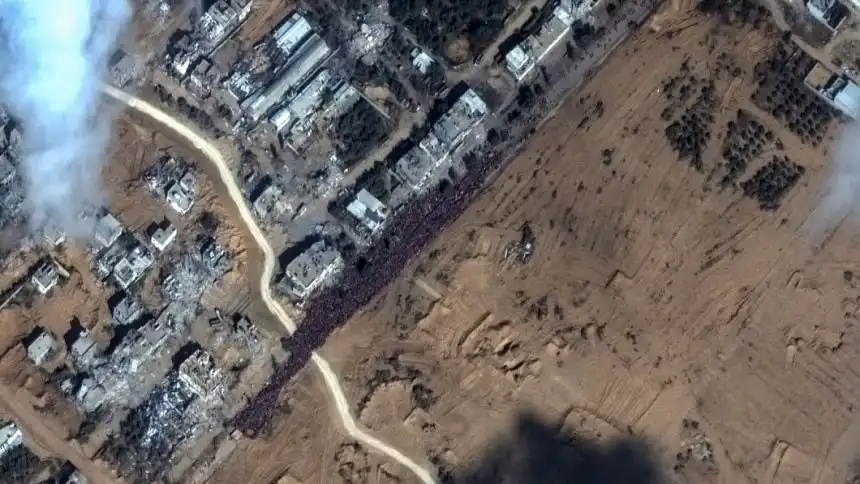
ARAB AND WORLD

Sat 18 Nov 2023 4:10 pm - Jerusalem Time

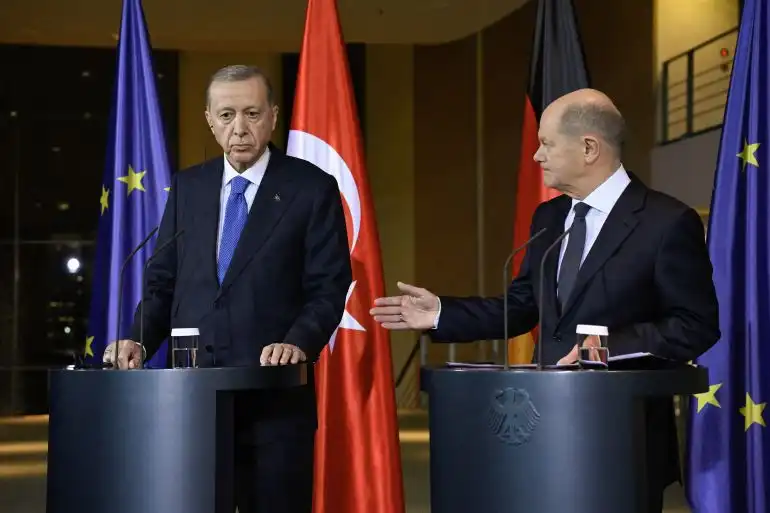
Erdogan: We will file a complaint with two thousand lawyers against Israel’s massacres in Gaza

Turkish President Recep Tayyip Erdogan said that his country, along with more than two thousand lawyers, will file a complaint with the relevant authorities against the Israeli massacres in Gaza.


This came in a speech on Saturday at an event of the National Union of Turkish Students, during which he touched on his visit to Germany yesterday.


Erdogan said: “I saw during my visits to Germany that the entire Western world and the Crusader imperialist entity were united in one trench.”


He added: "Israel has about 10,000 (Palestinian) hostages. Let Germany work to release them, and we, in turn, will work to ensure the release of those detained by Hamas."


He continued: “We, along with more than two thousand lawyers, will file a complaint with the relevant authorities against these massacres (in Gaza).”


PALESTINE

Sat 18 Nov 2023 3:33 pm - Jerusalem Time

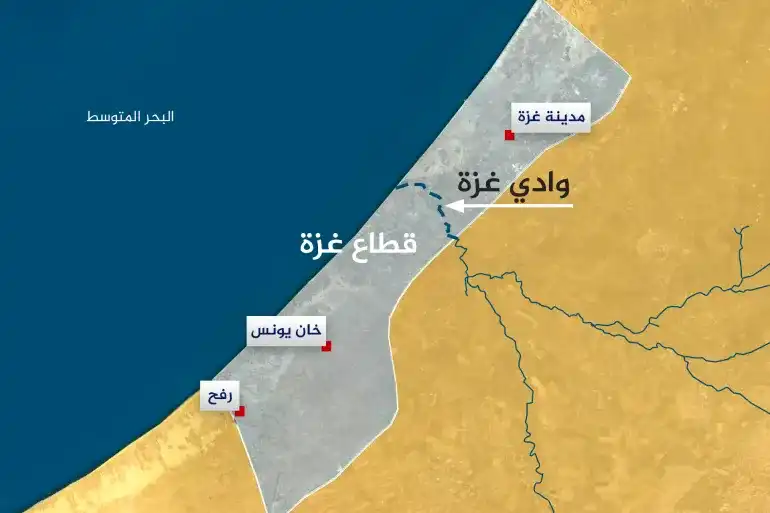
Al-Monitor: An artificial island for the residents of Gaza after the war is among 3 options that Israel has

Israeli journalist Ben Caspit says that Israel, “after its war against the Islamic Resistance Movement (Hamas),” has three main options for managing Gaza, all of which face notable obstacles.


Ben Caspit pointed out - in a report on the American Al-Monitor news website - that Israel is far from knowing what to do about Gaza after eliminating, in theory, Hamas.


He said that a former security source told him - on condition of anonymity - that the three options before Israel: “The first is excellent, the second is bad, and the third is not bad, but it is unrealistic.”


The option of annexation by Egypt

The first option, which enjoys the greatest support among Israeli decision-makers, is for Egypt to control the Gaza Strip in exchange for complete forgiveness of its huge foreign debt. The writer said that when the Israelis and Egyptians were negotiating the Camp David Treaty in the late 1970s, the Israelis begged the then Egyptian President Anwar Sadat to restore Gaza, which was administered by Egypt until 1967, but Sadat refused. After more than four decades, Egyptian President Abdel Fattah El-Sisi also rejected all requests, pleas and temptations presented to him.


The writer quoted the former security source as saying that the Americans and Israelis, as well as some Gulf states, have not yet abandoned the Egyptian option, and efforts are still being made to convince the parties concerned.


The proposals in this option include rebuilding Gaza south of its current location instead of rebuilding in areas of devastation left by Israeli bombs, transferring some of its residents to Arab countries or other countries, and leaving the rest in rebuilt Gaza.


The writer explained that the Egyptians responded angrily to these ideas. The Israeli government commissioned former Mossad chief Yossi Cohen to find a way to move the Egyptians in the desired direction. Cohen activated his many relationships, visited countries in the region and formulated proposals, but to no avail. The Egyptians remain firm in their position.


Ben Caspit quoted a senior Israeli political source as saying that the Egyptians believe that adding more than 2 million Palestinians to Egypt’s population will awaken the Muslim Brotherhood and may cause a revolution in Egypt. “They would rather bankrupt Egypt than be exposed to that.”


The second option, the writer says, is the return of the Palestinian Authority to Gaza, which many Israeli decision-makers consider a bad idea, because it undermines the government’s ultimate goal of severing all ties between it and Gaza: “No Palestinian workers in Israel, and no Israeli water supplies to Gaza.” "No electricity, no fuel, no trade, nothing. After what they did to us. They can forget us."


Ben Caspit explained that there are “many political interests at play here.” The Israeli political right strongly opposes the Palestinian Authority’s control of Gaza, for fear of uniting the Palestinians in the Gaza Strip and in the West Bank under a joint leadership, because this would put an end to the Palestinian division, and It could revive the possibility of holding political negotiations on a Palestinian state.


The Israeli writer commented that the political right has good reason to be concerned. After the attack of last October 7, there is a rare popular consensus in Israel that the disengagement from Gaza, which was initiated by former Prime Minister Ariel Sharon in 2005, must be completed, and that the rule of the Palestinian Authority in Gaza will not end the relationship between Israel and the Gaza Strip, but may even strengthen it.


International coalition

The third option - according to Ben Caspit - is to hand over the keys to an international coalition consisting of Arab countries, the North Atlantic Treaty Organization (NATO), the European Union, the United Nations, or all of them.


A senior Israeli political source told the writer that this option seems romantic, but it is difficult to achieve, as those who run Gaza must participate in its management and have a real interest, not just be guests.


Artificial island

One of the solutions that Ben Caspit described as creative, and which is being proposed within the third option, is the establishment of a huge artificial island off the coast of Gaza.


A former senior security official told the site that this would be cheaper and faster than rebuilding the Gaza Strip, as the technology, means and money are there, "and the people of Gaza will get new land with effective infrastructure. There will be no land borders between Israel and Gaza."


The source warned that “any attempt to rebuild Gaza is doomed to failure, given the huge network of underground tunnels in which everything could collapse,” and believed that the idea of “this island may be a good solution.”


Source: Al-Monitor

OPINIONS

Sat 18 Nov 2023 3:07 pm - Jerusalem Time

Arab Peace Initiative II: How Arab Leadership Could Design a Peace Plan in Israel and Palestine

Carnegie Endowment

Carnegie Endowment

Opinion Writer

NATHAN J. BROWN,  AMR HAMZAWY

Past peace processes in Israel and Palestine showed what makes negotiations work. This time, Arab governments are uniquely positioned to broker a lasting peace.


SUMMARY

Past peace processes in Israel and Palestine failed to offer long-term solutions to the conflict, but they showed what makes negotiations work. In the latest round of hostilities in Gaza, key Arab governments are uniquely positioned to leverage relationships with all parties to lay out the conditions that could broker a lasting peace. An Arab Peace Initiative II, with multilateral oversight, would have to offer real benefits for all parties. But for any lasting framework to take hold, these important conditions need to be met. 


  • - Palestinian and Jewish national identities should be recognized as legitimate and in need of institutional expression. Individual human rights in both communities need to be protected.
  • - Antisemitic, Islamophobic, and racist rhetoric and actions must be explicitly and unconditionally repudiated by all actors.
  • - Any targeting of civilians should not be merely rejected but actively combated by all actors.
  • - Settlement activities in the Palestinian territories and forced displacement of Palestinians to Egypt, Jordan, or anywhere else should be considered outlawed actions that all actors commit to fight against.
  • - Full diplomatic, political, and economic relations among participating states should be an outcome of the negotiation process.
  • - No stateless people should be left behind at the conclusion of any set of agreements

INTRODUCTION

For at least a decade, and perhaps longer, the Palestinian issue has receded on the regional and international agenda—not because it was resolved but because key parties lacked either the interest or the will to agree on how to resolve it. Hamas’s brutal attacks on Israeli civilians and military personnel on October 7—and the ongoing, harsh Israeli response in Gaza in the past weeks with its high toll of civilian death and destruction—show that procrastination can have a high and continuing cost. Suddenly the issue dominates the attention of many regional and international actors and there is renewed talk of addressing it—talk that so far is not wedded to any concrete initiative or political process. Can the necessity now felt be the mother of invention of a new or revived peace process? Past crises in the Middle East have given birth to new initiatives: could this one produce a more successful outcome? 

We do not write in an optimistic vein. Geostrategic realities and political trajectories in the region do not point in the direction of conflict resolution—just the opposite. But those who hear a bleak prognosis often retort: What can be done to reverse trends rather than passively bemoan them? The question is a fair one, especially because pessimism, however justified, has a cost: it will lead powerful regional and international actors to let their attention wander elsewhere again. So, while we are wary to predict a reversal in the pernicious trends on such violent display today, we seek to understand what would constitute such a reversal, what it would require, and to suggest to those who say things must be different what they must do.

And we do not write with a particular end or resolution in mind for the Palestinian issue and for Israel’s security—not one or two or post-sovereign states. We do believe that a stable and just future must be based on protection of human rights, distance from dehumanization and antisemitism, some institutionalization of Israeli and Palestinian national communities, and economic prosperity for both. But we are agnostic on how to realize those ends and only ask how they might be pursued so that their denial does not explode again.


WHO MUST TAKE THE LEAD? AN UNPRECEDENTED ARAB ANSWER

In today’s Middle East and international politics, Arab countries can play a key role in enabling Israelis and Palestinians to end the current violence, to avoid conditions in Gaza that prolong the lack of security and instability, and to develop a negotiation framework for conflict resolution backed by international and regional support. The United States has always been a key actor in previous Israeli-Palestinian peace efforts, but it does not have a clear vision as to how to end the Gaza war and provide for new arrangements to safeguard Israel’s security and enable the Palestinians to fulfill their long-standing national aspirations. Domestically, the United States is entering a polarizing election year, in which, given ongoing protests and activism, positions on Israel and Palestine are likely to have some significance, and that will limit the superpower’s foreign policy energies. Internationally, the United States is stretched thin between the grand strategic competition with China, the Russia-Ukraine war, global climate and advanced technology challenges, and the growth slowdown of the global economy. Indeed, the path the United States chose at the outset—very close alignment with Israel—seems to have run into severe problems if it was based on the hope of aligning long-term Israeli decisionmaking with U.S. diplomatic goals of reviving a strong Palestinian Authority (PA) and bringing about a two-state solution. Israeli leaders have instead made clear that they anticipate indefinite Israeli security oversight of Gaza and view the PA as an adversary, and they have worked steadfastly against a two-state outcome. The preferred U.S. option of PA control of Gaza has virtually no public support in Israel.


It is thus unlikely that the United States will, as it has before, take the lead today in staging peace efforts for Israel and Palestine. However, U.S. diplomacy, currently confined to reducing the horrific human cost of the war, could promote and empower regional conflict resolution endeavors. The same lack of vision can be diagnosed for the European Union, a very generous donor and previously active participant in the Middle East Quartet, a group established by a multilateral diplomatic burst two decades ago. Since October 7, member countries of the EU, along with Great Britain, have focused their diplomatic actions on joining the United States in expressing solidarity with Israel after the Hamas attacks, calling for the protection of civilians in Gaza, suggesting temporary halts in ongoing military operations, and advancing plans for getting humanitarian aid to the strip’s inhabitants, implicitly operating within the framework imposed by Israeli relocation efforts for Gaza’s population. European officials have not made a single policy proposal to end the war or initiate peace. And we should not expect more from them, given the major differences among EU member states in their positions on the Israel-Palestine issue, their costly involvement in the Russia-Ukraine war, and rising antisemitic and anti-Muslim sentiments tearing their social fabrics. 

However, like the United States, European leaders could support regional initiatives effectively—not least with economic and financial aid packages that will be badly needed in Gaza’s future reconstruction. Key Arab countries, on the other hand, have been invested recently in developing regional security arrangements.


Key Arab countries, on the other hand, have been invested recently in developing regional security arrangements. Because of long-term trends, these states have both a stronger interest in and capability to take the lead on regional diplomacy—if they can agree on an approach.

First, two vital neighbors of Israel and Palestine, Egypt and Jordan, are potentially powerful investors in such an approach. Geostrategically and politically, for the Egyptian and Jordanian governments, the Gaza war poses massive national security threats linked to the dangers of a Palestinian mass displacement, in addition to the troubling specter of long-term violence in Gaza, the West Bank, and East Jerusalem.

Second, Saudi Arabia is a potential participant. Unlike Egypt and Jordan, Saudi Arabia does not have diplomatic relations with Israel and is not a direct neighbor of the Palestinians. However, Saudi diplomacy, in an effort to get the kingdom out of a proxy war in Yemen and regional escalation at large, has reoriented its course to conflict resolution and stabilization steps in the Middle East. Saudi leaders endorsed a Chinese mediation initiative to restore diplomatic relations with Iran and, prior to the Gaza war, engaged officials of U.S. President Joe Biden’s administration in talks tailored toward normalizing relations between Saudi Arabia and Israel. Long-term violence and ongoing confrontations between Israel and the Palestinians, along with their wider ramifications in the Middle East, pose fundamental threats to Saudi Arabia’s interest in regional security and stability.

A final set of participants include not only the Arab countries that signed the Abraham Accords with Israel and normalized relations—the United Arab Emirates, Bahrain, and Morocco—but also Qatar, which has maintained collaborative relations with Israel as well as with all Palestinian actors, including the Palestinian Authority and Hamas. The web of diplomatic relations and collaboration schemes these countries have developed with Israel and Palestine in recent years can be instrumental in facilitating regional peace efforts.

If they have the interest and the ability, why have they not acted already? To be fair, before October 7, the situation seemed neither favorable to diplomacy nor particularly pressing—until it exploded so spectacularly.


DISPUTANTS AND REGIONAL ACTORS

There are two ways our analysis differs from many of those now being produced. First, we are suggesting that a diplomatic effort to address issues dividing Israelis and Palestinians be launched in an unprecedented manner: by a multilateral Arab approach, one that leads rather than reacts. But second, we are starting not with what the actors should want but what they have said they want. 


Acknowledging those priorities and preferences makes it clear why the approach is so daunting, but the alternative is to begin unrealistically: with an Israeli leadership committed to a two-state solution; a Palestinian side with an effective and popular leadership; Arab states that will willingly administer and patrol Gaza until the final status negotiations produce the Palestinian state; a United States that will pressure Israel during an election year; or a set of European actors that will step in when the United States falter. 

Instead, in reality, the United States and Europe are too preoccupied with the short-term management of the situation unfolding since October 7, 2023, hoping to strike a difficult balance between standing with Israel and containing the humanitarian tragedy in Gaza. Clear policy prescriptions on how to get Israeli and Palestinian officials back to a negotiating table and to conflict resolution measures are not emerging out of Washington, DC, nor out of Brussels, Paris, Berlin, and London. We, therefore, believe that the local environment in Israel and Palestine and the regional environment in the Middle East are both ready for a multilateral Arab approach that can shape the postwar transitional phase and the long-term efforts to solve the conflict. 

What do the local and regional parties actually want? And what have they said? Israel The Palestinians Egypt Jordan Key Arab States 


THE PERILS OF PROCRASTINATION


The systematic deprioritizing of the Palestinian issue was a gradual process based on a number of regional and global factors. Leading up to the current war in Gaza, the political environment left little room for a political solution. In Israel, right-wing coalition governments, which dominated Israeli politics in the last decade, were not interested in pursuing peace talks with the PA nor in changing—or even moderating—some of Israel’s long-standing expansionary policies such as intensive settlement activities in the West Bank and East Jerusalem, forced displacements of Palestinian families in both territories, and the inhumane siege imposed on Gaza since Hamas took over control of the strip in 2007.But it was not only Israel’s disinvestment from two-state diplomacy that drove the Palestinian issue downward in importance. On the Palestinian side, ongoing disputes between the PA in Ramallah and militant movements led by Hamas’s government in Gaza meant there would be no unified voice if a negotiation table was ever set. Arab-mediated reconciliation efforts between the PA and Hamas—both Egyptian- and Qatari-led—bore no fruit.

Israeli policy became based on cementing the division and decay, not overcoming it. Hamas’s radical rhetoric and willingness to engage in frequent rounds of hostilities with Israel increased the PA’s impotence and irrelevance, both for successive Israeli governments that were preoccupied with security and for the Palestinian public that moved between radicalization and disenchantment. The Ramallah leadership saw its popular acceptance among Palestinians dwindle and its institutions, which also suffered from endemic corruption and the overly dominant role of security agencies, decay and lose democratic legitimacy. Efforts to ensnare Hamas in the Palestine Liberation Organization (PLO) or to move toward elections were launched periodically but were undermined by almost all actors. Hamas was not merely a victim of exclusion here but an active participant in a so-called resistance axis that limited diplomacy to only short-term halts in fighting. The movement deeply embedded itself in the social fabric of Gaza as a hydra with three heads—a militarized resistance movement, a local and service-delivering government, and a political leadership—and added a base in exile as well. Thus, containing Hamas—be it through elections, inclusion in the PLO, or incentives such as the gradual easing of the Gaza siege—would have required a vigorous and sustained effort if the goal had been to tame the movement that increasingly defined itself in opposition to the peace course of the PA.

And indeed, regional factors very much facilitated the pernicious deterioration in Palestinian national institutions. Regionally, although Egypt and Jordan kept up their diplomatic efforts to revive peace talks between Israel and the PA based on the two-state solution, some Arab states (like Algeria) confined their roles to fiery rhetoric and minor reconciliation talks between Palestinian factions. Others, such as Syria and Libya, paid little attention to the Israeli-Palestinian conflict altogether due to internal turmoil. And some countries engaged in normalization efforts with Israel that offered no political end to the conflict, such as Bahrain, Morocco, and the United Arab Emirates.

In the face of this disparate and disengaged approach, Iran and its nonstate allies in Lebanon, Iraq, and Yemen found some success in an effort to support what they called the “regional resistance camp.” Ideologically, Iran and the likes of Hezbollah fashioned a rhetoric that celebrated Hamas’s occasional firing of rockets on Israel as prime acts of Palestinian liberation. The effect was to prolong the internal Palestinian separation and to maintain instability in Israel’s immediate surroundings.

Internationally, both the United States and European powers, confronted with the turmoil of the decade following the 2011 Arab Spring, focused their Middle East diplomacy on other key regional security concerns. High priorities on the Western tall order in the region were issues such as the Iranian nuclear program; the war between Iran and Saudi Arabia and their allies in Yemen, which had significant impacts on security in the Gulf; state disintegration and security threats in several Arab countries; and the impending migration crisis in the Mediterranean Sea. The United States, which became increasingly preoccupied with its competition with China and more interested in pivoting toward Asia, had no solution-oriented policy on Palestine. It did nothing to pursue the moribund two-state solution. Instead it marched in place, tinkering with its development aid packages to the PA in the West Bank and East Jerusalem and welcoming regional—Egypt-led—containment and ceasefire efforts in military clashes between Israel and Hamas in 2012 and 2014. To be sure, there was one bold American initiative—the stillborn “deal of the century” offered by former president Donald Trump—but it seemed designed not to devise a better future but to beautify and entrench the present.


Key European countries traditionally engaged in the Middle East, such as France, Germany, Great Britain, and Italy, confined their policies on Palestine to economic aid packages for the West Bank and humanitarian aid for Gaza. Preoccupied with domestic tensions due to the rise of right-wing populism and intra-European fiscal and political conflicts, European governments reduced their engagement in the Middle East to key strategic interests, trade, migration, and security. The global crises resulting from the coronavirus pandemic and the Russian invasion of Ukraine pushed the West further away from any serious policy interest in solving the Israeli-Palestinian conflict.

The slow death of diplomacy may be understandable given regional and global realities as well as domestic politics among all key actors. But inertia has revealed itself to have a very high price—and not for the first time. Past explosions have been met by sudden bursts of multilateral diplomacy—that have both positive and negative lessons for any present effort.


LESSONS FROM PAST PROCESSES BORN OF CRISIS

The war in Gaza has turned regional and international attention once again to the Palestinian issue with a sudden and unexpected force. Although this is not the first violent escalation between Israel and the Palestinians, the horrific nature of both the October 7 attacks and the ongoing Israeli military campaign has engaged the highest level of national leaderships in Middle Eastern capitals and in the West. The tragic humanitarian crisis in Gaza, the endless bombardment since October 8, the displacement of over 1 million Palestinians from the north to the south within the strip, and the unknown fate of Israeli hostages in Hamas’s captivity make peace appear distant. However, recent history has shown that heightened attention to Israel and Palestine during phases of intense violence and human suffering could produce unexpected multilateral efforts to push forward conflict resolution measures and peaceful settlements.

There are previous experiences with multilateral efforts to help Israel, the Palestinians, and their Arab neighbors find ways out of the state of permanent conflict, especially after crises. They include initial talks in 1949 at the close of the 1948 war; the Geneva Conference of 1973; the Madrid Conference of 1991; and a collection of more recent efforts, most notably the Arab Peace Initiative and a UN road map in 2003. None was anything like a success, but neither can they be written off as complete failures. In all cases, the United States played a leading but not exclusive role; other key international actors were generally supportive. The parties themselves spent as much energy on the modalities of the negotiation (and even the legitimacy of negotiation partners) as on the negotiations themselves, limiting progress and making the formal negotiations stiff and full of speechifying rather than substantive talk. Although each effort took place in the aftermath of a war or reduced violence on the ground, the shortcomings of each effort were profound and left unaddressed until the next war or crisis forced them onto the agenda in a forceful and unexpected way. But each negotiation did provide an umbrella for some concrete changes. The initial talks in 1949 produced four armistice agreements, and the 1973 Geneva Conference was stillborn but started a process that ended with bilateral Egyptian-Israeli negotiations and a peace treaty.  The peace talks continued in the years after the Iraqi invasion of Kuwait in August 1990, when a regional and international coalition to liberate Kuwait was formed, led by the United States. 

The coalition, to which Egypt, Saudi Arabia, and Syria contributed militarily, defeated Iraqi troops, pushed them out of Kuwait, and restored in 1991 the legitimate government of the oil-rich small Gulf state. Because former Iraqi ruler Saddam Hussein used the Palestine issue during the war to attempt to turn the Arab populace against the U.S.-led coalition and fired a few rockets on Israeli territory to widen the scope of the military confrontation regionally, the U.S. administration of then president George H. W. Bush promised that U.S. wartime allies would, after the liberation of Kuwait, work to negotiate solutions for the Arab-Israeli conflict (then involving not just Palestinian and Israeli officials but also those from Jordan, Syria, and Lebanon). 

Egypt was then the only Arab country that signed a peace treaty with Israel in 1979.After the war, the United States, along with the former Soviet Union as a co-chair, convened a multilateral Middle East peace conference. The 1991 Madrid Peace Conference was attended by a Palestinian delegation consisting of local leaders from the West Bank and Gaza, authorized by the PLO but accepted by Israel as part of the Jordanian delegation. The negotiation processes paved the way for long-term peace talks and created the regional and international momentum for the Oslo I Accord that was signed between Israel and the PLO and for the Israeli-Jordanian Peace Treaty signed in October 1994.Another round of multilateral diplomacy came after one of the many collapses of Israeli-Palestinian peace negotiations in the early 2000s. In September 2000, the second intifada broke out when then Israeli opposition leader Ariel Sharon stormed Islamic religious sites in occupied East Jerusalem with heavily armed police units. Sharon’s provocation came against the backdrop of rising popular anger among Palestinians due to the refusal of successive Israeli governments to abide by the Oslo Accords and end the occupation—per the accords, an independent Palestinian state was supposed to be proclaimed in East Jerusalem, the West Bank, and Gaza by May 4, 1999. 

Although the early protests of the second intifada were characterized by nonviolence, Israeli forces responded with the use of excessive and disproportionate force against Palestinian civilians. The vicious cycle of violence and counterviolence was unleashed and lasted for almost five years. Between 2000 and 2007, nearly 6,000 Palestinians were killed and multiple terrorist attacks happened in Israel, killing dozens and provoking more excessive retaliations that included dropping bombs on Gaza for the first time since the signing of the Oslo Accords.

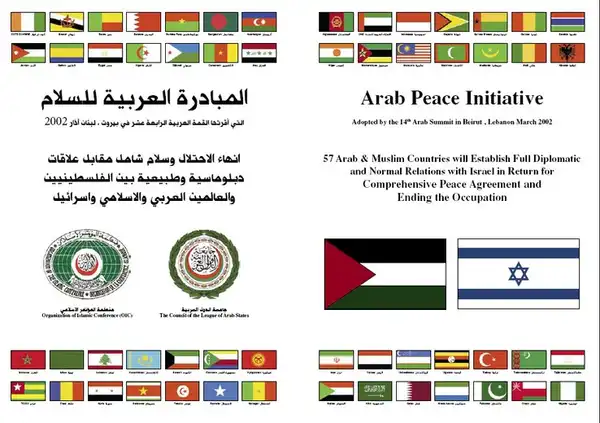
Amid the second intifada and ongoing Israeli military operations in the occupied Palestinian territories, and in a tense global environment following the terrorist attacks of September 11, 2001, on the United States, Arab governments and the PA led by Yasser Arafat gathered in March 2002 for an Arab summit in Beirut. The summit endorsed a Saudi peace plan and adopted it, with the approval of all governments, as the Arab Peace Initiative (API). The initiative offered Israel peace and normalization with all Arabs in return for its withdrawal from all territories occupied on June 5, 1967; its acceptance of the establishment of an independent and sovereign Palestinian state; and its finding a just and agreed-upon solution for Palestinian refugees.

This was a bold step put forward collectively by all Arab governments and the PA, while daily hostilities and killings were unfolding in the Palestinian territories and terrorist attacks were dismantling the Israeli sense of security. The API was born in a regional environment in which peace prospects seemed marginal and in an international environment in which the United States was not invested in solving the Israeli-Palestinian conflict and was determined to pivot most of its military and diplomatic resources to fight global terrorism. 

The API revitalized Middle East diplomacy and brought the United States back into mediation efforts and negotiating tables—the George W. Bush administration announced a road map for peace later in 2003 and for several months hosted, with United Nations’s endorsement, peace talks between Israelis and Palestinians with the objective of reaching a final settlement. Despite active U.S. and international mediation efforts, the peace talks collapsed. But the ensuing U.S. invasion of Iraq in 2003 faced the Middle East with new geostrategic risks altogether and diverted the attention of regional and international actors away from the Palestinian issue.


Can the current high-level attention to Palestine and Israel lead to a peace breakthrough? Are regional and international actors ready and willing to seize the moment? Can they help get Israelis and Palestinians out of the current spiral of violence? These limited experiences contain limited lessons. The Madrid Conference of 1991, the API in 2002, and the road map of 2003 were, in a formal sense, unable to produce anything like a peaceful settlement. But they allowed for tangible opportunities to arise, even if many of those opportunities were squandered. There are many negative lessons to be drawn—the lack of staying power and determination from key international actors; the way diplomatic initiatives can get bogged down in procedural niggling; the inability to address deep power imbalances between Israelis and Palestinians that meant the continuation of the occupation and armed resistance; and the limited willingness of regional actors to renounce all forms of violence against civilians, which legitimized concerns about antisemitism and dehumanization. 

But the processes do suggest a paradoxical set of lessons: multilateral efforts can be constructed that set broad negotiating frameworks, and although those efforts are not an alternative to bilateral diplomacy among disputants, they can facilitate them and prevent their collapse. And peace efforts also require willing actors—without those, no meetings, multilateral summits, or backroom bilateral deals are possible.

And there is one very significant, if subtle, difference between the current moment and previous ones. Key Arab actors today are not waiting to be courted: they are deeply interested in a secure regional order, more capable of acting (not merely reacting) diplomatically and engaging with both Israelis and Palestinians.


In the past, Arab states have been parties to the conflict. They have been deeply divided and each had their own interests, making diplomacy difficult and often centered around merely getting parties to the table. When they arrived, all attention was on courting them to make concessions and grant recognition; each grudging step in that direction was hard-won. But key Arab actors today are not waiting to be courted: they are deeply interested in a secure regional order, more capable of acting (not merely reacting) diplomatically and engaging with both Israelis and Palestinians rather than waiting for the telephone to ring.  

Regional stability used to be the coin of American policy speeches, but it is now the goal of key Arab states. To be sure, those states are not used to acting together, and none of them could act alone. But together, what could they do? How could they build a new initiative? 


WHAT WOULD A PEACE CONFERENCE 2024 OR AN API II LOOK LIKE?

First, oversight of any Arab initiative should be multilateral. The United States is a necessary but not sufficient participant; it can supply muscle and has ties with Israel that others lack, but it is also seen as completely compromised both by its sharp and reflexive alignment with Israel and for its stubborn insistence that the issues be managed with merely platitudinous references to international law. The five permanent members of the UN Security Council are deeply divided and unlikely to be positively useful, but the United States, along with its European allies, might be able to act with key Arab states that have working relationships with Israel to sponsor the negotiation process. Second, the negotiation process would need a participant able to speak authoritatively for the Palestinian people. And this is a profound challenge. For one, there is now no such authority. But it is also true that many of the actors involved have actively undermined the ability of the PA to speak authoritatively—Israel has cut revenue streams, the United States has set up legal barriers, and many actors have discouraged elections in Palestine. 

PA leaders themselves have acted high-handedly and allowed corruption, all actors have undermined signed agreements, and Hamas attacks on civilians have undermined peace negotiations. Each of these actors has shown a tendency to blame the others for the sorry state of Palestinian leadership, but all have done their share. 

To have a viable Palestinian interlocutor, a few steps are needed: (1) an international willingness to deal with PLO leadership and even a declared State of Palestine; 

(2) delivering that leadership strong legitimating instruments that are tangible and visible, such as a settlement freeze in the West Bank and East Jerusalem and an end to restrictions on internal mobility in the Palestinian territories; 

(3) giving that leadership tools to revitalize its autonomous institutions, to gradually return to Gaza, and to manage its society’s profound internal divisions.


That does not mean inviting Hamas to the negotiating table—such an invitation would likely be declined and drive away other participants. But it may mean something akin to the Madrid Palestinian representation formula, in which a method was found to avoid allowing the problem of who speaks for the Palestinian people to prevent any meeting. It may also mean leaving intra-Palestinian affairs to Arab actors, foremost Egypt and Qatar, that have ties with Hamas and other factions, rather than spinning wheels in devising a formula that can formally and publicly reconcile irreconcilable demands regarding who may represent Palestinians. 

If this path is taken, it would have to be with acquiescence by key Palestinian actors, an acquiescence that could be engineered in reconciliation meetings hosted by Egypt and Qatar and convened by the PLO with the mandate to articulate a joint Palestinian position on the guiding principles, objectives, and timelines of the negotiation process. This path would also have to secure clear benefits for various parts of the Palestinian people for allowing their leaders to cooperate with diplomacy. Those benefits could range from a settlement freeze and freedom of mobility in the West Bank and East Jerusalem to easing any postwar siege arrangements imposed on Gaza and promoting reconstruction efforts.

Third, any negotiation process would have to offer real benefits to all parties, not only the Palestinians. And this would be difficult because the benefits that could tempt one actor might alienate another. American officials tried to sidestep this problem during the Oslo process of the 1990s by simply emphasizing process rather than outcome. (The United States emphatically rejected any endorsement of a two-state solution for this period.) The idea was that in the course of direct negotiations, the two parties would build trust and find solutions. That happened to a small extent, but not nearly enough—and spoilers who rejected the Oslo process took powerful steps to torpedo its success. 

In the 2000s, the United States and some other key actors explicitly endorsed a two-state solution but did so in vague and almost platitudinous terms—and without any serious effort to address developments on the ground, such as the expansion of settlements, the two-state solution was not a credible option. The 2003 road map attempted to fill the gap, but the lack of enforcement or political commitment by key actors (including the United States and Israel) left the detailed framework it offered in forgotten tatters.

A more appropriate starting point for today might therefore be a set of general principles that could be offered to all parties: that Palestinian and Jewish national identities be recognized as legitimate and in need of institutional expression; that individual human rights as well as the rights of national communities need protection; that antisemitic, Islamophobic, and racist rhetoric and actions must be explicitly and unconditionally repudiated by all actors; that any targeting of civilians is not merely rejected but should be actively combated by all parties to the negotiation process; that settlement activities in the Palestinian territories and forced displacement of Palestinians to Egypt, Jordan, or anywhere else are outlawed actions that all parties commit to fight against; that full diplomatic, political, and economic relations among participating states should be an outcome of the process; and that no stateless people should be left behind at the conclusion of any set of agreements.

These principles certainly provide a full guide to a peaceful and stable future—but of course the objection might be heard that the guide is far too full. Certainly, Israel would embrace some but would balk at others; Palestinians might be suspicious less of their content than their generality and viability given Palestine’s past experiences with the will of all actors to uphold negotiation and peace principles. The United States would find them extremely ambitious and might be reluctant to endorse them without prior Israeli approval. Indeed, the United States has not shown a sustained interest in pursuing any initiative in the face of Israeli opposition for more than half a century.

However, if an initiative like this were to be put forward, the logical source would not be either the United States nor the direct conflict disputants, Israel and the Palestinians. Rather, it would be born out of the diplomatic engagement of those Arab states with relations with Israel, and its prelude could be a peace conference convened in a major Arab capital. In this sense, the ideas we have outlined are more likely to emerge as a sort of successor to the API and indeed might be more attractive in that guise. Unlike any time in the past, the possible sponsors of an API II—Egypt, Iraq, Jordan, Kuwait, Qatar, Saudi Arabia, and the United Arab Emirates—have between them relations and assets with all key actors: 

Israel, Palestinians of various stripes, and even the United States. Washington seems desperate for realistic ideas and may, along with its European allies, react to some of the suggestions listed here less allergically if they are coupled with an offer of regional relations among its various partners—four of the countries mentioned above do not have diplomatic relations with Israel. 


Israeli leaders, therefore, might be enticed into a fuller regional integration and a majority might, gradually and with security assurances, pick this path over the other—a ”Jewish supremacist” state with a population half Palestinian—on offer to them. Palestinians have few other options.

The ideas we have outlined are more likely to emerge as a sort of successor to the API and indeed might be more attractive in that guise.

So, while we endorse this outline, we do not assess its adoption as overly likely. But more importantly, we offer it not only as the sort of initiative that would be required to turn outrage and tragedy into productive diplomacy, but also as a way of testing the honest intention of those advocating any initiative. We believe that Arab states, with their profound interest in regional security after a decade of turmoil, along with their accumulated assets with Israel, the Palestinians, and the West, could shoulder this responsibility and launch an ambitious effort to center and address the Palestinian problem and reverse the marginalization trajectory of recent years that undermined regional stability and prosperity. Something less ambitious, focused on security and governance arrangements in Gaza and de-escalation in the West Bank and East Jerusalem after the war, might seem more realistic, but it would actually be taken by many Palestinians and Arabs as a return to a familiar script on steadily deteriorating terrain. Regional and international leaders would intone generalities and issue statements as if there is a viable diplomatic process and do so in such a manner that is not simply harmless but actually a smokescreen for a deepening set of problems that—for current leaders—will at best explode on a successor’s watch. 


PALESTINE

Sat 18 Nov 2023 2:55 pm - Jerusalem Time

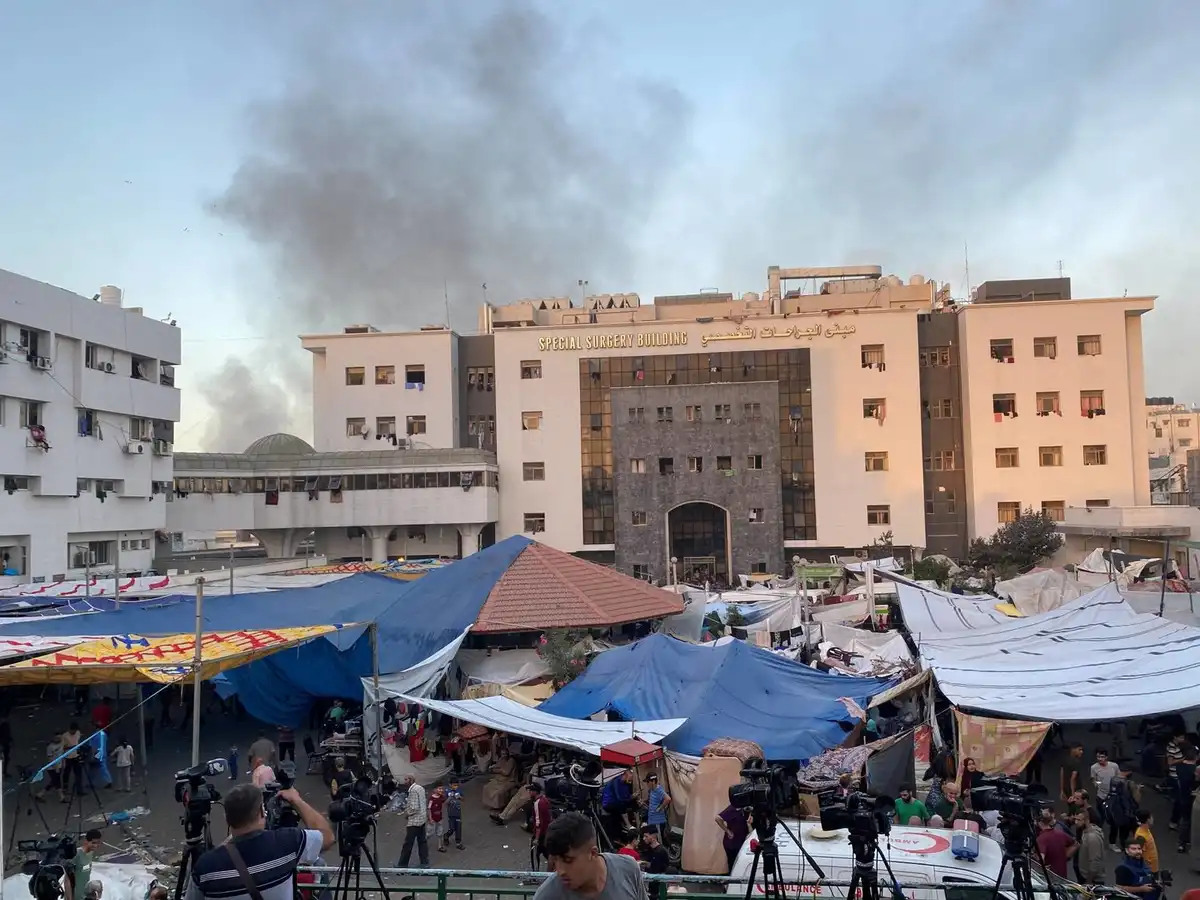
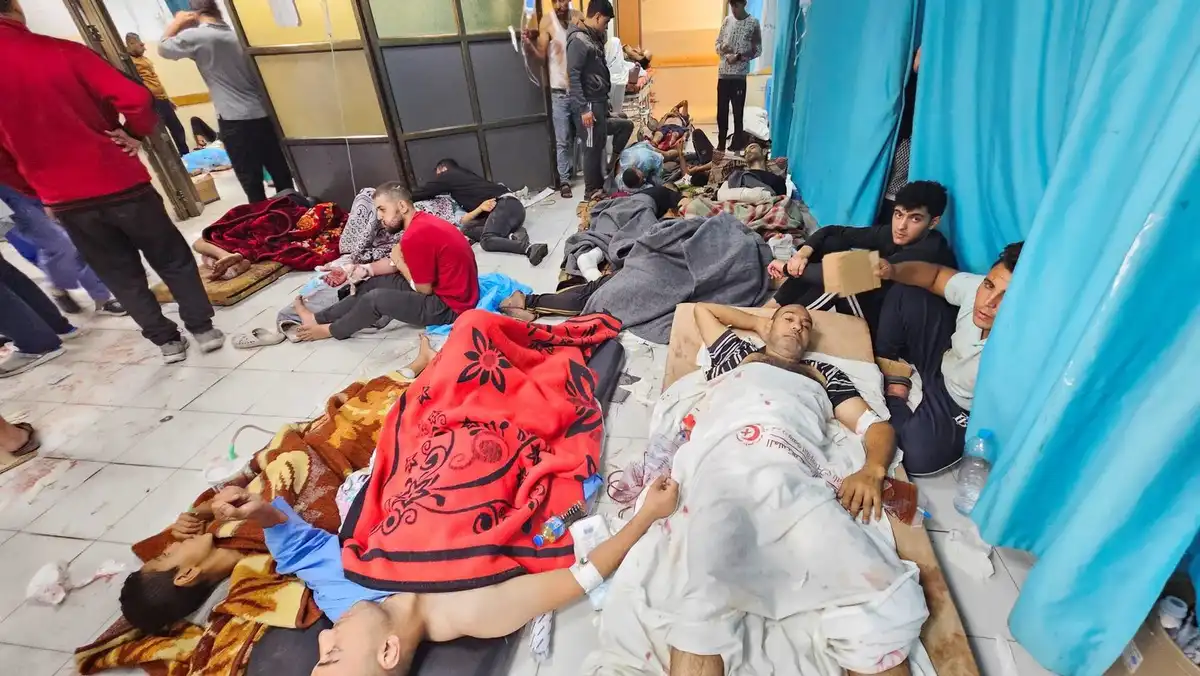
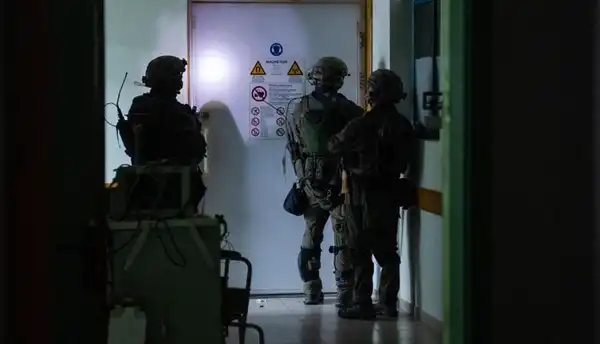
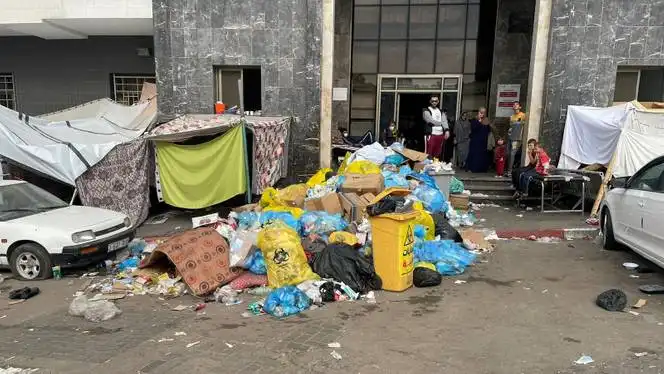
Israel stormed Al-Shifa Hospital to pressure Hamas to exchange prisoners

The New York Times reported that Israel attacked the largest hospital in Gaza in the hope that the raid would lead Hamas to back down and accept the prisoner deal on terms proposed by Tel Aviv. An Israeli official said that if Hamas accepted the agreement, Tel Aviv would resume the war in Gaza after the prisoner exchange.


The newspaper reported, "Israel believes that the raid that took place on Wednesday on Al-Shifa Hospital will pressure Hamas to complete a deal to exchange dozens of Israeli prisoners for Palestinian prisoners, according to two senior Israeli officials." It adds: "Israel believes that by seizing Al-Shifa, which it says Hamas uses as a military command center and its patients as human shields, depriving Hamas of one of its most important symbols (Al-Shifa Hospital), the movement will be more inclined to exchange hostages, according to officials."


Tel Aviv failed to prove its allegations that Al-Shifa Hospital was being used as a Hamas headquarters or hostage-taking area. The Israeli raid on the hospital revealed a number of rifles and uniforms.


Israeli Prime Minister Benjamin Netanyahu's eagerness to negotiate the release of the hostages represents a change in course for Tel Aviv. VICE News reported that it spoke with officials who said Netanyahu initially postponed the talks until after he could invade Gaza with ground forces. “It is clear that the Israelis wanted to launch a ground attack before considering this proposal, which has been on the table since the early days of the conflict,” a regional diplomat involved in the talks told VICE. He added that the broad outlines of the agreement have not changed since the beginning of the talks, but in the past few days the Israelis seem to be more receptive.


Then, the deal was delayed again because the Israeli prime minister believed he could score a political win by forcing Hamas to make a deal, according to a NATO official. “There has been a willingness to look into the matter [by Israel] in a way that we have never seen before. Netanyahu can now look at the Israeli public and tell them that it was his decisive actions in the ground attack that freed some of the hostages. The official continued: “[Netanyahu] sees the argument that the attack may have forced Hamas to make concessions, which is a short-term political gain, but it does not appear to be afraid to explain how hostages could die in air strikes when the same agreement was in place.”


The agreement, which is currently being mediated by Qatar, will see Hamas release the prisoners captured on October 7, and Israel release Palestinians detained in prisons, and the priority will be the release of children and women.


In addition, there will be a pause in fighting for three or five days to allow for an agreement. During the cessation of fighting, Israel will allow aid into Gaza. Axios reported that Israeli negotiators pushed to reduce the duration of any pause in the war.


Israeli Minister Benny Gantz explained that even if Tel Aviv agrees to a short cessation of military operations in Gaza, it plans to settle the war with its army. He added: "Even if we are asked to stop fighting in order to return our hostages, there will be no stopping the fighting and war until we achieve our goals."


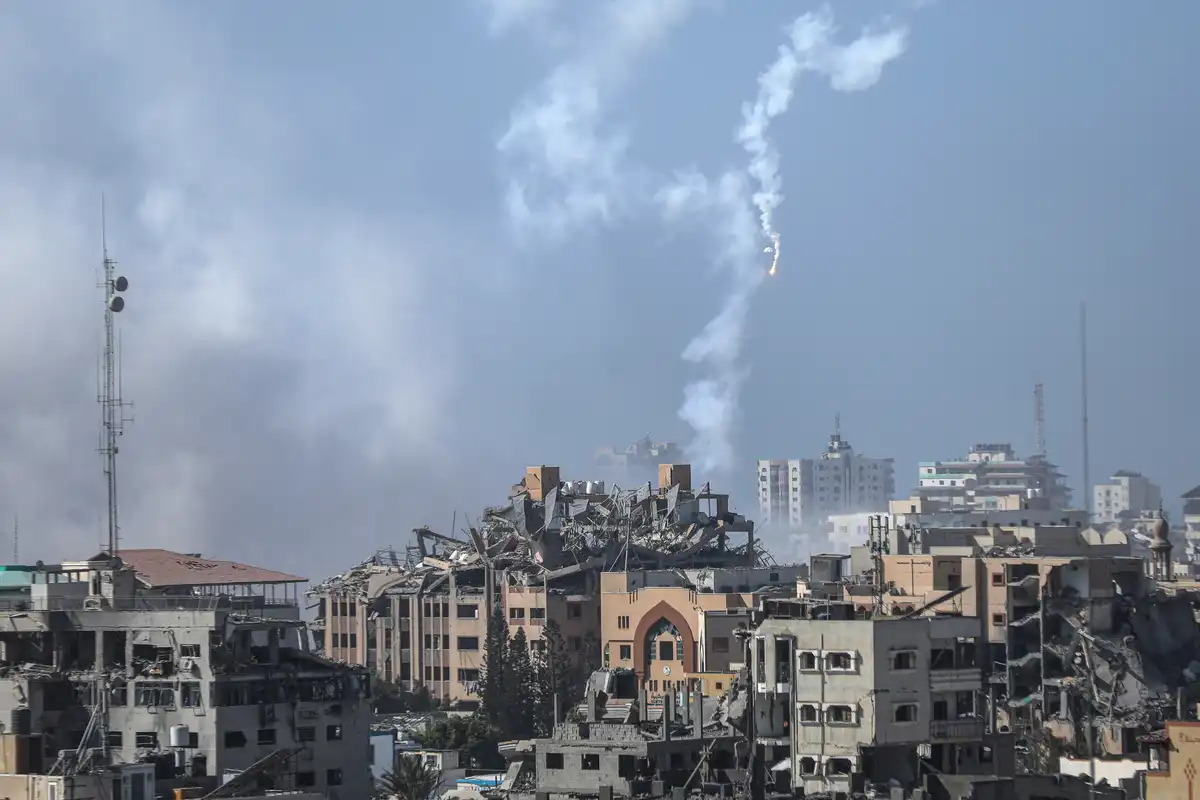
The military operation launched by the Israeli occupation authorities in Gaza has so far led to the death of more than 12,000 citizens, including more than 4,500 children. United Nations reports also indicate that 1.5 million Palestinians have now been displaced. Israeli military operations have so far focused on the northern half of the Gaza Strip. On Wednesday, Tel Aviv dropped leaflets on a city in the southern half of the besieged Strip, asking civilians to flee. The evacuation order indicates that Israel plans to expand its operations in southern Gaza.

OPINIONS

Sat 18 Nov 2023 2:29 pm - Jerusalem Time

A plan for the day after tomorrow

Gershon Baskin

Gershon Baskin

Opinion Writer

The victory picture of this war must be political. The massive killing and destruction within the Israeli communities on the Gaza border and in the Gaza Strip itself will remain etched in our collective memories, Israelis and Palestinians, for many years to come. A new chapter in our narratives is being written these days and the two nations will use these new chapters as another layer in our shared refusal to recognize the rights of each other to exist as a sovereign nation on part of the common homeland. The history of the two nations during our hundred years war of survivalhas had almost no break from our so-called national duty for collective mobilization of our national movements to continue fighting until the death, our own and the death of the other side. The history of the two nations here is so full of blood, hatred,  religious-divine-messianic impulses, and the sense of the righteousness of our cause (on both sides) along with the burning pain in each of us that driven us to seek revenge has been so much stronger than the logic that requires us to find a way to invest in the sanctity of life rather than the sanctity of death. Haven’t we had enough martyrs already? Didn’t we bury enough of our children?
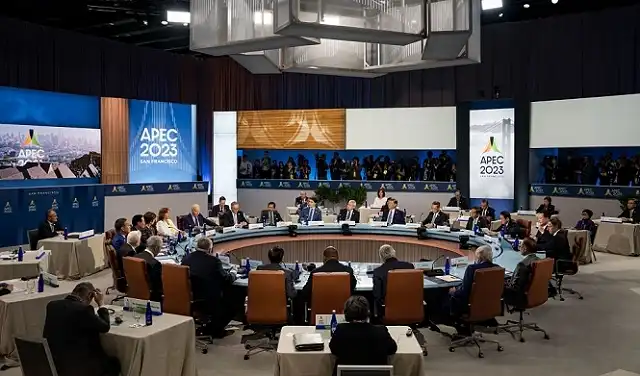
 

How will we get out of this hell of ongoing war? What state of mental health will we be in the day after the current war? The two nations are now going through their greatest trauma since the establishment of the State of Israel. Without comparing, October 7th was the most traumatic event for the people of Israel since the Holocaust. For the Palestinians, Hamas brought back the Palestinian cause back 75 years and today the Palestinians are experiencing a second Nakba. We as Israelis have lost our security and the sense that there is a country behind us that protects us. The Palestinians have never had a state that protects them and cares for their well-being. After this terrible war, there must be an “epiphany” on both sides that will make us look ahead, focused and sober, towards creating a new reality in which our energies will be invested in rebuilding our lives and communities based on the acceptance of the very simple principle (but probably very difficult to accept) that everyone who lives between the River and the Sea is entitled to the same right to the same rights. Until both sides recognize the legitimacy of the existence of the other side as a people with an equal right to live here in the common homeland - in the Land of Israel, in the Land of Palestine, the killing, terror, destruction, hatred and desire for revenge will not end.
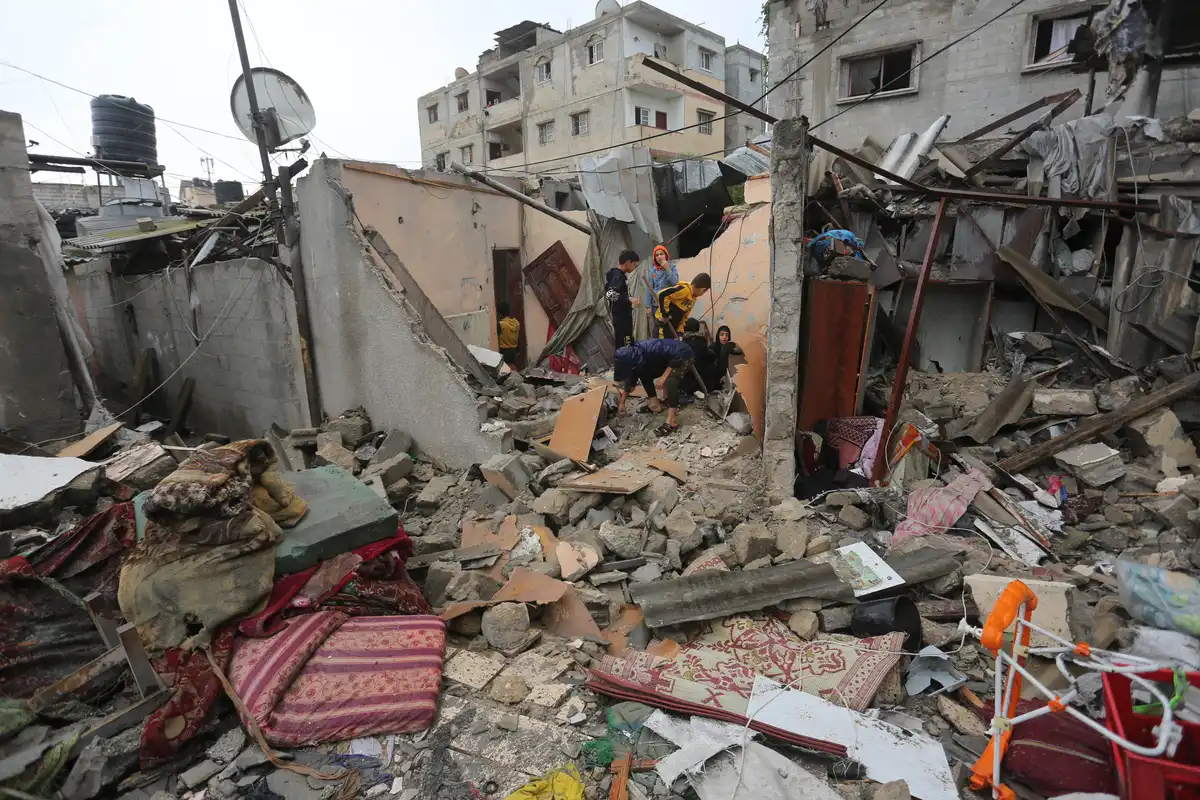
 

Obviously, those who brought us to this point must go home. Neither the Israeli leadership nor the Palestinian leadership has the right to continue to lead us. They brought us, all of us to this point and they must go. We Israelis must get out of the delusion that we can rule over another people for fifty-six years and expect to have peace, or to imprison two million people in a closed, small and dense area like the Gaza Strip with abject poverty and with a very young population devoid of any hope for a better future and expect to have quiet. The Palestinians must get out of the illusion that the Jewish people have no connection to this land, that they are occupying foreigners whose existence as a people in this place is illegitimate. This is the meaning of having the same right for the same rights. This is the foundation on which we can build together instead of continuing to kill and destroy.


The day after tomorrow, when the war ends and Gaza will be completely occupied by Israel again, it must be clear to everyone that Israel has no intention of staying in Gaza. The extremist voices in Israel calling for resettlement in Gaza must be shut down immediately. The delusionary Israeli messianic voices calling for mass deportation of Palestinians in Gaza must be stopped even with the threat of arrest because mass deportation is clearly a war crime. There is no way that Egypt or Jordan will accept Palestinian refugees and any attempt by Israel to deport the Palestinian residents of Gaza towards the borders will end in the complete cancellation of the peace agreements between Israel and Egypt and Jordan and deep regional turmoil. The plan for the day after tomorrow must be worked out today with all its complicated components. A lot of local, regional, and international agreements will be needed so that it will be possible to get out of the disasters we have experienced and bring us to a more promising future for both nations. In the first step there must be an unequivocal Israeli announcement that at the first possible moment Israel will withdraw from the Strip and redeploy on the border between Gaza and Israel and not in Gaza itself.


There are five essential elements for creating a situation in Gaza that together, in coordination and even in parallel, must occur in order to have a chance for stability, security, reconstruction and development in Gaza, and even a realistic renewed peace process.


The five components are:

1. Palestinian leadership heading the process of stabilization in Gaza while carrying out deep reforms in the Palestinian Authority, including democratic elections for the parliament that must win the legitimacy of the Palestinian people.

2. Stationing a multinational Arab force invited by the Palestinian government and led by the Palestinian security forces with a limited mandate of the United Nations Security Council.

3. International commitment to a peace process designed to bring about a two-state solution.

4. International mobilization for the financing and reconstruction of the Gaza Strip and accelerated economic development of the Palestinian state.

5. New leadership in Israel and Palestine


The basic premise of the entire plan proposed here is that Hamas as a military and governmental force no longer exists. The idea of Hamas and the public support for itwill still exist and there is no military way to fight against this. Ideas and ideology need to be challenged with better ideas and ideology. The intention of the plan detailed here is to replace the ideas of resistance and the sanctity of death for Palestine with the possibility of living for Palestine and a well-founded hope that the future will bring independence, freedom and life with dignity.


The first and second components - the Palestinians and an Arab multinational force

Under Palestinian leadership on behalf of the Palestinian Authority, a multi-national Arab force will be sent to Gaza at the invitation of the Palestinians with a mandate from the UN Security Council for a period of one year with the possibility of renewal for 2 periods of six months. The role of this force will be to stabilize the territory at the same time that the Palestinian Authority takes government responsibility for the government offices of Gaza. The Palestinian Authority will enter into deep reforms, including democratic parliamentary elections. A threshold condition for the participation of parties in the elections will be a commitment to a solution of two states for two peoples and opposition to the armed struggle. (Most democratic countries in the world place restrictions on who can run in elections). The political power in the Palestinian government will pass from the Presidency to the elected parliament, which will form a new government that will be trained by the parliament. President Abbas can continue as President, if the Palestinian people so desire, with only symbolic powers. The Palestinian parliament and government must be trained by the public and represent the interests of the Palestinian people.


The third component - a peace process and the two-states solution

Immediately upon the end of the elections in the Palestinian Authority and the establishment of a new government that gains the confidence of the parliament, the USA and the OECD countries will recognize the State of Palestine and welcome it to be accepted as a member state in the United Nations. It is impossible to tolerate any more statements of support from around the world for the two-states solution devoid of any real intention to sees its genuine emergence. Any country that declares its support for this solution must recognize the State of Palestine in order to allow negotiations on borders, Jerusalem, refugees and more to take place on a state-to-state basis within the framework of international law.


The international community must mobilize to promote the end of the Israeli occupation, to reconnect Gaza and the West Bank, to recognize the State of Palestine, to accept the State of Palestine as a full member of the United Nations. An international peace conference should be convened where it will be decided to establish a path for negotiations between the State of Israel and the State of Palestine in a regional framework, rather than Israeli-Palestinian bilateral negotiations. The negotiation framework will include the countries of the region: Egypt, Jordan, the United Arab Emirates, Bahrain, Saudi Arabia, Morocco and more. The regional forum will help Israel and the Palestinians settle the border between them and determine a plan for border management. Regional agreements for stability, security, economic development, energy, water, climate treatment, etc. will be discussed and agreed on. The permanent regional forum will be established that will oversee the implementation of agreements an assist with dispute resolution in real time.


The fourth component - Gaza reconstruction and economic development

The US will lead a process of international recruitment for the construction and rehabilitation of Gaza and the economic development of the State of Palestine and regional cooperation. The ambition should be to mobilize all the countries of the world interested in stabilizing the Middle East region, including rival countries such as China, in order to ensure the existence of the Palestinian state in the shortest period of time. Chinese participation in Gaza is important because there is no country in the world that knows how to build infrastructure as quickly and efficiently as China.


The fifth element - new Israeli and Palestinian leadership

The Palestinian people and the Israeli people must choose new leaders because whoever brought us to today's situation is not fit to continue leading. The new generation of leaders are unknown today but they will arise. It is important that the Palestinians have the opportunity to choose leaders who will be legitimate in the eyes of the people, therefore Israel must carefully consider the possibility of releasing Marwan Barghouti from prison to allow him to compete for leadership. Barghouthi still supports the two-states solution to the conflict and for the past twenty years consistently comes out on top in all Palestinian polls.  Israeli officials should already open a dialogue with Marwan Barghouti in order to know how he can integrate into the rebuilding Gaza and the State of Palestine as a state living in peace with Israel. Likewise, there are other Palestinian leaders with abilities and connections to the Palestinian public who are living in exile who may want to return to their homeland and take part in the construction of their independent state.


Within Israel, the public's shift to the right was a deliberate result of a political strategy that succeeded in maintaining the division between the two parts of Palestine while making moves that convinced the public that there is no partner for peace among the Palestinians. The Palestinian leadership cooperated, unintentionally, and Benjamin Netanyahu succeeded with very generous cooperation from the international community to erase the Palestinian issue from the global agenda. In all the rounds of elections in Israel, the only real existential issue facing Israel - the continued control over the Palestinian people, was not at all presented to the public when we went to elect our leaders. From the left to the extreme right, the issue of peace with the Palestinians, an end to the occupation, negotiations with the Palestinians, did not appear and there was almost no dispute about it among the many parties that competed to receive voter support. When there was no Palestinian partner in front of us, it was very easy not to talk about a future of the Israeli-Palestinian conflict and what seemed to be a very distant chance of peace.


After October 7th we cannot continue to ignore our control over another nation and delude ourselves that we can continue to deny independence and freedom to the Palestinian people. The nightmare we went through must lead us to what I call "the Belfast moment" the time when we (on both sides) stand up and say no more. The Israeli public and the Palestinian publics will be rightly suspicious of the idea of peace and the viability of the two-states solution. There is very little trust, if any at all between Israelis and Palestinians. Negotiations and possible agreements must be built on the assumption that the parties will breach their obligations (as was the case in the Oslo process). Two new elements must be built into the infrastructure of any new political process: the end goal is two states for two peoples, in contrast to Oslo where there was no defined and agreed end-game, and a robust and stable third-party mechanism for monitoring and verifying the fulfillment of obligations by both parties. Clearly defined milestones must be determined before steps with risks are taken. The milestones are points that will allow the parties to wait before moving forward until the full fulfillment of previous obligations. After a failed peace process we must not make the same mistakes we did in the past, we must learn lessons from what failed. In general, future agreements must be much smarter and based on much more suspicion than ever before, thus the chance of success will be greater.


If after the disaster of October 7th we do not change direction towards the settlement of the conflict between us and the Palestinian people, it will be just another round, the hardest of all, but just another in the circle of blood that must come to an end.


The writer is a political and social entrepreneur who has dedicated his life to peace between Israel and her neighbors. He is a founding member of “KolEzraheiha - KolMuwanteneiha” (All of the Citizens) political party in Israel. He is now the Middle East Director for ICO - International Communities Organization, a UK based NGO.

PALESTINE

Sat 18 Nov 2023 1:25 pm - Jerusalem Time

Maariv: The Israeli army decides to return to the policy of assassinations in the West Bank

The Israeli newspaper Maariv revealed new details about the death of the leader of the Al-Aqsa Martyrs Brigades, Muhammad Zahid, one of the senior resistance fighters in Nablus and a resident of the Balata camp, in an air force operation in the place. Along with him, four and five others were killed.


The newspaper said that the assassination operation differs from the pattern of operations in which the Israeli army has recently operated in the region, which is a pre-planned liquidation through an air attack, and largely expresses, at least during the war, a return to the policy of liquidation and aerial assassination of wanted persons in the West Bank.


It confirmed that the army confirmed the return of the policy of assassination by aerial bombardment of wanted persons in the West Bank, instead of storming soldiers on the ground.


It confirmed that the bombing process was carried out according to the internal control department in the Israeli army during the fighting to assist the forces on the ground, but this process is different because the bombing was without an army incursion at the beginning.


The newspaper said that after targeting the resistance fighters by air, ground forces stormed Balata camp and destroyed a factory for producing explosive devices. During the operation, an exchange of fire took place, and there were no casualties among the Israeli army, the newspaper claimed.


Regarding the assassination of Zahid, the newspaper said that he carried out several attacks against Israel in different regions. Among the most prominent attacks was a shooting attack in April 2023 in Jerusalem, which led to the injury of Israeli citizens. He has been classified in the past year or two as wanted and it is important to obtain him. 


He participated in a military operation in Balata camp and formed a resistance cell made up of the camp's youth and armed it with explosives and weapons for the purpose of carrying out operations against the Israeli Defense Forces entering the camp.


In the past, he carried out several shooting attacks against Israeli army forces, and sent resistance fighters to carry out attacks in Israel.

PALESTINE

Sat 18 Nov 2023 1:19 pm - Jerusalem Time

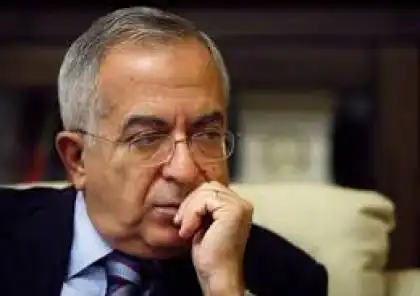
Former Palestinian PM Fayyad: Hamas cannot be destroyed, and “Israel” knows that well

Former Palestinian Prime Minister Salam Fayyad confirmed in an interview with the Italian newspaper La Repubblica published on Friday that the Hamas movement cannot be destroyed.


Salam Fayyad added, "The movement exists and cannot be eliminated because the matter is not limited to Yahya Sinwar, nor to Gaza, nor to its fighters. It is a very complex movement," noting that all of these things Israel knows well.


The former Palestinian Prime Minister stated that it is not a war against Hamas, but against all Palestinians who are asked to go to southern Gaza, adding, “In fact, this is the goal to force them to take refuge in Egypt...to leave...this is another catastrophe...and without an immediate ceasefire.” "There will be no next day for discussion, nor will there be Gaza."


During the interview with the newspaper "La Repubblica" from Princeton University, where he works as a professor of economics, Fayyad ruled out the arrival of the Palestinian Authority on the back of an Israeli tank to rule the Gaza Strip after the war.


Salam Fayyad said, "It is not a technical issue, but a political issue. The authority in Ramallah was already in a crisis before October 7, and its crisis is a crisis of legitimacy. It is unable to deal with the tensions in the West Bank. Does it want to bear the burden of Gaza as well?"


He added that it is clear that the ideal solution is to hold new elections, but this is not realistic at the present time, and for this reason I am not thinking about the Palestinian Authority, which will not be an expression of the Palestinians.


The former Palestinian Prime Minister added, "Actually, I am thinking about an expanded Palestine Liberation Organization, as was suggested some time ago, because the war did not start on October 7 and the problems are the same as they were on the sixth of October, even the Palestine Liberation Organization, which dates back to 1964." "It must be fixed."


He continued by saying, "Hamas did not exist until 1964, but it not only won the 2006 elections, but has since gained more and more acceptance... The Palestine Liberation Organization with Hamas can speak on behalf of everyone and appoint a government," indicating that the "Hamas" movement “It must become part of the new Palestinian authorities.


In response to the question: What is “Hamas”? “Take back any newspaper from the 1970s and read about the Palestine Liberation Organization and read about the late President Yasser Arafat. He was viewed as a terrorist exactly the way Hamas is viewed today,” Fayyad said.


It is worth noting that Salam Fayyad assumed Prime Minister of National Authority government from 2007 to 2013.


#Salam Fayyad

ARAB AND WORLD

Sat 18 Nov 2023 12:55 pm - Jerusalem Time

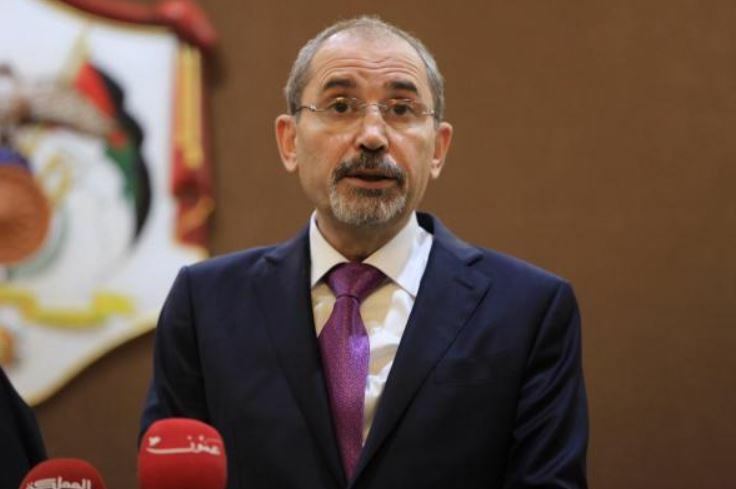
Jordanian FM: The displacement of Palestinians is a direct threat to our national security

Jordanian Foreign Minister Ayman Al-Safadi said that preventing the entry of food, medicine and fuel into the Gaza Strip is a war crime, stressing that Jordan “will do whatever is necessary” to prevent the displacement of Palestinians.


During the Manama Security Dialogue summit in Bahrain, Al-Safadi said, "We will never allow this to happen (the displacement of Palestinians). It is a war crime and will be a direct threat to our national security."


He asked, "I do not understand how Israel can achieve its goal of destroying" the Islamic Resistance Movement (Hamas)?


The Jordanian minister said that Israel's war on Gaza "is not self-defense, but rather blatant aggression."


He stressed that "nothing can justify the war in Gaza, and it does not achieve security for Israel."


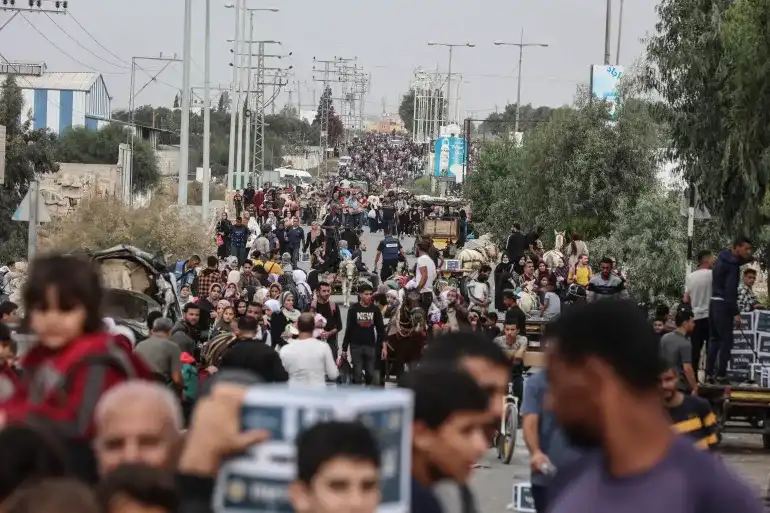
The Israeli aggression against Gaza caused the displacement of more than 1,650,000 people inside the Strip, out of a total population of 2.2 million.


The Israeli war on Gaza left more than 12,000 martyrs - including 4,710 children and 3,160 women - in addition to 29,800 injured, 70% of whom were children and women, according to official Palestinian sources.


Source: Al Jazeera


PALESTINE

Sat 18 Nov 2023 12:19 pm - Jerusalem Time

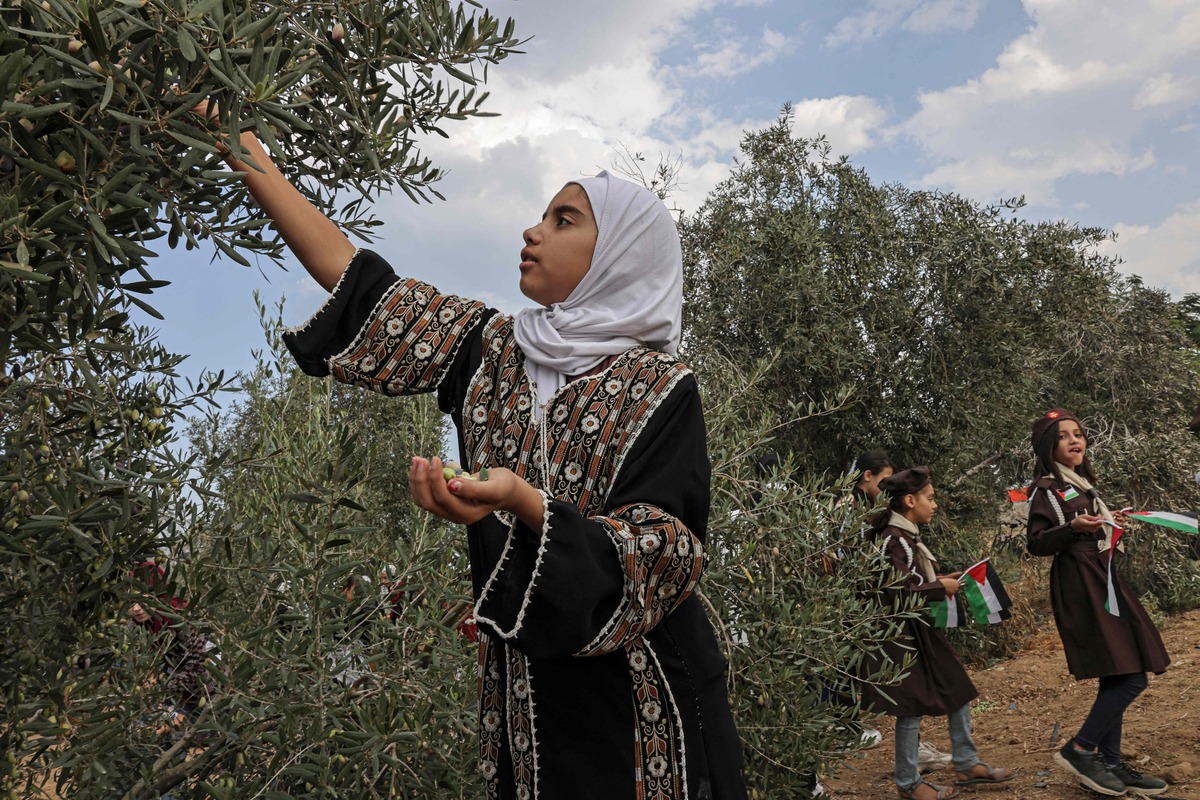
Israeli forces prevent Palestinian farmers from picking olives in Bethlehem and Nablus

Today, Saturday, the Israeli forces prevented Palestinian farmers from picking olives in the town of Nahalin and the village of Kisan in the Bethlehem Governorate.


The director of the Office of the Wall and Settlement Resistance Authority in Bethlehem, Hassan Barijiyah, said that the occupation forces stormed the “Al-Matarsiyeh” area, north of Nahalin, amidst gunfire, forced farmers to evacuate their lands and warned them against returning again to the area.


Brijiyeh added that citizens in the village of Kisan, east, prevented citizens from the Abu Dayyah, Al-Dauri, and Awadallah families from picking olives on their lands located west of the main street, and close to the “Ibi Hanahal” settlement, which is perched on citizens’ lands.


In Nablus, the Israeli occupation forces prevented farmers in the village of Al-Sawiya, south of Nablus, from harvesting olives, and forced them to leave their lands.


The head of the Al-Sawiya village council, Mahmoud Hassan, said that the occupation forces forced farmers in the eastern region of the village to leave their lands, and prevented them from harvesting olives.


He explained that the occupation forces fired tear gas bombs at the farmers.


Settlers attacked olive pickers in the village of Burin, south of Nablus, under the protection of the occupation forces, and stole olives, picking machines, mattresses, and their personal phones.


PALESTINE

Sat 18 Nov 2023 11:56 am - Jerusalem Time

Suffocation injuries among Palestinian students during farmers Israeli storming of the town of Al-Issawiya

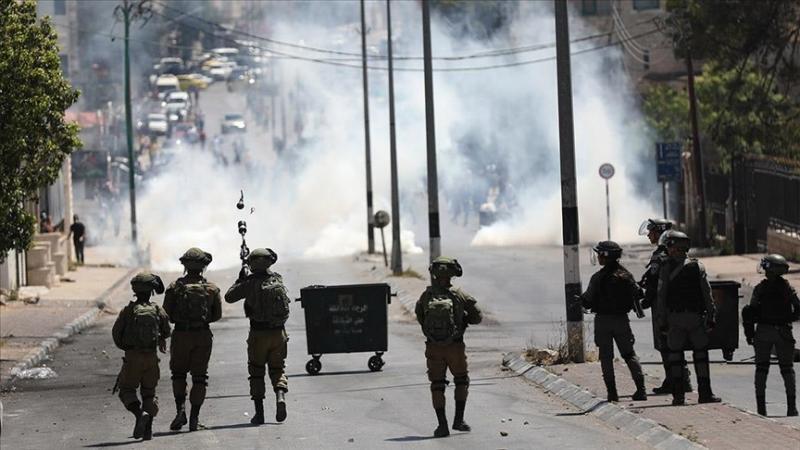
Today, Saturday, dozens of students suffered from suffocation, after the Israeli occupation forces stormed the town of Al-Issawiya, northeast of occupied Jerusalem.


Local sources in the town reported that the occupation forces stormed Al-Issawiya and fired gas bombs at a secondary school and the surrounding homes, causing dozens of students to suffer from suffocation.


Since the beginning of last month, the town of Al-Isawiya has witnessed violent confrontations with the occupation on an almost daily basis, including the arrest of dozens, and the permanent erection of two checkpoints at the two entrances to the town.


PALESTINE

Sat 18 Nov 2023 10:56 am - Jerusalem Time

Israel arrested Palestinians in the West Bank

From yesterday evening until Saturday morning, the Israeli occupation forces arrested about 40 Palestinians from the West Bank, a number of whom were later released. The arrest operations were concentrated in the Hebron Governorate, which is witnessing the highest arrest campaigns after the seventh of October, while the rest of the arrests were distributed among Governorates: Tubas, Ramallah, Jerusalem, Jericho, and Tulkarm, in addition to the arrest of a number of Gaza workers in the town of Al-Jabaa, and we were not able to confirm their identities.


The arrest campaign was accompanied by widespread torture, severe beatings, field investigations, and threats against the detainees and their families, which amounted to threats of shooting, in addition to widespread sabotage and destruction of citizens’ homes, and the confiscation of possessions from homes, the most important of which were the detainees’ phones, in addition to the arrest of... Citizens are taken hostage to pressure family members to surrender themselves.


Thus, the number of arrests after the seventh of last October rises to about (2850), and this number includes those who were arrested from homes, through military checkpoints, those who were forced to surrender themselves under pressure, those who were held hostage, those who were summoned and arrested later, and those who were arrested for the purpose of field investigation. They were later released.


The Prisoners' Commission and the Prisoners' Club confirmed that these arrest campaigns come within the framework of the comprehensive aggression against Palestinian people and the ongoing genocide in Gaza after the 7th of October, and they are an extension of a consistent policy implemented by the occupation over many decades against citizens, which escalated significantly after the 7th of October.

PALESTINE

Sat 18 Nov 2023 10:30 am - Jerusalem Time

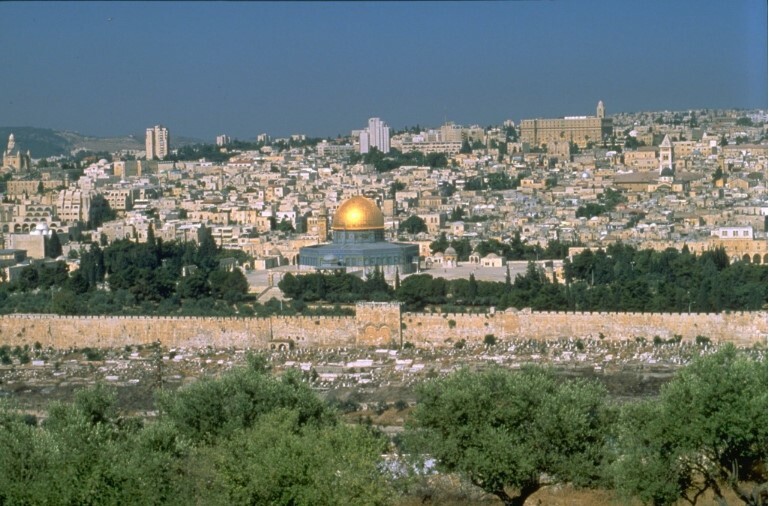
Israel withdraws from Palestinians the right to permanent residence in Jerusalem

Yesterday, Moshe Arbel, the Israeli Minister of the Interior, informed Majid al-Jubeh and Rashid al-Rishq, citizens of East Jerusalem, of the decision to withdraw their right to permanent residence in the city, on charges of supporting Hamas and the “Al-Aqsa Youth.”


Arbel set a period of “only 14 days” for Monday to appeal this decision before it takes effect.


According to what the decision alleged, Al-Jubeh worked within the framework of an organization to recruit members, pay salaries to “militants,” organize and participate in many public activities in support of “Hamas,” and also transferred money to the families of members of this movement.


The decision also stated that, when he was a minor, Rashid al-Rishq stabbed an Israeli in the Old City of Jerusalem, participated in violence on the Temple Mount, formed a military cell with other members of Hamas with the aim of carrying out operations and kidnapping soldiers, and carried out activities against the security forces.


It is worth noting that the Palestinians in Jerusalem do not hold Israeli citizenship and only enjoy the right to permanent residence there. They obtain most of the rights enjoyed by those who hold citizenship, but they are not entitled to vote in the Knesset elections, and they do not hold Israeli passports. The Minister of the Interior bases his decisions to withdraw the right to permanent housing from Palestinians on Article 11 of the Entry into Israel Law, which stipulates the withdrawal of the right to permanent housing due to a violation of loyalty to the State of Israel.


Despite the powers stipulated by law, the Supreme Court confirmed in the summer of 2022 that living conditions and social rights do not have to be withdrawn from “saboteurs” if they do not have a status in another country.


Last week, Arbel approved a memorandum of law that expands the powers to withdraw the right to permanent housing to include holders of citizenship for those described as instigators of violence during the war. Since October 7, the Israeli Public Prosecution has submitted more than 70 such indictments.


The memorandum of the law prepared by the legal advisor to the Population and Immigration Authority facilitates the procedures for withdrawing citizenship from so-called supporters of “terrorism,” instigators and supporters of armed Palestinian organizations at a time when a special status is declared on the home front, and the Knesset is expected to approve this memorandum of law.

PALESTINE

Sat 18 Nov 2023 10:30 am - Jerusalem Time

Israel discusses approving the death penalty against Palestinians

The Hebrew Channel 13 reported that the Israeli National Security Council will hold deliberations this week about imposing the death penalty on the perpetrators. It is noteworthy that these are preliminary deliberations in preparation for the deliberations that will be conducted by the Mini Ministerial Council for Security and Political Affairs on this issue.


It is also mentioned that the chances of approving the imposition of this punishment are not high, but discussing this issue in the current conditions and in light of international criticism of Israel is very complicated. Senior Israeli officials said: "This may lead to international criticism of Israel, which is indispensable these days."


The channel wondered, why is this happening now? It responded: It is possible that this is due to political reasons, as National Security Minister Itamar Ben Gvir demanded that Prime Minister Benjamin Netanyahu hold the mini-ministerial council for these deliberations, and the latter responded to this request.

OPINIONS

Sat 18 Nov 2023 10:27 am - Jerusalem Time

Palestine and Gaza launch the era of the masses

Bakr Abu Bakr

Bakr Abu Bakr

Opinion Writer

From the gate of Palestine, the era of the masses will begin in the corners of the nation’s countries... From the gate of Palestine and the children of Gaza, change will begin. The era of the masses will begin in Europe and America, and it is the era that will change the equation in the current situation, and it will also change a lot in the long term, so that no head will remain monopolizing hopes, dreams, and culture and people's minds and violating their countries.
The huge movement that is emerging now in a number of countries that have yielded to the principles and the voice of the masses, and hundreds of Arab, Western, and Jewish organizations in the West and America that oppose double standards and notions of moral deviation in the Israeli state and the American imperialist colonial aggression will be able to achieve great pressure against the aggression against Palestine, through seven mechanisms as follows:
1- The masses and through effective organizations do not stop launching demonstrations, marches and vigils against the war and its crimes, and against the massacres, which have a political influence in the West and America, which may change the balance and establish a new equation.
2- Many organizations (political, social, intellectual, cultural...), a number of humanitarian politicians, legal activists and demonstrators are taking many, continuous and persistent steps in support of the right, including legal steps against members of the US Congress for their blind support of the war on Palestine and Gaza, and what we see is also happening in return. In a number of European countries, the loud voice of the masses led the French president to change his position slightly, as did the British. These are the positions that previously led to the rise of political positions that were deviant, such as the Belgian and Norwegian positions. With respect to the very distinct Spanish and Irish position from the beginning.
3- The heated debate about the brutality of the Israeli aggression and its horrific massacres arises among freedom and peace activists, among writers, intellectuals, and thinkers, and even among those who bear the slogan of rejecting “anti-Semitism” themselves, and those Holocaust survivors who reject brutality and the clear distinction between the racist Israeli government and the Jews of the world.
4- In addition, judges, jurists and activists in Europe are gathering against the violations of the Zionist-American war on Palestine, to prosecute the occupying state for its crimes against humanity and to prosecute war criminals in “Israel” and their supporters.
5-The process of boycotting Israeli products, and the products of American companies and others that support the aggression, is expressing itself strongly, and it may reap the fruits of its boycott in the West.
6- The media awareness of many influencers in traditional media and social media has its effect in changing mentalities and (canned) ideas that have become addicted to submitting to the list of Western taboos or what is permissible from colonial systems and the mentality of imperialism, and which previously dealt with events from the perspective of the deceptive and false American Hollywood narrative.
7- The rise of the South American countries, their peoples, and their positions that went beyond Muslims and Arabs (especially in Bolivia, Chile, Colombia, and Brazil...) is an indication that global values, especially those related to freedom, indigenous peoples, and the right to self-determination, or the progressive values of the left, will have a great importance in the future .
At the Joint Arab-Islamic Summit (Two in One), the participants were unable to take a position similar to the position of a number of Latin American countries in Bolivia, Colombia, Chile, and others, or what Ireland is doing. They were even unable to hold a minute of silence for the souls of the martyrs, and they did not feel negligence or a pang of conscience. .
The downfall of those with destructive theories and Western lies regarding human rights, which only took the path of turning man into a human farce, is matched by a lack of respect for the value of life as a right. It has become clear to many mass organizations for which the human being and his life are the greatest value, so they stood against their imperialist governments with their consumerist values. A victory for the authentic universal values of life, truth, equality and justice. 
It is the new era in which the demonstrators in Washington and London, the stronghold of imperialism and colonialism, are shouting: We are all fighters and we are all Palestinians. The official and popular ranks in Ireland do not stop carrying the Palestinian cause to new heights that go beyond the collapsed, the fallen, and the shaken, and raise the flag of freedom and the flag of struggle high and proud in the sky of the world.

PALESTINE

Sat 18 Nov 2023 9:37 am - Jerusalem Time

The American envoy to the Middle East: There must be no forced displacement of Palestinians from Gaza, and the Strip must not be reoccupied or its land area reduced.

The American envoy to the Middle East in a statement: There must be no forced displacement of Palestinians from Gaza, and the Strip must not be reoccupied or its land area reduced.

PALESTINE

Sat 18 Nov 2023 9:34 am - Jerusalem Time

Financial Times: Israel and America are pressing to displace the residents of Gaza

The Financial Times reported that a UN official said that they had warned in discussions with the United States of “another catastrophe,” adding that they did not believe the Israelis would allow the displaced from northern Gaza to return to their areas.


He pointed out that the Israelis say they are looking for leaders of the Islamic Resistance Movement (Hamas) in the south, so they want to expel people from there as well.


The official said that Israel and the United States are pressing to establish a “safe zone,” and that Washington is “positioning the proposal as a humanitarian solution,” because the United Nations schools that serve as shelters for displaced Palestinians are overcrowded, and people are sleeping in the open, even as the rain falls and the temperature drops.


Egyptian refusal

The UN official added that the safe zone proposal makes Egypt “very nervous,” because conditions in any “safe zone” are likely to deteriorate in the medium term, prompting “those who can afford it” to seek to enter Egypt.


Cairo insists that it is not prepared to host the influx of Palestinian refugees expelled from Gaza.

The commander of the Israeli occupation army, Herzi Halevy, said that he was ready to expand his ground operation outside northern Gaza, as the United Nations warned of attempts to encircle the population in a “safe zone” in the southwest of the Strip.


Halevy's statements came a day after the Israeli army dropped thousands of leaflets on some neighborhoods in Khan Yunis, south of Gaza, urging civilians to evacuate their homes. Relief organizations warned that the mass exodus of civilians was exacerbating a humanitarian catastrophe.


Refusing to unilaterally create safe zones

The newspaper pointed out that a group of United Nations agencies said the day before Thursday that they would not participate in any “safe zones” created without the approval of all parties, warning that they may exacerbate humanitarian risks to civilians, noting that “there is no truly safe zone.” When declared unilaterally or enforced through the presence of armed forces.”


The heads of 20 UN humanitarian agencies and others warned in a joint statement that under the prevailing circumstances, proposals to unilaterally create a safe zone in Gaza risk causing harm to civilians and widespread loss of life and must be rejected.


Before its ground invasion of Gaza last October, Israel said it would establish a “safe zone” in Al-Mawasi, a 14-square-kilometre area in the southwest, where humanitarian aid would be provided.


Source: Financial Times + Aljazeera

PALESTINE

Sat 18 Nov 2023 9:29 am - Jerusalem Time

Israeli forces give one hour for the evacuation of the Shifa complex in Gaza

Palestine TV said today (Saturday) that Israeli forces requested the evacuation of the Shifa Medical Complex in Gaza within one hour.


The complex is subject to a siege by Israeli law, and was stormed several days ago, according to the Arab World News Agency.


Al-Shifa Hospital, the largest hospital in Gaza, was the focus of international concern this week when it became the main target of the Israeli ground attack. Israel said that its forces found a vehicle containing a large number of weapons, and an underground structure that it said led to one of Hamas's tunnels, two days after searching the building, according to Reuters news agency.


The Director General of the Ministry of Health in the Gaza Strip, Munir Al-Bursh, confirmed yesterday (Friday) that 51 people had been killed inside the Al-Shifa Medical Complex since the Israeli army stormed the hospital last Wednesday.


In a later statement, the director of Al-Shifa Hospital in Gaza, Muhammad Abu Salamiya, announced the death of all patients in the hospital’s intensive care department, due to the Israeli siege on the medical complex.


OPINIONS

Sat 18 Nov 2023 9:21 am - Jerusalem Time

Arafat “Where to?”, he said: “To Palestine”

Mustafa FAHS / Translation for "Al-Quds" dot com

Mustafa FAHS / Translation for "Al-Quds" dot com

Opinion Writer

On November 15, 1988, that is, 35 years ago, the late Palestinian President Yasser Arafat announced from the Algerian capital the establishment of the State of Palestine. Between the Palestinian declaration of independence and the declaration of the establishment of the State of Israel were decades of conflict. 


It began with the 1948 War, which began in 1947 and continued until 1949. It was confronted by Palestinian wars of independence that began since the Palestinian National Movement announced the launch of its armed struggle in 1965, and continues to this day. The war in or against Gaza is one of the major confrontations after the Lebanon War (1982) that the Palestinian people are waging in order to extract their independence, and in which the Israelis are also waging their second war of independence.


From independence to it, the Israeli elite is aware of the magnitude of the non-military repercussions of the blow it received last October 7 on the nature of society and the state, in an entity that has been inhabited by existential obsession and anxiety since its inception. 

Tel Aviv can respond militarily to what happened, but this time it may fail to contain the concerns of its citizens and restore the principle of deterrence and security. Before the war, it was experiencing its own internal crises and vertical divisions as a result of shifts in the social environment, from the division between the right and the left to a complex triangle between a declining left, a traditional right unable to develop its discourse, and a rising extreme right embracing an exaggerated discourse that enabled it to expand its control over society and the state, and embarrass its opponents. On the traditional right, and removing the established left from competition.


On the way to the second independence, the Israeli extreme right realizes that it must sacrifice in order to win it. This is what was discussed in 2010 in one of the study centers in Washington between American and Israeli strategic experts about the role of this right in any external military conflict that might threaten the integrity of the entity. However, The shock came from within, so his sacrifices will be greater, and his gains less. The left, which sacrificed for the first independence, succeeded until 1965 in denying the existence of a Palestinian national liberation movement, and at the height of its victory it realized the necessity of gradually recognizing Palestinian rights (the Oslo Accords). As for the current right, it faces a difficult dilemma, as its war on Gaza will not achieve the victory it desires. It will not spare him political losses if the final solution is linked to the establishment of a Palestinian state.


On the way to statehood, it took the Hamas leader Ismail Haniyeh 35 years to admit to the historical leader of the Palestinian struggle, Yasser Arafat, the reality of the “Algeria Declaration,” and to recognize UN resolutions, and at a great cost in lives and property in order to accept the two-state solution. Arafat’s courage in war and peace was exceptional; When he was asked on the ship after he was forced to leave Beirut: “Where to?”, he said: “To Palestine,” which he reached via “Oslo.” This Arafatian realism is now required of Hamas if its concern is national, to act with political realism as its predecessors in the Palestinian struggle movement behaved. Returning to the Palestinian national home is a pre-emptive necessity before Israel declares its victory in its second war of independence.


On the way to armed struggle and the disappointment of Hamas with its allies, we can take advantage of what the Palestinian thinker Dr. Yazid Al-Sayegh wrote in a study entitled “Armed Struggle and the Formation of the Palestinian State” that “the Palestinian national movement, which was established with the specific goal of liberating Palestine through armed struggle, has proven its inability, in over the past years, it has refrained from liberating any part of its national territory by force, and in the end it accepted the Oslo negotiated settlement, the terms of which were in opposition, in practice, to all the principles and goals it had adopted throughout this time.


The “Oslo Accords” constituted a foothold for the Palestinian struggle movement and an essential step towards the establishment of their state. A state where the Palestinians made great sacrifices in order to gain its independence, and they are now facing a great challenge. The necessity of turning their tragedy into an opportunity equal to their sacrifices so that their enemy does not win the second confrontation as it did 75 years ago.

Alsharq Alawsat

OPINIONS

Sat 18 Nov 2023 9:13 am - Jerusalem Time

Israel and the questions of “the next day”

Elias Harfoush/ Translation for (Al-Quds" dot com

Elias Harfoush/ Translation for (Al-Quds" dot com

Opinion Writer

In its war on the Gaza Strip, Israel behaves as if it is not concerned with what will follow this war. As if it was an eternal war. It is not important to it what its relations will be with the Palestinians after this war, nor with its Arab neighbors, nor even with the outside world.


The current leaders in Israel do not give any weight to what they say or what they do. Neither racist statements against the Palestinians make them feel ashamed, nor does the threat of dropping nuclear bombs on them, nor the annihilation of entire families under the roofs of their homes move any of their conscience. No one there asks: How will we live in the future alongside those who will survive? What will we tell their children about what we committed against their fathers and grandfathers, the massacres that we never tire of repeating?


This Israeli disregard for the horror of what they are committing includes their disregard for Arab and Islamic positions, governments and peoples, which condemn the ongoing killings in Gaza and the daily violations of all humanitarian laws and rules of war. Even those who criticize Hamas and do not justify or defend what it committed last October 7 are unable to defend the ongoing acts of killing and collective punishment against the elderly, women and children of Gaza.


What makes the Israeli leaders' disregard for what their army is committing in Gaza even more horrific is their complete disregard for responsibility for why the Gaza Strip has reached this state, with its miserable conditions and the misery camps spread throughout it. No conscience in Israel is moved to ask: Where did these refugees come from? Who pushed them into the life of humiliation they suffer from? Who destroyed their homes and displaced them from the villages that were theirs in Palestine? Every attempt to open the history books is accused of anti-Semitism, by Netanyahu and his partners. Even the Secretary-General of the United Nations was not spared the harshness of their tongues when he said: The operation of last October 7 did not come out of nowhere.


Israel seems unconcerned neither by the number of civilians killed in the thousands, nor by the widespread destruction after which there is no resurrection of life, nor by the true goals of these massacres, other than imposing the logic of force, and nothing but force, on weak, helpless civilians, begging for a drop of water or a piece of bread, or Children whose thin, decrepit bodies cannot be described by words in maternity hospitals, deprived of the minimum level of care that would keep them alive.


Israel does not only underestimate the positions of its neighbors. Ignoring and belittling the criticisms of international humanitarian organizations, such as UNRWA, UNICEF, the World Health Organization, the High Commissioner for Human Rights, and other organizations that considered depriving the people of the Gaza Strip of water, medicine, and fuel as acts contrary to the humanitarian rules that protect the rights of civilians in times of war.


Even Israel's friends on the international scene are becoming fed up with its crimes, voices are rising from influential figures, and the number of Western governments are increasingly criticizing what its army is doing in Gaza: Stop killing children... the number of civilian deaths is increasing... respect the rules of war and international humanitarian law. .. Gaza has turned into a cemetery for children... Positions expressed by Western heads of government who did not hesitate to condemn what Hamas committed against Israeli civilians last October 7, but they became unable to continue defending the Israeli campaign in the face of the horrific images of the massacres taking place. Screens every evening. 


The Prime Minister of Spain called for an end to the “blind killing,” and the Prime Minister of Canada did the same. The President of France has returned to calling for a ceasefire and the protection of civilians, after his early drift into calling for an international coalition against Hamas. 

The matter finally reached the point of President Biden's administration declaring its disapproval of the Israeli forces storming the Shifa Medical Complex in Gaza, and with his Secretary of State Blinken admitting that the number of civilian deaths in Gaza reached unacceptable numbers.


Israel has succeeded in turning the sympathy it found in the first days of its war on Gaza into a campaign against it, witnessed in a significant number of world capitals and with marches in the streets of major cities denouncing what its army committed in that war. 

Israeli leaders find nothing to respond to except with the slogan that their army is the most moral of all the armies in the world, and that “Hamas” is responsible for killing civilians in Gaza after turning them “hostage,” and that Israel is forced to defend its survival in the face of enemies who intend to uproot it.


The problem with the Israeli narrative is that it has become full of deception and is exposed to those who want to see and hear. The Israeli army is not able to justify its actions in Gaza as self-defense; Because this defense is not achieved by resorting to war to annihilate civilians and displace them from their homes. Nor is the argument of Hamas turning the residents of Gaza “hostage” any longer believable, after it became clear that most of the sites bombed by Israel are civilian sites in which there are no Hamas militants.


As for the argument of the “enemies” who want to uproot Israel, the recent calls for the displacement of the people of Gaza have proven that what is being proposed is the uprooting of the Palestinians from their land and not the other way around. 


The Arabs have proven the invalidity of the Israeli claims since they took one initiative after another towards peace and recognition of Israel's right to exist in the region. These are initiatives that Israel, especially under the auspices of Netanyahu, made every effort to thwart. Although there are extremist voices among the Palestinians and in the region fueled by radical trends, these voices fade away when Israel contributes to responding to calls for peace, which it does not do. Rather, it does the opposite, through continuous attacks on the Palestinians and the expansion of settlement activities, until it has become Settlements cover 40 percent of the West Bank.


The question of “the next day” is what those remaining sensible people among Israel’s leaders need to ask: What comes after this killing and destruction? What comes after these atrocities preserved in memory and documented on screens? What will our future be like in the region alongside the families of these victims?


source: Alsharq Alawsat

ARAB AND WORLD

Sat 18 Nov 2023 8:14 am - Jerusalem Time

Financial Times: Israel borrows $6 billion due to the war on Gaza


The British Financial Times newspaper said that Israel has borrowed $6 billion in recent weeks through privately negotiated deals to help finance its war on the Gaza Strip.


The newspaper pointed out that Tel Aviv had to pay unusually high borrowing costs to complete these deals.


It quoted investors as saying that the recent bonds were issued under so-called private placements, a process through which the securities are not offered on the public market, but are instead sold to selected investors.


Investors explained that this may be because money for the war effort was raised quickly or without attracting unwanted attention, and could be a sign of how wary some investors have become about buying Israel's debt.


ARAB AND WORLD

Sat 18 Nov 2023 8:11 am - Jerusalem Time

Indonesia, Malaysia and Brunei call for a ceasefire in Gaza

Indonesia, Malaysia and Brunei called for an immediate humanitarian truce in the Gaza Strip leading to a permanent ceasefire.


The three countries affirmed - in a joint statement - that a just and lasting solution to the Palestinian-Israeli conflict can only be achieved through peaceful means.


It added that they issued this statement to give a better and fairer picture of the discussions on the situation in Gaza during the Asia-Pacific Economic Cooperation (APEC) summit, held in San Francisco, United States.


OPINIONS

Sat 18 Nov 2023 8:01 am - Jerusalem Time

Zero distance in the Palestinian-Israeli conflict

Mounir Adeeb

Mounir Adeeb

Opinion Writer

The Palestinian-Israeli conflict has not approached the shadow areas or the zero distance that relates to the possibility of its solution or dissolution during the past seven decades, as it happened during the last fifty days, despite the complexity of the conflict, at least currently, but moving beyond this complex stage may reach a political settlement that was lacking during The last two decades.


The situation is complex, and the war that Israel is still waging against the Gaza Strip has not stopped yet, and no date is known for it to stop, and it does not appear on the horizon that it will stop now, and the conflict is still going through a stage of complexity, after which it will enter the stage of a radical solution, and this does not mean that we are heading towards a solution. There are days of a solution to the conflict, but it is one stage after another and may take more time.


The war may continue for weeks to come, or it may last for months. There is no magic solution that can fall from the sky. The seventy-year conflict will not be resolved in seventy days of war. But what we can say is that we are closer to resolving the conflict at this difficult point. The darkest hours of the night are those before sunrise, and this is what appears from the live interaction with the practical solutions that were previously proposed for the solution.


It is true that the international community failed to force Israel to accept a ceasefire, and the Security Council also failed to issue a resolution in this regard, all of which are negative indicators of the continuation of the conflict. Perhaps Israel’s desire was overwhelming to restore the balance of power to its advantage, but it did not achieve this. The goal became just a wish, and the intelligence and military failure was followed by a new failure, and perhaps its failure to liberate the Israeli prisoners is the greatest failure, in addition to the failure to achieve its goal of eliminating “Hamas” during the last forty days.


It is true that the war is still ongoing, and perhaps Israel will succeed in achieving its goal or part of its military goals in Gaza, but the current military situation indicates otherwise, and in addition to this failure, and that is its bet, on the presence of its prisoners and the Hamas command center under the Al-Shifa Complex and the rest of the hospitals. In Israel, although it has bet on this since the beginning of its military campaign, its intelligence information lacked any credibility, and this is a new failure added to the list of failed goals.


Despite the difference in the American point of view regarding the release of Israeli prisoners, whether civilian or military, Washington failed to convince Israel of a ceasefire or a political settlement to the issue of the century. Perhaps this is one of the reasons for the continuation of the ongoing war until now, and with it all scenarios will remain on the table and acceptable.


Unparalleled Palestinian losses in the war that Israel is still waging on the Gaza Strip, in addition to the post-war scenarios, all of which seem difficult and complex to the Hamas movement, in addition to scenarios that expand the circle of conflict regionally and internationally, and this scenario cannot be excluded or bypassed also.


Despite all these facts, the Palestinian-Israeli conflict is going through the zero-distance stage, which may ultimately lead to reaching the path of establishing a Palestinian state on the entire Palestinian territories, including East Jerusalem. The matter will not be easy, and Israel will not grant the Palestinians the right to self-determination, nor will it give them East Jerusalem as the capital of their imagined state, but it will take a long time in negotiations, pressure, and the use of force as well. All of this will lead in the end to the establishment of the Palestinian state as the only saving solution for Israel, and it is forced to till then.


Israel's partners have become part of the missing solution. These partners think in terms of long-term gain rather than short-term loss. Israel must accept what it rejected in the past and seek to neutralize the power of Hamas. Perhaps the closest vision for these partners is the establishment of a Palestinian state that participates in this role!


Israel does not believe in this perception and will not be easily convinced. The current Israeli government is not qualified to play this role, and America is seeking political change in Israel so that it can preach what it believes will preserve the State of Israel and preserve what remains of its prestige.


Israel's crisis is not in Gaza, but in the presence of the resistance movements, led by the "Hamas" movement, which has become the strongest and most dangerous to its security, and Israel has become unable to confront it, as it seems in the scene of the current conflict that "Hamas" started through the October 7 attack ( last October.


Most of the assessments of positions in strategic studies centers in the West go to the search for outcomes related to moderating Hamas’ behavior. The closest approach to this seems to be allowing the establishment of a Palestinian state, which carries out this role through its security force. A difficult and heavy choice that may cost Israel a lot, but it is forced to think about it seriously.


The United States is promoting the idea of a political path and a two-state solution, and in doing so it is trying to save Israel from its current security impasse. Perhaps it believes that the existence of a sovereign Palestinian state on its borders, united by peace treaties, may greatly assist Israel in its mission, which it has failed to achieve, at least during the last forty days.


It is true that Israel's position on the Palestinian Authority is not good. If it sees Hamas as a terrorist movement, it sees the Palestinian Authority as well. The first practices terrorism through weapons, and the second practices it through politics and diplomacy. This is a frustrating opinion for any attempts related to establishing a Palestinian state, but it has become forced to abandon what it previously declared or evaded in order not to implement it and evade it.


Israel is not sincere in resolving the conflict, but it is running away from its failure to confront the Palestinian resistance and Hamas in particular. This is a major challenge that may not end with the establishment of a Palestinian state, because quite simply, Israel wants to confront its near enemy with its distant enemy behind the state proposal, and this It cannot create security in the short or long term for Israel.

(Annahar)

ARAB AND WORLD

Sat 18 Nov 2023 7:55 am - Jerusalem Time

Widespread disease, hunger 'inevitable' in Gaza, UN warns

UN human rights chief Volker Turk says depletion of fuel would have a "catastrophic" impact across Gaza, stressing the inevitability of hunger and disease in the embattled enclave.


The United Nations human rights chief has said widespread outbreaks of disease and hunger seemed "inevitable" in Gaza after weeks of Israeli assault on the densely populated Palestinian enclave. Speaking at an informal briefing on Thursday to states at the United Nations in Geneva after visiting the Middle East, Volker Turk said the depletion of fuel would have a "catastrophic" impact across Gaza.

It would lead to the collapse of sewage systems, healthcare and end the scarce humanitarian aid being supplied." 

Massive outbreaks of infectious disease, and hunger, seem inevitable," Turk, the UN High Commissioner for Human Rights, said. 


The World Health Organization has warned of "worrying trends" in disease spread in Gaza, saying there had been an unusually large number of cases of diarrhoeal disease in the enclave, where bombardments and a ground operation have disrupted the health system, access to clean water and caused people to crowd into shelters.

In comments to the media after his briefing to UN member states, Turk said lasting peace was impossible without an end to longstanding violations of human rights." Warnings by my office and others about human rights violations over many years have been ignored, not only in Israel and in the occupied Palestinian territory, but also by states with influence on the parties to this crisis," he said. "This needs to change for this conflict to be enduringly resolved." 

Turk, who described the bombardment by Israel as "of an intensity rarely experienced in this century," also expressed concern about increasing violence and discrimination against Palestinians in the occupied West Bank, including occupied East Jerusalem. "In my view, this creates a potentially explosive situation, and I want to be clear: we are well beyond the level of early warning," Turk told states." I am ringing the loudest possible alarm bell about the occupied West Bank."


ARAB AND WORLD

Sat 18 Nov 2023 7:50 am - Jerusalem Time

Norway parliament calls for recognition of independent Palestinian state

Earlier proposals had highlighted peace as a condition for recognition but the new resolution calls on the government to be ready to recognize Palestine as an independent state without the condition.


The resolution was approved by a resounding majority, with only the Christian Democrats and the conservative Progress Party voting against it.


Norway's parliament has approved a resolution that calls on the government to be ready to recognize Palestine as an independent state, local media has reported.

The resolution, brought by the ruling coalition on Thursday, was passed after eight out of the 10 parties in parliament voted in favor of it.

It "asks the government to be ready to recognize Palestine as an independent state, without making a final peace accord a condition. 

Earlier proposals highlighted peace as a condition for recognition, the Newsinenglish website reported.


The resolution was approved by a resounding majority, with only the Christian Democrats and the conservative Progress Party voting against it. Norway is one of the few Western countries that has called for a ceasefire in Gaza.


ARAB AND WORLD

Sat 18 Nov 2023 7:43 am - Jerusalem Time

APEC Forum "divided" over the wars in Ukraine and Gaza

APEC includes 21 countries. It was established in 1989 to encourage trade. Officially, this forum does not bring together "countries" but "economies."


Leaders of the Asia-Pacific Economic Cooperation (APEC) group are divided over their response to the wars in Ukraine and Gaza.


The 21 member economies of the Asia-Pacific Economic Cooperation Forum - which includes Russia, China and the United States - did not mention any conflict in their final joint declaration, yesterday, Friday.


At the conclusion of their multi-day meeting in San Francisco (California), the leaders of the Asia-Pacific Economic Cooperation Organization published a separate statement on the hot geopolitical issues of the moment.


Regarding the “crisis in Gaza,” this text noted that member states, including competing major powers such as the United States, China or Russia, as well as Muslim countries such as Indonesia and Malaysia, had “exchanged their views.”


Some leaders also “exchanged the unified messages issued by the joint Arab-Islamic summit in Riyadh on November 11, 2023,” which accused Israel of committing war crimes and crimes against humanity.


Regarding the Russian invasion of Ukraine, the statement stated that no agreement had been reached.


Russia was represented at the meeting by Deputy Prime Minister Alexei Overchuk, the highest-ranking Russian figure to visit the United States since the beginning of the war.


APEC also issued the "Golden Gate Declaration", which was reached by consensus. The forum's member states pledged to "encourage economic growth, while at the same time responding to environmental challenges such as climate change."


It is noteworthy that APEC, a group of 21 countries, was established in 1989 to encourage trade. Officially, this forum does not bring together “countries” but “economies.”

(Arab48)

PALESTINE

Sat 18 Nov 2023 7:37 am - Jerusalem Time

War against Gaza enters its 43rd day.. Israel bombs Khan Yunis leaves 26 dead mostly children

On the forty-third consecutive day of Israeli war against Gaza, Israel continued its artillery and aircraft bombardments on the Gaza Strip.


At dawn, Israeli aircraft bombed several residential apartments in the city of Khan Yunis, south of the Gaza Strip, killing about 26 Palestinians, most of whom were children.


Civil defense crews said that they "extracted body parts from under the rubble, while a number of victims are still missing."


The aircraft launched heavy raids in the vicinity of the Indonesian Hospital in the northern Gaza Strip, coinciding with violent artillery shelling in the eastern region.


The Grand Mosque in Al-Maghazi refugee camp in the central Gaza Strip was also targeted, bringing the number of mosques targeted by Israel to 242 mosques in the Strip, according to the government media office in Gaza on Friday evening.


In the latest statistics of the ongoing aggression since October 7, the death toll exceeded 12,000 Palestinian martyrs, including 5,000 children and 3,300 women, according to the government media office in Gaza, which indicated that Israel committed 1,270 massacres against the residents of the Strip.

ARAB AND WORLD

Sat 18 Nov 2023 7:34 am - Jerusalem Time

Russia's position on the war on Gaza: exploiting geopolitical advantages to its advantage

Russian President Vladimir Putin waited three days before issuing any comment on the Hamas attack on Israel, which was described as a "massacre", and which occurred on the Russian President's 71st birthday.


When he made a comment, he placed responsibility for what happened on the United States and not on Hamas.


At the time, Putin told the Iraqi Prime Minister: “I think many will agree with me that this is a clear example of the failed policy pursued by the United States in the Middle East, which tried to monopolize the settlement process.”


Another six days passed before Putin spoke with Israeli Prime Minister Benjamin Netanyahu to offer his condolences for the killing of about 1,200 Israelis. Ten days later, Russia said that a Hamas delegation was in Moscow for talks.


Political experts in Russia and the West say that Putin is trying to exploit the Israeli war on Gaza as an opportunity to escalate what he described as an existential battle with the West in order to impose a new world order that would end American hegemony in favor of a multilateral system that he believes is already taking shape.


“Russia realizes that the United States and the European Union fully support Israel, but they now embody evil and cannot be right in any way,” Sergei Markov, a former Kremlin adviser, wrote in his blog, explaining Putin’s position and his need to distinguish himself on the scene.


He added: "Therefore, Russia will not be in the same camp with the United States and the European Union. Israel's main ally is the United States, Russia's main enemy at the present time. Hamas' ally is Iran, Russia's ally."


Russia enjoys increasingly close relations with Iran, which supports Hamas and is accused by the United States of supplying Russia with drones for use in its war in Ukraine, which is locked in a fierce war of attrition with Russia.


Hannah Knott, a Berlin-based Russian foreign policy expert, told the Carnegie Russia and Eurasia Center that she believes Moscow has abandoned its previous, more balanced stance on the Middle East and adopted an “explicit pro-Palestinian stance.”


She said: "Russia is well aware that by doing all this, it is siding with parties and circles throughout the Middle East, and even outside it in the global south, in their views related to the Palestinian issue and where the Palestinian issue continues to be strongly present."


These are precisely the parties and circles that Putin seeks to win in his quest to form a new world order that would weaken the influence of the United States.


Knott added: “The most important way Russia will benefit from the Gaza crisis is to score points in the court of world public opinion.”


Putin said, "When you look at the suffering and blood-stained children (in Gaza), you clench your fists tightly (out of anger) and tears flow from your eyes."


"Double standards"

Russian politicians have compared what they say is the absolute authorization that Washington granted to Israel to bomb the Gaza Strip, and Washington's punitive response to the war that Russia is waging in Ukraine, which it says does not intentionally target civilians despite the killing of thousands of civilians.


The Israeli ambassador to the United Nations said that Russia is not in a position to preach to others given what it is doing itself in Ukraine.


But Senator Alexei Pushkov said that the West fell into a trap of its own making, when it revealed the double standards by which it deals with different countries based on political preferences based on self-interests.


Pushkov wrote on the Telegram application: “The absolute support of the United States and the West for Israel’s actions dealt a strong blow to Western foreign policy in the eyes of the Arab world and the entire global South.”


Knott: The most important way Russia will benefit from the Gaza crisis is to score points in the court of global public opinion.

Markov, the Kremlin advisor, stated that Russia views the Gaza crisis as an opportunity to strengthen its influence in the region by portraying itself as a potential peacemaker with relations with all parties.


Moscow has offered to host a regional meeting of foreign ministers, and Putin said Russia was well placed to help.


Putin added to an Arab television channel in October: “We have very stable and practical relations with Israel, and we have had friendly relations with Palestine for decades, and our friends know that. Russia, from my point of view, can also make its own contribution to the settlement process.” .


Markov said there are also potential economic benefits in addition to the advantage of the West withdrawing financial and military resources from Ukraine.


“Russia will benefit from the increase in oil prices that will result from this war... (and) Russia will benefit from any conflict to which the United States and the European Union devote resources because that reduces the resources allocated to the anti-Russian regime in Ukraine,” he explained.


Alex Gabuev, director of the Carnegie Russia and Eurasia Center, expressed his belief that Moscow has modified its policy in the Middle East because of the war in Ukraine.


He said: “My interpretation of this is that war has become the organizing principle of Russian foreign policy and (because of) relations with Iran, which brings the issue of military hardware into the equation. For example, the pivotal Russian war effort is of greater importance than relations with Israel.”


Deterioration of relationships

Russia's relations with Israel, which were usually close and practical, were damaged.


Moscow's reception of a Hamas delegation, less than two weeks after the "Al-Aqsa Flood" operation, angered Israel, prompting it to summon Russian Ambassador Anatoly Viktorov because he sent "a message that legitimizes terrorism."

The resentment was mutual. The Russian Foreign Ministry summoned Israeli Ambassador Alexander Ben Zvi at least twice for talks, and the two countries' envoys to the United Nations clashed in a war of words after Moscow's representative questioned the scope of the definition of Israel's right to defend itself.


Mikhail Bogdanov, one of Russia's deputy foreign ministers, said that Israel had stopped regularly warning Moscow of air strikes it was carrying out inside Russia's ally, Syria.


Gabuev: Moscow modified its policy in the Middle East due to the war in Ukraine

When an Israeli minister, who has since been suspended, expressed his acceptance of the idea of Israel launching a nuclear strike on the Gaza Strip, Russia said that the statements raised “a large number of questions” and wondered whether they constituted an official recognition by Israel that it possesses nuclear weapons.


Amir Whitman, a member of Netanyahu's Likud Party, said that Israel will one day punish Russia for its position.


Whitman stated in an interview with the Russian RT channel in October: “We will end this war (with Hamas)... and after that, Russia will pay the price.” He added, "Russia supports Israel's enemies. After that, we will not forget what you are doing. We will come and make sure that Ukraine will win."


(Reuters, Al-Arabi Al-Jadeed)


PALESTINE

Sat 18 Nov 2023 7:27 am - Jerusalem Time

Borrell considers Gaza war a result of the failure to resolve the Palestinian issue, and Hamas refuses to distort the Resistance

Vice President of the European Commission and High Representative for Foreign and Security Policy in the European Union, Josep Borrell, considered that the Israeli war on Gaza today is the result of “the failure of the international community to achieve a political solution to the Palestinian issue.”


This came during a press conference with Palestinian Prime Minister Muhammad Shtayyeh in Ramallah, in which Borrell called on Israel to respect international humanitarian law.


Borrell believed that "the war against Hamas today is the result of the failure of the international community to reach a political solution."


He continued: “The war on Gaza confirmed to us that the Palestinian issue cannot be left unresolved,” stressing the European Union’s support for the two-state solution option, and its readiness for “political engagement leading to an end to the occupation,” without clarification.


He also explained that the cycle of violence in the region could be stopped through “only a political solution,” adding: “The day after the ceasefire means a horizon and a political plan that includes the collection of Palestinian lands.”


Borrell called on Israel to "respect international humanitarian law," noting that there were "thousands of civilian casualties in the Gaza Strip."


Accordingly, the European official called for "an immediate humanitarian truce, more opportunities for aid to reach civilians, and for the international community to be able to provide aid."


In this context, Borrell acknowledged the existence of “increasing settler violence in the West Bank,” noting that he called on Israel to “avoid” these practices.


As such, he stressed his rejection of forced displacement outside the Gaza Strip, Israel’s occupation of Gaza, or finding a solution in the Gaza Strip isolated from the West Bank.


He indicated his support for the return of the Palestinian Authority to the Gaza Strip, saying: “You there have not left Gaza providing services, and you have the ability to continue the mission and need support from the international community.”


For his part, Shtayyeh stressed the necessity of establishing an immediate ceasefire in the Gaza Strip, and the urgent need to deliver aid and medicine to the Strip.


He said during the conference: “What is happening in Gaza is mass killing, in the spirit of revenge, and we want it to stop.” He added that the West Bank "is not far from what is happening in the Gaza Strip, where 421 Palestinians have been killed since the beginning of the year."


He continued: "The situation is tragic in Gaza, there is no food or drink, and the bloodshed continues. What we demand is that international humanitarian law must be respected."


Borrell considered that "Hamas' "terrorist" acts on October 7 harmed the Palestinian people and the goals of Palestine, and nothing justifies what Hamas did bloodily, and we urge them to release the hostages," as he put it.


On Sunday, Borrell said in a post on “X”: “We condemn Hamas’ use of hospitals and civilians as human shields,” calling on civilians to “leave the combat zones.”


Hamas: Borrell exceeded diplomacy by distorting the Palestinians’ right to “resistance”

On the other hand, the Hamas movement considered, on Friday, that European Union foreign policy official Josep Borrell exceeded the limits of decency and diplomacy when he tried to distort the right of the Palestinian people to “resist the Israeli occupation.”


In response to Borrell’s statements during the press conference with Shtayyeh, in which he described Hamas’ actions as “terrorist,” Hamas said in a press statement: “Borrell crossed the limits of decency and diplomacy when he tried to distort the right of the Palestinian people to resist the (Israeli) occupation, which is guaranteed under international law.” “Which is no longer of value to Washington and the European Union by giving the occupation a green light to commit more massacres against our people.”


The movement condemned Borrell's statements, and held him responsible "for justifying the occupation by committing massacres, killing children and women, and violating the sanctity of hospitals and schools (...) under the name of the entity's right to defend itself."


It affirmed, "The right of our people to resist the occupation because they have sovereignty and the supreme say over their land, and no one has the right to dictate over them. Our people will remain committed to their legitimate rights until the occupation is defeated and eliminated, and its Palestinian state is established with Jerusalem as its capital."


(Anatolia, Al-Arabi Al-Jadeed)


ARAB AND WORLD

Sat 18 Nov 2023 7:17 am - Jerusalem Time

Erdogan in tense talks in Germany as divisions over Gaza war deepen

Turkey’s president stresses need for ceasefire, while Germany’s Scholz backs Israel’s right to defend itself.


Turkish President Recep Tayyip Erdogan was on a brief and tense visit to Germany amid deep differences between the two NATO allies over the war in Gaza. Erdogan has called Israel a “terror state” and pointed to its Western allies, including Germany, for supporting the military’s “massacres” in Gaza.

On Friday, German Chancellor Olaf Scholz underlined Israel’s right to defend itself. “Our solidarity with Israel is not up for discussion,” he said at a joint news conference with Erdogan. “We don’t owe anything to Israel, so we can speak freely,” Erdogan said, referring to Germany’s responsibilities in the Holocaust and how Berlin can influence its relationship with Israel. “If we were in debt, we could not talk so freely. But those who are in debt cannot talk freely,” he said. 


The Turkish leader also lashed out at Israel over its relentless air and ground offensive in Gaza, saying that attacks on children and hospitals had no place in the Jewish holy book.“Shooting hospitals or killing children does not exist in the Torah, you can’t do it,” Erdogan told reporters.

Ismail Thawabta, the director general of the government media office in Gaza, told reporters on Friday that the total number of Palestinians killed since the war broke out on October 7 has exceeded 12,000, including 5,000 children.


Frosty start

This was Erdogan’s first visit to Germany since 2020, when he attended a conference on Libya in Berlin.


Before the visit, the Turkish leader stepped up his condemnation of the Israeli assault on the besieged Gaza Strip, saying it had “unlimited support” from the West.

He had previously called for Israeli leaders to be tried for war crimes at the International Court of Justice in The Hague and repeated his view – and Turkey’s longstanding position – that Hamas is not a “terrorist organization” but a political party that won the last Palestinian legislative elections held in 2006.


Since October 7, when Hamas fighters stormed southern Israel killing around 1,200 people, and prompting the Israeli government to retaliate with a devastating air and ground assault on Gaza, the Turkish president has hardened his criticism of Israel.

After the Hamas attack, Scholz travelled to Israel to offer Germany’s support.

This month, Germany announced a complete ban of Hamas activities, as well as those of the German branch of Samidoun, known as the Palestinian Prisoner Solidarity Network, claiming it “supports and glorifies” groups including Hamas.


“In our country, anti-Semitism is not permitted in any way,” said Scholz at the news conference.

“I would like to emphasize there are five million Muslims living in Germany and they have a place here,” he added.

Erdogan rebuked suggestions that his attacks on Israel had anti-Semitic undertones.

“For us, there should be no discrimination between Jews, Christians and Muslims in the region. I have fought against anti-Semitism. I am a leader who is leading this fight,” he said.

German authorities have prohibited many pro-Palestinian demonstrations in what they said are efforts to prevent public anti-Semitism and curb disorder.


Uncomfortable partners

The two countries have always been, as characterized by Scholz’s spokesman, “uncomfortable partners”.

Berlin has been a loud critic of Erdogan’s clampdown on domestic dissent while recognizing that getting regional power Turkey onside was necessary to tackle thorny issues.


Despite their differences, economic cooperation between the two countries has continued, with bilateral trade reaching a record 51.6 billion euros ($56.2bn) in 2022.

Germany is home to the largest Turkish diaspora abroad. A majority of the Turkish community of three million are supporters of Erdogan.


Erdogan’s stance sparked questions in Germany about the wisdom of hosting the Turkish leader at this time, with the opposition conservatives and even the liberal Free Democratic Party (FDP), a member of Scholz’s coalition, urging the chancellor to scrap the invitation.

While much of the news conference was dominated by the Israel-Hamas conflict, the two leaders also spoke about the Russia-Ukraine grain deal, which Turkey helped broker before Russia withdrew from it.

They were set to attempt to find common ground on a migration pact struck in 2016 between the European Union and Turkey to stem arrivals in Europe.

Erdogan linked continuing discussions on that deal, which some European countries would like to revive and amend, to Turkey’s EU accession process, which was been on ice.

He also hoped to win Scholz’s backing to revive talks on modernizing Turkey’s customs union with the EU, and liberalize visas for Turkish citizens ahead of upcoming municipal elections where he hopes to win back the country’s largest cities including its capital Ankara and Istanbul.


Turkey has wanted to buy 40 Eurofighter Typhoon jets, which, according to Turkey’s Ministry of Defense, co-manufacturer Germany has opposed.


Aljazeera

PALESTINE

Sat 18 Nov 2023 7:10 am - Jerusalem Time

26 killed in an air strike that targeted a building in Khan Yunis in Gaza

At least 26 people have been killed in a strike on a residential building in the southern Gaza Strip's Khan Yunis region, the director of a local hospital said Saturday.


The director of the Nasser hospital told AFP the facility had received 26 dead bodies and 23 people with serious injuries after a strike on the residential building in the city of Hamad.