
OPINIONS

Mon 18 Dec 2023 8:44 am - Jerusalem Time

Betting on changing Washington's policy is a losing bet

Muwaffaq Harb

Muwaffaq Harb

Opinion Writer

The history of US-Israeli relations is full of Washington's criticism of Tel Aviv for its use of excessive force during its military operations and its continued expansion of settlements within the occupied Palestinian territories, but these criticisms have never been translated into punitive steps or serious pressures that force Israel to amend its policies.

On the contrary, Washington's "steadfast and unwavering" military and political support continued and developed throughout the previous decades, up to the Gaza War, when Washington declared its absolute support for Israel.


Eisenhower the first and the last

The opposition of the late US President Eisenhower to the tripartite aggression on the Suez Canal in 1956 was the last time that American opposition to a military operation in which Israel participated led to stopping the aggression and changing the reality on the ground. This was due to considerations related to the United States’ competition with Britain and France after World War II. Since then, the American-Israeli rapprochement began to strengthen until it reached the maximum limits of security and military coordination.

Every time it faced US opposition to its actions, Israel succeeded in containing the results of the dispute and moving forward in improving and strengthening relations.


Every time it encountered US opposition to its actions, Israel succeeded in containing the results of the dispute and moving forward in improving and strengthening relations. The continued expansion of settlements, the excessive use of force that sometimes led to the killing of American citizens and journalists, and the insistence on building the security wall, are all steps that Washington has publicly criticized, but it has not coupled them with punitive steps or serious pressure to dissuade Israel from stopping them. Linking American aid to Israel is considered taboo in Washington. The last person to try to do this by freezing loans to Israel was former Secretary of State James Baker during the era of the late President George H.W. Bush, who later lost the extension elections despite his success in the war to liberate Kuwait.


Bilateral relations between Israel and the United States are exceptional. There is a domestic political cost to the clash with Israel in Washington as a result of the support by political elites and the House and Senate that Israel enjoys in Washington. But the situation in Israel is somewhat different: the Israeli Prime Minister is keen on a good and close relationship with the White House, but the ability to confront the US President and Washington’s pressures has become subject to electoral consumption, as Netanyahu did when he tried to undermine the Iranian-American nuclear agreement during the era of former President Barack Obama.


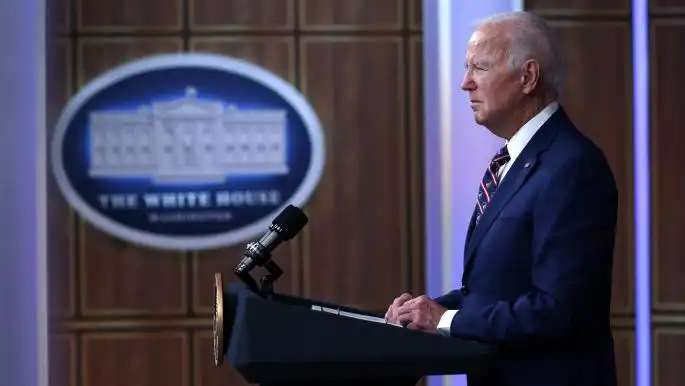
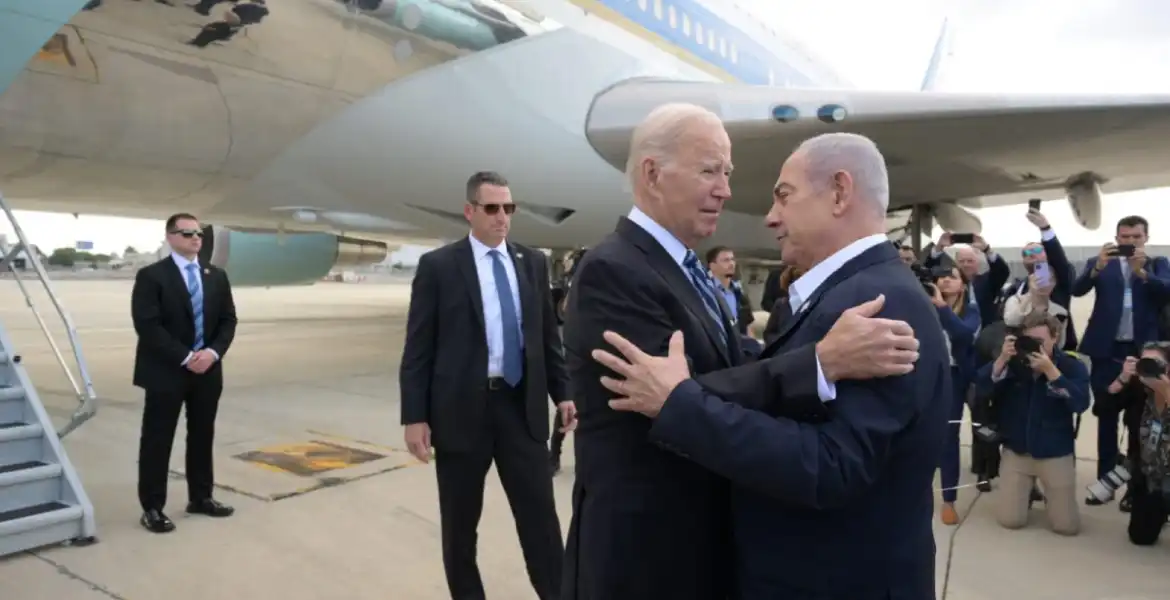
Biden is advising Netanyahu, not opposing him

Today, Netanyahu repeats the same position in his response to American criticism of how he managed the Gaza war and what he is preparing for the aftermath of the war with regard to managing the Strip. Biden's criticism of the Israeli government as a result of the high number of civilian casualties has not yet gone beyond the framework of "correct," "concerned," and "sorry" for the civilian casualties, and it is not likely to turn into a serious clash between the White House and Netanyahu in the presidential election season.

The Gaza war and the amount of civilian casualties moved the American people and led to a rise in the number of critics of American policy at home and from individuals in government institutions. However, this did not lead to any change in policy. Rather, the change was limited to tone only, as official spokesmen began to express their regret over the fall of innocent victims, while Washington was known for sending weapons and using its veto power in the Security Council against any project calling for a ceasefire in Gaza.


On the other hand, the anger of the Arab street and the timid criticism by Arab governments of Washington’s policy did not have any serious impact on the positions of the American administration in support of Israel, at least in support of a ceasefire and the introduction of humanitarian aid.

The pro-Palestinian movements that the United States witnessed recently were unprecedented, but it is too early to know the extent of their impact on policy makers in the United States. We are waiting for the results of the upcoming presidential and local elections to find out whether support for the Gaza war and absolute support for Israel have a political cost compared to the political cost for those who criticize Israel. 

Source: Assas Media
ARAB AND WORLD

Mon 18 Dec 2023 8:31 am - Jerusalem Time

American website: The United States and Israel are on their way to clashing over Gaza

In a report by The Jerusalem Post published on December 8, 2023, which appears to have received little attention in Western coverage of the Israeli war on Gaza, the following is stated: “The Israeli army expects combat operations to continue until the end of January,” followed by minor armed insurgency for three to nine months.” It appears that this prediction may have set off alarm bells in the Biden administration.


The White House realizes that Israeli Prime Minister Benjamin Netanyahu wants to continue the war with the intention of “destroying” Hamas. But far from achieving this major goal, American officials have likely concluded that Israel is unable to continue its war in Gaza without killing more Palestinian civilians, or that it is not prepared to stop civilian casualties, as a report by the American Responsible Statecraft website says.


As the threat of disease and famine increases after the displacement of Gazans to the south in a hopeless search for so-called safety, the possibilities of a major crisis in relations between the United States and Israel are increasing, according to the American website.


Are the United States and Israel about to collide?

On December 12, President Joe Biden showed clear dissatisfaction with the Israeli government and Netanyahu. In his remarks to donors, Biden said that Israel is losing support around the world because of the way it is managing the Gaza war.


According to reports, he also said that Netanyahu “must change,” and pointed to the Israeli Prime Minister’s rejection of the two-state solution on which President Biden himself relied in his approach to the Palestinian-Israeli conflict. This gap between the positions of the United States and Israel on the Gaza crisis is due in part to the contradictory signals the White House sent to Israel in the first weeks following the Hamas attack on October 7.


Beyond Biden's "strong hug" to Netanyahu - a leader he dislikes very much - US officials, including the president, have signaled a kind of confusing inconsistency when it comes to pressuring Israel to limit the ferocity of the bombing campaign.


However, Secretary of State Antony Blinken’s statement on December 7, in which he said: “There remains a gap between the intent to protect civilians and the actual results we are seeing on the ground,” underscored the US administration’s dissatisfaction with the Israeli attacks on southern Gaza. He pointed to a much larger problem: the White House's failure so far to secure Israeli approval for a post-war plan in Gaza that includes the Palestinian Authority. For Washington, Netanyahu's continued and stubborn focus on military tactics represents a strategic nightmare, says the American Responsible Statecraft website.


National anger and political evasion

In light of the reluctance of Netanyahu's war government to address the issue of "the day after the end of the war," as well as the fact that some 1.8 million Gazans have been displaced from their homes under bombardment, Arab officials have expressed growing fears that Israel is seeking a new Nakba. Vice President Kamala Harris's warning that the United States will "under no circumstances" tolerate the forced transfer of Palestinians from Gaza suggests that the Biden administration shares these concerns.


Indeed, against the backdrop of expanding Israeli operations in northern and southern Gaza, the administration is trying to garner regional support for a plan aimed at placing post-war Gaza under the control of the “revived” Palestinian Authority, so that, in Blinken’s words, “the path to peace can be taken.” Just, lasting and safe for Israelis and Palestinians.”


Viewing such an effort as a step toward some kind of Palestinian state, Netanyahu has flatly rejected any idea of placing Gaza under the supervision of the Palestinian Authority. However, his failure to clarify the ultimate goal of the Israeli military campaign fuels fears in Israel that despite explicit reassurances of strong American support for the military campaign, the United States and Israel are on a collision course.


“Netanyahu must stop serving his political influence.”

Concerns about such a clash have sparked calls from Israeli opinion leaders for Netanyahu's government to clarify its agenda "the day after the war ends." Although some of these calls are, as might be expected, “center- left” more conservative figures have participated. One of these commentators, Yaakov Katz, wrote in The Jerusalem Post on December 8, reminding his readers that in addition to the warnings of US Vice President Kamala Harris and Secretary of State Anthony Blinken, Defense Secretary Lloyd Austin warned Israel that continuing military operations that kill thousands of civilians, may push the population of Gaza into the arms of Hamas, and then suffer a "strategic defeat."


According to Katz, such American statements show that “while the United States has so far refrained from calling for a comprehensive ceasefire, there is no doubt in Israel that such a call is getting closer and closer.” And with it will arise a potential conflict over a vital question: Where will Gaza fit into the revived peace efforts?


Katz apparently does not feel that Netanyahu can be trusted to prevent such a clash; Because the Prime Minister only acts according to what “serves his political influence.” But given the still huge gap between the American and Israeli positions on the future of the Palestinians in both Gaza and the West Bank, it is difficult to imagine how Katz’s call for Israel to “coordinate with the United States” on developing a joint plan could amount to more than an attempt to postpone the clash. In addition, it is not at all clear whether the Biden administration will ultimately be ready to put a bandage on the deep diplomatic wound between the United States and Israel.


Despite these conflicting visions, or perhaps because of them, the Israeli War Council appears to have concluded that the time has come to begin formulating some sort of political diplomatic strategy. Commenting on this issue, one Israeli analyst noted that while Netanyahu recently formed a committee to decide on post-war strategies for Gaza, “developing a practical plan that can be accepted by this current government will be a major challenge.”


For Israel, the United States, and the region, there is another important “day after”: the morning after new elections and the formation of a new Israeli government. Regardless of when “the next day” happens, it is clear that the United States and Israel are at odds.


Will an "armed rebellion" break out without an end?

As many analysts have argued, continued Israeli aggression may motivate more young people in Gaza to join Hamas, creating a guerrilla war that could see Israeli soldiers fighting and dying in an endless battle. Such an outcome would represent a victory for Hamas or any group that succeeds it, especially if this outcome develops in the midst of a broader regional war.


For the United States and its Arab allies, the possibility of this unforgivable scenario is as real as it is unacceptable. To avoid this, the Biden administration may try to forge a diplomatic breakthrough, perhaps by brokering a breakthrough in Israeli-Saudi relations. The prospect of normalizing relations with Saudi Arabia may shake the traumatized Israeli political system in ways that open the door to the kind of solutions it is not currently contemplating.


But if there is to be a second round of normalization agreements — one that is about making a real peace that guarantees Palestinian rights rather than just cheering on Hanukkah celebrations in Dubai — President Biden will have to support an Israeli-Palestinian strategy of action, which could cause unprecedented tensions in the US-Israeli strategic partnership. The American website says.

source: Arabic Post


ARAB AND WORLD

Mon 18 Dec 2023 8:18 am - Jerusalem Time

Israeli concerns about investigating war crimes.. How does the ICC view the activity of Israeli army?

On October 29, November 7, and from November 30 to December 2, the ICC Prosecutor, Karim Khan, made further statements and provided observers with a deeper understanding of his handling of the Israeli-Palestinian conflict than before. He has been in office for approximately the past two and a half years.


What follows is an analysis of where his statements are likely to take, followed by a review of some of the relevant evolving issues of concern to senior Israeli officials, and which could also reflect the broader picture of relations between the ICC and Israel.


How does the International Criminal Court view the Israeli army?

The Israeli newspaper Jerusalem Post conducted extensive contact with Khan's office, former ICC officials, and senior Israeli officials on a variety of issues. Perhaps the two most important issues are whether Khan regards Israel's targeting system as legitimate and its legal system for self-prosecution of its soldiers as legitimate.


In analyzing this case, it will be important to know whether Khan rules that the IDF attacks on hospitals, mosques and schools were:


1) Justified

2) Unjustified, because the Israeli army failed to prove military necessity and proportionality.

3) Sometimes justified and sometimes not.


Israel has claimed that Hamas uses the hospitals to carry out its nefarious activities, such as storing weapons, treating Israeli prisoners there after October 7, and as command and control bases to coordinate attacks, but this requires sufficient proof.


So, if the ICC's standard for recognizing a change in the status of a civilian site to a legitimate military target is based on providing evidence that Hamas used these sites for military purposes, then Israel must present the evidence it allegedly has.


But what if the criminal court rejects this alleged evidence?

Khan's public statements and communications with the Jerusalem Post indicate that Khan's office will continue to place the burden of proof on Israel.


When Khan says things like that he will not allow the laws to be circumvented to the point where exceptions are used to justify widespread collateral damage to Palestinian civilians, he seems to indicate that he is skeptical of Israeli claims that “Hamas is systematically abusing civilian sites and using them as human shields.” "He will ask for precisely specific evidence every time."


What if the ICC went so far as to require that Hamas had participated in an imminent attack on IDF forces or Israeli civilians in order for the IDF to be permitted to launch an attack on it in a civilian location? The same can apply to homes and other civilian sites.


Israeli sources explained to the newspaper that some other countries also say that if a fighter launches a missile or intends to launch it, he may be attacked before or after launching the missile at a civilian site.


But some interpretations of the laws of war are narrower. These laws permit attacking that fighter only if it is proven that he was about to prepare to fire the missile, not the previous firing or firing in the following hours or days.


But what if the ICC accepts the evidence presented by Israel for allegedly hiding its fighters in civilian sites as sufficient to prove that the site could theoretically become a military target, but rules that the attacks were disproportionate due to potential collateral damage to civilians? There have been significant hints from Khan and ICC officials over the years that they might draw the line of proportionality differently from Israel.


Among those scenarios - where the Israeli army often had to choose to attack or allow Hamas fighters to escape and continue to either ambush IDF forces or fire rockets at Israeli civilians - many of them unfold in Gaza, according to the Israeli newspaper.


Will the International Criminal Court charge Israel with war crimes for withholding aid to the Gaza Strip?

Khan has been adamant in his public statements on this point, and even considers it a war crime to simply delay humanitarian aid for security purposes - checking the aid and knowing where it is going.


This can be somewhat confusing. Will Khan seek to reconcile these contradictions and stand in favor of Israel, or will he condemn it and perhaps condemn other parties such as Egypt?


What about Israel's crimes in the West Bank?

In this context, Israel stands on the weakest ground with regard to the violence and terrorism practiced by settlers in the West Bank against the Palestinians. First of all, the International Criminal Court will accuse the Israelis of involvement in the settlement project itself in the West Bank.


The Israeli military and other security services have admitted that they have weak control over the issue, at least since February of this year, when a mass attack on Palestinians occurred in the town of Huwwara.


The court will charge Jews who target Palestinians with deadly attacks with war crimes. Khan will have the support of the United States, which has said it will begin depriving any Jewish Israeli of travel rights on suspicion of involvement in such attacks.


To accomplish this, the ICC must identify the individuals or even indict the Israeli security officials who did not arrest these individuals.


"Artificial Intelligence" and the Israeli army's target bank

The Jerusalem Post published an extensive report on the IDF's AI-driven target bank. On the one hand, an AI-led operation means that legal principles automatically play a more prominent role in the target selection and intelligence gathering process than ever before.

Israeli sources said that the Israeli army’s information and target bank using artificial intelligence - including aspects of legal principles - there are still certain things that artificial intelligence lacks the ability and vision to understand. In this sense, they say there is no goal for AI to approve attacks without involving the human factor to balance “legality and ethics.” Israeli sources say that the new target bank process ensures that each target receives individual legal approval, more carefully than in the past.


But the International Criminal Court may look at this issue differently. It might try to combine various statements by Israeli officials about the speed of attacks and approvals, along with outside criticism, to try to conclude that the IDF is allowing lethal AI-led attacks without sufficient legal approvals.


Or the ICC may attempt to place the burden of proof in this case on the Israeli military, forcing it either to disclose secret intelligence operations or fail to prove that it has a defense. Such an approach of pressuring the Israeli military to disclose intelligence, which some ICC sources have indicated over the years, would be unprecedented.

Source: Arabic Post

PALESTINE

Mon 18 Dec 2023 8:15 am - Jerusalem Time

Hunger is devastating Gaza... Deaths due to lack of water and food

The Palestinians in the Gaza Strip, who are experiencing an ongoing Israeli war for the third month in a row, are facing a real crisis as a result of the starvation policy that the Israeli occupation has pursued with them since the beginning of the war that began on the seventh of last October with the Palestinian resistance factions.

The Israeli occupation authorities and its army impose restrictions on the entry of humanitarian and food aid arriving in the Gaza Strip through the Rafah land crossing with Egypt by controlling the number of trucks and inspecting them in advance at the Al-Auja crossing, which connects the occupied territories with Egypt.


In addition to all of this, the occupation deprives the areas of Gaza City and the north of food and water, with the exception of limited trucks that were allowed to pass during the humanitarian truce period, which lasted 7 days, and witnessed a prisoner exchange between Hamas and the occupation, before the occupation reinforced its siege of the Strip.

At the same time, Gaza's markets are devoid of basic goods and commodities, while many of them rely on aid distributed in shelter centers in small and limited quantities that are not sufficient to meet the needs of medium- and large-sized families, while other areas are deprived of this aid.


During the past few days, human rights organizations have monitored complaints that some residents have died as a result of the food and water crisis, while the United Nations and other international institutions have warned of the threat of famine facing approximately 2.4 million people living in the sector, whose area does not exceed 365 square kilometers.


With the beginning of the Israeli war on Gaza, the occupation took a decision to cut off electricity and prevent the entry of trucks into the Strip, before allowing it to pass through the Rafah crossing in a limited manner and later taking a decision to open the Kerem Shalom commercial crossing, by opening it to increase the number of incoming trucks, but this did not lead to resolve the crisis.


The food of many displaced Palestinian families was transferred to schools affiliated with the United Nations Relief and Works Agency for Palestine Refugees (UNRWA) or other shelter centers, relying on “canned food” and very small amounts of bread, while many families cannot find these particular meals in the northern regions.


Real famine

In addition, Jamil Sarhan, Deputy Director General of the Independent Commission for Human Rights in the Gaza Strip, confirms that human rights authorities documented cases of displaced people who did not taste food for days ranging from two to four days, especially in the areas of the northern Strip and Gaza City during the recent period.


Sarhan told Al-Araby Al-Jadeed that the occupation forces are taking clear measures by shooting the displaced people when they try to reach any place to get food and leaving them to bleed to death, which leads to a clear state of deprivation of these people from eating and drinking.


He stresses that the Independent Commission for Human Rights and the rest of the human rights institutions do not have complete statistics on the number of deaths that occurred as a result of thirst and hunger, but there are documented reports indicating the existence of a state of “famine” that leads to death, which requires rapid international intervention to bring in food, water and medicine.


Scarce materials

Palestinian citizen Abdul Rahman Labad was displaced from the north of the Gaza Strip to the south. He complains about the absence of food commodities and their scarcity in the markets, in addition to the lack of food aid distributed in shelter centers by UNRWA or government agencies in the Gaza Strip, which reflects negatively on his family.


Labad told Al-Araby Al-Jadeed that he relies mainly on canned goods distributed through international institutions, which are distributed once every 48 or 72 hours, and they are not sufficient to meet the needs of Palestinian families, in light of the crowding of displaced people inside schools.

He points out that the scarce canned goods and food commodities available in the markets do not match the financial reality of the Palestinians in Gaza, as the prices of some of them have risen by more than 100%, while everyone is almost unemployed as a result of the war, and they do not have any source of income that enables them to provide for their needs.


Dangerous stage

Meanwhile, the Director General of the Government Information Office, Ismail Al-Thawabta, says that the Gaza Strip is going through a dangerous stage at all levels, especially the food and water levels, which threatens the occurrence of a real disaster that will lead to a complete and unprecedented deterioration of the situation, in a way that cannot be saved.


Al-Thawabta added to Al-Arabi Al-Jadeed that some of the few trucks carrying aid include convoys such as cloth, coronavirus tests, and some water bottles. This is a method that aims to put pressure on the Palestinian people and deprives women and children of food, medicine, and important and basic life necessities.


The world after the Gaza war... pariah Israel

According to the Director General of the Government Information Office in Gaza, “UNRWA is deliberately slowing down as if it does not want to end the flour distribution crisis. Despite the large scope of work it has in terms of bringing flour into the Gaza Strip, its management of the crisis is confused and slow.” It is as if she is deliberately insulting and humiliating people by distributing flour rations to Palestinian families and families.”


He points out that the “aid” entering the Gaza Strip does not meet 1% of the Palestinians’ needs, which requires opening the Rafah crossing completely and around the clock, and allowing the entry of 1,000 trucks per day of real aid and supplies, in addition to the entry of one million liters of fuel per day.

Source: Alaraby Aljadeed


ARAB AND WORLD

Mon 18 Dec 2023 8:02 am - Jerusalem Time

Israel acknowledges the killing of 4 soldiers in last night's battles in Gaza

The occupation army acknowledged on Monday that 4 of its soldiers were killed last night in battles in the southern Gaza Strip, bringing the number of its deaths since the start of the ground operation in Gaza to 132, according to Israeli confessions.


The Israeli Broadcasting Corporation quoted an army spokesman as announcing that 4 additional soldiers were killed during battles in the southern Gaza Strip, noting that a fifth soldier was wounded in those battles, without further details.


Thus, the total number of losses of the occupation army since the “Al-Aqsa Flood” operation last October 7 rose to 458 dead, including soldiers and officers, according to the latest official toll announced.


The Israeli army's losses have increased over the past few days with the intensification of battles with the Palestinian resistance in the southern Gaza Strip, especially in Khan Yunis.


PALESTINE

Mon 18 Dec 2023 8:02 am - Jerusalem Time

PLO: The Palestinian Authority is ready to manage Gaza after the war

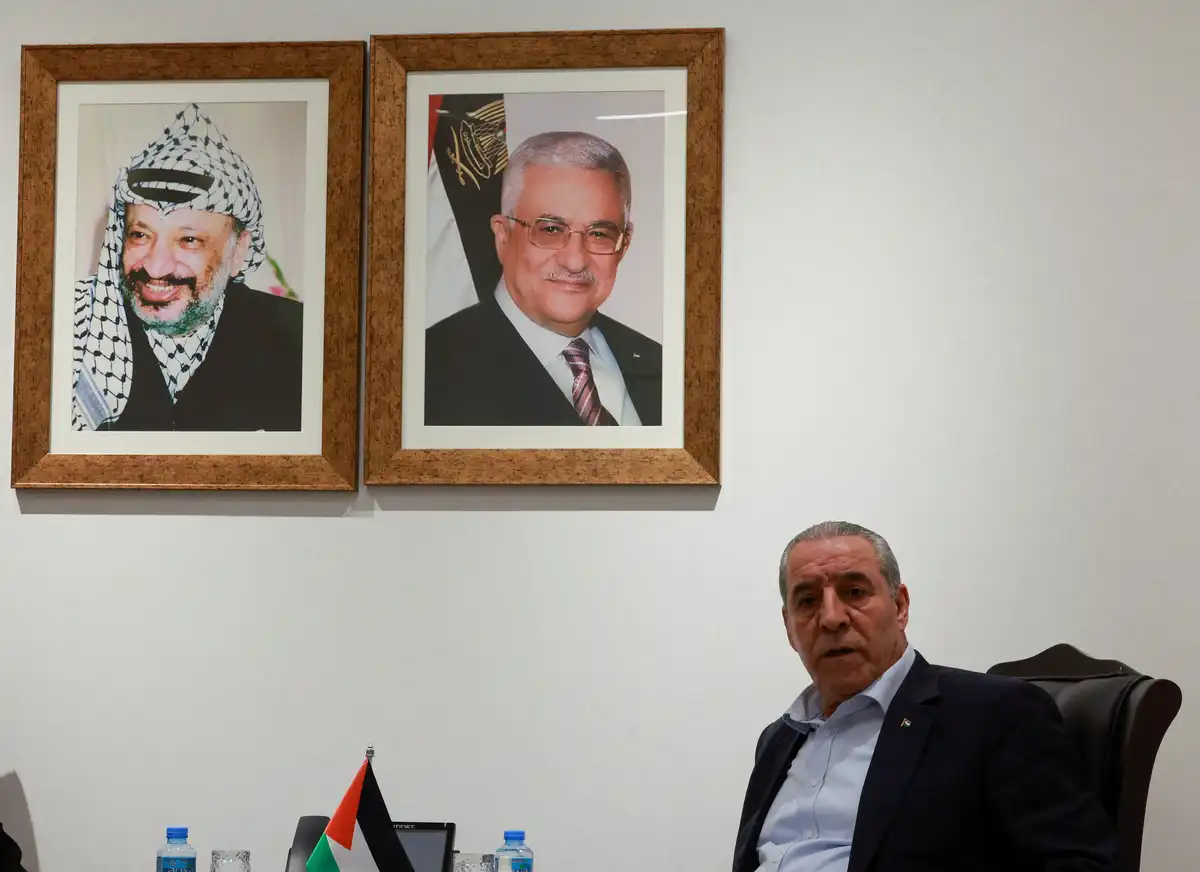
Secretary of the Executive Committee of the Palestine Liberation Organization, Hussein Al-Sheikh, said that the Palestinian Authority is the legitimate representative of the Palestinian people, and will be ready to take over the administration of Gaza after the end of the Israeli war on the Strip.


The 63-year-old Sheikh, who is considered one of the most prominent names proposed to succeed Palestinian President Mahmoud Abbas, stressed that his job is to work with Israel to alleviate the suffering of the Palestinians, noting that the Oslo Accords were partially successful.


The Sheikh confirmed - during an interview with Reuters on Saturday - that the political path under these agreements is faltering and “has not achieved its goal until this moment” and will not achieve in its current form the ambition of the Palestinian people to establish a Palestinian state within the borders that preceded the 1967 war.


Referring to the Islamic Resistance Movement (Hamas), Al-Sheikh said that it was unacceptable for some to believe that its method and approach in managing the conflict with Israel was the highest and best ideal.


He added that after this number of deaths and after everything that happened, “doesn’t all of this and everything that is going on deserve for us to make a serious, honest and responsible assessment to protect our people and our cause?”


He noted that all Palestinian factions, including Hamas, must conduct a "comprehensive national assessment of everything that happened" immediately after the end of the war.


He added, "No one believes that he is above accountability and responsibility," and "There must be a comprehensive, responsible Palestinian national dialogue. We must be responsible and bold, and confront ourselves with all frankness, with all responsibility, and without hesitation. No one is above criticism," indicating the necessity of there being "one government." administers the Palestinian homeland.


Al-Sheikh said that despite providing welcome verbal support for a Palestinian state in the meetings, Washington did not propose concrete mechanisms or political initiatives, reiterating Abbas's call to hold an international peace conference to chart a new path.


Source: Al Jazeera + Reuters


ARAB AND WORLD

Mon 18 Dec 2023 8:02 am - Jerusalem Time

Polish party opposes Jewish celebrations due to "genocide in Gaza"

The spokeswoman for the Confederation Party in Poland stressed the necessity of extinguishing the “Hanukkah menorah” in the House of Representatives, in light of the genocide that the Gaza Strip is being subjected to.


She indicated that her party was subjected to blackmail after the recent developments, and imposing sanctions on members of her party in Parliament was included on the agenda.


"While the Israeli army is committing genocide against Palestinian civilians, we should not support Jewish celebrations," she added.


It is noteworthy that a representative of the Confederate Party extinguished the candles of the Jewish Festival of Lights (Hanukkah) in the House of Representatives using a fire extinguisher, and the Office of the Presidency of Parliament punished him by deducting his salary for 3 months, and a memorandum will be sent to the Public Prosecutor’s Office for obstructing a religious celebration.


PALESTINE

Mon 18 Dec 2023 8:02 am - Jerusalem Time

Israeli media: Mossad chief gets a green light to complete a new deal

Israeli Channel 12 said that Mossad chief David Barnea received a green light - from the political level - to proceed with negotiations with mediators for a new deal with the Palestinian resistance.


Axios reported - from informed sources - that the Mossad chief will leave later this week to hold another meeting in Europe with the Qatari Prime Minister and Foreign Minister, with the aim of continuing the discussion regarding attempts to reach a new plan to release the hostages in Gaza.


The source stated that the last meeting had been planned before the Israeli army mistakenly killed 3 of its captured soldiers in Gaza on Friday.


The Israeli Broadcasting Authority revealed that Benjamin Netanyahu's government is considering "releasing specific prisoners" with high sentences in the upcoming exchange deal with the Palestinian resistance.


PALESTINE

Mon 18 Dec 2023 8:02 am - Jerusalem Time

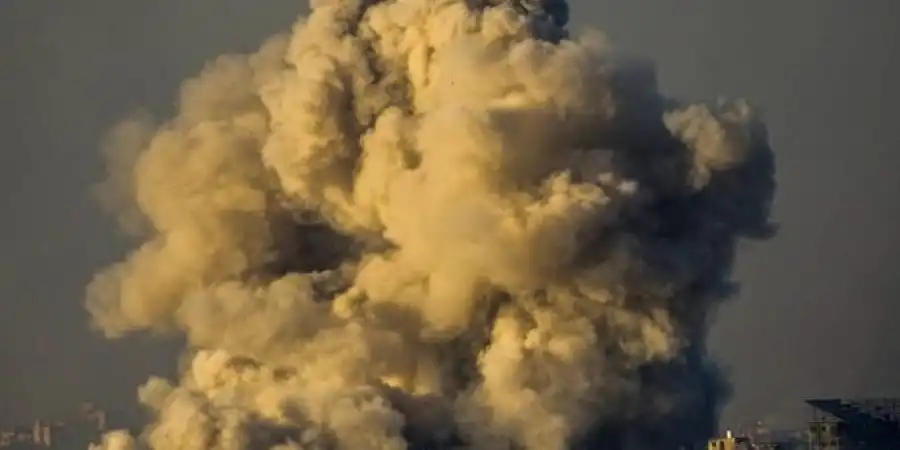
War on the Gaza Strip: More than 100 killed in the ongoing violent Israeli bombing of Gaza

At dawn on Monday, the Israeli occupation forces continued their raids on several areas in the Gaza Strip, resulting in the death and injury of dozens of citizens, most of them children and women.


Health sources said this morning that more than 100 persons died in the occupation massacres in Jabalia, and the same number remained under the rubble, along with at least 20 wounded.


The occupation aircraft launched violent raids on the northern areas of the city of Khan Yunis, south of the Gaza Strip, while heavy artillery shelling targeted all areas of the city, resulting in the death and injury of dozens of citizens.


In addition, violent explosions shook the atmosphere in the central region of the Gaza Strip.


More than 30 citizens were killed and dozens were injured, on Sunday evening, in a new massacre committed by the Israeli occupation forces in Jabalia al-Balad, north of the Gaza Strip, where a residential square belonging to the Al-Bursh and Alwan families was targeted.


A female citizen was also killed, and others were injured, in an Israeli occupation bombing that targeted the Nasser Medical Complex in the city of Khan Yunis, south of the Gaza Strip.


At least 8 citizens were killed, including two children and a woman, and dozens were injured, after occupation aircraft bombed a house belonging to the Al-Qatshan family in the vicinity of Al-Nour Mosque in the Nuseirat refugee camp in the central Gaza Strip, where journalist Haneen Ali Al-Qashtane was martyred, along with members of her family, in this bombing.


A number of citizens were also killed and dozens were injured after warplanes bombed a house belonging to the Abu Gharqud family, west of the camp.


The Israeli occupation has continued its aggression against the Gaza Strip, by air, land and sea, for 73 days, resulting in the death of about 19 thousand citizens and the injury of more than 52 thousand others, 70% of whom are women and children, an infinite toll.

ARAB AND WORLD

Mon 18 Dec 2023 7:47 am - Jerusalem Time

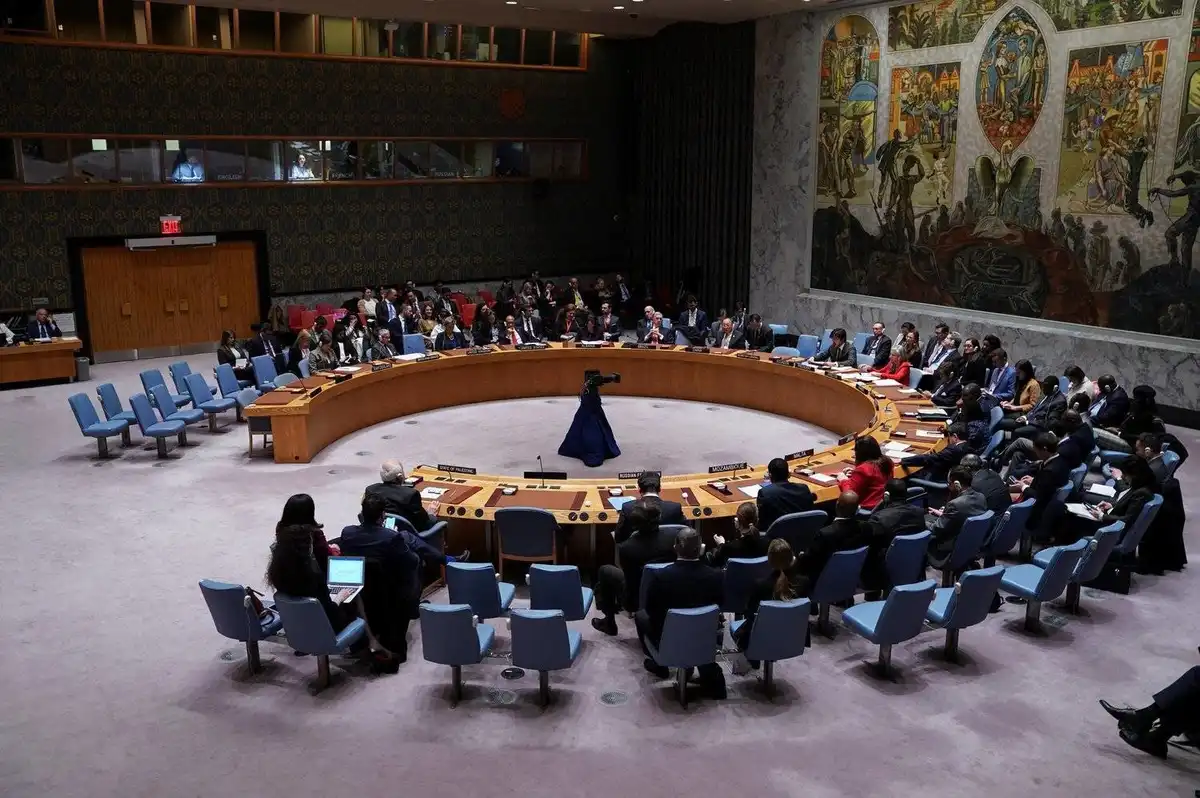
UN Security Council to Vote on Draft Resolution to Establish Aid Monitoring Mechanism in Gaza

The UN Security Council is preparing to vote on a draft resolution on Monday afternoon calling for “establishing a UN mechanism” to monitor humanitarian relief shipments to Gaza via land, sea, and air routes.The draft demands the “immediate” release of all captives, rejecting the “forced displacement” of the Palestinian people.The UAE, the only Arab member of the Council, and in coordination with Egypt and Palestine, prepared a draft resolution demanding all parties comply with their obligations under international law, including international humanitarian law, notably regarding the protection of civilians.


The text calls for protecting civilians and civilian facilities, delivering aid, and protecting humanitarian workers, recalling the duty to respect and protect civilian facilities, including hospitals, medical facilities, schools, places of worship, and UN facilities.It calls on the parties to the conflict to allow, facilitate, and enable the immediate, safe, and widespread delivery of humanitarian assistance directly to the Palestinian civilian population throughout the Strip, which requires an urgent and sustained cessation of hostilities to allow delivery of aid.


Delivery of aid

The Security Council failed several times to pass various draft resolutions, either because of the veto of the five permanent members of the Council, namely the US, the UK, France, Russia, and China, or because they did not obtain sufficient votes to approve them.Any decision requires at least nine votes without the use of the veto.

The new draft resolution calls for allowing and facilitating the use of all land, sea, and air routes leading to the entire Gaza Strip, including border crossings, including the Kerem Shalom crossing.


It also asserted the need to ensure the access of humanitarian workers and aid, including fuel, food, medical supplies, and emergency shelter assistance to people in need throughout Gaza.


Monitoring mechanism

The draft resolution welcomed the role of states not party to the conflict in allowing the free passage of humanitarian relief shipments, especially coordinating with Egypt to use the Rafah border crossing.

It called upon the UN Sec-Gen Antonio Guterres to establish a monitoring mechanism in the Gaza Strip with the necessary personnel and equipment under his authority.

It requested the urgent deployment of the UN monitoring mechanism for one year, which will be automatically extended for periods of one year.

The resolution also demands the immediate and unconditional release of all hostages and ensuring humanitarian access, adding that fuel should be provided at levels that meet the required humanitarian needs.

It strongly condemned all violations of international humanitarian law, including all indiscriminate attacks and acts of violence against civilians and civil targets.

The text asserted that civilian targets, places of refuge, UN facilities, and surrounding areas are protected under international humanitarian law.

It rejected the forced displacement of civilian populations, including children, in violation of international law, including international humanitarian law and international human rights law.

The two-state solution

Under this draft, the Security Council reiterated its commitment to the two-state solution of living side by side and in peace and security, per international law and relevant UN resolutions. 


It stressed the unification of the Gaza Strip with the West Bank under the unified administration of the Palestinian Authority (PA).According to the resolution, all parties to the conflict should take all appropriate steps to ensure the safety and security of UN workers, personnel of its specialized agencies, and all other staff participating in humanitarian activities under international humanitarian law.

It called for the implementation of Resolution 2712 in full, calling upon the Sec-Gen to submit a written report to the Security Council within five working days of adopting this resolution on implementing Resolution 2712 and every 30 days after that. 

PALESTINE

Mon 18 Dec 2023 7:42 am - Jerusalem Time

Dr. Azmi Bishara on the war on Gaza and the Israeli-American debate about its aftermath

Bishara said, “There is an American disagreement with (Israeli Prime Minister Benjamin) Netanyahu regarding Washington’s strategies in the region,” adding that Israel “failed militarily in Gaza, despite the massive destruction in the Strip.” He pointed out that "the resistance has no interest in temporary truces."


He stated, "The Israelis are astonished by the size of the resistance's underground military infrastructure." Bishara pointed out that "the resistance in Gaza has no interest in temporary truces with Israel," and pointed out that Hamas is "right that there is no meaning to exchange deals unless there is a permanent ceasefire."


He stressed that "Israel is subjecting the issue of prisoners in Gaza to its military strategy, and not the other way around." He stressed that the Israelis "want to implement an apartheid system par excellence after the end of the war on Gaza."


Bishara said, in the previous interview conducted with him on “Arab TV”, regarding the war on Gaza, that “Israel wants to turn the Gaza Strip into a place unfit for life,” explaining that “the resistance’s behavior clearly indicates that it has prepared for a ground invasion scenario.” 


He stated in the interview that “the structure of the UN Security Council cannot continue in its current state.” He also stressed that "the Palestine issue is a revealing issue and the war on Gaza revealed the Council's shortcomings." He stressed that "the Arab peoples taking to the streets is necessary, because it will confirm that the aggression against Gaza represents a real threat to the stability of the region."


Bishara pointed out that the resistance’s behavior and Israel’s surprise at it suggest that the Palestinian factions were well prepared for the occupation’s intention to invade Gaza, as evidenced by the number of wounded and dead that Israel recognizes among the ranks of its army, recalling that the official announcement speaks of two thousand wounded, while the Yedioth Ahronoth newspaper revealed that they are five thousand. .


At the time, Bishara preferred to use the term “thwarting the aggression” to describe what is currently happening, rather than the term “victory.” In this context, he wondered: If Israel was surprised by Hamas’ offensive capabilities, why does it claim to know its defensive capabilities? He pointed out that just as Israel was confused in responding to the operation of last October 7, it was not prepared in the ground attack as well, because it failed to crystallize what the general goal of the ground invasion meant, i.e. “eliminating Hamas.”


ARAB AND WORLD

Sun 17 Dec 2023 10:58 pm - Jerusalem Time

UNRWA: The number of Palestinian children and women killed in Gaza exceeds civilian deaths in the Ukraine war

The Commissioner-General of the United Nations Relief and Works Agency for Palestine Refugees (UNRWA), Philippe Lazzarini, said on Sunday that the number of children and women killed in the Gaza Strip exceeds the number of civilians killed during the war in Ukraine that broke out about 22 months ago.


Lazzarini added, in a press interview, "By all standards, the situation in Gaza is unprecedented and shocking," noting that "the number of civilians and United Nations employees killed in Gaza is unprecedented."


The UN official confirmed that the level of destruction in Gaza is also unprecedented, as 60% of the infrastructure is destroyed, and 90% of Gaza's population has become displaced.


On Friday, the Gaza Ministry of Health revealed that the Israeli aggression on the Gaza Strip resulted in the deaths of 8,000 children and 6,200 women since October 7th.


Earlier, UNRWA announced that the death toll of its employees in the Gaza Strip had risen to 135 since October 7.


On November 21, the United Nations Human Rights Monitoring Mission in Ukraine said in a statement that at least 10,000 civilians, including more than 560 children, had been killed since Russia launched its large-scale armed attack on Ukraine on February 24. February 2022.


Source: Anadolu Agency

PALESTINE

Sun 17 Dec 2023 10:25 pm - Jerusalem Time

West Bank: A Palestinian and his daughter were injured after Israeli soldiers opened fire on their vehicle in Dura

A citizen and his daughter were injured, Sunday evening, after Israeli occupation soldiers targeted their vehicle with live bullets and sound bombs, in the town of Dura, south of Hebron.


Local sources reported that the occupation forces fired live bullets and stun grenades at the vehicle of citizen Saqr al-Darwish in the Hanina area, south of the town of Dura, wounding him and his daughter, after which they were transferred to Dura Governmental Hospital.

PALESTINE

Sun 17 Dec 2023 10:08 pm - Jerusalem Time

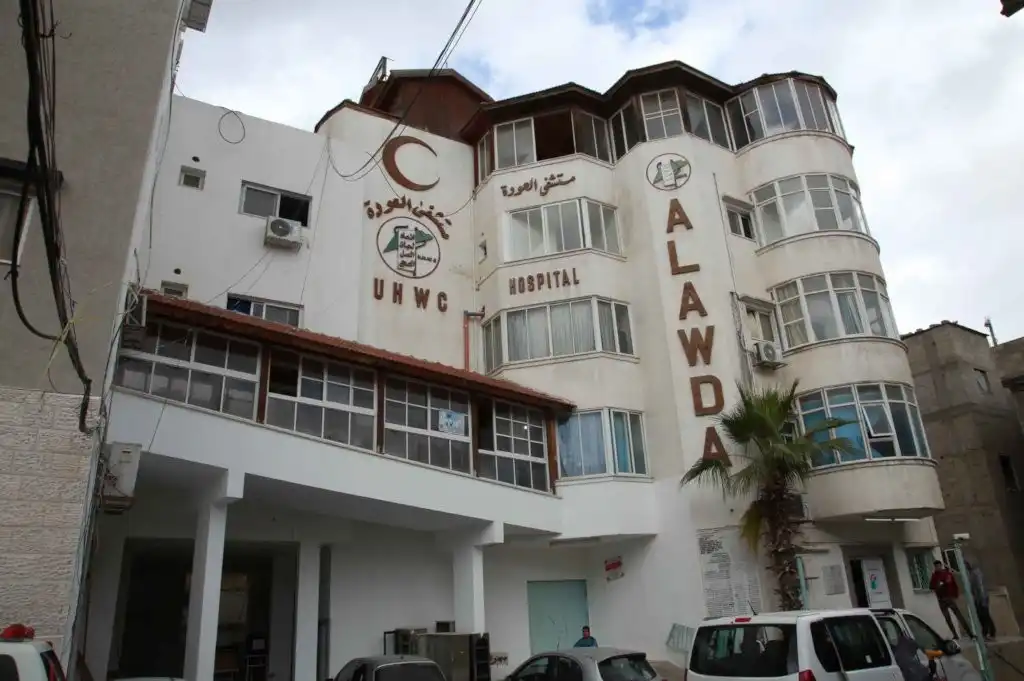
Gaza war: Israeli army detain and strip medical staff at Al Awda Hospital in Gaza and arrest its director

The Israeli army forces proceeded to detain and strip the medical staff at Al Awda Hospital in Gaza, before transferring the hospital director to an unknown destination, in fear that a new massacre would be committed there, similar to what happened in other hospitals in the Gaza Strip.


The spokesman for the Ministry of Health in Gaza, Ashraf Al-Qudra, said, “This evening, the Israeli occupation forces stormed Al-Awda Hospital, after several days of siege and bombing, and detained and stripped its medical staff, led by the hospital director, Dr. Ahmed Muhanna.”


He stated that "the occupation forces released the medical personnel after four hours of interrogation in inhumane conditions."


He confirmed that "the occupation forces kept the director of Al Awda Hospital, Dr. Ahmed Muhanna, in detention," noting that they had "taken him to an unknown destination."


Al-Qudra added: "We fear that the occupation forces will repeat the scenario of what happened at Kamal Adwan Hospital."


He said, "We call on international institutions to intervene urgently to protect the hospital, its staff, and those present there."

ARAB AND WORLD

Sun 17 Dec 2023 9:31 pm - Jerusalem Time

CNN: Austin will pressure the Israelis to determine the features of the Gaza war

CNN quoted an American official at the Pentagon on Sunday as saying that Secretary Lloyd Austin will pressure Israeli officials to determine the features of their war against Hamas in the Gaza Strip, during his visit to Israel on Monday.


The senior official stated that Austin “will receive specific updates on how Israeli Defense Minister Yoav Gallant and the IDF will assess the progress they have made in the current phase of the campaign in Gaza to dismantle Hamas’ infrastructure.”


He added that the US Secretary of Defense "will put pressure on Israeli officials about the criteria they are looking for in order to move to the next phase of their campaign in Gaza."


He indicated that he would work to "deepen" the efforts made to increase humanitarian aid in Gaza and mitigate the harm to civilians.


The same official explained that he believes that "the Israeli security establishment is evaluating the conditions and the progress they are making around the clock, if not daily, and that Secretary Austin will want to hear a very clear expression of their self-evaluation."


He highlighted that the United States is there to "consult and ensure that there is planning" to move to a stage in which major ground operations stop.


Austin's trip comes days after US National Security Advisor Jake Sullivan told reporters in Tel Aviv that Israel intends to move to a new phase of the war in which it will focus on "more precise methods" to target Hamas' leadership.


Monday's visit marks Austin's second trip to Israel since October 7, and he has held multiple consultations with his Israeli counterpart, Gallant. The two have spoken 27 times since the Hamas attack, according to CNN.

PALESTINE

Sun 17 Dec 2023 9:17 pm - Jerusalem Time

Gaza war: More than 30 killed and dozens missing in a new massacre by Israeli army in Jabalia

More than 30 citizens were killed and dozens were injured, this Sunday evening, in a new massacre committed by the Israeli occupation forces in Jabalia al-Balad, north of the Gaza Strip.


Local and medical sources reported that 30 citizens were killed, dozens were injured, in addition to dozens of missing persons after the occupation aircraft bombed a residential square belonging to the Al-Bursh and Alwan families in Jabalia Al-Balad.


At least 8 citizens were killed, including two children and a woman, and dozens were injured, after the occupation aircraft bombed a house belonging to the Al-Qatshan family in the vicinity of Al-Nour Mosque in the Nuseirat camp in the central Gaza Strip. A number of citizens were also killed and dozens were injured after military aircraft bombed a house belonging to the Abu Gharqud family, west of the camp  Al Nuseirat.


The Israeli artillery shelling renewed in the center and east of Khan Yunis, south of the Gaza Strip. The occupation artillery also bombed a house for the Al-Louh family in the Al-Baraka area in Deir Al-Balah in the central Strip, while Israeli warplanes bombed several areas in the Al-Maghazi camp, and a house for the Al-Jadba family in the Zarqa area in the Al-Tuffah neighborhood, north of Gaza City. .

PALESTINE

Sun 17 Dec 2023 9:09 pm - Jerusalem Time

Badin administration is discussing with the Palestinian Authority the possibility of deploying security personnel in Gaza

The Israeli report stated, on Sunday, that officials in the administration of US President Joe Biden are in contact with the leadership of the Palestinian Authority, to discuss the possibility of deploying members of the Authority’s security services in the Gaza Strip, after the end of the Israeli war on the besieged Strip, within the framework of a series of “reforms.” The broad plan that urges the Palestinian President, Mahmoud Abbas, to conduct it.


This came according to what the Walla website reported, citing American officials (whom it did not name). The report considered that this step confirms the Biden administration’s determination to establish and strengthen a “renewed Palestinian authority” so that it can play a role in managing the Gaza Strip in the coming months, which was expressed by the US President in public statements, by US Secretary of State, Anthony Blinken.


The report pointed out that US National Security Advisor Jake Sullivan, during his meeting with Palestinian President Mahmoud Abbas in Ramallah last Friday, focused on “the ways in which the Palestinian Authority can participate in managing Gaza after the Israeli war” on the Strip. .


Regarding the meeting between Sullivan and Abbas, White House spokesman John Kirby said that they discussed “what Gaza will look like after the war, how it will be managed, and ways to develop and renew the Palestinian Authority so that it can bear responsibility for the future of the Palestinian people.”


Kirby indicated that Sullivan discussed with Abbas the reforms that must be implemented so that the Palestinian Authority “is more reliable, more representative of the segments of the Palestinian people, and more able to bear responsibility,” noting that the Israeli Prime Minister, Benjamin Netanyahu, had stressed that he “will not allow the Authority to administration of the Gaza Strip, and that Israel will control security after the war.”


According to the Walla report, the Biden administration wants the Palestinian President to lead “wide-ranging reforms in the Palestinian Authority, including the infusion of new blood into leadership positions,” and urged the introduction of young figures into decision-making circles who “have administrative skills and enjoy the support of masses in the West Bank and Gaza Strip, and the confidence of the international community.”


The report added, “One of the issues that the Biden administration has discussed with senior Palestinian Authority officials in recent weeks is the form in which the Palestinian Authority can integrate through its security force in Gaza, the day after the war, through which Tel Aviv and Washington aim to “eliminate Hamas movement, ending its ability to rule the Gaza Strip and returning the hostages.”


The American officials proposed to the Palestinian President “to reactivate the security elements who served in the security services of the Palestinian Authority in Gaza before Hamas took control of the Strip in 2007 following the movement’s victory in the legislative elections in early 2006,” in preparation for returning these elements to service.


The website quoted an American official as saying: “There are a number of residents of the Gaza Strip who were previously part of the Palestinian security services and it may be possible to use them as the nucleus of a future Palestinian security force in the months that follow the Israeli military operation, but this is only one from many ideas.


The report quoted a source familiar with the details of the talks between Washington and Ramallah, saying, “The Palestinian Authority has begun in recent days to contact some of these people, especially those who are of an appropriate age for security service, with the aim of verifying whether they are interested in returning to serve in the Palestinian security forces.”


The report pointed out that the US administration believes that the security services of the Palestinian Authority in the West Bank, which receive training and guidance from Washington, “are carrying out effective activities in combating terrorism and preventing many operations against Israel, and Washington intends to copy this model of authority to apply it in the Gaza Strip after the war".


The report indicated that “the Israeli army and the General Security Service (Shin Bet) also believe that the Palestinian security forces contributed to thwarting operations against Israeli targets and also contributed to stabilizing the security situation in the West Bank, but at the same time they lost partial or complete control over cities such as Jenin or Nablus.


PALESTINE

Sun 17 Dec 2023 9:04 pm - Jerusalem Time

West Bank: Israeli army storms the town of Ya`bad Wasila al-Dhahr in Jenin Governorate

On Sunday evening, Israeli occupation forces stormed the towns of Ya`bad and Wasila al-Dhahr in Jenin Governorate.


Local sources reported that the occupation forces stormed the town of Ya'bad and carried out a wide inspection campaign. They also launched a combing campaign in Silat Al-Dhahr, and the villages of Nazlet Zaid and Al-Arqa, and set up several military checkpoints at the entrances to Ya'bad, near the village of Zabada, and on the Jenin-Haifa Road, and intensified their presence in the vicinity. The villages of Rummana and Zabuba, west of Jenin.

ARAB AND WORLD

Sun 17 Dec 2023 9:02 pm - Jerusalem Time

French newspaper: What awaits the Middle East?

The French newspaper L'Express published a report trying to extrapolate what the Palestinian-Israeli conflict will lead to after the end of the war in Gaza, specifying that the best that can happen is the implementation of the two-state solution, and the worst is the continuation of the war between the two sides without a resolution.


The report, written by Charles Hacke and Cyril Briat, explained that the situation in the Gaza Strip has become more complex than ever before, and pointed out that the solution, which has remained an elusive dream for a long time, and which is now considered the only possible way to guarantee peace is the establishment of two states, Israel and Palestine, to coexist between the Jordan River and the Mediterranean Sea.


Hamas' ideology will never end

They said that eliminating Hamas fighters, if that happened, would end the fighting, but it would not end their ideology.


Former Palestinian negotiator Ghaith Al-Omari, currently a researcher at the Washington Institute, was quoted as saying that if Hamas is defeated, there will be a period in which people in Gaza will continue to adopt its ideas, but without being able to implement them.


Al-Omari said that the post-Hamas militant period should be used to propose a more attractive political alternative and start the peace process, but if Gaza is not rebuilt, the Palestinian Authority will remain weak, discredited and corrupt, and the Israelis will find no place for real cooperation.


The need for new leaders for peace to emerge

Also quoting Omar Shaaban, director of the Pal Think Center for Studies based in Gaza, “It will be necessary to organize elections in Palestine, but also in Israel, in order to provide new leaders capable of continuing the path towards peace.”


In Israel, the report says, many are waiting for the war to stop to demand accountability, and it is difficult to imagine how the Prime Minister can survive an investigation committee charged with determining his responsibility for the October 7 massacre. However, Benjamin Netanyahu has often proven his ability to survive.


Perhaps there is a greater danger

The report also predicted that there may be a greater danger awaiting the region, represented by the extension of the conflict. He explained that as the war in Gaza continues, Lebanese Hezbollah will continue to threaten Israel on its northern border, and if Hamas is on the verge of losing the war, Hezbollah may become more involved in the war, and perhaps Iran as well.


The report continued its expectations to say that the situation in the West Bank could worsen, and Hamas could seek to open another front against the Israeli army.


The two writers concluded their report by citing what Ghaith Al-Omari said, “If Hamas is defeated militarily, it is possible for Gaza to be governed by an international coalition with the participation of Arab countries until it is rebuilt and the Palestinian Authority is rehabilitated.”


Source: French press + Aljazeera

ARAB AND WORLD

Sun 17 Dec 2023 8:47 pm - Jerusalem Time

Arab Analysis| Biden's handling of the war on Gaza...a miniature version of Kissinger's diplomacy

By Victor Chalhoub

In dealing with the war on Gaza, the administration of US President Joe Biden is relying on a miniature version of “shuttle diplomacy” formulated by Henry Kissinger to contain the October 1973 war.


Successive visits and tours, bargaining and pressure to identify commonalities that lead to the desired exits. The difference between the two cases, in addition to the difference in circumstances and the nature of the two wars, is that Kissinger's diplomacy - designed to serve Israel in the end - had an accurate compass, and dealt with Israeli intransigence at times with the firmness of a superpower, which allowed it to achieve its goal at the time of a ceasefire and disengagement.


Joe Biden's shuttle compass seems to be faltering at best, and Israel is dealing with it as if it is the superpower with regard to how to manage the war and determine its time limit. There appears to be no indication on the horizon that Joe Biden intends to use the influence of his position to regain the initiative and put the war on Gaza on another path.


So far, four members of the administration have made nine visits to Israel, the last of which was on Sunday with the arrival of Defense Secretary Lloyd Austin in Tel Aviv for the second time. The officials’ talk about these tours ranged between “providing advice to the ally,” and expressing repeated and tiresome concern for “the safety of civilians,” and the importance of the flow of “humanitarian aid,” and the need for Israel to adhere to these obligations, but without drawing any red line in this regard or even waving at it.


All violations were implicitly given as mitigating reasons under the guise of “Israel’s right to defend itself,” although this tone has declined somewhat, following the increasing scale of the humanitarian disaster in the Gaza Strip. As more aspects of it were revealed and the hype around it rose, even within America, expressions of distress began to increase, even if they remained within the limits of insinuations and talk that the administration had “ran out of patience” with excessive Israeli power and was “fed up with it,” to the point that Joe Biden was forced to disclose his annoyance, even if he was shy, with it .


As a result, Jake Sullivan and Secretary Austin were quickly scheduled to visit Israel, to ask officials to begin the phase of “reducing” the intensity and intensity of military operations and moving them toward “focused” selective targeting, but what accompanied and surrounded their visit reinforced the belief that the mission was further than that. The demand to "reduce indiscriminate bombing" does not require the visit of two senior officials to Israel. According to precedent, communicating such a request does not require more than a phone call to the head of its government.


It is most likely that the purpose is elsewhere, indicated by growing fears about the possibility of the war deviating from its invasive nature. Israeli signals in this regard continue in the speech as well as in the field, and this may have been behind the decision of Secretary of Defense Austin, on the eve of his travel to Israel, to extend the deployment of the aircraft carriers Gerald Ford and Dwight. Eisenhower is in the area until further notice.


The aircraft carrier Gerald Ford was supposed to depart in the middle of this month. This is the second time that it has been decided to renew its residency there, with the expectation that this entails anticipating developments that are not excluded, related to the possibilities of expanding the war that is still faltering in Gaza, and in which doubts are growing about Israel’s intentions to open its northern front. Such a scenario is constantly being pointed out on the grounds that the current moment provides Israel with direct leverage by American power in the region to push towards open escalation, perhaps leading to the cutting of ties between Washington and Tehran. The moment is appropriate for Netanyahu to achieve this strategic goal.


Likewise, there is another fear reflected in the Israeli field stumble in Gaza, which is sometimes likened to the failure of the Ukrainian forces in the counter-attack that they launched in early summer, which ended in stagnation at best. This brings to mind what was said by Israeli military authorities before the war on Gaza about the existence of a defect in the preparedness of the Israeli forces, which explains the increase in their losses in Gaza and their confusion, as was shown in the killing of three prisoners at the hands of these forces, which was highlighted by the American media with many comments. Question marks surrounding the incident and its implications.


A month later, partisan elections for candidates begin. The continuation of the war on Gaza in this manner “for several months,” as the Israelis suggest, is a possibility that Democrats fear will have negative repercussions on Biden’s already threatened situation. The president's fumbling diplomacy exacerbates his difficulties and expands and complicates the war.

Source: Alaraby Aljadeed

ARAB AND WORLD

Sun 17 Dec 2023 8:33 pm - Jerusalem Time

83% of Internet posts about the war are against Israel

An analysis conducted by an artificial intelligence company revealed that the absolute majority of posts on social media sites and articles in major international media are against “Israel” in its war on the Gaza Strip, despite the restrictions practiced by technology companies against Palestinian content.


According to the analysis published by Israeli Channel 12, 83% of online posts related to the war are against “Israel,” and only 9% are in favor of it.


According to MIG AI data, since October 7, the date of Operation Al-Aqsa Flood, 1.9 million posts have been written about the Israeli war on the Gaza Strip. More than a million and a half of those posts were against Israel, with an absolute majority of 83%. Only 9% of the posts were in favor of Israel, while 8% were neutral.


The analysis also indicated that most conversations (64%) took place on the social network X (formerly Twitter), while Instagram ranked second with 17%.


As for media coverage, the analysis revealed that “on major news sites, for every positive report toward Israel, there are three reports that present Israel in a negative light,” out of approximately 372,000 articles published about the war on websites that receive more than a million visits. Monthly, 64% were neutral, 28% were against Israel, and 8% were in favor of Israel.


Social media sites, especially those affiliated with Meta, are launching an organized campaign against Palestinian content that informs the world of the crimes of the occupation.


In mid-October, the American website The Intercept published a report in which it talked about the repressive practices pursued by TikTok and Instagram during periods of Israeli aggression against the Palestinian people.


He added that these platforms' targeting of accounts that provide coverage of Palestinian events comes at a time when it is difficult to obtain information from people in Gaza, amid the comprehensive Israeli siege on its population of two million people, and during which Israel prevents foreign media from entering the Strip.


On Saturday, the NetBlox Observatory said that it was the fifth time that the Israeli occupation had cut off communications since the start of the war on the besieged Gaza Strip. The observatory concerned with monitoring access to the Internet around the world added, in a tweet via the “X” platform, that the new outage is the longest since the start of the war last October.


He added that an Internet outage would greatly limit knowledge of what is happening in Gaza, which has been subjected to round-the-clock bombardment for 72 days, which has so far led to the death of nearly 19,000 Palestinians and the injury of 51,000.


Israel is trying to obscure the story, after the global mood turned against it. Israeli Channel 12 reported that the majority of social media posts and major international media articles are against Israel.

With the fierce fighting taking place in the Gaza Strip, the Israeli occupation army is suffering heavy losses, and it was announced that the number of its dead as of last Thursday had reached 445 soldiers, including 119 officers, i.e. approximately 27% of the number of soldiers killed.


Since last October 7, the Israeli army has been waging a devastating war on Gaza that, as of Friday, has left 18,800 dead and 51,000 injured, most of them children and women, massive destruction of infrastructure and an “unprecedented humanitarian catastrophe,” according to Palestinian and UN sources.

OPINIONS

Sun 17 Dec 2023 8:13 pm - Jerusalem Time

Israeli Journalist| What makes many Israelis not be shocked by the killing of thousands of children?

Amira Hass

Amira Hass

Opinion Writer

Here is the Gaza Strip being erased and disappeared. With all its families, people, children, and the smiles and laughter of these children. What allows the majority of the state’s Jewish population to support this systematic and collective erasure, and to consider it the only decent response to the “massacre” carried out by Hamas militants and those who accompanied them, and it is the only decent response to the insult that Israel received, militarily, in addition to the suffering of the kidnapped, the wounded, the survivors, their families, and the families of the hundreds of unspeakable dead?

The Israeli army is wiping out the Gaza Strip's cities, streets, villages, fields, amazing vineyards, the alleys of its refugee camps, and its coastal parks, as well as the Strip's cultural institutions, universities, and archaeological sites. It is true that the military infrastructure of the Hamas movement is being destroyed, and perhaps completely destroyed, and it is true that thousands of Hamas fighters are being killed, and will be killed soon. But the Hamas movement itself, and its leaders, will recover and return to prosperity. In every population center and in every place, the process of erasing the Gaza Strip will remain engraved in the conscience.

What makes the majority of Jews in Israel not feel shocked, as a result of our killing within two months of nearly seven thousand children (this is a temporary number that is likely to rise), using advanced bombs provided to us by the United States? What allows the majority of Jews not to choke in fear when they hear the news that 1.8 or 1.9 million people are crammed into an area that does not exceed 120 square kilometers, in addition to the fact that this area is also being bombed without stopping? What prevents the Jews from screaming in terror when they hear reports about the starvation and thirst of 2.2 million Palestinian civilians, and news of epidemics spreading among them due to overcrowding, water shortages, and lack of hospitals? What is it that allows all this erasure and mass killing of children, with our participation, whether active or passive? Here are some answers:

Decades of education on the principles of absolute belief in the exclusive ability of military force to ensure the existence and prosperity of the Israeli state, in light of the deprivation of the Palestinian people of their rights.

Ignoring any “context” in which the events took place: to the Israeli public, incitement became synonymous with supporting the Hamas movement and justifying the atrocities it committed.

We, the Jews, have a monopoly on the issue of suffering resulting from the savagery of others.

We choose not to know, and not to watch the cruel and unbearable scenes that show Palestinian children, their faces covered in ash and dust, being pulled from destroyed buildings. And do we not know who are the luckiest: are these children, or those who were killed?

All the mass or fragmented massacres that we committed against the Palestinians over the years, and every plundering, every insult, and every torment, pass through media, psychological, and academic filters. The result of all these filters is to convince ourselves that their situation is better than that of Somalis or Syrians, and therefore, they should not complain.

Remember every massacre that the Palestinians committed against us. And forgetting every massacre we committed against them.

For decades, it has become accustomed to living in relative peace and prosperity, five minutes away from our backyard, in which Israel (i.e. us) demolishes Palestinian homes and builds homes for Jews, provides water to Jews, and makes Palestinians thirsty. And all the matters recorded in the reports of human rights institutions.

Decades of ignoring the warnings of “moderate” Palestinians, according to which the plundering of lands and the freeing of settlers’ hand in violence, with the help of the state (and inspired by the violence practiced by the state itself), diminishes the prospects open to their children, and generates despair and faith in the force of arms and revenge alone.

That perception of the world that Palestinians are destructive by nature. And they were born with hatred for us in their blood. They are a direct continuation of the legacy of Bohdan Khmelnytsky [the Cossack hetman responsible for the murder of thousands of Jews in present-day Ukraine], and Titus [the Roman emperor responsible for suppressing the “Jewish revolt” and demolishing the Temple].

We have convinced ourselves that we are a democratic country, even though for more than 56 years we have been controlling the lives, lands, and economies of millions of people who lack citizenship rights.

Our deep racist contempt for the Palestinians, which we have cultivated in order to justify, cognitively and psychologically, the issue of crushing them under our feet.

Denying Palestinian history and the roots of Palestinian existence between the sea and the river.

Wiping out the Gaza Strip is permissible because since 1994, we have deliberately missed the opportunity that the Palestinians gave us: getting rid of our characteristics as an occupying and settler entity, based on plunder, and granting them a state on 22% of the lands west of the Jordan River. In July 2021, I wrote the following: In the turmoil of talk about apartheid, we ignore and diminish the dynamic, active, and dangerous dimension of talk about Jewish settler colonialism.

Replacement colonialism's ideology holds that Palestinians are 'surplus'. The matter is represented by the actions that shaped this ideology. This is a settlement designed, inspired by the actions committed, and it in turn feeds these actions.

In short: it is possible, and even advisable, to live without the Palestinians. The presence of these people among us is a suspended existence, and it is a result of the generosity of our morals, not because of their right to exist. It is conditional on our will and the goodness of our hearts, and it is a temporary matter. The ideology of “being generous with the blessings” that we bestow on them is nothing but a poison that spreads through our veins, especially when the settlement based on plunder is at the height of its activity. Replacement colonialism is in a constant movement of seizing lands, eliminating historical borders, redrawing them again, and expelling the local population.

When I wrote these words, at the time, I was talking about the “blessings” in which Palestinians live in the West Bank, and I was warning of the intention to expel them. I assumed that treating the residents of the Gaza Strip as “surplus” was limited to separating them from their people and families behind the Erez checkpoint. 


But today we are witnessing the consequences of being redundant, through their voluntary expulsion (“displacement”), under the bombing, their physical erasure, and through plans to renew Jewish settlement in the Gaza Strip. Woe to them, and woe to us for the consequences of that.


ARAB AND WORLD

Sun 17 Dec 2023 8:03 pm - Jerusalem Time

Washington Post: Israeli extremist settlers see the Gaza war as an opportunity for expansion

A report by the American newspaper The Washington Post, published on Sunday, December 17, 2023, revealed that a number of extremist Israeli settlers are planning to expand their attacks on Palestinians to include all Palestinian Arabs, stressing that they “derive this boldness from the most extremist government in the history of Israel, which granted them more weapons and money, taking advantage of the war on Gaza.”


The American newspaper says, “As Israel suffers the repercussions of the Hamas attack on October 7, the extremist settler group in the country sees new opportunities to expel Palestinians and expand the Jewish presence in the occupied territories, which represents a greater threat to the two-state solution.”


“We must wage war on the Arabs.”

When Gilad Zar, who was overseeing the security of Jewish settlers in the area, was shot dead by Palestinian gunmen in 2001, his father, a member of the Jewish underground, which Israel considers a terrorist organization, swore that he would establish six new illegal settlements, one for each letter of his name. .


One of these settlements is Havat Gilad, or Gilad Farm, which includes about 80 families residing on steep hills near the Palestinian city of Nablus.


Yehuda Shimon, a 48-year-old lawyer, says: “We have to wage war with the Arabs. here and in Gaza, the Arabs are one. If they do not leave, we have to fight them, and the strongest will win.”


Extremists here were already emboldened by the most extreme government in Israel's history, which includes settlers like Bezalel Smotrich, the finance minister, but the October 7 attack earned them more money, weapons and political support.


While Israel is raining bombs on Gaza, nearly a dozen Zionist organizations have incited a return to the Gaza settlements from which the Israelis were expelled in 2005 when Israel withdrew from the Strip. Prime Minister Benjamin Netanyahu rejected this idea and described it as “unrealistic,” but these ideas began to spread among Israeli public opinion.


"This is the right time"

Since October 7, settlers in the West Bank have had a growing sense of impunity for their attacks on Palestinians. Over the past two months, armed settlers raided 15 Bedouin communities, destroyed homes, tore up tents, and displaced more than 1,200 people. The United States and Britain imposed a ban on granting entry visas to settlers involved in these attacks.


Shimon, who is appointed to defend some of these perpetrators, says that he knows nothing about the violence committed by the settlers. But he acknowledged that there was little fear of the consequences.


He also added: "This is the right time, the time when no one will stop you or tell you not to do it."


Also, Chamoun, like others here, claims that Zar bought large areas of land in the region from the Palestinians in the 1970s, but he did not divulge any details, claiming that no one actually owned it, and that it was “cheap.”


While the Palestinians confirm that it is private land that has been stolen, the Peace Now organization, which advocates a two-state solution to the Israeli-Palestinian conflict, describes the settlers’ claim to land ownership as “beyond logic” because it relates to dozens of lands owned by hundreds.


"A new turning point"

Daniela Weiss, an extreme nationalist who sees the borders of the Jewish homeland as extending from the Jordan River to the Nile, helped establish the settlement of Havat Gilad and other illegal outposts, and said the best way to deal with “the dream of many Arabs of annihilating Israel” is to build .


She also added: "If I want to deal with a cruel enemy, the most effective way is not to kill him, but rather to build the Land of Israel. So when I face killing, I know that the way that makes me feel safer is to weaken the enemy."


She recalls setting up the first caravans on the hillside in Havat Gilad on the night Zar was killed: “That is the way of Zionism, and that is the way of Zionism.”


The first settler organization founded by Weiss, Gush Emunim, emerged from the ashes of the 1967 war. Its goal was to occupy territories that Israel had invaded after attacking Arab forces, such as the West Bank and Gaza Strip, so that the state would not have to return them.


She added that the eviction of 8,000 settlers from Gush Katif, which was a bloc of 17 settlements in Gaza, in 2005, led to the revitalization of this movement. Its current organization, "Nashala", was founded then, which aims to establish illegal settlement outposts.


It considers October 7 to be a “new turning point” in the settler movement.


She said: “Our position now is to return to Gaza, and this is normal. The moment we have the opportunity to return to the community to which we belong, we do so.”


To achieve this, it wants to expel Gazans from the Strip. “The Arabs cannot continue their lives in Gaza,” she said.


Return to Gaza

In this context, Settlements Minister Orit Struck called for a return to Gaza before October 7. Pictures were taken of Israeli soldiers fighting in the Gaza Strip carrying banners demanding the return of settlers. Some of them carried the giant menorah that once towered over the Jewish temple in Netzarim, south of Gaza City.


While a quarter of Israeli Jews want to rebuild the settlements in Gaza, according to a study conducted last month by the Jewish People’s Policy Institute.


Oded Ravivi, mayor of the West Bank settlement of Efrat, says that even with their ideological allies in government, approval for new construction in the West Bank will remain restricted because Israel will focus all its political capital with the United States on ending its military campaign in Gaza.

But in informal settlement outposts, construction takes place without permits. Even before October 7, demolitions of illegal Israeli construction had declined, while budgets for road construction and basic services had been boosted.


The next generation is "more extreme"

There is no fence separating the Havat Gilad settlement from its Palestinian neighbors, and residents rely on security cameras and armed guards.


About half the men here serve in the army, but Palestinians are afraid of launching an attack here, Shimon says. “We were treated strictly from the beginning, and this will teach others not to mess with you,” he added.


One of the original buses, now rusted, is now a meeting place for the settlement's boys and girls movement. A mural depicts black rockets burning in a blue sky, and each rocket bears the name of a young member of the settlement, Shamoun said.


For her part, Yael Shevach (38 years old), the widow of the rabbi who was killed in 2018, states that she still believes that Palestinians and Jews can live together in the West Bank.


She says the settlement's younger residents are more radicalized, and the October 7 attack further radicalized them. She said: “My children are more extremist, of course, and their hatred for the Palestinians is increasing.”


At sunset, Shimon returned to the trailers in which he raised his 11 children to light the menorah for Hanukkah, which celebrates the Maccabees’ revolt against Greek rule.


“If we don't fight for ourselves, no one will fight for us,” says his 21-year-old daughter, Judith.


ARAB AND WORLD

Sun 17 Dec 2023 7:51 pm - Jerusalem Time

Hebrew newspaper: Our ambassador to the United Nations is childish, a clown, has no dignity, and brings shame

The Hebrew newspaper Haaretz criticized the practices of Gilad Erdan, Israel's ambassador to the United Nations, as the latter raised a banner bearing Yahya Sinwar's phone number, accompanied by the phrase, "If you want a ceasefire, call him."


 The newspaper considered that this “brings shame to Israel and portrays it in a ridiculous position,” adding, “It is unfortunate that at such a critical time, there was no thought of sending this childish ambassador home and replacing him with someone of stature to represent us in a more dignified manner.”

 The article by political analyst Carolina Lindsman stated: “During a meeting of the United Nations General Assembly to discuss the call for an immediate ceasefire in Gaza, Erdan raised a banner bearing the phone number of Yahya Sinwar, the leader of Hamas in Gaza. “If you want a ceasefire, call him,” she said. (By the way, the number was the number of the Hamas media office.)

  She continued: “It was a childish gesture redolent of an attempt at creativity, taken from the high-tech playbook in which young entrepreneurs are taught that they only have a few seconds to sell an idea.” This trick sent the message that Israel is trying to mobilize support just as one mobilizes capital, which means that diplomacy for Israel is a branch of marketing.”

  She emphasized: “In all fairness, one must admit that Erdan’s style is not merely an expression of his mental maturity. His constant choice of tricks (let's not forget the yellow Star of David he wore as a sign of protest, which led to the state of Israel being reduced to death camp status) is indicative of a broader issue, which is that Israeli intelligence is trapped within a hasbara (propaganda) mentality that “explains” Israel. It seems that Israel really believes that it can eliminate the problems through one “genius” show or another. After all, we live in the era of Netanyahu, the maestro of shows.”

  She added: “One might have expected that the wave of violence that swept Israel in October would have shattered the Hasbara bubble. In fact, that's what seemed to happen at first. The government remained silent, while the media and public tried to understand what was happening. The Cabinet members, who had not stopped talking until then, seemed to have swallowed their tongues, hiding away from public view.”

  She confirmed that “they felt guilty and ashamed.” This was before the ground operation began, when fear and terror were in the air. Maybe military intelligence didn't know what was going on? Maybe we are less powerful than we thought? Less intelligent? Maybe there's a chance we'll lose?

  The writer said: “Israel is no longer at that stage. Something changed the moment the Israeli army invaded the Gaza Strip and Israel crossed the barrier of fear. Thinking subsided and intelligence returned to Hasbara's comfort zone. Any gnawing doubts disappeared. “There is really no discussion between people who think differently, no one seems to think, and the desire to understand what happened has been silenced by pre-made explanations, by propaganda.”

  She explained: “Israel is not really ready to sit with the doubts that erupted on October 7, or to ask the big questions. This partly explains the refusal to discuss any context, along with a widespread collective disdain for the word “context” itself. As if what Israel is doing in Gaza now is unjustified in its view because of the context of October 7. Are the Israeli reactions alone present in a context that justifies them?

  She stressed that “Israel prefers public diplomacy over real debate, because it is not ready for a real debate.” “Israel has no idea who it is, where it is going, and what vision it has for the future in its relations with the Palestinians living under its military rule.”

  She concluded: “Israel is unwilling to talk about the context because it refuses to share responsibility for what happened to it, preferring to see itself as a Jewish victim facing a spontaneous wave of anti-Semitism, as if the group attacking it could just as easily be a fanatical group from Belgium, instead of bearing the heavy burden of responsibility. Without it, it would be impossible to change reality. So maybe, just leave Erdan where he is after all.”

PALESTINE

Sun 17 Dec 2023 7:50 pm - Jerusalem Time

West Bank: A young Palestinian from Balata camp, Nablus, was injured after the occupation soldiers beat him

A young man from Balata camp, east of Nablus, was injured this Sunday evening, after Israeli occupation soldiers severely beat him.


Medical sources confirmed that the young man, Aseed Al-Bourini, suffered fractures and bruises after the occupation soldiers assaulted him, while he was detained for long hours near the town of Huwwara. He was transported by a Red Crescent ambulance to Rafidia Hospital in the city of Nablus.

PALESTINE

Sun 17 Dec 2023 7:23 pm - Jerusalem Time

Gaza war: Bombardment, raids, and fierce battles in various areas

The raids that targeted populated areas in Jabalia, Khan Yunis, and Shuja’iya camp on the 72nd day of the Israeli war on Gaza resulted in the death of dozens and the injury of hundreds, while the Civil Defense Forces continue to recover the dead bodies from under the rubble, while the Israeli aircraft continue intense raids on various areas in the Gaza Strip. Today, Sunday, Israeli artillery renewed its bombardment of residential squares, coinciding with fierce battles being waged by Palestinian factions with Israeli army forces in the areas of incursion.


The Israeli army announced this evening that one soldier was killed and another was seriously injured during clashes in the northern Gaza Strip today. Both of them belonged to the 46th Battalion, and one of them was a reserve soldier. The army spokesman had announced earlier today, Sunday, that two soldiers had been killed in battles in the north and south of the Gaza Strip, yesterday, Saturday, bringing the death toll among its ranks, including officers and soldiers, to 454 since the start of the Al-Aqsa Flood Battle on October 7th. And to 121 since the start of the ground operation on October 27.


The death toll since the start of the Israeli war on Gaza has risen to 18,800 dead, and the wounded to 51,000, most of whom are women and children, according to what the government media office in Gaza reported. Communications services (fixed, mobile, and Internet) gradually returned to the Gaza Strip, after a 4-day interruption due to the continuing Israeli bombing.

ARAB AND WORLD

Sun 17 Dec 2023 7:19 pm - Jerusalem Time

Israeli settlement organizations are preparing projects for settlements in the Gaza Strip

15 Israeli organizations have begun preparing for settlement projects in the Gaza Strip, in the event that the occupation army is able to extend its control over the Strip, while an Israeli contracting and real estate marketing company has opened the door to reserving residential units there.


This took place during a conference held in Tel Aviv, on December 11, entitled “Practical preparation for settlement in the Gaza Strip,” organized by a coalition of settlement organizations funded by the Israeli government.


One of the companies published an advertisement entitled “A house on the beach is not a dream,” in which it said, “We are working to prepare the land for the return to Gush Katif.”


The Hebrew website Davar said that the meeting took place despite the opposition of the government and the security apparatus, but the leaders of the conference see the war as a historic opportunity that the settlement movement should not waste.

ARAB AND WORLD

Sun 17 Dec 2023 6:07 pm - Jerusalem Time

Amid its increasing international isolation, Washington is pushing Israel to reduce the war on Gaza

US Defense Secretary Lloyd Austin will begin visiting Israel and two countries in the Persian Gulf this week, as US President Joe Biden administration officials pressure Israel “to end its large-scale ground and air campaign in the Gaza Strip within weeks and move to a more focused phase in its war against Hamas,” according to statements by American officials.


In conjunction with the start of the visit, the British Foreign Minister, David Cameron, and the German Foreign Minister, Annalena Baerbueck, stated in a joint opinion article in the Sunday Times newspaper (Sunday) demanding the activation of a sustainable ceasefire in Gaza, which indicates the isolation of the administration of US President Biden in its dedicated position in support of the Israeli genocidal war on the Palestinians in Gaza.


Austin will meet with Prime Minister Benjamin Netanyahu and Israeli Defense Minister Yoav Galant to discuss the details of “when and how Israeli forces will implement a new phase that American officials envision will include smaller groups of elite forces that will move inside and outside the country,” while American officials said that “the United States will carry out more precise missions.” It relies on intelligence to find and kill Hamas leaders, rescue hostages, and destroy tunnels,” according to the New York Times.


According to the newspaper, “A senior Pentagon official said that while the minister is expected to express support for the Israeli campaign to destroy Hamas’ ability to launch military operations, he will also reinforce the importance of taking civilian safety into account during operations and the urgent need to increase the delivery of humanitarian aid.”


As a former head of the Pentagon's Central Command, Austin is keenly aware of the hard lessons the US armed forces have learned in the past two decades as they transitioned from major ground wars in Iraq and Afghanistan to more targeted operations. “He wants to share those lessons with Israeli officials,” the Pentagon official told the New York Times on condition of anonymity to discuss internal assessments.


In a sign of how critical this moment in the war is, General Charles Brown Jr., Chairman of the Joint Chiefs of Staff, will join Austin in Israel.


Ten weeks after the initial Hamas attack (October 7) on Israel, the death toll in the Gaza Strip rose to nearly 20,000 people, most of them women and children, according to local health officials, while international human rights groups warned of a worsening humanitarian crisis there. The danger faced by people kidnapped by Hamas and other armed groups - and there are believed to be at least 100 individuals still detained - was clear on Friday, when Israeli forces mistakenly killed three Israeli hostages.


Austin's visit, his second to Israel since October 7, is considered part of full pressure by the US administration to urge Israel to end the high-intensity part of the war. Jake Sullivan, President Biden's national security adviser, met with Israeli leaders on Thursday about the direction of the conflict. Sullivan did not set a timetable, but US officials said Biden wants Israel to shift to more precise tactics within about three weeks.


Secretary Austin will also travel to Bahrain, the US Navy's 5th Fleet base, to discuss freedom of navigation and maritime security in the region. The United States is in discussions with its allies to expand a naval task force to guard ships passing through the Red Sea after several recent attacks by Houthi rebels on commercial ships in what appears to be an escalating extension of Israel's war with Hamas to  Iran-sponsored Proxy forces.


Mr. Austin will then visit Qatar, where the Pentagon operates a major command center at Al Udeid Air Base. Austin will meet with senior Qatari officials who played an important role in facilitating the release of hostages taken by Hamas fighters on October 7.

PALESTINE

Sun 17 Dec 2023 5:46 pm - Jerusalem Time

West Bank: An Israeli soldier was injured in a stabbing attack near Ramallah

A soldier in the Israeli occupation army reserve forces was injured after being exposed to a stabbing attack near the Rantis military checkpoint, north of the Arab city of Ramallah in the occupied West Bank. Reports indicated that the perpetrator was able to withdraw from the place.


Israeli media reported that the condition of the injured soldier ranged from mild to moderately serious, and explained that the occupation forces began search and combing operations in an attempt to find the perpetrator of the attack.


According to reports, the perpetrator was hit by occupation bullets before he withdrew on foot towards the village of Rantis.

ARAB AND WORLD

Sun 17 Dec 2023 4:53 pm - Jerusalem Time

Waving the "popular mandate"... Netanyahu insists on war despite the negotiator

Amid talk about the start of negotiations on a new truce, described as being “long and arduous” between Israel and Hamas, Israeli Prime Minister Benjamin Netanyahu expresses his insistence on continuing the war, saying that he is relying on a “popular mandate.”


The Israeli Broadcasting Authority “Makan” stated on its account on the “X” platform, on Sunday, that “Israel will initiate a new exchange deal,” and it quoted “informed parties” that “negotiations to conclude a humanitarian deal like the one that took place two weeks ago, this time will be long and arduous.”


Netanyahu is strengthened by a “popular mandate.” The Cabinet, headed by Benjamin Netanyahu, held a session on Sunday. The “Israel in Arabic” account on “X” said that he read the text of a letter from families whose sons fell during the ongoing war, in which they presented him with a “full popular mandate” to proceed. Go ahead in the fight, not to stop the battle at this stage. Strengthened by this “mandate,” Netanyahu stressed by saying: “We will continue the battle until its full goals are achieved, which are to dismantle the terrorist Hamas, return all the kidnapped people, and make Gaza a place that will no longer pose a threat to Israel.”


On the other hand, a number of the hostages' families had a different opinion. On Saturday evening, a massive demonstration headed to the headquarters of the Ministry of Defense in Tel Aviv, demanding an end to the fighting and the start of negotiations to return the remaining hostages. The demonstrators decided to sit in front of the ministry, amid mounting feelings of concern among them for the lives of the hostages, after the Israeli army announced that it had killed 3 of them by mistake during an operation to liberate them in Gaza.


Noam Peri, the daughter of hostage Haim Peri, said: “We are only receiving bodies. We want you to stop the fighting and start negotiations.” Amid actual movement towards negotiation, Reuters reported on Sunday that the head of Israeli intelligence, Mossad, David Barnea, met with the Qatari Prime Minister Mohammed bin Abdul Rahman Al Thani, in Europe, on Friday evening, as part of talk about a possible truce and an agreement to exchange detainees.


For its part, Hamas confirmed in a statement on Telegram its position “not to open any negotiations to exchange prisoners unless the aggression against our people stops once and for all,” explaining that it had “communicated this position to all mediators,” as reported by Agence France-Presse on Sunday.


Benefit from Shalit's experience

Palestinian political analyst, Talal Abu Rukba, outlines what he sees as the reasons behind Israel’s return to negotiations, despite Netanyahu’s statements regarding the continuation of the war until its full goals are achieved:


  • Israel's operations since last October have not succeeded in freeing the hostages. This made the Netanyahu government realize that no matter how long the war continued, they would not be liberated except through negotiation.
  • Hamas is good at hiding hostages, and it previously had experience when it hid the Israeli soldier, Gilad Shalit, from the date of his capture in 2006 until his release in 2011 in exchange for Israel releasing Palestinians (with Egyptian mediation).
  • Netanyahu wants to get rid of the pressure of the hostages' families and calm the tense street, especially since the dispute is growing over the feasibility of the war, which did not succeed in liberating the rest of the hostages or eliminating Hamas.

Increasing pressures

The American researcher in international affairs, Irina Zuckerman, believes that eliminating the infrastructure of the Hamas movement can be achieved through the ongoing Israeli ground operation in Gaza, but it is “ineffective” in the issue of liberating the hostages.


She also attributed this to the skill of the Palestinian factions in hiding the hostages. She said that the hostages are separated from each other, and they are likely to be transported through the tunnel network from one place to another, which is a vast network that is difficult to penetrate, and its destruction may lead to the death of the rest of the hostages.


One of Tel Aviv's motives for accepting a return to negotiations, according to the American researcher, is the pressure placed on it from Washington, other countries, and the families of the hostages, adding that "the more time passes, the pressure increases, in order to preserve the lives of hostages who are at risk of being killed in accidental operations, or due to health conditions, or stress. Or lack of nutrition, or something else.”


The Hamas movement announced the killing of 60 hostages before the humanitarian truce that took place between it and Israel from November 24 until the morning of December 1, in an Israeli bombing of the Gaza Strip.


After the truce, Hamas and Israel continued to announce the killing of a number of other hostages from time to time during bombing, or by mistake, or in circumstances that were not announced.


Prisoners' file in numbers

  • On Friday morning, December 1, a week-long truce between Israel and Hamas ended with Qatari-Egyptian-American mediation, during which 84 Israeli children and women were released, in addition to 24 foreigners detained by Hamas, while Israel released 240 Palestinian prisoners (71 women and 169 children).
  • Israel demanded the release of women it claimed were civilians, which Hamas rejected, stressing that they were female soldiers who had been captured in military uniform. It considered the request to be in violation of the terms of the truce agreement, on the basis that negotiations on the release of the soldiers would take place at a later stage.
  • Hamas still has 137 detainees, including 126 Israelis and 11 foreigners.

Source: Sky News