ARAB AND WORLD

Tue 19 Dec 2023 9:06 am - Jerusalem Time

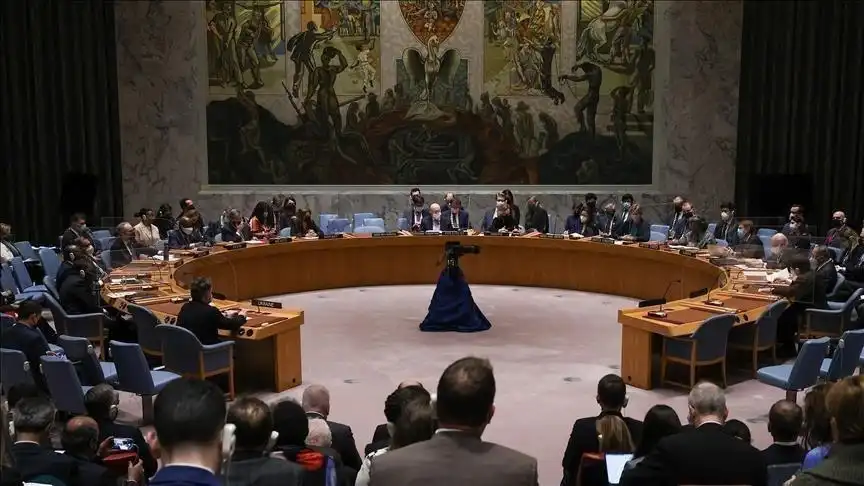
Postponing the Security Council vote on a draft resolution on Gaza

It was decided on Monday to postpone the UN Security Council session dedicated to voting on a draft resolution to end the conflict in the Gaza Strip and increase humanitarian aid, due to the failure of member states to reach an agreement on it.


UN sources reported to Anadolu that member states did not reach an agreement on the draft resolution on Gaza proposed by the UAE, as it is scheduled to be voted on tomorrow, Tuesday.


The draft resolution calls on all parties to fulfill their obligations to protect civilians in accordance with international law and international humanitarian law, and requests the United Nations Secretariat to establish a mechanism to monitor aid.


The draft resolution also calls on the United Nations to confirm that the aid is “humanitarian” and to provide information to “the Palestinian Authority and Israel” about its types, and calls for providing the necessary fuel to distribute the aid.


The draft resolution also demands the release of all hostages, and condemns any violation of international humanitarian law.


The sources stated that the United States of America is calling for an amendment to the phrase “ending the clashes” contained in the text of the draft resolution.

ARAB AND WORLD

Tue 19 Dec 2023 9:01 am - Jerusalem Time

South Africa calls on the International Criminal Court to investigate Israeli “war crimes.”

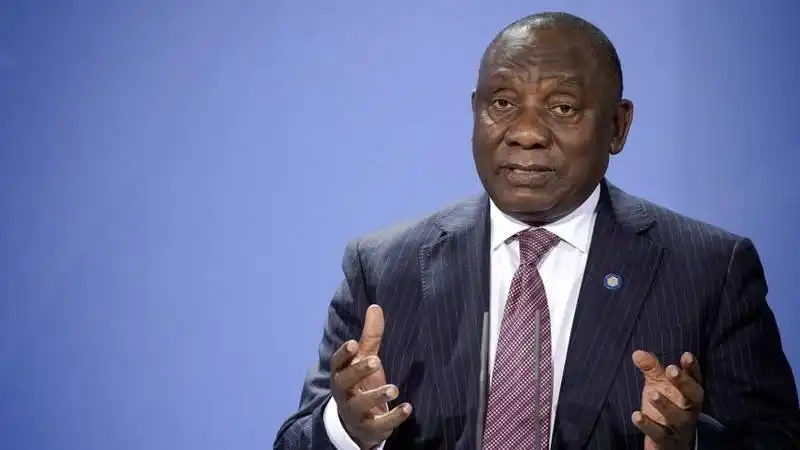
South African President Cyril Ramaphosa called on the International Criminal Court to "conduct an immediate investigation into war crimes" committed by Israel in the Gaza Strip.


Ramaphosa explained in a statement to reporters, on Monday, that they had submitted the necessary documents to the International Criminal Court regarding Israeli “war crimes,” and that they were waiting for the court to take action regarding the investigation.


He pointed out that the International Criminal Court has the authority to indict those responsible for “war crimes” committed in Palestine.


He added, "We want the International Criminal Court to act in accordance with its laws, rules and regulations."


He described Israeli attacks against civilians in the Gaza Strip as a "violation of international humanitarian law."


It is noteworthy that South Africa submitted a request to the International Criminal Court last month to investigate “war crimes” committed by Israel.


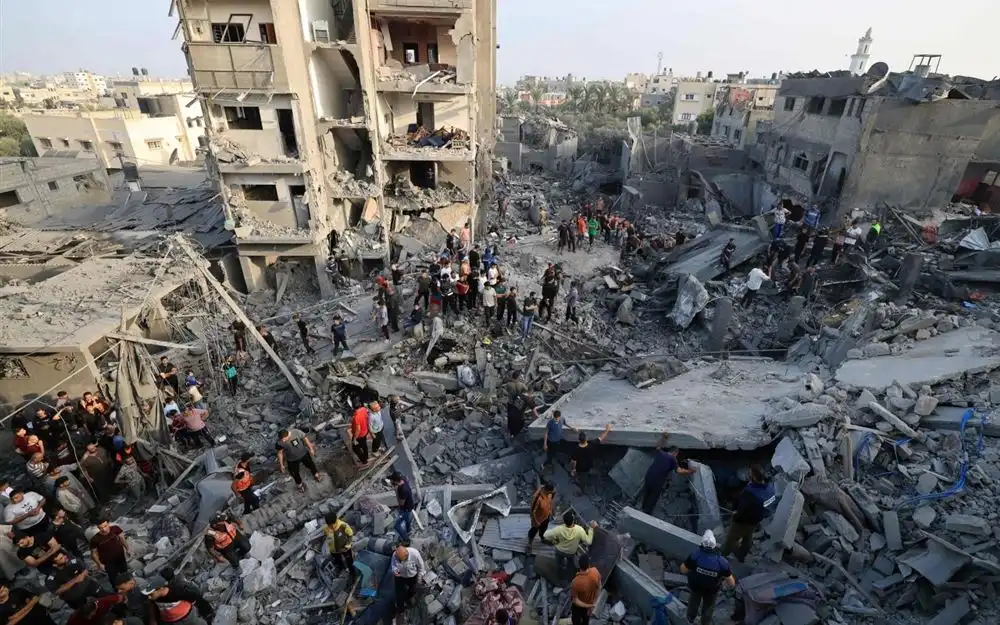
Since last October 7, the Israeli army has been waging a devastating war on Gaza that, as of Monday, has left 19,453 Palestinians dead, in addition to 52,286 wounded, most of them children and women, massive destruction of infrastructure and an “unprecedented humanitarian catastrophe,” according to sources. Palestinian and international.

OPINIONS

Tue 19 Dec 2023 8:51 am - Jerusalem Time

PEACEMAKING 2.0

Gershon Baskin

Gershon Baskin

Opinion Writer

Even before the final death blow to the Oslo peace process with the outbreak of the second intifada in September 2000, most Israelis and most Palestinians believed that while they genuinely wanted peace, the majority of people on the other side did not want peace. The Government of Israel and the Palestine Liberation Organization representing the Palestinian people signed six agreements within the Oslo peace process and both sides substantively breached all six of those agreements. Both sides were responsible for failing to implement the obligations that they took upon themselves. Oslo was essentially a naïve process which embodied the belief and hope that cooperation between the former enemies across a broad range of issues would lead to an upward spiraling development of trust between them which would enable them at a later stage to negotiate the sensitive key issues in conflict, mainly: Palestinian statehood, borders, settlements, refugees and Jerusalem. But the reverse happened, early on in the process, rather than trust and confidence spiraling upwards, trust and confidence rapidly sped downwards, almost out of control. It reached the point whereby Israeli and Palestinian negotiators entered the room with each side assuming that the other side had no real intention of implementing whatever they would agree to. 


Every good contract or agreement ends with a breach clause – what do you do if one or both sides fail to implement the agreement? The six failed agreements signed all lacked implementable breach clauses to determine what to do when one side or the other claimed breaches by the other side. There were no real-time on-the-ground means to address conflicts when they arose so that many minor issues which should have been solved on the ground ended up reaching the desk of the President of the United States. There was no mechanism devised to have responsible and trusted third-party monitoring, verification and compliance ofthe implementation of obligations of the parties to the agreements. They did not address in a satisfactory way the necessary fundamental means to build peace between the two peoples, to address incitement against peace, or to deal with educating for peace. That is why over the past decades it has been so dismaying to hear so many Israelis and so many Palestinians say “We want peace, but they do not!”. Both sides have had ample evidence to point to the lack of desire of genuine peace by the other side. 


After this horrible war, we will all be confronted once again with the prospect of the two states solution. As a proponent of that solution for most of my life, I was having to deal with its seemingly lack of viability over the past years. Netanyahu’s strategy of removing the Palestinian issue and with it the two-states solution from the regional, global and even local agenda had succeeded until it blew up in our faces on October 7. It should now be quite apparent to all that the most fundamental issue of consequence, the primary existential issue facing Israelis and Palestinians, is the conflict between them. This conflict cannot be managed. It also cannot be strategized away unilaterally by the stronger side of the conflict. 


Both peoples have to understand that empowering political parties that are devoted to destruction of the other side must be removed from their ability to destroy us all. Hamas cannot be a partner for peace with Israel, that is their clear choice and Israel and the Palestinian people must do everything in its power to remove Hamas’ ability to ever rule the territory next to Israel. Israeli political parties like OtzmaYehudit and the Religious Zionist Party which are both dedicated to the ethnic cleansing of Palestinians from the land and the settlement of Jews in their place, should not be allowed to be in positions whereby they will continue to bring death and destruction to this land and the peoples on it. 


When we return to the efforts of trying to make peace again, it is essential that we learn the lessons of the failed peace process and that we not make the same mistakes over again.  I will attempt to describe some of the failures and the prescriptions which can assist in avoiding those mistakes. This is not a comprehensive list.   I have written many articles over the years on what went wrong in the peace process as well as many articles about “lessons learned”.  They can all be found easily with a search on the internet. Each one of the issues presented here is worthy of a full article and perhaps I will go into more depth in the future.  


Negotiations and Agreements based on no trust or negative trust – let’s not be naïve!

New agreements between the parties must be based on a complete lack of trust between them. The agreements can contain no naiveté whatsoever. We must base what we agree to on the assumption that the other side will not fulfill the obligations it takes upon itself in good faith. The other side will be carefully watching how the opposing side relates to its own obligations and will move ahead slowly and with caution, step-by-step based on the progress of the other side. These kinds of agreements in conflict situations enable the parties to take minimal risks and concessions while enabling the end game to remain in focus, but in the distance. This is an intelligent agreement and while negotiating in this way is cumbersome and difficult, it will lead to having better agreements. 


End-Game Up Front

The Palestinians believed that the end-game of the Oslo peace process would be the establishment of an independent Palestinian state next to Israel on the basis of the June 4, 1967 borders. From the Palestinian point of view, their leader, Yasser Arafat made the ultimate concession by recognizing Israel on 78% of the land of historic Palestine. They expected and agreed to establish their state on only 22% of historic Palestine. The Palestinians could have demanded that new borders be based on the map of the Partition plan of 1947, but they came to recognize that their failure to accept the 1947 UN Resolution on partition costs them valuable parts of the homeland. In November 1988 when Arafat declared the State of Palestine it was understood that he accepted Israel on the June 4, 1967 and expected to establish the State of Palestine in the territories conquered by Israel after June 4, 1967 – the West Bank, Gaza, and East Jerusalem. The Oslo agreements never spelled out the end-game and Israel never explicitly agreed to the two states solution. No government of Israel, nor any Knesset ever voted to support the two-states solution. The Oslo process continued for 30 years without any and game specificized even though it was intended to be a five-year interim agreement. This is just another of many reasons why most people lost faith in the Oslo peace process. In any new peace process that will no longer be possible. If there is going to be a genuine peace process, one that has the power to challenge and confront the idea of Hamas, it must include explicitly and from the outset that the process will lead to the formal establishment and recognition of the State of Palestine by Israel within a period of time specified in the agreement. The time frame should be around five years but it should also be specified that the time line is based on the complete fulfilling of the obligations taken by the two sides on themselves. There can never again be an opened ended peace process that allows for negotiations to continue indefinitely without a known and accepted end-game from the outset. The OECD states, led by the United States should recognize the State of Palestine as soon as possible and enable the State of Palestine to become a full member state of the United Nations.  We have had 30 years of talk about a two state solution while almost all of the OECD countries have only recognized one of the states – that needs to change. 


Measurable Benchmarks and Third-Party Monitoring and Verification

Because we have experience with both sides failing to implement their obligations that they took upon themselves and because we have no confidence in new agreements being more adhered to than in the past, we need to have in place a robust mechanism that will monitor implementation and verify the completion of measurable benchmarks that must be completed before taking on additional risks. The benchmarks need to be identifiable and agreed on as part of the negotiated agreements. Effective and efficient monitoring, verification and compliance arrangements are increasingly seen as indispensable to the proper functioning of international agreements in a wide variety of fields. This includes traditional arms control and disarmament agreements, but also peace accords, or aspects of them, such as ceasefire, demilitarisation or decommissioning arrangements. Monitoring and verification are also increasingly spreading beyond military-related agreements to environmental, human rights and electoral issues. Indeed, monitoring and verification can be applied to virtually any agreement between two parties. Monitoring and verification may be done unilaterally by the parties, cooperatively between them or by a neutral third party, or by a combination of all three methods. In the Israeli-Palestinian case, I believe that the monitoring and verification mechanism must be done a third-party group of countries led by the United States. Learning from the failed “Road Map Process” which included a “Road Map Monitor” who did his job but his reports were not public, it is essential that the reports of the Monitoring and Verification mechanism be public so that the parties are accountable to their own public for their successes and failures at implementing the obligations they took upon themselves. Monitoring and verification is particularly useful in cases where, despite agreements being reached, deep distrust and suspicion remain between the parties, as in the Israeli-Palestinian case.


Public Support of Peace - Starting with Education and Incitement

What we teach our children is the best reflection on our values and on what we believe in. If the next peace process will be genuine, it will have to begin with the understanding that we must make educational reform from day one. This will be the very barometer on the seriousness of our intentions regarding our willingness to live in peace with our neighbors. No one agrees to be told what they should teach their own society. Both sides of the conflict have their own narrative of their own history and their own need to build their national identity. It is more than legitimate for Israelis and Palestinians to teach their own narrative of the conflict in which the other side is responsible for horrific acts of violence against the other side. Each side can legitimately describe itself as a victim in this conflict. The key issue is what is going to be taught regarding the future and the basic right of the other side to exist and to achieve self-determination. Because both sides reject the criticism of their curricula and text books done by the other side, the best workable solution is for the parties to agree on criteria of the evaluation and assessment of educational curricula and text books. Such work of developing internationally acceptable criteria has been done extensively by UNESCO and other organizations. The parties need to agree on criteria and then each side should undergo a process of conducting an assessment and evaluation of its own educational curricula and text books based on those criteria.  A time line should be set for the work including the issuing of an interim report and a final report. Following the issuing of the final report a time line for educational reform should also be established. This work should be monitored and verified by the International Monitoring and Verification Mechanism. The reform of curricula and text books by both sides will be a true measure of the extent to which both sides are entering and progressing in a peace process which will be genuine and perceived across the conflict line as a determined decision to actualize peace between them. 


No Constructive Ambiguity

The Oslo agreements were packed with Constructive Ambiguity (a termed coined by Henry Kissinger to enable both sides to an agreement to understand what they want from it). The best example is that nowhere in the six agreements signed is there an explicit statement that Israel would not build new settlements in the occupied territories. The Palestinians implicitly understood that if Israel is going to withdraw from territories to transfer them to the Palestinian Authority, then they would not be building more settlements. Israel claimed that building settlements was not in violation of the agreements and that settlements could also be removed. Both sides were able to interpret the agreements as they wished.    Another case in point is that the agreements did not specify from what territories Israel would withdraw. The agreements led the Palestinians to believe that they would be in control of more than 90% of the West Bank even before they began negotiations on permanent status. The Israelis interpreted concepts like “specified military locations” into security zones so that the entire Jordan Valley was a security zone from which Israel did not withdraw. The Palestinians interpreted specific military locations as army bases. In any new agreements, there is no room for constructive ambiguity.  Everything must be explicit and interpreted by both sides in the same way and if differences arrive, they should be brought to the third-party monitoring and verification mechanism. 


There are many other lessons learned and insights on how to negotiate better agreements and raise the chances that genuine peace could be attainable.  I will continue to write on this subject as we move forward towards the end of the war and beyond.


PALESTINE

Tue 19 Dec 2023 8:20 am - Jerusalem Time

Der Spiegel: Al-Sinwar is charismatic, full of intelligence, and the Hamas attack brought Palestine back to the forefront

The German magazine "Der Spiegel" published a lengthy report prepared by 7 writers in which they talked about the possible consequences of the raging war between Israel and the Islamic Resistance Movement (Hamas) in the Gaza Strip.


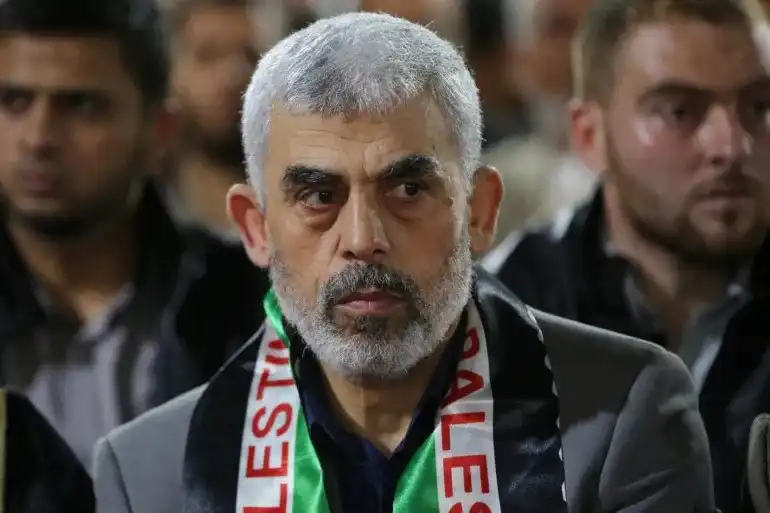
The magazine devoted a large portion of the report to the biography of the head of the Hamas movement in Gaza, Yahya Sinwar, whom it considers the mastermind of the October 7 attacks on Israel.


However, the report's authors concluded that the attack and subsequent developments brought the Palestinian issue back to the center of world attention, and was a "turning point" in the Israeli-Palestinian conflict, as "the situation is no longer what it was before," and Israel was forced to abandon the illusion With its ability to "manage" the conflict with the Palestinians.


From the results of the attack

As a result of the Hamas attack and Israel’s subsequent war on Gaza, the normalization talks between Israel and Saudi Arabia were “suspend,” and both Russia and China now see the current situation as an “opportunity” to impose their influence in the region, while the European Union struggles to determine its future role in this conflict. The US government faces challenges because of its pro-Israel stance and feels isolated, according to a Der Spiegel report.


The German magazine quoted the Israeli expert in the field of opinion polls, Dalia Scheindlin, as saying that the Hamas movement has now become, for many Palestinians, “number one” in the fight against Israel, at a time when the “secular” Fatah movement - which controls the Palestinian Authority in the West Bank - has become No importance.


The report says that this was one of Hamas' goals, in addition to another goal, which was to detain the largest number of prisoners to pressure the release of Palestinians detained in Israeli prisons.


Undermining Israelis' sense of security

There is a third goal that may have been on Sinwar's imagination - according to the magazine - which is to undermine the Israelis' sense of security, their confidence in the state and the army, and to hit them at their weak point: the deep fear of annihilating their people, who have been oppressed for thousands of years.


The report's authors wondered: How did matters reach the point where Hamas became able to launch this violent attack? Why would Hamas risk its rule over the Gaza Strip, or rather its very existence? Can Israel destroy it with this war? Or might Hamas eventually emerge stronger in the long run?


Questions that Der Spiegel advises anyone looking for answers not to ignore Yahya Sinwar.


Who is Hamas and who is Yahya Sinwar?

The report says that the story of Hamas began in December 1987 as a branch of the Muslim Brotherhood in Egypt, and was founded by Sheikh Ahmed Yassin, and Yahya Al-Sinwar was in his mid-twenties, and he was his most “diligent” student.


Before that, Yassin and his companions did not participate in the armed resistance, which was dominated by “secular nationalists.” Rather, their goal was to “Islamize” society.


In the 1970s, Yassin obtained a license from the Israeli military administration to establish an Islamic association, and his followers ran schools, clinics, and religious centers. At that time, Israel feared armed nationalists, saw religious Muslims as a “counterweight” to them, and supported them.


When Yasser Arafat, head of the Palestine Liberation Organization at the time, while he was in exile in Tunisia, was thinking about negotiating with Israel and a two-state solution, Hamas took a different path - according to the report’s authors - as it saw the moment as appropriate for armed struggle.


Establishment of a Palestinian state

Unlike the Islamic State and Al-Qaeda, Hamas has been seeking the establishment of a Palestinian state, not “global jihad” or the establishment of a caliphate.


After Hamas began attacking Israelis in 1989, Michael Kobe - who was leading investigations for the Israeli internal security service "Shin Bet" in the Gaza Strip in the late 1980s - decided to take a radical step on May 9 of that year. He ordered the arrest of all Hamas members including Yassin and Yahya Al-Sanwar.


The report stated that Kobe met Sinwar personally when the latter was 27 years old. Kobe says that Sinwar “did not say a word at first,” explaining that he was Yassin’s most important aide, and the founder and leader of “Majd,” the internal intelligence service of Hamas, and only under pressure from Yassin did Sinwar speak to him.


“It has been clear to me since then that Hamas is our greatest enemy,” Kobe added, adding, “What we are doing now in Gaza came too late.”


Hamas is everything to him

When Kobe asked him why he did not start a family when he was in his late twenties, Sinwar replied, "Hamas is my wife, my son, my daughter, and my father. Hamas is everything to me," and stressed that the day will come when Hamas men will come out of prison to destroy Israel.


In 1989, an Israeli court sentenced Sinwar to life imprisonment 4 times, and he went on hunger strike 3 times, and fought for better treatment for his fellow prisoners, before he was released in 2011 as part of a deal under which Israel released 1,027 Palestinian detainees in exchange for soldier Gilad Shalit. .


This deal may have been the model for the attack of last October 7. The report's authors ask, "If Israel released 1,027 prisoners in exchange for one soldier, what if Hamas kidnapped dozens of Israelis?"


Charisma full of intelligence

Kobe describes the Hamas leader in Gaza as “full of charisma and intelligence.” He learned Hebrew within a few months, showed interest in Israeli history and politics, and learned a little about the Jewish holy book, the Torah.


While Yahya Al-Sanwar was in prison, the world around him was changing. In the Rose Garden of the White House in Washington in 1993, Arafat and Israeli Prime Minister Yitzhak Rabin signed an agreement stipulating the exchange of “land for peace.”


The "Der Spiegel" report touched on the killing of Rabin in 1995 at the hands of an extremist Jew, as "current Prime Minister Benjamin Netanyahu and his Minister for Security Affairs Itamar Ben Gvir were among the main figures who incited the assassination."


The report indicated that Muhammad Dhia Ibrahim Al-Masry - nicknamed Muhammad Al-Deif - assumed leadership of the Al-Qassam Brigades, the military wing of the Hamas movement, succeeding engineer Yahya Ayyash, who was assassinated by Israel.


The report's authors claimed that Al-Deif and Al-Sanwar were the ones who planned the attack on October 7th.


The Palestinian Authority rejected

According to the German magazine, Hamas' victory in the 2006 legislative elections represented a rejection of the Palestinian Authority due to "incompetence and corruption" and an expression of "frustration" with the faltering peace process. Some Christians even voted for the Islamists.


The magazine claims that weakening the Palestinian Authority is the common goal that unites the right in Israel with Hamas in Gaza, and both sides initially benefit from this; As Hamas continues to build its small state, Netanyahu buys calm, continues to expand settlements in the West Bank, and makes the two-state solution seem even more unrealistic.


It is said that Sinwar proposed from inside the prison the idea of digging tunnels to kidnap Israeli soldiers in order to exchange them for Palestinian detainees.


After Sinwar was elected - a few months later - as head of Hamas in the Gaza Strip in February 2017, the former leader of Hamas, Khaled Meshaal, presented a new program that included an amendment to the 1988 Hamas Charter in some of its provisions.


Although the new document does not recognize Israel's right to exist, it is the first time that Hamas has spoken about a Palestinian state within the 1967 borders.


Gaza is a hungry tiger trapped in a cage

“In a surprise to many,” the report adds, Al-Sinwar spoke with foreign journalists, saying, “If we have the opportunity to resolve the conflict without destruction, we agree to that. We want to invest in peace and love.”


But Der Spiegel's report believes that Sinwar's speech was only one part of his message to journalists. As for the other part, it was “gloomy and foreboding,” as it says that Gaza resembles “a very hungry tiger trapped in a cage,” and that the animal that “the Israelis tried to humiliate has been freed, and no one knows where it will move and what it will do,” adding that Hamas cannot continue as before: “The conditions here are unbearable and the explosion is inevitable.”


According to the report, it is not easy to weaken Hamas economically, because its main sources of income are abroad. The magazine estimates Hamas's annual income at about $500 million.


The German magazine confirms - quoting analyst Michael Milstein from Tel Aviv University - that even if Israel succeeds in defeating Hamas militarily, it will continue to exist underground and abroad, "and it cannot be destroyed."


Source: Der Spiegel + Aljazeera

OPINIONS

Tue 19 Dec 2023 7:57 am - Jerusalem Time

Hamas and "putting the house in order": Joining the "Organization"?

Translation for "Al-Quds" dot com

Translation for "Al-Quds" dot com

Opinion Writer

By Muhammad Qawwas

While there is widespread talk about the “day after” the war in Gaza in Washington and European capitals, the Palestinian side seems absent from this discussion, unable to come up with creative ideas that match the dramatic historical event that has occurred since last October 7. If political leaders in the Hamas movement were surprised by the “Al-Qassam Brigades” launching the “Al-Aqsa Flood” operation, the leadership of the Palestinian Authority and the rest of the factions seemed confused and improvising to deal with an imminent historical juncture that was difficult to anticipate.


Whoever observed the performance of the Authority in Ramallah, especially in the first days of the event and the subsequent Israeli launch of its devastating attack against the Gaza Strip, noticed that the “Almuqataa,” meaning the headquarters of the Palestinian president and leadership, is dealing with a matter that it has no compunction about, and is issuing principled positions regarding a situation far removed from the context of its usual daily life. On the other hand, the spokesmen for the Fatah movement (or some of them, so as not to generalize) addressed the event as political analysts or as defenders of the “faction” to which they belong without any consideration of the Fatah movement’s history of charting the course of the entire Palestinian national movement and taking the lead in defending any Palestinian “situation” whatever the Palestinian political and factional movement causing it.

Times changed, and it seemed that the dispute between Hamas and Fatah, which exploded bloodily in 2007 and expelled Fatah and the Authority from the Gaza Strip, had accumulated a reality that could not be overcome by feelings and emotions.


Despite the distance and disagreement between the Hamas movement and the Palestinian leadership during the era of President Yasser Arafat, the late man continued to act as a leader of all the Palestinian people, and Israel has always accused him of being behind the support that reached the movement led by Sheikh Ahmed Yassin at the time. When Israel deported more than 400 leaders of the Hamas and Jihad movements towards the Marj al-Zuhur area in southern Lebanon in December 1992, “Abu Ammar” denounced the Israeli behavior, defending the cause of the deportees and he was keen, through the influence he had in Lebanon, to communicate with the deportees and convey aid for them.


The time of Abu Ammar... and the time of Kouchner

Times changed, and it seemed that the dispute between Hamas and Fatah, which exploded bloodily in 2007 and expelled Fatah and the Authority from the Gaza Strip, had accumulated a reality that could not be overcome by feelings and emotions. The accumulated and repeated failure to reconcile the relationship between the two parties and the failure of all regional mediations in this regard made the division an almost final state, or it was intended to be so, so that the world began to deal with the West Bank and the Gaza Strip as two separate, independent cases.


It is not a coincidence, in this context, that Palestinian President Mahmoud Abbas’s speech, every time he receives a Western official these days, focuses on the fact that “Gaza is an indivisible part of the Palestinian state” and on the refusal to deal internationally with a Gazan situation that differs from the rest of the Palestinian situation. This speech is based on real data that Abu Mazen possesses regarding what was being simulated by Israel, America, and internationally in this regard. Even Jared Kushner, advisor and son-in-law to former US President Donald Trump, chaired a conference for the Gaza Strip in March 2018 and promoted a project in June 2019 to transform Gaza into a “city of dreams,” hinting at including Sinai in the “Deal of the Century.”


According to this reality and this division, it seemed that the Hamas movement was positioned based on the “finality” of this situation. It was clear that the movement was not ready to abandon its Gaza “achievement” by ruling the Gaza Strip in the interest of “national reconciliation” that would restore the partnership within its sphere of influence. It was also clear that the regional extensions of the movement were reconciled with the status quo and perhaps encouraged it, without being interested in making any efforts to restore cohesion to the fractured Palestinian body.


The situation changed after the "Flood". The nihilistic war against Gaza tempted the Israelis to float dreams of “transfer” towards Sinai and Jordan. It seemed that the position of Egypt and Jordan was firm and decisive in rejecting this possibility, which called for a deterrent American position in this regard without the positions dispelling this possibility. It also seemed that the Palestinian "house in order" had become an urgent Palestinian demand, but it had also become an urgent regional and international demand, especially since the United States, with its president and its delegates to the region, had rediscovered the "two-state solution."


There is no new and serious Palestinian workshop to put the Palestinian house in order. If Ismail Haniyeh, head of the Hamas political bureau, said that his movement is open “to discussing any ideas or initiatives that lead to stopping the aggression and open the door to putting the Palestinian house in order at the level of the West Bank and Gaza Strip,” then he neglected Hamas’ responsibility for tampering with this house. Turning away from its arrangement is met by the authorities with a ready-made prescription that has its own authority and is based on the fact that the PLO is the political umbrella representing Palestine and that the house is arranged within its framework and according to its program that is recognized by the world.


While there is widespread talk about the “day after” the war in Gaza in Washington and European capitals, the Palestinian side seems absent from this discussion, unable to come up with creative ideas that match the dramatic historical event that has occurred since last October 7.


Starting the path of “reconciliation”?


The rounds of dialogue between Fatah and Hamas since 2008 have not been able to convince the latter to join the ranks of the organization. The Hamas documents accepted a long-term truce with Israel without going as far as the PLO documents did, regarding recognition of the State of Israel and the establishment of a state on part of Palestine. Since 2017, Haniyeh had announced that his movement does not oppose “interim” the establishment of a state on the 1967 borders, but is committed to not recognizing the Israeli occupation of Palestinian lands. A few days ago, in an interview with the American Al-Monitor website, Hamas leader Musa Abu Marzouk expressed the movement’s readiness to become part of the Palestine Liberation Organization, as a step towards ending the divisions between the Palestinian factions, adding that “we will respect the organization’s commitments.”

The man later retracted his statement, saying it had been "misunderstood." In other words, Hamas has retreated from abandoning a taboo that is still firmly established in its texts. Commitment to the organization’s obligations, according to Abu Marzouk’s position, includes the Palestine Liberation Organization’s recognition of Israel since 1993. If the man, Haniyeh, and others express and will express the transformations of necessity, the movement whose military wing is fighting the Gaza battle does not want to throw away its cards at a time when the major capitals are hesitating. There is no place for Hamas in any future political settlements.


It may be true that "no voice is louder than the sound of battle." It may be understood that Hamas will not fall in politics unless Israel has so far been able to resolve it militarily. It may be logical for the movement not to open a political bazaar in the absence of any major credible international regional Palestinian workshop, but courage requires that the movement draw on the examples of war that Fatah and other Palestinian factions have previously drawn, and that it invests in the possible, abandons the impossible, and does not go outside the two squads. Palestinian and Arab, and to be part of the post-war dynamic.


If Hamas launches “experimental” positions, Fatah and the Palestinian Authority must seize the historical moment to encourage Hamas and all Palestinian factions to join in entitlements that require unity to confront an international scene that appears to be looking at the “Palestinian solution” with a more serious eye. If previous experiences do not encourage trust and faith in the international community, then it is worth crossing over to Palestinian unity as an inevitable option, even if it involves coercion, not heroism.


The Palestinian Authority is enjoying a rare historical moment in which the international community returns to recognizing it as a solution to governing Gaza and unifying it with the West Bank. Washington therefore requires “reform and revitalization” of power. Although the two expressions are new in the texts of American diplomacy, they are a necessity that the Palestinians have been demanding for years through elections.


Does the world allow these elections? Does Israel and this world accept the results of these elections? If voting is impossible, how can this reform and revitalization be achieved?


That's another question.

Source: Assas Media


ARAB AND WORLD

Tue 19 Dec 2023 7:46 am - Jerusalem Time

French Magazine reveals a plan for a huge settlement...on the “ruins of Gaza”

It seems that there is an Israeli plan to build a huge settlement after leveling the Gaza Strip to the ground, with daily bombing and the systematic and barbaric destruction of all aspects of life, from vital institutions to the joints of identity, history and civilization.


A private Instagram account titled “Harey Zahav” (Golden Mountains), an Israeli real estate company that until now specializes in constructing homes in settlements built in the West Bank, published pictures of construction projects in the devastated Gaza Strip, according to Liberation magazine. ".


The French magazine published a drawing showing the names of the future colonies: “Ma’ale Atzmona”, “Oren”, “Neve Katif”... in addition to other names mentioned in a second post on Instagram dating back to December 11, showing a map in Hebrew of these settlements in Gaza strip. Their names are similar to the names of settlements located on the perimeter of the Strip. In an in-depth look at the drawing of the Neve Qatif area, we find drawings of new buildings, warehouses, and a hospital.


It seems that there is an Israeli plan to build a huge settlement after leveling the Gaza Strip to the ground, with daily bombing and the systematic and barbaric destruction of all aspects of life, from vital institutions to the joints of identity, history and civilization.


“Liberation” quoted the Israeli news site “Davar Hayom” as news about a conference held on “practical preparation for installation in Gaza” on December 11 in “Givat Washington,” a religious youth village in central Israel.


The conference was organized by 15 organizations, with the participation of 150 interested parties who consider the ongoing war “a historic opportunity for the Israelis to return to stability in the Gaza Strip.” According to journalist David Tversky, who attended the meeting, “many of the participants are evacuees from Gush Katif and their families,” and they “hope to garner broad support among Israeli public opinion and put pressure on political leaders, but Benjamin Netanyahu’s government and international public opinion are officially opposed resettlement in Gaza territory".


The French magazine described the projects as “provocative” and reflect the aspirations of some Israelis to occupy Gaza. It quoted a tweet from “X” written by Israeli lawyer Itay Epstein, former director of the Israeli branch of “Amnesty International,” and former co-director of the “Israeli Committee Against House Demolitions - ICAD,” a humanitarian organization that criticizes the development of Israeli settlements, in which he said that these photos is a "media trick," and this provocation "reflects a deep feeling that wants to seize lands and colonize at the expense of the Palestinians."


Half of Israelis support the project

Since the October 7 attack and the barbaric Israeli military response to the Gaza Strip, several Israeli newspapers have echoed activists' demands for the return of Israelis to Gaza. According to the “Liberation” report, several English-language Israeli media outlets, such as “Time of Israel” and others, published an opinion poll conducted by Channel 12 stating that 44% of Israelis support Jewish settlement in Gaza and 39% oppose it.


In addition to this poll, the Time of Israel newspaper noted in an article published in early December that there is “other evidence indicating that the idea of re-establishing Jewish communities in Gaza enjoys widespread support, especially among Israeli youth.” 


As examples of this evidence, it cited several social media posts by young Israeli soldiers in Gaza carrying posters demanding the return of Israelis, or a video clip of an Israeli singer motivating the troops by singing: “We will return to Gush Katif, we will establish Nova Beach on the Bay of Gaza,” referring to the Nova Festival, During which hundreds of Israeli youth were killed at the beginning of the Hamas attack. On the other hand, a new poll conducted by the Hebrew University among 1,800 people, the results of which were presented at the end of last week, confirms the opposite, as it indicates that 56% of Israelis oppose the Jewish settlement policy in Gaza, only 33% support, and 11% are not sure.


"Gush Katif" is a group of Israeli settlements established in the Gaza Strip in the early 1970s, from which Israel withdrew in 2005, during the era of former Prime Minister Ariel Sharon, as part of a unilateral plan known as "disengagement" from the Gaza Strip.


What is this company?


This real estate company (Harey Zahav - Golden Mountains), which was established in 2007, claims on its website that it is “one of the main companies in the real estate market” in these areas, and that it is involved in about 25 residential projects, and has delivered more than 1,000 housing units to customers, while there are about 1,000 under construction. Since October 7, she has been posting photos and videos on her Instagram account highlighting the military commitment of her reserve employees.


Among these soldiers, we find the chief engineer and his deputy filming themselves from Gaza, sometimes behind the wheel of an excavator, promising their subscribers to build the homes of the future. Another post dated December 8 (deleted last Sunday) shows a group of soldiers carrying a banner with the name of the company announcing, “Here the new Ma’ale Atzmona settlement will be built.”


The origin of forced displacement to Egypt

The French report asked whether attention should be paid to these publications while the question of Gaza's future remains unresolved and Israeli resettlement is not officially planned. According to the report, the Israeli government reiterates that its goal is to destroy Hamas, not to expel the Palestinians, despite the fact that the massive devastation inflicted on Gaza limits the return of Palestinians to their destroyed homes. The Israeli military presence in Gaza will continue until a Palestinian authority is formed that guarantees the security of the Jewish state.


The report referred to a memorandum issued by the Israeli Ministry of Intelligence, revealed at the end of October by the Israeli-Palestinian news site Mekumet, with support from WikiLeaks, talking about a plan to forcibly displace civilians from Gaza to Egypt, but Prime Minister Benjamin Netanyahu’s office downplayed of the importance of its scope, describing it as a “virtual practice.”

According to the report, “many Internet users condemned the publication of these images while the Israeli army continues its ground attack on the Gaza Strip.” It pointed to a photo in particular that was widely shared online, posted on December 13, showing drawings of house models lined up and superimposed on the rubble of Gaza, accompanied by a message written in Hebrew: “A house on the beach is not a dream,” with the caption below: “We, Golden Mountains (Golden Mountains) Golden Mountains), we are working to pave the way for the return to Gush Katif. A number of our employees have begun work on reclamation work, removing rubble, and evacuating the illegal residents there. We hope that all the kidnapped people will return to their homes safely in the near future, and that our soldiers will return to their homes, and we can start construction throughout the Gush Katif area.”


"Gush Katif" is a group of Israeli settlements established in the Gaza Strip in the early 1970s, from which Israel withdrew in 2005, during the era of former Prime Minister Ariel Sharon, as part of a unilateral plan known as "disengagement" from the Gaza Strip.


ARAB AND WORLD

Tue 19 Dec 2023 7:43 am - Jerusalem Time

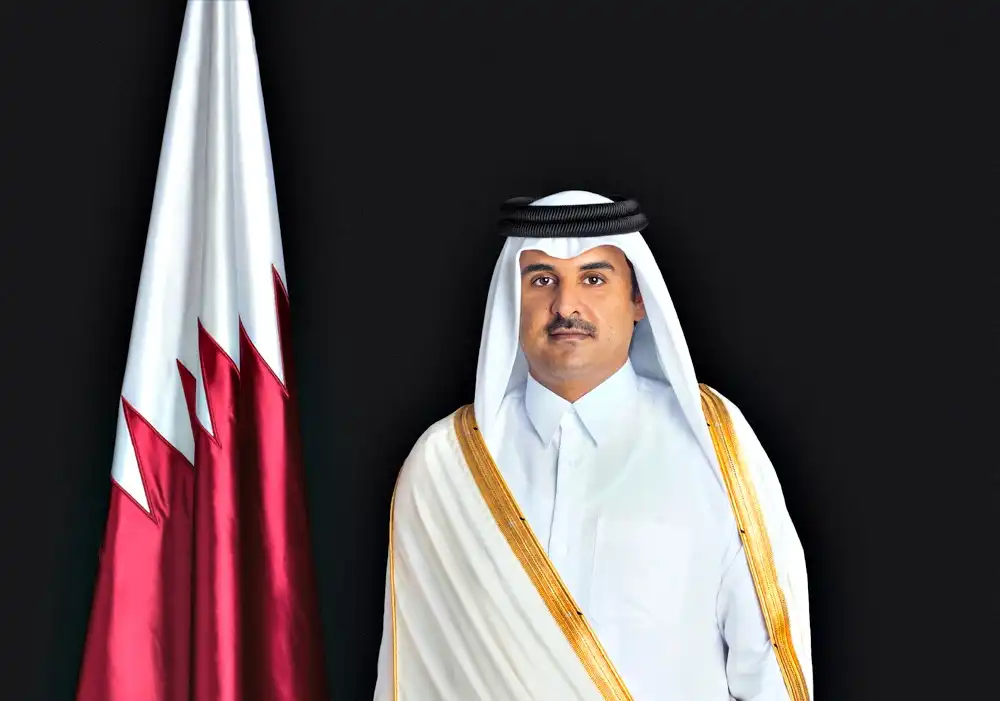
The Emir of Qatar donates 100 million Qatari riyals to the “Palestine Duty” campaign

On Monday, December 18, 2023, Sheikh Tamim bin Hamad Al Thani, Emir of the State of Qatar, decided to donate an amount of 100 million Qatari riyals to the “Palestine Duty” campaign launched by Qatar, in order to collect donations to help the people of the Gaza Strip, against the backdrop of the Israeli aggression against The sector, according to what was reported by Al Jazeera satellite channel.


“Palestine Duty” is a campaign launched by the Regulatory Authority for Charitable Activities, in order to help those affected by the aggression on the Gaza Strip, in partnership with the Qatar Red Crescent Society and “Qatar Charity”, and in cooperation with the Qatar Media Corporation (Qatar TV).


Country aid package

The Emir of Qatar’s contribution comes in addition to a package of initiatives and contributions made by Qatar for the residents of the Gaza Strip.


Wednesday, December 13, 2023, Qatar pledged to provide $50 million in humanitarian aid to the residents of the Gaza Strip, in addition to 100 scholarships for Palestinian youth.


Doha's pledge is added to its list of commitments towards the Strip, such as providing health care for 1,500 wounded Palestinian civilians, and supporting 3,000 children who lost their parents in this war, in addition to providing nearly 1,500 tons of medical aid, food supplies, and urgent basic needs, including a field hospital.


The Qatari Foreign Ministry statement, in conjunction with Doha’s participation in the Second World Refugee Forum held in Geneva, stated that Qatar pledges to “provide $50 million as an initial humanitarian aid package, targeting refugees, displaced persons, the wounded, orphans, and those affected by the Israeli aggression on the Gaza Strip.”


He also pointed out that the Qatari announcement also includes "providing 100 scholarships to Palestinian youth, through the Al-Fakhoora program of the Education Above All Foundation."

ARAB AND WORLD

Tue 19 Dec 2023 7:01 am - Jerusalem Time

United Nations: There is a need to establish a special court for accountability in the Gaza war

UN Under-Secretary-General for Humanitarian Affairs Martin Griffiths said on Monday that "impunity is strongly prevalent in the Gaza Strip war, and there may be a need to establish a special accountability court."


Griffiths added, in an interview with the British newspaper "Financial Times": "There are no indications that the Israeli attack in the south of the Gaza Strip is more precise than in the north, and this is disappointing."


He continued, saying: "They (the Israeli side) promised us this (avoiding the bombing of civilians), and the truth of the matter is that we have never seen that in the south. On the contrary, we have witnessed the increase in bombing."


Griffiths stressed that "impunity is strongly prevalent in the Gaza war, and there may be a need to establish a special court for accountability," stressing that "the number of deaths from diseases in Gaza is many times the number resulting from the bombing."


Since last October 7, the Israeli occupation army has been waging a devastating war and aggression against Gaza, leaving about 19 thousands dead and 51,000 wounded, most of them children and women, massive destruction of infrastructure and an unprecedented humanitarian catastrophe.

ARAB AND WORLD

Tue 19 Dec 2023 6:55 am - Jerusalem Time

Financial Times: “Netanyahu’s leadership is a failure”

The Financial Times newspaper published an editorial in which it said that Israeli Prime Minister Benjamin Netanyahu failed in leadership, amid signs of American dissatisfaction with the way he managed the war and the absence of plans for the future of Gaza.


While Netanyahu, as he waged the war against Hamas in Gaza, relied on unwavering American support, Israel's strong ally has doubts as the bombing continues and the death toll in the Strip increases.


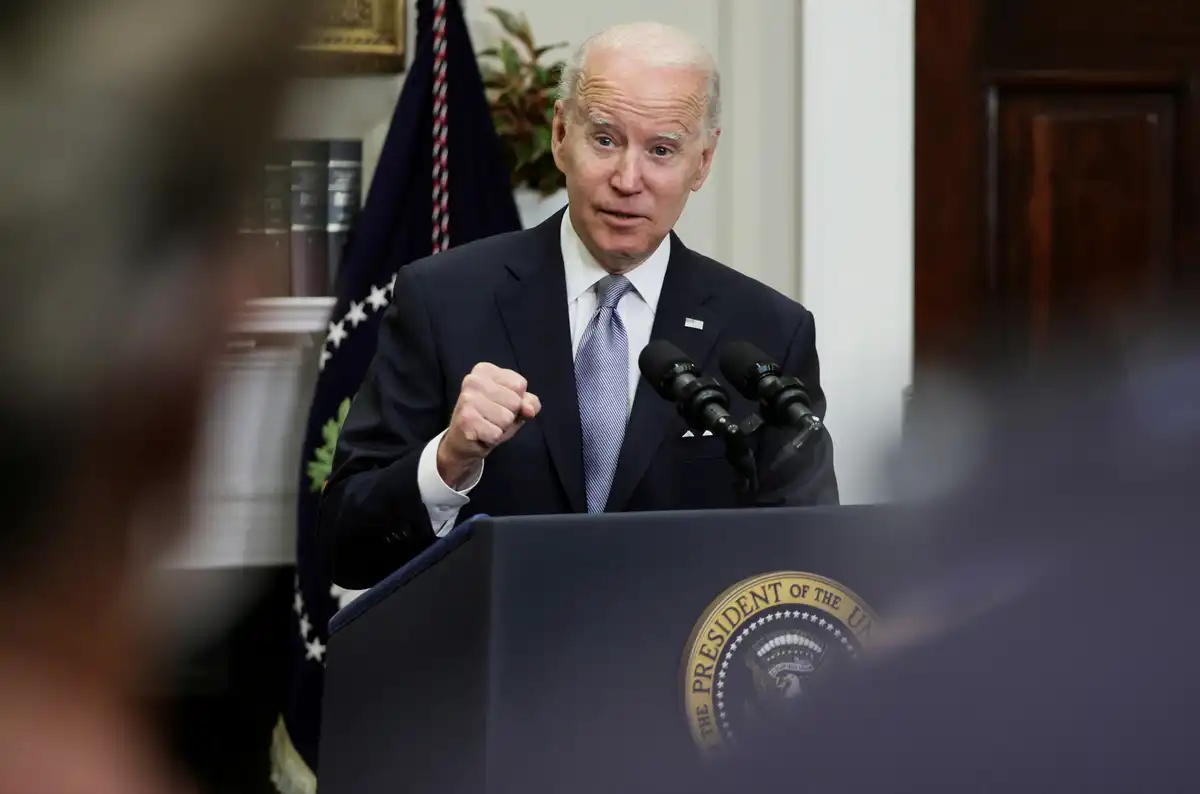
Last week, President Joe Biden described Netanyahu's government as far-right, criticized the "indiscriminate bombing" of Gaza, and said that the Israeli prime minister must "change."


Biden's comments reflect growing unease in Washington over Israel's management of the war, the massive destruction and rising death toll that Palestinians say has reached 19.500. The comments also reflect broader concerns about the prime minister and the power extremists exercise over the coalition he leads.


The newspaper comments that the West has generally been united in its support for Israel since the Hamas attacks on October 7, but an increasing number of countries want the bombing campaign to stop. The United States expects Israel to shift to a more targeted phase, which means fewer bombing rounds and fewer civilian casualties.


The more Netanyahu resists American advice, the greater the risk of Israel's isolation. The United States is pushing for a post-war plan, and hopes to use the unfolding catastrophe to divert attention to a political vision and resolution of the Israeli-Palestinian conflict. It is what will help appease Arab allies and help them ease their people's anger over the humanitarian catastrophe in Gaza. But Netanyahu does not go along with the plan, and refuses to work to achieve the idea of establishing a Palestinian state, even though it remains the only long-term solution to settle the conflict.


The United States and Arab countries want to strengthen the Palestinian National Authority as a reliable alternative to the hard-line leadership of Hamas. Netanyahu is working to undermine the National Authority, which administers limited areas in the West Bank, and has not presented any plan for Gaza other than his pledge to eliminate Hamas. Before the Hamas attacks, Netanyahu became a force of destruction in Israel, and to secure his rise to power, in December he joined extremist nationalist and supranational forces and formed the most extremist government in Israel's history. He then continued to attempt to undermine the independence of the judiciary and democratic values, sparking a massive campaign of demonstrations.


Critics accuse Netanyahu of not addressing the Hamas threat during his dominance of Israeli politics in the past 14 years. He tried to contain the militant threat behind the security fence, while at the same time using Hamas's rule to divide the Palestinians and resisting calls to revive the peace process. However, under his watch, Hamas launched a deadly attack on Israel. The leaders of the security services apologized for the mistake, but Netanyahu did not express remorse.


As long as the war continues, Netanyahu will remain secure in his position, despite the decline in his popularity, and if it stops, elections will be held or demonstrations will return against his leadership. Nothing will move as long as he remains in office and sits with the extremists at the head of the table. A new government will likely not directly change the dynamics in a traumatized country. The October 7 attacks reduced the Israelis' faith in peace, but it is the safe option that guarantees peace with the Palestinians, even though it is not possible at the present time. At a time of panic and dismay, people look for leaders who acknowledge this reality and are prepared to defend the two-state solution, and Netanyahu was never that leader.


Anshel Beaver saw in The Times newspaper that Netanyahu is entrenched in the government with calls for a ceasefire. He said that since the October 7 attacks, Israel has failed to reconcile its primary goal of destroying Hamas with its ability to rule in Gaza, with the aim of freeing 240 Hamas hostages. As the killing of three hostages on Friday showed, this is very difficult to achieve. The war government decided to follow a strategy of excessive force and negotiate with Hamas through Qatar. The talks succeeded last month and led to the liberation of 110 hostages, including 86 Israelis and 24 foreigners who were released during the temporary truce. Since the end of the truce, with 130 hostages remaining, Hamas has imposed more difficult conditions than those it had previously requested regarding how to stop the war.


Anshel Peifer: Since the October 7 attacks, Israel has failed to reconcile its primary goal of destroying Hamas with its ability to rule in Gaza with the aim of freeing 240 Hamas hostages.


Netanyahu is under pressure from Western allies to achieve a sustainable ceasefire, as stated in statements by the British and German Foreign Ministers. But Netanyahu did not change his position and stressed that continuing military action would lead to the liberation of the hostages, and “we will continue to fight until victory.” Perhaps the talk of fighting was directed at his base, which polls show has abandoned him.


Israeli defense officials are talking about a change in strategy in the coming weeks, with mobile methods and fewer soldiers on the ground, in the hope of alleviating the fears of the allies and opening the way for negotiations with Hamas to free the hostages or carry out effective rescue operations. Until then, the hostages will have been at war for more than a hundred days, and attempts to rescue them may have been delayed.


ARAB AND WORLD

Tue 19 Dec 2023 6:50 am - Jerusalem Time

Israeli Poll: Gantz is in the lead... and religious Zionism falls below the electoral threshold

Respondents were asked whether they supported or opposed transferring control of Gaza to the Palestinian Authority on the “day after” the war; 19% supported this, while 54% opposed it.


An Israeli public opinion poll, published on Monday evening, showed that the “National Camp” bloc, headed by “War Cabinet” member Benny Gantz, would obtain 37 seats, while the number of seats for the Likud Party led by Prime Minister Benjamin Netanyahu would decrease to 18 seats if it were conducted. Today's elections, while the far-right Religious Zionism Party, headed by Finance Minister Bezalel Smotrich, does not exceed the electoral threshold.


According to the poll published by the Israeli Channel 12, the number of seats in the “Yesh Atid” party led by Yair Lapid reaches 15 seats, and “Shas” led by Aryeh Deri gets 11 seats, while “Yisrael Beytenu” led by Avigdor Lieberman gets 9 seats.


The "Otzma Yehudit" party, headed by extremist Itamar Ben Gvir, won 8 seats, while the "United Torah Judaism" bloc won 7 seats.


According to the poll, the Arab Front for Change coalition, the United List, and Meretz each get 5 seats.


The Religious Zionism, National Democratic Rally and Labor parties do not exceed the electoral threshold. The assembly receives a percentage of 1.9; Note that the poll includes a small sample of Arabs.


If elections were held for the Knesset now, the opposition parties, including the “National Camp,” along with the Arab parties, would obtain 76 seats, compared to 44 seats for the current coalition parties.


Who is most suitable to head the government?

Regarding the question of who is more suitable to head the government between Netanyahu and Gantz, 45% of respondents believed that Gantz is more suitable for that, while 27% saw that Netanyahu is more suitable for the position.


22% of the total sample answered that neither of them is fit to head the government, while 6% answered, “I don’t know.”


The poll showed that former Prime Minister Naftali Bennett also outperforms Netanyahu, as he received 33%, compared to 29% for Netanyahu, while 32% believed that neither of them is fit to head the government, and 6% answered, “I don’t know.”


Should the date of the Knesset elections be brought forward?

The respondents were asked whether the date of the next Knesset elections should be brought forward or not, and a majority of the public (57%) believes that the date of the elections should be brought forward, and they answered “yes.”


Among Netanyahu camp voters, 32% believe that the date of the Knesset elections should be brought forward, compared to 59% who believe that the date of the Knesset elections should not be brought forward.


Among the voters of the camp opposing Netanyahu, 82% believe that the date of the Knesset elections should be brought forward, compared to 13% who believe that it should not be brought forward.


Palestinian Authority control of Gaza?

Respondents were also asked whether they supported or opposed transferring control of Gaza to the Palestinian Authority on the “day after” the war; 19% supported this, while 54% opposed it, while 27% answered, “I don’t know.”


According to the poll, among those who identify themselves as right-wing, 9% support transferring power in Gaza to the Palestinian Authority, compared to 73% who oppose that.


When people who consider themselves to be in the so-called “center-left” were asked the same question, 34% supported the Palestinian Authority assuming power in Gaza, while 27% opposed it.

The survey was conducted on a sample of 504 people, with a maximum error rate of +4.4%. The survey was also conducted online and by telephone by Mano Geva.

Source: Arab48


PALESTINE

Mon 18 Dec 2023 9:18 pm - Jerusalem Time

Gaza war: A new Israeli air strike on Al-Shifa Hospital. The death toll rose to 19,453

The Palestinian News Agency reported on Monday that Israeli aircraft bombed the specialized surgical building at Al-Shifa Hospital in Gaza, explaining that the bombing caused a number of casualties and injuries.


The agency also said that dozens were killed and others were injured in bombing carried out by Israeli aircraft on the eastern and northern areas of Khan Yunis.


In addition, violent explosions rocked the central region of the Gaza Strip.


Israel has continued its attack on Gaza by air, land and sea for 73 days, claiming the lives of about 19,000 Palestinians and wounding more than 52,000 others, 70% of whom are women and children, with an infinite toll.


The Ministry of Health in Gaza announced that the number of killed of the Israeli aggression on the Strip since October 7 had risen to 19,453.


The Ministry added in a new census that the number of injured people reached 52,286.


The Ministry indicated that hospitals received during the past hours 151 victims and 313 injured as a result of attacks, the most prominent of which was in Jabalia, where a large number of victims are still under the rubble and on the roads.


The ministry said: “Within 6 hours, the occupation forces committed a massacre in Al-Shifa Medical Complex, which led to the death of 26 displaced people and dozens of wounded. Then they targeted a civilian car in front of the gate of the complex that was transporting one of the wounded, which led to the martyrdom of two.”


The ministry accused the Israeli forces of deliberately "liquidating the health presence in northern Gaza by destroying hospitals and arresting their staff. This constitutes the execution of about 800,000 people there."


PALESTINE

Mon 18 Dec 2023 9:17 pm - Jerusalem Time

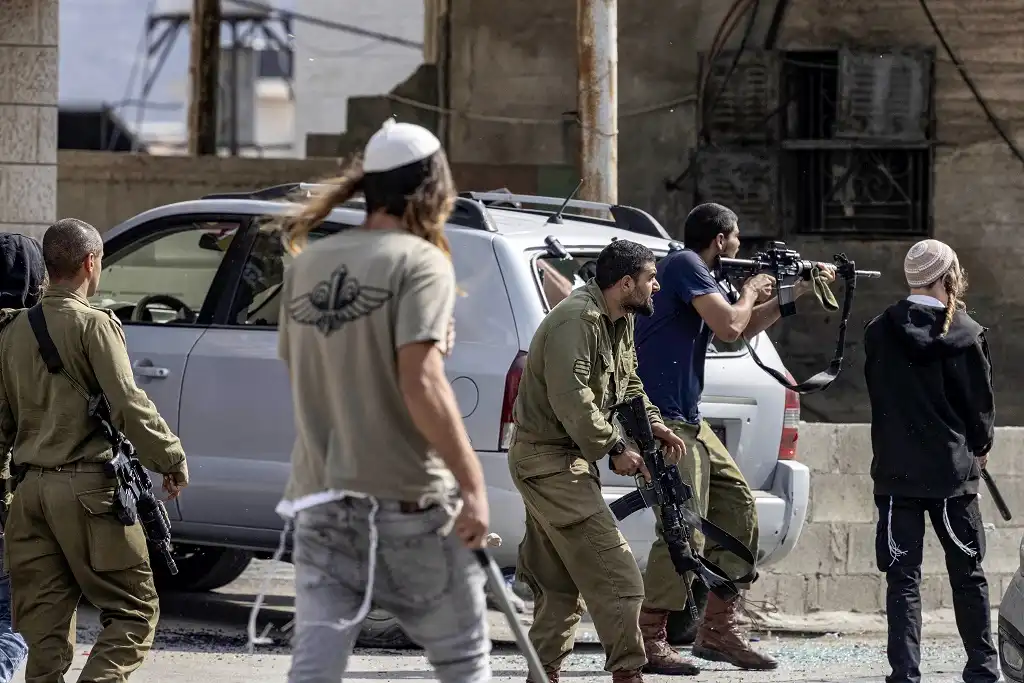
West Bank: Injuries after Israeli settlers sprayed pepper gas on worshipers in Ibrahimi Mosque in Hebron

A number of worshipers suffered from suffocation and internal burns on Monday evening, as a result of being sprayed with pepper gas by settlers, coinciding with evening prayers in the Ibrahimi Mosque in central Hebron.


According to local sources, settlers, protected by occupation soldiers, sprayed pepper gas on worshipers in the Ibrahimi Mosque, causing a number of them to suffer from suffocation and burns.

PALESTINE

Mon 18 Dec 2023 8:59 pm - Jerusalem Time

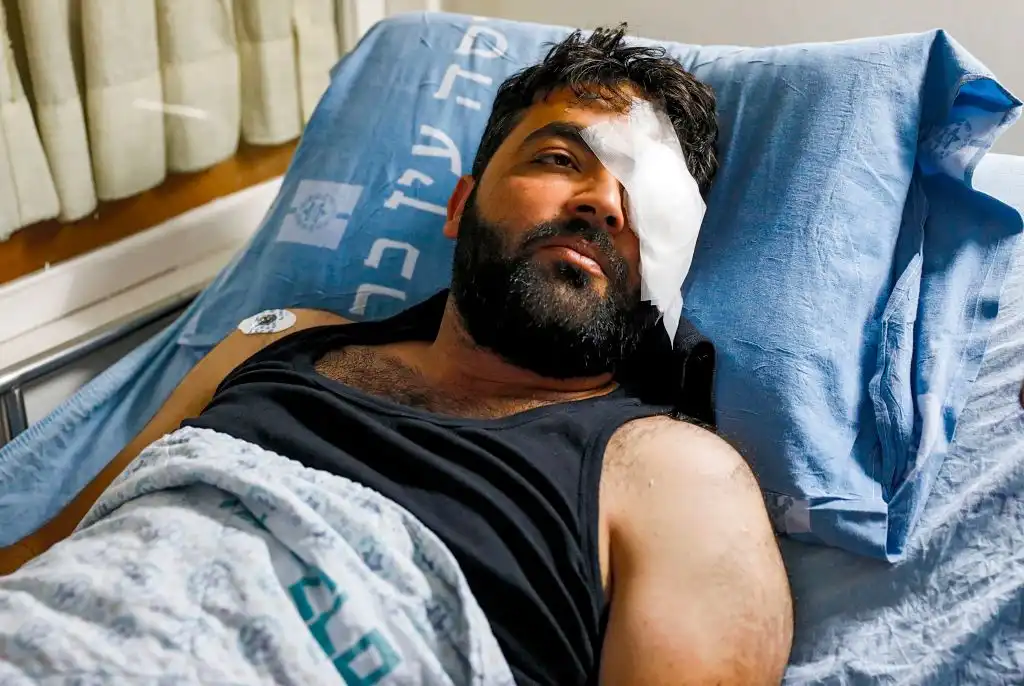
Palestinian Prisoners Club: Detained journalist Moaz Amarneh is being tortured

The Palestinian Prisoners' Club said on Monday that Palestinian journalist Moaz Amarneh, who has been detained by Israel since last October 16, "suffers difficult detention conditions and is subjected to torture and abuse."


The club added in a statement, “Amarna (36 years old), from Bethlehem, faces difficult health conditions in the Israeli Megiddo prison, as a result of the systematic retaliatory measures and torture imposed by the occupation on prisoners and detainees in an unprecedented and double manner after October 7.”


It continued: "Journalist Amarneh, who has been administratively detained since October 16, was subjected to abuse and torture, as were all detainees. Today he suffers from difficulty seeing and a blurriness in his right eye."


It pointed out that "in the context of the medical crimes carried out by the occupation against prisoners and detainees, he refuses to this day to allow the insertion of his glass eye and glasses, after he lost one of his eyes in 2019 to the bullets of the occupation soldiers, while practicing his journalistic work, as the bullet settled on the wall of the brain."


It explained that "Amarna suffers from chronic diabetes, which has worsened in light of the prison administration's implementation of the starvation policy against prisoners. He also suffers from severe bouts of pain and headaches due to the extreme cold."


According to the Prisoners' Club, "Amarna has not been able to change his clothes since his arrest after they confiscated his clothes. What remains of him is a light jacket that does not protect him from the extreme cold. This is in addition to the prison administration taking off his shoes for a long time."


It added, "Amarna is one of 46 male and female journalists who were arrested after October 7, as the occupation escalated its policy of arresting journalists and targeting them with all repressive means and tools."


It pointed out the continued detention of 32 journalists, including 19 who were transferred to administrative detention under the pretext of having a secret file, including journalist Amarneh. “Also, the occupation brought charges against some of them related to what it claims is incitement on social media sites.”


Administrative detention is a detention decision by Israeli military order on the grounds of a security threat, without an indictment, and it extends to 6 months, which can be extended.


The Prisoner Club also indicated that “among the cases of arrest among journalists are two journalists from Gaza, namely Moamen Al-Halabi and Diaa Al-Kahlot, while the fate of journalist Nidal Al-Wahidi is unknown.”


On Sunday, the government media office in Gaza announced that the number of journalists killed by the Israeli army during its war on the Strip had risen to 92 since last October 7.


Earlier today, Monday, the Ministry of Health in the Gaza Strip announced that the death toll from the Israeli “aggression” on the Gaza Strip had risen to 19,453, in addition to 52,286 wounded, since last October 7.

PALESTINE

Mon 18 Dec 2023 8:57 pm - Jerusalem Time

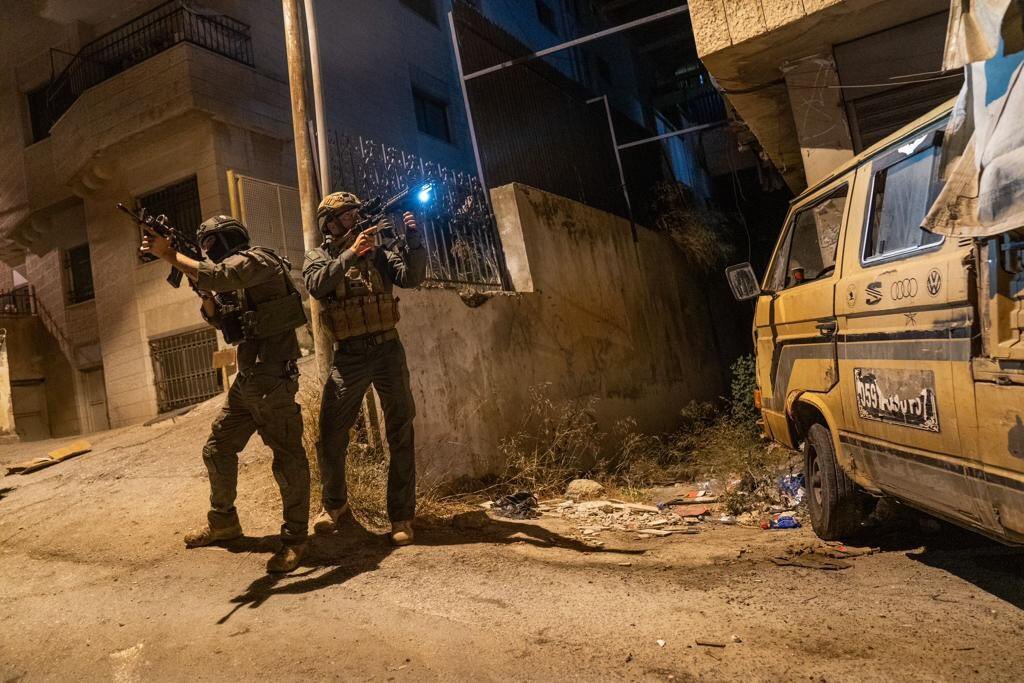
West Bank: Israeli army storms towns and villages in Jenin Governorate

On Monday evening, Israeli occupation forces stormed towns and villages in Jenin Governorate.


According to local sources, the occupation forces stormed the village of Deir Abu Daif, east of Jenin, leading to the outbreak of confrontations that resulted in a number of citizens suffering from suffocation.


The occupation soldiers also stormed the town of Ya'bad, west of Jenin, and the villages of Beit Qad and Jalaboun, east of them. They set up a military checkpoint at their entrance, stopped citizens' vehicles, searched them, and checked their occupants' IDs. They also stormed the village of Al-Arqa, west of the city, and launched a massive inspection campaign, without any arrests being reported.


In this context, the Israeli police arrested the young man Yazan Abu Salah from the town of Ya’bad while he was inside the 1948 territories.

ARAB AND WORLD

Mon 18 Dec 2023 7:00 pm - Jerusalem Time

Negotiations in Warsaw for the exchange of prisoners

Reuters said, on Monday, that two American officials told the agency, on the condition that we do not reveal their identities, that CIA Director William Burns is scheduled to meet with Qatari Prime Minister Mohammed bin Abdul Rahman Al Thani and the head of the Israeli intelligence service (Mossad) in Warsaw on Monday to discuss an agreement. A possible new release of Israeli hostages, held by the Palestinian Islamic Resistance Movement (Hamas) in the Gaza Strip, and the two officials spoke on condition of anonymity.


The Axios news website had previously quoted two officials from the United States and Israel that a meeting would be held today.


Israeli Prime Minister Benjamin Netanyahu said on Saturday that new negotiations are underway to recover the hostages held by Hamas after a source said that the head of Israeli intelligence met with the Prime Minister of Qatar, which is mediating in this conflict, while an informed source said that Mossad chief David Barnea met with Al Thani in Europe, late Friday.


On Sunday, two Egyptian sources told Reuters that Hamas insists that it, not Israel, decides the identities of the hostages who will be released in the event of another agreement being implemented, and that it wants Israeli forces to withdraw to pre-determined lines.


According to the sources, Israel rejects the last condition, but it has accepted the first, regarding setting a list of hostages to be released, and has demanded a timetable for reviewing the list before determining the time and duration of the ceasefire.


On the other hand, the Times of Israel quoted Kan News on Saturday evening that Egyptian and Qatari officials had offered a new deal to Hamas in recent days, stipulating the release of the elderly, the sick, and the remaining women and children in exchange for the release of prominent Palestinian prisoners.


It was not clear whether the offer was made after consultations with Israel. While Kan News said that Hamas has not yet responded to the proposal.


Under the previous temporary truce brokered by Qatar, Egypt and the United States in late November, Hamas released, over the course of about a week, 105 civilians out of about 240 hostages, in exchange for a halt to the fighting, an increase in humanitarian aid to Gaza, and the release of Palestinian prisoners.


Most of the hostages who were released were Israeli women and children, in groups ranging between 10 and 12 individuals per day.


Israel accused Hamas of violating the deal, by "refusing to release at least 10 other women and two children still in the hands of the movement's militants," which led to the collapse of that temporary truce, according to the "Times of Israel."

ARAB AND WORLD

Mon 18 Dec 2023 6:19 pm - Jerusalem Time

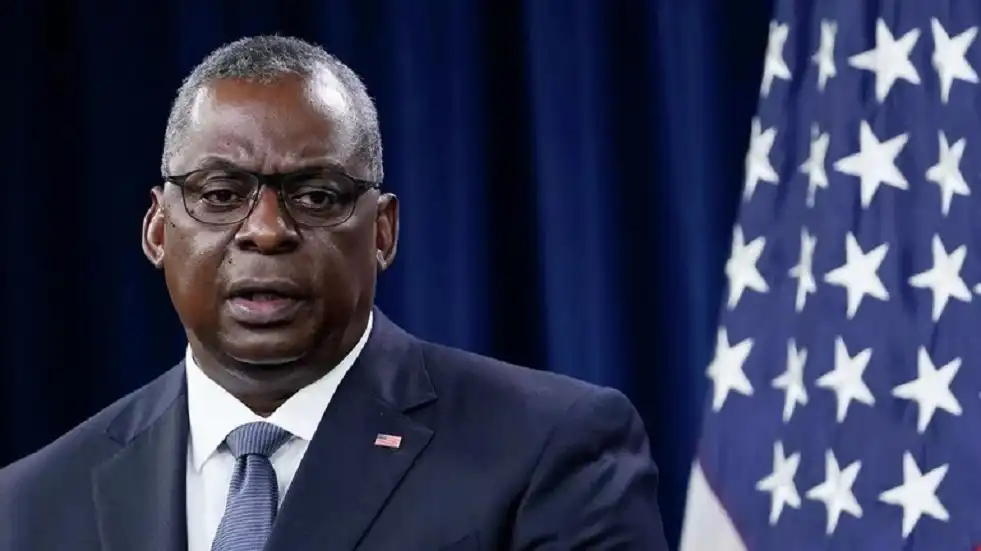
Austin from Tel Aviv: I am not here to dictate timetables or conditions regarding the conduct of the war in Gaza

US Defense Secretary Lloyd Austin said from Israel on Monday that the United States supports efforts to free all prisoners in Gaza.


He also added in a joint press conference with Israeli Prime Minister Benjamin Netanyahu, “We affirm America’s position of supporting Israel and defending its security.”


He continued, "The needs of two million displaced people in Gaza must be taken into account."


In addition, he said that Iran supports Houthi attacks on commercial ships, and added, "This must be stopped."


He continued, "We are leading a multinational task force to support freedom of navigation in the Red Sea."


Washington will continue to supply Israel with weapons and ammunition, adding that “Hamas should never again be able to export terrorism from Gaza to Israel,” he said.


Austin, who is currently visiting Israel, added, “We continue to provide Israel with the equipment it needs for defense (...) including vital munitions, tactical vehicles and air defense systems.”


At the same time, he noted that Washington "continues to urge Israel to protect civilians and bring humanitarian aid into Gaza."


He stressed the need for extremist settler attacks on Palestinians in the West Bank to stop.


Regarding the war in Gaza, he said that this is an Israeli operation, and “I am not here to dictate timetables or conditions.”


ARAB AND WORLD

Mon 18 Dec 2023 6:07 pm - Jerusalem Time

Israeli Report: Netanyahu brags about preventing the establishment of a Palestinian state

Israeli Prime Minister Benjamin Netanyahu said that he is proud to have prevented the establishment of a Palestinian state, and gave himself all the credit for curbing the Oslo peace process.


These statements by Netanyahu came in the context of a press conference held at the headquarters of the Israeli Ministry of Defense [“Kirya”] in Tel Aviv, yesterday evening (Saturday), with the participation of both Defense Minister Yoav Galant and Minister in the Israeli “War Cabinet” Benny Gantz, in which the Prime Minister confirmed the government also opposes the Palestinian Authority’s control of the Gaza Strip, after the end of the war with Hamas, and that it is important not to foster illusions among friends in this regard, in reference to the United States’ desire for the Strip to be governed by a renewed Palestinian authority, after the end of the war.


Netanyahu described the Oslo Accords as a fateful mistake, and said that the results of the small Palestinian state in Gaza, which resulted from the Israeli withdrawal from the Strip in 2005, demonstrated the danger of allowing Palestinian sovereignty in the West Bank.


Netanyahu said: “I am very proud that I prevented the establishment of a Palestinian state, because everyone realizes today what that Palestinian state could have been, after we saw the small Palestinian state in Gaza. Everyone realizes what would have happened if we had surrendered to international pressure and allowed the establishment of a state like this in Judea and Samaria [the West Bank] surrounding Jerusalem, and on the outskirts of Tel Aviv.”


Netanyahu insisted that he inherited the Oslo Accords, and that the decision to bring the Palestine Liberation Organization from Tunisia and plant it in the heart of Judea and Samaria [the West Bank] and in Gaza, was a decision that was taken and implemented, before he became prime minister, and it is a wrong decision.


Netanyahu reiterated that he would not allow the Palestinian Authority to control the Gaza Strip after the war, and said: “I will not allow Hamastan to be replaced by Fatahestan, or Khan Yunis to be replaced by Jenin. I will not allow the State of Israel to return to the disastrous Oslo mistake. The Hamas and Fatah movements do not differ on the desire to destroy Israel, but only on how to do it.” He claimed that there is broad support for his vision of long-term Israeli security control over a demilitarized Gaza. He added that he did not rule out the possibility of reaching an agreement with the United States in this regard.


The Prime Minister touched on the incident of the killing of 3 kidnapped Israelis by Israeli fire the day before yesterday (Friday), and said that lessons will be drawn from this incident, which reinforced calls in Israel to stop the fighting and reach an agreement to release the kidnapped people.


Netanyahu insisted that the war would continue, and said: “The only solace that the families of the dead soldiers may feel is that the death of their loved ones will not be in vain, by making sure that we will continue fighting until we achieve complete victory.” Hamas demands an end to the fighting and the withdrawal of forces.  The moment we agree, 'Hamas' will triumph, and we are obligated to eliminate this movement and return all the kidnapped."


Netanyahu indicated that he informed US National Security Advisor Jack Sullivan of his intention to continue fighting until Hamas is eliminated, despite the pressure exerted by the administration of US President Joe Biden to end the high-intensity fighting and significantly narrow the scope of the attack.


He said: “I say again to our friends: We are more determined than ever to continue until the end, until we eliminate Hamas, until we return all our hostages, and until we ensure that there will be no party in Gaza that breeds terrorism and finances terrorism. And by practicing terrorism.”


Defense Minister Gallant also rejected calls to stop the fighting, in light of the killing of the kidnapped people. He said: "The price of war is high, and we pay it every day, but when you know your goals, and when you know that you are fighting for a noble cause, you know that you have to pay the price, and we are ready to continue until we achieve our goals: destroying the Hamas movement, “And eliminate its military and governmental capabilities, and return the kidnapped people to their families.”

ARAB AND WORLD

Mon 18 Dec 2023 6:01 pm - Jerusalem Time

Hebrew Newspaper: Killing and transfer in the West Bank

While all eyes are directed to Gaza, the West Bank is witnessing dangerous events that will irreversibly change the facts there. The settlers saw the war on Gaza as an opportunity to change the reality of life in the West Bank and do everything that they would not dare do at other times. They mistreat their Palestinian neighbors, attacking them and assaulting their property with greater violence than on normal days, while the Israeli army does not deter them, and in many cases even protects them, acts aggressively, and uses lethal tools against the Palestinians.

These two steps are linked to each other, and have a common result: the evacuation of Palestinians from their villages and lands, especially in two distant points in the West Bank: south of Mount Hebron and north of the Jordan Valley. There, facing the most vulnerable populations, groups of shepherds who have no one to protect them, a real transfer is taking place that no one in Israel is talking about.

Since the beginning of the war, residents of 16 shepherd groups in the south of Mount Hebron have been forced to leave their villages, for fear of settlers. In northern Ghor "Valley", 20 families left their villages for the same reason.

Meanwhile, more Palestinians are being killed, almost daily, throughout the West Bank, some of them innocent. In the Tulkarm area alone, about 50 people have been killed since the beginning of the war, and in the Ramallah area, 30 people have been killed. Some of them were killed by settlers whose hands became lighter on the trigger, given their knowledge that no harm would come to them in light of the war and under the extreme right-wing government.

Soldiers also easily shoot at Palestinians, in addition to suicide drone attacks on crowded residential areas in the refugee camps in Jenin and Tulkarm.

Simultaneously with the killing, the demolition is taking place: Last week, Gideon Levy and Alex Levack reported that the destruction turned the Jenin camp into a miniature of Gaza (“Haaretz,” 8/12), and this is how the Washington Post described the camp’s situation in a special investigation on Jenin. .

In addition, confrontations occurred between the Israeli army and residents in the northern Jordan Valley. For example, residents of villages in the northern Jordan Valley were prevented from being supplied with water for two consecutive days (“Haaretz,” 12/15). In addition to the difficult economic crisis, as well as the absolute prohibition of Palestinian workers from entering Israel to work, there are dozens of strict checkpoints that increase the suffering of the Palestinians.

The Prime Minister failed miserably on October 7. Now, through the support he has provided to the settlers and the army, and through his toxic rhetoric against the Palestinian Authority, he is causing the deterioration of an additional front that could explode in the face of all citizens of Israel.

ARAB AND WORLD

Mon 18 Dec 2023 4:33 pm - Jerusalem Time

Hezbollah and the Israeli army continue to exchange bombardments

Today, Monday, Lebanese Hezbollah continued to fire rockets towards the Upper Galilee regions and bombard Israeli military sites adjacent to the border, while the Israeli army responded by bombing many villages in southern Lebanon.


Alarm sirens sounded in the Upper Galilee region, warning of possible missile attacks from Lebanon, at a time when the exchange of bombing continues in the border areas, between the Israeli army and the Lebanese Hezbollah, in parallel with the Israeli war on Gaza.


Israeli media reported that a number of rockets fell in open areas in the Western Galilee, without reporting any injuries or damage, while Hezbollah announced that it had targeted "a gathering of enemy soldiers and vehicles in the vicinity of the 'Hamra' site with appropriate weapons."


Subsequently, the Israeli army carried out bombardment on the town of Aitaroun and the vicinity of the town of Naqoura in southern Lebanon, and Israeli artillery also targeted the outskirts of the towns of Alma al-Shaab and Dhahira.

ARAB AND WORLD

Mon 18 Dec 2023 2:43 pm - Jerusalem Time

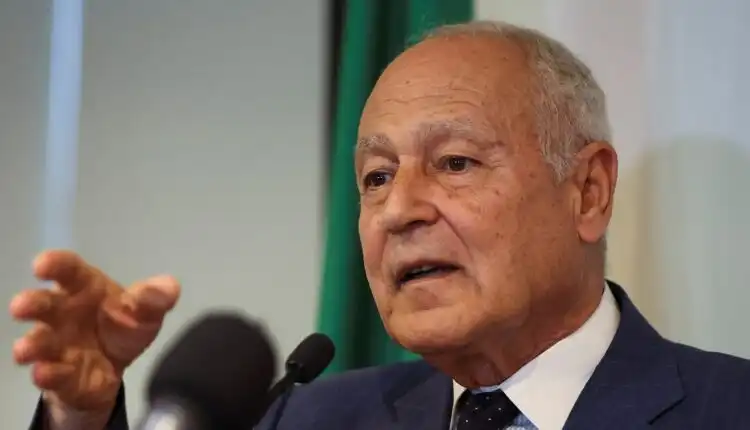
Arab League Chief: Israel's war on Palestinian civilians is brutal and devilish

Secretary-General of the League of Arab States, Ahmed Aboul Gheit, affirmed that “the brutal war waged by the Israeli occupation against civilians in Gaza reflects a clear, satanic plan, in its goals and objectives.”


He added in his speech before the meetings of the thirty-first session of the United Nations Economic and Social Commission for Western Asia - ESCWA, at the headquarters of the Arab League, that the Israeli occupation does not aim to eliminate a movement as it claims, but rather to eliminate an entire society, tear apart its fabric, and destroy the possibility of life in the Gaza Strip for a long time. Coming, stressing that these are the goals of the Israeli operation that are no longer hidden from anyone.


He added: "This diabolical plan has only one goal, which is to liquidate the Palestinian cause by separating the people from their land, either by eliminating the possibility of life on this land... or by forcibly displacing them and deporting them by force of arms... which will never happen."


He said that the leaders of the Israeli army do not hesitate to announce these goals, noting that “they say without ambiguity that there will be no Palestinian state in the future, and they declare their disavowal, time after time, of the Oslo Accords and what resulted from the establishment of the Palestinian Authority, and they declare no "It is a shame that the Palestinians will not have sovereignty over their land."


Aboul Gheit stressed, "This is an occupation that does not hide its face or outline its goals, but rather announces them with unprecedented impudence and bravado. It is also an underestimation of the peoples and nations that expressed their position unequivocally in a recent vote in the United Nations General Assembly, in which the countries overwhelmingly took sides." What is correct from history is to demand an immediate ceasefire, an immediate end to the bloody massacre and collective punishment that no longer has a place in our world.”


Aboul Gheit added: “Every new day of this war moves us further away from the two-state solution that the Palestinians, Arabs, and the entire world have accepted, with the exception of Israel, which mistakenly believes that it can inflict a second catastrophe on the Palestinians. However, even if it kills thousands of innocent civilians without guilt or crime, it will not kill Their dream will not force them to give up their right to land and life.”


Aboul Gheit once again called for an urgent cessation of the war, saying: “Hence, we reiterate our urgent call for a ceasefire in order to preserve the security and stability of the region, especially since we are following with concern the irresponsible actions that have become a source of threats in the Red Sea, with their expected negative impact.” on the economic conditions of the countries of the Arab region.”


ARAB AND WORLD

Mon 18 Dec 2023 1:32 pm - Jerusalem Time

Hebrew newspaper reveals: Many Gaza detainees were dead inside Israeli army camps

The Israeli newspaper Haaretz revealed the death of many prisoners who were recently arrested by the Israeli occupation army from the Gaza Strip and held in difficult conditions in the "Sde Teman" camp near Beersheba.


According to the newspaper, many Palestinians who were arrested from the Gaza Strip since the beginning of the war died in a detention center in the Negev, and the Israeli army claimed that “these are terrorists,” and the circumstances of their deaths are under investigation.


It is noteworthy that the age group of detainees held in the facility ranges from minors to the elderly, and they are investigated immediately.

Detainees are held there with their eyes covered and hands shackled for most of the day, and in their prison compounds the lights are on all night. They are referred for investigation, and according to the Israeli army, detainees who are found not to have participated in terrorist activity are returned to the Gaza Strip. The other detainees are transferred to the Prison Service.

Source: Sama News

ARAB AND WORLD

Mon 18 Dec 2023 12:49 pm - Jerusalem Time

An American intelligence officer: The Hamas attack is the most successful military raid this century, and Hezbollah will absolutely defeat Israel in the north.

The Hamas movement surprised the world with its “Al-Aqsa Flood” operation last October, and the surprise was not only in the size of the huge Israeli losses, but also extended to how it was planned and implemented in complete secrecy without revealing it, despite the various technological and human Israeli spy networks surrounding the Gaza Strip. The surprise extended Also, the extent to which Hamas succeeded in achieving its goals, and the return of hundreds of its fighters to Gaza, along with more than two hundred hostages and prisoners from the Israeli side.

  Former US military intelligence officer Scott Reiter, (62 years old), who has a long history of practical, research and analytical experience in Middle East affairs, said, “The Hamas movement has already won with its complex and advanced operation in October, and that it cannot be eliminated, as the government announced.” “This is because Hamas has become a practical and moral symbol of resistance to the Israeli occupation,” he said.


  He continued: “What really surprised me was the poor condition and deterioration of the Israeli army’s performance. As I am very familiar with the Israeli army and have been studying it for many years, I have noticed a decline in the combat level of its soldiers, especially among members of the ground forces, amid an exaggerated reliance on technology and the capabilities of the air force.”

  He added: “On the other hand, I had confidence in the Israeli intelligence services. Over the decades, they showed great ability to penetrate the Palestinian resistance movements in the West Bank and Gaza Strip by planting a wide network of spies, and they had a tight network that monitored much of what was happening in the Gaza Strip.” There was certainty among intelligence experts that it was unlikely that Hamas would plan an operation of this size without detecting and thwarting it.”

  He stressed that “the Israeli intelligence failure was shocking to me, but what was more shocking was the Israeli army’s reaction immediately after the Hamas attacks on October 7, and what happened confirms that the Israeli army has several distinguished teams with exceptional combat experience, but the rest of the army forces are not at the needed level especially members of the reserve forces who have been called up to fight,” he said.

  Ritter, the United Nations inspector in charge of searching for weapons of mass destruction in Iraq during the years 1991 to 1998, said that the Hamas attack on Israel last October was considered the most successful military raid in this century, according to his statements.

  Ritter added, in an article published on his own website, that Israel’s likening of the October 7 attack to the events of September 11, 2001 and the “atrocities” that it claims were committed by Hamas, including “mass rape, beheading of children, and killing of defenseless Israeli civilians,” are all inaccurate accusations.

  He continued, “The Israeli claims are clearly false or misleading,” adding that about a third of the Israeli deaths were army, security, and police officers, stressing that the first killer of the Israelis in October was not Hamas or the other Palestinian factions, but rather the Israeli army itself.

  Ritter cited a recently published video showing Israeli Apache helicopters randomly shooting Israeli civilians trying to flee, explaining that the pilots were unable to distinguish between civilians and Hamas fighters.

  He added that the accounts of civilian and military eyewitnesses regarding what Israel calls the “Re’im massacre” confirmed that the vast majority of the victims were killed by Israeli soldiers and tanks.

  He explained that the Israeli government retracted its claim that Hamas beheaded 40 children, without providing any reliable evidence of its involvement in the rape or sexual assault of a single Israeli woman.

  He said that eyewitness accounts confirmed that Hamas fighters were disciplined and resolute in the attack, but they were polite and kind in dealing with civilian prisoners.

  Ritter also commented on Israeli youths in Jerusalem chanting anti-Palestinian statements, stressing that Israel is rapidly losing its moral right to exist as a nation.

  Ritter wrote on his account on the (X) platform: “Israel is rapidly losing its moral right to exist as a nation, if it has not already done so,” adding: “I used to support Israel’s right to exist, even when I disagreed with its government’s policies, but when... The Jewish homeland has become a modern embodiment of the forces of hatred that created the conditions that led to the formation of Israel in the first place, so one must question the feasibility and legitimacy of the project.”

  Ritter added: “The establishment of a separate Jewish state, organized and implemented under the current policies and practices of the modern Israeli state, is no longer acceptable.”

  Ritter showed how Hezbollah has become an increasing threat in the north, pointing to its ability to control strategic areas such as the Galilee, pointing out that Hezbollah has become a player that cannot be ignored, as he put it.

  He added: “If Hezbollah intervenes in the north, it will achieve seven times more victories over Israel than Hamas, and it will defeat the Israeli army absolutely along its northern border, which will blow everyone’s minds,” pointing out that “Hezbollah was preparing for this battle.” “For many decades, they know the Israelis well, and the region as well.”

He concluded: “Israel has put many of its resources in Gaza, and there are not many of them left. Hezbollah has about one hundred thousand fighters, and many of them have become more solid due to their participation in the war in Syria. I believe that the biggest surprise for Israel will come from Hezbollah, and this defeat for Israel will not only be military but also economically, but more importantly than that, Hezbollah will defeat the Zionist mentality. In practice, it will be the absolute delegitimization of political Zionism, and when this defeat occurs, and it happens or has already happened, this will be the end of Israel,” according to his statements.

Source: Sama News


ARAB AND WORLD

Mon 18 Dec 2023 12:28 pm - Jerusalem Time

Human Rights Watch: Israel uses starvation as a “weapon of war” in Gaza

Human Rights Watch said that the Israeli government is using starvation of civilians as a method of war in the occupied Gaza Strip, which constitutes a “war crime.”


The organization indicated in a statement issued today, Monday, that the Israeli army is deliberately preventing the delivery of water, food, and fuel, while deliberately obstructing humanitarian aid, and appears to be bulldozing agricultural areas, depriving the civilian population of materials that are indispensable for their survival.


Omar Shaker, director of Israel and Palestine affairs at Human Rights Watch, said: “For more than two months, Israel has been depriving the people of Gaza of food and water, a policy that was urged or supported by senior Israeli officials, and reflects an intention to starve civilians as a method of war,” calling on world leaders to raise their voices against this abhorrent war crime, which has devastating effects on the people of Gaza.


Shaker added: “The Israeli government is doubling its collective punishment of Palestinian civilians and preventing humanitarian aid by using the cruel use of starvation as a weapon of war,” stressing that the worsening humanitarian catastrophe in Gaza requires an urgent and effective response from the international community.


In its statement, the organization believed that the Israeli government must immediately stop using starvation of civilians as a method of war, demanding that the occupation government restore the provision of water and electricity, and allow the entry of urgently needed food, medical aid, and fuel into Gaza through the crossings, including Kerem Shalom.


The United States, Britain, Canada, Germany, and others called for the suspension of military aid and arms sales to Israel, as long as its army continues to commit serious and widespread violations that amount to war crimes against civilians with impunity.


Human Rights Watch interviewed 11 displaced citizens in Gaza between November 24 and December 4, who described the severe difficulties they face in securing basic necessities. One man who left northern Gaza said: “We had no food, no electricity, no… Internet, nothing at all, we don't know how we survived."


In southern Gaza, interviewees described scarcity of potable water, food shortages that led to empty stores and long queues, and exorbitant prices.


“You are constantly looking for things to survive,” the father of two said.

According to the United Nations World Food Program, on December 6, 9 out of 10 families in northern Gaza, and two out of three families in southern Gaza, spent at least a full day and a full night without food.


International humanitarian law, or the laws of war, prohibits starvation of civilians as a method of warfare. The Rome Statute of the International Criminal Court states that intentionally starving civilians “by depriving them of items indispensable to their survival, including intentionally impeding relief supplies” is a war crime.

The occupation government continued to prevent the entry of fuel until November 15, despite warnings of dire consequences, causing the closure of bakeries, hospitals, sewage pumping stations, water desalination plants, and wells. These facilities are no longer fit for use, despite allowing limited quantities to enter. Of fuel later, but the United Nations Humanitarian Coordinator for the Occupied Palestinian Territories, Lynn Hastings, described it on December 4 as “not enough at all.”


UN experts said on November 16 that the severe damage “threatens the impossibility of continuing life for the Palestinian people in Gaza.” The occupation army bombed the last operating wheat mill in Gaza on November 15.


The United Nations Office for Project Service said that the destruction of road networks has made it difficult for humanitarian organizations to deliver aid to those who need it.


Israeli military operations in Gaza also had a devastating impact on its agricultural sector, and according to Oxfam: “Due to the continuous bombing, along with the shortage of fuel and water, and the displacement of more than 1.6 million people to southern Gaza, agriculture has become almost impossible.”


PALESTINE

Mon 18 Dec 2023 11:31 am - Jerusalem Time

West Bank: Israli forces arrest 34 Palestinians including 3 women and a freed prisoner

The occupation forces arrested, at dawn and Monday morning, 34 citizens from the West Bank governorates, including 3 women and a freed prisoner.


It is noteworthy that the total number of arrests after October 7 reached more than (4,575), and this total includes those who were arrested from homes, through military checkpoints, those who were forced to surrender themselves under pressure, and those who were held hostage.


Note that, in recent times, the occupation forces have focused on field investigation operations, where they arrest many citizens, with the aim of investigating them on the ground, and then release them later, after carrying out acts of abuse and torture against them.


It is noteworthy that the data related to arrest cases includes those who were kept in detention by the occupation and then released later.

PALESTINE

Mon 18 Dec 2023 11:31 am - Jerusalem Time

Gaza war: A Palestinian female journalist killed in Israeli bombing on the Nuseirat camp

Journalist Haneen Ali Al-Qashtan was killed, along with members of her family, in a bombing that targeted the Nuseirat camp in the central Gaza Strip, according to what local and health sources in the Strip reported.


With the ascension of journalist Haneen Al-Qashtan, the number of journalist killed has risen to 93 since the beginning of the occupation’s aggression against the Gaza Strip.


Haneen Al-Qashtan is a Palestinian journalist who was born in Gaza City on September 23, 1990. She previously worked as a programmer on Al-Kufiya Channel, as well as a program presenter on Baladna Channel. She also held the position of editor on the “Affairs of the Country” website in the past.


Before her death, Al-Qashtan struggled with the disease and was able to overcome it, but she passed away from our world as a result of the devastating war on the Gaza Strip.


ARAB AND WORLD

Mon 18 Dec 2023 11:26 am - Jerusalem Time

Supporting the Gaza War.. How does it affect Biden’s gaining support from American Muslims?

In her statement on NBC: News Democratic Representative Debbie Dingell (from Michigan) hinted that US President Joe Biden’s path to regaining the confidence of Arab and Muslim American voters is full of obstacles and that: “There is a lot that he (Biden) must do” in order to restore Biden to Muslim voters, in the upcoming presidential elections. .


Activist committees representing large segments of Arab and Muslim voters from the Democratic Party raised slogans to abandon Biden, and began organized campaigns across the United States, calling on voters to choose a third candidate from the independents, and not to elect either Biden, or his potential Republican rival, former President Donald Trump, due to Biden's dedicated support of the barbaric Israeli war on the Gaza Strip.


Asked on NBC News' "Meet the Press" if Biden could do anything to win back those voters, Dingell said: "So there's a lot to be done, and this is a very serious issue."


Dingell said she knows the Muslim voter community, having lived for 40 years in Dearborn, Michigan, the city with the largest Arab-American population in the United States.


Dingle added: “They (voters of Arab origin) are hurt. We all in this country need to understand what is happening in Gaza now. You can disagree about the number of thousands of people killed, but between 6,000 and 8,000 children were killed, and 85% of "The people of Gaza have to leave their homes and are living in shelters," this is difficult to understand.


Dingell reiterated her call for an immediate ceasefire and a strong push for a two-state solution after the end of the Israeli war on Gaza. Thus, Dingell joins a growing group of political figures calling for a ceasefire in Gaza amid the rising death toll and worsening humanitarian crisis.


The war on Gaza has been going on for more than 71 days, when the Hamas movement launched a surprise attack on Israel on October 7, which left about 1,200 people dead, including hundreds of civilians. Israel's retaliatory campaign against Gaza led to the deaths of more than 18,700 people, most of them women and children, according to the Gaza Ministry of Health.


The Biden administration has remained committed to its dedicated military, political, financial, and diplomatic support for Israel, refusing to pressure the Netanyahu government to accept a ceasefire, although it has recently increased its calls for Israel to try to reduce the number of civilian deaths to a minimum.


According to "The Hill" newspaper, which specializes in American political affairs, and which conducted multiple interviews with American Arab and Muslim voters (in different parts of the United States last month), they said that they feel betrayed and disappointed about Biden's handling of the conflict and his continued support for Israel. Earlier this month, leaders from Michigan and other swing states pledged to abandon their support for Biden over his refusal to call a ceasefire in Gaza.

OPINIONS

Mon 18 Dec 2023 10:22 am - Jerusalem Time

On American-Israeli differences

Nihad Abu Ghosh

Nihad Abu Ghosh

Opinion Writer

In official statements, the US administration blames Israel for its use of stupid bombs, that is, bombs that are not precisely guided, and indiscriminate bombing that targets civilians indiscriminately. 


These statements made by President Joe Biden and conveyed by National Security Advisor Jake Sullivan, and whose details are scheduled to be discussed by Secretary of Defense Lloyd Austin, come a full ten weeks late, and they certainly will not do justice to the victims, who number more than twenty-five thousand (if we take into account the official figures and a large percentage of those trapped under the rubble), and it will not change the Israeli methods of war in any way, as it comes in the form of advice and observations and not in decisive and strict language, because whoever finances the war with many billions of dollars, opens an air bridge to transport all types of weapons, equipment, ammunition and equipment, and moves plane carriers are to deter any regional party thinking of intervening in the interest of the Palestinians, and to protect Israel from any binding international resolution that can stop the brutal war with a signal or a call.

The United States expressed its opposition to Israel reoccupying the Gaza Strip, or cutting off part of its area and displacing Palestinians to Sinai or elsewhere, with mounting calls for the return of settlement and control of the marine gas fields off the coast of Gaza. There are those who insist on reviving the idea of the “Ben Gurion Canal” between the Gulf of Aqaba and the Mediterranean Sea as an alternative channel to the Suez Canal, and believe that getting rid of the Gaza Strip and its residents will reduce the costs of constructing that canal. These calls have reached the point of demanding the erasure of the Gaza Strip and turning it into an Israeli national park. As for the least extreme of them, they demand the establishment of a security strip with a width ranging between 2-3 kilometers, which means cutting off about a third of the area of the Strip, so that any agricultural or urban activities are prohibited.

The American verbal statements were accompanied by positions in support of Israel without reservation, such as in the votes in the Security Council and the United Nations General Assembly, and the adoption of war goals, and even in issuing some statements and conditions that the Israelis themselves did not say, such as “this war will not end except with the surrender of Hamas.” And "Sinwar's days are numbered"! For all of this, the apparent American-Israeli differences can be understood as merely minor, minor differences, no more than those existing between the poles of the Israeli war council.

So the apparent change in the American tone, does not represent a late awakening, nor a fundamental change in the positions supporting the war, despite the presence of factors that require a change in that, especially the decline in the popularity of President Biden, and the protest of broad circles in the ranks of the Democratic Party, especially from the younger generation. 


Influential circles dissociated from this party, including the Arab, Muslim and African-American communities, and threatened not to vote for Biden, but the latter and his administration chose to appease these circles with sweet words and claims of neutrality in exchange for absolute support for Israel and the war of extermination with all its war crimes and crimes against humanity.

The United States is fighting this war as if it were its own war, and not because it concerns a friendly or allied country. The relationship between the United States and Israel is described as an organic relationship that differs from any distinct relations between two countries. Israel has been and continues to play the functional roles assigned to it in serving American strategic interests on both levels regional and global. Among these roles is confronting any regime that derives an independent national policy for itself that conflicts with American policies. And against liberation movements, and supporting corrupt and tyrannical regimes around the world that the US Congress places restrictions on dealing with. Israel is also considered the largest applied laboratory for testing types of American weapons, as the military, security and technological industries represent an extension of the arms industry complexes in the United States.
Some analysts describe Israel as the largest aircraft carrier in the world in terms of its low cost compared to the great benefits it provides to the United States. Therefore, it was not strange for the American president, who described himself as a Zionist, to say, “If Israel did not exist, we would work to create it.” As for the talk that is repeated like a record, Old statements about “common democratic values” and the Jewish state are nothing but blatant lies, and perhaps the main thing they have in common is the willingness to commit genocide, wage wars, and fabricate slander to justify them.

Perhaps what explains these apparent contradictions and differences is what was stated by US Secretary of Defense Lloyd Austin, who said that Israel may achieve tactical victories but will suffer a strategic loss, and this applies to many historical events and wars in which great powers superior in weapons and capabilities faced local powers. It is lower in capabilities but stronger morally, as happened in the confrontations between the United States and Vietnam and Afghanistan, and between France and Vietnam and then Algeria, where there is no room for comparison between the military capabilities of the United States and its opponents. In the war on Gaza, there is a gross imbalance in the balance of power between the Israeli military arsenal armed with the latest aircraft, tanks and battleships, and based on a strong economy and unlimited support from the most powerful country in the world, and a resistance that developed in a besieged and suffocated environment and deprived of the most basic capabilities, but strengthened by faith in its cause. Its people adhere to freedom, and thus the equation becomes an expression of the human will in the face of the tyranny of the machine, and it is based on a historical equation in our Arab-Islamic heritage that states the possibility of the victory of blood over the sword, and the palm over the awl. Thus, Israel's continuation of its war and the crimes of genocide it commits contribute to its isolation and affect its status, image, and ambitions to integrate into the region, continue breaking isolation, and establish normalized relations with Arab and Islamic countries.

For all of the above, the American administration seems to be more concerned than Israel and its leaders, who see no further than their own noses and public opinion polls, and are chasing imaginary victories over a people who have nothing to lose except the restrictions of occupation, siege, and policies of humiliation.

PALESTINE

Mon 18 Dec 2023 10:13 am - Jerusalem Time

New York Times| What is the path to peace in Gaza?.. 10 ideas for a path forward

After Hamas’s depraved attack and the unfathomable destruction of Palestinian life, infrastructure and society in Gaza by the Israeli military offensive, any hope for the territory feels far away. But once the guns fall silent and Gazans are allowed to contemplate the reconstruction of their shattered home, the time will come when Israelis, Palestinians and the rest of the world must wrestle with the future of Gaza and its people.

Times Opinion reached out to thinkers, political leaders and experts for their vision of what might meet the moment. Because in the end, two neighboring groups of millions of people must find a way to live their lives. Here are 10 ideas for a path forward.


Empower Palestinians

By Peter Beinart 

Today, most Jewish Israelis support the invasion of Gaza. They think it is crucial to restoring their country’s reputation for military competence and strength. But while Israel can depose Hamas, its leaders have not explained how it can rule Gaza — either directly or by proxy — without inviting a future insurgency. That insurgency will be powered by Palestinians seeking revenge, since, as Israeli experts have noted, Hamas recruits fighters from the families of people Israel kills. As that quagmire deepens, Israel would look about as strong and competent as the United States did when it could not quash insurgencies in Afghanistan and Iraq.

Militarily, Israel should instead conduct the kind of narrowly targeted response the United States eschewed after Sept. 11. It should pursue the people who masterminded the Oct. 7 slaughter to the ends of the earth and the end of their days. But it should halt its invasion of Gaza and negotiate a long-term cease-fire that leads to freedom for all the remaining Israeli hostages. At the same time, Israel should allow Palestinians to create a legitimate political leadership — which can take charge in the West Bank and Gaza — and empower Palestinians who pursue their freedom in ethical ways. To negotiate seriously with Israel, Palestinians need legitimate leaders — not the discredited Palestinian Authority president, Mahmoud Abbas, who hasn’t stood for election since 2005. As the Israeli newspaper Haaretz has advised in the past, Israel should release the imprisoned Palestinian nationalist Marwan Barghouti, who is more popular than the leaders of Hamas. Mr. Barghouti was convicted of murder and membership in a terrorist organization during a trial at which he declined to offer a defense and refused to recognize the Israeli court’s jurisdiction. But despite defending Palestinians’ right to violently resist Israeli oppression, he has also lauded Nelson Mandela’s willingness to “defy hatred and to choose justice over vengeance.” Israel should then empower Mr. Barghouti and other credible, non-Hamas Palestinian leaders by showing that they can improve Palestinian lives and give Palestinians hope that they will gain their freedom. It should begin dismantling the West Bank settlements whose inhabitants terrorize their Palestinian neighbors and help Palestinians forced from their villages by settler violence to return. It should prevent Jewish ultranationalists from undermining the status quo on the Temple Mount, known to Muslims as the Noble Sanctuary, and promise not to establish diplomatic relations with Saudi Arabia until Palestinians are free. According to Israeli media, influential Palestinians have proposed allowing Hamas to join the Palestine Liberation Organization, the umbrella group that includes different Palestinian parties, if it disarms. Mr. Barghouti could oversee such a process, which would pave the way for a revived, internally democratic P.L.O., which could set a new political direction for the Palestinian people. 

Will Benjamin Netanyahu’s government do any of this? Not a chance. But polls suggest that his Likud party may suffer a historic collapse when Israelis next vote. The Biden administration should make it clear that America’s relationship with Israel will depend on its next government pursuing a different path. Israel’s current one will succeed only in devastating Gaza. It won’t give Palestinians hope, and it won’t keep Israelis safe.

Peter Beinart (@PeterBeinart) is a professor of journalism and political science at the Newmark School of Journalism at the City University of New York. He is also editor at large of Jewish Currents and writes The Beinart Notebook, a weekly newsletter.


Let NATO Nations Send Troops

By Ehud Olmert 

ISRAEL’S MILITARY CAMPAIGN will continue until Hamas’s military capabilities are eliminated and it is removed from power. It’s hard to guess how long it will take, but if we are to be honest, it will take longer than Western societies are prepared to accept and longer than what their leaders — above all, President Joe Biden, a close friend of Israel — are willing to tolerate. It is imperative for this reason that Israel provide the world with a clear picture of what it intends to do next, after the army has completed its work. The current Israeli government has no answer. It hasn’t had time to prepare a long-term strategy. But even if Prime Minister Benjamin Netanyahu and his coalition partners are unwilling and unable to propose the necessary next steps, the rest of Israel — and anyone who cares about its stability and security — can no longer avoid the question. Here’s what I think should be part of that plan: After the military campaign to remove Hamas from power and destroy its ability to fight, Israeli forces must withdraw all the way to the border of Gaza. As that campaign now continues, Israel, the United States and other allies in parallel must agree on the deployment of an international force drawn from NATO countries, with their deployment agreed on by Israel and the United States and operating under the auspices of the U.N. Security Council. The international force would take the place of the Israel Defense Forces in Gaza. Arab nations will probably not be willing to send in troops. While Egypt, Jordan, the United Arab Emirates, Bahrain and Saudi Arabia desire nothing more than the destruction of Hamas, which is a destabilizing force for their own governments, none will want to be seen as lending a hand to Israel’s military campaign. The international force would help create a different governmental administration and would start to rebuild the civilian authorities and governing systems in the Gaza Strip for approximately 18 months. Israel must announce that with the cessation of its military campaign, talks will immediately begin with the Palestinian Authority based on a two-state solution — which is the only political horizon that can offer stability and cooperation between Israelis and Palestinians and diplomatic, military and economic cooperation between Israel and the moderate Arab states. There is no doubt that the Netanyahu government is unwilling, unable and unprepared to make such moves. Before any of these steps may be taken, therefore, there is no choice but to get rid of this government. Once it is gone and as soon as the military campaign in Gaza is over, the first steps toward what comes next may be taken.


Create an Economic Future

By Raja Khalidi  

As Israel’s war on Gaza enters its third month, the warring parties and their allies are eyeing the endgame. Palestinians remain focused on solidarity in the face of what the chief U.N. relief official and the top E.U. diplomat have termed an apocalyptic scenario and what the Israeli agriculture minister has promised will be a second Nakba. Regardless of who is left standing in Gaza after the war, governance of the Gaza Strip and the West Bank is best left to Palestinians to arrange through elections. The Palestine Liberation Organization and most of the international community remain committed to a peaceful resolution of the conflict within a two-state configuration. In preparing for such a renewed possibility, Palestinians will have to reckon with their economic future. Since 1947, policymakers and academics have generated various visions of Palestinians’ economy after a two-state partition. But for now, the demands of relief, shelter, economic recovery and reconstruction in Gaza are so overwhelming that there is little point in pondering a future whose shape is unknown. Israeli bombardment has destroyed about half of Gaza’s building stock, in what some experts call a domicide. Just as much of the economic infrastructure and public service utilities needed to sustain the population has also been crushed. An economy that before the war had an annual per capita G.D.P. of less than $1,500 — already among the lowest in the world — will almost certainly register $0 next year for some two million Palestinians. Barring the unthinkable but not yet to be discounted risk of mass spontaneous exodus or deportation of the Gazan population to Sinai, there are three essential tasks to get the Gaza Strip back on its feet ahead of any larger solution.

First, Gaza’s people, most of whom have been displaced, need to be sheltered, clothed, fed, given medical care and protected — an effort budgeted by the United Nations at $1.1 billion through this month, assuming a humanitarian management structure can be put in place in Gaza.

Second, before meaningful reconstruction can be planned, huge challenges must be met, whatever the governance arrangement: the removal of rubble and the bodies beneath it, reconnection of utility networks, the provision of temporary spaces for public services and a restarting of the engine of the private economy.

Finally, the people: more than two million traumatized and impoverished refugees, many of them maimed, malnourished and dehumanized. Israel and other economically developed countries have the social protection systems to help cope with such demands. But denied a state of their own, Palestinians in Gaza will need sustained support to simply recover and be productive citizens rather than destitute refugees.Therefore, Gazans should be granted a universal basic emergency income, a new concept among policymakers working on economic empowerment and social protection. Trials have been successful in nonemergency applications in India, Kenya and Spain, and the Covid pandemic spurred short-term programs worldwide. Providing a basic monthly income of $200 to all Palestinians in Gaza for a year, until they can successfully reintegrate productively, would require almost $5 billion. That financial need calls for a recognition by Israel’s allies and Arab states that their failure to halt the military campaign that caused such a disaster comes with a price. The Palestinian people are already paying the human cost of this war, while Israel’s war budget could be underwritten with $14 billion courtesy of U.S. taxpayers. The U.S. administration and regional partners have been exploring postwar governance in Gaza. Evenhandedness requires that the U.S. administration concern itself less with regime change in Gaza and more with alleviating suffering.


Raja Khalidi is the director general of the Palestine Economic Policy Research Institute in Ramallah in the West Bank and a development economist.


The Answer Lies With Biden

By Bernard Avishai and Ezzedine Fishere 

PRESIDENT BIDEN HAS CALLED for a two-state solution. But this vision has foundered for decades. What makes this goal remotely plausible today? In the background of the horrible deaths of Israeli and Gazan civilians are moderate majorities in both Israel and the Palestinian territories, increasingly polarized by zealots. If Mr. Biden can provide a credible diplomatic track to a just peace, moderates on each side will have something to trust in. Mr. Biden enjoys great moral prestige in an Israel deeply skeptical of Prime Minister Benjamin Netanyahu. He also has credibility with Arab leaders and can make a good-faith overture to the Palestinian street because, in spite of anti-American sentiment, all understand that the United States is the only power Israel depends on and that America has more leverage than ever to induce productive negotiations. A strong U.S. commitment to two states — one that entails a demand for a settlement freeze — would almost certainly force the dissolution of Mr. Netanyahu’s government, since it rests on the support of religious parties that represent the settler movement. Rejecting American diplomatic leadership in favor of continued settlements would probably lead to the withdrawal of centrists from his unity cabinet. On the Palestinian side, polls have shown that any peace process that looks serious enough to end the occupation turns people away from Hamas. Palestinians also feel the force of Arab states pressuring from the outside and time running out for a political solution. Israelis need to feel that their security partners are the neighboring Arab states — Egypt and Jordan — and not only the Palestinian Authority, in which they have little trust. 

What, then, should Mr. Biden specifically propose, beyond the broad outline he has given? Solutions to the once-thorny core issues of a two-state solution are well understood from previous negotiations. As a first step, he can just check these off: American-mediated negotiations for two independent — and, in some jurisdictions, interdependent — states based on the 1967 lines, with land swaps; Palestinian refugees returning to a Palestinian state, not Israel, compensated by an international commission or in some cases accepting resettlement in other countries; Jerusalem remaining united administratively but home to two capitals, with a dotted-line border; and the Holy Basin, including the entire Old City and Temple Mount, or Noble Sanctuary, as it is known to Muslims, subject to an international custodian, acting by consensus, and composed of Israel, a Palestinian state, the United States, Jordan and perhaps Saudi Arabia.

Next, the United States should invite Egypt, Jordan, the United Arab Emirates and, crucially, Saudi Arabia to form a security alliance — a sort of Arab NATO — that would deploy Egyptian and Jordanian missions to the West Bank and eventually Gaza. These missions, in liaison with U.S. and Israeli counterparts, would move to establish a collective security environment: police Palestinian territories and its border crossings, reconstitute the Palestinian security forces, build out a Palestinian state apparatus and preside over eventual elections, in which armed organizations would not be allowed to participate.

The third step would be drafting a road map that would couple moves toward Palestinian statehood and investments in it with regional integration. Israel and its neighbors have already undertaken or proposed projects dealing with desalination, electrification and a high-speed train from the United Arab Emirates to Haifa. The road map should realize such projects and facilitate the entry of diaspora Palestinian entrepreneurs to the West Bank, therefore ensuring that peace building is associated with economic growth, not decline. Mr. Biden should revive the idea of a rail corridor linking the West Bank and Gaza, as proposed by the RAND Corporation. Crucially, he should also make clear that new aid to Israel must be used to strengthen regional peace, not obstruct it with settlement expansion.

Only the United States can lead the players into these three steps — and only for a brief window. A Gaza war that breaks hearts without hope will ignite the region. That is what Hamas intended. That is what the settlers expected. Mr. Biden is the only player with a chance of denying them victory.

Bernard Avishai is the author of “The Tragedy of Zionism” and other books. Ezzedine Fishere is a former diplomat for Egypt and the United Nations. He is the author of “Embrace on Brooklyn Bridge.” They teach at Dartmouth College.


Establish an International Trusteeship

By Limor Yehuda, Omar M. Dajani and John McGarry 

THE MOST PROMISING COURSE of action, and one that has not been widely discussed, is a temporary international trusteeship under a U.N. Security Council mandate encompassing Gaza and the West Bank, not just for Gaza. Such a trusteeship would offer a viable immediate alternative to Israeli rule, which is unacceptable to Palestinians and counterproductive for Israel; to Hamas, which cannot serve as an acceptable interlocutor; and to the Palestinian Authority, which needs reform and revitalization to regain public trust. The sort of trusteeship we have in mind has been called a neo-trusteeship, to distinguish it from the old, self-interested and discredited trusteeships associated with colonialism and the League of Nations system, such as the post-World War I mandate of South Africa over Namibia. A neo-trusteeship seeks to make domestic political decisions through consensus among the trustees — possibly some combination of the United States, Egypt, Jordan and a European country — as well as Israelis and Palestinians. It should also allow a U.N. representative backed by the Security Council to make decisions in the event of a deadlock among the trusteeship’s parties. 

Such trusteeships were established in all but name in Bosnia and Herzegovina in 1995, Kosovo in 1999 and East Timor in 1999. Clear U.N. leadership, accountable to the Security Council and exercised with the goal of maximizing local support, would allow the trusteeship to avoid the problems associated with the fractured coalition model employed in Kosovo and to realize the benefits of the model used in East Timor.

The trusteeship’s main tasks would be to maintain security, facilitate reconstruction and support the development of institutions that can provide public services, including health, education, welfare and transportation across the West Bank and Gaza. It should also be mandated with helping Palestinians establish a united government that includes representation from as broad a swath of public opinion as possible and with incentivizing a peace agreement based on the Arab peace initiative.

And critically, unlike their colonial counterparts that overstayed for decades, the trustees must try to exit the territories as soon as possible.

Limor Yehuda is a lecturer in law at Hebrew University. Omar M. Dajani is a law professor at the University of the Pacific and served as a legal adviser to Palestinian negotiators. John McGarry is a professor at Queen’s University in Canada and a U.N. consultant.


Grant Gaza Statehood

By Jerome M. Segal 

THE FIRST STEP TOWARD RESOLVING the Israeli-Palestinian conflict should be an immediate move to Palestinian statehood, with a twist: That state would exist first in Gaza, on a three-year trial basis. The advantage of this approach would be twofold. It would resolve the post-conflict issue for the territory, and it would open the door to broader, long-term Palestinian sovereignty. A Palestinian state based in Gaza, with a newly elected government, would have unique legitimacy in demanding that Hamas and other nonstate actors give up their weapons. States, after all, by definition must hold a monopoly on the possession of weapons of war and armed forces within their borders. Israel went through this process in 1948, but only after statehood was declared. This approach would also address the widespread perception that the Palestinian Authority lacks legitimacy in governing Palestinians in view of its continuing security cooperation with Israel and its failure to deliver Palestinian statehood. After elections, the new leadership of a budding state could take over the governance of Gaza without being viewed as the police of the Israeli occupation. 

Firm American leadership would be required to move in this direction. In particular, it may be necessary, without obtaining prior Israeli agreement, for the United States to recognize a state of Palestine and support its full admission to the United Nations, where it is presently recognized as a nonmember observer. After the three-year trial, negotiations would begin over extending statehood to the West Bank and East Jerusalem. If such negotiations arrive at a deadlock, the United States should support a new international process like the 1947 establishment by the United Nations of the Special Committee on Palestine to develop a comprehensive end-of-conflict plan. The idea of Palestinian statehood before full resolution of the conflict has been proposed before. The 2003 road map for peace, proposed by George W. Bush’s administration and accepted by the other members of the Quartet (the United States, the European Union, the United Nations and Russia), proposed the creation of a Palestinian state “with provisional borders” before negotiations finalized the core issues of the conflict, including the state’s borders, the status of Jerusalem and the fate of Palestinian refugees. The road map called for international recognition of the Palestinian state and its possible admission to the United Nations. Under that 2003 plan, final negotiations to resolve the conflict would have immediately begun after the state was formed. Under the current proposal, statehood would be subject to a three-year testing period, and only if the state were stable and demonstrably committed to peace would final status negotiations begin. 

A Gaza-first test of Palestinian statehood would require a new, less ideological Israeli government — one that, while it may remain skeptical of Palestinian statehood, could also be pragmatic. There is much wishful thinking about how various international forces could take over Gaza. When it becomes clear that only the Palestinians themselves are prepared to do this over the long term, Israel may be willing to test statehood in Gaza. It is the only way it can get out and stay out of Gaza.

Jerome M. Segal is the director of the International Peace Consultancy and the author of “The Olive Branch From Palestine: The Palestinian Declaration of Independence and the Path Out of the Current Impasse.”


Consider a Leading Role for the U.N.

By Emma Bapt and Adam Day 

THE PROSPECTS FOR GOVERNANCE in Gaza after Israel ends its assault are bleak. The Palestinian Authority would not want to be seen as doing Israel’s security work and would, in any case, almost certainly be rejected by Gazans. The Palestinian leadership, along with the United States and Europe, will not accept an Israeli reoccupation of the enclave.

But there is another option: a U.N.-led transitional presence in Gaza. Germany recently floated the idea in an unofficial document, suggesting that the United Nations should take control of Gaza after Israel’s operations end. Though the U.N. secretary general, António Guterres, has said a U.N. protectorate is not the answer in Gaza, he also said the international community “needs to move into a transition period.” The notion of a U.N. administrative presence in Gaza is not new. In 2014 the Palestinian Authority’s Mahmoud Abbas requested that the United Nations place Gaza and the West Bank under international protection; the U.N. conducted a review but took no action. It may be time to again think seriously about a special U.N. mission in Gaza. It seems unlikely that the United Nations will be asked to deploy a new peacekeeping force, but it could support a coalition of the willing Arab neighbors in a transitional security role. The key would be involving actors that both Israelis and Palestinians see as guarantors of their safety. Having the United Nations at the helm of a coalition could work, though Israel might dislike it. Another option would be to repurpose or expand U.N. resources on the ground, potentially as a complement to forces that would be provided by neighboring countries. Before the war, the United Nations Relief and Works Agency, which serves Palestinian refugees, employed 13,000 people in Gaza, who helped provide direct relief, education, health care and social services to Gaza residents. Israel and its defenders are already critical of the agency, potentially complicating any future role. But given the scale of recovery efforts needed and the agency’s proximity, these functions could be expanded and strengthened on an interim basis after the war. Alternatively, the main office of the U.N. special coordinator for Middle East peace in Jerusalem could oversee or support a transitional period. A long shot might be a role for the United Nations Truce Supervision Organization, which has maintained military observers in the region since 1948 to prevent escalation between Israel and its neighbors. The upside of working within existing missions is they are there; the downside is they were not set up for this task. A critical lesson from past U.N. operations is that there will need to be a clear exit strategy. In Gaza this will be challenging, most likely requiring a Palestinian reconciliation process and elections that avoid laying the groundwork for Hamas 2.0. Even if a viable new government is elected, what might happen to the technocrats who worked in the Gazan government but are not Hamas loyalists? Something like Iraq’s de-Baathification process — which stripped Iraq of nearly all its administrative capacities in the name of eliminating Saddam Hussein’s influence — should not be repeated. A U.N.-led transitional mission in Gaza may seem far-fetched. But amid the lack of likely solutions, the ever-rising loss of life in Gaza and the absence of clarity on what victory would look like for Israel, it might be the best hope we have.


Create a Confederation of Two States

By May Pundak and Dahlia Scheindlin 

ISRAELI AND PALESTINIAN LIVES, as well as our economies and needs for security and health care, are intertwined. Both nations have powerful emotional, religious and cultural attachments to their land, but neither side can own all of it. As a result, there must be two sovereign states, but they cannot be founded on Israeli-Palestinian or Jewish-Arab segregation or on hard partition. The arrangement must be grounded in the principle of individual and collective equality. We envision a political framework of two states in a confederated association. The core concepts can be outlined as follows: two sovereign states, each with its own government but with joint mechanisms and institutions for critical shared concerns. 

Palestinians and Jewish Israelis could live as permanent residents in the other state, in a mechanism phased in over time, if they accept the sovereignty of that state and respect its laws. They would enjoy equality and protections under the law, and neither side would establish the superiority of one group over another. Each person would vote only in the country of his or her citizenship. We envision freedom of movement, like in the Schengen zone in the European Union, with security restrictions imposed individually instead of collectively and unequally, as they are today. Instead of being divided by walls, each side would be able to cross these borders for tourism, study or work. The demarcation should be close to the Green Line, instead of cutting deeply into the West Bank, which chops up Palestinian areas into enclaves. Jerusalem would remain a shared, open city, the capital of the two nations. Its municipal government should guarantee representation for Israelis and Palestinians, providing new incentive for Palestinian participation in elections. 

The two sides would establish a joint court of human rights to adjudicate claims of Jewish or Palestinian residents living in the other state. They would establish shared institutions to manage climate change issues and natural resources, as well as a common economic zone to reduce the large economic gap between Israelis and Palestinians.

To manage the states’ joint security, there is a precedent: For nearly 30 years, Israel and the Palestinian Authority have conducted security cooperation in the West Bank, which has largely worked, though it enabled Israel’s ongoing occupation and fed Palestinian resentment. But in a framework establishing Palestinian independence, coordinating security policy could serve the security needs of both sides and would support the new political arrangement. It’s time to recognize that complete separation has failed, both as an aim of the peace process and wherever it has been carried out on the ground. The two sides have never agreed on a peace deal based on separation, because they don’t want one. It’s time to replace separation with partnership. The road to realizing this vision would be a long one. Gaza would first need to be reintegrated with the West Bank to correct the failed policy of isolation, with international help. Palestinians would need a unified, representative, accountable government. Both sides would need to reject political extremists and commit to political rather than military solutions to the conflict. As far off as it might be, the day after the war’s end must be grounded in the real needs and interests of people to ensure that this war is the last war.

May Pundak is the Israeli executive director of A Land for All, a grass-roots Israeli-Palestinian movement. Dr. Scheindlin is a board member of the group and the author of “The Crooked Timber of Democracy in Israel.”


Build a Culture of Peace

By Sulaiman Khatib and Avner Wishnitzer 

PEACEMAKING MUST BE ENVELOPED in a comprehensive project of re-humanization: a widespread process to reverse the effects of oppression, violence and dehumanization of the other, which have been fueling one another for decades. Our awareness of the importance of re-humanization was shaped through our involvement in Combatants for Peace, established by Palestinians and Israelis who had taken part in the conflict and later laid down their arms. On the basis of almost two decades of a joint nonviolent struggle against the Israeli occupation and ideologies of hate, we realize the importance of shared values and concepts. This common ground must be premised on the mutual affirmation that both peoples have a past and a future in this land and that none of them should be subject to the violence or oppression of the other. Re-humanization is, in other words, a project of liberation. Our experiences teach us that violence dwells in all of us, as do compassion and care. We need to build a culture that recognizes the presence of that violence and that fosters care and compassion. We can draw on ancient traditions, such as sulha, a time-tested tribal mechanism for conflict resolution, that are part of the heritage of this region. But we must develop new models as well. For example, Combatants for Peace has been holding joint memorial ceremonies for the casualties of wars for 18 years. In these ceremonies we recognize pain and loss together, turning them into constructive energy for driving change. In mourning together, we also take responsibility for the violence and pledge to prevent other casualties. 

In order to nourish and spread these values, we must form a network of peace centers in Israeli and Palestinian cities. These would serve to educate both publics about the history and culture of the other side, equip local leaders with skills such as nonviolent communication and arrange joint activities.

We need joint professional frameworks that would bring together Palestinian and Israeli teachers, civil servants, businesspeople, physicians and community leaders to discuss issues of mutual interest. The idea is not merely to promote solutions to problems that concern both societies but also to create interlocking networks of expertise, cemented by personal bonds. These networks would form the infrastructure of a community that would be able to withstand pressures from extremists on both sides who would try to sabotage any political agreement. We need the support of like-minded groups around the world that support the creation of this culture of peace.

Sulaiman Khatib is a co-founder of Combatants for Peace. Avner Wishnitzer, also a co-founder of the group, is an associate professor of Middle Eastern and African history at Tel Aviv University.


Let Palestinians Decide

By Diana Buttu 

IN 2005, I WAS A LEGAL ADVISER to the Palestinian negotiating team when Israel’s disengagement from Gaza was taking place. At the time, we were asked: What is necessary to make Gaza viable?Our answer: Make sure that the Gaza Strip is not turned into an open-air cage. Ensure that Palestinians living there have access to the world through an airport, a seaport and a connection to the West Bank.That idea was scoffed at because it did not conveniently fit into the formula of perpetual Israeli control over Palestinian lives that the West, even then, has always supported. I will never forget when someone from the Israeli negotiating team said to me, straight-faced, that the level of security scanner that Israel was demanding to screen goods entering and exiting the Gaza Strip was so high that no such device even existed.This should never happen again. The future of Gaza — like that of the West Bank — is for Palestinians to decide. That is the essence of self-determination. The international community must not continue to place Israel first, as has been done for decades. It cannot try to seek convenient leaders as partners or try to enter yet another long-term arrangement.Palestinians must live freely, without the faintest sense of an Israeli noose around our necks. Whatever immediate arrangements are put in place after Israel’s assault on Gaza ends must be coupled with an end to Israel’s regime of oppression and be accompanied by measures to hold Israel to account for any war crimes it has committed. Any solution that does not include this will fail.

In a word, Palestinians demand one thing: freedom.


PALESTINE

Mon 18 Dec 2023 9:42 am - Jerusalem Time

West Bank: 4 Palestinians shot dead by Israeli armed forces in Al-Faraa camp, south of Tubas

The Ministry of Health announced the death of 4 young men by occupation bullets in Al-Far'a camp, south of Tubas.


Sources in the Red Crescent reported that four young men were injured by live bullets in the chest and head during confrontations with the occupation forces, which led to their subsequent death.


It is noteworthy that the occupation forces, with military reinforcements, stormed the camp, from the direction of the Hamra military checkpoint.


ARAB AND WORLD

Mon 18 Dec 2023 9:01 am - Jerusalem Time

Sullivan in the region: Who will take over Gaza the “next day”?

By Ibrahim Rayhan

When US President Joe Biden was shooting “political arrows” at the government of Israeli Prime Minister Benjamin Netanyahu, his national security advisor, Jake Sullivan, had boarded his plane heading toward Tel Aviv, Riyadh, and Abu Dhabi.

Biden was "bombing" his political outbursts to pave the way for his advisor to storm the Israeli war cabinet, in an attempt to impose a new scene in the context of the ongoing war in the Gaza Strip.

Biden wants the Palestinian Authority, in cooperation with neighboring Arab countries, to take over the administration of the sector in the post-war period. At the same time, the Israelis, led by the right-wing government, insist on rejecting any presence of the Palestinian Authority there.

What was striking was that Biden this time assigned Sullivan, the “Jewish-American,” instead of his Secretary of State, Anthony Blinken, who was keen to visit Israel in his religious-national Jewish capacity, according to what he said during his first visit to Tel Aviv after the Al-Aqsa Flood operation on October 7 last.

The choice of the National Security Advisor to visit Israel in conjunction with Biden’s fiery statements against Netanyahu and his government means that American national security interests have been greatly damaged due to the “mandatory” association of the American President, who does not stop reminding and bragging about his “Zionism” on an almost daily basis, with an extreme right-wing government that does not It concerns American interests, not even his political future, which will be scheduled for an election 10 months from today.


Sullivan was clear with the Israeli Prime Minister about the “post-war” phase, and linked this to American military assistance.


Riyadh is the beginning..

Before arriving in Tel Aviv, Sullivan was keen to visit the Saudi capital to meet with Saudi Crown Prince Mohammed bin Salman before heading to Tel Aviv.

Sullivan’s visit to Riyadh had three main points:

1- Working and coordinating with the Kingdom to prevent the expansion of the war in the region.

2- Discussing efforts and working to curb Houthi attacks targeting commercial ships, most of which are heading to Israel through the waters of the Red Sea.

3- Research into the “strategic agreement” that was being discussed between Riyadh and Washington before the outbreak of the war in Gaza. This agreement included:

- Expanding and developing the defense alliance between Riyadh and Washington and providing American security and military commitments to defend Saudi Arabia and its interests.

- American assistance in establishing a Saudi nuclear program.
- America mediates to normalize relations between the Kingdom of Saudi Arabia and Israel.


Washington was demanding a reduction in the level of economic, military, and political cooperation between the Kingdom, China, and Russia.

- Riyadh was demanding “major Israeli concessions to the Palestinians,” represented by practical steps on the ground, not just promises from Netanyahu, according to what the New York Times quoted an Israeli official earlier.

The US President confirmed, before Sullivan arrived in Riyadh, that his country wants to continue working to complete the “strategic agreement” with Saudi Arabia, and this requires returning to the “vision of the two-state solution.” He said that Netanyahu must understand that he must work to strengthen the Palestinian Authority: “You cannot say that there is no Palestinian state at all in the future.”

After the Biden envoy arrived in the Saudi capital, National Security Office spokesman John Kirby stated, “Before October 7, our team was working seriously on normalization between Israel and the Kingdom of Saudi Arabia, which was, and we still believe, a starting point for getting closer to a two states solution.” He added: "Everyone is rightly focused on what is happening in Gaza, but that does not mean that we have given up on that."

According to an American source in the National Security Office, Sullivan heard from Mohammed bin Salman that the Kingdom is keen to complete the frameworks of the partnership with Washington, and that the visit of Defense Minister Prince Khalid bin Salman to the American capital weeks ago was within the framework of confirming this.

The Saudi Crown Prince also stressed to the American envoy that the future of the agreement depends on Israeli concessions, and that after the war on Gaza, Riyadh has become more keen on the Palestinians gaining their rights in an independent state, and that the actions taken by the Netanyahu government do not go in this direction, but rather the opposite.

In turn, the American envoy assured the Saudi Crown Prince that his administration will confirm its commitment to the two-state solution in word and deed, and that the American President may take practical steps in coordination with “Washington’s partners in Tel Aviv” to prevent any occupation of the Gaza Strip, undermine the Palestinian Authority, and increase the flow of aid to the Strip.


According to an American source in the National Security Office, Sullivan heard from Mohammed bin Salman that the Kingdom is keen to complete the frameworks of the partnership with Washington.


In Tel Aviv: tension and the post-war period

After visiting Riyadh, Sullivan moved to the occupied territories. There he met with Israeli President Isaac Herzog, Prime Minister Benjamin Netanyahu, Defense Minister Yoav Gallant, and Mossad head David Barnea, and met with the War Cabinet.

Sullivan was clear with the Israeli Prime Minister about the “post-war” phase, and linked that to American military assistance, and told him the following: “I am not here to stop the war, but rather to say that we support you in the mission of eliminating Hamas. But we have to start seriously researching this, and this will convince us of the necessity of continuing to support the military operation.”

He added: “You must focus your operations on pursuing Hamas leaders, and we believe that you must reduce the intensity of operations within a maximum of 6 weeks, otherwise the entire region will be exposed to a comprehensive explosion, and this is what we do not want to see.”

Sullivan said that Washington believes that the Palestinian Authority, after its restructuring in cooperation with forces from neighboring Arab countries, will take over the reins in the Gaza Strip.

Sullivan also reviewed, the results of the Central Intelligence Agency’s investigations, which showed that more than half of the bombs dropped by Israel on Gaza were “undirected,” and this is considered intentional targeting of civilians. He also reviewed American conclusions confirming that the Netanyahu government had received “serious” indications before October 7 of Hamas’ intention to attack the settlements around the Gaza Strip.


Sullivan's words did not make Netanyahu more flexible, as the latter replied to him, "The army will complete the operation against Hamas with or without American support, and we will decide who rules Gaza. We will not accept the presence of the Palestinian Authority. Either there will be Arab forces without the participation of the Palestinians, or we stay there."

What Netanyahu did not say explicitly, Heritage Minister Amichai Eliyahu said while Sullivan was in Israel on Kan Reshet Bet radio: “After the end of the war, Israel must completely occupy the Gaza Strip.”

He added, "Two states for two peoples is an illusion. I do not see that the current Palestinian apparatuses are capable of managing the Gaza Strip without the establishment of new terrorist cells there."

Sullivan repeated what he told Netanyahu in his meeting with the Israeli war council. Biden and Sullivan are betting on the prime minister-generals, Benny Gantz, Gadi Eisenkot, and Gabi Ashkenazi, and opposition leader Yair Lapid, to overturn the political equation in Tel Aviv when the time comes.

This is confirmed by opinion polls in the Hebrew entity, the most recent of which was conducted by the Israeli Channel 13 and shows Gantz’s lead over Netanyahu.

A poll conducted by the Jewish People's Policy Institute last month found that 55% of participants have strong confidence in Benny Gantz, compared to only 32% in Netanyahu.

This American bet was expressed by Jonathan Freeland, a writer for the British newspaper The Guardian, in his article titled “There is only one way out of the Gaza war, and Netanyahu is obstructing it... Biden must force him to step down from power.”


The meeting with the Mossad: Cooperate with the Qataris

For two hours, Sullivan met with Mossad chief David Barnea. The meeting focused on the need for Tel Aviv to respond to the Egyptian-Qatari mediation to release the prisoners. It is likely that the results of these communications will appear before the middle of this week.


In Ramallah: You are the ones who will take over Gaza

From Tel Aviv, the American envoy moved to Ramallah, where he met with Palestinian Authority President Mahmoud Abbas.

According to a statement issued by the White House, Sullivan discussed with President Abbas American efforts to increase the flow of humanitarian aid provided to Palestinian civilians in Gaza, and stressed the importance of strengthening the protection of civilians.

According to the Wall Street Journal, Sullivan assured the Palestinian President that Washington is looking forward to forming a Palestinian-led force to assume responsibility in Gaza, with neighboring countries contributing to this force once Israel withdraws from the Strip.

The newspaper quoted American and Palestinian officials as saying that Sullivan asked Abu Mazen to provide security personnel who could form a nucleus to patrol Gaza.


The two sides also discussed a plan to retrain 1,000 former officers from the Authority's security forces in Gaza, and another 3,000 to 5,000 in the West Bank who will work in Gaza after the war.

The report indicated that the “flurry of security talks” reveals the extent of the urgent need felt by Washington and the Arab capitals to begin planning for the so-called “day after Hamas,” noting the lack of a unified position among the Arab countries regarding who will contribute forces at this stage, while everyone joins in demanding a ceasefire and the possibility of establishing a Palestinian state.

Source: Assas Media