ARAB AND WORLD

Sat 23 Dec 2023 8:29 am - Jerusalem Time

The Guardian: Israel is losing the war against Hamas, and Netanyahu does not acknowledge this

The professor of Peace Studies at the University of Bradford, Paul Rogers, said that Israel is losing the war against Hamas, but Netanyahu and his government will not admit it.


He added, in an article published by The Guardian newspaper, that the official narrative is that Hamas has been weakened, but the failure is in the doctrine of the Israeli army. He says that the discourse related to the Gaza war is controlled by the Israeli Ministry of Defense. Despite the decline in Israel’s international reputation with the killing of more than 20,000 Palestinians and the wounding of more than 50,000 others, it was able to sell the apparent narrative of Hamas’s great weakness, and even claimed that the war in northern Gaza is over and the same success will be achieved in the south.


What helped Israel spread this narrative were the restrictions imposed on journalists, the few who still work there, and the risks to their safety, while the international press remained stuck in Jerusalem and relied on Israeli army briefings.


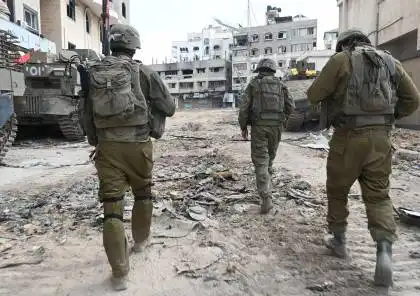
All of this changed quickly, first, because there was no convincing evidence that Hamas had established command centers under Al-Shifa Hospital. Secondly, the inability of the Israeli army, which has the most advanced intelligence equipment in the world, to determine the location of the hostages. The recent period witnessed two incidents. On December 12, Hamas set up a highly skilled ambush in a part of Gaza that was supposedly under Israeli control. In the ambush of the Israeli unit, there were deaths. Additional forces were sent to help, but they were attacked and other reinforcements were ambushed. A number of Israeli soldiers were killed and seriously wounded, but what matters is the ranks of the dead soldiers, who included a colonel and three majors from the elite Golani unit.


He continued, “For Hamas, which Israel says has dismembered and killed thousands of its members, to carry out an operation in an area controlled by the Israeli army, raises doubts about the idea of Israel achieving fundamental progress in the war.”


The next three days provided more evidence when three of the hostages succeeded in escaping from their captors and waving the white flag, but they were killed by Israeli army bullets. What made matters worse was the presence of calls from the hostages that were picked up by a device installed on a tracking dog belonging to the Israeli army, and three days before they were killed. There is other evidence about the problems of the Israeli army. Official figures state that the number of dead is 460 soldiers in Gaza and the occupied West Bank, and 1,900 soldiers are wounded, but other sources suggest that the number of wounded is higher than announced.


Ten days ago, Yedioth Ahronoth newspaper published information it obtained from the Soldiers’ Rehabilitation Center in the Israeli Ministry of Defense. The number was estimated at 5,000 wounded, with 58% classified as serious wounds, and 2,000 soldiers were officially considered disabled. The Times of Israel newspaper reported deaths due to friendly fire, saying that 20 of the 105 deaths were due to friendly fire. In general, Israel applies the “suburb doctrine,” which targets social, military, and economic structures to destroy the enemy’s will to fight and prevent it from causing a threat in the future.


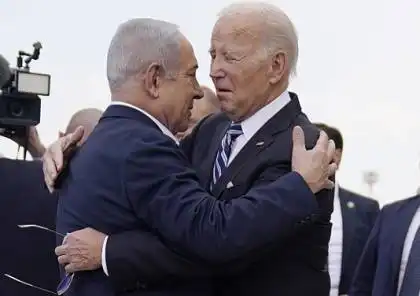
But the “suburb” is not going according to plan, as criticism has come from unexpected circles, such as former British Defense Secretary Ben Wallace, who warned that the current operation would leave a mark for the next half century, and even Joe Biden is no longer comfortable with what is unfolding before his eyes, but Netanyahu and the war government are determined to continue the war for as long as possible. The writer says that the October 7 attacks struck the sense of security among the Israelis, which means that many Jews will continue to support what Netanyahu is doing, and even this support has begun to shake, especially after the killing of the three prisoners by Israeli forces’ bullets.


The writer adds that the army leaders will be under pressure to achieve success and will continue the operation as much as the war government allows them. Most of these leaders are smart and have independent minds and know that, despite all Netanyahu's words, Hamas cannot be defeated or its ideas erased by military force, at least. They know that pressure from the hostages' families will lead to another humanitarian pause, even though the talks have stalled. Therefore, their goal will be to destroy Hamas as much as they can and as quickly as possible, and whatever the price the Palestinians will pay. To look for evidence of this approach, follow the increase in air strikes this week.


The writer continues that what will facilitate Netanyahu's approach is his reliance on an extremist fundamentalist religious minority and extremist Zionists in his government. They would not have gained widespread support in Israeli society if the tragedy of October 7 had not occurred, but they are doing everything in their power to harm the security of Israel, which not only risks becoming a pariah state, even among its allies, but will face hard-line generational opposition from Hamas, which is reshaping itself, or its successor. Israel needs to save itself, and this depends, more than anything else, on Joe Biden and those around him. Perhaps they recognized the change in public mood in the West and ended the war quickly.

ARAB AND WORLD

Sat 23 Dec 2023 8:24 am - Jerusalem Time

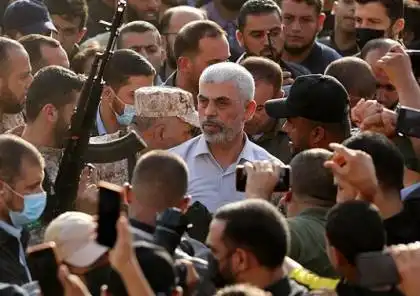
Israeli media: Hamas Leader Sinwar has an organized plan to end the war against Gaza

The official Israeli Broadcasting Corporation said on Friday that the head of the Hamas movement in Gaza, Yahya Sinwar, has an “organized plan” to end the ongoing Israeli war against the Strip since last October 7.


The commission explained, quoting an informed source that it did not specify, that the plan “includes the withdrawal of Israeli army forces as part of a long ceasefire agreement, and the retention of a portion of the Israeli prisoners, as a bargaining chip for the future.”


According to the Hebrew Authority, the source claimed that “Sinwar is working on the assumption that the first truce did not produce satisfactory results in favor of Hamas, and therefore he insists on an Israeli withdrawal from the occupied neighborhoods of Gaza, and a long ceasefire.”


The source pointed out that the demands of the head of the Hamas movement in Gaza, within the framework of the aforementioned plan, are “far more than what Israel is offering to Hamas.” He added that Sinwar believes that the withdrawal of the occupation army's ground forces from the cities in the north and south of the Gaza Strip "will achieve a partial restoration of its ability to command and control the areas already occupied by Israel."


The source continued, "The Israelis interpret reality in the opposite way, but Sinwar is not separate from reality."


Regarding the Israeli detainees held by Hamas, the source said in his statements to the Hebrew Authority that “the movement intends to keep a large portion of the prisoners as a bargaining chip in the coming stages as well, in anticipation of Israel’s return to ground maneuvers after another possible ceasefire.”


According to the source, the countries mediating the negotiations with Hamas (referring to Qatar and Egypt) believe that the war is “approaching its final stages,” and despite this, Hamas is “also preparing for the possibility that the war will continue for a long time.”

During the past few days, official and private Israeli media spoke about a possible truce agreement that may be concluded soon between Israel and the Palestinian resistance, which includes the release of prisoners from both sides.


On Thursday, Israeli officials said that the occupation army “is studying improving the offer presented to Hamas regarding a possible temporary truce between the two parties, to include a ceasefire for more than two weeks, in order to persuade Hamas to release more hostages it is holding,” according to the Israeli Broadcasting Corporation.


These reports come at a time when the Hamas movement stresses its rejection of any negotiations to exchange prisoners without a complete ceasefire.

Source: Sama News

ARAB AND WORLD

Sat 23 Dec 2023 8:20 am - Jerusalem Time

Israeli media: The army is preparing for the “third phase” of the war on Gaza

The Israeli Broadcasting Authority said on Friday evening that the army is preparing to move to the “third phase” of the war on the Gaza Strip in the coming weeks, which includes ending ground maneuvers.


The authority quoted unnamed sources as saying, “The Israeli army is preparing to move to the third phase of the fighting in Gaza in the coming weeks, in accordance with operational achievements.”


According to the sources, “The third phase includes ending the ground maneuver in the Gaza Strip, reducing forces, demobilizing reserve forces, resorting to air strikes, and establishing a buffer zone on the border between Israel and the Gaza Strip.”


Israeli Channel 11 reported that the third phase will also include “reducing the number of forces, forming a buffer zone, and continuing focused attacks” in Gaza, noting that the army is preparing to demobilize thousands of reserve soldiers soon.


The Israeli Broadcasting Corporation claimed that the army “took control of most of the northern Gaza Strip area, while facing great difficulties in moving forward in the southern Gaza Strip area.”


Big change

In turn, the Israeli newspaper Haaretz said that the army is already in the midst of deployment for the “third phase,” contrary to what decision makers announce, stressing that the various command centers are preparing for a “big change” next January.


It added that these changes are linked to the redeployment of hundreds of thousands of reserve soldiers due to the burden on the economy, soldiers and their families.


It indicated that the timetable is flexible due to Israeli Prime Minister Benjamin Netanyahu's political considerations, noting that the situation on the ground in Gaza "is not progressing at the pace we hear in political discourse."


Golani withdrawal

Israeli media reported on Thursday that the occupation army decided to withdraw the Golani Brigade from Gaza after 70 days of fighting in which it suffered “huge losses,” while other Israeli sources reported that the brigade’s soldiers left Gaza “to reorganize their ranks, catch their breath, and visit their families for a few days.” ".


The decision to withdraw the Golani Brigade from Gaza was followed by the withdrawal of paratroopers and armored forces from the Gaza Strip as well.


Israeli army statistics indicate that 784 officers and soldiers have been injured since the start of the ground incursion into the Gaza Strip on October 27, while Israeli media estimated the number of wounded among the army at about 5,000.

Source: Sama News

PALESTINE

Fri 22 Dec 2023 10:52 pm - Jerusalem Time

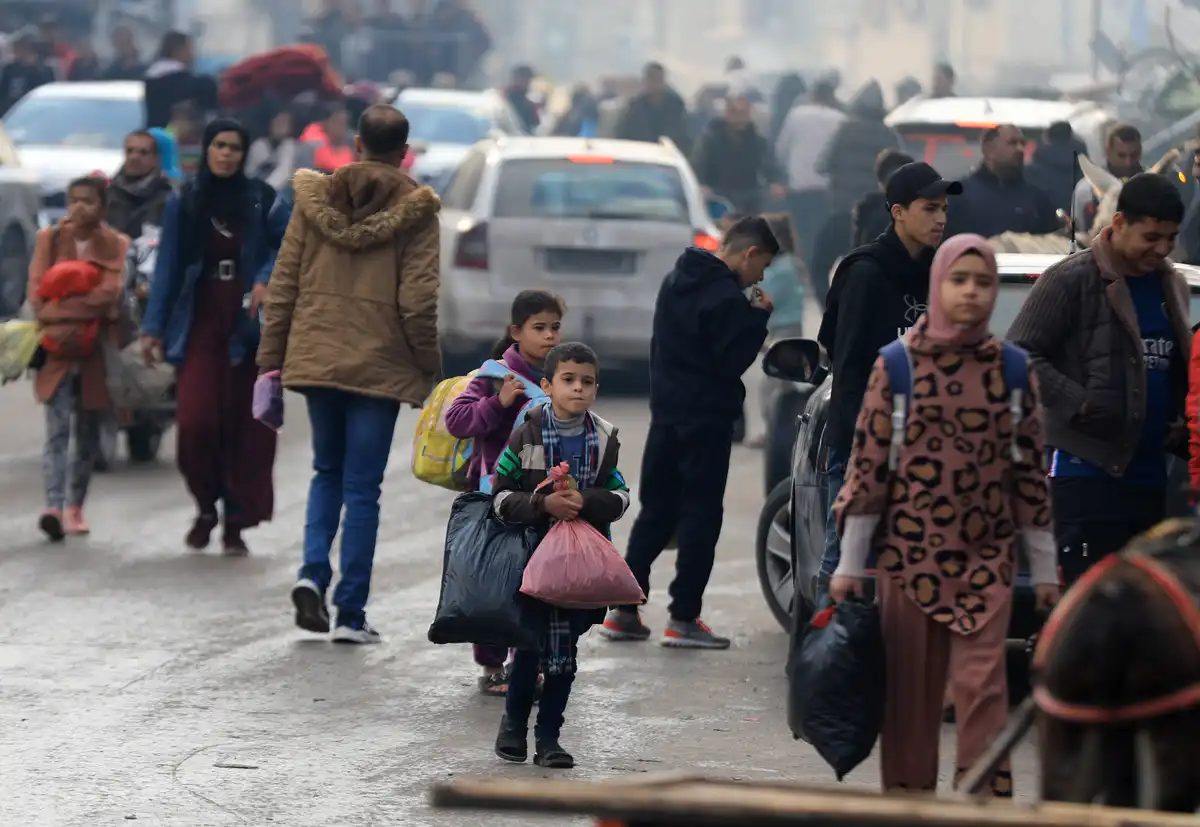
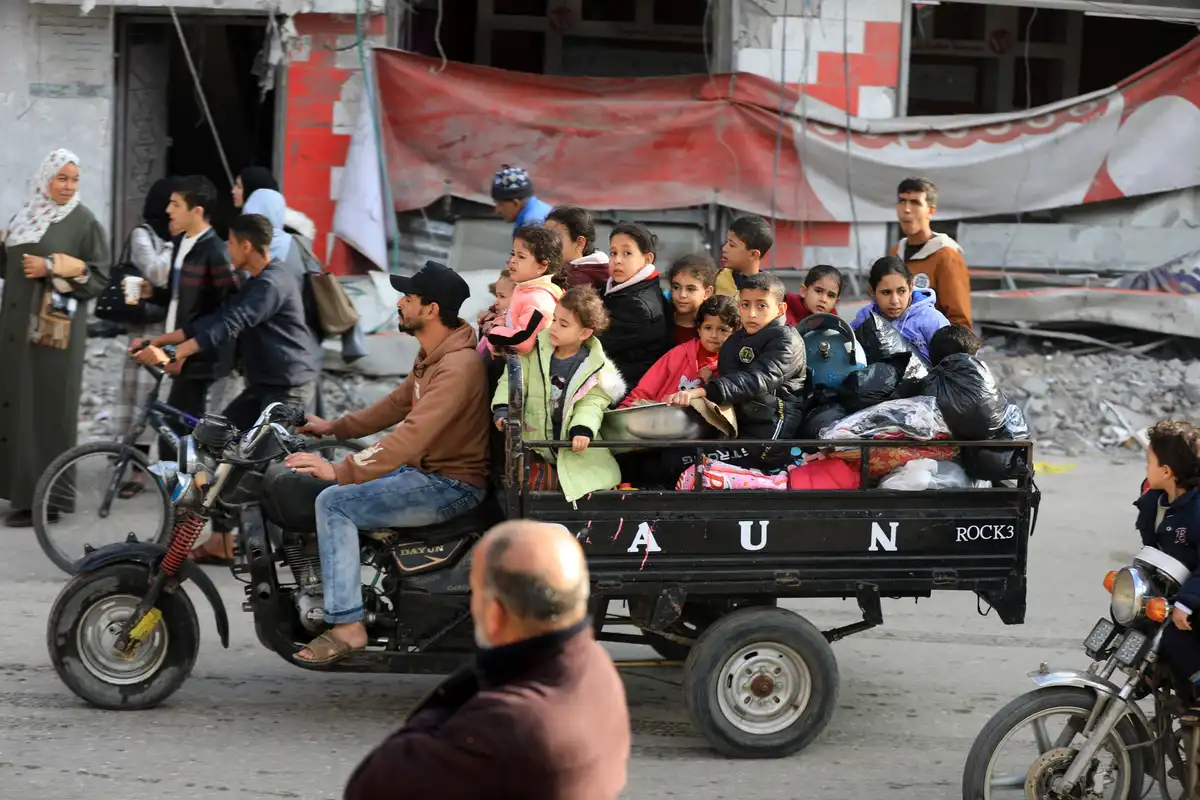
War on Gaza: Hundreds of thousands of displaced people near the border with Egypt amid fears of displacement

Palestinian Haitham Radi takes shelter in a small tent for himself and his family of six people in the city of Rafah, in the far south of the Gaza Strip, at a time when the future seems very unknown to them in light of the deteriorating humanitarian situation and fears of displacement.


Radi, who is in his late thirties, told Xinhua News Agency that he was displaced from his home in the Sheikh Radwan neighborhood in Gaza a week after the start of the war in the Strip on October 7th.

He continues that since that date he moved four times between the house of one of his relatives in Gaza and the city of Deir al-Balah, and from there to the house of a friend of his in Khan Yunis, south of the Gaza Strip, before his situation stabilized two weeks ago in Rafah.


He adds in desperate tones, "Now there is no place to go, and what lies ahead for us is unknown and foggy."


Radi is currently residing in a tent in the Shaboura neighborhood in Rafah, close to the border with Egypt, and expresses his fears that the Israeli army will expand its ground operations into the city, which is crowded with hundreds of thousands of displaced Palestinians.


He points out, "People talk all the time about the possibility of us being displaced to the Egyptian Sinai or another place outside the Gaza Strip. We do not want that, but Israel does not seem to leave us a choice."


The man says that his family's three-story house was completely destroyed in an Israeli bombing, and he does not know where to take his family even if they were saved and the war stopped today.


Fears are increasing in the Gaza Strip about the risk of displacement as Israel continues its war and forces about 90% of the population to displace without giving them any indication of the possibility of allowing them to return to their homes in the future.


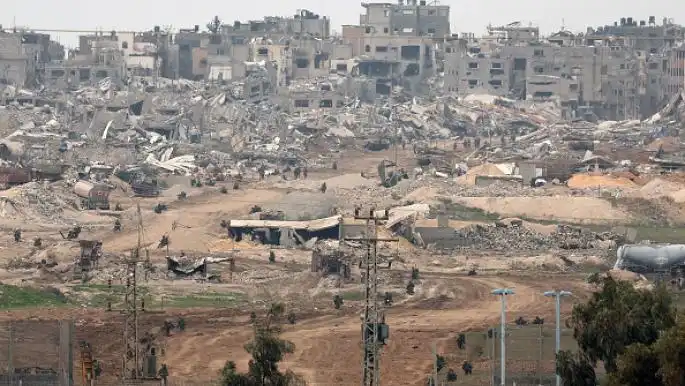
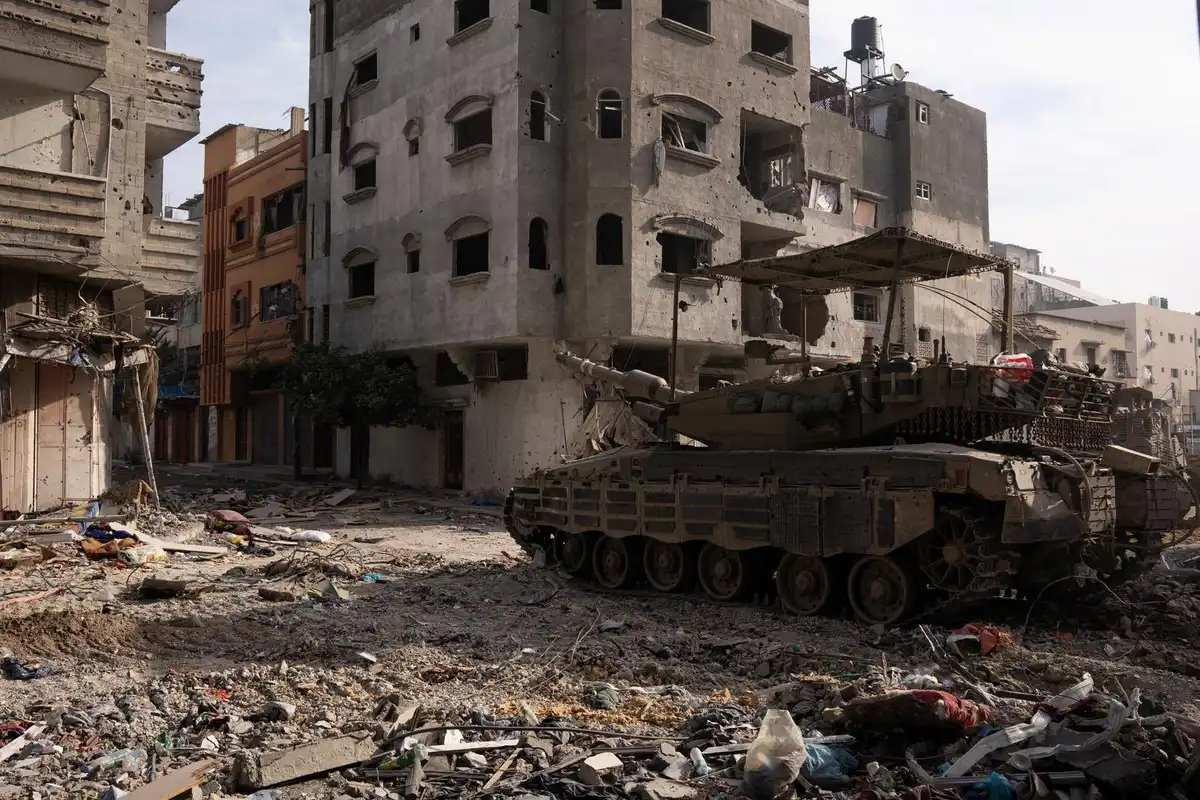
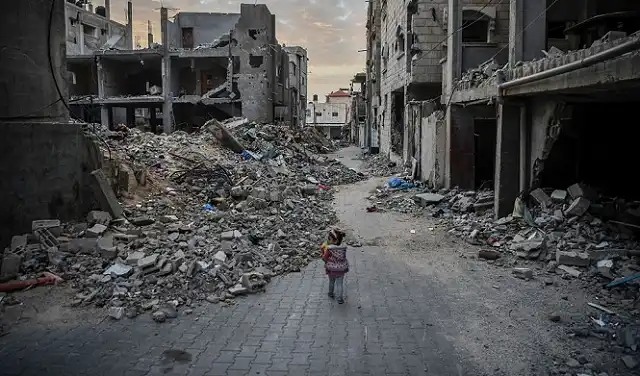
These fears increase given the fact that more than 60% of the Gaza Strip was destroyed, especially residential buildings and various infrastructure facilities, such as schools, universities, hospitals, and others, according to Palestinian and UN officials.


The United Nations Office for the Coordination of Humanitarian Affairs (OCHA) reported that the Israeli army allocated a new area covering about 20% of the center and south of the city of Khan Yunis for immediate evacuation.

According to the UN office, the area was identified on an electronic map published by the Israeli army on social media.


Before the start of the Israeli war, this area was home to more than 110,000 people, and it also included 32 shelter centers that accommodated more than 140,000 displaced people, the vast majority of whom were previously displaced from the north.


The instructions accompanying the map call on residents to immediately move to shelters south of Khan Yunis, specifically in the already overcrowded neighborhoods of Al-Shaboura, Tal Al-Sultan and Al-Zuhur in Rafah Governorate.

The UN office said that the shelters in the city of Rafah had greatly exceeded their capacity, and most of the newly arrived displaced persons had settled in the streets and empty places throughout the city.


Rafah Governorate has become the most densely populated area in the Gaza Strip, where hundreds of thousands of internally displaced people are forced to live in extremely crowded places and in miserable living conditions.

It is estimated that population density now exceeds 12,000 people per square kilometre, a four-fold increase before the escalation.


Therefore, the tents of the displaced are crowded together in Rafah in light of humanitarian deterioration and the risk of famine.

Media advisor to the United Nations Relief and Works Agency for Palestine Refugees (UNRWA), Adnan Abu Hasna, told Xinhua that the entire population of the Gaza Strip faces an imminent risk of famine in a shocking and unprecedented manner.


Abu Hasna adds that the bombing, ground operations, and siege of the entire population, along with restricting humanitarian access, have led to catastrophic levels of acute food insecurity, increasing the risk of famine every day.


He points out that the humanitarian needs are enormous, given the huge numbers of displaced people in light of the war and continued targeting.


Palestinian Jamal Al-Khudary faces severe difficulties every day to secure food for his family of seven members.


Al-Khudari, who is in his thirties, says that he and his family live on one meal provided by UNRWA and other relief institutions, and their lives have become dependent on this meal.


He adds that in light of the bombing and the constant threat of death, they will rush to seize any travel opportunity they will have to escape the reality of starvation.


Egypt has stressed since the beginning of the war in Gaza that it will not accept the displacement of Palestinians in Gaza towards its lands, and it considers it a threat to its national security and an attempt to liquidate the Palestinian cause.


Palestinian President Mahmoud Abbas also repeatedly stressed his rejection of any form of forced displacement of the Palestinian people and the necessity of preventing it, whether in the Gaza Strip or in the West Bank, including Jerusalem.


The Islamic Resistance Movement (Hamas) and other Palestinian factions stressed the rejection of any plan to displace the population of Gaza and the need to thwart it. Despite this, fears of displacement are increasing at a time when indications are mounting that large parts of the Gaza Strip, crowded with more than 2.3 million people, have become uninhabitable for life.


The director of the government media office in Gaza, Ismail Al-Thawabta, told Xinhua that the humanitarian situation in the Strip is “increasingly disastrous and has become very bad and heading towards the abyss.”


Al-Thawabta points out that more than 1.9 million people in the Gaza Strip have become displaced and live outside their homes, and are suffering greatly in providing food, medicine, and drinking water.


He adds that Gazans "are clearly threatened by food, water and medicine security, and suffer from poor living conditions and poor shelter."


According to the writer and political analyst from Gaza, Tawfiq Abu Shomer, Israel is waging a “comprehensive war of destruction” in the Strip with the explicit aim of forcibly displacing its residents.


Abu Shomer says that more than one Israeli official has previously stated that the strategic goal of the war is to force the residents of Gaza to leave, gather them, and concentrate them at the Egyptian border to penetrate the border fence.


He believes that Israel "planned for many years a deportation strategy by displacing the Gaza Strip towards the Egyptian Sinai, and has taken the current war as a means to achieve this strategic goal."


According to Abu Shomer, who resides in a shelter center in Rafah, attention must be paid to the dangers of Israel forcing hundreds of thousands of forcibly displaced people into Rafah on the border with Egypt, and launching fire belts in the border areas between the Gaza Strip and Egypt under the claim of destroying the tunnels.


The United Nations estimates that approximately 1.9 million people in Gaza are internally displaced, including people who have been displaced multiple times.


Nearly 1.4 million of these displaced people were registered in 155 UNRWA facilities across Gaza, including more than 1.2 million in 98 shelters in the central and southern Strip.


Political analyst Abdel Majeed Sweilem agrees with the opinion that displacing the population of the Gaza Strip, or at least the bulk of them, is the essence of Israel's hidden goals in the ongoing war, whether forced or voluntary.


Sweilem told Xinhua that the displacement issue goes back to plans that preceded the outbreak of the current war and is translated into eliminating life opportunities in the Gaza Strip and destroying everything related to it.

He believes that Israel aims to turn the Gaza Strip into a heavy burden that no one can carry and an economic and social burden that has no solution except through immigration or fleeing the Strip after the end of the war.

PALESTINE

Fri 22 Dec 2023 10:31 pm - Jerusalem Time

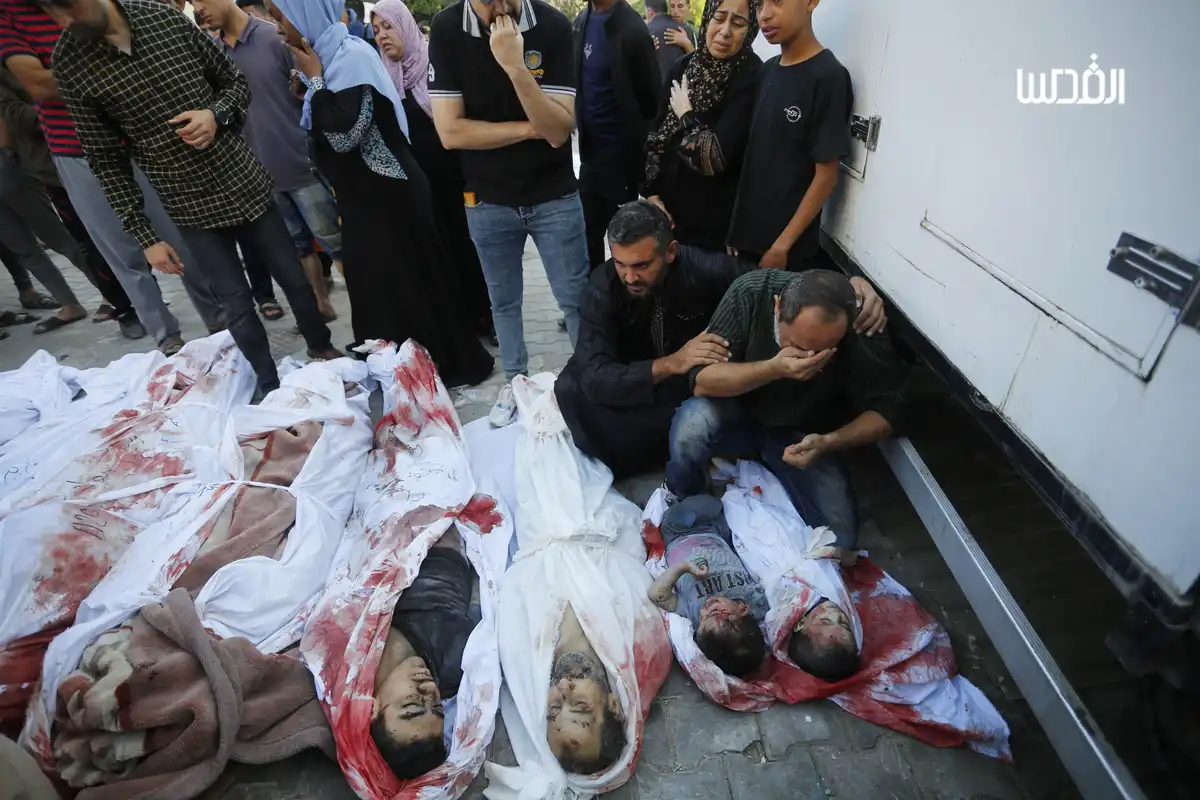
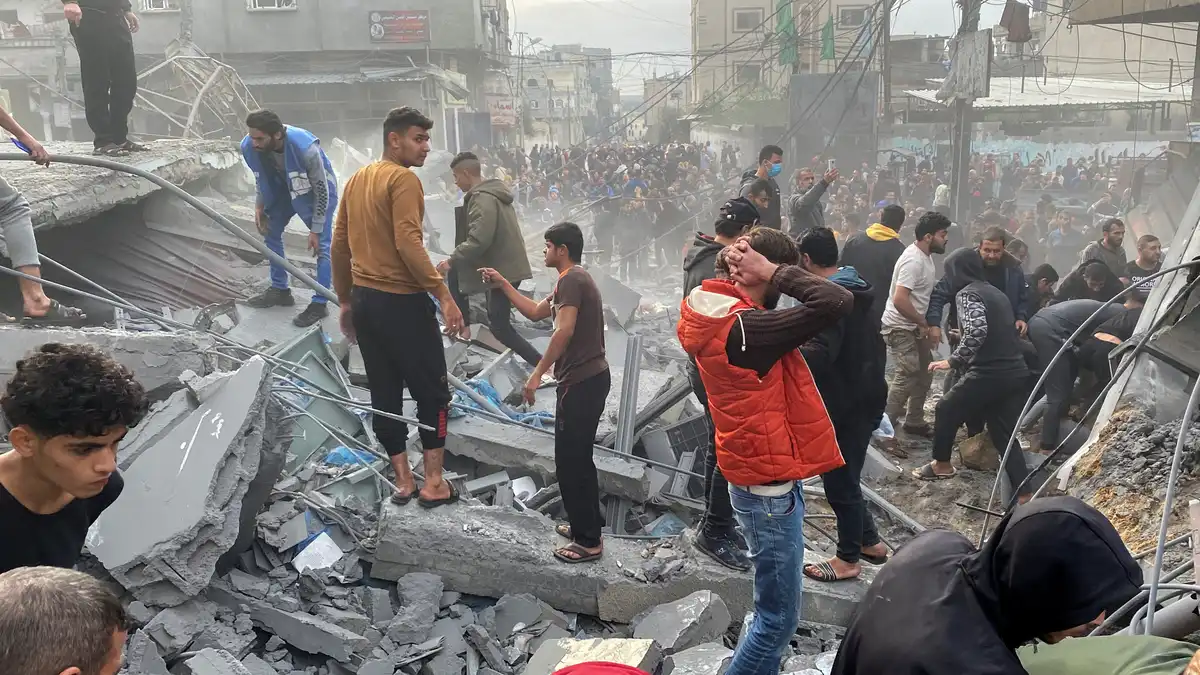
War on Gaza: At least 18 Palestinian citizens were killed in the bombing of a house in Nuseirat

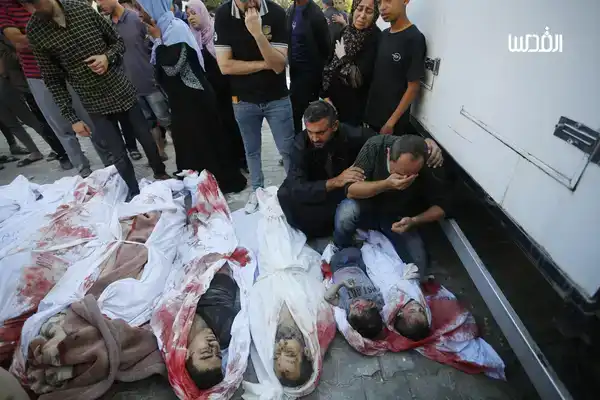
At least 18 citizens were murdered yesterday, Friday evening, in a bombing carried out by Israeli occupation aircraft on the Nuseirat camp in the central Gaza Strip.


Local sources said that Israeli occupation aircraft bombed a house on Al-Twenty Street, east of the Nuseirat refugee camp in the central Gaza Strip, killing at least 18 citizens and wounding dozens of others.


A raid carried out by occupation aircraft also destroyed a water desalination plant on Old Gaza Street in the town of Jabalia, north of the Gaza Strip.


The occupation artillery bombed the last floor of a house belonging to the Arafa family in the Al-Amal neighborhood in the city of Khan Yunis. The Palestinian Red Crescent Society explained that the occupation aircraft carried out a violent bombardment in front of its Al-Amal Hospital in Khan Yunis.

OPINIONS

Fri 22 Dec 2023 9:49 pm - Jerusalem Time

Netanyahu wanted to 'collapse' Hamas. This war could collapse Israel

Middle East Eye

Middle East Eye

Opinion Writer

By David Hearst


The Gaza war has been a huge miscalculation for Israel. As well as being a moral and military disaster, it is fueling resistance and reigniting the embers of anger across the Arab world.


After a particularly heavy Israeli barrage during the siege of Beirut in July 1982, US President Ronald Reagan called Menachem Begin, the Israeli prime minister, to demand the shelling be stopped. "Here on our television night after night our people are being shown the symbols of this war and it is a holocaust," Reagan said. Unlike the Democrat in the White House today, a Republican US president was able and prepared to back his words with action. The US halted cluster munitions and the sale of F16s to Israel. Reported casualty figures of the war in Lebanon vary wildly. According to Lebanese estimates, 18,085 Lebanese and Palestinians were killed in the four months after the invasion was launched. The PLO’s figures were: 49,600 civilians killed or wounded. In just two months, Israel has killed as many people but inflicted a far higher level of destruction in Gaza. 


According to military analysts interviewed by the Financial Times, Israel’s devastation of northern Gaza, where 68 percent of the buildings had been destroyed by 4 December, is up there with the allied bombing of Hamburg (75 percent), Cologne (61 percent), and Dresden (59 percent). This is what happened to these cities after two years of bombing.


Nearly 20,000 Palestinians, 70 percent of whom are women and children, have been killed in half the time it took to force the PLO to leave West Beirut in 1982. And still, Israel’s blood lust has not been sated for the Hamas attack on 7 October. Expressing the popular mood, Zvi Yehezkeli, Channel 13's Arab affairs correspondent, said Israel should have killed 100,000 Palestinians. Daniella Weiss, the head of the Israeli Settler Movement, said that Gaza must be erased so that settlers can see the sea.


Sacred ground

Unlike the siege of Beirut or the 1982 massacres at Sabra and Shatila refugee camps, the nightly bombing of Gaza is being streamed live by Al Jazeera. Millions of Arabs cannot tear themselves away from witnessing the scenes of horror in real-time. A 91-year-old woman in Amman, Jordan, told her son she was ashamed to eat her meal in front of the television while Israel was starving Gaza. Follow Middle East Eye's live coverage for all the latest on the Israel-Palestine war


Enforced mass starvation is not hyperbole.

Human Rights Watch accused Israel of using mass starvation as a weapon of war. Starving Gaza as a government policy was confirmed by Miri Regev, the transport minister, who asked in a recent cabinet meeting whether starvation could affect the leadership of Hamas. She had to be corrected by her colleagues that starvation was a war crime. The effect these pictures are having is a catastrophe not just for this government, or for any future government of Israel, but for however many Jews decide to stay in this land when this conflict is finally over. The destruction of Gaza is laying the foundations for another 50 years of war. Generations of Palestinians, Arabs and Muslims will never forget the barbarism with which Israel is dismantling the enclave today. Gaza, itself one big refugee camp, is becoming sacred ground. 


PA's plummeting support

There are Israelis who get the message. Ami Ayalon, the former head of Shin Bet and commander of the navy, is one of them. Ayalon identified a fundamental weakness of the conventional thinking in Israeli security circles. He told Aaron David Miller, a US Middle East analyst, that whereas the Israeli army saw victory through the prism of hard power - the more people it killed and the more it destroyed, the more it thinks it has won - Hamas considers victory through the prism of “soft power" - the more hearts and minds it has won, the greater the victory. 

The Israelis are committing the same mistake that the French committed in Algeria when they killed half a million to 1.5m Algerians, constituting 5 to 15 percent of the population, between 1954 to 1962, thinking by doing so they would win the war. However, by the end of the war they had to leave and give Algeria its independence.


Nothing else can explain the spectacular rise of Hamas in the polls in the West Bank, Jordan, and even in places such as Saudi Arabia, where the leadership has tried consciously to bury the war by holding festivals.

The widely respected PLO pollster Khalil Shikaki, no lover of Hamas, found that 72 percent of respondents believed that Hamas was “correct” to launch its attack on 7 October, with 82 percent in the West Bank backing it. At the same time, support for the Palestinian Authority had plummeted accordingly. Shikaki found that 60 percent wanted it dissolved. A series of US intelligence assessments confirm the meteoric rise in Hamas’s popularity since the start of the war. Officials familiar with the different assessments say the group has successfully positioned itself across parts of the Arab and Muslim world as a defender of the Palestinian cause and an effective fighter against Israel, CNN reported. This is bad news for all those countries - with the US, of course, in the lead - who think that the PA can replace Hamas in Gaza. These are not just figures. 

It's the new post-7 October political reality. Any Fatah grandee who says otherwise gets instantly challenged. The ever-ambitious exiled Palestinian grandee Mohammed Dahlan and his clan today sound like long-time Hamas supporters, not like the former lynchpin of an international plot to displace Hamas from Gaza in 2007 once it had won free elections the year before. 


Done deal

But the newly anointed successor to PA President Mahmoud Abbas, Hussein al-Sheikh, secretary of the PLO executive committee, still does not get the change of mood in Ramallah. Speaking to Reuters, Sheikh laid into Hamas by saying it had fought five wars against Israel since 2008 and had got nowhere by taking on the occupation militarily. "It is not acceptable for some to believe that their method and approach in managing the conflict with Israel was the ideal and the best." After all this [killing] and after everything that's happening, isn't it worth making a serious, honest and responsible assessment to protect our people and our Palestinian cause? "Isn’t it worth discussing how to manage this conflict with the Israeli occupation?” Sheikh said. 

As for the PA taking over Gaza post-war, this was a done deal, Sheikh seemed to imply. He told Israel’s Channel 12 that Israel and the PA had agreed on a mechanism that would allow the authority to receive funds held since the start of the war. It took all of two days for Sheikh to do a 180-degree U-turn over his attack on Hamas. He was asked how a Fatah leader who polled three percent could criticize Hamas, who polled 48 percent, on his own turf. 

Speaking this time to Al Jazeera, Sheikh said his comments about Hamas’s accountability had been "misrepresented": "The Palestinian Authority is the first to defend the resistance,” he told Al Jazeera, nervously. 


Divide and rule

Israel’s offensive in Gaza has indeed changed the whole of the Middle East, as Israeli Prime Minister Benjamin Netanyahu promised it would do, but not in ways in which either his government or future governments would benefit. For 17 years, Gaza was forgotten about or ignored by the rest of the world except during the wars of 2009, 2012, 2014 and 2021, with America and the major European powers doing their best to reinforce the siege laid on Gaza by Israel and Abdel Fattah el-Sisi’s Egypt. 


If Jordan had been quiet for 50 years after the bloody war between its army and the PLO, Jordan today is a boiling reservoir of hatred against Israel


Well, with 60 percent of it destroyed and with the best part of 2.3 million people with no homes, schools, hospitals, roads, shops or mosques to return to, there is no danger of Gaza being ignored any longer. If, for 17 years, Israel’s policy was to divide and rule by separating Gaza from the West Bank and removing all possibility of taking part in a national unity government, Gaza and the West Bank are reunited as never before. If Jordan had been quiet for 50 years after the bloody war between its army and the PLO, if the divisions between the east Jordanians and the Palestinian citizens of Jordan were marked by mutual distrust, Jordan today, both Jordanians and Palestinians, is a boiling reservoir of hatred against Israel. 

There are increasing attempts to smuggle arms through to the West Bank over a 360km border, over four times as long as its borders with Lebanon and Syria. Jordan reckons Israel would need five times the number of troops it has facing Lebanon to secure this border. With 13 refugee camps and millions of Palestinians as citizens, Jordan is the largest reservoir of Palestinians in the diaspora, around six million, outnumbering the Palestinians living in the West Bank and Gaza. 


If, on 6 October, Netanyahu had been crowing that victory for the Zionists was imminent, waving a map of Israel before the United Nations general assembly which wiped Palestine off the map, then today his boasting looks woefully misplaced; if Saudi Arabia's signature on a deal recognizing Israel was regarded as just a matter of time, the Abraham Accords have today dissolved into the cauldron that Israel has stoked in Gaza.  


Netanyahu's 'blame game'

And what of opinion in Saudi Arabia? The latest poll contains two astonishing figures for a country whose leader is consciously trying to shed old ways, which includes  support for Palestine.  91 percent agree that the war in Gaza is a win for Palestinians, Arabs and Muslims, and 40 per cent have positive attitudes to Hamas, which is a 30 point shift from August this year..


Today, if you read and listen to what the Saudis, Bahrainis, Qataris and Emiratis are saying, recognition of Israel bears a striking resemblance to the Arab Peace Initiative of 2002, which the accords were designed to replace. 

The key feature of the Abraham Accords as devised by the former US ambassador to Israel, David M Friedman, and Jared Kushner, was to make a Palestinian veto irrelevant. Now it is back again. Even if more countries sign, this is becoming irrelevant, as the real fight is crystallized between Palestinians and Israel. In the ruins of all these plans, Netanyahu and his extreme right-wing coalition have only one way they can go - forward. They cannot retreat. 


For his own political and legal survival, Netanyahu has to continue the war. So too does national religious Zionism. Itamar Ben-Gvir and Bezalel Smotrich know they will lose a once-in-a-lifetime opportunity to change the demographic balance of Jews and Palestinians in the West Bank if Netanyahu is forced to shut down the war by US President Joe Biden.

Asked by Middle East Eye what plans Israel had for the “day after" war ends, senior Israeli analysts and former diplomats were unanimous in their response - there were none. 

Eran Etzion, former diplomat and member of the National Security Council, said that Netanyahu was indeed thinking about the day after, but only in as much as to how that affects his chances of political survival. “It is very clear he has already realized that the Americans are going to stop him before he has achieved the goals of the war," he said." He is already preparing for the ‘blame game', in which his targets will be Biden, the military chiefs, the media, and, as we say in Hebrew, the whole world and his wife who prevented him from achieving victory. "So for him, the day after is the continuation of the war by any means, the goal being survival in power."


Etzion noted that, even after two months of the campaign, there was no official forum or group of officials planning governance in Gaza post-war, and there were no official discussions between the Israeli defense establishment and US officials in Washington. 


Astonishing miscalculation

The war may well wind down under US pressure, and continue as a conflict marked by strikes by the Israeli army against the Hamas leadership and prolonged guerrilla war carried out by fighters acting in small units. But this entails Israel not just seizing the Rafah crossing and sealing the tunnels to stop Hamas from being resupplied with weapons smuggled over the border, it means Israel providing the civil administration for the north of Gaza it has so completely destroyed. 


As well as being a moral disaster, it's a military one as well. It has given resistance a popularity and status in the Arab world unheard of for many decades


For the right wing, the hostages Hamas continues to hold are as good as dead, but Netanyahu will come under increasing pressure from their families to abandon his war. The ghosts of Lebanon are truly coming back to haunt Israel. It took 15 years for Israel to leave after Beirut became untenable, but leave they did in 2000. When they did, Hezbollah became the dominant military and political force in the country. 

This war has been an astonishing miscalculation for Israel. As well as being a moral disaster, it's a military one as well. It has given resistance a popularity and status in the Arab world unheard of for many decades. Not even the first and second intifadas were as successful as Hamas has been in Gaza in the last two months. Gaza has reignited the embers of Arab anger at its humiliation at the hands of Jewish immigrants. 


The outcome of this war could well be a continuous state of conflict which will deprive Israel of the claim that it has become a normal western-style state. In these conditions, the expansion of the war will always exist, as attacks by the Houthis in Yemen on western shipping passing through the Red Sea show.


“Mitut Hamas” (collapse Hamas) is the slogan in Hebrew and the aim of the Israeli war cabinet. After two months of such destruction, they could as well revise this to read “mitut Israel”, because that is the effect this war might yet have.



OPINIONS

Fri 22 Dec 2023 9:41 pm - Jerusalem Time

For Palestinians, the “Day After” Starts With a Plan for Ending Israel’s Occupation

Carnegie Endowment

Carnegie Endowment

Opinion Writer

By ZAHA HASSAN


Until the international community is ready to bridge the gap between Israel’s and Palestine’s plans for Gaza’s future, day-after negotiations only serve to distract from ending the bombardment and the urgent humanitarian crisis now.


With the Israeli bombardment of Gaza in its third month and a permanent ceasefire nowhere in view, policymakers in the United States and Israel continue to discuss a theoretical “day after” in Gaza. To many Palestinians, such talk is dehumanizing and appears callous as the death toll still mounts. To date, more than 20,000 Palestinians are dead, 40 percent of whom are children, while almost 7,000 people remain unaccounted for.In considering how to support a better future for Gaza—and for Palestinians and Israelis writ large—U.S., Israeli, Palestinian and other Arab policymakers have a daunting task ahead. As impossible as it is without a permanent ceasefire in place, they must assess the scale and impact of the destruction in Gaza, the short- and long-term needs of Palestinians who remain at high risk for full or partial permanent displacement, and the willingness and capacity of the Palestinian Authority (PA) to assume governance in Gaza. And they must conduct these assessments even as Israel has indicated it will continue its military campaign in some form for months more, possibly remaining in Gaza indefinitely.Zaha HassanZaha Hassan is a human rights lawyer and a fellow at the Carnegie Endowment for International Peace.Drawing on an exclusive interview with Palestinian Prime Minister Mohammad Shtayyeh and conversations with other key stakeholders, this article lays out some of the most important questions that must (but, for now, cannot) be answered as policymakers discuss day-after scenarios. The most vexing questions include the future habitability of Gaza; the myriad urgent, long-term needs of the 2.3 million Palestinians who reside there; and the governance of Gaza during any transition period and once a permanent political solution can be implemented.


CONSIDERATIONS FOR THE DAY AFTERTHE HABITABILITY OF GAZA AND ITS INFRASTRUCTURE

When discussing day-after scenarios for Gaza, policymakers are assuming that the enclave will be habitable after a permanent ceasefire is reached. That is not a given. The United Nations had already determined that Gaza would be unfit for human habitation by 2020. That assessment has clearly not improved, as Israel’s bombing campaign has taken matters in Gaza from dire to “apocalyptical.” More than 29,000 bombs have been dropped on Gaza, an area twice the size of Washington, DC. This amounts to the weight of two nuclear bombs, causing levels of destruction that the world has not seen since the yearlong carpet bombing campaigns of World War II. The toxins released from spent explosives, Gaza’s pulverized building material, and the white phosphorus Israel has reportedly used in civilian areas are hazardous to human health and will take time to remediate to allow for safe habitation in some parts of the enclave, according to a UN Mine Action Service expert. What will that mean for the ground soil in Gaza and the ability to grow food—and the enclave’s economy, since agriculture represents 85 percent of Gaza’s exports and provides nearly 30,000 formal jobs while unemployment stands around 45 percent? How will the seepage of toxins into the aquifer underneath Gaza impact ongoing efforts to rehabilitate the strip’s only freshwater source? And how will Israel’s flooding of Gaza’s tunnel network to root out Hamas impact future use of the aquifer?Removing and disposing of the rubble created by the bombings will in itself be a monumental task, made all the more difficult by the fact that most of Gaza’s civil defense digging equipment has been destroyed. New equipment will need to be purchased and transferred to Gaza. How will this be financed, and how will the entry of such equipment be coordinated with Israel when officials there have been reluctant to open up further entry points for critically needed humanitarian aid and foodstuffs?As for the civilian infrastructure in Gaza, it is yet unclear how much damage has been suffered. UN officials have accused Israel of using water as a weapon of war, but the extent of the damage to Gaza’s water and wastewater treatment infrastructure is not yet clear. The power stations, reservoirs, some water towers, and water treatment plants have been targeted. Some telecommunications equipment, like cell towers and fiber-optic cables, have been destroyed or damaged during the rounds of bombardment.As for the healthcare sector, according to the UN special rapporteur on the right to health, infrastructure “has been completely obliterated.” More than fifty healthcare facilities have been affected by the Israeli bombardment, while almost 600 doctors and healthcare workers have been killed. This will challenge the sector’s ability to treat the more than 50,000 wounded, many of whom will need long-term care and who will have mobility issues due to lost limbs. With so many parents among the dead, there will also be a need for facilities to care for orphaned and injured children and provide them with psychosocial care. The hundreds of thousands of other traumatized civilians will also need specialized care after surviving more than three months of bombing and deliberate deprivation of food, water, and shelter.


BASIC HUMANITARIAN REQUIREMENTS, PALESTINIAN DISPLACEMENT, AND A SHRINKING GAZA

Israel’s strict blockade of Gaza and the denial of food, water, and needed supplies to sustain human life will also have long-term impacts on the survivors in Gaza. Currently in the southern part of Gaza, where Palestinians were instructed to flee and where 85 percent of Gaza’s population has been displaced, the World Food Programme reported that 56 percent of people suffer from severe levels of hunger and over 90 percent suffer from inadequate food consumption. Israel’s ongoing bombardment has crippled Gaza’s food production capacity: for instance, several bakeries have been destroyed. Even before October 7, the population was largely dependent on humanitarian assistance and will be in greater need of aid for some time. Water delivery and distribution from outside Gaza will also be needed for the foreseeable future to meet needs. Palestinians in Gaza are currently consuming only 2 liters of water per day, far below the 15 liters needed for basic human survival, forcing them to consume impure water and raw or indigestible foods. This fact, along with poor sanitation, stands to accelerate what the UN humanitarian coordinator for the Occupied Palestinian Territory calls a “textbook formula for epidemics and a public health disaster” with potentially long-term effects on the population of Gaza.To the extent that the Palestinian population is able to stay in Gaza under such inhumane and unhealthy circumstances, they will need better shelter as winter sets in. Temporary dwellings must be set up, and basic utilities, healthcare, education, and other humanitarian aid provided, until longer-term solutions are found. The UN Relief and Works Agency for Palestine Refugees in the Near East (UNRWA) had provided social services and humanitarian relief to between 60 to 80 percent of the population in the strip before October 7 and for more than seven decades has provided primary and secondary school education and primary healthcare services to Palestinians in Gaza (the agency had served more than a quarter of a million students and provided health screening to 1.5 million registered refugees). However, with so many of its local staff killed, injured, or without shelter, and with some Israeli and U.S.  officials calling for the dismantling or defunding of UNRWA, it is not clear if UNRWA could take on an expanded role or if it will survive as a UN agency. No organization could readily step in to take on UNRWA’s mandate, and the UN secretary general has expressed opposition to the idea that a UN peacekeeping force would provide security or a protective presence in Gaza during the period between the end of bombing until Palestinian governance.And even if answers are found for the basic needs of the more than 2 million Palestinians in Gaza—shelter, food, medical care, environmental remediation, and temporary protection, among others—how will the youth of Gaza (half the population) be educated with so many schools, universities, mosques, and churches damaged or destroyed?The prospect that Israel intends to forcibly displace some or all of the population out of Gaza cannot be discounted, according to both the head of the UNRWA and the Jordanian foreign minister. Approximately 1.8 million people are sheltering in Gaza’s south in abject circumstances. Already half of Palestinians in Gaza are starving, and desperation is setting in. In the first few days of Israel’s assault on Gaza, Israel proposed that Palestinians be relocated to Egypt temporarily—though Egyptian and U.S. officials feared the forced displacement could become permanent. Indeed, a leaked Israeli Ministry of Intelligence report dated October 13 recommended the construction of permanent cities for Palestinians in Egypt. If Palestinians are displaced due to miserable and inhumane circumstances of Israel’s making, will residents ever be allowed to return? Or will they be permanently dispossessed, some of them for a second or third time in their lifetimes?


OPERATING ASSUMPTIONS FOR ANY DAY AFTER

Though the list of unknowns is too long to make for informed planning for the future, and though the situation is still very fluid, certain assumptions can be made right now.ISRAELFirst, Israeli political leaders, both in the government and in the opposition, will insist on maintaining open-ended security control over the entirety of Gaza. They also intend to effectively annex a yet undetermined or unknown portion of Gaza for a buffer zone. They oppose either a return of Hamas rule or the reentry of the PA to the strip and are against a UN presence in Gaza, even a transitional force to maintain public order, though there may be willingness to tolerate an international force in the buffer zone area. Israel apparently would support a regional force inside Gaza to coordinate the transitional period for reconstruction purposes.Yair Lapid, the more liberal member of the opposition parties in Israel, has posted on his Facebook page a policy vision prepared, he states, following a roundtable that included Israeli and American officials. It calls for the civilian management of Gaza to be temporarily entrusted in the first stage to an international team led by the United States with the participation of select Arab states and local elements in the strip not affiliated with Hamas. The team would engage in management, reconstruction, and humanitarian assistance and would establish a body to replace UNRWA. Considering U.S. and international support for the PA to assume governance over Gaza in a transitional phase and permanently, overwhelming international intervention led by the United States will be required to push back against Israeli impulses that would imprison the Palestinian population in a revamped version of the seventeen-year-long Israeli siege over Gaza.


REGIONAL COUNTRIES

Second, Arab states neighboring Israel and the occupied territories are heavily invested in seeing an end to hostilities and a political resolution. Egypt and Jordan have indicated that they will not countenance a single Palestinian displaced from Gaza or the West Bank to their sovereign territory. They have also indicated that they will neither individually nor collectively with others be involved in the administration of Gaza. While Arab states have an interest in leading the dialogue concerning Gaza’s fate and a final political solution between Israelis and Palestinians because of how the hostilities impact their own national security, they oppose any plan that involves them being responsible for Gaza, the West Bank, or the fate of Palestinians in the occupied territories.THE U.S. AND EU POSITIONSU.S. Secretary of State Antony Blinken and the EU foreign policy chief Josep Borrell are largely in agreement about what they envisage for Gaza. They do not support Israel forcibly displacing Palestinians from Gaza, the reduction of Gaza’s territory, or Israel’s reoccupation of the strip. Neither has indicated, however, what leverage they might be willing to use to prevent Israel from taking such steps. Both have also indicated support for a “reinforced” or “revitalized” version of the PA to assume governance in Gaza. Borrell suggested the PA’s legitimacy would be “defined and decided upon by the [UN] Security Council.” Their plans assume a role for the Arab states, particularly those that have normalized relations with Israel, by using their influence with Israel to push for its acquiescence to a Palestinian state.


THE PALESTINIAN AUTHORITY’S STAND ON THE DAY AFTER


Given these assumptions about Israel, the region, and influential stakeholders like the United States and the EU, much rests on the PA and what it will or will not do in Gaza once a permanent ceasefire is reached. The PA has indicated that it will not assume responsibility over the strip unless it is part of a political solution that ends the occupation that began in 1967. Beyond that, less is understood about what the PA will demand in return for its engagement on interim arrangements concerning Gaza. What would the Palestine Liberation Organization (PLO) or PA require before entertaining the idea of governance over Gaza? How might a more credible PA be accomplished without or until elections are possible? Palestinian Prime Minister Mohammad Shtayyeh answered these questions in a series of interviews I held with him over the past week.On the PA’s position for the day after, the prime minister stated, “today is the day after,” explaining that medium- to high-intensity violence threatens to become the new status quo unless serious efforts are made toward a political solution now. Thus, in his view, the day after must be the day after a plan for ending Israel’s occupation, not the day after Israel decides to allow Palestinian administration in Gaza. He said that no transitional mechanism for administering Gaza by a UN or multilateral force is needed in Gaza.Despite the political division between the PA and Hamas following Hamas’s 2007 takeover of the strip, the PA has continued to be responsible for Palestinians there. Until October 7, the PA had been spending a third of its budget in Gaza. It was paying for the water and electricity provided by Israel and the salaries of 37,000 Palestinian civil servants, including 19,000 police officers who were replaced by Hamas after the Islamist movement took over governance. The PA has also continued to maintain a shadow cabinet in Gaza that includes ministries of agriculture, social affairs, national economy, interior, and higher education. It also ran the official media in Gaza and supervised the industrial zones and the Municipal Development and Lending Fund, a donor facility. Shtayyeh pointed to the fact that his Ramallah-based cabinet includes five ministers from Gaza (three of whom are currently in Gaza).Shtayyeh asserted that the PA will not accept any interim or transitional agreement where it takes over governance of Gaza because prior such agreements—the Oslo Accords, in particular—have functioned as a trap for Palestinians. The situation in the West Bank is rapidly deteriorating due to near-daily Israeli military incursions and mass arrests: Israel has rounded up at least 3,000 Palestinians in the West Bank since October 7. As a result, the PA is barely holding on to the 40 percent of the West Bank where it has some authority. A comprehensive agreement is needed to end Israeli rule and resolve all outstanding issues, Shtayyeh argued, while Palestine is still an international focus.The PA will also require commitments, including from the United States, about exactly what the path toward an end to the occupation will look like and how the United States intends to work toward that objective. In Shtayyeh’s view, U.S. President Joe Biden has to take certain meaningful steps that could not easily be reversed by another administration, including supporting Palestine’s admission to the UN and recognizing the State of Palestine. Political recognition would mean ending the U.S. treatment of the PLO as a terrorist organization, something Biden can do under his executive power. The PA would also want the United States and other stakeholders to use their leverage to address ending the geographic fragmentation of Palestinian communities inside and between the occupied territories and removing Israel’s movement and access restrictions imposed on Palestinians. Any attempt to govern Gaza and the West Bank without such connectivity would guarantee the PA’s failure.To the extent that transitional arrangements will be needed to lay the groundwork for an end to the occupation, Shtayyeh insisted that Israel not have any say over the day-to-day administration of Gaza or the civil defense and law enforcement required to secure the territory. The PA will also require any transitional security arrangements be linked to the West Bank, where both the Israeli military and extremist settlers have been attacking Palestinian civilians, many times in coordination with each other.Shtayyeh said he believed the PLO and PA would be supportive of establishing an international monitoring mechanism during this period. The temporary protective presence (TPP) that operated in the West Bank city of Hebron for more than twenty years, whose mandate expired when Israeli Prime Minister Benjamin Netanyahu refused to renew it in 2019, provides a useful example. A multinational force led by Norway, the TPP was established in 1994 to monitor and provide confidential reports on the situation in Hebron after an American Israeli settler opened fire inside the Ibrahimi Mosque killing twenty-nine Palestinian worshippers. Unlike the TPP in Hebron, however, Shtayyeh said a new mechanism should be empowered to file public reports and provide recommendations to stakeholders for international action and accountability.The PA will also need commitments from international donors to help reconstruct and rehabilitate Gaza. In an effort to recover the costs for Israel’s evident targeting of civilians and civilian infrastructure, provide justice to victims, and prevent any possible future violations of international humanitarian law, Shtayyeh said the international community should also support Palestine’s efforts toward accountability.A critically important obstacle to PA governance that must be addressed, according to Shtayyeh, is Israel’s continued withholding of PA tax revenue. The PA has not paid civil servant salaries in the West Bank since October 7 because Israel had been holding on to PA revenue in the amount the PA spends in Gaza each month to pay for utilities and salaries. Before October 7, the PA had only been able to pay 80 percent of all its civil servants’ salaries due to other Israeli deductions from Palestinian revenue. Responding to the massive need in Gaza while also reliably maintaining PA operations in the West Bank will require the PA to be able to collect its own clearance taxes.As for how the PA might be revitalized, Shtayyeh pointed to the plan for reforming the PA that was submitted this year to the Ad Hoc Liaison Committee, a coordination mechanism established to deliver international aid and development assistance to the PA. The plan was also provided to a U.S. delegation that met with the prime minister on December 18. Shtayyeh said that the way to shore up the weak and dysfunctional PA is to end the Israeli practices that undermine the PA’s authority, including military incursions, mass arrests, settlement expansion, and withholding PA revenue. Allowing the PA to benefit from its land and natural resources would also help to bolster the PA’s capacities.As for Hamas’s future representation in the PA or the PLO, Shtayyeh was circumspect, recognizing only that Hamas is “an integral part of the Palestinian mosaic” but without indicating how Hamas as a political party might be incorporated in Palestinian national institutions. In recent weeks, members of Hamas’s political bureau have been signaling in interviews a willingness to accept the two-state solution and the PLO’s program. On the one hand, the PA understands that any discussion about a political solution with Hamas as a partner will be used to justify Israel’s nonparticipation and likely that of the United States. On the other hand, not including the political arm of Hamas, which maintains some support in Gaza and the West Bank, will guarantee a continuation of internal divisions and the failure of any meaningful peace. Despite how much has changed across the region since October 7, this is one area where the situation may not change at all.


CONCLUDING THOUGHTS: THE DAY AFTER DISTRACTION

What is left between what Israel wants for Gaza and what the PA will demand is wide and deep. Unless key stakeholders have a plan for bridging differences and using their considerable collective leverage, the place where Palestinians in Gaza will likely end up will not be dissimilar from the cantonized West Bank, even if the PA assumes responsibility for governance in the enclave during any transitional phase. Palestinians will likely be forced into smaller areas within Gaza with greater deprivation than what they had known before. A different future appears possible, if the international community, lead by key stakeholders, is willing to support Palestinian national reconciliation and elections, make some concessions to the PA toward a political horizon, and use their leverage with Israel. For now, though, the day-after discussions appear to be only a distraction from the more pressing matter of ending the killing in Gaza and securing a ceasefire.


Zaha Hassan is a human rights lawyer and a fellow at the Carnegie Endowment for International Peace.

ARAB AND WORLD

Fri 22 Dec 2023 9:16 pm - Jerusalem Time

War on Gaza: A military line along the Gaza Strip and a colonial dream of seeing the sea

By Nayef Zidani

The Israeli occupation army began working on developing a plan aimed at establishing a new line of military sites near the Israeli settlements surrounding the Gaza Strip, specifically the so-called “Gaza envelope” area, which was the center of events in the “Al-Aqsa Flood” operation, which was carried out by the Hamas movement on October 7.

Israeli Channel 12 explained that the occupation army intends to establish this military line, primarily near the front settlements, that is, those closest to the Gaza Strip, in the cover areas, in order to constitute an immediate response, and to be always present in the event that resistance fighters from Gaza infiltrate the Israeli areas.


The military line will consist of forces that combine foot forces, tanks, and various armored vehicles.


The occupation army believes that the military sites that will extend along the aforementioned line, with the withdrawal of the plan, will form a very important line of defense in order to repel the resistance during the occurrence of events similar to what happened on October 7. This step also comes within the framework of drawing ongoing lessons in the Israeli state since the "Al-Aqsa Flood".


One of the goals of the military line intended to be established is to provide a feeling of security for the residents of those areas who have left and not returned for more than two and a half months and are still residing outside them.


This falls within the framework of Israeli attempts to enhance security in various regions and within the framework of the defensive plans that the Israeli occupation army is working on.


The channel did not indicate whether the aforementioned defensive line would be established on the lands of the cover settlements, or on lands that the occupation seizes from Gaza, similar to its intention to establish a buffer zone, which some Israeli estimates indicate will be at least one kilometer wide, within the territory of the Gaza Strip.


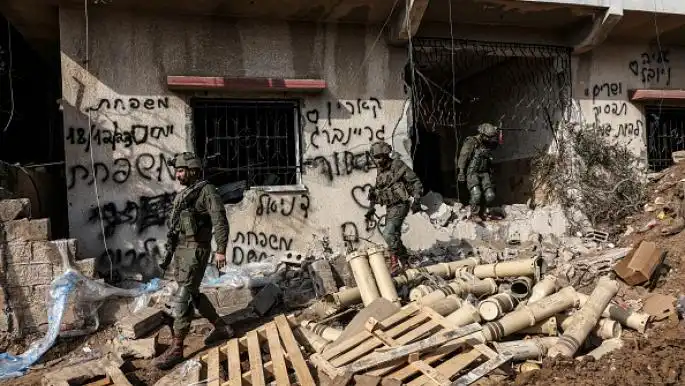
This step comes in addition to other "defensive" Israeli steps, including the Israeli occupation army surveying many areas of the Strip overlooking the cover settlements and leveling them to the ground, so that there is nothing that can be hidden from Israeli surveillance sites.


Settlement and sea view

In a context related to surveying the buildings, Israeli circles have previously indicated their desire for a view of the sea, which means, in other words, leveling all the Gazan buildings that stand between the sea and them to the ground and erasing them from existence, in addition to returning to settlement in the Gaza Strip.


This Israeli dream was expressed by the head of the “Nahla” settlement movement, Daniela Weiss, who spoke last week to the Israeli Channel 7. During the meeting, which discussed the “day after” the war on the Gaza Strip, she called for the displacement of the Palestinians and for settlement to be restored and planned in a way that gives the residents of the enclave a view of the sea.


In this context, she said: “I heard a number of people saying that they want to see the sea, meaning that there should be no homes (i.e. Palestinian in Gaza), and they are right in this desire. But how can the sea (i.e. the view of it) not be blocked? Israeli settlement is properly planned.” In the Gaza Strip. This is how the residents of the Gaza Strip will see the sea without (the vision and presence of) Arabs who hate Israel.”

She added: “My message to the residents of the envelope: You rally around us and we rally around you. The Gaza Strip and Gush Katif (the settlement bloc vacated by the occupation in 2005) form (together) one very large force. Any attempt to separate leads to distortion, and may lead to disasters.” .

Speaking about the Palestinian presence in the Gaza Strip, she added that what happened before October 7 will not happen after it, and that “Israel will not forget what happened,” and therefore “there will not be any Arabs in Gaza.”


Weiss said that seeing occupation soldiers inside the Gaza Strip taking pictures and scenes of themselves reciting Talmudic prayers in places where there were settlements, gives her a feeling that there is a desire among the Israeli public for Jewish settlement in Gaza.

She continued: “We see soldiers on the ground lighting candles in Neve Dekalim and Kfar Darom (names of former settlements). They realize that we have returned to our country. Gaza is part of the Land of Israel. There have been Jews there throughout history. There is nothing more logical than returning to settlement.” In Gush Katif.


Weiss believes that "the Prime Minister of the occupation, Benjamin Netanyahu, has no choice but to allow the people of Israel to return to part of the Land of Israel. We must say that Gaza is an integral part of the living body of the State of Israel."


In her message to the residents of the “Gaza envelope” settlements, Weiss believes that there is no difference between the settlements that were in the Strip before the withdrawal and the envelope settlements, asking: “What is the difference? It is a distance of 3 kilometers. We are brothers. If it is possible to live in Be’eri (one of the settlements) The cover targeted by Operation Al-Aqsa Flood) so how could it not be possible to live in Netzarim (one of the Gaza settlements before the evacuation)?”


OPINIONS

Fri 22 Dec 2023 9:05 pm - Jerusalem Time

Israel’s use of disproportionate force is a long-established tactic – with a clear aim

The Guardian

The Guardian

Opinion Writer

By Paul Rogers

The strategy goes well beyond defeating an opponent: it seeks to destroy key infrastructure and the economy, with many civilian casualties


How to make sense of the sheer intensity of Israel’s war in Gaza? One understanding is that it is the result of the enduring shock of the 7 October massacre combined with a far-right government that includes extreme elements. Yet this ignores another element: a specific Israeli approach to war known as the Dahiya doctrine. It’s also one reason why the “pause” was never going to last for very long.

First, let us take stock of the state of Gaza. After a seven-day pause in the airstrikes, the war resumed on Friday. In the last three days, bombing has been heavy, and the total death toll since 7 October has risen to 15,899, according to the Gaza health ministry, with at least 41,000 wounded. Among the dead are 6,500 children, including hundreds of infants.


Physical destruction in Gaza has been massive: 60% of the territory’s total housing stock (234,000 homes) is damaged, 46,000 of which are completely destroyed. The seven-day pause may have provided limited relief from the comprehensive siege but there are still serious shortages of food, clean water and medical supplies.


Despite massive Israeli attacks backed by a near-unlimited supply of bombs and missiles and intelligence support from the United States, Hamas continues to fire rockets. Moreover, it retains a substantial paramilitary ability with 18 of the original 24 active paramilitary battalions intact, including all 10 in southern Gaza.

Palestinian support for Hamas may also be growing in the West Bank, where armed settlers and the Israel Defense Forces have killed scores of Palestinians since the war started. The Israeli government is absolutely determined to continue and is accelerating the war, despite US secretary of state Antony Blinken’s blunt warning to limit casualties and vice-president Kamala Harris confirming that “under no circumstances will the United States permit the forced relocation of Palestinians from Gaza or the West Bank, the besiegement of Gaza, or the redrawing of the borders of Gaza”.

That will count for little, given the extreme position of Benjamin Netanyahu’s war cabinet, where the aim is to destroy Hamas. How this will be attempted relates to the specific Israeli way of war that has evolved since 1948, through to its current Dahiya doctrine, which is said to have originated in the 2006 war in Lebanon.

In July of that year, facing salvoes of rockets fired from southern Lebanon by Hezbollah militias, the IDF fought an intense air and ground war. Neither succeeded, and the ground troops took heavy casualties; but the significance of the war lies in the nature of the air attacks. It was directed at centers of Hezbollah power in the Dahiya area, in the southern suburbs of Beirut, but also on the Lebanese economic infrastructure.


This was the deliberate application of “disproportionate force”, such as the destruction of an entire village, if deemed to be the source of rocket fire. One graphic description of the result was that “around a thousand Lebanese civilians were killed, a third of them children. Towns and villages were reduced to rubble; bridges, sewage treatment plants, port facilities and electric power plants were crippled or destroyed.”

Two years after that war, the Institute for National Security Studies at Tel Aviv University published Disproportionate Force: Israel’s Concept of Response in Light of the Second Lebanon War. Written by IDF reserve Col Gabi Siboni, it promoted the Dahiya doctrine as the way forward in response to paramilitary attacks. The head of the Israeli military forces in Lebanon during the war, and overseeing the doctrine, was General Gadi Eizenkot. He went on to be the IDF chief of general staff, retiring in 2019, but was brought back as an adviser to Netanyahu’s war cabinet in October.

Siboni’s paper for the institute made it crystal clear that the Dahiya doctrine goes well beyond defeating an opponent in a brief conflict, and is about having a truly long-lasting impact. Disproportionate force means just that, extending to the destruction of the economy and state infrastructure with many civilian casualties, with the intention of achieving a sustained deterrent impact.

The doctrine has been used in Gaza during the four previous wars since 2008, especially the 2014 war. In those four wars, the IDF killed about 5,000 Palestinians, mostly civilians, for the loss of 350 of their own soldiers and about 30 civilians. In the 2014 war, Gaza’s main power station was damaged in an IDF attack and half of Gaza’s then population of 1.8 million people were affected by water shortages, hundreds of thousands lacked power and raw sewage flooded on to streets.

Even earlier, after the 2008-9 war in Gaza, the UN published a fact-finding report that concluded that the Israeli strategy had been “designed to punish, humiliate and terrorise a civilian population”.

The situation now, after two months of war, is far worse. With the ground offensive in southern Gaza under way, it will not stop, exacerbated by tens of thousands of desperate Gazans repeatedly trying to find places of safety.

The immediate Israeli aim, which may take months to achieve, appears to be eliminating Hamas while corralling the Palestinians into a small zone in the south-west of Gaza where they can be more easily controlled. The longer-term aim is to make it utterly clear that Israel will not stand for any opposition. Its armed forces will maintain sufficient power to control any insurgency and, backed by its powerful nuclear capabilities, will not allow any regional state to pose a threat.

It will fail. Hamas will emerge either in a different form or strengthened, unless some way is found to begin the very difficult task of bringing the communities together. Meanwhile, the one state that can force a ceasefire is the US, but there is little sign of that – at least so far.

  • Paul Rogers is emeritus professor of peace studies at Bradford University and an honorary fellow at the Joint Service Command and Staff College

ARAB AND WORLD

Fri 22 Dec 2023 8:41 pm - Jerusalem Time

Opinion polls on the aggression on Gaza.. How did Israel turn into a heavy burden on America?

Opinion polls show a noticeable decline in Israel's popularity among Americans. How did Tel Aviv transform from an ally of Washington into a "burden" on American politics and politicians since it began its war on Gaza?


An analysis of the Israeli newspaper Haaretz monitored how support for Israel, which was a settled matter before the war on Gaza, has declined significantly over the past weeks, and how Israeli policies have become unpopular in a way that is impossible to deny, turning Israel from a major ally of America in the Middle East into a burden on Washington.


Support for the Biden administration and declining support for Israel

From the first moment of the beginning of the Israeli aggression on Gaza, Joe Biden announced his absolute support for Israel, and promoted its misleading narrative regarding the war in Gaza. The American President’s complete adoption of the Israeli narrative reached the point of questioning the number of dead from the barbaric bombing of the Gaza Strip. But with the passage of time, the tone of the American discourse towards the Israeli aggression began to change noticeably, without changing the level of military and logistical support, which observers attribute to multiple reasons, most notably the sharp internal division regarding the position on Israel and the Palestinians.


Since October 7, the day of the Al-Aqsa Flood military operation, the Israeli government, headed by Benjamin Netanyahu, has launched a brutal, barbaric and uncontrolled aggression against the Gaza Strip, which is inhabited by 2.3 million Palestinians, and imposed collective punishment measures against the residents of the Strip, completely cutting off electricity, water and food. An air, sea, and land bombardment campaign began, which is still ongoing.


The Israeli aggression caused a sharp division in American society, as 61% of American voters support a ceasefire in Gaza, according to recent opinion polls, but at the same time the official American position remains almost the same, as only 14% support an immediate and permanent ceasefire. % of lawmakers in Congress, according to a report by the American website Responsible Statecraft that sheds light on the growing division within the corridors of American politics.


According to Haaretz's analysis, Israel's ignoring of these disturbing trends on the American street represents a major mistake on the part of Israeli officials. Although Israel still enjoys greater popularity than the Palestinians, the percentage of support for Israel has declined sharply compared to the rise in support for the Palestinians.


What does the rise in popular support for the Palestinian cause mean?

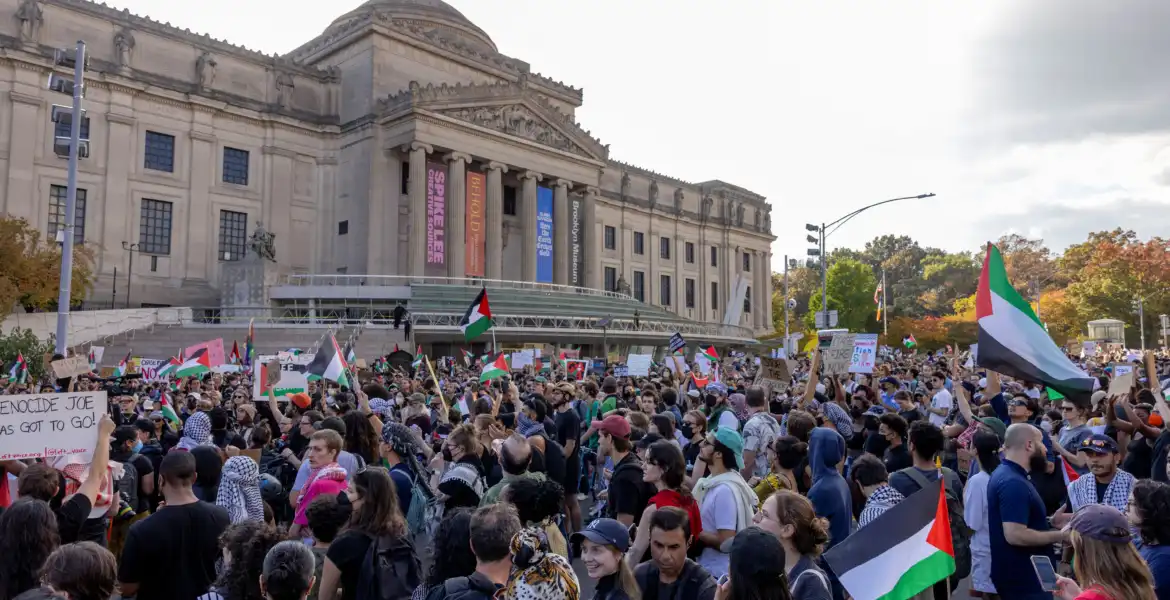
The Israeli newspaper's analysis stopped at the remarkable rise in support for the Palestine issue in American universities and schools in particular and American society in general, which is reflected in the massive and continuous demonstrations since the beginning of the Israeli aggression on Gaza, in addition to what is confirmed by multiple opinion polls in this regard.


If this trend is reflected in one opinion poll, it may be ignored or considered a negative aspect directly linked to a dominant event on the political scene. However, if the same result appears in two opinion polls, it must draw attention, and repeating the same result in 3 polls is worthy. With study and scrutiny, because it indicates a general trend that is in the process of being formed.


But when a variety of opinion polls conducted by multiple parties with diverse orientations and affiliations show low support for Israel and a decisive rejection of the way US President Joe Biden dealt with the war on Gaza, the matter becomes a reason not only for an individual analysis of each result, but also for an attempt to draw conclusions that may not be apparent in the past. The moment is immediate, but it exists and often forms public opinion, according to Haaretz's analysis.


The American scene and the position there towards Israel seem complicated, because the majority of opinion polls in recent months have shown, since before the current aggression on Gaza, that public support for Israel and not for the Netanyahu government and its extreme right-wing policies is still prevalent in the United States.


But this impression may be misleading in the long run; This is because of one element, but it is very important, and this element is the younger generations of Democratic voters who criticize Israel or even show clear hostility towards it, and the younger generations here refer to the age group between 18 and 34. The war on Gaza naturally led to increased criticism and hostility towards Israel among this group.


What is certain in this context, according to Haaretz, is that the aforementioned opinion polls were conducted by multiple and highly credible bodies, and when the results of these polls are put together, they reflect a general trend within American society critical of Israel as a whole or the policies of its current government headed by Netanyahu.


Did the aggression against Gaza make Israel a burden on America?


A deeper analysis of American opinion polls indicates a general trend among young people in general, and those registered as Democrats or independents in particular, which is to consider Israel an occupying state that must withdraw from the Palestinian territories in order to establish an independent State of Palestine. It is certain that this opinion existed on a lesser scale before the aggression. The current situation in Gaza, but the scenes of widespread destruction and civilian casualties have deepened this opinion and transformed it into something resembling public opinion.


In the same context, major American media outlets recently began directing harsh criticism at Netanyahu and his government, a trend that seems likely to escalate further in light of the public disagreement between Biden and Netanyahu regarding the course of the war on Gaza and the fate of prisoners and detainees in the Strip, including those who hold American citizenship.


The other point in this context relates to American interests in the region and around the world, which are being exposed to damage that is difficult to ignore, due to Washington’s official position that is biased towards and supportive of Israel in a way that makes the United States a partner in the crimes committed by the occupation army on the one hand, and exposes American interests to more Damage on the other hand.


The explosive situation in the Red Sea and the Bab al-Mandab Strait, where the Houthis are attacking ships and tankers related to Israel, and Washington’s announcement of the formation of a naval force to ensure freedom of navigation there, represents another element of the division within America, where there is a growing rejection of America’s involvement in more conflicts. around the world. This position, which stems, of course, from Israel's aggression against Gaza, makes Tel Aviv a "burden" on American policy rather than a strategic ally.


These data, which are highlighted by opinion polls related to the aggression against Gaza, indicate a noticeable increase in criticism of Israel, but the coolness in relations between America and Israel is not the result of the current aggression against Gaza. Talk about ending military aid to Tel Aviv has become increasingly popular after it was once a “taboo.” 


It is true that Israel and America have very strong and strategic alliance relations, but the differences between Tel Aviv and Washington had reached an unprecedented stage, which some attributed to the tension in relations between Netanyahu and Biden.

Benjamin Netanyahu’s relationship with Joe Biden was not good in general, but the huge division in Israel due to judicial reforms or a judicial coup and Washington’s interference in what is happening and matters reaching the point of accusations of collusion and veiled messages, saying: “Do not come to visit us.” These are all historical precedents in relations between the two countries.


The Israeli newspaper Haaretz had published a report a month and a half before the “Al-Aqsa Flood” monitoring how the discussion of ending US military aid to Israel had become increasingly popular, which is a radical shift, of course, as any talk that fell under the heading of “criticism” of Tel Aviv was leading to “ Guillotine, the most powerful Jewish lobby ever in Washington.


But the last week of last August witnessed a debate broadcast by the American television network PBS between a former American ambassador to Israel and a senior White House official, which fell under the category of “smashing taboos” and was completely unimaginable before. During which they discussed whether the time had come to stop American military support for Israel. The issue, which was previously thought to have a comprehensive consensus in American politics, has become a controversial topic in Washington.


In the debate, Dan Kurtzer, the former US ambassador to Israel between 2001 and 2005 during the administration of President George W. Bush, expressed his support for the idea. He said that Israel does not share democratic values with the United States, and is stable enough and able to take care of itself.


Dennis Ross, who was responsible for the Israeli-Palestinian issue during the Clinton administration in the 1990s, did not explicitly oppose stopping this aid, but he warned that the time was not appropriate for that, and it might encourage what he described as “enemies” of Israel to attack it if they saw a weakness in the American support provided. she has. But even the Jewish lobby supporting Israel in America no longer has the same influence and as it did before the current war on Gaza, according to American media reports.

source: Arabic Post


PALESTINE

Fri 22 Dec 2023 8:38 pm - Jerusalem Time

West Bank: worshipers withdrew the moment Al-Habbash took the pulpit in Ramallah

Palestinian media reported that worshipers in a Ramallah mosque in the occupied West Bank withdrew from the mosque the moment Mahmoud Al-Habbash, chief advisor to Palestinian President Mahmoud Abbas, took the pulpit to deliver the Friday sermon.


Activists said that the worshipers’ withdrawal from the mosque came in objection to Al-Habbash delivering the Friday sermon, and he was known for his positions against the Palestinian resistance, especially the Islamic Resistance Movement (Hamas).


A few days ago, the Times of Israel quoted Al-Habbash as saying that President Mahmoud Abbas condemned the Hamas movement in every call and meeting he held with world leaders since the Al-Aqsa flood operation on October 7, but he will not do so publicly while the war continues. Gaza strip.


Al-Habbash revealed that the Palestinian Authority is ready to bear full responsibility in Gaza, provided that it is side by side with the West Bank and not as a contractor for Israel, as he put it.


Al-Habbash added that the security forces of the Palestinian Authority are able to control the situation in Gaza just as they are currently doing in the West Bank, but he acknowledged that there is a need for a transitional period of at least 6 months so that the Palestinian Authority can rehabilitate before it can return to rule. Gaza.


PALESTINE

Fri 22 Dec 2023 8:27 pm - Jerusalem Time

Two brothers sustained bruises after settlers assaulted them

This Friday evening, two brothers from the Khalayel al-Lawz area, southeast of Bethlehem, were injured with bruises and wounds after settlers beat them.


A local source said that settlers attacked the two brothers, Nassif Nassif Ismail (38 years old) and Hudhayfah (36 years old), which led to them sustaining bruises and wounds.


The director of ambulance and emergency services at the Red Crescent, Bethlehem branch, Abdul Halim Jaafra, said that the two brothers were injured in various parts of their bodies.

ARAB AND WORLD

Fri 22 Dec 2023 7:48 pm - Jerusalem Time

New York Times: 5,000 MK-84 bombs from America to Israel since October

The New York Times reported that Washington has sent more than 5,000 MK-84 bombs weighing 2,000 pounds to Israel since last October.


The newspaper explained - quoting sources - that the Pentagon increased shipments to Israel of small bombs “more suitable for urban areas such as Gaza,” and that Israel used one of its most destructive bombs several times in areas it declared safe for civilians in the Strip, noting that the bombs that Israel used No army has ever used it in civilian areas.

ARAB AND WORLD

Fri 22 Dec 2023 7:19 pm - Jerusalem Time

The Security Council approves a draft resolution on expanding aid to Gaza

The UN Security Council approved a draft resolution on expanding the entry of aid into the Gaza Strip.


The Council adopted Resolution 2722 regarding expanding and monitoring humanitarian aid to the Gaza Strip.


The Security Council refrained from making an amendment requested by Russia to the draft resolution due to the American veto.


The US delegate to the UN Security Council, Linda Thomas-Greenfield, said that the resolution does not support any plan that might help Hamas remain in power.


She added, "Passing the resolution was not easy, and we did everything in our power to resolve the crisis," stressing that civilians and humanitarian and international facilities must be protected.


The American delegate indicated that the decision would appoint a UN delegate to supervise the expansion of aid delivery.

ARAB AND WORLD

Fri 22 Dec 2023 6:34 pm - Jerusalem Time

An Israeli soldier was killed on the border with Lebanon.. Continuous bombing between Hezbollah and Israel

The Israeli army announced that one of its soldiers was killed on the border with Lebanon, and another was seriously injured as a result of a shell fired by Hezbollah towards Shtoula. While Hezbollah mourned two of its fighters in two separate brief statements, in which it said that they were killed on the road to Jerusalem."


This comes as the mutual bombardment between Hezbollah and the Israeli army continues on sites and towns near the border. Today, the Israeli army targeted with artillery shelling the outskirts of the town of Aita al-Shaab, amid reconnaissance aircraft flying over the villages adjacent to the Blue Line, all the way to the Tyre area.


Last night, the Israeli army fired incendiary bombs into the forests adjacent to the Blue Line on the outskirts of the towns of Naqoura and Alma al-Shaab, in addition to flare bombs.


An increase in the displacement of Lebanese citizens was recorded, especially after the Israeli army targeted homes and killed civilians, according to what the official Lebanese National News Agency reported.


Alarm sirens sounded in areas in the Upper Galilee warning of missile attacks from southern Lebanon targeting Israeli border towns, including “Even Menachem,” “Shtoula,” “Zarait,” and “Natoa.”

PALESTINE

Fri 22 Dec 2023 5:35 pm - Jerusalem Time

Experts: The Israeli war machine in Gaza...the most destructive in modern history

Experts say that the Israeli military campaign in Gaza is now among the bloodiest and most destructive in modern history, in just over two months.

The Israeli attack caused a greater amount of destruction than the destruction that befell Aleppo in Syria between 2012 and 2016, or Mariupol in Ukraine, or the Allied bombing of Germany in World War II.


The war killed more civilians than the US-led coalition did in its three-year campaign against ISIS. The Israeli army has said little about the types of bombs and artillery it is using in Gaza.


But through explosion fragments found in various locations and analysis of raid footage, experts are confident that the vast majority of bombs dropped on the besieged enclave were American-made. They say the weapons include 2,000 pounds (900 kilograms) of “super fortifications” that Hundreds were killed in densely populated areas.


With the number of Palestinian deaths in Gaza exceeding 20,000, the international community is calling for a ceasefire. Israel has vowed to move forward, saying it wants to destroy Hamas' military capabilities following the armed group's cross-border attack on October 7, which killed 1,200 people and took 240 more hostage.


Quietly, the Biden administration continued to supply weapons to Israel, but last week, President Joe Biden publicly admitted that Israel was losing international legitimacy because of what he called its “indiscriminate bombing.”


How much destruction is there in Gaza?


The Israeli attack destroyed more than two-thirds of the buildings in northern Gaza and a quarter of the buildings in the southern area of Khan Yunis, according to an analysis of Copernicus Sentinel-1 satellite data by Cory Shear, of the Graduate Center at the City University of New York, and Jamon van den Hoek. , from Oregon State University. The two are experts in mapping war damage.


The percentage of damaged buildings in the Khan Yunis area nearly doubled during just the first two weeks of the Israeli attack. This includes tens of thousands of homes as well as schools, hospitals, mosques and shops.


About 70 percent of school buildings across Gaza were damaged, and at least 56 damaged schools served as shelters for displaced civilians, UN monitors said. Observers say that the Israeli raids destroyed 110 mosques and 3 churches.


Israel holds Hamas responsible for civilian deaths by planting militants in civilian infrastructure. These sites also house large numbers of Palestinians who have fled under Israeli evacuation orders.


How large is this destruction historically?

By some measures, the devastation in Gaza has surpassed the Allied bombing of Germany during World War II.


Robert Pape, an American military historian, said that between 1942 and 1945, the Allies attacked 51 major German cities and towns, destroying about 40-50 percent of their urban areas.


This represents 10 percent of buildings across Germany, Pape added, compared to more than 33 percent across Gaza, a densely populated area of just 140 square miles (360 square kilometers).


“Gaza is one of the most severe campaigns of civil punishment in history,” Pape continued, noting that the war on Gaza is one of the most destructive bombing campaigns ever.


The 2017 attack by the US-led coalition to expel ISIS from the Iraqi city of Mosul was considered one of the most intense attacks on the city in generations.


That nine-month battle led to the deaths of about 10,000 civilians, a third of them due to coalition bombing, according to an investigation conducted by The Associated Press at the time.


During the 2014-2017 campaign to defeat ISIS in Iraq, the coalition carried out nearly 15,000 strikes across the country, according to Airwars, an independent group based in London that tracks recent conflicts. By comparison, the Israeli army said last week that it had carried out 22,000 raids in Gaza.


What types of bombs are used?

The Israeli army did not identify the bombs used. It says every strike is approved by legal advisers to ensure it complies with international law.


“We choose the appropriate ammunition for each target, so as not to cause unnecessary damage,” said the army’s chief spokesman, Admiral Daniel Hagari.


Weapons experts were able to draw conclusions by analyzing explosion fragments found at attack sites, satellite images, and video clips circulating on social media. They say the findings offer only a peek at the full scope of air warfare.


So far, US-made Joint Direct Attack Munition (JDAM) bomb fragments and smaller diameter bombs have been found in Gaza, according to Brian Kastner, a weapons investigator for Amnesty International.


JDAM bombs include precision-guided bunker-buster bombs weighing 1,000 and 2,000 pounds (450 and 900 kg).


“It turns the Earth into a liquid,” said Mark Garlasco, a former Pentagon defense official and war crimes investigator for the United Nations. “It destroys entire buildings.”


He explained that a 2,000-pound bomb exploding in the open would mean "instant death" for anyone within about 30 meters (100 feet). Deadly fragments can extend up to 365 meters (1,200 feet).


In an October 31 strike on the Jabalia refugee camp, experts say a 2,000-pound bomb killed more than 100 civilians.


Experts also identified fragments of 2,000-pound SPICE bombs, which are equipped with a GPS guidance system in order to make targeting more precise.


Kastner said that these bombs were produced by the giant Israeli defense company (Rafael), but a statement by the US State Department showed for the first time that some of the technology for these bombs was produced in the United States.


The Israeli military is also dropping unguided “stupid” bombs, according to expert analysis of two photos the Israeli Air Force posted on social media at the start of the war showing fighter planes loaded with unguided bombs.

PALESTINE

Fri 22 Dec 2023 5:32 pm - Jerusalem Time

War on Gaza: More civilian casualties reported in Gaza on 77th day of Israeli aggression

On the 77th day of the aggression against the Gaza Strip, Israeli occupation forces continued their airstrikes and artillery shelling on various areas in the region, resulting in the murder and injury of dozens of civilians, predominantly children and women, according to local sources.


In an Israeli drone airstrike in Khan Yunis, south of the Gaza Strip, a young man was while riding a motorcycle, medical sources said.


Additionally, several civilians were killed and others were injured due to intensive Israeli artillery shelling targeting Jabalia in the northern Gaza Strip.


Meantime, rescue teams managed to retrieve 16 dead bodies and more than 50 injured individuals from the Al-Bursh family home which was targeted and destroyed by Israeli airstrikes in Jabalia, north of the Strip.


Israeli warplanes also carried out multiple airstrikes on Blocks 1 and 2 in Jabalia refugee camp. No reports were available from the scene regarding any casualties, likely due to the outage of telecommunications in many areas of the besieged territory as a result of the prolonged Israeli aggression.


Simultaneously, Israeli artillery targeted the eastern areas of Al-Bureij refugee camp in the central region of the enclave.
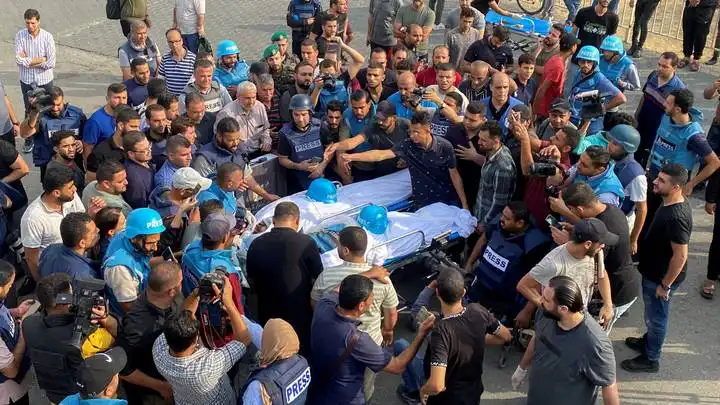

The ongoing Israeli aggression on Gaza, which began on October 7, has resulted in the deaths of over 20,000 Palestinians, with 70% of the casualties being women and children, according to a preliminary toll.

OPINIONS

Fri 22 Dec 2023 4:39 pm - Jerusalem Time

Israeli Opinion| We have to acknowledge the loss, so that the Palestinians will acknowledge us

Translation for "Al-Quds" dot com

Translation for "Al-Quds" dot com

Opinion Writer

By Hillel Schocken

We will not win, even if we are together [the slogan “Together we win” that Israeli institutions have raised since the beginning of the attack on Gaza]. We have actually lost, since October 7, in the battle currently taking place in Gaza, in defense of our right to a national homeland in the Land of Israel. Every additional day that passes during the ground maneuver reinforces this failure. When this terrible battle ends, a few weeks later, as a result of international pressure, as expected, Israel will find itself in a more difficult situation than the one it entered on the morning of the “barbaric attack” carried out by Hamas. Is it possible that one good thing can emerge from this failure? Perhaps ending the Palestinian-Israeli conflict, for example?

On October 16, the Israeli war cabinet announced the war’s goals: to undermine Hamas’ authority and eliminate its military capabilities; Eliminate the threat of “Gazan terrorism” towards Israel; Make every effort to resolve the hostage issue; Protecting the state’s borders and its citizens. At the end of the battle, we will not be able to achieve any of these goals.

Opinion polls indicate that our behavior in Gaza strengthens Hamas's position in the hearts of Palestinians, not only in Gaza, but in the West Bank as well. As for whoever wants to eliminate Hamas in Gaza, he will get it here in the West Bank as well. What appears to many to be a maximum effort to free the kidnapped has only partially succeeded, by freeing less than half of them, and every day that the battle continues, the lives of the majority of those remaining in captivity will be endangered. If a deal is actually reached to release these people, we will be forced to release all the Palestinian prisoners in our custody, whether they were arrested on charges of killing Jews or not, and we will also be forced to withdraw from the Gaza Strip and commit to ending the war. The leaders of Hamas, gentlemen, are not stupid. They will not agree to anything less. As for us, we will content ourselves with asking the friendly countries, sponsors of the agreement, to provide guarantees that Israel will not be attacked in the future.

Israel's international standing has actually deteriorated to an unprecedented low, which jeopardizes not only its relations with its friends, first and foremost the United States, but it also exposes Jewish communities around the world to danger, and makes Israelis isolated in the world, as if they were infected with a disease. Leprosy in the Middle Ages. In addition, our regional position has weakened dramatically. As for those who chant the “theory” that Hezbollah is deterred from attacking us, we have news for them: Israel is deterred. Our weakness in the face of Hezbollah was resoundingly confirmed when US President Joe Biden realized what was really happening, and he quickly sent a massive military force to the Mediterranean in order to protect us.

Despite the presence of American deterrence in the region, the organizations within Iran's orbit succeed in disturbing us. Hezbollah has turned tens of thousands of residents of the north into refugees in their country, while the Houthis have completely succeeded in cutting off the Israeli maritime supply line from the south. Thus, the day came when we saw Israel forced, today, to come to terms with what it considered in 1956 and 1967 to be a declaration of war against it.

Without justifying the "barbaric" Palestinian attack on the towns of the Western Negev, we must see in these attacks the current culmination of the violent Palestinian national struggle against the mere existence of the State of Israel, as the national homeland of the Jewish people in the Land of Israel. Throughout 75 years of its existence, Israel has succeeded in curbing this Palestinian ambition to eliminate it, and to claim the right to Palestinian self-determination in the sovereign State of Palestine on the land between the sea and the river. Israel did this initially, by imposing military rule on the Palestinians within the Green Line, by repelling attacks directed at it across the armistice lines, and later, by military control of the residents of the areas occupied during the Six-Day War, in the West Bank and Gaza Strip.

The long years that have passed since then have not made the Palestinians relax. The intensity of their opposition to the mere existence of the State of Israel inflicts an ever-increasing blood and economic price on both sides. In order for the current war not to be merely the beginning of larger waves of violence, and for Israel to remain a national homeland for the Jewish people in the Land of Israel, Israel must consider the goal of eliminating Palestinian opposition to its existence as the highest strategic goal regulating its policies.

The Messianic movement in Israel hopes to achieve, “with God’s help,” this goal by displacing all Palestinians from the West Bank and Gaza Strip. This movement believes that the mass killings in Gaza and the outbreak of settlers in the West Bank, which are taking place under the auspices of the Israeli authorities, aim to “encourage” Palestinians to migrate outside the borders of the area under Israel’s control, a step that means the ethnic cleansing of about 5 million Palestinians. It is difficult to imagine that the world, which will force Israel to stop the war in Gaza soon, in light of the tens of thousands of deaths and injuries, the unprecedented devastation, and the deterioration of the humanitarian situation on a brutal scale, will allow such a solution.


What happened in the Yom Kippur War, and the achievements achieved by the Egyptians in crossing the canal, led to Egypt regaining its dignity, which led to the signing of peace treaties. As for Israel's recognition of its loss in the ongoing war, based on the data described above, it will contribute to restoring the national dignity of the Palestinians, which has been trampled on for 56 years. Apparently, this is a necessary stage in a process that will lead to stopping the fighting in Gaza, and reaching an exchange deal, through which all Palestinian prisoners will be released in exchange for the release of all the kidnapped, whose fate depends on the period that will pass until Israel recognizes this reality. Israel will be forced to recognize the Palestinians' right to an independent, sovereign state, and to conduct negotiations with any leadership chosen by the Palestinians, to end the conflict, based on UN resolutions and the Saudi initiative. Is it possible that the disaster of October 7 heralds the birth of a new horizon in the Middle East?

Source: Institute of Palestine Studies

OPINIONS

Fri 22 Dec 2023 4:26 pm - Jerusalem Time

Israeli opinion| Okay Bibi; We understand what you reject, so what do you accept?

Tova Herzl

Tova Herzl

Opinion Writer

For those who do not know the children's story written by Ishak Avnon about the little bear Lala - the content is clear from the title. Once upon a time, a little bear used to say "no." He would say no, in response to everything they said, suggested, or asked. So, an angel cast a spell on him that blocked all words except one: No. This leads to frustration, difficulty communicating with others, and ultimately, isolation. As expected in legends with a happy ending, Little Bear broke away from the spell, and everything returned safely to its place. 


Currently, the State of Israel is led by its own little bear, who long ago turned into a big, clumsy, and tired bear, who said in recent weeks: “I will not allow Hamastan to be replaced by Fatehistan”; Also, “there will be no Palestinian state”; “We will not give Gaza to outside powers”; "We will not submit to international pressure, including pressure from the United States." He said no, no, no.

The issues being discussed are complex, there are no magic formulas, and it can be said that there are problems in each of the scenarios he rejected. There is a price for every path chosen. But, can someone who said he bears responsibility for the future tell us what is acceptable to him? If not hope, at least give us a plan?


It is exaggerated to write here that we are living in a very difficult period. The constant fear of “allowed to publish” and the stories of massacres that are being published, and are still being published, regarding kidnappings and killings, pictures of demolitions, interviews with those who were evacuated from their homes and are living in a state of frustration, as well as the expected projections on business, and on the economy in general - all of this leads to frustration. 

But what comes after “We will conquer together” (without discussing what is meant by “we conquer” and who “together” is)? Will efforts to maintain the coalition bear fruit? What is the vision that we will follow? Maybe not immediately, while we still face unimaginable challenges, but in 10 years, or in 25 years? What is his plan for Israel in its 100th year, and what will it look like? what is the point? Where are we heading?


It became clear on October 7 that the Abraham Accords and future plans of the same spirit would not hide in our backyard. If a Palestinian state is not established there, what will happen? Accelerate settlement? What is the response of the Palestinians themselves to this? What will the projections be like in the international arena? After he told us who will not rule Gaza, then who can rule it? Israel? If so, what does that mean?


As for internal issues, news was recently published of the intention to increase the years of service in the Army Reserve to allow the army to carry out its missions. On the other hand, and after demands from the Haredi parties, it was approved to cancel the tax on sugar (it exists in 85 countries, and its contribution to health is proven). So, despite the severe crisis that Israel is experiencing, it is not expected that there will be any change in responding to the demands of the Haredi community that is increasing, thus increasing the burden on the rest of society, which is also expected to increase. 

Based on what was previously stated here, it is important to understand whether the government has any long-term goals beyond general slogans that no one will oppose, such as peace, security, prosperity, and brotherhood.

Whoever thinks that the time is not appropriate, should know that - this is the appropriate time. Politicians who determine our fate and future are busy with politics all the time. They make deals, conduct polls, research headlines, and head toward the next election. Saying, “This is not the right time,” means giving them freedom to do whatever they want. Whoever trusts the government and its president is called to bless everything it does. Those who do not trust them - and polls prove that we are the vast majority and increasingly growing - must demand answers.


Who are we, for example? The young woman who immigrated from Australia, married an immigrant from France, and gave birth to 3 children, all of whom are in Gaza. And in the long, sleepless nights, she wants to know what their future is. Or who would like to invest all the compensation money in a tourism initiative, and wants to know what future the country is going towards. What would we say to a young man who is planning to go and complete his university education abroad? When he finishes education, to which Israel will he return, if he returns at all? We do not need details, but rather a general orientation. We know what's not going to happen. But what will happen? Please, tell us, what is it?

ARAB AND WORLD

Fri 22 Dec 2023 4:07 pm - Jerusalem Time

Former Israeli officials call for stopping the Gaza war: Victory over Hamas is not possible

Former senior Israeli officials and writers called for an end to the war waged by the occupation army on the Gaza Strip, given the impossibility of achieving victory and eliminating the Hamas movement.


Former Prime Minister Ehud Olmert urged an immediate halt to the war, because the goals set by Benjamin Netanyahu's government could not be achieved. Olmert said in an article entitled: “Stop the war in exchange for the return of the kidnapped alive,” published by Haaretz newspaper on Friday, that the claims of Netanyahu and members of his government that the Hamas movement can be eliminated through military operations are “unrealistic.”


Olmert argued that Netanyahu himself does not believe that this goal can be achieved, pointing out that the prime minister is acting like a "stage actor", all that means escaping the consequences of responsibility for failing to prevent the implementation of the "Al-Aqsa Flood" operation on the seventh of last October.


He added that Netanyahu, who is driven by internal political considerations, "is aware that there is no realistic ability to achieve the goal of eliminating the Hamas movement, but from the first moment he was not preoccupied with the war on Gaza, but rather with his own personal war of survival."


Olmert pointed out that Netanyahu, by emphasizing the goal of eliminating Hamas despite its unreality, is concerned with holding his partners in the government, army leaders, and intelligence establishment responsible for the end of the war without achieving this goal, claiming that he has always remained committed to achieving it.


The former Israeli Prime Minister added, "Today it appears clearly that although the Israeli army is fighting boldly, decisively, and with the required caution, and is suffering painful human losses, there is no possibility that the expectations enshrined by Netanyahu will be fulfilled, and the Hamas movement will not be eliminated."


Olmert stressed that Israel has two options: “Either it agrees to a ceasefire and returns its prisoners from Hamas through an exchange deal, or it continues fighting so that the war ends without achieving the goal of eliminating Hamas and without recovering the prisoners.”


“Every day deep inside Gaza will deepen the failure.”

For his part, former Minister of Foreign Affairs and Internal Security, Shlomo Ben-Ami, believed that Israel cannot achieve victory over Hamas.


In an analysis published by Haaretz newspaper, Ben Ammi pointed out that since the end of World War II, countries with regular armies have not been able to achieve victories over armed organizations in disproportionate wars.


Ben Ammi considered that, given the geographical and demographic reality in the Gaza Strip, “any modern army, no matter how powerful it is militarily or technologicaly, cannot achieve victory over the Hamas movement, just as the Americans failed in their wars in Vietnam and Afghanistan and the Soviets failed in Afghanistan.”


Ben Ammi believes that, unlike the United States and the Soviet Union; The two countries that could manage a long war, Israel cannot fight long wars.


Ben Ammi rejected the opinion that Hamas launched Operation “Al-Aqsa Flood” for unrealistic motives, pointing out that the movement achieved strategic achievements through this operation, represented by “pushing the Palestinian issue once again to the top of the priorities of the international community, and braking the path of normalization between Israel and the Arab regimes, and forcing Israel to rely in an unprecedented manner on the American military umbrella to avoid the risk of a multi-area war breaking out, in addition to the fact that the movement succeeded in giving itself the main position in the Palestinian national liberation movement.”


He expected that at the end of the war, Hamas would be able to liberate all Palestinian prisoners from occupation prisons.


In this context, writer Hillel Schocken called on Israel to acknowledge defeat against Hamas. He wrote in an article published by the newspaper "Haaretz": "We will not win, even when we are united. We lost the current battle over our right to a national homeland in the Land of Israel on October 7."


According to Schocken, every day that the ground operation continues deep into the Gaza Strip “will deepen the Israeli defeat and failure,” pointing out that Israel will emerge from the current war with a reality “worse than it was before.”

Source: Alaraby Aljadeed

ARAB AND WORLD

Fri 22 Dec 2023 3:57 pm - Jerusalem Time

Poll: 96% of Saudis oppose establishing relations with Israel

In the poll, 87% of Saudis said the war showed “that Israel is so weak and internally divided that it could be defeated one day.”


The Washington Institute for Middle East Policy published the results of an opinion poll in which it said that 96% of Saudis believe that Arab countries should sever all relations with Israel, in protest against the Israeli aggression on the Gaza Strip.


The American New York Times said that this poll constitutes a major challenge to the Biden administration’s efforts to establish diplomatic relations with Israel.


40% of respondents in Saudi Arabia expressed positive attitudes towards the Hamas movement, compared to only 10% in a poll conducted several months before the start of the aggression on Gaza.

The poll, conducted by the institute, which is generally considered supportive of Israel, included 1,000 Saudi people from November 14 to December 6.


The New York Times said in a report it published that before the war, “American political analysts confirmed that young Saudis tended to be less interested in the Palestinian issue than previous generations, and therefore, they may be more receptive to the idea of establishing diplomatic relations with Israel,” while opinion polls showed Different, the opposite appears in the Arab countries as a whole, as interest in the Palestinian issue increased after the Israeli aggression on the Gaza Strip in an unprecedented manner.


According to the newspaper, Saudi officials were pressing “to obtain major concessions from the United States, including access to American nuclear technology and American security guarantees, in exchange for normalizing relations with Israel.”


In the poll, 87% of Saudis said that the war showed “that Israel is so weak and internally divided that it could be defeated one day.”


The poll found that three-quarters of participants support the idea of making an Arab diplomatic effort to achieve peace between the two sides.


ARAB AND WORLD

Fri 22 Dec 2023 3:50 pm - Jerusalem Time

Israeli Poll: Israelis prefer Biden over Trump as president of the United States

An opinion poll showed that 40% of Israelis favor the re-election of US President Joe Biden, compared to only 26.2% who support Republican candidate Donald Trump.


The Times of Israel newspaper said, “The poll results indicate a significant swing in Israelis’ support for the current president, who has made a series of gestures since the Hamas attack on October 7, while his predecessor spent some time in rallies mocking the intelligence failure that led to the destructive attack and criticism of Prime Minister Benjamin Netanyahu."


It pointed out that "Trump once enjoyed overwhelming support from Israelis, as a 2020 poll showed that 63% of Israelis preferred him as president compared to only 17% who said they supported Biden," noting that "the results represent an extremely rare case, the first in two decades at least, where the Israeli public prefers a Democratic presidential candidate to a Republican candidate."


In the poll conducted by the polling company Megdam and published on the podcast of Nadav Perry, a former journalist at Channel 13, Israelis were asked about their thoughts on the performance of Netanyahu, Defense Minister Yoav Galant, Defense Minister Benny Gantz, and opposition leader Yair Lapid.


The poll found that 57% of the public believe that Netanyahu is primarily interested in political issues, compared to only 27% of the public who believe that he is more interested in war-related issues.


On the other hand, 20% of the public believe that Gantz is most interested in political affairs, compared to 73.6% who say he is more interested in war-related affairs.


8% responded that they believe that Gallant is most interested in political affairs, compared to 84.7% who believe that he is more interested in war-related affairs.


Lapid got the worst numbers among the four individuals surveyed, with 64% of the public responding that he is more interested in political issues, compared to 17.9% who believe he is more interested in war-related issues.

ARAB AND WORLD

Fri 22 Dec 2023 2:40 pm - Jerusalem Time

Amnesty International calls for an investigation into the forced disappearance of Palestinian detainees in Gaza

Amnesty International called for an urgent investigation into Israel's "enforced disappearance" of Palestinian detainees from the Gaza Strip, following reports of deaths in military detention centers.


Hundreds of Palestinians are still detained in detention centers in southern Israel, after they were arrested in military operations throughout the Gaza Strip since the outbreak of the war on the Strip on October 7.


“The Israeli army must urgently reveal the fate and whereabouts of every person it has arrested since October 7,” Heba Morayef, Amnesty International’s Regional Director for the Middle East and North Africa, said in a statement.


“Israeli forces must determine the reasons for arresting detainees, and make every effort to provide the families of their detainees with information, especially in light of the interruption of telecommunications that has led to the isolation of the population of Gaza.”


Amnesty International called for an investigation into the "inhuman treatment and forced disappearance" of detainees from Gaza.


The Israeli occupation army said on Tuesday that it was investigating the deaths of detainees arrested in Gaza.


No details were provided regarding the number of detainees who died or the circumstances of their deaths.


Israeli newspaper Haaretz reported on Tuesday that “many of them died” in these detention centers.


The report stated that the prisoners died at the Sde Teman base near the city of Beersheba.


The report said that detainees held in this facility “are blindfolded and handcuffed for most of the day, and the lights are on in the facility throughout the night.”


Concerns about the fate of detainees from Gaza rose last week after Israeli television showed dozens of naked Palestinian men sitting in a Gaza street in military detention.


One clip showed a soldier's arm in the foreground, suggesting that it was filmed by an army member.


In another clip, a group of blindfolded men are seen sitting with their hands tied behind their backs while Israeli soldiers watch them.


Earlier this month, the army announced that more than “500 terrorists” had been arrested in Gaza.

PALESTINE

Fri 22 Dec 2023 2:37 pm - Jerusalem Time

Report: The Gaza war is “the most dangerous ever ” on journalists

Reuters published a report indicating that the US-based Committee to Protect Journalists stated that the first ten weeks of Israel’s war on Gaza were the bloodiest war ever for journalists, with the largest number of journalists killed in one year recorded in one place. 


Most of the journalists and media workers killed as a result of the war were Palestinians, 61 journalists out of 68. The report stated that the committee is “particularly concerned about the existence of a clear pattern of targeting journalists and their families by the Israeli army.”


An Israeli army spokesman said that the forces do not target journalists, according to what Reuters reported.


The committee's data also showed that four Israeli and three Lebanese journalists, including Reuters video journalist Issam al-Abdullah, were killed between October 7 and December 20.


The committee stated that it would continue to investigate the circumstances of the killing of all journalists. It said that these efforts in Gaza were hampered by the destruction of large areas and the killing of family members of journalists, who often represent sources for investigators to look into how journalists were killed.


The committee is a non-profit organization that advocates freedom of the press around the world.


The committee said that the press in Gaza was severely restricted under the weight of intense Israeli bombardment, with frequent communications outages and shortages of food, fuel and shelter, adding that foreign journalists were unable to independently access the Strip for most of the war.


According to Reuters, Sherif Mansour, program coordinator for the Committee to Protect Journalists in the Middle East and North Africa, said, “The Israel-Gaza war is the most dangerous situation we have seen for journalists, and these numbers clearly show that.” He continued, "The Israeli army killed more journalists in ten weeks than any other army or entity killed in one year. With every journalist killed, the war is difficult to document and to understand further."


A report issued by the committee, last May, concluded that Israeli soldiers killed at least 20 journalists in the last twenty-two years and that no one was ever charged or held accountable.


A Reuters investigation earlier this month concluded that an Israeli tank crew killed Al-Abdullah and wounded six journalists by firing two shells in quick succession from Israel while the journalists were filming a cross-border bombing.


Gaza health officials say that nearly 20,000 Palestinians have since been confirmed killed as a result of Israeli attacks, and thousands more are believed to be buried under the rubble.

ARAB AND WORLD

Fri 22 Dec 2023 2:36 pm - Jerusalem Time

Washington Post: Netanyahu asks Biden to put pressure on Egypt to receive the Palestinians

The Washington Post revealed that in the days following the October 7 attack, Israeli Prime Minister Benjamin Netanyahu asked President Biden: If he can pressure the Egyptian president to open his country’s borders and absorb a large portion of the more than two million Palestinians in Gaza?


According to the newspaper, “Biden told Netanyahu that the idea was not accepted by the Egyptian government, which made clear that it was not interested in receiving Palestinians and playing a role in their mass displacement. But many Israeli officials still favored the request, which had not been announced before, which highlights the stark differences between the United States and Israel over what should happen in Gaza in the near and long term after Israel completes its military campaign there.


So far, Biden has provided steadfast support for Israel's military campaign in Gaza even as the Jewish state has faced international condemnation amid an attack that has killed some 20,000 Palestinians. But as part of this support, Biden repeatedly insisted that the Palestinian Authority, which currently rules part of the West Bank, should also govern Gaza after eliminating Hamas, and that Biden stresses the necessity of establishing a Palestinian state.


Netanyahu rejects these principles with increasingly strong public statements, making it unclear how the United States and Israel will resolve fundamental differences over the future of the region. American officials say the most pressing issue is determining who will be responsible for governing the small enclave “the day after,” when the fighting in Gaza ends.


Some Israeli officials also prefer to target the Iran-backed Hezbollah group next, a move American officials have worked for weeks to avoid. American and Israeli officials disagree on how harshly to punish extremist settlers in the West Bank. In other words, Biden and Netanyahu are at odds on almost all the key issues that will become decisive the moment Israel ends its “Iron Swords” military campaign.


This division is partly driven by the domestic politics of the two countries, analysts say. After the October 7 attacks, when Hamas militants infiltrated Israel and killed nearly 1,200 Israelis, Israeli voters moved sharply to the right while Netanyahu's popularity declined, and this is pushing the prime minister to embrace the Extremist right as a means of political survival. For his part, Biden is facing increasing pressure from his Democratic base to stand up to Israel and take concrete steps to help the Palestinians confront devastating images of bloodshed and devastation."


“I think Netanyahu and Biden are speaking to their political base,” said Eitan Gilboa, an expert on US-Israeli relations at Bar-Ilan University. He added: “Biden wants to revitalize the Palestinian Authority without clarifying what that means, and he also wants a two-state solution.” Netanyahu rejects both matters.”


The White House faces internal division over Israel and Gaza


The Palestinian Authority has been plagued for years by corruption and weakness, and voters in Gaza ousted the PA from their government in 2006, a year after Israel withdrew from the Strip in favor of Hamas. But US officials say there is no alternative to the Palestinian Authority as a pragmatic force representing the Palestinians, and Biden often talks about post-war Gaza joining the West Bank under the rule of a “revitalized” Palestinian Authority.

ARAB AND WORLD

Fri 22 Dec 2023 11:25 am - Jerusalem Time

Olmert: There must be an immediate ceasefire in Gaza

Former Israeli Prime Minister Ehud Olmert called for an immediate ceasefire in Gaza, and for Prime Minister Benjamin Netanyahu to be eliminated, he said.


Olmert added that Netanyahu should have realized that there was no possibility of achieving his goals that he announced in Gaza, accusing him of adopting a method of deception, fraud, and political showmanship, and that he represents a state of pure falsehood, as he put it.


He continued, saying, "It has now become clear that there is no chance of achieving the expectations set by Netanyahu in Gaza."


OPINIONS

Fri 22 Dec 2023 9:23 am - Jerusalem Time

A tripartite meeting in Riyadh... and Sinwar in Sinai?!

Translation for "Al-Quds" dot com

Translation for "Al-Quds" dot com

Opinion Writer

By Jan Aziz

Arab diplomatic sources confirm to Asas the accuracy of what the Wall Street Journal published two days ago, about Fatah-Hamas contacts, to discuss developments in Gaza, and to feel the pulse regarding the post-war period in particular.


The same sources reveal that these communications are taking place under the direct supervision of Palestinian Authority President Mahmoud Abbas, who gave the green light to conduct them. This includes searching for some mechanism to reconstitute the authority, and holding elections that lead to the establishment of a comprehensive Palestinian composition, qualified to supposedly negotiate the results of the war and the possibilities after it, leading to proposing and achieving peace on the basis of the two-state solution.


Sources indicate that the key step will be in choosing a new president for the future coalition government of the Palestinian Authority. This suggests that his name has become fermented in Abu Mazen’s head alone. Although he has not yet revealed it to anyone else, even his closest aides. It was likely to be somewhat surprising and outside the list of names circulating, by local and foreign media.


Arab diplomatic sources confirm to Asas the accuracy of what the Wall Street Journal published two days ago, about Fatah-Hamas contacts, to discuss developments in Gaza, and to feel the pulse regarding the post-war period in particular.


Abbas wants to cooperate with Fatah

Diplomatic sources confirm that Abbas has become convinced of new institutional cooperation with Hamas. This explains the attack by some of those close to him: either in an unsuccessful attempt to convince him to abandon his intention to associate with the movement. Or in coordination with him, to put more pressure on the Hamas leadership, to lower its ceilings and accept any joint proposal that Abu Mazen may present to it.


These sources add that Abbas has become determined to follow this path, despite the fact that he was previously the most critical of the movement’s behavior, as well as the behavior of outsiders towards it.


It was revealed that he was very frank in this regard, in his meeting with US Secretary of State Anthony Blinken in Ramallah. He held Washington's policies responsible for what the Authority, Palestine, and the entire region had become. He said to his guest frankly and repeatedly: Did I not tell you? How many times have I warned you?


The sources explain that what Abu Mazen intended by blaming successive American administrations was specifically their leniency with the crazy plans of Israeli officials to support Hamas, with the aim of striking the Authority and undermining the Oslo Accords. This has continued and persisted for more than ten years.


Israel "funded" the Hamas operation

It reveals that Washington, like Tel Aviv, accepted the issue of Qatari funding for the movement, without anticipating its actual purposes and true long-term goals. Regardless of the humanitarian and sound intention of the Doha leadership, Tel Aviv officials were under the illusion that their approval of this funding and their supervision of it would lead to the rationalization of Hamas, its domestication, and its placing it on a path of peaceful action. On the other hand, it also leads to a Palestinian-Palestinian rift that facilitates Israel’s conspiracies against the West Bank-Gaza axis. Diplomatic sources report from the Palestinian Authority that senior Israeli officials directly and personally assumed this mission. Until he left his position about two years ago, the former Mossad director, Yossi Cohen, personally supervised directly the transfer of Qatari funding to Hamas from Doha to the Gaza Strip. This amounted to $30 million per month. While the Israelis were hoping that this money would be spent on Gazan development, relieving them of the responsibility of helping the Strip and lifting their unjust siege of it, and thus diverting the attention of the international community from the crime of turning this region into the largest open human prison, Hamas was using every cent of that money in two areas that are not other than: military equipment and preparation, and salaries for people in Gaza.


Sources indicate that the key step will be in choosing a new president for the future coalition government of the Palestinian Authority. This suggests that his name has become fermented in Abu Mazen’s head alone. Although he has not yet revealed it to anyone else, even his closest aides


The same circles explain that the movement's leadership, in light of the financial surplus it reached, was purchasing huge quantities of basic foodstuffs, until they almost ran out of the Gaza Strip market. Then it took the initiative to distribute it in the form of subsidies to the people of Gaza, which further helped it expand its base of legitimacy among them. All of this is in preparation for the moment of battle.


Sinwar in Sinai... through tunnels?

As for the military supply line, the same sources report from the Palestinian authorities that the line of armament, ammunition, and military logistical support was focused almost exclusively on the Rafah-Sinai axis. This is what many people keep secret. The sources reveal that the Palestinian authorities believe that there are hundreds of tunnels in that area, with a length of more than 15 km each, and a width that can accommodate even trucks. They do not even rule out that senior Hamas leaders, such as Yahya Al-Sinwar, Muhammad Al-Deif and others, are currently stationed there, under the land of Sinai, not under the land of Gaza, and that the Palestinian Authority knew about this matter and its hidden background and considerations that it was unable to reveal, due to well-known Egyptian considerations. But it has been warning Washington about it for years, to no avail.


The same diplomatic circles also reveal that during last September, that is, a few weeks before the October 7 attack, tripartite American-Saudi-Palestinian meetings were held in the Kingdom. During which, representatives of the Palestinian Authority were briefed on the positive breach that had been achieved on the American mediation line between the Kingdom and Israel. The authority was reassured that this progress would bear definite results for the Palestinian issue, and that any normalization between Riyadh and Tel Aviv would inevitably include progress on the path to reaching peace on the basis of the two-state solution, and that on that day the authority repeatedly warned both parties about what was happening in the Gaza Strip, without this being heeded. 


Now these developments are behind everyone. But the consequences on the ground are heavy and harsh for everyone as well. The same sources expect that the war will not end with a death toll of less than 25,000. In addition to the complete and systematic destruction of a comprehensive urban structure, it becomes impossible for more than two million people to live on it.


Therefore, diplomatic sources expect that the opening of the Rafah crossing, in some form and according to certain mechanisms, to receive a portion of the displaced Gazans, will be inevitable in the not too distant future, provided that the research focuses on controlling this opening, its borders, duration, results, and conclusions and nothing else.


The other intractable issue until now relates to the security framework for managing the Strip after the war. The presence of the Israeli occupation army is impossible. The Western forces are rejected by their owners as well as by the owners of the land. As for the Arab forces, it appears to be a thorny issue regarding composition and authority unless Egypt takes the initiative, which is what sources say it expects after the re-election of President Abdel Fattah El-Sisi a few days ago.


Until that time, the Palestinians will continue to pay the price of having a right in a region that only recognizes the right to force.

Source: Assas Media

OPINIONS

Fri 22 Dec 2023 9:07 am - Jerusalem Time

Gaza: Waiting for the worst solutions

Farouk Youssef

Farouk Youssef

Opinion Writer

A strange question, after all the years of struggle, the crowds of martyrs, the millions of displaced people, and the paths of suffering paved with groans and disasters to which the Palestinians are still exposed. Therefore, it is impossible to compare with the words of President Mahmoud Abbas, who refuses to return Gaza to its previous state if he had the opportunity to do so. Abbas's words will not be taken seriously unless a political vacuum occurs in Gaza. This is what could happen if the Islamic Resistance Movement withdraws from political life or if Israel succeeds in eliminating it, two things that will not happen in the worst case scenario.


Heavy gas on all sides

Abu Mazen precedes the events or prepares for them. He is most knowledgeable about what is happening in Gaza politically. Hamas, which rules Gaza, is fighting fiercely today in defense of its independent existence. It is unwilling to transform into one of the political wings of the Palestine Liberation Organization, and it is also desperate for the policy pursued by the Ramallah authority. This is a despair shared by many Palestinians who do not agree with its ideological line. Therefore, the Authority will not be able to return to ruling Gaza with the presence of Hamas. The re-annexation of Gaza in this case is similar to its re-occupation by Israel. An expensive operation that will not lead to positive results.


Israel is not innocent of the malicious role it played in order for there to be no unified Palestinian front to stand against it. Therefore, it thought that the split of Hamas, which put two million Palestinians outside the authority’s control, was in its interest.


Gaza is as heavy on the Authority as it is on Israel. On the other hand, the recent war, with all its complications and repercussions at the global level, produced an Arab position that has become difficult to overcome and retreat from in order to begin peace talks on the ruins of a city and the graves of victims who were not, in the minimum understanding, participating in the conflict, neither in Hamas’s adventure nor in Israel’s madness. Here I do not mean talks with Israel alone, but also with the Palestinian party, which will raise the slogan of rebuilding Gaza, as it did in previous times. 


The war this time is different, not only because of the official Western position aligned behind Israeli barbarism, but also because of the legal status that Iran acquired after the Hamas movement clearly revealed its ideological connection to it. Regardless of Western hypocrisy, Iran is not innocent of involvement in the recent war, as shown by the Iranian media, based on statements by the Supreme Leader, which cannot be considered a measure of the truth.


Error in Israeli estimates

What is certain until this moment is that the forces that could influence Israel do not want to stop its madness. But it is also certain that these forces know that the mind that Israel has lost was not aware of whether Hamas’ plan would lead it into a quagmire from which it would not emerge or whether it would guide it to ways of salvation from a constant source of nuisance. But Israel, for its part, played a suspicious role when it weakened the Palestinian Authority without showing any kind of respect for the European Union that sponsors it. Israel is not innocent of the malicious role it played in order for there to be no unified Palestinian front to stand against it. Therefore, it thought that the split of Hamas, which put two million Palestinians outside the authority’s control, was in its interest. It does not want a final solution based on the fact that it does not respect international laws that stipulate the right of the Palestinians to establish their independent state.


What about international management?

The question that can be considered imaginary until this moment is: “What happens if the Hamas movement collapses in a situation in which Israel insists on taking the war to its extreme?” The question is not about who rules Gaza. Israel and the Palestinian Authority are unwilling to do so. Rather, who will manage the affairs of two million people, the majority of whom lost their homes that were destroyed by the bombing, their sources of livelihood were cut off, and they no longer have anything to support their livelihood in terms of food and medicine, which puts life at its lowest levels. A crowd of wandering people standing on the borders of Israel, whose identity still dictates their affiliation to the Palestinian Authority, whose existence the world once recognized. Regardless of the position on the conflict, the victims’ question will be pressing. But to whom?


There are those who thought about international management. On the other hand, there are those who believe that this idea is a poisoned gift. But Gaza lost all its sources of livelihood after it began living on aid. Real life cannot be built on aid. The Israeli siege was the worst and most inferior weapon of war. That siege placed it in front of a people who only wanted it to disappear. Therefore, the international administration can be considered a kind of protection for Israel.

Source: Assas Media

OPINIONS

Fri 22 Dec 2023 9:01 am - Jerusalem Time

Israelis Abandon Political Left Over Security Concerns After Oct. 7

Sheera Frenkel

Sheera Frenkel

Opinion Writer

Maya Mizrachi grimaced at the group of eight Israelis calling for peace with Palestinians in front of Israel’s military headquarters this month in Tel Aviv.

A year ago, Mizrachi, 25, had protested alongside them, carrying a sign that called for Israel to end its military occupation of the West Bank. Now, she had bumped into them by accident, on her way home from a nearby rally calling for the return of Israeli citizens held hostage in the Gaza Strip. “I don’t think there are more than eight people in all of Israel who would protest against the army right now,” said Mizrachi, who is a student. “I can’t even bring myself to do it.”She is one of a growing number of Israeli citizens eschewing the politics of the left — ideas that include promoting peace talks with the Palestinians, ending Israel’s occupation of the West Bank and supporting a two-state solution — since Oct. 7, when Hamas gunmen crossed into Israel in a surprise attack and killed roughly 1,200 people. In the wellspring of sadness, anger and fear that has gripped Israel since that day, a consensus has emerged that Israel needs to take a harder line with the Palestinians and embrace an even more militarized state. And while public opinion of Prime Minister Benjamin Netanyahu is faltering, support for the policies upheld by his right-wing government is growing. If the left has lost mainstream support, Israel’s peace camp has been driven virtually underground. Activist groups say many members have abandoned the cause, and those who remain committed have struggled to find public places willing to accommodate antiwar protests.

The few calls for a cease-fire, which have gained traction with the public, have been driven by the families of Israeli hostages abducted to Gaza on Oct. 7. Those families have asked the government to pause the fighting to negotiate a return of their loved ones. While those calls grew stronger this week after the Israeli army announced it had mistakenly killed three hostages, most of the families have stressed that they broadly support the war effort, and think it is necessary.

According to polls conducted in the two months since Oct. 7, Israelis have moved decidedly to the right on a number of political issues, including support for settlers in the West Bank, endorsements for far-right politicians, and even the re-establishment of a military occupation of Gaza. “The trauma of what happened on Oct. 7 shifted Israeli society. It made them question the most basic tenets of whether they were safe in their homes,” said Tal Schneider, a political columnist for The Times of Israel. “They are calling now for more — more military, more protection, more hard-line policies.” Left-wing parties in Israel have seen a steady decline over the past 20 years. In Israel’s last election cycle, the center-left Labor Party won only four seats in the Knesset, Israel’s Parliament, a significant decrease from the 19 seats it held in 2015. The Meretz Party, one of the few left-wing Israeli parties to have held a seat in the past decade, failed to get enough votes to qualify in the last election. 

Last week, the head of the Labor Party, Merav Michaeli, announced that she was stepping down amid criticism that she was responsible for the party’s poor poll numbers. “Nobody in this country wants to talk about peace right now,” Schneider said. “Being a leftist has become a dirty word,” she said, adding that while socially progressive causes, like government-backed welfare, remain popular in Israel, they are increasingly divorced from Israel’s left-wing movements. “Many Israelis want more government welfare programs, but a conservative political leadership.” Polls conducted in Israel since Oct. 7 show the extent of the political shift. A survey by Israel’s Channel 12, one of the country’s most popular broadcasters, found that roughly one third of Israelis described themselves as “moving to the right” in the month after the Oct. 7 attacks, while far fewer reported that their politics had shifted more to the left.

In another poll, Israel’s Tel Aviv University found in November the share of Israelis in favor of a two-state solution was down from just a month earlier, falling below one third of respondents. If the war has accelerated the left’s decline, it has also hurt Netanyahu’s popularity. 

For months before the war, the prime minister held together an unruly coalition of far-right parties that controlled 64 seats in Israel’s 120-seat Knesset. Recently, vigils for slain Israelis have turned into protests over Netanyahu’s leadership and calls for him to resign. “The country has lurched to the right, but they no longer want Netanyahu as the leader of the right,” Schneider said. “It is a question of who can represent the new right-wing views held by so many Israelis today.” Longtime Israeli peace activists said Israel’s lurch to the right is tangible. In the offices of Standing Together, an organization jointly founded by Israelis and Palestinians, the mood has been somber since Oct. 7.Membership has dropped, said Alon-Lee Green, a founder of the organization. When the group has tried to hold solidarity rallies between Israelis and Palestinians in public places, they have found themselves turned away by local municipalities and the police. “We are being banned from public places,” Green said. “We are being told there isn’t an audience for our message today,” he added. “There has never been a more difficult time to call for peace.” The group has resorted to renting private venues, like restaurants and wedding halls, to hold their rallies, Green said. He said he understood the urge, among many Israelis, to call for more security and a greater military presence since Oct. 7.“I remember in the days after the attacks, I was constantly looking over my shoulder,” Green said. “You can’t underestimate what that type of thing does to your psyche, to be afraid in that deep way.” But, he said, he ultimately feels more certain than ever that fighting for a peaceful future is the only viable path forward. “I came out of my fear and realized this was the most important moment in my life to fight for peace, even if it feels more out of reach than ever before,” Green said. 

The New York Times

PALESTINE

Fri 22 Dec 2023 8:49 am - Jerusalem Time

War on Gaza...the death toll rises to more than 20 thousand

The Ministry of Health in Gaza reported that 390 Palestinians were martyred and 734 others were injured in the Strip during the past two days.


Since last October 7, the Israeli army has been waging a devastating war on Gaza, leaving more than 20,000 dead, most of them children and women, massive destruction of infrastructure and an unprecedented humanitarian catastrophe, according to the Gaza Strip authorities and the United Nations.


The Ministry of Health in the Gaza Strip reported that the toll of the Israeli aggression had risen to 20,57 dead and 53,320 injuries since the seventh of last October.


Several international organizations have repeatedly confirmed the inability of the health system in the besieged sector to absorb the large number of killed and wounded due to the ongoing Israeli aggression for 76 days, calling for a humanitarian truce and a ceasefire to bring in urgent health aid and evacuate the injured for treatment abroad.