PALESTINE

Sun 24 Dec 2023 8:14 am - Jerusalem Time

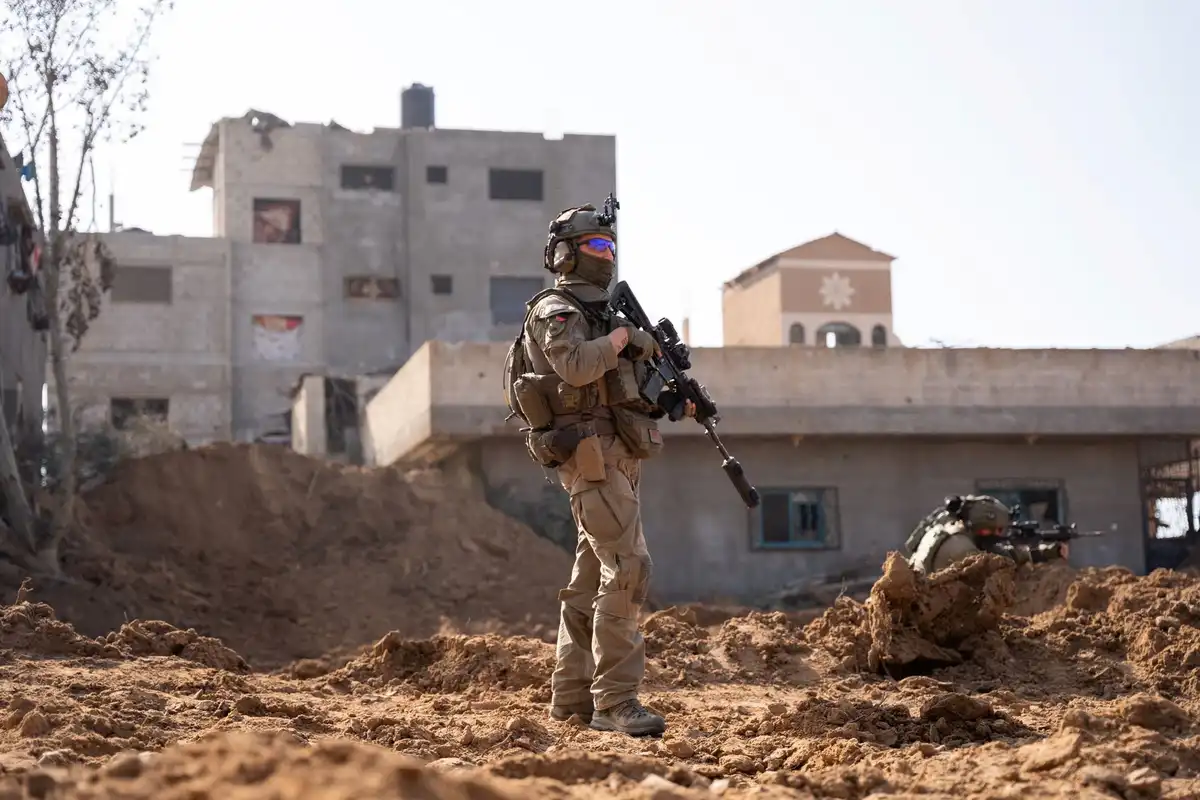
Analysis: Israel's transition to a third phase of battles may mark the beginning of an decline in the war

Palestinian observers believe that Israel's announcement of its intention to move to a "third phase" of its operations in the Gaza Strip may mark the beginning of an end to the war that has been ongoing since last October 7.


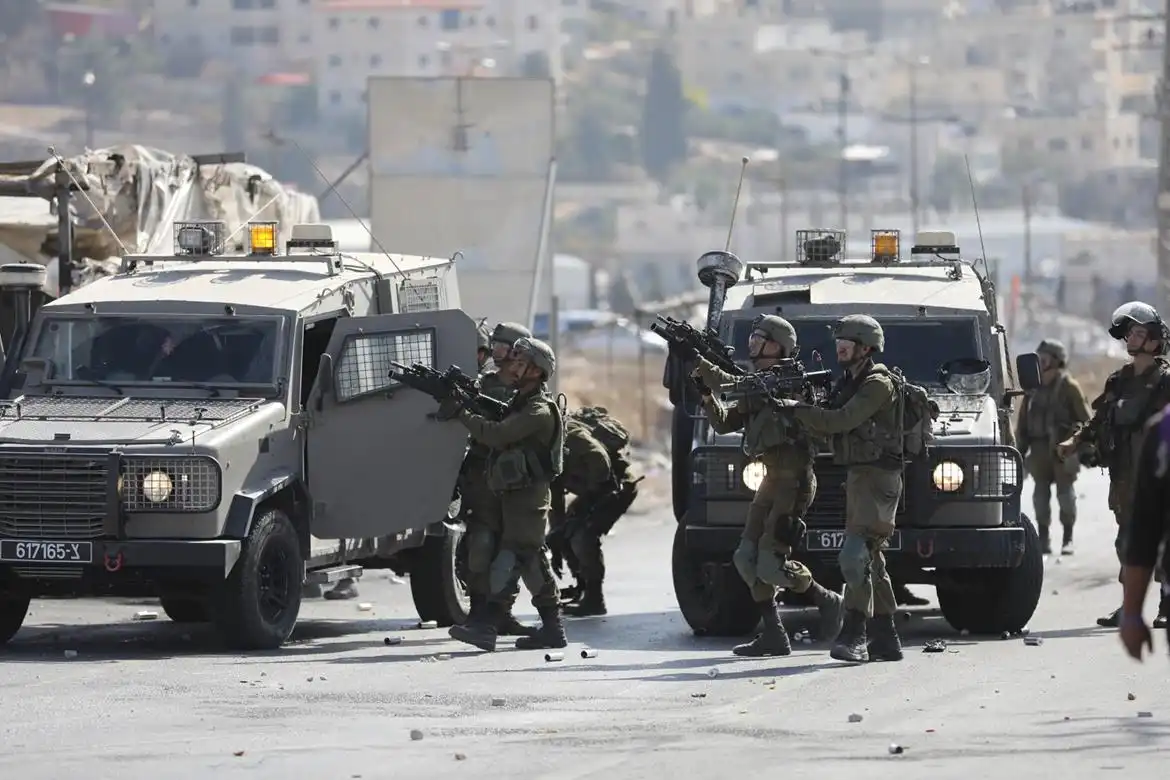
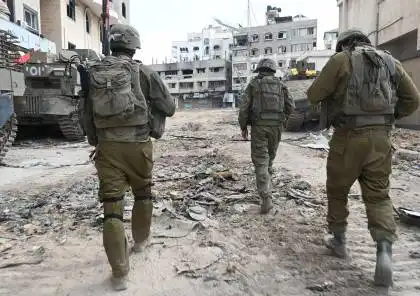
The official Israeli Broadcasting Authority reported that the army is preparing to move to the "third phase" within weeks, which includes stopping the ground invasion and reducing military operations, including demobilizing members of the reserve forces.


The Commission stated that the Israeli army's plans for the third phase will be based on resorting to specific operations and assassinations against the Islamic Resistance Movement (Hamas) and its leadership, and establishing a safe buffer zone inside the Gaza Strip.


At the end of last October, the Israeli army began ground maneuvers that included an expanded invasion with tanks and military vehicles in Gaza City and its north, and later in Khan Yunis in the south of the Strip.


- International and field pressure
Observers believe, in statements to Xinhua News Agency, that the announcement of a third phase in the operations launched by Israel comes in light of the escalation of international pressure on it and the continuation of Hamas to engage in field fighting in Gaza.


Palestinian military analyst Wassef Erekat says that the Israeli army is announcing a third phase in the war in Gaza at a time when it has not fully achieved its goals yet, and is facing active “resistance” from Hamas and the rest of the Palestinian factions.


Erekat points out that Israel has not achieved its declared goals, which include eliminating Hamas and liberating its detainees in Gaza, and is now aiming to create a buffer zone with a depth of up to two kilometers along the fence and reposition Israeli forces in the buffer zone.


He added, "There is a confusion of concepts in what Israel announces, given that the ground war has not yet achieved its goals and has not yet succeeded in completely encircling and clearing the capabilities of Hamas and other factions in Gaza."


Erekat believes that the Israeli army will find difficulties in building on the results of the ground war while it still has not achieved its goals, and therefore it will move to the “belt stage” in light of the presence of “continuous resistance” engaging in all axes of the incursion.


US Secretary of Defense Lloyd Austin announced last week during his visit to Israel that the Israeli army's transition from major military operations in Gaza to more precise operations "may ease regional tension."


- Search for a military achievement in points


Political analyst Firas Yaghi believes that Israel is looking to move to the stage of “looking for a military achievement with points in light of not achieving it so far, dealing a fatal blow to the Palestinian factions and pressures on the ground.”


Yaghi highlights that Israel is looking for alternative plans in the face of the pressures of world public opinion and the escalation of international criticism of it, by looking for the continuation of the fighting with “surgical and expanded operations in a specific geography.”


He explains that for the Israeli army in the next stage, “the military achievement with points is the most important to solve the dilemma of intractability in the field in order to achieve the matter with a final blow, and thus repositioning will provide a greater period of time for the war.”


Yaghi points out that Israel will insist on threatening a new, expanded response in the event that Palestinian factions target its forces stationed in the buffer zone or launch rockets at Israeli territory.


Yesterday, the Hebrew newspaper Yedioth Ahronoth reported that the city of Khan Yunis may be the last stop in what the Israeli army calls the intensive phase of the war, so that its operations will begin to diminish in the near future.


Meanwhile, Haaretz newspaper reported, “The military plans of the Israeli army will change in Gaza soon in light of Washington’s pressure to create a buffer zone along the Gaza border and for Israel to change its combat tactics.”


- Pushing towards the decline of the war
Writer and political analyst Rajab Abu Sariya believes that Israel's move to a third phase in its operations in the Gaza Strip indicates "the push toward an ebb in the war" as it approaches the completion of its third month.


Abu Sariya says that Israel realizes that achieving its goals in the war will take many months, and its fate and outcome will be largely determined by two things, the first of which is the process of the battle on the ground, and the second of which is the regional and international developments accompanying it.


He adds, "A decrease in the pace of war looms on the horizon through a transition to another form of operations based on focusing on military objectives and greater avoidance of harming civilians."


But Abu Sariya links the rapid decline in the war to the results of the indirect negotiations ongoing between Israel and Hamas to return to the path of prisoner exchange and the movement’s insistence on a permanent ceasefire and not temporary truces.


He concludes, "Whoever imposes his condition between a temporary truce or a permanent ceasefire may achieve victory with points, although it is likely that both sides will be forced to make concessions that reduce the ceiling of their demands in light of the accumulated pressures they are exposed to."

OPINIONS

Sun 24 Dec 2023 8:14 am - Jerusalem Time

A calm message in a tumultuous time to President Biden

Nabil Amro

Nabil Amro

Opinion Writer

Do you know, Mr. President, how many and who were killed by Israel in Gaza? As a reminder... twenty thousand so far... and now time continues indefinitely.


Seven thousand children other than those who died as fetuses in their mothers’ wombs.


Young, old and old, male and female, writers, historians, poets, journalists, engineers, doctors, nurses, skilled workers, craftsmen in all fields, farmers, teachers, artists, builders, ambulance, freight and taxi drivers, and athletes excelling in all sports.


Such people, Mr. President, built civilizations when they had the means of life, and unfortunately, you, Mr. President, covered up their killing and provided the perpetrators with the latest means of lethality, produced by American factories. Perhaps you do not know that these are brothers of scientists who contributed to building the United States, and relatives. There are thousands of professors who teach your children in your schools and universities, and cousins of Palestinians who gave you their votes to reach the White House. Perhaps you will look with some degree of justice at their cause and their legitimate human aspiration for freedom and independence.


This is a classification of those killed by your smart, i.e., “stupid” planes and missiles.


Mr. President, you graciously call for the two-state solution, but what is actually happening is the killing of the citizens of the state that did not exist, and which, if the situation continues as it is, will be a state on paper, or a place for the largest percentage of orphans, widows, the disabled, and frightened children, whose memory will never depart. The sounds of explosions, the roar of planes, and the scenes of the mass burial of those who were prayed over, without those still under the rubble even receiving a prayer in absentia.


Mr. President Biden... You do not support Israel, nor do you provide it with the capabilities of so-called self-defense. You encourage it to move forward with the double killing of Palestinians and Israelis, in the narrowest arena in the entire universe, Gaza and the West Bank.


Mr. President, you used the “veto,” which seemed as if it had only been invented in order for the American administrations to exercise it to prevent any glimmer of justice toward the Palestinians.


This veto, Mr. President, is responsible for the continuation of death and destruction. It is responsible for the drowning of Israel, which it loves, in the burning sea of Gaza. It is responsible for the American bleeding that does not stop to provide the perpetuation of a war that has no hope of achieving its goals, even if those in charge of it imagine that.


This, Mr. President, is a message to you... to your administration... to the hand that raises the “veto” sign in the Security Council, and to the air bridge that departs from America and lands in Israel, carrying everything necessary to continue this madness.


This, Mr. President, is a message that expresses a people who, despite all the horrors that are taking place, still seek freedom and lasting and just peace, and which you know well and from whom you are very far away, a people that numbers more than fifteen million people, and is the only one among the peoples of the entire world that does not have a state. Although our poet Mahmoud Darwish said wisely: How small is the state, and how great is the idea! Regarding his people, he said: We love life as long as we can.


When you visited us in Palestine, you said that you have the right to a state, but unfortunately it will not be achieved, neither in the long nor longer term, nor for the civilians. Do you not notice, Mr. President, that a war of extermination is being waged to prevent its birth in the first place?

PALESTINE

Sun 24 Dec 2023 8:07 am - Jerusalem Time

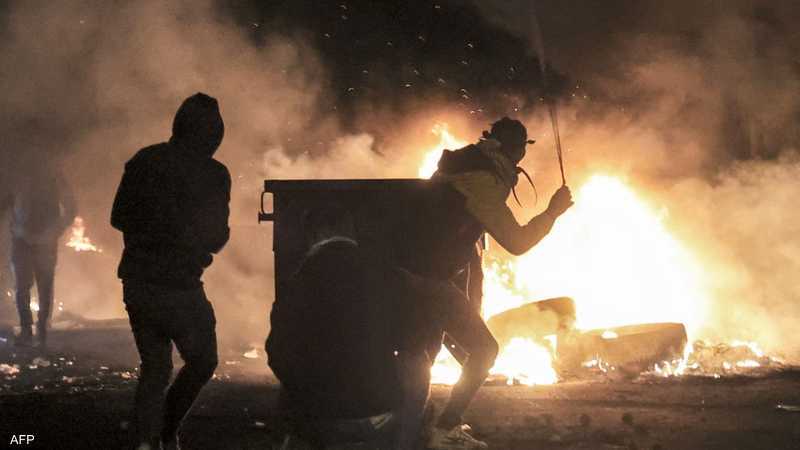
West Bank: Israeli army storms the city of Tulkarm and Nour Shams camp, and violent clashes break out

Local sources said that the Israeli occupation forces stormed the city of Tulkarm late on Saturday evening, and violent clashes broke out between Palestinian resistance fighters and the occupation army, which penetrated into Tulkarm and the Nour Shams camp in the northern West Bank.


For its part, the Tulkarm Battalion, affiliated with the Al-Quds Brigades, the military wing of the Islamic Jihad Movement, said that “its mujahideen are engaged in violent clashes with the Israeli occupation forces in the Nour Shams camp near Tulkarm.”


The brigades added that they targeted the occupation forces with explosive devices, which led to the damage of many heavy military vehicles storming the camp and causing confirmed casualties among their ranks.


For its part, the Al-Aqsa Martyrs Brigades - Rapid Response said that "its mujahideen participated in confronting the occupation forces' storming of Nour Shams camp."


It added that its members fired a barrage of bullets and detonated high-explosive devices in the occupation vehicles that stormed the camp.


Palestine TV said, "The occupation army sent in more military reinforcements and began imposing a siege on Nour Shams camp."


The television published a video clip showing a bulldozer and military vehicles heading to the city, and another video clip showing the sounds of gunfire.


Eyewitnesses confirmed that the resistance fighters targeted a foot force of the occupation army with an explosive device in Al-Manshiya neighborhood in Nour Shams camp, and they also targeted occupation vehicles with high-explosive devices.


On the other hand, the occupation forces arrested a number of citizens and deployed snipers in several buildings in the city and the Nour Shams camp.


ARAB AND WORLD

Sun 24 Dec 2023 8:05 am - Jerusalem Time

Report: Washington seeks to link normalization with Saudi Arabia to the “day after” the war on Gaza

The Biden administration seeks to link efforts aimed at normalization between Tel Aviv and Riyadh with discussions about the “day after” the war on Gaza, including pushing Riyadh to contribute to the reconstruction of Gaza and for normalization to include a “special process for the Palestinians.”


An Israeli report stated that Washington is seeking to link the efforts it is making within the framework of the process of normalizing relations that it seeks to establish between Riyadh and Tel Aviv, with the discussion it is engaging in with Israel about the future of the Gaza Strip, on the “day after” the ongoing Israeli war on the Strip for 78 days.


This came according to what Israeli Channel 13 reported, on Saturday evening, and pointed out that the issue was raised in the meetings held by US Secretary of Defense, Lloyd Austin, and US National Security Advisor, Jake Sullivan, with officials in Tel Aviv, in the past two weeks.


According to the report, Austin explained that the United States has become more “flexible” regarding the timetables for discussions aimed at normalizing relations between Israel and Saudi Arabia “than it had planned before the war,” and the channel reported that Sullivan discussed this file extensively and in detail with Israeli officials.


The channel quoted an Israeli official that it said was “familiar with communications between Washington and Tel Aviv,” saying that “the administration of US President Joe Biden wants to return to the normalization process with Saudi Arabia, and integrate it with a process specifically for the Palestinians, broader and more important than what was discussed before the war.”


The Israeli official added, "The American administration wants the Arab countries, and primarily Saudi Arabia, to play an important role in the day after the war - including investments in Gaza and the reconstruction of the Strip, and may demand from them beyond that."


He continued, "The Biden administration realizes that announcing the establishment of a Palestinian state is not something viable in the foreseeable time frame, but in order to allow the integration of the Gulf states (with regard to the Israeli and American visions for the future of the Strip), Washington believes that Israel must establish a two-state solution, even within... 'Long-term vision', in order to allow Saudi Arabia to enter the process."


PALESTINE

Sun 24 Dec 2023 8:02 am - Jerusalem Time

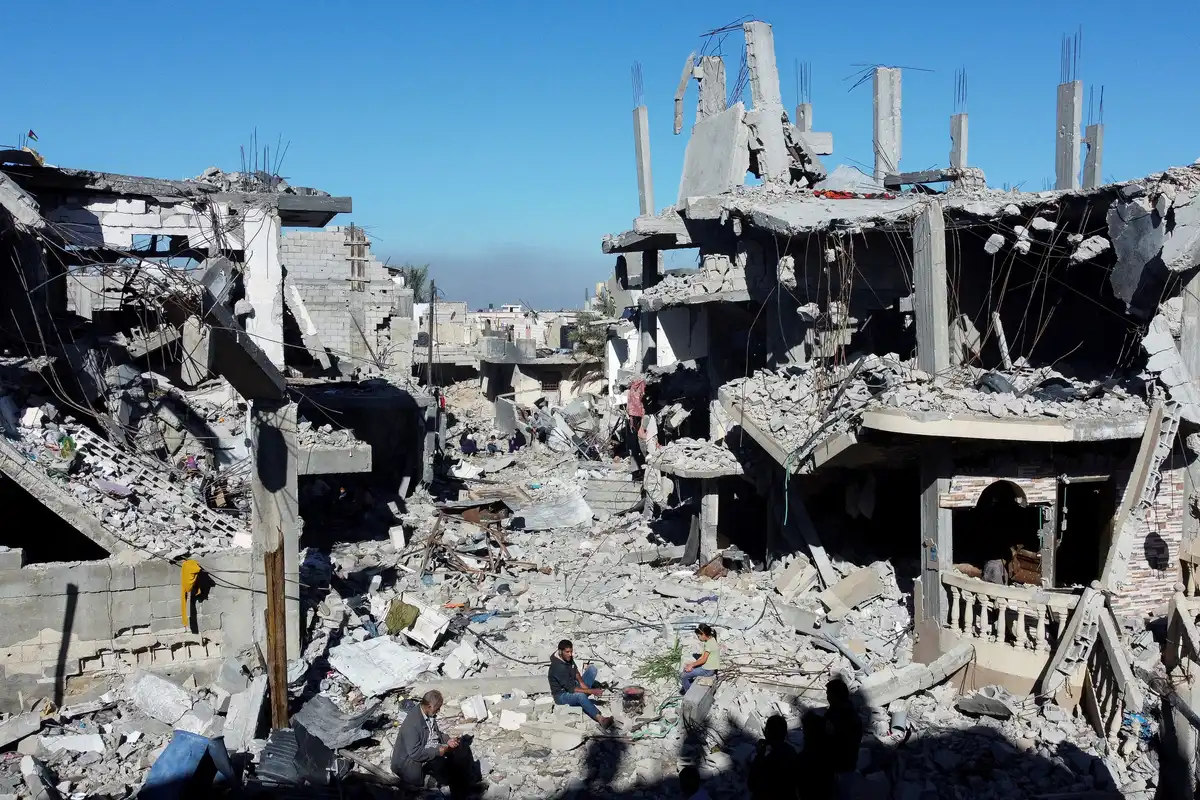
War on Gaza: Continued Israeli bombing leaves dozens of dead and wounded in the Gaza Strip

The Israeli occupation forces targeted the homes of citizens who were safe in their homes, this Saturday evening, in various areas of the Gaza Strip, coinciding with the firing of light bombs on the western coastal strip.


In the south, 3 citizens were killed and others were injured, in an Israeli raid on a house in the Japanese neighborhood, west of Khan Yunis.


Local sources reported that the occupation aircraft and artillery continued their violent bombardment of Khan Yunis since this morning, which led to the death and injury of dozens of citizens.


The Israeli occupation forces fired light bombs northeast of Khan Yunis.


In the middle, the occupation warplanes launched a series of raids on many areas in the central Gaza Strip.


The occupation warplanes bombed a residential square in Deir al-Balah, killing at least 6 citizens and wounding dozens, in addition to dozens being found under the rubble.


The occupation aircraft targeted a house in the Al-Zawaida neighborhood in the central Gaza Strip, killing and wounding dozens.


The occupation artillery bombed a house for the Yassin family on Al-Twenty Street in the Nuseirat camp, wounding a pregnant woman, coinciding with the occupation forces firing light bombs north of the camp.


The Israeli occupation forces continue their ground incursion into the neighborhoods of Gaza City, the northern Gaza Strip, and the vicinity of Khan Yunis.


In an infinite outcome, the ongoing Israeli aggression on the Gaza Strip since the seventh of last October has resulted in the death of 20,258 citizens and the wounding of about 53,688 thousand, more than 70% of whom are women and children.


ARAB AND WORLD

Sat 23 Dec 2023 10:39 pm - Jerusalem Time

Netanyahu to Biden: Israel will not stop its war in Gaza before achieving all goals

On Saturday evening, Israeli Prime Minister Benjamin Netanyahu informed US President Joe Biden that Tel Aviv will not stop the war against the Gaza Strip until its goals are fully achieved.


A statement issued by Netanyahu's office said, "Netanyahu made it clear to Biden that Israel will continue the war in Gaza until all its goals are achieved."


During his conversation with Biden, Netanyahu expressed his "appreciation for the American position in the UN Security Council."


In more than one statement, the most recent of which was last Thursday, Netanyahu stressed that “Israel will not stop the war until all its goals are achieved.”


The United States used its veto power twice against a resolution adopted by the UN Security Council regarding a ceasefire in the Gaza Strip. It used it for the first time last November, against a draft Security Council resolution submitted by Brazil, calling for a humanitarian truce in the Gaza Strip. The second on December 9.

ARAB AND WORLD

Sat 23 Dec 2023 9:34 pm - Jerusalem Time

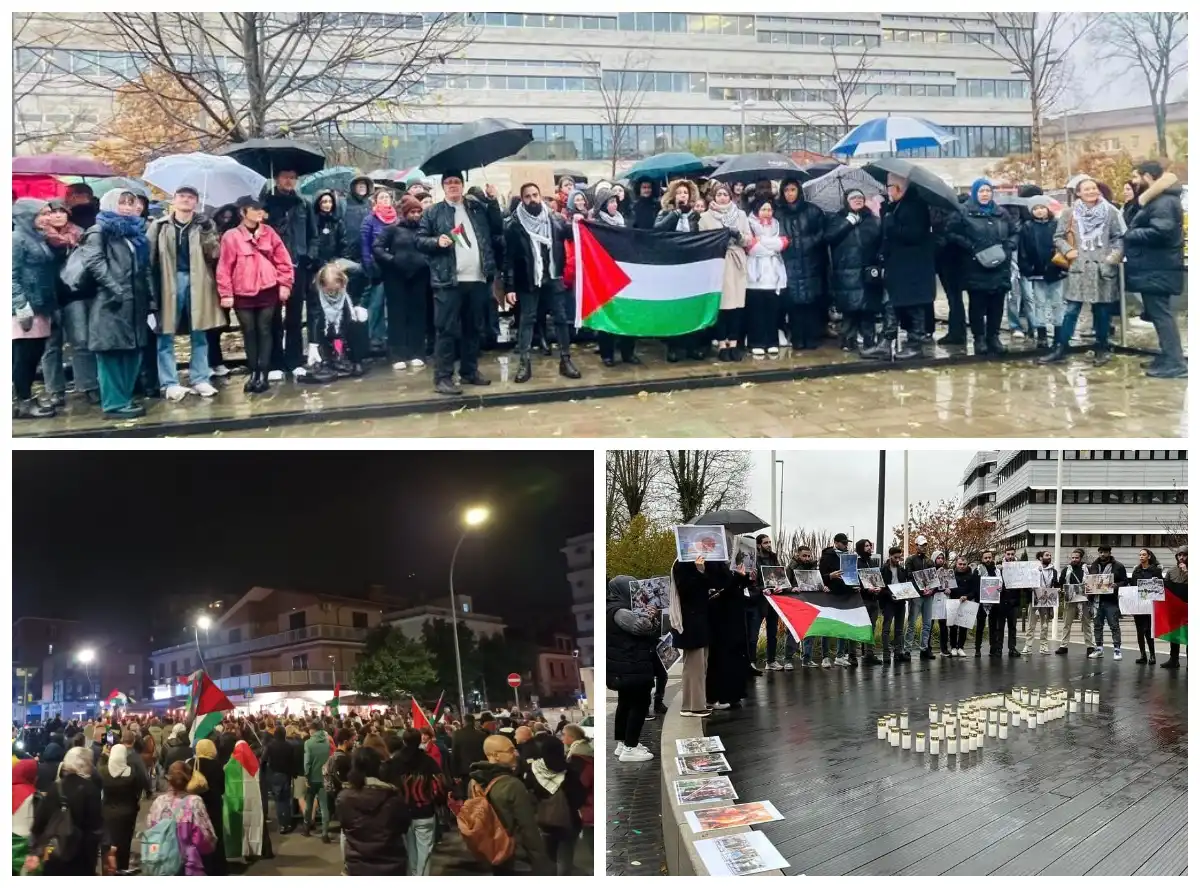
Demos in European cities demanding an end to the Israeli massacres in Gaza

On Saturday, European capitals witnessed several massive demonstrations rejecting the Israeli war on the Gaza Strip.


In the British city of Manchester, thousands marched in support of Palestine and demanded a ceasefire in the Gaza Strip, and demonstrations also took place in Denmark, in support of the Palestinian people and denouncing the Israeli massacres.


Demonstrations also took place in the Dutch city of Utrecht, and the demonstrators carried Palestinian flags and denounced the continued "brutal" Israeli bombing of Gaza.


In the Italian city of Milan, thousands demonstrated and chanted slogans in support of Palestine and demanding an end to the occupation and an end to the massacres of civilians.


In the French capital, Paris, demonstrations took place in support of the Palestinian people and denouncing the ongoing Israeli aggression on the Gaza Strip.


In the German capital, Berlin, a demonstration was held in which protesters denounced what they described as genocide in Gaza, and demanded that the German government stop supporting Israel.


This demonstration coincides with other marches in the cities of Stuttgart and Cologne, which in turn demand an immediate ceasefire in Gaza.


On Saturday, the Swedish capital, Stockholm, witnessed a demonstration in front of the Israeli embassy building to protest the attacks targeting the Gaza Strip.


The demonstrators gathered in front of the Israeli embassy building, in response to calls made on social media platforms.


The protesters demanded that the Israeli attacks on Gaza be described as “war crimes” and an immediate ceasefire.


ARAB AND WORLD

Sat 23 Dec 2023 2:56 pm - Jerusalem Time

Israeli Report: 6 years ago, Netanyahu described an attack planned by Hamas similar to October 7 attack

The protocol of a meeting held by the State Oversight Committee in the Knesset in March 2017 showed that Israeli Prime Minister Benjamin Netanyahu described an attack planned by the Hamas movement from the Gaza Strip, which has now been proven to be an accurate description of the horrific attack that occurred on October 7, but at the same time, he said that his government’s policies deterred the movement.


Netanyahu said during the meeting held by the Parliamentary State Oversight Committee at the time to discuss a report issued by the Israeli State Comptroller regarding the “Protective Edge” military operation, which the Israeli army launched against the Hamas movement in 2014: “Hamas has an operational plan for a multiple attack.” Axes, including the firing of thousands of missiles at Israeli cities, naval commando raids, hang gliders, and incursions from dozens of tunnels, some of which occurred in Israeli territory.”


During the charged 3-1/2-hour discussion, Netanyahu also noted that Hamas is training special forces to kill and kidnap Israelis. “They calculated that if they could surprise us, they could put the plan into action,” he said.


This scenario, which the Prime Minister described, is similar to the events that occurred more than 6 years later, on October 7, 2023, when thousands of Hamas militants infiltrated the border area with Israel in the Gaza Strip, by land, air and sea. They killed about 1,200 people and kidnapped more than 240 others, most of them civilians, under the cover of a torrent of missiles that were fired at Israeli towns and cities in the south.


From what Netanyahu said in the meeting held in 2017, the Hamas leadership began planning a large-scale attack years ago. He added: "This movement could have put the attack plan into action at any moment, but we do not control our opponent's decisions, and at the maximum, we can influence his ability to implement them." While the Prime Minister claimed that Hamas was deterred, he made clear that he had no illusions that it would abandon its plan.


Netanyahu added: “When I thought about thousands or more armed men infiltrating, seizing a town and taking hostages, I was sure that this would constitute a morale blow, and I confirmed this to the responsible authorities. We tried to avoid war in any way possible. However, no We must acknowledge that we are facing a cruel and "savage" enemy, and that avoiding escalation against such an enemy is not easy. There are 30,000 members of Hamas in Gaza, who wish to destroy us, and are preparing all the time, and are building means with which they can kill us, infiltrate and attack us. And these People committed to the annihilation of Israel, and living for this goal.”


Turning to his role in the containment policy, Netanyahu said: “One of the reasons for deterring ‘Hamas’ is that I have a policy, and I am not willing to tolerate even a splash of violence, and there is always a strong reaction on our part, usually very quick, to any splash of this kind”.


The State Comptroller’s report, which the committee discussed in 2017, focused on the management of the Israeli mini-ministerial council for political-security affairs [the “cabinet”] by Netanyahu and the then Defense Minister, Moshe Ya’alon, and indicated that this ministerial council failed to define concrete strategic goals for the army in Military Operation Protective Edge. The report also pointed out the presence of intelligence gaps and tactical errors in the work of the Israeli army, of which General Benny Gantz was commander, especially its lack of preparedness to confront the threat of Hamas’ tunnels.


Netanyahu rejected these criticisms completely, and said that he did everything in his power to keep the conflict under control, and that he punished Hamas for fighting Israel. He said during the meeting: “We did not want a war in the summer of 2014, and we tried to prevent it,” and stressed that in light of what Hamas had done, this military operation was inevitable.


Also now, Netanyahu is avoiding taking any responsibility for the failures that preceded the October 7 attack, even though many security service leaders have declared that they bear responsibility for them. Netanyahu points out that an investigation must be conducted to find out the facts of what happened, but the investigation should not be conducted until after the war ends.


It should also be noted that during the discussion in 2017, coalition MKs repeatedly clashed with opposition Knesset members and, at times, with the families of dead soldiers who attended the meeting, including Leah Goldin, the mother of soldier Hadar Goldin, who was killed. In that process, Hamas still holds his body and the body of soldier Oron Shaul in Gaza.


These scenes recall similar clashes between members of the Knesset and the families of kidnapped Israelis in recent months regarding the policy followed by the government and the agreements regarding the return of the hostages who were kidnapped by Hamas on October 7. It is believed that 129 Israeli people kidnapped on October 7 are still being held in Gaza, and not all of them are alive, after 105 kidnapped were released during a week-long truce in late November.

ARAB AND WORLD

Sat 23 Dec 2023 2:47 pm - Jerusalem Time

Euro-Med Monitor: We call for the formation of an international delegation to visit Israeli prisons

The Euro-Mediterranean Human Rights Monitor called for the formation of an international delegation to visit Israeli prisons, where about 8,000 Palestinians are held, subjected to systematic torture, ill-treatment, enforced disappearance, and premeditated killing.


According to the Prisoners’ Club, the number of detainees in the West Bank has reached 4,600 since the seventh of last October.


PALESTINE

Sat 23 Dec 2023 2:04 pm - Jerusalem Time

Israeli army expands evacuation orders to include areas of the central Gaza Strip

The United Nations announced today (Saturday) that the Israeli army has expanded evacuation orders to include areas of the central Gaza Strip.


The United Nations Office for the Coordination of Humanitarian Affairs (OCHA) said in a statement that the new evacuation orders cover about 15% (about 9 square kilometers) of the central area of the Gaza Strip for evacuation.


The statement added that the Israeli army identified the area in an electronic map published on social media, and it includes the Bureij and Nuseirat refugee camps and the Al-Zahraa and Al-Mughraqa areas.


About 90,000 people live in the area targeted for evacuation before the start of the war in the Gaza Strip on October 7, according to the Palestinian Central Bureau of Statistics.


The UN office statement stated that the area after the start of the war in the Gaza Strip included 6 shelter centers housing about 61,000 displaced people, the vast majority of whom were previously displaced from Gaza City and its north.


The statement added that the instructions accompanying the map published by the army call on residents to move immediately to shelter centers in Deir al-Balah, which are already overcrowded and host hundreds of thousands of displaced people.


Following multiple orders issued by Israeli forces to Palestinians to evacuate, many displaced people are now located in the central and southern Gaza Strip, according to the statement.


The two largest sites are located in Rafah Governorate, where thousands have moved elsewhere, setting up temporary structures and tents, and facing extremely crowded conditions inside and outside shelters.


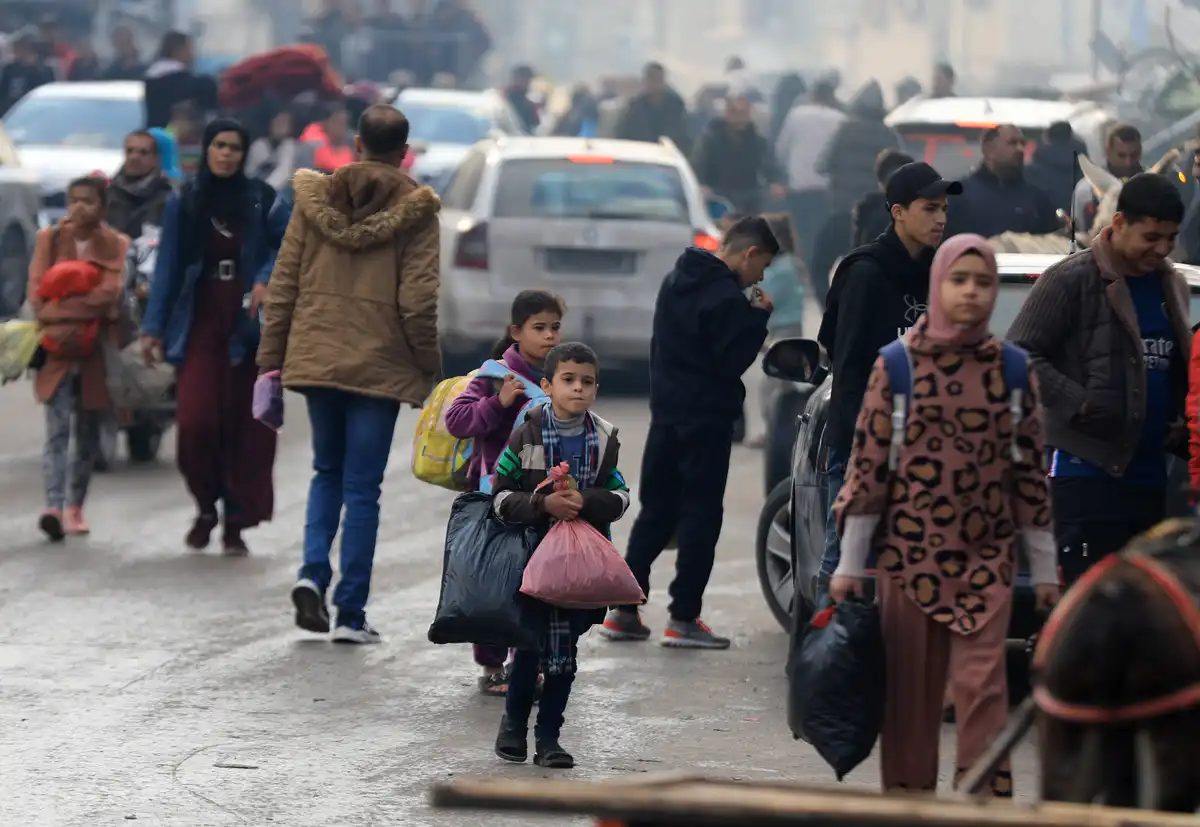
The United Nations estimates that 1.9 million people in Gaza, or nearly 85% of the population, have become internally displaced, including people who have been displaced multiple times, at a time when food shortages and poor hygiene are exacerbating already poor living conditions, increasing protection and mental health problems, and increasing the prevalence of diseases.


PALESTINE

Sat 23 Dec 2023 12:19 pm - Jerusalem Time

Al-Khatib to Al-Quds: The occupation approved the establishment of 1,700 settlement units on the lands of Beit Iksa and Lifta.

Since the start of the “Al-Aqsa Flood” battle on October 7, and with the continuation of the devastating Israeli attack on the Gaza Strip, the occupation authorities continue to target the West Bank and occupied Jerusalem with assassinations, raids, arrests, demolition of homes, and imposing a strict siege on cities, villages, and camps, especially those close to the Wall. Chapter and from occupied East Jerusalem.


Targeting and siege,

Dr. Saada Al-Khatib, former mayor of Beit Iksa and lecturer at Al-Quds University, says that the villages northwest of Jerusalem are living in a state of targeting, siege, and isolation due to the closure and arbitrary measures imposed by the occupation army on our cities and villages, including Beit Iksa.

Al-Khatib added in an exclusive interview with (Jerusalem): The occupation confiscated most of their village’s lands, amounting to approximately 14,670 dunums, for the benefit of settlement, the wall, and the construction of a train railway. It established the “Atarot” colony on it in 1970, and the “Ramot” colony in 1973.


Al-Khatib warned of the danger of the new settlement plan at the beginning of 2023, which was approved by the Israeli occupation authorities to establish 1,700 settlement units in Jerusalem on the lands of Lifta and Beit Iksa, as part of a project to complete the establishment of 58,000 settlement units in East Jerusalem. He said that this project will affect the geography and demographics of the Palestinian presence in the Holy City. With the near completion of the construction of infrastructure, including railways and roads, to enhance settlement and connect the new settlement units with the “Ramat Shlomo” settlement, in which the occupation authorities recently established 1,600 new settlement units.


He explained that Beit Iksa had suffered from settlement since the Nakba in 1950, when the “Mafsir Tzion” colony seized tens of dunams of its lands that had been occupied in 1948 and were not returned to the Jordanian administration in accordance with the Armistice Agreement. Likewise, the Ramot colony (established in 1972) confiscated approximately 1,530 dunums of village land, specifically on the eastern side, in an area called “Ansarat.” A valley now separates the village from the colony established on its lands. And the “Har Samuel” settlement (established in 1996), which is part of the Givat Ze’ev colony (in 1977), which confiscated about 15 dunams from the village in an area called the Tabish Basin. In 2010, the occupation authorities confiscated fifty dunums for the high-speed train from Jerusalem to Tel Aviv, which was first announced in 2008 and which was opened last year in 2022.


Division of Beit Iksa lands,,

Al-Khatib pointed out that according to the Oslo Accords, the lands of Beit Iksa were divided into areas (B) and (C). More than 90% of the village’s lands are located in area (C), which is approximately 7,400 dunums, and the area allowed for expansion does not exceed 650 dunums. He said that Beit Iksa is located to the northwest of the city of Jerusalem, bordered by the villages of Bedouin, Beit Surik, Al-Nabi Samuel, Lifta, Colonia, and Beit Mahsir, which is located to the northwest of the city of Jerusalem, and is about 9 km away from it.


Al-Khatib explained: “The Israeli authorities chose not to build the separation wall along the Green Line in this area, but in fact annexed the village to Jerusalem, in addition to preventing the citizens of Beit Iska from entering Jerusalem. Unlike other Palestinian villages in the area that are surrounded by a wall.” Separating it from Israel, the eastern side of Beit Iksa facing the “Ramot” settlement is not surrounded by a wall, and there is a valley separating the village and the settlement - which are only a few hundred meters away.


Separated from other villages,,

He said that the village is separated from other villages in the area adjacent to it by an electronic fence that surrounds it from the north-western side and is linked to the separation wall.


Al-Khatib pointed to what was published in 2009 in the Haaretz newspaper, where the Israeli government decided in 2006 that the village would remain on the Palestinian side of the separation wall, in contrast to the original route of the wall, according to which the village should be on the Israeli side of the wall. According to the published article, this is due to the expansion of Beit Iksa on the “Ramot” area and “1” Street, claiming that there are lands previously owned by the Israelis in the lands adjacent to the village. However, since the decision was issued, no wall has been built separating Ixa and Israel. Instead, a wall was constructed surrounding Beit Iksa from the north-west side, which was defined by the security service as 'temporary'.


He added: “When citizens move to Beit Iksa coming from neighboring villages, and although the two areas belong to the areas of the Palestinian National Authority, a military checkpoint hinders entry into the village. It is linked to a long path of the wall extending 9 km, and is equipped with electronic tools, and it is virtually Beit Iksa is separated from all of its Palestinian surroundings in the villages northwest of Jerusalem. On the other hand, Beit Iksa is “open” to the areas under direct occupation influence, as there is no clear physical separation between the village and the settlements near it.


Temporary barriers,,

In response to a question, Al-Khatib stated that since 2008, the occupation began erecting temporary barriers on the outskirts of the village, until the Beit Iksa checkpoint was permanently installed at the northern entrance to the village since 2010, isolating it from its surroundings and its natural extension in Jerusalem and the rest of the villages northwest of it. Not only that, but it also isolated it from its artificial surroundings imposed on it after the wall, in the Ramallah area.


He said: “Since then, the occupation forces have prohibited entry to the village, except for those registered on their identity cards as residents or as persons to whom special permits have been issued. These permits are issued after a security check and are given mainly to permanent workers in the village, such as teachers and members of the clinic staff in the village.”


He added that in parallel with erecting permanent barriers at the entrance to Beit Iksa, in 2010, Israel blocked the road leading from the village to Jerusalem via “Ramot” using a permanently closed gate. As a result, village residents who carry Israeli ID cards today are forced to travel to Ramallah and from there to the Qalandiya checkpoint to reach Jerusalem, which prolongs their journey to the city by half an hour or even more. Thus, the village was separated not only from the rest of the West Bank, but also from Jerusalem, which was historically the conservative city of the village and the beating heart of its residents.


Tight siege,

The former mayor of Beit Iksa stated that the tightened Israeli siege had reached the point of difficulty receiving goods, equipment, and daily needs. He said that many suppliers are not allowed to enter the village and therefore business owners and residents are forced to reach the checkpoint to obtain goods. Some suppliers are only allowed to enter after a coordination process through the village council or the Palestinian Authority, but they are also often blocked for long periods and sometimes blocked from entering altogether. Even village residents who bring with them goods they purchased from outside the village are sometimes obstructed, although there are no official restrictions on the entry of goods.


Al-Khatib stressed that the occupation’s restrictions and procedures imposed on access to Beit Iksa made the village an isolated place. This separation greatly affects the ability of the village residents to establish social and family relationships and their access to their workplaces and services in East Jerusalem and other parts of the West Bank. In addition, the restrictions increase the difficulties for workers, suppliers, and service providers to reach the village, which harms the Council’s ongoing management of providing basic services to citizens. These strict and arbitrary restrictions do not allow the residents of Beit Iksa to practice a reasonable daily routine. It seriously affects the residents of an entire village.


Beit Iksa is the closest to Jerusalem,,

Al-Khatib pointed out that Beit Iksa is the closest Palestinian village in the Jerusalem Governorate to Jerusalem. He said that after the occupation and after the siege, it became the furthest away. Entry to the village of Beit Iksa requires heading towards the town of Biddu, reaching what is known as “Biddu Roundabout”, and from there heading to the village located on Its entrance is a heavily fortified military checkpoint.


Al-Khatib explained that the military checkpoint at the entrance to Beit Iksa controls the entry and exit of residents who hold its identity card, while any Palestinian from outside Beit Iksa is not allowed to pass through the military checkpoint, except after obtaining prior permission from the occupation, in addition to coordination being conducted. Among the soldiers stationed at the checkpoint and the village council administration, including merchants of food supplies and cooking gas cylinders.


He pointed out that the members of the village council are seven individuals, and each member is allocated one day to stand at the military checkpoint, in order to coordinate everyone who wants to enter the village, whether guests, whether relatives of the residents of Beit Iksa, or to perform the duty of condolence, or to participate in weddings, where he greets. Each person's identity is given to the soldiers, and he is not allowed to be inside the village after 10 p.m.


Occupation obstacles,,

Al-Khatib stated that the residents of Beit Iksa face obstacles from the occupation, especially in funeral and wedding homes, where the names of those arriving must be presented at a later time to obtain a permit to enter, and in many cases people are prevented from passing, despite all the coordination procedures for this. He stressed that entry restrictions are not limited to Palestinian people coming from outside the village, but also include cooking gas, as the occupation does not allow it to be brought into Beit Iksa residents except on Sunday and Wednesday of every week, while restricting the number of cylinders to no more than 40 cylinders per day.


In response to a question about the military checkpoint, Al-Khatib said that they are suffocating the village by imposing restrictions on merchants bringing food supplies into shops from outside Beit Iksa. Firstly, the merchant must bring identification and tax papers, and secondly obtain coordination for the entry of goods, and a member of the village council must be present at Barrier for that.


Reverse migration,,

He stressed that these arbitrary Israeli restrictions and measures pushed many of the residents of Beit Iksa to live outside their village, as the number of Beit Iksa residents in the village and the diaspora is estimated at about 37 thousand people, and it is inhabited by about 2,700 Palestinians. The number decreases and rises in parallel with the Israeli policy of siege.


Al-Khatib said that the majority of the village's residents who held residency (Israeli ID) left outside it after it was isolated from the city of Jerusalem. Its population in 1922 was estimated at about (791) people, about (1410) people in 1945, about (633) people in 1967, about (949) people in 1987, and in 1996 the number increased to (1259). breeze.


Regarding the roots of Beit Iksa in history, Dr. Saada Al-Khatib, a lecturer at Al-Quds University, explained that antiquities dating back to the Hellenistic, the Hellenistic and the Roman period were found in the village. During the Crusader period, the village was known as “Jenanara”. There are two versions of the name: The first is due to it being a center for Saladin’s forces (according to popular accounts), so it was a center for his army and was called the House of Cloaks during his war against the Crusaders. The second is that a good man lived in the village in ancient times, coming from the city of Al-Kiswah, south of Damascus, in Syria. His name was “Kassa,” and he was famous for solving people’s health problems and treating them with herbs, and from here came the name “Beit Iksa.”


PALESTINE

Sat 23 Dec 2023 12:19 pm - Jerusalem Time

Israeli authorities issue and renews administrative detention orders against 32 Palestinian detainees

The occupation issues and renews administrative detention orders against 32 detainees

The Prisoners' Affairs Authority and the Prisoners' Club said that the occupation authorities issued and renewed administrative detention orders against 32 detainees.


ARAB AND WORLD

Sat 23 Dec 2023 12:19 pm - Jerusalem Time

Arab League Chief: Security Council resolution on Gaza came too late and does not demand a ceasefire

The Secretary-General of the League of Arab States, Ahmed Aboul Gheit, considered today (Saturday) that the resolution adopted by the UN Security Council yesterday (Friday), which called for a truce and extended humanitarian corridors throughout the Gaza Strip, came too late and is still far from what is required to be achieved, which is a complete ceasefire. In the sector.


Aboul Gheit said in a statement that the decision is an attempt to prevent famine in the Gaza Strip and save people, especially women and children, from a catastrophic situation, but it is not enough to stop the Israeli aggression machine, especially since it does not include a ceasefire.


He added that the decision came after procrastination in response to Israel's wishes, and stressed that what is required is not only the introduction of humanitarian aid into the Strip, but also the protection of civilians from the continuing bombing, achieving a sustainable ceasefire, and directly starting a major relief operation that includes hundreds of thousands who have become destitute of the minimum necessities. necessary for life.


He pointed out that every step to alleviate the suffering of civilians in Gaza is a step in the right direction, but addressing the humanitarian catastrophe cannot be achieved through partial measures or palliatives to absorb the anger of world public opinion over what is happening in Gaza.


The Secretary-General of the Arab League stressed that rejecting an immediate ceasefire in Gaza is a license to kill, and noted that Arab efforts will not stop in order to reach an end to the war.


Aboul Gheit called on the United States to re-read the situation and take the correct decision from both the humanitarian and political standpoints instead of being led by the desire of the Israeli extreme right to impose collective punishment and comprehensive revenge on 2.3 million people in the Gaza Strip.


On Friday, the UN Security Council passed a resolution demanding that Israel and the Islamic Resistance Movement (Hamas) “provide, facilitate and enable the immediate, safe and seamless delivery of humanitarian aid to a sufficient extent directly to Palestinian civilians throughout the Gaza Strip.”


The resolution called for urgent steps to immediately allow widespread, safe and unimpeded humanitarian access, and to create conditions for a sustainable cessation of hostilities.


The draft resolution, submitted by the United Arab Emirates, received the support of 13 members of the 15-member Council, while the United States and Russia abstained from voting.


ARAB AND WORLD

Sat 23 Dec 2023 11:27 am - Jerusalem Time

Thomas Friedman: Israel must withdraw from Gaza and America must stop speaking nicely to it

Prominent American journalist Thomas Friedman believes that “the time has come” for the end of the war in Gaza, as Israel will not achieve its desired goals, and as for US President Joe Biden, he must take a “tough stance” on supporting Benjamin Netanyahu.


Friedman pointed out in his recent article in the New York Times that the time has come for the American government to firmly tell Israel that “its war to annihilate Hamas will not achieve its goals.”


Friedman pointed out that the government of US President Joe Biden must tell Israel to “declare victory in Gaza,” then end the war and return to it.

Friedman pointed out in the article that Israeli Prime Minister Benjamin Netanyahu prioritizes his “electoral needs” above the interests of the Israelis.

“It is time for the United States to ask Israel to put the following offer on the table for Hamas: a complete Israeli withdrawal from Gaza, in exchange for the release of all Israeli hostages, and a permanent ceasefire under international supervision, including observers from the United States, NATO, and Arabs” Friedman wrote. There is no exchange of Palestinians in Israeli prisons.”


Friedman pointed out that “the prevailing feeling” in Israel these days is that “the vast majority of the country’s population today wants the return of their hostages, who number more than 120 hostages,” which is a priority above any other war goals.

“The hostage issue is making the Israelis lose their minds and making it impossible to make a rational military decision there,” Friedman wrote.

He added: “Hamas, as a military organization, deserves to be punished and beaten, and it has been greatly weakened. But this huge toll of dead, wounded and displaced civilians in Gaza has led to a humanitarian catastrophe.”

Friedman stressed that the best solution now for Israel is to exit the war and leave the Gaza Strip, as the war is “useful” for Hamas leaders.

Friedman said that when the war ends, and Hamas leaders come out in public, they will be criticized internally and publicly by the people who were subjected to destruction and killing.

PALESTINE

Sat 23 Dec 2023 11:19 am - Jerusalem Time

Day 78 of Israeli aggression on Gaza... Massacres in Nuseirat and Khan Yunis

Israel continued its war against the Gaza Strip on the 78th day through air and artillery raids and with the participation of gunboats, leaving dozens of dead and wounded.

The latest toll of the Israeli aggression showed that the number of dead reached 20,057 and 53,320 injuries since the seventh of last October.

The middle of the sector

18 citizens were killed and dozens were injured in an Israeli bombing that targeted the Khalifa family home in the Nuseirat camp in the central Gaza Strip, including journalist Muhammad Khalifa.

The occupation aircraft targeted a residential apartment belonging to Fahd Al-Assar in the vicinity of Al-Ihsan Mosque in Camp 1 in Nuseirat in the central Gaza Strip.

Al-Aqsa TV journalist Muhammad Al-Saidi, his wife and three of his children were murdered in an Israeli bombing that targeted his house in the Nuseirat camp.

The occupation aircraft carried out several violent attacks in Al-Mughraqa and Al-Zahraa in central Gaza.

A number of killed and wounded arrived at Al-Aqsa Martyrs Hospital after an Israeli bombing targeted a number of citizens' homes in the center of the city of Deir al-Balah in Gaza.

South of the sector

42 citizens were murdered in Khan Yunis during the last 24 hours, as a result of the occupation’s aggression.

Israeli raids in the Al-Amal neighborhood led to the smashing of the windows of the Red Crescent Society headquarters and the injury of a number of displaced people there with missile fragments.


Four killed and a number of wounded arrived at Nasser Hospital as a result of an Israeli bombing that targeted the Al-Amal neighborhood in Khan Yunis, south of the Gaza Strip.

The occupation aircraft carried out a series of raids on the village of Bani Suhaila, east of Khan Yunis.


Gaza City

United Nations Development Program worker Issam al-Mughrabi and his family were murdered by an Israeli air strike near Gaza City

The Director of the United Nations Development Program said that he feels deep sadness following the death of his colleague Issam Al-Maghrabi and his family members.

He said: "This war must end, and no more families should endure pain and suffering."

Gaza:

Rizq Uruk, Deputy Secretary-General of the Popular Resistance Movement, and a number of his family members died in the Israeli bombing of Gaza.

The occupation forces executed 9 members of the Khalidi family in Sheikh Radwan in Gaza City in front of their children and wives.

Jabalia

The occupation aircraft targeted the home of the Khamis Junaid family, causing many injuries and martyrs in Jabalia, next to the Sultan Tower.

Pictures broadcast by activists confirmed that the bodies of the dead were left in the streets of Tal al-Zaatar after the occupation forces prevented ambulance crews from moving towards them, and that the occupation forces bulldozed a street in the Indonesian Hospital while trying to advance on Tal al-Zaatar.

After three days of continuous bombing on the town of Jabalia, hundreds of citizens left their homes in a new exodus to the west of Gaza City.

PALESTINE

Sat 23 Dec 2023 11:11 am - Jerusalem Time

West Bank: Israeli occupation forces storm most of the West Bank cities

The Israeli occupation forces stormed most of the cities of the occupied West Bank at dawn on Saturday. The occupation soldiers deployed around homes and main roads and prevented the movement of Palestinian citizens.


Jericho

At dawn on Saturday, Israeli occupation forces stormed the city of Jericho and the Ain Sultan and Aqaba Jabr camps.


Local sources reported that several military vehicles stormed the city and the two camps, roamed its streets, and were stationed in the Khedive area and on Academy Street, where confrontations took place between young men and the occupation forces, who fired bullets and sound bombs, but no injuries were reported.


The sources confirmed that the occupation forces raided homes in Aqabat Jabr camp, without any arrests being reported.


Ramallah


Today, Saturday, Israeli occupation forces stormed the village of Deir Abu Mishal, northwest of Ramallah, and raided several homes.


Local sources reported that the occupation forces stormed the village, stationed in the western area, and raided and searched a number of homes and a shop.


The sources indicated that confrontations broke out between young men and Israeli occupation soldiers, but no injuries were reported.


Jerusalem

Today, Saturday, the Israeli occupation forces arrested two young men from Qalandia camp, north of occupied Jerusalem.


Local sources reported that the occupation forces arrested the two young men, Anas Al-Shawani and Suhaib Al-Saqqa, after raiding and searching their homes in the camp.


Bethlehem


Today, Saturday, Israeli occupation forces raided a prisoner’s home and seized his wife’s vehicle in the Dheisheh camp, south of Bethlehem.


The official agency reported that the occupation forces raided the house of prisoner Ahmed Al-Maghribi, searched him, and seized his wife’s vehicle, forcing her to drive it and take it to an army camp belonging to them in Al-Fardis, east, before releasing her.


Hebron


At dawn on Saturday, Israeli occupation forces stormed the city of Hebron.


Eyewitnesses confirmed that several military jeeps stormed the city of Hebron and roamed several streets and neighborhoods, without any arrests being reported.


The occupation forces stormed the town of Yatta, south of Hebron.


Local sources reported that several military vehicles stormed the town and roamed its streets, but no injuries or arrests were reported.


Jenin

At dawn on Saturday, large forces from the Israeli occupation army stormed the city and camp of Jenin.


Eyewitnesses confirmed that a large number of Israeli military vehicles, accompanied by a D9 bulldozer, stormed the city and the camp from the Al-Jalama checkpoint, and that clashes took place between young men and the occupation forces.


They pointed out that several military vehicles were stationed near Jenin Governmental Hospital, near (Al-Hussan Roundabout), adjacent to the Jenin camp, at a time when the occupation forces were sending additional reinforcements from several fronts.


Witnesses reported that the occupation forces raided several buildings overlooking the Jenin camp, and deployed snipers inside and on their roofs. They also raided several homes in the city and the camp.


They also confirmed that the power outage in the Jenin camp and several neighborhoods in the city coincided with the invasion of the occupation forces, noting that the occupation forces fired lighting bombs in the sky of the Jenin camp.


Nablus

At dawn on Saturday, Israeli occupation forces stormed the town of Beita and the village of Qaryut, south of Nablus.


Local sources reported that Israeli military vehicles stormed Qaryut and roamed its streets. Occupation soldiers also raided a house in the village, searched it, and tampered with its contents.


Several military vehicles also stormed the town of Beita and toured several neighborhoods and streets in the town. The occupation soldiers carried out a wide search campaign in the town and raided several homes.


ARAB AND WORLD

Sat 23 Dec 2023 9:31 am - Jerusalem Time

Israeli and international newspapers: The war is approaching its end and Israel is confused

Israeli and international newspapers focused on the possibility of the war launched by Israel on the Gaza Strip ending soon, and pointed out that its army only succeeded in slaughtering civilians and destroying their infrastructure.


In Yedioth Ahronoth newspaper, prominent journalist Nahum Barnea predicted that the intense phase of the war would end soon, and said that the Battle of Khan Yunis may be the last violent round before the war moves to a less intense phase.


Barnea said that recent reports indicate that the northern gates of the Gaza Strip “have not yet been cleared,” and that fighters are emerging from tunnels and (destroyed) buildings to ambush soldiers.


The army also “feels that the end is near, and is trying to consolidate its achievements before declaring a ceasefire,” according to Barnea.


As for the American magazine The Intercept, it said that Israel is succeeding in slaughtering civilians and destroying their infrastructure in Gaza, noting that the ground attack against the Islamic Resistance Movement (Hamas) is “turning into a quagmire for Israel.”


The magazine added that US President Joe Biden and Israeli Prime Minister Benjamin Netanyahu know that things are not well from a military standpoint, “but they do not dare to say that publicly.”


The magazine pointed out that "Israel, the nuclear state that possesses modern weapons and enjoys the full support of the most powerful country in the world, is desperately seeking to achieve a tactical victory over Hamas."


Israel must accept the truth

In the British Guardian, Paul Rogers, a university professor in peace studies, wrote that Israel is losing the war against Hamas, “but Netanyahu and his government will never admit it.”


Rogers added that the Israeli narrative was that Hamas was weakening, but the reality is that the doctrine of massive power adopted by the Israeli army is what is failing, he said.


In the American Foreign Affairs, Daniel Byman said that he concluded from his research visit to Tel Aviv that Israel's strategy in Gaza is confused, and that the time has come to make difficult choices there.


After the writer explained the aspects of Israeli failure, he concluded that Israel must accept the truth, and that its leaders must make difficult choices about the goals that can be put at the forefront and those that must be set aside.


In this context, Jill Jacobs said in an article in the Jerusalem Post that those who care about Israel and are committed to its prosperity should call for an end to the war in Gaza through negotiation.


Jacobs considered that doing so “may be the most pro-Israel and even the most Jewish position one can take.”


One of the largest bombing operations in history

In the British Financial Times, an analysis conducted by experts based on satellite images taken of the cities of Gaza and Khan Yunis showed that the Israeli army “carried out one of the largest bombing campaigns in history on the besieged Strip.”


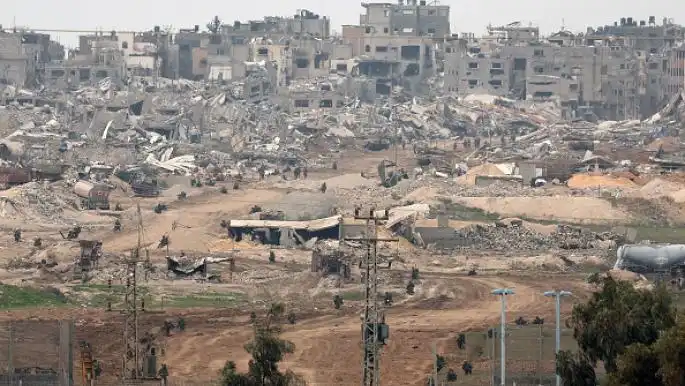
According to the analysis, the images clearly showed that the attack led to damage to 75% of the buildings in northern Gaza, which became uninhabitable.


The Israeli army is waging a devastating war on Gaza, which, as of Wednesday, has left 20,000 Palestinian murdered and 52,600 wounded, most of them children and women, massive destruction of infrastructure and an unprecedented humanitarian catastrophe, according to the Gaza Strip authorities and the United Nations.


Source: American press + Israeli press + British press

OPINIONS

Sat 23 Dec 2023 9:14 am - Jerusalem Time

Greater America defending Little America "Israel"

Annahar- Translation for "Al-Quds" dot com

Annahar- Translation for "Al-Quds" dot com

Opinion Writer

By Majid Kayali

Since the beginning of Israel's brutal war against the Palestinians of Gaza, the Biden administration has shown unlimited support for it. It quickly bought its narrative about that war, without any examination, knowing that it quickly revealed many major lies and intentional manipulation of public opinion, according to Israeli reports.


These reports revealed that an Israeli military plane targeted a mass concert of teenagers, in light of the turmoil resulting from the Hamas attack on October 7, and that some Israeli army units bombed the homes of settlers in the Gaza Strip, on suspicion that Hamas fighters “Inside it, he recently repeated his hasty killing of three Israelis in the Shujaiya neighborhood, who were detained by Hamas.


This also included exposing Israel’s lies regarding the existence of tunnels under Al-Shifa Hospital, or elsewhere, which revealed its intention to undermine the health system in Gaza, in the context of its effort to destroy all the infrastructure in the Strip, with roads, electricity and water stations, schools, mosques, shelters, and even cemeteries. To turn it into an unlivable area.


It also seemed clear that the American administration was negligent in granting Israel the “right to self-defense,” and even the exclusive right, as a victim of a terrorist attack, in disregard of the nature of Israel as a state occupying Palestinian lands, in accordance with international standards that it recognizes (if we ignore its establishment in 1948). At the expense of the Palestinian people), as if it deals with the Palestinians as people of unknown identity and history, or as aliens to place and time, or as a superfluous people who have no rights, and this is the meaning of the stigma of terrorism, which labels the entire Palestinian people, or the Palestinians of Gaza, according to Israeli standards, Note that the United States does not only define “Hamas” as a terrorist organization, as the Palestine Liberation Organization is also such, according to the US Congress Act (1987); The problem is that the organization’s leadership was unaware of, or overlooked, the request to cancel this decision before coming to the White House in Washington to sign the Oslo Accords at the time (1993).


The background to the American view of denying the right to self-defense to the Palestinians, and preventing them from being described as victims, lies in its failure to recognize them as a people with the right to sovereignty over their land, in a colonial, arrogant and racist view that divides the world into good people and bad people, the world of light and the world of darkness, the man of civilization and the man of barbarism. Therefore, anything that comes from the first two should be accepted, no matter how harmful it appears to be to others, while considering any reaction from others to defend themselves and their rights as human beings, including their right to life, freedom, justice and equality, as a dare against civilization, and an act of brutality or terrorism, which is presumed Suppressing and eradicating it, and this is the logic of Biden and his administration, in the position of not stopping the war completely, until Hamas is uprooted, dismantled, or forced to surrender, while allowing Israel to do what it does so that no one will think about doing what it did in... the future.


Let us note that Biden’s position is the same as that of British Prime Minister Rishi Sunak, who recently answered a question from a member of the House of Commons regarding the inadmissibility of indiscriminate killing of civilians, saying that “Israel has the right to defend itself, and to be sure that something like this (Hamas operation) will not happen to its citizens again... many civilians are dying, of course, but this is different from saying that international humanitarian law has been violated! This conversation took place 75 days after that brutal war, and after 100,000 Palestinian victims, dead, wounded, detained, and missing under the rubble, as if they had no consideration, which means that the problem, for Biden and Sunak (and some Western leaders in Germany, France, and Italy), is only in the Hamas attack on October 7, and the presence of dozens of Israelis as detainees or hostages, meaning that all the Palestinian people have no account in this equation, despite the suffering of 75 years of Palestinian refugees, and 56 years of the Israeli occupation of the West Bank and Gaza Strip, and despite More than two million Palestinians have been besieged in Gaza for 17 years.

Israel would not have continued its war, which is described as a war of genocide against the Palestinians of Gaza, or as a war of ethnic cleansing, had the American administration not stood with it. In addition to adopting its narrative, it supported it with weapons, ammunition, and money, and worked to cover it politically, mobilizing the support of Western countries for it, and preventing the issuance of any decision. From the UN Security Council condemning that war or calling for it to be stopped permanently, despite the political, moral, security, and economic consequences that this imposes on the United States and Western countries, and on their image in the world, including doubting the message they claim as a protector of liberal democratic values, and the values of freedom, justice, and equality, on the global level. 


In conclusion, Western societies and their governments have taken on their governments to manipulate public opinion by broadcasting a message favoring Israel, covering up its crimes against the Palestinians, and their attempts to delegitimize or criminalize criticism of Israel, by equating anti-Semitism with hostility to Israel, considering this a confiscation of freedom of opinion, and as a restriction of the right to dissent.


The American administration’s action does not come in a vacuum. It abandoned, a long time ago, its role as an honest sponsor, as a neutral party, and as a reliable guarantor of the settlement process between Israel and the Palestinians (which is the illusion that the Palestinian leadership bet on three decades ago). It did nothing to oblige Israel with the entitlements required of it in the Oslo process (1993), nor to stop settlement and attempts to perpetuate the occupation, in the West Bank, nor even to curb its efforts to restrict the Palestinian Authority and belittle it in front of its people. That is, Israel does everything it does in Gaza and in the West Bank. They kill, arrest, demolish homes, confiscate lands, and form militias for extremist settlers to harass Palestinians, knowing that this is taking place in an area administered by the Palestinian Authority, which has security, economic, and administrative coordination with the Israeli authorities.


On the other hand, opposing positions of Jewish figures can be presented here. Norman Finkelstein, whose parents survived the Holocaust, sees what Hamas did as a natural response to Israel’s policies, as prisoners in concentration camps (as were his parents) broke through the gates... “My parents would have been happy about this... My parents would have sympathized with those who broke through the gates of the (Gaza) concentration camp that destroyed their lives... I once asked my mother how you felt about what German cities were exposed to during the war under the bombing, and she answered me: We felt that as long as we will die and we will take some of them with us... It was impossible for them to say a kind word about the Germans, given the experience they lived through... So they continued to hate those who destroyed their lives.” Note that the writer is an American academic, and is the author of the book: “The Holocaust Industry: Reflections on the Exploitation of Jewish Suffering” (2000). In the opinion of Gideon Levy, “a few hundred Palestinian fighters have proven that it is impossible to imprison two million people forever, without paying a heavy price... Netanyahu bears a very heavy responsibility for what happened... We must now cry bitterly for the Israeli victims; but we must and we should also cry for Gaza, most of whose residents are refugees strangled by the hands of Israel; Gaza that has not known a single day of freedom” (Haaretz, 10/8/2023).


Many Jewish intellectuals, in Israel and abroad, also rejected Israel’s characterization of the October 7 event as a Holocaust, or as its own American September 11, or Israel’s Pearl Harbor, including Ilan Pappe, Judith Butler, and Amira Hess, and recently the Russian-American (Jewish) writer published ) Masha Gessen, a descendant of a family that survived the Holocaust (like Finkelstein), wrote an article in The New Yorker entitled: “In the Shadow of the Holocaust,” in which she condemned the war on Gaza and likened it to the Warsaw Ghetto, considering that “the only way we can learn from history is Comparing it to today... We are no smarter, better, or more moral than people who lived a hundred years ago. The only thing they didn't have was the awareness that the Holocaust was possible and would continue to be possible. It's a lesson, and not a particularly complex one."... Term “Jewish ghetto” (in Warsaw) is a more appropriate way to describe Gaza than “open-air prison.”


In conclusion, the United States, in its support of Israel, is based on a colonial saying that “nothing in the East is better for the West than the West itself” (i.e. Israel), especially since it does not find an effective Arab situation or system that holds it any responsibility, as the Arabs transform to mere mediators, or spectators to the annihilation of the Palestinians of Gaza, as it proceeds from the background that Israel is the most similar to it, in its use of immigration, settlement, military force, and the extermination or marginalization of the indigenous population. This, like Israel, is like a small America in the “desert” of the Middle East. .

ARAB AND WORLD

Sat 23 Dec 2023 8:45 am - Jerusalem Time

Experts: 3 conflicting tendencies inside Israel regarding the war in Gaza

Military experts and political analysts believe that the Israeli occupation’s insistence on prolonging the war it is waging in the Gaza Strip will not lead to achieving the goals it has set, which is what intellectual and military leaders within Israel itself are warning about.


As part of the daily analytical pause on Al Jazeera, “Gaza...what next?” The expert on Israeli affairs, Dr. Muhannad Mustafa, confirmed that there are two parties in Israel that want to continue the war in Gaza at any cost: Prime Minister Benjamin Netanyahu, who wants the war to continue indefinitely to save himself, and the military establishment, which is trying to compensate for the failure it suffered on the 7th of October.


In contrast to the insistence of the right-wing Netanyahu government and the military establishment, some different voices and movements are rising, even within Israeli society, calling for a ceasefire in the Gaza Strip.


The expert on Israeli affairs revealed that there are three central trends today in Israel, the first represented by Netanyahu, and the second expressed by former Israeli Prime Minister Ehud Olmert in his article, as he stressed the importance of a ceasefire and placed the return of Israeli detainees held by the Palestinian resistance in Gaza as a central goal of the war. The third trend relates to the diplomatic option. There are those who focus on the need for a political solution.


In the same context, military and strategic expert Major General Fayez Al-Duwairi confirmed that those who insist on continuing the war in the Gaza Strip are the Israeli War Council and Netanyahu, because they believe that prolonging the war may lead to change that leads to a political solution to the war.


Al-Duwairi pointed out that the insistence on continuing the war is unrealistic, and the evidence is that former Israeli Prime Minister Ehud Barak, one of the most prominent Israeli chiefs of staff, spoke frankly and said that it is not possible to achieve what Israel says is the goal of eliminating the Islamic Resistance Movement (Hamas).


After 77 days of the Israeli ground battle, Netanyahu - as Al-Duwairi adds - was unable to rescue a single detainee, and described the Israeli army’s operations as all failures, citing the occupation’s withdrawal of a unit of the Golani Brigade from the Shuja’iya neighborhood.


As for the writer and political analyst, Hossam Al-Dajani, he expressed his disappointment with the performance of the UN Security Council, which was unable to adopt a resolution requiring a ceasefire in Gaza. He said that the Council’s adoption of the resolution related to the entry of humanitarian aid into Gaza will ease the burden on Palestinian civilians, but only if Israel is forced to bring it in. To all areas of the sector.


Al-Dajani warned against what he considered to be the issue of the legitimacy of purging the Gaza Strip of the Palestinian resistance, especially the Hamas movement and Islamic Jihad, that is, the legitimacy of military operations. He said that this text is very dangerous, and spoils the joy of the Palestinians and the joy of everyone who expects the international system to have a say, noting that “the idea "Cleansing" Israel will not be able to do because of the strength and ability of the Palestinian resistance.


It is noteworthy that the UN Security Council adopted, on Friday, by a large majority, a reduced resolution on expanding humanitarian aid to the Gaza Strip and monitoring it, but without adopting the draft resolution on an immediate suspension of “hostilities” between Israel and the Hamas movement.


13 of the 15 member states of the Security Council voted in favor of Resolution No. (2720), while the United States and Russia abstained from voting.


Source: Al Jazeera

PALESTINE

Sat 23 Dec 2023 8:41 am - Jerusalem Time

UNICEF: 80% of Gaza’s children suffer from “severe food poverty”

The United Nations Children's Fund (UNICEF) said that more than 80% of children in the Gaza Strip "suffer from acute food poverty."


The organization said in a statement that its estimates “indicate that in the coming weeks at least 10,000 children under the age of five will suffer from malnutrition that will threaten their lives.”


It stated, "These results indicate that all children under five in the Gaza Strip - numbering 335,000 children - are at high risk of acute malnutrition and death, which could have been prevented had it not been for the continued increasing risk of famine."


PALESTINE

Sat 23 Dec 2023 8:41 am - Jerusalem Time

War on Gaza: 18 Palestinians died in the bombing on displaced people in Nuseirat camp

On the 78th day of the war on the Gaza Strip, 18 people were murdered and others were injured, as a result of the occupation aircraft bombing a house housing a number of displaced people in the Nuseirat camp, in the central Gaza Strip.


Al Jazeera reported that dead and wounded arrived at Al-Aqsa Martyrs Hospital in the city of Deir al-Balah in the central Gaza Strip as a result of the ongoing Israeli bombing.


The occupation aircraft launched a series of intense air strikes on Palestinian homes in Deir al-Balah in the central Gaza Strip, Khan Yunis and the Bani Suhaila area in the southern Gaza Strip.

ARAB AND WORLD

Sat 23 Dec 2023 8:38 am - Jerusalem Time

Famous British actress: I cannot remain silent about the situation in Gaza

The famous British actress and playwright Juliet Stevenson said that she cannot remain silent about the situation in the Gaza Strip.


On Friday, Stevenson expressed her support for the “silent march” organized by health sector workers in London, to protest the killing of more than 260 health workers and more than 20,000 civilians in Gaza, according to the Anadolu Agency.


She pointed to the extent of injustice in the Gaza Strip, which is under Israeli attack.

Since last October 7, the Israeli army has been waging a devastating war on Gaza, which as of Friday morning left “20,57 murdered and 53,320 wounded, most of them children and women,” massive infrastructure destruction and an unprecedented humanitarian catastrophe, according to the Gaza Strip authorities and the United Nations.


“I'm 67 years old, and I've witnessed many atrocities around the world, but I don't think I've ever witnessed anything on the scale we're seeing now in Gaza", Stevenson said.


She described attempts to prevent demonstrations to protest the Israeli attacks on Gaza as "malicious and dangerous."


The British actress warned that this would lead to more killing.


She confirmed her support for the demonstrations of solidarity with the Palestinian people, and revealed that she participates in them as much as possible.


She added: "I have never witnessed the things I saw (in Gaza). Children are dying of hunger. Children are without medicine, without a doctor, without hospitals (...) Surgical operations are performed on young children without anesthesia."


Stevenson added: "No one can describe me as anti-Semitic. Demanding a ceasefire, to stop the killing of thousands of innocent civilians, is not anti-Semitism."


She said: “It is not anti-Semitism to demand an end to the bombing, killing, maiming and depriving children of all medical supplies.”


It is noteworthy that Stevenson starred in many films, such as “Mona Lisa’s Smile,” “Diana,” and “Truly, Madly and Deeply,” and won awards including “Laurence Olivier for Best Actress,” which is the highest honor in the theater.

ARAB AND WORLD

Sat 23 Dec 2023 8:29 am - Jerusalem Time

The Guardian: Israel is losing the war against Hamas, and Netanyahu does not acknowledge this

The professor of Peace Studies at the University of Bradford, Paul Rogers, said that Israel is losing the war against Hamas, but Netanyahu and his government will not admit it.


He added, in an article published by The Guardian newspaper, that the official narrative is that Hamas has been weakened, but the failure is in the doctrine of the Israeli army. He says that the discourse related to the Gaza war is controlled by the Israeli Ministry of Defense. Despite the decline in Israel’s international reputation with the killing of more than 20,000 Palestinians and the wounding of more than 50,000 others, it was able to sell the apparent narrative of Hamas’s great weakness, and even claimed that the war in northern Gaza is over and the same success will be achieved in the south.


What helped Israel spread this narrative were the restrictions imposed on journalists, the few who still work there, and the risks to their safety, while the international press remained stuck in Jerusalem and relied on Israeli army briefings.


All of this changed quickly, first, because there was no convincing evidence that Hamas had established command centers under Al-Shifa Hospital. Secondly, the inability of the Israeli army, which has the most advanced intelligence equipment in the world, to determine the location of the hostages. The recent period witnessed two incidents. On December 12, Hamas set up a highly skilled ambush in a part of Gaza that was supposedly under Israeli control. In the ambush of the Israeli unit, there were deaths. Additional forces were sent to help, but they were attacked and other reinforcements were ambushed. A number of Israeli soldiers were killed and seriously wounded, but what matters is the ranks of the dead soldiers, who included a colonel and three majors from the elite Golani unit.


He continued, “For Hamas, which Israel says has dismembered and killed thousands of its members, to carry out an operation in an area controlled by the Israeli army, raises doubts about the idea of Israel achieving fundamental progress in the war.”


The next three days provided more evidence when three of the hostages succeeded in escaping from their captors and waving the white flag, but they were killed by Israeli army bullets. What made matters worse was the presence of calls from the hostages that were picked up by a device installed on a tracking dog belonging to the Israeli army, and three days before they were killed. There is other evidence about the problems of the Israeli army. Official figures state that the number of dead is 460 soldiers in Gaza and the occupied West Bank, and 1,900 soldiers are wounded, but other sources suggest that the number of wounded is higher than announced.


Ten days ago, Yedioth Ahronoth newspaper published information it obtained from the Soldiers’ Rehabilitation Center in the Israeli Ministry of Defense. The number was estimated at 5,000 wounded, with 58% classified as serious wounds, and 2,000 soldiers were officially considered disabled. The Times of Israel newspaper reported deaths due to friendly fire, saying that 20 of the 105 deaths were due to friendly fire. In general, Israel applies the “suburb doctrine,” which targets social, military, and economic structures to destroy the enemy’s will to fight and prevent it from causing a threat in the future.


But the “suburb” is not going according to plan, as criticism has come from unexpected circles, such as former British Defense Secretary Ben Wallace, who warned that the current operation would leave a mark for the next half century, and even Joe Biden is no longer comfortable with what is unfolding before his eyes, but Netanyahu and the war government are determined to continue the war for as long as possible. The writer says that the October 7 attacks struck the sense of security among the Israelis, which means that many Jews will continue to support what Netanyahu is doing, and even this support has begun to shake, especially after the killing of the three prisoners by Israeli forces’ bullets.


The writer adds that the army leaders will be under pressure to achieve success and will continue the operation as much as the war government allows them. Most of these leaders are smart and have independent minds and know that, despite all Netanyahu's words, Hamas cannot be defeated or its ideas erased by military force, at least. They know that pressure from the hostages' families will lead to another humanitarian pause, even though the talks have stalled. Therefore, their goal will be to destroy Hamas as much as they can and as quickly as possible, and whatever the price the Palestinians will pay. To look for evidence of this approach, follow the increase in air strikes this week.


The writer continues that what will facilitate Netanyahu's approach is his reliance on an extremist fundamentalist religious minority and extremist Zionists in his government. They would not have gained widespread support in Israeli society if the tragedy of October 7 had not occurred, but they are doing everything in their power to harm the security of Israel, which not only risks becoming a pariah state, even among its allies, but will face hard-line generational opposition from Hamas, which is reshaping itself, or its successor. Israel needs to save itself, and this depends, more than anything else, on Joe Biden and those around him. Perhaps they recognized the change in public mood in the West and ended the war quickly.

ARAB AND WORLD

Sat 23 Dec 2023 8:24 am - Jerusalem Time

Israeli media: Hamas Leader Sinwar has an organized plan to end the war against Gaza

The official Israeli Broadcasting Corporation said on Friday that the head of the Hamas movement in Gaza, Yahya Sinwar, has an “organized plan” to end the ongoing Israeli war against the Strip since last October 7.


The commission explained, quoting an informed source that it did not specify, that the plan “includes the withdrawal of Israeli army forces as part of a long ceasefire agreement, and the retention of a portion of the Israeli prisoners, as a bargaining chip for the future.”


According to the Hebrew Authority, the source claimed that “Sinwar is working on the assumption that the first truce did not produce satisfactory results in favor of Hamas, and therefore he insists on an Israeli withdrawal from the occupied neighborhoods of Gaza, and a long ceasefire.”


The source pointed out that the demands of the head of the Hamas movement in Gaza, within the framework of the aforementioned plan, are “far more than what Israel is offering to Hamas.” He added that Sinwar believes that the withdrawal of the occupation army's ground forces from the cities in the north and south of the Gaza Strip "will achieve a partial restoration of its ability to command and control the areas already occupied by Israel."


The source continued, "The Israelis interpret reality in the opposite way, but Sinwar is not separate from reality."


Regarding the Israeli detainees held by Hamas, the source said in his statements to the Hebrew Authority that “the movement intends to keep a large portion of the prisoners as a bargaining chip in the coming stages as well, in anticipation of Israel’s return to ground maneuvers after another possible ceasefire.”


According to the source, the countries mediating the negotiations with Hamas (referring to Qatar and Egypt) believe that the war is “approaching its final stages,” and despite this, Hamas is “also preparing for the possibility that the war will continue for a long time.”

During the past few days, official and private Israeli media spoke about a possible truce agreement that may be concluded soon between Israel and the Palestinian resistance, which includes the release of prisoners from both sides.


On Thursday, Israeli officials said that the occupation army “is studying improving the offer presented to Hamas regarding a possible temporary truce between the two parties, to include a ceasefire for more than two weeks, in order to persuade Hamas to release more hostages it is holding,” according to the Israeli Broadcasting Corporation.


These reports come at a time when the Hamas movement stresses its rejection of any negotiations to exchange prisoners without a complete ceasefire.

Source: Sama News

ARAB AND WORLD

Sat 23 Dec 2023 8:20 am - Jerusalem Time

Israeli media: The army is preparing for the “third phase” of the war on Gaza

The Israeli Broadcasting Authority said on Friday evening that the army is preparing to move to the “third phase” of the war on the Gaza Strip in the coming weeks, which includes ending ground maneuvers.


The authority quoted unnamed sources as saying, “The Israeli army is preparing to move to the third phase of the fighting in Gaza in the coming weeks, in accordance with operational achievements.”


According to the sources, “The third phase includes ending the ground maneuver in the Gaza Strip, reducing forces, demobilizing reserve forces, resorting to air strikes, and establishing a buffer zone on the border between Israel and the Gaza Strip.”


Israeli Channel 11 reported that the third phase will also include “reducing the number of forces, forming a buffer zone, and continuing focused attacks” in Gaza, noting that the army is preparing to demobilize thousands of reserve soldiers soon.


The Israeli Broadcasting Corporation claimed that the army “took control of most of the northern Gaza Strip area, while facing great difficulties in moving forward in the southern Gaza Strip area.”


Big change

In turn, the Israeli newspaper Haaretz said that the army is already in the midst of deployment for the “third phase,” contrary to what decision makers announce, stressing that the various command centers are preparing for a “big change” next January.


It added that these changes are linked to the redeployment of hundreds of thousands of reserve soldiers due to the burden on the economy, soldiers and their families.


It indicated that the timetable is flexible due to Israeli Prime Minister Benjamin Netanyahu's political considerations, noting that the situation on the ground in Gaza "is not progressing at the pace we hear in political discourse."


Golani withdrawal

Israeli media reported on Thursday that the occupation army decided to withdraw the Golani Brigade from Gaza after 70 days of fighting in which it suffered “huge losses,” while other Israeli sources reported that the brigade’s soldiers left Gaza “to reorganize their ranks, catch their breath, and visit their families for a few days.” ".


The decision to withdraw the Golani Brigade from Gaza was followed by the withdrawal of paratroopers and armored forces from the Gaza Strip as well.


Israeli army statistics indicate that 784 officers and soldiers have been injured since the start of the ground incursion into the Gaza Strip on October 27, while Israeli media estimated the number of wounded among the army at about 5,000.

Source: Sama News

PALESTINE

Fri 22 Dec 2023 10:52 pm - Jerusalem Time

War on Gaza: Hundreds of thousands of displaced people near the border with Egypt amid fears of displacement

Palestinian Haitham Radi takes shelter in a small tent for himself and his family of six people in the city of Rafah, in the far south of the Gaza Strip, at a time when the future seems very unknown to them in light of the deteriorating humanitarian situation and fears of displacement.


Radi, who is in his late thirties, told Xinhua News Agency that he was displaced from his home in the Sheikh Radwan neighborhood in Gaza a week after the start of the war in the Strip on October 7th.

He continues that since that date he moved four times between the house of one of his relatives in Gaza and the city of Deir al-Balah, and from there to the house of a friend of his in Khan Yunis, south of the Gaza Strip, before his situation stabilized two weeks ago in Rafah.


He adds in desperate tones, "Now there is no place to go, and what lies ahead for us is unknown and foggy."


Radi is currently residing in a tent in the Shaboura neighborhood in Rafah, close to the border with Egypt, and expresses his fears that the Israeli army will expand its ground operations into the city, which is crowded with hundreds of thousands of displaced Palestinians.


He points out, "People talk all the time about the possibility of us being displaced to the Egyptian Sinai or another place outside the Gaza Strip. We do not want that, but Israel does not seem to leave us a choice."


The man says that his family's three-story house was completely destroyed in an Israeli bombing, and he does not know where to take his family even if they were saved and the war stopped today.


Fears are increasing in the Gaza Strip about the risk of displacement as Israel continues its war and forces about 90% of the population to displace without giving them any indication of the possibility of allowing them to return to their homes in the future.


These fears increase given the fact that more than 60% of the Gaza Strip was destroyed, especially residential buildings and various infrastructure facilities, such as schools, universities, hospitals, and others, according to Palestinian and UN officials.


The United Nations Office for the Coordination of Humanitarian Affairs (OCHA) reported that the Israeli army allocated a new area covering about 20% of the center and south of the city of Khan Yunis for immediate evacuation.

According to the UN office, the area was identified on an electronic map published by the Israeli army on social media.


Before the start of the Israeli war, this area was home to more than 110,000 people, and it also included 32 shelter centers that accommodated more than 140,000 displaced people, the vast majority of whom were previously displaced from the north.


The instructions accompanying the map call on residents to immediately move to shelters south of Khan Yunis, specifically in the already overcrowded neighborhoods of Al-Shaboura, Tal Al-Sultan and Al-Zuhur in Rafah Governorate.

The UN office said that the shelters in the city of Rafah had greatly exceeded their capacity, and most of the newly arrived displaced persons had settled in the streets and empty places throughout the city.


Rafah Governorate has become the most densely populated area in the Gaza Strip, where hundreds of thousands of internally displaced people are forced to live in extremely crowded places and in miserable living conditions.

It is estimated that population density now exceeds 12,000 people per square kilometre, a four-fold increase before the escalation.


Therefore, the tents of the displaced are crowded together in Rafah in light of humanitarian deterioration and the risk of famine.

Media advisor to the United Nations Relief and Works Agency for Palestine Refugees (UNRWA), Adnan Abu Hasna, told Xinhua that the entire population of the Gaza Strip faces an imminent risk of famine in a shocking and unprecedented manner.


Abu Hasna adds that the bombing, ground operations, and siege of the entire population, along with restricting humanitarian access, have led to catastrophic levels of acute food insecurity, increasing the risk of famine every day.


He points out that the humanitarian needs are enormous, given the huge numbers of displaced people in light of the war and continued targeting.


Palestinian Jamal Al-Khudary faces severe difficulties every day to secure food for his family of seven members.


Al-Khudari, who is in his thirties, says that he and his family live on one meal provided by UNRWA and other relief institutions, and their lives have become dependent on this meal.


He adds that in light of the bombing and the constant threat of death, they will rush to seize any travel opportunity they will have to escape the reality of starvation.


Egypt has stressed since the beginning of the war in Gaza that it will not accept the displacement of Palestinians in Gaza towards its lands, and it considers it a threat to its national security and an attempt to liquidate the Palestinian cause.


Palestinian President Mahmoud Abbas also repeatedly stressed his rejection of any form of forced displacement of the Palestinian people and the necessity of preventing it, whether in the Gaza Strip or in the West Bank, including Jerusalem.


The Islamic Resistance Movement (Hamas) and other Palestinian factions stressed the rejection of any plan to displace the population of Gaza and the need to thwart it. Despite this, fears of displacement are increasing at a time when indications are mounting that large parts of the Gaza Strip, crowded with more than 2.3 million people, have become uninhabitable for life.


The director of the government media office in Gaza, Ismail Al-Thawabta, told Xinhua that the humanitarian situation in the Strip is “increasingly disastrous and has become very bad and heading towards the abyss.”


Al-Thawabta points out that more than 1.9 million people in the Gaza Strip have become displaced and live outside their homes, and are suffering greatly in providing food, medicine, and drinking water.


He adds that Gazans "are clearly threatened by food, water and medicine security, and suffer from poor living conditions and poor shelter."


According to the writer and political analyst from Gaza, Tawfiq Abu Shomer, Israel is waging a “comprehensive war of destruction” in the Strip with the explicit aim of forcibly displacing its residents.


Abu Shomer says that more than one Israeli official has previously stated that the strategic goal of the war is to force the residents of Gaza to leave, gather them, and concentrate them at the Egyptian border to penetrate the border fence.


He believes that Israel "planned for many years a deportation strategy by displacing the Gaza Strip towards the Egyptian Sinai, and has taken the current war as a means to achieve this strategic goal."


According to Abu Shomer, who resides in a shelter center in Rafah, attention must be paid to the dangers of Israel forcing hundreds of thousands of forcibly displaced people into Rafah on the border with Egypt, and launching fire belts in the border areas between the Gaza Strip and Egypt under the claim of destroying the tunnels.


The United Nations estimates that approximately 1.9 million people in Gaza are internally displaced, including people who have been displaced multiple times.


Nearly 1.4 million of these displaced people were registered in 155 UNRWA facilities across Gaza, including more than 1.2 million in 98 shelters in the central and southern Strip.


Political analyst Abdel Majeed Sweilem agrees with the opinion that displacing the population of the Gaza Strip, or at least the bulk of them, is the essence of Israel's hidden goals in the ongoing war, whether forced or voluntary.


Sweilem told Xinhua that the displacement issue goes back to plans that preceded the outbreak of the current war and is translated into eliminating life opportunities in the Gaza Strip and destroying everything related to it.

He believes that Israel aims to turn the Gaza Strip into a heavy burden that no one can carry and an economic and social burden that has no solution except through immigration or fleeing the Strip after the end of the war.

PALESTINE

Fri 22 Dec 2023 10:31 pm - Jerusalem Time

War on Gaza: At least 18 Palestinian citizens were killed in the bombing of a house in Nuseirat

At least 18 citizens were murdered yesterday, Friday evening, in a bombing carried out by Israeli occupation aircraft on the Nuseirat camp in the central Gaza Strip.


Local sources said that Israeli occupation aircraft bombed a house on Al-Twenty Street, east of the Nuseirat refugee camp in the central Gaza Strip, killing at least 18 citizens and wounding dozens of others.


A raid carried out by occupation aircraft also destroyed a water desalination plant on Old Gaza Street in the town of Jabalia, north of the Gaza Strip.


The occupation artillery bombed the last floor of a house belonging to the Arafa family in the Al-Amal neighborhood in the city of Khan Yunis. The Palestinian Red Crescent Society explained that the occupation aircraft carried out a violent bombardment in front of its Al-Amal Hospital in Khan Yunis.

OPINIONS

Fri 22 Dec 2023 9:49 pm - Jerusalem Time

Netanyahu wanted to 'collapse' Hamas. This war could collapse Israel

Middle East Eye

Middle East Eye

Opinion Writer

By David Hearst


The Gaza war has been a huge miscalculation for Israel. As well as being a moral and military disaster, it is fueling resistance and reigniting the embers of anger across the Arab world.


After a particularly heavy Israeli barrage during the siege of Beirut in July 1982, US President Ronald Reagan called Menachem Begin, the Israeli prime minister, to demand the shelling be stopped. "Here on our television night after night our people are being shown the symbols of this war and it is a holocaust," Reagan said. Unlike the Democrat in the White House today, a Republican US president was able and prepared to back his words with action. The US halted cluster munitions and the sale of F16s to Israel. Reported casualty figures of the war in Lebanon vary wildly. According to Lebanese estimates, 18,085 Lebanese and Palestinians were killed in the four months after the invasion was launched. The PLO’s figures were: 49,600 civilians killed or wounded. In just two months, Israel has killed as many people but inflicted a far higher level of destruction in Gaza. 


According to military analysts interviewed by the Financial Times, Israel’s devastation of northern Gaza, where 68 percent of the buildings had been destroyed by 4 December, is up there with the allied bombing of Hamburg (75 percent), Cologne (61 percent), and Dresden (59 percent). This is what happened to these cities after two years of bombing.


Nearly 20,000 Palestinians, 70 percent of whom are women and children, have been killed in half the time it took to force the PLO to leave West Beirut in 1982. And still, Israel’s blood lust has not been sated for the Hamas attack on 7 October. Expressing the popular mood, Zvi Yehezkeli, Channel 13's Arab affairs correspondent, said Israel should have killed 100,000 Palestinians. Daniella Weiss, the head of the Israeli Settler Movement, said that Gaza must be erased so that settlers can see the sea.


Sacred ground

Unlike the siege of Beirut or the 1982 massacres at Sabra and Shatila refugee camps, the nightly bombing of Gaza is being streamed live by Al Jazeera. Millions of Arabs cannot tear themselves away from witnessing the scenes of horror in real-time. A 91-year-old woman in Amman, Jordan, told her son she was ashamed to eat her meal in front of the television while Israel was starving Gaza. Follow Middle East Eye's live coverage for all the latest on the Israel-Palestine war


Enforced mass starvation is not hyperbole.

Human Rights Watch accused Israel of using mass starvation as a weapon of war. Starving Gaza as a government policy was confirmed by Miri Regev, the transport minister, who asked in a recent cabinet meeting whether starvation could affect the leadership of Hamas. She had to be corrected by her colleagues that starvation was a war crime. The effect these pictures are having is a catastrophe not just for this government, or for any future government of Israel, but for however many Jews decide to stay in this land when this conflict is finally over. The destruction of Gaza is laying the foundations for another 50 years of war. Generations of Palestinians, Arabs and Muslims will never forget the barbarism with which Israel is dismantling the enclave today. Gaza, itself one big refugee camp, is becoming sacred ground. 


PA's plummeting support

There are Israelis who get the message. Ami Ayalon, the former head of Shin Bet and commander of the navy, is one of them. Ayalon identified a fundamental weakness of the conventional thinking in Israeli security circles. He told Aaron David Miller, a US Middle East analyst, that whereas the Israeli army saw victory through the prism of hard power - the more people it killed and the more it destroyed, the more it thinks it has won - Hamas considers victory through the prism of “soft power" - the more hearts and minds it has won, the greater the victory. 

The Israelis are committing the same mistake that the French committed in Algeria when they killed half a million to 1.5m Algerians, constituting 5 to 15 percent of the population, between 1954 to 1962, thinking by doing so they would win the war. However, by the end of the war they had to leave and give Algeria its independence.


Nothing else can explain the spectacular rise of Hamas in the polls in the West Bank, Jordan, and even in places such as Saudi Arabia, where the leadership has tried consciously to bury the war by holding festivals.

The widely respected PLO pollster Khalil Shikaki, no lover of Hamas, found that 72 percent of respondents believed that Hamas was “correct” to launch its attack on 7 October, with 82 percent in the West Bank backing it. At the same time, support for the Palestinian Authority had plummeted accordingly. Shikaki found that 60 percent wanted it dissolved. A series of US intelligence assessments confirm the meteoric rise in Hamas’s popularity since the start of the war. Officials familiar with the different assessments say the group has successfully positioned itself across parts of the Arab and Muslim world as a defender of the Palestinian cause and an effective fighter against Israel, CNN reported. This is bad news for all those countries - with the US, of course, in the lead - who think that the PA can replace Hamas in Gaza. These are not just figures. 

It's the new post-7 October political reality. Any Fatah grandee who says otherwise gets instantly challenged. The ever-ambitious exiled Palestinian grandee Mohammed Dahlan and his clan today sound like long-time Hamas supporters, not like the former lynchpin of an international plot to displace Hamas from Gaza in 2007 once it had won free elections the year before. 


Done deal

But the newly anointed successor to PA President Mahmoud Abbas, Hussein al-Sheikh, secretary of the PLO executive committee, still does not get the change of mood in Ramallah. Speaking to Reuters, Sheikh laid into Hamas by saying it had fought five wars against Israel since 2008 and had got nowhere by taking on the occupation militarily. "It is not acceptable for some to believe that their method and approach in managing the conflict with Israel was the ideal and the best." After all this [killing] and after everything that's happening, isn't it worth making a serious, honest and responsible assessment to protect our people and our Palestinian cause? "Isn’t it worth discussing how to manage this conflict with the Israeli occupation?” Sheikh said. 

As for the PA taking over Gaza post-war, this was a done deal, Sheikh seemed to imply. He told Israel’s Channel 12 that Israel and the PA had agreed on a mechanism that would allow the authority to receive funds held since the start of the war. It took all of two days for Sheikh to do a 180-degree U-turn over his attack on Hamas. He was asked how a Fatah leader who polled three percent could criticize Hamas, who polled 48 percent, on his own turf. 

Speaking this time to Al Jazeera, Sheikh said his comments about Hamas’s accountability had been "misrepresented": "The Palestinian Authority is the first to defend the resistance,” he told Al Jazeera, nervously. 


Divide and rule

Israel’s offensive in Gaza has indeed changed the whole of the Middle East, as Israeli Prime Minister Benjamin Netanyahu promised it would do, but not in ways in which either his government or future governments would benefit. For 17 years, Gaza was forgotten about or ignored by the rest of the world except during the wars of 2009, 2012, 2014 and 2021, with America and the major European powers doing their best to reinforce the siege laid on Gaza by Israel and Abdel Fattah el-Sisi’s Egypt. 


If Jordan had been quiet for 50 years after the bloody war between its army and the PLO, Jordan today is a boiling reservoir of hatred against Israel


Well, with 60 percent of it destroyed and with the best part of 2.3 million people with no homes, schools, hospitals, roads, shops or mosques to return to, there is no danger of Gaza being ignored any longer. If, for 17 years, Israel’s policy was to divide and rule by separating Gaza from the West Bank and removing all possibility of taking part in a national unity government, Gaza and the West Bank are reunited as never before. If Jordan had been quiet for 50 years after the bloody war between its army and the PLO, if the divisions between the east Jordanians and the Palestinian citizens of Jordan were marked by mutual distrust, Jordan today, both Jordanians and Palestinians, is a boiling reservoir of hatred against Israel. 

There are increasing attempts to smuggle arms through to the West Bank over a 360km border, over four times as long as its borders with Lebanon and Syria. Jordan reckons Israel would need five times the number of troops it has facing Lebanon to secure this border. With 13 refugee camps and millions of Palestinians as citizens, Jordan is the largest reservoir of Palestinians in the diaspora, around six million, outnumbering the Palestinians living in the West Bank and Gaza. 


If, on 6 October, Netanyahu had been crowing that victory for the Zionists was imminent, waving a map of Israel before the United Nations general assembly which wiped Palestine off the map, then today his boasting looks woefully misplaced; if Saudi Arabia's signature on a deal recognizing Israel was regarded as just a matter of time, the Abraham Accords have today dissolved into the cauldron that Israel has stoked in Gaza.  


Netanyahu's 'blame game'

And what of opinion in Saudi Arabia? The latest poll contains two astonishing figures for a country whose leader is consciously trying to shed old ways, which includes  support for Palestine.  91 percent agree that the war in Gaza is a win for Palestinians, Arabs and Muslims, and 40 per cent have positive attitudes to Hamas, which is a 30 point shift from August this year..


Today, if you read and listen to what the Saudis, Bahrainis, Qataris and Emiratis are saying, recognition of Israel bears a striking resemblance to the Arab Peace Initiative of 2002, which the accords were designed to replace. 

The key feature of the Abraham Accords as devised by the former US ambassador to Israel, David M Friedman, and Jared Kushner, was to make a Palestinian veto irrelevant. Now it is back again. Even if more countries sign, this is becoming irrelevant, as the real fight is crystallized between Palestinians and Israel. In the ruins of all these plans, Netanyahu and his extreme right-wing coalition have only one way they can go - forward. They cannot retreat. 


For his own political and legal survival, Netanyahu has to continue the war. So too does national religious Zionism. Itamar Ben-Gvir and Bezalel Smotrich know they will lose a once-in-a-lifetime opportunity to change the demographic balance of Jews and Palestinians in the West Bank if Netanyahu is forced to shut down the war by US President Joe Biden.

Asked by Middle East Eye what plans Israel had for the “day after" war ends, senior Israeli analysts and former diplomats were unanimous in their response - there were none. 

Eran Etzion, former diplomat and member of the National Security Council, said that Netanyahu was indeed thinking about the day after, but only in as much as to how that affects his chances of political survival. “It is very clear he has already realized that the Americans are going to stop him before he has achieved the goals of the war," he said." He is already preparing for the ‘blame game', in which his targets will be Biden, the military chiefs, the media, and, as we say in Hebrew, the whole world and his wife who prevented him from achieving victory. "So for him, the day after is the continuation of the war by any means, the goal being survival in power."


Etzion noted that, even after two months of the campaign, there was no official forum or group of officials planning governance in Gaza post-war, and there were no official discussions between the Israeli defense establishment and US officials in Washington. 


Astonishing miscalculation

The war may well wind down under US pressure, and continue as a conflict marked by strikes by the Israeli army against the Hamas leadership and prolonged guerrilla war carried out by fighters acting in small units. But this entails Israel not just seizing the Rafah crossing and sealing the tunnels to stop Hamas from being resupplied with weapons smuggled over the border, it means Israel providing the civil administration for the north of Gaza it has so completely destroyed. 


As well as being a moral disaster, it's a military one as well. It has given resistance a popularity and status in the Arab world unheard of for many decades


For the right wing, the hostages Hamas continues to hold are as good as dead, but Netanyahu will come under increasing pressure from their families to abandon his war. The ghosts of Lebanon are truly coming back to haunt Israel. It took 15 years for Israel to leave after Beirut became untenable, but leave they did in 2000. When they did, Hezbollah became the dominant military and political force in the country. 

This war has been an astonishing miscalculation for Israel. As well as being a moral disaster, it's a military one as well. It has given resistance a popularity and status in the Arab world unheard of for many decades. Not even the first and second intifadas were as successful as Hamas has been in Gaza in the last two months. Gaza has reignited the embers of Arab anger at its humiliation at the hands of Jewish immigrants. 


The outcome of this war could well be a continuous state of conflict which will deprive Israel of the claim that it has become a normal western-style state. In these conditions, the expansion of the war will always exist, as attacks by the Houthis in Yemen on western shipping passing through the Red Sea show.


“Mitut Hamas” (collapse Hamas) is the slogan in Hebrew and the aim of the Israeli war cabinet. After two months of such destruction, they could as well revise this to read “mitut Israel”, because that is the effect this war might yet have.



OPINIONS

Fri 22 Dec 2023 9:41 pm - Jerusalem Time

For Palestinians, the “Day After” Starts With a Plan for Ending Israel’s Occupation

Carnegie Endowment

Carnegie Endowment

Opinion Writer

By ZAHA HASSAN


Until the international community is ready to bridge the gap between Israel’s and Palestine’s plans for Gaza’s future, day-after negotiations only serve to distract from ending the bombardment and the urgent humanitarian crisis now.


With the Israeli bombardment of Gaza in its third month and a permanent ceasefire nowhere in view, policymakers in the United States and Israel continue to discuss a theoretical “day after” in Gaza. To many Palestinians, such talk is dehumanizing and appears callous as the death toll still mounts. To date, more than 20,000 Palestinians are dead, 40 percent of whom are children, while almost 7,000 people remain unaccounted for.In considering how to support a better future for Gaza—and for Palestinians and Israelis writ large—U.S., Israeli, Palestinian and other Arab policymakers have a daunting task ahead. As impossible as it is without a permanent ceasefire in place, they must assess the scale and impact of the destruction in Gaza, the short- and long-term needs of Palestinians who remain at high risk for full or partial permanent displacement, and the willingness and capacity of the Palestinian Authority (PA) to assume governance in Gaza. And they must conduct these assessments even as Israel has indicated it will continue its military campaign in some form for months more, possibly remaining in Gaza indefinitely.Zaha HassanZaha Hassan is a human rights lawyer and a fellow at the Carnegie Endowment for International Peace.Drawing on an exclusive interview with Palestinian Prime Minister Mohammad Shtayyeh and conversations with other key stakeholders, this article lays out some of the most important questions that must (but, for now, cannot) be answered as policymakers discuss day-after scenarios. The most vexing questions include the future habitability of Gaza; the myriad urgent, long-term needs of the 2.3 million Palestinians who reside there; and the governance of Gaza during any transition period and once a permanent political solution can be implemented.


CONSIDERATIONS FOR THE DAY AFTERTHE HABITABILITY OF GAZA AND ITS INFRASTRUCTURE

When discussing day-after scenarios for Gaza, policymakers are assuming that the enclave will be habitable after a permanent ceasefire is reached. That is not a given. The United Nations had already determined that Gaza would be unfit for human habitation by 2020. That assessment has clearly not improved, as Israel’s bombing campaign has taken matters in Gaza from dire to “apocalyptical.” More than 29,000 bombs have been dropped on Gaza, an area twice the size of Washington, DC. This amounts to the weight of two nuclear bombs, causing levels of destruction that the world has not seen since the yearlong carpet bombing campaigns of World War II. The toxins released from spent explosives, Gaza’s pulverized building material, and the white phosphorus Israel has reportedly used in civilian areas are hazardous to human health and will take time to remediate to allow for safe habitation in some parts of the enclave, according to a UN Mine Action Service expert. What will that mean for the ground soil in Gaza and the ability to grow food—and the enclave’s economy, since agriculture represents 85 percent of Gaza’s exports and provides nearly 30,000 formal jobs while unemployment stands around 45 percent? How will the seepage of toxins into the aquifer underneath Gaza impact ongoing efforts to rehabilitate the strip’s only freshwater source? And how will Israel’s flooding of Gaza’s tunnel network to root out Hamas impact future use of the aquifer?Removing and disposing of the rubble created by the bombings will in itself be a monumental task, made all the more difficult by the fact that most of Gaza’s civil defense digging equipment has been destroyed. New equipment will need to be purchased and transferred to Gaza. How will this be financed, and how will the entry of such equipment be coordinated with Israel when officials there have been reluctant to open up further entry points for critically needed humanitarian aid and foodstuffs?As for the civilian infrastructure in Gaza, it is yet unclear how much damage has been suffered. UN officials have accused Israel of using water as a weapon of war, but the extent of the damage to Gaza’s water and wastewater treatment infrastructure is not yet clear. The power stations, reservoirs, some water towers, and water treatment plants have been targeted. Some telecommunications equipment, like cell towers and fiber-optic cables, have been destroyed or damaged during the rounds of bombardment.As for the healthcare sector, according to the UN special rapporteur on the right to health, infrastructure “has been completely obliterated.” More than fifty healthcare facilities have been affected by the Israeli bombardment, while almost 600 doctors and healthcare workers have been killed. This will challenge the sector’s ability to treat the more than 50,000 wounded, many of whom will need long-term care and who will have mobility issues due to lost limbs. With so many parents among the dead, there will also be a need for facilities to care for orphaned and injured children and provide them with psychosocial care. The hundreds of thousands of other traumatized civilians will also need specialized care after surviving more than three months of bombing and deliberate deprivation of food, water, and shelter.


BASIC HUMANITARIAN REQUIREMENTS, PALESTINIAN DISPLACEMENT, AND A SHRINKING GAZA

Israel’s strict blockade of Gaza and the denial of food, water, and needed supplies to sustain human life will also have long-term impacts on the survivors in Gaza. Currently in the southern part of Gaza, where Palestinians were instructed to flee and where 85 percent of Gaza’s population has been displaced, the World Food Programme reported that 56 percent of people suffer from severe levels of hunger and over 90 percent suffer from inadequate food consumption. Israel’s ongoing bombardment has crippled Gaza’s food production capacity: for instance, several bakeries have been destroyed. Even before October 7, the population was largely dependent on humanitarian assistance and will be in greater need of aid for some time. Water delivery and distribution from outside Gaza will also be needed for the foreseeable future to meet needs. Palestinians in Gaza are currently consuming only 2 liters of water per day, far below the 15 liters needed for basic human survival, forcing them to consume impure water and raw or indigestible foods. This fact, along with poor sanitation, stands to accelerate what the UN humanitarian coordinator for the Occupied Palestinian Territory calls a “textbook formula for epidemics and a public health disaster” with potentially long-term effects on the population of Gaza.To the extent that the Palestinian population is able to stay in Gaza under such inhumane and unhealthy circumstances, they will need better shelter as winter sets in. Temporary dwellings must be set up, and basic utilities, healthcare, education, and other humanitarian aid provided, until longer-term solutions are found. The UN Relief and Works Agency for Palestine Refugees in the Near East (UNRWA) had provided social services and humanitarian relief to between 60 to 80 percent of the population in the strip before October 7 and for more than seven decades has provided primary and secondary school education and primary healthcare services to Palestinians in Gaza (the agency had served more than a quarter of a million students and provided health screening to 1.5 million registered refugees). However, with so many of its local staff killed, injured, or without shelter, and with some Israeli and U.S.  officials calling for the dismantling or defunding of UNRWA, it is not clear if UNRWA could take on an expanded role or if it will survive as a UN agency. No organization could readily step in to take on UNRWA’s mandate, and the UN secretary general has expressed opposition to the idea that a UN peacekeeping force would provide security or a protective presence in Gaza during the period between the end of bombing until Palestinian governance.And even if answers are found for the basic needs of the more than 2 million Palestinians in Gaza—shelter, food, medical care, environmental remediation, and temporary protection, among others—how will the youth of Gaza (half the population) be educated with so many schools, universities, mosques, and churches damaged or destroyed?The prospect that Israel intends to forcibly displace some or all of the population out of Gaza cannot be discounted, according to both the head of the UNRWA and the Jordanian foreign minister. Approximately 1.8 million people are sheltering in Gaza’s south in abject circumstances. Already half of Palestinians in Gaza are starving, and desperation is setting in. In the first few days of Israel’s assault on Gaza, Israel proposed that Palestinians be relocated to Egypt temporarily—though Egyptian and U.S. officials feared the forced displacement could become permanent. Indeed, a leaked Israeli Ministry of Intelligence report dated October 13 recommended the construction of permanent cities for Palestinians in Egypt. If Palestinians are displaced due to miserable and inhumane circumstances of Israel’s making, will residents ever be allowed to return? Or will they be permanently dispossessed, some of them for a second or third time in their lifetimes?


OPERATING ASSUMPTIONS FOR ANY DAY AFTER

Though the list of unknowns is too long to make for informed planning for the future, and though the situation is still very fluid, certain assumptions can be made right now.ISRAELFirst, Israeli political leaders, both in the government and in the opposition, will insist on maintaining open-ended security control over the entirety of Gaza. They also intend to effectively annex a yet undetermined or unknown portion of Gaza for a buffer zone. They oppose either a return of Hamas rule or the reentry of the PA to the strip and are against a UN presence in Gaza, even a transitional force to maintain public order, though there may be willingness to tolerate an international force in the buffer zone area. Israel apparently would support a regional force inside Gaza to coordinate the transitional period for reconstruction purposes.Yair Lapid, the more liberal member of the opposition parties in Israel, has posted on his Facebook page a policy vision prepared, he states, following a roundtable that included Israeli and American officials. It calls for the civilian management of Gaza to be temporarily entrusted in the first stage to an international team led by the United States with the participation of select Arab states and local elements in the strip not affiliated with Hamas. The team would engage in management, reconstruction, and humanitarian assistance and would establish a body to replace UNRWA. Considering U.S. and international support for the PA to assume governance over Gaza in a transitional phase and permanently, overwhelming international intervention led by the United States will be required to push back against Israeli impulses that would imprison the Palestinian population in a revamped version of the seventeen-year-long Israeli siege over Gaza.


REGIONAL COUNTRIES

Second, Arab states neighboring Israel and the occupied territories are heavily invested in seeing an end to hostilities and a political resolution. Egypt and Jordan have indicated that they will not countenance a single Palestinian displaced from Gaza or the West Bank to their sovereign territory. They have also indicated that they will neither individually nor collectively with others be involved in the administration of Gaza. While Arab states have an interest in leading the dialogue concerning Gaza’s fate and a final political solution between Israelis and Palestinians because of how the hostilities impact their own national security, they oppose any plan that involves them being responsible for Gaza, the West Bank, or the fate of Palestinians in the occupied territories.THE U.S. AND EU POSITIONSU.S. Secretary of State Antony Blinken and the EU foreign policy chief Josep Borrell are largely in agreement about what they envisage for Gaza. They do not support Israel forcibly displacing Palestinians from Gaza, the reduction of Gaza’s territory, or Israel’s reoccupation of the strip. Neither has indicated, however, what leverage they might be willing to use to prevent Israel from taking such steps. Both have also indicated support for a “reinforced” or “revitalized” version of the PA to assume governance in Gaza. Borrell suggested the PA’s legitimacy would be “defined and decided upon by the [UN] Security Council.” Their plans assume a role for the Arab states, particularly those that have normalized relations with Israel, by using their influence with Israel to push for its acquiescence to a Palestinian state.


THE PALESTINIAN AUTHORITY’S STAND ON THE DAY AFTER


Given these assumptions about Israel, the region, and influential stakeholders like the United States and the EU, much rests on the PA and what it will or will not do in Gaza once a permanent ceasefire is reached. The PA has indicated that it will not assume responsibility over the strip unless it is part of a political solution that ends the occupation that began in 1967. Beyond that, less is understood about what the PA will demand in return for its engagement on interim arrangements concerning Gaza. What would the Palestine Liberation Organization (PLO) or PA require before entertaining the idea of governance over Gaza? How might a more credible PA be accomplished without or until elections are possible? Palestinian Prime Minister Mohammad Shtayyeh answered these questions in a series of interviews I held with him over the past week.On the PA’s position for the day after, the prime minister stated, “today is the day after,” explaining that medium- to high-intensity violence threatens to become the new status quo unless serious efforts are made toward a political solution now. Thus, in his view, the day after must be the day after a plan for ending Israel’s occupation, not the day after Israel decides to allow Palestinian administration in Gaza. He said that no transitional mechanism for administering Gaza by a UN or multilateral force is needed in Gaza.Despite the political division between the PA and Hamas following Hamas’s 2007 takeover of the strip, the PA has continued to be responsible for Palestinians there. Until October 7, the PA had been spending a third of its budget in Gaza. It was paying for the water and electricity provided by Israel and the salaries of 37,000 Palestinian civil servants, including 19,000 police officers who were replaced by Hamas after the Islamist movement took over governance. The PA has also continued to maintain a shadow cabinet in Gaza that includes ministries of agriculture, social affairs, national economy, interior, and higher education. It also ran the official media in Gaza and supervised the industrial zones and the Municipal Development and Lending Fund, a donor facility. Shtayyeh pointed to the fact that his Ramallah-based cabinet includes five ministers from Gaza (three of whom are currently in Gaza).Shtayyeh asserted that the PA will not accept any interim or transitional agreement where it takes over governance of Gaza because prior such agreements—the Oslo Accords, in particular—have functioned as a trap for Palestinians. The situation in the West Bank is rapidly deteriorating due to near-daily Israeli military incursions and mass arrests: Israel has rounded up at least 3,000 Palestinians in the West Bank since October 7. As a result, the PA is barely holding on to the 40 percent of the West Bank where it has some authority. A comprehensive agreement is needed to end Israeli rule and resolve all outstanding issues, Shtayyeh argued, while Palestine is still an international focus.The PA will also require commitments, including from the United States, about exactly what the path toward an end to the occupation will look like and how the United States intends to work toward that objective. In Shtayyeh’s view, U.S. President Joe Biden has to take certain meaningful steps that could not easily be reversed by another administration, including supporting Palestine’s admission to the UN and recognizing the State of Palestine. Political recognition would mean ending the U.S. treatment of the PLO as a terrorist organization, something Biden can do under his executive power. The PA would also want the United States and other stakeholders to use their leverage to address ending the geographic fragmentation of Palestinian communities inside and between the occupied territories and removing Israel’s movement and access restrictions imposed on Palestinians. Any attempt to govern Gaza and the West Bank without such connectivity would guarantee the PA’s failure.To the extent that transitional arrangements will be needed to lay the groundwork for an end to the occupation, Shtayyeh insisted that Israel not have any say over the day-to-day administration of Gaza or the civil defense and law enforcement required to secure the territory. The PA will also require any transitional security arrangements be linked to the West Bank, where both the Israeli military and extremist settlers have been attacking Palestinian civilians, many times in coordination with each other.Shtayyeh said he believed the PLO and PA would be supportive of establishing an international monitoring mechanism during this period. The temporary protective presence (TPP) that operated in the West Bank city of Hebron for more than twenty years, whose mandate expired when Israeli Prime Minister Benjamin Netanyahu refused to renew it in 2019, provides a useful example. A multinational force led by Norway, the TPP was established in 1994 to monitor and provide confidential reports on the situation in Hebron after an American Israeli settler opened fire inside the Ibrahimi Mosque killing twenty-nine Palestinian worshippers. Unlike the TPP in Hebron, however, Shtayyeh said a new mechanism should be empowered to file public reports and provide recommendations to stakeholders for international action and accountability.The PA will also need commitments from international donors to help reconstruct and rehabilitate Gaza. In an effort to recover the costs for Israel’s evident targeting of civilians and civilian infrastructure, provide justice to victims, and prevent any possible future violations of international humanitarian law, Shtayyeh said the international community should also support Palestine’s efforts toward accountability.A critically important obstacle to PA governance that must be addressed, according to Shtayyeh, is Israel’s continued withholding of PA tax revenue. The PA has not paid civil servant salaries in the West Bank since October 7 because Israel had been holding on to PA revenue in the amount the PA spends in Gaza each month to pay for utilities and salaries. Before October 7, the PA had only been able to pay 80 percent of all its civil servants’ salaries due to other Israeli deductions from Palestinian revenue. Responding to the massive need in Gaza while also reliably maintaining PA operations in the West Bank will require the PA to be able to collect its own clearance taxes.As for how the PA might be revitalized, Shtayyeh pointed to the plan for reforming the PA that was submitted this year to the Ad Hoc Liaison Committee, a coordination mechanism established to deliver international aid and development assistance to the PA. The plan was also provided to a U.S. delegation that met with the prime minister on December 18. Shtayyeh said that the way to shore up the weak and dysfunctional PA is to end the Israeli practices that undermine the PA’s authority, including military incursions, mass arrests, settlement expansion, and withholding PA revenue. Allowing the PA to benefit from its land and natural resources would also help to bolster the PA’s capacities.As for Hamas’s future representation in the PA or the PLO, Shtayyeh was circumspect, recognizing only that Hamas is “an integral part of the Palestinian mosaic” but without indicating how Hamas as a political party might be incorporated in Palestinian national institutions. In recent weeks, members of Hamas’s political bureau have been signaling in interviews a willingness to accept the two-state solution and the PLO’s program. On the one hand, the PA understands that any discussion about a political solution with Hamas as a partner will be used to justify Israel’s nonparticipation and likely that of the United States. On the other hand, not including the political arm of Hamas, which maintains some support in Gaza and the West Bank, will guarantee a continuation of internal divisions and the failure of any meaningful peace. Despite how much has changed across the region since October 7, this is one area where the situation may not change at all.
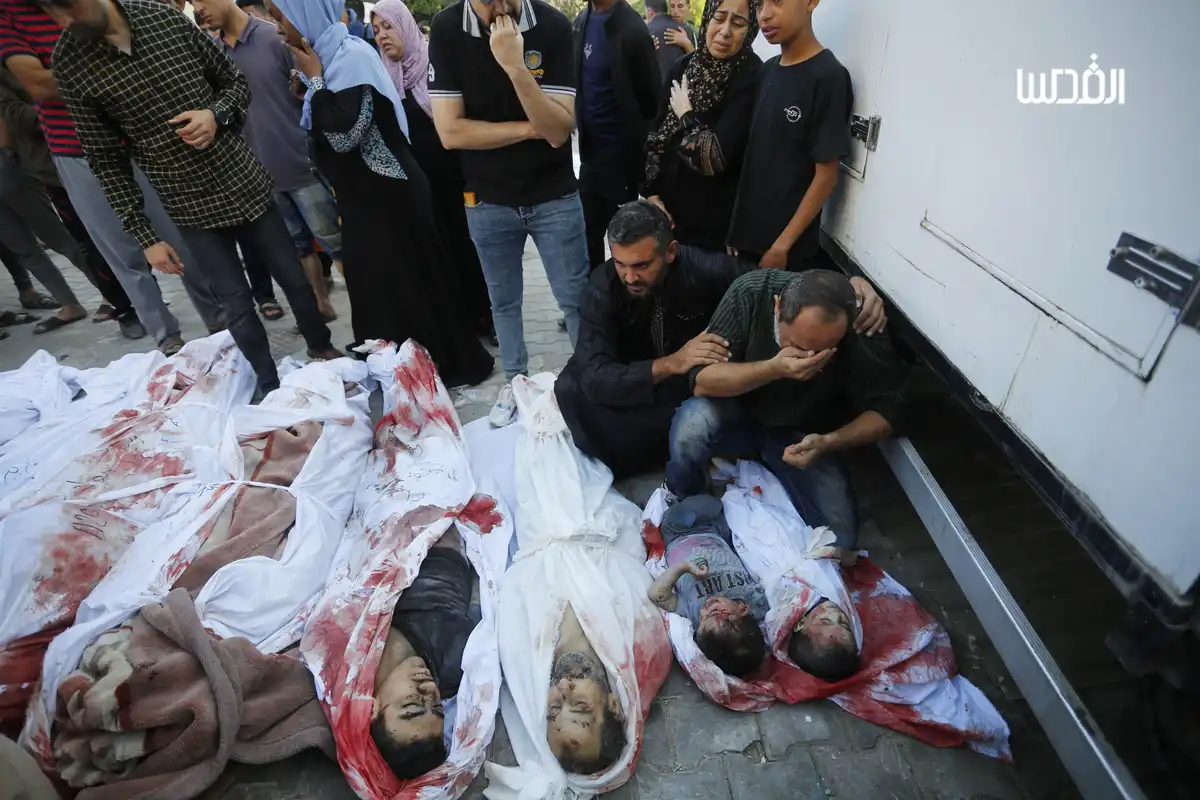



CONCLUDING THOUGHTS: THE DAY AFTER DISTRACTION

What is left between what Israel wants for Gaza and what the PA will demand is wide and deep. Unless key stakeholders have a plan for bridging differences and using their considerable collective leverage, the place where Palestinians in Gaza will likely end up will not be dissimilar from the cantonized West Bank, even if the PA assumes responsibility for governance in the enclave during any transitional phase. Palestinians will likely be forced into smaller areas within Gaza with greater deprivation than what they had known before. A different future appears possible, if the international community, lead by key stakeholders, is willing to support Palestinian national reconciliation and elections, make some concessions to the PA toward a political horizon, and use their leverage with Israel. For now, though, the day-after discussions appear to be only a distraction from the more pressing matter of ending the killing in Gaza and securing a ceasefire.


Zaha Hassan is a human rights lawyer and a fellow at the Carnegie Endowment for International Peace.

ARAB AND WORLD

Fri 22 Dec 2023 9:16 pm - Jerusalem Time

War on Gaza: A military line along the Gaza Strip and a colonial dream of seeing the sea

By Nayef Zidani

The Israeli occupation army began working on developing a plan aimed at establishing a new line of military sites near the Israeli settlements surrounding the Gaza Strip, specifically the so-called “Gaza envelope” area, which was the center of events in the “Al-Aqsa Flood” operation, which was carried out by the Hamas movement on October 7.

Israeli Channel 12 explained that the occupation army intends to establish this military line, primarily near the front settlements, that is, those closest to the Gaza Strip, in the cover areas, in order to constitute an immediate response, and to be always present in the event that resistance fighters from Gaza infiltrate the Israeli areas.


The military line will consist of forces that combine foot forces, tanks, and various armored vehicles.


The occupation army believes that the military sites that will extend along the aforementioned line, with the withdrawal of the plan, will form a very important line of defense in order to repel the resistance during the occurrence of events similar to what happened on October 7. This step also comes within the framework of drawing ongoing lessons in the Israeli state since the "Al-Aqsa Flood".


One of the goals of the military line intended to be established is to provide a feeling of security for the residents of those areas who have left and not returned for more than two and a half months and are still residing outside them.


This falls within the framework of Israeli attempts to enhance security in various regions and within the framework of the defensive plans that the Israeli occupation army is working on.


The channel did not indicate whether the aforementioned defensive line would be established on the lands of the cover settlements, or on lands that the occupation seizes from Gaza, similar to its intention to establish a buffer zone, which some Israeli estimates indicate will be at least one kilometer wide, within the territory of the Gaza Strip.


This step comes in addition to other "defensive" Israeli steps, including the Israeli occupation army surveying many areas of the Strip overlooking the cover settlements and leveling them to the ground, so that there is nothing that can be hidden from Israeli surveillance sites.


Settlement and sea view

In a context related to surveying the buildings, Israeli circles have previously indicated their desire for a view of the sea, which means, in other words, leveling all the Gazan buildings that stand between the sea and them to the ground and erasing them from existence, in addition to returning to settlement in the Gaza Strip.


This Israeli dream was expressed by the head of the “Nahla” settlement movement, Daniela Weiss, who spoke last week to the Israeli Channel 7. During the meeting, which discussed the “day after” the war on the Gaza Strip, she called for the displacement of the Palestinians and for settlement to be restored and planned in a way that gives the residents of the enclave a view of the sea.


In this context, she said: “I heard a number of people saying that they want to see the sea, meaning that there should be no homes (i.e. Palestinian in Gaza), and they are right in this desire. But how can the sea (i.e. the view of it) not be blocked? Israeli settlement is properly planned.” In the Gaza Strip. This is how the residents of the Gaza Strip will see the sea without (the vision and presence of) Arabs who hate Israel.”

She added: “My message to the residents of the envelope: You rally around us and we rally around you. The Gaza Strip and Gush Katif (the settlement bloc vacated by the occupation in 2005) form (together) one very large force. Any attempt to separate leads to distortion, and may lead to disasters.” .

Speaking about the Palestinian presence in the Gaza Strip, she added that what happened before October 7 will not happen after it, and that “Israel will not forget what happened,” and therefore “there will not be any Arabs in Gaza.”


Weiss said that seeing occupation soldiers inside the Gaza Strip taking pictures and scenes of themselves reciting Talmudic prayers in places where there were settlements, gives her a feeling that there is a desire among the Israeli public for Jewish settlement in Gaza.

She continued: “We see soldiers on the ground lighting candles in Neve Dekalim and Kfar Darom (names of former settlements). They realize that we have returned to our country. Gaza is part of the Land of Israel. There have been Jews there throughout history. There is nothing more logical than returning to settlement.” In Gush Katif.


Weiss believes that "the Prime Minister of the occupation, Benjamin Netanyahu, has no choice but to allow the people of Israel to return to part of the Land of Israel. We must say that Gaza is an integral part of the living body of the State of Israel."


In her message to the residents of the “Gaza envelope” settlements, Weiss believes that there is no difference between the settlements that were in the Strip before the withdrawal and the envelope settlements, asking: “What is the difference? It is a distance of 3 kilometers. We are brothers. If it is possible to live in Be’eri (one of the settlements) The cover targeted by Operation Al-Aqsa Flood) so how could it not be possible to live in Netzarim (one of the Gaza settlements before the evacuation)?”