





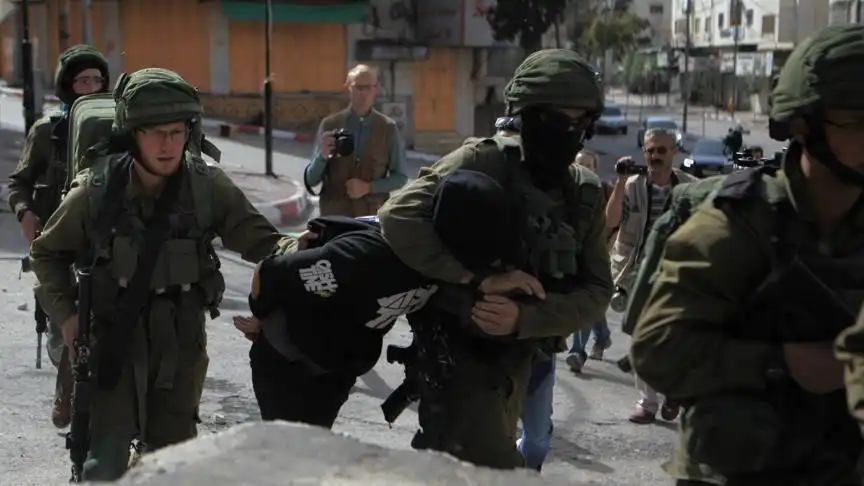
The Palestinian Prisoners and Ex-Prisoners’ Affairs Authority and the Palestinian Prisoners’ Club reported that the Israeli occupation forces arrested at least 12 citizens from the West Bank from yesterday evening until Wednesday morning, and the arrests were distributed in the governorates of: Hebron, Bethlehem, Ramallah, and Tulkarm, which witnessed a massive intrusion and sabotage operation. During the arrest campaigns, the occupation forces continue to carry out widespread raids and abuse, attacks against detainees and their families, and field investigation operations, in addition to widespread sabotage and destruction of citizens’ homes. Thus, the total number of arrests after October 7 rose to about (4,795), and this total includes those who were arrested from homes, through military checkpoints, those who were forced to surrender themselves under pressure, and those who were held hostage.

PALESTINE
Wed 27 Dec 2023 2:15 pm - Jerusalem Time
West Bank: Israeli forces arrest 12 Palestinians. Arrests since October rose to (4,795)
OPINIONS
Wed 27 Dec 2023 1:55 pm - Jerusalem Time
The Battle of Al-Aqsa Flood overthrows Jabotinsky’s theory and ideology..
Ali Abu Habla
Opinion Writer
The war on Gaza and the West Bank differs from its predecessors. It is a war of existence, as extremists in Israel describe it, and the reason for it being different is not only due to the large and scale of the unprecedented operation carried out by Hamas on October 7, and the subsequent “mighty revenge” carried out by Israel, as described by its Prime Minister Benjamin Netanyahu, which led to the killing of thousands of Palestinian civilians and the destruction of all aspects of life in Gaza.
This war is different from other wars because it comes at a time when the fault lines dividing the Middle East are crumbling. For at least two decades, the most dangerous rift in the region's fractured geopolitical landscape has been between Iran's friends and allies, and the United States' friends and allies.
Extremist right-wing ministers in Israel are pressing to thwart any international efforts to cease fire in Gaza in exchange for the release of the Israeli hostages, considering this a defeat for the Hebrew state against Hamas and demanding the continuation of the ground war until the movement is eliminated.
On Tuesday, the extremist Israeli Minister of National Security, Itamar Ben Gvir, threatened to dissolve the Israeli government if the war in the Gaza Strip stopped, in a brief blog post on his account on the “X” platform, coinciding with talk about a possible new agreement for a long-term humanitarian truce in the Gaza Strip and ending the ongoing war between the Hamas movement and the Israeli army.
Ben Gvir said, “Stopping the war equals dissolving the government,” which refers to the pressures facing Benjamin Netanyahu’s government from the extreme right.
Earlier Tuesday, Israeli Finance Minister Bezalel Smotrich said that stopping the war in exchange for the release of all detainees in Gaza is a “plan to eliminate Israel,” in a blog post on the “X” platform, in response to the Arab affairs commentator on Israeli Army Radio, Jackie Hogi.
“A proposal will soon be put forward to the Israeli government and Israeli society: the release of all kidnapped, including soldiers, in exchange for an end to the war,” Hoji wrote.
The war on Gaza and the West Bank, in its dimensions represented by the Palestinian-Israeli, regional and international conflict, gained the legitimacy of all parties in Israel with all their components, loyalists and opponents, and all the Zionist parties are united by a firm position on Greater Israel, which is based on expansion and settlement because they are all governed by Jabotinsky’s ideology and reference, and its reference is the “iron wall theory” launched and developed by the revisionist Zionist Ze’ev Jabotinsky. By the iron wall, Jabotinsky means building the Zionist military force that forms a wall of iron, in which there are no cracks or fissures, so that whenever the Arab and the Palestinian try to resist the Zionist enemy, his head will hit this wall and he will get tired and despair, and at this very moment it is possible to reach a settlement with this Arab, according to Zionism view. According to this Zionist theory, they are all working for what they call Greater Israel against the Palestinian people and all Arabs, without distinguishing between normalized and unnormalized.
The Al-Aqsa Flood operation on October 7, 2023 destroyed the theory of Israeli security. It was considered the biggest blow to “Israel” in its history, and it constituted a severe blow to the concept of Zionist national security, which raises a question mark over the viability of this entity. However, despite this, the rules of political science on which political entities are based do not apply to “Israel” because it is not an existing entity in itself to the extent that it constitutes an extension of American hegemony on the one hand and of Zionist global capitalism on the other hand.
In the view of the extreme extremists in Israel, the Al-Aqsa Flood Battle constituted a strong blow to the ideology and theory of Vladimir Zeev Japotensky, the founder of the Revisionist movement in the Zionist movement, the Irgun terrorist group, and the founding father of Likud and the Zionist right in general. Whoever has not read his article “The Iron Wall (We and the Arabs)” will not know how Netanyahu, his party, and the Zionist and extremist right think about the Palestinians, the negotiations, and the peace process.
His central idea: There is no possibility of an understanding with the Arabs (the Palestinians), and the only way to reach an understanding with them is through weapons, and uprooting the Arabs by force is a moral matter as long as it is for the sake of a noble project (the Zionist project and its foundations, settlement and displacement). This is the essence of the war on Gaza and the West Bank, and its goal is total destruction. Destroying all necessities of life and leading to forced annexation and deportation.
Jabotinsky says: “There cannot be a voluntary agreement between us and the Arabs of Palestine, neither today nor in the foreseeable future. I do not say that because I want to harm the moderate Zionists, and I do not think that they will be harmed except for those who were born blind, as they realized long ago that it is impossible for the Arabs of Palestine to voluntarily accept the transformation of “Palestine” from an Arab state to a state with a Jewish majority.
My readers have a general idea of the history of colonization in other countries, and I suggest that they consider all the precedents they know, and see if there is a single case of colonization that was accomplished with the consent of the indigenous people, if there is no such precedent.
Indigenous peoples, whether civilized or uncivilized, stubbornly resisted the colonizers, regardless of whether they were civilized or savage. Whether the colonists dealt fairly or not would not have made any difference (to the indigenous peoples).
According to all of this, anyone who thinks that there are differences between Netanyahu, Bennett, Lapid, Gantz, Lieberman, and even Smotrich and Ben Gvir are all mistaken. They are all governed by Jabotinsky's ideology and thought, and the difference relates to them and not to us.
According to this concept, the war falls on Gaza and the West Bank, especially the Palestinian camps. The goal is to subjugate the Palestinian people and break the backbone of resistance so that the replacement settlement project can be consolidated in the West Bank and Jerusalem and the forced deportation and displacement of Palestinians in Gaza after the massive destruction and lack of life there.
The Al-Aqsa Flood operation struck the foundations of the Israeli security theory and killed Jabotinsky's ideology, and the Palestinians succeeded in controlling large areas of the occupied territories for the first time. This collapse has once again awakened concerns about the possibility of the collapse of the occupying state in light of the steadfastness of the Palestinians despite the oppression and siege. It also undermined the sense of security and stability that allowed for more immigration and settlement operations in recent decades.
Regardless of the repercussions of the current brutal Israeli war on Gaza, the Israeli security theory has collapsed, the theories of “cauterizing consciousness” and “mowing the lawn” have collapsed, and the “battle between wars” approach has proven its failure in undermining the capabilities of the resistance or deterring it from carrying out a massive attack like the one it carried out on the morning of October 7. And so; the statements of the occupation leaders reflect the impact of shock, and the impact of a crisis of confidence shaking the Israeli army and intelligence services, that the previous security and strategic model has ended, which means that they are searching for imposing a “new model” and building a new security theory that will restore the attractiveness of “Israel” and its collapsed reputation as a safe haven for Jews from around the world. But this is a task that does not seem simple or within reach, regardless of the outcome of the destruction taking place in the Gaza Strip. The shortest path to achieving security and stability remains the achievement of peace based on international legitimacy resolutions and recognition of the legitimate rights of the Palestinian people, the right to self-determination, and the establishment of their independent state with Jerusalem as its capital.
Source: Sama News
PALESTINE
Wed 27 Dec 2023 11:30 am - Jerusalem Time
Israel: Approval of a Judaization and settlement budget worth 6.2 billion shekels in Jerusalem
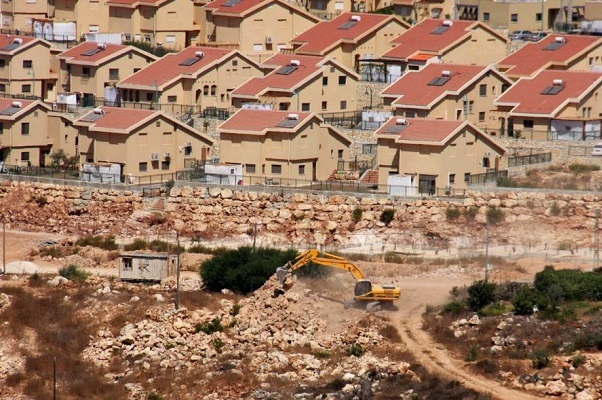
Yesterday evening, the Financial Committee of the Occupation Municipality approved a budget worth 6.2 billion shekels, in light of the war it is waging against Jerusalemites in conjunction with the war on the Gaza Strip.
The committee approved a huge budget to finance projects to consolidate settlement and Judaization and to advance other projects in the field of linking settlements inside the city with those in the interior and in the north and south of East Jerusalem in the Jordan Valley region.
The budget includes building more schools and educational institutions in occupied East Jerusalem to impose the Israeli curriculum on Jerusalemites within the 2023-2025 plan to Judaize education in the occupied city and increasing allocations for the so-called (law enforcement), meaning the demolition of more Palestinian homes under the pretext of not having a permit.
According to the occupation municipality: “Before discussions on Monday in the municipal finance committee, some members of the city council appealed to Mayor Moshe Leon, demanding that discussions and approval of the extraordinary budget (TKBR) for the year 2024 not be held until after the elections for a new municipal council. This demand was rejected”, when a fairly broad front of supporters gathered to approve the budget (opponents included members of the "Awakening" faction as well as Deputy Mayor Yossi Havelio and Councilwoman Laura Wharton).
The municipal finance committee met on Monday evening and approved a huge budget of 6.2 billion shekels, which is a larger budget than before (the extraordinary budget) for the year 2024. It is the largest approved by the municipality, and it is higher than last year’s budget by about 200 million shekels, after the jump in the 2023 budget. By about 20 percent compared to the 2022 budget.
It should be noted that the final approval of the budget will take place tomorrow, Thursday 28.12, at the last municipal council meeting of 2023.
The approved budget includes 4 billion shekels for projects in the field of transportation and the tunnel network in East Jerusalem to connect it to West Jerusalem, and in 7 different settlement projects in cooperation with ministries and settlement councils in Jabal Abu Ghneim, Beit Safafa, Beit Hanina, Umm Tuba, and Hizma, which means that infrastructure work is likely to remain throughout next year as well.
The budget included building schools and renovating educational buildings for tens of millions of shekels, including building a huge school complex in the Ras area - above the Shuafat neighborhood/village, constructing three wide roads and completing Bypass Road 20 and Bypass Road 21 from the “Ramat Shlomo” settlement to the “Atarot” industrial zone in addition to constructing a bypass road in Shuafat to connect the “Ramat Shlomo” settlement to the bypass road 443 Tel Aviv Jerusalem.
The municipal budget comes in line with the occupation government’s five-year plan for Jerusalem, for the years 2024-2028, and aims in its entirety to change the Palestinian identity of Jerusalem, after the insistence of the Minister of Finance, Bezalel Smotrich, known for his fascist and racist positions, to remove the item related to promoting higher education for young Jerusalemites, in the amount of 200 One million shekels, from the plan.
According to the budget, the occupation municipality in Jerusalem receives a large amount that was not accurately disclosed in the entire five-year plan, 3.2 billion shekels, including 2.450 billion shekels from the ministries’ budgets, and about 750 million shekels from the Jerusalem municipality, the Innovation Authority, the Electricity Company, and others.
The plan's budget was about one billion shekels more than the budget of the previous five-year plan for occupied Jerusalem, which was 2.1 billion shekels.
According to the budget makers, based on the objectives of the official Israeli government plan, the plan aims to deepen absolute control over the occupied city, completely change its Arab and Islamic face, tighten its grip on the occupied city, especially in the areas of education and settlement, and integrate Jerusalemites into the Israeli economy so that the only connection and option for dealing with the Israeli market and institutions is “The only one” and “the preferred one,” thus deepening and consolidating Israeli control not only over the city, but also over the people of Jerusalem, and ultimately achieving the Israelization of Arab society and the Judaization of the entire city.
It focuses on six areas: (education and higher education, economy and trade, employment and welfare, transportation, improving the quality of life and services provided to the population, and land planning and registration).
The Israeli municipal budget, based on the Judaization plan, pays attention mainly to education, and 800 million shekels are allocated to the education and training item, with the aim of “increasing the number and percentage of students in the Israeli curricula and preparation programs for the Israeli academy, so that it leads to their integration into the academy and the world of employment, by providing material and educational incentives" also increasing the number of occupation police officers and municipal inspectors in Jerusalem neighborhoods, in addition to installing security cameras and establishing additional police stations.
The budget for the Judaization plan for the five years is 3.2 billion shekels - from various Israeli ministries in the extremist government, and the main responsibility for its implementation was placed on the Israeli Ministry of Jerusalem Affairs and Heritage, with the participation of both the “Company for the Development of East Jerusalem” and the accompaniment of the “Alkha Institute - Joint Israel” in addition to Moreover, 8 other Israeli ministries are participating in implementing the plan, such as the Ministries of Education and Health, the Water Authority, Hagihon (an Israeli water company), and the occupation municipality. It is accompanied by the “Al-Quds Institute for Policy Research,” in terms of academic research and in terms of evaluating its application and effects.
The education sector accounts for the largest share of the Judaization plan’s budget, with a value of at least 445 million shekels, meaning that from 2018 to 2023, Israel spends approximately 89 million shekels annually on shaping the educational sector in Jerusalem according to its interests, which aim to replace the Palestinian curriculum with the Israeli one and Israelize it.
Within the education sector, the Judaization plan focuses on several levels, most notably increasing demand for the Israeli curriculum in schools (with a budget of 200 million shekels, which includes educational incentives, building rental budgets, etc.), expanding the scope of non-curricular education (with the highest budget: 206 million shekels), and teaching the Hebrew language ( With a budget of 15 million shekels), and technological education (with a budget of 12.5 million shekels).
PALESTINE
Wed 27 Dec 2023 11:16 am - Jerusalem Time
A senior leader to "Al-Quds": No negotiations on prisoners and arrangements for the next stage before stopping the war

The Palestinian resistance factions denied what some foreign agencies published about the content of the talks held by the delegations of Hamas and Islamic Jihad in Cairo during the past two weeks, and considered them to be a transfer of the Israeli narrative that is delaying ending the genocidal war waged by the occupation army on the Gaza Strip, which permits It contains the blood of Palestinian women, children and the elderly.
The resistance factions confirmed that there will be no negotiations regarding the prisoners and all arrangements for the next stage before stopping the war and aggression against the Gaza Strip.
In this context, a senior leader in the resistance described what was published about its rejection of ideas for managing the Gaza Strip after the end of the war as false and misleading, especially what was called “leaving control of the Strip.” The senior leader told Al-Quds: “The resistance is an integral part of the Palestinian people, and it is a resistance elected by its people by a majority and enjoys a strong popular support and a large crowd. Indeed, the members of the resistance are from the same city, villages, and camps. They are from the steadfast Gaza Strip.” With their bodies and rifles, they confront this brutal aggression despite the massacres and war of extermination.”
He continued, saying: “The strange thing is that some Arab newspapers and channels echoed the narrative of Netanyahu and his hostile media chorus that the occupation “allows the exit of the resistance fighters and their leadership from the Gaza Strip,” and they draw a comparison between the war on Gaza and the occupation’s siege of Beirut in the last century.
The leader, who preferred to remain anonymous, explained: “Anyone who draws a comparison between the war of extermination that the Israeli occupation is carrying out today in the Gaza Strip and that war in which the occupation invaded Beirut, the proud Lebanese capital, which hosted and continues to host on its lands, is a foreigner, hostile, or ignorant of the ABCs and history of the Palestinian issue.” A large number of our people are refugees as guests until liberation and return to Palestine.”
He said: “The departure of Palestinian fighters from Beirut after an 80-day Israeli siege from the refugee camps in Lebanon to Tunisia as guests until the return of the martyr president, Abu Ammar. This is a comparison and approach that does not apply to us in the Gaza Strip. We are on our Palestinian land and among our people resisting an occupier from For our freedom, our dignity, the independence of our people, and their right to self-determination and build their state with Jerusalem as its capital,” stressing that there is no force in this world that can force us to leave the “beloved” Strip.
He added: "The picture must be clear. There is no comparison, there is no similarity. We, the people of the country, the men of Gaza, its soldiers, and its leaders, are neither guests nor mercenaries, as is the case with the Israeli occupation, which uses mercenaries from all over the world in its war on the Gaza Strip, seeking the help of American experts." And from the Western countries who provide air, intelligence, and electromagnetic cover and continue to support the occupation and aggression against our people with trains and air bridges with equipment, weapons, bullets, and stupid and smart bombs, and today they are demanding more Apache helicopters, all of this will not benefit them (they will be defeated and take control).”
He wondered: Where is the similarity? He said: “The strange thing is that this occupation and its aides are dealing with the same mentality of the rotten, fanatical, racist past and dealing with superiority and arrogance. ‘We allow’ and we do not allow,” adding that Netanyahu and his chorus of sulking leaders of his failed war believe that they can impose their will and decisions on the resistance. These are dreams and illusions that do not deceive. We don't pay any attention to it."
The senior leader stated: “My brother, you in the Palestinian press have paid in blood, just like the fighters in the field. More than 100 male and female journalists were martyred in Gaza. You are the knights of the honest word, reporting what is happening in the field, so the occupation is targeting you in its aggression. We are fighting without support or support.” There is no help from our Arab and Islamic world. A large portion of them stands by and watches, while a portion does not want to see our achievements or the steadfastness of our people in the Gaza Strip. Indeed, they attack the resistance and hope to eliminate it.”
He continued: “I say it bitterly, but this is the truth, but God supports with His victory whomever He wills. We, for our part, have pledged to God to fight until victory or martyrdom. Do not back down, for patience is patience, and those who wronged will know which way they will turn.”
The leader said: “The occupation is in an internal dilemma. Its government, led by Netanyahu, is afraid to stop the war that has caused it losses in lives that exceed all their imaginations, and a crisis. If the war is stopped and the deal is completed, the occupation is forced to pay a heavy bill for the release of the best of our people from prisons and detention centers.”
He added that the resistance has many, many cards for pressure and bargaining in negotiations and concluding an honorable deal according to what the resistance factions decided “all for all,” stressing that this equation is implementable, but the priority today is stopping the war and withdrawing the occupation.
The senior leader explained our goals and priorities after the cessation of the war, many of which are that what came before the October 7 operation will not happen after it. After the ceasefire, the siege imposed on the Gaza Strip must be lifted for more than 17 years. He said that this occupation does not abide by covenants, charters and agreements, so it must be International, Arab and regional guarantees make the occupation obligated to implement what is agreed upon with the Egyptian and Qatari mediators.
In response to a question about Hamas and Jihad’s refusal to form a technocratic government, the senior leader explained in his interview with Al-Quds: “This is slander and a lie. Firstly, we did not discuss the ideas in Cairo, and we refused to discuss any proposal before the ceasefire and the occupation’s withdrawal,” adding, “Previously.” We formed a government of technocrats in 2014 - a government, thank God.”
The leader concluded by saying: "Forming a government of technocrats or any formula agreed upon by all Palestinians, we are with it. This is an internal Palestinian matter that the occupation and its supporters have nothing to do with. This is the right of the Palestinian people. They are the ones who decide and choose their leadership in the next stage."
The leader refused to delve into what was published yesterday about a plan to expand, develop and equip the Rafah crossing to accommodate the entry of aid and the passage of citizens to and from the Gaza Strip in a broader and better way. He said, "This is an issue that needs long research and has already been discussed repeatedly with our Egyptian brothers. We prefer to address it after stopping the war and aggression, as we have a long and complex stage ahead of us."
PALESTINE
Wed 27 Dec 2023 10:57 am - Jerusalem Time
West Bank: Israeli forces demolishe a house south of Hebron

Today, Wednesday, the Israeli occupation forces demolished a house east of Yatta, south of Hebron.
According to local sources, the occupation raided the Al-Jawaya area, east of Yatta, accompanied by bulldozers, and demolished the 150-square-meter house of citizen Alaa Muhammad Al-Nawaja’a, which housed seven individuals.
PALESTINE
Wed 27 Dec 2023 10:37 am - Jerusalem Time
Occupied Jerusalem: Dozens of Israeli settlers storm Al-Aqsa Mosque

Today, Wednesday, dozens of settlers stormed the blessed Al-Aqsa Mosque, amid heavy protection from the occupation police.
The settlers made provocative tours inside the courtyards of Al-Aqsa Mosque, and performed Talmudic rituals.
Groups of settlers storm Al-Aqsa on a daily basis except Friday and Saturday.
OPINIONS
Wed 27 Dec 2023 10:12 am - Jerusalem Time
Israeli opinion: Netanyahu must go before he causes further irreparable damage to Israel

Alon Ben Meir
Opinion Writer

Prime Minister Netanyahu is accused of betraying his oath of office, and his series of incidents and acts of corruption make him a dangerous liability for Israel. He must leave office now before he does more irreparable damage, as well as the greatest tragedy Israel has ever suffered under his rule.
Regardless of how the war between Israel and Hamas ends, no one in Israel should ever forget how, during his rule of nearly fifteen consecutive years, Netanyahu pushed Israel to the brink of the abyss. Despite its miraculous achievements since its founding in 1948, Israel today has hit rock bottom, and no one has contributed more to its current darkest chapters than Netanyahu. It is unfortunate that Netanyahu, who could have emerged as one of Israel's greatest leaders on a par with Prime Ministers David Ben-Gurion and Yitzhak Rabin, squandered his impressive early achievements in the areas of economics and national security. His ideological leanings against the Palestinians, his lack of innate, inherited honesty and his insatiable hunger for power have blinded him to the point where he is no longer able to understand what is best for the country, and instead places his own self-interest above that of the nation.
Netanyahu's series of disastrous policies and personal behavior is long and very disturbing. Given the current situation in Israel, his continued leadership may lead the country down an even darker alley, from which it will be unable to emerge without sustaining irreparable damage to its future, while Netanyahu betrays the true reason Israel exists. Netanyahu is accused of the scandalous political and immoral behavior described in the points below, for which he must be held accountable:
Forming the most extreme government,,
In December 2022, Netanyahu formed the most extreme right-wing Messianic government in Israeli history. This government hastened the isolation of Israel from its allies, as it harassed and forced many Palestinians from their lands, polarized the Israeli public, increased the threat of its enemies, weakened its preparation for national security, and attempted to strip the judiciary of its powers to save his skin from the three criminal charges against him. The government includes a number of ministers with criminal records, including Ben Gvir and Deri, whose behavior and policies have harmed Israel more than any other minister in Israeli history.
Subjugate the justice,
Since the first day Netanyahu formed his current government, he has poured every ounce of his energy into “judicial reform,” a law to subordinate the Supreme Court to elected politicians, especially allowing them to appoint judges. The judiciary, especially the Supreme Court, is the guardian of democracy in Israel and without it the government can do whatever it pleases without accountability, which in effect means the end of democracy and the beginning of the tyranny it so vigorously sought. So far, Netanyahu has succeeded in passing the reasonableness clause that prevents the Supreme Court from overturning any government policy deemed unreasonable.
Harmful to national security,
To justify the continued occupation, Netanyahu has systematically portrayed the Palestinians as an implacable enemy who poses an existential threat to Israel. He has masterfully brainwashed Israelis into believing that only by perpetuating the occupation can Israeli national security be protected. To achieve this end, he needed to keep the Palestinians as an eternal enemy to justify the occupation, when in reality Israel would have been much safer had it ended. He convinced Trump to withdraw from the Iran nuclear agreement, allowing Tehran to approach the nuclear threshold, putting Israel's security at risk more than ever before.
Attracting Israelis,
To serve his political agenda, Netanyahu has courted right-wing and ultra-Orthodox parties while widening the divide between secular and Haredi Israelis, intensifying distrust between Israeli Jews and Arabs, increasing discrimination against Sephardic/Mizrahi Jews, and widening the divide between political parties while offering preferential treatment to loyalists and cronies. To be sure, the Israeli public has never been as divided between different political leanings and ethnic backgrounds as it was under Netanyahu's leadership.
Building and expanding settlements,,
Netanyahu has focused on building and expanding existing settlements and legitimizing illegal settlements to serve his plan to annex a large part of the West Bank and drive another nail into the coffin of the two-state solution. It allows settlers to harass Palestinians and confiscate their farmland and allocates hundreds of millions to protect settlers while leaving poor communities inside Israel to rot. For Netanyahu, settlers represent the first line of defense and a central means of preventing Palestinians from returning to their lands.
Intensification of anti-Semitism,,
Although anti-Semitism has been around since time immemorial, Netanyahu's brutal treatment of Palestinians over the years in the West Bank has contributed significantly to the rise of anti-Semitism in recent years, especially in the wake of the war between Israel and Gaza. Administrative detention of Palestinians, home demolitions, widespread night raids, and the use of disproportionate force to suppress violent resistance, while the whole world watches, have contributed sharply to the rise in anti-Semitism. Only a fool would assume that Netanyahu's policies in the West Bank have not helped the rise in anti-Semitism plaguing Jews around the world.
Alienating the United States,
No Israeli prime minister has ever antagonized successive US administrations more than Netanyahu. Given the United States' unwavering commitment to Israel's national security, its unwavering political support, and its significant military and financial aid, it is shocking how Netanyahu dares to challenge the United States and its policy, especially in dealing with the Iranian nuclear program. He frequently interfered in US domestic politics while publicly siding with the Republican Party, siding with evangelical Christians and displeasing Democratic presidents. He found an exact copy of himself in the deranged and morally corrupt Trump who abandoned the American values that constitute the cornerstone of bilateral relations between the United States and Israel. The Hebrew word “chutzpah” (which roughly translates to impudent audacity) applies more to Netanyahu than to anyone else, especially in relation to the United States. Earlier this year, Netanyahu declared that “Israel is a sovereign state and makes its decisions based on the will of its people and not based on pressure from outside, including from best friends,” which represents the height of shameless audacity (“chutzpah”).
Strengthening the power of Hamas,
Netanyahu's policy of pitting Hamas against the Palestinian Authority, and vice versa, was a very dangerous strategy. He allowed hundreds of millions of dollars to be transferred from Qatar to Hamas because he deliberately wanted to strengthen the movement and weaken the Palestinian Authority to prevent the establishment of a Palestinian state. He told Likud lawmakers in 2019 that “everyone who opposes a Palestinian state should be so,” that is, alongside Qatar’s funding of Hamas. His tragic mis-assessment of Hamas' capabilities and intentions, believing that the Palestinian Authority is an obstacle and Hamas a source of strength, and his misplaced confidence that he has full control of Gaza and that Hamas is incapable of carrying out a large-scale attack against Israel, were tragically negligent, especially in light of the numerous warnings he had made. Launched by IDF observation soldiers. Netanyahu's intense preoccupation with “judicial reforms,” the criminal charges against him, and his reassignment of some of the Israeli forces charged with protecting Israeli communities bordering Gaza to the West Bank, enabled Hamas to commit its atrocities against Israelis, for which Netanyahu has never apologized.
Manipulating the political scene,
No Israeli leader has manipulated the political landscape as deftly to remain in power as Netanyahu. He regularly colludes with political leaders from within or outside his government to advance his political interests. He often goes back on promises he makes, even to his coalition partners, just to continue his plans to stay in power. Like a despot, he controls the national agenda so that nothing can override him. He uses all parliamentary tricks to get his way while allegedly following orders from his wife Sarah on how to sideline his political rivals and punish his opponents. Yes, political manipulation and Netanyahu have become synonymous.
Alienation of the Jews of the world,,
Although Israel was created to embrace Jews from every corner of the world and provide a homeland and refuge for any Jew to live freely in peace and security regardless of his political leanings, religious affiliation, or country of origin, Netanyahu betrayed all of that. His policy of siding with rabbinic institutions to prevent women from praying at the Wailing Wall, his brutal treatment of Palestinians, and the imposition of religious laws on secular/Reform Jews greatly alienated world Jewry. The mutually complementary relationship between Israel and world Jewry has deteriorated under Netanyahu's leadership to a level unprecedented since Israel's creation.
Corruption,,
Netanyahu's political and personal corruption is his defining characteristic. He still faces numerous corruption charges, including bribery, fraud and breach of trust, raising serious questions about the ethics and credibility of his leadership. He made great efforts, at least in part, to “reform” the judiciary to extricate himself from the criminal charges against him. Netanyahu often acts like a mafia boss and orders his killers to do his dirty work. He rewards his loyal friends generously and is never shy about excluding anyone who disagrees with him. His quirk is common, and very few people take his word for granted. Netanyahu's misleading statements and lies have become his trademark.
Challenge the international community,,
Under Netanyahu, Israel has consistently opposed international efforts to recognize a Palestinian state and has defied almost all UN resolutions, whether from the General Assembly or the Security Council, that criticize Israel. Netanyahu has caused tension in Israel's relations with the European community, especially regarding the Israeli occupation. In defiance of the United States, he tried to cozy up to Russia's Putin and refused to provide assistance to Ukraine in its war efforts against Russia. He was able to invite him to China to signal to President Biden that he can always turn to the US adversary. His scruffy behavior on the international stage, moving from one European capital to another, made him look like a second-hand goods salesman trying to outdo his potential clients.
Writing the darkest chapter in Israel's history,,
It is even more sad that Netanyahu, who led Israel for nearly 15 consecutive years and could proudly leave the political scene while leaving behind notable achievements, must now leave office in disgrace. He wrote the darkest chapter in Israel's history by forming his current fascist government that was prepared to destroy Israel's democracy and by causing the collapse of the Israeli-Palestinian conflict unprecedented since Israel's creation. The blood of the 1,200 Israelis brutally murdered by Hamas, and the blood of tens of thousands of Palestinian women and children buried under the rubble of Gaza, is on his hands.
Netanyahu has lost his credibility and legitimacy to lead Israel, especially in a time of unparalleled crisis, due to his dereliction of duty, his misguided policies, his self-absorbed personality, and his desperation to cling to power to save himself. He really wants a potential victory against Hamas by claiming that “this is our second war of independence” and “this is the mission of our lives and mine.” And how pathetically self-conceited Netanyahu can be in his efforts to shamefully profit from the greatest disaster Israel has ever seen. ?
I do not agree with those who claim that given the intensifying war against Hamas and the fear of the unknown sweeping the region, this is not the time to force Netanyahu from office. On the contrary, he insisted that this was the right time to force him to resign for all the reasons mentioned above and more. He must be forced from office now to prevent him from manipulating the course of the war or even prolonging it to cover up his fatal mistakes and appear like a “war hero” when he is nothing but a self-absorbed coward and cheater.
If Netanyahu still has a shred of dignity, he should resign before he is forced to leave office in complete disgrace.
PALESTINE
Wed 27 Dec 2023 9:51 am - Jerusalem Time
Day 82 of war on Gaza: belts of fire in Jabalia and bombing on Khan Yunis
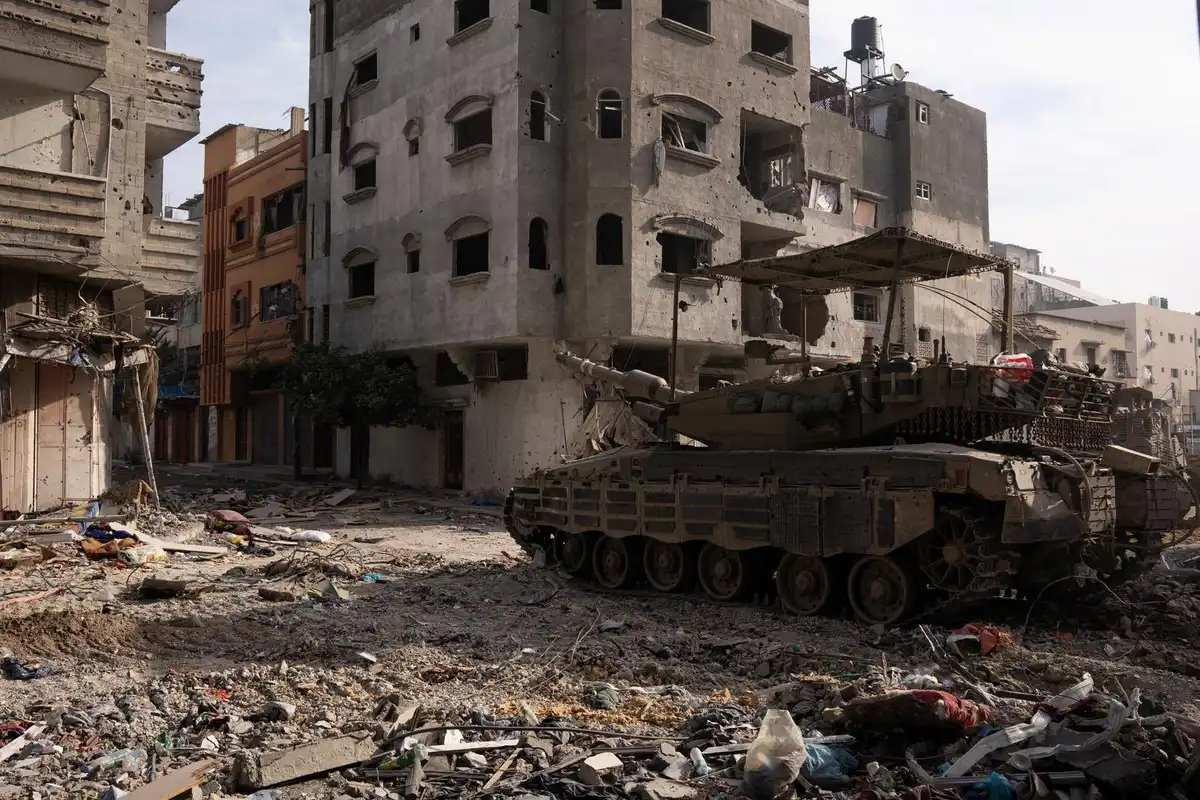
On the 82nd day of the Israeli aggression on Gaza, the bombing of the Strip by sea, land and air continued.
The occupation aircraft launched violent fire belts at dawn in Jabalia al-Balad and its environs in the northern Gaza Strip, and a house in Rafah in the south was also targeted.
20,915 people were killed in Gaza and 54,918 others were injured, most of them children and women, according to the latest statistics issued by the Ministry of Health in Gaza on Tuesday.
This morning, 7 people killed were transferred to Al-Shifa Medical Complex as a result of the occupation’s bombing of neighborhoods and residential areas in Gaza City.
Artillery shelling also targeted residential areas in Jabalia, north of Gaza.
PALESTINE
Wed 27 Dec 2023 9:11 am - Jerusalem Time
West Bank: Israeli soldiers stab an injured person and kick others
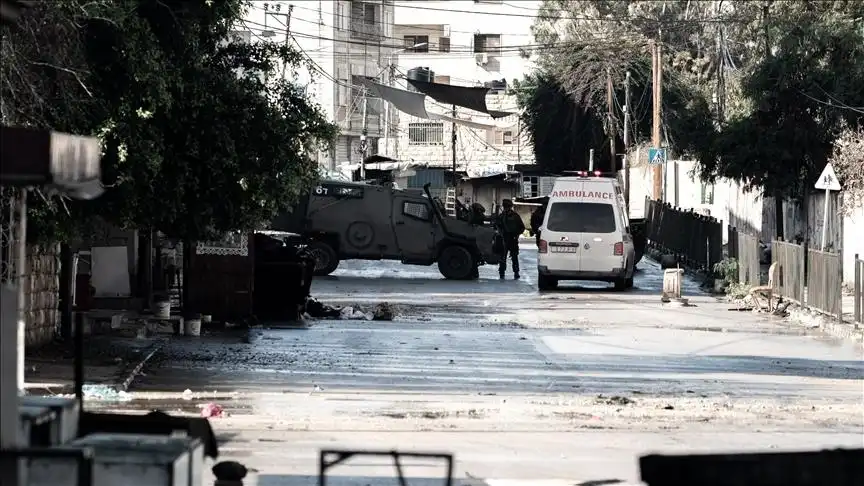
A Palestinian doctor said, on Wednesday, that Israeli soldiers “assaulted” wounded people in the city of Tulkarm in the northern West Bank, stabbing and beating them, which posed a threat to their lives.
The head of the Tulkarm Governorate Doctors Syndicate, Radwan Balibla, added that the Israeli army “stopped Palestinian ambulances containing wounded people from Nour Shams camp and assaulted them.”
He added, "One of the injured was stabbed in the neck by one of the soldiers inside the ambulance, which posed a threat to his life."
Balibla pointed out that the injured person "sustained several wounds as a result of an Israeli bombing on a march, and his health condition is serious, and his stabbing aggravated his condition."
He pointed out that "two others were taken out of the ambulances and were kicked, beaten with rifle butts in the areas where they were injured, and insulted."
Balibla described what happened as a “flagrant violation of humanitarian law,” calling for “intervention by international bodies to punish and hold Israel accountable.”
At dawn on Wednesday, 6 citizens were killed and 3 were injured in an Israeli bombing of Nour Shams camp near Tulkarm.
The West Bank is witnessing a wave of tension and field confrontations between Palestinians and the Israeli army, coinciding with the deterioration of the situation in the Gaza Strip.
According to data from the Palestinian Ministry of Health, “the number of killed in the West Bank since October 7 has risen to 311.”
PALESTINE
Wed 27 Dec 2023 8:47 am - Jerusalem Time
Abbas announces 3 conditions for the Authority to assume responsibility for Gaza after the war
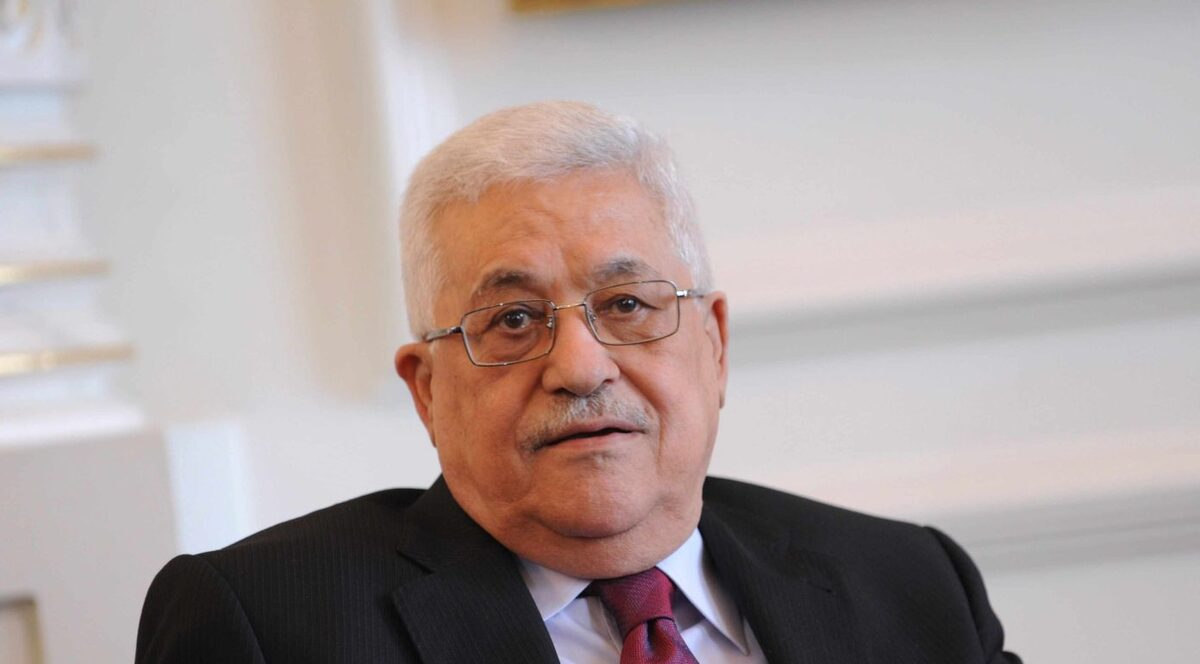
Palestinian President Mahmoud Abbas announced 3 conditions for the Palestinian Authority to assume responsibility in Gaza, which has been subjected to a devastating Israeli war since last October 7, considering at the same time that the Authority “did not leave the Gaza Strip until it returned to it.”
Abbas spoke during an interview with the Egyptian channel “On” and broadcast on Palestine TV, on Tuesday evening, where he said, “We want to stop the fighting completely, open the doors for humanitarian aid, and prevent the migration of Palestinians outside their homeland.”
He continued, "We requested these three points. After that, if there is an (Israeli) exit from Gaza, we are ready to bear our responsibilities that we bear now. We will continue to bear the responsibilities of the Palestinian Authority in Gaza, the West Bank, and Jerusalem as a single Palestinian state."
In response to a question about whether there were plans or cadres to rule Gaza the day after the war, he replied, “We have everything, and the cadres are there (…), we did not leave Gaza in order to return to it.”
The Islamic Resistance Movement (Hamas) won the Palestinian legislative elections in 2006, and following the collapse of a national unity government, the movement took control of Gaza the following year, in light of disputes that still exist with the Fatah movement led by Abbas.
"We are in Gaza"
Abbas said, "We are present in Gaza, and we have our institutions, cadres, and youth. We pay Gaza, the people and institutions, 140 million dollars a month. We are present in Gaza. Today, among our ministers, 5 are from Gaza, and 3 are residents there."
He continued that the Palestinian vision is that "the Palestinians (the Authority) are in Gaza, not for us to return to it. At any moment (an) international conference (can be held), and we are ready to study the situation on the basis of international legitimacy and the implementation of international legitimacy and a Palestinian state that includes Gaza, the West Bank and Jerusalem."
While the administration of US President Joe Biden wants the Palestinian Authority to bear responsibility in Gaza after the war, Israeli Prime Minister Benjamin Netanyahu rejects this option, and wants to maintain security control over the Strip.
Abbas said that Israel does not want the Palestinian Authority in Gaza, but rather “it wants to remain and seize parts (of other Palestine), but the world does not agree, and in theory America does not agree with it.”
He went on to say that communications are continuing with Egypt and Jordan as part of efforts to stop the aggression, adding that "meetings will be held soon and bring together more countries such as the UAE and Qatar to work to stop the aggression, and to talk about what comes after the war."
Abbas stressed that "Israel wants to displace Palestinians from the West Bank and Gaza Strip as it did in 1948."
He added, "The plan of Israel, Netanyahu, and his current government is to get rid of the Palestinians and the Palestinian Authority."
"We don't believe the Americans"
Abbas said, "America is the one that supports Israel, and with one signal (from it) it can stop it (the war)."
He said, "We will not believe the Americans (the American administration)" when they claim that they are giving instructions to Israel, but it does not listen to those instructions.
Since the outbreak of the war, the United States has provided Israel with the strongest possible military, intelligence, and diplomatic support, to the point that critics have come to consider Washington an “accomplice” in Israeli “war crimes” in Gaza.
Abbas described what is happening in Gaza as “nowhere in the world has happened greater and more horrific than the 1948 Nakba,” adding that Gaza “needs tens of billions (of dollars) to at least return to living a new life.”
Abbas said that Israel is waging war on the Palestinians, imposing a severe siege on the Authority, and "is withholding about a billion dollars, at a time when there is no support or assistance (from abroad)."
He concluded, "Hope is coming. Gaza will return to what it was and is better, and it will be a Palestinian state. The world must understand that we are a people who deserve life and independence, and there is no justification for us to remain under occupation."
As of Tuesday, the Israeli war on Gaza had left 20,915 dead and 54,918 wounded, most of them children and women, massive infrastructure destruction and an unprecedented humanitarian catastrophe, according to the Gaza Strip authorities and the United Nations.
Source: Anadolu Agency
OPINIONS
Wed 27 Dec 2023 8:28 am - Jerusalem Time
Gaza and lessons learned!
Translation for "Al-Quds" dot com
Opinion Writer
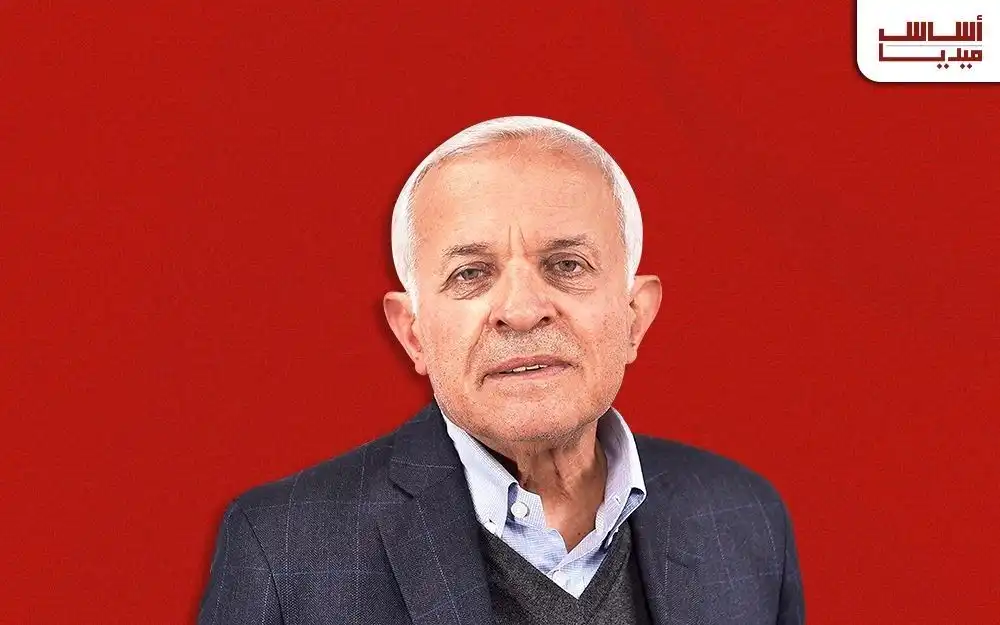
By Radwan Al-Sayed
Some may think that we are being hasty when we now talk about lessons learned from the great and tragic event in Gaza. Since only half of the event has passed, what comes after the war (if it truly has an end!), which is a period that may be long, is perhaps more important than what has passed since its horror and horror. However, observing the event from the Palestinian, Arab, regional and international insiders can allow contemplation and comparison to draw lessons or possibilities for consideration, according to Ibn Khaldun.
By the consideration that he frequently mentions in the last chapters of his introduction, Ibn Khaldun does not mean the lesson and the sermon, but rather the analogy and comparison between two events, because for him history takes place in cycles. But he comes back and says that history does not repeat itself.
Why did the war happen?
Let us look at Hamas, its nature, its internal decision-making, and the parties that influence it and it. Many have mentioned that things have developed within it after the events in Syria. The leadership at the time refused to help the Syrian regime despite Iranian pressure. Therefore, when the Hamasites wanted to restore relations through the mediation of the party and Iran, they had to change the political leadership. The prominence of Ismail Haniyeh increased, then decreased, creating an almost separation between the political and military leadership, and the military leadership is what created the current war. In addition, because Hamas is preparing to lead the Palestinian national movement, the political leadership abroad in Qatar and Turkey should not be underestimated. As for Iran, there is the military aspect, which is secret. There are massive preparations for war over three or four years. It is also affected not only by the party and Iran, but also by the situation in the West Bank as long as Hamas wants to lead Palestine.
There is no victor, perhaps except Iran, which is betting on the “overpowering” believing the illusions and that America and Israel will hand it over to it in partnership.
Why did the war happen now? We do not know why Iran has wanted war for over a year. The Jihad organization started it alone and its decision is purely Iranian. As the jihad’s losses in the West Bank and Gaza increased, the pressure on Hamas to participate intensified, and the Qataris and Turks put pressure to prevent Hamas from participating. Therefore, it is likely that the internal leadership took the decision under pressure from Iran.
What do the Iranians want from the Biden administration? Or that the Iranians were following the progress of the Saudi-Arab negotiations with America and the possibility of rapprochement with Israel. Since late 2022, Iranian leaders have been visiting Lebanon to meet Nasrallah and to meet with Hamas activists coming to Lebanon. This was undoubtedly done to plan war and politics and to encourage Hamas to participate.
Since then, for more than a year, Nasrallah has been talking about the unity of the squares. This means two things: pushing Hamas on the one hand, and encouraging it that the party will participate if it also pushes. Thus, the war broke out, and the Iranians said at first that they had nothing to do with it, then when it intensified and their factions moved in Lebanon, Iraq, Syria, and now Yemen, they returned to saying that they were participating and that the credit was theirs! Thus, they will remain present even inside Palestine, because everyone holds them in high regard.
Hamas's popularity rises
Hamas's popularity is now enormous in the Arab and Islamic worlds. Iran is winning and so is the party. Hamas will be weakened militarily, but its political role will not end, and it will remain a problem for the Palestinian Authority, which is popularly and institutionally weak, as well as for the Arab countries.
It is expected that there will be American, European and Arab interest in reviving the Palestinian Authority to enable it to participate in the complex two-state solution. Israel has not shown interest in talking about the two-state solution, and Netanyahu declares his opposition to it and does not recognize the authority. There are many who share his belief that the Authority does not have the ability to work in Gaza while Hamas remains present, and people in the West Bank do not want it. Therefore, there will be a problem for internationals and Arabs in acting in a vacuum. The Authority is not completely present, and Hamas is not absent. In addition to the political problem, there will be problems of compensation for the Palestinians and reconstruction.
In the last two weeks, the American and European position began to develop towards demanding a halt to the war for humanitarian reasons, under the pressure of public opinion and the media revealing the atrocities.
The Arabs have finally succeeded, at the request of the UAE, in taking a Security Council resolution to release aid and establish a humanitarian ceasefire. The position of the Arab and Islamic countries was the same during the war and remains the same since the Saudi Crown Prince brought together the fifty-seven Arab and Islamic countries on this. But they were unable to truly influence America and Israel despite their huge size. It is not clear how much influence they have on Hamas, with which they have relations only through Qatar and Egypt. The two countries are busy negotiating the release of prisoners from both sides in exchange for stopping the war.
The evolution of the American and European position
In the last two weeks, the American and European position began to develop towards demanding a halt to the war for humanitarian reasons, under the pressure of public opinion and the media revealing the atrocities. As for the international and humanitarian institutions, they were against the war from the beginning, and the position of the Secretary-General of the United Nations was large and clear, but it was also ineffective, despite two decisions taken by the United Nations General Assembly to stop the fighting, and now, as previously said, a resolution with the same meaning in the Security Council. It is expected that this global weight will be beneficial in the direction of the two-state solution.
In the final calculation, what is the meaning of everything that happened and is happening, and what can be concluded? The most important results are the global interest in ending the war on Palestine after seventy-five years of conflict, and the end will be through the establishment of a state for the Palestinians despite the complexities of negotiation and the divisions of the Palestinians.
The Israelis felt the danger to the state, and they became more rigid. There are few political elites who want peace in a Palestinian state, and most of them are American Jews. Many Israelis are betting that the world will forget after the fighting stops. The Israelis do not want Netanyahu to stay, but they do not believe in the possibility of permanent peace with the Palestinians.
There is no victor, except perhaps Iran, which is betting on the "overpowering" believing the illusions and handing over America and Israel to it in partnership! I heard Fahmi Huwaidi, after a long absence, saying on Al Jazeera that what happened was a war of liberation! Where is the liberation after the massive losses and Hamas's victory being limited to demanding a prisoner exchange?
The lesson I learned personally is that there is no solution through fighting, and that the problem continues. There's no strength except with Allah.
Source: Assas Media
ARAB AND WORLD
Wed 27 Dec 2023 8:22 am - Jerusalem Time
White House: Sullivan and Israeli Minister discuss moving to a different phase of the war in Gaza

A White House official said that White House National Security Advisor Jake Sullivan discussed with Israeli Strategic Affairs Minister Ron Dermer planning for the day after the end of the war on Gaza, including governance and security in the Strip, according to what Reuters reported.
The official said Sullivan and Dermer also discussed efforts to return the remaining hostages and move to a different phase of the war to maximize focus on “high-value” Hamas targets.
CNN reported that Ron Dermer concluded an hours-long meeting with senior Biden administration officials regarding the next phase of the conflict between “Israel” and Hamas.
The network said that Ron Dermer left after meeting with Secretary of State Anthony Blinken and National Security Advisor Jake Sullivan for more than 4 hours.
The Israeli Minister of Strategic Affairs, Ron Dermer, arrived in Washington yesterday, Tuesday, to hold meetings with officials in the White House and the State Department regarding Israel’s plans to reduce military operations in the Gaza Strip, during next January, and “move from a high-intensity war to a low-intensity war.” "Intensity."
This came according to what the Israeli “Walla” news website reported, citing high-level Israeli and American officials, whom it described as high-ranking officials.
Dermer will meet with the White House National Security Advisor, Jake Sullivan, US Secretary of State, Anthony Blinken, and senior members of Congress.
The sources said that he will discuss "Israeli plans to move to the low-intensity fighting phase, which is expected to begin near the end of next January, as well as the issue of managing civil affairs in Gaza during the coming months."
The report quoted an Israeli official as saying that Dermer is also expected to discuss with Sullivan and Blinken the ideas of Israeli Prime Minister Benjamin Netanyahu “regarding the long-term management of the Gaza Strip” after the end of the war.
Among the other issues that Dermer will raise in his talks in Washington are Israel’s concern about the potential shortage in aircraft armament, and the United States’ demand to accelerate arms shipments to Israel, especially to prepare for the possibility of escalation on the northern border against Hezbollah, according to what the report quoted an Israeli official. .
The report quoted American officials as saying that Gallant spoke by phone last Thursday with Blinken and expressed his concern about the delay in arms shipments that Israel had requested to be accelerated. Gallant asked to know whether the reason was political, while Blinken assured Gallant that this was not the case.
The two officials stated that the delay, if it occurs, is due to “bureaucracy and paperwork.”
PALESTINE
Wed 27 Dec 2023 8:16 am - Jerusalem Time
West Bank: 6 young Palestinians were killed by Israeli drone bombing on Nour Shams camp

Six young men were killed at dawn on Wednesday, after an Israeli drone bombed them in Nour Shams camp, east of Tulkarm.
The Thabet Thabet Governmental Hospital in the city announced the arrival of 6 dead and a number of wounded, as a result of an Israeli drone bombing them in the camp, an hour after the occupation obstructed the arrival of ambulances to the hospital for the injured.
Tonight, the Israeli occupation forces stormed the city of Tulkarm and the Nour Shams camp east of it.
It is noteworthy that this is the second intrusion within 24 hours, which resulted in the destruction and sabotage of citizens’ property and the bombing of their homes.
ARAB AND WORLD
Tue 26 Dec 2023 10:57 pm - Jerusalem Time
Geography of Gaza.. How did Israel push for the American Apache option?
The geography of Gaza and the direct confrontations between Israeli soldiers and Palestinian factions prompted the Israeli army to request Apache attack helicopters from Washington, which it has refused so far.
According to the Israeli newspaper "Yedioth Ahronoth", the army recently officially requested "Apache" helicopters from the Pentagon, but no final decision was taken regarding that deal despite continued Israeli pressure to pass it. What are its most prominent uses in Israel? And the "Apache" is an aircraft. The main attack of the US Army, Israel has two squadrons with which it launches attacks in Gaza and Lebanon, according to the Maariv newspaper, which indicated that it is also bombing the northern West Bank.
According to military reports, the Air Force received AH-64 Apache fighters in 1990, and they also serve in the Israeli Air Force, as follows: within “Squadron 190,” known as the “Magic Touch Squadron,” and it is stationed at Ramon Air Base in the Negev Desert.
"Squadron 113" is based at the "Ramat David" base in Marj Ben Amer, from which the "Apache" launched to attack Hamas on October 7.
Its most prominent roles in Gaza
This fighter is considered one of Israel's most important air weapons in the Gaza War, because it gives it a great advantage, most notably:
Supporting ground forces fighting on the ground, as they use their machine guns and missiles to destroy enemy targets, which helps them advance and achieve their goals.
Destroying ground targets such as missile sites and command and training centers, it uses its armor-piercing missiles to destroy tanks and armored vehicles, in addition to its missiles with conventional warheads destroying buildings and individuals.
Defending the airspace where Gaza borders are monitored and Palestinian factions’ drones are shot down.
What are its characteristics?
The Apache, which has multiple types, the latest of which is the AH/64 Long Bow, has tremendous capabilities that make it a powerful weapon with several characteristics, including:
An anti-armor attack and reconnaissance helicopter that protects ground forces, accompanies mobile forces, and performs sweeping operations in front of invading forces.
Superior maneuverability, allowing it to move quickly and accurately around battlefields and helps the pilot locate targets quickly and accurately and avoid enemy fire.
Equipped with the latest technology, such as fire control and night vision systems, which helps the pilot see targets in all weather conditions.
Equipped with a video recorder that can record approximately 72 minutes of events for the purpose of reconnaissance and loss assessment.
It moves in the field at a speed exceeding 3 kilometers per minute.
What are her most prominent abilities?
Length: 17.73 meters.
Height: 4.64 meters.
Speed is 233 kilometers per hour.
Weight: 7270 kilograms.
Range: 482 km.
It has a twin-turbocharged engine, the T700-GI and the GI701C.
A diverse arsenal of weapons, including two 30 mm machine guns, two Hellfire missiles, and two TOW missiles.
It can carry up to 16 laser-guided Hellfire missiles for use against tanks, armored vehicles, hardened and light targets, and individuals.
Why does Israel request Apaches?
According to military reports, since the beginning of the war, these fighters have been flying in the airspace of the Gaza Strip around the clock, and because of their extensive use in the war, Israel summoned pilots aged 54 and 55, despite their departure from the reserve forces, to carry out ground operational missions in the “190” and “113” squadrons. In addition to summoning former pilots residing abroad, despite their removal from the list of reserve pilots, in recent years because they were not present inside.
After the Israeli army fought an “urban war” in Gaza, as Russian military expert Vladimir Igor told Sky News Arabia, the complex geography, which only the owners of the land know, plays a major role in guerrilla and street battles and “defense in depth” wars.
Igor adds that this geography, which is filled with a complex and large network of tunnels, has become the biggest obstacle facing the Israeli army for several reasons:
The majority of the incursion soldiers are reserve soldiers and were called up without combat experience or proper training and are not familiar with the streets and alleys to fight ground battles and direct clashes on the ground.
The high population density of Gaza hinders the advancement of Israeli army personnel and equipment.
The ruins of demolished houses left by the Israeli air strikes have become an obstacle to the movement of soldiers and heavy military equipment on the ground.
The geography of Gaza made it easy for army units to fall into ambushes by Al-Qassam soldiers and the rest of the resistance factions.
Gaza City was characterized by the construction of residential and commercial towers that exceed 5 floors in height, while the rest of the Gaza Strip maintained houses and residential buildings ranging from 3-5 floors, in addition to the usual traditional construction pattern of ground-level houses or those whose height does not exceed two floors. Complicates the geography of the sector.
Weak morale
As for the Palestinian military expert, Major General Wassef Erekat, he told the “Sky News Arabia” website that the American refusal came due to the inability of the Israeli army to achieve any military goals so far, in addition to the differences between the United States and Israel regarding the methods and method of war despite their agreement to kill the Palestinians.
The Israeli army is in dire need of the Apache because close combat and direct engagement in alleys, narrow streets, and residential areas require this type of helicopter.
The Apache offers an additional advantage over the Israeli Air Force because it is a close, fast and direct support weapon that causes heavy fire.
The ease of maneuvering and flying at low distances makes it close to the Israeli soldiers, which makes them feel safe and raises their morale, especially since direct contact battles between fighters and Palestinian factions on the ground push Israel to reduce the use of artillery and other weapons.
Source: Sky News
ARAB AND WORLD
Tue 26 Dec 2023 10:48 pm - Jerusalem Time
Israeli Minister: Contacts with Cairo to establish an “advanced border obstacle” between Egypt and Gaza
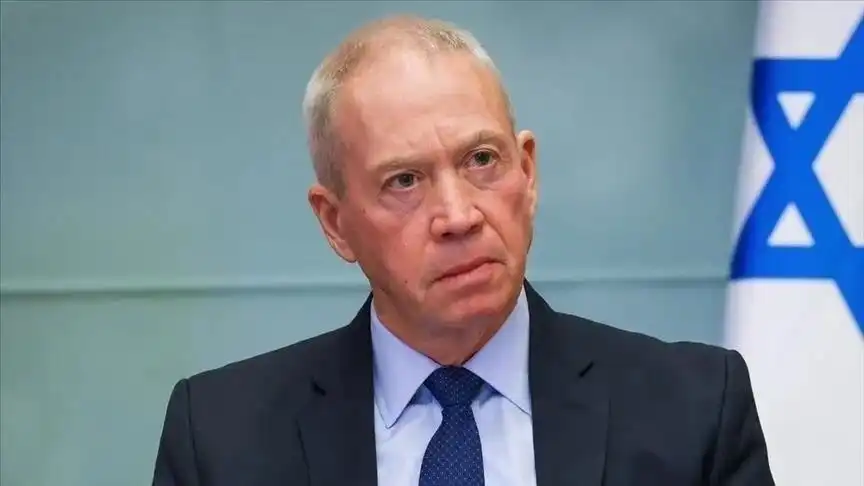
Israeli Security Minister Yoav Galant confirmed that Tel Aviv is holding talks with Cairo to discuss the possibility of establishing an “advanced border obstacle that includes technological means” separating the Gaza Strip from Egyptian territory, in an attempt to thwart alleged arms smuggling operations, while he said that Israel does not “currently” intend to Occupation of the city of Rafah and the Philadelphia axis.
This came in statements issued by Galant during his participation in a special session held by the Foreign and Security Affairs Committee in the Knesset, during which he answered the committee members’ inquiries about the conduct of military operations within the framework of the Israeli war on the Gaza Strip, including the security threats that Israel faces on other fronts.
The Israeli Broadcasting Authority (“Kan 11”) reported that Gallant notified members of the parliamentary committee that Israel is in contact with the Egyptian side to build an “advanced obstacle” along the Philadelphia axis between Gaza and Sinai, “that includes technological means,” in response to “the criticism directed at “To the repeated smuggling of weapons from Egypt to the Gaza Strip.”
In turn, Channel 14 quoted Gallant as saying that the Israeli army “does not currently intend to occupy Rafah or the Philadelphia axis. We will carry out operations in the city, and we will use various means to prevent smuggling operations.” This comes in light of the semi-official Egyptian denial of reports that Israel “requested Egypt evacuated its forces from the Rafah border area, and informed it of its intention to occupy that area.
Israel plans to re-fortify the Philadelphia axis, between the Gaza Strip and Egypt, by building an underground wall, in parallel with the expansion of the Rafah crossing. “According to the plan, the Rafah crossing will be much larger, and will contain multinational supervision, including American and Israeli, to inspect what will enter the Strip.”
Egypt legally strengthened its military presence in the eastern Rafah border area, north of the Sinai Peninsula, after amending the security arrangements agreed upon with Israel in the security annex to the peace treaty concluded between the two countries on March 26, 1979.
The amendments, announced by Egypt and Israel in the first week of November 2021, come based on Annex I of the peace treaty, which allows for amending the agreed-upon security arrangements at the request of one of the parties and with their agreement.
Last Saturday, the Egyptian authorities denied an Israeli report that spoke of a ground military operation carried out by the Israeli occupation army from the Kerem Shalom crossing towards Rafah and the Philadelphia axis on the Gaza Strip border with Egypt, while security sources suggested that Israel would try to implement this plan and move towards the Philadelphia axis. .
Al-Arabi Al-Jadeed newspaper quoted sources in the city of Rafah as saying that the Egyptian army “strengthened its presence on the border with the Gaza Strip, and raised the level of barriers and barriers separating the Strip and Sinai, in the past few days, by placing concrete blocks in the vicinity of watchtowers and various military sites.” In light of the continued Israeli bombing of the area separating the Palestinian and Egyptian sides.”
Local Palestinian sources explained that "Egyptian efforts come at a time when displaced Palestinians and shelter centers are remarkably close to the border, in light of the unprecedented increase in the number of displaced people in the city of Rafah, which has prompted citizens to seek refuge in the border areas, especially west of the city of Rafah, to seek safety."
PALESTINE
Tue 26 Dec 2023 9:35 pm - Jerusalem Time
Hamas: We are open to prisoner exchange initiatives in exchange for a comprehensive ceasefire

Hamas leader Osama Hamdan said on Tuesday that the movement is “open” to initiatives and proposals presented by several countries regarding the exchange of prisoners with Israel, in exchange for a comprehensive ceasefire in the Gaza Strip.
This came in a press conference held by Hamdan at the movement’s headquarters in Beirut, in which he said, “Our people are not waiting for a temporary truce that will be violated by the occupation (Israel) with more massacres against civilians, but rather are waiting for a comprehensive cessation of aggression.”
He added: "There has been a lot of talk recently about initiatives and proposals about negotiating a prisoner exchange, and here we confirm the movement's clear position on the necessity of stopping the criminal aggression against our people."
- He continued: "We have openly received proposals and initiatives from a number of countries (which he did not specify) related to the Gaza battle, and the movement is open to all initiatives that achieve a comprehensive cessation of aggression against our people, and to everything that achieves the highest interests of our people."
Hamdan explained, "Israel is presenting to the mediators ideas for calm that do not live up to the sacrifices of our Palestinian people. There is still no mature initiative on a ceasefire, and the occupation army is trying to change its tactics in order to start moving backwards."
During the past few days, Israeli media reported that there were negotiations between Israel and Hamas, under Egyptian and Qatari sponsorship, regarding a prisoner exchange agreement between the two parties, but Hamas repeatedly affirmed that it would not enter into negotiations on this matter without a comprehensive ceasefire in the Gaza Strip. .
The ongoing Israeli war against the Gaza Strip since October 7, until Tuesday, left 20,915 dead and 54,918 wounded, most of them children and women, massive destruction of infrastructure and an unprecedented humanitarian catastrophe.
OPINIONS
Tue 26 Dec 2023 9:31 pm - Jerusalem Time
Netanyahu and Sinwar are caught in a political dilemma that has turned the continuation of war into a goal in itself
Haaretz
Opinion Writer
By Zvi Barel
Communications between Israel, Hamas, and the Egyptian and Qatari mediators take place on two parallel secret channels: Senior intelligence officials in Israel, Egypt, and Qatar discuss, on a daily basis, the details of the conditions for the return of the kidnapped people. At the same time, there are public negotiations in the media filled with test balloons and muscle flexing, based on words of questionable accuracy.
In recent days, the Egyptians published two proposals related to communications: The detailed version of the first proposal, published by the Lebanese newspaper Al-Akhbar, stipulates starting a three-stage move. Initially, a ceasefire will last between 7 and 10 days, during which about 40 kidnapped civilians will be released. In the second stage, the Israeli female soldiers are released, and bodies are exchanged between the two parties, with a complete ceasefire, and the withdrawal of the Israeli army forces from the population centers. In the third phase, which is expected to last a month, all the kidnapped persons will be released, in exchange for the release of more Palestinian prisoners, and Israel will deploy its forces outside the Gaza Strip. In addition, Egypt, Qatar, and the United States begin discussions with a temporary Palestinian technocratic government, which will be responsible for managing the West Bank and Gaza, with Qatari, Egyptian, and American guarantees.
Hamas and Islamic Jihad rejected this proposal and insisted on not establishing contacts until after a complete ceasefire. Yesterday, Reuters published, citing an Egyptian source, that Egypt and Qatar proposed to the leadership of Hamas and Islamic Jihad in Gaza to relinquish power in the Gaza Strip, in exchange for a permanent ceasefire, and Egypt and Qatar guaranteeing that Hamas leaders leave the Gaza Strip peacefully. It is not clear whether this clause was present in the previous proposal, or was added to it, and in any case, the two organizations rejected it, and adhered to their position that any negotiations, from now on, are conditional on a complete ceasefire and the release of all the kidnapped, in exchange for all the Palestinian prisoners. Without giving up Hamas' authority in Gaza.
The Israeli public response, as expressed by the Prime Minister yesterday, was just as severe. Israel will continue to use very significant force with the aim of completely dismantling Hamas' authority, based on the working hypothesis that only military pressure can push forward the release of the kidnapped persons. At the same time, Israel sees the continuation of the fighting as an expression of its commitment to eliminating Hamas’ authority in the Gaza Strip and dismantling its military infrastructure.
But Hamas's civil authority no longer actually exists: civil institutions no longer function, and the residents of the Gaza Strip are captive in areas called "safe areas," but they do not feel safe at all, and Hamas is not able to protect them. According to high-ranking officials, including the Chief of Staff, the army has moved into a long and arduous phase of careful “cleansing,” which is expected to last many months.
There is no clear definition, or agreed upon criteria, on how to define the military elimination of Hamas. But when Israel says: Only military pressure, intense attacks, and heavy bombing, along with a reduction in the amount of humanitarian aid, will force Hamas to agree to a new exchange deal, it is inevitable to say that the fighting has turned into a political pressure tool in order to prove that we are forced to use force. For the sake of the kidnapped, it no longer aims only to dismantle the military capabilities of Hamas.
The public responses of both Israel and Hamas indicate that both sides are stuck in a quagmire, where continued fighting is portrayed as an independent goal. Yesterday, Al Jazeera published a letter sent by Yahya Sinwar to Hamas leaders abroad, in which he described the achievements of the war, which included the killing of 1,600 Israeli soldiers and the destruction of the army’s Merkava tanks. But after a short time, the channel removed the message from its screen.
Even if the message was fabricated and incorrect, Al-Sinwar is conducting a double dialogue: the first, with the Hamas leadership abroad, which he believes is moving behind his back, and planning “the next day” with senior officials in “Fatah,” without his participation. The second dialogue is with Israel, as it uses the continuation of the fighting to demonstrate its strength and, through it, impose its conditions on it. Is there a possibility to add a clause to the Egyptian plan that threatens Sinwar regarding a government of Palestinian experts that takes control of Gaza from Hamas? This is not a new idea. The Palestinian Authority witnessed a government of experts headed by Rami Hamdallah in 2013, and a national consensus government between Fatah and Hamas in 2014.
This experiment failed. The power struggle, conspiracy over the presidency, and disputes over positions turned this government into a political battlefield and paralyzed its work. The technocratic government may give the impression that it is a non-political entity, but in practice, it is far from that. Egypt had previously proposed a similar proposal in July to representatives of Fatah and Hamas at the meeting held in El Alamein between Mahmoud Abbas and Ismail Haniyeh. Now, it seems that Egypt is trying to revive the idea that was kept as a solution for managing Gaza after the war. But the war changed the content of the dialogue between Hamas and Fatah, and at least both sides are talking publicly about the possibility of reconciliation and a unity government, without clarifying its structure or composition. The new idea poses a threat to Sinwar, but he can rest assured, because Israel will not allow it to be realized.
In this set of considerations, the stifling power and political temptation that imposes continued fighting between Hamas and Israel cannot be ignored. This was expressed on the Israeli side by Netanyahu using the support of part of the families of the kidnapped, and by quoting the words of fighters in the field who “demand” him to continue fighting at any cost. As if without this demand, he would have considered a ceasefire. It seems that Netanyahu's use of this logic is a rhetorical choice through which he is trying to contain his extremist partners in the government who threaten to topple it if he agrees to a ceasefire.
Hamas, and to be more precise, Sinwar, is in a similar dilemma. He is obligated to fight in order to demonstrate his steadfastness, and to curb the plan of leading his movement outside Gaza, which is examining alternatives that take him out of the game. Sinwar's point of superiority over Netanyahu is that he is not subject to popular pressure from Gaza, and thousands of demonstrators do not take to the streets to demand his removal from office. Whoever believes that the military pressure and the terrible distress that Israel is causing in Gaza will lead to a popular rebellion against Sinwar must have a very long breath, or a wide imagination.
PALESTINE
Tue 26 Dec 2023 8:52 pm - Jerusalem Time
West Bank: Israeli forces storm villages in Jenin Governorate
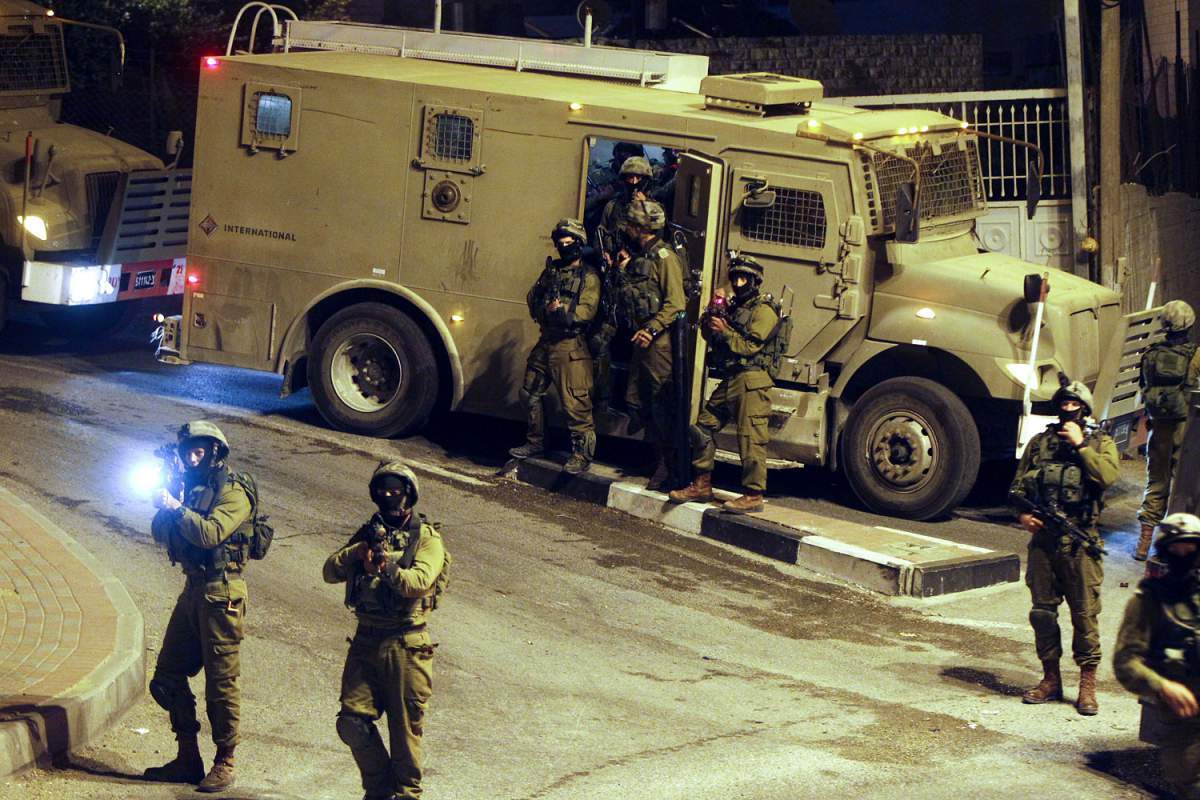
On Tuesday evening, Israeli occupation forces stormed the town of Ya`bad, southwest of Jenin, seized a motorcycle, set up two military checkpoints, and stormed villages in Jenin Governorate.
Local sources said that the occupation forces stormed the town of Ya'bad and set up a military checkpoint at the entrance to the town, seized a motorcycle, and set up another checkpoint at the entrance to the village of Kafirat, where soldiers stopped the vehicles and searched them.
The occupation forces fired live bullets and tear gas bombs towards citizens' homes.
The sources added that the occupation forces stormed the villages of Tura and Nazlet Zeid, southwest of Jenin, and the village of Zabuba, west of the city.
ARAB AND WORLD
Tue 26 Dec 2023 8:38 pm - Jerusalem Time
Disagreement in the Israeli leadership regarding the transition to the “next phase” of the war on Gaza

Israeli reports indicated, this evening, Tuesday, a disagreement in the Israeli “war cabinet” regarding the conduct of military operations in the besieged Gaza Strip, and the timing of the transition to the “next phase,” including changing fighting methods and shifting from the widespread deployment of forces in the Gaza Strip to assembling forces and carrying out focused operations.
According to Israeli Channel 13, Prime Minister Benjamin Netanyahu and Defense Minister Yoav Galant support the continuation of intense and violent operations in various areas of the Gaza Strip for additional weeks, until the end of next January, while Ministers Benny Gantz and Gadi Eisenkot support the start of the transition to the "next stage".
The former Chief of Staff of the Israeli Army, Minister Eisenkot, believes that “delaying the transition to the next stage, contrary to what was agreed upon, creates many more weak points (for the Israeli army),” stressing that, in return, “moving to the next stage will contribute to achieving “War objectives,” according to what was confirmed during the closed deliberations of the “War Cabinet,” according to Channel 13.
PALESTINE
Tue 26 Dec 2023 8:23 pm - Jerusalem Time
War on Gaza: The bodies of dozens of dead bodies arrive in Gaza after Israel detained them
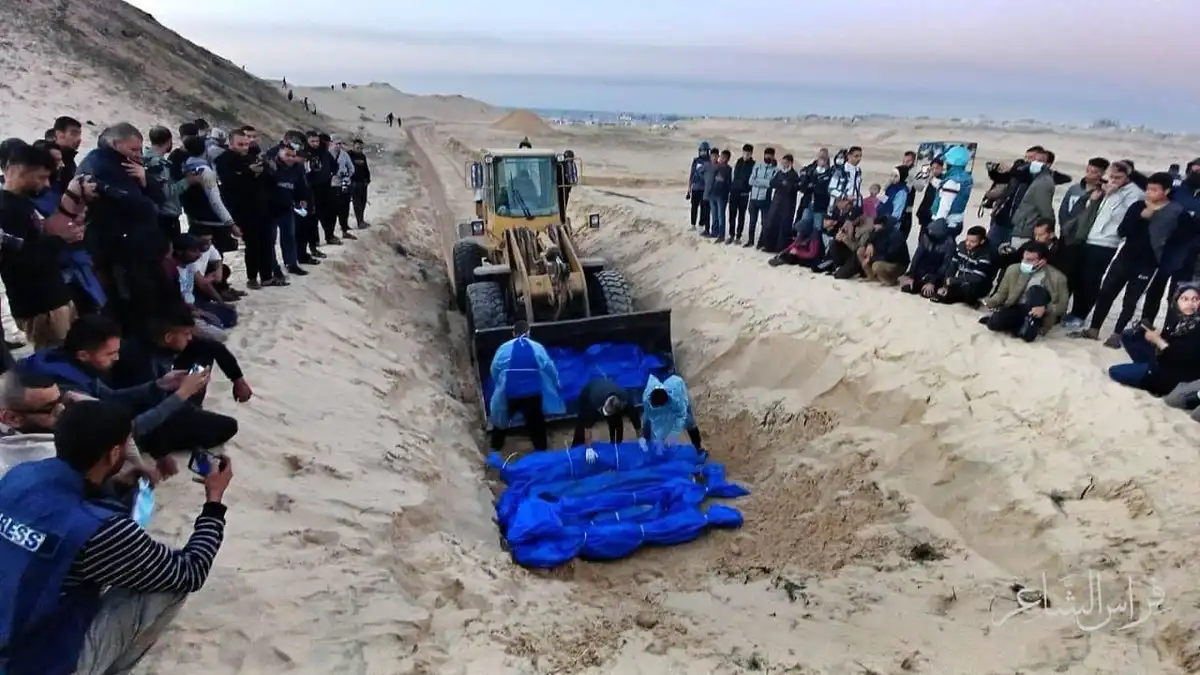
Today, Tuesday, the bodies of dozens of Palestinian dead who were killed and detained by the Israeli army during its ground operation arrived in the Gaza Strip after Tel Aviv released them.
The Ministry of Health in Gaza received the bodies through the Kerem Shalom crossing in the south of the Strip, while the Ministry of Endowments and Religious Affairs took over the process of burying them in mass graves.
Anatolia News Agency quoted the director of Abu Youssef Al-Najjar Hospital in Rafah, Marwan Al-Hams, as saying that the United Nations informed them “in advance of the arrival of a number of dead bodies to the Gaza Strip, estimated at about 80 bodies.”
He added: "The bodies of dozens of dead arrived inside a container. Some of them had complete bodies, others had body parts, and some had parts of their bodies decomposed."
He explained that the container "emanates a strong odor that may cause epidemics if these bodies are exhumed in a densely populated area."
He stated that "the bodies are scheduled to be transferred to the cemetery to be counted and this crime documented through the Ministries of Health and Justice."
Earlier, the Ministry of Endowments, in cooperation with the Rafah Municipality, prepared mass graves to bury these detained bodies.
The Israeli war, which has continued since last October 7 against the Gaza Strip, until today, Tuesday, has left 20,915 dead and 54,918 wounded, most of them children and women, massive destruction of infrastructure and an unprecedented humanitarian catastrophe, according to the Strip authorities and the United Nations.
In a related context, activists circulated on social media, during the past two days, pictures that revealed a “tragedy” of dead bodies being decomposed in the public streets in the town of Beit Hanoun in the northern Gaza Strip.
Anatolia reported, citing eyewitnesses and local sources, that these bodies belong to "dead who fell as a result of Israeli attacks since the beginning of the ground operation on the Gaza Strip on October 27 last year."
Eyewitnesses explained that these "bodies remained in the streets since the beginning of this operation until they decomposed without being buried," pointing out "the difficulty of the dead's families or ambulances reaching these areas to recover them due to the intensity of fire at that time."
The circulating pictures showed "corpses, some of them completely decomposed, and human bones lying on the roads and in public streets, with remnants of clothing next to them."
On December 23, eyewitnesses reported that dozens of Palestinian bodies, some of them women and children, were found dumped in the roads after Israeli forces killed them with shells, drone missiles, and sniper rifles with live bullets, in the Tal al-Zaatar area and the vicinity of the Indonesian hospital in Jabalia, after the incursion forces retreated. Of which.
Witnesses said at the time that "the dogs bitten part of the bodies while other parts of them decomposed."
PALESTINE
Tue 26 Dec 2023 5:32 pm - Jerusalem Time
War on Gaza: Dozens of dead and wounded in Israeli bombing on Nuseirat and Khan Yunis
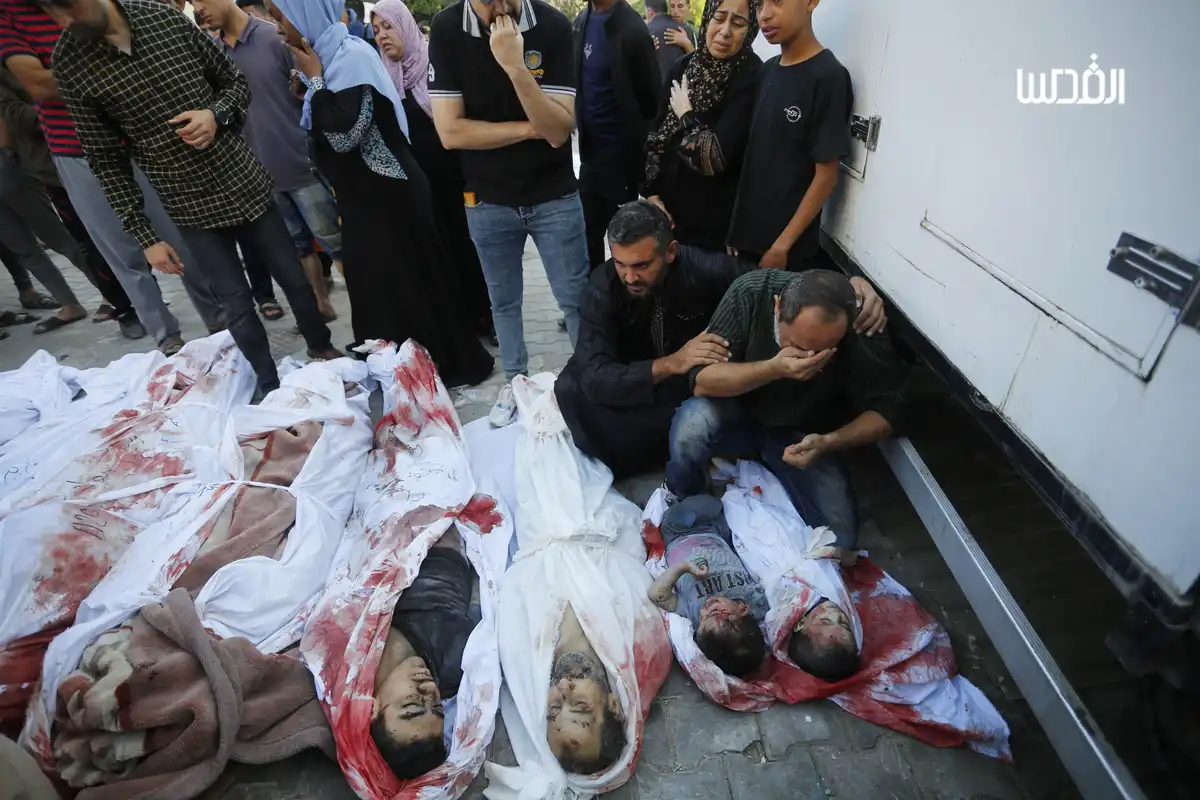
A number were killed and a number of other citizens were injured in the continuous Israeli bombing of several areas in the Gaza Strip, on the 81st day of the aggression.
Israeli warplanes launched intense and violent raids on several areas east of Khan Yunis, south of the Gaza Strip. A woman was killed and a number of other citizens were injured in an Israeli bombing that targeted an inhabited house west of Khan Yunis.
Three were killed and a number of citizens were injured in an Israeli bombing of a house in the Nuseirat camp in the southern Gaza Strip.
Today, medical sources reported that dozens of citizens, most of them children and women, were killed and injured as a result of the ongoing Israeli raids on the Gaza Strip.
In an infinite toll, the ongoing Israeli aggression on the Gaza Strip since the 7th of last October has resulted in the death of about 21,000 citizens and the injury of about 54,000, more than 70% of whom are women and children.
ARAB AND WORLD
Tue 26 Dec 2023 5:23 pm - Jerusalem Time
Israel "changes its war strategy" in Gaza.. What's new?
The Israeli army is preparing to change its strategy in the Gaza Strip, by reducing the intensity of the fighting and prolonging its duration, to reach the goal it set, which is “eliminating the Hamas movement.”
According to Israeli Channel 12, the Israeli army “will establish a kilometer-wide buffer zone inside the Strip on its border with Israel, which will expand the existing buffer zone.”
iT added: “Infantry forces, largely composed of conscripts, will occupy the area to ensure that no one in Gaza is able to approach the fence with Israel and launch attacks from there.”
The channel's report indicated that "the presence of Israeli forces there will be much less than it is currently."
The channel did not attribute this information to any source, but Israeli military correspondents are often informed of the army’s plans.
A Channel 12 correspondent said: “The assumption behind the change in strategy is that the complete defeat of Hamas will not be achieved through a large-scale ground attack, but through a long war of attrition.”
He continued: "It may take months or even years, but creating a new reality in Gaza will require a diplomatic process and economic moves in addition to what the army is doing."
The new strategy comes at a time when the US administration continues to demand that Israel reduce the harm to civilians in Gaza, as the death toll in the Strip approaches 21,000, more than half of whom are children and women.
The Axios website quoted a senior Israeli defense official as saying that the United States would be satisfied if Israel ended the high-intensity phase of the operation by the end of this December, while Israel expects this to happen next January.
Source: Sky News
PALESTINE
Tue 26 Dec 2023 3:12 pm - Jerusalem Time
“Gaza Health”: The death toll in the Gaza Strip has risen to 20,915
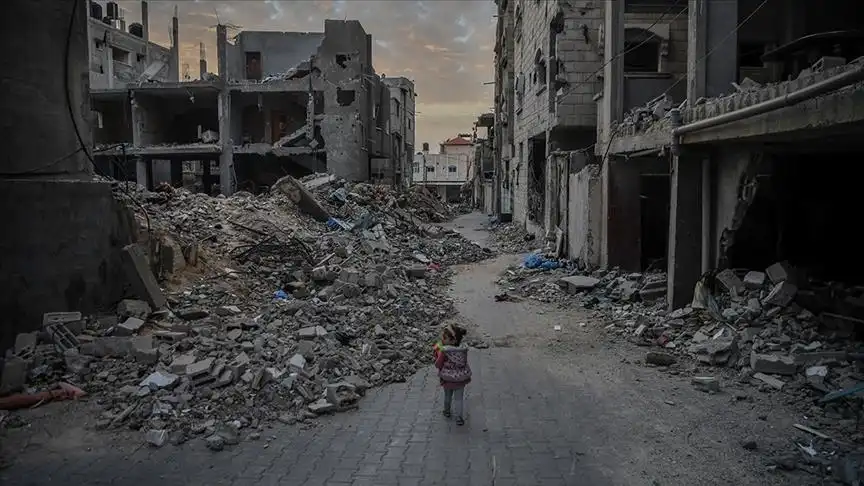
The Ministry of Health in Gaza announced on Tuesday that the death toll from the Israeli war on the Strip had risen to 20,915 dead and 54,918 injured since October 7.
Ministry spokesman Ashraf Al-Qudra said: “The toll of the Israeli aggression has risen to 20,915 dead and 54,918 injuries since October 7.”
He explained that the Israeli army "committed during the past 24 hours about 18 massacres against entire families, resulting in 241 dead and 382 injuries."
He expressed "the fear that targeting the vicinity of the Nasser Medical Complex (in Khan Yunis, south of the Gaza Strip) is a repetition of the scenario implemented by the army against the Al-Shifa Medical Complex in Gaza City and hospitals in the northern Gaza Strip."
Al-Qudra called on "the international institutions to protect the Nasser Medical Complex and to protect the medical staff, the wounded, the sick, and the thousands of displaced people there."
He also called on international institutions to "conduct urgent interventions to ensure the provision of the necessary medicines and fuel to restart the Shifa Medical Complex in the face of the need of thousands of wounded and sick people."
At dawn on Tuesday, Israeli warplanes launched violent raids in the vicinity of the Nasser Medical Complex, in the city of Khan Yunis, south of the Gaza Strip.
The Israeli army is escalating its war on the Gaza Strip’s hospitals and health teams, as part of a devastating war on Gaza that it has been waging since last October 7, which has left material and human losses, massive infrastructure destruction and an unprecedented humanitarian catastrophe, according to the Gaza Strip authorities and the United Nations.
PALESTINE
Tue 26 Dec 2023 12:53 pm - Jerusalem Time
West Bank: Israeli forces demolish 5 homes and three agricultural ponds east of Nablus
Today, Tuesday, Israeli occupation bulldozers demolished five homes in the village of Forush Beit Dajan, east of Nablus.
According to local sources, the occupation forces stormed the village, accompanied by a military bulldozer, and demolished five houses, including those built before 1967, in addition to destroying three agricultural ponds.
The sources added that about 70 citizens became homeless, as the occupation targeted homes and water sources in the village, which has a population of about 1,100 citizens, and seized 11,000 dunums out of the total area estimated at 14,000 dunums of its lands.
ARAB AND WORLD
Tue 26 Dec 2023 12:12 pm - Jerusalem Time
United States is working to form a new Palestinian government to administer Gaza after the war

In a report published by the American newspaper “The Washington Post” on Tuesday, the newspaper says that “in its plan for the day after the Israeli campaign to eliminate Hamas in Gaza, the United States hopes to pave the way for the besieged Palestinian Authority to take control, by encouraging the formation of a new government and launching training for its security forces.
The newspaper notes that so far, “Washington is stumbling over one of the first obstacles, which is convincing Israel to release the salaries necessary to prevent the authority from collapsing completely.”
It added, "In recent weeks, American officials have been moving in and out of the Muqata, the gated compound of 88-year-old Palestinian President Mahmoud Abbas, which is located in Ramallah in the de facto capital of the occupied West Bank."
Palestinian and American officials say that the Palestinians demanded changes and new faces in key positions to improve the bad situation of the authority, which is unpopular among the Palestinians, while looking forward to an expanded role in the Gaza Strip after the war.
The newspaper pointed out that initially, Palestinian officials rejected the idea of returning to power in Gaza, which has been controlled by Hamas since 2007, in the wake of the current brutal war on Gaza. But they have gradually become more receptive to seizing a rare opportunity to annex both the West Bank and the Gaza Strip under their rule.
The newspaper revealed that the administration of US President Joe Biden is talking with the Palestinians and members of the international community about “a new government and some new blood joining the ranks of the Palestinian Authority government alongside Abbas and under his leadership,” according to a White House official who spoke on condition of anonymity to discuss the matter.
But Palestinian officials said they want to link any such efforts to a clear “political horizon” for Palestinian statehood, because they are skeptical that the United States can achieve anything while Israel’s current far-right government is in power.
The faltering American efforts to release $140 million in Palestinian tax money allocated to Gaza, which Israel has blocked since Hamas’ surprise attack on Israel on October 7, did not strengthen the Palestinian Authority’s confidence in the American administration’s attempts.
On December 18, Reuters reported, “A number of senior American officials have continued to travel to the West Bank in the past few weeks to meet with Abbas, hoping that the Palestinian president, who is standing by as a spectator in the war between Israel and Hamas, will be able to reform the Palestinian Authority, which lacks sufficient popularity to manage the Gaza Strip after the conflict.
According to the newspaper, “Abbas is the architect of the Oslo peace agreements with Israel in 1993, which revived hopes for the establishment of a Palestinian state. But his legitimacy is constantly diminishing due to the construction of Israeli settlements in the occupied West Bank. Now, many Palestinians view his administration as corrupt, undemocratic, and disconnected from reality.”
But in the wake of Hamas' attacks on Israel on October 7, Biden said he wanted to revive the Palestinian Authority, which Abbas has headed since 2005, to take over responsibility in Gaza once the conflict ends and unify the administration of the Strip with the West Bank.
Jake Sullivan, the US National Security Advisor, met with Abbas, becoming the latest senior US official to urge him to make rapid changes.
US Secretary of State, Anthony Blinken, told reporters after his meeting with Abbas, in late November, that they discussed the necessity of carrying out reforms to combat corruption and strengthen the role of civil society and the free press.
Three Palestinians and a senior regional official familiar with the talks told Reuters that Washington's secret proposals also include Abbas relinquishing some of his control over power.
Palestinian and regional sources said that the proposed proposals include appointing a deputy for Abbas, giving broader executive powers to the prime minister, and introducing new figures into the ranks of the leadership.
The US State Department said that leadership choices are a matter for the Palestinian people and did not clarify the steps necessary to renew the blood of the Palestinian Authority.
In an interview with Reuters in his office in Ramallah, the Palestinian President said that he is ready to renew the Palestinian Authority by including new leaders and holding elections, which have not happened since Hamas won the last elections in 2006 and expelled the Palestinian Authority from Gaza, on the condition that a binding international agreement is reached. It would lead to the establishment of a Palestinian state. This is something that was rejected by Israeli Prime Minister Benjamin Netanyahu and his far-right coalition.
When asked about the American proposals, Abbas said in the interview, “The problem is not changing people and forming a new government. The problem is the policies of the Israeli government.”
Abbas may concede that his long rule is nearing its end, but he and other Palestinian leaders say the United States, Israel's main strategic ally, must pressure Netanyahu's government to allow the establishment of a Palestinian state that includes Gaza, the West Bank and east Jerusalem.
An informed source in Washington told the agency that Abbas expressed in private conversations his acceptance of some American proposals to reform the Palestinian Authority. These proposals included injecting “new blood” with technocratic skills and granting the position of prime minister new executive powers.
American officials confirmed that they did not put forward any names to Abbas, but regional sources and diplomats said that some figures in Washington and Israel prefer Hussein Al-Sheikh, secretary of the Executive Committee of the Palestine Liberation Organization, which includes factions far from the political Islam movement, to become a potential deputy and future successor to Abbas.
Al-Sheikh, who also met with Sullivan in Ramallah, said that the brutal war in Gaza showed that the violent methods followed by Hamas do not work, and he expressed his support for the idea of talks.
The sheikh said in a rare interview with Reuters: “Doesn’t all of this and everything that is happening deserve a serious, honest and responsible assessment to protect our people and our cause?”
Four American sources, including two administration officials, said that Washington appealed to Jordan, Egypt and Gulf countries that have some influence on the Palestinian Authority to persuade Abbas to continue reforms quickly to prepare for what is coming.
The American sources said that Abbas pledged several times to reform his administration in the past few years and does not have much to offer about that, so senior American officials will continue the pressure and wait to see the extent of his implementation of that this time.
But American officials realize that Abbas is still the only realistic Palestinian leadership figure at the present time, despite his unpopularity among the Palestinians and his lack of confidence in Israel, which criticized his failure to condemn the October 7 attack, as a senior US administration official said, requesting anonymity. Because of the confidential nature of the talks, Biden's aides have quietly urged Israeli leaders to abandon their resistance to the Palestinian Authority's revival and leadership role in Gaza following the end of the conflict.
Another American source said, "This is the main focus of interest." American officials say that in the short term, Israel must release more tax revenues that it collects on behalf of the Palestinian Authority and that it froze in the wake of October 7 so that the Palestinian Authority can pay salaries.
Palestinian and American diplomatic sources said that talks about what will happen after the end of the war have intensified in the past few weeks, but no plan has been presented to Abbas.
International condemnation of the Israeli attack on Gaza escalated with the death toll rising to more than 20,000 people according to health authorities in Gaza, but Netanyahu insisted that the war would continue until it succeeded in destroying Hamas, returning the hostages, and protecting Israel from future attacks.
Sullivan said that the United States is also telling Israel that the Palestinian Authority's security forces must have a presence in Gaza after the war, as is already the case in parts of the West Bank. But Netanyahu said that there is a disagreement with his ally, America, regarding the Palestinian Authority’s rule of Gaza. He added that Gaza "will neither be Hamas-stan (ruled by Hamas) nor Fatah-stan (ruled by the Fatah movement.")
The Palestinian Authority was established after the Oslo Accords in 1993 and is controlled by the Fatah movement led by Abbas. It was supposed to be a temporary administration to move on the path to establishing an independent Palestinian state. Abbas has headed it for 18 years, but he did not achieve this.
American officials said they believe Abbas can restore some credibility among Palestinians if he can show that he is rooting out corruption, fostering a new generation of leaders, bringing in foreign aid to rebuild Gaza after the war, and mobilizing support abroad for the establishment of a Palestinian state.
In his interview with Reuters, Abbas called on the United States to sponsor an international peace conference to agree on final steps leading to the establishment of a Palestinian state. This meeting may be similar to the Madrid Summit in 1991, which US President George H.W. Bush called for in the wake of the 1990-1991 Gulf War.
ARAB AND WORLD
Tue 26 Dec 2023 12:01 pm - Jerusalem Time
Do not believe the army.. Retired Israeli general: There is no solution to Hamas’ tunnels
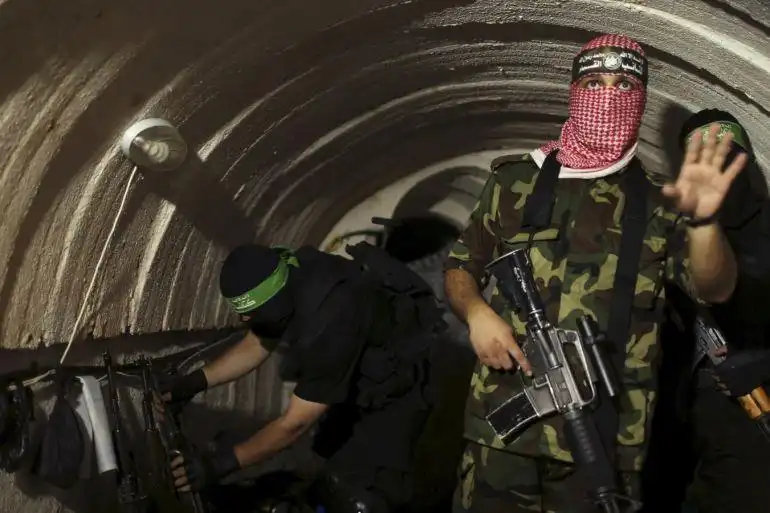
“Based on the information I received from soldiers and officers fighting in the Gaza Strip since the start of the war, I came to the following conclusion: The IDF spokesman and military analysts on TV channels present a false picture of the thousands of Hamas deaths and of our fighting with their forces face to face.
With this preface, retired Israeli General Yitzhak Brik began an analysis in which he explained that the number of those killed among the forces of the Islamic Resistance Movement (Hamas) was much less than what was being promoted, and that most of the Israeli soldiers and officers killed fell as a result of Hamas’ bombs and anti-tank missiles.
He expressed his belief that the Israeli army does not currently have an effective and quick way to eliminate Hamas members, most of whom hide in the tunnels and only emerge from their openings to plant bombs, set up explosive traps, and fire anti-tank missiles at our armored vehicles, and then disappear again into the tunnels, as he put it.
It is clear, according to Brick, that the Israeli army spokesman and senior defense officials want to portray the war as a “great victory” before the dust of the battle settles and the true picture becomes clear.
To this end, they are bringing correspondents from major television channels to Gaza to show “pictures of victory,” making this the most photographed war ever waged by Israel, and perhaps any war waged even in the entire world, according to the retired general.
But such bragging by displaying images of victory, Brick says in his analysis in Haaretz newspaper, “Even before we get close to achieving our goals, it may be very destructive... It would have been better for us to remain more humble.”
He adds that this reminds him of what Israeli officials, including retired generals and others, used to repeat before the Al-Aqsa Flood operation on October 7, that their army is the strongest in the Middle East and that Israel’s enemies have been deterred.
“Unfortunately, these same reporters, analysts, and retired generals continue to fabricate images of this kind, as if they have learned nothing,” according to the author.
Regarding the Hamas tunnels, Brik asserts that their destruction will take many years, and will cost Israel heavy losses, noting that the Israeli army itself now acknowledges the existence of hundreds of kilometers of tunnels deep in the ground that connect the length and breadth of Gaza, and even connect this sector to the Sinai Peninsula.
The retired general stressed that the illusion of deterring Hamas was what made Israel neglect to direct its experts to study, plan and manufacture appropriate equipment for underground warfare, which is what made it today try to improvise solutions.
In this regard, many officers fighting in Gaza were quoted as saying that it would be very difficult, if not impossible, to prevent Hamas from rebuilding itself, even after all the destruction that the Israeli army inflicted on its bases.
For Brick, the solution lies in leaving dense urban areas and acting more precisely, through bombing and air strikes based on accurate intelligence information. At the end of his analysis, he poses the following question: Are politicians and senior defense officials capable of dealing with such a scenario? Or are they able to think of other creative solutions, in which we do not achieve everything we want, but in which we are also not the biggest losers?
ARAB AND WORLD
Tue 26 Dec 2023 11:32 am - Jerusalem Time
War on Gaza: Israeli forces strips Palestinians, including children, of their clothes in a playground in Gaza

While the war waged by Israel in Gaza is about to complete its third month, the Israeli attacks on the residents of the Strip are not limited to aerial and artillery bombardment, which has so far claimed the lives of more than 20,000 dead and 53,000 wounded.
The occupation forces continued to abuse residents of the Palestinian Strip, detaining dozens of them - including elderly people and children - and then gathering them half-naked in a stadium in Gaza, according to pictures circulated by local media and social media accounts, yesterday, Monday.
The pictures also showed how tank nozzles were directed towards the Palestinians, including children and the elderly.
This is not the first time that the Israeli occupation has committed such a violation. Earlier this December, video clips published by Israeli and Palestinian websites showed that the occupation forces arrested displaced young men residing in a shelter center in Gaza, and stripped them of their clothes in front of the cameras.
The clips showed occupation soldiers standing in front of young men, handcuffed and naked except for short pants, after they had been gathered in the courtyard of a school before being taken to an unknown location.
Israeli sources claimed that the arrest of the young men was to verify whether some of them belonged to Hamas or other resistance factions in the Gaza Strip.
The occupation's behavior was widely criticized on social media sites and in the media, some of which are Western, but what is strange is that Mark Regev, an advisor to Israeli Prime Minister Benjamin Netanyahu, when he received a question from the British channel Sky News in this regard, tried to downplay the importance of the incident, and responded by saying that it is not the end of the world, and that the weather in the Middle East is very hot.
OPINIONS
Tue 26 Dec 2023 9:42 am - Jerusalem Time
At the Gates of a Tense Year... from Gaza to Washington

Eyad Abu Shakra
Opinion Writer

Last week, Vasily Nebenzya, the Russian representative to the United Nations, had the opportunity to deliver a statement that gave him the moral high ground. He sharply criticized Washington's opposition to a permanent ceasefire in the war to displace the residents of the Gaza Strip. Personally, I believe that the general mood in the Arab world was sympathetic to the Russian representative’s speech denouncing the US’s insistence on hollowing out the UNSC Resolution and Washington's unconditional support for the ongoing Israeli war. However, emotions are one thing and political reality is another. Although Moscow is playing the humanitarian and ethical card today. In the recent past - specifically, since Moscow obstinately opposed the Syrian uprising and repeatedly used its veto against it - demonstrated that the whole thing is a question of a “conflict of interests” and an extension of the polarizing dispute of the Cold War.
In conflicts and disputes of this sort, we learn that there is no place for ethics or principles... interests alone have the final say. Moreover, we now find ourselves facing a broad spectrum of explicit considerations and implicit calculations. The parties involved are the crucial players in Palestinian-Israeli situation. Despite nearly 80 days having passed, the situation remains obscure. There is genuine debate within Israel itself about the extent of progress the war has made thus far, and the prospect of realizing all the objectives set by Benjamin Netanyahu and the war cabinet he leads. Also, while it has become evident that there are no limits to US support for Tel Aviv, political and military, serious questions remain about the approach the US will take to dealing with Iran. The US is faced with difficult questions following military attacks carried out by Tehran's proxies in the region, starting from Hezbollah across the borders with Lebanon and Syria, through the Shiite militias in Iraq, and finally through the Houthis in Yemen.
It is worth noting the US initially tried to leave these militias, who move to Tehran's rhythm and in service of its interests, out of the conflict, in order to allow Israel to focus on Gaza. Indeed, since the first days of the Israeli attack, Washington has been reiterating that "it has no evidence of Tehran's involvement in the Hamas attack on October 7..." despite being fully aware of the close relationship between the two sides.
Furthermore, Washington has stressed - and repeatedly called for - avoiding the expansion of military operations beyond Gaza, particularly on the northern front with Lebanon. Here, both parties, namely the Hezbollah militia and the Israeli army, have been complying with what has come to be known as the “rules of engagement.” Indeed, the fighters on both sides adhered to a precisely calibrated set for their skirmishes... which have been more political messages aimed at “saving face” and showing that “duties are being fulfilled” than serious battles that could change the course of the battle in the reoccupied Strip.
For those who follow Lebanese politics, recent developments are still fresh in the memory. Hezbollah welcomed US presidential envoy Amos Hochstein’s initiative to demarcate the maritime borders with Israel. Another Hochstein initiative, this time to demarcate the land border, is expected soon.
The same applies to the Iranian proxy militias in Iraq, although some observers see this as a new "bargaining" in the Iraqi theater. The Iranian wing of the Shiite forces, represented by the Coordination Framework, has managed to strengthen its grip on power in Baghdad. It is well known, of course, that the rise of the Shiite militias backed by Iran in Iraq began after the American invasion in 2003. As we recall, the influx of forces exiled to Iran began as soon as Baghdad fell at the hands of American forces. A phase of coexistence between Washington and the new rulers of Iraq then began... and their interactions ranged from agreement and coordination to extortion.
What is indeed new, however, with regard to Iran's regional proxies today, is the increasing intensity of the Houthis' military operation in the Red Sea. Their unprecedented attacks demanded US actions ostensibly to protect maritime routes. It will be interesting to see the repercussions of Washington establishing an international coalition to protect navigation in the Red Sea and ships passing through the Bab al-Mandab Strait in the Gulf of Aden.
Naturally, several international powers are involved. Among them is China, which has an interest in allowing gods to move freely. Another player is Russia, which benefits from the US being bogged down in the sand and seas of the Middle East, while it fights in Ukraine. Amid all this, the countdown has begun for the US presidential elections next November. In these elections, it is crucial that we do not underestimate the potential “dynamics” that the Gaza displacement war could introduce into the electoral battle between a Democratic president, whose popularity appears to be declining in influential states and closely contested districts, and a leading Republican candidate facing prosecution.
As a result, the new year that begins in a few days brings with it doubts and fears whose repercussions leaders seem unable to control. It will be a turbulent and worrying year, and a turbulent and worried world awaits it, trying to confront its fears by fleeing forward.
Source: Alsharq Alawsat
PALESTINE
Tue 26 Dec 2023 9:09 am - Jerusalem Time
Gaza Health: 180 displaced women give birth every day in poor conditions and 900,000 children are at risk
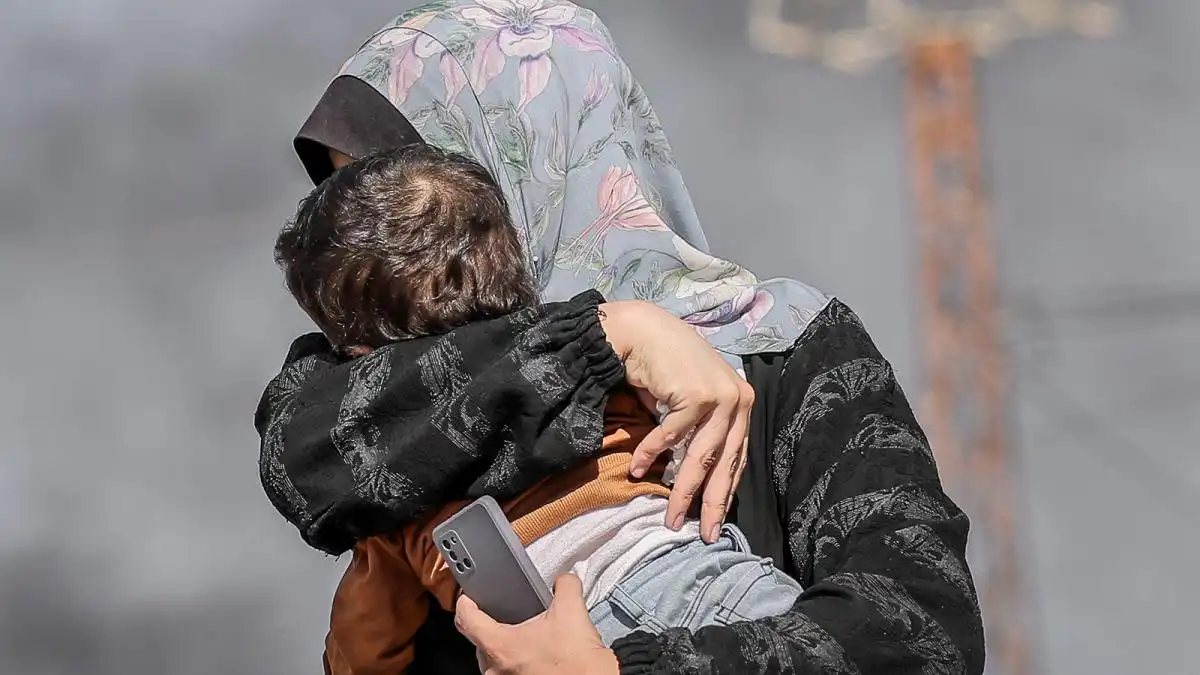
The Ministry of Health in the Gaza Strip said yesterday, Monday, that 180 displaced Palestinian women in shelter centers give birth every day in unsafe conditions, while about 900,000 displaced children suffer from the risk of dehydration, famine, and disease.
This came in a speech by the Ministry’s spokesman, Ashraf Al-Qudra, during a press conference held at the Emirates Crescent Hospital in the city of Rafah, south of the Gaza Strip.
Al-Qudra added that "50,000 pregnant women are in shelter centers without food or health care," and that "about 180 Palestinian women give birth every day in unsafe and inhumane conditions."
He explained that about 900,000 children in shelter centers suffer from the risk of dehydration, famine, digestive and respiratory diseases, skin diseases, and anemia.
He stated that 70% of kidney failure patients are exposed to catastrophic health risks, as a result of bombing, displacement, and difficulty in accessing dialysis services, especially in northern Gaza.
Destruction of hospitals
Al-Qudra reported that Israel deliberately destroyed hospitals in northern Gaza, leaving 800,000 people there without health services.
He warned that the wounded, the sick, pregnant women, and infants in the northern Gaza areas were exposed to certain death.
Al-Qudra called on all international institutions to work immediately to urgently operate the Al-Shifa Medical Complex and hospitals in northern Gaza in order to save the lives of the wounded and sick.
Last Thursday, the Palestinian Ministry of Health in the Gaza Strip announced that hundreds of wounded people were dying as a result of the lack of health services in the Shifa Medical Complex in Gaza City, with the exception of the return of a limited number of them to work in the dialysis department in the complex since last November 27.
PALESTINE
Tue 26 Dec 2023 8:59 am - Jerusalem Time
West Bank: Israeli forces launch an arrest campaign amid clashes and confrontations

Israeli occupation forces launched - at dawn on Tuesday - a campaign of raids and arrests in various parts of the occupied West Bank, amid widespread confrontations and clashes, the most intense of which was concentrated in Tulkarm, coinciding with the bombing of a house and the besieging and bombing of another.
House bombing and clashes in Tulkarm
In Tulkarm, the occupation forces blew up the ground floor of the home of citizen Youssef al-Zindeeq at the entrance to Nour Shams camp, east of Tulkarm.
The occupation bulldozers also destroyed the walls of a number of homes, schools, and mosques in the camp, crushed citizens’ vehicles, and destroyed the street adjacent to the water tank feeding the camp.
Severe clashes and successive explosions broke out during the ongoing military operation in Nour Shams camp.
The occupation forces bombed a building under construction and surrounded it at the entrance to the Aktaba suburb, east of Tulkarm.
Media sources reported that the occupation targeted the building more than once with bullets and “Energa” shells, coinciding with its continued aggression against the city and Nour Shams camp.
The occupation forces fired light bombs and heavy bullets into the sky of the camp, coinciding with the continuation of their second aggression in two days.
The occupation forces also declared Nour Shams camp a closed military zone and prevented entry into or exit from it, and established military barracks in several homes in various neighborhoods of the camp.
Tonight, the occupation forces stormed the city of Tulkarm and besieged Nour Shams camp, east of the city.
Local sources reported that a large military force from the occupation army stormed the city from its western axis, towards Khadoori Street, Al-Alimi Roundabout, and Al-Sikka Street, accompanied by bulldozers, simultaneously with reconnaissance aircraft flying over Tulkarm and its camps, at a low altitude.
The occupation forces raided a number of citizens’ homes in the Al-Manshiya, Jabal Al-Nasr, and Jabal Al-Salehin areas, searched them, detained their owners in one room, and deployed snipers on their roofs, while they deployed a group of snipers in the bush area opposite the camp, and the high-rise buildings in its vicinity.
The occupation vehicles bulldozed the street adjacent to the entrance to the camp, as well as the Al-Manshiya and Al-Damj neighborhoods, destroying the infrastructure. They also pursued ambulances present in the camp and forced them to leave it at gunpoint.
The occupation forces also arrested the freed prisoner Islambouli Riad Badir (32 years old) after raiding his house in the southern neighborhood of Tulkarm.
Ramallah arrests
In Ramallah, the occupation forces arrested Khaleda Jarrar, a member of the Political Bureau of the Popular Front, during their storming of her home in Ramallah, and the freed prisoner, Ihsan Shtayyeh, after they raided his home in the Al-Masayef neighborhood of the city.
The occupation forces arrested the head of the Safa Village Council, Rashad Karaja, who is a freed prisoner, after they raided his home in the village of Safa.
The occupation forces severely beat the young man, Muhammad Anasawy, while he was passing his vehicle through a flying military checkpoint north of Ramallah, and he was transferred to the hospital to receive treatment.
The occupation forces also stormed the town of Beitunia to the west, and raided a commercial store in the industrial area.
Tubas confrontations
In Tubas, the occupation forces stormed the town of Tammoun, and confrontations took place between young men and the occupation army, which fired live bullets and gas and sound bombs, resulting in a young man being slightly injured.
The occupation army deployed in several neighborhoods in the town, deployed its snipers in several places, and raided a number of homes.