PALESTINE

Thu 28 Dec 2023 3:46 pm - Jerusalem Time

This year in balance: Biden administration’s complicity in the massacre of the Palestinians

Every year around this time, I devote this space to an end-of-year post, in which I review the year that has passed, speculate about the year to come, and always about US policy toward the Palestinians. 

The late year speaks for itself: There is no need to examine what the administration of US President Joe Biden did in its policy towards the Palestinians, as the entire world sees that Biden and his government had the final say in empowering Israel in its ongoing massacre of tens of thousands of Palestinians, wounding thousands of them, and destroying their homes on the ground on  their heads in the besieged Gaza and the forced displacement of nearly two million citizens.


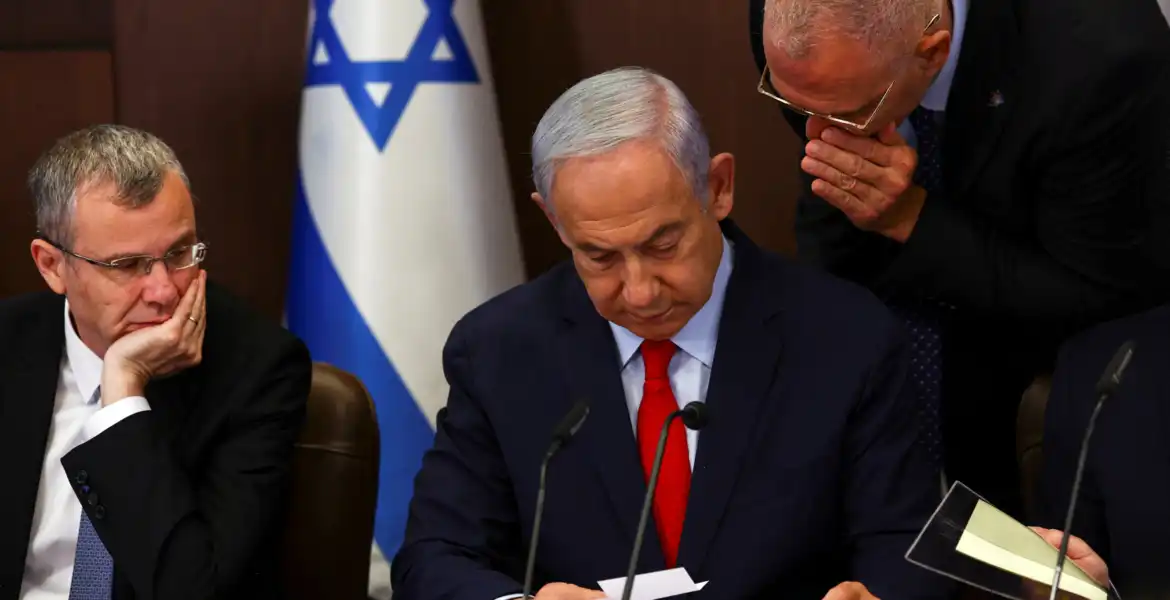
Only 11 days after the sudden Hamas attacks on October 7 that shook the world, US President Biden was in Tel Aviv carrying a message to the Israelis shocked by the Hamas strike, saying: “Oh Israel, you are not alone...the United States stands by your side” To give Israel the weapons and ammunition it needs and international cover to move forward with its successive massacres.


Of course, President Biden has not differed from his predecessors since 1948, noting that he is the only one who is publicly proud of saying, “He is an avid Zionist,” “If there had been no Israel, we would have created it,” and other expressions that he repeats as if he wants to pass a test regarding the credibility of his Zionism.


Since October 7, the world has been watching Israel bomb Gaza tens of thousands of times, without stopping, under the cover granted by Biden that Israel has the right to “self-defense” and its right to “fulfill its desire to eliminate the Hamas movement,” so it struck hospitals, residential neighborhoods, and schools and bakeries and crowded displacement sites where they told Palestinians they were “safe” places.


There is no doubt that the influx of images showing Israeli, and possible American, atrocities led to hundreds of thousands of demonstrators took to the streets (and are still taking to the streets) in large numbers, in the West and in the East, and pushed the majority of people and countries to call for a ceasefire that clashed, and collides with Biden’s refusal to stop the bloodshed.


Biden and his administration remained extremely committed to standing by Israel, and Biden used his veto power in the Security Council time after time, and sent tens of thousands of tons of munitions to ensure that the killing of innocent Palestinian civilians did not stop even for a moment, which made demonstrators around the world, as well as in front of the White House, denounce him with a slogan. “Joe Biden, the man of genocide,” is a slogan that has stuck like the smell of sulfur to the resident of the White House, despite the protests of his officials that this is not appropriate.


Of course, it was not appropriate for US President Biden (or any other president) to repeat the lies of the Israeli story about the “headless Israeli infants” that he claimed to have seen with his own eyes (10/12), or the evidence of “mass rapes committed by Hamas,” which the president claimed to have verified it himself. But there is no injustice, no lie, whether small or large, is wasted for the sake of Israel. Where Biden said with emphasis and artificial and exaggerated drama, to his listeners from the American Jewish community at the Hanukkah celebration at the White House on December 11, that: “Reports talk about the rape of women (on October 7 by Hamas) - repeated rape - and the mutilation of their bodies while they were alive”, desecrate women's bodies, and inflict as much pain and suffering on women and girls as possible by Hamas terrorists, then kill them.”


Other than his comprehensive and detailed description of Hamas's "horrific attack" on Israel and the Israeli victims... Biden rarely spoke about Palestinian children torn apart, two million displaced people, or hundreds of thousands of people without water or food, let alone his justification for storming all of Gaza's hospitals under false pretenses. . Biden and figures of his administration, such as Secretary of State Anthony Blinken, or his National Security Advisor, Jake Sullivan, when they talk about the Palestinians, they talk about them as if they were victims of an earthquake or a natural disaster, without mentioning Israel.


White House officials keep reminding us that Biden has said more than once that “Israel must do everything in its power, as difficult as it is, to protect innocent civilians,” and has also made repeated calls for increased aid to Gaza to alleviate the suffering of innocent Palestinians.


At the US State Department, which I go to (almost) daily, the department's spokesman, Matthew Miller, continues - with boring repetition - to insist that Israel does not intentionally target civilians. With US drones flying over Gaza daily, Secretary of State Antony Blinken has visual evidence that the overwhelming bombing of civilian buildings is killing innocent civilians.


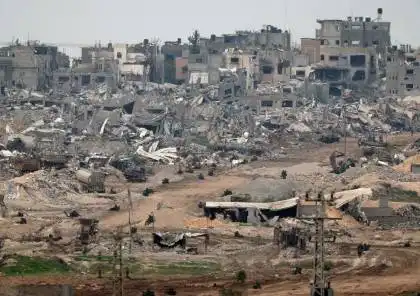
Evidence of this is found in the ruins of hospitals, health clinics, ambulances, schools, libraries, places of worship, markets, water pipes, houses, apartment buildings and piles of unburied corpses eaten by stray dogs. All of this information is in the possession of the Biden administration.


Not to mention that the Biden administration, and their colleagues thirsting for Palestinian bloodshed in the US Congress, were warned when Israeli Defense Minister Yoav Galant and other Israeli officials on October 8 shouted horrific genocidal orders to their army: “No electricity, no food, no fuel, no water. “We are fighting human animals and they will behave accordingly.”

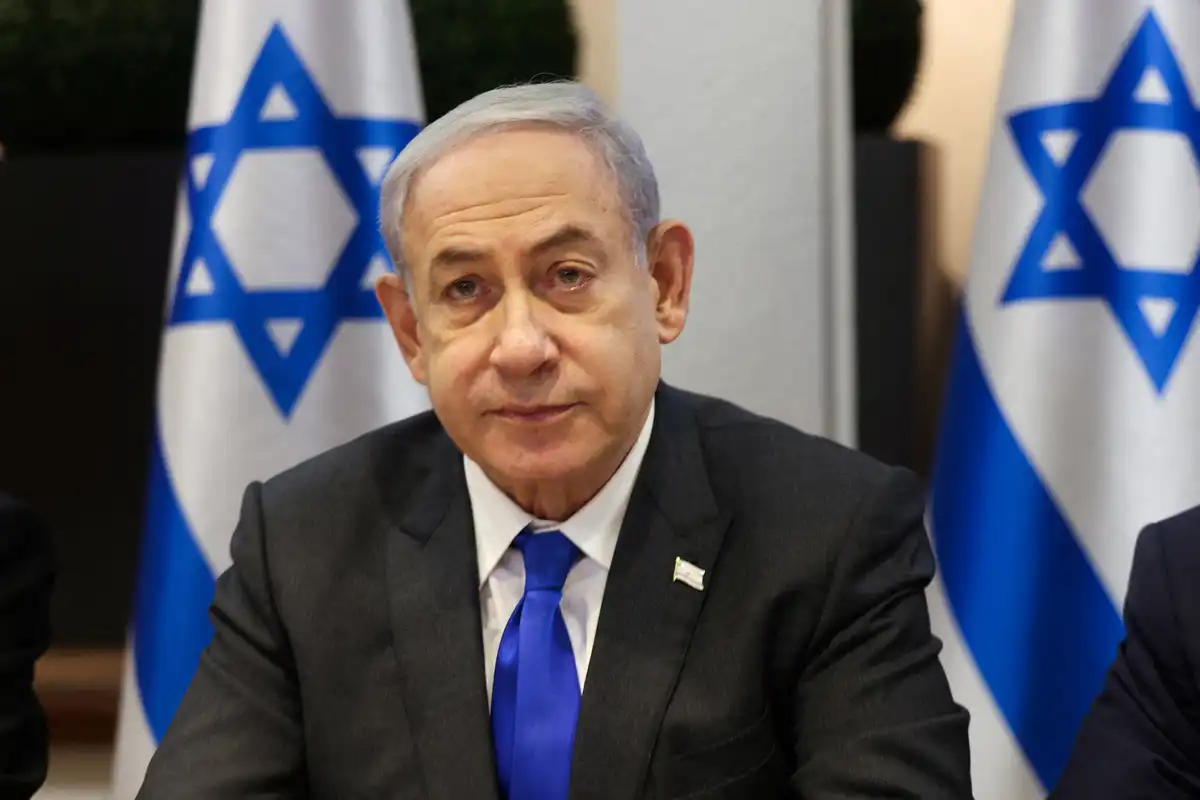
There has been a lot of talk in Washington about a possible ceasefire, perhaps by the end of the year, and perhaps after that. But regardless of whether a ceasefire occurs or not, the Biden administration's callous indifference, and its active and dedicated support for Israel's ongoing genocide and ethnic cleansing, will tarnish America's reputation around the world for generations to come. The fact that Biden admits that he did not even ask for a ceasefire in his last conversation with Netanyahu (on Saturday, December 23) says a lot about the cruel and immoral approach taken by the US administration towards the genocide in Gaza in particular, and the Palestinians in general.


But the pinnacle of American hypocrisy came when US Secretary of State, Anthony Blinken, complained in his annual press conference on December 20, 2023, about global criticism of the United States’ support for the mass killing campaign launched by Israel in Gaza.


Blinken protested and became angry. He said angrily: “I do not actually hear anyone demanding that Hamas stop hiding behind civilians, lay down its weapons, and surrender. This war will end tomorrow if Hamas does that,” Blinken complained. “How is it possible that there are no demands from the aggressor (Hamas), but only from the victim (Israel)?”


Blinken's statement, which mocks human minds, that Israel is the victim and Hamas is the aggressor, is a clear endorsement of the Israeli massacres, and confirms its basic logic that Israel is free to slaughter Palestinian civilians until the armed resistance among them offers "surrender."


We will not wait for the White House or the US Congress to admit their bloody guilt. But that will surely come later, with history judging Washington's unconditional support for Israel's war of annihilation against what the Israeli newspaper Haaretz has repeatedly called the "completely defenseless people" in Gaza.


PALESTINE

Thu 28 Dec 2023 11:57 am - Jerusalem Time

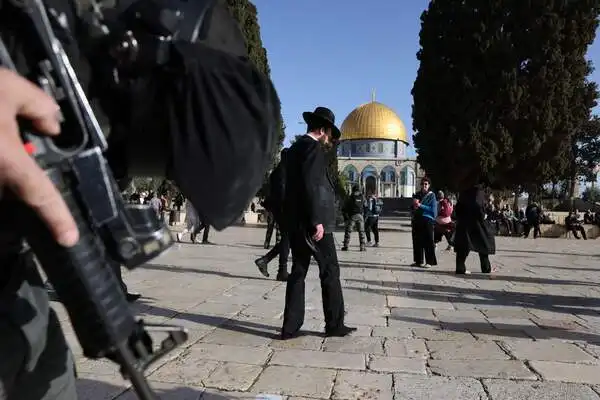
Dozens of Israeli settlers storm Al-Aqsa Mosque

Today, Thursday, dozens of settlers stormed the holy Al-Aqsa Mosque, under the protection of the occupation police.


Eyewitnesses reported that dozens of settlers stormed Al-Aqsa, from the direction of the Mughrabi Gate, carried out provocative tours of its courtyards, and performed Talmudic rituals.


The occupation police continue to prevent citizens from entering the Old City or Al-Aqsa Mosque, causing a decrease in the number of worshipers.


OPINIONS

Thu 28 Dec 2023 10:42 am - Jerusalem Time

Will Israelis recover from collective narcissism?

Samia Issa

Samia Issa

Opinion Writer

Although the war waged by Israel on the Gaza Strip is approaching its third month, and despite the ground incursion of the occupation army into it, and despite the campaigns of ethnic cleansing and genocide against our people in Gaza and the persistent attempts at forced displacement, the one struggling for survival is Israeli society. 

This is because the level of hatred is rising within it against the people of Gaza and their valiant Palestinian resistance, as polls indicated that it has reached unprecedented levels. It constituted 96% of Israeli society, which was divided against itself for many months, following Prime Minister Benjamin Netanyahu’s attempt to reduce the powers of the Supreme Court, and he held huge demonstrations against the judicial coup project, a bloc today against the Palestinians. You can hardly find Israeli voices opposing this war, or at least demanding that the War Council stop committing massacres and genocide against the Palestinian people in Gaza, which caused the bloodshed of more than twenty thousand dead, the majority of whom were women, children and the elderly, and the injuries of tens of thousands and more than eight thousand missing under the rubble, in addition to the destruction of more than 70% of buildings, homes, property and infrastructure, under the eyes and cameras of the world, including the eyes of Israeli society.

The rising level of hatred for the Palestinian people in this society is explained by two main reasons: fear, and breaking the collective narcissism that expressed itself in the arrogance of force in the face of any threat in which this narcissism was combined with the statements of its narcissistic leaders, first and foremost Benjamin Netanyahu and Defense Minister Yoav Galant, and then the war council generals after the Al-Aqsa Flood Operation, which broke the myth of the “invincible army.” As arrogance increased after the extreme Zionist religious right (Ben Gvir) and the extreme Zionist nationalist right (Smotrich) took control of power in partnership with Netanyahu as a result of the elections a year ago, the occupation army and settlers subsequently attacked the Palestinians in the West Bank in daily violations and killings unprecedented before the Gaza war. 

And the Al-Aqsa Flood operation, and before the coup against the Israeli Supreme Court according to the American humanist philosopher and social psychologist, Erich Fromm (of German-Jewish origin), “collective narcissism” sometimes wears the guise of nationalism, and at other times wears the mask of religious narcissism, when the followers of a certain religion firmly believe that they are dearer to God, and that they are more deserving of Paradise than others, and that they are more upright than others because they were born to this religion (God’s chosen people). This is an explanation that fully applies to Israeli society, which in recent years and decades has tended toward the right and the extreme right, according to opinion polls, especially among young people. This is what was expressed in the elections that brought most extreme and racist right-wing government in the history of Israel since its founding.


There is no longer a place for deep discussion and conflicting certainties have increased, which has made matters worse in the rise of collective narcissism.


According to Fromm, collective narcissism can also appear in other forms of collective identification depending on the circumstances of time and place. In every case, a person satisfies his narcissism by belonging to the group and linking his identity to it. Accordingly, his greatness is not achieved by his being, as he is a nobody, but rather by his belonging to the most wonderful group on earth. Social media and digital communications in the world (and not just in Israel) have accelerated the pace of collective narcissism, where deep discussion no longer has a place and conflicting certainties have increased. This has made matters worse in the rise of collective narcissism across the world, making Europe, finally, steadily moving toward right. This explains the arrogance that has characterized Israeli society for many decades. Otherwise, how can we understand the silence of Israeli society towards the continuing violations against the Palestinians, and even its overwhelming support for the brutal war on Gaza and the campaign of genocide that is taking place day and night before the eyes of this society, while Millions of people in the world  protest against this genocide. 


Protests in which many young Jews in the United States and descendants of Holocaust survivors participate. Which makes us wonder, as we remember the huge demonstrations in Tel Aviv, in protest against the Sabra and Shatila massacre committed by Israel and its Lebanese Forces allies in Beirut during the Israeli invasion of Lebanon in 1982. What has changed since those protests? Why is Israeli society silent about the genocidal war waged by its state against the Palestinians, the first signs of which began in the West Bank at the beginning of this year, and the settlers’ burning of the town of Huwwara in the Nablus Governorate twice? The silence reached its peak in the aggression against Gaza following Operation Al-Aqsa Flood, as a war of revenge. The Israeli government, and behind it the majority of Israeli society, seeks revenge on the people of Gaza for daring to resist, oppose the occupation, and not submit to it and submit like slaves. While Israel was surprised by this huge and creative offensive operation, and the shock paralyzed the ability to believe that this besieged and occupied people was able to break the arrogance of the occupation, its separation wall, and its security and intelligence services with all their branches within a few hours in a brilliant military plan, the details of which exceed even imagination. The most resistant people in the history of national liberation movements around the world, especially a people who have been subjected to a stifling siege for more than 16 years.

Perhaps they are leaders and a society that did not expect, due to the arrogance of power and their collective narcissism, that the Palestinians would rise up against the occupation and its brutal violations. Perhaps they have not yet realized that the Palestinian people also love life. Rather, the violations committed by the occupation against them increased his determination to resist and confront all attempts to undermine his dignity and break his will since the Nakba of 1948.


Any solution that Israeli society seeks to get rid of its sense of existential impasse requires that it hold itself accountable


Is it the existential impasse that is growing day after day, spreading fear in the souls of Israeli society, pushing it to right-wing extremism and to delve into the blood of Palestinians, male and female? Or is it collective narcissism that overwhelms their behavior, and makes them live the lies of God’s chosen people, and justify their occupation of Palestine as a “return to the Promised Land,” or for their leaders to lie to the entire world and to their people as well when they brought them as immigrants in 1948 according to the saying, “They are a people without a land who came for a land without a people,” and they committed ethnic cleansing in which they displaced two-thirds of the population of Palestine outside and inside their land, when there were no cameras broadcasting the truth live on television, or when their grandfathers and fathers were brought on board cargo ships to Palestine fleeing from the horrors of the Nazi Holocaust, and they did not have the luxury of denying what they truly found of an authentic people rooted in their land. What if we knew that the Zionist state’s education programs were keen, from the beginning, to plant illusions and lies to justify their replacement settler occupation, and to glorify the narcissistic character of the Israeli generations through the saying of God’s chosen people. But the irony is that the majority of those who founded the State of Israel are secularists and left-wing atheists to begin with.

Scientifically, the characteristics of a narcissistic personality include “an exaggerated sense of importance, a need for attention and flattery from others, a desire to control and domineer, and to hide behind lies to hide their faults or exalt their image, even if they fabricate lies for the sake of it.” People (or narcissistic society) with this disorder may lack Psychosocial refers to the ability to understand and care about the feelings of others, as in the case of the genocide that the Palestinian people are subjected to in the Gaza Strip. Israel has lied to the world, and is lying to its people and its generations in light of the militarization of society, which has become nourished by repeated wars against the Arab environment in general and the Palestinians in particular.


What happens when the narcissistic personality is revealed and its image is broken? When the individual or collective narcissistic personality is broken, as happened during the Al-Aqsa Flood operation it may suffer from a type of depression, which makes it feel extremely weak and retreat backwards, or panic may cause it to commit blatant violence against its victims (a war of extermination), along with blackmailing her victims emotionally and psychologically for further exploitation and oppression (the right to self-defense), so that the proverb “He hit me and cried before me and complained” applies to it, as if it were the victim and not the executioner.


It is no longer acceptable for them to continue lying, stealing Palestinian lands, and continuing violations and wars of extermination


Perhaps this leads us to the conclusion that any solution that Israeli society seeks to get rid of the feeling of existential impasse requires that it subject itself to accountability, at least to get out of the cycle of lies if it is truly seeking salvation. Even if there are rational people among them, and there are certainly rational people, even if they are few, they would believe the Israeli society’s saying, “The seeds of the existential predicament they are living in are at the core of the components of their society, and that the main threat comes from these components and the lies and crimes that are committed in its name... and all they have to do is abandon them.” And they must be honest with themselves in order to live internal peace, otherwise they will not be able to live in peace on this land. 

The Palestinian people do not stop, remain silent, or surrender, because they have a right. They are in a neighboring Arab environment and are bound by intuitive organic, cultural, and historical ties, while this environment is hostile to the State of Israel and supports the Palestinian cause. Rather, it represents its central cause in its quest for liberation and advancement. Otherwise, how can we understand the demonstrations that spread across many Arab countries in protest against the aggression against Gaza and in support of the Palestinian people?

Immigration to Palestine and the Zionist movement’s blackmail of Jewish survivors of the horror of the Nazi Holocaust and the transformation of their fathers and grandfathers into slaves in what was called the “Israeli Defense Army” are the root of the problem. The global Zionist movement, and behind it the colonial West, invested in the suffering of the Jews and ignited the suffering of Palestinians who had nothing to do with it. They have nothing to do with the Nazi Holocaust that was committed against the Jews. It is time for their children and grandchildren to acknowledge these facts, if they want to live in peace with themselves first and/or with the Palestinian people, in order to rid themselves of the dark fate that awaits them if they continue to identify with the Zionist project and follow the path of the arrogance of force and continue to shed the blood of Palestinian men and women without accountability or any feeling of embarrassment, shame, or remorse.


It is no longer acceptable for them to continue lying, stealing Palestinian lands, and continuing violations and wars of extermination. 

The peoples of the earth have spoken and the matter has been exposed. All they have to do is exercise reason, swallow their shame, and stop following the criminal Zionist colonialist movement and false leaders who are dragging them to hell. The Palestinians must work side by side with the resistance on a discourse against the Zionist movement, so that the Israelis understand the facts behind their existential predicament, and review their individual and collective self if they want to live in peace, and they are inevitably coming to this.

source: Alaraby Aljadeed


OPINIONS

Thu 28 Dec 2023 10:34 am - Jerusalem Time

Creating an alternative hero and solving the two comebacks

Helmi Al Asmar

Helmi Al Asmar

Opinion Writer

(1)

The virtues and achievements of the “Al-Aqsa Flood” are difficult to enumerate. It is similar to Noah’s Flood, when the earth was flooded with water and exploded from all sides, drowning everything and creating a new reality that extends almost into all aspects of life on our planet. Indeed, it seems that whoever chose to call it the Flood was aware It speaks of a cosmic seismic event whose effects include all aspects of life in our region and many regions of the world. 

The eye cannot be mistaken about the many changes that struck our country as a result of this flood. Thousands of pages have been written on this topic, and the door is still open for more. The flood is at its peak and the earth has not yet swallowed its water, and the ship is still in the sea and has not yet settled on the coast. It seems that the one who is pleased by Allah is the one who is inspired to ride it, but as for the one who lags behind in this, only Allah knows what his fate will be, and what we are saying here is not an exaggeration as much as it is a preliminary extrapolation whose effects will appear, and some of which are beginning to appear, in the medium and long term.


“Fruits” have begun to bear fruit in the social aspect in a stark way, as we notice a profound change in the interests of the younger generation.


(2)

Aside from the military, political and economic readings, the results of which are clearly visible, whether on the Zionist entity or those who support and support it, and those who stand alongside the owners of the ship, there are “fruits” that have begun to bear fruit in the social aspect in a stark way, as we notice a profound change in the interests of the emerging generation, Whether in our country or the Frankish countries. In this regard, a friend told me that he entered his teenage son’s room and was shocked that all the pictures he was hanging on the wall had completely changed, as he had put on the wall pictures of male and female singers, electronic game posters, football stars, and those he called “influencers.” 


Popular media platforms, and all of this was replaced with pictures of Abu Ubaida, the military spokesman for the Martyr Izz al-Din al-Qassam Brigades, pictures of Sheikh Izz al-Din al-Qassam himself, pictures of Hamas fighters, and pictures of bombings and heroics in Gaza. His room was also decorated with formations of black and white keffiyehs, which became a symbol of resistance. My friend tells me that his son, from the moment the flood began, became a different person. He follows political events, pays attention to the details of the news, discusses war and aggression, gets emotional with its events, and sometimes reaches the point of crying whenever the enemy deepens his aggression, and before that he did not pay attention to all of these. Things occupied him. He was occupied with football and the singer dancing bare-chested on stage, and he was fascinated by electronic games, to the point that today he began planning to design an electronic game that tells the story of the resistance, confronting the enemy, and talks about the heroics of the Qassams, the war, and Palestine.

This is not the only boy whose being was upended by the war. It seems that his generation began searching for an alternative “hero” that would inspire him, ignite his imagination, and remove him from the circle of interests on which the international media linked to Zionism and Freemasonry spent billions of dollars to steal the minds of the generation, distract it from its reality, and fill its imagination with dreams and ambitions. Plans that are far removed from the concerns of Palestine and the nation and its problems. 

In other words, the Al-Aqsa Flood Operation erased layers of accumulated illusion from the collective consciousness of young people, and brought them back to themselves, so they began looking for other tournaments as alternatives to the tournaments that were designed, in order to inspire and occupy them. This is a tremendous work, and it could not have happened except with a seismic event whose impact reached the core of consciousness. Collectively, most likely, whoever designed the flood would not have imagined that its effects would extend to this depth!


The Al-Aqsa Flood was a genius name for a huge event that is still interacting, and it may be a new beginning for writing a new history not for the region, but for many regions of the world.


(3)

More than this, the impact of the flood was not limited to the Arab collective mind, but rather extended to the Western collective mind in one way or another, albeit with different effects and extensions that did not affect the younger generation, but rather extended to the older generations, where they, each according to their understanding, began to wonder. About the secret of the legendary steadfastness of the people of Gaza, so that they realize, after research and exploration, that it is due to their belief in Islam and the Qur’an, which is what prompted them to read the Holy Qur’an and become educated in Islam, to realize the impact of religion on the souls of the giants of Gaza, which led, in turn, to their entry into religion. God bless you in droves. It is sufficient to point out here the opinion poll that revealed that more than half of American youth support “Hamas” and see the solution in the end of Israel and its handing over to the Palestinians and “Hamas.” This means that they are in favor of what was called the two-return solution, meaning the return of the Palestinians to their country, Palestine, and the return of The Jews to their countries from which they came, not the two-state solution that has been on the lips of most world leaders without having even a small share of the realistic balance on the ground!

In addition, the heroism and steadfastness of Gaza settled in the global collective conscience, and created what was called the multi-ethnic popular uprising, the manifestations of which swept across the world, in solidarity with Palestine, and ousting blind support for Israel and its brutal policies in Palestine, to the point that US President Biden said, in unacceptable terms: Interpretation: The safety of the Jewish people is literally at stake “as a result of Israel’s loss of blind international support.”

The Al-Aqsa Flood was a genius name for a huge event that is still interacting, and it may be a new beginning for writing a new history not for the region, but for many regions of the world.

Source: Alaraby AlJadeed

OPINIONS

Thu 28 Dec 2023 9:07 am - Jerusalem Time

The weapon of nuance in Israel’s war on Gaza

Aljazeera

Aljazeera

Opinion Writer

By Somdeep Sen

Demands for ‘nuance’ in how Gaza and Palestine are narrated seek to obfuscate the context of Israeli occupation and apartheid.


“Your work doesn’t look good in this political context. If someone asks me about your work, I won’t say anything positive about it. You need to think about how you are becoming a liability for me and the institution … It’s best to keep your head down and stay quiet.” These were the words of a colleague. The political context he was referring to was the harassment and attacks many of us had faced for publicly criticizing Israel’s war on Gaza and highlighting the long history of Palestinian suffering that preceded the October 7 attack. He subsequently reminded me of the importance of being “nuanced and taking a balanced approach” and recognizing the emotions and sentiments on “both sides”. “Nuance” is an interesting word that I have been hearing a lot over the past 80 days. Recently, I received an inquiry from a European news outlet, looking to commission a “nuanced” article explaining “what Hamas actually are”. I also read about the alleged “lack of nuance” independent presidential candidate and former Harvard professor Cornel West had identified in the letter expressing solidarity with Palestine issued by Harvard students days after the October 7 attack. 

In this war on Gaza, we have seen many a weapon deployed against the Palestinian population. Yet, the call for “nuance” has emerged as the most unlikely one. But what does it mean to be nuanced at a time of extreme Palestinian suffering?

From the perspective of those weaponizing this word, it means the history and context of Israel-Palestine cannot be recalled. This, of course, results in the suppression of all forms of public critique of the actions of the Israeli state. Sociologist Muhannad Ayyash describes this as a form of toxification of any perspective rooted in the aspirations of the Palestinian people and their lived experience of occupation and siege, as invalid, irrational, disruptive or simply “too unnuanced” for any respectable discussion of the politics of Palestine-Israel. Accusations of “lack of nuance” often morph into accusations of anti-Semitism. Harvard students who signed the “unnuanced” solidarity statement immediately became the target of a doxing campaign. A truck with digital billboards, funded by the conservative watchdog Accuracy in Media was seen circling Harvard Square, flashing the students’ photos and names and labelling them “Harvard’s Leading Antisemites”. They also faced pressure from faculty members and donors. Wall Street executives “demanded a list” of the students in order to “ban their hiring” and a prestigious law firm rescinded job offers to some of the students. But while the students were being charged with supporting a terror group and their violence, what they were really being targeted for was insisting that the events of October 7 did not happen in a vacuum and that the history of Palestine-Israel did not begin on that day. Rather, the statement explained, it was a consequence of the nearly two-decade siege of Gaza and 75 years of structural violence inflicted by the Israeli state on Palestinians that has included air strikes, land seizures, arbitrary detention, checkpoints and targeted killings.


When Columbia University students released a similarly “unnuanced” statement that was uncompromising in its support for Palestinians, they too were doxed. The statement said the “weight of responsibility” for the violence and its human cost lay with “the Israeli extremist government and other Western governments, including the US government, which fund and staunchly support Israeli aggression, apartheid and settler-colonization”. It added that the issue at hand was not the timing of the attack but its “root causes and [… the] Israeli occupation and the deprivation of human rights, including the lack of respect for the Palestinian people’s legitimate right to self-determination”. Apart from allowing their students to be harassed and doxed over their pro-Palestinian views, universities have also gone on to censor scholars and public figures that have been deemed “unnuanced” and therefore “disruptive”. The University of Vermont cancelled a public talk on “representation and misrepresentation of Palestinians in the US” by renowned Palestinian poet and journalist Mohammed el-Kurd, citing “safety concerns”. Liverpool Hope University cancelled a talk by Israeli-British historian Avi Shlaim also citing “safety” concerns. Shlaim’s lecture was expected to be “critical of the formation of the state of Israel”. Arizona State University cancelled a speech by Palestinian-American Congresswoman Rashida Tlaib. The university spokesperson insinuated that the event was not organized in a way that minimized “disruption to academic and other activities on campus”. Institutions like Brandeis, Columbia, George Washington and Rutgers have also suspended their respective chapters of Students for Justice in Palestine (SJP) citing violations of a wide range of university policies, including organizing events that “disrupted” classes. 

University leaders have also been keen to control how their staff and students speak about Israel-Palestine – often advising a middle ground. The University of Exeter published “general advice” that first underlines Hamas’s status as a proscribed terror organization under UK law. Subsequently, it advises staff and students to be “inclusive” in the way they comment on social media and cognizant of the sentiments of the “other” side, adding that “in the absence of nuance or context, comments often don’t help and can create more division, hurt, and hate”. 

At other universities, senior faculty members and administrators have sought to demonstrate how student activism can be “misinformed” and create a polarized campus environment “lacking in sophistication and nuance”. While claiming “sophistication”, such uses of “nuance” actually seek to obfuscate history and reality on the ground in Palestine. They push for a narrative that overlooks structures and institutions of violence, oppression, subjugation and erasure that have marked the lives of Palestinians since the Nakba of 1948. Instead, what is going on in Palestine-Israel is portrayed as a conflict between two seemingly equal parties vying over the same piece of land. As one proponent of this narrative recently wrote in The Nation: “The intellectual poverty that would reduce human history to a battle between the oppressed and the oppressors is also just plain lazy.” But there is nothing “lazy” about knowing and pointing out historical circumstances and context. Further, recognizing the long history of Palestinian suffering that precedes and exceeds the events of the day does not preclude mourning the civilian deaths in Israel as a result of Hamas’s attack on October 7.A word that is meant to indicate a subtle difference in shade or meaning from what seems self-evident has emerged as an important weapon in this war that seeks to shift attention from the structures and institutions of violence and oppression Palestinians face.


Within universities, “nuance” has been weaponized to target all those who strive to draw public attention to the plight of the Palestinians and demand a different shade or meaning is ascribed to what is apparent to many as a genocidal military onslaught by the oppressor on the oppressed.

ARAB AND WORLD

Thu 28 Dec 2023 9:03 am - Jerusalem Time

WHO reiterates call for international community to take urgent steps to alleviate grave peril facing Gaza

The World Health Organization (WHO) Director-General, Tedros Adhanom Ghebreyesus, reiterated his call for the international community to take urgent steps to alleviate the grave peril facing the population of Gaza and jeopardize the ability of humanitarian workers to help people with terrible injuries, acute hunger, and at severe risk of disease.

According to the latest WHO assessments, Gaza has 13 partially functioning hospitals; 2 minimally functioning ones, and 21 that are not functioning at all. In WHO’s latest high-risk mission, its teams visited two hospitals in Gaza; Al-Shifa in the north and Al-Amal Palestine Red Crescent Society in the south to deliver supplies and assess needs on the ground, said WHO in a statement. “WHO’s ability to supply medicines, medical supplies, and fuel to hospitals is being increasingly constrained by the hunger and desperation of people en route to, and within, hospitals we reach,” said the statement.

The recent United Nations Security Council resolution appeared to provide hope of an improvement in humanitarian aid distribution within Gaza,” the WHO Director-General added. “However, based on WHO eyewitness accounts on the ground, the resolution is tragically yet to have an impact.” “What we urgently need right now is a ceasefire to spare civilians from further violence and begin the long road towards reconstruction and peace,” he said.

PALESTINE

Thu 28 Dec 2023 8:58 am - Jerusalem Time

West Bank: Israeli forces kill Palestinian during raid in Ramallah

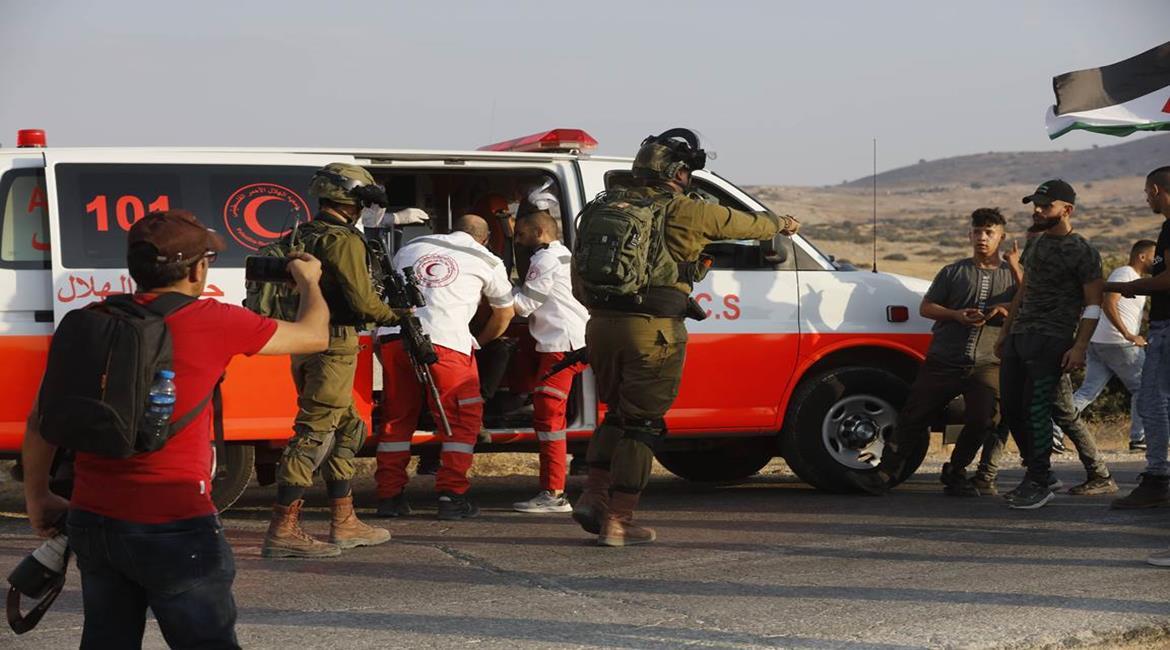
A Palestinian youth was killed, and 14 others were injured, after they were shot by Israeli occupation forces, at dawn on Thursday, during confrontations that broke out in the vicinity of Al-Manara Roundabout in the center of Ramallah.


Medical sources at the Palestine Medical Complex in Ramallah said that Hazem Abdel Fattah Qatawi was killed as a result of his wounds by occupation bullets.

Medical sources in the Red Crescent added that among the injured were 4 injuries with live bullets, one in the chest, one in the abdomen, and two injuries in the thigh, including a journalist, after the occupation soldiers opened fire on them in the middle of the city. They received the necessary first aid and treatment, before being transferred to the hospital for complete treatment.


The occupation forces raided several areas in the city of Ramallah, and stormed the city center (Al-Manara and Al-Sa'ah roundabouts), Shireen Abu Akleh Street, Al-Hisbah Street, Al-Balou', and Al-Tira, and stormed a number of money exchange shops, seized their contents, and detained a number of their owners. They also stormed Al-Ajouli family's home in Al-Balou' and an exchange shop owned by them in Ramallah. 

Security sources said that the occupation forces stormed Al-Tira neighborhood and raided a residential building and interrogated its residents. A citizen was detained, while they opened fire on a vehicle and wounded its driver. 

The sources added that the occupation forces stormed the town of Beitunia and the neighborhoods near the “Ofer” military prison, which is located on citizens’ lands in the town of Beitunia.


The occupation forces also stormed the city of Al-Bireh and drove their military vehicles through its streets. In Beit Laqya, the occupation forces stormed the town and detained Youssef Najeh Muhammad Dhaif Allah, 19. 

They also stormed the village of Sinjil, north of the city, and the village of Rafat.


With the killing of Qatawi in Ramallah at dawn today, the number of slain Palestinians rose to 312 since the beginning of the Israeli aggression on October 7, and 520 since the beginning of this year.

PALESTINE

Thu 28 Dec 2023 8:50 am - Jerusalem Time

Israeli Report: Israeli soldiers injured in Gaza refused to meet Netanyahu

Israeli soldiers refused to meet with Prime Minister Benjamin Netanyahu, who paid a visit to Hadassah Hospital in occupied Jerusalem on Wednesday, according to what Israeli Channel 13 reported.


The channel reported that Netanyahu visited the rehabilitation department at Hadassah Hospital, in a visit aimed at meeting Israeli army soldiers who were injured in clashes and battles in Gaza, stressing that “some of them refused to meet him.”


The channel reported a tweet written by one of the injured soldiers lying in the hospital on the “X” website (formerly Twitter), in which he said: “I am in the hospital in the rehabilitation ward at Hadassah. Netanyahu is coming to visit tonight, and one of the female officials asked me if I wanted to come into my room."


The same soldier said: “Of course I refused,” adding: “It turned out that out of a ward containing 18 wounded (soldiers), 15 asked that he not enter them.”


He continued: "I am in Jerusalem, the Likud stronghold. The change is felt. (The time for that) has ended."


In response to the channel, Netanyahu's office said, "The absolute majority of the fighters are very much looking forward to meeting the Prime Minister."


It is noteworthy that a number of soldiers had refused to meet with Netanyahu during a visit the latter had made about a week ago to the Sheba Hospital - Tel Hashomer in Ramat Gan. Channel 13 said that representatives of the Israeli army and Netanyahu's office had examined which soldiers would agree to meet with the Prime Minister, in order to gather them in one section "isolated" from the other sections.


Recent opinion polls, the most recent of which was a general poll whose results were published on the 18th of this month, showed that the “National Camp” bloc, headed by “War Cabinet” member Benny Gantz, won 37 seats, while the number of seats in the Likud Party led by Netanyahu decreased to 18 seats.


OPINIONS

Thu 28 Dec 2023 8:47 am - Jerusalem Time

In Campus Protests Over Gaza, Echoes of Outcry Over Vietnam

New York Times

New York Times

Opinion Writer

Richard Flacks remembers the challenges of building a protest movement during the Vietnam War as a pillar of the left-wing political and antiwar group Students for a Democratic Society during the 1960s.“The whole idea of S.D.S. began with the idea of, ‘We need a new way of being on the left, a new vocabulary, a new strategy,’” said Mr. Flacks, who helped write the group’s manifesto, the Port Huron Statement, in 1962. “We knew we were right, and I don’t think we were arrogant about it.” Sixty years later, Iman Abid sees similar challenges in the war in Gaza between Israel and Hamas. “For so long, we couldn’t get Palestine to be that issue for people to care about,” said Ms. Abid, the organizing and advocacy director at the US Campaign for Palestinian Rights, which works with pro-Palestinian campus organizations. “But now people care about it because they’re seeing it. They’re watching it on their social media. They’re watching it on the news.” It is too early to know whether the Israeli-Palestinian conflict will define this generation as opposition to the Vietnam War did for many young people more than a half century ago. 

But to many who have studied or lived through the Vietnam era, the parallels to the Gaza protests are compelling: a powerful military raining aerial destruction on a small, underdeveloped nonwhite land; a generational divide over the morality of the conflict; a sense that the war represented far broader political and cultural currents; an unswerving confidence — critics might say sanctimony — among students that their cause is righteous.


The differences can be glaring, too, beginning with the terrorist attack by Hamas that set this war in motion, for which there is nothing comparable in Vietnam. The Gaza war is not being fought by the American military, unlike Vietnam, where more than 58,000 Americans died and young men faced a military draft.

Miles Rapoport, a former secretary of state of Connecticut, who joined S.D.S. while studying at Harvard in the 1960s, saw similarities but said the two movements and moments differ in a fundamental way: The United States waded into Vietnam in a show of superpower hubris. Israel, he said, is fighting for its existence after a terrorist attack that killed 1,200 citizens. The current war, he said, “has a lot more moral and philosophical nuance.”

That is reflected in pro-Israel marches and demonstrations to a far greater degree now than was common, particularly on campuses, for supporters of the war during the Vietnam era. Still, both movements, Mr. Rapoport said, reflect “a kind of instinctive and initial solidarity with the underdog.” He added: “And related is a sense of solidarity with people who are fighting to have their own country and be freed from a kind of colonial existence.” American campuses have protested over countless causes since Vietnam, notably to oppose apartheid in South Africa and racial injustice after police killings of Black men and women in 2014 and 2020. But a sustained antiwar protest like the one against the Gaza invasion has not been seen for decades. Loan Tran, a 28-year-old Vietnamese American who is national director of the leftist advocacy group Rising Majority, draws a straight line between Vietnam and Gaza. Mr. Tran’s grandfather, whom he never met, was an American G.I. during the war; his grandmother’s friends fought for North Vietnam against American forces. “When I hear Palestinians making comparisons to Vietnam and the role of the US and colonialism, it’s really striking for me, and it’s a really poignant connection,” he said. “I feel it in my body, and a lot of people in our Vietnamese community feel it in our bodies, to be resisting war, to be resisting occupation.” To critics of the Gaza protests, the current movement reflects the excesses, not the virtues, of the Vietnam protests, with chants now that to some suggest genocide against the Jewish people, much as some 1960s protests alienated many Americans by backing North Vietnam against US forces. And those critics also accuse the pro-Palestinian demonstrators of hypocrisy — saying that many of the rallies include side issues that would be antithetical to many Palestinians, like women’s issues and L.G.B.T.Q. rights. 


Many supporters of Israel view the movement with a mixture of horror and consternation. Kenneth L. Marcus, the chairman of the Brandeis Center for Human Rights Under Law, a Jewish civil rights institution that is not affiliated with Brandeis University, said the campus demonstrations began even before Israel’s invasion of Gaza occurred. “There may be some people participating in these protests who think they’re supporting Palestinians, but the movement they are advancing is predominantly an antisemitic movement,” he said, adding that it has its genesis in a celebration of violence. Rather than showing moral strength in the face of campus protests, he said, many university administrators “have responded with weakness and cowardice.” Those protesting the war in Gaza owe their Vietnam-era forerunners for one legacy: the tactics, from die-ins to chants like “How many kids did you kill today?” that energized both movements. “Students didn’t have much in 1960 to emulate,” said Mr. Flacks, now a professor emeritus of sociology at the University of California, Santa Barbara. “A lot of the tactics invented at that time became part of the tool kit for activism on campuses.” Certainly, the logistics of staging protests are much more manageable today than 60 years ago. Cellphones and social media have simplified the tasks of recruiting and deploying advocates for a cause; to cite just one example, a crowd of antiwar demonstrators descended recently on Grand Central Station in New York, flash-mob style, after getting an electronic alert.

Universities — and the overall makeup of the protesters — are also vastly changed, as are the political pressures and demands on university presidents. 

The Vietnam antiwar movement was overwhelmingly white, like most campuses of the 1960s. But campuses in 2023, particularly urban ones, contain far more students of color, many of whom empathize with Palestinians’ status as an embattled population under the control of a more powerful force. And nonstudents are a bigger part of those protesting now. 

The New York Times

PALESTINE

Thu 28 Dec 2023 8:47 am - Jerusalem Time

West Bank: Israeli forces confiscated 10 million shekels from money exchange shops

The Israeli Broadcasting Corporation quoted Defense Minister Yoav Gallant as saying that Israeli forces raided 5 money exchange shops in the West Bank, and confiscated 10 million shekels from them last night, and also classified the money exchange shops as “terrorist.”


The occupation forces raid money exchange shops in the occupied West Bank under the pretext that they finance the Islamic Resistance Movement (Hamas).


At dawn today, large forces from the occupation army closed these stores and arrested about 20 Palestinian officials and workers in these stores and their branches, for allegedly transferring money to the Hamas and Islamic Jihad movements.


PALESTINE

Thu 28 Dec 2023 8:42 am - Jerusalem Time

West Bank: Two Palestinians killed in Ramallah and Nablus, raising death toll in West Bank to 522

A young Palestinian was killed, and 14 others were injured, by Israeli occupation forces' bullets, at dawn on Thursday, during confrontations that broke out in the vicinity of Al-Manara Roundabout in the center of Ramallah.


Medical sources at the Palestine Medical Complex in Ramallah announced the death of the young man, Hazem Abdel Fattah Qatawi, as a result of his wounds by occupation bullets.


Medical sources in the Red Crescent added that among the injured were 4 injuries with live bullets, one in the chest, one in the abdomen, and two injuries in the thigh, including a journalist, after the occupation soldiers opened fire on them in the middle of the city. They received the necessary first aid and treatment, before being transferred to the hospital to complete treatment.

Press sources reported that the occupation forces stormed the Al-Tira neighborhood and raided a residential building near the headquarters of the “Guards Unit” and interrogated its residents, where a citizen was reported arrested, while they opened fire on a vehicle and wounded its driver.


In Beit Laqya, the occupation forces stormed the town and arrested the young man, Youssef Najeh Muhammad Dhaif Allah (19 years old). They also stormed the village of Sinjil, north of the city, and the village of Rafat.


Nablus:

A young Palestinian died today, Thursday, as a result of his wounds shot by Israeli occupation forces ten days ago during the storming of the city of Nablus.


The Ministry of Health announced the death of citizen Tariq Shakhshir (21 years old) as a result of serious wounds he sustained during confrontations that broke out after the occupation forces stormed several neighborhoods of the city on the eighteenth of December.


With the martyrdom of young Shakhshir today, the number of dead has risen to 314 Palestinians since the start of the Israeli aggression on October 7, and 522 dead since the beginning of this year.


ARAB AND WORLD

Thu 28 Dec 2023 8:36 am - Jerusalem Time

Israeli Report: Shin Bet received information last summer about Operation “Al-Aqsa Flood”

An Israeli report reveals that an agent whom the Shin Bet had recently recruited in the Gaza Strip conveyed to the agency information about the Al-Qassam attack on October 7th, including the possible date of the attack, last summer, that is, months before the surprise operation.


Israeli Channel 12 revealed, this evening, Wednesday, that the Shin Bet received information last summer from an agent operated by the agency in the Gaza Strip about the Hamas movement’s intention to carry out the “Al-Aqsa Flood” operation in “the week following Yom Kippur,” which fell on September 25. The past, in a new chapter of Israeli intelligence failures that accompanied the Al-Qassam attack.


According to the report, the Shin Bet received information from a “third party,” meaning that the agent operated by the agency in Gaza received information from a first source and transmitted it to the Shin Bet agent, stating that the Qassam Brigades, the military wing of the Hamas movement, are about to carry out a large-scale attack on Israeli army camps in the vicinity of Gaza Strip in the week following the so-called "Yom Kippur".


The operation, which the Qassam Brigades called “Al-Aqsa Flood,” was carried out on the seventh of last October, which was represented by a large-scale and sudden attack on Israeli military sites and towns in the “Gaza envelope,” the day after the “Simchat Torah” holiday, that is, about two weeks after the so-called “Simchat Torah” holiday. 


The Channel 12 report stated that “months before the surprise Hamas attack, the Shin Bet received concrete information about Hamas’ intention to carry it out, including the planned date of the attack,” and explained that the information came from “a human source (agent) operated by the Shin Bet in the Gaza Strip, who reported that 'Hamas is planning a large-scale move in the week following Yom Kippur.'


According to the report, the information reached the Shin Bet from a “human source,” through an agent known as “Mubwa” (a word in Hebrew that means “the source of water in the earth or the source of things”), which is a professional term given by the Shin Bet to a person who brings information from other sources. 


The channel stated that this means that the Shin Bet agent did not hear the information directly from its source, but rather received information from someone who told him that he had heard about the Qassam Brigades’ plan. According to the report, the client operator transferred the information to the relevant authorities in the agency, but this information was not classified as “important information.”


According to the channel’s report, the hypothesis among Shin Bet officials is that if Hamas actually intends to carry out the attack, then supportive warning information must arrive in the period preceding the scheduled date of the attack. As a result, according to the channel, “the information was not conveyed to the higher levels in The agency and did not reach the head of the Shin Bet, Ronen Bar, in time.”


The channel said that the Shin Bet had recently obtained this information as part of the agency’s attempt to study the reasons for the agency’s intelligence failure in anticipating and predicting the attack of last October 7. The channel confirmed that the information had reached the Israeli side months before the attack, specifically last summer, and was "buried under piles of other information."


The channel quoted Shin Bet officials as saying that the aforementioned agent was “recruited relatively recently, and is not an old source, and the extent of his reliability was not clear either.”


The Shin Bet commented on the report that the agency “is focusing at this stage on the fighting. The Shin Bet is prepared to conduct in-depth and comprehensive investigations in order to draw lessons, and in this context all information that was available will be examined. In any case, focusing on one specific piece of information does not reflect the intelligence picture at that time".

ARAB AND WORLD

Thu 28 Dec 2023 8:28 am - Jerusalem Time

Israel Hayom: Biden Admin believes that chances of Arab country accepting responsibility for managing Gaza are zero

The administration of US President Joe Biden believes that the chances of one of the Arab countries accepting responsibility for the Gaza Strip are slim or non-existent, according to what the “Israel Hayom” newspaper reported on Wednesday, December 27, 2023, citing American officials familiar with internal discussions in the US State Department.


According to the newspaper, these internal discussions of the Ministry of Foreign Affairs came within the framework of a brainstorming session conducted by government officials with various parties. To discuss expected developments in Gaza after the war.


The sources say that among the options being discussed at the level of the Israeli government, and also at the level of non-governmental organizations, is a proposal to Arab countries, “which oppose extremist Islam,” to manage civil life in the Gaza Strip.


The names that emerged in those discussions are Egypt, Bahrain, Jordan, and the United Arab Emirates, which have official relations with Israel, as well as Saudi Arabia, which does not have any official relations yet.


But according to American officials, none of these countries wants to be in a state of friction with local forces in the Gaza Strip, whether it is Hamas, the Palestinian Authority, or local influencers.


For this reason, the administration believes that efforts should be directed towards reforms in the Palestinian Authority, most importantly replacing the head of the Authority, Abu Mazen. This is the only option, in the eyes of the Americans, other than the Israeli occupation.


PALESTINE

Thu 28 Dec 2023 8:14 am - Jerusalem Time

Le Figaro investigation: Who is the actual leader of the “Al-Qassam” and how did Hamas leaders abroad receive the “flood”?

An investigation by the French newspaper Le Figaro reported that the actual leader of the Al-Qassam Brigades affiliated with the Hamas movement is not Muhammad Al-Deif, but rather Muhammad Al-Sinwar, brother of Yahya Al-Sinwar, the leader of Hamas in Gaza.


The newspaper said that the three leaders (Al-Deif, Muhammad, and Yahya Al-Sanwar) were the planners of the “Al-Aqsa Flood” operation on October 7, and that none of the other leaders or even the “allies” knew about its planning or timing.


"Le Figaro" quoted Hamas leadership in Lebanon, Osama Hamdan, as saying that the only one who was informed of the operation half an hour before its launch was Saleh Al-Arori, the movement's deputy head in Gaza, with the aim of informing the Secretary-General of Hezbollah, Hassan Nasrallah.


As part of the camouflage for the operation, both Yahya Al-Sinwar and Deif appointed new commanders to lead most of the Izz al-Din al-Qassam Brigades, instead of those known to Israel, but ostensibly they continued to hold their positions in order to deceive the enemy, including Ayman Nofal, who was killed in an Israeli raid as a “Chief of intelligence in the Izz al-Din al-Qassam Brigades,” according to the newspaper.


Le Figaro, citing sources in Hamas and Lebanon, adds, “The truth is that Hezbollah was surprised by the operation (Al-Aqsa Flood), and was even more surprised of not informing Iran of it as well.


The newspaper reported that Muhammad Al-Sinwar is responsible for building the largest tunnel discovered by the Israeli army in the northern Gaza Strip, citing Israeli sources.


On the other hand, the “Le Figaro” investigation quoted Khaled Meshaal, head of the Hamas movement abroad, saying regarding the “solution negotiations” that “when the time comes (that is, when a Palestinian state is created), the issue of recognition of Israel will be examined. But since everyone inside Hamas does not agrees to that, as it (Hamas) does not want to advance further than that.”


Meshaal said: “But reaching a long-term truce with Israel is certainly negotiable.”


He continues, "We learned the lesson from Oslo in 1993, (the late Palestinian President Yasser Arafat) recognized Israel, which did not offer him anything in return."


But he adds: “By amending our 2017 Charter (the 1987 Charter calling for the destruction of Israel), Hamas joined other Palestinian factions in agreeing on creating a state on the 1967 borders, with Jerusalem as its capital, and the right of return for refugees, without mentioning Hamas’ recognition of Israel”. 


On the other hand, “Le Figaro” reported that a meeting was held a month ago (in Qatar) between Meshaal and Ismail Haniyeh on the one hand, and Samir Masharawi, who is close to the former Fatah leader Muhammad Dahlan (currently head of the reformist movement in Fatah), and Nasser al-Qudwa, the potential successor to Palestinian President Mahmoud. Abbas, with the aim of “revitalizing” the Palestinian Authority, in accordance with the wishes of the United States, for the post-Hamas era in Gaza.


The “Le Figaro” investigation quotes Ehud Yaari, a member of the American Research Center at the Washington Institute, saying, “When Sinwar learned of this meeting, he warned Haniyeh that such behavior was scandalous, and demanded that it be put to an end until a permanent ceasefire was reached.”


PALESTINE

Thu 28 Dec 2023 8:09 am - Jerusalem Time

War on Gaza on 83rd day: Dozens of killed and wounded in a series of raids on the Gaza Strip

Dozens of citizens were killed and others were injured, most of them children and women, in a series of raids launched by occupation warplanes, at dawn today, Thursday, on various sites in the Gaza Strip, on the 83rd day of the aggression.


An Israeli bombing on Deir al-Balah and the Maghazi camp in the central Gaza Strip left a number of killed and wounded.


According to local sources, the occupation targeted a civilian car transporting wounded people from Deir al-Balah, which led to the death of everyone in it.


They reported that at least 7 citizens were killed in an Israeli raid on a house in the Nuseirat camp in the central Gaza Strip.


The city of Khan Yunis, south of the Gaza Strip, witnessed violent raids by occupation aircraft and artillery, which resulted in the death and injury of dozens of citizens, most of them children and women.


A number of citizens were killed and others were injured, most of them children and women, in an Israeli bombing that targeted the Nuseirat camp, in the central Gaza Strip.


Local sources reported that at least seven citizens were killed, and others were injured, as a result of the occupation targeting a house in the camp, while others were injured as a result of the occupation bombing a house in the Zawaida area in the central Gaza Strip.


The occupation forces committed a horrific massacre near Al-Amal Hospital in Khan Yunis yesterday evening, as a result of which about 30 persons died.


The occupation aircraft also launched new raids on the center of the city of Khan Yunis, and on agricultural land north of the city of Rafah, in the south of the Gaza Strip.


According to health sources, the occupation committed 16 massacres against entire families, claiming 195 dead and 325 injuries during the past 24 hours.


The toll of the ongoing Israeli aggression on Gaza has risen to 21,110 dead, 55,243 injuries, and thousands of missing persons, an infinite toll, since the seventh of last October.


-

OPINIONS

Wed 27 Dec 2023 6:54 pm - Jerusalem Time

For Palestinians, the “Day After” Starts With a Plan for Ending Israel’s Occupation

Carnegie Endowment -"Al-Quds" dot com

Carnegie Endowment -"Al-Quds" dot com

Opinion Writer

By ZAHA HASSAN


Until the international community is ready to bridge the gap between Israel’s and Palestine’s plans for Gaza’s future, day-after negotiations only serve to distract from ending the bombardment and the urgent humanitarian crisis now.


With the Israeli bombardment of Gaza in its third month and a permanent ceasefire nowhere in view, policymakers in the United States and Israel continue to discuss a theoretical “day after” in Gaza. To many Palestinians, such talk is dehumanizing and appears callous as the death toll still mounts. To date, more than 20,000 Palestinians are dead, 40 percent of whom are children, while almost 7,000 people remain unaccounted for. 

In considering how to support a better future for Gaza—and for Palestinians and Israelis writ large—U.S., Israeli, Palestinian and other Arab policymakers have a daunting task ahead. As impossible as it is without a permanent ceasefire in place, they must assess the scale and impact of the destruction in Gaza, the short- and long-term needs of Palestinians who remain at high risk for full or partial permanent displacement, and the willingness and capacity of the Palestinian Authority (PA) to assume governance in Gaza. And they must conduct these assessments even as Israel has indicated it will continue its military campaign in some form for months more, possibly remaining in Gaza indefinitely.


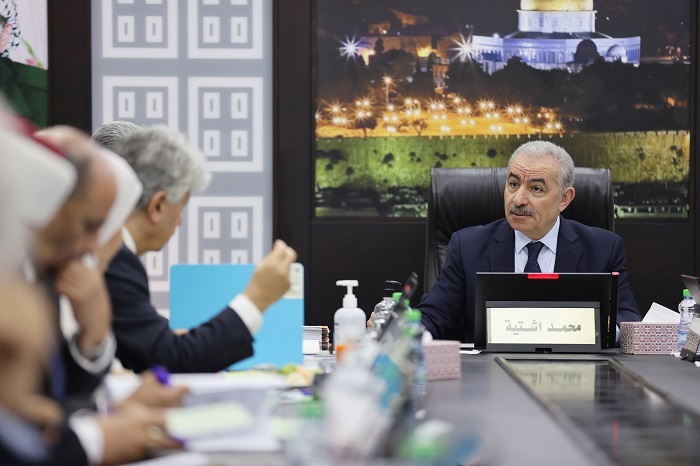
Drawing on an exclusive interview with Palestinian Prime Minister Mohammad Shtayyeh and conversations with other key stakeholders, this article lays out some of the most important questions that must (but, for now, cannot) be answered as policymakers discuss day-after scenarios. The most vexing questions include the future habitability of Gaza; the myriad urgent, long-term needs of the 2.3 million Palestinians who reside there; and the governance of Gaza during any transition period and once a permanent political solution can be implemented.


CONSIDERATIONS FOR THE DAY AFTERTHE HABITABILITY OF GAZA AND ITS INFRASTRUCTURE

When discussing day-after scenarios for Gaza, policymakers are assuming that the enclave will be habitable after a permanent ceasefire is reached. That is not a given. The United Nations had already determined that Gaza would be unfit for human habitation by 2020. That assessment has clearly not improved, as Israel’s bombing campaign has taken matters in Gaza from dire to “apocalyptical.” More than 29,000 bombs have been dropped on Gaza, an area twice the size of Washington, DC. This amounts to the weight of two nuclear bombs, causing levels of destruction that the world has not seen since the yearlong carpet bombing campaigns of World War II. The toxins released from spent explosives, Gaza’s pulverized building material, and the white phosphorus Israel has reportedly used in civilian areas are hazardous to human health and will take time to remediate to allow for safe habitation in some parts of the enclave, according to a UN Mine Action Service expert. What will that mean for the ground soil in Gaza and the ability to grow food—and the enclave’s economy, since agriculture represents 85 percent of Gaza’s exports and provides nearly 30,000 formal jobs while unemployment stands around 45 percent? How will the seepage of toxins into the aquifer underneath Gaza impact ongoing efforts to rehabilitate the strip’s only freshwater source? And how will Israel’s flooding of Gaza’s tunnel network to root out Hamas impact future use of the aquifer? Removing and disposing of the rubble created by the bombings will in itself be a monumental task, made all the more difficult by the fact that most of Gaza’s civil defense digging equipment has been destroyed. New equipment will need to be purchased and transferred to Gaza. How will this be financed, and how will the entry of such equipment be coordinated with Israel when officials there have been reluctant to open up further entry points for critically needed humanitarian aid and foodstuffs? 


As for the civilian infrastructure in Gaza, it is yet unclear how much damage has been suffered. UN officials have accused Israel of using water as a weapon of war, but the extent of the damage to Gaza’s water and wastewater treatment infrastructure is not yet clear. The power stations, reservoirs, some water towers, and water treatment plants have been targeted. Some telecommunications equipment, like cell towers and fiber-optic cables, have been destroyed or damaged during the rounds of bombardment.


As for the healthcare sector, according to the UN special rapporteur on the right to health, infrastructure “has been completely obliterated.” More than fifty healthcare facilities have been affected by the Israeli bombardment, while almost 600 doctors and healthcare workers have been killed. This will challenge the sector’s ability to treat the more than 50,000 wounded, many of whom will need long-term care and who will have mobility issues due to lost limbs. With so many parents among the dead, there will also be a need for facilities to care for orphaned and injured children and provide them with psychosocial care. The hundreds of thousands of other traumatized civilians will also need specialized care after surviving more than three months of bombing and deliberate deprivation of food, water, and shelter.


BASIC HUMANITARIAN REQUIREMENTS, PALESTINIAN DISPLACEMENT, AND A SHRINKING GAZA

Israel’s strict blockade of Gaza and the denial of food, water, and needed supplies to sustain human life will also have long-term impacts on the survivors in Gaza. Currently in the southern part of Gaza, where Palestinians were instructed to flee and where 85 percent of Gaza’s population has been displaced, the World Food Program reported that 56 percent of people suffer from severe levels of hunger and over 90 percent suffer from inadequate food consumption. Israel’s ongoing bombardment has crippled Gaza’s food production capacity: for instance, several bakeries have been destroyed. Even before October 7, the population was largely dependent on humanitarian assistance and will be in greater need of aid for some time. Water delivery and distribution from outside Gaza will also be needed for the foreseeable future to meet needs. Palestinians in Gaza are currently consuming only 2 liters of water per day, far below the 15 liters needed for basic human survival, forcing them to consume impure water and raw or indigestible foods. This fact, along with poor sanitation, stands to accelerate what the UN humanitarian coordinator for the Occupied Palestinian Territory calls a “textbook formula for epidemics and a public health disaster” with potentially long-term effects on the population of Gaza.

To the extent that the Palestinian population is able to stay in Gaza under such inhumane and unhealthy circumstances, they will need better shelter as winter sets in. Temporary dwellings must be set up, and basic utilities, healthcare, education, and other humanitarian aid provided, until longer-term solutions are found. The UN Relief and Works Agency for Palestine Refugees in the Near East (UNRWA) had provided social services and humanitarian relief to between 60 to 80 percent of the population in the strip before October 7 and for more than seven decades has provided primary and secondary school education and primary healthcare services to Palestinians in Gaza (the agency had served more than a quarter of a million students and provided health screening to 1.5 million registered refugees). However, with so many of its local staff killed, injured, or without shelter, and with some Israeli and U.S.  officials calling for the dismantling or defunding of UNRWA, it is not clear if UNRWA could take on an expanded role or if it will survive as a UN agency. No organization could readily step in to take on UNRWA’s mandate, and the UN secretary general has expressed opposition to the idea that a UN peacekeeping force would provide security or a protective presence in Gaza during the period between the end of bombing until Palestinian governance. And even if answers are found for the basic needs of the more than 2 million Palestinians in Gaza—shelter, food, medical care, environmental remediation, and temporary protection, among others—how will the youth of Gaza (half the population) be educated with so many schools, universities, mosques, and churches damaged or destroyed?

The prospect that Israel intends to forcibly displace some or all of the population out of Gaza cannot be discounted, according to both the head of the UNRWA and the Jordanian foreign minister. Approximately 1.8 million people are sheltering in Gaza’s south in abject circumstances. Already half of Palestinians in Gaza are starving, and desperation is setting in. In the first few days of Israel’s assault on Gaza, Israel proposed that Palestinians be relocated to Egypt temporarily—though Egyptian and U.S. officials feared the forced displacement could become permanent. Indeed, a leaked Israeli Ministry of Intelligence report dated October 13 recommended the construction of permanent cities for Palestinians in Egypt. If Palestinians are displaced due to miserable and inhumane circumstances of Israel’s making, will residents ever be allowed to return? Or will they be permanently dispossessed, some of them for a second or third time in their lifetimes?


OPERATING ASSUMPTIONS FOR ANY DAY AFTER

Though the list of unknowns is too long to make for informed planning for the future, and though the situation is still very fluid, certain assumptions can be made right now.


ISRAEL 

First, Israeli political leaders, both in the government and in the opposition, will insist on maintaining open-ended security control over the entirety of Gaza. They also intend to effectively annex a yet undetermined or unknown portion of Gaza for a buffer zone. They oppose either a return of Hamas rule or the reentry of the PA to the strip and are against a UN presence in Gaza, even a transitional force to maintain public order, though there may be willingness to tolerate an international force in the buffer zone area. Israel apparently would support a regional force inside Gaza to coordinate the transitional period for reconstruction purposes.

Yair Lapid, the more liberal member of the opposition parties in Israel, has posted on his Facebook page a policy vision prepared, he states, following a roundtable that included Israeli and American officials. It calls for the civilian management of Gaza to be temporarily entrusted in the first stage to an international team led by the United States with the participation of select Arab states and local elements in the strip not affiliated with Hamas. The team would engage in management, reconstruction, and humanitarian assistance and would establish a body to replace UNRWA. Considering U.S. and international support for the PA to assume governance over Gaza in a transitional phase and permanently, overwhelming international intervention led by the United States will be required to push back against Israeli impulses that would imprison the Palestinian population in a revamped version of the seventeen-year-long Israeli siege over Gaza.


REGIONAL COUNTRIES

Second, Arab states neighboring Israel and the occupied territories are heavily invested in seeing an end to hostilities and a political resolution. Egypt and Jordan have indicated that they will not countenance a single Palestinian displaced from Gaza or the West Bank to their sovereign territory. They have also indicated that they will neither individually nor collectively with others be involved in the administration of Gaza. While Arab states have an interest in leading the dialogue concerning Gaza’s fate and a final political solution between Israelis and Palestinians because of how the hostilities impact their own national security, they oppose any plan that involves them being responsible for Gaza, the West Bank, or the fate of Palestinians in the occupied territories.


THE U.S. AND EU POSITIONS

U.S. Secretary of State Antony Blinken and the EU foreign policy chief Josep Borrell are largely in agreement about what they envisage for Gaza. They do not support Israel forcibly displacing Palestinians from Gaza, the reduction of Gaza’s territory, or Israel’s reoccupation of the strip. Neither has indicated, however, what leverage they might be willing to use to prevent Israel from taking such steps. Both have also indicated support for a “reinforced” or “revitalized” version of the PA to assume governance in Gaza. Borrell suggested the PA’s legitimacy would be “defined and decided upon by the [UN] Security Council.” Their plans assume a role for the Arab states, particularly those that have normalized relations with Israel, by using their influence with Israel to push for its acquiescence to a Palestinian state.


THE PALESTINIAN AUTHORITY’S STAND ON THE DAY AFTER

Given these assumptions about Israel, the region, and influential stakeholders like the United States and the EU, much rests on the PA and what it will or will not do in Gaza once a permanent ceasefire is reached. The PA has indicated that it will not assume responsibility over the strip unless it is part of a political solution that ends the occupation that began in 1967. Beyond that, less is understood about what the PA will demand in return for its engagement on interim arrangements concerning Gaza. What would the Palestine Liberation Organization (PLO) or PA require before entertaining the idea of governance over Gaza? How might a more credible PA be accomplished without or until elections are possible? Palestinian Prime Minister Mohammad Shtayyeh answered these questions in a series of interviews I held with him over the past week.

On the PA’s position for the day after, the prime minister stated, “today is the day after,” explaining that medium- to high-intensity violence threatens to become the new status quo unless serious efforts are made toward a political solution now. Thus, in his view, the day after must be the day after a plan for ending Israel’s occupation, not the day after Israel decides to allow Palestinian administration in Gaza. He said that no transitional mechanism for administering Gaza by a UN or multilateral force is needed in Gaza. Despite the political division between the PA and Hamas following Hamas’s 2007 takeover of the strip, the PA has continued to be responsible for Palestinians there. Until October 7, the PA had been spending a third of its budget in Gaza. It was paying for the water and electricity provided by Israel and the salaries of 37,000 Palestinian civil servants, including 19,000 police officers who were replaced by Hamas after the Islamist movement took over governance. The PA has also continued to maintain a shadow cabinet in Gaza that includes ministries of agriculture, social affairs, national economy, interior, and higher education. It also ran the official media in Gaza and supervised the industrial zones and the Municipal Development and Lending Fund, a donor facility. Shtayyeh pointed to the fact that his Ramallah-based cabinet includes five ministers from Gaza (three of whom are currently in Gaza). Shtayyeh asserted that the PA will not accept any interim or transitional agreement where it takes over governance of Gaza because prior such agreements—the Oslo Accords, in particular—have functioned as a trap for Palestinians. The situation in the West Bank is rapidly deteriorating due to near-daily Israeli military incursions and mass arrests: Israel has rounded up at least 3,000 Palestinians in the West Bank since October 7. As a result, the PA is barely holding on to the 40 percent of the West Bank where it has some authority. A comprehensive agreement is needed to end Israeli rule and resolve all outstanding issues, Shtayyeh argued, while Palestine is still an international focus.

The PA will also require commitments, including from the United States, about exactly what the path toward an end to the occupation will look like and how the United States intends to work toward that objective. In Shtayyeh’s view, U.S. President Joe Biden has to take certain meaningful steps that could not easily be reversed by another administration, including supporting Palestine’s admission to the UN and recognizing the State of Palestine. Political recognition would mean ending the U.S. treatment of the PLO as a terrorist organization, something Biden can do under his executive power. The PA would also want the United States and other stakeholders to use their leverage to address ending the geographic fragmentation of Palestinian communities inside and between the occupied territories and removing Israel’s movement and access restrictions imposed on Palestinians. Any attempt to govern Gaza and the West Bank without such connectivity would guarantee the PA’s failure.

To the extent that transitional arrangements will be needed to lay the groundwork for an end to the occupation, Shtayyeh insisted that Israel not have any say over the day-to-day administration of Gaza or the civil defense and law enforcement required to secure the territory. The PA will also require any transitional security arrangements be linked to the West Bank, where both the Israeli military and extremist settlers have been attacking Palestinian civilians, many times in coordination with each other.

Shtayyeh said he believed the PLO and PA would be supportive of establishing an international monitoring mechanism during this period. The temporary protective presence (TPP) that operated in the West Bank city of Hebron for more than twenty years, whose mandate expired when Israeli Prime Minister Benjamin Netanyahu refused to renew it in 2019, provides a useful example. A multinational force led by Norway, the TPP was established in 1994 to monitor and provide confidential reports on the situation in Hebron after an American Israeli settler opened fire inside the Ibrahimi Mosque killing twenty-nine Palestinian worshippers. Unlike the TPP in Hebron, however, Shtayyeh said a new mechanism should be empowered to file public reports and provide recommendations to stakeholders for international action and accountability.

The PA will also need commitments from international donors to help reconstruct and rehabilitate Gaza. In an effort to recover the costs for Israel’s evident targeting of civilians and civilian infrastructure, provide justice to victims, and prevent any possible future violations of international humanitarian law, Shtayyeh said the international community should also support Palestine’s efforts toward accountability.

A critically important obstacle to PA governance that must be addressed, according to Shtayyeh, is Israel’s continued withholding of PA tax revenue. The PA has not paid civil servant salaries in the West Bank since October 7 because Israel had been holding on to PA revenue in the amount the PA spends in Gaza each month to pay for utilities and salaries. Before October 7, the PA had only been able to pay 80 percent of all its civil servants’ salaries due to other Israeli deductions from Palestinian revenue. Responding to the massive need in Gaza while also reliably maintaining PA operations in the West Bank will require the PA to be able to collect its own clearance taxes.

As for how the PA might be revitalized, Shtayyeh pointed to the plan for reforming the PA that was submitted this year to the Ad Hoc Liaison Committee, a coordination mechanism established to deliver international aid and development assistance to the PA. The plan was also provided to a U.S. delegation that met with the prime minister on December 18. Shtayyeh said that the way to shore up the weak and dysfunctional PA is to end the Israeli practices that undermine the PA’s authority, including military incursions, mass arrests, settlement expansion, and withholding PA revenue. Allowing the PA to benefit from its land and natural resources would also help to bolster the PA’s capacities.

As for Hamas’s future representation in the PA or the PLO, Shtayyeh was circumspect, recognizing only that Hamas is “an integral part of the Palestinian mosaic” but without indicating how Hamas as a political party might be incorporated in Palestinian national institutions. In recent weeks, members of Hamas’s political bureau have been signaling in interviews a willingness to accept the two-state solution and the PLO’s program. On the one hand, the PA understands that any discussion about a political solution with Hamas as a partner will be used to justify Israel’s nonparticipation and likely that of the United States. On the other hand, not including the political arm of Hamas, which maintains some support in Gaza and the West Bank, will guarantee a continuation of internal divisions and the failure of any meaningful peace. Despite how much has changed across the region since October 7, this is one area where the situation may not change at all.


CONCLUDING THOUGHTS: THE DAY AFTER DISTRACTION


What is left between what Israel wants for Gaza and what the PA will demand is wide and deep. Unless key stakeholders have a plan for bridging differences and using their considerable collective leverage, the place where Palestinians in Gaza will likely end up will not be dissimilar from the cantonized West Bank, even if the PA assumes responsibility for governance in the enclave during any transitional phase. Palestinians will likely be forced into smaller areas within Gaza with greater deprivation than what they had known before. 

A different future appears possible, if the international community, lead by key stakeholders, is willing to support Palestinian national reconciliation and elections, make some concessions to the PA toward a political horizon, and use their leverage with Israel. 


For now, though, the day-after discussions appear to be only a distraction from the more pressing matter of ending the killing in Gaza and securing a ceasefire.


PALESTINE

Wed 27 Dec 2023 6:46 pm - Jerusalem Time

A family survived after settlers poured “Nitric acid” on their tent east of Bethlehem

A family of nine members survived, today, Wednesday, after settlers poured “Nitric acid” on their tent, in the Buryat al-Rashayda area, east of Bethlehem.


The director of the Office of the Wall and Settlement Resistance Commission in Bethlehem, Hassan Barijiyah, reported that settlers, using a drone, poured concentrated “Nitric acid” on the tent of citizen Muhammad Awad Al-Rashayda (40 years old) in the Buriyat Al-Rashayda area, while family members were inside it. The family was unable to leave the tent, which was severely damaged.


Brijiyeh pointed out that the Bedouin communities in the Rashaida Arabs have become greatly suffering from repeated violations and attacks by the colonialists, especially after the seventh of last October.

ARAB AND WORLD

Wed 27 Dec 2023 6:24 pm - Jerusalem Time

“Silly joke!”Hebrew Newspaper: Our lawmakers are pressing to displace Gaza residents under guise of “humanitarian aid”

The Hebrew newspaper "Haaretz" said, on Wednesday, December 27, 2023, that Israeli lawmakers continue to pressure to deport Gazans under the guise of "humanitarian assistance," considering this in light of the devastating war on the Strip to be a "ridiculous joke," in an editorial published under the title: “Israeli lawmakers continue to push for transfer under the guise of humanitarian aid.”


According to the newspaper: “Knesset member from the Likud party (led by Prime Minister Benjamin Netanyahu), Danny Danon, found the solution to the Gaza problem, and revealed in an interview with Kan (Israeli) radio that he had received calls from countries in Latin America and Africa wishing to absorb refugees from the Gaza Strip.” 


It continued: “In fact, Danon, who served as Israel’s ambassador to the United Nations from 2015 to 2020, sees this idea as a humanitarian solution, and said: We have to make it easier for the residents of Gaza to leave for other countries. I am talking about voluntary immigration for Palestinians who want to leave.” .


"Involuntary deportation"

The newspaper criticized his words by saying: “Without a point of self-awareness, Danon gave the example of Syria, of all countries, as a precedent proving the futility of his solution,” and continued: “Danon can insist as much as he wants that this will be “voluntary,” but what he is proposing It is a deportation of the population in all respects.”


The newspaper considered that "dealing with Gazans who are thinking of fleeing for their lives as if they were leaving voluntarily, at a time when Gaza is being bombed non-stop, and the death toll has exceeded 20 thousand, and entire neighborhoods have been wiped out, and the region is suffering from a humanitarian crisis, and there is no water or food or infrastructure, but there are so many diseases, it's a sick joke."


It continued: “The only desire that plays a role here is the desire of Danon and his ideological partners, who want to expel the residents of Gaza and return to the Jewish settlements that were evacuated from the Strip in 2005,” pointing out that “Danon has been pushing the idea of voluntary transfer (as he put it) in international talks some time ago".


It said: "He is not alone. A few weeks ago, Knesset member Ram Ben Barak from the There is a Future party published an editorial on this issue in the Wall Street Journal, which indicates that the idea of transfer (deportation) has found a foothold in the opposition as well."


It added: “Intelligence Minister Gila Gamliel also published an editorial on this issue in the Jerusalem Post last month, and the Israeli embassy in Washington was forced to clarify that this does not reflect government policy.”


Netanyahu enters the line

According to Haaretz, “What is most disturbing is that Netanyahu himself is discussing this issue. At a meeting of Knesset members from the Likud Party on Monday, and in response to Danon’s statement that Israel must form a working group to deal with this issue, Netanyahu said: Our problem is the countries that want to absorb them, we are working on this matter."


Regarding this, the newspaper said: “Netanyahu’s extremism continues, and after he legitimized Kahanism (following the late extremist Rabbi Meir Kahane) and paved the way for Itamar Ben Gvir (the extremist Minister of National Security) to the government, he now allows discussion of transfer.”


It added: "But, regardless of the diplomatic cover used by Netanyahu, Danon and their colleagues, this distorted and immoral idea must not become a legitimate option."


Re-settlement in Gaza

Since the outbreak of the Israeli war on Gaza, Israeli calls have emerged, especially among the extreme right, openly calling for the deportation of Palestinians from the Gaza Strip and the resettlement there, especially in the settlements that Israel had previously evacuated in 2005.


These calls were met with a wave of widespread regional and international rejection, disapproval, and condemnation, especially the devastating war that supported them, which included tightening the siege and forcing most of the people of the Gaza Strip to migrate toward the south, in what was considered the first stage of a “new Palestinian alienation,” as happened in 1948 during the founding of Israel.


In the same context, the Palestinian rejection of any proposal or plan for displacement was repeated, at both the official and popular levels, whether by the Palestinian Authority in Ramallah, led by President Mahmoud Abbas, or by the Palestinian factions in the West Bank and Gaza.


The ongoing Israeli war against the Gaza Strip since October 7, until Wednesday, left 21,110 martyrs and 55,243 wounded, most of them children and women, massive destruction of infrastructure and an unprecedented humanitarian catastrophe, according to the Gaza Strip authorities and the United Nations.


PALESTINE

Wed 27 Dec 2023 6:17 pm - Jerusalem Time

west Bank: A Palestinian boy was injured as a result of Israeli soldiers assault on him in Hebron

A 14-year-old child was injured, Thursday evening, as a result of being assaulted by Israeli occupation soldiers in the Old City of Hebron.


Local sources reported that the Israeli occupation forces stationed at the entrance to Jaber neighborhood in the Old City of Hebron attacked a child with a sharp object while he was trying to reach his home, which led to him sustaining injuries to his hand. He was subsequently taken to the hospital, and his injuries were described as moderate.

PALESTINE

Wed 27 Dec 2023 5:57 pm - Jerusalem Time

St. Privarius Church and the Baptist Hospital...the most prominent Christian monuments bombed by Israel in Gaza

The continuous Israeli bombing of the Gaza Strip since October 7, 2023 has led to the destruction of more than one hundred archaeological and historical monuments, which were a witness to the city’s centuries-long cultural and civilizational history, according to a recent study conducted by the “Heritage for Peace” group.


These monuments that were subjected to significant damage were not limited to Islamic religious sanctities only; Rather, it also included Christian sanctities, including ancient architectural monuments such as the Tell Umm Amer site and the ancient Holy Family School, which is considered the oldest in Gaza, and even the Baptist Hospital, whose history extends back to the end of the nineteenth century, was not spared from the oppression of the occupation in a massacre that the survivors described as a holocaust. Real.


In this article, we will inform you of some of the Christian monuments that were targeted by the Israeli occupation in its aggression against the Gaza Strip, as part of a systematic plan to undermine the Palestinian heritage and eliminate any religious and historical symbol that indicates its existence.


The Church of Saint Privarius is the third oldest church in the world

The Israeli army directly targeted the Greek Orthodox Church, or as it is also known as the Church of St. Privarius, which is located in the center of Gaza City.


The Orthodox Patriarchate in Jerusalem said that a Greek Orthodox church in the Gaza Strip that was sheltering hundreds of displaced Palestinians was subjected to an Israeli air strike during the night, and Palestinian health officials said that 16 people were killed in the attack, according to Reuters.


The Greek Orthodox Patriarchate also described the Israeli attack on the Church of Porphyrios as a "war crime."


The official Palestinian news agency, Wafa, said, “The occupation aircraft bombed the Church of St. Privarius in the Al-Zaytoun neighborhood in southern Gaza, which led to severe material damage to parts of the church building, and a building next to it was destroyed.”

Saint Privarius Church following the Israeli bombing | Communication sites


The agency quoted local sources as saying that the building of the Council of Church Stewards, which houses a number of Palestinian families, both Christian and Muslim, who took refuge in the church in search of a “safe place,” was completely destroyed due to the bombing, as the Arab Post website reported to us.


According to the ART NEWS website, the founding of St. Privarius Church dates back to the fifth century, and the building was completed in its current form in the twelfth century.


Named after the former Bishop of Gaza, Saint Prevarius, the church is located above the spot where he is believed to have died in 420 BC.


Like the few remaining buildings from the Crusader era, the Greek Orthodox church was exquisitely designed on the inside and built with heavily fortified walls. The church represented a long-time refuge for the Christian minority and the Muslim community in Gaza.

During the 2014 bombing of Gaza, the church sheltered about 1,000 Palestinian Muslims who fled Israeli shells, according to Reuters.


The only Catholic church in the Gaza Strip

The Catholic community in the Gaza Strip consists of 133 people, and the Holy Family Church is the only Catholic church in the Gaza Strip and its responsible priest is Gabriele Romanelli.


According to the Latin Patriarchate of Jerusalem website, the church includes the Holy Family School, which can accommodate 300 students and was bombed, a kindergarten that can accommodate 50 children, and the home of the parish priest.


There are also two nuns inside the building, who help with parish activities, and are responsible for two homes for children and the elderly with disabilities.

A Christian funeral after the Catholic Church was targeted | Social networking sites


Holy Family School, which was bombed


The Holy Family School in Gaza was founded in 1974 by the Catholic Church. It is considered one of the best schools in Gaza, as it provides a high level of education and cultural exchange with Christian rituals, and provides religious instructions to Christian children.


Baptist Hospital: An ethnic cleansing massacre against civilians

The Baptist Hospital massacre is the oldest massacre in Gaza. It was a massacre committed by the Israeli Air Force in the early night hours of October 17, 2023 on the hospital located in the Al-Zaytoun neighborhood, south of Gaza City.


It is an ethnic cleansing massacre committed in full view of the world, against civilians who took refuge in the hospital courtyards to escape the continuous and intense bombing that targeted their homes, and also damaged the streets, places of worship, and even the schools in which they took refuge.


According to the Arab Post website, the founding of the hospital dates back to the end of the nineteenth century AD, specifically in 1882, in the Al-Zaytoun neighborhood in the Gaza Strip. It was founded by the missionary mission of England at that time, and it was affiliated with the Anglican Episcopal Church in Jerusalem.

Baptist massacre | Social networking sites


It was the only hospital in the area between Jaffa and Port Said, and it provided health care to residents of areas near the Gaza Strip. The hospital is surrounded by the Church of Saint Porphyrius, the Al-Shamaa Mosque, and the cemetery of Sheikh Shaaban.


It is noteworthy that the hospital was looted and stolen in 1919 after World War I, which led to its rebuilding and it was given a new name: “Ahli Arab Hospital,” according to the same source.


The hospital developed into, before it was subjected to occupation bombing, an integrated health institution with different departments and multiple medical care services for patients.


The Byzantine Church...the mosaic that was destroyed by the occupation

The Byzantine Church located in the city of Jabalia, north of the Gaza Strip, was subjected to targeted bombing by Israeli occupation aircraft, according to what was confirmed by the Palestinian Ministry of Tourism. It also stated that “the church building was subjected to severe damage as a result of the Israeli bombing, which caused cracks that may threaten the infrastructure of the place.”

The Ministry also stated that the bombing that targeted the church “may destroy the major maintenance and restoration efforts that the Ministry supervised and implemented in 2017.”


The founding of the church, which is considered one of the most important archaeological and Christian heritage sites in the Gaza Strip, dates back to 1,600 years, according to Quds Press Agency.


The floor of the Byzantine church contains a group of mosaic paintings, such as palm trees and fruit. It also includes various engravings and decorations, including animal and geometric ones.


The church's animal decorations, "lions, deer, and sea fish," symbolize the stability and calm that prevailed in Christian life in the Gaza Strip, according to the same agency.


The Byzantine church also consists of 3 aisles: The first is intended for priests and monks, the second is the prayer gallery, and the third is the baptismal gallery.


The Church has 16 founding texts in the ancient Greek language, which is considered one of the largest founding texts within the churches.


Saint Hilarion Monastery...the oldest monastery in Palestine


According to the ART NEWSPAPER website, the Monastery of Saint Hilarion is part of the archaeological hill of Umm Amer in Gaza City, a site included on the UNESCO Heritage List since 2012. It is located in the coastal village of Nuseirat, about 8.5 kilometers south of the Strip.


The Monastery of Saint Hilarion, known as the archaeological hill of Umm Amer, is the first, oldest and largest monastery built in Palestine during the Byzantine era, as it dates back to the year 329, when Saint Hilarion established his first hermitage in that place.


The archaeological remains of the Monastery of Saint Hilarion, discovered in 1997 by the Department of Antiquities in Gaza, cover an area of more than 14,500 square metres. The time period to which these ruins belong extends from the fourth century to the ninth century AD, which in turn extends from the Roman era until the Abbasid Islamic era. The monastery It is also considered the oldest site in the Holy Land in Gaza, given that its founder was Saint Hilarion, who is considered the father of monasticism in Palestine.

Saint Hilarion Monastery before the aggression | Communication sites


The monastery contains five churches, baths, sacred complexes, complex geometric mosaics, and a spacious crypt.


The supervisor of the archaeological site of Saint Hilarion, Muhammad Abdel Jawad, states that “until 1993, the place was a hill of sand, until stones and antiquities were discovered during a project to divide the Palestinian lands.”


He added: "At that time, the Gaza Strip was ruled by the Israeli occupation, and as soon as he learned of the information, he turned the place into a closed military zone. He worked in the place for an entire year, during which helicopters would land to loot and steal the site's antiquities."

Israel's bombing of Christian sites | Social networking sites


We cannot conclude our article without mentioning that dozens of these Christian archaeological sites that were targeted by the Israeli occupation in its aggression against the Gaza Strip, in a horrific historical and religious cleansing campaign, are located in a country considered the cradle of the Christian religion in the world, given its archaeological sites, in addition to containing... The Church of the Nativity, in which Jesus Christ was born in the city of Bethlehem, and therefore it is no wonder that Muslims and Christians in Gaza coexist there in the most beautiful way of meeting and integrating religions... This is a peace that disturbs the occupation and disturbs it. As these Christians are also considered to be the owners of the land in Gaza City; Their presence there dates back to the year 402 AD, according to BBC Arabic, and therefore their presence preceded the arrival of the occupation in 1948. For it, this constitutes sufficient reason to uproot their history by destroying their sanctities.

Source: Arabic Post


ARAB AND WORLD

Wed 27 Dec 2023 5:51 pm - Jerusalem Time

American website: Biden's support for Israel will bring harm to the United States..

The foreign policy record of US President Joe Biden's administration in 2023 will not give him much to boast about in next year's 2024 elections, which he is preparing for with his Democratic Party. At the end of 2023, the United States became more exhausted than it was at the beginning of the year, and the successes of Biden’s policies were very few, according to the American Responsible Statecraft website. There were no major disasters for Americans all year, but that changed over the past two months after the president gave the Israeli government carte blanche and unprecedented support to wage a brutal war in Gaza.


The costs of Biden's absolute support for Israel are increasing for America

Daniel Larison, an American writer and researcher at the Responsible Statecraft website, says that Biden committed Washington to assisting another foreign war following the attack of last October 7, while the conflict in Ukraine reached a stalemate.


Although the United States was not obligated to support this war, Biden made sure to turn it into one of his main policies and closely linked it to support for Ukraine in his public rhetoric. Biden did not make a convincing case that unconditional support for Israel's campaign was in the best interests of the United States, and the costs of such support have been increasing ever since.


Moreover, supporting the war has exposed American forces in Iraq, Syria, and elsewhere to renewed attacks from armed militias, and has also increased the risks facing American ships in the Red Sea after the Houthis launched attacks on Israeli cargo ships or those seeking to reach Israel due to... Israel's continued aggression against Gaza. The risks of the conflict escalating and spreading to other areas in the region are increasing, as is the risk that the United States may become directly involved in a multi-front war.


A broader war that would put America's interests at risk is possible because of Biden's policies

Larrison says Biden's "instinctive" move to support Israel to the end made a broader war more likely and put American forces and interests at greater risk.


Not only has American support for Israel overshadowed the rest of Biden's foreign policy agenda, but it has also linked the United States to a campaign of indiscriminate bombing and a punitive blockade that is pushing hundreds of thousands of Palestinian civilians into famine conditions. Not only did the Biden administration burn what remained of Washington's credibility on human rights and international law, but it also closely linked the United States to war crimes committed against Palestinian civilians.


The damage to America's reputation has already been severe, and the damage to American interests in the Middle East and beyond in the longer term is likely to be significant and unprecedented.


Biden's understanding of the Middle East is fundamentally flawed


The setback to Biden's own agenda cannot be denied; The administration's major diplomatic initiatives in 2023, such as the ill-advised pursuit of Saudi-Israeli normalization, faltered when the war in Gaza demonstrated that the administration's understanding of the region was fundamentally flawed, says Daniel Larison. The administration, which was convinced by the false assumption that US-facilitated normalization agreements between Israel and Arab clients would stabilize the region, failed to realize how bad things were in Palestine.


The Biden administration, like its predecessors, did nothing to curb Netanyahu's extremist government coalition in light of his endeavor to gradually annex the West Bank. The American administration was trying to figure out the necessary incentives to persuade Mohammed bin Salman to support normalization, believing that it was possible to quietly marginalize the Palestinians and ignore their grievances and jump on them. If it had succeeded, it would have meant another security commitment and more costs for the United States, so it would have been good for this policy to be suspended.


It is not clear how much the Saudi normalization push factor contributed to Hamas' decision to attack, but it is clear that it was not beneficial for the United States to waste such a large effort trying to entice the Saudis into a deal when tensions between Israel and the Palestinians were on the verge of exploding. National Security Advisor Jake Sullivan's famous statement shortly before the war began about how the region was calmer than it had been in decades reflects the extent to which the administration believed its flawed press releases, Larison says.


Biden has made America a global pariah


Support for the war cost the United States much “goodwill” in the Global South, and the administration’s opposition to a ceasefire left the United States deeply isolated at the United Nations as never before on any major issue. The administration had previously stressed the importance of competing for influence with other major powers in Africa, Latin America, and Asia, but its hard-line stance on Gaza appears to have squandered most of the gains it has achieved.


Support for the war in Gaza undermined American support for the war in Ukraine in two ways. First, the Gaza war diverted American focus and resources away from Ukraine after the United States shifted its focus back to the Middle East. It also made a mockery of the administration's pro-Ukraine rhetoric. The United States has spent much of the past two years extolling the importance of international law in order to mobilize support for Ukraine, then showing that the United States does not hold its clients and partners to the same standards it expects of other countries.


Limited successes


Biden's record this year wasn't all bad, Larison says. On the limited positive side, the United States made some modest progress in stabilizing relations with China toward the end of the year and after months of deteriorating relations following the spy balloon incident last February. There was a minor diplomatic breakthrough with Iran this summer that led to the release of five Americans wrongfully detained by the Iranian government. Unfortunately, the administration later backed off from releasing Iranian funds that had been frozen under “maximum pressure” sanctions. Because it did not want to be seen as “rewarding” Iran following the Hamas attack.


The administration also recently reached another agreement with the Venezuelan government to release prisoners. The Biden administration has had greater success working with established allies. It developed the OKOS agreement to further share technology with Australia and Britain, and took advantage of the temporary improvement in relations between South Korea and Japan to strengthen relations with both.


The Biden administration's foreign policy in 2023 has been characterized by too much reliance on military tools and too little effort at diplomatic engagement. This may be one of the reasons that explains the public's widespread rejection of Biden's handling of foreign policy and the decline of his electoral chances in various opinion polls.

Source: Arabic Post


OPINIONS

Wed 27 Dec 2023 5:37 pm - Jerusalem Time

Israeli opinion: War and public opinion in Israel

Antoine Shalhat

Antoine Shalhat

Opinion Writer

At the level of those who pretend to hold the title of leftist within Israeli public opinion, this war has proven, once again, that the overwhelming majority of them are doves chirping within the flock, not doves with universal values that go beyond a narrow local framework.


The current war waged by Israel against the Gaza Strip immediately attracted broad consensus among Israeli public opinion, perhaps due to several factors and reasons. Of these factors, two central ones can be noted:


First, this war is also considered a “war of partisan interests.” Therefore, electoral calculations and narrow interests place all Zionist parties on the side of their supporters. It is noteworthy here that within the same context, wars or military operations were launched in the past on the eve of general elections. For example, the former Israeli Prime Minister, Menachem Begin, bombed the Iraqi nuclear reactor during the electoral battle in 1981. In 1996, the Prime Minister at that time, Shimon Peres, launched the “Grapes of Wrath” military operation against Lebanon, at the height of the electoral battle, and most Israelis were sure he did this to win the elections. But the operation failed, and Peres lost the elections, and the victory went to the head of the Likud Party, Benjamin Netanyahu. Ehud Barak, Minister of Defense and Chairman of the Labor Party, and Tzipi Livni, Minister of Foreign Affairs and Chairman of the Kadima Party, repeated the matter during the war on Gaza in 2008-2009, with the support of the outgoing Prime Minister, Ehud Olmert. While Livni and Barak's eyes were on the general elections that took place on February 10, 2009, Olmert aimed for the war to restore some of his prestige that had been undermined by the Second Lebanon War in July 2006.


Secondly, we do not need much trouble to realize that since the 2006 war ended, a general climate has prevailed in Israel, at all levels, suggesting to everyone near and far that an Israeli war on the horizon, whose main goal is to restore Israel’s deterrent power, is almost inevitable, in light of the results of that war. The war, and the conclusions of the commission investigating its facts (the Winograd Commission). Many people mention that this committee was assigned to investigate the facts in that war from a very specific angle, including: Why did Israel fight the war and how did it fail? This remains the most prominent mandate granted to the Committee. Therefore, many observers and analysts considered the main statement issued by this report to be the prescription given to the Israeli government, in order to fight the next war according to it and avoid failure in it.


The conclusions of this committee included a basic conclusion, which we should return to, which states: “The Second Lebanon War once again brought to the table of discussion and reflection issues that Israeli society, in part, preferred to exclude and set aside, most importantly the following: Israel cannot remain in this region. You will not be able to live there in peace or even quietly, without there being in and around it those who believe that the State of Israel possesses political and military leadership, military capabilities, strength and social immunity, enabling it to deter anyone from among its neighbors who dares to attack or harm it, and preventing them, even by force, from achieving their goals. These facts are not subject to or linked to this or that political orientation.” As stated: “It is true that Israel is obligated, politically and morally, to aspire to peace with its neighbors and to reach the settlements required for this purpose. However, attempts to achieve peace or settlement must come from a position of military strength, social and political immunity, and from the ability and willingness to defend the state and its values and the security of its residents.”


At the level of those who pretend to hold the title of leftist within Israeli public opinion, this war has proven, once again, that the overwhelming majority of them are doves chirping within the flock, not doves with universal values that go beyond a narrow local framework. The type that opposes war and supports peace for universal moral motives has become a rare type, and this type is the one that does not seek refuge in the embrace of blind patriotism and circumstantial consensus that arises specifically during wars.

ARAB AND WORLD

Wed 27 Dec 2023 5:29 pm - Jerusalem Time

Former Israeli Official Beilin: The conflict in Gaza may end within weeks

Deputy Foreign Minister Yossi Beilin said that the conflict in the Gaza Strip may end within weeks.


This came in an interview between Beilin, who served as Minister of Justice from 1999-2000, with the Spanish newspaper "Vanguardia", in response to a question about whether the conflict could end soon, as the politician indicated that small forces from the Israeli army may continue to fight Hamas in the Gaza Strip, but "it is possible to consider the conflict over."


Beilin believes that the war “cannot last forever,” and continued: “The end of the conflict may be a matter of weeks. Small forces may continue to fight the remnants of (Hamas) or something like that, but it will not be a war. The war will end very soon”. The politician announced the impossibility of holding negotiations between the Israeli authorities and the Hamas movement, and said: “It is impossible to eliminate (Hamas), but we cannot sit together at the negotiating table in order to reach an agreement. They do not want to talk to us and acknowledge our presence in the region.” "The only way out seems to be fighting."


The war on the Gaza Strip has entered its 82nd day, as Israeli forces continue to bomb cities and governorates north and south of the Strip, amid violent clashes and international fears of a worsening humanitarian catastrophe.

PALESTINE

Wed 27 Dec 2023 5:18 pm - Jerusalem Time

West Bank: A young Palestinian from Tulkarm camp died from his critical wounds

The young man, Abdul Karim Ibrahim Badirat (24 years old), from Tulkarm camp, died this evening, Wednesday, as a result of the critical wounds he sustained on the last November 14.


The head of the Popular Committee for Tulkarm Camp Services said that the dead Badirat was injured in the abdomen by fragments of a missile fired by the Israeli occupation army from a drone. His condition was described as critical, and he was transferred to a hospital in Nablus, before his death was announced this evening.


The number of dead in Tulkarm Governorate since the start of the Israeli aggression on the Gaza Strip, on October 7, has risen to 58, including 21 from Tulkarm camp.

ARAB AND WORLD

Wed 27 Dec 2023 4:32 pm - Jerusalem Time

Blinken visits Israel at the end of the week to discuss the war on Gaza

US Secretary of State, Anthony Blinken, is expected to undertake a Middle Eastern tour at the end of the week, including Jordan, Saudi Arabia, the UAE, Qatar, Israel, and the West Bank.


This will be Blinken's fourth visit to the region and the fifth to Israel since the beginning of the war on Gaza. He is expected to meet in Israel with Prime Minister Benjamin Netanyahu, Defense Minister Yoav Galant, and members of the war cabinet, according to what the Walla website reported today, Wednesday.


Walla quoted Israeli, American and Arab sources as saying that Blinken will discuss the war on Gaza during his tour. The visit comes as part of ongoing visits by American officials to Israel since the beginning of the war.


Blinken met in Washington yesterday with the Israeli Minister of Strategic Affairs, Ron Dermer. Dermer also met with White House National Security Advisor Jake Sullivan.


A White House official said that Sullivan and Dermer discussed a plan for the “day after” after the Gaza war, including governance and security in Gaza.


The same official added that Sullivan and Dermer discussed efforts to conclude a prisoner exchange deal between Israel and Hamas, move Israel to another phase of the war, and bring humanitarian aid into the Gaza Strip.


He continued that the Blinken-Dermer meeting discussed focusing on high-value Hamas targets, and planning for the aftermath of the war on Gaza, including the governance mechanism.

PALESTINE

Wed 27 Dec 2023 4:02 pm - Jerusalem Time

Israel begins a ground incursion into the Bureij and Al-Maghazi camps in central Gaza... and a new death toll

On Wednesday, the Israeli army began a ground incursion into the Bureij camp in the eastern region of the central Gaza Strip, while aircraft carried out dozens of raids targeting the Bureij and Al-Maghazi camps, and the continuous artillery shelling pushed thousands of Palestinians to flee towards Deir Al-Balah and Rafah.


Dozens of tanks were stationed in the area adjacent to the border, and continued to fire shells and fire towards the camp’s inhabited neighborhoods, including Badr, Al-Nuzha, Al-Zahra’, Al-Buraq, Al-Rawda, and Al-Safa, in Al-Bureij and parts of Al-Maghazi camps and the eastern area of Salah Al-Din Street in Al-Nuseirat camp. The army also blew up more than 10 houses in the central region.


About 30,000 people live in those areas, which the army ordered, at dawn on Wednesday, to be evacuated, all of them refugees from the territories occupied in 1948.


The Palestinian Ministry of Health in the Gaza Strip announced on Wednesday that the number of dead since October 7 in the Strip had risen to 21,110 people, while raids and artillery shelling wounded 55,243 others.


The ministry said that 195 people were killed and 325 were injured during the last 24 hours.


The Gaza government media office said on Tuesday that more than 7,000 people are still missing under the rubble, while the number of displaced people who left their homes exceeded 1.8 million.


The office said, in a statement, that the victims included more than 8,500 children, more than 6,300 women, 311 medical personnel, 40 civil defense personnel, and 103 journalists.


The Palestinian Central Bureau of Statistics estimated the value of losses in Palestine since the start of the war at approximately $1.5 billion.


PALESTINE

Wed 27 Dec 2023 3:38 pm - Jerusalem Time

Palestinian government announces the cancellation of all New Year celebrations due to aggression on Gaza

Palestinian Prime Minister Muhammad Shtayyeh announced today (Wednesday) the cancellation of all New Year celebrations due to Israel's war on the Gaza Strip, which has been ongoing since the seventh of last October.


Shtayyeh said at the beginning of the weekly government meeting in the city of Ramallah that it was decided to "cancel all New Year's celebrations, and there will be demonstrations of anger against the crimes of the occupation."


Shtayyeh welcomed every Arab and international effort to stop the aggression against the Palestinian people, praising their steadfastness in the face of the Israeli war machine.


According to the Ministry of Health in Gaza, the total number of Palestinian deaths has risen to 20,915 and those injured to 54,918 people since the start of Israel’s war on the Strip on October 7th.


Since October 7, Israel has been waging a large-scale war against Hamas in the Gaza Strip under the name “Iron Swords,” which has left massive destruction to buildings and infrastructure.


The war began after Hamas launched an unprecedented attack on southern Israel, which it called the “Al-Aqsa Flood,” which claimed the lives of more than 1,200 Israelis, according to the Israeli authorities.

PALESTINE

Wed 27 Dec 2023 3:29 pm - Jerusalem Time

Hamas denies the Iranian Guard’s statements regarding the “Al-Aqsa Flood”

On Wednesday, Hamas denied the validity of what was stated by the Iranian Revolutionary Guard spokesman regarding the “Al-Aqsa Flood” operation and its motives.


Hamas said in a statement, "We have repeatedly emphasized the motives and reasons for Operation Al-Aqsa Flood, foremost among which are the dangers threatening Al-Aqsa Mosque."


The statement said, "The Islamic Resistance Movement Hamas denies the validity of what was stated by the spokesman of the Islamic Revolutionary Guard Corps, Brigadier General Ramadan Sharif, regarding the Al-Aqsa Flood operation and its motives."


Hamas stressed that "all Palestinian resistance actions come in response to the presence of the occupation and its continued aggression against our people and holy sites."


Earlier, on Wednesday, Iranian Revolutionary Guard spokesman Ramadan Sharif said that the Al-Aqsa Flood operations are one of the acts of retaliation carried out by the axis of resistance in retaliation for the assassination of Quds Force Commander Qassem Soleimani, according to official media reports.

PALESTINE

Wed 27 Dec 2023 2:35 pm - Jerusalem Time

West Bank: An Israeli settler places a "donkey's head" among the graves in Bab al-Rahma cemetery in Jerusalem

A settler stormed the "Bab al-Rahma Cemetery", located at the eastern wall of the blessed Al-Aqsa Mosque from the outside.
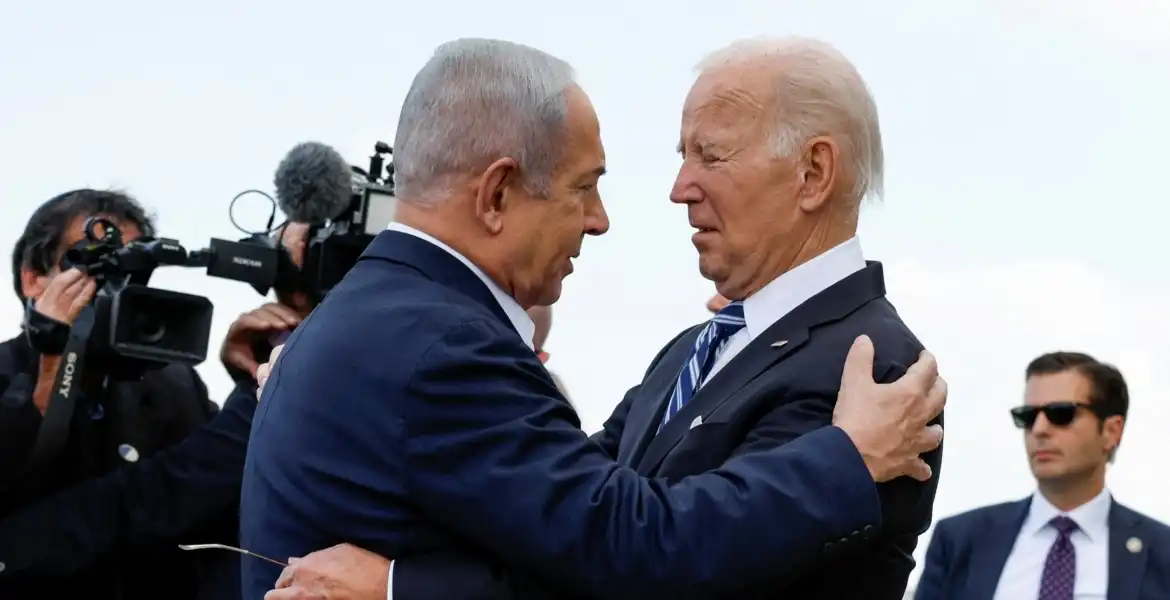

The settler hung a “donkey’s head” on a stick and fixed it between the graves in the Bab al-Rahma cemetery, meters away from the eastern wall of Al-Aqsa.

Activists circulated on social media a video clip and pictures from the place, amid a wave of overwhelming anger, denouncing such heinous behavior, which was considered unacceptable and a clear violation of the sanctity of the dead Palestinians.


It is noteworthy that the Bab al-Rahma cemetery includes the graves of the venerable companions Ubadah bin al-Samit and Aws bin Shaddad, as well as the graves of mujahideen and followers, and the Bab al-Rahma Gate - one of the gates of the Jerusalem Wall and Al-Aqsa - is adjacent.


ARAB AND WORLD

Wed 27 Dec 2023 2:25 pm - Jerusalem Time

There are no “good” scenarios for Israel.. Foreign Policy: This is what the occupation’s future options look like in the war on Gaza

There are no good options for the future of Israel’s aggression against Gaza, according to a report that monitors the potential repercussions of any path chosen by Benjamin Netanyahu’s government. What does this future outlook look like?


“A future look at the Israeli war to destroy Hamas,” under this title the American magazine Foreign Policy published its report, which sheds light on what Tel Aviv may face in the future as a result of its ongoing aggression against the Gaza Strip since October 7, 2023.


Since the military operation "Al-Aqsa Flood" on October 7, Israel has launched an air and naval bombardment on the Gaza Strip, followed by a ground invasion, declaring two main goals: destroying the resistance, and liberating the prisoners by military force.

Amid the state of panic and shock that gripped the Israelis, the spread of video clips and pictures of tanks and armored vehicles belonging to the occupation army, either burned or under the control of Palestinian resistance fighters, the capture of dozens of soldiers from the occupation army and settlers, and complete Palestinian control over settlements, the occupying state declared that it was “in a state of war” for the first time since the October 1973 war.


The worst scenarios are bitter for Israel

The Foreign Policy report is based on a forward-looking outlook on the situation on October 7, 2025, in what is known as the theory of pre-death scenarios, which is a tool of psychoanalysis by Gary Klein, a famous psychologist, and is recommended by Nobel Prize winner Daniel Caiman. This tool is to reduce the risk of failure and its idea is simple. Imagine the results of the current policy in its worst-case scenario after it has completed its implementation, then analyze the mistakes that were committed. The result is that potential mistakes are monitored, and decision-makers study them at the present time with the aim of avoiding them, and then changing the policy followed.


Based on this theory, the Foreign Policy report sets out this scenario two years from today: Hamas returns to control of the Gaza Strip, and its popularity rises remarkably in the West Bank, Jerusalem, the region, and the world, while Israel suffers from stifling international isolation and a severe deterioration in its relationship with the United States. On the internal level, the rifts are increasing and the political and social division in Israel is wider than it was before the war on Gaza, which is practically paralyzing the occupying state.


The war on the Gaza Strip

At the Middle East level, Iran's allies are becoming more aggressive than before, the frequency of missile attacks launched by Lebanese Hezbollah on northern Israel is increasing, and the Houthis in Yemen continue to target ships to and from Israel via the Red Sea and Bab al-Mandab.


These possible future results were reached through a field visit conducted by a team of researchers from the Center for Strategic and International Studies to Israel, where they conducted interviews with high-ranking security and political officials in the occupying state, through which the researchers concluded that the Israeli leadership’s lack of understanding of Hamas’s true power and reducing that Leadership of the Palestinian Islamic Resistance Movement will, at the end of the current path, strengthen the movement more than it is now, will weaken the internal front in Israel, and will fail any scenario through which Tel Aviv moves from the stage of war to the stage of ruling the Gaza Strip. It will also undermine Israel’s relationship with the United States.


Israeli underestimation of the strength of Hamas

Israel, led by Netanyahu, Defense Minister Gallant, and the rest of the members of the most extremist government in its history, has placed the goal of eliminating Hamas at the top of their agenda in the current war on Gaza, by killing the movement’s leaders and resistance. Before October 7, the strength of Hamas’s military wing reached about 25,000 fighters, and now Israel claims to have killed about 7,000 of them, including field commanders.

But the Foreign Policy report confirms that Hamas will ultimately prove, in a very remarkable way, that it is indestructible, and that the movement will continue to grow and build its strength. Israel assesses the strength of Hamas through the numbers of fighters in the movement’s formations, monitoring the funerals of dead, and the Israeli occupation army’s data on the numbers of dead in the Gaza Strip. But an Israeli expert spoke to the American magazine, expressing his "serious doubts about the Israeli estimates regarding the number of Hamas fighters killed."


Also, the occupation soldiers in the field are unlikely to accurately classify Palestinian dead, and can easily consider all males of fighting age to be members of Hamas. In this context, the occupation army presents large groups of Palestinian men in Gaza as “prisoners of the resistance factions,” while the facts have proven that most of them are civilians.


There is another point, according to the Foreign Policy report, related to the fact that some Palestinian civilians in Gaza may take up arms to confront the ongoing Israeli aggression, which necessarily adds to the strength of Hamas and other resistance factions in the Strip.


The report also pointed out the fact that Hamas is rooted in Palestinian society, especially in the Gaza Strip, which has been run by the movement since 2007, where a generation was born that knows no one but it. The movement also works closely with major families in Gaza, and has a strong base inside the Strip’s camps, and even Before 2007, Hamas was directly present in all aspects of the daily lives of Gazans. The movement is an integral part of the fabric of society there.


Al-Qassam Brigades carried out a military deployment in the middle of Palestine Square during the handover of Israeli prisoners, and a monument appears behind them.


These deep roots of the movement in the Gaza Strip make it very easy for it to rebuild its strength even if Israel succeeds in destroying Hamas’ military capabilities, which does not seem a likely scenario in light of the data on the ground more than 80 days after the start of the war.


On the other hand, Hamas is not just a military or political organization, but rather a symbol and embodiment of the principle of armed resistance to the occupation, and the “Al-Aqsa Flood” military operation on October 7 came as an electric spark that ran through the veins of the overwhelming majority of Palestinians and the Islamic world. Opinion polls showed that more than 80% of Palestinians in the West Bank support Hamas and the Al-Aqsa flood.


The brutal and ongoing Israeli aggression on the Gaza Strip, which caused about 21,000 dead, the overwhelming majority of whom were civilians, also resulted in a huge rise in the popularity of the resistance path, and considering it the only solution to confront the Israeli occupation, which indicates that Gaza has become fertile ground for embracing resistance. Perhaps more than it was before October 7, especially since the majority of the Gaza Strip’s population, numbering more than 2.4 million people, are under 18 years of age.


This point, according to Foreign Policy, is in favor of the popularity of the principle of resistance in general, which is the axis that Iran and its allies in the region say they are adopting, in exchange for imposing great difficulties on the shoulders of Arab regimes described in the West as “moderate” such as Egypt and the Emirates, where you will find those countries dealings with the occupying state openly will not be acceptable at the popular level internally and in the region in general.


Israel faces wholesale crises

Operation “Al-Aqsa Flood” led to the evacuation of thousands of Israeli settlers from the settlements surrounding Gaza, and the launching of rockets by Hezbollah led to the evacuation of thousands more from the settlements in northern Israel on the Lebanese border, so that more than 250,000 Israelis now live either in hotels at government expense or have relatives in areas deep within the occupying state.


After more than 80 days of war on Gaza, these settlers are still unable to return to their settlements, not only because of the continuing war in the south and border skirmishes in the north, but also because of their complete loss of confidence in the ability of the occupation government and army to provide them with security, which is the point that represents a priority for Israel now.


But restoring confidence, in the future outlook monitored by the Foreign Policy report, will prove to be a very difficult matter, both from a military standpoint and from a psychological standpoint, as Israel must first prove that it is capable of “defeating” Hamas and “deterring” Hezbollah, both of which "very elusive concepts, that is, very difficult to achiev"” especially in light of the catastrophic failure of the occupation army, intelligence, and security services on October 7, and the continuing failure so far to achieve any tangible military goal, despite the almost complete destruction of the Gaza Strip and its civilian infrastructure.

Restoring the confidence of the settlers to convince them to return to their settlements means that Israel must inflict a “tangible and comprehensive defeat” on Hamas in Gaza, and force Hezbollah to move its elite “Al-Radwan” units away from the Israeli border to ensure that there is no “sudden” attack. Israel may also need to deploy large numbers of its forces on each front, and provide each populated area with greater security capabilities, and these capabilities will be very financially costly, especially for a country that relies primarily on reserve forces, which makes it very difficult for it to maintain huge forces in a war. Long, according to Foreign Policy.

To make matters worse, there is a deep problem of mistrust in the political system in Israel, whose society has become divided to the point of fragmentation. There are deep divisions between religious and secular societies, and there is a deep division between the Arabs of 1948 and the Israeli Jews, and another division between Jews of Western origins (Ashkenazi). ) and Jews of Eastern origin (Sephardic). Then Netanyahu came in with his current government, which witnessed the joining of ministers from the extreme right and extremist settlers, who sought to overthrow the judiciary, which led to a more dangerous division.


Now Israel will have to impose higher taxes to finance the army, extend the duration of reserve service in the army, and other more difficult decisions, but the challenge here is the possibility of passing such policies in a society so divided.


Hezbollah front and the relationship with America

Israel also faces bitter choices regarding its northern front with Hezbollah. The Lebanese organization supported by Iran has much more armed capabilities and personnel than Hamas, which may mean that Israel will face a disaster if the border skirmishes turn into an all-out war, according to a Foreign Policy report.


However, the current situation will not enable Israel to return the settlers to their settlements on the northern border on the one hand, and the possibility of the outbreak of confrontation will remain, which hinders the restoration of Israelis’ confidence in the ability of their government and army to provide security. These calculations, in addition to Netanyahu's personal desire to continue the war in general so that he does not face his end politically, and perhaps end up imprisoned as well (the Prime Minister is currently being tried on charges of corruption, receiving bribes, and breach of trust), make the situation likely to explode on the northern front with Hezbollah as a scenario already existing.


Netanyahu and Gallant are already hinting at this possibility, but pressure from the Joe Biden administration may represent an obstacle for Israeli leadership. It is true that Biden has thrown all of Washington's political, financial and military weight behind Israel since October 7, but the failure of the occupation army to achieve any military victory and the insane chaos not only in Gaza, but in the occupied West Bank and Jerusalem, are all factors that have come to represent mounting pressure on The American president, who is awaiting fierce elections in November 2024.


American interests in the region and around the world have become threatened, not to mention Washington’s credibility as a superpower, the growing divisions within Biden’s Democratic Party, and the rising popularity of his potential Republican rival, Donald Trump, all of which are putting pressure on restraining Israel, which is currently led by a prime minister who also has his own calculations. Which indicates that a clash is looming between the two allies. The question here is: Does Israel have the luxury of losing American support or fracturing the strategic relations between the two allies?


The bottom line here is that Israel faces bitter choices in all future scenarios, according to a Foreign Policy report.

source: Arabic Post