OPINIONS

Tue 09 Jan 2024 4:59 pm - Jerusalem Time

The West will stand in the dock alongside Israel at the genocide court

By JONATHAN COOK

Israel’s allies aren’t just turning a blind eye to Gaza’s killing fields. They have cheered on the bloodshed, provided diplomatic cover and supplied the arms


Israel is urging western states to rally to its side as the International Court of Justice prepares to hear this week South Africa’s case that Israel is committing genocide in Gaza.

The court is being asked by Pretoria to issue an immediate injunction ordering Israel to halt its military assault on the tiny enclave, to avoid further casualties.

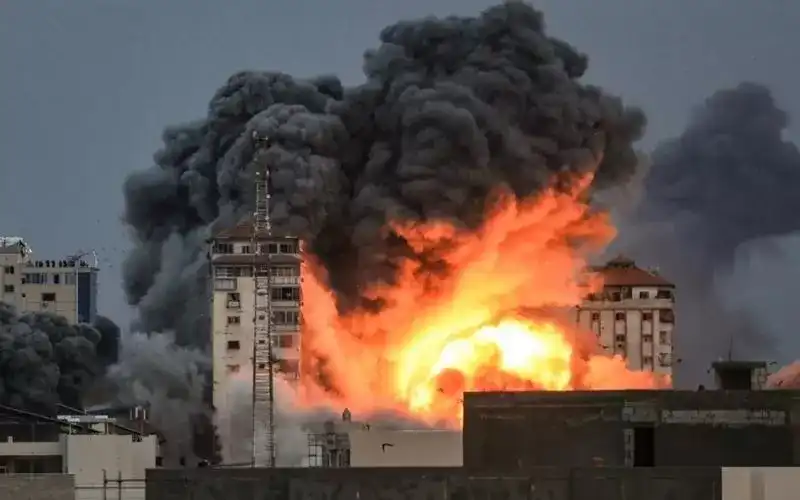
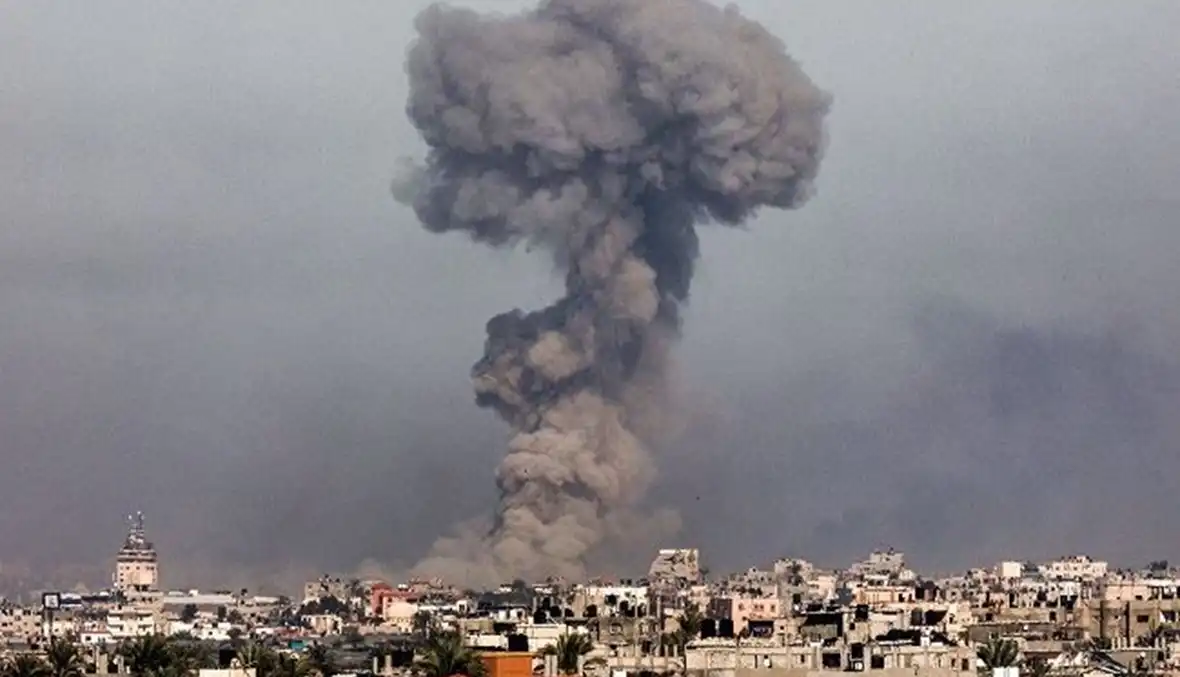
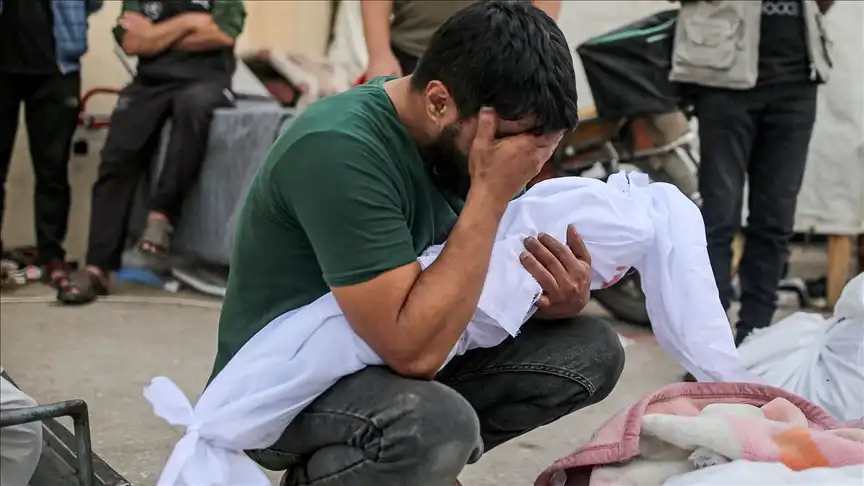
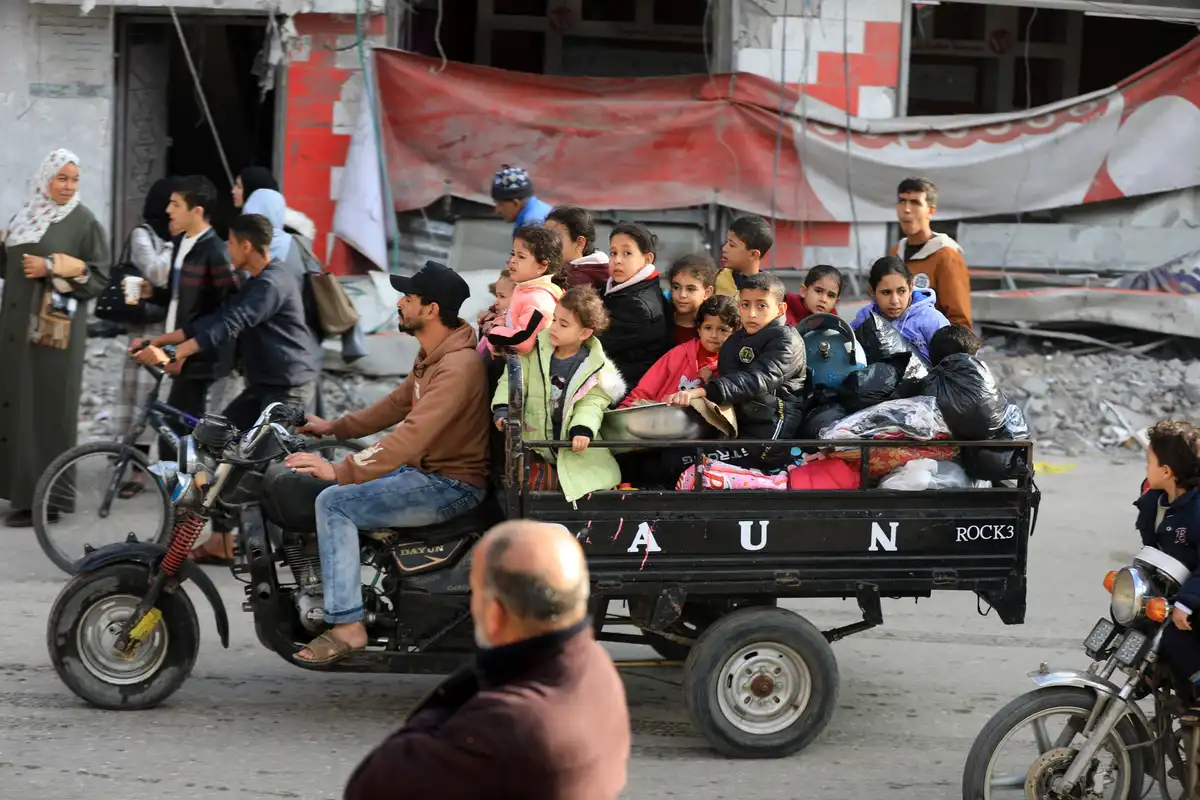
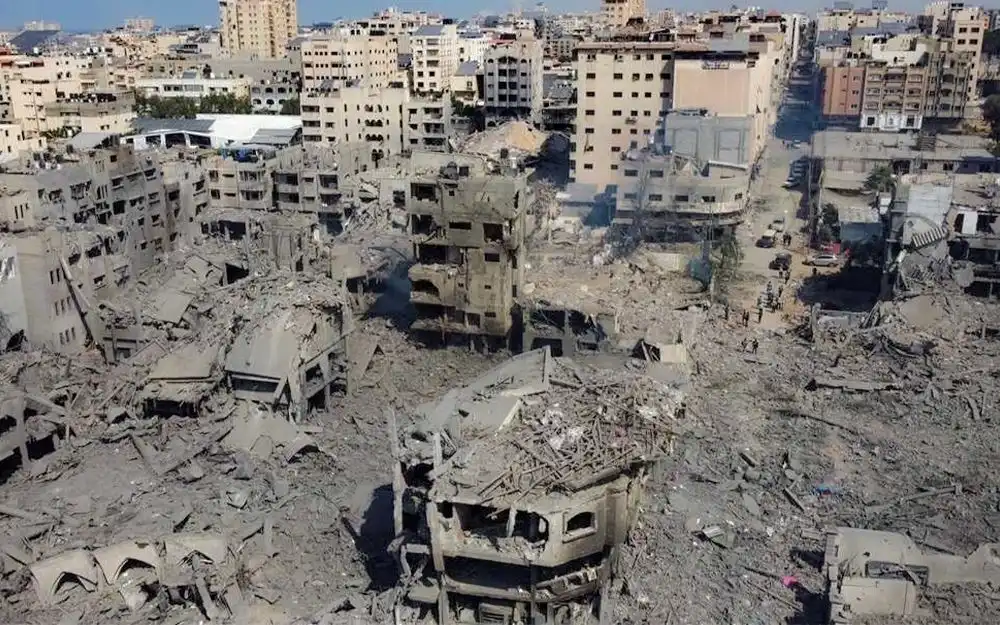
Some 23,000 Palestinians are known to have been killed by Israel so far, a majority of them women and children, and many thousands more are believed to be lying under the rubble. Tens of thousands are seriously wounded. A majority of the population have lost their homes to the three-month bombing campaign. Israel has intensively and repeatedly targeted the supposedly “safe zones” to which it has ordered Palestinian civilians to flee. It has destroyed almost all of Gaza’s infrastructure and is blocking most aid from reaching the enclave. Famine and disease are likely to rapidly increase the death toll.

South Africa’s 84-page brief argues that Israel’s bombing campaign and siege breaches the 1948 Genocide Convention, which defines genocide as "acts committed with intent to destroy, in whole or in part, a national, ethnical, racial or religious group”. Israel expects support from western capitals because they have nearly as much to fear from a verdict against Israel as Israel itself. They have staunchly backed the killing spree, with the US and UK, in particular, sending weapons that are being used against the people of Gaza, making both potentially complicit.

According to a cable from the Israeli foreign ministry, leaked to the Axios website, Israel hopes that, given the difficulties of making a legal case in defense of its actions, diplomatic and political pressure on the court’s justices will win the day instead.

The Biden administration led the way late last week in dismissing South Africa’s detailed legal brief as “meritless, counterproductive and completely without any basis in fact whatsoever”. That would sound patently ridiculous to western audiences had they been provided with serious coverage of Gaza. But Israel has been heavily restricting access to the enclave, while killing Palestinian journalists there at an unprecedented rate to stop their reporting. In addition, western media are willingly - and secretly - submitting to an onerous Israeli censorship regime.


Incitement to genocide

Israel’s “strategic goal” at the court, according to the leaked cable, is to dissuade the judges from making a determination that it is committing genocide. But more pressing is Israel’s need to prevent the Hague court from ordering an interim halt to the attack. Israeli officials will argue, Axios reports, that its sustained assault on Gaza fails to reach the threshold of genocide, which requires “creating conditions that don't allow the survival of the population, together with the intent to annihilate it”. Israel will try to convince the judges that it has been seeking to increase humanitarian aid to Gaza and minimize the toll on civilians. Its argument flies in the face of the evidence South Africa has amassed. Its brief contains nine pages of declarations by Israeli leaders showing clear genocidal intent, including statements from Prime Minister Benjamin Netanyahu, senior figures in the cabinet, President Isaac Herzog and many serving and former Israeli military commanders. Giora Eiland, an adviser to war council minister, Benny Gantz, has called Israel’s goal the creation of “conditions where life in Gaza becomes unsustainable”. An Israeli military spokesman stated from the outset that the aim was to inflict “maximum damage” on Gaza.


Herzog suggests the entire civilian population is a legitimate military target, while Netanyahu refers to the Palestinians as “Amalek”, a biblical enemy. In the Old Testament, God commands the Israelites to annihilate the Amalekites, putting “to death men and women, children and infants”. One of the provisions of the Genocide Convention is an absolute prohibition on incitement to genocide. Israel’s most senior politicians and military commanders have indisputably breached that section of the convention. A letter to Israel’s attorney general last week from a group of Israeli academics, lawyers, human rights activists and journalists underscored that point. They warned that incitement to genocide had become “an everyday matter in Israel”. The letter added: “Normalized discourse which calls for annihilation, erasure, devastation and the like is liable to impact the manner by which soldiers [in Gaza] conduct themselves.”


Taking the gloves off

But dehumanization - the precursor to genocide - is not the only problem. Israel’s prosecution of what it terms a “war to eradicate Hamas” has fully met its own definition of genocide. “Conditions that don't allow the survival of the population” were already being created long before the onslaught Israel unleashed immediately after Hamas broke out from Gaza on 7 October. Some 1,140 Israelis and other nationals were killed in the ensuing carnage. Mostly forgotten in the back and forth about what is unfolding in the enclave is the context: United Nations officials warned nearly a decade ago that Israel’s siege of Gaza - now 17 years in duration - was designed to make the enclave “uninhabitable”. In other words, Israel was precisely “creating conditions that don't allow the survival of the population”. Even before its current, extended assault, Israel had placed severe restrictions on access to water for the enclave’s 2.3 million inhabitants. As a direct result, overstretched aquifers under Gaza were allowing in seawater, making the enclave’s drinking water unfit for human consumption. Food was similarly in short supply. Back in 2012, Israeli human rights groups managed to make public a secret document showing that the army had been tightly controlling food going into Gaza from 2008 onwards. As a result, two-thirds of the population was food insecure, and every 10th child was stunted by malnutrition. The aim was to induce long-term food poverty, effectively putting the population on a starvation diet. Israel’s repeated attacks on Gaza over the past 15 years - what Israel calls “mowing the grass” - destroyed many of its homes and much of the infrastructure, creating ever greater overcrowding and unsanitary conditions. 


Israel's repeated bombing of Gaza’s only power station, and its chokehold on supplying additional energy, limited electricity to a few hours a day. The Israeli siege blocked medicines and medical equipment from entering the enclave, often making serious health conditions difficult or impossible to treat. And given the Israeli-imposed restrictions of goods in and out of Gaza, the economy was already in ruins, with nearly half the population unemployed. 


Long ago, back in 2016, the head of Israeli military intelligence, Herzi Halevi, warned that the catastrophe Israel was engineering in Gaza could blow up in its face - as indeed it did on 7 October. Israel’s three-month rampage has simply accelerated and intensified all the genocidal policies that had long been established. Hamas’s break-out simply gave Israel license to take the gloves off. 


Gaza ‘uninhabitable’

This is why the UN’s head of humanitarian affairs, Martin Griffiths, declared last week that Gaza had reached the point where it was indeed “uninhabitable”. He added: “People are facing the highest levels of food insecurity ever recorded. Famine is around the corner.” With the vast majority of the population homeless and most hospitals no longer functioning, infectious disease was spreading. Israel’s “complete siege” policy meant aid could not get in. According to Griffiths, Israel had destroyed roads, blocked communication systems, and was shooting at UN trucks and killing aid workers. 

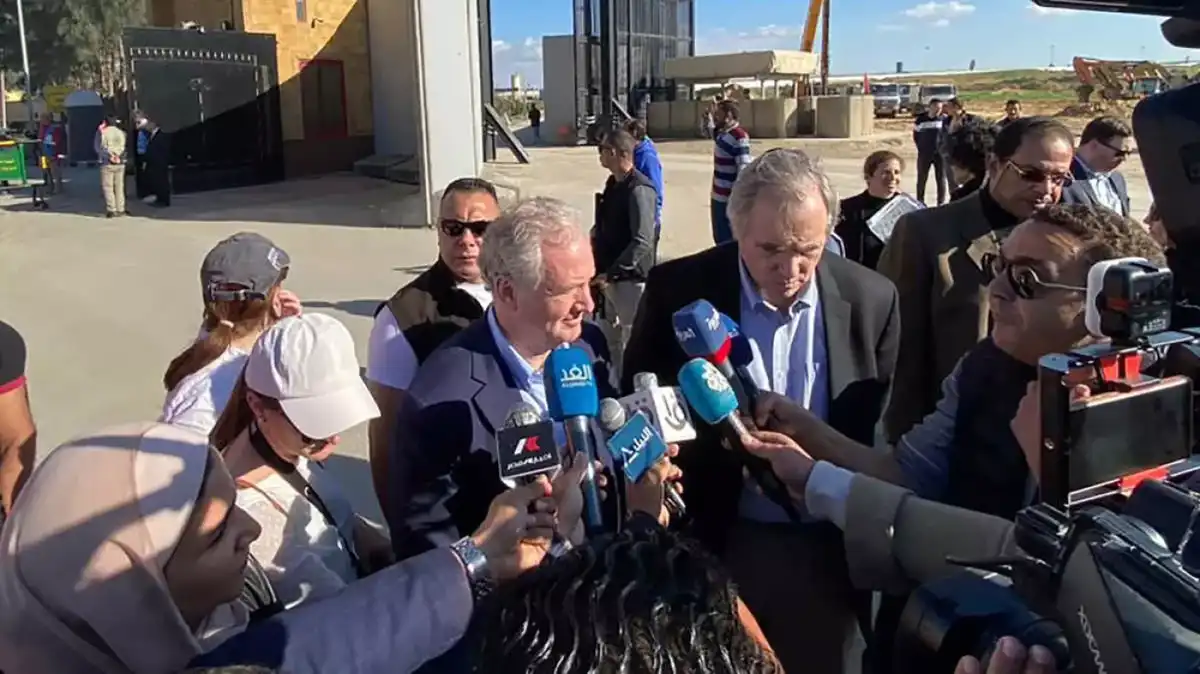
Returning from a visit to the border crossing with Egypt, two US senators observed at the weekend that Israel had imposed unreasonable conditions creating endless delays that prevented aid from reaching the people of Gaza. In other words, Israel has now successfully “created conditions that don't allow the survival of the population”. 


Upgrade to paid

The aim of the 1948 Genocide Convention, drafted in the immediate wake of the Second World War and the Nazi Holocaust, was not simply to punish those who carry out genocides. It was designed to help identify a genocide in its early stages, and create a mechanism - through the rulings of the International Court of Justice - by which it could be halted. In other words, the purpose of South Africa’s case is not to arbitrate what happens once Israel has annihilated the Palestinians of Gaza, as far too many observers appear to imagine. It is to stop Israel from annihilating the people of Gaza before it is too late.

Based on strange logic, Israel’s supporters imply that the genocide charge is unwarranted because the real aim is not to exterminate the Palestinians of Gaza but to induce them to flee. Israeli leaders have encouraged this assumption. In an interview on Sunday, the national security minister, Itamar Ben-Gvir, noted of Gaza’s population that - after being bombed, made homeless, starved and left vulnerable to disease - "hundreds of thousands will leave now".


Duplicitously, he termed this a “voluntary” mass emigration. But such an outcome - itself a crime against humanity - entirely depends on Egypt opening its borders to allow Palestinians to flee the killing fields. If Cairo refuses to submit to Israel’s violent blackmail, it will be Israel’s bombs, the famine it inflicted, and the lethal diseases it unleashed that decimate Gaza’s population.


The International Court of Justice must not adopt a wait-and-see approach, pondering whether Israel’s bombing campaign and siege lead to extermination or “only” ethnic cleansing. That would strip international humanitarian law of all relevance.


Line in the sand

If Israel and its western allies fail to bludgeon the court into submission, and South Africa’s case is accepted, it will not only be Israel in legal difficulties. A genocide ruling from the court will impose obligations on other states: both to refuse to assist in Israel’s genocide, such as by providing arms and diplomatic cover, and to sanction Israel should it fail to comply.

An interim order halting Israel’s attack will serve as a line in the sand. Once made, any state that fails to act on the injunction risks becoming complicit in genocide. That will put the West in a serious legal bind. After all, it has not just been turning a blind eye to the genocide in Gaza; it has been actively cheering it on and colluding in it. Leaders in the UK such as Prime Minister Rishi Sunak and opposition leader Keir Starmer have steadfastly opposed a ceasefire and thrown their weight behind a central pillar of Israel’s genocidal policy: the “complete siege” of Gaza that has left the population starving and facing lethal epidemics.

The British and US governments have rejected all calls to stop the flow of arms. The Biden administration has even bypassed Congress to speed up the supply of weapons to Israel, including indiscriminate “dumb” bombs that are laying waste to civilian areas.

Israel’s ambassador to the UK, Tzipi Hotovely, has regularly been featured by British media making genocidal statements. Just last week, when an interviewer noted that she appeared to be calling for the destruction of the whole of Gaza - every school, mosque and home - she answered: “Do you have another solution?”


British and US media have given airtime to Israeli officials who openly incite genocide. All that would have to stop immediately after a ruling. The police in western nations would be expected to investigate and the courts prosecute those inciting genocide or providing a platform for incitement. States would be expected to deny Israel weapons and impose economic sanctions on Israel - as well as on any states that collude in the genocide. Israeli officials would risk arrest for travelling to western countries. 


Double standards

In practice, of course, none of that is likely to happen. Israel is far too important to the West - as a projection of its power into the oil-rich Middle East - to be sacrificed. Any effort to enforce a genocide ruling through the UN Security Council will be blocked by the Biden administration. Meanwhile, the UK, along with Canada, Germany, Denmark, France and the Netherlands, have already demonstrated how unabashed they are about their own double standards. Weeks ago they submitted formal arguments to the International Court of Justice that Myanmar was committing genocide against the Rohingya ethnic group. Their central argument was that the Rohingya were being subjected “to a subsistence diet, systematic expulsion from homes, and the induction of essential medical services below minimum requirement”.

But none of these western states is backing South Africa’s genocide submission to the same court - even though conditions in Gaza engineered by Israel are even worse. The truth is that a genocide ruling by the court will open up a can of worms for the West, and its readiness to accept that the provisions of international law apply to it too.

Israel has been at the forefront of efforts to unravel international law in Gaza for more than a decade. Now it is ostentatiously flaunting its perpetration of the crime of genocide, as if daring the world to stop it. Perversely, it is reversing the very international safeguards put in place to stop a repeat of the Nazi Holocaust. Will the West defy Israel or the court? The post-war consensus that serves as the foundation for international law - already shaken by the failure to address the West’s war crimes in Iraq and Afghanistan - is on the verge of complete collapse.

And no one will be happier with that outcome than the state of Israel.
ARAB AND WORLD

Tue 09 Jan 2024 4:27 pm - Jerusalem Time

Hebrew Report: Despite protests, Arab countries have not severed their relations with Israel

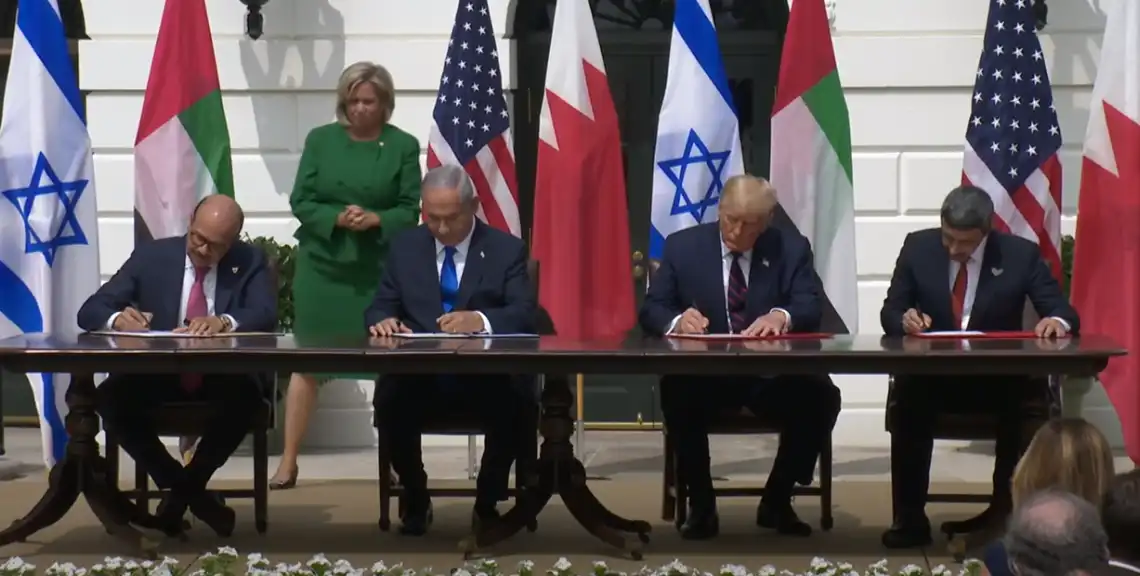
More than 3 years after the signing of the Abraham Accords, within the framework of which relations between Israel, the UAE, Bahrain, and Morocco were normalized. Despite the ongoing war in Gaza, these agreements have survived, as have the peace agreements with Egypt and Jordan. While Saudi Arabia, whose turn was supposed to come on the path to normalization, froze this process in the wake of the war on the Gaza Strip.


During the war, countries that signed agreements with Israel issued several statements of condemnation. The UAE condemned the ground operations in the Gaza Strip, and the King of Morocco rejected the Israeli policy in the Strip and “the Israeli attempt to impose a new reality.” He also said that the recent escalation is the result of the lack of a political horizon for the Palestinian issue. During the war, the Moroccan Ministry of Foreign Affairs issued several condemnations against Israel.

Countries that have signed peace and normalization agreements with Israel are suffering under great pressure from other Arab countries, and are also being attacked by the Iranian axis, which considers them traitors and collaborators with the Israelis and Americans. Bahrain has gone far by recently joining the international coalition against the Houthis in the Red Sea. There were reports in early November that Bahrain had reduced its economic relations with Israel, but it later turned out that these reports were incorrect.


Since the beginning of the war in Gaza, Morocco has witnessed large demonstrations in support of the Palestinians in the Strip, and sources in the country spoke at the beginning of the protests that the intention was to “reduce tension,” and that the king and the authorities were allowing the population to do this, nothing more, and that there was no danger to normalization with Israel.

It can be said that the war in Gaza, or Israel’s victory against “Hamas” and the situation in the region, may hinder or curb relations with countries that have normalized relations with Israel during this period, but in the long run, the war in Gaza must not hinder the development of relations with these countries. .


There are those who claim that in the long term, specifically when there is no Hamas presence in the region, these countries will be able to strengthen their relations with Israel in various fields, without anyone disturbing them. According to estimates, relations with Israel are important to these countries, for economic and security reasons, and these interests are likely to outweigh calls to sever relations. These countries' condemnations against Israel also play a role in alleviating the criticism directed at it.

PALESTINE

Tue 09 Jan 2024 3:42 pm - Jerusalem Time

West Bank: A young Palestinian was killed by Israeli forces near Ramallah

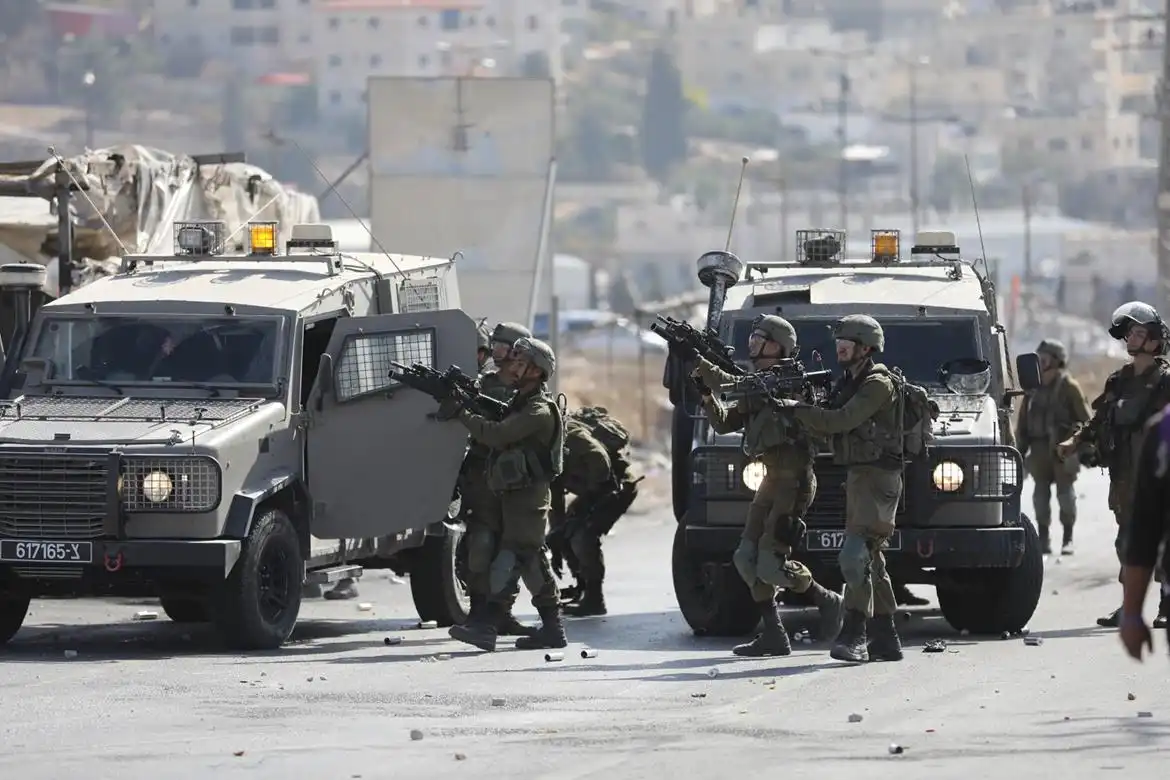
A young man was killed this afternoon, Tuesday, after he was shot with live bullets by Israeli occupation forces near the Ein Sinya checkpoint, north of Ramallah.


The Ministry of Health said that the young man, Amid Ibrahim Samih Jayousi (31 years old), was killed by bullets from the occupation forces near the Ein Siniya checkpoint, north of Ramallah.


Local sources said that the occupation forces fired bullets at a young man near the Ain Sina checkpoint, allegedly trying to carry out a stabbing attack.


The occupation forces closed the Ain Sina checkpoint and prevented citizens from passing through it, as it is considered one of the few crossing points that citizens now go to, to exit or enter the city of Ramallah.

ARAB AND WORLD

Tue 09 Jan 2024 3:18 pm - Jerusalem Time

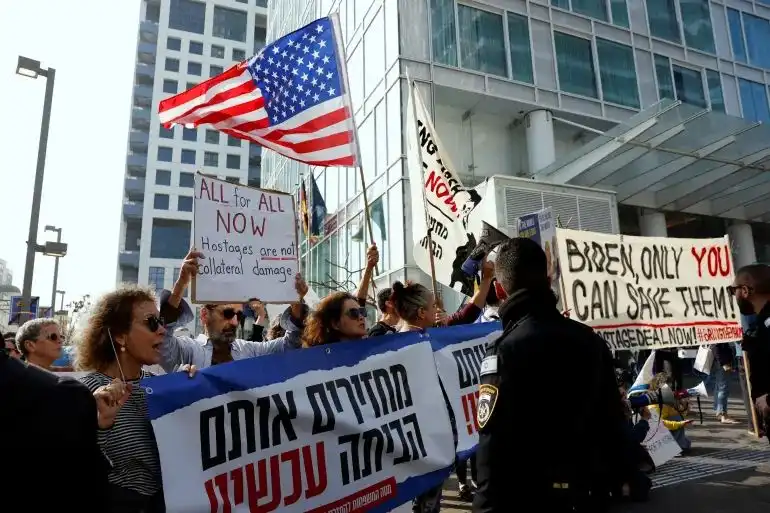
Dozens demonstrate in front of the headquarters of the Blinken-Herzog meeting in Tel Aviv

Dozens of people demonstrated on Tuesday in front of the hotel where US Secretary of State Anthony Blinken and Israeli President Isaac Herzog met in Tel Aviv.


According to identical reports reported by Hebrew media, dozens of Israeli and American women, and family members of Israeli prisoners detained in the Gaza Strip by Palestinian factions following the Al-Aqsa Flood operation on October 7, 2023, participated in the demonstration.


The demonstrators carried banners calling for the return of detainees from Gaza, including a banner reading, “(Hey) Biden, only you can save them,” and another calling for the conclusion of an immediate ceasefire agreement in Gaza and the exchange of prisoners.


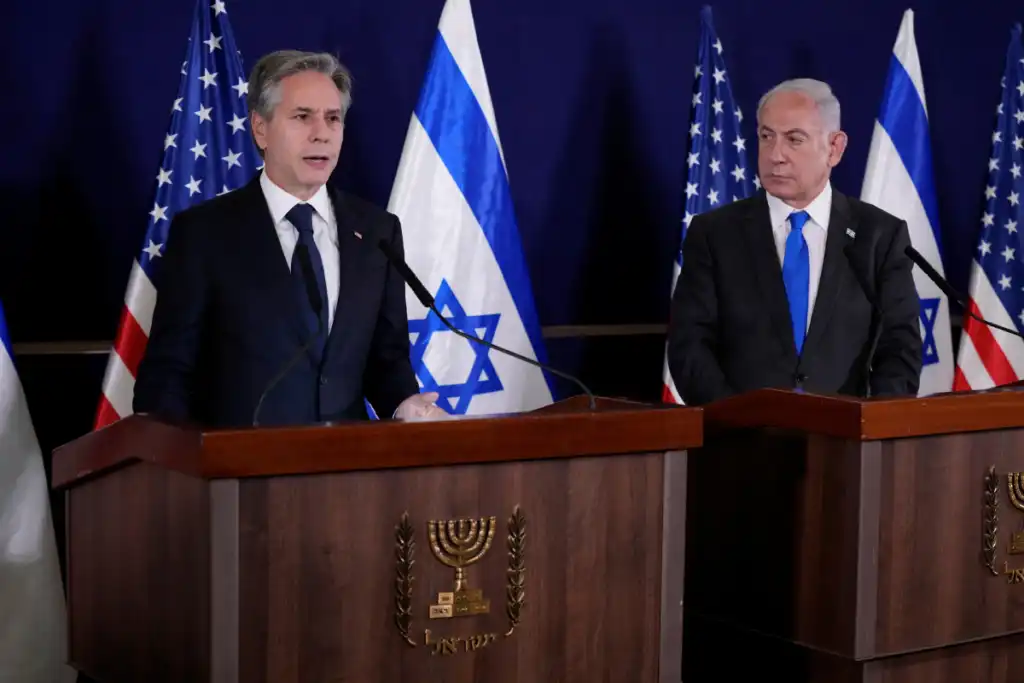
Blinken began his meetings in Israel with a meeting with Herzog, and is scheduled to hold a series of meetings throughout the day in Tel Aviv with Prime Minister Benjamin Netanyahu, Defense Minister Yoav Galant, Foreign Minister Israel Katz, and Defense Minister Benny Gantz, in addition to a meeting with the Israeli War Council.


Blinken is also expected to meet with the families of Israeli prisoners, while he will meet with opposition leader Yair Lapid tomorrow morning, Wednesday.


This is Blinken's fifth visit to Israel, since the outbreak of war in the Gaza Strip on October 7.

ARAB AND WORLD

Tue 09 Jan 2024 1:56 pm - Jerusalem Time

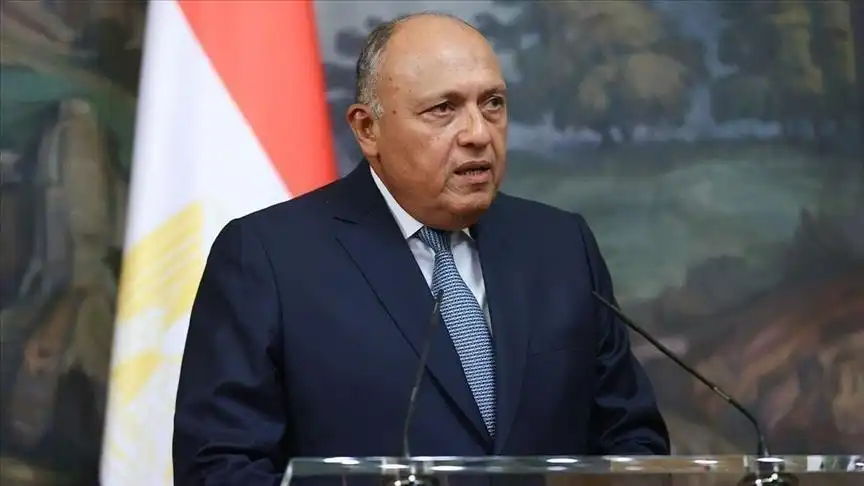
Egypt: There is no talk about the future of Gaza before the ceasefire

Egyptian Foreign Minister Sameh Shoukry said on Tuesday that it is not possible to talk about the future of the Gaza Strip before a ceasefire there.

This came in a press conference held by Shoukry with German Foreign Minister Annalena Baerbock, who is currently visiting Egypt, at the ministry’s headquarters east of Cairo, according to what was broadcast by the “Cairo News” channel, and followed by Anatolia.


Regarding the future of Gaza and “the next day of the cessation of war,” Shukri said: “We must focus on the ceasefire. We cannot talk about matters that might be understood as accepting the continuation of this situation of military actions and the targeting of civilians in the Strip.”


He added: "In order for us to overcome the current stage and talk about the future, the shooting must stop in order for this talk to have meaning."


Since the start of the current wave of escalation in the Gaza Strip, Israeli officials have spoken with different visions about the management of Gaza in the “post-Hamas era,” while the movement and the Palestinian Authority responded that “the management of the Gaza Strip is a private Palestinian matter.”


Shukri criticized the international silence on the targeting of Gaza children and journalists in the Strip, saying: “If a child was injured, the international community should have come to his aid, so what about the 10,000 children who lost their lives, and more under the rubble?”


The Egyptian Foreign Minister considered that "the international community (also) is unable to explicitly demand a ceasefire in Gaza."


He expressed "pain for the loss of civilians and journalists," saying: "We are accustomed to when a journalist is harmed (for) the international community to come in to criticize, and we have not yet heard criticism of what is happening to them (in Gaza)."


Shukri denounced “the prevention of the entry of the press and officials into the Gaza Strip,” asking: “Why this prevention and the deliberate prevention of the entry of the press and officials to see this tragic situation in Gaza?”


The Egyptian minister renewed the demand for a ceasefire, stressing "the importance of increasing humanitarian aid entering the Gaza Strip and preventing displacement."


He pointed out that the discussions with his German counterpart dealt with "how to deal with the situation in a way that preserves the unity of the Gaza Strip and the West Bank."


Shukri stressed that "the continuation of the Israeli occupation is one of the main reasons for instability in the region."

ARAB AND WORLD

Tue 09 Jan 2024 1:27 pm - Jerusalem Time

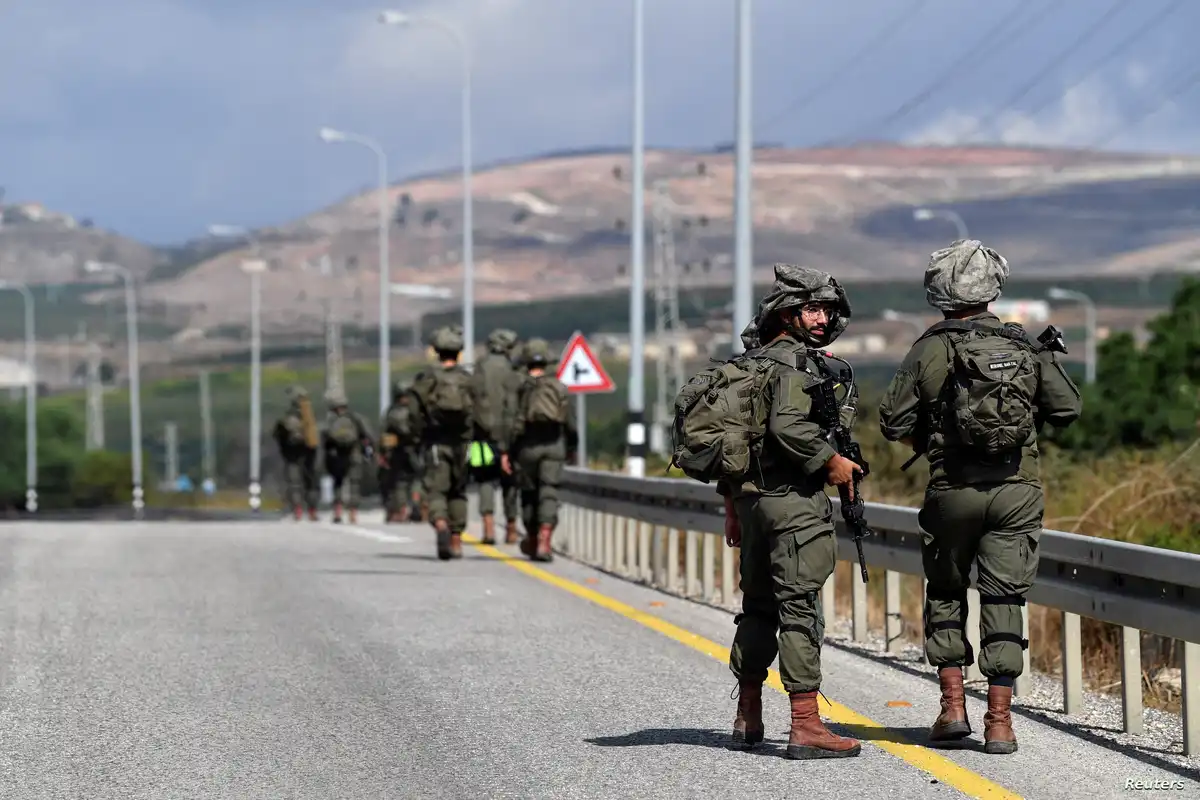
Hebrew News Paper: Israel is moving forward with a war against Hezbollah, although it is devastating to both of them

Perhaps the most dangerous thing about the military confrontation between Israel and Hezbollah in Lebanon is the feeling that this confrontation is a foregone conclusion, perhaps not as an extension of the war in Gaza, but at some point in the near future it may be more about a broader war with Iran.


With this introduction, Haaretz newspaper opened an analysis - by writer Alon Pinkas - in which he said that this war is the decisive point in which American and Israeli intelligence assessments differ greatly. While the United States sees this conflict as having very different and more explosive geopolitical and strategic aspects, Israel seems resigned to the idea. .


American officials have expressed "concern" that they believe that Israeli Prime Minister Benjamin Netanyahu is encouraging escalation as a key to his political survival, portraying this war as a historic civilizational war between Iran and the West, and blaming US President Joe Biden for not rising to the occasion.


Escalation returns again

Immediately after the Al-Aqsa Flood operation on October 7, 2023, the United States determined that preventing escalation with Hezbollah in Lebanon and with Iran throughout the region was a fundamental interest, and sent two groups of aircraft carriers to the region, and responded strongly to the idea of Israel launching a pre-emptive strike. For Hezbollah, the feeling in Washington was that the skirmishes across the Israeli-Lebanese border had been contained, but the "escalation" had returned dangerously.


If the current tensions between Israel and Hezbollah ostensibly revolve around the Shebaa Farms, in reality - as the writer says - they are part of a much broader context, as it relates to Hezbollah’s work as an Iranian deterrent against possible Israeli attacks on Tehran, and an essential component of the network of Iranian agents who They are working to destabilize the region, according to the newspaper.


Despite Israel's apparent military superiority, the war between Israel and Hezbollah would be devastating for both sides, because Hezbollah's precise missile arsenal represents a kind of draw, and unlike Gaza, which is an enclave surrounded on all sides, Lebanon has long borders with Syria, which in turn has long borders with Iraq and Turkey, ensuring the passage of weapons and fighters.


The most important political dimensions lie in the outbreak of a ground war, because if Israel invades Lebanon with the aim of pushing Hezbollah away from the border, it would be invading a sovereign state that is a member of the United Nations, and this would immediately be equivalent to the “Russian invasion” of Ukraine that the United States and NATO comprehensively condemned, according to the newspaper.


Iran is bolder

Here, the escalation should be viewed from a broader perspective - as Alon Pinkas says - as “the Russian invasion of Ukraine brought Iran out of its relative isolation,” and the reckless decision taken by former US President Donald Trump - with Netanyahu's encouragement - to unilaterally withdraw from the Iranian nuclear agreement gave Tehran the opportunity to accelerate its nuclear program, and Beijing stood on the Iranian side.


Thanks to the progress in its nuclear program, and its effective use of Hezbollah and the Houthi group that threatens commercial shipping in the Red Sea, Iran has now become bolder, but nevertheless it does not seek escalation. Rather, it wants to preserve Hezbollah as a deterrent force, and this is what the United States also sees, therefore, it believes that this can be avoided through diplomacy.


Perhaps the most worrying and frightening thing about any military confrontation between Israel and Hezbollah is its clear inevitability and the feeling that it is taken for granted, especially with the absence of a permanent diplomatic agreement between the two parties. Given the reason for Hezbollah’s presence and Iran’s regional motives, such a war may be just a matter of time. 


It is clear that the current fears about escalation focus on the near future, as support for the war in Gaza or as an extension of it. However, such a war - as the writer sees - is not necessarily linked to Gaza, because it has its underlying causes.


Even if confrontation is avoided now, war looms on the horizon within the next two or three years. But why not try, if the political goal is a diplomatic solution, to do so before or instead of war? The writer asks at the conclusion of his article.

ARAB AND WORLD

Tue 09 Jan 2024 12:45 pm - Jerusalem Time

Israeli News Paper: The emergence of a new generation of American Democrats that does not support Israel

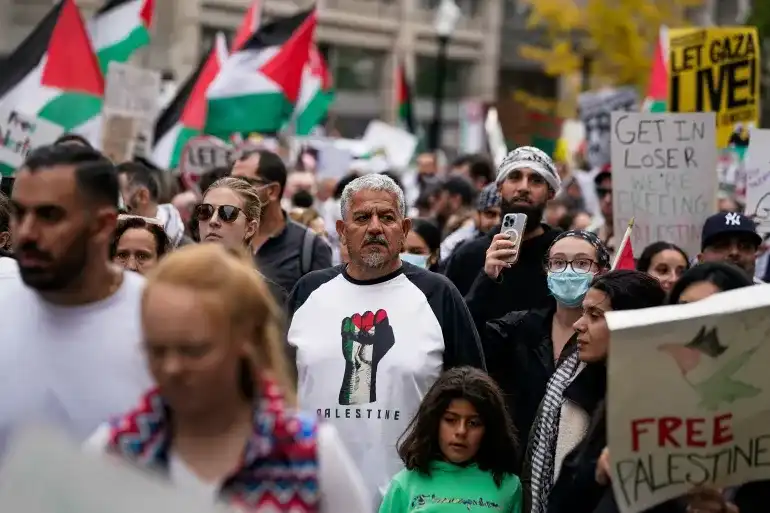
In a report, Yedioth Ahronoth newspaper discussed the emergence of a movement that it described as leftist within the United States of America, and said that it had organized several anti-Israel demonstrations, rejecting its war on Gaza.


The report - edited by the newspaper's correspondent, Tzipi Shmilovitz - claimed that this movement calls itself "American Democratic Socialists" and succeeded in organizing a huge demonstration that turned out to be a major protest in the United States and Western countries against Israel.


Yedioth Ahronoth indicated that demonstrators gathered in Times Square in New York City on October 8, when "many areas" in the Gaza Strip were still under the control of the Islamic Resistance Movement (Hamas).


New generation

She said that a new generation of Democrats is no longer supportive of Israel, and criticizes American aid to it because of its war in Gaza.


One of the most prominent voices criticized by the newspaper was Congresswoman Alexandra Ocasio-Cortez, known for her pro-Palestinian stances.


The report claimed that Cortez recently showed a concession to some of her positions, when she commented on the Times Square demonstration by saying: “The things that were seen at this protest are unacceptable in any way, and it should not be difficult to condemn hatred and anti-Semitism when we see it.” ".


Yedioth Ahronoth considered this position of the congresswoman a surprising reaction.


In her report, Shmilovitz says that Cortez avoids using the term “genocide” in her criticism of Israel’s actions in Gaza, unlike many others.


However, the newspaper said that matters reached a climax when the congresswoman compared the persecutors of Jesus Christ, son of Mary, to modern Israel. Cortez wrote about Jesus - in a post on social media - that he “was among a targeted group who was killed indiscriminately to protect the power of an unjust leader.”


Yedioth Ahronoth believes that it is easy for Israel and its supporters to express their annoyance and reject Cortez's positions, but what is "more effective is to realize that she represents a generation that has vastly different views on Israel."


Source: Yedioth Ahronoth + Aljazeera

ARAB AND WORLD

Tue 09 Jan 2024 12:36 pm - Jerusalem Time

Israeli security warnings: “The West Bank is on the verge of explosion”

Senior officials in the Israeli army, Prime Minister Benjamin Netanyahu, and members of the war cabinet warned of a “slippery slope” that could lead to an imminent escalation in the cities of the occupied West Bank, which could constitute “a new front that Israel will have to deal with with great force.”


This came, according to what was reported by the Israeli Channel 12, in light of the intensive military operations conducted by the Israeli army in the West Bank and the high frequency of incursions, raids and arrests since the seventh of last October, which resulted in the death of 340 Palestinians by occupation bullets throughout the West Bank.


The channel reported that the Chief of Staff of the Israeli Army, Herzi Halevy, and senior Israeli officers, issued clear and direct warnings to the leadership of the war cabinet, on various occasions during the past days, in which they stressed that “the West Bank is on the verge of explosion,” considering that “the matter may end in an outbreak of war.” A third intifada."


The military leadership attributed this to “the escalation of the unrest resulting from economic difficulties and the prevention of Palestinian workers from working in Israel.” The report stressed that senior officials in the Israeli security services, including officials in the General Security Service (Shin Bet), “are partners in these fears and they joined the army's warnings."


The report stated that these warnings come against the backdrop of Netanyahu’s reluctance - who is under pressure from his partners in the government - to raise the issue of “allowing the entry of a large number of Palestinian workers into Israel” to the security and political cabinet vote, as well as in light of the Finance Minister, Bezalel Smotrich’s refusal to transfer funds. Clearing house for the Palestinian Authority.


The expectations of the Israeli army in particular and the Israeli security services in general indicate that “this state of turmoil may end with the outbreak of widespread violence,” and officials in the military establishment urged Netanyahu to “conduct ad hoc deliberations on this issue and make decisions to prevent the ignition of the sensitive situation in West Bank.”


The channel pointed out that officials in the administration of US President Joe Biden share these concerns with the Israeli security services, and are pressuring Tel Aviv to work to “reduce tension in the West Bank,” while Netanyahu refrains from taking practical steps in this context due to his political considerations in the matter. Under the pressure exerted on him by his coalition partners.


The US Secretary of State, who arrived in Israel last night from Saudi Arabia, where he held talks with the Crown Prince, Mohammed bin Salman, will try to "pressure Netanyahu to control the Finance Minister, Bezalel Smotrich, to transfer Palestinian tax funds to the Authority."

ARAB AND WORLD

Tue 09 Jan 2024 12:32 pm - Jerusalem Time

Arab and Islamic countries will consider participating in the day after the war in Gaza

Commissioned by US Secretary of State Anthony Blinken, Saudi Arabia, Jordan, Qatar, the UAE and Turkey will discuss participation in the day after the war on Gaza.


The Associated Press quoted Secretary of State Blinken as saying that Saudi Arabia, Jordan, Qatar, the UAE and Turkey will discuss participation the day after the war in Gaza.


He added that the leaders of Turkey, Jordan, Qatar, the UAE and Saudi Arabia agreed to work on efforts to help Gaza, and the leaders of those countries agreed to help Gaza stabilize and recover and chart a future political path.


He continued, saying: “Everywhere I went, I found leaders determined to prevent the conflict from expanding.”

PALESTINE

Tue 09 Jan 2024 12:28 pm - Jerusalem Time

War on Gaza: Israeli bombing was renewed in the form of belts of fire north and east of Deir al-Balah

At dawn today, Tuesday, and last night, the Israeli occupation forces renewed their bombardment in the form of fire belts north and east of Deir al-Balah in the Gaza Strip, in conjunction with violent artillery shelling.


Palestinian sources said that the Israeli artillery shelling on Deir al-Balah has not stopped since last night, noting that only 20 doctors are working in Al-Aqsa Martyrs Hospital in Deir al-Balah, while the spokesman for the Palestinian Red Crescent in the Gaza Strip, Raed Al-Nims, said that the occupation forces has been targeting Al-Aqsa Martyrs Hospital in Deir Al-Balah and Al-Amal Hospital in Khan Yunis for two weeks.


Al-Nims added that the occupation forces prevented ambulance crews from reaching the areas being bombed.

The Israeli occupation forces once again targeted the city of Khan Yunis, south of the Gaza Strip, as the occupation forces deliberately destroyed entire neighborhoods in the city.


The Israeli bombing claimed 249 dead during the past 24 hours, according to the Ministry of Health in Gaza, on the 95th day of the war on the besieged Strip.

In an infinite toll, the number of those who rose in the Gaza Strip reached 2,384 dead, while about 59,000 were injured since the Palestinian resistance launched Operation “Al-Aqsa Flood” on the seventh of last October.

ARAB AND WORLD

Tue 09 Jan 2024 11:01 am - Jerusalem Time

Israeli News Paper: Israel failed to achieve its military goals in Gaza

The Israeli newspaper Yedioth Ahronoth reported that the Israeli army failed to achieve the goals of the war on the Gaza Strip despite entering its fourth month, amid a record economic cost of nearly 60 billion dollars.


This came in an extensive report by the newspaper under the title, “The most costly war and Israel’s goals that have not yet been achieved. A picture of the situation after 3 months.”


The report said that according to updated figures, the cost of the war has already risen to about 217 billion shekels ($59.35 billion), and the cost includes both the army’s combat budget and extensive aid to the economy in all areas.


The report indicated that the cost of the Israeli army's combat day last October, including the recruitment of 360,000 reserve soldiers at the beginning of the war, amounted to one billion shekels ($270.35 million).


He added that due to the mass demobilization of tens of thousands of soldiers in recent days, the cost currently amounts to 600 million shekels ($164.11 million) per day.


The Israeli army continued to pay an amount of 300 shekels ($82) daily, and will continue until the end of 2024, for every reservist soldier recruited, noting that these payments alone have so far reached about 9 billion shekels ($2.46 billion).


At the civil level, compensation already amounts to tens of billions of shekels, and the state is expected to pay companies affected by the activity cycles in the first three months of this year about 10 billion shekels ($2.74 billion).


According to estimates, the value of the damage to property in the border settlements with Lebanon amounts to between 5 and 7 billion shekels ($1.37-1.91 billion), in addition to between 15 and 20 billion shekels ($4.10 and 5.47 billion), the initial value of the damage to property in Gaza enveloping settlements.


PALESTINE

Tue 09 Jan 2024 11:00 am - Jerusalem Time

Palestinian Education”: 4,296 students were killed and 384 schools were bombed and vandalized since October 7

The Ministry of Education said that 4,296 students were martyred and 8,059 were injured since the start of the Israeli aggression on October 7 on the Gaza Strip and the West Bank.


Education explained in a statement, today, Tuesday, that the number of students who were killed in the Gaza Strip since the beginning of the aggression reached more than 4,257 killed and 7,777 wounded, while in the West Bank, 39 students were killed and 282 others were injured, in addition to 85 arrests.


It indicated that 227 teachers and administrators were killed and 756 were injured in the Gaza Strip, five were injured, and more than 71 were arrested in the West Bank.


It pointed out that 281 government schools and 65 affiliated with the United Nations Relief and Works Agency for Refugees (UNRWA) were bombed and vandalized in the Gaza Strip, which led to 83 of them being severely damaged and 7 completely destroyed, and 38 schools in the West Bank were stormed and vandalized.


The Ministry of Education confirmed that the Israeli targeting of schools affected 90% of government school and education buildings, which were subjected to direct and indirect damage, in addition to 29% of school buildings that could not be operated because they were subjected to total demolition or severe damage, and that 133 government schools were used as shelter centers in the Gaza Strip.

ARAB AND WORLD

Tue 09 Jan 2024 10:28 am - Jerusalem Time

Blinken says Israel-Saudi normalization remains a priority as he wraps visit to the Kingdom

US Secretary of State Antony Blinken on Thursday reaffirmed the Biden administration’s commitment to normalization between Israel and Saudi Arabia as he wrapped up his first solo visit to the Kingdom.

At a press conference in Riyadh, the top US diplomat said he discussed the matter of normalization in his meetings, “and we will continue to work at it and to advance it in the days, weeks and months ahead.”

“We fully support Israel’s integration into the Middle East and from day one, we have been working both to deepen some of the existing agreements, and also expand them to other countries. That includes Saudi Arabia,” Blinken said.


Saudi Foreign Minister Faisal bin Farhan, speaking alongside Blinken, noted that “it’s quite clear that we believe that normalization is in the interest of the region, that it would bring significant benefits to all. But without finding a pathway to peace for the Palestinian people, without addressing that challenge, any normalization will have limited benefits.”

Saudi Arabia looks for security assurances from US as condition for normalizing ties with Israel

Following his visit to Saudi Arabia, Blinken spoke by phone with Prime Minister Benjamin Netanyahu about “areas of mutual interest, including expanding and deepening Israel’s integration into the Middle East through normalization with countries in the region,” according to a State Department readout.

Blinken’s trip to Riyadh and Jeddah, where he met with Crown Prince Mohammed bin Salman, comes as the administration works to navigate a complicated and at-times tense relationship with Saudi Arabia.


Last October, the Biden administration reacted furiously to a decision by OPEC+ to slash oil production, with Blinken saying that Saudi Arabia knew that the OPEC+ decision to cut oil production “would increase Russian revenues” and that the United States is reviewing “consequences” for that decision.

However, the administration did not react harshly to an announcement from Saudi Arabia just days before Blinken’s trip that it would once again slash oil production, nor a call between the Crown Prince and Russian President Vladimir Putin to praise their cooperation on OPEC+ less than a day after Blinken met MBS.

Brian Katulis, the vice president of Policy at the Middle East Institute, noted the difference in tone between the reaction in October and this week, noting that “part of that was just this work to try to rebuild trust and confidence on multiple fronts.”

“I think what you see in this visit is – and what happens with these visits is – they’re often the capstone or the end product of months of diplomatic work behind the scenes, and much of that work between the US and Saudi has been trying to put things on a steadier footing, a more solid foundation,” he said.

Former Ambassador James Jeffrey, who is now at the Wilson Center, told CNN that in addition to the trip being an effort to “see what the chances are moving forward on diplomatic recognition or otherwise a closer relationship with Israel,” it was “more of the trying to restore relations that have had a quite bumpy period in the last two and a half years.”


Prior to taking office, President Joe Biden harshly criticized Saudi Arabia for its broad human rights abuses, including the Kingdom’s role in the murder of journalist Jamal Khashoggi. The Saudi government has sharply cracked down on protests and dissidents, has detained Americans, and the Saudi-led war in Yemen killed thousands of civilians.


On Thursday, Blinken said that he discussed human rights in his meetings in Saudi Arabia and stressed that “progress on human rights strengthens our relationship.” At the same time, Blinken said the US “strongly” welcomes and supports “historic steps to increase women’s participation in public life in the workforce, to expand interfaith tolerance, among other reforms in the country’s ambitious modernization agenda.”


The top US diplomat also sought to downplay differences between the Kingdom and the US on normalization with the Syrian government, to which the US is sharply opposed.


The top US diplomat claimed that “we all want to reach a solution in Syria that’s consistent with the key United Nations Security Council resolution 2254,” to expand humanitarian access, to ensure that ISIS “can’t re-emerge,” to create conditions to allow refugees to return, “to counter Captagon trafficking which is doing so much damage in the region,” and “to reduce Iranian influence.”

“What we’ve heard and what you just heard, again from the Foreign Minister, is the intent of our partners to use direct engagement with the Assad regime to further demand progress in these areas and other areas over the coming months,” Blinken said.

“Now, I have to admit we are skeptical of Assad’s willingness to take the necessary steps, but we’re aligned with our partners here on what those steps are, and on the ultimate objectives,” he said.

OPINIONS

Tue 09 Jan 2024 10:13 am - Jerusalem Time

As West Bank Violence Rises, Israel Vows to Pursue Military Goals in Gaza

The New York Times

The New York Times

Opinion Writer

By Isabel Kershner, Edward Wong and Thomas Fuller

Diplomats toured the Mideast Sunday on a mission to stop the war from widening, but tensions in the Gaza Strip spread across the region.


As the war in the Gaza Strip ended its third month on Sunday, with top diplomats touring the region to try to stop the conflict from spreading, Israel said it had broken up Hamas’s command structure in northern Gaza and signaled that it would not change its objective of dismantling the group’s capabilities across the ravaged territory.“The war must not be stopped until we achieve all of its goals — eliminating Hamas, returning all of our hostages and ensuring that Gaza will never again constitute a threat to Israel,” Prime Minister Benjamin Netanyahu said at the start of his weekly cabinet meeting. His message, he said, was intended for “both our enemies and our friends.”Fears of a wider war have added urgency to visits to the region by the American secretary of state, Antony J. Blinken, and the European Union’s top diplomat, Josep Borrell Fontelles.Early Sunday, even as diplomats were working to stop the fighting from spreading more broadly, a spike in violence in the Israeli-occupied West Bank left about a dozen people dead, among them nine Palestinians, including a young child, an Israeli border police officer and a man from East Jerusalem, officials said. Cross-border fighting between Israel and Hezbollah, the Iranian-backed militia in Lebanon, has also become a point of increasing concern.


“This is a moment of profound tension in the region,” Mr. Blinken said at a news conference in Doha, Qatar, where he travelled on Sunday after a stop in Jordan. “This is a conflict that could easily metastasize, causing even more insecurity and even more suffering.”“We have intense focus on preventing this conflict from spreading,” Mr. Blinken told reporters on Saturday, a day before meeting in Jordan with King Abdullah II. The king said he had warned the secretary of state about “catastrophic ramifications” if the war continues.Of growing concern are clashes with Iran’s proxies: skirmishes with Hezbollah along the northern border with Lebanon and attacks on ships and missiles launched at Israel by Houthis in the Red Sea. In recent days, the United States has conducted strikes on militants in Iraq and Israel is presumed to have carried out targeted assassinations in Syria and Lebanon.


Israel is under great pressure from its allies, neighbors and world leaders to curtail the fighting in Gaza, where more than 22,000 people have been reported killed in the weeks since Oct. 7, when a Hamas-led attack on Israel killed an estimated 1,200 people and set off the war.


The Biden administration has been pressing Israel to allow more aid into Gaza, where a humanitarian crisis has been unfolding since the start of the war in October. Mr. Blinken reinforced that message with a visit on Sunday to a warehouse holding boxes of canned food intended for Gaza. The desperately needed provisions are being brought into the Palestinian enclave by truck in an aid effort organized by the United Nations World Food Program.


Sheri Ritsema-Anderson, the resident U.N. coordinator in Jordan, told reporters that in her 15 years working in the Middle East, she had never seen a humanitarian situation as dire as the one in Gaza, describing it as an “epic catastrophe.” About 220 trucks of various types of aid and fuel are now going into Gaza daily, but that is only a fraction of the amount needed, she said.As the conflict reached its three-month mark, the United Nations’ emergency relief coordinator issued a plea for peace.“We continue to demand an immediate end to the war,” the U.N. official, Martin Griffiths, said, “not just for the people of Gaza and its threatened neighbors, but for the generations to come who will never forget these 90 days of hell and of assaults on the most basic precepts of humanity.”


ARAB AND WORLD

Tue 09 Jan 2024 10:02 am - Jerusalem Time

War on Gaza: Israel should 'face consequences', senior US senator says

Senior Democratic Senator Chris Van Hollen said Israel should face “consequences” for civilian deaths in Gaza and its refusal to allow humanitarian aid into the besieged enclave. Van Hollen, a top Democrat on the Senate Foreign Relations Committee, was responding to a question from CBS News on Sunday over his statement that the Israeli government was making “political decisions” by imposing an “unnecessarily cumbersome process” for humanitarian aid to enter Gaza.“I do think there…have to be consequences,” Van Hollen said, without elaborating on what the US should do. “Secretary Blinken and President Biden had been right to insist on two things: a reduction in the unacceptable levels of civilian casualties, and much more cooperation when it comes to providing humanitarian assistance. We've not seen that.” Van Hollen, who visited Egypt’s Rafah crossing into Gaza before the CBS interview, also said that humanitarian aid workers told him they had never seen a worse environment to deliver humanitarian assistance.

 "The other big issue is within Gaza, the so-called deconfliction process, which is just a fancy name for those who are providing humanitarian assistance to have the confidence that they can deliver it without being killed,” he said.

The Gaza Strip is facing a worsening humanitarian situation and famine is "around the corner", according to UN emergency relief chief Martin Griffiths.


Weapons transfer bypassing Congress

According to UNRWA, 1.9 million people, or nearly 85 percent of the enclave's total population, are estimated to be internally displaced. The majority are living in squalid conditions along the border with Egypt. 


The UN has documented the outbreak of chicken pox, meningitis, jaundice, and respiratory infections because of severe overcrowding, and says Palestinians are now defecating outside due to a lack of latrines. Poor sanitation is leading to diarrheas. Meanwhile, just nine out of 36 health facilities in Gaza are operating, and only partially. They face shortages of medicine and doctors are operating without anesthesia and antibiotics.


The Biden administration has tried to balance its unconditional support for Israel’s military campaign by pressuring the government to allow more aid into the enclave. Aid groups have said the roughly 150 trunks with humanitarian supplies entering Gaza are no match for the need. Israel has said it is shifting to a "lower-intensity" offensive in Gaza, but the Biden administration has had to focus its recent attention on its ally’s military action outside the enclave.


Last week, Israel assassinated a senior Hamas official in Beirut and on Monday killed a senior Hezbollah commander in southern Lebanon, raising the risks of a regional war.

During the early months of the war, some progressive Democratic lawmakers issued calls for a ceasefire in Gaza. However, as the fighting reaches 100 days, a slow-rolling Israeli offensive - and focus on US elections - could sap some energy away from those highly publicized earlier efforts. 


Van Hollen, who previously criticized Israel over the killing of Palestinian journalist Shireen Abu Akleh, has not gone so far as to publicly call for a ceasefire in Gaza. In December he joined other moderate Democratic lawmakers to criticize Biden’s move to transfer weapons to Israel, bypassing the congressional review process.


OPINIONS

Tue 09 Jan 2024 9:55 am - Jerusalem Time

The Victory for Palestine and Israel

Gershon Baskin

Gershon Baskin

Opinion Writer

The only way that Israel can return all of the hostages from Gaza alive is by the “all for all” deal with Hamas. All of the hostages, estimated at 129 today believed to be alive in exchange for all of the Palestinians in Israeli prisons. There are about 8000 Palestinian prisoners now in Israeli jails.  Of these 559 are serving life sentences for killing Israelis and another 130 terrorists who were caught in Israel on October 7-9.  Israel has also arrested several hundred Hamas fighters in Gaza and brought them into Israel. 


Many of the current Hamas leaders responsible for the terrorist atrocities inside of Israel on October 7 were released in the exchange for Israeli soldier Gilad Schalit in 2011 who was in Hamas captivity for more than five years. This compounds the difficulty of making the decision to release so many killers of Israelis from Israeli prisoners. Such a release would definitely be an enormous victory for Hamas. But there is no victory for Israel if all of the hostages are not brought home alive. This is the moral responsibility of the government of Israel which failed to protect its citizens on October 7. 


Of the 8000 Palestinian prisoners one is critically important in the days after the war. Marwan Barghouthi, the former leader of the Fatah faction in the Palestinian Legislative Council was arrested in 2002 and sentenced to five consecutive life sentences plus 40 years for leading the second intifada. He was convicted of five counts of murder. He has been in prison since then. Barghouthi refused to present a defense in his trial maintaining that the trial was illegal and illegitimate.   

In Palestinian public opinion polls over the last decades Barghouthi is the only candidate for Palestinian president that continually defeats every other potential candidate. Marwan Barghouthi was behind the Prisoners' Document written in May 2006 and by all Palestinian factions including Hamas. This document is still a potential basis for unifying Palestinian leadership in the post-war reality. Perhaps the only Palestinian leader who can build unity is Marwan Barghouthi. 


If Barghouthi is released in a deal with Hamas, he will be indebted to Hamas and that is bad for Palestine and for Israel. Before the second intifada I spent hundreds of hours in dialogue with Marwan. I have stayed in contact with him over the past 22 years through his lawyer. I know that he continues to support the two states solution and believes that the best outcome for Palestine and Israel would reached be through a negotiated agreement. 


Everyone is asking who can rule and control Gaza after the war. In the interim period, the period of stabilization and the beginning of reconstruction will have to be undertaken by a combination of Arab countries supported by additional countries. No Arab soldier or other soldiers will enter Gaza without the invitation and lead by the Palestinians. Palestinian security forces must be part of a multi-national force that would enable Israel to withdraw to the international border. 

That is only possible if there is a Palestinian leader who can bring about Palestinian unity and make a commitment to demilitarization. That leader may very well be Marwan Barghouthi. There is no good scenario for Israel after this war if Israel intends to remain in Gaza. Gaza might be largely demilitarized by the Israeli army and Hamas may be unable to govern Gaza. But if Israel remains in Gaza, trying to create a local administration based on clan leaders, Palestinian insurgency against Israel will be definite. A Palestinian local administrative body that would collaborate with the Israeli occupation of Gaza would be labeled as traitors by most Palestinians and would also face threats of death making that administration non-existent in a very short time. 


The Palestinians need new leadership who will make Palestine real which means negotiating with Israel. Israel needs engage with Barghouthi now while he is in prison. I believe that it would be possible reach understandings with Barghouthi whereby he will not be considered a collaborator with the Israeli occupation in exchange for his freedom. One of the tenants of the understandings between Israel and Barghouthi should be his declaration of support for the two-states solution and the abandonment of the armed struggle.  At the same time Barghouthi should call on the international community to recognize the State of Palestine. Barghouthi needs to assure his people that his release includes the removal of Israel’s veto on Palestinian statehood. 


The current Netanyahu government will not do this. But soon after the war is over Netanyahu will face his day of reckoning with the people of Israel and he will be finally held responsible for his failures including the worst disaster in Israel’s 75 years history.  Israel will enter into a new round of elections and at that time it is essential that the international community raises its voice in support of the release of Marwan Barghouthi so that the Palestinian people can have a leader to unify them in the implementation of the two-states solution. 


The only victory in this horrific war is one where Palestinians and Israelis get back to working on the resolution of this conflict.


The writer is a political and social entrepreneur who has dedicated his life to peace between Israel and her neighbors. He is a founding member of “Kol Ezraheiha - Kol Muwanteneiha” (All of the Citizens) political party in Israel. He is now the Middle East Director for ICO - International Communities Organization, a UK based NGO.


PALESTINE

Tue 09 Jan 2024 9:01 am - Jerusalem Time

West Bank: 9 Palestinians were injured by Israeli bombing on Tulkarm camp

The Palestinian Red Crescent reported that 9 people were injured by shrapnel as a result of the Israeli occupation army’s drone bombing of a house in Tulkarm camp, while the occupation forces continue to storm cities and towns of the occupied West Bank.


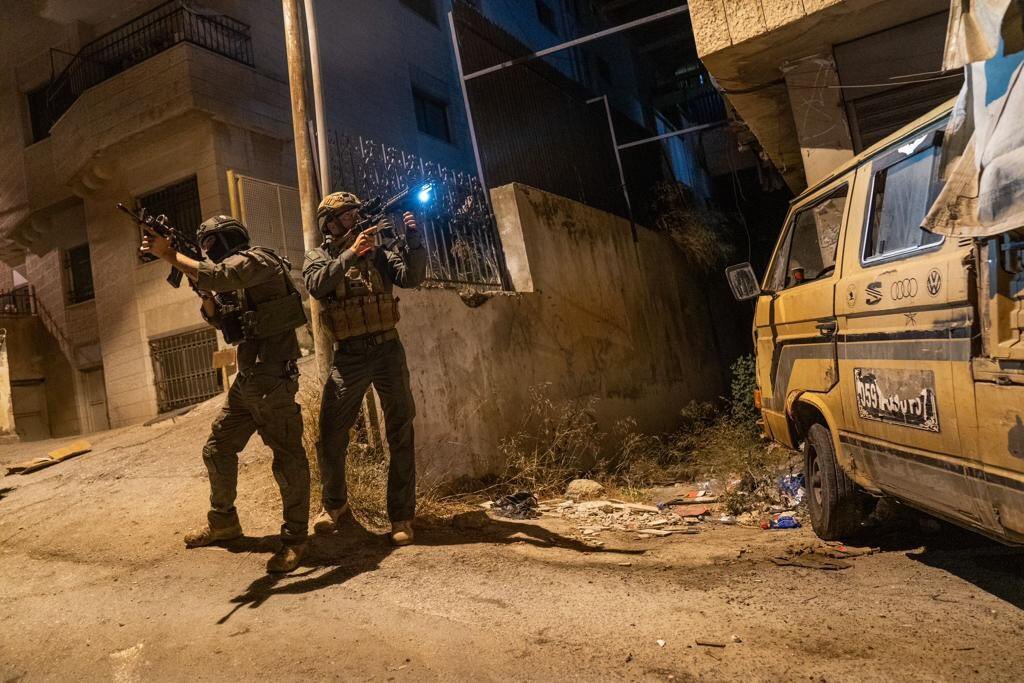
The Israeli forces again stormed the city of Tulkarm, and deployed in its various streets that connected it to the vicinity of the Tulkarm camp, which it besieged from all its entrances. They deployed their snipers on the roofs of the tall buildings surrounding it, and sent in additional reinforcements and military bulldozers from the western axis of the city, coinciding with the flight of reconnaissance planes in the airspace of the city and the camp.


This raid comes hours after a previous raid during which the occupation forces killed three Palestinians with direct bullets to the head, and arrested a fourth, in the Aktaba suburb, east of Tulkarm, which raised the number of martyrs in the West Bank to 340 since the seventh of last October.


Meanwhile, local sources said that sounds of explosions and exchanges of gunfire are heard in Tulkarm camp from time to time.


For its part, the Tulkarm Battalion - affiliated with the Al-Quds Brigades - said that its fighters clashed with the occupation forces in Tulkarm, which led to confirmed casualties and the withdrawal of a number of vehicles from service that stormed the Tulkarm and Nur Shams camps.


The battalion added that it thwarted a number of attempts to penetrate deep into the Tulkarm camp, and damaged a number of Israeli vehicles during the clashes.


Eight Palestinians were also injured by Israeli army gunfire after they stormed the old Askar camp near the city of Nablus from several directions.


Israeli army forces initially prevented Red Crescent crews from entering the camp, before ambulance crews were later able to reach the injured.

PALESTINE

Tue 09 Jan 2024 8:54 am - Jerusalem Time

War on Gaza on its 95 days ...an Israeli incursion north of the Nuseirat camp

On the ninety-fifth day of its aggression against Gaza, the Israeli army continued to bomb various areas of the Gaza Strip, especially its center and south.


This morning, local sources reported hearing the sounds of violent explosions and continuous artillery shelling south of the city of Khan Yunis, south of the Gaza Strip.


One person was killed and several others were injured in the targeting of a residential house west of the Nuseirat camp in the central Gaza Strip.


The Ministry of Health in Gaza announced that the number of dead since October 7 had risen to more than 23 thousand.


The occupation vehicles penetrated north of the Nuseirat camp in the central Gaza Strip, near the Al-Dawa Mosque.


Politically, US Secretary of State Anthony Blinken is meeting today with Israeli leaders in an effort to prevent the war in the Gaza Strip from turning into a regional conflict, according to what Washington says.


PALESTINE

Tue 09 Jan 2024 8:45 am - Jerusalem Time

West Bank: Israeli forces storm most of West Bank cities

The Israeli occupation forces stormed most of the cities of the occupied West Bank at dawn on Tuesday. The occupation soldiers deployed around homes and main roads and prevented the movement of Palestinian citizens.


Tulkarm


The Palestinian Red Crescent reported that 9 people were injured by shrapnel as a result of the occupation drone bombing a house in the Tulkarm camp in the northern West Bank.


Earlier, the occupation forces assassinated 3 Palestinians and arrested a fourth, in the Aktaba suburb, east of Tulkarm, during their storming of the area.


The occupation forces stormed Nour Shams camp in conjunction with the ongoing storming of Tulkarm camp in the West Bank.


Hebron


The Israeli occupation forces stormed the city of Al-Dhahiriya, south of Hebron, reinforced with a number of military vehicles.


Bethlehem


The occupation forces also stormed the village of Husan, west of Bethlehem, and raided the homes of citizens in the village.


Qalqilya


The occupation forces also stormed the city of Qalqilya in the northern West Bank from all its axes.


Nablus


Local sources reported that Israeli occupation forces stormed the city of Nablus in the northern West Bank and besieged the Askar and Balata camps.


The sources said that forces reinforced with vehicles and bulldozers entered the eastern region of the city, indicating the outbreak of armed clashes.


ARAB AND WORLD

Tue 09 Jan 2024 8:41 am - Jerusalem Time

Gaza and double standards: a disease that affects everyone


By Badie Younes

Since October 7th, analyzes and expectations have been increasing. Some of them are rational, realistic, and pragmatic that are worth learning about, while other analyzes tend to be intensely emotional, dominated by wishes, and in which subjective fantasies prevail at the expense of rationality and what is happening on the ground.

Some standards have changed since Operation Al-Aqsa Flood, and these are some of its indicators:

1- Russia’s condemnation of its devastating war on Ukraine, its destruction of infrastructure, and its occupation of lands in a neighboring country did not apply to the same extent and level to what is happening in Gaza. Many countries refrained from condemning Israel for its brutal and devastating aggression, invasion and destruction of the Gaza Strip. What is not permissible in Donetsk, Luhansk, and the cities of Ukraine appears to be permissible in the Gaza Strip and the West Bank, becoming “legitimate” in the international malice against the Palestinian people.

2- Washington complained about Moscow’s repeated use of its veto in the Security Council to protect its war in Ukraine. This use was described in the ugliest terms, to the point of turning the countries of the world against the United Nations Charter, and against the Security Council system, even demanding that its working methods be modified and the number of its members be changed. On the other hand, the United States used its veto more than once to protect Israel in its aggression, to prevent the delivery of aid, and to prevent the opening of humanitarian corridors. It allowed its use of its veto to destroy hospitals, clinics, schools, and places of worship.


Tehran kept the Hezbollah Party in a safe location to avoid exposing it to painful blows, and thus its interests converged with those of Tel Aviv and with the interests of the “Great Satan” in preventing the expansion of the war and its extension to the Lebanon front.


3- Usually, Moscow reacts to every threat, big or small, and seeks to protect its allies or friends around the world. However, since the “Al-Aqsa Flood” operation, it has not taken any hard-line stance against Israel. Rather, it informed the Hamas delegation during its visit to the Russian capital that it “aspires to protect the large Russian community in Israel” instead of taking a clear public position aimed at protecting Palestinian civilians from the oppression of Israel and the oppression of settlers.

4- In turn, as is its habit of remaining neutral, Beijing did not take any explicit position in support of the Palestinian issue. China does not want to support one party over another. It prefers neutrality between the conflicting parties at the expense of humanitarian and moral standards.

5- For their part, the European countries that were quick to stand up to Russia in its war on Ukraine, most of their leaders visited Tel Aviv to show solidarity with Israel, to the point that Netanyahu bragged about saying, “The world leaders are telling me in secret the opposite of what they are saying publicly.”

6- As for talking about ambiguity and the malice of dualities, talk about them without embarrassment when it is Iran’s turn. Tehran boasts of its “Quds Force” and its support for the Palestinian cause, while it has not fired a single shot in support of the causes of the Palestinian people. However, in Lebanon, Syria, the West Bank, and the Gaza Strip, it deliberately created discord among the Palestinians and prevented them from unifying their words and agreeing on a single strategy. It supported factions against other factions to fuel disagreement with the aim of controlling the factions, and thus subjugating these forces to serve Iran’s agenda at the expense of the legitimate goals of the Palestinian people. Tehran converged with Tel Aviv to fuel the Palestinian-Palestinian conflict. It formed the other side of the coin with the Israeli extreme right and fueled it with its extremism.

7- Both Iran and the party initially sought to disavow the Al-Aqsa Flood operation, only to fall back into contradiction when its officials, leaders, and media bragged about its role and that “Iran was the one who lifted the Palestinian revolution from the stage of the stone intifada to the level and era of missiles and marches, and gave the armed struggle its momentum and scope.”


Double standards are not limited to the United States and Western society, but also include other parties that may be confronting America and its allies, such as Russia, China, and Iran.


8- Tehran kept the party in a safe location to avoid exposing it to painful blows, and thus its interests converged with the interest of Tel Aviv and with the interest of the “Great Satan” in preventing the expansion of the war and its extension to the Lebanon front. It also kept the Golan front calm, where Iran and the party have a direct presence, but both Damascus and Tehran do not want to expand the war or get involved in it, nor do they want an actual confrontation in order to ward off the possibility of the fall of the Syrian regime and prevent the actual balance of power from being exposed. Meanwhile, the Popular Mobilization Forces in Iraq and eastern Syria were mobilized to claim that the principle of “unity of arenas” had not collapsed as a result of practical reality. While in reality, since the second day of Operation Al-Aqsa Flood, no military action, including the party’s daily bombing of Israeli settlements, has changed the nature of Israel’s war on the Gaza Strip. Then came the Houthi movement in the Red Sea and its threat to international shipping to prove that Iran’s agenda towards Washington is not related to Gaza, but rather to the nuclear negotiations, enrichment, billions, releasing deposits, and lifting the blockade on the export of oil and gas, in anticipation of the results of the presidential elections in America and the loss of the Democratic Party.


Double standards are not limited to the United States and Western society, but also include other parties that may be confronting America and its allies, such as Russia, China, and Iran. With the Gaza war, the world has become without fixed standards, as interests have come before everything else and international institutions and their laws have become in vain.

ARAB AND WORLD

Tue 09 Jan 2024 8:31 am - Jerusalem Time

Axios: Israel is mortgaging the return of Gazans to the north with a new prisoner exchange deal

The American website "Axios" revealed, on Monday, January 8, 2024, that the Israeli leaders will inform US Secretary of State Anthony Blinken, who arrived in Tel Aviv on Monday, that they will not allow the return of Palestinians to the northern Gaza Strip if the "Hamas" movement does not agree to release more hostages.


The American website said, quoting two senior Israeli officials: “Israel is not fundamentally opposed to allowing the Palestinians to return to northern Gaza, but that depends on a new hostage deal with the resistance,” he said, and the source added that the possibility of reaching a new deal will become clear within few weeks.


A senior Israeli official was quoted as saying that Israel and the United States realize that the return of the Palestinians to the north will not be achieved in light of the continuing fighting in some areas, but Axios, citing its sources, said that Israeli officials are expected to inform Blinken of their readiness to begin the planning process with the United States and the United Nations for the return of the Palestinians to their areas in the future.


An Israeli official was quoted as saying: “We will not let the Palestinians return to their homes in northern Gaza if progress is not achieved regarding the release of detainees.”


A new phase of the Gaza war

In a related context, the Israeli army announced, on Monday evening, the start of a “new phase” of the war in the Gaza Strip, less intense in fighting, and including “fewer ground forces and air attacks.” This came according to statements made by army spokesman Daniel Hagari to the American newspaper The New York Times.


Hagari said that the Israeli occupation army "began a new, less intense phase of fighting." He explained that the new phase “will include ground forces and fewer air attacks,” according to the same source.


Hagari's statements came hours before US Secretary of State Anthony Blinken arrived in Israel, as part of a Middle Eastern tour aimed at preventing the conflict in Gaza from expanding into a regional war, according to the newspaper.

Hagari said that Israel "will continue to reduce the number of forces in Gaza, a process that began earlier this month."


He claimed that "the intensity of operations in northern Gaza has already begun to recede," noting that the Israeli army "will now focus on Hamas strongholds in the south and center of the Strip, especially around the cities of Khan Yunis and Deir al-Balah."


Israel "also aims to allow more humanitarian aid into Gaza, including tents to shelter displaced people," Hagari said.


The United Nations says that, as of the end of December 2023, nearly 85% of the Strip’s population, or about 1.9 million people, have been forced to leave their homes, amid an Israeli ground operation and heavy aerial bombardment.

Source: Arabic Post


OPINIONS

Tue 09 Jan 2024 8:27 am - Jerusalem Time

America Must Face Up to Israel’s Extremism

Ramallah - “Al-Quds” dot com

Ramallah - “Al-Quds” dot com

Opinion Writer

By Michelle Goldberg

Two far-right members of Israel’s cabinet — the national security minister, Itamar Ben-Gvir, and the finance minister, Bezalel Smotrich — caused an international uproar this week with their calls to depopulate Gaza. “If in Gaza there will be 100,000 or 200,000 Arabs and not two million the entire conversation on ‘the day after’ will look different,” said Smotrich, who called for most Gazan civilians to be resettled in other countries. 

The war, said Ben-Gvir, presents an “opportunity to concentrate on encouraging the migration of the residents of Gaza,” facilitating Israeli settlement in the region.

The Biden administration has joined countries all over the world in condemning these naked endorsements of ethnic cleansing. But in doing so, it acted as if Ben-Gvir and Smotrich’s provocations are fundamentally at odds with the worldview of Prime Minister Benjamin Netanyahu, to whom America continues to give unconditional backing. In a statement denouncing the ministers’ words as “inflammatory and irresponsible,” the State Department said, “We have been told repeatedly and consistently by the government of Israel, including by the prime minister, that such statements do not reflect the policy of the Israeli government.”

Representative Jim McGovern, a Democrat who has called for a cease-fire, thanked the State Department in a social media post, saying, “It must be clear that America will not write a blank check for mass displacement.”But it’s not clear, because we’re writing a blank check to a government whose leader is only a bit more coy than Ben-Gvir and Smotrich about his intentions for Gaza. As Israeli news outlets have reported, Netanyahu said this week that the government is considering a “scenario of surrender and deportation” of residents of the Gaza Strip. (Some outlets reported that Netanyahu was referring only to Hamas leaders.) 

According to a Times of Israel article, “The ‘voluntary’ resettlement of Palestinians from Gaza is slowly becoming a key official policy of the government, with a senior official saying that Israel has held talks with several countries for their potential absorption.” Some in Israel’s government have denied this, mostly on grounds of impracticality. “It’s a baseless illusion, in my opinion: No country will absorb two million people, or one million, or 100,000, or 5,000,” one official, speaking on the condition of anonymity, told Israeli journalists. And on Thursday, Israel’s defense minister, Yoav Gallant, released a plan for the day after the war that said that, contrary to the dreams of the ultranationalists, there would be no Israeli settlement in Gaza. But with its widespread destruction of Gaza’s civilian infrastructure, including roughly 70 percent of its housing, Israel is making most of Gaza uninhabitable for the foreseeable future. 

Disease is rampant in Gaza, hunger almost universal, and the United Nations reports that much of the enclave is at risk of famine. Amid all this horror, members of Netanyahu’s Likud party — such as Danny Danon, Israel’s former ambassador to the United Nations, and Gila Gamliel, Israel’s intelligence minister — are pushing emigration as a humanitarian solution.“Instead of funneling money to rebuild Gaza or to the failed U.N.R.W.A.,” the United Nations agency that works with Palestinian refugees, “the international community can assist in the costs of resettlement, helping the people of Gaza build new lives in their new host countries,” wrote Gamliel in The Jerusalem Post.Right now, this is a grotesque fantasy. But as Gaza’s suffering ratchets up, some sort of evacuation might come to appear to be a necessary last resort. 

At least, that’s what some prominent Israeli officials seem to be counting on.After Hamas’s sadistic attack on Israel on Oct. 7, Israel was justified in retaliating; any country would have. But there is a difference between the war Israel’s liberal supporters want to pretend that the country is fighting in Gaza, and the war Israel is actually waging.Pro-Israel Democrats want to back a war to remove Hamas from Gaza. But increasingly, it looks as if America is underwriting a war to remove Gazans from Gaza. Experts in international law can debate whether the forced displacement of Palestinians from Gaza can be classified as genocidal, as South Africa is claiming at the International Court of Justice, or as some lesser type of war crime. But whatever you want to call attempts to “thin out” Gaza’s population — as the Hebrew newspaper Israel Hayom described an alleged Netanyahu proposal — the United States is implicated in them.

By acting as if Ben-Gvir and Smotrich can be hived off from the government in which they serve, US policymakers are fostering denial about the character of Netanyahu’s rule. Joe Biden often speaks of his 1973 meeting with Golda Meir, then the prime minister, and like many American Zionists, his view of Israel sometimes seems stuck in that era. If you grew up in a liberal Zionist household, as I did, you’ve probably heard this (possibly apocryphal) Meir quote: “When peace comes we will perhaps in time be able to forgive the Arabs for killing our sons, but it will be harder for us to forgive them for having forced us to kill their sons.” 

There’s much to criticize in this sentiment — its self-regard, the way it positions Israel as the victim even when it’s doing the killing; still, it at least suggests a tortured ambivalence about meting out violence. But this attitude, which Israelis sometimes call “shooting and crying,” is now as obsolete as Meir’s Zionist socialism, at least among Israel’s leaders. Among both American and European politicians, said my friend Daniel Levy, a former Israeli negotiator with the Palestinians who now heads the US/Middle East Project, there’s a “willful refusal to take seriously just how extreme this government is — whether before Oct. 7 or subsequently.” 

I’m tempted to say that Ben-Gvir and Smotrich said the quiet part out loud, but in truth they just said the loud part louder.

The New York Times

OPINIONS

Tue 09 Jan 2024 8:23 am - Jerusalem Time

Gaza and Us… Between Words and Deeds

Eyad Abu Shakra

Eyad Abu Shakra

Opinion Writer

Is it in our interest to know the truth about what is happening in our region... or are we too innocent to handle the bitterness?My personal feeling - and I hope I am wrong - is that we are too innocent and helpless to deal with the challenges that 2024 will bring us, especially after the past few months have exposed the intentions and approaches of many.

The Near East region is changing before our eyes, geographically and demographically, while we are expected to be distracted by visits and regional tours and to believe the diplomatic statements that Washington and some Western capitals have been regurgitating incessantly. Meanwhile, some of the misled and misleaders in our Arab world and its surroundings are comforted by hollow threats and empty rhetorical escalation. Many were concerned with listening to what Hassan Nasrallah, the Secretary-General of Lebanese Hezbollah, would say after Israel's assassination of the prominent Hamas leader Saleh al-Arouri and members of his entourage in the Dahieh southern suburbs of Beirut, a Hezbollah stronghold. But Nasrallah did not say anything new.

Moreover, Hezbollah is, in the first place, an integral part of Iran's strategy. Iran, whose Republican Guards leaders have long and repeatedly threatened that "the annihilation of Israel" was a few minutes away... is still taking its time to achieve this "accomplishment" it promises, despite the horrific humanitarian conditions that the Israeli machine has left in the Gaza Strip over the past three months, which have claimed the lives of tens of thousands of innocent civilians.As usual, Tehran has delegated the task of skirmishing and voicing positions to its Arabic-speaking proxies. It has fought and will continue to fight to enhance its regional influence - termed "resistance" - using the bodies of others and building on the ruins of their nations and societies.


Of course, Tehran expects a reward in return... It expects to be, as it has been for decades, included in the settlements and solutions that will be imposed on the remnants of the Near East after the West has handed Iran all of its entities... one after another on a silver platter.

In Iraq, Tehran is waging a local "proxy war" through its militias under the pretext of avenging Gaza. Meanwhile, Washington does not seem troubled, nor does Israel... the Iraqi state, Iraqi identity, and Iraqi sovereignty have all become things of the past. In Syria, the "red lines" offered by Barack Obama not only saved the regime, but also buttressed Iranian hegemony over the capital of Syria and its "middle belt" from the Iraqi border in the east to what was once the Republic of Lebanon in the west. 

Now, Syrian territory has been divided into spheres of influence, drug factories, arms smuggling routes, and exporters of strife and unrest to neighboring countries.In Lebanon, where "decisions of war and peace" are made by Iran that has financial and security hegemony through Hezbollah, the country's chemistry has changed, and its situation has changed. This could not have been achieved without the "resistance"... that is, Iran's plan for regional dominance. 

Under the guise of this "resistance," Hezbollah retains its arms, unlike all the other Lebanese parties and forces. With these arms, it skirmishes, maneuvers, and extorts. Now, after having endorsed the demarcation of Lebanon's maritime borders with Israel, it awaits the arrival of "demarcation engineer" Amos Hochstein to negotiate the next step and strike a deal on the land borders. 

Nasrallah implicitly suggested that in his latest speech, in which he did not rule out a de-escalation "if Israel stops its operations in Gaza." In tandem with the rhetorical escalation, the exchange of rocket and artillery fire continues across the border, within the limits of the so-called "rules of engagement"... bearing in mind that most of the targeted Israeli sites have been evacuated for a while now.Based on the above, Yemen's Houthis are playing a new role in Iran's "war of agitation" in the Red Sea and near the Bab al-Mandeb Strait.This new element has increased the significance of international intervention to "protect maritime trade." It also increases the need for Iranian "services" that will help Tehran get a share once the region is split, especially after it has been affirmed that Tehran has no intention of "destroying Israel." On the contrary, Tehran's threats over the years have strengthened Israel's expansionist right-wing and US political and military support for Israel.

A few days ago, pro-Israel electronic activists attacked me on "X," accusing me of being an idiot for discussing the "intersection" of interests between Tel Aviv and Tehran. But I am convinced that actions always speak louder than words.The Biden administration is fully aware that Iran has no intention of attacking Israel. It opposed expanding the war to displace the people of Gaza into a regional conflict because it firstly agrees with Israel on the need to liquidate the Palestinian question, and secondly, because it wants to maintain Iran's regional role in the Middle East.

Those who are still in doubt should consider the conditions of areas under Tehran's control in the Arab Levant, and remember Obama's words, "The Iranians are not suicidal!"

Alsharq Alawsat

ARAB AND WORLD

Tue 09 Jan 2024 8:21 am - Jerusalem Time

American official: Washington expects the war in Gaza to end within weeks

NBC News reported today (Monday), quoting a senior American official accompanying Secretary of State Anthony Blinken on his tour of the Middle East, that Washington expects the war in the Gaza Strip to end within weeks.


The American official said that the Secretary of State will inform Israel in meetings this week of the need to end its war “as soon as possible” and to use more precise targeting tools to reduce civilian casualties, according to the Arab World News Agency.


Israeli Prime Minister Benjamin Netanyahu and Defense Minister Yoav Galant said in a joint statement earlier today that the war will not stop in the Gaza Strip or on the border with Lebanon anytime soon, and will continue “for many months.”


Blinken is on a regional tour that includes Saudi Arabia, the UAE, Qatar, Jordan, Israel, the West Bank and Egypt, to discuss the war in the Gaza Strip.


ARAB AND WORLD

Tue 09 Jan 2024 8:12 am - Jerusalem Time

Blinken: We have a vision of an approach that provides security for Israel and a state for Palestinian people

US Secretary of State, Anthony Blinken, said on Monday evening that the United States has a vision for an approach that provides security for Israel and allows the establishment of a state for the Palestinian people.


He said on the “X” platform shortly after his arrival in Israel, which he is visiting as part of a regional tour, “Even as we focus on immediate goals, we must also work to achieve lasting peace and security.”


He added, "The United States has a vision for a regional approach that provides permanent security for Israel and a state for the Palestinian people."


Blinken arrived in Israel as part of a regional tour, to meet with Prime Minister Benjamin Netanyahu and members of the war government.


Haaretz newspaper said that Blinken is also expected to meet with President Isaac Herzog tomorrow morning, Tuesday, and later with Foreign Minister Israel Katz, and on Wednesday he will meet with opposition leader Yair Lapid.


Blinken is visiting Israel as part of a regional tour that also includes Saudi Arabia, the UAE, Qatar, Jordan, the West Bank, and Egypt.


The regional spokesman for the US State Department, Samuel Warburg, told the Arab World News Agency today that the US Secretary of State’s tour in the region focuses on a number of issues; Among them are continuing to provide humanitarian aid to the Gaza Strip, listening to the Israeli vision for ending the war, efforts to release “hostages,” coordinating with partners to prevent the scope of the conflict from expanding, and examining the post-war phase.


Gaza-Israel war

PALESTINE

Tue 09 Jan 2024 8:07 am - Jerusalem Time

War on Gaza: Two nephews of Aljazeera correspondent Al-Dahdouh killed in an Israeli raid

Two relatives of Wael Al-Dahdouh, director of Al-Jazeera's office in Gaza, were killed in a raid that targeted their car on Monday in Rafah, according to what the Gaza Ministry of Health and a number of their relatives reported.


A spokesman for the ministry in Gaza said that the occupation army “killed three citizens, targeting a civilian car,” and offered its condolences to Wael Al-Dahdouh, who lost his wife and three children since the start of the aggression.


A journalist confirmed to Agence France-Presse that the two brothers, Muhammad and Ahmed Al-Dahdouh, are his nephews. Scenes filmed by Agence France-Presse showed the destruction of the roof of the car and the process of pulling a body from it.


According to one of their relatives, Muhammad and Ahmed Al-Dahdouh, an accountant and engineer, aged 30 and 26, lived before the war with their family in the northern Palestinian territories near Gaza City, before they fled to the south, arriving two weeks ago in Rafah.


PALESTINE

Mon 08 Jan 2024 10:40 pm - Jerusalem Time

West Bank: Israeli forces storm towns and villages in Jenin Governorate

On Monday evening, Israeli occupation forces stormed several towns and villages in Jenin Governorate.


According to local sources, the occupation forces stormed the towns and villages of Silat al-Dhahr, Ya`bad, Arraba, Nazlet Zeid, Tura, Bir al-Basha, Jalboun, Faqoua, Deir Ghazala, Arana, and Arbouna, and carried out extensive search campaigns there, while confrontations broke out in the town of Arraba.


The sources added that the occupation forces set up military checkpoints in a number of towns and villages that they stormed, stopping citizens' vehicles and searching them.

PALESTINE

Mon 08 Jan 2024 9:27 pm - Jerusalem Time

West Bank: Israeli forces assassinate 3 young Palestinians east of Tulkarm

On Monday evening, Israeli occupation forces assassinated three young Palestinians in the Aktaba suburb, east of Tulkarm.


According to local sources, an Israeli special force, accompanied by large forces from the occupation army, stormed the Aktaba suburb, specifically Al-Qaisi Mosque Street, and fired heavily at a vehicle parked in the place, before surrounding a house in the area and assassinating the three young men inside.


The Ministry of Health announced the arrival of three dead to Tulkarm Governmental Hospital: Youssef Ali Al-Khouli (22 years old), Ahed Salman Musa (23 years old), and Tariq Amjad Shaheen (24 years old).


The body of one of the killed was run over by an Israeli military vehicle before the soldiers withdrew from the area. The occupation forces also arrested the young man, Mahmoud Mutee Salit, after he was injured.


Red Crescent sources in Tulkarm reported that the occupation forces prevented their vehicles from reaching the dead, at gunpoint, and were unable to reach the area until after the occupation withdrew from it.


ARAB AND WORLD

Mon 08 Jan 2024 8:57 pm - Jerusalem Time

Gallant threatens to destroy Beirut as he did in Gaza

Israeli Defense Minister Yoav Galant threatened Hezbollah during an interview with the American newspaper "The Wall Street Journal" published on Monday, that the war on Gaza might be repeated in Lebanon.


“They see what's happening in Gaza, and they know we can copy and paste in Beirut,” Gallant said.


Gallant added: My basic point of view: We are fighting an axis, not a single enemy.


He added that Iran is working to build its military power around Israel in order to use it.


Border tensions between Israel and Lebanon have escalated since the start of the Israeli military attack on the Gaza Strip, which has killed at least 22,600 people since October 7.


In turn, Hezbollah Secretary-General Hassan Nasrallah said last Friday that the Lebanese group carried out 670 operations against Israel during the past three months.


Hassan Nasrallah said in a televised speech: “What is happening on the Lebanese-Israeli border is unprecedented since 1948.” He added, "The enemy [Israel] does not acknowledge the presence of dead or wounded, and this is part of its general policy of secrecy regarding its losses since October 8."


Meanwhile, Gallant claimed that residents of northern Israel were evacuated from their homes amid escalating tensions on the Lebanese border.


"Eighty thousand people need to be able to return to their homes safely, so we are willing to sacrifice," Gallant acknowledged.

ARAB AND WORLD

Mon 08 Jan 2024 8:13 pm - Jerusalem Time

Unprecedented decline in Netanyahu's image in America. Poll: 47% of Americans have a negative opinion of him

A report by the Israeli Walla website, published on Monday, January 8, 2024, revealed that a poll conducted by the Gallup Institute indicated an unprecedented decline in the popularity of Prime Minister Benjamin Netanyahu in the United States. 


According to the poll, 47% of Americans expressed a negative opinion of Netanyahu, compared to 33%. % had a positive opinion about it, while the percentage of skeptics increased about what the occupation claims regarding women detained by Hamas, and the exploitation of the “Jewish Holocaust” in its crimes in Gaza.


According to the results of the poll published on Friday, January 5, 2024, this is the lowest result that Netanyahu has obtained as prime minister since the Gallup Institute began asking him this question in 1997.


Record low

Of Americans who identified themselves as Republicans, 55% said they had a favorable opinion of Netanyahu. On the other hand, only 14% of those who identified themselves as Democrats and 30% of those who identified themselves as independents expressed a favorable opinion of Netanyahu.


According to the Israeli newspaper Maariv, a new poll conducted in the United States revealed worrying results regarding American support for the war on Hamas in Gaza.


The newspaper said that the American administration provides support and assistance to Israeli interests against Hamas throughout the war, but a survey of American public opinion shows a different picture. The study, conducted under the leadership of Dr. Yitzhak Mansdorf of the Jerusalem Center for Public and State Affairs (JCPA), found that nearly a third of the American public holds opinions opposed to Israel in the Gaza war, and even some Israel supporters have begun to question the facts.


According to recently published results, a quarter of respondents believe that reports of Israeli women being sexually assaulted by Hamas fighters are greatly exaggerated. A similar percentage (24%) of Americans believe that reports of Israeli hostages being held by Hamas are completely untrue.


Doubt began to creep in

The poll, in which 300 US citizens between the ages of 18 and 65 participated, examined public opinion on the feasibility of pro-Palestinian versus pro-Israel demonstrations, the credibility of reports of Israeli detainees held by Hamas and even the possibility of a peace agreement between Israel and the Palestinians.


“General sympathy for Israel among Americans remains high, with 80% of the public continuing to support Israel, but at the same time supporting a ceasefire,” Mansdorf said. “However, in the current poll we have seen that even some supporters of Israel question some matters that are important to us.” ".


“The main problem is the Israeli attacks on the Gaza Strip, as more than 34% believe that reports of harm to Gazans are reliable and that Israel is responsible for that.”


They question the occupation's claims

According to the results, more than 24% of the survey participants believe that reports of sexual assaults against Israeli women by Hamas fighters are exaggerated and not consistent with reality, while 35% said they are not sure. More than 21% of participants agreed that Jews were “exploiting” the Holocaust to gain global sympathy, compared to 26% who chose not to express their opinion.


Regarding Hamas’ launching of rockets towards Israeli cities, 22% said that Hamas mainly targets Israeli military targets. When asked about the day after the war, about 28% had the impression that Israel was more interested in peace than the Palestinians, while more than 34% said that both sides were not interested in peace.


Dr. Mansdorf concludes: “These new findings show a continuing negative impact on public opinion regarding Israel’s responsibility for Gaza’s victims. Although many participants hesitated or chose not to express their opinion on some issues, it is important to note that these attitudes also exist among The general public in the United States who do not support Hamas typically express pro-Israel views.”

Source: Arabic Post