ARAB AND WORLD

Thu 11 Jan 2024 8:53 am - Jerusalem Time

London police investigation into war crimes in Gaza sparks a “crisis” between Israel and Britain

A Hebrew newspaper reported, on the evening of Wednesday, January 10, 2024, that there were “tensions” between Israel and Britain after the London police opened an investigation into Israel committing “war crimes” in the Gaza Strip.


Yedioth Ahronoth newspaper said: “The British Metropolitan Police (MET POLICE) has opened an investigation into alleged war crimes committed in Israel.”

It also added: "This issue caused diplomatic tensions between Israel and Britain, which prompted Israel to protest and express its dissatisfaction with these matters."


London police investigation

According to the newspaper, “London Police have issued an appeal for witnesses passing through UK airports to report war crimes and crimes against humanity committed in Gaza.”


Banners in English, Hebrew and Arabic were also hung at airports in the United Kingdom for existing passengers, reading: “If you are in Israel or the Palestinian territories and witness or are a victim of terrorism, war crimes, or crimes against humanity, you can report this to the British police,” according to the same source.


It also wrote: “UK police support the work of the ICC, which is investigating alleged war crimes in Israel and Palestine from June 2014, and any evidence collected can be shared with the ICC to support its investigations.”


In this context, Scotland Yard (the headquarters of the Metropolitan Police Department), according to the newspaper, said that the British police have a “responsibility to support” the International Criminal Court, in addition to the fact that “larger numbers of British citizens have returned to the United Kingdom since the beginning of the war between Israel and Hamas.” "It expects a greater number of potential witnesses and victims of war crimes to come from the region."


Occupation protest

In this context, Yedioth Ahronoth newspaper said that Israel "protested to the British authorities regarding the investigation."


The Israeli embassy in London also made it clear to the British authorities that “there is no basis, justification or authority to conduct an investigation against the State of Israel at the International Criminal Court.”


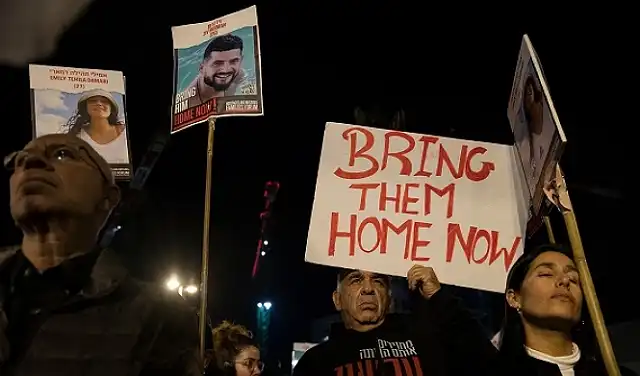
For his part, former British Prime Minister Boris Johnson condemned the investigation opened by the London Metropolitan Police, and told the Telegraph newspaper: “I am concerned about the disturbing politicization of the Metropolitan Police, especially after its officers were filmed tearing down posters of pictures of kidnapped Israelis,” in the Gaza Strip.


The Telegraph also reported that the investigation “raises serious concerns among British Jews and threatens to cause a political rift with the State of Israel.”


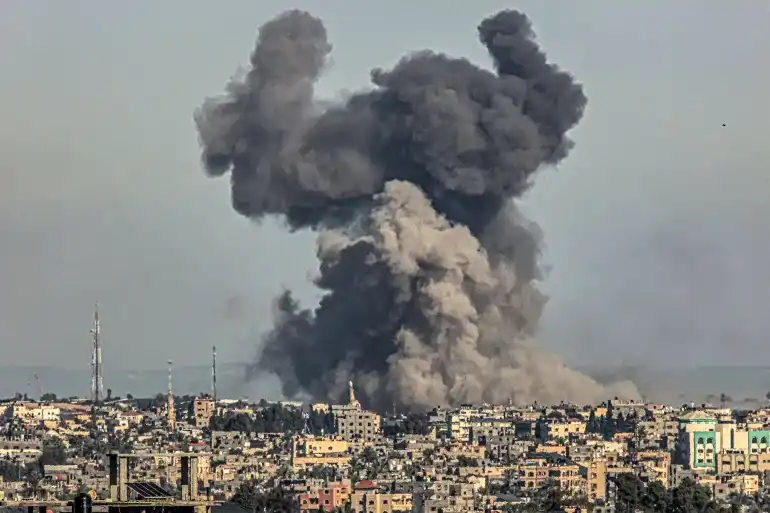
Since October 7, 2023, the Israeli army has been waging a devastating war on Gaza that, as of Wednesday, has left 23,357 dead and 59,410 injured, most of them children and women, and “massive destruction of infrastructure and an unprecedented humanitarian catastrophe,” according to the Gaza Strip authorities and the United Nations.


ARAB AND WORLD

Thu 11 Jan 2024 8:41 am - Jerusalem Time

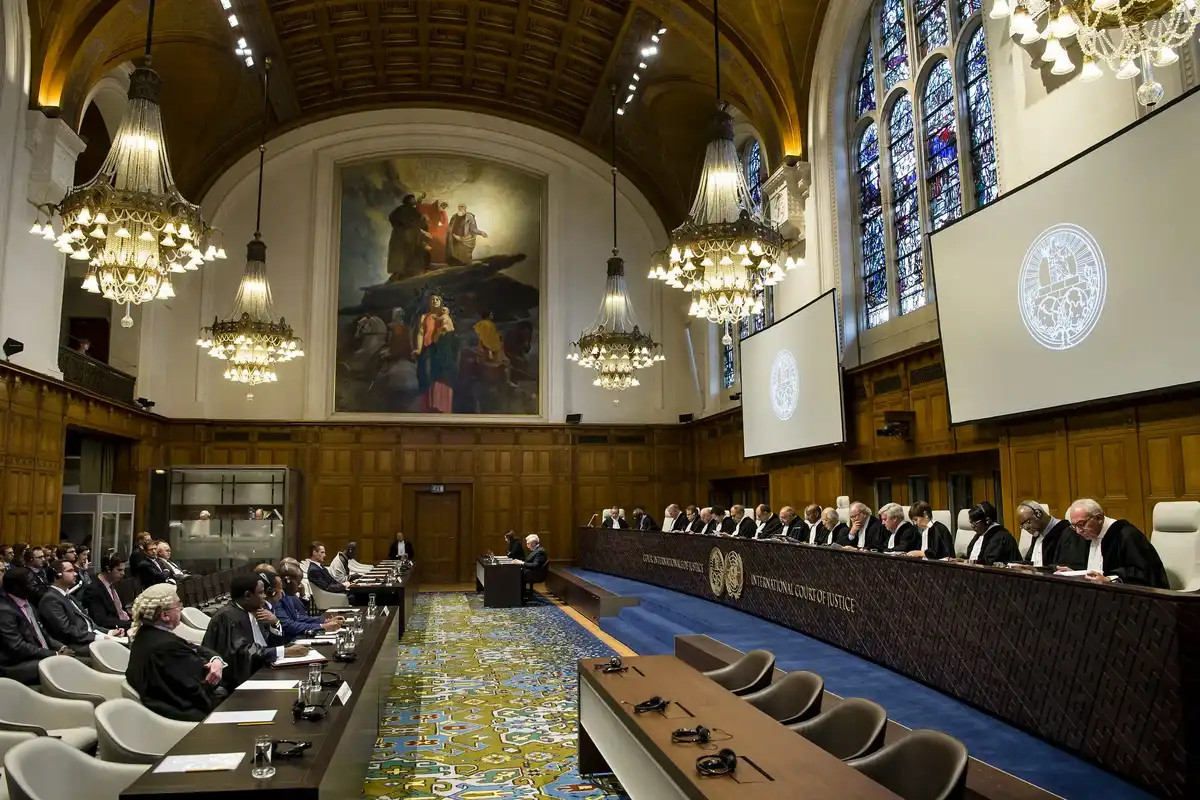
Today, Israel faces charges of genocide before the International Court

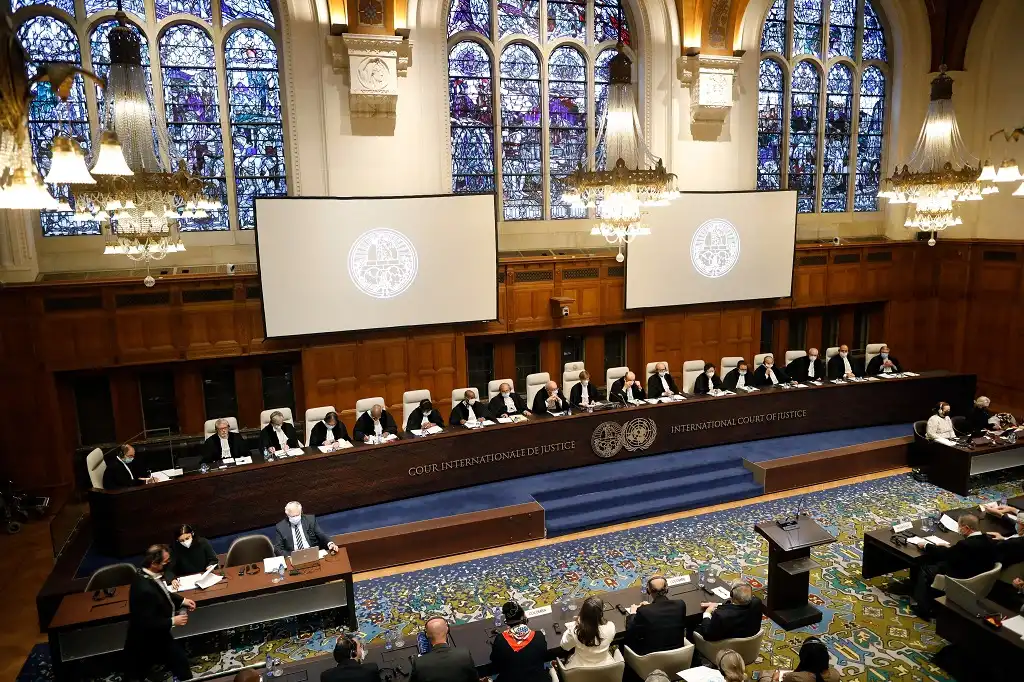
Israel faces charges of genocide due to the war in Gaza, today (Thursday), before the International Court of Justice in The Hague, according to the German Press Agency.


The International Court of Justice, the highest judicial body in the United Nations, will hear a case brought by South Africa accusing Israel of violating the United Nations Genocide Convention due to its bombing of the civilian population in the Gaza Strip.


According to the Hamas-run Ministry of Health in Gaza, the number of Palestinians killed since the beginning of the war in October has risen to 23,357 people.


Israel strongly rejects the accusation of genocide and says it is defending itself after gunmen from Hamas and other groups killed about 1,200 people during an attack on Israel on October 7.


The judges must first rule on an urgent request from South Africa to immediately stop the military operation. It may take several weeks for a decision to be made, and only after that will the judges discuss the genocide allegations.


South Africa, which brought the case because it saw echoes of apartheid from its own history in Israel's actions, will take the floor first. Israel will respond on Friday, but a ruling could take years.


OPINIONS

Thu 11 Jan 2024 8:26 am - Jerusalem Time

How do we envision the Occident and how does Israel do?

Hazem Saghieh

Hazem Saghieh

Opinion Writer

If its link with the West is among the most robust sources of Israel’s power, it could potentially become among the weakest. In the face of the West’s intense military, political, and financial support, there is a Western paradigm that the Jewish state favors and gravitates towards. What is this paradigm?


It is true that the settler colonialism that has been part of its history since its inception is not unique to Israel. Settlers established many of the world’s countries, the United States, Australia, New Zealand, Canada, South Africa, and Zimbabwe (formerly Rhodesia)... Nonetheless, an important distinction remains. 

Those processes unfolded earlier on, before the values of our contemporary world went into circulation. As for Israel, which was established as a political entity later on, the arrival of its settlers coincided with the end of Western settler colonialism and the democratic West’s denouncement or disavowal of that practice. 

This reflected itself in the discrepancy between the direction taken by the West following World War II, with decolonization and the retreat of Europeans from their former colonies, and the arrival of Europeans (and non-Europeans) to Palestine and their establishment of a state alien to the region - a process that required expelling the Palestinian population and replacing them. Both this and that indicate that the Westerness that has characterized Israel is old and colonial; it has been rusted by time and its changes, with its descendants disavowing the actions of their ancestors.

As for the Jewish state, it remained stuck there. When the Cold War broke out shortly after its establishment in 1948, very few countries were more rigidly and closely aligned with the NATO camp: from its support for dictatorial military regimes loyal to the West, to the affection it shared with countries and hotbeds of racism in Africa. 


Nasserist Egypt’s (and Baathist Syria) siding with the Soviet camp deepened this Israeli inclination and widened the distance separating the Israelis from their socialist and kibbutz origins. Year after year, Israel's closest friends changed: from the United States’ Democrats to its Republicans, from Britain’s Labor to its Conservatives, and here it is today, reconciling with some extreme right-wing movements and overlooking the anti-Semitism of their recent past. 


With the end of the Cold War, Israel’s position stood out starkly. Indeed, Western countries abandoned the awkward ties to dictators and racists that their global competition with the Soviets had imposed, while Tel Aviv neither walked away nor felt awkward. One thing that mitigates the obsolete colonial character of the Israelis’ Westness is their parliamentary democracy, which is also Western - even if only Jewish citizens fully enjoy this democracy, while others live under a flawed democracy, and things have gone further in this direction over the past few years.

The Israeli image of the West thus encompasses three elements: the colonial past, military and technological progress, and parliamentary democracy. Were it not for the last element, the combination of the first two would have left us with a disastrous recipe for fully-fledged modern barbarism. It is correct, in any case, to assume that this blemished image of the West in the Jewish state will continue to be governed by the struggle between these elements for a long time. On the other hand, it remains difficult to argue that there is an image of and about the West in mainstream Arab culture. 

It is true that satire dominates this non-image, but this satire says more about the frailty of the coherence of satirists than it does about the coherence of the satirized. After that old, self-contradictory, formula claiming that Zionism and Israel were created by the West and that, at the same time, Israel controls the West (and the second half is not free of anti-Semitism), we are now faced with formulas that do make not much sense: the narrative that Zionism and Israel are product the West should have spared us our immense astonishment at the extent of the West’s bias in favor of the Jewish state in its war on Gaza; makers do not abandon what they have made.

The same could be said about our claims that the West is morally and ethically dead and that its democracy is a lie and a ruse, at a time when we only see protests, petitions, and debates over there. As for some among us claiming that the West is weak and that its influence is diminishing in favor of China, Russia and others, while at the same time addressing and appealing to it and not other global powers, that is another flagrant indication that we are drawing our image of the West with the brush of riddles, behaving like a blind man running in the dark. Of course, our denunciation of the West in the name of democracy lacks any credibility. We are not well placed to present ourselves as eminent democracy professors, we who have a terrible record in dealing with the extremely vicious repression that our region has witnessed and that has befallen our peoples or ethnic and religious minorities. Here, our condemnation of our oppression of one another remained timid, to say nothing about our efforts to push back against it.

Both this and that should make us question whether our strong appetite for what is known as the “critique of Orientalism” is a response to a deep and unhidden desire to avoid critiquing our “Occidentalism” or our failures to understand the West and the world, and by extension, to understand ourselves.

The fact is that the image of the West in Israel will not emerge as a weakness until the West goes further and further in breaking with its colonial past - a rupture that has been weakest in our region for several reasons, one of the most important of which is Israel itself. Thus, our changing, at least on the consciousness front, could push the West to change how it operates in our region as it changed in the West itself and in other parts of the world that have demonstrated levels of understanding that we have not. We would be better off with something to do and say in this regard.

Source: Alsharq Alawsat

ARAB AND WORLD

Thu 11 Jan 2024 8:21 am - Jerusalem Time

Morocco: We are ready to study the petition to stop normalization with “Israel”

The Moroccan government said, on Wednesday, that it is ready to respond to a petition demanding that it stop normalization with Israel, which human rights activists intend to submit.


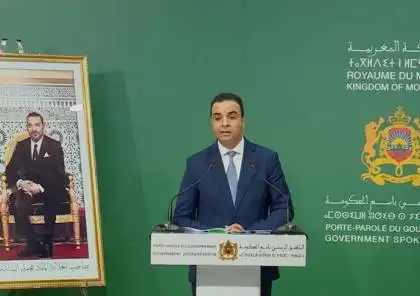
This came according to government spokesman Mustafa Pattias, when he answered a journalist’s question at a symposium that followed the weekly government meeting, about the intention of human rights activists to submit a petition demanding a halt to normalization with Israel.


Pattias, who also holds the position of Minister in Charge of Relations with Parliament, said that the government "is ready to respond to the petition and study it."


The petition of proposals or demands submitted to the Government Petitions Committee must be signed by five thousand citizens.


The petition is one of the means available to citizens to demand that the government adopt a public policy or cancel agreements. After submitting it, the relevant government committee is expected to accept or reject it, according to the law regulating petitions.


Patias explained, "Submitting this petition must be done with the interests of his ministry, because he is the one who heads the (governmental) Petitions Committee."


He added, "Petitions are regulated by the 2011 Constitution, which gave this possibility to citizens to express their opinions on development issues, or petitions to draft legislation and laws."


He continued: "I chair the National Petitions Committee, and the petition is supposed to be placed with the committee at the headquarters of the Ministry in charge of relations with Parliament."


He indicated that he would interact with the request, study the petition within the framework of the constitution and regulatory laws, and express the opinion taken by the government in this area.


In turn, Moroccan human rights activist Aziz Hanawi, a member of the petition committee, said: “We expect positive interaction with the petition demanding an end to normalization with Israel.”


In a press conference held by members of the petition committee on Wednesday in Rabat, Hanawi added, “The decision to sever relations with the Zionist entity (Israel) was long overdue, and the time has come to take it in light of the scale of the massacres committed against the Palestinians.”


He pointed out that "the petition that human rights activists intend to present to the government includes about 10,000 citizen signatures."


Many Moroccan cities, including the capital, Rabat, are witnessing solidarity vigils with the Gaza Strip, which has been subjected to an Israeli war since last October 7, in which participants called for severing relations with Tel Aviv, stopping the war, and bringing in aid.


In December 2022, Morocco and Israel resumed their diplomatic relationship with American mediation, in a move that popular sectors and political forces in the Kingdom expressed their rejection of. This was followed by a visit of high-level Israeli officials to Rabat, which stopped with the start of the war on Gaza.


In 2018, the government launched the “Petitions Committee” to receive citizens’ requests and suggestions, with the aim of taking whatever measures it deems appropriate regarding them, within the framework of respecting the provisions of the Constitution and the law.


Anatolia

ARAB AND WORLD

Thu 11 Jan 2024 8:17 am - Jerusalem Time

Deputy Prime Minister of Belgium: I will suggest to the government to sue “Israel”

Belgian Deputy Prime Minister Petra De Sutter said that her country cannot remain silent regarding the enormous humanitarian tragedy in Gaza.


De Sutter confirmed that she would submit a proposal to her government to follow the example of South Africa in filing a lawsuit against the occupying state before the International Court of Justice in The Hague.


De Sutter, a representative of the Flemish Green Party in the ruling coalition, said in a post on the “X” platform: “Belgium cannot stand idly by and watch the enormous human suffering in Gaza, and we must act against the threat of genocide.”


She added: "I want Belgium to move before the International Court of Justice, similar to what South Africa did. I will propose this within the Belgian government."


Hearings are scheduled to be held at the International Court of Justice in the “genocide” case filed by South Africa against “Israel” on the 11th and 12th of this month.


The South African Ministry of Justice previously announced that Minister Ronald Lamola headed the country’s delegation to the International Court of Justice in The Hague, during the hearing in the lawsuit filed by the African country against the Israeli occupation on charges of committing genocide crimes against the Palestinian people in the Gaza Strip.


The South African delegation will be led by Lamola in the first hearing of the case, the ministry said in a statement.


In a statement, Lamola said that his country is determined to end “the genocide in Gaza through this lawsuit,” noting that South Africa “derives strength from world leaders who stand on the right side of history.”

On December 29, 2023, South Africa filed a lawsuit against the occupying state before the International Court of Justice regarding the occupation’s violations of its obligations under the Genocide Convention in the Gaza Strip.


The lawsuit pointed out that the actions of the occupying state “are considered to be of a genocidal nature, because they are committed with the specific intent required,” to destroy the Palestinians in Gaza as part of the broader Palestinian nationality and racial and ethnic group.


The lawsuit indicates that the behavior of the occupying state, “through state agencies, agents of the state and other persons and entities acting on its instructions or under its direction, control or influence,” constitutes a violation of its obligations towards the Palestinians in Gaza under the Genocide Convention.

ARAB AND WORLD

Thu 11 Jan 2024 8:08 am - Jerusalem Time

Israeli media: A Qatari initiative in stages for a prisoner exchange deal.. Hamas: “Fraud and misleading”

The Israeli Walla website reported on Wednesday that Israeli officials are discussing a proposal presented by the State of Qatar that includes a complete ceasefire in the Gaza Strip in exchange for a prisoner exchange deal with Hamas that takes place in several stages.


The website quoted an Israeli official as saying that the State of Qatar presented a multi-stage initiative for a prisoner exchange deal with Hamas, and that the Qatari proposal does not differ significantly from previous proposals.


The same source explained that "the Qatari initiative includes, in the first stage, a prisoner exchange deal, and in the last stage, the withdrawal of the Israeli army from the Gaza Strip."


The proposal will be presented to the War Council and the Mini-Ministerial Council for Political and Security Affairs, which will meet tonight to discuss the “day after” the Gaza war.


The official confirmed that “a delegation from the Israeli Shin Bet service visited Cairo today, Wednesday, to hold talks with senior Egyptian intelligence officials.”


The website quoted Israeli officials as saying: “There is no significant change in the proposals submitted by Qatar and Egypt regarding a new exchange deal, and the real dilemma that the war government must decide is whether Israel is prepared to stop the war in exchange for the release of the Israeli prisoners.”


While the Israeli official did not mention additional details, the Israeli Channel 13 reported that the deal includes the release of all Israeli detainees in Gaza and the evacuation of Hamas leaders, in exchange for the occupation’s withdrawal from the Gaza Strip.


The offer comes after the visit of families of Israeli detainees to Qatar earlier this week.

In turn, Channel 13 said that while the offer allows Hamas to remain in the Gaza Strip, it talks about the exile of the movement's leaders and the release of all Israeli detainees in several stages.


In a related context, Channel 13 reported that a senior officer in the occupation army, which it did not name, returned to Israel yesterday, Tuesday, at the end of a visit he was paying in Egypt, during which discussions took place about expanding humanitarian aid to the Gaza Strip, and the issue of “the next day” of the war on Gaza, in addition to discussing the issue of faltering communications regarding the deal.


Commenting on what the Hebrew media reported about the exile of Hamas leaders, Elior Levy, a correspondent for the Hebrew channel Kan, said: “Whoever thinks that Yahya Sinwar or Muhammad Deif will agree to proposals to exile outside the Gaza Strip, he does not know Sinwar or Deif, and he does not even know Hamas.


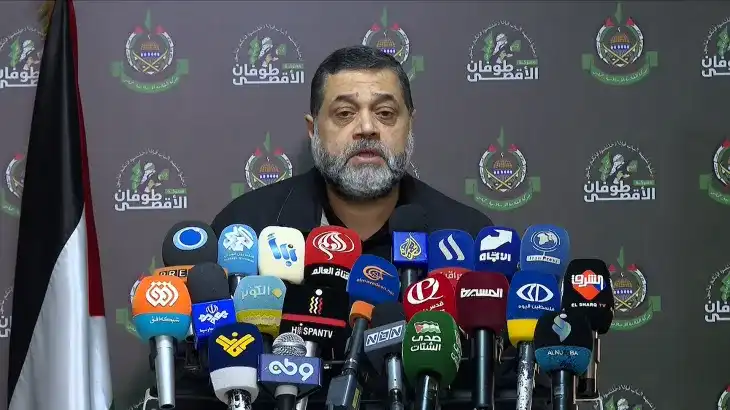
Hamas leader Osama Hamdan responded to Hebrew media talk about the cabinet’s discussion today of a new Qatari initiative, saying: “There is no initiative of this kind, and it is a process of deception practiced by the occupation government to calm the street,” stressing that there are no initiatives unless there is talk of an end and a complete cessation for war.


He added: "We do not accept any initiatives that are not based on stopping the Israeli aggression, and talk about the resistance leaving Gaza is just an illusion."

OPINIONS

Thu 11 Jan 2024 7:42 am - Jerusalem Time

The U.S. nudges Israel toward an off-ramp from war

 The Washington Post

The Washington Post

Opinion Writer

By David Ignatius

An Arab proverb warns that you should “think of the going out before you enter.” That’s proving painfully true for Israel in the Gaza war, where it still doesn’t have a coherent exit strategy. 

Israel wants a decisive defeat of Hamas to prevent it from ever again mounting a horrific terrorist attack like the one on Oct. 7. But that’s still a somewhat distant goal after three months — with Hamas dug into an underground city beneath Gaza shielded by Israeli hostages and the international community demanding a cease-fire to save Palestinian civilians.

The Biden administration is trying to help Israel mark a pathway out of the conflict by working with its key moderate Arab allies. Secretary of State Antony Blinken is completing a tour of the region in which he’s receiving pledges of support to rebuild Gaza, postwar, from Saudi Arabia, the United Arab Emirates, Jordan and Egypt — on condition that Israel agree to the eventual creation of a Palestinian state. An exit ramp is clearly marked. But Israeli Prime Minister Benjamin Netanyahu so far refuses to make the required commitment to a Palestinian state. So the U.S.-engineered endgame is stalled. Blinken has wooed the Arabs, but he can’t seem to budge Netanyahu whose wariness reflects the views of many Israelis who are still traumatized by Oct. 7 and dread Palestinian sovereignty.


The Biden administration, meanwhile, keeps working to prevent Gaza from spiraling into a wider war — and that’s getting harder, too. President Biden & Co. talked Israel out of attacking Hezbollah in Lebanon immediately after Oct. 7. 

But Hezbollah rockets have turned northern Israel into a string of evacuated ghost towns, and Israeli officials say flatly that if Hezbollah doesn’t create a buffer zone along the border, Israel will mount an all-out attack to drive it back. 

Can U.S.-led diplomacy avert this wider conflict? 

U.S. officials have been exploring every channel, with some success. Hezbollah and its patron, Iran, have signaled through intermediaries since October that they don’t want full-scale war. But Iran and its proxies are adept at playing a double game. Hezbollah says it’s ready for talks to resolve Lebanon-Israel border disputes when the Gaza fighting stops, but it keeps firing rockets at northern Israel. And the Houthis, an Iranian-backed force in Yemen, have been shooting missiles at ships in the Red Sea — disrupting a key global maritime route. If these attacks don’t cease, officials warn, the United States will soon take military action against the Houthis, and Israel will eventually pulverize Hezbollah in Lebanon. At the end of that dark path is a confrontation that has been brewing for 45 years between revolutionary Iran and its mortal enemies, Israel and the United States. The Iranian government probably doesn’t want that fight, but the shadowy Iranian Revolutionary Guard Corps that conducts Iran’s covert operations in the region might.


How can the crisis be defused before it gets worse? Israel has taken a first step by reducing its military operations in Gaza. When Israeli troop withdrawals are finished late this month or early next, as little as one-quarter of its initial invasion force might remain in Gaza. Israel commandos would enforce a siege of the tunnels and attack Hamas fighters who tried to escape them, but the Israelis would avoid the high-intensity attacks on civilian areas that have enraged global public opinion. Maintaining order as Israeli troops withdraw will be a nightmare. 

Netanyahu doesn’t want the Palestinian Authority to run postwar Gaza, so his government is considering a plan to let local Palestinian leaders administer services district by district. It’s a recipe for chaos and corruption, like the “village leagues” the Israelis sponsored in the West Bank in the 1980s. And because that would obstruct a Palestinian state, Arab nations probably won’t cooperate — leaving both Israel and Gaza in limbo.How can the United States and its allies encourage Israelis to open the path toward a Palestinian state that so many mistrust? One sweetener would be real reform of the Palestinian Authority, with a new leader who can take over governance from an ineffective President Mahmoud Abbas and a new cabinet that’s committed to fighting corruption and improving services.

The real prize for Israel would be normalization of relations with Saudi Arabia, the Sunni world’s richest and most powerful country. Blinken got a commitment from Crown Prince Mohammed bin Salman that he’s ready to openly embrace Israel — but only after the war ends and Israel accepts a pathway to a Palestinian state. MBS, as the crown prince is known, wants to be a 21st century version of Egypt’s Anwar Sadat, in an opening to Israel. 


But he doesn’t want to pay the price in domestic unrest, and eventual assassination, that Sadat did. As the Biden administration struggles to contain the fallout of the Gaza war, it is encountering the same paradox that has haunted Middle East policy for a half-century: The United States is the only outside power strong enough to shape the region militarily and politically. But it can’t impose solutions, especially on a close ally like Israel. 


The United States is still, despite all its setbacks, the “indispensable nation” in the Middle East. Yet it’s also a prisoner of events it can’t control — above all the abiding mistrust and violence between Israelis and Palestinians

PALESTINE

Wed 10 Jan 2024 10:51 pm - Jerusalem Time

Israel confirms that operations in Gaza will be prolonged

While the southern Gaza Strip witnessed continuous battles, Israeli War Council Minister Benny Gantz confirmed that military operations would continue for a long time, and that his government was committed to “eliminating (Hamas) and recovering the hostages.”


Gantz said in a press conference that the achievements of his country’s army are increasing, and that “Hamas rule” has no longer existed in large areas of the Gaza Strip.


Gantz chose the term “Israeli operations” in reference to the beginning of the third phase of the war in the northern Gaza Strip, which is the phase that is based on specific operations instead of intensive operations, and it is a phase that is also supposed to move to the south at a later stage. Israel plans for these operations to continue for approximately a full year.


Gantz's threats came a day after meetings held by US Secretary of State Anthony Blinken in Israel, which aimed to reduce the intensity of operations, stop the killing of civilians, move to the third phase, and develop a plan for what is known as the “next day” after the war.


On Wednesday, Israel continued its massive attack in the southern Gaza Strip, in a battle that appears difficult, harsh, and complex as well.


An Israeli army spokesman said that the forces of the “5th Brigade” killed dozens of militants and destroyed hundreds of infrastructure one kilometer from the border in the village of Khuza’a, east of the city of Khan Yunis, noting that the soldiers found paths to tunnels and many combat means and intelligence materials. This was among about 150 targets that Israel said it attacked within 24 hours in the central and southern Gaza Strip.


The spokesman explained that the Israeli forces continue to operate on the ground in the Gaza Strip, with support and coordination with the Air Force and the Navy, noting that, on Wednesday, they attacked militants in the Al-Maghazi area in the central Gaza Strip, and uncovered more than 15 underground tunnel openings in the area, and found... Platforms for launching rockets, missiles, drones, and explosive materials.


In return, the “Al-Qassam Brigades” affiliated with “Hamas” and the “Jerusalem Brigades” affiliated with “Jihad” said that they destroyed the concentrations of soldiers penetrating the city of Khan Yunis in the southern Gaza Strip with mortar shells, clashed with them and targeted them, and also destroyed tanks and vehicles.


The Israeli army announced that 17 officers and soldiers were injured in the battles in Gaza during the past 24 hours. This came a day after it announced the killing of 9 of its officers and soldiers, and the injury of 27 others in the battles taking place in Gaza.


While the clashes continued on the ground, Israeli aircraft continued to bomb large areas in the Gaza Strip, killing more civilians, including 3 journalists and 4 paramedics, despite US Secretary of State Anthony Blinken’s clear and decisive request from Israeli Prime Minister Benjamin Netanyahu to stop harming civilians.


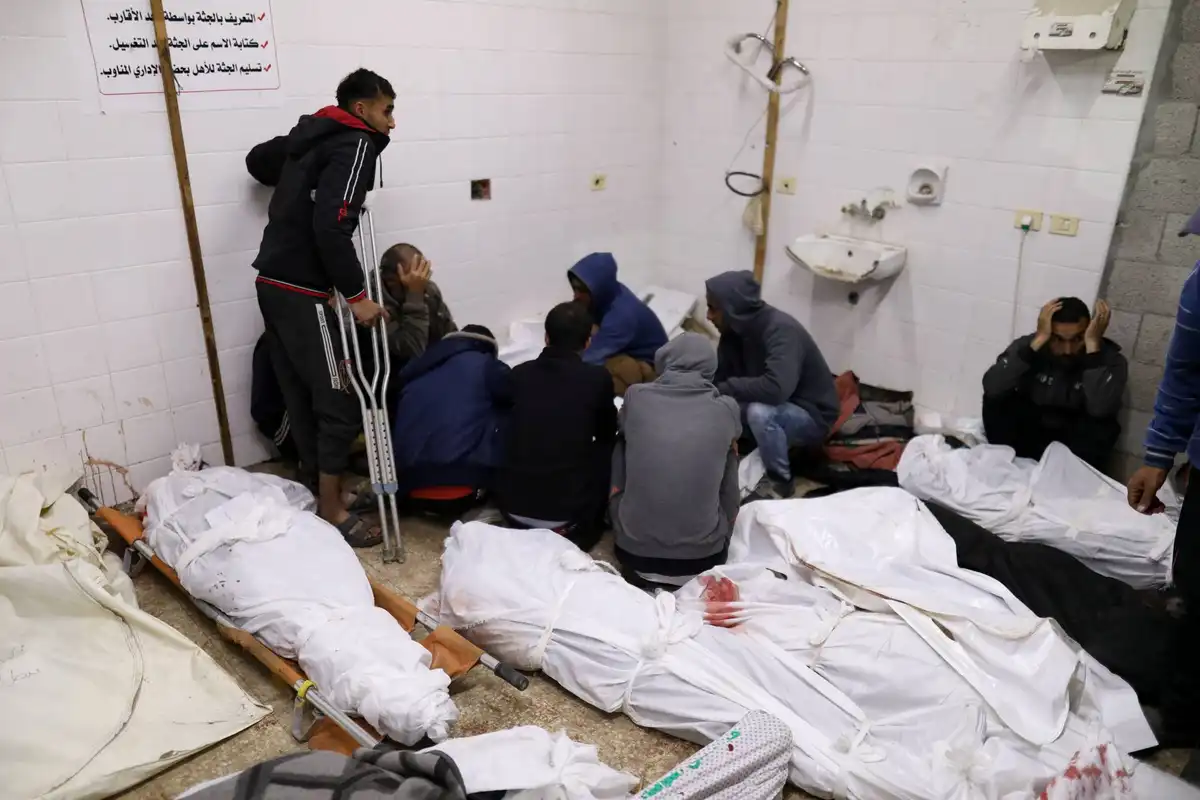
The Ministry of Health in Gaza said that the occupation committed 14 massacres against families in the Gaza Strip, leaving 147 dead and 243 wounded who arrived at hospitals during the last 24 hours, while a number of victims are still under rubble and on the roads, and ambulance and civil defense crews cannot reach them.


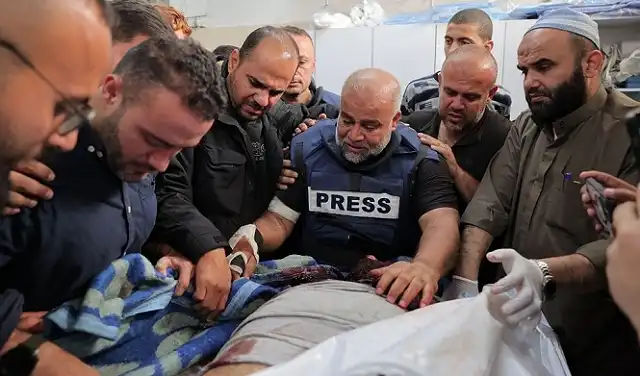
The government media office confirmed that Israel killed journalist Fouad Abu Khammash in an Israeli bombing on Salah al-Din Street in the center of the Gaza Strip, and journalist Ahmed Badir by bombing a house adjacent to Al-Aqsa Martyrs Hospital in Deir al-Balah in the center of the Strip, hours after the killing of journalist Sherif Okasha and journalist Heba al-Abadla, which raises the number of deaths. Journalists killed by Israel in Gaza since the start of the war on the Strip, to 116.


Israel also killed 4 paramedics in bombing an ambulance on Salah al-Din Street in the central Gaza Strip. The Palestinian Red Crescent confirmed that 4 of its crews were killed in that bombing.


The Ministry of Health in Gaza said that the number of victims of the aggression rose to 23,357 dead, in addition to more than 59,000 injured.


The ongoing war in the Gaza Strip was accompanied by an ongoing escalation in the West Bank.


Large Israeli forces stormed most of the West Bank cities and camps, and worked there for long hours in operations usually aimed at killing and arresting Palestinians and confiscating weapons and money. Wednesday's operation resulted in many arrests, injuries, and widespread destruction of infrastructure.


Since the beginning of the war in Gaza, Israel has feared that the West Bank would turn into another front, but these fears have reached the stage of real assessments.


Israeli security leaders have warned Prime Minister Benjamin Netanyahu several times in recent days that the West Bank is on the verge of major violence.


Israeli media said that Israeli Army Chief of Staff Herzi Halevy and other senior military commanders conveyed these warnings, and said that Israel risks opening a new front in the West Bank amid the war against Hamas in the Gaza Strip, and the ongoing clashes on the northern border with Hezbollah. Lebanese.


The warnings included other members of the war cabinet, such as Defense Minister Yoav Gallant and Minister Benny Gantz, who were informed of the possibility of major unrest in the West Bank.


The growing concern comes in the wake of Israel's withholding of hundreds of millions of dollars in tax revenues from the Palestinian Authority, in addition to its refusal to allow about 150,000 Palestinian workers to return to their jobs in Israel and the settlements.


Israeli army commanders were quoted as saying: “We may end up with a third intifada in the West Bank due to discontent resulting from economic difficulties and the lack of entry of workers into Israel.”

The Shin Bet Security Service is participating with the army in its assessment.


The West Bank witnessed a number of shooting, running over, and stabbing operations, but so far they have not risen to the level of an uprising or intifada.

PALESTINE

Wed 10 Jan 2024 10:40 pm - Jerusalem Time

Hamas: The occupation’s transition to the third stage of the war is false propaganda

A senior leader of the Islamic Resistance Movement (Hamas), Osama Hamdan, said in a press conference in Beirut that the situation in the Gaza Strip is more complex and better than the occupation thinks, and the Israeli army’s marketing of the transition to the third phase of the war is false and exposed propaganda for the Palestinian people and the resistance, and a desperate attempt to pass it off as an achievement at the expense of The blood of the people of Gaza.


He added that the idea of disarming the resistance is naïve and does not take into account the facts of the matter, and talk about the resistance’s exit and departure is just an illusion. He added that the Israeli enemy failed, 3 months after the start of its aggression, to achieve any of its goals, and stressed that the detainees will not return alive to their families unless conditions are met. Resistance, the first of which is the complete cessation of aggression.


He said that the occupation targeted all civilians, especially children and women, and did not allow a crime without committing it using all internationally prohibited weapons, in flagrant violation of international humanitarian law. He pointed out that the crimes of the occupation were not limited to the Gaza Strip only, but also extended to the areas of the West Bank and Jerusalem, through the siege of the cities, Camps, arrest campaigns, and the destruction of homes and infrastructure, in addition to the deliberate assassination of Palestinians.


Hamdan called on the International Court of Justice not to yield to the pressures sought by the American administration to disrupt the work of the court, adding that the failure of the American administration to issue a decision to stop the aggression destroys its alleged moral image. The leader said with enthusiasm, “We expect serious action from the newly appointed chief humanitarian coordinator from the United Nations to end the suffering.” Civilians in all areas of the Gaza Strip.


Source: Al Jazeera

PALESTINE

Wed 10 Jan 2024 10:32 pm - Jerusalem Time

Israeli army claims journalists Al-Dahdouh and Soraya belong to the resistance

The Israeli army claimed, on Wednesday, that journalists Hamza al-Dahdouh belonged to “Islamic Jihad” and Mustafa Thuraya belonged to the “Hamas” movement, in order to justify the assassination of the two journalists who were killed last Sunday, in a bombing that targeted a vehicle in which they were traveling west of Khan Yunis, in the southern Gaza Strip.


This comes as the government media office in Gaza announced on Wednesday that the death toll of journalists in the Strip had risen to 115 since October 7, following the martyrdom of three journalists today, Wednesday, in Israeli bombing.


The army said in a statement, “The Palestinian media has circulated in recent days the news of the killing of two journalists named Hamza al-Dahdouh and Mustafa Thuraya as a result of a raid carried out earlier this week in Rafah,” claiming that “intelligence information is available to the Israeli army, proving that the two dead men belonged to terrorist organizations”  in the Gaza Strip.”


It said that they "participated in promoting terrorist operations targeting our forces."


It also stated, "Before the raid, the two activated drones in a way that posed a threat to our forces, which directed Air Force planes to target the two who were responsible for activating the drone."


It was claimed in the statement that "Mustafa Thuraya is considered a Hamas member in the Gaza City Brigade."


It said, "A document found by army forces on the ground in the Gaza Strip during the fighting indicates the organizational structure of all members of the Hamas-affiliated Al-Qadisiyah Brigade, where the name of Mustafa Thuraya is mentioned in addition to his position with the organization, which is deputy cell commander."


The statement added, "Hamza Wael Hamdan Al-Dahdouh is considered a member of the Islamic Jihad terrorist organization, and is committing terrorist acts against the State of Israel."


The Israeli army said in its statement, “Al-Dahdouh’s name is included, according to documents found by army forces, during the fighting inside the Gaza Strip, on a list of individuals in the field of electronic engineering who are affiliated with Islamic Jihad.”


According to its claim, “the documents indicate that Al-Dahdouh previously held the position of deputy faction commander in the Islamic Jihad’s Zaytoun Brigade, and that he currently holds the position of a regional official in the movement’s missile unit.”

PALESTINE

Wed 10 Jan 2024 9:06 pm - Jerusalem Time

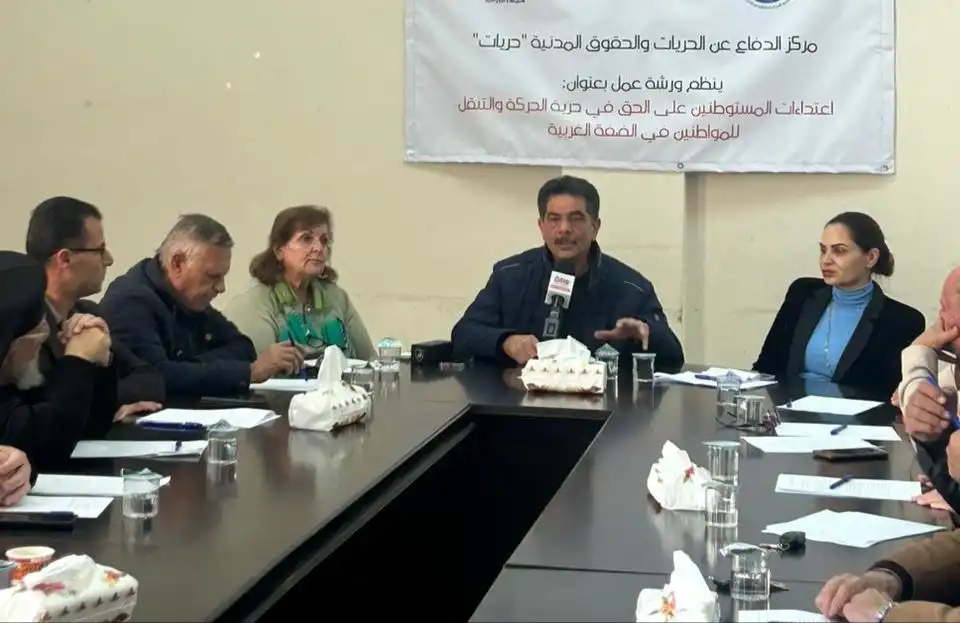
Hurriyat Center: Occupation military checkpoints rose to 707 in West Bank after October 7

The Center for Defending Freedoms and Civil Rights "Hurriyat" revealed today, Wednesday, that the number of military checkpoints erected by the Israeli occupation forces in the western side increased to more than (707) checkpoints, after the seventh of last October, after (140) were added.


This came during a workshop entitled “Settlers’ attacks on the right to freedom of movement of citizens in the West Bank” in Al-Bireh Municipal Hall, in which representatives of civil and governmental institutions, political parties, the private sector, popular committees, activists and public figures participated.


PALESTINE

Wed 10 Jan 2024 8:54 pm - Jerusalem Time

WHO cancels the sixth aid mission to Gaza due to security concerns

The World Health Organization canceled another medical aid mission scheduled for the Gaza Strip on Wednesday due to security concerns, the sixth such cancellation in two weeks.


The Director-General of the World Health Organization, Tedros Adhanom Ghebreyesus, said that the canceled mission is the sixth mission to northern Gaza that the organization has canceled, due to the failure to approve visit requests, in addition to the failure to provide security assurances since the last visit on December 26.


“Intensive bombing, movement restrictions, fuel shortages and communications blackouts make it impossible for the World Health Organization and our partners to reach those in need,” he said in a virtual press conference from Geneva.


He called on "Israel to approve requests from the World Health Organization and other partners to provide humanitarian aid."


Earlier, the Director-General of the World Health Organization warned on Wednesday that Gazans face “grave danger,” speaking of the spread of acute hunger and despair throughout the Strip, which was devastated by the Israeli war.

ARAB AND WORLD

Wed 10 Jan 2024 7:38 pm - Jerusalem Time

Arab League supports South Africa's lawsuit against Israel

Arab League Secretary-General Ahmed Aboul Gheit said that he "fully supports the lawsuit filed by South Africa against Israel before the International Court of Justice on charges of committing genocide and violating the 1948 Genocide Convention."


Aboul Gheit added in his statements on Wednesday that he looked forward to "a just ruling that will stop this aggressive war and put an end to the bleeding of Palestinian blood."


He thanked South Africa and its government “for taking this principled position that places morals and human values above any other consideration,” stressing that the League’s General Secretariat supports the South African endeavor in all possible ways.


The Secretary-General also directed officials in the General Secretariat to follow the legal process of the lawsuit filed before the International Court of Justice in The Hague, while being prepared to provide the required support in a way that serves the issue and strengthens the Palestinian position.


He said, “The case represents an important step not only towards a ceasefire, but also holding Israel accountable, and ending the anomalous situation that made it a state above international law and accountability,” looking forward to “issuing a ruling that leads to stopping this unjust war on civilians in the Gaza Strip in the soonest possible deadline, and paves the way for holding accountable all Israeli officials involved in the crime of genocide, in a way that restores international justice’s credibility before the peoples of the entire world.”


Tomorrow, Thursday, the eleventh of January, Israel will appear, the occupying power, for the first time before the International Court of Justice, in the lawsuit filed against it by the State of South Africa, which accuses it of committing the crime of “genocide” against the Palestinian people in the Gaza Strip. .

ARAB AND WORLD

Wed 10 Jan 2024 6:50 pm - Jerusalem Time

Swiss newspaper: South Africa's complaint could be devastating to Israel

French newspapers Le Monde and the Swiss "Lotan" dealt with the "genocide" complaint. South Africa is calling on them to take "precautionary measures" to stop ongoing crimes in the Palestinian territories. The court does not have the means to implement its binding decisions, and the United States, which backs Israel in its war, may veto it if the court requests sanctions from the United Nations Security Council.


The French newspapers "Le Monde" and the Swiss "Lotan" dealt with the "genocide" complaint filed by South Africa against Israel before the International Court of Justice, which will hold hearings tomorrow, Thursday and the day after tomorrow, the first provided the elements of the complaint in explanation and detail, while the second considered that what South Africa submitted may be destructive to Israel.

For Israel and the majority of Israelis, this complaint is a perversion and a sad thing, because Israel was established in the wake of the Holocaust, and they find themselves accused of genocide in Gaza.


For desperate Palestinians in Gaza, this measure is an opportunity to highlight their plight after 23,000 people were killed and 60,000 injured during three months of devastating bombardment.


Although it may take years before judges in The Hague decide on the merits, South Africa is calling on them to take "precautionary measures" to stop ongoing crimes in the Palestinian territories.But the court does not have the means to implement its binding decisions, and the United States, which backs Israel in its war, may veto it if the court requests sanctions from the United Nations Security Council.


"Unfounded"

For its part, Lotan noted that the US State Department described the complaint against Israel as "baseless" and considered it and Israel politically motivated, knowing that the court's initial measures could be of great symbolic importance.The hearings of South Africa's complaint filed on 29 December 2023 against Israel for violations of the Convention on the Prevention and Punishment of the Crime of Genocide will be held before the International Court of Justice on 11 and 12 January at the Peace Palace in The Hague.


In the document it sent, South Africa urges the Court to order Israel "to immediately cease all military attacks that could constitute acts of genocide, to stop killing and causing serious psychological and physical harm to Palestinians in Gaza, and not to impose living conditions that could lead to physical destruction" of the people of Gaza.


Dehumanization

These three crimes can be legally classified as genocide if committed with the intention of eliminating Palestinians in Gaza.The 84-page document cited "dehumanized" statements made at the highest levels by the head of state, the prime minister and several ministers and senior officials in Israel.Le Monde recalled Prime Minister Benjamin Netanyahu's description of the war in front of the Knesset as "a conflict between the sons of light and the sons of darkness, between humanity and the law of the jungle" and Defense Minister Yoav Gallant as saying, "We are fighting human animals and acting accordingly," adding, "We are imposing a complete blockade on Gaza. No electricity, no water, no gas, everything is closed."

The document also cites journalists, former officers and elected officials, with no authority over the conduct of the war, as well as comments by far-right religious ministers who continue to call for ethnic cleansing in Gaza.Their political camp sees the "Al-Aqsa flood" and the ongoing war as what they call a historic opportunity to achieve the "divine will" by expelling the Palestinians from part of the Holy Land.

Although their genocidal rhetoric is neither the military nor the government, "neither the judicial system nor the political authority has punished those who make such speeches, which tends to strengthen South Africa's arguments," Israeli lawyer and human rights defender Michael Sfard laments.South African lawyers are also demanding unfettered access to humanitarian aid for Gazans, as Israel eased its blockade slightly in recent weeks. 


Finally, they demand that experts from the Office of the United Nations High Commissioner for Human Rights and investigators from the International Criminal Court be granted access to Gaza.


Although judges are not bound by the measures requested by Pretoria, according to Le Monde, and can decide to reject them or issue others, and that they do not meet any deadline, this type of case is swift, as it did not take 9 days for judges in The Hague to issue an order against Russia, following a complaint filed by Ukraine at the beginning of the Russian invasion of its territory.No country has yet officially joined South Africa, but many countries have denounced the genocide, such as Algeria, Bolivia, Brazil and others, and even Ofer Kasif, a member of the Israeli parliament (Knesset), signed the complaint with 200 Israelis, although the Israeli Foreign Ministry says that "accusing Israel of genocide is baseless in fact and law, and is morally repugnant" before calling it "anti-Semitic."


Israeli concern

This time, Israel has not boycotted the court, appointing a special judge in The Hague, the highly respected former chief justice Aharon Barak, a Holocaust survivor, who will be sworn in with the opening of hearings on Thursday, and South Africa will be able to appoint a second ad litem judge.After two days of hearings and the expected decision of the judges, a more technical procedural phase could begin, during which Israel could challenge the court's jurisdiction in the case, and South Africa and Israel would then have to submit their written submissions before organizing hearings on the merits.For her part, Lotan stressed that South Africa's complaint could be devastating for Israel, and saw that Israeli President Isaac Herzog's raising of this issue - in front of US Secretary of State Antony Blinken - is evidence of growing concern among Israeli officials, especially since he has statements that Pretoria considers incitement to genocide, when he said that "the entire (Palestinian) nation is responsible" for the crimes committed by Hamas and called for "breaking its spine."


Accusing Israel of violating the treaty - which was adopted by an overwhelming majority of countries in 1948 in the wake of crimes committed by the Nazis - is not easy for Israel to accept, as it prepares to prove that Pretoria uses international law to achieve political goals, especially since South Africa was severely reprimanded by another court in The Hague in 2017 for refusing to arrest former Sudanese President Omar al-Bashir, who is accused of "genocide, crimes against humanity and war crimes" in Darfur.


Source : Lotan + Le Monde +Tellerreport


ARAB AND WORLD

Wed 10 Jan 2024 6:46 pm - Jerusalem Time

American academic: 5 reasons that will keep the Palestinian issue unresolved

American academic Walt Steve says that extremism, pressure groups, foreign interventions, and before that a deeper structural problem, all make it likely that the Palestinian-Israeli conflict will remain unresolved.


Steve, a professor of foreign policy at Harvard University and a columnist in Foreign Policy magazine, wonders why the various efforts to end this conflict failed, while all the conflicts that took place in the twentieth century found solutions, and their parties dealt with after the wars within the framework of normal relations, such as America with Germany and Japan, America and Vietnam, and internal conflicts in Ireland and South Africa.


Steve responded - in an article in the magazine - saying that there are five reasons that he considers the most important for the continuation of the Palestinian-Israeli conflict.


A deep structural problem

At the heart of this conflict are “indivisible goals.” Both Palestinians and Israelis want to live on and control the same piece of land, each side believes it is rightfully theirs, each side has a basis for its claim, and strongly believes its position should be superior to that of the other. This is a deep structural problem.


It is difficult to resolve this dispute if the issue - or issues - at hand cannot be divided in a way acceptable to both parties, in addition to the complex and contested status of Jerusalem, a holy site for 3 major religions.


Although there have been numerous land-sharing proposals over the past century, voices calling for compromise have been drowned out or marginalized by those who want all of the disputed territory.


Security problem

Given the first problem, coupled with the small size of the disputed territories, both sides face a severe security dilemma.


Zionist leaders realized from the beginning that it would be impossible to create a Jewish-controlled state with a large Arab minority, let alone an Arab majority.


This belief led to acts of "ethnic cleansing" during the 1948 Arab-Israeli War, and again in 1967 when Israel seized the West Bank. Naturally, both the expelled Palestinians and Israel's Arab neighbors were angry about what had happened and keen to reverse the results.


Israel's small population and weak geography gave its leaders a strong incentive to make it safer by expanding its borders. Unfortunately, retaining and settling the West Bank, while also controlling the Gaza Strip, means that millions of Palestinians will be permanently under Israeli authority, in effect creating the demographic problem that Israel's founders sought to avoid.


"Greater Israel"

Pursuing the goal of “Greater Israel” would force its leaders to grant full political rights to the roughly equal number of Israelis and Palestinian nationals, find another excuse to expel the rest, or establish an apartheid regime inconsistent with Tel Aviv’s alleged commitment to democracy and human rights.


As former Israeli Foreign Minister Shlomo Ben-Ami wrote in 2006, “Democracy, the Jewish state, and territorial expansion are irreconcilable.”


This leaves the least bad option: Israel could give up a large portion of the territory it now controls and allow the Palestinians to establish a state of their own. This goal was the declared policy of the administrations of former US presidents Bill Clinton, George Bush, Barack Obama, and now Joe Biden.


The difficulty of the two-state solution

However, the security dilemma complicates efforts to negotiate “two states for two peoples,” as Israeli negotiators insist that any future Palestinian entity (or state) must be effectively demilitarized, with Israel retaining significant control over its borders and airspace to ensure that such The state is seriously threatened. But such an arrangement will never be accepted by the Palestinians.


Although it is possible to imagine arrangements that could improve each side's sense of security and help encourage eventual reconciliation, absolute security is an unattainable goal.


Unfortunately, what happened to the Israelis by the Islamic Resistance Movement (Hamas), and what happened to the Palestinians by Israel, will make it difficult to achieve a two-state solution in the foreseeable future.


Foreign interventions

The conflict between the two sides was fueled and sustained by a group of third parties (Britain, America, the Soviet Union, Iran, and Arab countries) whose interventions were self-interested and counterproductive. The interventions of all these parties have made the situation worse, according to the writer.


Source: Foreign Policy +Aljazeera

OPINIONS

Wed 10 Jan 2024 6:30 pm - Jerusalem Time

Blinken's visit proves that the United States has no one to talk to in Jerusalem

Haaretz

Haaretz

Opinion Writer

By Alun Banks

For years, one of the clear indicators of an active American policy and great frustration has been the increase and frequency of visits by American secretaries of state. Henry Kissinger's rounds of dialogue, after the Yom Kippur War; 19 visits by Warren Christopher during Bill Clinton’s term, against the backdrop of reaching the Oslo Accords. 16 visits by John Kirby to jumpstart the peace process; And now, Secretary of State Antony Blinken's fifth visit in the last three months. There is a suspicion that Blinken wants to compare his travels with those of his predecessors, but political circumstances in Israel have made American success impossible.

Blinken's current visit has well-thought-out goals: First: to continue recommending and demanding a change in war plans, from a high-power war to a low-power war. This goal is based on the conclusions of the United States that the war, in its current context, has exhausted itself, and that the Israeli goal of “dismantling Hamas” is unachievable, without an actual occupation of the Gaza Strip, and that the goal must be redefined, instead of getting involved in a war that extends for years and costly management. And deadly for Gaza; Second: Although Israel refuses to discuss the political issue of “the day after the war,” seriously, Blinken has a Sisyphean goal, which is: to continue warning Israel of the repercussions of ignoring; Third: Continue trying to prevent an escalation between Israel and Hezbollah. The United States understands the fact that Israel cannot and must not tolerate Hezbollah's attacks and "on the threshold of war." However, it considers that the scenario of escalation between the two parties more broadly entails a real possibility of implicating the United States, which is convinced that Israel does not take American interests into account, and does not know the limits of its power. Fourth: The visit carries a symbolic dimension with regard to Israel: despite Benjamin Netanyahu’s ingratitude, despite not being considered an ally in Washington, and despite his belittling and thwarting of every American idea, the United States continues to support Israel and engage for regional considerations.


Whether these goals are achievable, or whether the visit is a useless step for the administration and a precursor to a fundamental change in its policy, the bifurcation of interests and political gaps between the United States and Israel are increasing. At the end of the week, The Washington Post published a long analytical article, citing “high-level sources in the administration” as saying: The American administration has the impression that Netanyahu is seeking to prolong the war without need for that, and he is escalating the confrontation with Hezbollah for political considerations related to his personal survival. And with his coalition. The New York Times wrote something to this effect about the expanding crisis between the two countries.


The crisis between the two countries results from 3 dimensions: Netanyahu; The war in Gaza; Future geopolitical architecture of the Middle East. On a personal level, Netanyahu suffers from a deep distrust of the Biden administration. The United States also does not depend on Netanyahu, does not see him as an ally, and is not convinced of his management of the government and the war. It is surprised by what it considers ingratitude on his part, and doubts his motives, and is convinced that his goal is a frontal confrontation.

Regarding the Gaza war, the United States supported Israel in an unprecedented manner from the first moment. It also believed in the justice of this war, supported its steps, justified its size and the strength of the military response, and ignored Israel’s massive military response, throughout October and November, and granted it a diplomatic umbrella that paid the price for it in isolation in the international community, and provided it with military equipment in large quantities, and pledged to pay 14.5 billion dollars in aid, despite her surprise at a country that boasts of its budgets and military strength, and has an annual military budget of 3.45 billion dollars, begging for thousands of missiles and bombs, after ten days of fighting.

At the regional level, the large political gap between the United States and Israel is evident. The United States does not consider what happened on October 7 to be a disaster for Israel only, but rather a tectonic turning point in the structure of the Middle East. In its view, there are two axes: the first axis is prominent and effective, which is the “axis of chaos and terrorism” led by Iran, with the support of Russia, and the participation of Syria, Hezbollah, Hamas, the Houthis in Yemen, and the pro-Iranian militias in Syria and Iraq. The United States believes that since the Russian invasion of Ukraine, nearly two years ago, Iran has broken its isolation and resumed its nuclear program, which has brought it to a “state on the nuclear threshold.”


In parallel, Iran and Russia have formed an alliance of outcasts backed by China, whose foreign policy is a “zero-sum game” with the United States. On the other hand, and as a parallel point of gravity, the United States is trying to crystallize the “axis of moderation” under its leadership, and with the participation of Israel, Saudi Arabia, Jordan, the Palestinian Authority, Egypt, the Emirates, and Qatar. Yesterday, Blinken stressed that regional stability is a supreme interest on which a future Palestinian state depends.

In the opinion of the United States, the most fragile and rejected society in this structure is currently in Israel, which must form with the United States a pillar of this axis that reflects the geopolitical outlook and political vision of Israel after 50 years.

Blinken will not convince Netanyahu to cooperate with the United States. Instead, he will be more convinced by the assessments he reads in Washington that when it comes to Netanyahu, there is no one to talk to.

ARAB AND WORLD

Wed 10 Jan 2024 6:19 pm - Jerusalem Time

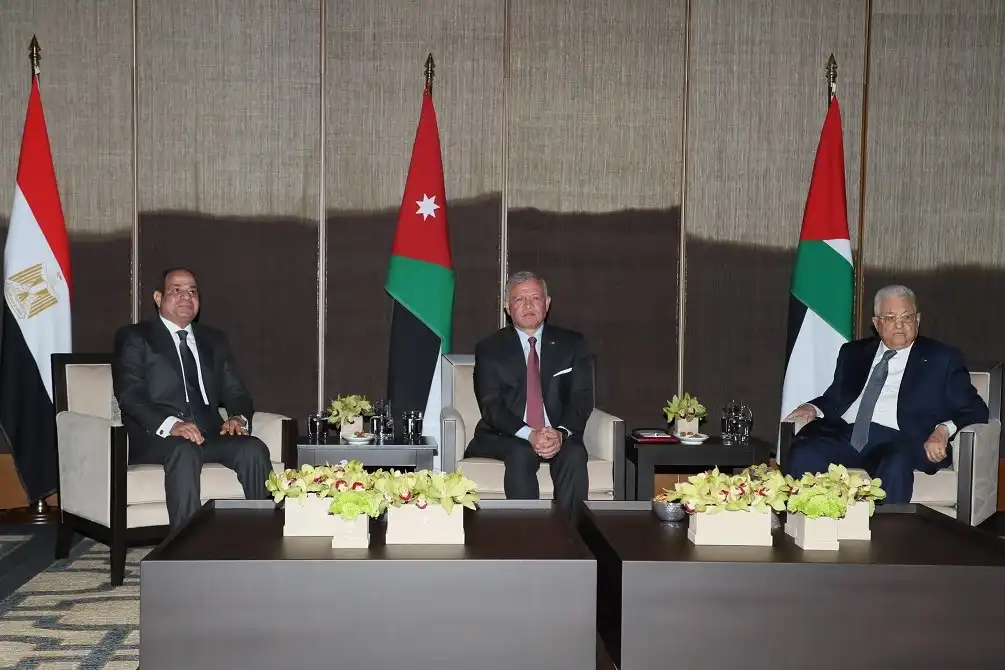
Aqaba Summit: Confronting any Israeli plans to displace Palestinians

The statement of the Aqaba Summit, which was held in the Jordanian city between the King of Jordan, King Abdullah II, and the Egyptian Presidents, Abdel Fattah al-Sisi, and the Palestinian President, Mahmoud Abbas, to discuss the war on Gaza, warned: From establishing safe areas in the Gaza Strip, or occupying it, stressing that displacement plans will be confronted.


The three leaders stressed "the necessity of continuing pressure to stop the Israeli aggression against Gaza and protect defenseless civilians."


They stressed their opposition to any Israeli plans to displace Palestinians in the West Bank and Gaza Strip, and the need to condemn them internationally and confront them.


They affirmed their "complete rejection of all attempts to liquidate the Palestinian issue, and to separate Gaza and the West Bank, which constitute an extension of the one Palestinian state."


The leaders warned against "attempts to reoccupy parts of Gaza or establish safe zones there, stressing the need to enable the people of Gaza to return to their homes."


They pointed out "the necessity of ensuring the delivery of relief and humanitarian aid to Gaza on a permanent and sufficient basis, to alleviate the tragic humanitarian situation that the people in the Strip are experiencing."

ARAB AND WORLD

Wed 10 Jan 2024 6:07 pm - Jerusalem Time

Israeli Report: Blinken confirms that Washington wants end of war, but not before Israel achieves its goals

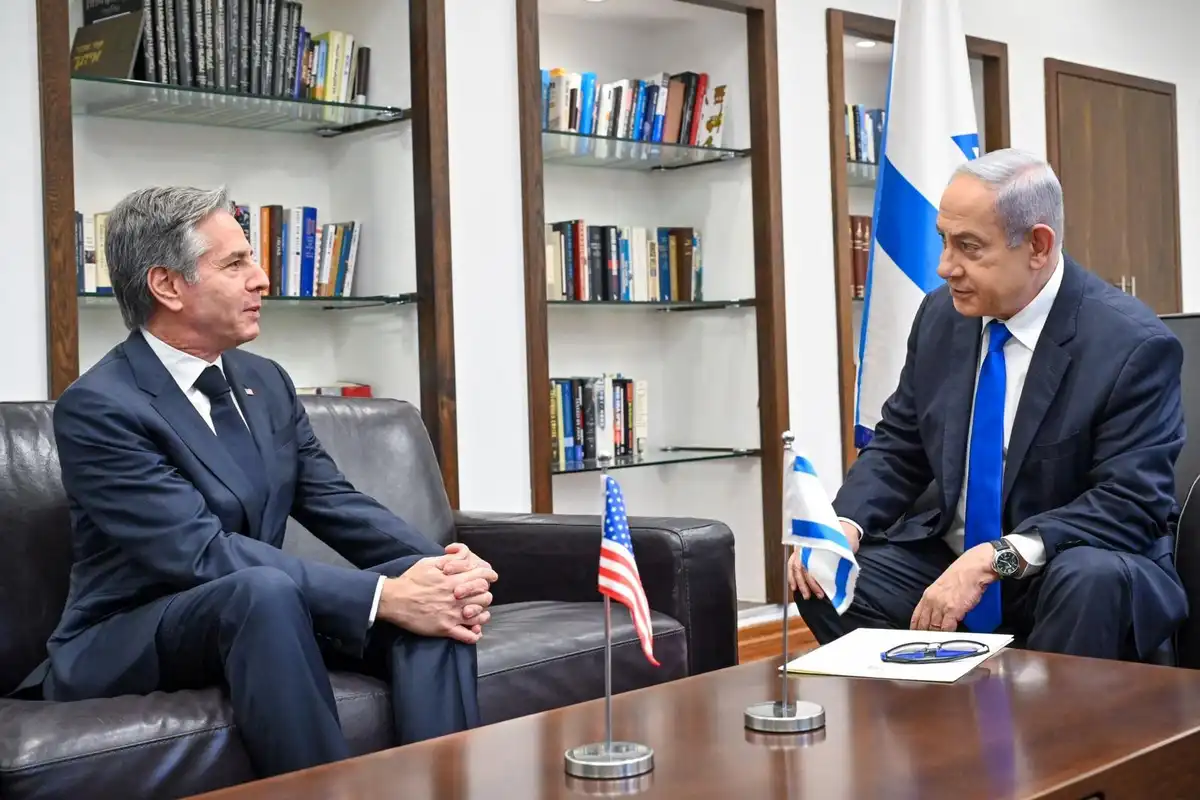
US Secretary of State Anthony Blinken said that the United States wants the war in the Gaza Strip to end as soon as possible, but before that, it is important for Israel to achieve its very legitimate goal, which is to ensure that what happened on October 7, 2023, will never happen again, and he pointed out that Israeli Prime Minister Benjamin Netanyahu assured him that Israel will not encourage voluntary migration of Gaza residents.


Blinken's statements came in the context of a press conference he held at the conclusion of his visit to Israel yesterday evening (Tuesday), during which he seemed to place all the blame for the suffering under the burden of the war in the Gaza Strip directly on the Hamas movement.


Blinken said: “It is very important to remember that everyone has choices to make voluntarily, and this includes the Hamas movement. It was able to end the war on October 8, by not hiding behind the civilian population, laying down its weapons, and surrendering. "And the release of the hostages. No suffering would have been possible if Hamas had not done what it did on October 7. Once again, it can end the suffering tomorrow if it takes such steps."

Blinken responded to a question about the possibility of expanding the war. He said that the regional allies told him that escalation is not in anyone’s interest, and he added: “No one wants to see more fronts open in this conflict. The countries of the region are using their influence to ensure that this does not happen.”


Blinken indicated that the United States supports reaching an agreement that enhances the security of the population in the northern border region [with Lebanon], before the Israeli residents, who were evacuated from that region, return to their homes, and he expressed his belief that the diplomatic path is the best way to achieve this security, Confirming that this is what the Israeli government believes as well.


He also referred to Netanyahu's assurance to him that encouraging voluntary migration outside Gaza is not Israel's policy, and that the United States opposes any proposal calling for the resettlement of Palestinians outside the Gaza Strip.


Blinken said after being asked about attacks on American forces in the region: “If our forces are threatened or attacked, we will take appropriate steps, and we will respond.”


Blinken had confirmed earlier yesterday that the process of returning Gazans to their homes in the northern Gaza Strip needs time and security coordination, and indicated that Israel had agreed to the principle of sending a UN mission to assess the situation in northern Gaza.


Blinken said in statements he made to the media at the conclusion of his meeting with Netanyahu: “Today we agreed on a plan that allows the United Nations to send an assessment mission that will determine what must be done to allow the displaced Palestinians to return to their homes in complete safety in northern Gaza. As Israel confirmed "It does not seek to settle Gazans outside the Strip. Israel must allow the return of Palestinians to their homes as soon as conditions permit."


Blinken explained that the Israeli war in Gaza will move to a new, less intense phase. He called on Israel to take action to stop settler attacks [in the West Bank] that prevent peace, and added that Israel must work to make decisive decisions in this regard, as well as regarding opportunities for peace.


The US Secretary of State stressed that the United States will work to strengthen the Palestinian Authority, but at the same time, he stressed the need for this Palestinian Authority to reform itself.


He pointed out that the Arab countries he visited before his visit to Israel stressed the rights of the Palestinians and stressed the need to stop violence against them. He explained that many Middle Eastern countries are ready to invest in the future of Gaza, but they will do so only in the presence of a clear path to establishing a Palestinian state.


Blinken's regional tour today (Wednesday) is scheduled to include a visit to the Palestinian Authority in Ramallah, and to Egypt.


This is Blinken's fifth visit to the Middle East since the Hamas attack on Israel on October 7, and the Israeli war in Gaza that led to the deaths of about 23,000 Palestinians, most of them women and children, according to Palestinian health authorities.

PALESTINE

Wed 10 Jan 2024 5:50 pm - Jerusalem Time

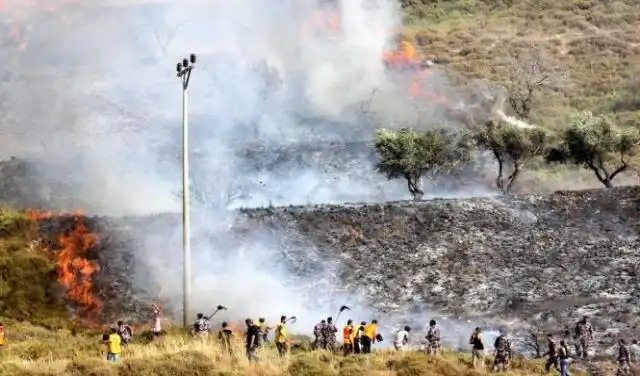
West Bank: Israeli settlers burn olive trees and an agricultural room west of Salfit

Today, Wednesday, settlers burned an agricultural room and olive trees, owned by citizen Najeh Harb from the town of Kafr al-Dik, west of Salfit.


Harb reported that the settlers set fire to the agricultural room in the Al-Jaffah area in the northern part of the town, and burned a number of perennial olive trees near the room.


He added that this is the fifth attack by settlers on his property, with the aim of displacing him from it and seizing it.

PALESTINE

Wed 10 Jan 2024 5:21 pm - Jerusalem Time

War on Gaza: Israel launched raids on a house in Deir al-Balah, resulting in a number of deaths and injuries.

A number of citizens, including a journalist, were killed , and others were injured, in an Israeli bombing that targeted a house adjacent to Al-Aqsa Martyrs Hospital in Deir Al-Balah in the central Gaza Strip.


The Israeli occupation warplanes launched raids on a house, which led to the death of a number of citizens, including journalist Ahmed Badir, and the wounding of others, some of whom were in serious condition.

ARAB AND WORLD

Wed 10 Jan 2024 2:20 pm - Jerusalem Time

Israeli Supreme Court bars Ben Gvir from issuing directives to the police

The Israeli Supreme Court issued a temporary decision today, Wednesday, preventing National Security Minister Itamar Ben Gvir from issuing orders to the police, following his instructions to prevent a demonstration denouncing the war on the Gaza Strip.


The Israeli Broadcasting Corporation reported that the Supreme Court issued the decision based on his instructions to the police on how to deal with a demonstration by the Democratic Front for Peace and Equality party to denounce the Israeli war on Gaza.


According to the text of the decision, Ben Gvir is prohibited from issuing practical directives to the police regarding the implementation of his policy or regarding the exercise of the right to demonstrate and the freedom to protest. In addition, he is prohibited from referring to how force was used in the current or other event (indicating how the police responded to the events).


The Minister is also prohibited from discussing methods of using force, means of dispersing demonstrations, conditions relating to time, place and methods of conducting the event, as well as granting permission to hold an event.


Ben Gvir has not yet commented on the court’s decision.


In March 2023, the court issued a decision prohibiting Ben Gvir from issuing such orders, but on Wednesday the court found that the minister had violated this ruling.

The Democratic Front for Peace and Equality party had repeatedly requested permission to organize demonstrations expressing its rejection of the war on Gaza, but the police only agreed to this once, after intervention from the Supreme Court.


Ben Gvir has previously been accused of trying to suppress mass demonstrations opposing the government, particularly regarding judicial reform plans, as he issued directives to the police regarding the use of more stringent methods in dispersing gatherings.

ARAB AND WORLD

Wed 10 Jan 2024 2:19 pm - Jerusalem Time

Axios: Biden's senior advisor met with Qatari Prime Minister and discussed detainees issue in Gaza

The American website "Axios" said today, Wednesday, that the US President's senior advisor for Middle East affairs, Brett McGurk, met yesterday, Tuesday, with the Qatari Prime Minister and Foreign Minister, Mohammed bin Abdul Rahman Al Thani, in Doha, and discussed with him regional tensions and efforts made to secure the release of detainees. In the Gaza Strip.


According to what the site indicates, the meeting remained far from the media, as neither the White House nor the Qatari government issued a statement about it. McGurk's trip comes on the heels of Secretary of State Anthony Blinken's visit to the region, in which he focused on the war in Gaza and tensions in the region.


Qatar plays a major role in mediating between Hamas and Israel to release detainees, and has already succeeded in releasing a number of prisoners and detainees from both sides after reaching a truce agreement in the Gaza Strip.


Israel and Hamas had submitted proposals to reach an agreement on the detainees, but none of them were adopted due to wide gaps.


The website reported, citing informed sources, that negotiations had resumed earlier this week after the Hamas movement suspended the talks for several days against the backdrop of the assassination of the movement’s vice president, Saleh Al-Arouri, in Beirut.


During his visit to Israel, Blinken met yesterday, Tuesday, with the families of American detainees in Gaza, noting that the return of all detainees represents a top priority for the American administration.


On Saturday, the Qatari Prime Minister and Foreign Minister informed the families of six Israeli and American detainees that the assassination of Al-Arouri made it difficult to advance negotiations to reach a deal that would contribute to the release of more detainees in the Gaza Strip.


The Walla website said that the Qatari Prime Minister told the families he met that despite the difficulty of the negotiations, he was personally committed to continuing attempts to advance towards a new agreement to release detainees, and that he would not give up on that despite the challenges.

OPINIONS

Wed 10 Jan 2024 2:12 pm - Jerusalem Time

A ‘Genocidal Maniac’: What is Netanyahu’s Ultimate Goal in the Middle East?

Counter Punch

Counter Punch

Opinion Writer

BY RAMZY BAROUD

This article was written shortly before Israel assassinated the Deputy Head of Hamas Political Bureau Saleh al-Arouri in Beirut on January 2. The assassination is a further illustration of the Israeli government’s desire to escape the consequences of its disastrous war in Gaza, by igniting a regional conflict. The clashes between Hezbollah and Israel are the closest to an actual war that the Lebanon-Israel border has seen since the war of 2006, which resulted in a rushed Israeli retreat, if not outright defeat.


We often refer to the ongoing conflict between Lebanon and Israel as ‘controlled’ clashes, simply because both sides are keen not to instigate or engage in an all-out war. Obviously, Hezbollah wants to preserve Lebanese lives and civilian infrastructure, which would surely be seriously damaged, if not destroyed, should Israel decide to launch a war. But Israel, too, understands that this is a different Hezbollah than that of the 1980s, 2000 and even 2006.Compared to Israel’s behavior in the war of 2006, the Israeli response to Hezbollah’s military action – compelled by its solidarity with the Palestinian Resistance in Gaza – is greatly tamed. For example, the 2006 war was presumably provoked by a Hezbollah attack on Israeli soldiers, which killed three. (Hezbollah says that the soldiers violated Lebanese sovereignty, as the Israeli army has indeed done numerous times before and since then.) That single event led to a major war that wreaked havoc on Lebanon, but also resulted in the retreat and defeat of the Israeli army. Imagine what Israel would have done by the standards of the 2006 war if Hezbollah had killed and wounded hundreds of Israeli soldiers, bombed scores of military bases, installations and even settlements, as it has done, on a daily basis, since early October.


A Different Hezbollah 

Despite numerous threats, Israel is yet to go to war with the main objective of pushing Hezbollah forces past the Litani River, thus supposedly securing the border Jewish settlements. But why the hesitation?

First, Hezbollah fighters are much stronger than before. For years, Hezbollah has fought in traditional warfare settings, namely in Syria, thus producing a generation of battle-hardened fighters and commanders, who are no longer bound to the rules of guerilla warfare, as was the case in the past.


Second, Hezbollah’s missile capabilities have exponentially grown since 2006, not only in terms of numbers – up to 150,000 according to some estimates – but also in terms of precision, explosive capabilities and range. Moreover, Hezbollah has excelled in the development of its own rockets and missiles, which include the powerful Burkan, a short-range rocket, which can carry a heavy warhead, between 100 to 500 kilograms. This makes Hezbollah, in some ways, self-sufficient in terms of weapons, if not munitions.


Third, Hezbollah’s sophisticated Radwan Elite Units and an elaborate tunnel system that goes deep inside northern Israel, would force Israel to contend with a whole different military reality than that of the last war, should a major military conflict break out.


Fourth, the Israeli army itself is in tatters, demoralized, greatly exhausted and weakened by ongoing daily losses on the Gaza front. It is hardly in a state of preparedness to fight a long and more difficult war against a better prepared enemy. That in mind, one must not take such comments as that of Israel’s Defense Minister Yoav Gallant too seriously when he says that his country is fighting a war on seven different fronts. In actuality, the Israeli army is still fighting a single war in Gaza, a difficult war that it is not winning.


Provoking Iran 

To distract from its Gaza losses, and its inability to launch a major war against Lebanon, Tel Aviv wants to drag Tehran into the war. 

But why would Israel escalate against the strongest of its enemies in the region, if it is not able to beat the smaller ones? The short answer is that, by engaging Iran directly, Israel would force the US into a major regional war. We all remember the seemingly odd decision by the Biden Administration to dispatch an aircraft carrier to the Israeli shores of the Mediterranean, immediately after the start of the Gaza war on October 7. (The Gerald R. Ford was ultimately withdrawn on December 31)Washington wanted to send a message to Iran that an attack on Israel would be considered an attack on the United States. But when it became clear that Iran had no interest in an actual war, Washington realized, or must have realized, that the danger of a regional war does not stem from Tehran, but from Tel Aviv itself. 

That is when official US intelligence and political estimates began telling us, and repeatedly so, that Iran had nothing to do with the Hamas military operation of October 7, and that Iran was not interested in war. The target audience for that message was Israel and its US-western allies who have been angling for a US-Iran war for years. Biden’s lack of interest in war, of course, has little to do with his propensity for peace, and everything to do with the lack of any serious geostrategic objectives in the Middle East now, his administration’s disastrous failure in Ukraine and the rapid depletion of armaments and munitions. Israel persisted, however. It continued to accuse Iran of being the orchestrator of the Hamas attack, and the main ‘existential threat’ to the ‘Jewish state’. 


In Israel’s understanding, the collective action of Hamas and other Palestinian Resistance groups, Hezbollah in Lebanon, Ansarallah in Yemen and the Islamic Resistance of Iraq, are all fragments of a larger Iranian scheme to destroy Israel. To defeat that imaginary threat, Israel carried out numerous acts of provocations against Iran, focused mostly on the bombing of Iran’s military positions in Syria, leading to the assassination of a top Iranian commander, General Sayyed Ravi Mousavi, near Damascus on December 25.


Biden the Enabler 

For Israeli Prime Minister Benjamin Netanyahu, a US-Iran war would constitute a lifeline for a desperate politician who fully, and rightly, understands, that a no-victory in Gaza would equal a defeat for the Israeli army. Such a defeat would not only be a disgraceful end for Netanyahu’s political career, but also an end of a long-sustained myth that Israel, and the US, can impose their political will on the Middle East through military superiority and firepower.


The Biden Administration must be fully aware of Netanyahu’s intentions, that of dragging the region into the abyss of possibly one of the most devastating wars in recent memory. Reported disagreements and, in fact, a rift between Biden and Netanyahu are not related to a US moral objection to the Israeli genocide in Gaza, but to a real American fear that another Middle Eastern war could precipitate the breaking down of US power in the energy-rich region – in fact, beyond. 


Thus, the current standstill: Washington’s inability to free itself from its blind commitment to Israel and its violent Zionist ideology, and Netanyahu’s inability to distinguish between the goal of sustaining his personal career and that of destroying the whole of the Middle East.

Unable to place US interests above those of Israel, Biden continues to feed the Israeli military machine, which is mostly used to kill Palestinian civilians in Gaza. This is allowing Netanyahu to champion a perpetual war in Gaza, while working to expand the conflict so that it reaches Beirut, Tehran and other regional capitals.

Needless to say, Netanyahu, described by US Congresswoman Rashida Tlaib as a ‘genocidal maniac’, must be restrained. If not, the Israeli genocide in Gaza will multiply into other genocides throughout the Middle East.


ARAB AND WORLD

Wed 10 Jan 2024 1:54 pm - Jerusalem Time

Israeli journalist: Apartheid defines our system...and expanding war against Hezbollah will create painful reality

CNN anchor Christiane Amanpour spoke with Haaretz writer Gideon Levy about the impact of expanding the Israeli war to include the northern front against Hezbollah, and whether the ambitions of Israeli Prime Minister Benjamin Netanyahu are his motive in prolonging the war, in addition to what is happening. In the West Bank.


Levy said, "Expanding this war towards the northern front as well, specifically against Hezbollah, would change the rules of the game and would create a reality that Israel and the Israelis have never faced before."


Levy stressed, "It is very good that we are talking here about expanding the war, but what could happen then, I think, goes far beyond what we saw in Israel, Tel Aviv, Jerusalem, Haifa and other places."


Regarding the Israeli prime minister, Levy commented on the issue by saying: "I give Netanyahu more credit than most of my friends, because I don't think his personal ambitions are the only motivation that motivates him. I can't believe that."


He also added: “I am sure that his personal motives are part of his considerations, and I am sure that expanding this war for him personally is the only way out before the elections, resignation and investigation. But to say that he is doing everything for the sake of preserving himself only and nothing else matters to him is this.” "It's too much for Netanyahu, I think. I hope I'm not wrong."


The writer pointed out that what happened in the wake of Hamas’ attack on Israel was “unbelievable,” stressing that “some of my best friends and even family members changed their minds on October 7th... Everything collapsed, and all the values that people believed in collapsed because of this.” "Only the barbaric attack - which was a barbaric attack - but it should not change any values."


He continued by saying: "In the end, it is the occupation that defines Israel more than anything else. Apartheid defines the Israeli regime more than any other, and we cannot continue this blindness."

ARAB AND WORLD

Wed 10 Jan 2024 1:50 pm - Jerusalem Time

UAE Official : “Either a Palestinian state or an eternal boycott.” he called on Arab leaders to reconsider relations with Israel

Chief of Dubai Police, Dhahi Khalfan, called on Arab leaders to “reconsider” relations with Israel in light of its military campaign in the Gaza Strip.


Khalfan said on his page on “X”, Twitter previously: “Everyone must reconsider dealing with Israel... Israel has proven that its intentions are satanic... The Arabs want peace and it wants war... Therefore, the goals of the two sides will not coincide,” he said. .


The Deputy Chief of Dubai Police continued: “I hope that the Arab leaders will reconsider the issue of dealing with Israel... either recognition of the Palestinian state... or an eternal boycott.”


Khalfan had written in a previous blog post: “Every person walking in Gaza...an old, child...a cripple...is considered a target for Israel... something that has not occurred throughout human history in the world of wars,” as he put it.
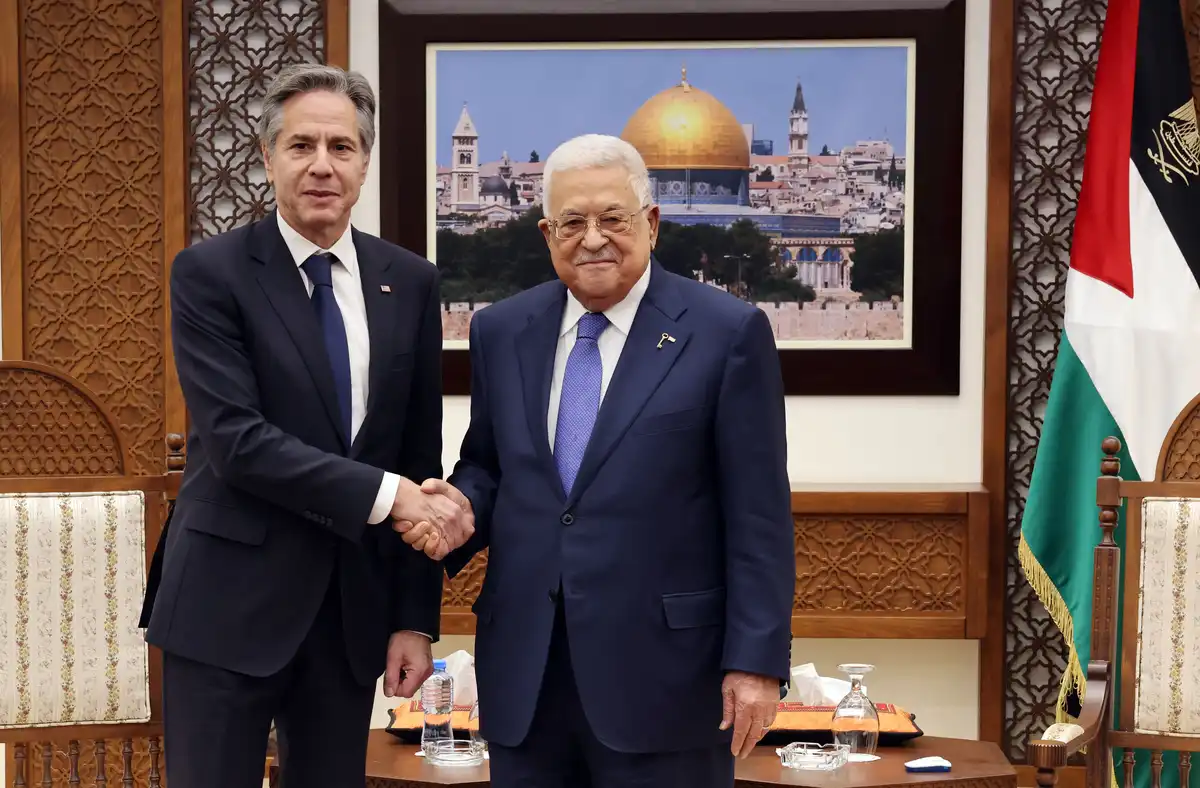
PALESTINE

Wed 10 Jan 2024 1:13 pm - Jerusalem Time

Sources reveal the scenes of the “tense meeting” between Blinken and Abbas

US Secretary of State, Anthony Blinken, called on Palestinian President Mahmoud Abbas, on Wednesday, to implement governance reforms, while Mahmoud Abbas stressed that Gaza is an integral part of the Palestinian state.


Private sources confirmed to Sky News Arabia that the meeting between Blinken and Abbas in Ramallah in the occupied West Bank "was tense and marred by quarrels and arguments."


The Palestinian side asked Blinken to pressure the release of Palestinian tax funds.


The Palestinians told Blinken, “If you do not have the ability to release funds, how will you have the ability to put pressure on Israel and achieve peace and a Palestinian state?!”


Blinken again called for reforms in the Palestinian Authority and its security services, and the Palestinian side responded by saying, "You must reform yourselves and your policy toward the Palestinian issue."


Following the meeting, US State Department spokesman Matthew Miller said that Blinken affirmed Washington's firm position on the necessity of establishing a Palestinian state alongside Israel "and living in peace and security."


For his part, Mahmoud Abbas warned of the seriousness of the measures taken by the Israeli occupation authorities aimed at displacing the Palestinian people from the Gaza Strip, or the West Bank, including Jerusalem, which was revealed by statements issued by Israeli ministers and officials, which call for the expulsion of the Palestinian people from their land.


Abbas affirmed his complete rejection of the displacement of any Palestinian citizen, whether in the Gaza Strip or the West Bank, and we will not allow it to happen.


Abbas stressed the need to release Palestinian clearance funds immediately “because their detention violates agreements and international law,” according to what our correspondent reported.


He also stressed that the Gaza Strip has priority, "and our people, who fall under the responsibility of the State of Palestine and its administration, will not be abandoned."


PALESTINE

Wed 10 Jan 2024 12:06 pm - Jerusalem Time

Occupied Jerusalem: Dozens of Israeli settlers storm Al-Aqsa Mosque

Today, Wednesday, dozens of Israeli settlers stormed the blessed Al-Aqsa Mosque, amid heavy protection from the occupation police.


Settlers made provocative tours inside the courtyards of Al-Aqsa Mosque, and performed Talmudic rituals.


Groups of settlers storm Al-Aqsa on a daily basis except Friday and Saturday.

ARAB AND WORLD

Wed 10 Jan 2024 11:39 am - Jerusalem Time

Contacts resumed regarding a prisoner exchange deal between Israel and Hamas

Israel and Hamas put forward proposals to resume negotiations on an exchange deal, but both sides rejected the other side's proposal. These negotiations were halted following Israel's assassination of Hamas leader Saleh Al-Arouri in Beirut.


The US President's Middle East Advisor, Brett McGurk, met with the Qatari Prime Minister, Mohammed bin Abdulrahman Al Thani, in Doha yesterday, Tuesday, and discussed the possibility of resuming attempts to reach a prisoner exchange deal between Israel and Hamas, according to what was reported by the Walla website three sources, including an American source, today, Wednesday.

The White House and the Qatari government refrained from announcing McGurk's visit to Doha, and no details were published about the content of the meeting.


According to Walla, Israel and Hamas put forward proposals to resume negotiations on an exchange deal, but both sides rejected the other side’s proposal. These negotiations were halted following Israel's assassination of Hamas leader Saleh Al-Arouri in Beirut.


In the context of resuming negotiations for the exchange deal, Egyptian Intelligence Chief Abbas Kamel held contacts with the leadership of the Hamas and Islamic Jihad movements regarding the Maan prisoner exchange deal with Israel.


According to the information, contacts were renewed after the Israeli delegation’s visit to Cairo yesterday, Tuesday, which came with a modified proposal, according to the report, and included new provisions related to the ceasefire, the stages of humanitarian aid, and the exchange of prisoners.


According to the report reported by the Lebanese Al-Akhbar newspaper, the Egyptian side asked the Palestinians to send representatives to Cairo urgently, and contact was also made with Qatari mediators.


It is noteworthy that on October 7, 2023, the Hamas movement carried out an attack on military sites and settlements around the Gaza Strip, during which about 240 Israelis were detained, 100 of whom were later released, pursuant to an exchange deal with Israel in which dozens of Palestinian prisoners were released from occupation prisons.

ARAB AND WORLD

Wed 10 Jan 2024 11:31 am - Jerusalem Time

Washington Post: Here's how to ease Gaza's suffering and offer some hope

The American newspaper The Washington Post said that Secretary of State Anthony Blinken arrived in Israel this week carrying a message to its leaders to “alleviate the misery in Gaza and plan for its future,” and that President Joe Biden, through his rhetorical and material support for Israel, wants to influence its leaders in order to see beyond their anger and desire to Eliminating "terrorists" in Gaza, and turning to vital humanitarian aid."


The measures sought by the Americans - according to the newspaper - include reducing civilian deaths, improving conditions for displaced Palestinians, and planning for a post-war system that provides dignity for both Israelis and Palestinians, by laying the foundation for a Palestinian state not dominated by the Islamic Resistance Movement (Hamas).


The newspaper described in some detail the devastation that the afflicted Gaza Strip had become, after Israel poured tens of thousands of bombs, ammunition and shells on it, as a result of which more than 23,000 of its residents were martyred and 85% of them were displaced, about 70% of its homes and half of its buildings and roads were destroyed, and its hospitals were demolished. And its schools, and the rest of its infrastructure.


Despite all this, it is still unknown how effective the Israeli military attack is in disrupting the Hamas movement - as the newspaper says - even though Israeli officials claim that they have dismantled its military capabilities in the northern Gaza Strip.


Israeli officials say that they are reducing the fighting, despite the fact that the military operations are fierce in central and southern Gaza, to which the Palestinians fled, and at the same time Hamas is still detaining more than 100 Israelis, whose release, along with an end to Hamas’ rule in Gaza, constitutes a precondition for any realistic truce. , according to the newspaper.


American pressure led Israel to allow aid to cross its borders with Gaza, in addition to crossing Gaza’s southern border with Egypt.


But there is still an urgent need to prioritize the entry of more aid trucks, as well as to ensure the safety of those responsible for them inside Gaza, after the aid trucks were raided while crossing the Strip.

However, these are short-term measures - as the Washington Post believes - and in the long term Gaza needs to rebuild on the physical level, but also on the political and social level.


Therefore, Israel must now realize that there is no reasonable, long-term settlement with the Palestinians that does not include the establishment of a Palestinian state, after the failure of all alternative methods of direct occupation, siege, and various forms of limited Palestinian autonomy.


The American newspaper concluded that President Biden, Israel, the Arab countries, and all other actors must strive to give the people of Gaza hope that it is possible to make something better out of ruin, otherwise what emerges from despair will, of course, be ugly.

Source: The Washington Post + Aljazeera

PALESTINE

Wed 10 Jan 2024 11:29 am - Jerusalem Time

West Bank: Israeli continuous campaign of arrests, and detainees total number since October is 5,780

From yesterday evening until Wednesday morning, the Israeli occupation forces arrested at least 26 citizens from the West Bank, including the two former prisoners Muhammad Zaghloul from the town of Dura, Ramallah District, and Yasser Rajoub from the city of Dura, Hebron District, who is suffering from cancer.


According to the Prisoners and Ex-Prisoners' Affairs Authority and the Palestinian Prisoners' Club, the arrest operations occurred in the governorates of Ramallah and Bethlehem, while the rest of the arrests were distributed among the governorates of: Hebron, Jenin, Tubas, Tulkarm, and Nablus.


The occupation forces continue to carry out widespread raids and harassment during arrest campaigns, severe beatings, and threats against detainees and their families, in addition to widespread sabotage and destruction of citizens’ homes, and confiscation of vehicles and money.


Thus, the total number of arrests after October 7 of last year rose to more than (5,780), and this total includes those who were arrested from homes, through military checkpoints, those who were forced to surrender themselves under pressure, and those who were held hostage.


The ongoing and escalating arrest campaigns come in an unprecedented manner, within the framework of the comprehensive aggression against our people and the ongoing genocide in Gaza, after the seventh of last October, which targeted all groups, including former prisoners, the sick, and the elderly.


It is noteworthy that the data related to arrest cases includes those who were kept in detention by the occupation, or those who were later released.