ARAB AND WORLD

Sat 13 Jan 2024 4:36 pm - Jerusalem Time

Yemen: Al-Houthi confirms continuation of military operations against Israel

The Yemeni Houthi group confirmed on Saturday that it would continue its military operations against Israel and prevent the passage of its ships in the Red Sea, vowing that "the American and British aggression will not go unpunished."


This came in a statement issued by the Houthi government (not internationally recognized) published by the group's "Saba" news agency, hours after the Yemeni capital, Sana'a, was subjected to new raids.


The statement said, "The blatant American and British aggression, which comes in support of the Israeli occupation, will not discourage Yemen from continuing its military operations against the Israeli occupation and preventing its ships and the rest of the ships heading to the ports of occupied Palestine."


He added, "This aggression, which will certainly not go unpunished by our armed forces, demonstrates the great impact of Yemen's military operations against the Israeli occupation and preventing the passage of its ships and other nationalities loaded with goods destined for it."


At dawn on Saturday, the United States renewed its launch of a number of raids on Sanaa, a day after it carried out attacks with Britain against targets in areas controlled by the Houthis in Yemen.


After Friday's attacks, which left five dead and six wounded among the Houthi ranks, the group vowed, in a statement issued by its Political Council (the highest political authority), that all American and British interests had become "legitimate targets" for its forces, in response to their "direct and declared aggression" against Yemen. .


In "solidarity with the Gaza Strip", which has been exposed to an Israeli war with American support since last October 7, the Houthis are targeting, with missiles and drones, cargo ships in the Red Sea that are owned or operated by Israeli companies or that transport goods to and from Israel.


Maritime trade accounts for 70 percent of Israel's imports, and 98 percent of its foreign trade passes through the Red Sea and the Mediterranean, and trade through the Red Sea contributes 34.6 percent to Israel's economy, according to its Ministry of Finance.

PALESTINE

Sat 13 Jan 2024 2:15 pm - Jerusalem Time

West Bank: Unprecedented violence by Israeli settlers

The colonists became more dangerous and organized into military and paramilitary formations


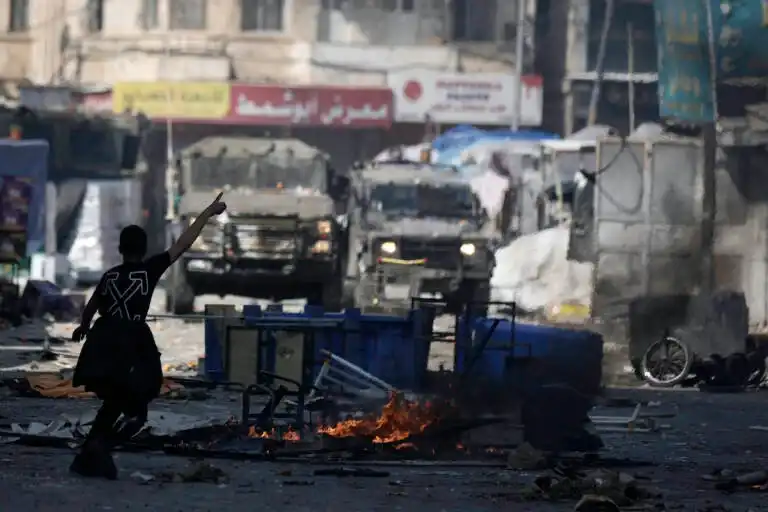
A report prepared by the National Office for Land Defense and Settlement Resistance said that the colonialists are exploiting the circumstances of the brutal aggression against the Gaza Strip, to inflame the situation in more than one governorate and region in the West Bank.


The office added in its weekly settlement report issued today, Saturday, that these settlers have become more organized and dangerous, after the Israeli occupation government decided to arm them in light of a large number of them joining the occupation army to fight in the Gaza Strip.


It explained that the colonists today are organized into military and paramilitary formations, “militias,” that work side by side with the forces designated to ensure the security of the colonies and colonists in the West Bank, so that they do not face the fate of their counterparts in the Gaza envelope, according to the claim.


The report pointed out that the Kfir Brigade, within which was the “Nitzach Yehuda” Brigade, was, before the aggression, the brutal strike force storming cities, villages and camps, in which daily crimes are being committed these days, in which more than 350 citizens have been killed since the start of the aggression on October 7.


It pointed out that this force moved to the battle front in the Gaza Strip, and as an alternative, the occupation government decided to build formations with various names, including “Emergency Teams,” “Qatari Defense - Haghmar,” and others, in which a large number of members of the “Price Paying” terrorist group joined, Which uses the name “Hill Youth” as a civil cover for its practices.


The report indicated that since these colonists joined the ranks of these military and paramilitary formations in the West Bank, testimonies began to accumulate about their involvement in acts of violence, threats, and sabotage of Palestinian property. They began wearing army uniforms, demolishing homes, sabotaging infrastructure, bulldozing and sabotaging fields, building roads, and demolishing wells. water, and preventing citizens from accessing their fields and lands.


It stressed that, according to data from the B'Tselem Foundation, the residents of 16 Bedouin and herding villages in Area C were forced to leave them since the beginning of the aggression, due to the acts of violence and threats practiced by these colonists, sometimes with the protection of the soldiers, and with their participation at other times.


It pointed out that the Yesh Din - There is a Law organization confirmed in its latest reports that acts of violence committed by colonialists against Palestinians in the West Bank set a record high last year, while the United Nations, for its part, also recorded 1,225 attacks against Palestinians during the same year.


The report stated that the frequency was high compared to previous years, while the highest frequency occurred after the seventh of last October, and the attacks were concentrated, especially at the beginning of this year, in the south of Mount Hebron, including in the village of Wadi Jahish and Sha’b al-Batm, without anyone intervening to prevent them, despite The Palestinians identified the soldiers as colonizers from the region in a number of cases.


The report said that hundreds of attacks have been recorded since the beginning of the aggression, and yet only two investigations were opened in the military police on suspicion of committing criminal crimes by soldiers of the “Emergency Teams” and “Haghmar” by the so-called “Central Region Command,” which It turns a blind eye to the violence of these people, and says that the process of recruiting “Haghmar” took place within the framework of a quick examination as possible regarding each case, and recruitment decisions were made according to the special circumstances, and in the event that there is other information, which was not in the hands of the decision-making body at the time of recruitment, it will be carried out. Re-examine the matter, and decisions will be made accordingly.


This week's settlement report highlighted the unbridled violence of the colonists, especially in the governorates of Hebron, Bethlehem, and the Palestinian Jordan Valley.


It said that the colonists' orgy covered several areas of the Hebron Governorate, where they, accompanied by the occupation soldiers, severely beat citizens in the vicinity of the city of Dura, which led to the transfer of a number of them to Dura Hospital, and they also destroyed their agricultural crops.


In Yatta, in the south, colonists from the "Itzkhar Man" colony attacked sheep shepherds in Wadi al-Jawaya, forced them to leave the pastures after assaulting them, vandalized a fence surrounding the area's lands, unleashed their livestock on citizens' agricultural crops, and prevented others from cultivating their lands.


In the "Wadi Ajhish" area in Musafer Yatta, occupation soldiers, accompanied by colonists, detained citizens, abused them, and forced them to leave their lands.


In the “Quwaiwis” area, colonists planted trees on citizens’ lands, and others chased sheep herders and prevented them from reaching pastures in the “Wadi Ma’in” area.


Dozens of armed colonists from "Tzkhar Man" and "Ma'on" also attacked the Al-Jawaya community in Masafer Yatta and the homes of its citizens, and caused damage to their contents.


The colonists of "Susya and Havat Ma'on" destroyed citizens' crops in the villages of Al-Rakiz, Al-Tuwanah, Al-Mufaqara, and Susiya, and released their livestock there under the protection of heavily armed occupation police and soldiers.


In the Ma'in area, east of Yatta, the occupation forces, accompanied by armed colonists, attacked citizens, chased them, prevented them from working on their lands, and seized their agricultural equipment, as they did with the sheep shepherds in the "Fateh Sidra" area in Al-Musafer and prevented them from reaching their lands.


The town of Tarqumiya was not spared the colonists’ attacks. They demolished agricultural rooms and stone chains, and bulldozed 20 dunams of the town’s land, while the occupation forces prevented citizens from approaching their lands in the Al-Taybeh area, close to the “Adora” colony, an area that witnesses continuous attacks on citizens' property.


In the city of Hebron, which was not spared from the violence of the heavily armed colonists, they abused citizens in the Old City of Hebron accompanied by occupation soldiers, while colonists from the established “Kiryat Arba” assaulted Palestinian citizens in the Jaber neighborhood in the town, searched them in a humiliating manner, and prevented them from standing on the street. Their homes' balconies, windows, roofs, and entrances.


Bethlehem Governorate, which was also the scene of an orgy of colonists, who stormed an archaeological and historical site in the town of “Janatah” to the east, and others wreaked havoc in “Ain Hamda”, a water spring belonging to the municipality, surrounded by the bypass road and close to the “Takwa” settlement. They began restoration work in an attempt to seize hundreds of dunams of surrounding land.


In the Tekoa Wilderness, colonists set up two mobile homes in the “Danyan Hill” area, bringing the number of mobile homes in that area to 5. They also installed an iron gate in the “Fatura” area to prevent citizens from reaching their lands, and they extended an electricity network to an old house, which they had built. They seized it after forcing its owner to evacuate it by force. They also built roads in preparation for establishing a new colonial outpost in that area, after it had been emptied of its owners, and their tents and homes were demolished.


In Khallet an-Nahlah, south of Bethlehem, the colonists uprooted 250 olive seedlings and stole agricultural equipment in a scene that is constantly repeated in that area.


In the Jordan Valley, throughout the north, center and south, orgies and violations continue from one week to the next without stopping.


Armed colonists, accompanied by the occupation army, attacked citizens’ lands in Arab al-Mlihat, west of the city of Jericho. According to the Al-Baidar Organization for Defending Bedouin Rights, they installed a number of iron corners, with the aim of provoking citizens and expanding their control over their lands in the area located at the beginning of the Al-Ma’rajat Road, west of Jericho.


These attacks come within the framework of the occupation's ongoing policy of expanding settlements at the expense of the Palestinian territories.


In the northern Jordan Valley, the Palestinian Red Crescent crews transported the citizen, Qadri Alian Daraghmeh, who was a victim of the colonists’ attack on residents’ tents in the “Shuwayer” area, and his livestock were seized.


In this context, Israeli occupation Prime Minister Benjamin Netanyahu decided last week to stop the evacuation and demolition of colonial outposts established by colonists in the West Bank during the aggression, contrary to the instructions of Defense Minister Yoav Allant, who instructed the evacuation of one colonial outpost in what the occupying state calls “Gush Etzion.” In the Bethlehem Governorate, after the extremist National Security Minister Itamar Ben Gvir launched a violent attack on the Army Minister.


The National Office followed up on colonial activities last week, noting that Jerusalem remains the focus of the Judaization policy of the occupation government and municipality.


The report confirmed that the "fictitious" five-year plan projects for the development of East Jerusalem, which were approved by the occupation government in August last year, have disappeared, to be replaced by projects to blatantly Judaize the city.


At this level, and in the context of political propaganda and preparation for the campaign for municipal elections and local authorities in the occupying state, the occupation municipality in Jerusalem early last week, without legal basis, preempted judicial procedures in the Jerusalem courts, and announced in advance its approval of the colonial plan called “Silicon Valley,” which It extends along Wadi Al-Jouz Road and Othman bin Affan Street, to build buildings from 8 to 14 floors on the ruins of commercial and industrial shops in the Jerusalem Industrial Zone.


The report indicated that the plan, as confirmed by the petitioners from the city of Jerusalem, is disastrous for Jerusalemites, and affects the owners of shops in the industrial zone and their property rights by seizing their shops, despite their need for housing and an industrial area, and not for a colonial project aimed at eliminating an entire industrial zone for Jerusalemites that was originally established before the occupation.


The plan includes seizing 2,000 dunams of Palestinian-owned land, and demolishing 200 industrial facilities and workshops in Wadi Joz, to establish a high-tech and technology complex, with services, cafes, hotels, huge towers, and commercial centers.


In its plan, the occupation municipality aims to transform the Palestinian neighborhoods near the walls of the Old City and the blessed Al-Aqsa Mosque into a technological, industrial and commercial center, and a colonial attraction and investment area at the expense of the lands of Jerusalemites.


It is worth noting that 87% of the land in the city is not available for Palestinian construction, and that only 13% of the land is allocated for Palestinian use, even though most of these areas are already built up and overcrowded.


At the same time, the occupation municipality approved the establishment of a garbage dump on an area of 109 dunums in an area densely populated with Jerusalemites in a valley near Al-Issawiya, Anata, and Ras Shehadeh, east of occupied Jerusalem. This plan dates back to the year 2012, when the municipality intended to establish it on an area of 520 dunums in the same place. However, the people of Jerusalem, with the help of the “Bimkom - Planners for Planning Rights” association, prevented this in the Israeli courts for a full decade, and were able to reduce the damage and stop the demolition of 70 residential and commercial facilities to implement this plan.


According to the new plan, the landfill area will be spread over an area of only 109 dunums, that is, a quarter of the area allocated to the landfill in the previous version of the plan for the year 2022, and about a fifth of this size from the original plan for the year 2012, when the landfill was supposed to extend over about 520 dunums.


In addition, the new plan requires that the volume of waste not exceed 350 thousand cubic meters only, which is an amount that constitutes between 4-7% of the volume of dust planned in previous versions, which ranged between 5-8 million cubic meters.


The weekly violations documented by the National Office for Land Defense and Settlement Resistance were as follows during the reporting period:


Jerusalem: The occupation forces blew up the homes of the two martyrs, Murad (38 years old), and Ibrahim Nimr (30 years old) in the town of Sur Baher. The occupation had closed the two houses on the second of last month by welding the doors and windows to prevent entry to them, and another house in the town belonged to the Al-Khatib family after... Assaulting his companions.


The occupation forces also demolished a shed belonging to citizen Ismail Alyan in the town of Anata, and bulldozed lands in the Wadi Al-Rababa neighborhood in the town of Silwan.


Hebron: The occupation forces bulldozed a 6-dunum area of land in the Tel Rumeida neighborhood in the center of the city, which belongs to the Hebron Municipality and is planted with 50 perennial olives, in preparation for seizing it, in addition to installing an iron gate at the entrance to the land.


The occupation forces are working to build new colonial roads, located between the areas of Al-Thaala and Umm Al-Khair, east of Yatta, in order to connect the “Karmiel” and “Ma’on” settlements, another road between the “Bani Hefer” colony and the Bireen area northeast of Yatta, and a third road between "Atnael" settlement, west of Yatta, towards Khallet Al-Farra.


The occupation forces also closed with dirt barriers the entrances to the population centers in Masafer Yatta and its east. It demolished a house and a barn with an area of 120 square metres, built before the occupation and more than 80 years old, and bulldozed lands around them and agricultural beds, and uprooted several fruit and forest trees, owned by the citizen Murad Abdel Samie Ashour in the village of Birin, south of Hebron.


The occupation soldiers and colonists assaulted the young man, Omar Abdel Hadi Al-Qassas (33 years old), south of Hebron, resulting in bruises, after which he was transferred to Dura Hospital. In the town of Yatta, they detained the citizen, Muhammad Al-Nawajaa, and abused him.


Ramallah: Colonists uprooted a number of grape and almond trees on the land of citizen Qassem Ghafri, in the Abu Al-Awf area in Sinjil, and vandalized the water tanks he used to irrigate his land.


Bethlehem: The occupation forces bulldozed a land of two dunums, belonging to the citizen Omar Ismail Issa, in the Khalayel Al-Luz area, southeast of Bethlehem. The citizen, Ibrahim Aweida Sawarka (40 years old), was also injured with fractures, wounds, and bruises, after colonists severely beat him while he and his family were in the tent. In the Kaisan wilderness, they unleashed police dogs on him, which bit his leg and caused him fractures, wounds, and bruises throughout his body. He was transferred to the hospital in Bethlehem to receive treatment, in addition to destroying all the contents of the tent.


The occupation forces arrested the child Mahmoud Abayat (16 years old) while grazing his sheep, and stole 60 heads from him while he was on his land in the “Esh Ghurab” area, east of Bethlehem.


The occupation forces stormed the town of Nahalin, stationed at the northern entrance in the Wadi Salem area, searched agricultural lands, and forced the citizens Obaida Ibrahim Shakarna and Muhammad Sawad to leave their lands, while they seized an agricultural tractor belonging to the citizen Ali Shakarna, burned a vehicle, destroyed solar panels, and damaged cameras. Surveillance belongs to citizen Moataz Najajra.


Settlers uprooted 250 olive seedlings in Khallet al-Nahla, south of Bethlehem, from land belonging to citizen Naji Farraj. The occupation forces also seized an excavator in the village of Nahalin, owned by a citizen, while he was working to reclaim agricultural land in the Khallet al-Dalia area, and prevented farmers from working on their land, knowing that the Khallet al-Dalia area Its area is estimated at 200 dunams, planted with perennial olive trees, vines, and almond trees, and it is private property for citizens.


Nablus: The occupation forces seized a vehicle belonging to detainee Ghassan Dhouqan, raided his house and tampered with its contents. They also raided a printing press belonging to the Dhouqan family, and seized its equipment after vandalizing its contents.


Colonists demolished the walls of an agricultural room belonging to the citizen Thaer from the town of Qusra, and equipment was stolen from it, and the house of the citizen Raed Yassin in Burqa, north of Nablus, was destroyed following an attack by the colonists.


Salfit: The occupation forces demolished a car wash and a nursery belonging to the citizen Muhammad Mansour in the town of Kafl Haris, while colonists burned an agricultural room and olive trees owned by the citizen Najeh Harb from the town of Kafr Al-Di in the Al-Jaffa area in the northern face of the town.


Jenin: Colonists, protected by the occupation forces, attacked Khirbet Al-Hamam between Kafr Ra’i, Al-Nazlat, and Khirbet Al-Mukhal, and assaulted and beat the citizen Majdi Al-Mukhal. They also attacked citizens’ lands in the northern region, “the Tabars region,” of Kafr Ra’i’s lands, and prevented citizens from entering their lands and working on them, while others assaulted them. The young man, Ihsan Muhammad Saabna, from the village of Fahma.


Tulkarm: Two months ago, occupation bulldozers bulldozed lands near the colony known as “Al-Sunbula” or the “Harmish” settlement from the lands of Al-Nazla Al-Sharqiya, north of Tulkarm, with the aim of expanding it. They prevented their owners from entering it and informed the owners of the houses built on it of the intention to demolish them in the coming days.


The soldiers assault and beat anyone who approaches the area, fire live bullets at them, and seize tractors and agricultural equipment belonging to farmers who work on the Al-Mughraqa agricultural land, adjacent to and belonging to Al-Nazla Al-Sharqiya, who make a living from this land, and it is considered their only source of livelihood.


Jordan Valley: The occupation forces seized a bulldozer while it was working to facilitate a road in the Ras al-Ahmar area in the northern Jordan Valley. On an agricultural tractor owned by Hussein Zuhdi Daraghmeh, while he was working in the “Nab’ Ghazal” area in Al-Farsiyya.


Two Palestinian shepherds were severely beaten by colonialists in the northern Jordan Valley, along Route 90, and one of them was transferred to the Turkish Hospital in Tubas for treatment.


The colonists also opened fire on a private vehicle belonging to Louay Qadri Alyan Daraghmeh, causing serious damage to it, while the occupation police then seized it.


Under the protection of the occupation army and police, the colonists seized 500 heads of cows, belonging to citizens Qadri Daraghmeh and Adel Alyan Zamil Daraghmeh, and headed them to the Rosh HaBqaa camp of the occupation army, where they loaded them into large trucks and headed to an unknown destination.



PALESTINE

Sat 13 Jan 2024 2:13 pm - Jerusalem Time

Organization: The humanitarian situation in Rafah has reached the breaking point

Action Aid International said that the humanitarian situation in the city of Rafah in the southern Gaza Strip has reached the breaking point, as more than a million people are gathering in a very crowded area, with more arriving every day, with an area estimated at about 32 square kilometers.


The organization explained in a statement issued today, Saturday, that hundreds of thousands of people are sleeping in the open, without adequate clothing and shelter against the cold and rain, due to overcrowding in shelter centers and exceeding their capacity.


It pointed out that more than 20 people share the tent, and every day represents a struggle for citizens to find food and water, as all residents of the Gaza Strip now face levels of hunger, with the risk of famine increasing day by day.


Abdel Hakim Awad, a member of a youth group for a partner organization of ActionAid/Palestine, touched on the catastrophic humanitarian conditions that people face in Rafah, saying: “We live in a situation that cannot be described as humanitarian. There is no health, no food, no… The basic necessities of life, and there are not enough tents that can accommodate all the people who came from the central region of the Gaza Strip, as they sleep in the open, and you must have 3,000 shekels (equivalent to 635 British pounds) in order to be able to buy a tent. He added: If you want to buy something, like food in the morning, afternoon, or night, it should be one meal, which you might get in the middle of the day, and that meal costs at least 50 shekels (£10.58).


As for the health situation, he pointed out that whoever is infected must remain in his home, because there is no place to receive him at all, as there is no electricity, and solar energy or solar cells are used for charging on normal days, and you must wait three days until you receive a charge, and there is “There are queues for fresh water, there are queues for salt water, there are queues for food, there are queues for drinking, everything has a queue.”


UNICEF explained that there were approximately 3,200 new cases of diarrhea on average every day among children under the age of five, and in one week of December, while diarrhea cases usually recorded before October 7 reached approximately 2,000 cases in this category. age every month, and maintaining hygiene levels is almost impossible, due to the lack of potable water and sanitation, as hundreds of people are forced to use a single toilet or bathroom to shower.


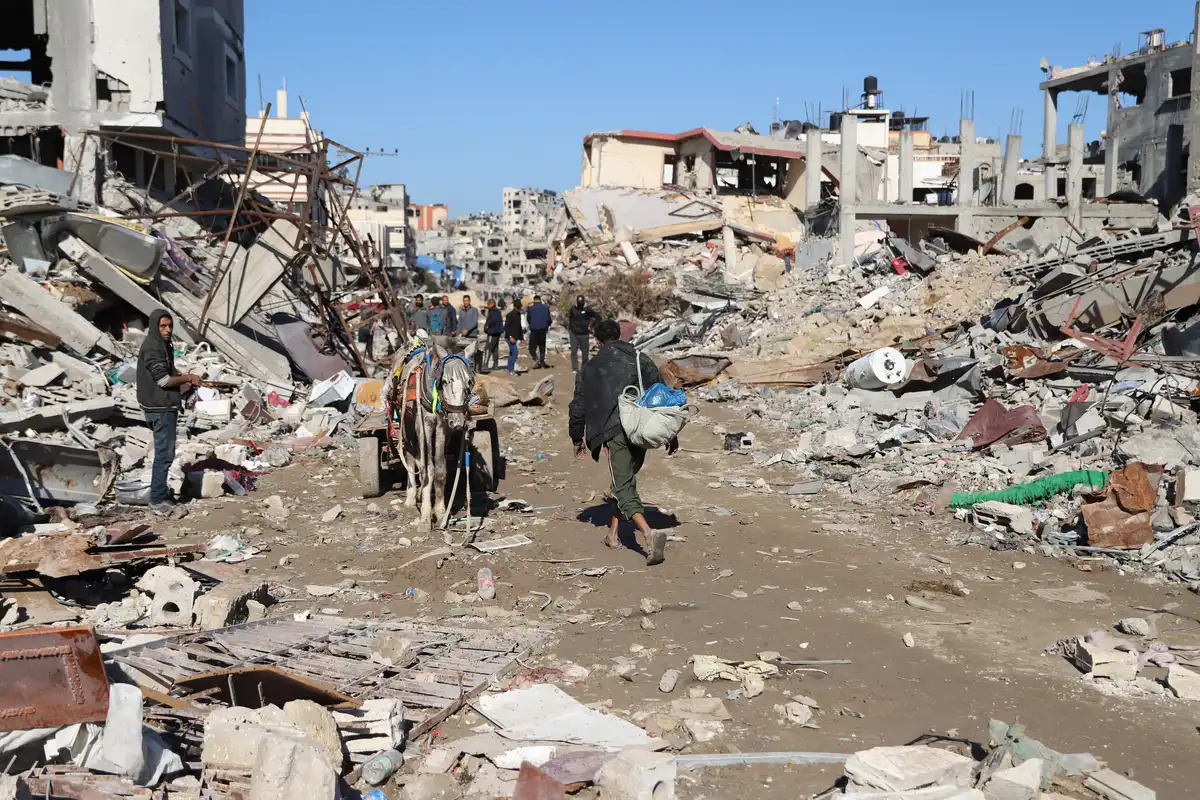
According to Action Aid, the picture is similar elsewhere in the south and central Gaza Strip, where air strikes have intensified in recent days, and more than 85% of the population - about 1.9 million people - have been displaced from their homes several times, and face a daily struggle to meet their basic needs. .


Citizen Laila was displaced from her home, and now resides in a tent with her children and extended family in a camp located in southern Gaza, which she says is home to 100,000 people.


She said: “We live in tents. There are none of the necessities for the life we live. We are starving and struggle to find water and food. We were flooded with water during the nights when it rained on us. Our children have no way to keep them warm. There are no blankets, nothing, and our mother She suffers from asthma, and she also had a traffic accident during the war. My sister is also about to give birth, and we have no blankets or things to keep her or our children warm.”


Another humanitarian case is for citizen Amira, who was displaced from her home in the north, and is currently living in a tent with her four children, the youngest of whom is one and a half years old, in Khan Yunis, while her husband is still in the north.


She says: “Thank God we found what is called a ‘shelter’, but frankly for me, my children and my family, it is not a shelter. Here I suffer from the cold, because my children and I do not find enough blankets. We suffer a lot when we want to go to the bathroom. We stand in line.” "For a long time, the bathrooms were far away. We suffered from gastroenteritis more than once. My children all fell ill in succession and recovered again... I have no shelter, no income or money to spend or buy anything with."


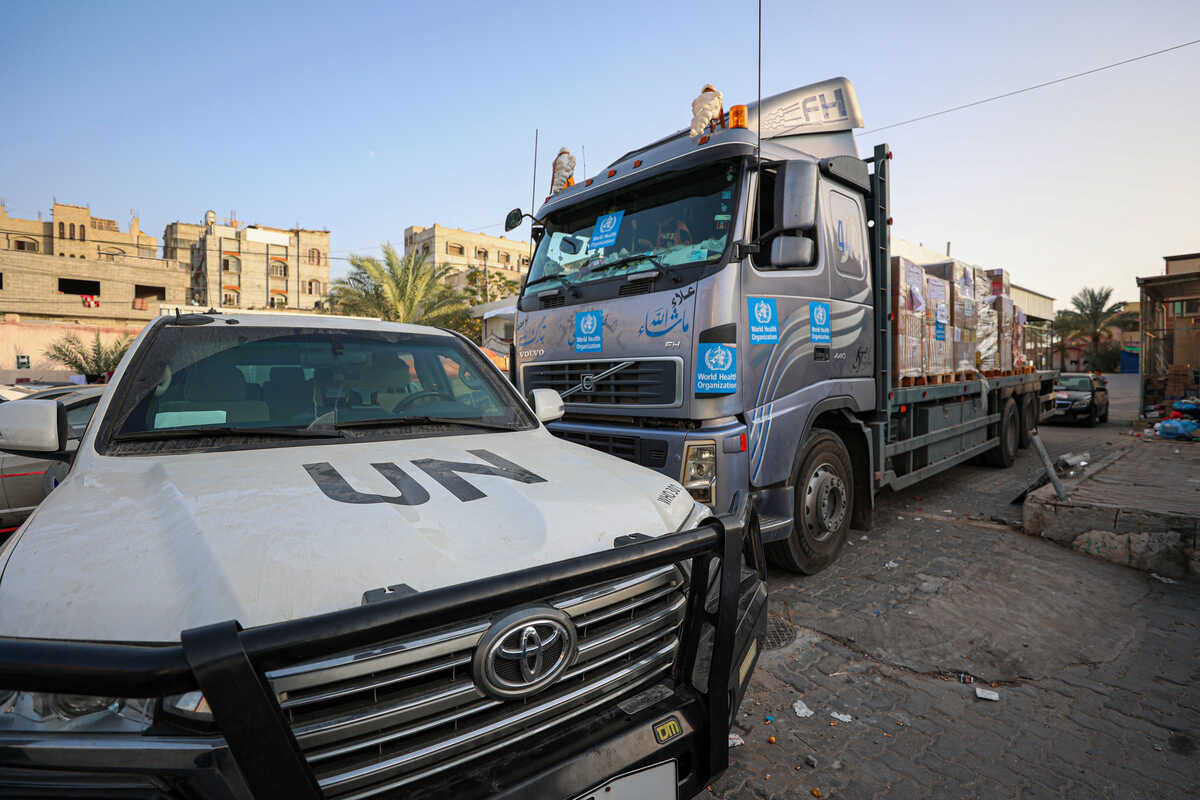
The international organization noted in its report that the amount of aid entering Gaza is still completely insufficient to cover this huge level of needs, as approximately 200 trucks carrying food, medicines, and other supplies are currently entering on average daily.


Despite the enormous challenges, the organization and its local partners, such as: Al-Wefaq Association for Women and Children’s Care, support them by providing food aid, hygiene supplies, and “winter supplies” that contain warm clothes, blankets, and mattresses, as well as providing a number of people with cash assistance. To enable them to purchase basic materials.


The organization is also working in partnership with the "Wefaq" Association to build 60 health units for women and girls in Rafah, giving them a private space to maintain their hygiene with dignity.


For her part, Reham Jaafari, communications and advocacy officer at ActionAid/Palestine, says: “The conditions that people face in Rafah are incredible, as the infrastructure collapses, under the pressure of meeting the needs of the population, at nearly four times its usual capacity, and aid flows at a rapid pace.” Painfully slow We heard miserable stories of 20 family members having to cram into one tent, people having to stand in line for hours to use the toilet, and parents not eating their share meal after meal so they could at least give their children something to eat.


It is likely that the situation will worsen with the displacement of more people from the central region and other areas in southern Gaza, and with the intensification of air strikes.


She stressed that only an immediate and permanent ceasefire will stop the death toll from rising, allow enough life-saving aid to enter Gaza, and provide some relief to those struggling to survive in Rafah and elsewhere in the Gaza Strip.


ARAB AND WORLD

Sat 13 Jan 2024 1:55 pm - Jerusalem Time

China warns of forced displacement of Palestinians

A Chinese envoy warned of the consequences of the forced displacement of Palestinians from Gaza, stressing the importance of an immediate ceasefire.


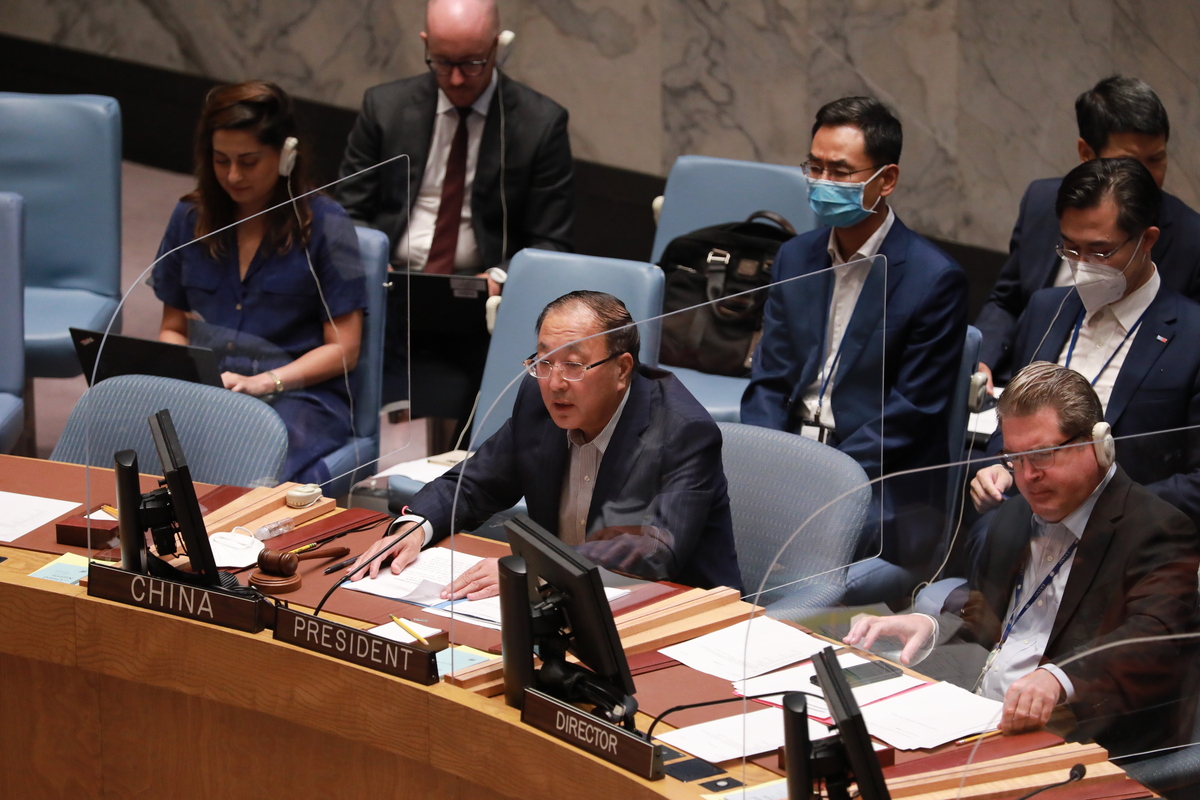
Zhang Jun, China's permanent representative to the United Nations, said at the Security Council meeting that after nearly 100 days of ongoing Palestinian-Israeli conflict, more than 23,000 people have been killed in Gaza and more than 200 UN workers and journalists have been displaced, and 90 have been displaced. percent of the population of Gaza.


Regarding the rhetoric of “voluntary displacement” out of Gaza, he said that any forced displacement of Palestinians must be strongly rejected.


"This means pushing two million people out of Gaza and turning it into a so-called safe, depopulated zone. If put into practice, such a horrific idea would constitute terrible crimes under international law and could completely destroy the prospects for a two-state solution," Zhang said.


In addition, Zhang called for all possible efforts to alleviate the humanitarian crisis in Gaza.


Zhang continued, saying that Israel must respect its obligations as an occupying power, ensure the safety of humanitarian workers and provide full cooperation in humanitarian relief affairs.


He added that China supports the Security Council taking further additional measures to remove obstacles in order for sufficient humanitarian aid to enter Gaza safely, quickly and without obstacles.


Meanwhile, Zhang called for efforts to consolidate the ceasefire in Gaza as quickly as possible.


He said that only through a ceasefire can further civilian casualties and humanitarian disasters be prevented, and only through a ceasefire can the entire Middle East region be prevented from falling into disaster.


Zhang added that it is worrying that instead of seeing prospects for an immediate ceasefire, we see the conflict expanding.


He went on to say that an immediate ceasefire has become the widespread call of the international community, however, one of the permanent members of the Security Council is using various excuses to prevent reaching a consensus on this issue in the Council by using his veto power. This is a blatant disdain for international justice and fairness and the authority of the Security Council.


"Some people were always talking about protecting human rights and preventing genocide, while in the face of the horrific situation in Gaza, they played a fool, continued to procrastinate and tried to divert attention," he said, adding that this represented the use of double standards. “It is necessary to remove all obstacles and take strict measures to end the fighting, save lives and restore peace.”


Zhang explained that China urges the international community, especially countries with great influence, to achieve a ceasefire, which is a major urgent task.


He continued, saying that China is concerned about the indirect effects of the conflict in Gaza on the situation in the Red Sea, as the military operation launched by the United States and Britain against Yemen will undoubtedly exacerbate regional tensions.

PALESTINE

Sat 13 Jan 2024 12:12 pm - Jerusalem Time

An Israeli newspaper reveals details of the first hours of October 7

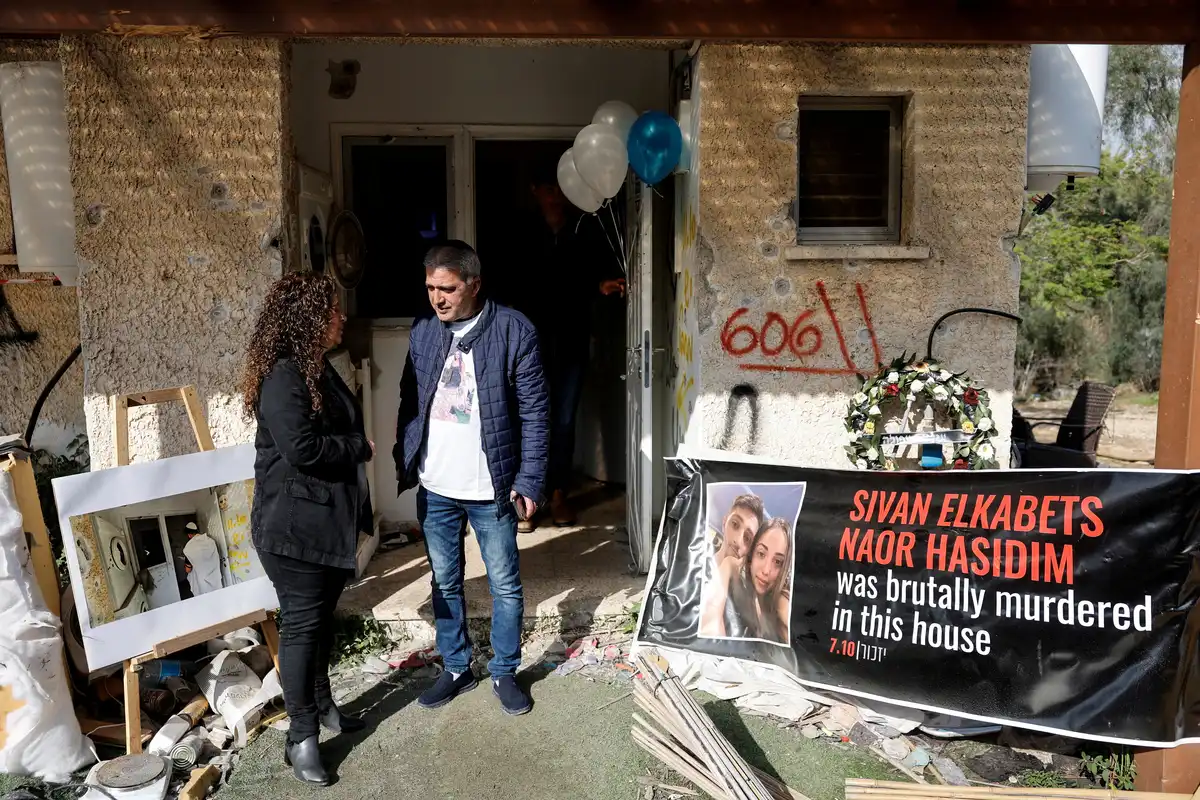
An extensive report by the Israeli newspaper Yedioth Ahronoth revealed details of the events of October 7, which witnessed the Hamas attack on the Gaza Strip, which led to the death of 1,200 people, causing Israel to launch an ongoing aggression against the Gaza Strip until today.


Yedioth Ahronoth reported that, early on October 7, when Hamas was making its last preparations before carrying out its expected attack in the morning, senior officials in the Shin Bet and the Israeli army were discussing “some important indicators of a possible attack,” but the newspaper adds that all these indicators "did not constitute a clear warning of war."


It continued: "In the period preceding the major attack, Hamas directly attacked surveillance cameras, communications poles, and other means of collecting information."


It explained that Hamas used “suicide drones, which blinded the Israeli army leadership and prevented it from forming a picture of the event.”


The newspaper pointed out that “due to blindness on the ground, the officers resorted to television broadcasts as well as to social media networks, especially Telegram channels, which included pictures and video clips of what was happening through information on social media sites, the army realized that it was a large-scale event.”


In response to the question, “Where was the Israeli army in the early hours of the morning of October 7?” Yedioth Ahronoth says that through its conversations with dozens of officers and commanders, some of whom are senior commanders in the army, it became clear to it that the latter suffered “the most difficult and embarrassing and angering moments.” 


It explains this by saying: “These moments include an almost failed command system, instructions to shoot at the cars of terrorists heading to Gaza, even if there was a fear of the presence of hostages in them, Marines who were sent into battle without the necessary equipment, old and unchanged orders, and fighter planes roaming the skies without striking, and pilots forced to enter WhatsApp groups to find out which targets to hit.”


"Everything was crazy, chaotic and improvised," it concluded.


Commenting on what happened, the Israeli army says: “These days, we are fighting the Hamas terrorist organization in the Gaza Strip... The Israeli army will conduct a detailed and in-depth investigation to clarify what happened, when the operational situation allows it and will publish the results to the public.”


OPINIONS

Sat 13 Jan 2024 12:09 pm - Jerusalem Time

South Africa to the aid of Palestine: the overthrow of the world

Translation for "Al-Quds" dot com

Translation for "Al-Quds" dot com

Opinion Writer


By Edwy Plenel

Europe and its North American projection claim a universality of human rights that their actions have continued to contradict. Faced with their inaction in the face of the destruction of Palestine by the State of Israel, it is South Africa which, today, defends this universal.

South Africa's application before the United Nations International Court of Justice (ICJ) against the State of Israel, on the "genocidal nature" of its war against the Palestinians of Gaza, is not only an unprecedented legal event. It marks a geopolitical reversal: while all the peoples of the world note, through the Palestinian tragedy, the variable geometry use by Europe and the United States of America of the universalist values to which they claim, it is a country emblematic of the emancipatory causes of the Third World, anti-colonial and anti-racist, which is taking up the torch.


You just need to read the exceptional document produced by South African diplomacy and listen to the presentation (see below, especially since our audiovisual media hardly relayed it), Thursday January 11, of its arguments before the ICJ to take stock of the intellectual eclipse of a continent, ours, whose nation-states have for so long claimed to speak, codify and impose the good, the just and the true.

Because, in real time and under the gaze of the whole world, in the face of the martyrdom of Gaza, they said nothing – or very little: a few hypocritical calls for restraint – and did nothing – or worse: did quite the opposite by delivering massively and only recently, like the United States, arms and ammunition to Israel. Nothing said and nothing done when the population of one of the most densely populated territories on the planet is attacked by one of the most powerful armies in the world, that of the State which besieges it after having occupied it, in the most intensive bombing campaign in modern military history.


Worse than Aleppo in Syria, worse than Mariupol in Ukraine, to stick to two contemporary references which implicate Russia, but also proportionally worse, in intensity, than the Allied bombings on Nazi Germany.


Indiscriminate punishment

By the actions of its army as well as by the words of its leaders, it is indeed a people that the State of Israel targeted in its vengeful response to the attack of October 7, 2023 carried out by Hamas and its massacres Israeli civilians. Far from a proportionate response, it is an indiscriminate punishment which was implemented against a population because of its origin, its identity, its culture, its history.

It is the Palestinian people of Gaza, and, through them, the very idea of a viable Palestine, of a life and an existence under this name, with what it conveys of sociability and citizenship, who was designated as the culprit who needed to be punished, without any discernment. And this, explicitly on the first day, through the voice of the Israeli Prime Minister, Benjamin Netanyahu himself, calling for a holy war by referring to Amalek, this people that, in the Bible (I Samuel XV, 3), God commands extermination – “You shall not spare him, and you shall put to death men and women, children and infants, oxen and sheep, camels and donkeys”


What Palestine says to the world 

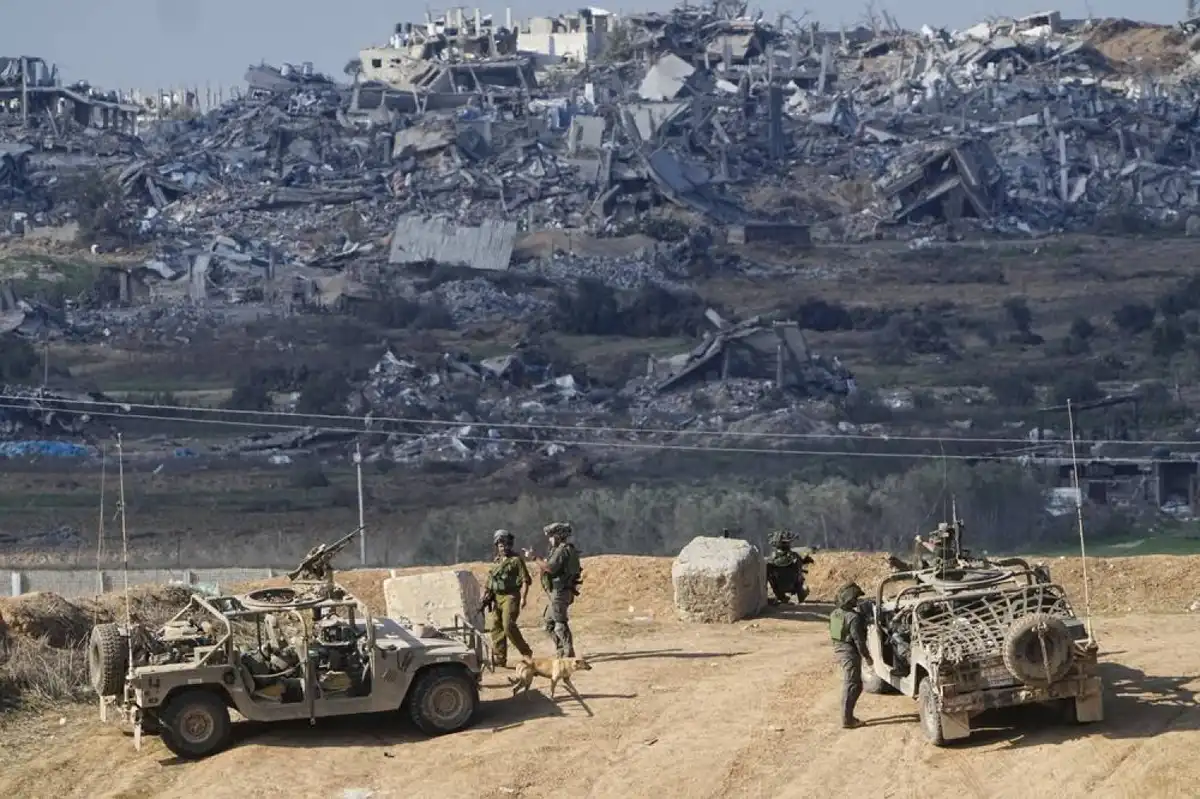
In barely three months of war, there have already been tens of thousands of dead, missing and wounded, mostly civilians, the majority children and women. An entire world has been destroyed forever, homes and hospitals, places of life and worship, schools and universities, administrations, stores, monuments, libraries, even cemeteries.

“No place is safe in Gaza,” United Nations Secretary General António Guterres did not hesitate to assert on December 6, 2023 in his solemn letter to the Security Council. Since then, humanitarian NGOs and UN agencies have continued to warn of polluted water, the risk of famine, immeasurable poverty and infinite despair, in short the irreversible destruction of part of occupied Palestine. .

Sinister reversal: the State whose initial legitimacy was based on awareness of the crime of genocide committed against the Jews by Nazism and its allies is today faced with the accusation of reproducing it against the Palestinians. In the 1948 Convention invoked by South Africa, the crime of genocide designates acts “committed with intent to destroy, in whole or in part, a national, ethnic, racial or religious group, as such”. Rafael Lemkin, the inventor of the word – from the Greek genos and the Latin cide – defined it as “a plot aimed at annihilating or weakening national, religious or racial groups”.


The legal debate will be conducted on the merits but, in the immediate future – and this is the challenge of the emergency procedure before the ICJ – it is a question of interrupting as quickly as possible a process of annihilation, of purification, expulsion, erasure and destruction of Palestinians in Gaza which has genocidal characteristics.

As the genocides committed in Rwanda in 1994 and in Bosnia in 1995 have tragically reminded us, this is in no way to put into perspective the uniqueness of the Shoah, this plan concerted by the Nazi regime for the industrial extermination of millions of beings. human beings, than to maintain universal vigilance over the repetition, in other contexts and in different forms, of this immeasurable crime of humanity against itself.

But history will remember that the powers which embody the West, this political reality born from the projection of Europe on the world, even though they glory in having proclaimed the universality and equality of rights , evaded this vigilance by abandoning Palestine to its sad fate. Through South African audacity, it is the people and nations who have suffered from this dominating appropriation of the universal by Western powers who are now its best defenders. Which, in short, remind Europe of the promise it has betrayed.

“If we want to respond to the expectations of our people, we must look elsewhere than in Europe”: these are almost the last words of The Wretched of the Earth (1961), this essay by Frantz Fanon which, since its publication, has goes around the planet, and they can be read as the prediction of the reversal which, today, is being accomplished. This call to “change sides” claimed an emancipatory escape in the quest for true humanism, where the concern for humanity is no longer eclipsed by the interests of dominating nations or by the identities of conquering peoples. In the wake of the Discourse on Colonialism (1955) by his Martinican compatriot Aimé Césaire, The Wretched of the Earth magnified a true universalism, without an owner nation, without identity boundaries.

“May I be permitted to discover and desire man, wherever he may be,” wrote Fanon at the conclusion of his first book, Black Skin, White Masks (1952), where he recalled this warning. from “[his] philosophy professor, of West Indian origin: “When you hear bad things about Jews, prick up your ears, people are talking about you””, with this comment: “An anti-Semite is necessarily negrophobic. » At the outset of one of the chapters, he placed these words of Aimé Césaire: “There is not in the world a poor lynched guy, a poor tortured man, in whom I would not be murdered and humiliated. »

Europe has refused all humility, all modesty, but also all solicitude, all tenderness.

International law is the legal translation of this essential humanism. A humanism which Fanon, a decade later, that of the French colonial wars, from Vietnam to Algeria, angrily noted that Europe had denied.

“Let us leave,” he wrote in The Wretched of the Earth, “this Europe which never stops talking about man while massacring him wherever it meets him, at every corner of its own streets, at every corners of the world. […] Europe has refused all humility, all modesty, but also all solicitude, all tenderness. She only showed herself to be parsimonious with man, petty, carnivorous and homicidal only with man. So, brothers, how can we not understand that we have better things to do than follow this Europe. »

In this indictment in which he pits Europe against itself, Fanon brandishes its betrayed promise in order to better claim an overcoming which, finally, accomplishes it. This Europe which proclaimed natural equality, then decreed the universality of rights, trampled and ransacked both through colonialism and imperialism, denying them to the peoples and humanities that it oppressed and exploited.


Deadly poison

And it is this devastating imposture that the long injustice done to Palestine by the occupation and colonization of its territories since 1967, the segregation and discrimination of its people which result from it, have perpetuated even in our present, spreading within even from Israeli society a deadly poison for democratic ideals as evidenced by the rise of far-right Jewish forces, as racist as anti-Semites are.

The current resonance of this book-manifesto proves that the internationalist and humanist hope of decolonization is not a bygone old thing, but still an active promise. Published a few days before the death of its author, who had espoused the Algerian independence cause, The Wretched of the Earth was published at the end of 1961, the same year in which Nelson Mandela, renouncing the non-violent strategy of the South African ANC facing the apartheid regime, went to train in armed struggle with the Algerian FLN in its clandestine bases in Morocco, a few months before his arrest on August 5, 1962.


But the resonance goes even further: apartheid, a regime of racial segregation, was instituted in 1948, the year in which, at the same time, the creation of the State of Israel was endorsed by the United Nations, proclaimed the Universal Declaration of Human Rights and approved the Genocide Convention.

The fundamental principles, values and rights invoked by South Africa in the face of the actions of the State of Israel in Gaza do not only apply to Palestine.


Re-reading Frantz Fanon is therefore taking stock of what is at stake for our future around what Palestine has been saying to the world since its right to exist as a sovereign state has been denied to it, whereas with Yasser Arafat at its head, it ended up granting this right to the State of Israel, despite the expulsion – the Nakba – of which part of its people were victims in 1948. Who, today, will save the universality and, above all, the universalizability – in the sense of sharing and solidarity – of rights, justice and equality, thus escaping their predatory appropriation by States, peoples and nations who claim to be legitimate owners of a universal to the point of authorizing themselves to contradict and flout it as soon as their selfishness, particularly economic, is in danger?

South Africa provides the answer before the Court of The Hague: origin does not protect anything, there is no universal of which a given nation, civilization, culture, etc., has the monopoly or privilege, there is only the universalizable that is at stake in each concrete ordeal where the fate of a particular humanity – attacked, persecuted, violated, discriminated against, erased, exterminated, etc. – endangers that of all humanity. Rigorously legal in the field of international law, this request before the ICJ raises the politically decisive question of the borderless universality of the supranational values claimed, at least on paper, by the nation states of our continent and the European Union. which brings them together.

The fundamental principles, values and rights invoked by South Africa in the face of the actions of the State of Israel in Gaza do not only apply to Palestine. They apply, at the same time, to Ukraine, the victim of a war of aggression by Russian imperialism, with its procession of war crimes and crimes against humanity – and this reminder applies to the South African leaders who, to date have not condemned Moscow. But they also apply to the people of Syria, yesterday and still martyrs to the dictatorial regime which oppresses them with the support of Iran and Russia. The same applies to the Uighurs, the predominantly Muslim Turkic-speaking people persecuted by China in Xinjiang. Just as they apply to all people who suffer the yoke of state powers whose apparent support for the Palestinian cause serves as a diversion from the iniquitous fate they impose on them, from Iran to Turkey, without forgetting absolutism. monarchies who reign on the Arabian Peninsula.

There is only internationalist humanism. This is what Nelson Mandela meant when he expressed his gratitude to the Palestinian people for their help in the fight against apartheid: “We know very well that our freedom is incomplete without the freedom of the Palestinians,” he confided. Conversely, the indifference of most European leaders towards the fate of Palestine endangers the idea that Europe has of itself, its values and its principles.

What will it be able to say tomorrow in the face of violations of international law which alarm or threaten it, like Russia's war of aggression against Ukraine, after not having been able to come to the rescue? of Palestine? How will it dare to lecture other powers, authoritarian and imperialist, who reject any supranational right that could thwart their ambitions when it has not been able to defend it against the State of Israel, or even when it has simply renounced through the voice of some of its officials assuming “unconditional” support for this State, whatever its actions?

Just over a year ago, on October 13, 2022, Josep Borrell, Vice-President of the European Commission and High Representative of the European Union for Foreign Affairs, delivered the opening speech of the new Diplomatic Academy European in Bruges.

“Europe”, he then explained not without pride, “is a garden” where “everything works”, “the best combination of political freedom, economic prosperity and social cohesion that humanity has been able to build ". Conversely, he worried, “most of the rest of the world is a jungle, and the jungle could take over the garden.” “[European] gardeners must go into the jungle,” he recommended. Europeans need to be much more engaged with the rest of the world. Otherwise, the rest of the world will invade us, in different ways and by different means. »

In the light of ravaged Gaza and bruised Palestine, where is the garden, where is the jungle? And where have these official European “gardeners” gone who, in recent months, have deserted concern for the world and humanity? Far from being foreign to us, the jungle proliferates through the blindness of conquest and power, exploitation and domination. As for the garden, however clean it may appear, it can be the breeding ground for the worst barbarities, those which, in the name of identities, origins, civilizations believing themselves superior to others, lead to the crime of genocide.
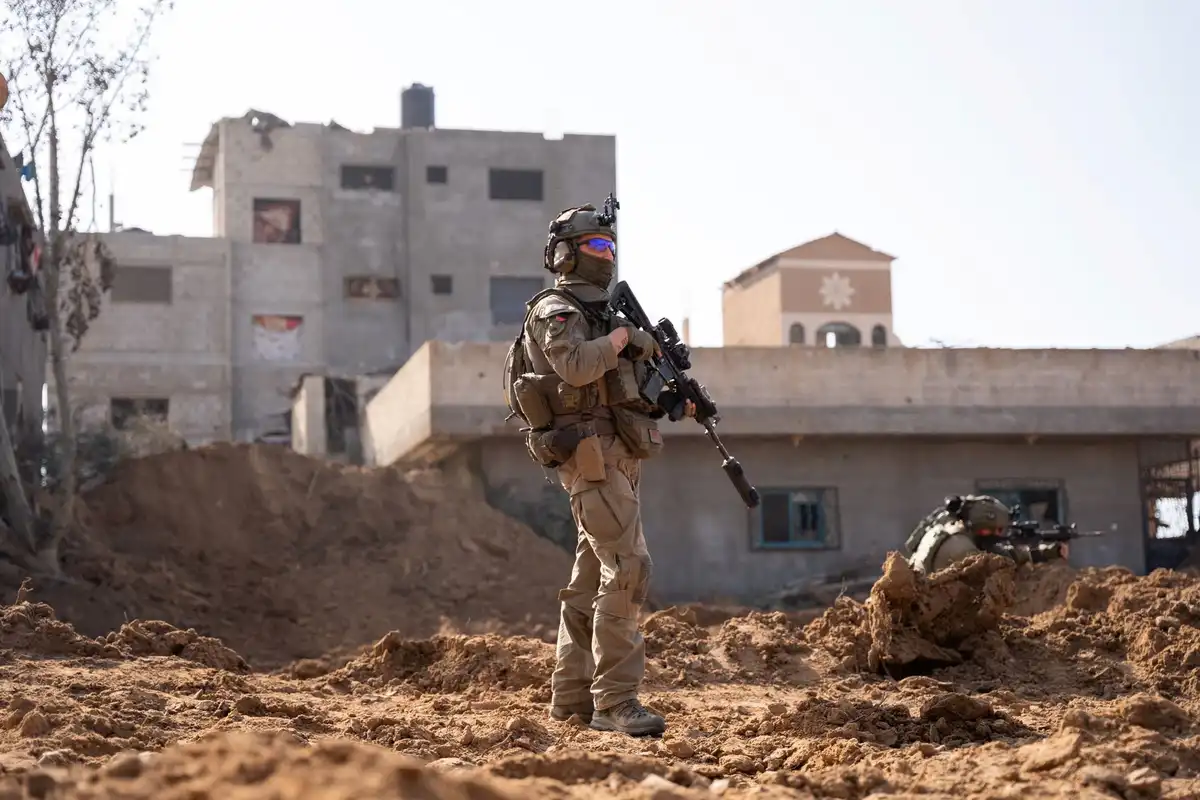
Source: Media Part

ARAB AND WORLD

Sat 13 Jan 2024 11:56 am - Jerusalem Time

Jews in Congress meet with the Israeli ambassador to object to Ben Gvir and Smotrich's statements

American media said that Jewish members of Congress met with the Israeli ambassador to Washington to object to the statements of Ministers Itamar Ben Gvir and Bezalel Smotrich regarding the displacement of Palestinians.


Axios reported that Jewish members of the US House of Representatives met with Israeli Ambassador Michael Herzog to discuss Ben Gvir and Smotrich’s statements, warning that these statements not only harm the efforts made to reach a hostage deal and stop the fighting in Gaza, but they also harm public opinion. America towards Israel.


According to the American website, the meeting held last Thursday included 15 Jewish members belonging to the Democratic Party in the House of Representatives, including those who strongly support Israel, and others who are more critical of the right-wing government in Israel.


The website quoted the Israeli embassy in the United States as saying, “Ambassador Herzog maintains regular contact with members of the US Congress, which allows him to keep them informed of the official policy of the Israeli government, but we do not comment on the content of these private discussions.”


According to "Axios", some representatives revealed the course of the meeting, as Representative Jan Schakowski said that some lawmakers stressed "the necessity of expelling Ben Gvir and Smotrich from the government," while Representative Brad Schneider said that "while the comments of the two ministers were the main focus of the meeting, a whole list of ill-advised statements was presented to members of the Knesset.”


A source familiar with the meeting said that Herzog responded to the concerns of American lawmakers by recalling the statement of Israeli Prime Minister Benjamin Netanyahu, who stressed that Israel "does not seek to forcefully displace the Palestinians, or reoccupy Gaza."


Three members of the US House of Representatives told Axios that Herzog also stressed that “Ben Gvir and Smotrich are allowed to speak freely, but their statements do not necessarily represent the government’s official position.”


The Israeli Minister of Finance, Bezalel Smotrich, said earlier that Israel must take steps to encourage the migration of the majority of Palestinians in Gaza to other countries, while Ben Gvir expressed his support for such a step, saying that it would allow Israel to rebuild Jewish settlements in Gaza. .


In response to these statements, the United Nations expressed “deep concern,” and the High Commissioner for Human Rights, Volker Türk, stated that “international law prohibits the forcible transfer of persons who are protected within occupied territory, or their deportation from it.”


Source: Axios

OPINIONS

Sat 13 Jan 2024 11:32 am - Jerusalem Time

“Falseness lasts an hour, and truth lasts until end of time”

op-ed Al Quds dot com

op-ed Al Quds dot com

Opinion Writer

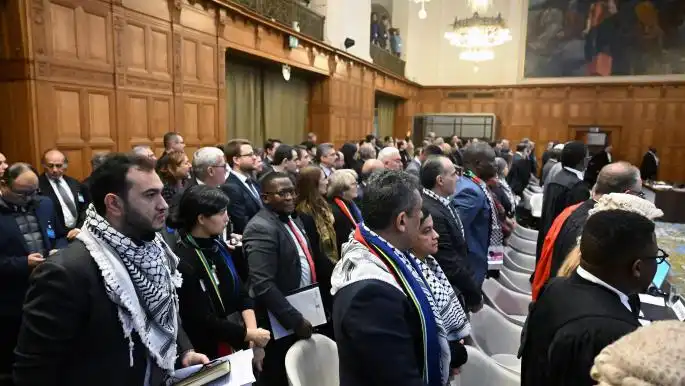
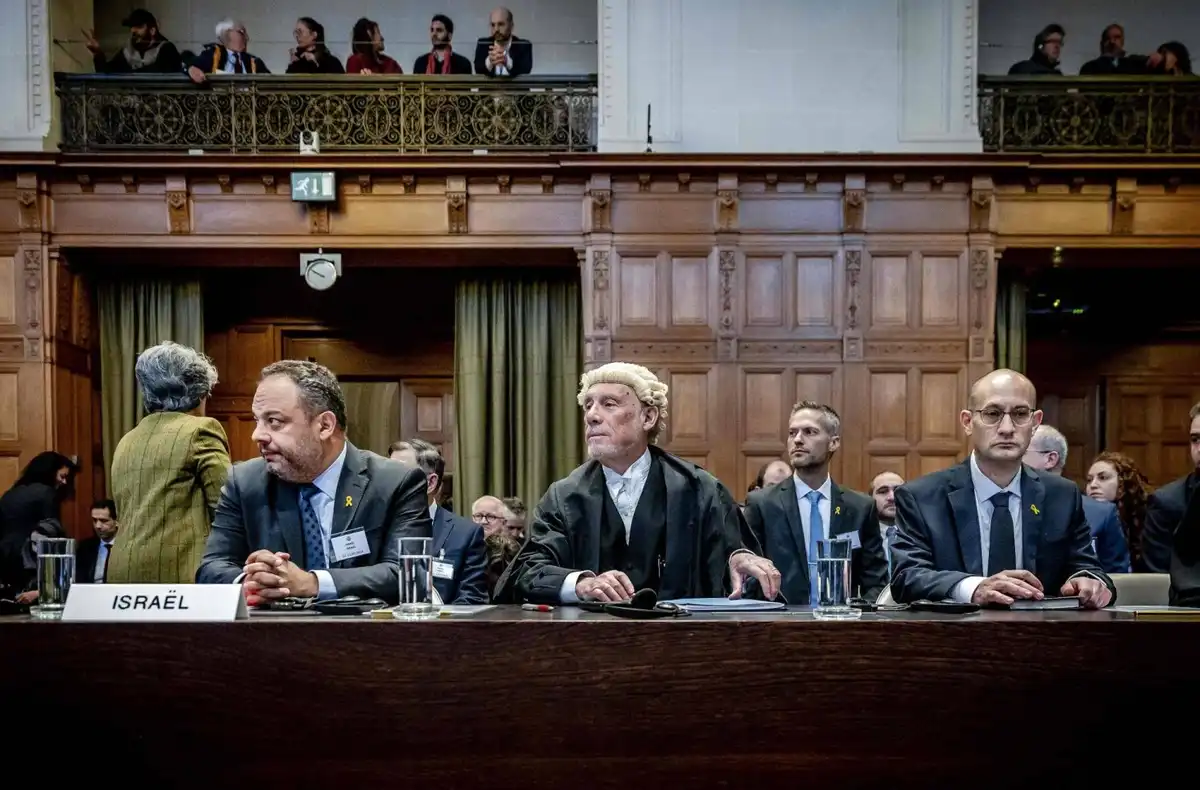
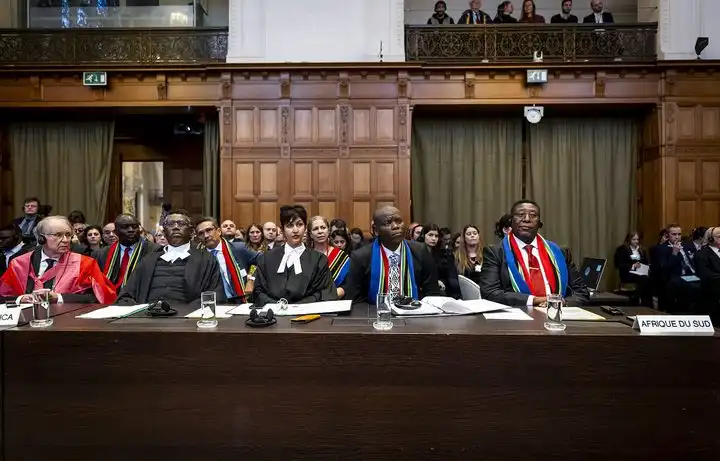
Yesterday, the world watched the second day of the International Court of Justice sessions in The Hague, when Israel submitted its responses to South Africa’s lawsuit regarding committing genocide against the Palestinians in the Gaza Strip.
Israel failed in its responses, as South Africa did not leave it with a single loophole in a tight and elaborate file and did not give it any opportunity to achieve an element of surprise for the judges who heard the lawsuit and the Israeli objections, and they were left with issuing timely decisions and then waiting for a longer period for the issuance of the decision regarding the genocide.
Israel has asked the judges of the Court of Justice to drop the genocide case brought against it by South Africa, which asked the UN court to order an immediate halt to the Israeli military campaign in the Gaza Strip.
In its response to the accusations made by South Africa before the court on Thursday, Israel said yesterday that the demand to stop its attack against the Palestinian Islamic Resistance Movement (Hamas) in Gaza has no basis because it will allegedly lose its freedom to work to protect the Israelis and repel any military attack from the Gaza Strip, in addition to preventing the return of 136 hostages.
Israel claimed that its response to the attack of last October 7 was legitimate and claimed that it respected international law and that the Israeli army “did not violate the rules of war, and there will be an Israeli judicial investigation and there was no intention to carry out genocide.”
Many questions were raised after the Israeli interventions. There is no doubt that the most important of them revolves around the massive scale of destruction and the very large number of Palestinian dead. Does this confirm the freedom of action, as Israel claims, to protect the Israelis? Does self-defense require the demolition of about half a million Palestinian facilities on the heads of their families and owners? In light of its monitoring, can these actions be considered an army of occupation that has adopted the rules of international action and has not violated the law?
Yesterday, Israel failed to respond to what we presented. (The Minister of Justice of South Africa) added: We adhere to the facts of the law and the evidence that we presented and are confident that they confirm the existence of an intention to carry out genocide against the Palestinians.
Can Israel ignore the statements of its officials? Most importantly, according to the Genocide Convention, nothing justifies the way Israel is waging war, which confirms the existence of genocide.
Is it reasonable for the resistance in Gaza to kill this tumultuous number of civilians, and for Israel to attempt a circumvention that has been exposed and whose claims have been refuted, to give itself justification for bombing shelter centers, displaced people, hospitals, schools, UNRWA headquarters, mosques, churches, and others? It says and claims that Hamas misused these headquarters and that it is the reason for the high number of casualties.
There are many weak points of Israeli arguments in this file, and there is no doubt that the confidence of South Africa and its legal team makes us feel comfortable, as it gave a press conference yesterday in which it confirmed that it will win the case.
South Africa, which had suffered for many years of persecution, racism, and discrimination, triumphed in the end, and here it is a country that takes the scales of justice as an approach in managing its affairs. When it addressed this issue and advocated for Palestine and its people, it inevitably started from the common saying “Falseness lasts an hour, and truth lasts until end of time.”

 The round of injustice will not last, O Israel, and no matter how much darkness prevails, the light will shine in the end to shed light on the justice and integrity of our cause.

ARAB AND WORLD

Sat 13 Jan 2024 10:12 am - Jerusalem Time

Jewish academic: 3 elements will influence international justice judges in the case against Israel

Jewish academic and researcher in the Palestinian-Israeli conflict, Norman Finkelstein, said that there are three basic elements that will influence every judge when he makes a decision regarding South Africa’s lawsuit before the International Court of Justice, which accuses Israel of committing genocide in its war on the Gaza Strip.


Thursday witnessed the start of trial sessions on charges of committing genocide in Gaza, brought by South Africa. The 84-page lawsuit indicates that Israel failed to provide basic food, water, medicine and fuel, and provide shelter and other humanitarian assistance to the residents of the Strip.


Finkelstein explained, in an intervention on Al Jazeera, that the first of these elements is represented in what is revealed by the legal facts presented by the parties in the trial, and the second is in the political pressures that will be exerted on each member by his state, and finally, his credibility as a judge in the court and the credibility of the court in general, if a ruling is issued that contradicts popular perceptions of the case


He did not rule out that the Jewish lobbies would exert pressure not to issue a ruling against Israel, but he believes that this pressure will be exerted at the level of the various governments towards their judges.


Regarding whether Israel’s image would be damaged if a ruling was issued against it by the court, the Jewish academic confirmed that the image had already been permanently damaged, due to the genocide it was committing in Gaza, and then just because the case was being considered before the court even if no ruling was issued against it.


Finkelstein believes that if a ruling is issued by the International Court of Justice against Israel, this will cause “a certain degree of discomfort” for US President Joe Biden and his Secretary of State, Anthony Blinken, as he put it.


Source: Al Jazeera

ARAB AND WORLD

Sat 13 Jan 2024 10:00 am - Jerusalem Time

Genocide lawsuit: Experts and legal experts consider Egypt’s intervention necessary

Experts and professors of law and constitution stressed the necessity of Egypt’s intervention in the genocide lawsuit filed by the state of South Africa against the Israeli occupation state at the International Court of Justice in The Hague, and that this supports the position of the case and increases its importance and weight at the international and legal levels.


Although the International Court of Justice heard over the course of two days, last Friday and Thursday, both sides of the genocide lawsuit, the State of South Africa as its first resident party, and the Israeli occupation’s response as a second party defendant, Egypt has the right to join the lawsuit until the full hearing is closed, and reports are submitted. The final announcement is made by the court officially closing the door to pleadings and hearings.


The court is scheduled to send letters to member states to take an opinion on the genocide case, if those states want to comment on it, or have the right to abstain. In the event that responses are received or a response is abstained from, the International Court of Justice declares closing the door to intervention or responses from states, and considers all responses, if any, or memorandums in the event of intervention in the case.


Raafat Fouda: The spirit and rules of the Egyptian Constitution require Cairo to intervene in such a lawsuit


Professor and head of the Department of Public Law and Professor of Constitutional Law at Cairo University, Raafat Fouda, confirmed in statements to Al-Arabi Al-Jadeed that the spirit and rules of the Egyptian Constitution require Cairo to intervene in such a lawsuit.


He added: “If Egypt wants to play an Arab role, and that it is the mother of the Arabs and the largest Arab country, and that it is the one who carried the Palestinian cause, then it must continue its journey in this regard by intervening in the genocide lawsuit. The state of South Africa has nothing to do with the lawsuit except that it encourages the Palestinian cause, so what What do you think about the Egyptian state and its history in the case?


Why did Egypt not move against Israel before “International Justice”?

Fouda explained that any country in the world has the right to intervene in the case, as the International Court of Justice only accepts requests from the state, whether it is a request for an original case or an intervention in the case. Therefore, if Egypt decides to intervene in the case, it will join the team for the State of South Africa and submit Her legal notes and evidence of genocide.


Egypt is directly affected by the genocide lawsuit

The law professor added: “It is not even required in such cases related to genocide that you be a neighbor, or harmed, or not harmed, etc., let alone Egypt, which is an already affected country, and which is the main goal of the Israeli occupation state as it seeks to displace the population of Gaza to Sinai. Therefore, Egypt is affected by the war, because the Rafah crossing was bombed 4 times, and therefore Egypt is directly affected by the genocide.”


Fouda explained that the door to Egypt is open even after the court finishes hearing the Israeli occupation state’s response to its accusation of committing genocide crimes against the Palestinians.


Regarding his expectation that Egypt would intervene in the lawsuit, Fouda predicted that this would not happen “because Egypt has certain relations with Israel, and therefore it does not want to anger Israel.”


Egypt's accession to the genocide lawsuit gives the issue weight

Human rights lawyer Nasser Amin confirmed to Al-Araby Al-Jadeed that Egypt’s joining the lawsuit gives the case its weight towards proving the right of the Israeli occupation state to commit genocide.


He added that Egypt is a signatory to the Genocide Convention, and under the International Court of Justice system, it has the right to initiate a lawsuit or join it after the initial procedures for a lawsuit have already been initiated, just like any member state of the United Nations. Intervention in this case is by joining and submitting memorandums of support in the case.


Nasser Amin: Egypt’s accession to the genocide lawsuit gives the case its weight towards proving guilt against the occupying state.


The human rights lawyer continued that Egypt's intervention is important, and the more countries intervening, the more important it is and the support for the position of condemnation against Israel, indicating that the main effort has already been made in establishing the case and its pleadings, and that in the next stage the court is supposed to send, after hearing the Israeli party, To the states parties to the Genocide Convention, including Egypt, to hear its opinion on the case. He explained that the strongest intervention is by joining the lawsuit, which is what is required, and not just hearing opinions.


Egypt's intervention in the genocide lawsuit is important for its national security

Constitutional jurist and legal expert Issam Al-Islambouli explained to Al-Araby Al-Jadeed that Egypt’s intervention in the case at this stage is very important in the Palestinian issue in general, and represents national security for Egypt in the face of dangers on the border, and increases support for the case’s position in reaching a conviction for the leaders of the case. Israeli occupation.


He added that the lawsuit could lead to issuing a decision against the Prime Minister of the Israeli occupying state, Benjamin Netanyahu, and the leaders of the army and the entire occupying state, and issuing a decision deeming them war criminals and perpetrators of “genocide” crimes and being prosecuted internationally.


Islambouli explained that this matter happened with the ousted Sudanese President Omar al-Bashir, and it also happened with Russian President Vladimir Putin, pointing out that whoever is sentenced is pursued and is wanted in all countries, and that once the ruling is issued, it is assumed that international law is adhered to and the ruling is implemented.

Source: Al-Araby Al-Jadeed

PALESTINE

Sat 13 Jan 2024 9:47 am - Jerusalem Time

West Bank: Since 7 October 2023 and as of 12 January 2024, 333 Palestinians have been killed

Since 7 October 2023 and as of 12 January 2024, 333 Palestinians have been killed, including 84 children, across the West Bank, including East Jerusalem. Additionally, two Palestinians from the West Bank were killed while carrying out an attack in Israel on 30 November. 

Of those killed in the West Bank (333); 324 were killed by Israeli forces, eight by Israeli settlers and one by either Israeli forces or settlers. 

So far in 2024 (as of 16:00 on 12 January), 24 Palestinians, including three children, have been killed. 

The number of Palestinians killed in the West Bank, including East Jerusalem, in 2023 (507) marks the highest number of Palestinians killed in the West Bank since OCHA started recording casualties in 2005.

ARAB AND WORLD

Sat 13 Jan 2024 9:35 am - Jerusalem Time

Israeli experts advise Netanyahu to cease fire before the Hague decision

They emphasized that the damage was done as soon as the court was in session and it was time to work to mitigate it.

While the Israeli government and the Hebrew media celebrate the “distinguished professional performance” of the defense team before the High Court of Justice in The Hague, other voices based on professionalism and objectivity are rising, calling on officials to come down to the ground and take a responsible decision to stop the war as the best way out for the Hebrew state from the impasse it has placed itself in. in it.


They confirm that, regardless of the court's decision, which will be issued several days later, the harm to Israel has been caused. Although they are convinced that the court’s decision will not convict Israel of genocide against the Palestinians, as this court has not issued any decision in this spirit since its establishment in 1945, they believe that the damage was done as soon as South Africa’s lawsuit was filed, and the accompanying publication of reports and photos and various documents and information. 


Whatever the decision that will be issued by the court, it has attached to Israel the stigma of committing criminal acts that claimed the lives of many Palestinian civilians, and for which the responsibility is borne by foolish Israeli officials who made foolish statements that suggest brutality, and made people everywhere in the world link these statements with actions that did or did not occur. But it is accompanied by terrible reports, pictures and scenes of killing and massive destruction in the Strip that are published in the media and social networks around the world.


The most prominent person who spoke in this spirit was the world-renowned Israeli legal expert, Professor Mordechai Kremnitzer, who wrote an article in the newspaper “Haaretz” on Friday, in which he said that the International Court should not issue a decision condemning Israel alone, because in this case “it will tie Israel’s hands but It will maintain Hamas's aggressive operating space, and will position itself on the side of the aggressor, on the side of genocide and crimes against humanity, and against the victims of Hamas' attacks in the past, present and future. The most dangerous thing is that the court will position itself on the side of the kidnappers and against the kidnapped, as human beings and victims of a serious crime, and will seek against the natural right to self-defense.”


Although Kremnitzer attacked South Africa for its attempt to “absent Hamas” from the case, and hoped that the court would issue a lenient decision against Israel, he warned the Israeli government against reckless positions in responding to the court, and said: “It would not be right to fight against decisions aimed at Ensuring humanitarian supplies to the residents of Gaza, and imposing on Israel the duty to combat incitement to genocide.” 


Here the Israeli expert vented his anger at the Israeli government and said: “If decisions like these lead to the fall of the government, we will not respond with bitter crying. But the problem that Israel faces in The Hague is mainly psychological. Simply put, for someone who does not live here and is a moral person, fighting is a harmful situation that is best avoided. For this very reason, Israel is obligated to put at the top of its attention the necessity of preventing a decision to stop the fighting.”


Kremnitzer said that there are officials in Israel who issued statements calling for genocide against the Palestinians, which the South African legal team presented in broad and detail before the court, and this “disaster was brought upon our heads, largely by people holding the highest positions, with their stupidity, arrogance, and human weakness,” and the Israeli government bears it and also responsible for this miserable failure. The minimum that could have been expected, but could not be achieved, was for the Prime Minister to hit the table and stop the cacophony of voices calling for genocide. Because the Prime Minister is not only one of those directing this discord, but he himself described the Hamas movement as “Amalek,” a description borrowed from biblical myths to describe enemies who seek to exterminate the Jews, and who must be exterminated, elderly and children.


He added: “This is an offensive use of the Jewish religion in order to legitimize the most dangerous abominations in its name. This religiosity in the army and outside it must be uprooted from its roots. The army cannot allow itself to surrender to this by ignoring it, as there are widespread racist tendencies and ideas within the ranks of the Israeli army. It is important to examine whether the spirit of this army withstands the evil winds that blow and continue to beat in the hearts of the soldiers... There has been a weakness in Israel in everything related to our human nature as a society. The occupation and strangulation around the neck of Gaza is the basis of impurity here. It is a good thing that South Africa has penetrated our consciousness. If we continue to be peace rejecters, and this includes opposition parties, we will end up being expelled from the city (the international community), like the apartheid regime in South Africa at the time.”


Israel defended its war in Gaza before the International Court of Justice on Friday, and strongly denied South Africa's accusations against it before the court of committing "genocide" against the Palestinian people. She said that the military actions in Gaza were in self-defense, and described South Africa's accusations as "grossly distorted." A day after Prime Minister Benjamin Netanyahu criticized South Africa's accusations as hypocrisy that "cries to the heavens," Israel strongly denied the accusations made by South Africa in one of the largest cases ever brought before an international court, a case that has attracted international attention and protesters from both sides to court.

The Israeli defense, led by the British expert in international law, Professor Malcolm Shaw, relied on drawing the court’s attention to the fact that South Africa almost ignored in its lawsuit the root of the problem, which is the Hamas attack on Israeli towns on October 7th. He stressed that this attack was tantamount to an attempted genocide, and that South Africa's blatant disregard for it indicates hypocrisy and contradicts the principles of the court. He said: “Israel did not want this war, and did not launch a preemptive attack on (Hamas) even though it knew its goals were to annihilate Israel... The ongoing war on Gaza is merely a response to Hamas’s terrorist actions with the aim of preventing it from regaining the strength that would allow it to repeat the attack on the towns surrounding Gaza." He referred to the tunnels as a destructive weapon that Hamas planned to use to attack Israel. He stressed that its decision to destroy hypocrisy was an act of self-defense, and this only happens by demolishing buildings. It worked hard to avoid harming civilians in Gaza, so it asked them to leave temporarily.


The Israeli representative claimed that civilians were injured in areas where Hamas used them (civilians) as human shields.


Regarding statements issued by government ministers and members of the Knesset, such as extremists Itamar Ben Gvir and Bezalel Smotrich, the Israeli team tried to clarify that the importance of these quotes and statements is less than what is said in South African arguments, and that these statements do not affect decision-making, and are not translated on the ground. reality". He said that the Israeli prosecution is studying the possibility of taking action against inciting politicians.


According to legal sources in Tel Aviv, members of the Israeli team following up on this court differ on the issue of issuing a precautionary decision by the court. Some of them are convinced that there is a high possibility of issuing an order to stop the war, especially after the scenes shown by South Africa, which showed displacement, destruction, and the sectioning of premature babies. In Al-Shifa Hospital, bombing schools and churches, and destroying historical monuments. But there is a section of them that believes that such a possibility is unthinkable, and that the greatest possibility is the issuance of an order requiring the change of the humanitarian aid system to become larger and more effective, the return of the displaced population to their areas, and the demand that Israel not control the issue of aid, and not impose a siege on Gaza.


ARAB AND WORLD

Sat 13 Jan 2024 9:30 am - Jerusalem Time

Griffiths calls on Security Council to end the war on Gaza: “A scar on humanity’s forehead”

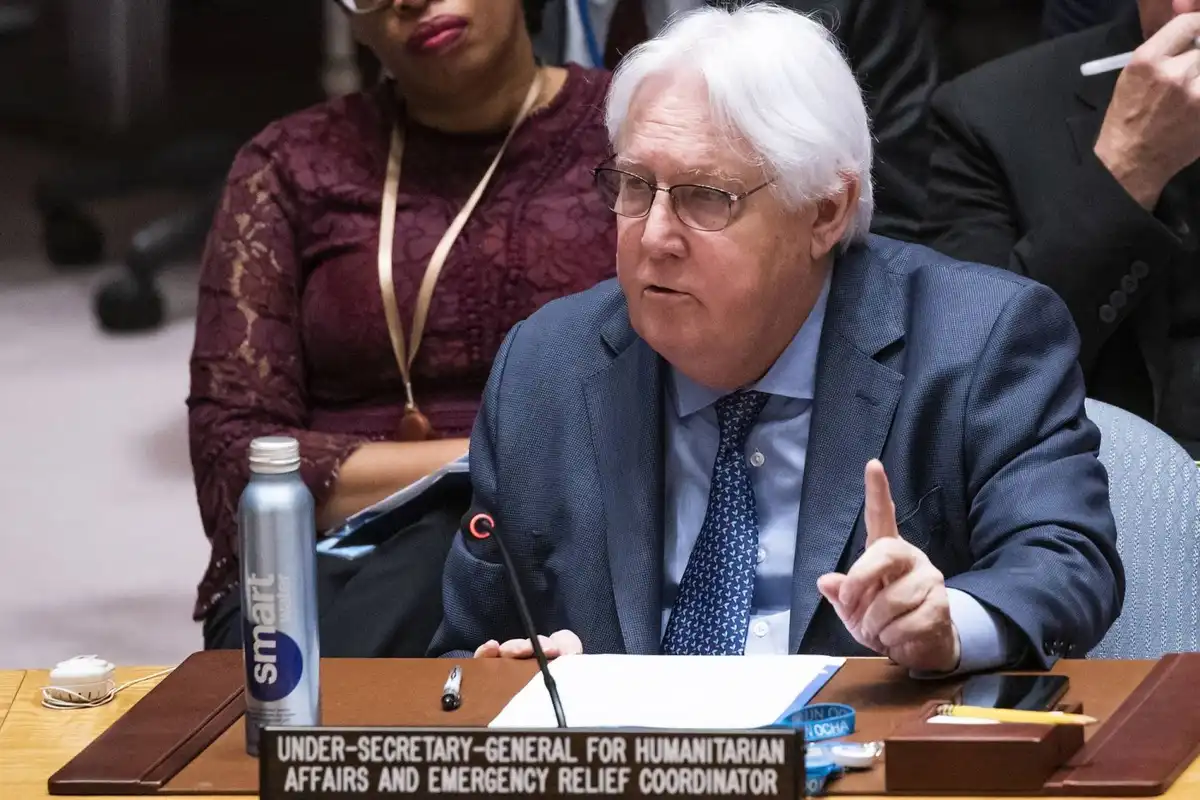
The United Nations Under-Secretary-General for Humanitarian Affairs and Emergency Aid Coordinator, Martin Griffiths, called on members of the Security Council to take “urgent measures” to stop the war in Gaza, expressing “serious concerns” about the forced displacement of Palestinians to other countries, and this is “absolutely prohibited.” Under international law.


At the beginning of the session requested by Algeria, as the only Arab member of the Security Council, to discuss Israeli threats to displace Palestinians from Gaza, Griffiths spoke and first pointed to the passage of about a hundred days of war that “is taking place with almost no regard for its impact on civilians,” describing the situation. In Gaza, he described it as “horrifying as Israeli military operations continue unabated.”


He cited as evidence the “tens of thousands of deaths and injuries, the vast majority of them women and children,” since October 7, in addition to “the forced displacement of 1.9 million civilians.” That is equivalent to 85 percent of the total population.
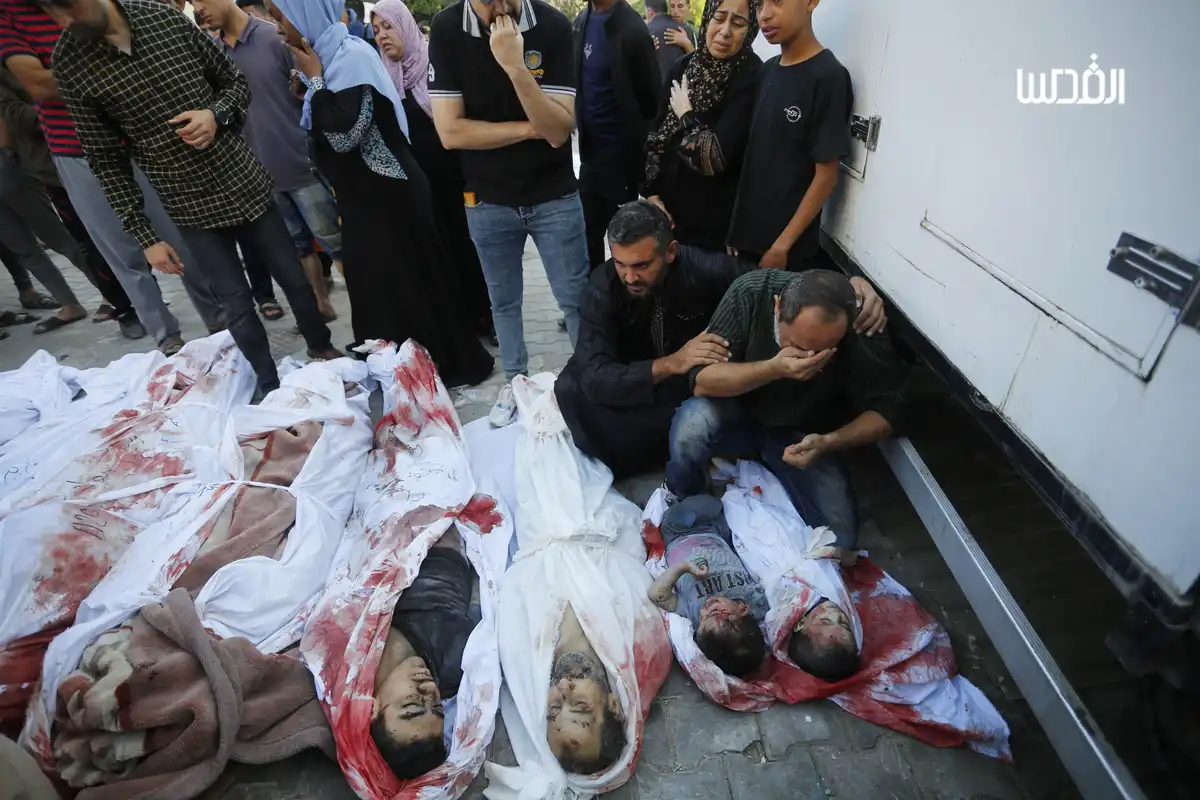

He said: “It is very unfortunate that facilities vital to the survival of the civilian population are subjected to relentless attacks,” adding that Israel bombed 134 facilities belonging to the United Nations Relief and Works Agency for Palestine Refugees in the Near East (UNRWA), in which 148 of its workers and non-governmental organizations were killed. government in Gaza.


The chief UN official for humanitarian affairs stressed that “there is no safe place in Gaza,” stressing that “a decent human life has become almost impossible,” adding that Rafah, whose population before the crisis was only about 280,000 people, is now home to one million displaced people. “And more continue to arrive every day.”


He stressed that “it is currently difficult to imagine that people will or can return to the north.” He acknowledged that “our efforts to send humanitarian convoys to the north were met with delays, rejection, and impossible conditions,” citing colleagues who were able to reach northern Gaza recently, what he called “scenes of absolute horror,” where “corpses are scattered on the road, and people who show clear signs of starvation are stopped.” 


While he said that providing humanitarian aid throughout Gaza is “almost impossible,” he stressed that “our possibility of reaching Khan Yunis and the central region is largely absent.” As for the south, “expanding the attack on Rafah would represent a serious challenge to the already exhausted humanitarian operations.”


He warned that “the spread of hostilities towards the south would significantly increase the pressure on the mass exodus of people to neighboring countries,” revealing that some countries “have already offered to host civilians who wish to leave Gaza for their protection.”


He expressed “deep concern” about recent statements by Israeli ministers regarding plans to encourage the mass transfer of civilians from Gaza to third countries under the slogan of “voluntary transfer,” explaining that these statements “raise serious concerns about the possibility of forced mass transfer or forced deportation of the Palestinian population from the Gaza Strip.” “This is strictly prohibited under international law.”


Referring to the Hamas attacks on October 7 and their results, Griffiths expressed “deep concern about the risk of the war spreading to the regional level,” noting the “increase in tension and hostilities” in the West Bank.


He warned of “increasing tensions and military activity in Lebanon, the Red Sea and Yemen,” adding that “we cannot allow this matter to spread.” Fearing “unimaginable consequences.” He called on the Security Council to take “urgent measures to end this war.”


The US Permanent Representative to the United Nations, Linda Thomas-Greenfield, said that her country “completely rejects” the statements of some Israeli ministers and representatives calling for the displacement of Palestinians out of the Gaza Strip.


Her Russian counterpart, Vasily Nebenzia, stressed that “Israel’s indiscriminate use of force in the Gaza Strip is linked to many serious violations of international law.” He considered that the United States and its allies “expanded the scope of the conflict to include the entire region after the attacks on Yemen.”


ARAB AND WORLD

Sat 13 Jan 2024 9:25 am - Jerusalem Time

In 100 Days, Israel-Hamas War Has Transformed the Region and No Signs of Ending


Sunday marks 100 days that Israel and Hamas have been at war. The war already is the longest and deadliest between Israel and the Palestinians since Israel’s establishment in 1948, and the fighting shows no signs of ending.

Israel declared war in response to Hamas’ unprecedented cross-border attack on Oct. 7 in which the militant group killed some 1,200 people, mostly civilians, and took 250 others hostage. It was the deadliest attack in Israel’s history and the deadliest for Jews since the Holocaust.

Israel responded with weeks of intense airstrikes in Gaza before expanding the operation into a ground offensive. It says its goal is to crush Hamas and win the release of the more than 100 hostages still held by the group.

The offensive has wrought unprecedented destruction upon Gaza. But more than three months later, Hamas remains largely intact, and hostages remain in captivity. The Israeli military says the war will stretch on throughout 2024.

Here are five takeaways from the first 100 days of a conflict that has upended the region.

ISRAEL WILL NEVER BE THE SAME The Oct. 7 attack blindsided Israel and shattered the nation’s faith in its leaders.
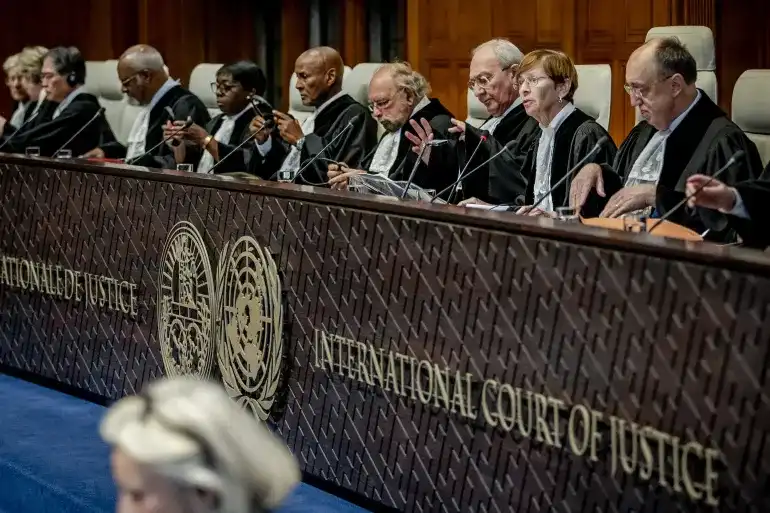
While the public has rallied behind the military’s war effort, it remains deeply traumatized. The country seems to be reliving Oct. 7 — when families were killed in their homes, partygoers gunned down at a music festival and children and older people abducted on motorcycles — every day.

Posters of the hostages who remain in Hamas captivity line public streets, and people wear T-shirts calling on leaders to “Bring Them Home.”

Israeli news channels devote their broadcasts to round-the-clock coverage of the war. They broadcast nonstop tales of tragedy and heroism from Oct. 7, stories about hostages and their families, tearful funerals of soldiers killed in action and reports from Gaza by correspondents smiling alongside the troops.

There is little discussion or sympathy over the skyrocketing death toll and deteriorating humanitarian situation in Gaza. Plans for postwar Gaza are rarely mentioned.

One thing has remained constant. While chastened Israeli security officials have apologized and signaled that they will resign after the war, Prime Minister Benjamin Netanyahu remains firmly entrenched.

Despite a sharp drop in his public approval ratings, Netanyahu has resisted calls to apologize, step down or investigate his government’s failings. Netanyahu, who has led the country for almost all of the past 15 years, says there will be a time for investigations after the war.

Historian Tom Segev said the war will shake the country for years, and perhaps generations, to come. He said the failures of Oct. 7 and the inability to bring the hostages home have fomented a widespread feeling of betrayal and lack of faith in the government.

“Israelis like their wars to go well. This war doesn’t go so well,” he said. “Lots of people have the feeling that something very, very deep is wrong here.”

GAZA WILL NEVER BE THE SAME Conditions before Oct. 7 were already difficult in Gaza after a stifling blockade imposed by Israel and Egypt following Hamas’ takeover in 2007. Today, the territory is unrecognizable.

Experts say the Israeli bombing is among the most intense in modern history. Gaza health authorities say the death toll already has eclipsed 23,000 people, roughly 1% of the Palestinian territory’s population. Thousands more remain missing or badly wounded. Over 80% of the population has been displaced, and tens of thousands of people are now crammed into sprawling tent camps on small slivers of space in southern Gaza that also come under Israeli fire.

Jamon Van Den Hoek, an Oregon State University mapping expert, and colleague Corey Scher of the City University of New York's Graduate Center, estimate that roughly half of Gaza’s buildings have likely been damaged or destroyed, based on satellite analysis.

“The scale of likely damage or destruction across Gaza is remarkable,” Van Den Hoek wrote on LinkedIn.

The human cost is equally mind-boggling. The United Nations estimates that about one-quarter of Gaza’s population is starving. Just 15 of Gaza’s 36 hospitals are partially operational, according to the UN, leaving the medical system close to collapse. Children have missed months of school and have no prospects for returning to their studies.

“Gaza has simply become uninhabitable,” wrote Martin Griffiths, the UN’s humanitarian chief.

IT’S ALL CONNECTED The war has rippled across the entire Middle East, threatening to escalate into a broader conflict pitting a US-led alliance against Iranian-backed militant groups.

Almost immediately after the Hamas attack, Iranian-backed Hezbollah militants in Lebanon began striking Israel, triggering Israeli retaliatory attacks.

The back-and-forth fighting between Israel and Hezbollah has not erupted into a full-blown war. But it has come perilously close, most recently after a Jan. 2 airstrike blamed on Israel that killed a top Hamas official in Beirut. Hezbollah responded with heavy barrages on Israeli military bases, while Israel has assassinated several Hezbollah commanders in targeted airstrikes.

At the same time, Iranian-backed Houthi militias in Yemen have carried out a series of attacks on civilian cargo ships in the Red Sea. Meanwhile, Iranian-backed militias have attacked US forces in Iraq and Syria.

The United States has dispatched warships to the Mediterranean and Red Seas to contain the violence.

Late Thursday, the US and British militaries bombed more than a dozen Houthi targets in Yemen. The Houthis vowed to retaliate, raising the prospect of an even wider conflict.

ISRAEL CAN'T IGNORE THE PALESTINIANS Throughout his time in office, Netanyahu has repeatedly attempted to sideline the Palestinian issue.

He has rejected various peace initiatives, dismissed the internationally recognized Palestinian Authority as weak or irrelevant, and promoted policies that left Palestinians divided between rival governments in Gaza and the West Bank.

Instead, he has tried to normalize relations with other Arab countries in hopes of isolating the Palestinians and pressuring them to accept an arrangement that falls short of their dreams of independence.

The Hamas attack, along with a spike in violence in the West Bank, have put the Israeli-Palestinian conflict back on center stage. The war now tops the newscasts worldwide, has prompted four visits by Blinken to the region and resulted in a genocide case against Israel in the UN world court.

“The painful developments of the last 100 days have proven beyond doubt that the Palestinian issue and the Palestinian people cannot be ignored,” said Nabil Abu Rudeineh, spokesperson for Palestinian President Mahmoud Abbas.

THERE’S NO POSTWAR PLAN As the war drags on and the death toll mounts, there is no clear path for when the fighting will end or what will follow.

Israel says Hamas can play no part in Gaza’s future. Hamas says that’s an illusion.

The US and the international community want a revitalized Palestinian Authority to govern Gaza, and steps toward a two-state solution. Israel objects.

Israel wants to maintain a long-term military presence in Gaza. The US does not want Israel to reoccupy the territory.

Reconstruction will take years. It is unclear who will pay for it or how the required materials will enter the territory through its limited crossings. And with so many homes destroyed, where will people stay during this lengthy process?

“Our lives 100 days ago was excellent. We had cars and houses,” said Halima Abu Daqa, a Palestinian woman who was displaced from her home in southern Gaza and is now living in a tent camp.

“We have been deprived of everything,” she said. “Everything has changed and nothing remains.”

Source: Alsharq Alawsat


ARAB AND WORLD

Sat 13 Jan 2024 9:18 am - Jerusalem Time

US Struggles to Sway Israel on Its Treatment of Palestinians. Why Netanyahu Is Unlikely to Yield

President Joe Biden’s administration keeps pressing Israel to reengage with Palestinians as partners once fighting in Gaza is over and support their eventual independence. Prime Minister Benjamin Netanyahu keeps saying no.

Even on actions to alleviate the suffering of Palestinian civilians, the two allies are far apart.

That cycle, frustrating to much of the world, seems unlikely to end, despite US Secretary of State Antony Blinken's fourth urgent diplomatic trip this week to the Middle East since the Israel-Hamas war started. Though the United States, as Israel’s closest ally and largest weapons supplier, has stronger means to apply pressure on Israel, it shows no willingness to use them.

For both Netanyahu and Biden, popular opinion at home and deep personal conviction in the rightness of Israel’s cause, and each man’s battle for his own short-term political survival, are all combining to make it appear unlikely that Netanyahu will yield much on the US demands regarding the Palestinians, or that Biden will get much tougher in trying to force them.

Support of Israel is a bedrock belief of many American voters. Biden's presidential reelection bid this year puts him up against Republicans vying to outdo one another in support for Israel. For his part, Netanyahu is fighting to stay in office in the face of corruption charges.

Some experts warn it's a formula that may lock the US into deeper military and security engagement in the Middle East as hostilities worsen and Palestinian civilians continue to suffer.

“It’s a self-defeating policy,” said Brian Finucane, a former policy adviser in the State Department on counterterrorism and the use of military force.

“What may be expedient in terms of short-term domestic politics may not be in the long-term interests of the United States,” said Finucane, who is now a senior adviser to the International Crisis Group research organization. “Particularly if it results in the United States involving itself in further unnecessary wars in the Middle East.”

The administration says Biden's approach of remaining Israel’s indispensable military ally and supporter is the best way to coax concessions from the often intractable Netanyahu, whose government ministers were trumpeting their rejection of some of the US requests even as Blinken was still in the region.

Since Hamas attacked on Oct. 7, the US has rushed arms and other aid to Israel, deployed forces to the region to confront escalated attacks by Hamas' Iran-backed allies, and quashed moves in the United Nations to condemn Israel's bombing of Palestinian civilians.

On Thursday US time, the same day Blinken was wrapping up his diplomatic mission, US warships and aircraft hit targets in Yemen, hoping to quell attacks that the country's Iran-allied Houthi militias have launched on commercial shipping in the Red Sea since Israel started its devastating offensive in Hamas-controlled Gaza.

American officials claim modest success for Blinken's latest diplomatic efforts. He secured limited, conditional support from Arab leaders and Türkiye for planning for reconstruction and governance in Gaza after the war ends. But prospects are uncertain because Israel’s far-right government is not on board with several key points.

The Biden administration has placed a particular premium on Israel reducing the number of civilian casualties in its military operations. The US urging seemed to have some effect in recent days, as Israel began to withdraw some troops from northern Gaza and moved to a less-intensive campaign of airstrikes.

Israel has been not just uncooperative, but also openly hostile toward some smaller American requests, such as when Blinken pressed Israel to turn over the tax revenue it collects on behalf of the Palestinian Authority, which Israel has refused to do.

“We will continue to fight with all of our might to destroy Hamas, and we will not transfer a shekel to the PA that will go to the families of Nazis in Gaza,” Finance Minister Bezalel Smotrich wrote on X, in a message welcoming Blinken to Israel on Tuesday.

But the biggest US disagreement with Israel has been with Netanyahu’s refusal to consider the creation of a Palestinian state. Arab states say a commitment on that point is essential to convincing them to participate in and contribute to postwar planning for Gaza.

Israelis and Americans are far apart on the matter.

The Palestinians have been divided politically and geographically since Hamas, a militant group sworn to Israel’s destruction, overran Gaza in 2007, leaving internationally backed Palestinian President Mahmoud Abbas with self-rule over isolated enclaves in the Israeli-occupied West Bank. The US wants Abbas’ Palestinian Authority to undergo administrative reforms before setting up a unified government in Gaza and the West Bank, as a precursor to statehood.

Blinken and his aides believe that Netanyahu — or his successor should Israel hold early elections — will eventually realize that Palestinian statehood is the key to Israel’s long-term security and accept it because it will have the effect of isolating Iran and its proxies, which are the biggest threat to Israel and the region.

“From Israel’s perspective, if you can have a future where they’re integrated into the region, relations are normalized with other countries, where they have the necessary assurances, commitments, guarantees for their security — that’s a very attractive pathway,” Blinken said in Cairo, his last stop. “But it’s also clear that that requires a pathway to a Palestinian state. We’ve heard that from every single country in the region.”

Michael Oren, a former Israeli ambassador to the US, called Blinken's remarks “tone deaf.” For Israelis, the US push to revive negotiations for Palestinian statehood signals that American leaders haven't realized how Israeli public opinion has hardened on Palestinian issues over the years, and especially since Hamas' Oct. 7 attack.

The Israeli public felt “hurt, insulted, fearful and concerned that this is the way our allies are talking,” Oren said.

Ultimately, he said, US and Israeli interests don't always converge. “At the end of the day, there’s a limit, because if (Biden) says stop, we’re not going to stop,” he said.

Israeli leaders know they’ll need to make some concessions to the United States, Oren said. Some they have already made, like letting limited amounts of fuel into the Gaza Strip, something Netanyahu adamantly refused to do in the early days of the war.

Biden has resisted calls from some in his Democratic Party to use US leverage with Israel, chiefly US military support, to try to force the issue.

The administration spoke out publicly against a move by some Democratic senators to tie US military aid to Israel to ensuring that Israel take more concrete steps to reduce civilian casualties in Gaza. The administration says continuing to support Israel's defense is in the interests of US national security. Since then, it's twice declared emergencies to authorize new arms sales to Israel without Congress' OK.

Another attempt to pressure the Biden administration and Israel is expected next week, when Sen. Bernie Sanders plans a floor vote on compelling the State Department to tell Congress whether Israel is complying with international humanitarian law.

The United States also has some real incentives to use in encouraging Israel to improve its treatment of Palestinians, including when it comes to steering Israel and Israeli popular opinion toward a long-term political resolution. Israel knows the US is likely to be key in rallying any Arab financial and political support for postwar Gaza, and to Israel's deep desire to normalize relations with Arab nations, said Michael Koplow, chief policy officer for the Washington-based Israel Policy Forum.

But few expect big changes under Netanyahu. And some are skeptics on Biden.

“Blinken has turned into a political analyst who talks about things that may or may not happen,” said Hani al-Masri, director-general of the Palestinian Center for Policy Research and Strategic Studies.

The Biden administration “seems helpless in the face of Netanyahu’s government,” al-Masri said. "What is happening in the case of Israel makes it seem as if it is not serious in all the positive statements it makes about the Palestinian state and Palestinian rights.”

OPINIONS

Sat 13 Jan 2024 9:13 am - Jerusalem Time

One War and Two Visions

Amir Taheri

Amir Taheri

Opinion Writer

If you thought you knew all you need to know about the war in Gaza, think again. Much depends on where and how you get your news from. Last week I decided to do a little, obviously non-scientific, experiment by following the Gaza news through two channels: the old BBC, one of Great Britain’s most adulated institutions, and in parallel with it, the various news outlets controlled by Iran's Revolutionary Guard in Tehran.


A number of themes emerged.

The BBC has already sent the 7 October attack by Hamas on Israel to its dead archives while the IRGC outlets keep mentioning it as “the battle that ended the myth of Zionist invincibility.” The fact that 7 October was an ambush unleashed against unarmed people, including youths attending a concert, and not a battle is beside the point; it must be constantly mentioned to justify Tehran’s thinly disguised hope that the Gaza war continues “longer than any think.”The BBC gives massive coverage to so-called diplomatic initiatives to bring about a ceasefire. US Secretary of State Anthony Blinken’s “shuttle diplomacy” between Washington and the Middle East is presented as a serious enterprise rather than a banal version of shadow-boxing. If there is no sign of a ceasefire the reason is Israel’s obstinacy. Forgetting that fire is coming from both sides, even now, the Beeb only wants Israel to rein in its furies, never mentioning that Hamas, too, could help by stopping rocket and missile attacks on Israeli civilian targets.

Beeb commentators imply that Israel is no longer in real danger from Gaza and thus should be magnanimous and accept a “humanitarian ceasefire” which, again according to the wise men of London will encourage Hamas, too, to cease fighting.


IRGC propaganda, however, not only wants Hamas to stay in the game but also encourages other members of the queer club known as “Resistance Front” to join the deadly game. In fact, it already claims that the Lebanese Hezbollah, the Yemeni Ansar Allah and the Iraqi Hashd al-Shaabi are already dealing “deadly blows” not only to the “Zionist enemy” but also to its ultimate protector “the American Great Satan”.


To back the claim that Israel is losing the war and that the “Resistance Front” must, well, resist, the IRGC strategist Hassan Rashvand recalls that since Pearl Harbor no foreign power dared attack the United States. Even the mighty Soviet Union backed out of a confrontation over the Cuban missile crisis with the US at the last minute. That gave the “Great Satan” the illusion of invincibility which led to Washington’s global hegemony. “It ended when the Islamic Revolutionary Guard hit the American base at in al-Assad with 14 missiles in 108 kilometers inside Iraq.” The Americans had no notion but to eat humble pie and prepare for leaving the Middle East.

Even now the “Great Satan” dare not try to rescue the “Zionist state” because of “heroic” operations by the Houthis who, according to the daily Kayhan, now control the Red Sea and decide which shop can get through Bab al-Mandab.

While the Beeb believes that Hezbollah does not intend to go beyond gesticulations, IRGC theorists claim the Lebanese militia has already launched “680 deadly attacks” on Israel and is mobilizing ground forces for an invasion of “usurped Palestine.” 


The official agency IRNA quotes a retired Israeli general, named Yithzak Brik, as telling the Israeli daily Maariv that Hezbollah has the ability to just walk into Israel without encountering serious resistance. IRNA adds that Hezbollah attacks have already made 94 Israeli towns and kibbutzim “un-livable” and forced inhabitants to flee. If you follow Beeb you may get the impression that the only victims in this war are unarmed people of Gaza, especially women and children, old men and journalists, and that Israelis are mainly bombing schools, hospitals shopping malls, and cultural centers. That helps sustain the narrative of victimhood by Hamas and its apologists. The narrative is backed by footage of ruins often with a child, mostly a little girl, sitting among them and looking straight into the camera and saying “I want to be back in my home.”


Unwittingly perhaps, IRGC propaganda gives the impression that it is Israel that is the victim. The IRGC cannot tell its audience that those heroes of the “Resistance” have been unable to protect the people they have under their rule for almost two decades. Thus, IRGC offers no footage of “charred bodies of children” or heaps of rubble where once stood a Gazan village or town.

The ayatollahs greet the deaths of so many Gazans as an occasion for “both congratulation” (tabrikat) and “condolences” (tasliah”. Grand Ayatollah Makarem Shirazi assures everyone that “martyrs” in Gaza have the good fortune of going straight to paradise.


Asked why some people wonder why the IRGC isn’t sending its “volunteers for martyrdom” to help Hamas; Muhammad Hussaini, President Ibrahim Ra’isi’s Assistant for Parliamentary Affairs, says “The question is why, instead of attacking the Islamic Republic in Iran, Daesh doesn’t go to Gaza to help the Resistance there.”


However, last week’s attacks by Daesh on a funeral cortege in Kerman claiming at least 100 lives, and two days later (in Bampour, also in southeast Iran have not stopped questions about Tehran’s turning Iraq, Syria, Yemen, Lebanon and now Gaza into battlegrounds against it real or imagined enemies by asking Arabs to pay the rice with their blood.

For Beeb, the word Hamas is synonymous for Palestine while the IRGC tries to avoid both words using, instead, the word “Resistance” (Muqawimah) to imply that Gaza is on fire because of the war declared by the “Supreme Guide” on Israel and the US.


While the Beeb constantly warns of the Gaza war expanding into a regional one involving Iran, the Khomeinist leaders in Tehran pretend to be no more than interested observers as if they are just watching the tragedy on TV.Quds Corps chief Major-General Ismail Qa’ani has put it succinctly: “We give our Arab brothers who join the Resistance Front everything they want including arms and training. But we shall not fight on their behalf.”


A similar message comes from former Foreign Minister Ali-Akbar Salehi: “Resistance Front members are mature enough and take their own decisions. We support them and educate them on how to handle a crisis (i.e. war) but this is as far as we go.” In other words, the glory of martyrdom is not for us but for those we hire to die on our behalf.

OPINIONS

Sat 13 Jan 2024 9:10 am - Jerusalem Time

Gaza’s and Israel’s Tunnels

Nabil Amr

Nabil Amr

Opinion Writer

If Israel were to calculate the losses it has suffered in its ongoing war, it could only come to this conclusion: Gaza, with its tunnels, has become a nightmare that strikes more fear than armies and all their lethal and devastating tools. Israel has dug itself into its own tunnel, and it is struggling to find a way out.

We have gotten used to comparing losses according to the number of lives lost and the extent of destruction on each side. That is part of the picture, but it can be the least bleak of other aspects.

The casualties figures are high. And if material losses leave less of an impact because they can be easily replaced, the lives that have been lost cannot be. As for the disabled, who have become a chronic burden on society, how can Israel get them back to work?


The state of morale could well be the most dangerous threat. The Israeli public is used to feeling superior, and Jews around the world have become accustomed to seeing Israel as their safe haven - a readily available backup if they ever wanted to leave their places of residence, where they hold citizenship and enjoy full citizenship rights. That is no longer the case, neither for the residents of Israel nor for the Jews living outside it. The pendulum has swung from immigration to Israel to emigration from it. 


In parallel, many citizens’ lives have been upended after being forced to move from their residences in the north and south more than once, to crowd into the center or places that seem safer. Indeed, Israel is suffering from internal displacement, which has had a negative impact on social and even psychological stability, not only for those who have been displaced but also for those who are inconvenienced by the hoards of displaced people who have overwhelmed their villages and cities.

Economy: None of the pillars of the stability and development of the Israeli economy are still sound. There are no local workers due to mobilizations of reservists, nor Palestinian workers, who are more productive and less costly, nor are there foreign workers to partially fill the gap. Rather, after everything that has happened, they might never come, and if they do, they create more problems than they do solutions.

This is a conundrum. Even if a temporary solution is found after the battles die down, a permanent solution will not be found as long as Israel maintains its arsenal and the Palestinians continue to resist with the arms available to them and refuse to surrender.


Narrative: The world, to a large extent, has accepted the Israeli narrative: it is the only oasis of democracy in the desert of the Middle East. This narrative was pushed due to the large number of dictatorships surrounding Israel and because of many of the “adornments” of modernity in Israel. Another narrative presented every time Israel wages war is that it is fighting to defend itself against terrorism and enemies of progress and civilization.


Even at the best and calmest of times, there was no international consensus around this narrative. However, it found some acceptance and even formed the basis of some states’ relationships with the Jewish states. However, this war has flipped things on their head. Nothing is more dangerous to a narrative than people debunking and deviating from it. That is what happened, especially in what had been considered strongholds of Israeli support in Western capitals, including the US. While there was broad sympathy for Israel following the events of October 7th, a radical shift indeed occurred when the world began to see the brutality of Israel’s attack on Gaza and the West Bank. It went beyond reacting to what had happened, reaching an unprecedented level of destruction and killing; especially of civilians and children. 


This did merely change how Israel’s friends see it; people’s conscience and sentiments, more than anything else, flipped this image around.

Since the war has not ended, even after 3 months, it will inevitably continue indefinitely. Israel is hemorrhaging everywhere. Meanwhile, we see growing sympathy for the victims and a better appreciation of the Palestinians' right to self-defense.

The idea of integration in the Middle East has: no one can deny that Israel has made significant progress in establishing new relationships with many countries. These new relationships will continue, but they are now shrouded in wariness.

For example, Egypt sees the Palestinian displacement happening at its expense, warranting its attention, apprehension, and even preparedness, and so does Jordan.

The greatest challenge is that of the International Court of Justice, which is prosecuting Israel as it was accused of genocide and ethnic cleansing, charges substantiated by solid facts and evidence. In such a matter, lawyers, no matter how skilled, will be helpful, nor will the US, which has no “veto” in institutions like this. 


These are the tunnels that Israel has dug for itself, decision-makers know it but ignore this fact. Many in Israel have started to ask: Until when?

ARAB AND WORLD

Sat 13 Jan 2024 9:02 am - Jerusalem Time

South Africa's FM reply to attackers: Insults are the last resort of villains

South Africa's Minister of International Relations, Naledi Pandor, responded to the attacks on her personally, after her country announced that it would sue Israel before the International Court of Justice, on charges of committing genocide against the Palestinians in Gaza.


“I have no doubt that what Israel will try to do is focus on the attack launched by Hamas on October 7, which we condemned,” Pandor said. They will ignore the large number of deaths resulting from the careless bombing of Palestinian civilians who had no role in this attack.”


She added, "It will be very difficult after these atrocities committed against civilians to convince the world that they were committed with the motive of arresting and stopping those who carried out the attack."


Regarding some of Israel’s supporters directing personal insults at her because of her country’s lawsuit in the International Court of Justice, Pandor said, “I have always believed that insults are the last resort of villains,” rejecting the attempt to link her name to specific groups.


On Friday, South Africa rejected Israel's accusation that it represents the Palestinian Hamas movement at the International Court of Justice.


The country’s legal team said, in a press conference in front of the headquarters of the International Court in The Hague, after the end of the hearing on Israel’s defense, “We do not represent Hamas as Israel claims, but rather this team represents the people of South Africa,” noting that “Israel’s claim that we praised Hamas “After the October 7 attack, it is baseless and we reject and condemn it.”

OPINIONS

Sat 13 Jan 2024 8:14 am - Jerusalem Time

JOHN J. MEARSHEIMER Discussing the ICJ Case with the Judge

JOHN J. MEARSHEIMER

JOHN J. MEARSHEIMER

Opinion Writer

I was on Judge Napolitano’s “Judging Freedom” show on 11 January 2024. We discussed the South African presentation at the International Court of Justice that morning, which made the case that Israel is committing genocide in Gaza. The Israeli presentation denying that charge had not yet happened, as it is scheduled for 12 January 2024.


PALESTINE

Sat 13 Jan 2024 8:11 am - Jerusalem Time

Israeli Media: 4,000 Israeli soldiers were disabled, and the number may jump to 30,000 a cause of war

The Israeli "Wala" news website revealed yesterday evening, Friday, that 4,000 Israeli soldiers have been disabled since the beginning of the war on the Gaza Strip on October 7, suggesting that the number may rise to 30,000.


The website said that the Israeli army does not provide all the information about the wounded to public opinion for fear that this will lead to a decline in morale.


PALESTINE

Sat 13 Jan 2024 8:10 am - Jerusalem Time

UN confirms that Israel prevents aid from entering northern Gaza

The United Nations confirmed - in the latest report on the situation in Gaza, issued by the United Nations Office for the Coordination of Humanitarian Affairs - that Israel's prevention of entry into northern Gaza led to only 21% of all planned supplies of food, water and medicine reaching the residents of the northern Gaza Strip.


The UN report stressed that Israel has imposed strict restrictions on humanitarian aid missions to northern Gaza since the beginning of the new year, compared to last December.


The international organization explained in the report that last December, 13 of 18 UN aid missions planned to reach the north of the Strip were arriving in the northern sector, but this number deteriorated sharply at the beginning of this year.


The report added that every day of loss of assistance leads to the loss of lives and suffering of hundreds of thousands of people who remain in northern Gaza.


This comes amid the Israeli authorities' denial that they prevented the entry of aid or controlled it into the Gaza Strip.


PALESTINE

Sat 13 Jan 2024 8:09 am - Jerusalem Time

War on Gaza on 99 days: Continuous bombing and clashes in Khan Yunis

As the war on Gaza entered its 99th day, Khan Yunis in the southern Gaza Strip witnessed intense bombing and clashes between the Palestinian resistance and the Israeli forces, which suffered new casualties.


Press sources confirmed that there were fierce clashes and continuous Israeli bombing east of Deir al-Balah and al-Maghazi in the central Gaza Strip.


Since the early morning hours, sounds of intense gunfire have been heard east of Deir al-Balah, especially in the vicinity of Al-Aqsa Martyrs Hospital, which announced yesterday, Friday, that it had run out of fuel and had completely cut off electricity, putting the lives of premature infants and those injured in intensive care at risk.


OPINIONS

Sat 13 Jan 2024 8:05 am - Jerusalem Time

ICJ may be all that stands between the Palestinians in Gaza and genocide

CHRIS HEDGES

CHRIS HEDGES

Opinion Writer

The exhaustive 84-page brief submitted by South Africa to the International Court of Justice (ICJ) charging Israel with genocide is hard to refute. Israel’s campaign of indiscriminate killing, wholesale destruction of infrastructure, including housing, hospitals and water treatment plants, along with its use of starvation as a weapon, accompanied by genocidal rhetoric from its political and military leaders who speak of destroying Gaza and ethnically cleansing the 2.3 million Palestinians, makes a strong case against Israel for genocide. Israel’s smearing of South Africa as “the legal arm” of Hamas exemplifies the bankruptcy of its defense, a smear replicated by those who claim that demonstrations held to call for a ceasefire and protect Palestinian human rights are “anti-Semitic.” Israel, its genocide live streamed to the world, has no substantial counter argument.


But that does not mean the judges on the court will rule in South Africa’s favor. The pressure the U.S. will bring – Secretary of State Antony Blinken has called the South African charges “meritless” - on the judges, drawn from the member states of the U.N., will be intense. A ruling of genocide is a stain that Israel - which weaponizes the Holocaust to justify its brutalization of the Palestinians - would find hard to remove. It would undercut Israel’s insistence that Jews are eternal victims. 


It would shatter the justification for Israel’s indiscriminate killing of unarmed Palestinians and construction of the world’s largest open air prison in Gaza, along with the occupation of the West Bank and East Jerusalem. It would sweep away the immunity to criticism enjoyed by the Israel lobby and its Zionist supporters in the U.S., who have successfully equated criticisms of the “Jewish State” and support for Palestinian rights with anti-Semitism.  Over 23,700 Palestinians, including over 10,000 children, have been killed in Gaza since Oct. 7, when Hamas and other resistance fighters breached the security barriers around Gaza. Some 1,200 people were killed – there is strong evidence that some of the victims were killed by Israeli tank crews and helicopter pilots that intentionally targeted the some 200 hostages along with their captors. Thousands more Palestinians are missing, presumed buried under the rubble. Israeli attacks have left over 60,000 Palestinians wounded and maimed, the majority of them women and children. 


Thousands more Palestinian civilians, including children, have been arrested, blindfolded, numbered, beaten, forced to strip to their underwear, loaded onto trucks and transported to unknown locations. A ruling by the court could be years away. But South Africa is asking for provisional measures that would demand Israel cease its military assault – in essence a permanent ceasefire. This decision could come within two or three weeks. 


It is a decision that is not based on the final ruling by the court, but on the merits of the case brought by South Africa. The court would not, by demanding Israel end its hostilities in Gaza, define the Israeli campaign in Gaza as genocide. It would confirm that there is the possibility of genocide, what the South African lawyers call acts that are “genocidal in character.”  The case will not be determined by the documentation of specific crimes, even those defined as war crimes. It will be determined by genocidal intent - the intent to eradicate in whole or in part, a national, ethnic, racial or religious group – as defined in the Genocide Convention.


These acts collectively include the targeting of refugee camps and other densely packed civilian areas with 2,000-pound bombs, the blocking of humanitarian aid, the destruction of the health care system and its effects on children and pregnant women - the U.N. estimates there are around 50,000 pregnant women in Gaza, and that more than 160 babies are delivered every day - as well as repeated genocidal statements by leading Israeli politicians and generals. Prime Minister Benjamin Netanyahu equated Gaza with Amalek, a nation hostile to the Israelites in the Bible, and cited the Biblical injunction to kill every Amalek man, woman, child or animal. 


Defense Minister Yoav Gallant called Palestinians “human animals.” Israeli President Isaac Herzog stated, as the South African lawyers told the court, that everybody in Gaza is responsible for what happened on Oct. 7 because they voted for Hamas, although half the population in Gaza are children who are too young to vote. But even if the entire population of Gaza did vote for Hamas this does not make them a legitimate military target. 


They are still, under the rules of war, civilians, and entitled to protection. They are also entitled under international law to resist their occupation via armed struggle.  The South African lawyers, who compared Israel’s crimes with those carried out by the apartheid regime in South Africa, showed the court a video of Israeli soldiers celebrating and calling for the death of Palestinians – they sang as they danced “There are no uninvolved civilians” - as evidence that genocidal intent descends from the top to the bottom of the Israeli war machine and political system. They provided the court with photos of mass graves where bodies were buried “often unidentified.” No one – including newborns – was spared, the South African lawyer Adila Hassim, Senior Counsel, explained to the court.

The South African lawyers told the court the “first genocidal act is mass killing of Palestinians in Gaza.” The second genocidal act, they stated, is the serious bodily or mental harm inflicted on Palestinians in Gaza in violation of Article 2B of the Genocide Convention. 


Tembeka Ngcukaitobi, another lawyer and legal scholar representing South Africa, argued that “Israel’s political leaders, military commanders and persons holding official positions have systematically and in explicit terms declared their genocidal intent.”

Lior Haiat, spokesperson for the Israeli Ministry of Foreign Affairs, called Thursday’s three hour hearing one of the “greatest shows of hypocrisy in history, compounded by a series of false and baseless claims.” He accused South Africa of seeking to allow Hamas to return to Israel to “commit war crimes.” Israeli jurists, in their response on Friday, called the South African charges “unfounded, “absurd” and amounting to “libel.” Israel’s legal team said it had – despite U.N. reports of widespread starvation and infectious diseases from a breakdown in sanitation and shortage of clean water – not impeded humanitarian assistance. Israel defended attacks on hospitals, calling them “Hamas command centers.” It told the court it was acting in self-defense. “The inevitable fatalities and human suffering of any conflict is not of itself a pattern of conduct that plausibly shows genocidal intent,” said Christopher Staker, a barrister for Israel.

Israeli leaders accuse Hamas with carrying out genocide, although legally if you are the victims of genocide you are not permitted to commit genocide. Hamas is also not a state. It is not, therefore, a party to the Genocide Convention. The Hague, for this reason, has no jurisdiction over the organization. Israel also claims the Palestinians are warned to evacuate areas that will come under attack and provided with “safe areas,” although as the South African lawyers documented, “safe areas” are routinely bombed by Israel with numerous civilian casualties.


Israel and the Biden administration intend to prevent any temporary injunction by the court, not because the court can force Israel to halt its military assaults, but because of the optics, which are already disastrous. The ICJ’s ruling depends on the Security Council for enforcement – which given the veto power by the U.S., renders any ruling against Israel moot. The second objective of the Biden administration is to make sure Israel is not found guilty of committing genocide. It will be unrelenting in this campaign, heavily pressuring the governments that have jurists on the court not to find Israel guilty. Russia and China, who have jurists in The Hague, are battling their own charges of genocide and may decide it is not in their interests to find Israel guilty.


The Biden administration is playing a very cynical game. It insists it is trying to halt what, by its own admission, is Israel’s indiscriminate bombing of Palestinians, while bypassing Congress to speed up the supply of weapons to Israel, including “dumb” bombs. It insists it wants the fighting in Gaza to end while it vetoes ceasefire resolutions at the U.N. It insists it upholds the rule of law while it subverts the legal mechanism that can halt the genocide.  Cynicism pervades every word Biden and Blinken utter. This cynicism extends to us. Our revulsion for Donald Trump, the Biden White House believes, will impel us to keep Biden in office. On any other issue this might be the case. But it cannot be the case with genocide.


Genocide is not a political problem. It is a moral one. We cannot, no matter what the cost, support those who commit or are accomplices to genocide. Genocide is the crime of all crimes. It is the purest expression of evil. We must stand unequivocally with Palestinians and the jurists from South Africa. 


We must demand justice. We must hold Biden accountable for the genocide in Gaza.

PALESTINE

Fri 12 Jan 2024 10:02 pm - Jerusalem Time

War on Gaza: Death toll has risen to 23,708 people

The number of dead in Gaza has risen to 23,708 people, the majority of whom are women and children, while the number of injured has exceeded 60,000 since October 7, according to what the Ministry of Health in the Strip reported on Friday.


The ministry stated that "Israel committed 13 massacres against civilians, claiming 151 dead and 248 wounded within 24 hours."


For the 98th day in a row, displaced people in shelter centers in the northern Gaza Strip are facing catastrophic conditions in light of the Israeli continued siege of the area and the prevention of fuel from reaching municipalities, which has led to them being out of service.


10 killed, including children, in the Israeli bombing of a house east of Rafah


At least 10 citizens, including children, were killed, and others were injured, this Friday evening, in the Israeli aircraft’s bombing of a house housing displaced people east of the city of Rafah in the southern Gaza Strip.

The Israeli artillery also bombed the Al-Bureij and Al-Maghazi camps and the town of Al-Zawaida, and the Israeli aircraft launched raids on Salah Al-Din Street and near Al-Aqsa Martyrs Hospital in Deir Al-Balah, in the center of the Gaza Strip.

Ambulance and rescue crews recovered the bodies of two dead from Al-Qudra Street in Khan Yunis, south of the Gaza Strip, and they were transferred to Nasser Medical Complex.


The Israeli aircraft launched raids on the town of Bani Suhaila, east of Khan Yunis, and targeted areas southeast of the governorate.


The Israeli aircraft also bombed the Al-Zaytoun neighborhood in Gaza City, and a number of wounded arrived at Al-Shifa Medical Complex.


Earlier, three citizens were killed in the Israeli aircraft’s bombing of a house in the Al-Sabra neighborhood in Gaza City.


PALESTINE

Fri 12 Jan 2024 9:50 pm - Jerusalem Time

West Bank: A young Palestinian was killed after being beaten by Israeli soldiers in the town of Zeita

The young man, Khaled Ahmed Zubaidi (18 years old), was killed after he was severely beaten by the Israeli forces in the town of Zeita, north of Tulkarm, this Friday evening.


Sources reported that two other young men were injured as a result of clashes that broke out with the Israeli forces in Zeta.


The Palestinian Ministry of Health announced the death of Zubaidi as a result of the severe attack on him by the Israeli army in the town of Zeita.


The Palestinian Red Crescent reported that its crews dealt with a very serious injury resulting from a severe beating, which led to the heart and lungs of the injured person stopping during confrontations in the village of Zeita.


Eyewitnesses reported that 3 young men were injured by bullets and attacks by the Israeli forces, and were transported by private vehicles and ambulances to hospitals in the city of Tulkarm.


Confrontations broke out in the town this evening, after the Israeli forces stormed it, resulting in the injury of 3 young men, one of whom was severely beaten, and the other two were shot with live bullets in the lower extremities.


Local sources said that the Israeli forces fired heavy live bullets and poisonous tear gas towards the citizens, while preventing the ambulance from reaching the injured, before they could transport them after the Israeli forces withdrew from the town.


Zubaidi is a student in his second year at Khadoori University, majoring in communications engineering.


Thus, the toll of Palestinian dead due to bullets and attacks by the Israeli forces and settlers has risen to 344 dead since October 7, 2023, including 90 children and 47 dead whose bodies were withheld by the Israel.


ARAB AND WORLD

Fri 12 Jan 2024 8:43 pm - Jerusalem Time

The Hague: ICJ adjourns its sessions and South Africa announces Israel's failure to refute evidences

The International Court of Justice adjourned its session today, Friday, after hearing the Israeli legal team in the case of committing genocide in Gaza, while South Africa, the plaintiff, said that Tel Aviv failed to respond to the evidence presented.


The court's judges will examine the arguments of both parties after they heard yesterday, Thursday, the justifications and evidence presented by South Africa, and then the Israeli response on Friday.


The court is expected to issue a ruling this month regarding a possible urgent decision ordering Israel to stop the war, but it will not quickly rule on genocide charges because this issue may take years.


For his part, South African Minister of Justice Ronald Lamola said - in a press conference in front of the court in The Hague - that Israel failed to respond to the evidence presented by his country, and did not provide anything to refute the facts of which it was accused.


Lamola described the Israeli responses as "unbalanced" and said that Tel Aviv seemed unable to condemn the actions of its soldiers, stressing that the statements of Israeli officials regarding the genocide could not be ignored.


He pointed out that the United Nations admitted that it could not provide humanitarian aid to the residents of Gaza due to the Israeli bombing.


The South African team rejected Israel's accusation that it represented the Islamic Resistance Movement (Hamas) before the court, and said, "We do not represent Hamas... Rather, this team represents the people of South Africa."


The team added, "Israel's claim that we praised Hamas after the October 7 attack is baseless and we reject and condemn it."


Israel's responses

Earlier today, the court heard the response of the Israeli team, which demanded that South Africa's request to take emergency measures to stop the war be rejected, saying that halting military operations would prevent Israel from "defending itself."


Israel's representative before the court, Tal Becker, said, "The attempt to use genocide as a weapon in the text currently submitted to the court presents a very distorted picture of what is happening with empty words."


Baker added that if there were acts that might amount to genocide, they were committed against Israel, according to his claim.


He continued, "We do not agree with what Hamas did, but we do not consider it a terrorist organization, and we deal with all Palestinian parties."


On the other hand, supporters of the Palestinian people organized a march in The Hague carrying Palestinian flags, and followed the court proceedings on a giant screen outside. While the Israeli delegation was speaking, they chanted, "Liar! Liar!"


In Cape Town, South Africa, a rally was organized in support of Palestine with the participation of Mandla Mandela, grandson of the late South African leader Nelson Mandela, who led the struggle against the apartheid regime.


"My grandfather considered the Palestinian struggle to be the greatest moral issue of our time," Mandela's grandson said during the vigil.


South Africa filed the lawsuit before the International Court of Justice on December 29, accusing Israel of committing genocide against the Palestinians in the Gaza Strip, which has been subjected to a devastating war for more than 3 months that has left tens of thousands martyred and wounded and an unprecedented humanitarian catastrophe.

PALESTINE

Fri 12 Jan 2024 8:37 pm - Jerusalem Time

West Bank: 3 Palestinians killed as a result of a shooting attack in a settlement near Hebron

Three Palestinians were killed and an Israeli was moderately injured in a shooting attack that took place in the “Adora” settlement located near the city of Hebron, this Friday evening.


The Israeli army announced that its forces killed three "terrorists" after they infiltrated "Adora" and opened fire on an army force while it was in the settlement.


The Israeli army did not report that any of its forces were injured, and stated that the forces were continuing search operations in the area.


Alarm sirens sounded in the settlement after suspected resistance fighters had infiltrated it. While Israeli soldiers fired flare bombs in the airspace of the area.


Israeli reports reported that an armed clash took place between an Israeli army force and the perpetrators of the shooting attack in the settlement.


According to Magen David Adom, one injured person suffered moderate wounds as a result of being shot in the extremities of his body near Adora in the south of Mount Hebron.


The Israeli army sent reinforced and special forces to the site of the operation, and began searching for the perpetrators of the shooting attack, as there is suspicion that a cell had infiltrated the settlement.


The Israeli Home Front said, “Terrorist infiltration was detected in Adora,” and called on settlers not to leave their homes, stay in shelters, and stay away from windows and doors.

PALESTINE

Fri 12 Jan 2024 7:50 pm - Jerusalem Time

Gaza Strip: Power outage and generators stopping at Al-Aqsa Hospital in Gaza

On Friday evening, the government media office in the Gaza Strip announced a power outage and the cessation of generators at Shuhada Al-Aqsa Hospital in the Gaza Strip.


The office said that the power outage heralds the occurrence of a new humanitarian catastrophe and the suspension of the health service due to running out of fuel.


He warned of the death of patients and children in intensive care and nursery departments, holding all competent and relevant authorities fully responsible for any disaster or deaths that patients and children may be exposed to, especially in intensive care and nursery departments.


Al-Aqsa Hospital had previously warned of the cessation of health and medical services due to running out of fuel, indicating that the World Health Organization had informed that fuel would enter the hospital at noon yesterday, Thursday.

PALESTINE

Fri 12 Jan 2024 7:27 pm - Jerusalem Time

West Bank: Israeli settlers steal 35 sheeps in near Salfit

This Friday evening, Israeli settlers stole 35 heads of sheep belonging to Samer Assi, from Qarawat Bani Hassan, west of Salfit.


Ayoub Assi, Samer's brother, said: "The herds of Israeli settlers stormed the Al-Ras area, west of the town, and stole 35 sheeps after they removed and broke the door of the livestock pen."


Pointing out that the area is targeted by settlers who are constantly storming it and attacking citizens and their property, under the protection of the Israeli army.

PALESTINE

Fri 12 Jan 2024 7:03 pm - Jerusalem Time

Palestine expresses appreciation for South Africa’s legal advocacy before ICJ

The State of Palestine expressed its welcome and appreciation for the unprecedented legal advocacy presented by the Republic of South Africa before the International Court of Justice as part of its efforts to prosecute Israel, the occupying power, for its egregious and widespread violations of the Convention on the Prevention and Punishment of the Crime of Genocide.