





Last night and Tuesday morning, the Israeli occupation forces launched a massive raid on citizens’ homes in the West Bank, and arrested more than 28 citizens.

PALESTINE
Tue 16 Jan 2024 9:09 am - Jerusalem Time
West Bank: Israeli forces arrest more than 28 Palestinians

ARAB AND WORLD
Tue 16 Jan 2024 9:06 am - Jerusalem Time
Blinken Demands Appointment of Deputy to Abbas
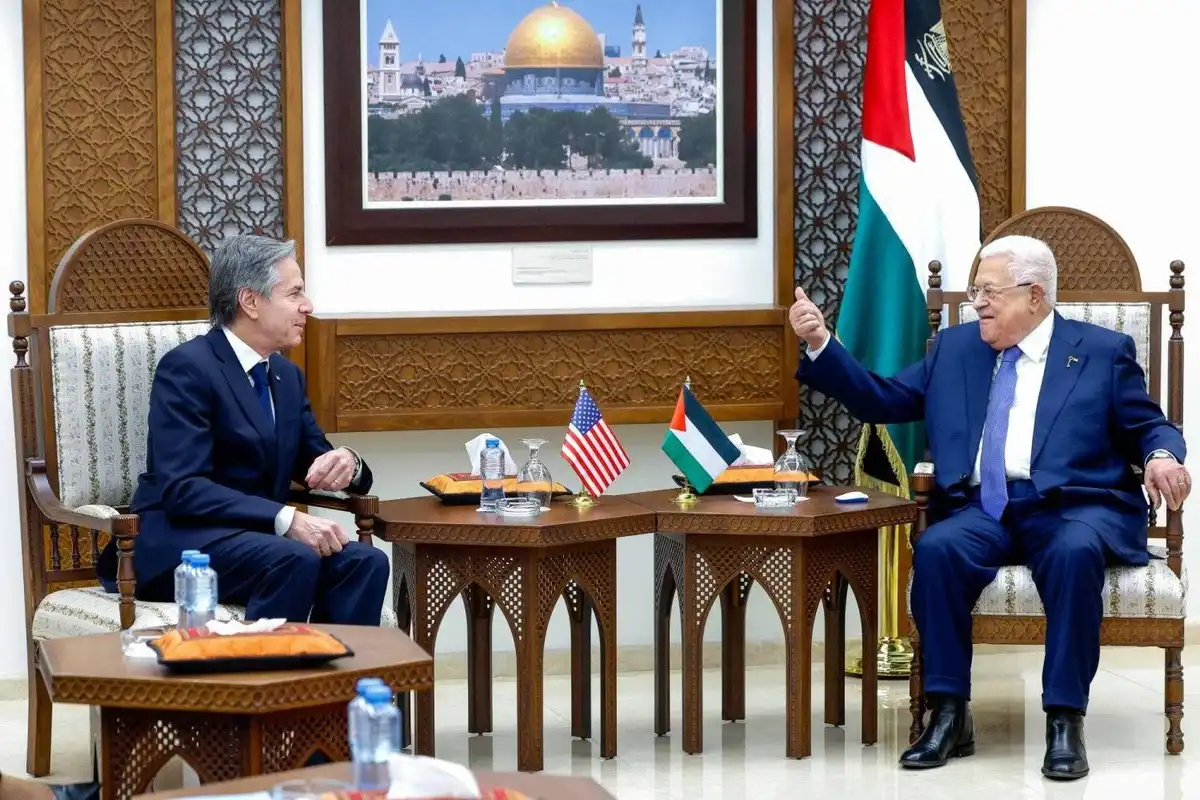
US Secretary of State Antony Blinken had proposed to Palestinian President Mahmoud Abbas last week that the Palestinian Authority carry out a number of broad reforms at its agencies to allow them to perform their duties in the West Bank and post-war Gaza, American and Palestinian sources told Asharq Al-Awsat.
The proposals made during the “tense” meeting in Ramallah included the appointment of a deputy to Abbas and granting greater privileges to a government of technocrats.
The US is seeking a new structure of rule in the occupied West Bank and Gaza that would have expanded privileges in the security and financial sectors and foreign relations.
The two sources said it was unlikely that Abbas would yield to the growing pressure to appoint a deputy or abandon his own privileges in favor of a new prime minister.
The differences are likely to impede post-war efforts in Gaza. Abbas responded to Blinken’s proposals by saying that there was a need for Washington to carry out its own reform in policy towards the Palestinians.
Washington must kick off an effective process to stop the Israeli war on Gaza and begin reconstruction, create an environment that is conducive to the reforms, stop Israeli raids in the West Bank and settler attacks on Palestinians, release PA funds seized by Israel and pave the way for the two-state solution, said the sources.
The PA’s measured approach in complying with reform demands poses a challenge to Washington, which ties its financial and political support to Ramallah to these actual reforms.
At the moment, it appears that Washington doesn't have a clear vision of what an alternative to the PA could be like, allowing Abbas greater room to maneuver.
Since the eruption of the war on October 7, Washington had come up with several scenarios over the party “qualified” in managing Gaza after the conflict. It went through several options, such as proposing that Israel run post-war Gaza, the formation of a ruling council comprised of local clans, and that Arab countries play a role in running the enclave. Ultimately, Washington came back to the PA, saying it should play a central role in running the West Bank and Gaza after the conflict is over on condition that it carry out “rapid” reforms to establish a “revitalized” authority that is capable of shouldering the responsibilities of the new phase.
The pressure Washington is applying on Abbas is reminiscent of the pressure former President George W. Bush’s administration applied on Yasser Arafat to abandon some of his privileges in favor a prime minister which eventually led him to being sidelined.
ARAB AND WORLD
Tue 16 Jan 2024 8:59 am - Jerusalem Time
Israeli Defense Minister: The Palestinians will rule Gaza in the future
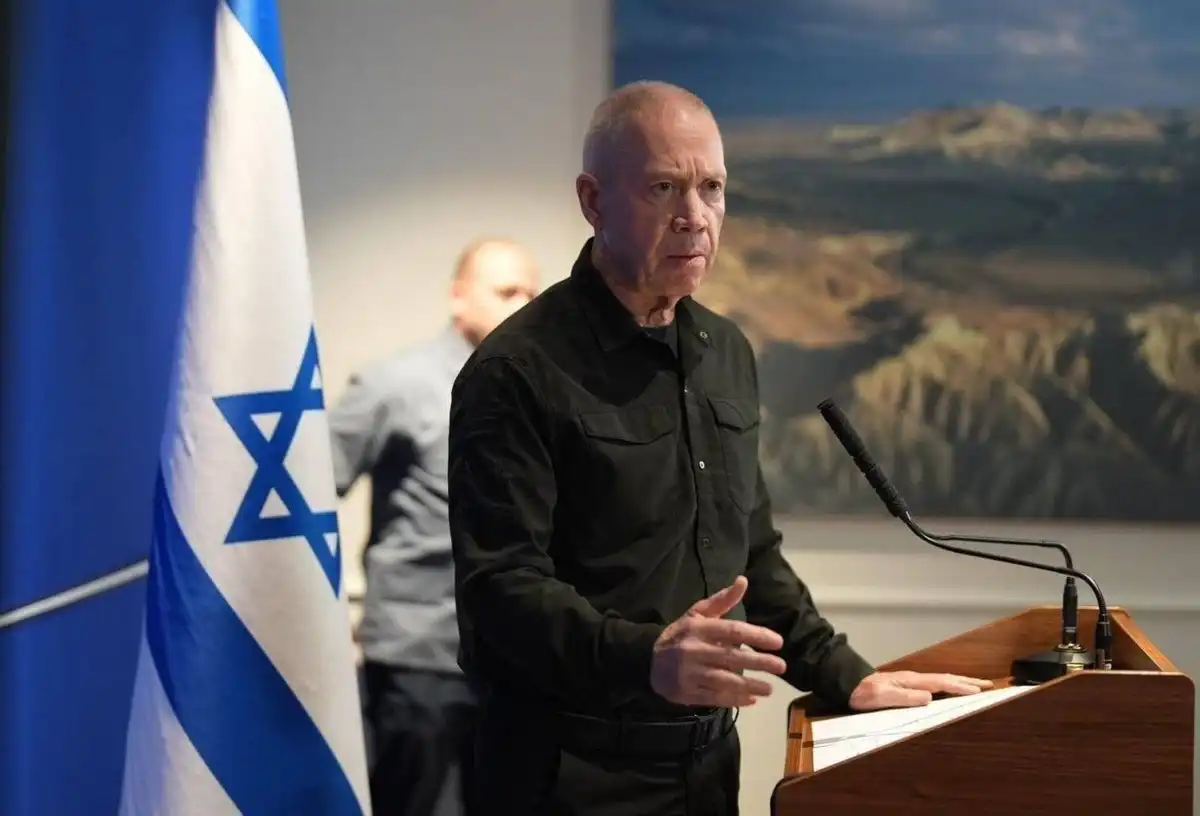
Israeli Defense Minister Yoav Galant said on Monday that the Palestinians will take over the rule of the Gaza Strip after the end of the war between the Hebrew state and Hamas.
Gallant added, in a press conference: “The Palestinians live in Gaza and therefore it will be governed by the Palestinians in the future.” The future government of Gaza must emerge from the Gaza Strip.”
He continued: “At the end of the war, there will be no military threat from Gaza. Hamas will not be able to rule and operate as a military force in the Gaza Strip.”
He indicated that the future government would be a “civilian alternative,” stressing at the same time that his forces would enjoy “freedom to operate” in a way aimed at protecting the Israelis.
The Islamic Resistance Movement (Hamas), which has ruled the Gaza Strip since 2007, is waging war with Israel after its fighters launched an attack on Israeli territory on October 7.
The attack resulted in the deaths of about 1,140 people in Israel, according to a count by Agence France-Presse based on the latest Israeli figures.
In response, the Israeli attack on the Gaza Strip killed more than 24,000 people, most of them women and children, according to the movement's Ministry of Health.
ARAB AND WORLD
Tue 16 Jan 2024 8:57 am - Jerusalem Time
Trump says he would solve Israel situation ‘very fast’ if president

Speaking after his win at the Iowa caucuses, in which the former US president cemented his Republican frontrunner status as he bids to retake the White House in 2024, Donald Trump said that the “Israeli situation” is “so horrible”.
He continued that “Israel would never have been attacked” if he were in the White House and called Biden the “worst president” in US history.
Trump said that he would “get them solved very fast”, referring to the situation in both Ukraine and Israel, without providing further details.
ARAB AND WORLD
Tue 16 Jan 2024 8:28 am - Jerusalem Time
War on Gaza: For humanity's sake, the ICJ must choose the correct path
By Tayab Ali
The vast majority of the world sees what's happening in Gaza as genocide. The implications for all of us are grim if the institution set up for this purpose cannot or will not see it too
Alongside many others, I watched on anxiously during the South Africa v Israel genocide case at the International Court of Justice (ICJ) in the Hague.
After considering both submissions, one thing is clear: Israel’s view is dangerously far apart from South Africa’s. It was utterly unapologetic and the rhetoric and mental gymnastics should be a serious cause for concern.
There can only be one conclusion: no matter how difficult it is to implement as part of its provisional measures, the ICJ must order a ceasefire.
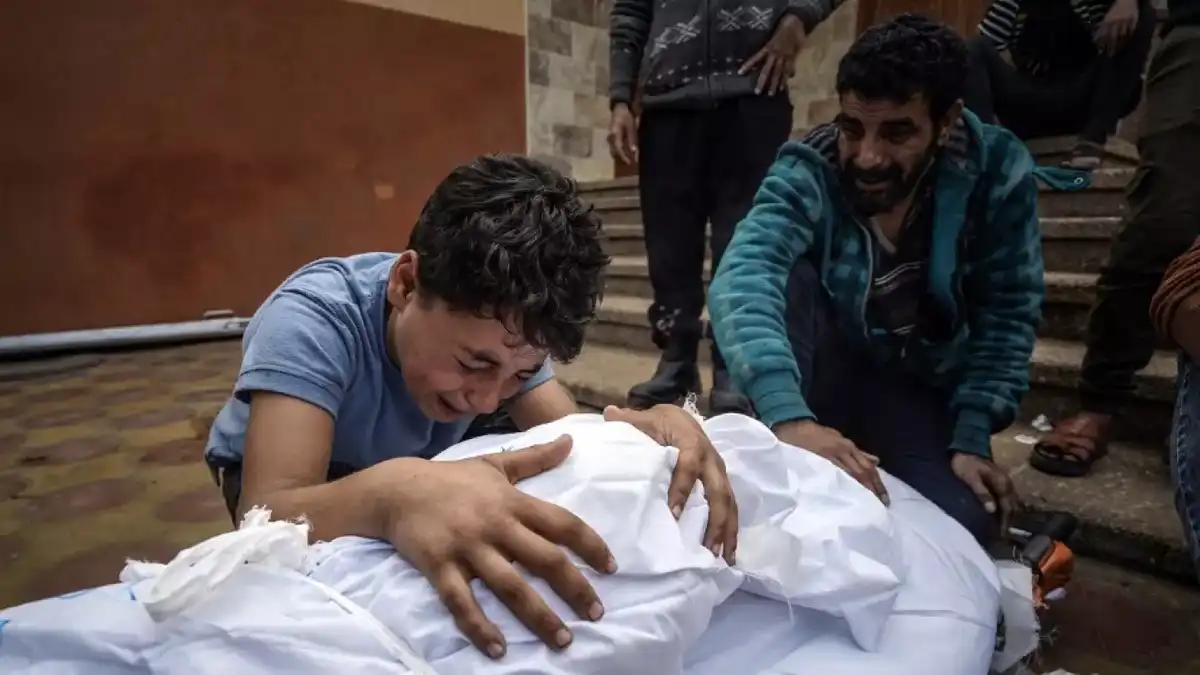
Israel denies it violated international law despite the evidence South Africa presented and the unimpeachable fact that in 100 days over 24,100 Palestinians have been killed during Israel's assault on Gaza, with the majority being women and children.
These numbers will continue to rise, and with so many lost under the rubble, the true figure is likely already much higher.
If there is no ceasefire ruling, we run the risk that Israel will see this as a green light for its actions and will increase the ferocity of its attacks in Gaza.
More people will die, more people will be displaced and more people will starve. This will increase the polarization of the occupation and add fuel to the volatile situation, provoking others to join the violence.
Escalation
With the escalating tensions in the region so fraught, a no-ceasefire ruling would add fuel to the fire.
The United States and the United Kingdom attacked Yemen between the ICJ hearings.
Cynically, many will read that attack as an intentional distraction from the proceedings. Certainly, there can be little argument that the attacks were timed for military necessity - the Houthis have not killed a single person in their operations.
With rockets fired at US naval destroyers since as early as 19 October, the timing raises questions at the very least.
The potential for further escalation is clear. The Houthis have reportedly already targeted a US-owned vessel in the wake of the strikes, putting in serious doubt claims that the UK and US acted in order to stabilize the region or the national security status of their own countries.
The risk of terrorist attacks and radicalization is no doubt increasing. Regarding solidarity protests with Gaza, politicians, including government ministers, have launched tirades of dog-whistle politics that have been stoking division. Launching strikes on Yemen is not likely to ease these tensions.
There is a divide growing on the international stage, too. Thinking back to the South Africa v Israel case for a moment, something becomes glaringly obvious when you start to look at international support.
Germany and Canada have expressed their backing for Israel’s position while South Africa has been supported by Turkey, Malaysia, Bolivia, Brazil, Colombia, Jordan, the Maldives, Namibia, Venezuela and the 57-country Organization of Islamic Cooperation (OIC). The support for South Africa's position has been growing rapidly among Global South countries.
Bosnia's long shadow
It is clear the Global South no longer accepts the pick-and-mix approach to the "rules-based international order" implemented by the Global North. Instead, the Global South seems to be in support of international law and a genuine application of the rules-based accountability structures and institutions that have been created since the Second World War.
It is crucial that our institutions work to halt unlawful (and even lawful) violence. When the majority of the world sees it for what it is, surely the institution set up for this purpose should be able to see it too?
Once again, the ICJ finds itself at a crossroads. This time, it must be bold, it must take a stand and it must make history
The ICJ cannot fail to intervene with a ceasefire order. If it does, it will repeat the mistakes of its past, such as in 1993, when it failed to order a ceasefire in Bosnia.
Genocide followed that failure and the long shadow of that failure continues to haunt the ICJ.
Once again, the ICJ finds itself at a crossroads. This time, it must be bold, it must take a stand and it must make history.
It must order a ceasefire for Israel and all armed groups in the region. This must be enforced by the ICJ calling on the UN to supervise the ceasefire with UN troops on the ground in Gaza, the West Bank and on the borders.
The killing must stop. It can be done. History can be made.
ARAB AND WORLD
Tue 16 Jan 2024 8:23 am - Jerusalem Time
Those who reject the Gaza war in Israel face betrayal and isolation
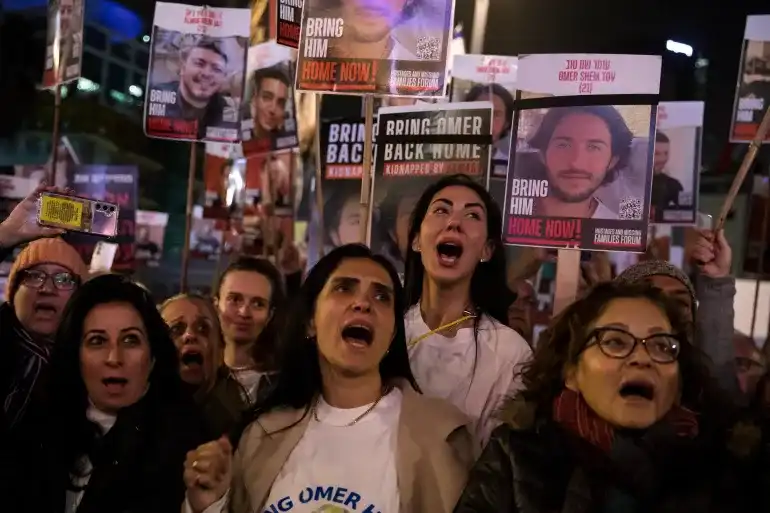
In a Tel Aviv café, Sophia Or (17 years old) discusses in a low voice with peace activist Nave Shabatai Levin her refusal to serve in the military in the midst of the war that has been ongoing for more than 100 days in the Gaza Strip, for fear that someone will hear them.
Levin and Sofia realize that they belong to a minority in a country suffering from the shock of the aftermath of the attack of last October 7, as a study conducted by the “Midgam” Institute and published in the right-wing Israeli weekly newspaper “Makor Rishon” yesterday revealed that 92% of Israeli Jews support The war will continue until the Islamic Resistance Movement (Hamas) is eliminated.
Because of her refusal to serve in the military, Sofia faces the risk of military detention, in a country where conscription is compulsory for the majority of men and women starting at the age of 18, with exceptions for religious or medical reasons, but not for political reasons.
Brave decision
Naveh Shabatai (20 years old), who was imprisoned for 115 days last year before the outbreak of war for refusing military service, told Sophia, “Her decision to refuse service is brave... especially in times of war.”
“My conscience does not allow me to join,” Sophia says, expressing her regret, “because we are fighting fire with fire.”
She explained that she shared what she described as "anger" with the Israelis after the October 7 attack, and she knew one of the people who was killed at the music festival in the Gaza Strip, but she added that she immediately felt concerned by the "atrocities" that accompany military retaliatory operations.
Last December, Tal Mitnick (18 years old) became the first person to be arrested after the start of the 30-day Gaza war because he refused to participate in it, as he described it as a “revenge war,” according to what was reported by the “Mesarfoot” group - meaning “we refuse” in language. Hebrew - anti-war.
Since then, this group, which includes people who refuse to participate in the war, has not reported any further arrests, although many of its members have confirmed that they will follow in Mitnick's footsteps.
The group includes a few dozen who reject military service and war, but the exact number of these people is unknown because many of them do not express their opinion publicly, and the Israeli army refuses to comment on this matter or give numbers.
Intimidation and threats
The day before yesterday, Saturday, Cindy (65 years old) participated in a small demonstration of war opponents in Tel Aviv, which quickly dispersed. "We are a minority, that's true, but we exist, and the world should know that," she said.
Like Cindy, other people interviewed by AFP during the demonstration did not want to give their full names.
Among them is Moran (37 years old), who hung a sign on his bike that read, “Yes to peace, no to war,” and said, “It is difficult to express your opinion against war.”
Faced with rhetoric from Israeli officials from all political stripes that asserts that the war will continue until its goals are achieved, opponents of the war say they are considered “traitors,” and some have received death threats.
Source: AFP +Aljazeera
ARAB AND WORLD
Tue 16 Jan 2024 8:15 am - Jerusalem Time
Experts: Israeli institutions are disintegrating and the army does not want to continue the war
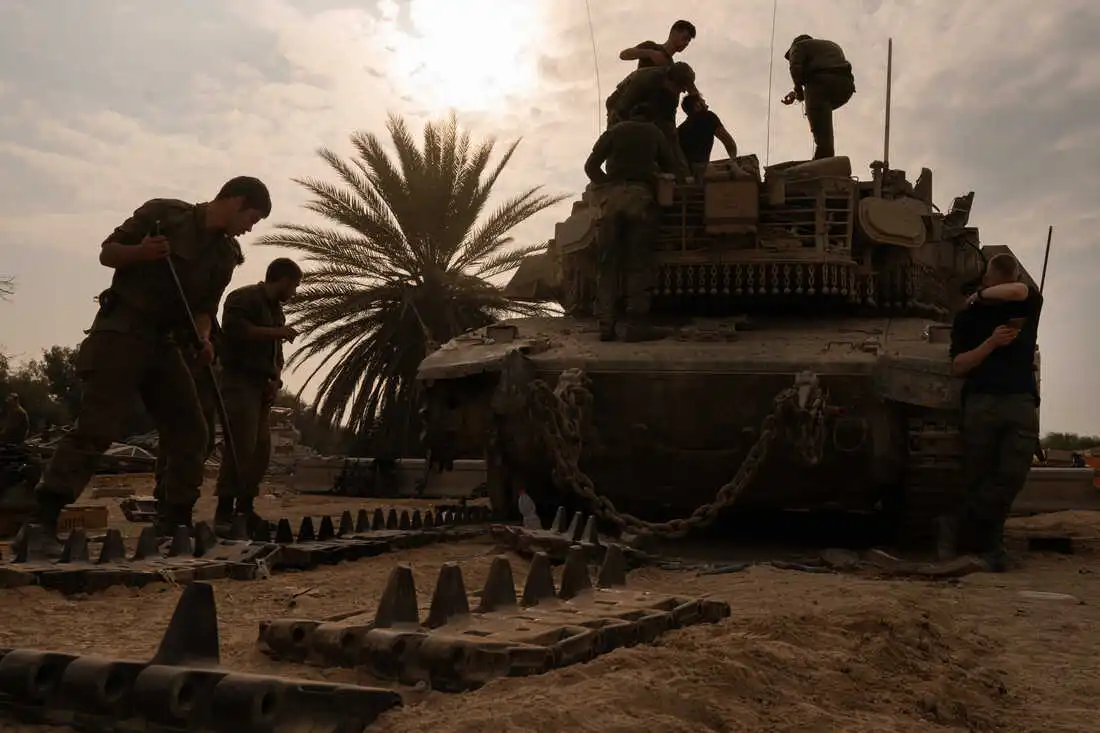
Experts and analysts believe that Israel has begun to retreat politically and militarily from its initial goals of the war in the Gaza Strip, and that it may have begun to pave the way for an exchange deal or a lull in operations after the dispute between its security and political institutions reached the stage of disintegration, and the army no longer wanted to continue fighting.
The occupation army radio had announced - earlier today, Monday - that only 3 divisions (99-162-96) are currently remaining in Gaza after the withdrawal of more forces.
The newspaper "Israel Hayom" also said that the 36th Division that was withdrawn includes the Golani, 6th and 7th Brigades, and the 188th Brigade, in addition to the Engineering Corps.
Commenting on this withdrawal, military expert Major General Fayez Al-Duwairi said that it was due to many reasons, including that some of them - such as the Golani Brigade - received severe strikes at the hands of the resistance, as well as heading into the third phase of the ground war.
Al-Duwairi said, during his participation in the program “Gaza...what next?” On (1/15/2024), Israel withdrew the majority of its forces from northern Gaza, to fill a field need in the center and south, yet it did not achieve any achievement, which prompted it to withdraw new forces for rehabilitation.
Al-Duwairi believes that the forces that were withdrawn will be in a state of combat readiness after they qualify, pointing out that pushing them to other areas means that the war is continuing and will not stop. However, if they remain in a state of alert in the cover area, this may be an indication of thinking about stopping the fighting in a way or another.
Back off goals
In this context, political analyst Dr. Bilal Al-Shobaki said that Israeli Defense Minister Yoav Gallant’s talk - today, Monday - about continuing the fighting until victory is achieved “is normal, because he does not want to retract what he said before, when he was talking about many achievements, and he repeated that the recovery of the prisoners will only be achieved by force."
However, the new speeches of Israeli officials, which have begun to ignore talk about uprooting the Islamic Resistance Movement (Hamas), indicate an implicit retreat from their first goals, and that they want to save face for the War Council, especially Gallant, in Al-Shobaki’s opinion.
Al-Shoubaki explains, "These conversations mean that Israel's military leaders realize the difficulty of eliminating an entire movement, but it is possible to direct specific strikes against it."
Al-Shoubaki believes that this new Israeli talk “is in line with the change in the American talk about the possibility of coexistence with the movement and reducing its offensive capabilities,” describing the matter as “surrender in one form or another.”
On the other hand, in Gaza, writer and political analyst Ayman Al-Rafati indicated that residents expect a prisoner exchange deal soon, and perhaps a truce or a temporary cessation of the war, especially with the continued withdrawal of forces and the exacerbation of differences between Israeli institutions.
Al-Rafati believes that the withdrawal of forces may be a response, in one way or another, to the resistance’s condition of stopping the aggression before negotiating the prisoners, as well as reflecting the army’s support for an exchange deal in order to distance itself from the accusations.
Al-Rafati added, "There is information about new proposals that reached the resistance in the exchange file, coinciding with US President Joe Biden's talk about his strong effort to recover the prisoners, and the tense military situation on the ground."
Israel has gone beyond confusion to disintegration
Regarding the increasing conversations inside Israel about the necessity of stopping the war and exchanging prisoners, Al-Shoubaki says that some ministers had concerns about the war at first, but they refrained from declaring them for fear of being accused of being unpatriotic, noting that they began announcing these concerns recently “because “What is happening now represents a danger to Israel.”
Al-Shoubaki believes that there are disagreements affecting the security institutions and the government, especially the Shin Bet, which submitted reports to Prime Minister Benjamin Netanyahu warning him of the worsening situation in the West Bank, where it is no longer possible to talk about a security or military solution after this solution failed in Gaza.
Al-Shoubaki explains that the Tel Aviv operation that took place today, Monday, “means that the policy of eradicating resistance weapons does not mean stopping operations in one way or another, even in light of security precautions and fears.”
In addition, Israel found itself standing before the International Court of Justice on charges of committing genocide, “which put Netanyahu in a dilemma, because he was the one who stood up one day to tell the world that Israel is an oasis of security, democracy and investment, and now the picture is collapsing in front of everyone.” Al-Shoubaki says.
The same speaker concluded that the issue in Israel "went beyond confusion, and reached the point of disintegration of the radical institutions within the state."
The same opinion was held by Al-Rafati, when he talked about the resistance having important pressure cards in the exchange file, which may give it the strength to adhere to its condition of stopping the aggression.
Also, the information that was revealed - during today, Monday and yesterday - regarding the fate of some prisoners “may force the government to enter into an exchange deal and overcome the obstacles placed by Netanyahu and Gallant, who want calm, not to stop the war,” according to Al-Rafati, who believes that the army “does not want to continue.” "The war does not leave the military prisoners in Gaza, but it is unable to recover them."
In the end, Major General Al-Duwairi believes that Netanyahu will yield to the demand to stop the war due to the military faltering, but he believes that the timing depends on increasing internal pressure on the one hand and American pressure on the other.
He concluded that Washington could push Netanyahu to stop the war if it abandoned timid pressure and actually started threatening to reduce military supplies.
Source: Al Jazeera
ARAB AND WORLD
Mon 15 Jan 2024 10:03 pm - Jerusalem Time
American official: Our priority is to reduce the intensity of the Gaza war next month
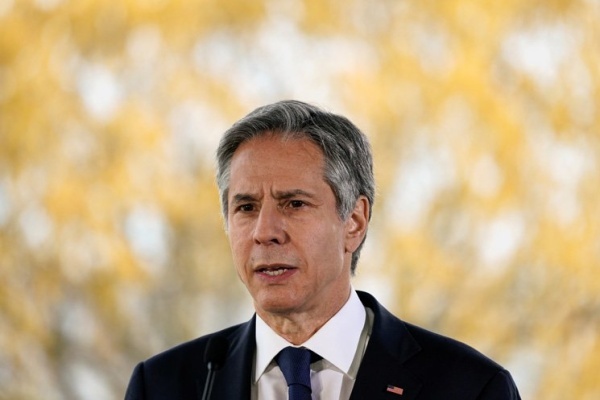
The Washington Post quoted an American official as saying that there is no point in urging Israel to move to a less severe phase of the war on Gaza this month, and that Washington is now insisting on moving to the next phase of the war next February.
In contrast, the American newspaper quoted an Israeli official claiming that the military operation in Gaza is currently moving to a less intense phase of the war, and that the number of civilian casualties has decreased significantly, as he claimed.
The newspaper reported that US Secretary of State Anthony Blinken "did not take kindly" to Israeli officials when he spoke to them during his visit in November and told them that they were losing moral ground in the current war.
It added that he assured them that they had to "reduce the number of civilian deaths and significantly increase humanitarian aid" during the attacks on the southern Gaza Strip.
But Israel did not adhere to its pledges to the United States - as an American official confirmed to the Washington Post - adding that Tel Aviv stressed in its conversation with Washington that it would continue its intensive attacks on the Gaza Strip throughout the month of January.
Unwilling
A situation that made the administration of President Joe Biden - the strongest ally supporting Israel - unable or unwilling to exercise greater influence on the management of the war on Gaza, according to the American newspaper.
The Washington Post quoted Matt Doss, executive vice president of the International Policy Center and former advisor to Senator Bernie Sanders, as saying, “If the president is really frustrated, he has a lot of tools he can use.”
"Promising unconditional support is not a good way to make someone do something different," he added.
Against the backdrop of Israeli accusations against the Islamic Resistance Movement (Hamas) of exploiting international aid, the American official - whom the Washington Post spoke to - confirmed that the Israeli government did not provide any specific evidence that Hamas had stolen or diverted aid provided through the United Nations and its agencies.
ARAB AND WORLD
Mon 15 Jan 2024 7:51 pm - Jerusalem Time
UN Chief calls for an immediate ceasefire and to ensure that aid reaches Gaza

United Nations Secretary-General António Guterres called for an “immediate humanitarian ceasefire” in the Gaza Strip.
Since the seventh of last October, the Israeli occupation has launched an aggression against the Gaza Strip by land, sea and air, resulting in one hundred thousand martyrs, wounded and missing persons, unprecedented destruction of buildings, facilities and infrastructure, and a collapsed health system.
“We need an immediate humanitarian ceasefire to ensure that aid reaches those in need,” Guterres said at a press conference in New York on Monday.
He added: Prolonging the war in Gaza will increase the risks of escalation.
ARAB AND WORLD
Mon 15 Jan 2024 7:40 pm - Jerusalem Time
Gallant: The ground maneuver in the northern Gaza Strip has ended and will end in the south soon
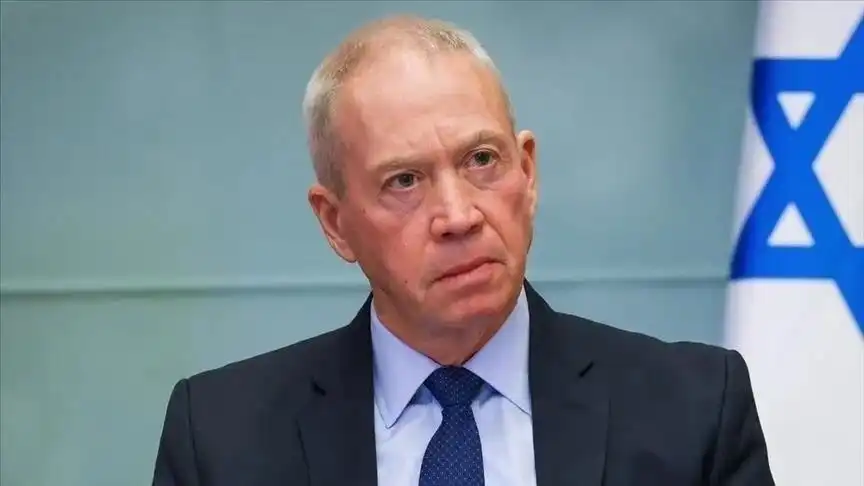
Israeli Defense Minister Yoav Galant announced, “Within 100 days, we moved from war in the settlements to war inside the Gaza Strip, and we must win during this war. We will not make concessions, and there is no other way.”
Gallant stressed in a statement that, "We will eliminate Hamas and everyone who participated in the October 7 attack. We are bound to victory. We must eliminate Hamas' capabilities and return the kidnapped people." Stressing that "Gallant: Military force is the only thing capable of recovering the kidnapped people and achieving the goals of the war, and we have dismantled Hamas' combat structure in all areas of the Gaza Strip."
Galant stressed that there will be no military threat from Gaza when the war ends. The maneuver in the northern areas of the Gaza Strip has ended and will end soon in the south.
He pointed out that the next authority in Gaza must be based on a force that is not hostile to Israel.
He explained that eliminating Hamas requires a long time, and 2024 will be a year of war and we will win it because we are determined to do so.
PALESTINE
Mon 15 Jan 2024 6:54 pm - Jerusalem Time
Israeli Arab Member of Knesset Ahmad Tibi deplores death of three relatives killed in Gaza

Three family members of MK Ahmad Tibi (Hadash-Taal) were killed during the ongoing war in Gaza, the MK confirmed in a short statement published on X on Sunday.
The three family members were identified as Dr. Sahar Tibi, a university professor, Faisal Tibi, a computer science student, and Ahmed Tibi, aged 10, Mohammad Magadli, a Twelfth chain reporter, said Saturday evening .
They were reportedly killed in an airstrike on the Nuseirat refugee camp in central Gaza.
In a short statement about their deaths written in Arabic, Hebrew and English, Tibi used the traditional Jewish phrase "May their memories be a blessing" and shared a line from a poem by Palestinian poet Mahmoud Darwish: "We love life if we find a way to attain it. »
PALESTINE
Mon 15 Jan 2024 6:53 pm - Jerusalem Time
West Bank: A freed Palestinian prisoner was killed byIsraeli forces in Tulkarm
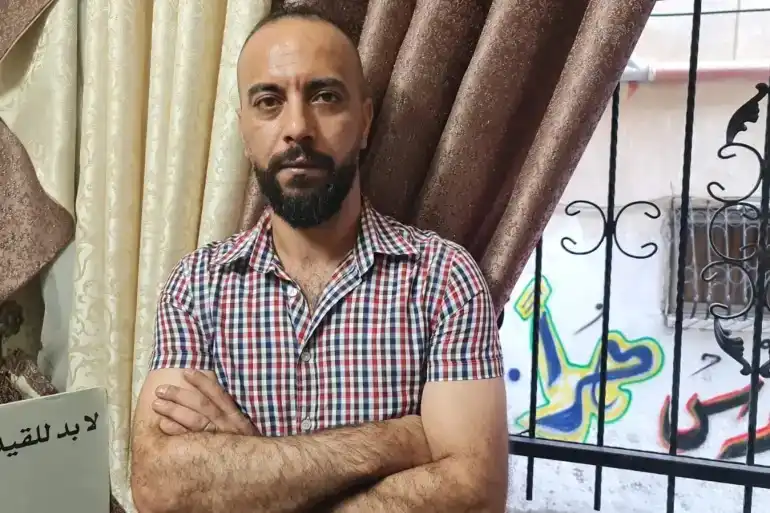
A young Palestinian man was killed today, Monday, by Israeli forces at the “Annab” checkpoint in Tulkarm in the northern West Bank, according to the Palestinian Ministry of Health.
The Palestinian Red Crescent announced that two injuries were reported by Israeli forces at the Enab and Jabara military checkpoints at the entrance to Tulkarm.
According to local sources, the freed prisoner “Fares Khalifa” from Tulkarm, brother of the freed prisoner and deported “Fares Khalifa,” who was killed in the “Al-Aqsa Flood” battles in Gaza, was killed.
Meanwhile, the Israeli army continues its aggression against the Gaza Strip, for the fourth month in a row, with American and European support, as its planes bomb the vicinity of hospitals, buildings, towers, and Palestinian civilian homes, destroying them above the heads of their residents, and preventing the entry of water, food, medicine, and fuel.
OPINIONS
Mon 15 Jan 2024 6:33 pm - Jerusalem Time
Israeli Opinion| Why do we continue?

Haaretz
Opinion Writer

Rafif Drucker
A senior Israeli official with deep knowledge of the conduct of the war told me: We have achieved the real goal. There are no threats to Israel from the south. True, in order to maintain the achievement, we have to stay there, but there is no real reason for the military operation to continue, and now, it is time to move north. I asked him, what about the promises to strip Hamas’ military and governmental capabilities? He sighed and said, "Whoever knows the truth, shut up now."
At the beginning of the war, I believed that dismantling Hamas in the Gaza Strip was a more important goal than returning the hostages. At the time, the question was whether this goal was realistic. I did not have the tools to be decisive at that time. Now, this goal appears unattainable for the foreseeable future. In these circumstances, it is better to go in the opposite direction: return all the hostages now, and stop the war. This will be difficult because Hamas will declare victory, and because the Egyptians, Saudis and Jordanians - who are disappointed with the army's performance and the fact that we did not dismantle Hamas - will take a step back.
On the other hand, the end of the war does not mean the end of the conflict. There is nothing preventing Israel from obtaining the hostages (the price is very difficult, which is the release of prisoners whose hands are stained with blood), stopping the fighting, and renewing it after two or three months. It can be estimated, with caution, that there are those who support this trend in the “war cabinet,” including Gadi Eisenkot and Benny Gantz, and possibly Aryeh Deri as well. In the army leadership, there are surprising voices on the matter as well.
I asked the senior official, why is this not happening? He replied: It is politics. Saying that Benjamin Netanyahu and Yoav Gallant will lose their raison d'être, in addition to the Chief of Staff who does not want to be dealt with as someone who admits that he was unable to carry out the task of dismantling Hamas.
True, this is not easy; First, Hamas demands an Israeli withdrawal from the Gaza Strip, and Israel cannot grant it this. Maintaining a security buffer zone has become the cornerstone for the return of the residents of the south to their homes. Netanyahu added to this the “southern gate” - Hamas’ armament route. Hamas cannot accept a constant, heavy army presence as the "end of the fighting." It is enough for us to conduct negotiations with it on this basis. Then, it will cause serious political damage to this already unpopular government.
The basic assumptions of war have changed, more or less completely. The hostages are no longer a burden on the government that wants to restore deterrence (and respect), but rather a tool of pressure. By returning the hostages, Netanyahu can justify not achieving the goal of dismantling Hamas, especially after adding the promise that “we are not finished yet.”
The second assumption is that it is not possible to go to elections during a war. Now, it seems that the war has turned into a war of attrition, and elections are necessary. The Prime Minister cannot say a good word about the Chief of Staff. He has disagreements with the Defense Minister, manages a political budget, and he also invites David Amsalem to the cabinet and allows him to attack the Chief of Staff. You cannot fight with a prime minister like this.
Only the new leadership can make decisions without the terrible failure that occurred on October 7, and resume the war against Hamas, after calm prevails. Now, the political track will give us justification to stop the fighting under the slogan: “They failed, someone will come after them to correct the situation.”
Elections can only be imposed through mass protests, larger than those that took place against the constitutional coup. Hundreds of thousands will return to the streets in front of the prime minister's house, and will refuse to leave the streets until Netanyahu goes.
Many are crazy now and want to take to the streets. But as hard as it is to say, the time has not yet come. As long as the army continues to create a feeling that Hamas will collapse soon, people will not take to the streets, and Gantz and Eizenkot will not leave the government. And they are both right to do so.
PALESTINE
Mon 15 Jan 2024 6:21 pm - Jerusalem Time
War on Gaza: 12 new massacres in Gaza, and death toll exceed 24 thousand
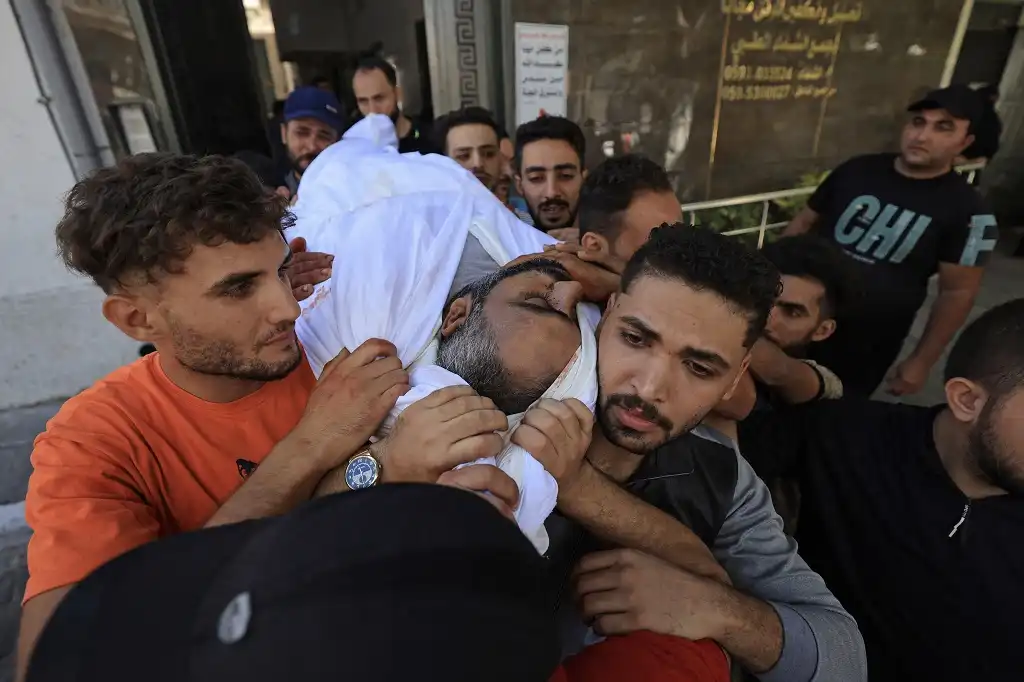
The Ministry of Health in Gaza said that on the 101st day of the aggression against the Gaza Strip, the Israeli occupation committed 12 massacres, killing 135 people and wounding 252.
This brings the number of dead in Gaza since October 7 to 24,100, while the number of those injured reached 60,834.
The occupation forces continued to bomb sites in the Gaza Strip, leading to the death of dozens of Palestinians in raids at dawn today.
33 Palestinians were killed and dozens injured as a result of bombing on homes in Gaza City in the early hours of dawn.
Huge explosion
According to local sources, a huge explosion rocked the Juhr al-Dik area, south of Gaza City, and huge explosions and clashes with heavy machine guns were observed in the Bureij camp in the central Gaza Strip.
It confirmed that the Israeli forces bombed a number of homes in the village of Al-Masdar, in the central region. Pictures from Al Jazeera also showed the Israeli forces using phosphorus bombs to bomb Al-Maghazi camp, in the center of the Gaza Strip.
Israeli raids caused the destruction of commercial and residential buildings in the Al-Balad area, in the center of the city of Khan Yunis, south of Gaza.
The sources confirmed that communications and Internet services continued to be cut off in the besieged sector for the fourth day in a row.
On the other hand, Israeli army spokesman Daniel Hagari said that the army will not withdraw from Khan Yunis or any other place in the Gaza Strip, and that its forces’ operations in the region take time and are adapted to the dangers in the field and the situation of the prisoners.
The Israeli army claimed to thwart an attempt by resistance members to transport combat equipment via truck in the city of Khan Yunis, south of the Gaza Strip, and announced that it attacked two militants with a drone during the thwarted attempt.
It added that it confiscated rifles, pistols, hand grenades, RPGs, and diving equipment for a naval force affiliated with the resistance, and during the past 24 hours, it destroyed two weapons warehouses and attacked military buildings belonging to Hamas.
World Health warns
In another context, the World Health Organization warned of the repercussions of targeting medical personnel in Gaza, stressing its commitment to providing support and assistance to the residents of the Strip.
Rana Hajjah, a member of the organization’s regional office in the Eastern Mediterranean, said during a press conference that there are one million displaced women and more than 50,000 pregnant women in Gaza, who are suffering from difficult conditions.
It is noteworthy that the Israeli aggression against the Gaza Strip continues for the 101st day in a row, and has caused the death, injury, and loss of more than 100,000 Gazans, widespread destruction, and an unprecedented humanitarian and health crisis.
ARAB AND WORLD
Mon 15 Jan 2024 6:10 pm - Jerusalem Time
A French researcher warns Israel and its allies of the danger of the Gaza war to their interests

Israel's founding was a ruthless campaign to displace Palestinians and draw defensible borders, but the world has changed, and Israel and its Western allies refuse to understand that this kind of violence will have enormous costs for them. They will either be forced to comply with the international law they claim to embody, or they may end up denying this right, and in both cases the results will be disastrous for their legitimacy and for their interests as well.
This paragraph almost sums up the findings of researcher Peter Harling, founder of the Synaps Research Center in Beirut, through his discussion in an interview with the “Media Part” website about the dangers of the Israeli war on Gaza spreading to other borders, and the dire consequences that will result from that on the legitimacy of Israel and its supporters. .
The interview, conducted by Joseph Confafro, began with the question: What do you call what is happening before our eyes in Gaza? The researcher - who has worked for a long time in the Arab world - responded that the whole problem with this war is that it mixes different records. It is the war against terrorism, it is collective revenge, it is the war of civilizations, the humanitarian crisis and the temptations of genocide. This means that everyone can interpret it in their own private way, allowing all excesses.
What is strange - as the researcher says - is that we are facing an old, familiar and relatively easy-to-define conflict. It is a conflict on the ground between two parties with unequal powers, and its many “rounds” have changed little, which has helped bury the peace process, so that the search for a viable solution becomes less. Importance.
Gaza precedent
The writer agrees that this ancient conflict has been reshaped through the perspective of the war on terrorism as the easy way out, especially since “terrorism” can describe acts of violence that aim primarily to intimidate the opponent, weaken his morale, or push him to commit crimes in return, but in this way the concept applies to many military actions that are not limited to “terrorist groups.”
When asked: Have we entered the closing stage? The expert responds that Gaza is about to remain a gaping wound in the middle of the Mediterranean, because it is very difficult to imagine how the humanitarian crisis can be resolved without rebuilding this now largely destroyed area, because any reconstruction process already includes a governance formula acceptable to Israel, otherwise We expect permanent forms of occupation and thus guerrilla warfare, security measures, endless negotiations, and perhaps the return of settlement.
Gaza is also about to set a precedent that Israel will likely reproduce one day in Lebanon and the West Bank, depending on the international consequences of this comprehensive bombing strategy. If it remains inexpensive for Israel, it will repeat the same scenario.
Regarding the extension of the war to the Middle East, Harling believes that the possibilities of a “regional conflagration” are exaggerated, noting that the main risk of escalation at this stage relates to Lebanon, where Hezbollah has long been preparing for a decisive war with Israel, but does not want to launch it. In the current context.
The positions of the Arabs and the West
As for the position of the Arab governments, the researcher summarizes it in that they are not interested in the Palestinian issue like the majority of governments in the West, because for them it is a lost cause, a remnant of the past, and a distraction from other, more realistic and positive priorities. On this position, the American administration is betting on resuming the normalization process between Israel and Saudi Arabia when the Gaza war ends.
As long as the suffering of the Palestinians mobilizes Arab public opinion only during crises, Arab governments can be content with rhetorical positions while waiting for feelings to subside. But the real question for the researcher is, “Will Israel’s position in this war change?”, which is not impossible if the movement towards more atrocities.
When asked about US President Joe Biden’s support for Israel and that it could lead to his loss in the upcoming elections, the researcher placed the matter in a broader context of hysterical behavior, as he described it, such as Britain’s deportation of immigrants to Rwanda, the European Union’s funding of Libyan militias that torture and blackmail the population, and Europe’s weariness of war. In Ukraine, German institutions denounce Jews who criticize some Israeli policies. This is due to the absence of political structure, such as ideology, real political parties, and respect for institutions, morals, and culture.
In his lecture, Harling considered that the Middle East is “our immediate neighborhood in the Mediterranean region, which represents the true crucible of our identity, and the Israeli-Palestinian conflict forms an integral part of our European history, and therefore its path cannot help but resonate strongly in our societies.”
But the Middle East is also - according to the researcher - a region that Western governments would like to see as a foreign region, and they also tend to understand it through two contradictory perceptions that obscure its reality. The first perception is bleak, depicting it as regions suffering from conflicts that cannot be resolved or overcome, but rather must be contained or ignored. .
The other vision is very optimistic: they are places of hope where we can talk about progress, innovation, finance, investments, profits, youth, sports, energy, and ideal integration into globalization as in Dubai and Saudi Arabia, solar infrastructure projects in Tunisia, and avocado fields in Morocco.
As for the Middle East that truly concerns us - according to the researcher’s expression - it is the East in which half a billion of our helpless neighbors live, and in which we must explore what connects us and what unites us with them, especially since the Arab world is full of dynamics that we also know in Europe, and the ambitions of its societies. These are our ambitions.
Source: Mediapart
ARAB AND WORLD
Mon 15 Jan 2024 6:04 pm - Jerusalem Time
Former Shin Bet chief: There is no security for Israel except by establishing a Palestinian state

Former Shin Bet chief Ami Ayalon says Israel will not have security until the Palestinians have their own state, and called on the Israeli authorities to release Marwan Barghouti to guide negotiations towards creating a state for the Palestinians.
Ayalon, a retired admiral who commanded the Israeli Navy and was wounded in one of the battles, explained in an interview at his home with the British newspaper The Guardian that destroying the Islamic Resistance Movement (Hamas) is not a realistic military goal, and that the current war in Gaza may lead to consolidating support for Hamas.
He added that Hamas is not just a militia, but “an ideology with an organization, and the organization has a military wing. You cannot destroy the ideology using military force. Sometimes you will help root it deeper if you try, and this is exactly what we see. Today, 75% of Palestinians support Hamas.” “Before the war, support was less than 50%.”
The Palestinians have nothing to lose
Ayalon added that it is not possible to deter any party, person or group, if it believes that it has nothing to lose, and that the Palestinians believe that they have nothing to lose.
He said that most Israelis believe that all Palestinians are Hamas or supporters of Hamas, do not accept the concept of Palestinian identity, and do not see the Palestinians as a people, because if they did, they would cause a big problem in the concept of the State of Israel.
Regarding the release of Barghouti, a Palestinian imprisoned since 2002 who is serving a life sentence for murder after leading the second intifada, Ayalon believes that this will be a vital step towards meaningful negotiations.
The only leader
The former Shin Bet head pointed out that Palestinian opinion polls show that Barghouti is the only leader who can lead the Palestinians to a state alongside Israel, “because he believes in the concept of two states, and secondly because he earned his legitimacy by sitting in our prisons.”
He said that Barghouti's support reflects the fact that current Palestinian support for Hamas is not due to the ideology of this movement, but rather because the Palestinians feel that Hamas is the only faction that is fighting effectively to establish a Palestinian state.
He admitted that the current political climate in Israel is not conducive to accepting his views, as his views are not very popular, noting that whenever he says that hatred is not a plan and that it is not a policy, he finds widespread dissatisfaction with the Israelis.
The absence of a Palestinian state
Ayalon explained that the move away from violence adopted by the Fatah movement has lost its credibility due to the repeated failure of diplomatic efforts to establish a Palestinian state, which is dangerous for both Israelis and Palestinians.
He noted that his Shin Bet position required that he meet regularly with Palestinians, including visiting the late PLO leader Yasser Arafat, and that he made friends with Palestinians including Palestinian Authority security chief Jibril Rajoub and Sari Nusseibeh, a philosophy professor from Jerusalem who can trace his family’s presence there to the seventh century. .
Ayalon asked, "Can I tell Sari Nusseibeh, 'Well, this land is my land and you are just a visitor? This is nonsense.'"
He stressed that attempts at normalization in the region - in which the Palestinians do not have a state or much hope for a single state - were one of the factors in Hamas launching its attack on October 7.
What Sinwar wanted
Ayalon explained that what Yahya Sinwar wanted to do was to tell everyone in the Arab and Islamic worlds, the international community, America and Europe, that they would not achieve anything in the Middle East unless they put the Palestinian issue on the table.
He concluded by saying that the only thing that almost everyone in the international community agreed on - Israel's enemies and its allies, from China to the United States and Russia to the regional powers - is the need for a two-state solution, adding that the other option is to continue fighting at a time when wars have become more violent and "the enemy" has become more strict.
Source: Guardian
ARAB AND WORLD
Mon 15 Jan 2024 5:47 pm - Jerusalem Time
Richard Falk: Israel's aggression against Gaza is a model case of genocide

Muhammad Al-Minshawy
Following the end of the opening deliberations of the International Court of Justice to consider the lawsuit filed by the State of South Africa against Israel, which accuses it of committing the crime of genocide through its ongoing aggression against the Gaza Strip, Al Jazeera Net interviewed international law jurist and former United Nations expert Richard Falk about the trial, its repercussions, and his expectations regarding its end results.
American Professor Richard Falk is a professor of international law and professor emeritus at Princeton University, and was a distinguished visiting professor of international studies at the University of California.
Falk chairs the Board of Directors of the Nuclear Peace Foundation, and has previously participated in the work of the Independent International Commission for Kosovo. In 2008, he was appointed as a member of the United Nations Human Rights Council for a period of 6 years as a United Nations Special Rapporteur on the situation of human rights in the Palestinian territories occupied since 1967. Falk has published widely on international law and the United Nations.
Here is the text of the dialogue:
What do you think of the South African prosecution team's submission that Israel's military operations in the Gaza Strip violate Israel's obligations under the UN Genocide Convention, and that its actions mean it is committing genocide?
Israeli military operations in Gaza continued for more than 100 days, but almost from their beginning objective observers felt that they were facing a “model case” of genocide, in which the military attack systematically and overtly aimed to make Gaza uninhabitable and inflict severe suffering on innocent civilians.
This entire operation appeared to be a clear violation of the basic rules of international law, and could not be credibly legitimized from a security or self-defense perspective by Israel. Instead, the Israeli military campaign has been announced in the most extreme terms by Israel's senior political and military leaders, and has been consistently demonstrated in practice by the sadistic tactics relied upon by the Israeli military.
Ignoring official statements calling for turning Gaza into a “parking lot,” “emptying Gaza of all Palestinians,” or presenting the option of “leave or die” reveals a stunning defiance of the criminal prohibition of genocide.
Israel overlooks the fact that it was a party to the 1948 Genocide Convention, as it pledged to respect this unconditional constraint on state behavior, meaning that reliance on legal justifications for self-defense and counter-terrorism can never provide a moral or legal basis for its behavior towards Gaza since October 7 last.
In addition, Israel distorts the facts and evidence by claiming that the Hamas attack constitutes genocide against the Jewish people, and that it is Israel that is defending itself against a genocidal opponent.
What happens if South Africa prevails at the International Court of Justice?
We cannot know in advance what will happen, but we can offer an informed opinion based on the Israeli allegations against South Africa, insisting that merely raising a dispute about the truth of the genocide in Gaza amounts to bloody libel against the Jewish people.
In more cautious secular language, the US State Department said that South Africa's initiative lacked "merit" because it lacked an acceptable legal basis in reality. It therefore seems likely that, if necessary, the United States would use its veto power in the Security Council and oppose any General Assembly resolution calling for compliance with interim measures decided by the International Court of Justice against Israel, as it is entitled to under Article 41(1) of the statute that governs its operations.
The ICJ also appears to have the authority to impose interim measures directed against Hamas, which it may be expected to do as a demonstration of its balanced approach.
If this expected sequence of evasive non-compliance occurs, it will likely lead to large and sustained protests around the world including in the United States and European countries that provide support to Israel to varying degrees and initially gave full approval to Israel's disproportionate response to the Hamas attack in October 7 last.
The success of the court would mean the start of Israel being widely labeled a “pariah state,” which would prompt a significant escalation in the nature and severity of solidarity initiatives with Palestinians around the world, including resorting to sports and cultural boycotts.
What happens if South Africa loses at the International Court of Justice?
Israel will undoubtedly gloat and celebrate a legal victory, denigrating critics of its tactics during this period as hysterical anti-Semites. It would also lead Israel and the United States to justify their refusal to follow the global majority of governments in the United Nations that favor an immediate ceasefire in Gaza.
Those who support South Africa's initiative are likely to react with a mixture of bewildered confusion and downright anger at what would certainly be considered a disappointing outcome at the ICJ in this case. How can the highest court in the world consider such compelling evidence so well presented to the court by the South African legal team and yet decide in a perverse, cruel and unprofessional manner to reject the application for interim measures?
Assuming that the majority of judges in The Hague reach an ambiguous result in its ruling expected in the coming weeks, it will likely lead to reactions to the decision in which the global West stands behind Israel's interpretation, and those who espouse the views of the Global South will view the results as politically motivated, making It reduces the Court's standing as a court of law deserving of the utmost respect from states in the future.
What is the result of this dilemma?
There is an objective compromise based on a technical judicial argument presented by Israel in the International Court of Justice hearings on January 12, according to which any action taken by the court this time would be “disruptive,” as there was a failure to prove the existence of a “legal dispute” between the two parties. (Israel and South Africa) when submitting the application to the court.
The South African team refuted this argument at the ICJ hearing, but it could provide the court, or some of its judges, with an escape from an awkward dilemma that pits moral legal considerations against real-world politics.
In some respects, the most important response, whatever the court's position, will be the reaction in world opinion. The success or failure of South Africa's request that the court issue interim measures to stop the genocide may not make much immediate difference to the political impact of its decision.
If the court grants South Africa's request, Israel will likely refuse to comply, leading to an angry response from international civil society to Israel's non-compliance.
Prime Minister Benjamin Netanyahu claimed that the Israeli army is “the most moral army in the world.” Do you agree with him? And why?
This claim is unique in its nature. It is consistent with the propaganda repeated by Israel and passes uncritically in all Western countries. We must remember that years before the current aggression, even among conservative international visitors, for example the British political leader David Cameron, referred to the Israeli occupation of the Gaza Strip as “the largest open-air prison in the world.”
It is not surprising that individuals who were expelled from their homeland decades ago and then indefinitely “imprisoned” for no crime, continuing on what a prominent government consultant called a “subsistence diet,” would at some point risk everything to achieve a prison escape, which Norman Finkelstein called “Slave revolution,” referring to the Hamas attack.
Less legal and more strategic, Israel viewed Gaza as a trial combat zone, where it could demonstrate its counterterrorism capabilities to its enemies and to other governments facing similar challenges that would become clients of Israel's powerful weapons industry, including with respect to innovations in tactics, weapons, and training.
It also wanted to show hostile countries in the region that it would respond to provocations with disproportionate force. Such an approach was formulated in the Dahiya Doctrine in the early 1980s, a line of thinking that justified the destruction of a poor neighborhood in southern Beirut believed to be a Hezbollah stronghold among a sympathetic Lebanese civilian population.
It is the Dahiyya doctrine, in engineered magnified form, that underlies the security justification for Israel's horrifyingly disproportionate response to the October 7 attack, and to the extent that Israel's response is viewed by an increasing number of informed observers as a clear example of genocide, it makes the claim that the Israeli armed forces are “the most ethical in the world” is a rather sick joke.
How does the aggression against Gaza affect respect for international law and its prestige?
The short-term answer will be largely influenced by how the ICJ handles South Africa's request for interim measures, and whether countries around the world, especially Israel and the United States, show defiance or respect for the outcome. Also relevant is the extent to which civil society has been positively impressed by the ICJ's response to South Africa's request, which will have some impact on perceptions of international law at street level around the world.
If we broaden the scope beyond assessing the effects of the violence of the Israeli campaign in Gaza, it becomes clear that Israel has long been flagrantly violating international humanitarian law during its long period of occupation that began with its victory in the 1967 war.
In general, Israel has defied international law whenever compliance seriously conflicts with its national policies and strategic priorities. It cites international law when it can use it to justify its actions or complain about the Palestinian resistance, as in its pathetic arguments at the International Court of Justice hearings on January 11, which inverted the facts and the law to undermine ongoing genocide claims.
Israel is not a member state of the International Criminal Court. Can its leaders be held accountable under the jurisdiction of this court?
In theory, the ICC has jurisdiction to try the leaders of a sovereign state if the alleged international crime is committed within the territory of another party within the judicial framework set out in the Rome Statute.
In practice, this requires that the ICC obtain physical control over such persons, and this usually depends on the voluntary cooperation of a state to extradite defendants who belong to a state that is not a member of the court's system. As for member states of the Rome Statute, which governs the operations of the International Criminal Court, they are obligated to cooperate with the court, including during the investigation and any resulting arrest.
In addition, the trial cannot proceed unless the accused person or persons are present in the courtroom for the duration of the prosecution. For these reasons, future prosecution of Israeli leaders is highly unlikely.
Israel need not be a party to the Rome Statute governing the ICC's authority if the court finds that it has valid legal authority to proceed with the investigation and potentially indict Israeli political and military leaders accused of responsibility for crimes committed in the occupied Palestinian territories, which includes Gaza.
The International Criminal Court officially decided in 2021 in a session of a three-judge chamber that it could move forward with examining Palestinian allegations of Israeli crimes committed on the territory of occupied Palestine after 2014. Palestine became a non-voting member of the United Nations in 2012, and later a party to the ICC Treaty Framework as set out in the Rome Statute.
Current ICC Prosecutor Karim Khan has shown little interest in proceeding as allowed, in sharp contrast to the haste displayed in relation to the lesser allegations against Putin for crimes in Ukraine linked to the alleged 2022 aggression.
What is South Africa seeking to achieve by filing a lawsuit against Israel in this case?
It is always difficult to portray the goals of a controversial legal initiative of this kind, and in this case the goals may be less clear than the motivations. Post-apartheid South Africa linked the Palestinian struggle for basic human rights to its struggle against the apartheid regime. Nelson Mandela famously said, “Our freedom will not be complete until the Palestinians are free.”
In a sense, genocide is the consummation of apartheid, a feature of the final stages of the settler-colonial project, which is perhaps the best way to understand what is happening in Gaza, and appreciate the bad memories that such developments revive in South Africa.
South Africa may also be motivated by memories of the role played by governments in the global West in relation to its previous conflict. These countries were long insensitive to oppressive apartheid rule because they were strategically linked to Cold War-era apartheid South Africa.
Palestine has been victimized and Israel has become protected by the US-led commitment to its strategic interests in the Middle East as reinforced by domestic pro-Israel lobbying and donor influence over government policy and media presentations.
The administration of President Joe Biden denounced referring Israel to the International Court of Justice and accusing it of committing genocide in its war on Gaza, describing the allegation as “baseless.” What do you think of this American position?
As I mentioned, the primacy of interests in US foreign policy leads to ignoring international law whenever it clashes with strategic interests. Describing the South African initiative as “worthless” in light of the abundantly documented genocidal practices and genocidal policies and language of Israel’s senior leaders challenges reality as embodied in the provisions of the Genocide Convention, which calls on parties to prevent and punish perpetrators of genocide by others, as well as to Refrain from such behavior.
There are two points to emphasize:
The contradiction between the United States' response to allegations of abuses by its adversaries, China and Russia, and its steadfast support for accused international friends and allies.
The moral hypocrisy associated with such a brazen double standard, undermining the authority of the law by adopting policies that treat equals unequally.
The United States is paying a heavy price for its reputation at home and abroad by standing with Israel in opposing South Africa's legal appeal to stop the genocide, which enjoys support around the world, as it seeks to put an end to the ongoing and apparent genocide.
This initiative was taken only after several attempts in the Security Council and the United Nations General Assembly to end the genocide were blocked or went in vain.
Source: Al Jazeera
ARAB AND WORLD
Mon 15 Jan 2024 5:45 pm - Jerusalem Time
Former Israel Official expects 15,000 deaths in “Israel” if a comprehensive war breaks out with “Hezbollah”
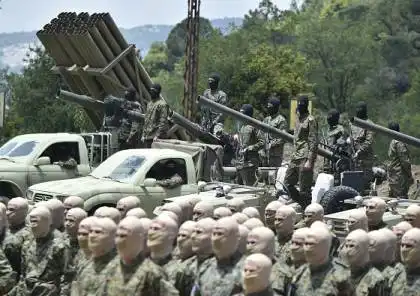
Former head of the Israeli National Security Council, Eyal Hulata, expected that the death toll in Israel if a war with Hezbollah broke out would reach 15,000.
The Hebrew newspaper "Maariv" said: "While the Israeli army continues its ground maneuvers in the Gaza Strip, the army is also dealing with the northern front, where the Hezbollah organization continues to fire missiles and drones at the northern settlements."
It added: “Since the outbreak of the war on October 7, more than 1,000 Israelis have been killed, and thousands more have been injured. Meanwhile, the former head of the National Security Council, Eyal Hulata, warned that if an all-out war breaks out with Hezbollah, a number of The death toll in Israel will reach 15,000.”
It said that the war between Israel and Hezbollah would be much more deadly than the Second Lebanon War, when 1,200 Lebanese and 165 Israelis were killed during 34 days of fighting.
It is now estimated, according to the newspaper, that Hezbollah is the most powerful armed organization in the Middle East, as it possesses an arsenal of more than 100,000 missiles spread throughout Lebanon.
PALESTINE
Mon 15 Jan 2024 5:39 pm - Jerusalem Time
War on Gaza: The death toll rises to 24,100... intense battles on several fronts
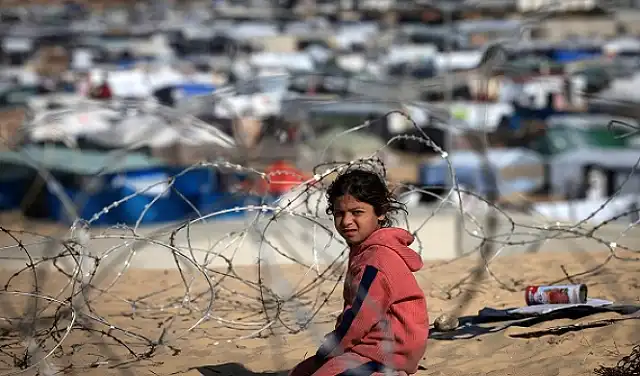
As the Israeli war on Gaza entered its 101st day, the raids and bombings focused on Khan Yunis, Deir al-Balah, and Rafah, amid continuous bombing of the Bureij and al-Maghazi camps and targeting tents for the displaced in the Al-Mawasi area.
The death toll from the Israeli war on Gaza, which has been ongoing for more than 100 days, rose to 24,100 dead, while the number of wounded reached 60,834 according to the latest toll announced by the Ministry of Health in the Gaza Strip on Monday.
The Israeli army committed 12 massacres against families in the Gaza Strip, claiming 132 dead and 252 injuries during the past 24 hours, and this only reached hospitals.
Raids and bombardments continue across Gaza, specifically in Khan Yunis, Deir al-Balah and Rafah, amid continuous bombing of the Bureij and al-Maghazi camps and the targeting of tents for the displaced in the al-Mawasi area.
Fierce clashes are taking place between Palestinian resistance factions and Israeli army forces in various areas of the incursion, while battles intensify in the areas of the incursion in the center and south of the city of Khan Yunis.
PALESTINE
Mon 15 Jan 2024 4:05 pm - Jerusalem Time
West Bank: A young Palestinian and a girl were killed and 9 injured by Israeli soldiers in Hebron
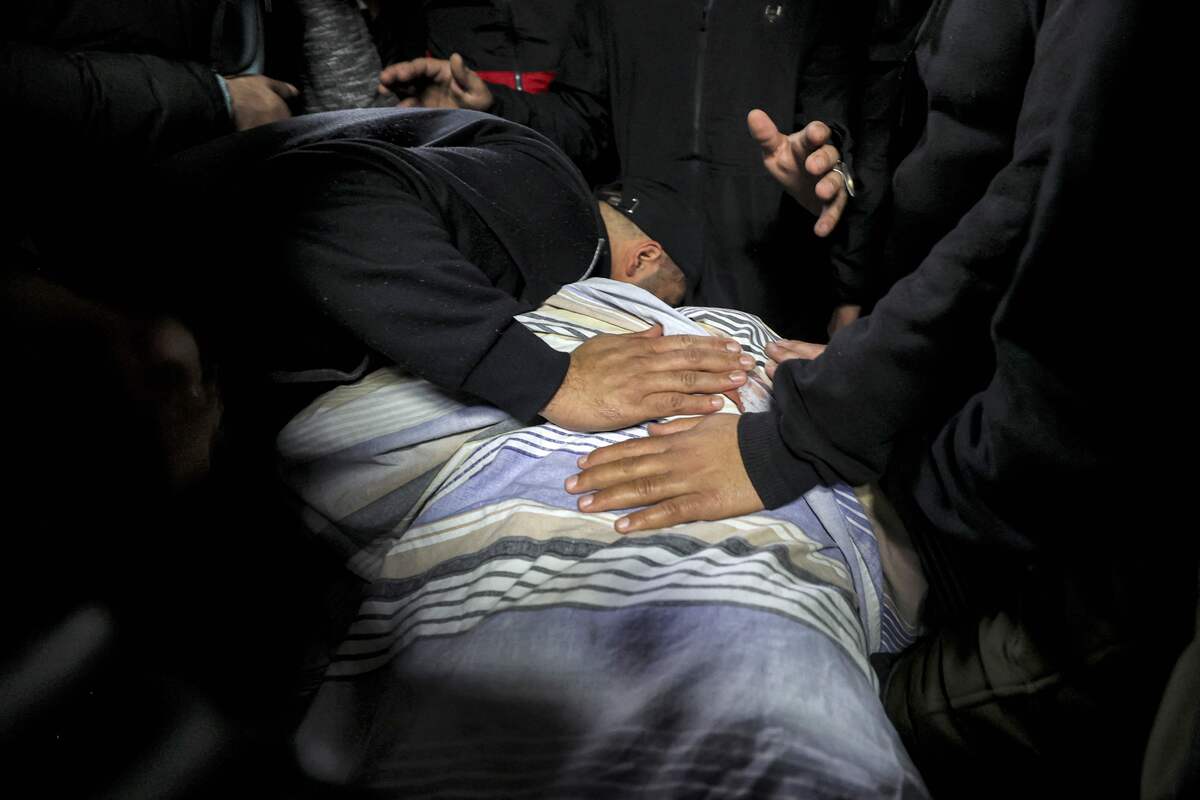
A young man and a girl were killed and 9 others were injured, today, Monday, during confrontations with the occupation forces in the city of Dura, south of Hebron.
The Ministry of Health announced the death of the young man, Muhammad Hassan Ibrahim Abu Sebaa (22 years old), as a result of being shot in the chest by occupation bullets, in the city of Dura.
Local sources reported that the girl, Ahed Mahmoud Emtair (24 years old), died as a result of being shot by Israeli soldiers.
According to the Ministry of Health; 10 injuries, including those in serious condition, arrived at Dura Governmental Hospital.
It was reported that among the injured was a girl who suffered critical head injuries and was later declared dead.
Severe confrontations broke out during which soldiers fired live bullets, stun grenades, and tear gas, resulting in two bullet wounds and dozens of cases of gas suffocation.
The sources confirmed that Israeli forces used young men as human shields during the confrontations that broke out in Dura.
Press sources reported that among those injured was photojournalist Mashhour Al-Wahwah.
PALESTINE
Mon 15 Jan 2024 4:01 pm - Jerusalem Time
West Bank: Israeli settlers attack Palestinian citizens' vehicles south of Nablus
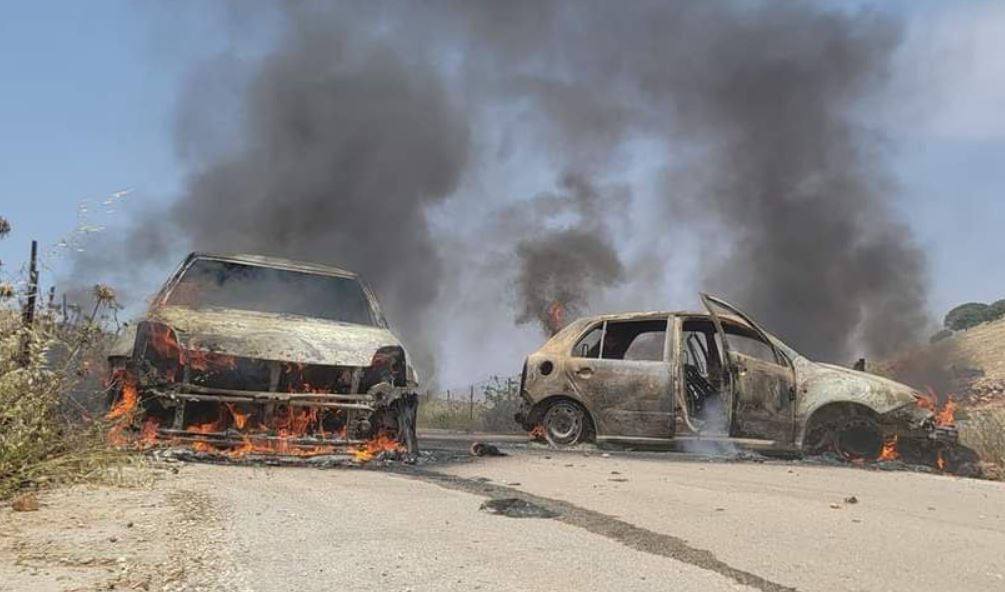
On Monday evening, Israeli settlers attacked citizens’ vehicles in the town of Huwwara, south of Nablus.
Local sources reported that a number of settlers threw stones at citizens' vehicles at the Salman Al Farsi roundabout and the main Huwwara Street.
Huwwara Main Street witnesses repeated assaults and attacks by settlers, including throwing stones at citizens’ vehicles, destroying shops and forcing their owners to close them.
The Israeli forces had closed the Huwara military checkpoint for more than three months, and the main Huwara Street in front of Palestinian vehicles for more than two months, and also prevented citizens from opening their shops, before they were reopened about two weeks ago.
ARAB AND WORLD
Mon 15 Jan 2024 3:33 pm - Jerusalem Time
Israel bombed areas in southern Lebanon, and sirens sounded in Matat

This morning, Israeli artillery shelling targeted the outskirts of the towns of Al-Dahaira, Al-Jebin and Shehin in southern Lebanon, according to what the Lebanese Information Agency reported.
Sirens sounded in Matat on the border with Lebanon.
The Israeli Ambulance Authority announced that two people were killed by a missile in an operation to fire anti-armor missiles at Yuval in the Upper Galilee, which Hezbollah claimed responsibility for.
This comes hours after the Israeli Broadcasting Corporation announced that five soldiers were injured in clashes in Shebaa Farms, while the Israeli army said that it killed three gunmen who infiltrated from Lebanon after clashing with them in Jabal Rous.
Hezbollah announced that it had targeted the newly developed spy equipment in the vicinity of the Metulla site, and a gathering of occupation soldiers in the vicinity of the Marj site, Khirbet Maar, and Birkat Risha, and caused direct hits there.
Israeli warplanes launched raids and attacked Hezbollah infrastructure, targets, and military sites in southern Lebanon, according to a statement by the army spokesman.
ARAB AND WORLD
Mon 15 Jan 2024 3:00 pm - Jerusalem Time
United Nations: Providing aid in Gaza is almost impossible
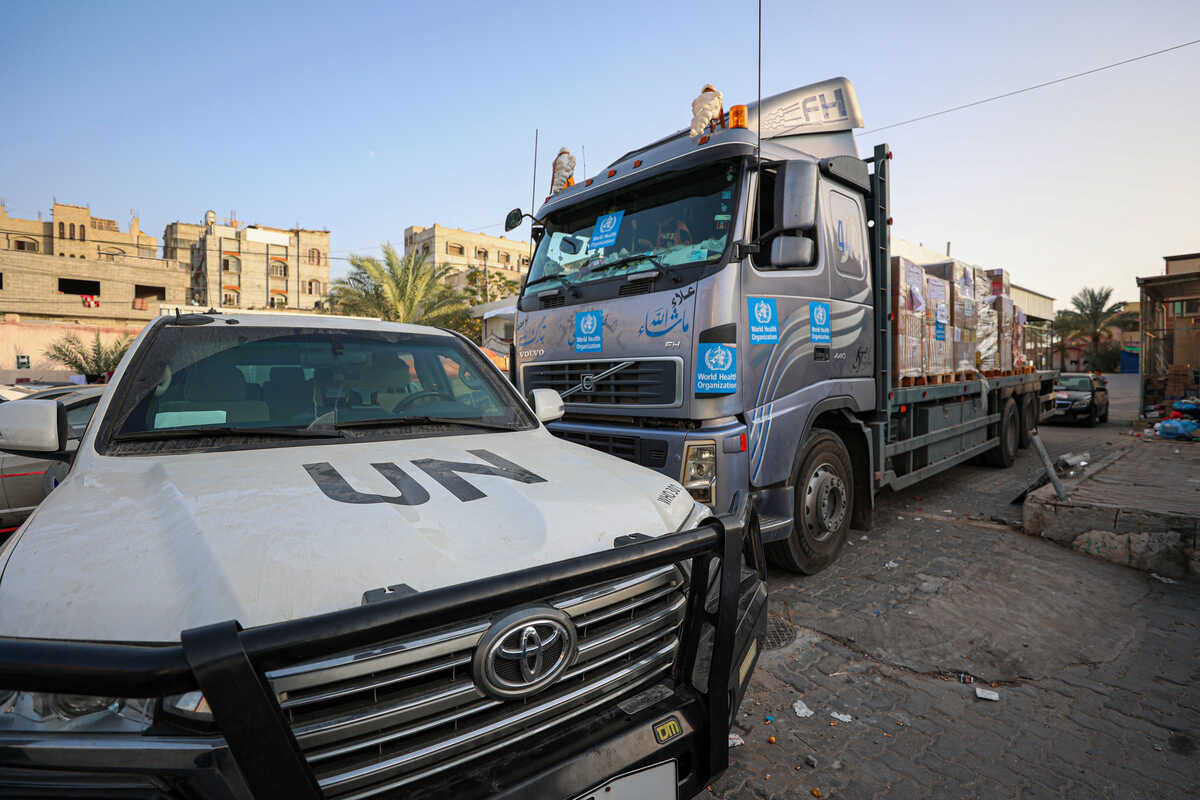
The UN Humanitarian Coordinator said that the crisis in Gaza is approaching famine, with Israel imposing additional restrictions on aid to Gaza. In more than 100 days, “millions have been displaced, hundreds of thousands are starving, and tens of thousands have been killed by the Israeli army.”
“Providing humanitarian assistance throughout Gaza is almost impossible,” Martin Griffiths, Under-Secretary-General for Humanitarian Affairs and Emergency Relief Coordinator, told the Security Council: “Our access to Khan Yunis [in southern Gaza] and the central area is largely absent.” He added, "Our efforts to send humanitarian convoys to the north were met with delays, rejection, and the imposition of impossible conditions."
One issue restricting the delivery of aid is Israeli inspection protocols. Griffiths explains that aid checks in Tel Aviv have been tightened recently. “The growing list of rejected items means we are unable to get supplies into Gaza to rehabilitate life-sustaining infrastructure,” the UN official said. Hospital generators and water treatment centers are on the list of prohibited items.
Last week, Sen. Chris Van Hollen (D-Md.) described on "Face the Nation" how Israel is using inspection protocols to obstruct the delivery of aid to Gaza. The US Senator from Maryland said: “When one item in the truck is rejected, the entire truck is rejected.” “And according to all the international [NGOs] we talked about that were working in conflict zones around the world, they had never seen a worse operation to ensure the safe delivery of humanitarian aid.”
In addition, Israel has imposed restrictions on the equipment that humanitarian relief workers have access to, making aid delivery less safe and efficient. "Failure to respect the humanitarian notification system puts all movements of aid workers at risk, as well as the completely insufficient quantities of armored vehicles and limited communications equipment we were allowed to bring in," he explained.
Griffiths reported that the Israeli bombing was already deadly and devastating to international relief organizations. He told the UN Security Council: “134 facilities belonging to the United Nations Relief and Works Agency for Palestine Refugees were bombed, and 148 United Nations staff and employees of other relief organizations were killed.” The Israeli bombing of Gaza led to the death of at least 23,000 Palestinians, including about 10,000 children and 7,000 women.
Last week, the United Nations reported that only 129 aid trucks enter Gaza each day on average. Before the war, which led to the displacement of at least 1.9 million Palestinians, 500 trucks entered the Gaza Strip daily. UNICEF says aid will not be enough to sustain Gaza, and commercial goods must be allowed into the Strip.
“The volume of commercial goods for sale in the Gaza Strip needs to increase and increase rapidly. What we need is the entry of at least 300 trucks of special commercial goods every day,” said Lucia Elmi, UNICEF Special Representative.
In addition to restricting aid, Israel has destroyed much of Gaza's life-supporting infrastructure. Wim Zwijnenberg, a researcher with the Dutch organization PAX, determined through satellite images that Israel destroyed the solar panels powering a wastewater plant that serves a million Gazans. A water facility located near the Indonesian Hospital, serving 30,000 Palestinians, was also bombed. It was found that about 20% of agricultural land in Gaza had been destroyed.
The bombing and lack of aid have created horrific conditions. Griffiths said: “Colleagues who have managed to reach the north in recent days describe scenes of absolute horror: bodies left lying on the road. People showing obvious signs of starvation stop trucks in search of anything they can get to survive.
The UN official warned that the risk of famine is increasing day by day. Relief groups estimate that more than 500,000 Palestinians are living in a state of famine, and that the entire population of the Strip faces acute food insecurity.
Griffiths also said that the health care system has collapsed, and women are no longer able to give birth safely. Doctors in Gaza reported performing medical procedures in crowded corridors and on floors. The lack of supplies means that many dangerous surgeries, including amputations on children, must be performed without anesthesia.
PALESTINE
Mon 15 Jan 2024 2:16 pm - Jerusalem Time
Israeli woman was killed and 17 others were injured in a ramming attack near Tel Aviv

More than 15 Israelis were injured, three of them seriously, after they were run over in the city of Raanana in the Tel Aviv region, on Monday.
According to the initial suspicion, the talk revolves around two run-overs and stabbings that occurred in 3 locations according to Israeli reports.
Maariv newspaper quoted the mayor of Raanana as saying that extensive combing operations had begun in the city with the help of helicopters, while Israeli Channel 7 said that the mayor there "asks residents not to go out into the streets."
Israeli media also reported the arrest of a Palestinian from Hebron on suspicion of carrying out these ramming and stabbing operations, following its talk about what it called the “neutralization” of the vehicle driver, and that the police were conducting searches for other suspects.
The Israeli police stated that they were dealing with an exceptional event near Tel Aviv and were conducting an extensive investigation, noting that a Palestinian carried out the stabbing and then ran over a number of others in Raanana.
Special forces participate in the operation
Israeli police estimated that the perpetrator seized two cars during the attack, pointing to the deployment of special forces in Raanana to try to understand the scale of the attack.
PALESTINE
Mon 15 Jan 2024 12:08 pm - Jerusalem Time
Palestine Prisoner's Club: The Israeli forces carry out thefts of money and gold from prisoners' families

The Palestinian Prisoners' Club said that since October 7, the Israeli occupation has escalated the theft and confiscation of property from homes belonging to the families of prisoners in Israeli prisons, including money, gold, phones, computers, and cars, in addition to the widespread sabotage and destruction operations it has caused inside homes.
The Prisoner's Club added in a statement today, Monday, that the occupation targeted the infrastructure, including bulldozing streets and public property, as happened mainly in Jenin and Tulkarm, and demolishing homes belonging to the families of prisoners, detainees, and martyrs, in addition to the raids that targeted currency exchange shops during the last period, which were carried out. During which funds worth millions of shekels were confiscated without any justification.
The Prisoner's Club explained that the occupation has adopted a policy of confiscating money and property, which has escalated significantly over the past few years, and has become one of the most prominent established policies, and has been mainly concentrated in Jerusalem, through the introduction of laws and legislation, to legitimize confiscation operations and what is being done against families. Prisoners and detainees are part of several levels related to this policy, which falls within the framework of the policies of exploitative colonialism, which aims to raise the cost of the Palestinian struggle, impose mass revenge operations, and target the Palestinian presence.
ARAB AND WORLD
Mon 15 Jan 2024 11:46 am - Jerusalem Time
China urges larger-scale Gaza peace conference as conflict escalates

China's Foreign Minister Wang Yi called for a larger, more authoritative Israeli-Palestinian peace conference and a timetable to implement a two-state solution as the Gaza conflict escalated and the Red Sea became a new flash point.
Speaking to reporters after talks with Egyptian Foreign Minister Sameh Shoukry in Cairo on Sunday, Wang said the international community should "listen" carefully to the legitimate concerns in the Middle East.
"China calls for the convening of a larger-scale, more authoritative and more effective international peace conference, the formulation of a specific timetable and road map for the implementation of the 'two-state solution', and support for the prompt resumption of Israel-Palestinian peace talks," Wang said.
A Chinese foreign ministry spokesperson said on Monday that the road map needed to be "binding". "As for the timing and venue of the conference and where it will be hosted, I think it needs to be determined by all parties through consultation," Mao Ning said at a regular news conference in Beijing."China also welcomes the active role of the United Nations in this regard," she said.
Last week, the United States and Britain launched strikes against Houthi targets in Yemen after the group attacked ships in the Red Sea.
The Houthis said their attacks are a show of support for Palestinians and Hamas, the Islamist group that controls Gaza.
The Red Sea attacks have forced commercial ships to take a longer, costlier route around Africa, stoking concern about inflation and supply chain disruptions. They are also bringing the Gaza crisis much closer to China's investments in the Suez Canal east of Cairo.
China avoids being a direct party in any military conflicts, but says it is keen to raise its "international influence, appeal and power" to shape events through diplomacy.
Last week, Wang said President Xi Jinping had "in-depth communication" with the leaders of Saudi Arabia and Iran to persuade the Middle East powers to let go of past grievances, and their restoration of ties in 2023 had set off a "wave of reconciliation" across the Middle East.
Wang is currently travelling through Egypt, Tunisia, Togo and the Ivory Coast until Thursday.
China's top diplomat also held talks on Sunday with the Secretary-General of the Arab League on the Gaza conflict and expressed concerns over the Red Sea."Influential countries, in particular, need to play an objective, impartial and constructive role in this regard," the two diplomats said in a joint statement released on Monday by the Chinese foreign ministry.
OPINIONS
Mon 15 Jan 2024 11:10 am - Jerusalem Time
Israel’s war in Gaza isn’t genocide, but is it proportionate?

Washington Post
Opinion Writer

By Fareed Zakaria
It is now almost three months since Benjamin Netanyahu’s government launched its ground invasion of Gaza, and it is time to ask some hard questions: Has it been proportional to the damage that Hamas inflicted on Israel? Has the Israeli military been careful to avoid civilian casualties? Was there another path?
I write this as a supporter of Israel, a country that I believe has been a remarkable success in an environment that was for decades deeply hostile toward it — and where some countries, such as Iran, remain opposed to its very existence. I am also dismayed and appalled by the rise of antisemitism across the world, which is a powerful reminder as to why Israel was founded.
This week, hearings at the International Court of Justice began to determine whether Israel’s government is committing genocide against Palestinians in Gaza. I think the charge is invalid; there is no systematic effort to exterminate Gaza’s population. (If there were, given the vast disparity in power, Israel would surely have killed many more than 23,000 people, though that number is, of course, still staggeringly high. The death toll figure comes from the Hamas-run Health Ministry in Gaza.) Genocide is an incendiary accusation that should not be used loosely. Nevertheless, during these hearings, some deeply troubling facts might emerge about Israel’s bombing campaign.
Israel suffered a brutal terrorist attack on Oct. 7 and had a right to respond forcefully. But consider what it has done in a small territory housing 2.2 million people, half of whom are children and of which, by Israel’s own estimate before the war, only 30,000 are Hamas fighters.
A Wall Street Journal analysis of Israel’s bombing campaign notes that by mid-December, “nearly 70 percent of Gaza’s 439,000 homes and about half of its buildings have been damaged or destroyed. … Much of the water, electrical, communications and healthcare infrastructure that made Gaza function is beyond repair.” Of Gaza’s 36 hospitals, only eight can still accept patients. U.N. monitors report that more than two-thirds of all school buildings have been damaged, as have several churches and more than 100 mosques.
The Associated Press reports that according to experts, in roughly two months, Israel caused more destruction in Gaza than the battle for Aleppo in Syria or the razing of Mariupol in Ukraine, and killed more civilians than the United States and its allies did in a three-year campaign against the Islamic State. Proportionally, Israel’s campaign has exceeded the destruction of the Allied bombings of Germany in World War II and, as the University of Chicago’s Robert Pape notes, “is one of the most intense civilian punishment campaigns in history.”
CNN reported in mid-December that U.S. intelligence estimated that 40 to 45 percent of the 29,000 bombs Israel had dropped were unguided, prone to cause greater collateral damage. Indeed, an Israeli rear admiral acknowledged before the ground invasion began that while the Israel Defense Forces was “balancing accuracy … right now, we’re focused on what causes maximum damage.” Netanyahu, Israel’s prime minister, has invoked the biblical story of Amalek, in which God tells the Israelites to kill every man, woman and child, destroy all property — even kill every animal — in retaliation for a surprise attack.
The Committee to Protect Journalists reports that “more journalists have been killed in the first 10 weeks of the Israel-Gaza war than have ever been killed in a single country over an entire year.” The United Nations reports that more U.N. aid workers have been killed in Gaza than in any other conflict over the 78 years of the organization. It’s possible that some of these numbers are misleading. But are all of them, coming from various sources, wrong?
This military campaign is being perpetrated by a deeply unpopular government in Jerusalem that is trying to salvage its reputation. Polls since the start of this conflict have shown that most of the public has lost faith in Netanyahu. A poll released last week found that only 15 percent of those surveyed wanted Netanyahu to keep his job after the war. An earlier poll found that 69 percent wanted elections as soon as the war ends. It is awkward to note this, but Netanyahu has every incentive to keep the military campaign going in the hope that his day of reckoning can be postponed, if not put off indefinitely. Having bungled the strategy toward Hamas before the war, he is trying to use maximum force now as political compensation.
Israel is a democracy and an open society, and precisely because of that it will one day have to ask itself whether it acted appropriately in the heat of its anger and sorrow after Oct. 7. Friends of Israel should help it ask those questions now, so that it does not look back on this episode with shame and regret.
OPINIONS
Mon 15 Jan 2024 11:02 am - Jerusalem Time
The Things We Disagree on About Gaza
New York Times
Opinion Writer
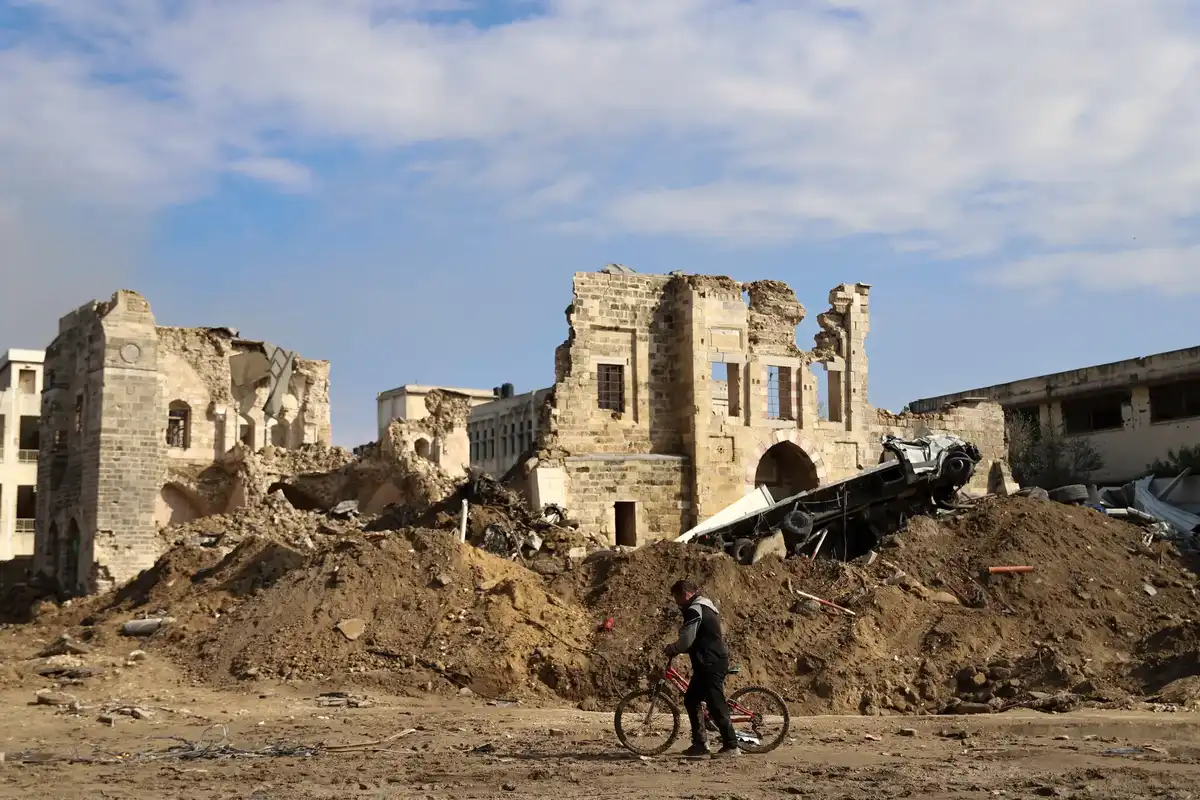
By Nicholas Kristof
I’ve been very critical of Israel’s counterattack on Gaza, which appears to have killed a woman or child about once every eight minutes for the past three months. Many of my readers and friends disagree with these columns and are pained by what they see as my unfairness toward Israel.
Too often, opinionated people bypass the most compelling arguments on the other side. Let me instead try to confront head-on the kinds of criticism I’ve received:
Israel was attacked. Children were butchered. Women were raped. So why are you criticizing Israel rather than the Hamas terrorists who started this war?
That’s a fair question. Yes, Hamas started this war with its brutal attack on civilians, and it has been indifferent to Palestinian lives. As someone who has reported regularly from Gaza over the years, I’m aghast at the admiration some American leftists show for an organization as cruel, misogynistic and economically incompetent as Hamas; it’s an echo of the left’s appalling admiration for Mao a half-century ago.
Israel was understandably shattered by what happened on Oct. 7, and I appreciate that trauma and share that sadness. But Hamas’s indifference to human life must never be an excuse for us to become indifferent. It’s too late to save those massacred on Oct. 7, but we can still try to reduce the toll in Gaza this month and this year.
I’m also aware that my tax dollars have helped underwrite the bombings that have ended up killing and maiming children in Gaza — the world’s most dangerous place to be a child, according to UNICEF — and this American complicity creates its own moral responsibility to speak out.
What do you expect Israel, or any country, to do after such a barbaric attack? It’s tragic how many Palestinian civilians have died, but what could Israel possibly do but hit back?
I think it’s a fallacy that the Israeli military has a binary choice: either to level Gaza or to do nothing. I’d like to see Israel dial way back on what is always a continuum.
For example, Israel had dropped 29,000 bombs, munitions and shells by mid-December, while the United States dropped 3,678 munitions in Iraq between 2004 and 2010, according to The Wall Street Journal.
The Biden administration itself has repeatedly answered the question of what Israel should do. It sent military leaders to Jerusalem to offer advice and it regularly counseled using greater efforts to spare civilians — instead of Israel’s pattern of what President Biden termed “indiscriminate bombing.”
You call for restraint — but what restraint did America show in Hiroshima or in Dresden? Why do you now insist that Israel behave by very different rules?
Yes, I live in a glass house. And, yes, I want Israel to play by different rules. It was revulsion at the horrors of World War II, including those in Hiroshima and Dresden, that helped lead to the 1949 Geneva Conventions creating rules of war to protect civilians from such mass slaughter.
In any case, two academic researchers using satellite imagery have found that at least 68 percent of buildings in northern Gaza have been damaged, which according to The Financial Times is a higher proportion than were damaged in Dresden.
The killing in Gaza is very sad, but we can’t stop halfway. We have to eradicate Hamas and re-establish deterrence. That’s the only path to ensure security for Israel.
Let me push back: Does leveling parts of Gaza truly make Israel more secure? As Defense Secretary Lloyd Austin has suggested, large-scale killing of civilians can result in a tactical victory but strategic defeat.
Wars have a quite imperfect record of achieving their aims: Going into Vietnam, Afghanistan and Iraq did not enhance American security, and Israel’s 1982 invasion of Lebanon did not boost Israeli security.
The longer this war goes on, the greater the risk of a conflagration involving Israel and Lebanon, an uprising in the West Bank, a greater crisis in the Red Sea or even a war with Iran. None of that would make Israel or anyone else more secure.
That’s one of my prime concerns about this war: To me, it’s not clear that the enormous bloodshed, public health crisis and risk of famine actually advance security, or that Israel has a workable plan for what follows the fighting.
More than 100 hostages are still held by Hamas, and they may be suffering unimaginable abuse. The war must continue until we get them back.
Negotiation and exchanges have done a much better job liberating hostages than bombardment. So far Israeli troops have killed more hostages than they have freed (one, at the beginning of the war).
If Hamas had organized an attack on America comparable to the one on Oct. 7, Americans wouldn’t be preaching restraint. The United States would be invading Gaza.
Yes, perhaps. Indeed, we did something similar after Sept. 11, 2001, in both Afghanistan and Iraq. I write my columns today about the Israeli war in Gaza in the same spirit in which I wrote innumerable columns two decades ago warning against invading Iraq. Sadly, Prime Minister Benjamin Netanyahu seems to be repeating in Gaza the mistakes America made after Sept. 11. (Except that Israel appears to have killed far more Gazan women and children in three months than were killed in the entire first year of the war in Iraq.)
The attack on Oct. 7 was particularly savage, and no doubt my perspective would be different if I had been on the receiving end. But I believe that in the aftermath of a terror attack, we must guard against the way fear makes us lose our bearings so we despise and demonize the other.
Some Gazans tortured, raped and murdered Israeli citizens on Oct. 7 because they saw the world through a bigoted prism and stereotyped and dehumanized Jews. We should not reciprocate with our own version of collective guilt that leaves vast numbers of Gazan children wrapped in tiny shrouds.
ARAB AND WORLD
Mon 15 Jan 2024 8:54 am - Jerusalem Time
Germany intervenes as a third party between Israel and South Africa before ICJ.. What does this mean?

Germany announced that it will intervene as a third party before the International Court of Justice in the case brought against Israel by South Africa on charges of committing genocide in Gaza.
Government spokesman Stephen Hebstreit said in a statement that Germany “intends to intervene as a third party in the main hearing,” indicating that Berlin will intervene in the main case against Israel, which may take years for the court to issue a decision on.
Article 63 of the Court's Statute allows States to request clarification on the use of a multilateral agreement. The move allows Germany to present its case to the court that Israel did not violate the Genocide Convention and did not commit or intend to commit genocide.
Since Germany does not claim to be legally affected in the case, it does not need permission from the International Court of Justice to intervene as a third party. As a signatory to the 1948 Genocide Convention, it is entitled to present its arguments on the issue.
According to the Times of Israel website, it does not appear that the German move will affect the court proceedings this week, which are scheduled to be discussed in the hearings in which South Africa requested a temporary injunction to force Israel to implement the ceasefire. A decision on this issue is expected within one month.
The procedure for third-party intervention before the International Court of Justice stipulated in Articles 62 and 63 was not sufficiently exploited earlier, but the situation later changed significantly, as three recent cases before the Court included third-party intervention, the first between Tunisia and Libya, where Malta submitted a request. Intervention; Between Libya and Malta, Italy requested intervention, and recently, El Salvador requested intervention in the issue between Nicaragua and the United States.
Yesterday, Friday, Turkish President Recep Tayyip Erdogan said that his country had presented evidence - much of it visual - to the court, sufficient to convict Israel of genocide crimes, in the lawsuit that many countries announced their support.
For his part, Hebstreit said: “In light of German history and the crimes against humanity committed in the Holocaust, the German government is particularly committed to the Genocide Convention that was signed in 1948 in the wake of the Holocaust.”
He added that the agreement represents a “central instrument” under international law to prevent another Holocaust, and for this reason, “we stand firmly against political exploitation” of the agreement.
The spokesman expressed the German government's "decisive and explicit rejection of the accusations directed against Israel before the International Court of Justice of committing genocide," considering that "this accusation is baseless."
For his part, Prime Minister Benjamin Netanyahu thanked German Chancellor Olaf Schulz for Berlin's decision, saying: "Your position and Germany's position on the side of the truth moves all citizens of Israel."
Netanyahu added: “The blood libel, full of hypocrisy and hatred, should not be allowed to prevail over the moral principles shared between our two countries and the entire civilized world.”
PALESTINE
Mon 15 Jan 2024 8:48 am - Jerusalem Time
West Bank: Israeli forces storm An-Najah University and arrests 20 students
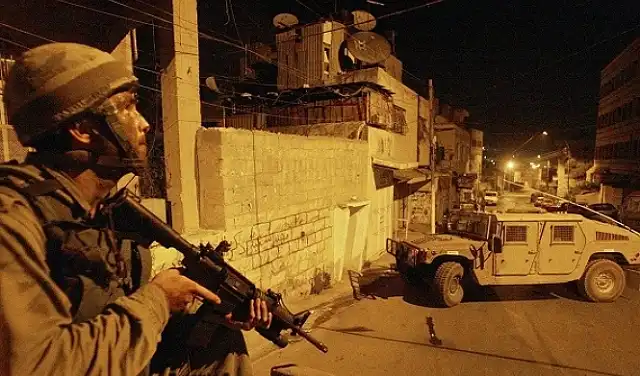
Members of the Student Council and representatives of some student blocs have been organizing a sit-in in front of the university administration building on the old campus for 26 days, to collect several demands related to facilitations in paying university tuition and other administrative and academic facilities, taking into account the current circumstances.
At dawn on Monday, Israeli forces stormed the old campus of An-Najah National University in the city of Nablus in the occupied West Bank, and arrested a number of students protesting inside, including the head of the Student Union Council.
The occupation forces stormed the city of Nablus from several fronts, surrounded the old campus of An-Najah University and deployed snipers on neighboring buildings, before storming the campus with their soldiers and vehicles.
The occupation forces carried out searches inside the university campus buildings and on their roofs, according to video clips circulated on social media.
The occupation army arrests all students protesting inside Al-Najah University in Nablus
The Student Council confirmed in a brief statement that the Israeli forces arrested all students protesting within the university walls, including the Chairman of the Student Union Council, Muhammad Salama.
It was not clear how many students the occupation arrested from inside the university campus, while local sources confirmed the presence of about 20 students inside the campus before it was stormed.
It is noteworthy that this is the first time that the occupation forces have stormed the Al-Najah University campus in decades.