ARAB AND WORLD

Fri 19 Jan 2024 4:42 pm - Jerusalem Time

Israeli extremist minister Ben Gvir: The Palestinians in the West Bank must be killed, even if they do not pose a threat

Extremist Israeli National Security Minister Itamar Ben Gvir has directed Israeli police officers to shoot Palestinians even if they do not pose a threat to their lives.


The official Kan channel said: “Contrary to the instructions to open fire, Minister Ben Gvir told the Yamas fighters (a special police unit active in combating terrorism) in the West Bank: You have all my support. When you see a terrorist, even if he does not endanger you, shoot.” Fire on him."


Ben Gvir did not specify the specifications of what he called “a terrorist who does not expose Israeli forces to danger,” which may open the door to the killing of more innocent Palestinians in the West Bank, which is witnessing increasing tension.


For its part, the Hebrew newspaper "Yedioth Ahronoth" said that Ben Gvir's statements came during his inspection of the "Yamas" and "Maghav" (border guard police) base in the West Bank.

ARAB AND WORLD

Fri 19 Jan 2024 4:35 pm - Jerusalem Time

The Financial Times: Arab nations develop plan to end Israel-Hamas war and create Palestinian state

The Financial Times newspaper published a report prepared by Andor England, in which he said that the Arab countries are preparing an initiative to stop the war in Gaza and build a Palestinian state, which may lead to the establishment of official diplomatic relations between Saudi Arabia and Israel.


England said the initiative includes securing a ceasefire, releasing the hostages first, and taking irreversible steps to create a Palestinian state.

The newspaper quoted a prominent Arab official as saying that the Arab countries hope to present their plan within weeks, as part of efforts to stop the war in Gaza and prevent the outbreak of a broader war in the Middle East.


Arab officials discussed the plan with the US and European governments, and it will include Western countries agreeing to officially recognize the Palestinian state, or support the Palestinians obtaining full membership in the United Nations.


The senior official said: “The main issue is that you need to provide hope to the Palestinians, and this cannot be done through economic benefits or removing symbols of occupation.” The initiative comes at a time when Israel is facing widespread international pressure to stop its attack on besieged Gaza, at a time when the United States has increased its diplomatic efforts to prevent the spread and outbreak of war in the region, and is pushing towards a long-term resolution in the intractable Israeli-Palestinian conflict.


US Secretary of State Anthony Blinken described the war in Gaza as “painful,” adding that what we want is a Palestinian state that “gives the people what they want, and works with Israel so that it is effective.”


When the Saudi Foreign Minister was asked, at the Davos Forum, on Tuesday, whether Riyadh would recognize Israel within a broad political agreement, he replied: “Certainly,” and “We agree that regional peace includes peace with Israel, but this only happens with peace for the Palestinians through a Palestinian state.”


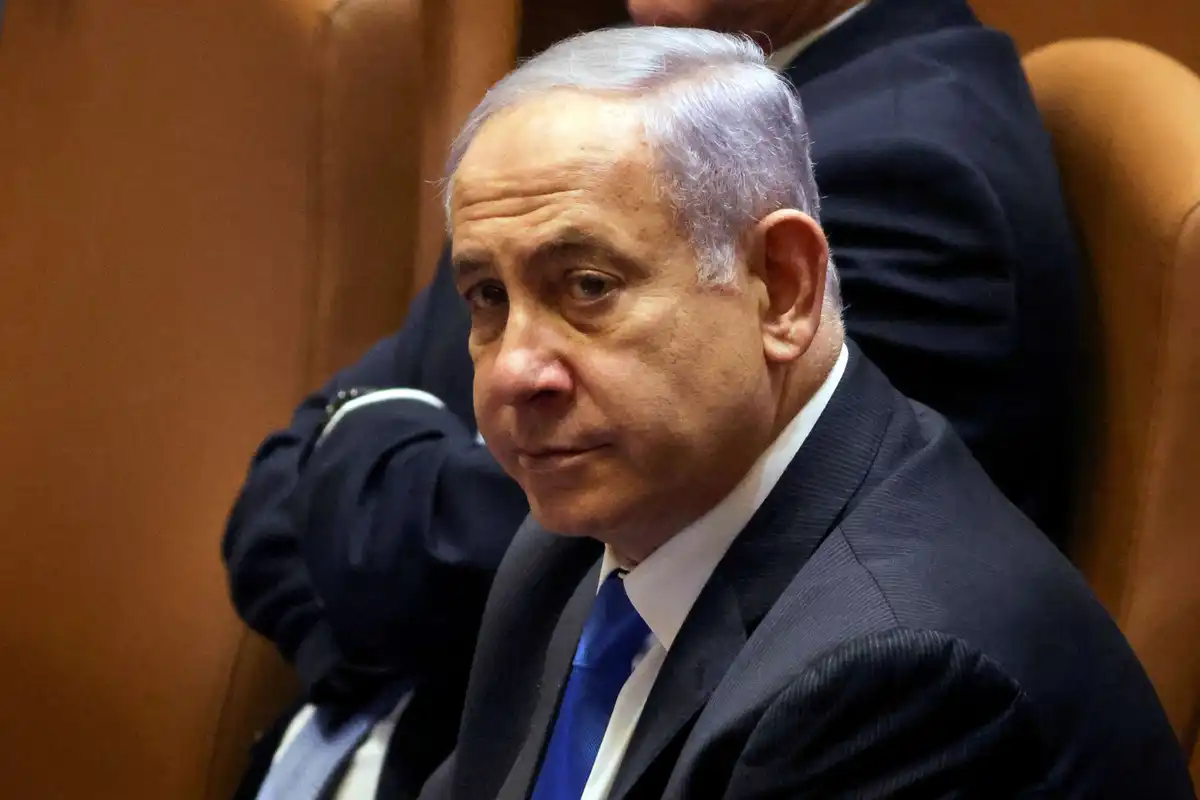
On the same day, National Security Advisor Jake Sullivan stressed that the United States is focused, as part of post-war plans in Gaza, on achieving a normalization agreement between Saudi Arabia and Israel, as he said: “Our approach remains focused on moving towards stability and integration in the region.” However, there are several challenges to reaching these goals, including the Hamas attack on October 7, the Israeli leaders’ warning that the war in Gaza will continue for several months, and Israeli Prime Minister Benjamin Netanyahu’s ruling out working with the National Authority and rejecting the two-state solution. He said, in December, that he was “proud” to have prevented a Palestinian state: “Everyone knows what would happen if we surrendered to international pressure and helped with a state like this.”


Netanyahu leads an extremist government in which settlers in the West Bank and Zionist nationalist parties participate.


The Arab official commented: “In light of today’s political situation in Israel, normalization is what will prevent the Israelis from falling into the abyss.”


Saudi Arabia was moving towards normalizing relations with Israel before the attacks, as it conditioned normalization on a security treaty with the United States and support in a nuclear project for civilian purposes. American officials discussed an element of normalization related to the Palestinians, such as a limited settlement freeze in the West Bank, support for the National Authority that administers parts of the occupied territories, and a path toward a Palestinian state.


Blinken was planning to visit Riyadh in mid-October to discuss the Palestinian component of the agreement, but the attacks halted the talks. But Saudi Arabia confirmed that the option is still on the table, and it wants to ensure concessions regarding the Palestinians, including Gaza. A person familiar with the talks said: “We got the broad outlines from the National Authority,” and “Now the element must be strengthened in order for it to be politically effective at any point in the future.”


Biden, who is considered one of Israel's staunchest advocates, spoke of the two-state solution as a guarantor of Israel's security. Saudi Arabia's readiness for normalization is considered a bargaining chip with Israel, which views establishing relations with the Kingdom as a major prize for its normalization efforts with Arab countries.


Although Saudi Arabia deals with normalization as part of its plans to develop the Kingdom and make it a commercial, financial and tourism center, it is now looking at the dangers emanating from the Gaza war and its expansion in the region, and the impact the destruction of Gaza will have on Arab generations.


On Wednesday, in Davos, Switzerland, Blinken said that it is up to Israel “to seize the opportunity that we believe exists,” and described the war as a “turning point” in the Middle East, requiring difficult decisions.


PALESTINE

Fri 19 Jan 2024 10:31 am - Jerusalem Time

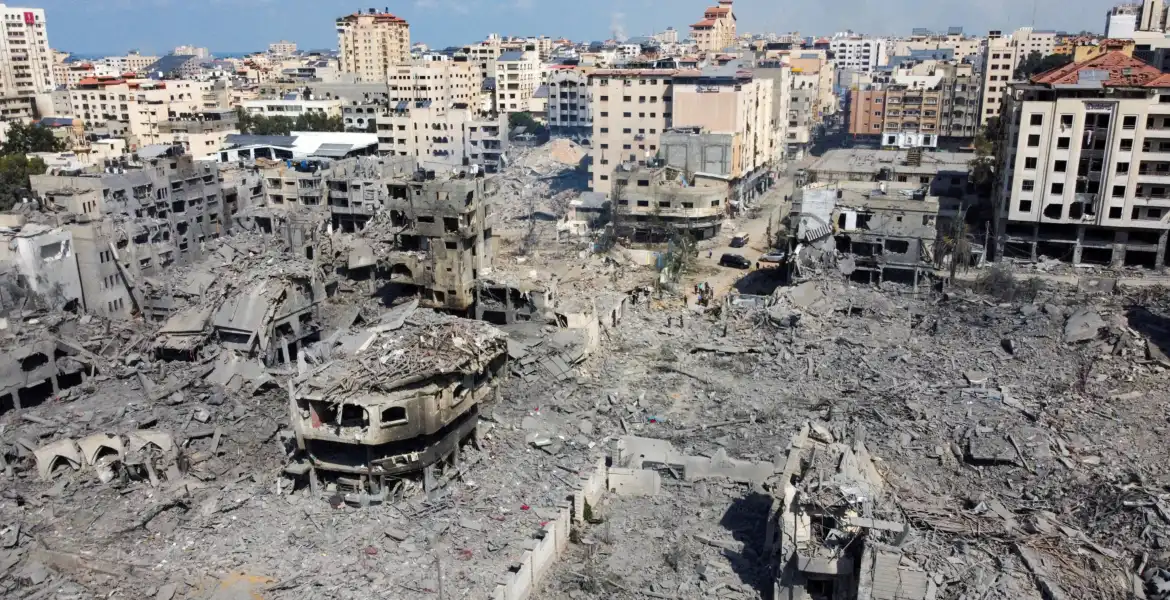
War on Gaza: Israeli army blows up residential squares in Gaza and causes dozens of dead and wounded.. America: Death toll is very large

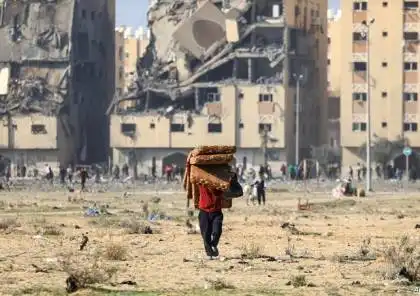
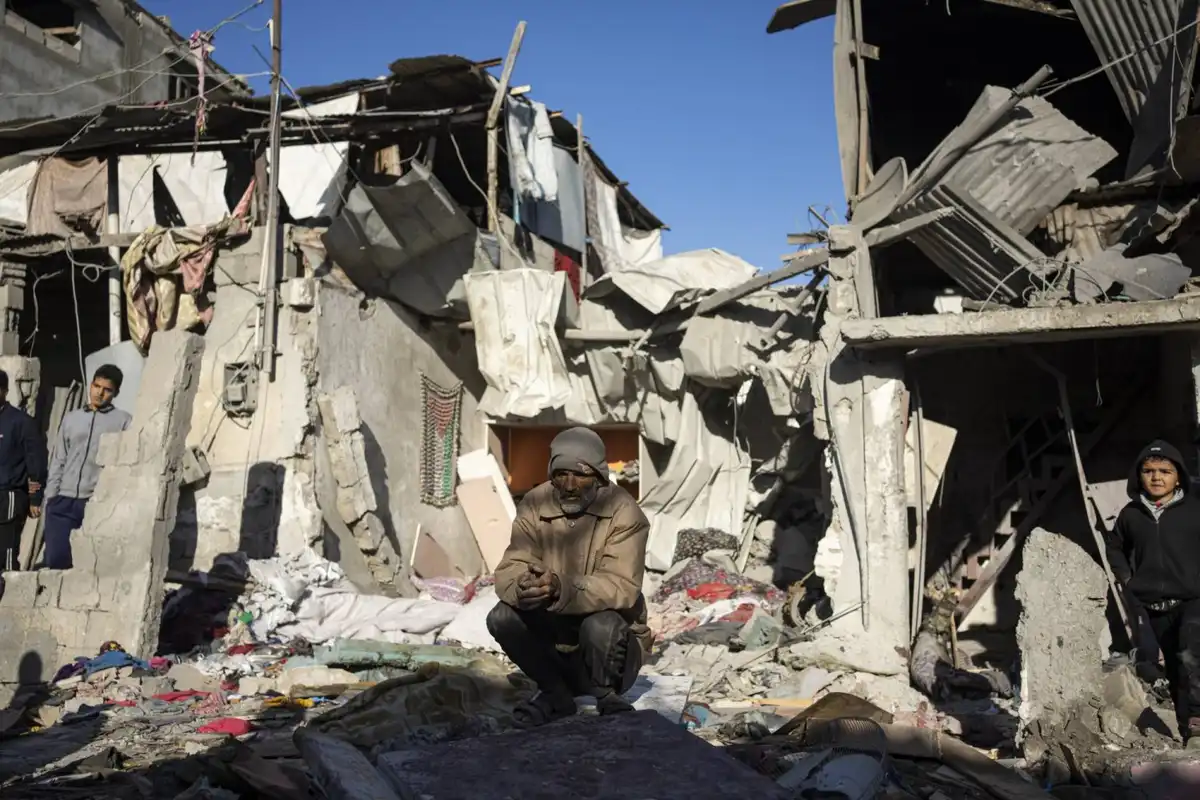
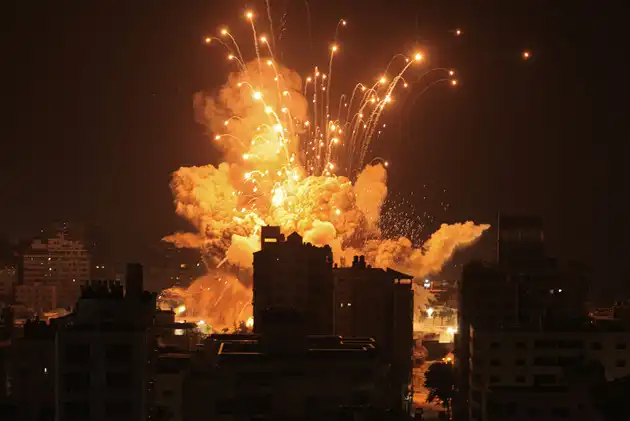
The Israeli occupation forces continued to target civilians in the Gaza Strip on the evening of Thursday, January 18, 2024, causing the death and injury of dozens, most of them women and children, while the United States considered that “the number of civilian deaths was very large” in the Strip.


Local sources told the Palestinian News Agency "Wafa" that at least two citizens were killed and others were injured in a bombing carried out by the Israeli occupation on a residential building west of Gaza City, while citizens transported the bodies of 4 killed to the European Hospital, who recovered after a bombing in Khan Yunis.


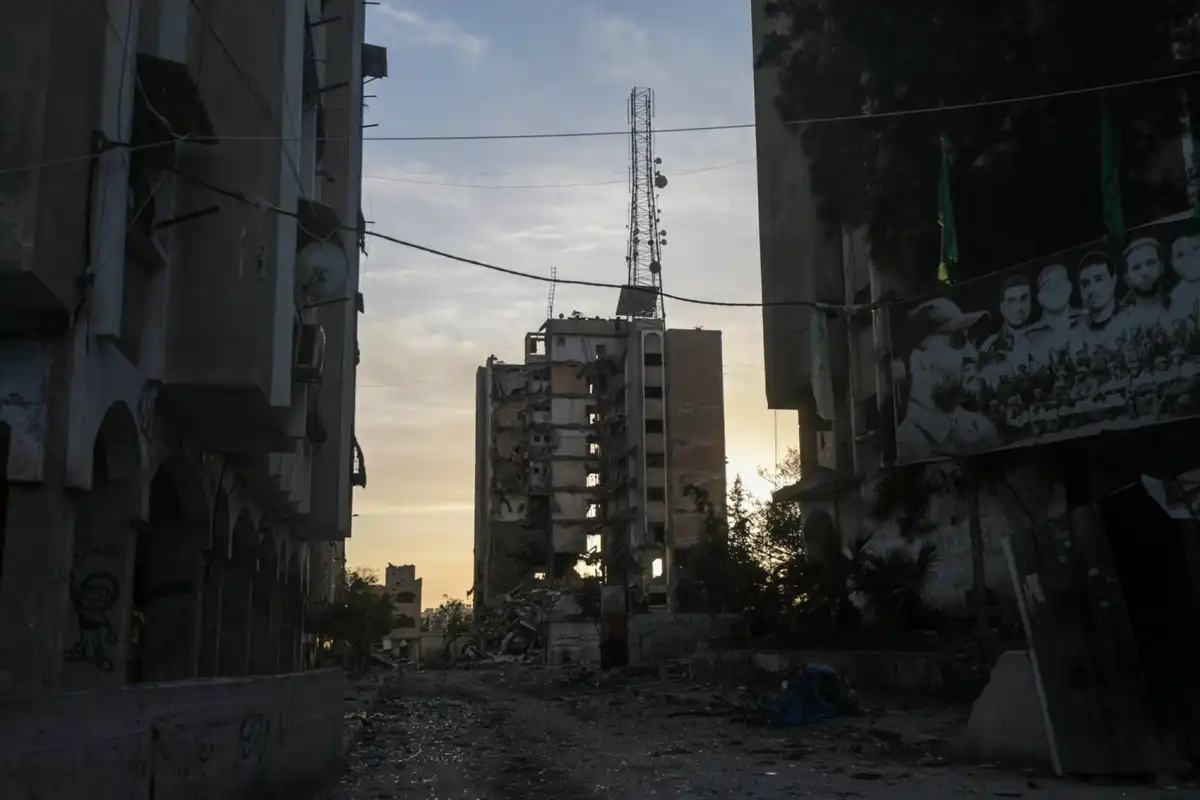
The sources also added that the occupation forces fired white phosphorus bombs on the Qaizan al-Najjar area, south of Khan Yunis, and carried out a bombing in the vicinity of the Martyr Abu Youssef al-Najjar Hospital, east of Rafah, in the south of the Gaza Strip, and targeted with a missile the Antar Tower on Old Gaza Street in the town of Jabalia, north of the Gaza Strip.


While Israeli forces besieged several schools housing thousands of displaced people west of the Tal Al-Hawa neighborhood in Gaza City, while the bombing of residential squares in the town of Bani Suhaila, east of Khan Yunis, continued.


Deteriorating conditions in the Gaza Strip

In addition, the Palestine Red Crescent Society warned of the deterioration of the humanitarian conditions in the Gaza and northern governorates, as a result of the continued Israeli aggression and siege, which prevent the delivery of aid.


The association said in a statement on Thursday that about 800,000 citizens suffer from food insecurity, a lack of clean water, and widespread destruction of infrastructure, in addition to a major scarcity of basic materials, including bread, vegetables, infant formula, medicines, and sanitary napkins, which has led to exacerbate the difficulties faced by citizens.


It also pointed out that citizens are resorting to grinding legumes to try to make bread due to the lack of flour, pointing out that they are suffering as the situation worsens in the winter from the extreme cold, and the scarcity of means of heating, blankets, and proper nutrition, especially after the severe damage to most of the homes and the shattering of their windows.


While the association appealed to the international community and international humanitarian institutions to intervene urgently and pressure the occupation authorities to allow the opening of a safe humanitarian corridor that guarantees the arrival of aid to the northern Gaza Strip, including medical supplies and fuel, the activation of relief programs, and the revival of the health system in the Gaza and northern governorates.


The White House comments on the number of victims

For its part, the White House said on Thursday that “the number of civilian deaths is very high” in the Gaza Strip, which has witnessed a large Israeli military operation since the Hamas attack in October.

National Security Council spokesman at the White House, John Kirby, stressed that the United States will not stop working towards achieving a two-state solution. “There will be a post-conflict Gaza that will not be reoccupied,” Kirby told reporters on Air Force One.


Earlier Thursday, the Ministry of Health in the Gaza Strip announced that the death toll from the Israeli bombing on the Gaza Strip had risen to 24,620 killed since the start of the Israeli aggression on the Gaza Strip on October 7, 2024.


In this context, Matthew Miller, spokesman for the US State Department, said on Thursday that there is “no way” to solve the long-term security challenges facing Israel in the region and the short-term challenges of rebuilding Gaza except by establishing a Palestinian state.

Miller also stated during his speech at a press briefing that Israel has an opportunity at the present time, in light of the willingness of countries in the region to provide security guarantees to Israel.


The American official added, "But there is no way to solve their long-term security challenges to provide permanent security, and there is no way to solve the short-term challenges of rebuilding Gaza, establishing governance in Gaza, and providing security for Gaza except by establishing a Palestinian state."


ARAB AND WORLD

Fri 19 Jan 2024 10:26 am - Jerusalem Time

“Our patience is running out!” Israeli website: People close to Biden advised him to disavow Netanyahu

The Israeli website Ynet reported, citing unnamed sources, that those close to US President Joe Biden advised him to announce his “loss of personal confidence” in Israeli Prime Minister Benjamin Netanyahu, because the latter is “slow in ending the war” for personal reasons, and avoids discussing the issue of managing matters in Gaza after the end of the war. the war.


The report, which was published on Thursday, January 18, 2024, indicated that Biden had begun to “get fed up” with Netanyahu’s decisions, and his “patience was about to run out,” as the latter’s behavior sparked frustration in the White House, and officials there began to see that he was not putting Prisoners are at the forefront of his war goals.


The Biden administration is also frustrated by Netanyahu's insistence on prolonging the war, and his continued refusal to discuss the situation in Gaza after the end of the Israeli military operation there.


The website quoted its sources close to the Biden administration as saying that Netanyahu does not put the release of Israeli prisoners at the top of his priorities, but rather wants the war to continue for a few more months, despite fears that the prisoners will not survive by then.


Declaration of no confidence

The sources indicated that those close to Biden advised him to announce his personal disavowal of Netanyahu, and to declare that he had lost confidence in him, and that he “only trusts the people of Israel and their state.” The sources said that Biden’s aides advised him to publicly disavow Netanyahu’s actions early next February.


Meanwhile, Biden is discussing ways to convince Netanyahu to reduce his goals and seek to end the war, as the American president needs an urgent diplomatic achievement, and the war in Gaza is harming his image in the United States during the year of the presidential elections, according to the Israeli website.


It added that the Biden administration believes that moving forward on this path may enable it to win over Saudi Arabia and revive the normalization process between it and Israel, as the Americans see that the October 7 attack was an attempt by Hamas, with the support of Iran, to block the path to normalization of relations between Israel. And Saudi Arabia, whose negotiations were at an advanced stage before the war broke out.


Biden believes that normalization with Saudi Arabia is sufficient incentive to convince Netanyahu to agree to end the war, but senior Israeli officials believe that as long as Israel does not take a serious political step to reach an agreement with the Palestinians, Saudi Arabia will not accept the path of normalization. The Saudis are not in a rush, and they believe that they can wait until After the US elections in November of this year.


"We say 'no' to our closest friends"

It is noteworthy that reports reported by the American network NBC News, on Thursday, spoke of the desire of the American administration to bypass Netanyahu and cooperate with Israeli opponents to end the war in Gaza.


In response, Netanyahu said in a press conference held yesterday: “Those who talk about (the day after Netanyahu) are actually talking about establishing a Palestinian state with the Palestinian Authority, and this is what they are actually saying. The reality is that it is not (the day after Netanyahu), but It is “the day after exceeding what the majority of Israeli citizens want.”


He added: “The State of Israel must control the entire territory of western Jordan in the near future. I say to the Americans: (The prime minister in Israel must be able to say - no - to his closest friends as well, and be able to refuse when necessary, and agree when it is necessary.”) possible).”


On the other hand, US State Department spokesman Matthew Miller said last night that there is no way to solve the security problems facing the State of Israel, and restore stability in Gaza, except by establishing a Palestinian state.

OPINIONS

Fri 19 Jan 2024 10:19 am - Jerusalem Time

Gaza war: Arab regimes ignore popular support for Palestine at their peril

Middle East Eye

Middle East Eye

Opinion Writer

By Mohamad Elmasry

Pushing ahead with these Israel normalisation deals could prove risky, amid unprecedented Arab support for the Palestinian cause

Anew survey from the Arab Center for Research and Policy Studies has found that Arabs are more pro-Palestinian than they have been at any point since 2011, the year the organisation began systematically polling Arab public opinion on Israel-Palestine and other issues. 

In the most recent survey, conducted between 12 December and 5 January, the centre polled 8,000 Arabs in 16 countries that represent more than 95 percent of the population of the Arab region. Respondents were asked a variety of questions about the Palestinian cause, the 7 October attack on Israel by Hamas, Israel’s war on Gaza, and US policy. 

The findings suggest that Israel’s war on Gaza, likely a genocide under international humanitarian law, has increased Arab support for Palestinians, and amplified anti-Israel and anti-US sentiments. 

A massive 92 percent of respondents said the Palestinian cause was an issue of concern for all Arabs, not just Palestinians. This represents a significant increase from the 76 percent reported in the centre’s 2022 poll; indeed, it is the highest figure ever recorded. 

The survey also shows strong evidence of Arab public support for Hamas, which governs Gaza but is proscribed as a terrorist organisation by the UK and other countries. 

Nearly 90 percent of Arab respondents said they considered the 7 October attack by Hamas to be a “legitimate resistance operation” or a “somewhat flawed but legitimate resistance operation”.

Importantly, a total of 89 percent of respondents said they rejected recognising Israel, the highest figure in the centre’s polling history. Only 13 percent of surveyed Arabs said they believed that peace with Israel remains possible. 


Stalled momentum

Opinions about the US also appear to have grown more negative as a result of the Gaza war. More than 90 percent of respondents said the US response to recent events has been “bad” or “very bad”, with 76 percent saying their opinion of US policy had become more negative since 7 October. 

It is worth considering the implications of these results for Israeli normalisation efforts. In 2020, four Arab countries - the United Arab Emirates, Morocco, Sudan and Bahrain - agreed to normalise relations with Israel. 

These deals were significant, in part because they bypassed Palestinians and seemed to do away with concerns about Israel’s illegal occupation of Palestinian territories. While Zionists praised the normalisation efforts, scholars and pro-Palestinian groups saw them as a betrayal of the Palestinian cause. 

Since 2020 and before 7 October, there had been momentum for more widespread normalisation, with Saudi Arabia well on its way towards making a deal. But Israel’s war on Gaza, and the negative sentiments it has engendered about Israel in the Arab world, could make future normalisation agreements less likely - or at least more difficult to execute. 

In the centre’s latest survey, 68 percent of Saudi Arabian respondents said they rejected recognising Israel - nearly double the 38 percent who said this in 2022.

Arab governments would be wise to listen to the calls of their populations. It is always difficult to predict how public anger may manifest

Moroccan and Sudanese Arabs are also more likely now to reject recognising Israel than they were in 2022. In Morocco, rejection of recognition rose to 78 percent from 67 percent, while Sudanese rejection rose to 81 percent from 72 percent. These findings underscore the daunting task faced by Arab regimes attempting to normalise with Israel going forward. 

As South Africa’s genocide case at the International Court of Justice has made clear, Israel has, since 7 October, issued numerous statements that appear to show genocidal intent, while Israeli forces have killed more than 24,000 Palestinians, including 10,000 children. 

It will be difficult to convince Arab citizens, most of whom are overwhelmingly sympathetic to the Palestinian plight, of the political, ethical and religious appropriateness of normalising relations with a state that has bombed civilian areas indiscriminately, targeted hospitals, shelters and safe routes, and systematically prevented humanitarian aid from reaching innocent civilians. 


United in anger

Going forward, the question for Arab regimes will revolve around the extent to which they are willing to ignore popular sentiments. Pushing ahead with Israel normalisation against the will of their citizens could prove risky. 

Indeed, Arab publics appear united in anger. The last time anger was this palpable on the Arab streets was during the Arab Spring era, which led to calls for democracy and widespread popular protests. Will Arab governments be willing to roll the dice on normalisation agreements that could lead to unrest? Only time will tell. 

More than anything, perhaps, the recent survey results demonstrate the massive disconnect between some Arab regimes and their citizenries. 

With rare exceptions, most Arab governments have delivered only relatively mild rebukes of Israeli atrocities, and popular calls for action against Israel - including calls for an oil embargo - have not gained traction with Arab governments. Importantly, previously agreed-upon normalisation deals have continued unabated. 

Egypt’s handling of the Rafah border crossing has perhaps best illustrated the disconnect between Arab governments and the Arab street. Egypt has not fully opened the Rafah crossing - a critical failing, since allowing essential aid into Gaza would mitigate the current humanitarian catastrophe. 

For months, the Egyptian regime has obstructed the work of aid workers and stifled Rafah-related protests, even arresting foreign activists attempting to mobilise aid. Last week, an Egyptian woman who carried out a modest street protest, waving a Palestinian flag while chanting for justice, was arrested by Egyptian authorities. 

Acts of tragic, oppressive violence can sometimes catalyse significant change. This was the case during the Arab Spring, when Arab regime violence led to unprecedented public anger, massive street protests and calls for democracy. It is possible, perhaps even likely, that the Gaza genocide could mark a substantive change in Arab politics. 

No one knows for sure what the next round of survey results will show. But unless Arab regimes do something to meaningfully check Israeli and US aggression - and to better align their policies with the desires of their citizenries, while creating better economic opportunities - anger and frustration in the Arab street will likely continue to rise. 

Arab governments would be wise to listen to the calls of their populations. It is always difficult to predict how public anger may manifest.

OPINIONS

Fri 19 Jan 2024 10:11 am - Jerusalem Time

Thanks to Gaza, European philosophy has been exposed as ethically bankrupt

Middle East Eye

Middle East Eye

Opinion Writer

By Hamid Dabashi

From Heidegger's Nazism to Habermas's Zionism, the suffering of the 'Other' is of little consequence 

Imagine if Iran, Syria, Lebanon, or Turkey - fully backed, armed and diplomatically protected by Russia and China - had the will and the wherewithal to bomb Tel Aviv for three months, day and night, murder tens of thousands of Israelis, maim countless more and make millions homeless, and turn the city into a heap of uninhabitable rubble, like Gaza today.

Just imagine it for a few seconds: Iran and its allies deliberately targeting populated parts of Tel Aviv, hospitals, synagogues, schools, universities, libraries - or indeed any populated place - to ensure maximum civilian casualties. They would tell the world they were just looking for Israeli Prime Minister Benjamin Netanyahu and his war cabinet.  

Ask yourself what the US, UK, EU, Canada, Australia and Germany in particular would do within 24 hours of the onslaught of this fictional scenario. 

Now come back to reality, and consider the fact that since 7 October (and for decades before that date), Tel Aviv’s western allies have not only witnessed what Israel has done to the Palestinian people, but have also provided it with military equipment, bombs, munitions and diplomatic coverage, while American media outlets have offered ideological justifications for the slaughter and genocide of Palestinians.  

The aforementioned fictional scenario would not be tolerated for a day by the existing world order. With the military thuggery of the US, Europe, Australia and Canada fully behind Israel, we helpless people of the world, just like Palestinians, do not count. This is not just a political reality; it is also pertinent to the moral imaginary and philosophical universe of the thing that calls itself “the West”.  

Those of us outside the European sphere of moral imagination do not exist in their philosophical universe. Arabs, Iranians and Muslims; or people in Asia, Africa and Latin America - we do not have any ontological reality for European philosophers, except as a metaphysical menace that must be conquered and quieted. 

Beginning with Immanuel Kant and Georg Wilhelm Friedrich Hegel, and continuing with Emmanuel Levinas and Slavoj Zizek, we are oddities, things, knowable objects that Orientalists were tasked with deciphering. As such, the murder of tens of thousands of us by Israel, or the US and its European allies, does not cause the slightest pause in the minds of European philosophers.  

Tribal European audiences

If you doubt that, just take a look at leading European philosopher Jurgen Habermas and a few of his colleagues, who in an astoundingly barefaced act of cruel vulgarity, have come out in support of Israel’s slaughter of Palestinians. The question is no longer what we might think of Habermas, now 94, as a human being. The question is what we might think of him as a social scientist, philosopher and critical thinker. Does what he thinks matter to the world anymore, if it ever did?  

The world has been asking similar questions about another major German philosopher, Martin Heidegger, in light of his pernicious affiliations with Nazism. In my opinion, we must now ask such questions about Habermas’s violent Zionism and the significant consequences for what we might think of his entire philosophical project?

If Habermas has not an iota of space in his moral imagination for people such as Palestinians, do we have any reason to consider his entire philosophical project as being in any way related to the rest of humanity - beyond his immediate tribal European audiences?  

In an open letter to Habermas, distinguished Iranian sociologist Asef Bayat said he “contradicts his own ideas” when it comes to the situation in Gaza. With all due respect, I beg to differ. I believe Habermas’s disregard for Palestinian lives is entirely consistent with his Zionism. It is perfectly consistent with the worldview in which non-Europeans are not completely human, or are “human animals”, as Israeli Defense Minister Yoav Gallant has openly declared.


In its disregard for Palestinian lives, Habermas’s Zionism has thus joined Heidegger’s Nazism

This utter disregard for Palestinians is deeply rooted in the German and European philosophical imagination. The common wisdom is that out of the guilt of the Holocaust, Germans have developed a solid commitment to Israel. 

But to the rest of the world, as now evidenced by the magnificent document that South Africa has presented to the International Court of Justice, there is a perfect consistency between what Germany did during its Nazi era and what it is now doing during its Zionist era.

I believe that Habermas’s position is in line with the German state policy of partaking in the Zionist slaughter of Palestinians. It is also in line with what passes for the “German left”, with their equally racist, Islamophobic and xenophobic hatred of Arabs and Muslims, and their wholesale support for the genocidal actions of the Israeli settler colony.

We must be forgiven if we thought what Germany had today was not Holocaust guilt, but genocide nostalgia, as it has vicariously indulged in Israel’s slaughter of Palestinians over the past century (not just the past 100 days).  


Moral depravity

The charge of Eurocentrism that is consistently levelled against European philosophers’ conception of the world is not based merely on an epistemic flaw in their thinking. It is a consistent sign of moral depravity. On multiple past occasions, I have pointed out the incurable racism at the heart of European philosophical thinking and its most celebrated representatives today.

This moral depravity is not just a political faux pas or an ideological blind spot. It is written deeply into their philosophical imaginations, which have remained incurably tribal.  

The world has been awoken from the false slumber of European ethno-philosophy. Today, we owe this liberation to the suffering of peoples such as the Palestinians

Here, we must recap the glorious Martinican poet Aime Cesaire’s famous statement: “Yes, it would be worthwhile to study clinically, in detail, the steps taken by Hitler and Hitlerism and to reveal to the very distinguished, very humanistic, very Christian bourgeois of the 20th century that without his being aware of it, he has a Hitler inside him, that Hitler inhabits him, that Hitler is his demon, that if he rails against him, he is being inconsistent and that, at bottom, what he cannot forgive Hitler for is not crime in itself, the crime against man, it is not the humiliation of man as such, it is the crime against the white man, the humiliation of the white man, and the fact that he applied to Europe colonialist procedures which until then had been reserved exclusively for [Arab, Indian and African peoples].” 

Palestine is today an extension of the colonial atrocities Cesaire cites in this passage. Habermas appears ignorant that his endorsement of the slaughter of Palestinians is completely consistent with what his ancestors did in Namibia during the Herero and Namaqua genocide. Like the proverbial ostrich, German philosophers have stuck their heads inside their European delusions, thinking the world does not see them for what they are.  

Ultimately, in my view, Habermas has not said or done anything surprising or contradictory; quite the contrary. He has been entirely consistent with the incurable tribalism of his philosophical pedigree, which had falsely assumed a universal posture. 

The world is now disabused of that false sense of universality. Philosophers such as VY Mudimbe in the Democratic Republic of the Congo, Walter Mignolo or Enrique Dussel in Argentina, or Kojin Karatani in Japan have far more legitimate claims to universality than Habermas and his ilk ever did.  

In my opinion, the moral bankruptcy of Habermas’s statement on Palestine marks a turning point in the colonial relationship between European philosophy and the rest of the world. The world has been awoken from the false slumber of European ethno-philosophy. Today, we owe this liberation to the global suffering of peoples such as the Palestinians, whose prolonged, historic heroism and sacrifices have finally dismantled the barefaced barbarity at the foundation of “western civilization”.  

ARAB AND WORLD

Fri 19 Jan 2024 10:07 am - Jerusalem Time

Israeli surveillance cameras captured Hamas training Days before October 7 (Al-Aqsa Flood)...!

The father of an Israeli soldier revealed that Hamas teams trained in full view of Israeli army observation posts and surveillance cameras along the border four days before the October 7 attack.

Nissan Lisha, the father of Dvir Lisha (21), a Golani Brigade soldier who was killed during a Hamas attack on October 7, told Channel 12 that his son told him about Hamas training on October 3, in a family WhatsApp group.

The soldier wrote in a letter to his family: “Anyone looking for something to do during Sukkot is welcome to come to the Gaza border. Hamas is making an amazing display of its military capabilities.” He also shared a screenshot of security footage from the Gaza border showing about 20 Hamas militants standing in formation around a jeep, with assault rifles at a 45-degree angle, and firing on command.

The father said that his son watched the training from the Zikim training base of the Israeli army, less than five kilometers from the Gaza border, and it is one of the bases that Hamas members infiltrated on October 7, noting that what his son said was, “It was not that.” "Intelligence information", but rather regular surveillance footage from cameras along the "smart fence", also known as the iron wall.

According to warning signs seen by soldiers monitoring the Gaza border, Lesha said, his son estimated that “if there was an infiltration, there would be more than 1,000 casualties,” adding, “He did not expect the October 7 massacres, but it was clear to him that it would happen.” "Because they were very close to the border and they were training. It was very clear."

According to The Times of Israel, this testimony confirms reports that previously revealed that the Israeli army had detailed and accurate intelligence information about Hamas’ attack plans during the weeks, months and years leading up to October 7, which officials largely ignored, believing it to be mere boasting. Empty. What is puzzling is that senior military officers ignored warnings from lower-ranking soldiers, that the army turned its attention away from Gaza, and that last-minute indications of an impending attack were not acted upon urgently!

Source: "The Times of Israel"

OPINIONS

Fri 19 Jan 2024 10:00 am - Jerusalem Time

Why is the real story of October 7 off-limits to western, but not Israeli, media?

Jonathan Cook

Jonathan Cook

Opinion Writer

Israeli army 'ethics' chief says crimes committed by soldiers against Israel's own civilians are 'horrifying'. How is this not newsworthy for British journalists?


The Israeli Haaretz newspaper interviewed this week the army's “ethics” chief, Asa Kasher, of Tel Aviv university, about two major incidents on October 7:  1. An Israeli commander ordered a tank to fire into a home in Kibbutz Be'eri knowing that there were 14 Israeli civilians inside, incinerating them.  2. Israeli helicopters fired missiles at dozens of cars with Israeli hostages inside, killing the inhabitants, again often by incinerating them.

In both cases, the official Israeli narrative is that Hamas was responsible for these “barbaric” acts, supposedly justifying the genocide Israel is carrying out – “in response” – against the civilian Palestinian population of Gaza.

Haaretz and Kasher ascribe these “friendly fire” incidents to Israel's classified “Hannibal directive”, which requires soldiers to stop Israelis being taken hostage at all costs. Kasher thinks – probably wrongly – that the directive was misunderstood and misapplied by commanders on the day.

Urging an immediate investigation, Kasher says of the first incident: "How is it possible that a high ranking army official would give a command that so immediately and definitely endangers the life of so many civilians? It's just horrifying."

And of the second incident, he says: "This sounds totally unacceptable from every aspect. Against orders. Against procedure. Against values. Against ethics. And possibly against the law."

Efforts to re-examine the Israeli government's October 7 narrative are all over the Israeli media. Many of the families of the Israelis killed on October 7 are demanding an investigation.

So how is it possible that the BBC and the rest of the western media keep revisiting the horrors of October 7 but never to raise these issues , even though they have been so prominent in the Israeli public space for many weeks?

The only possible answer is that western media outlets are consciously censoring this story because it directly conflicts with the West's ideological and strategic agenda. It raises disturbing questions about western complicity in genocide.

Once again, the establishment media's unwillingness to report the real story starkly gives the lie to their claim to be 'free and fearless'.

In truth, they are there to uphold a narrative of western moral and civilizational superiority. They are there to justify the West's wars – and the war industry and resource-grab portfolios that our economies, and the media corporations themselves, are so heavily invested in.


ARAB AND WORLD

Fri 19 Jan 2024 9:50 am - Jerusalem Time

The Benjamin Netanyahu era is over, sources in Likud say

By ELIAV BREUER

If the Likud will no longer be the ruling party in a future election, nearly all of its current 18 ministers (not including Netanyahu) will be relegated to serve as opposition MKs.

While the Likud's ministers and Knesset members (MKs) are projecting a united front in support of party leader Prime Minister Benjamin Netanyahu, a growing number of them believe that his days at the party's helm are numbered, sources in the party said to the Jerusalem Post.

In addition to the catastrophic events of October 7 and a growing sense amongst the party's base that the prime minister will not deliver on his promise to destroy Hamas and return all hostages, MKs have noted the party's poor performance in most polls – between 16 and 18 seats, compared to its current 32.

If the Likud will no longer be the ruling party in a future election, nearly all of its current 18 ministers (not including Netanyahu) will be relegated to serve as opposition MKs – and most of its current MKs will be out of a job. Therefore, behind the scenes MKs have begun to gravitate toward possible successors, including Economy Minister Nir Barkat, Foreign Minister Yisrael Katz, Knesset Foreign Affairs and Defense Committee Chairman Yuli Edelstein, Defense Minister Yoav Gallant, and others, according to two sources, who spoke to the Post on condition of anonymity.suffered in Gaza battle

In fact, the plurality of potential successors is partly responsible for the fact that Netanyahu is still prime minister. Knesset protocol enables a procedure called a "constructive no-confidence vote," where, instead of dispersing itself and heading to an election, a majority of the Knesset's 120 members vote to institute a new government. National Unity and opposition parties Yesh Atid and Yisrael Beytenu would presumably support such a move – but their combined 42 seats would require at least 19 MKs from the Likud. The plurality of successors in the Likud and the failure to rally behind a single candidate mean that the votes don't add up. Even if one of the potential successors managed to create a significant following within the party, 19 MKs is still unrealistically high, a source explained.

That leaves an election, which requires 61 MKs to vote in favor of the Knesset dispersing. The opposition currently numbers 56, and therefore it would be necessary for five MKs from the Likud to vote to topple the government, a more realistic number. Potential candidates are ministers Gallant, Edelstein, and Intelligence Minister Gila Gamliel, as well as MKs David Bitan, Eli Dallal, Galit Distal-Atbaryan, possibly Tally Gotliv, and others.

Rather than crowning a successor from the Likud, however, such a move essentially brings down a Likud-led government - and therefore could be a step too far for the Likud's base. This leads to a Catch-22 situation, whereby the five who vote to topple the government may no longer be welcome in the Likud – and may even join National Unity leader Benny Gantz in the next election.

Why has no one challenged Netanyahu?

In addition, no one in the Likud wants to be the first to challenge Netanyahu publicly during wartime, a source said, and therefore the timing of any political move, as well as a possible way out of the Catch-22, depends on two factors – Gantz, and protestors.

Gantz has said that his party will remain in the government only as long as it feels it is relevant in the war's decision-making processes. The central decision shortly is whether or not to open another front on the Northern border – and Gantz wants to be part of that decision. However, should a northern front be avoided or Gantz decide that he is no longer relevant, his leaving the government would likely serve as a gong to signal that the political fight is on. That, coupled with an expected wave of mass protests, could be enough for five Likud MKs to move against Netanyahu – perhaps without having to give up their seats.

Another scenario, a source said, is that Netanyahu himself precedes the wave of protests by calling for an election himself – thereby avoiding the momentum that such a wave could create for his rivals.In any case, several sources said they believed that a political eruption is closer to the surface than it seems, with one even estimating that it would happen in between two weeks to two months.


ARAB AND WORLD

Fri 19 Jan 2024 9:48 am - Jerusalem Time

Bernie Sanders: America is complicit in the Palestinian tragedy

US Senator Bernie Sanders said that the United States is complicit in the nightmare experienced by the Palestinian people, and this coincided with growing criticism within the Senate towards the positions of Israeli Prime Minister Benjamin Netanyahu.


In a speech before the Senate, Sanders stressed that he finds it difficult to understand why Congress does not act to stop the suffering of the Palestinians and address the humanitarian catastrophe they face in Gaza, and said that the United States is complicit in the tragedy that millions of Palestinians are experiencing.


For her part, Democratic Senator Elizabeth Warren described Netanyahu's refusal to establish a Palestinian state within any post-war arrangements as "dangerous." She said that this refusal contradicts American policy.


Warren stressed that Washington supports the two-state solution because it is the only way to guarantee peace, security, and dignity for Israelis and Palestinians.


Criticism of Netanyahu

Netanyahu's announcement that he informed President Joe Biden's administration of his refusal to establish a Palestinian state after the end of the war in Gaza sparked a wave of sharp criticism within Congress.


Democratic Senator Chris Murphy said that Netanyahu's opposition to the establishment of a Palestinian state may complicate the Senate's approval of the aid package for Israel.


Meanwhile, Democratic Senator Peter Welch confirmed that Netanyahu does not share the United States' concern about the loss of Palestinian lives. He added that Netanyahu's refusal to establish a Palestinian state reveals that he wants to take American money while continuing to reject its advice.


For her part, Senator Tammy Duckworth described Netanyahu's statements as alarming, and Senator Brian Schatz considered that Netanyahu is wrong and makes things difficult for Israel's future.


Biden's patience

For its part, the Israeli newspaper Yedioth Ahronoth reported that Biden's patience is beginning to run out due to Netanyahu's actions, "which raise frustration in the White House and the feeling that he does not place the return of prisoners at the top of the list of priorities."


The newspaper said that the US administration's frustration was due to the long duration of the war in Gaza and Netanyahu's refusal to discuss the day after its end.


It added that American officials advised Biden to express his lack of confidence in Netanyahu because he is prolonging the war for personal motives and is interested in extending it despite fear for the lives of the prisoners. American officials also called on Biden to publicly disavow Netanyahu and declare that he has lost confidence in him, while emphasizing confidence in Israel and its people, according to what was stated. In the newspaper.


Source: Al Jazeera + agencies

ARAB AND WORLD

Fri 19 Jan 2024 9:40 am - Jerusalem Time

A storm of criticism of Netanyahu following his statements regarding the Palestinian state

American officials directed sharp criticism at Israeli Prime Minister Benjamin Netanyahu after he announced that he had informed the administration of President Joe Biden of his refusal to establish a Palestinian state after the end of the war in Gaza.


Democratic Senator Chris Murphy said that Netanyahu's opposition to the establishment of a Palestinian state may complicate the Senate's approval of the aid package for Israel.


Meanwhile, Democratic Senator Peter Welch confirmed that Netanyahu does not share the United States' concern about the loss of Palestinian lives.


He added that Netanyahu's refusal to establish a Palestinian state reveals that he "wants to take American money while always rejecting its advice," as he put it.


For her part, Senator Tammy Duckworth described Netanyahu's statements as "shocking."


Senator Brian Schatz also considered that Netanyahu is wrong and makes things difficult for Israel's future.


In turn, US Senator Elizabeth Warren described Netanyahu's refusal to establish a Palestinian state within any post-war arrangements as "dangerous and contradictory" to American policy.


Warren added that Washington supports the two-state solution because it is the only way to guarantee peace, security, and dignity for Israelis and Palestinians, as she put it.


Netanyahu's statements

Netanyahu said that he informed the United States of his opposition to the establishment of a Palestinian state “within the framework of any post-war scenario” in Gaza, contrary to American desire.


In a press conference yesterday, Thursday, Netanyahu pledged to move forward with the attack on Gaza until Israel achieved a “decisive victory” over the Islamic Resistance Movement (Hamas) and to restore those he described as kidnapped, rejecting the idea of a Palestinian state, and saying that he “conveyed his positions to the Americans.”


Netanyahu added, "In any future arrangement, Israel needs security control over all lands west of the Jordan River." He noted that "the prime minister must be able to say 'no' to our friends," referring to the United States.


The United States called on Israel to reduce its attack on Gaza, and said that the establishment of a Palestinian state must be part of the “day after” the war.


During the past weeks, public disagreements surfaced between Biden and Netanyahu over the way to manage the war on Gaza, and the future of the Strip after the fighting stopped, but these disagreements did not reach the point of stopping or changing the nature of American support for Tel Aviv.


Last week, the Axios news website reported that the US President hung up the phone on Netanyahu during their last call, in new evidence of the expansion of the dispute as a result of the ongoing Israeli war on the Gaza Strip for 105 days.


Before that, Biden said that Israel had begun to lose global support because of what he described as its indiscriminate bombing of Gaza, but he reiterated that Tel Aviv could rely on American support and stressed that he supported “its right to defend itself.”


The US President hinted at the existence of differences in his relationship with Israeli Prime Minister Benjamin Netanyahu, stressing that the latter is in a "difficult position."


Source: Al Jazeera + agencies

ARAB AND WORLD

Fri 19 Jan 2024 9:34 am - Jerusalem Time

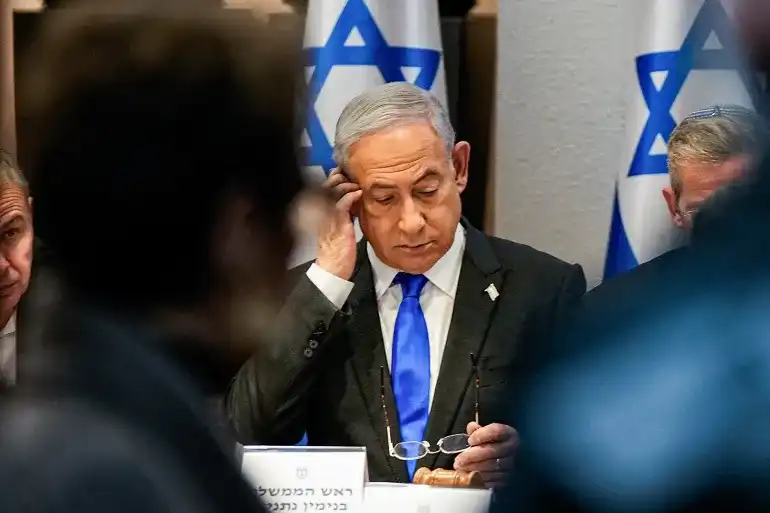
Netanyahu: There will be no Palestinian state as long as I remain in office

In a new escalation of his positions towards Gaza, Israeli Prime Minister Benjamin Netanyahu announced yesterday that he cannot allow the establishment of a Palestinian state as long as he remains in office, adding that “the struggle is not to establish a Palestinian state, but rather to eliminate the Jewish state.”


Netanyahu said, during a press conference in Tel Aviv, that he is committed not to end the war without absolute victory, such that Gaza becomes demilitarized, considering that “stopping the war before achieving the full goals will send a message of weakness.” He stressed that the war will continue until all goals are achieved and the detainees are returned, pointing out that achieving victory will require many months, and that Israel has “partially” accomplished some of its goals, and that “the day after the war means Israeli control and disarmament in Gaza.”


Netanyahu continued that Israel destroyed about two-thirds of the Hamas combat brigades, and attacked Iran, which he said was behind the Houthi and Hezbollah attacks. Despite Netanyahu’s statements, the American newspaper “The Wall Street Journal” reported that Israel withdrew thousands of soldiers from Gaza in order to move to a less severe stage; in implementation of Washington's desire.


Netanyahu's statements came in conjunction with statements by the spokesman for the National Security Council in the White House, John Kirby, stressing that Washington will not stop working towards achieving a two-state solution. Kirby added to reporters on board the presidential plane that “there will be Gaza after the conflict (ends), and it will not be reoccupied.”


Meanwhile, yesterday (Thursday), the United States launched its fourth strikes against Houthi missile platforms in five Yemeni governorates, the day after it classified the Houthis as a “terrorist group.” The US strikes targeted 14 Houthi missiles of Iranian origin that were loaded to be launched from the group’s areas of control in Yemen, according to US Central Command.


Meanwhile, the leader of the Houthi group insisted on escalating and continuing to attack ships, including American and British ships, as well as ships that have a relationship with Israel. He considered, in a sermon broadcast on Al-Masirah channel, that his group felt comfortable entering into a direct confrontation with America. Because this is what his group had hoped for, indicating that he did not care about the amount of sacrifices or losses, according to the content of his words.

ARAB AND WORLD

Fri 19 Jan 2024 9:31 am - Jerusalem Time

Mexico and Chile refer the conflict in Gaza to the International Criminal Court

On Thursday, Mexico and Chile expressed “increasing concern” about the escalation of violence in the Gaza Strip in light of the months-long war between Israel and Hamas, referring the conflict to the International Criminal Court to look into possible crimes, according to what Reuters reported. For news.


This announcement came in a statement by the Mexican Ministry of Foreign Affairs, which said that it was aware of the lawsuit filed by South Africa before the International Criminal Court and was following it.


Last Thursday, the International Court of Justice held its first session to hear South Africa’s case for accusing Israel of committing genocide against the Palestinians in the Gaza Strip.


Israeli Prime Minister Benjamin Netanyahu pre-empted the start of the court hearings by saying that Israel does not want to occupy the Gaza Strip and does not want to displace its civilian population. Netanyahu added that Israel is fighting Hamas, not the Palestinian population, stressing that it is doing so “in full compliance with international law.”

PALESTINE

Fri 19 Jan 2024 9:28 am - Jerusalem Time

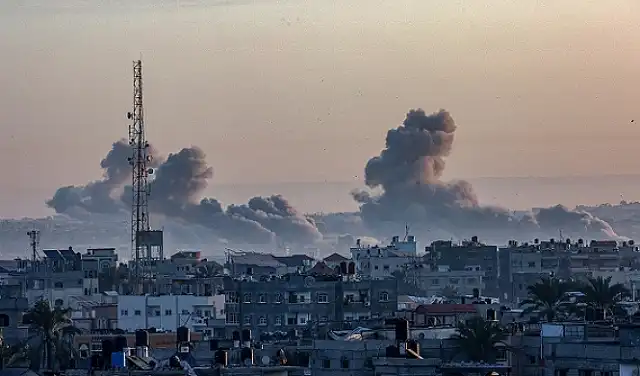
Israel Bombs Gaza as Disagreements with US Simmer

Israel bombarded southern Gaza on Friday after it publicly sparred with its main ally the United States over the possibility of a Palestinian state, the creation of which Washington sees as the only pathway to a lasting peace.
Witnesses reported gunfire and air strikes early on Friday in Khan Yunis, the main city in the south of the Gaza Strip, where Israel says many members and leaders of the Palestinian movement Hamas are hiding.
The Palestinian Red Crescent reported "intense" artillery fire near the Al-Amal hospital, while Gaza's Hamas-run health ministry said 77 people were killed and dozens injured overnight.
The Israeli military said its Givati Brigade was fighting as far south as its troops had reached so far in the campaign.
"The soldiers eliminated dozens of terrorists in close-quarters combat and with the assistance of tank fire and air support," it said.
The United Nations says the war, which began with the unprecedented Hamas attacks on Israel on October 7, has displaced roughly 85 percent of Gaza's 2.4 million people.
Many are crowded into shelters where they struggle to get food, water, fuel and medical care. UN agencies say improved aid access is needed urgently as famine and disease loom.
The World Health Organization (WHO) said overnight it had counted 24 cases of hepatitis A and "thousands" of cases of jaundice likely linked to the spread of the viral liver infection.
"The inhumane living conditions -- almost no drinking water, clean toilets or ability to keep the surroundings clean -- will allow hepatitis A to spread further," WHO chief Tedros Adhanom Ghebreyesus said on X, formerly Twitter, describing the health crisis as "explosive".
Hamas's October 7 attacks resulted in the deaths of about 1,140 people in Israel, most of them civilians, according to an AFP tally based on official figures.
Militants also seized about 250 hostages during the attacks, around 132 of whom Israel says remain in Gaza. At least 27 hostages are believed to have been killed, according to an AFP tally based on Israeli figures.
Israel has vowed to "annihilate" Hamas in response and its relentless air and ground offensive has killed at least 24,620 Palestinians, around 70 percent of them women, children and adolescents, according to figures from the Hamas-run health ministry.
"We will not be satisfied with anything less than total victory," Israeli Prime Minister Benjamin Netanyahu told a news conference on Thursday, warning that "victory will take many months".
Total victory meant "the elimination of terrorist leaders, the destruction of Hamas's operational and military capabilities, the return of our hostages to their homes", as well as the demilitarization of Gaza, he said.
A Palestinian state?
Washington supports Israel's campaign in Gaza, but despite otherwise close ties, the two allies publicly aired differences again this week over the way forward.
US Secretary of State Antony Blinken used the World Economic Forum in Davos, Switzerland, to renew his call for a "pathway to a Palestinian state".
But Netanyahu again flatly rejected the suggestion on Thursday.
"Israel must have security control over the entire territory west of the Jordan River," he said. "This is a necessary condition, which contradicts the idea of (Palestinian) sovereignty."
Netanyahu maintained that "a prime minister in Israel should be able to say no, even to our best friends".
Washington believes that the creation and recognition of a viable Palestinian state is necessary to achieve security for Israel.
"We obviously see things differently," National Security Council spokesman John Kirby said when asked about Netanyahu's comments.
Responding to Netanyahu's remarks, the official spokesperson for Palestinian president Mahmud Abbas, said that without an independent Palestinian state "there will be no security and stability in the region".
"The entire region is on the verge of a volcanic eruption due to the aggressive policies pursued by the Israeli occupation authorities against the Palestinian people and their legitimate rights," Nabil Abu Rudeineh said, according to the official Wafa news agency.
Abbas's Palestinian Authority exercises limited rule in the occupied West Bank, where the Israeli army also carried out raids overnight, notably in Tulkarem.
The Palestinian Ministry of Health has counted at least six deaths in the city since Wednesday.
Houthi attacks
The international community already fears that the war in Gaza could spill over into the wider region, with daily exchanges of fire on the Israeli-Lebanese border, an increase in attacks by Houthi rebels on merchant ships in the waters around Yemen and the subsequent intensification of US strikes there in response.
The Iran-backed Houthis have launched attacks against what they deem Israeli-linked vessels in the vital shipping lanes of the Red Sea and Gulf of Aden in support of Palestinians in Gaza.
They have also said US- and British-linked ships were fair game since the two countries launched air strikes against targets in Yemen over the past week.
The Houthis claimed responsibility early on Friday for another attack on a US-owned and operated ship in the Gulf of Aden.
While vowing the rebels would continue such attacks, a senior Houthi official promised safe passage through the Red Sea for Russian and Chinese vessels in an interview published by the Russian outlet Izvestia on Friday.

OPINIONS

Fri 19 Jan 2024 9:23 am - Jerusalem Time

Iran: Talk Big but Wave a Small Stick

Amir Taheri

Amir Taheri

Opinion Writer


Torture at ringside! This is how Antoine Blondin, perhaps the greatest contemporary French sports writer, described the agonies of hard-core fans of combat sports. They are glued to the ringside, watch the fight, see or imagine that they see the mistakes of the adversaries in the ring, wish they were in the ring to unleash the right punches and feel frustrated that all they could do is to shout “Oh no! Oh no!”

The mood described by Blondin also reflects the feelings of armchair generals who could tell you where Cyrus the Great, Alexander, Caesar and Napoleon, not to mention Field Marshal von Paulus went wrong. Vicarious sorrow is as potent in fomenting the melancholy behind the farce as the pleasure offered by voyeurism.

That reflects the current mood in the Islamic Republic leadership in Tehran. For decades they have talked of the “final battle” against the “Zionist enemy” and the American “Great Satan”, mocking everyone around for not joining the Tehran-led “Resistance Front” or, at least deal a blow to “Global Arrogance” and its regional allies.

The “Supreme Guide” Ayatollah Ali Khamenei has missed no opportunity to mock or lambast Arabs, including Palestinians, for not waging war on “our common enemies.”

Last week, Islamic Revolutionary Guard spokesman Gen. Ramadan Sharif claimed that, had it not been for the late Gen. Qassem Soleimani and his “military genius”, ISIS would have created a second Israel in the Middle East. The first Israel was easily created because there was no Gen. Soleimani in 1948.

For four decades Tehran has hosted annual “End of Israel” and “A World Without America” conferences, spending huge sums of money by inviting professional gate-crashers from all over the world, to fly first-class, sojourn in 5-star hotels and receive gifts of caviar an Persian rugs, to make blood-curdling speeches against the Zionists and their “Great Satan” supporters.

The “Supreme Guide” published a book and asserted that Israel will “disappear” in 25 years’ time. The Tehran Municipality installed an electronic clock to count the minutes until Israel’s promised disappearance.

In 2018 a frustrated Khamenei wondered aloud why the Palestinian groups he had funded and armed did nothing against the “Zionist foe”. He also advised Palestinians in the West Bank to start an armed uprising against the Palestinian Authority.

And yet, all the time the “Zionist foe” had a free hand to assassinate regime operatives in Tehran and kill IRGC officers and their Iraqi, Syrian, Lebanese and Afghan mercenaries in Syria whenever and wherever it wished. For fear of being dragged into a bigger conflict that his regime cannot handle, the “Supreme Guide” kept his surrogates in Lebanon, Syria and North Yemen on a tight leash.

He had found his comfort zone in rhetoric-land: Bark aloud but lie low.

Then on 7 October something happened to upset the ayatollah’s comfort zone: Hamas launched the deadliest attack that Israel had suffered since its inception. At first, the ayatollah was tempted by what is called “tail-coat hanging” in politics, that is to say tag yourself to the side hat seems to be winning. The assumption was that the new round in Hamas-Israel fighting will end the same way the previous ones had ended, that is to say after a few days with both sides settling for a ceasefire.

This was why Khamenei’s top military adviser Gen. Yahya Rahim Safawi, implicitly presented the 7 October attack as an operation designed under Iranian supervision. But once it had become clear that this time things would be different and that Israel wouldn’t settle for a draw, the ayatollah ordered a quick change of tune. The new narrative went something like this: The attack by Hamas was splendid and we helped by providing training, funds and arms but were in no way involved in planning let alone executing it.

Adopting a low profile, the ayatollah also ordered that no pro-Hamas marches be organized in the Islamic Republic. Even Tabriz, Iran’s third largest city which is a sister-city to Gaza was ordered to forget the sisterhood and behave as if it had never heard of Gaza or Hamas.

The low profile tactic created another problem.

The Islamic Republic which markets itself as the “the new emerging great power” which in the words of the daily Kayhan is going to flush the US out of the Middle East, destroy Israel and offer mankind a new world order, could remain a neutral bystander in a conflict that could change the face of the region.

Pressure from radical elements in the region and their sympathizers in the West forced the ayatollah to do something. Continuing his cautious approach, he ordered his Lebanese and Iraqi mercenaries to fire a few rockets at Israel to show that Hamas hasn’t be abandoned by the “Resistance Front”. Tehran needed TV clips to show that its pawns in the region are moving without, however, provoking a major Israeli or American retaliation.

When it became clear that such gesticulations won’t deceive many, the ayatollah ordered his pawns in Sanaa and Hodeidah to open a new front by firing at ships passing through Bab al-Mandab. An IRGC editorialist even claimed that Houthi missiles had turned the Israeli port of Eilat, 2,000 kilometers away, into “piles of rubble” as all the city’s inhabitants had fled. In other words, “The Resistance Front” wasn’t the meek mouse that some assumed.

However, although it angered China and India whose trade with Europe and North America uses Bab al-Mandab, the Houthi sideshow didn’t silence voices, including some inside Iran, wondering why the Islamic Republic which, again according to Kayhan, has “mind boggling military achievements” and is now one of the five most powerful nations on earth is acting like a shy debutante.

The fact that ISIS was able to launch a carnage operation in the middle of a solemn official ceremony in honor of Gen.Solemaini who” wiped ISIS off the face of the earth” led to suspicions that, like the wizard of Oz, the ayatollah may be a good man, but a bad liberator of Palestine and redeemer of mankind.

The ayatollah took the spiral stair from tragedy to farce when he ordered a missile attack on what he said was “the headquarters of Mossad” in the Middle East. Gen Amir-Ali Hajizadeh claimed that the attack “was ordered by Imam Khamenei in person.” Within minutes, however, it was established that the target had been the home of a Kurdish Iraqi businessman and the victims were him, his 11-month-old child, his Filipino cook and a business associate.

With egg on their faces, Tehran leaders then tried to divert attention by ordering missile attacks on targets in the Pakistani Baluchistan desert.

The message is “The Resistance Front” is doing something without knowing what it is doing and to what purpose.

ARAB AND WORLD

Fri 19 Jan 2024 9:21 am - Jerusalem Time

Senior Israeli officer: Hamas cannot be eliminated, neither now nor in the future

Retired Israeli army officer Aharon Bregman said that Hamas cannot be overthrown, neither now nor in the future.


According to a report by the American newspaper "The Wall Street Journal", Israel's withdrawal of thousands of soldiers from Gaza after pressure from the United States raised concerns among Israeli officials about the "escalation of armed activities" in the country.


It pointed out that what increases these fears is that with the withdrawal of the 36th Division from the Gaza Strip earlier this week, a barrage of rockets was launched from the center of the Gaza Strip, where the division was operating.


There are currently 3 teams working in the Gaza Strip, one each in the north, center and south. According to Israeli army spokesman Daniel Hagari, the largest deployment is in the Hamas stronghold in the southern Gaza Strip, specifically in Khan Yunis.


Retired Israeli General Giora Eiland said that Israel's change in tactics "will enable more civilians, along with militants, to return to the northern Gaza Strip," adding: "We paid a heavy price for something that will be meaningless in a short time."


For his part, Aharon Bregman, a professor of political science at King's College in London and a former Israeli army officer, said, "If a comprehensive victory over Hamas is not achieved, Israel may be forced to satisfy itself with less ambitious goals of war."


He pointed out, "Although Israel will not officially acknowledge this, the goal of overthrowing Hamas cannot be achieved, neither at the present time nor in the future."

ARAB AND WORLD

Fri 19 Jan 2024 8:43 am - Jerusalem Time

NBC News: Behind the scenes of meetings to conclude a Saudi-American-Israeli agreement to end the war in Gaza

The American "NBC News" network revealed that US Senator Lindsey Graham held a series of "high-stakes" meetings with Saudi Crown Prince Mohammed bin Salman, with the aim of reviving the possibility of reaching an agreement between the Kingdom, Israel and the United States to formulate a framework to end the war on Gaza, and achieve stabilization in the Middle East, and paving the way for a form of Palestinian autonomy in the Gaza Strip.


In a lengthy report, published Thursday, NBC News indicated that Graham arrived in Saudi Arabia 11 days ago, to hold a meeting in a huge tent in Al-Ula, in the west of the Kingdom. Graham visited Saudi Arabia three times during the past 12 months, and preceded his last visit to Saudi Arabia by visiting Israel with the aim of discussing the agreement, where he held a closed meeting with Israeli Prime Minister Benjamin Netanyahu on January 4.


The network quoted Saudi, American and Israeli officials as saying that the discussions in Saudi Arabia revolve around a framework for the reconstruction of Gaza with the support of Arab countries, and the formation of a “moderate Palestinian leadership in Gaza.” In addition to ratifying a defense treaty between the United States and Saudi Arabia that would provide an alliance against Iran, they pointed out that Saudi Arabia insists that any plan include a realistic path to the establishment of a Palestinian state.


The network asked whether the Israeli government would accept the establishment of a Palestinian state in exchange for a peace treaty supported by the United States and Saudi Arabia.


A possible political victory for Netanyahu

According to six people familiar with the talks, as quoted by NBC News, normalization with Saudi Arabia would be seen as a potential political win for Netanyahu, even though the Israeli prime minister and hard-line members of his right-wing coalition have publicly rejected the idea of establishing a state for Palestinians.


In this context, Nadav Eyal, a columnist for the Israeli newspaper Yedioth Ahronoth, said that any normalization agreement with the Kingdom of Saudi Arabia at the present time “would be a major victory for Netanyahu politically and an exit strategy.”


An advisor to one of the members of the Israeli War Council, who requested to remain anonymous, said, “If the Saudis reach a good deal for Israel, of course we will vote in its favor.” But the advisor, along with other Israeli officials, warned in their interview with “NBC News” that the American move was a precedent. It is too early, indicating that the Israeli public is not ready to discuss this, in the wake of the attack launched by Hamas on Israel.


A senior Israeli government official considered that "the issue of the Palestinian state is too sensitive to be discussed in Israel at the present time... People are talking about war and hostages, not rewarding the Palestinians. It is also unclear when and how the war will end."


American efforts to reach an agreement with Saudi Arabia and Israel aim to build on the Abraham Accords, which established relations between Israel, the United Arab Emirates, Bahrain, Morocco, and Sudan in 2020.


Israeli and American officials familiar with the deal said that there are efforts to achieve the agreement while President Joe Biden is in office to secure Democratic votes for the US-Saudi agreement, pointing out that Graham will be able to obtain Republican votes to reach the 67 votes needed to ratify it in the Senate.


Israel's vision for the "day after"

Israeli Prime Minister Benjamin Netanyahu has so far taken a hardline stance publicly regarding the war. After his meeting with Graham, he reiterated Israel's war goals of destroying Hamas, freeing the hostages, and ensuring "Gaza never becomes a threat again." Netanyahu did not address the political situation in Gaza after the war.


Daniel Silverberg, a senior research associate at the Center for a New American Security, expressed his frustration with Netanyahu, saying: “From an American perspective, Bibi’s (Netanyahu) position is really frustrating.” “Bibi continues to say publicly and privately: My hands are tied and my coalition will collapse if I do anything pro-Palestinian Authority or tighten restrictions on settlers.”


The right wing of Netanyahu's coalition government remains strongly opposed to any discussion of establishing a Palestinian state. Many Likud members went beyond Netanyahu's speech.


Silverberg also questioned how realistic it was to expect Saudi Arabia and other Gulf states to participate in rebuilding Gaza.


Despite all the challenges, the agreement between the United States, Saudi Arabia, and Israel could be part of an exit strategy for the politically beleaguered Netanyahu.


A former Israeli security official said: “It is the only exit strategy that has political appeal for Bibi... and it is not clear whether that is possible.”

ARAB AND WORLD

Fri 19 Jan 2024 8:43 am - Jerusalem Time

Ehud Barak: Hamas has not been defeated and chances of recovering the hostages are declining

Former Israeli Prime Minister Ehud Barak stated that the Islamic Resistance Movement (Hamas) has not been defeated, and the chances of recovering the “hostages” are declining despite the gains achieved by the Israeli army.


Barak stressed the need for a new leadership in Israel, noting that the lack of a realistic goal will cause them to drown in Gaza, and stressing the necessity of organizing early elections in Israel before it is too late, he said.


Barak previously stated that the Israeli army has achieved significant progress in the Gaza Strip, but it is still far from achieving the goals of the war. He added that those who believe that Palestinians in Gaza can be encouraged to migrate voluntarily are delving into dreams that have no basis in reality.


Barak's statements come three months after the beginning of the Israeli aggression on the Gaza Strip, as disagreements began to escalate between Prime Minister Benjamin Netanyahu and his government. According to the Israeli media, analysts point out that these disputes pose a security and existential threat to Israel.


The Israeli "Channel 13" discussed the crisis of Defense Minister Yoav Gallant's recent withdrawal from the War Council session, as its correspondent, Moriya Wahlberg, reported that the head of the National Security Council, Tzachi Hanegbi, had asked the head of the Defense Minister's office to leave the meeting. It pointed out that Gallant refused, according to what he said, and left the place, accompanied by his aides, after attacking Netanyahu and Hanegbi.


In the same context, Haaretz newspaper - today, Friday - quoted a source in the junior security ministerial team, saying that “there is no future for the war, and Netanyahu is stalling to buy time and escape responsibility.”


Since the "Al-Aqsa Flood", Israel has been waging a devastating war on Gaza, which, as of Thursday, resulted in the death of 24,620 Palestinians and the injury of 61,830 others, most of them children and women. This war also caused massive destruction of infrastructure, leaving an “unprecedented humanitarian catastrophe,” according to Palestinian and international reports.


Source: Al Jazeera


PALESTINE

Fri 19 Jan 2024 8:43 am - Jerusalem Time

Israeli War on Gaza: Death toll reached 24,762 killed since October 7

The Ministry of Health in Gaza reported that the number of killed had risen to 24,762 people, in addition to 62,108 injured due to the Israeli aggression against the Gaza Strip since last October 7, and pointed out that Israel committed 12 massacres that claimed the lives of 142 persons and 278 wounded during the past 24 hours.


Dozens of killed and wounded in the ongoing Israeli bombing of the Gaza Strip


At dawn today, Friday and Thursday night, dozens of citizens, including children and women, were murdered, and others were injured, in the continuous bombardment by Israeli aircraft, artillery, and gunboats on the Gaza Strip, as the aggression entered its 115th day.


Medical sources reported that 77 citizens were killed and dozens injured during the last hours, bringing the number of killed since the start of the aggression to more than 24,620 people, in addition to more than 61,830 wounded, and thousands of missing people, in an infinite toll.


At least 12 citizens were killed and others were injured after the Israeli aircraft bombed a residential apartment near Al-Shifa Medical Complex in Gaza City. A number of citizens were also injured in an Israeli raid that targeted Al-Nour Mosque in the Al-Sabra neighborhood of the city.


The Israeli warships bombed the coast of Gaza City and areas in the northern Gaza Strip. The Israeli aircraft and artillery also bombed various areas in the northern Gaza Strip, including the town and Jabalia camp.


Eight citizens were killed and others were injured when the Israeli aircraft bombed a house for the Al-Kadhimi family, west of Khan Yunis, in the southern Gaza Strip, coinciding with the area being subjected to violent bombardment by the Israeli artillery.


The Israeli tanks and military vehicles stormed the vicinity of Nasser Medical Hospital, and the Israeli artillery bombed the vicinity of the Al-Amal Hospital of the Palestinian Red Crescent Society in Khan Yunis. The Israeli forces blew up residential homes in the south of the governorate. The Israeli aircraft also launched raids on Deir al-Balah in the central Gaza Strip.


ARAB AND WORLD

Thu 18 Jan 2024 9:05 pm - Jerusalem Time

EU Parliament votes by majority on a draft resolution for a ceasefire in Gaza

The European Parliament voted by majority on a draft resolution for a ceasefire in Gaza and to accelerate the delivery of humanitarian aid to the Strip.


The decision supports the work of the International Court of Justice, and emphasizes the importance of presenting a new European initiative to resume the political path towards a two-state solution.


The European resolution also calls for the dismantling of the Islamic Resistance Movement (Hamas) and the release of Israeli prisoners. The resolution also condemned the violence of Israeli settlers in the West Bank and the forced displacement of residents.


The International Court of Justice in The Hague witnessed hearings to consider the case brought by South Africa regarding the Israeli military attack on the Gaza Strip. In the case, Israel was accused of committing genocide crimes in contravention of the 1948 United Nations Convention on the Prevention of Genocide, which South Africa and Israel had signed. 


Yesterday, Wednesday, the American Bloomberg website quoted informed sources that the European Union intends to impose sanctions on the Hamas movement due to its attack on Israel, in reference to the “Al-Aqsa Flood” operation.


The sources stated that European sanctions have been agreed upon and will be announced next Monday at the foreign ministers’ meeting, considering that the sanctions come in response to the attack launched by the Palestinian resistance, led by the Izz al-Din al-Qassam Brigades - the military wing of the Hamas movement - on Israel on October 7. the past.


Last Tuesday, European Union member states included the head of the Hamas movement in the Gaza Strip, Yahya Sinwar, on their sanctions list.


Since October 7, 2023, the Israeli occupation army has been waging a devastating war on Gaza that has, as of today, Thursday, left 24,620 killed and 61,830 injured, and caused the displacement of more than 85% (about 1.9 million people) of the Strip’s population, according to the Palestinian authorities and the United Nations. United.


PALESTINE

Thu 18 Jan 2024 6:36 pm - Jerusalem Time

The Gaza Strip has been without communications for 7 days

The Palestinian Telecommunications Company “Paltel” confirmed today, Thursday, that this is the longest period of communications outage in Gaza, explaining that it lasted for more than 144 hours, especially after the interruption of communications and Internet services in the Strip since last Friday.


The company said in a blog post on its official account on the “X” platform: “Many hours of service interruption. How many loved ones have we lost?” How much do we worry about our loved ones? Demanding, “Keep Gaza connected.”


The NetBlocks Observatory, which specializes in monitoring network security, said that Gaza has entered its seventh day without communications, with the network having exceeded 144 hours.

It pointed out that the current outage is the longest since the start of the Israeli war on the Strip.


Last Tuesday, the government media office in Gaza warned that cutting off communications and Internet services could “cause disasters that threaten the lives of citizens.”


It said in a statement: “Cutting off communications and the Internet means disasters that threaten the lives of citizens.”


It pointed out that “no one will be able to reach the dead and wounded (due to the interruption of communications services and the impossibility of communicating with ambulances), and thus the number of victims will increase exponentially in light of the continuation of the brutal war and the continuous bombing of homes and safe neighborhoods.”


The government office stressed that the interruption of these services is a “complete, premeditated crime,” pointing out that its continuation works to “deepen the worsening humanitarian crisis in the Strip.”


OPINIONS

Thu 18 Jan 2024 4:24 pm - Jerusalem Time

"Sanctions On Israel Are The Only Hope": Israel's Most Distinguished Journalist Gideon Levy

Ramallah - “Al-Quds” dot com

Ramallah - “Al-Quds” dot com

Opinion Writer

Gideon Levy is a man of immense moral courage and leadership: the award-winning Ha'aretz columnist has spoken out against the atrocities committed against the Palestinian people, and has become an increasingly lone voice. Here he tells me how Israeli society has degenerated to a terrifying degree, why he has so little hope, the forgotten horrors of the West Bank - and why the only chance for a just peace will come from sanctions against Israel.


OPINIONS

Thu 18 Jan 2024 4:10 pm - Jerusalem Time

No doubts: Israel seeks another uprising "Intifada" in West Bank

Gideon Levy

Gideon Levy

Opinion Writer

Three and a half hours. Three and a half hours from Jenin to Tulkarm. In three and a half hours, you can travel to Rome, or to Eilat. However, in the occupied West Bank, traveling between two cities is difficult. 

This is the time it took us to reach Jenin from Tulkarm, 35 kilometers. Since the beginning of the war, there has been a closed gate at the end of every road in the West Bank. The "Waze" application guides you to travel through it, as even this smart application does not know that there is a closed gate on every road.

If there is no closed gate, there is a barrier that passes cars slowly. 


If there is no barrier that allows cars to pass slowly, then there is a barrier that does not allow cars to pass at all. Next to the Ottoman train station in Sebastia, some reserve soldiers stand, preventing vehicles from even passing on this side dirt road. In addition to the Shavei Shomron settlement, there are soldiers who allow travel from south to north, but prevent travel the opposite way. Why? There is no answer. The soldiers at the next checkpoint take selfies, and the vehicles wait for them to finish taking the photo and give them a hand gesture that allows them to pass, and the crisis becomes longer.

The "Annab" checkpoint, which we passed in the morning, was closed to vehicle traffic in the afternoon. Can't know anything. As for the “Huwara” checkpoint, it is also closed, and the exit is closed, as is the case with most exits from villages to the main streets. This is how we traveled this week, like cockroaches in a bottle, for 3 and a half hours from Jenin to Tulkarm, in order to reach Route 557 and return to Israel.

This is the life of Palestinians in the West Bank recently. By evening, thousands of vehicles were lined on both sides of the road in the West Bank, desperately parked by their owners. They stood, unable to do anything out of sheer desperation. You must see the fear in their eyes when they approach the barrier, as every incorrect movement can lead to their death. You could blow them up.


A person can explode in anger when he sees that Israel is now doing everything possible to push the West Bank into another intifada. This will not be easy. There is no leadership in the West Bank, nor a fighting spirit like the Second Intifada, but how can it not explode? About 150 thousand workers were working in Israel; Now, they have not been working for 3 months. A person can also explode in anger because of the hypocrisy of the army. Its leaders warn that Palestinian workers must be allowed to go out to work, but it is the army that will be responsible for the Palestinian uprising if it breaks out. The problem is not only economic.


Under the cover of war, and with the help of the far-right government, the army has dangerously changed its behavior in the West Bank. He wants Gaza in the West Bank. The settlers want Gaza in the West Bank to push the Palestinians out, and the army supports them. The data is difficult: according to United Nations data, 344 Palestinians were killed in the West Bank, including 88 children. 8 or 9 of them were killed by settlers. During the same period, 5 Israelis were killed in the West Bank and East Jerusalem, 4 of whom were killed by security forces.

The reason for this is that in recent months the army has begun using air strikes to kill in the West Bank, as well as in Gaza. For example, on January 7, the army killed 7 young men on a road near Jenin, after one of them apparently fired an explosive device at an army jeep. A massacre was committed: 7 young men who were members of one family, 4 brothers, 2 brothers, and a cousin. This does not matter to Israel. Now, the army is transferring forces from Gaza to the West Bank: the “Devdovan” unit is now there; And "Kafir" is on the way. They will return to the West Bank, poisoned by the indiscriminate killing in Gaza, and they want to continue their great work in the West Bank as well.

Israel wants an uprising. You might as well get it. The important thing is that, don't be surprised when it happens.

OPINIONS

Thu 18 Jan 2024 3:56 pm - Jerusalem Time

Opinion| Is Biden backing Israel good for Palestinians?

The Jerusalem Post

The Jerusalem Post

Opinion Writer

By DOUGLAS BLOOMFIELD

Biden’s two-state commitment predates his presidency, and if he is defeated in November, it will drop off the national agenda for years to come.

Will President Joe Biden’s staunch support for Israel cost him the election? Prime Minister Benjamin Netanyahu and Donald Trump hope so. 

There’s been quite a bit of speculation about the electoral impact of Biden’s quick, compassionate, and continuing support for Israel’s war effort following Hamas’s terror attack on October 7, in which more than 1,200 Israelis were murdered.

Strains in the relationship are now going public. Biden and Netanyahu have a long history and the president makes no secret that he doesn’t trust him, or as he once inscribed a picture, “I don’t agree with a damn word you say.” He’s not alone. Netanyahu has a Trumpian reputation for veracity.

It’s no secret the Israeli prime minister doesn’t like the American president pushing so hard for military restraint, humanitarian aid for civilian casualties in Gaza, and “day after” plans. Netanyahu repeatedly insists his goal is complete victory and everything else must wait until the war is over.

The two haven’t spoken much, if at all, since Biden hung up in frustration back in December, saying, “This conversation is over,” as Barak Ravid reported in Axios. Biden’s anger and frustration with Netanyahu’s confrontational approach toward the administration are damaging the relationship. Biden’s desire to limit the conflict – he sent two carrier battle groups to convey his message to Iran – runs up against what some in the administration fear is Netanyahu’s desire for a broader regional conflict.


Netanyahu and Trump: politics-prioritizing peas in a pod

Netanyahu’s postwar priorities are his own political survival and long-term control of Gaza. In that order.

Trump is hoping Muslim and Arab Americans are as upset as they say with Biden and that they’ll vote for him – or just stay home on election day – along with Jews who think the incumbent is pressing too hard for Palestinian statehood. For added measure, he’s looking for disgruntled progressives to vote for some meaningless third-party candidate or not to vote. Any way you stack that, he sees victory.

Jewish voters, impressed by his quick and full defense of Israel, will likely once again give Biden 75-80% of their votes.

Progressives and young voters more sympathetic to the Palestinian cause – and outraged by the high civilian casualty death toll – are highly unlikely to vote for Trump, and it’s a tossup at this point whether they’ll vote for Biden to block Trump or protest by voting third party or staying home. Either of those last two alternatives is a vote for Trump.

Foreign policy is expected to get little attention in Trump’s campaign, although he may say that if he were president, Hamas wouldn’t have attacked, just as Russia wouldn’t have invaded Ukraine, Iran wouldn’t be a nuclear threshold state, and the Icelandic volcano wouldn’t have erupted this week. Trump may have trouble selling his pro-Israel credentials after praising Hezbollah following the Hamas attack and criticizing the Israeli defense minister. He’s apparently not a big fan of Netanyahu either these days, judging by an interview he gave Ravid: “I don’t think Bibi ever wanted to make peace.” He’s right on that count.

Trump’s campaign is expected instead to focus on his trials, his lust for retribution, and demagogic appeals to voter frustration about a broken immigration system. That issue is of high concern to Arab and Muslim voters.

If they carry through with threats to vote against Biden as punishment for his support of Israel, they’ll only be punishing themselves because it will mean electing a president who is an Islamophobe threatening to expand his first-term anti-Muslim policies.


Trump's immigration policies are hardly pro-Palestinian

JUDGING BY what he’s saying on the campaign trail, Trump’s immigration policies could help Biden retain Muslim and Arab votes. Trump has told campaign crowds that as president, he would ban all Gazan refugees, expand his first term, and (legally questionable) ban visitors from Muslim-majority countries and begin “strong ideological screening” of all immigrants. 

He told an Iowa crowd last week that he would also send immigration agents to “pro-jihadist demonstrations” to make arrests and revoke student visas of Hamas sympathizers. “We will aggressively deport resident aliens with jihadist sympathies,” he threatened.  Michigan is a critical battleground state that has the highest percentage of Muslim and Arab-American voters (2.1%), and they could influence the outcome of the presidential election. However, the American Enterprise Institute contends that “Michigan’s Arab Americans will likely swing toward the GOP in 2024 but concerns that this will cost Biden the election are overblown.” If those constituencies want to see a two-state solution to the Israeli-Palestinian conflict, Biden may be their best hope. His support for that goal has been a major factor in his conflict with Netanyahu, who wants to see a Palestinian state as much as Hamas wants a Jewish state. He can do more to advance their cause than Trump, Vladimir Putin, Mahmoud Abbas, or Yahya Sinwar (the Hamas-Gaza leader) combined.


But he will need help from the Palestinians themselves. Arab leaders, who have normalized relations with Israel after years of holding out until the Palestinian issue was settled, say they were motivated by Palestinian maximalist demands and an unwillingness to compromise.

Biden’s two-state commitment predates his presidency, and if he is defeated in November, it will drop off the national agenda for years to come. That doesn’t mean statehood will happen any time soon – Hamas saw to that when it destroyed what was left of the Israeli peace camp – but this administration has already begun the groundwork.

That may help explain a lot of Netanyahu’s animosity toward Biden. There will be a long rebuilding process, not just infrastructure but lives and trust. Nothing will happen as long as Hamas remains, and Netanyahu and his malevolent band of extremists are in power.

The Saudis say they still want normalization with Israel but have upped the ante. They’ve gone from paying lip service to the Palestinian cause and asking for token measures, to demanding substantive progress by both sides making historic and tough decisions. That doesn’t guarantee success, but it is a step forward.


By this fall, the shooting war should be over, the hostages returned, reconstruction underway and the political wars will be in full steam. Bibi will be fighting for his political life and to stay out of jail, blaming everyone else for the failure of his policies that allowed Hamas to attack. Trump will also be fighting to stay out of jail and get back in power, and Biden will be defending democracy.

The future of the Middle East could be determined on November 5. 

Like every election before it, this will be the most important in history.

OPINIONS

Thu 18 Jan 2024 3:48 pm - Jerusalem Time

The worldwide impact of the Gaza war

The Jerusalem Post

The Jerusalem Post

Opinion Writer

By NADAV TAMIR

The absence from the coalition of most of the major European countries, including Germany, France, Italy, and Spain, is an important and frightening message from the world to Israel.The war in Gaza is generating ripple effects across the entire world, thousands of kilometers beyond the borders of Israel and the Gaza Strip. We naturally tend to view our conflict with Hamas in a detached manner but in the wider world, this conflict has implications for inter-power relations in various contexts, such as the war in Ukraine, the alliance between Russia and Iran against the US, and also for the internal politics of a variety of countries.

For example, one internal political impact – the McCarthyistic struggle of the American Right against the academic institutions that tend to be liberal – rests on accusations of antisemitism and is presented on the left as a struggle of Jews against academia arising out of the consequences of the war. Another example is the assertion by several commentators that the anti-Israel demonstrations in the Netherlands influenced the surprising success of Geert Wilders in the Dutch elections.


The “Prosperity Guardian” operation launched by the Americans in the face of the threat posed by the Houthis to the shipping route through the Bab al-Mandab straits near the border of Yemen testifies, more than anything else, to the challenges created by the war in the international arena. The effects of Houthi terrorism on world trade are clear and severe, but most of the countries suffering from them chose not to join the American coalition. 

These include Egypt, whose revenues from the Suez Canal have been seriously curtailed by the Houthis, and the United Arab Emirates and Saudi Arabia, which have been in conflict with the Houthis for several years. Saudi Arabia, naturally, views the success of efforts to reach an agreement with the Houthis on the future of Yemen at the top of its priorities. The large majority of European countries, for which the Suez Canal is the main shipping route from the global production centers in East Asia, also prefer to avoid taking a position. China, too, is affected by the violation of freedom of navigation, but it will not cooperate with the US, nor is it easy for the Biden administration to cooperate with the Chinese in an election year.

The considerations of the various countries are compounded by the fact that even an operation designed to combat a threat whose effects are much broader than the pure Israeli context will be viewed by many in the West as support for or objection to the Netanyahu government and the manner in which it is conducting the war.


Israel, pay attention to the absence of most major European countries


It is convenient for the Western world as well as for most of the Arab world (except Bahrain, which joined the coalition) to leave the work in the hands of 10 countries, the main ones being the US and the UK. This is because they do not wish to be perceived as siding with Israel, at a time when the world is witnessing on its television screens the scenes of destruction and death in Gaza that the Israeli public is not exposed to.

The absence from the coalition of most of the major European countries, including Germany, France, Italy, and Spain, is an important and frightening message from the world to Israel. According to them, even at the cost of paying a heavy economic price, it is better to avoid being identified as supporting what is perceived by many among their public as the indiscriminate slaughter of Gazans who are not Hamas terrorists.

If we thought that the indirect Russian support for Hamas alongside China’s inability to condemn the crimes of October 7 would bolster the West’s support for Israel, we were wrong. The scenes of destruction and killing that continue to emanate from the Gaza Strip have dulled the memory of October 7 in the Western world. This, along with political interests pertaining to the large Muslim minorities in many Western countries, has led to a fear of identification with Israel and the interests of its right-wing government.

Even our campaign against Hezbollah has not received sufficient appreciation from the world outside the US, despite the great restraint Israel has shown. This is due to the reticence of many countries to put pressure on Iran since Trump’s abandonment of the nuclear agreement between the major powers and Iran.


The US stands out, in the face of international inaction


In the face of international inaction, the US stands out as a country that has both understood the impact that the justified war in Gaza may have on the entire world and has reacted accordingly. While supporting Israel in its war against Hamas, the US demands that Israel prioritize the release of the hostages, avoid harming the lives of civilians in Gaza as much as possible, and act according to international law. Once again, we discover the critical alliance Israel has with the US. 

Allowing China to acquire strategic assets in Israel, or flattering President Putin will not help us and neither will attributing to ourselves a close friendship with European countries while we continue to underestimate European sensitivities vis-à-vis the Palestinians.

The Biden administration, which has openly supported Israel since the start of the war – also risking the lives of its own American soldiers in bases in Iraq that have been attacked – will not be able to continue to support Israel if the Netanyahu government does not help Biden to help us. The inability of the Netanyahu government to assist the US in creating a post-war scenario based on a political horizon for the Palestinians is damaging American interests. The support of some government ministers for violence against Palestinians and evicting them from their homes in Area C also creates strategic and political difficulties for the Biden administration.

More than ever, it is clear that the alliance with the United States is crucial for the very existence of the State of Israel. We are indeed fortunate that Biden defines himself as a “Zionist” who was willing, for some time, to ignore the ugly background noises coming from the direction of the Israeli government, and who continues to stand by the Jewish and democratic state that is so important to him.

If those “agents of destruction” within the government succeed in implementing anti-Israeli and anti-democratic measures, such as the transfer of the population or the renewal of the settlements in the Gaza Strip, it is by no means certain that we will receive the same support in the future.

At this time, it is not sufficient to declare that we are in our second war of independence. It is also important to understand that America is not “another country” but is the pillar of Israel’s security and the only country that will save us in times of crisis. For this support to continue, we, the citizens of Israel, have the task of saving ourselves from the evil racism within our government that may lead us all to destruction.

ARAB AND WORLD

Thu 18 Jan 2024 3:37 pm - Jerusalem Time

Washington to Israel: Turn the lights back on in Gaza

By JOSEPH GEDEON and MAGGIE MILLER

The White House is leaning on Israel to restore internet and mobile connections in the Gaza Strip as the blackout lingers.

The Biden administration is pressing Israel to restore telecommunications access to Gaza amid a massive blackout that has stretched a record six days and left millions of Palestinians without power or internet.

Administration officials fear the blackout will make it difficult for anyone to know what is happening between Hamas and the Israeli military as the war in Gaza continues, potentially worsening an already dire humanitarian situation. The U.S. has “been in touch with the government of Israel over this blackout and have urged them to turn telecoms back on,” said a U.S. official at the White House, speaking anonymously due to the sensitivity of the discussions.

The White House didn’t specify what that pressure looked like. But National Security Council spokesperson Adrienne Watson, in a statement, warned the “absence of telecommunications deprives people from accessing life-saving information, while also undermining first responders and other humanitarian actors’ ability to operate and to do so safely.”

Watson said Israeli officials justified the blackout by telling the White House there could be “operational reasons for temporary outages” but that those should remain “rare and short in duration.”

It’s the longest blackout the Palestinians have faced since Internet and cybersecurity monitoring firm Netblocks began keeping track in 2018, according to founder Alp Toker. But it’s far from the first incident, which has occurred at a frequent clip following Hamas’ attack on Israel on Oct. 7 and the subsequent Israeli bombardment of Gaza. Even before the war, Israel held control over the information and communications technology sector for the Palestinian territories.

“It indicates a growing difficulty in maintaining telecoms infrastructure in an active war zone,” Toker said. “Especially where repair crews have lost their lives in the field.”

Services for Paltel, the Palestinian telecom group, have shut down nine times as a result of Israeli strikes and a lack of fuel supplies, which makes it impossible to run generators that keep on power. The company flagged the latest downed network on January 12, later sharing that two of its engineers were killed by a “direct missile” a day later while driving a company car to repair the systems.

The blackout coincides with a particularly intense Israeli military campaign, including the return of tanks to northern Gaza following a brief hiatus and additional campaigns in the south.

The Israeli Defense Forces, in a statement, stressed that it is working on the restoration of infrastructure in affected areas and coordinating with local teams to repair the infrastructure where needed.

“It is important to remember that the Gaza Strip is an active war zone,” the statement reads, “and thus can experience temporary disruptions to internet connectivity due to the ongoing conflicts.”


OPINIONS

Thu 18 Jan 2024 3:29 pm - Jerusalem Time

The Greater Goal in Gaza

Foreign Affairs

Foreign Affairs

Opinion Writer

By Marwan Muasher

As Israel’s war in Gaza enters its fourth month, an intensifying debate has unfolded about who should rule the territory when the fighting stops. Some have suggested an Arab force, a notion already rejected by Egypt, Jordan, and other Arab states. Others have proposed a reconstructed Palestinian Authority, ignoring the fact that less than ten percent of Palestinians would support such an outcome, according to a recent Palestinian poll. Yet a third idea is to put Gaza under international control, an approach that has already been rejected by Israel, which does not want to set such a precedent. But there is a larger reason these envisioned solutions are doomed to fail: they all treat Gaza in isolation, as if it can be addressed without regard to the broader issue of Palestinian statehood and self-determination. In this way of thinking, once Hamas is made to disappear and once the question of who rules Gaza is answered, there can be a return to the status quo ante. Both assumptions are fundamentally flawed, and any policy based on them will lead to disaster.

To be truly durable, a solution for the future of Gaza must be framed within a larger endgame for all Palestinians under Israeli control. It must finally address the root cause of unending violence: the Israeli occupation of East Jerusalem, Gaza, and the West Bank. Years of failed negotiations have also made clear what such a plan will require in order to succeed: unlike so many of its predecessors, it must be credible and time-bound, and the endgame itself must be well defined at the outset.


Establishing such a comprehensive process will require extraordinary effort. But the alternative is far worse. The current war has already led to the killing of huge numbers of civilians, the destruction of Gaza, the undermining of Israel’s security and international support, the creation of another 1.5 million Palestinian refugees, and the looming threat of a further mass transfer of Palestinians out of their ancestral lands. Any attempt to resolve the day-after problem by reverting to the old paradigms will simply invite these catastrophes to be repeated again.


THE MISSING ENDGAME

To understand the true scope of the day-after problem, it is first necessary to recognize that the current conflict did not begin with Hamas’s attack on October 7.  Nor is it limited to Gaza alone. Although the Palestinian question begins with the 1948 war, in which an estimated 750,000 were dispossessed of their homes, the best starting point for today’s crisis is the 1967 war. That conflict led to Israel’s occupation of Gaza, the West Bank, and East Jerusalem and produced an estimated 300,000 new Palestinian refugees. It also marked the beginning of decades of efforts to end the occupation and establish a viable Palestinian future.

The first such attempt was UN Security Council Resolution 242, passed in November 1967. Although the resolution referred to “the inadmissibility of the acquisition of territory by war,” it did not envisage a separate Palestinian state. Instead, Gaza was supposed to revert to Egyptian control and the West Bank to Jordanian control. Nor did the resolution define a time frame for ending the occupation, calling only for a political process that was open and not binding. Indirect negotiations among the Jordanian, Egyptian, and Israeli sides were held through a UN mediator, without any results.

Two and a half decades later, the Madrid conference—launched by U.S. President George H. W. Bush in 1991 after the first Gulf War—finally brought the Palestinians directly to the negotiating table. Once again, however, the process left the endgame unclear beyond referring to Resolution 242, which was interpreted by Israel in a drastically different way than by the international community. (Although the resolution called for Israel to withdraw from occupied territories, Israel interpreted this to mean not withdrawal from all such territories but only to so-called safe borders it never specified.) Even after the Palestinians started negotiating separately with Israel once the late Israeli Prime Minister Yitzhak Rabin came to power in June 1992, the process never defined a separate Palestinian state as the objective of negotiations.


Negotiations were often open-ended or failed to specify the objective.

Then came the Oslo accords in 1993, perhaps the most well known of all of these peace efforts. In this case, not only did the two sides mutually recognize each other and establish a Palestinian interim authority in Gaza and parts of the West Bank, they also set up a five-year negotiations process toward a durable peace. But although the process was supposed to result in a lasting solution to the conflict, the parties failed to specify what that solution is: in other words, the endgame was not clear at the outset. Moreover, the Oslo accords did not freeze settlement activity, meaning that the two sides were negotiating over the future of the occupied territories even as one of them—the Israelis—was continuing to change these territories’ geography and demographics. Indeed, Rabin, in his last speech to the Knesset in September 1995, where the parliament ratified the second part of the Oslo accords, declared that Israel’s objective was a Palestinian “entity which is less than a state.” 

In fact, the conflict’s main players did not agree on a two-state model until 2000, near the end of U.S. President Bill Clinton’s tenure. At the time, Clinton presented the two sides with an overall framework based on a Palestinian state, largely defined by the 1967 borders, that would be established alongside the state of Israel, with special arrangements for Jerusalem, refugees, and security. When last-minute negotiations over these parameters failed and the second intifada broke out, both parties became convinced that they had no partners for peace at the other end of the table. Successive efforts since then, including the 2002 Arab Peace Initiative, the Middle East Road Map of 2002–3, the 2007 Annapolis conference, and U.S. Secretary of State John Kerry’s shuttle diplomacy in 2013—the last official effort by the U.S. to help negotiate a settlement—have all failed. 

Although there are many reasons why each of these rounds of negotiations ran aground, there were larger shortcomings that were common to most of them: they were almost always either open-ended or did not specify the endgame at the outset. They also lacked a credible monitoring mechanism to make sure the parties were meeting their stepwise obligations on the road to a permanent settlement. Moreover, on numerous occasions, negotiations broke down over what the endgame should be rather than on the steps needed to reach that goal.


FROM FAILURE TO CATASTROPHE

For Palestinians, the consequences of these failures have been devastating. Israel has been able to continue settlement activity, illegal under international law, in the occupied West Bank and East Jerusalem (and, until 2005, in Gaza), absorbing Palestinian land and rendering the establishment of a viable Palestinian state increasingly difficult. Since the signing of the Oslo accords, the Israeli settler population has grown from about 250,000 to more than 750,000, almost a quarter of the population in the entire West Bank and East Jerusalem, while the relentless expansion of settlements has steadily broken up contiguous Palestinian territory.

Amid these failed negotiations, Gaza suffered a particularly harsh fate. In 2005, then Israeli Prime Minister Ariel Sharon decided to withdraw unilaterally from Gaza, ending Israel’s direct military presence. But the Israeli government built a security barrier around the territory to isolate it, and Israel continued to control who went in and out of the strip. Israel also prevented its Palestinian inhabitants from having an airport or a seaport, effectively cutting off Gaza from the world. As a result, Israel’s occupation effectively continued, with brutal consequences. After Hamas gained full control of the strip following a split with the Palestinian Authority in 2007, living conditions further deteriorated to the point where the per capita income of Gazans has been reduced to a fraction of that of Palestinians in the West Bank.

Then, when the Obama administration ended, the United States gave up on negotiations between the two sides entirely. First under President Donald Trump and then under President Joe Biden, Washington replaced peacemaking efforts with the Abraham Accords, a series of bilateral treaties among several Arab states and Israel that are not based on the “land for peace” formula derived from Resolution 242. The Palestinians had no involvement at all. The Biden administration, in particular, assumed that if it encouraged regional cooperation, peace between Israelis and Palestinians could wait for better times. In turn, the Israeli government used the accords to argue that it was no longer necessary to reach a settlement with the Palestinians, since they could forge separate agreements with Arab states in the region.

This is the context in which the October 7 attacks took place. Targeting civilians is abhorrent in any scenario, regardless of which side is the perpetrator. But it is impossible to ignore the reality that Gaza had become a giant, walled-off prison over the last ten years, with millions of inmates who no longer had any reason to think that the occupation would end.  


PREREQUISITES FOR PEACE

The Biden administration has recognized that there will need to be a political process after the war in Gaza ends. Guided by the October 1973 war, which ultimately led to peace between Egypt and Israel, and the first Gulf War of 1991, which led to the Madrid conference, the Biden administration has started to discuss plans for the day after for Gaza. But if that thinking is limited to who rules Gaza after Hamas, or if Washington commits to an open-ended process that simply repeats the mistakes of earlier ones, the prospects for success are practically nonexistent. Overwhelmingly, Palestinians today feel that they were taken for a ride, engaging in peaceful efforts to end the occupation while Israel was creating facts on the ground that make a two-state solution impossible. Thus, any political process for Gaza has to be credible, time-bound, and with a clearly defined endgame—before any negotiations start. Otherwise, it will simply be a waste of time.

As of now, it is crucial to acknowledge that the elements necessary for a serious U.S.-led process are absent. The United States is entering an election year in which the chances for launching a peace process that requires applying pressure on all sides—particularly Israel—are remote. The current right-wing Israeli government has also repeatedly and publicly declared that it has no intention of ending the occupation or helping establish a Palestinian state. And although it is true that a majority of Israelis hold the current government responsible for the security lapses on October 7—and polls indicate that the opposition would handily win new elections if they were held tomorrow—the public divide in Israel today is no longer between pro-peace and anti-peace camps, as it was decades ago. Instead, it is merely between pro- and anti-Netanyahu camps, with both sides holding a hardline, almost identical stance against a Palestinian state.

Meanwhile, the Palestinian Authority has lost much of its credibility and legitimacy. It has not held elections since 2006, and its approval rating was very low, even before October 7. In a poll conducted during the brief cease-fire in Gaza in late November, the Palestinian Center for Policy and Survey Research found that 88 percent of Palestinians in the West Bank and Gaza want Palestinian Authority President Mahmoud Abbas to resign. Only seven percent want the PA under Abbas to rule Gaza after the war. No side can claim to represent the Palestinians in any political process without elections, but the PA, Israel, and the United States will almost certainly oppose such elections in the near term, given that Hamas might get a plurality of votes, as the poll suggests. While the same poll indicates that figures like Marwan Barghouti enjoy wide support among both Fatah and Hamas publics, it is doubtful that Israel would agree to his release, precisely because the current government is not interested in a political deal.


The reconstruction of Gaza must be a step toward a final settlement.


But despite these difficulties, it is worth setting down the specific elements that a credible process would require so that Washington can avoid the pitfalls of past negotiations. First, the United States should present a political plan that would lay out a clearly defined objective of ending the occupation within a specified time frame, say three to five years. Precise borders on the basis of the 1967 lines with minor and reciprocal land swaps to accommodate the settlements along the border would be subject to negotiations. The United Nations would issue a resolution recognizing a Palestinian state on the basis of the 1967 border, with details to be worked out through negotiations. New settlement construction would be completely frozen.

Then, to carry out this plan, negotiations would be focused on the steps needed to reach the objective rather than on what the endgame looks like. Many of the necessary possible steps are already in view. Referendums on the plan should be held in Israel and the West Bank and Gaza to establish and ensure popular support: voters would go to the polls based on the plan’s clearly defined political horizon, which might break the impression on both sides that a two-state solution is no longer possible. In this framing, the issue of who rules Gaza would become a step on the road to ending the occupation rather than an endgame in itself: in questions of governance, Gaza and the West should be treated as one.

Once such a process is underway, both sides will have an incentive to reconsider solutions that were rejected in the past because of the absence of an overall political framework or a concrete timeline. For example, the reconstruction of Gaza could become a step along the road to a final settlement, with parties such as Gulf states, the European Union, and the World Bank ready to take part in ways they are not today. (The case of Syria offers a useful lesson here: although the civil war has been effectively over for nearly five years, little reconstruction has taken place in the absence of a comprehensive plan for the future of the country.) An international fund could be set up to help Palestinians in Gaza and the West Bank stay on their land to alleviate fears among Palestinians that they will be mass transferred outside of their historic territory. The Arab Peace Initiative, which offered collective peace treaties and collective security guarantees for Israel by all Arab states, could then be revived, giving Arab states a political, security, and economic role in the Palestinian territories and a strong incentive for Israelis to embrace the plan.

Although this outline may seem ambitious, it is grounded in realism: its purpose is to show what a serious political process will entail and to make clear that the failed processes of the past cannot simply be resurrected. It is worth noting that this plan leaves aside the still more difficult issue of what to do with the existing settlements. Even if the political will exists on both sides to end the occupation and adopt a two-state solution, coming up with an ingenious solution to the settlement question will still be a daunting task. If the international community decides this overall plan is too unrealistic to achieve, they should weigh the costs of the alternatives.


FROM BAD TO WORSE

If, at the end of the war in Gaza, a serious political process proves impossible to put into play, three alternative scenarios could unfold. First, the parties could revert to waiting for a quieter, better time—much as the United States did for years leading up to the October 7 attacks. This strategy, if returned to now, would certainly fail. It assumes that a two-state solution is ultimately the preferred outcome for all parties and that it is simply a matter of having the right political forces in power to make it happen. But in Israel, support in the Knesset for a peace agreement to share the land has dropped from a majority of members 30 years ago to no more than 15 members today. Moreover, the logic of waiting assumes that there is a static status quo, which is clearly not the case given Israel’s continued expansion of settlements. If the number of settlers today already makes it extremely difficult to separate the two communities into two states, the situation could become irreversibly worse in a few years, once the settler population exceeds one million.

A second alternative, in the absence of a serious political process, could be even worse: a mass transfer of Palestinians out of their historic land either through force or by making Palestinian life in the occupied territories untenable or unbearable. The reason that such a drastic outcome needs to be taken seriously is the demographic reality Israel now faces: the number of Palestinian Arabs in areas under Israel’s control is now 7.4 million—greater than the 7.2 million Israeli Jews inside Israel and the occupied territories. Given that Israel at present does not want to end the occupation and accept a two-state solution, and given that it does not want to become a minority ruling over a majority in what many human rights organizations describe as apartheid, then its preferred option will be to transfer huge numbers of Palestinians out of territories under Israeli control: from Gaza into Egypt and from the West Bank into Jordan. 

Already, the Israeli government has made clear that it is thinking along these lines. Large parts of Gaza have been rendered practically uninhabitable, and several Israeli cabinet ministers, including Prime Minister Benjamin Netanyahu himself, have directly or indirectly promoted the idea of moving Palestinians to other countries. Several Israeli and international commentators have also portrayed the Egyptian and Jordanian decisions to close their borders to Palestinians as an inhumane act, perhaps to pressure both states into letting Palestinians flee. But it is clear that the Israeli government would then bar them from coming back.


If Palestinians lose hope for a Palestinian state, the conflict could become more violent.


But any attempt at mass transfer will not be easy to implement. Jordan and Egypt have already drawn international attention to this scenario, to the point where the United States and other countries have publicly come out in strong opposition. Palestinians themselves also appear uninterested in leaving, having learned from 1948, when 750,000 were forced to leave their land and were never permitted to return.

That leaves a third and most likely alternative: continued Israeli occupation, but now under even more unsustainable conditions. Palestinians have a birth rate higher than that of Jewish Israelis, and as they increasingly lose hope for the prospect of a Palestinian state, their demands for equal rights with Israelis will grow louder and more insistent. The conflict could then become more violent. According to the Palestinian Center for Policy and Survey Research poll, 63 percent of Palestinians today say they would support armed resistance to end the occupation. In fact, such resistance had already started in the West Bank in the months before October 7, with young, leaderless youth taking up arms and shooting at Israelis.

Moreover, if it chooses to continue the occupation, Israel’s challenge won’t just be internal. The country is also confronting an emerging younger generation in the United States and many other Western countries that has shown it is far more supportive of Palestinians and the issue of equal rights than its predecessors. As this generation rises to positions of power, the world will become increasingly critical of the Israeli occupation, and the focus will shift from defining an illusory peace settlement to tackling the problem of deep injustice in indefinitely occupied lands. It is also likely to make Israel increasingly isolated on the world stage.


This is where a continuation of the status quo will likely end. The international community is certainly partly to blame for all the violence that is unfolding today. By abandoning any serious attempt to address the underlying causes of conflict in recent years, Western leaders, as well as governments in the region, have helped create the untenable situation that now exists. It is possible that another process will be initiated along the lines of many earlier ones. If that happens, it, too, will fail, and violence will continue to define the world of the Israelis and the Palestinians. Either the United States and its international partners must make a historic decision to end the conflict now and move both sides swiftly toward a viable two-state solution or the world will have to contend with an even darker future. For soon, it will no longer be a question of occupation but the more difficult issue of outright apartheid. The choice cannot be clearer.


PALESTINE

Thu 18 Jan 2024 3:22 pm - Jerusalem Time

Continuing raids on Gaza: The death toll rises to 24,620, including 119 journalists

Many areas are witnessing fierce battles and violent clashes between armed resistance factions and Israeli forces, especially in Khan Younis Governorate and the central Gaza Strip. This comes despite the Israeli army announcing the withdrawal of more of its forces from the region.


The death toll from the ongoing Israeli war on Gaza has risen to 24,620, and 61,830 wounded as a result of the continuous bombing of inhabited areas and homes throughout the Strip since last October 7.


The Government Information Office announced that the number of killed journalists had risen to 119 since the start of the genocidal war, after the death of journalist Wael Rajab Abu Fununa on Thursday.


The Israeli bombing of the Gaza Strip continues for the 104th day, and Israeli artillery continues to bomb residential squares, populated areas, and the vicinity of shelter centers, while communications and the Internet continue to be cut off from the Strip for the seventh day.


On the field level, many areas are witnessing fierce battles and violent clashes between armed resistance factions and Israeli forces, especially in Khan Younis Governorate and the central Gaza Strip. This comes despite the Israeli army’s announcement of withdrawing more of its forces from the area.

ARAB AND WORLD

Thu 18 Jan 2024 3:12 pm - Jerusalem Time

Netanyahu thwarts an initiative for a new deal with Hamas mediated by Egypt or Saudi Arabia

Hebrew Channel 13 revealed that Israeli Prime Minister Benjamin Netanyahu thwarted a new initiative to conclude a deal with Hamas in Gaza, while Occupation Army Radio revealed that Tel Aviv intended to involve Egypt or Saudi Arabia in it.

According to Channel 13, Netanyahu's rigidity in his positions is what prevented the proposal from being submitted.


The channel revealed that the political leadership in Israel decided in recent days to establish principles to guide new negotiations on an Israeli initiative, “which could have ultimately led to a deal regarding the detainees (Israeli prisoners held by the Hamas movement). It was expected that the negotiations would take place through a mediator, and now It turned out to be an Egyptian or Saudi mediator, but Prime Minister Netanyahu obstructed that and tightened the principles after agreeing on them, which led to the initiative being thwarted.


The channel explained that a few days after the aforementioned discussions, and the political leadership reached certain principles, Netanyahu "obstructed the plan, by hardening his positions regarding the principles guiding the initiative, without coordinating the step with the two ministers in the war council, Benny Gantz and Gadi Eisenkot."


The ministerial "war council" later discovered this matter, and some ministers even confronted Netanyahu over the issue and expressed their anger.


Channel 13 quoted officials in Israeli government, which it did not name, saying that “Netanyahu is hindering progress towards a deal for kidnapped persons,” while political sources in Tel Aviv said that “work is still continuing on an Israeli plan,” and that the step “has not stopped.”


Regarding this, Netanyahu’s office said, “The principle demanded by Hamas, which Prime Minister Netanyahu categorically rejected, is its demand to end the war on Gaza."

ARAB AND WORLD

Thu 18 Jan 2024 3:10 pm - Jerusalem Time

EU Parliament votes on a ceasefire resolution in Gaza

Today, the European Parliament voted on a resolution to cease fire in Gaza and accelerate the delivery of humanitarian aid to the Strip.


The decision supports the work of the International Court of Justice and stresses the importance of presenting a new European initiative aimed at resuming the political process.


It also warns of the repercussions of Israeli settler violence in the West Bank, and expresses concern about Israeli policies that lead to the forced displacement of residents, according to the text of the resolution.