ARAB AND WORLD

Sat 20 Jan 2024 7:35 pm - Jerusalem Time

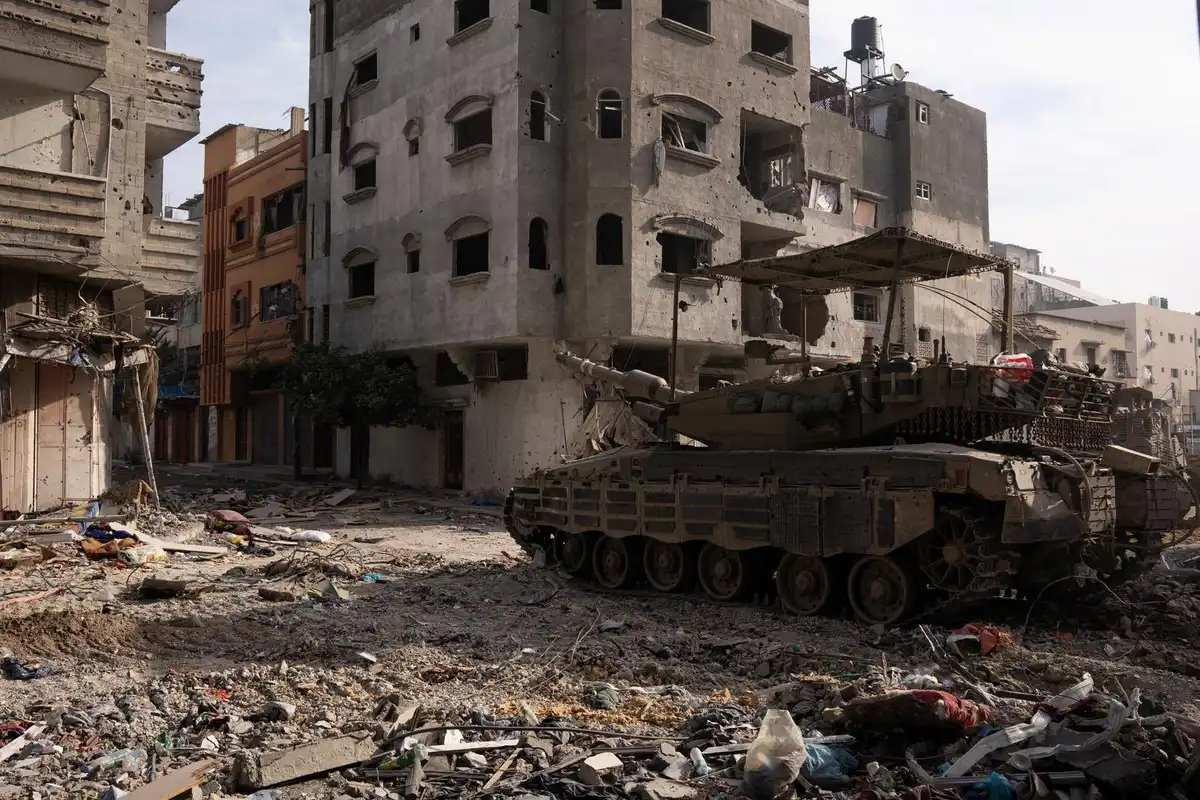
Israel is in a dilemma where its goals of releasing the hostages and destroying Hamas have failed

The New York Times on Saturday quoted some Israeli leaders as saying that the two main goals of the Israeli government, namely “eliminating Hamas and freeing the hostages,” are incompatible. “To eradicate Hamas, the military establishment will have to engage in a long war that will likely cost the lives of the hostages.”


After more than a hundred days of war, experts believe that “the limited progress made by Israel in dismantling Hamas has raised doubts within the senior military leadership about the feasibility of achieving Israel’s main wartime goals in the short term: eliminating Hamas and also liberating the Israeli hostages who cannot still in Gaza.”


The report notes that Israel has only established control over a much smaller portion of Gaza at this stage of the war than it originally envisioned in battle plans from the beginning of the invasion, which were reviewed by The New York Times. “This slower than expected pace has prompted some leaders to privately express their frustration with the civilian government’s strategy in Gaza, and led them to conclude that the freedom of more than 100 Israeli hostages still in Gaza can only be secured through diplomatic, not military, means,” according to the newspaper. 


“The dual goals of freeing the hostages and destroying Hamas are now incompatible, according to interviews with four senior military commanders,” who spoke on condition of anonymity because they were not allowed to speak publicly about their personal views.


“There is also significant disagreement over the length of time Israel will need to completely eliminate Hamas – an arduous and time-consuming process in its fight from underground tunnels – and the pressure Israel’s allies are applying to quickly end the war amid mounting civilian deaths.”


The generals also said that the long battle aimed at completely dismantling Hamas would likely cost the lives of Israeli hostages who have been held in Gaza since October 7, when Hamas militants invaded Israel, killing nearly 1,200 people, including 311 soldiers, according to Israeli statements, and taking about 240 prisoners, according to the generals' Israeli estimates.


Hamas released more than 100 hostages in the last week of last November, but said it would not release the others unless Israel agreed to completely stop hostilities. It is believed that most of the remaining hostages are being held by Hamas cells hiding inside the underground tunnel fortress that extends hundreds of miles below the surface of Gaza.


Gadi Eisenkot, a former army chief serving in the war cabinet, on Thursday revealed a rift within the government when he said in a television interview that it was an “illusion” to believe that hostages could be rescued alive through military operations. .


“The situation in Gaza is such that the goals of the war have not yet been achieved,” Eisenkot said, adding: “For me, there is no dilemma. The mission is to save civilians before killing the enemy.”


This strategic impasse has exacerbated the military's frustration with the indecision of Israeli civilian leadership, according to the four commanders.


The commanders said Prime Minister Benjamin Netanyahu's ambiguity about the post-war plan for Gaza was at least partly responsible for the impasse the army faces on the battlefield.


“Netanyahu has not yet made clear how Gaza will be governed after the war — and leaders said that without a long-term vision for the Strip, the army will not be able to make short-term tactical decisions about how to seize the parts of Gaza that it will control. The southern part of Gaza, which is located on the Egyptian border, will require greater coordination with Egypt, but three of the leaders said that Egypt is unwilling to participate without guarantees from Israel regarding the post-war plan,” according to the newspaper.


The generals fear that a long campaign - without a post-war plan - will erode any remaining support from Israel's allies, limiting their willingness to supply additional ammunition.


Foreign leaders have been alarmed by the death toll caused by the Israeli campaign: more than 24,000 Gazans were killed in the war, according to health authorities in the Strip, sparking accusations of genocide. Gaza officials did not mention the number of fighters killed, "but Israeli military officials say the number includes more than 8,000 fighters."


Families of hostages are becoming more vocal about the need to free their relatives through diplomacy rather than force. Some hostages taken in Gaza have since been declared dead - and it is not yet clear whether they were killed accidentally by Israeli forces or by Hamas.


Of the more than 100 hostages freed since the start of the invasion, only one was freed in a rescue operation. All the others were exchanged for Palestinian prisoners and detainees during a short truce in November.


By focusing its efforts on destroying the tunnels, the army risks making mistakes that could cost the lives of more Israeli citizens. Three Israeli hostages were killed by their own soldiers in December, despite waving a white flag and chanting in Hebrew.


The newspaper quotes Andreas Krieg, a war expert at King's College London, as saying that "basically, it is a state of stalemate." "It's not an environment where you can free hostages," he added.


"If you went into the tunnels and tried to free them with special forces, or whatever, you would kill them," Dr. Craig said. “You either kill them directly or indirectly, in booby traps or in an exchange of gunfire.”


Many of the tunnels have been destroyed, but if the remaining tunnels are left intact, Hamas will remain virtually undefeated, making it less likely that the group will release the hostages under any circumstances without a complete ceasefire.


The remaining alternative is a diplomatic settlement that could include the release of hostages in exchange for the release of thousands of Palestinians detained by Israel, along with a cessation of hostilities.

ARAB AND WORLD

Sat 20 Jan 2024 7:08 pm - Jerusalem Time

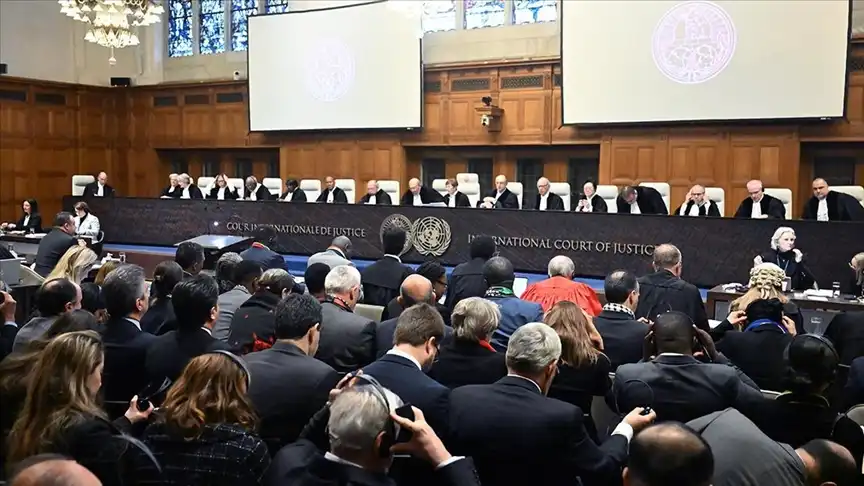
Belgium supports South Africa's lawsuit against Israel

Belgium has announced that it will fully support the case brought by South Africa, which accuses Israel of committing "genocide", if the International Court of Justice decides to stop the attacks on Gaza.


Minister of Development Cooperation Caroline Jenes said on her account on the “X” platform: “Belgium reaffirms its full support for the case before the International Court of Justice. If the court asks Israel to stop its military operation against Gaza, our country will fully support it.”


The Belgian minister said: “Our country bears its responsibility towards human rights and humanitarian law.”


Jennies pledged to remain committed to achieving the goal of ensuring the full delivery of humanitarian aid to Gaza as soon as possible, at all levels.


She also stressed that her country will continue to strive, within the European Union and at the international level, for a permanent ceasefire, full access to humanitarian aid, the release of prisoners, compliance with international law and the two-state solution.


Israel is facing a “genocide” case filed by South Africa before the International Court of Justice in The Hague on December 29, due to its actions in Gaza, which the United Nations described as a violation of international laws. However, Tel Aviv denies these accusations, claiming that it is only trying to Protecting its people.

PALESTINE

Sat 20 Jan 2024 6:28 pm - Jerusalem Time

West Bank: A Palestinian was injured as a result of attacks by Israeli colonists south of Nablus

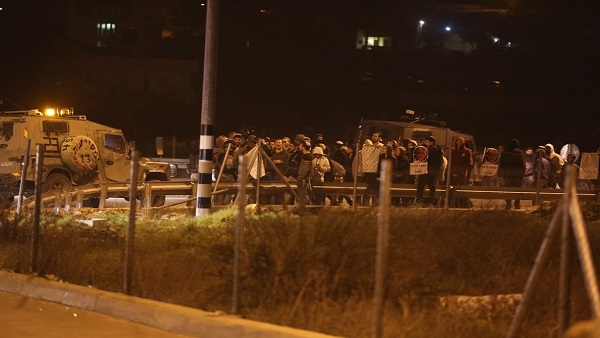
A Palestinian citizen sustained bruises today, Saturday, as a result of a settler attack on a park on the outskirts of the town of Huwwara, south of Nablus.


According to local sources, settlers from the "Yitzhar" settlement attacked the "town of  Huwwara" Park under the protection of Israeli army, and beat a citizen, and he was taken to Rafidia Governmental Hospital.

ARAB AND WORLD

Sat 20 Jan 2024 5:34 pm - Jerusalem Time

The New York Times: Israel's failure to achieve its goals in Gaza exacerbates the frustration of military leadership

The New York Times said that Israel's failure to achieve its main goals, more than 100 days after the invasion of Gaza, raises growing frustration among its military leaders and leads some of them to believe that the recovery of detainees in the Strip is possible only through diplomatic, not military, means.


The newspaper published a lengthy report that included a summary of secret plans for military operations and testimonies from military commanders and Israeli political officials about the course of the war.


The New York Times indicated that in light of the limited progress made by Israel with regard to dismantling the structure of the Hamas movement in Gaza, doubts are growing among the senior military leadership about the possibility of achieving the two main goals of the war; They are to eliminate Hamas and recover more than 100 prisoners still being held in Gaza, the most valuable of whom are believed to be held by the movement.


The newspaper explained that the Israeli army imposed its control in Gaza on a smaller portion than it had envisioned in its battle plans since the beginning of the war.


It said that Israeli plans included controlling the cities of Gaza, Khan Yunis, and Rafah by late December, which was not achieved.


It added that the pace of progress of the military campaign, which was slower than expected, prompted a number of Israeli military leaders to express their frustration with the political leadership’s strategy regarding Gaza, and this also led them to believe that the recovery of the remaining detainees in the Strip would only be possible through diplomacy rather than military means.


The American newspaper quoted Israeli military leaders as saying that recovering prisoners and destroying the Hamas movement have now become incompatible goals.


It also reported statements made Thursday by Israeli War Council member Gadi Eisenkot, in which he acknowledged that the goals of the war would not be achieved, and that the detainees could not be recovered through military means.


It pointed out that Israeli military leaders believed before the war that the network of tunnels built by Hamas extended 100 miles (160 km), but they now estimate that it may extend 450 miles (725 km).


Strategic dilemma

The New York Times quoted Israeli officials as saying that the strategic impasse exacerbated the army's frustration over the hesitation of the political leadership.


These officials said that the long battle to destroy Hamas would likely cost the lives of those detained in Gaza.


The Israeli military expressed to the newspaper their fear that the length of the military campaign without a post-war plan would lead to the erosion of allied support.


The New York Times indicated that by mid-January, Israeli forces had not begun to advance towards the city of Rafah, nor had they yet been able to expel Hamas fighters from Khan Yunis, knowing that both cities are located in the south of the Gaza Strip.


It also indicated the return of Hamas fighters to the northern Gaza Strip in recent days after the Israeli army said that it imposed control over the area and withdrew half of its forces that were deployed, estimated at about 50,000 soldiers.


Commenting on the New York Times report, he told an Israeli army spokesman that the statements reported by the newspaper from military officials do not express the army’s position.

PALESTINE

Sat 20 Jan 2024 5:21 pm - Jerusalem Time

West Bank: Israeli settlers attack sheep herders south of Hebron

This Saturday evening, Israeli settlers attacked sheep herders in the village of Al-Jawaya, east of Yatta, south of Hebron.


According to local sources, the settlers of "Atzkhar Man", established on the lands of the village of Al-Jawaya, under the protection of Israeli forces, attacked sheep shepherds, opened fire at them, and insulted them with obscene language.


He added that the settlers chased the sheep herders, and they are still present in the vicinity of their homes in the village of Al-Jawaya.

ARAB AND WORLD

Sat 20 Jan 2024 5:13 pm - Jerusalem Time

Beirut: Four Lebanese citizens killed in Israeli bombing on the North Burj Road

The number of killed, as a result of the Israeli aircraft bombing a vehicle on the North Burj-Al-Bazouriyeh road in the Tire district of southern Lebanon, rose to four.


The Lebanese National News Agency reported that the bodies of two killed were recovered as a result of the raid that targeted the vehicle, bringing the number of killed to four, two of whom were recovered from inside the vehicle and the other two from the vicinity of the orchard adjacent to the road.


It added that Israeli reconnaissance aircraft continue to fly over the southern villages and towns adjacent to the Blue Line and in the airspace of Tire District.

ARAB AND WORLD

Sat 20 Jan 2024 5:02 pm - Jerusalem Time

A contradictory American vision for the future of Gaza and the two-state solution

By Muhammad Al-Minshawy


The position of President Joe Biden's administration regarding the ongoing Israeli aggression against the Gaza Strip since the seventh of last October raises a lot of astonishment and astonishment in American circles, both conservative and liberal.


On the one hand, members of the administration, such as Secretary of State Anthony Blinken and National Security Advisor Jake Sullivan, reiterate the principle of a two-state solution as the basis for any future settlement after the Gaza war, and on the one hand the administration continues to ship weapons and ammunition on a daily basis to Israel, and refrains from calling for a ceasefire. Fire, even after the victims of the Israeli aggression exceeded more than 25 thousand martyrs, most of whom were children and women.


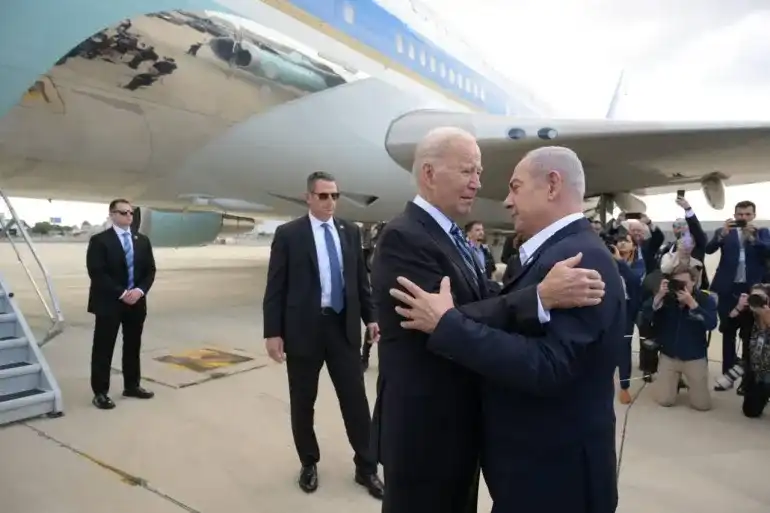
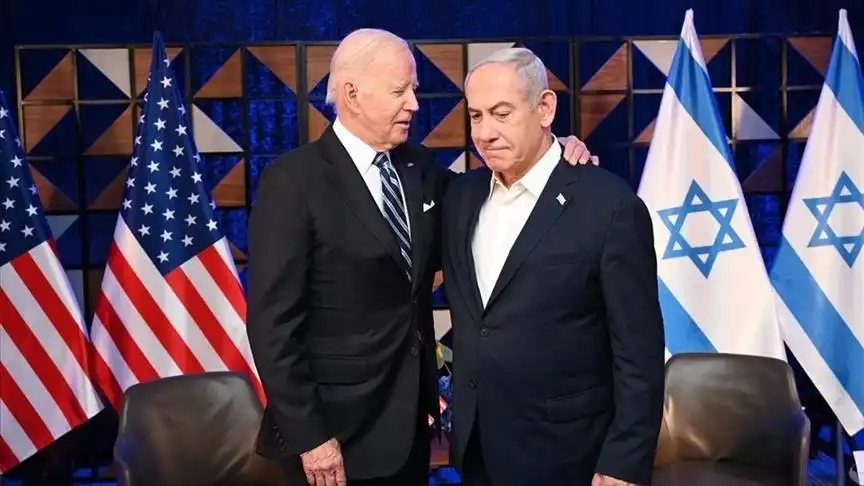
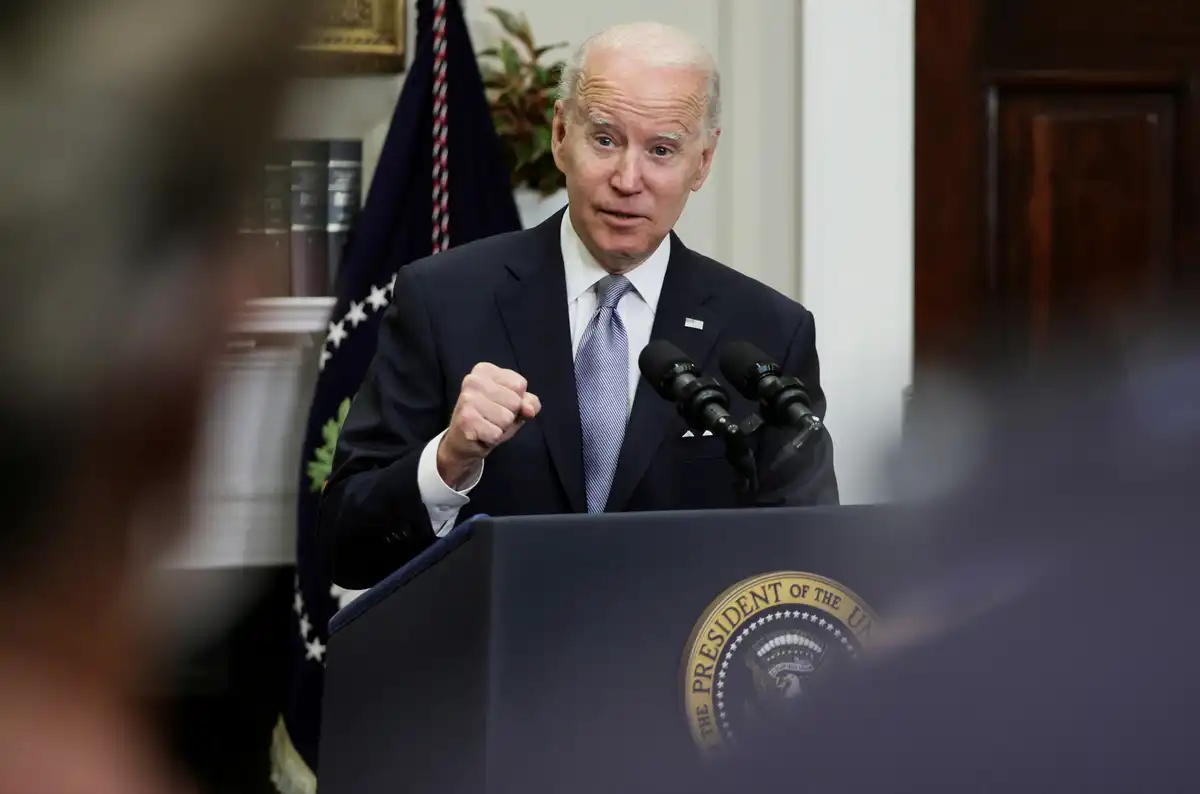
One day after Benjamin Netanyahu, Israeli Prime Minister, publicly rejected the idea of establishing a Palestinian state, Biden stressed that it is not impossible to achieve a two-state solution even when Netanyahu is in power. Biden spoke with Netanyahu on Friday, conveying "his vision for a more lasting peace and security for Israel, fully integrated into the region, and a two-state solution while ensuring Israel's security."


Unrealistic vision

The White House is doubling its efforts to promote the idea of a Saudi-Israeli deal as a means to bring peace to the Middle East, through which the future of the Gaza Strip will be linked to this potential agreement.


Reports indicated the existence of an American plan indicating the possibility of securing reconstruction funds from the Saudis, Israeli concessions to the Palestinians, and Palestinian blessing for the deal as part of an urgent road map for the reconstruction of the Gaza Strip.


In contrast to what Biden has confirmed since October 7, the arena of conflict has expanded, as Washington and its allies carried out attacks on Houthi bases in Yemen after the Houthis targeted cargo ships in the Red Sea, in response to the Israeli aggression on the Gaza Strip.


Charles Dunn, a former White House and State Department official, currently an expert at the Arab Institute in Washington, and a lecturer at George Washington University, told Al Jazeera Net, “The foundations of the American perception are reasonable enough, but the administration has not shown any real interest in creating the conditions and creating a process to get there. "Except for regional normalization. They are very unclear about the nature and powers of the future Palestinian state, and what will happen in Gaza after this conflict ends, if it does end."

On the other hand, in an interview with Al Jazeera Net, former diplomat and international affairs expert Wolfgang Pusztai pointed out that “the Biden administration’s vision is certainly logical. However, these basic pillars could be the cornerstone of a plan that needs detailing, and it is not realistic for him to achieve anything.” "From the warring parties, his maximum demands are made."


However, Wolfgang said, "Realistically, I do not see a solution to the Palestinian conflict in the next 20 or 30 years. However, it makes sense to approach such a solution step by step."


Sarcasm and anger

In its editorial - yesterday, Friday - the Wall Street Journal, with a conservative orientation, mocked President Joe Biden and Secretary of State Tony Blinken's reading of the situation in the Middle East.


The newspaper, the most sober among the American conservative movements, confirmed that, contrary to what Biden aspires to, the Israeli people are not ready under the current circumstances to discuss granting the Palestinians a state, but the Biden administration continues to pressure them.

The newspaper accused Blinken of proposing a failed solution to the problems of the Middle East, which consists of proposing a regional approach, but it requires Israel to make difficult decisions. In other words, the newspaper says, “The October 7 attack, and the broad Palestinian popular support for it, demonstrated which party does not want peace, so why should Washington ask Israel to concede and commit to peace on its part,” according to the newspaper.


On the other hand, the progressive movement in the Democratic Party, led by Senator Bernie Sanders, is pressuring the Biden administration towards a ceasefire and stopping providing unconditional military aid to Israel, while examining Israel’s record in the field of human rights.


This trend is surprised by Biden's increasing awareness of the impossibility of eliminating Hamas militarily, yet his administration continues to send weapons and ammunition to Israel on a daily basis since October 7.


The protests, in which hundreds of workers within the Biden administration are participating, in addition to the demonstrations of hundreds of thousands in various American cities to pressure a ceasefire, are putting pressure on decision-makers in Washington, especially with many young people in American universities, and the Arab and Islamic community, pledging not to vote for Biden in the November elections. Second coming.


Asal Rad, a researcher at the Eurasia Group Foundation, told Al Jazeera Net, “It is difficult to know what the Biden administration is thinking, given its continued support for Israel’s actions, despite global protests, and the genocide case before the International Court of Justice. They certainly understand the importance of October 7th and its repercussions in terms of Israel's security and the harsh conditions of the Palestinians in Gaza.


She adds, "If they were aware of the damage to the credibility of the United States, the effectiveness of international law, and the damage to the reputation of the administration itself because of its refusal to hold Israel accountable for its actions in any way, they did not seem to care, and they have maintained the same position unchanged."


An ongoing dilemma

The US administration believes that it will be difficult to achieve any breakthrough in the rigid Israeli position under Netanyahu heading the most right-wing government in Israel’s history.


In an interview with Al Jazeera Net, Hussein Ibish, senior researcher at the Arab Gulf States Institute in Washington, indicated that “another Israeli government may be able to do what Washington envisions, if Israel understands the importance of all this for its security in the long term. It remains to be seen. But the goals here, certainly from the Biden administration’s point of view, are to send a message to the Israelis that Netanyahu is a big part of the problem, and that getting rid of him is absolutely necessary.”


Source: Al Jazeera

ARAB AND WORLD

Sat 20 Jan 2024 4:52 pm - Jerusalem Time

A European "road map" to resolve the "Israeli-Palestinian conflict"

The European Union's foreign affairs and security policy official, Josep Borrell, prepared a ten-point road map in preparation for a comprehensive solution to the Palestinian-Israeli conflict, according to what the European Euronews network revealed on Friday.


The focus of this map drawn up by Borrell is to hold a peace conference with the participation of the main actors, such as the European Union, the United States, Saudi Arabia, Egypt, Jordan, the Arab League, and the United Nations.


As for the participants, they will be in constant contact with Israeli and Palestinian officials, but the two parties will not initially “have to sit face to face.”


The document, which has not yet been published and is scheduled to be discussed by European Union foreign ministers during a meeting on Monday, includes a series of procedural steps that Borrell believes can ultimately achieve peace in the Gaza Strip, establish an independent Palestinian state, and ensure long-term security in the Gaza Strip. Region.


The preamble of the document stated: “In light of the current situation and despite the obvious difficulties, the time has come to prepare for a comprehensive Israeli-Palestinian peace.”


The 10 points of the European road map


    This process should lead to the establishment of an independent Palestinian state “living side by side” with Israel, and the “full normalization” of relations between Israel and the Arab world.

     It helps international actors prepare a “ground for peace” and build a “renewed political alternative” to Hamas.

     International actors must hold “as soon as possible” a preparatory peace conference with the aim of resolving the ongoing war in Gaza, especially the Israeli-Palestinian conflict.

     The conference should bring together foreign ministers and directors of international organizations to discuss the peace process, while holding “almost simultaneously” separate meetings with the parties to the conflict.

     The conference must form working groups and design a “preliminary framework” for the peace plan within one year.

      The plan should address “as closely as practicable” the essential elements of a comprehensive peace, building on previous UN resolutions and mediation efforts.

     The plan must provide “strong security guarantees” for Israel and a future Palestinian state, “conditional on full mutual diplomatic recognition and integration between Israel and the Palestinians in the region.”

      The Conference should consult the parties to the conflict “at every step and at any time” while formulating the peace plan. It is important to continue working on the plan even if one side decides to withdraw.

     Once the plan is ready, it should be presented to the Israelis and Palestinians, and the document notes that “they will have to negotiate the final text.”

     In parallel with this process, conference participants should strive to alleviate the ongoing humanitarian crisis in Gaza, secure the release of Israeli detainees, prevent regional escalation, strengthen the democratic legitimacy of the Palestinian Authority, and support the reconstruction of Gaza, among other goals.


A senior European Union official told Euronews, "Israeli officials are not talking at this stage about a two-state solution. They are only talking about war and the military goal of destroying Hamas."


He added: "We have to deal with that. It is our responsibility and our duty to look beyond that," referring to the peace plan that Borrell will propose.


The plan, which Borrell attended, attempts to place these obligations in a clear framework.


Although the road map that Borrell intends to present to European diplomats does not prejudge the essence of the potential peace plan, it does provide a coherent timetable for organizing a potential peace process, according to the European Network.


The goal of the road map is not only to end the current war, but also to address the root causes that caused the Israeli-Palestinian conflict over the past seven decades, according to Euro News.


Deep European divisions

However, it is not at all certain that the 27 EU member states will adopt the plan, as capitals remain divided on how to address the conflict, or even talk about it.


The European Union is witnessing deep divisions over how to deal with the war launched by Israel on the Gaza Strip, and so far European efforts have been limited to calling for humanitarian truces, so that aid can enter the Strip, which is witnessing increasing destruction.


There is no European consensus on calling for a complete ceasefire, although more voices are joining this effort, but countries such as Germany believe that this immediate call could conflict with Israel's right to defend itself.


Earlier, Friday, Bloomberg reported that 5 Arab countries presented a “comprehensive plan” that includes ending the Israeli war on Gaza, and an initiative on the “day after” the war, with the support of the United States, while the Israelis, on whom the agreement depends, refuse to agree on the terms of the plan.


Eight officials stated in statements to “Bloomberg” that the proposal, which its authors describe as “the most logical solution for long-term security in the region,” is “out of reach at the present time,” stressing that “progress toward a solution will not be possible in light of the continued government.” The extreme right” in Israel, led by Prime Minister Benjamin Netanyahu.


The plan proposed by the Gulf states, including Saudi Arabia, the Emirates, and Qatar, along with Egypt and Jordan, includes pushing the Israeli government to work to establish a “Palestinian state.”

In this regard, “because the deal requires Saudi Arabia’s recognition of Israel, it reflects the historic agreement that Israel and the United States were about to sign with Riyadh before October 7,” according to “Bloomberg.”


Bloomberg said, "The plan that was on the verge of success must today challenge several obstacles, including the devastation caused by the Israeli war on Gaza and mutual accusations, not to mention the intensity of anti-Israel sentiment in the region."

ARAB AND WORLD

Sat 20 Jan 2024 4:00 pm - Jerusalem Time

Netanyahu denies informing Biden of the possibility of establishing a Palestinian state

Israeli Prime Minister Benjamin Netanyahu denied that he informed US President Joe Biden of the possibility of establishing a Palestinian state.


This came in a rare statement from the Prime Minister’s Office, which usually avoids making statements on the Sabbath, the holy holiday for religious Jews, in response to a report published on Saturday by the American CNN network, which said that Netanyahu told Biden that “his words in a press conference on Thursday were not intended to exclude any possibility of the establishment of a Palestinian state.


The statement, a copy of which was received by Anatolia, said: “In the phone call he made yesterday (Friday) with President Biden, Netanyahu repeated his coordinated position for years, which he also expressed during the press conference he held two days ago.”


He added that this position states that “after eliminating Hamas, Israel must maintain full security control over the Gaza Strip, in order to ensure that Gaza no longer poses any threat to Israel, and this clashes with the demand for Palestinian sovereignty.”


In their first phone call in about a month, Biden assured Netanyahu on Friday that “a permanent political solution between Israel and Palestine will not be possible except through the two-state solution,” according to a White House statement.


On Thursday, Netanyahu said in a press conference that he informed the United States of his opposition to the establishment of a Palestinian state “within any scenario for the post-war period in Gaza,” contrary to the American desire.


Netanyahu pledged to go ahead with the attack on Gaza until Israel achieves a “decisive victory over Hamas,” rejecting the idea of a Palestinian state, and saying that he “conveyed his positions to the Americans.”


Netanyahu said: “In any future arrangement, Israel needs security control over all the lands west of the Jordan River.”


He added: "The prime minister must be able to say 'no' to our friends," referring to the United States.


The United States called on Israel to reduce its attack on Gaza, and said that the establishment of a Palestinian state must be part of “the next day.”

PALESTINE

Sat 20 Jan 2024 3:55 pm - Jerusalem Time

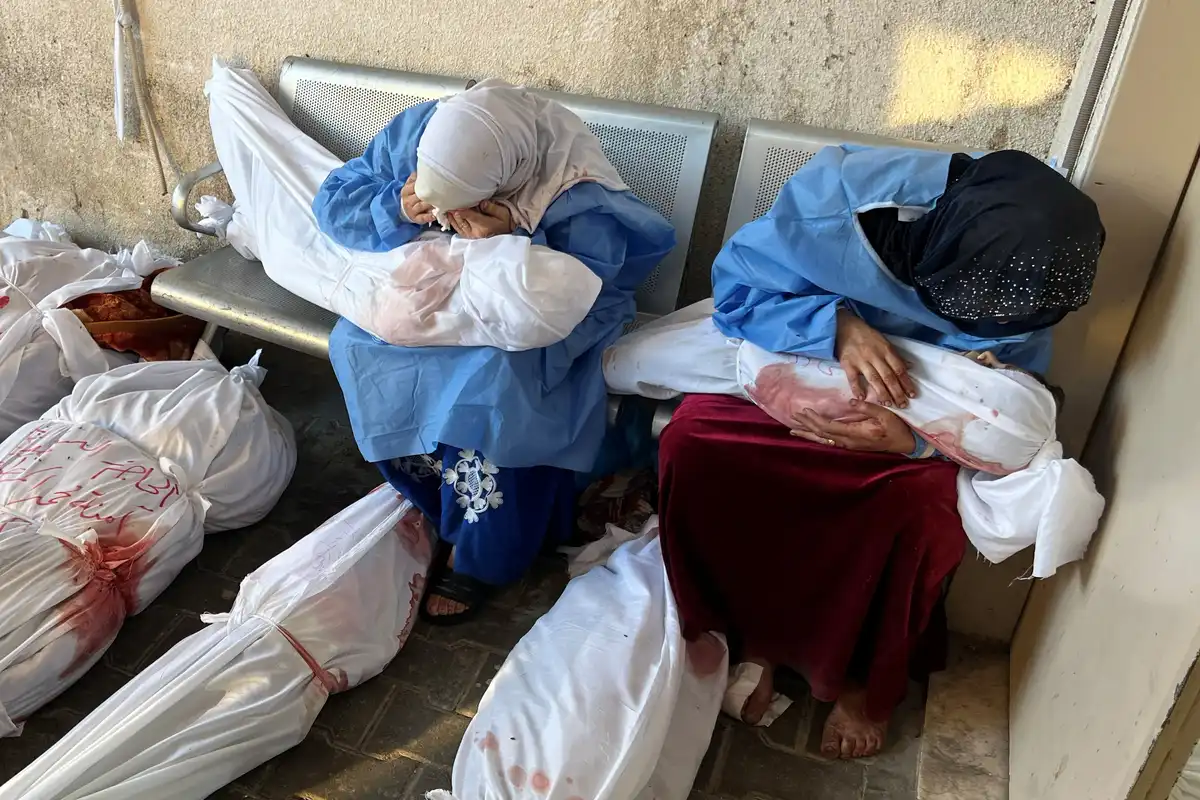
Israel kills two mothers in Gaza every hour and about 3,000 women have lost their husbands

The Executive Director of UN Women, Sima Bahouth, said, “There are two mothers killed in the Gaza Strip every hour,” while the spokesman for the United Nations Secretary-General, Stephane Dujarric, confirmed that about 3,000 women have lost their husbands, or have become breadwinners for their families.


Bahouth explained, in a statement issued today, Saturday, that women and children are the first victims of the tragedy in the Gaza Strip, which witnessed unparalleled devastation, and women and girls constitute the majority of the dead, wounded, and displaced.


She stated that estimates indicate that "about a million women and girls are displaced in Gaza, and two mothers are killed every hour, while about 10,000 children have lost their fathers."


Bahouth monitored the conditions in the occupied territories before and after October 7, 2023, and said, “The numbers indicated that 67% of the victims were men, and less than 14% were women and girls, and those numbers have reversed today, as 70% Among the martyrs in Gaza are women and children.


She promised, "These are people, not numbers, and we are failing them."

She added, "The trauma that the Palestinian people are suffering over these 100 days and beyond will haunt us all for generations to come. No matter how much we grieve over the condition of women and girls in Gaza today, we will grieve even more tomorrow if unrestricted humanitarian aid is not provided and the destruction and killing are not put to an end." ".


The UN official issued a call for "an immediate ceasefire on humanitarian grounds, and unhindered access of humanitarian aid to all residents of Gaza, including the provision of vital assistance and services to all women and girls."


She stressed that "the world is required to work for peace to prevail in the region, because the absence of change means that the last 100 days will be merely a prelude to the next 100 days."


For his part, UN spokesman Dujarric said, "Women and girls in the Gaza Strip are losing their lives and facing catastrophic levels of humanitarian needs, and about 3,000 women have lost their husbands in the war, or have become breadwinners for their families."


He added, “Today estimates indicate that about 70% of those killed in Gaza were women and children, and that at least 3,000 women may have become widows and heads of families, and that they are in dire need of protection and food assistance.” He continued, “Children constitute more than half of the population.” Gaza Strip, the percentage of displaced people exceeds 90%.


In turn, the organization's spokeswoman, Tess Ingram - after her recent return from a visit to Gaza - recounted her observations of mothers who bled to death, and a nurse who was forced to perform caesarean sections on 6 deceased pregnant women.


Ingram said that about 20,000 children were born in the "hell" of the Gaza war, and that "there is a child born every 10 minutes in the midst of this horrific war." She added, "Motherhood should be an occasion to celebrate. In Gaza, it is another child going out to hell."


She continued, "Seeing newborn children suffering, while some mothers bleed to death, should worry us all," stressing the need for urgent international action.


ARAB AND WORLD

Sat 20 Jan 2024 2:04 pm - Jerusalem Time

An Arab meeting on Monday to discuss developments on war on Gaza Strip

The Palestinian representative to the Arab League, Ambassador Muhannad Al-Aklouk, announced that an emergency meeting would be held at the level of permanent delegates, next Monday, to discuss developments in the war on the Gaza Strip.


Al-Aklouk said, “The Arab League Council at the level of permanent delegates will hold an extraordinary session, next Monday, at the headquarters of the General Secretariat of the Arab League in Cairo, under the presidency of the Kingdom of Morocco.”


He explained that the emergency meeting was being held "at the request of the State of Palestine, and the support of a large number of Arab countries, with the aim of discussing Israeli crimes and plans against the Palestinian people."


PALESTINE

Sat 20 Jan 2024 1:40 pm - Jerusalem Time

UN: 10,000 children lost their parents in the Israeli attacks on Gaza

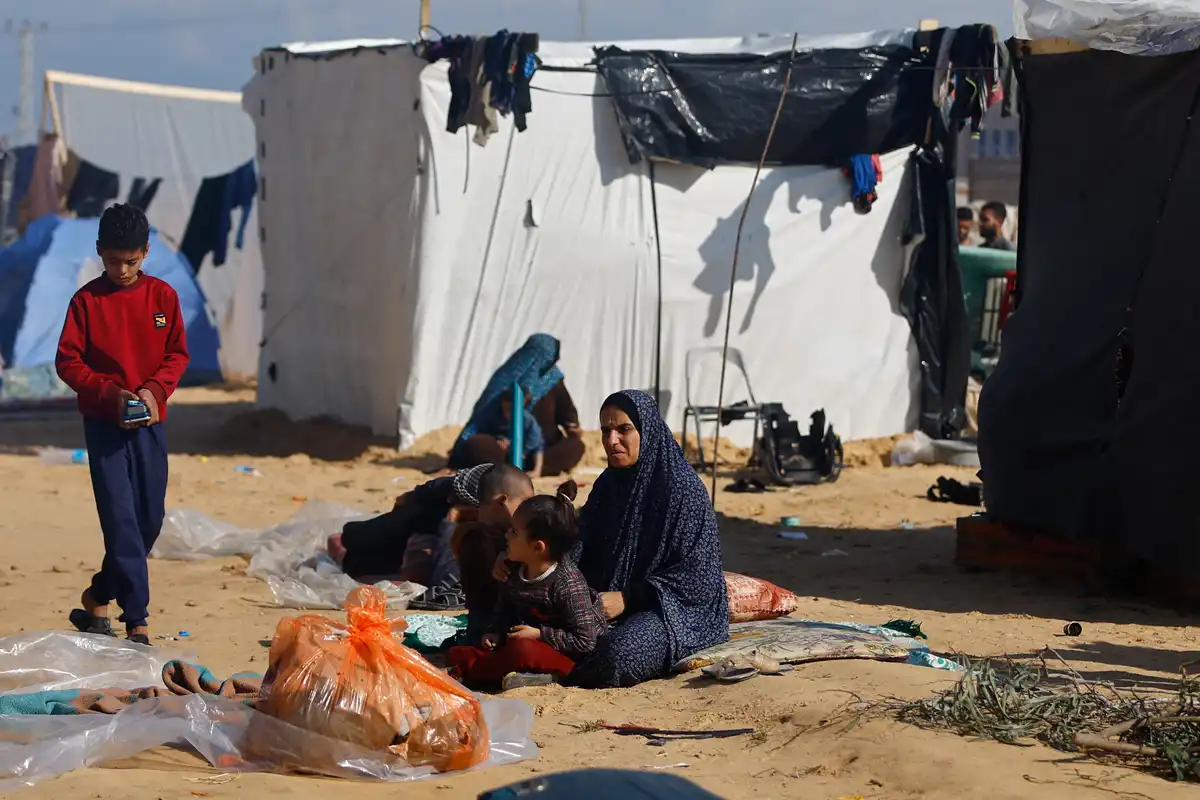
The United Nations announced on Saturday that the number of displaced women reached one million out of 1.9 million people who left their homes as a result of the ongoing Israeli war on the Gaza Strip.


UN Women stated, in a report on data on women and girls in the Gaza Strip, that 1.9 million out of 2.3 million people in Gaza were displaced from their places.


The report indicated that among the displaced were about one million women and girls.


He pointed out that "two mothers are killed every hour in Gaza," noting that about 10,000 children lost their fathers in Israeli attacks.


PALESTINE

Sat 20 Jan 2024 1:36 pm - Jerusalem Time

West Bank: Israeli Settlers attack Palestinians and steal their sheep northeast of Ramallah

Today, Saturday, settlers beat citizens and stole sheep northeast of Ramallah.

The mayor of Ramoun, Ibrahim Suleiman, said that a group of settlers attacked sheep shepherds in the “Jisr al-Khala” area between Ramoun and Deir Dibwan, and severely beat them with sticks, which led to three of them sustaining bruises and fractures, and they were taken to the hospital.


Suleiman pointed out that the settlers stole a number of sheep from the area, before they withdrew from the place.


ARAB AND WORLD

Sat 20 Jan 2024 12:58 pm - Jerusalem Time

CNN: Biden administration discusses the idea of a demilitarized Palestinian state

CNN quoted an informed source as saying that the administration of US President Joe Biden recently held discussions about establishing a potential demilitarized Palestinian state.


The source added that Biden believes that establishing a demilitarized Palestinian state is an interesting idea, stressing that Biden discussed during a phone call yesterday, Friday, with Israeli Prime Minister Benjamin Netanyahu the possible features of the future Palestinian state that must be negotiated.

PALESTINE

Sat 20 Jan 2024 12:45 pm - Jerusalem Time

West Bank: Israel arrested 22 Palestinians

From yesterday evening until Saturday morning, the Israeli occupation forces arrested at least (22) citizens from the West Bank, including a woman from Jerusalem, and children.


Thus, the total number of arrests after October 7 rose to about (6,115), and this total includes those who were arrested from homes, through military checkpoints, those who were forced to surrender themselves under pressure, and those who were held hostage.


The Israeli forces continue to implement systematic arrest campaigns, as one of the most prominent established policies, which escalated in an unprecedented manner after the seventh of October, not only in terms of the level of the number of detainees, but also in terms of the level of crimes they committed, in addition to the raids into the homes of the detainees’ families, which are accompanied by sabotage operations. And extensive destruction.


ARAB AND WORLD

Sat 20 Jan 2024 12:38 pm - Jerusalem Time

Biden: The two-state solution is still possible even with Netanyahu in power

US President Joe Biden said that he believes that a two-state solution between Israelis and Palestinians is still possible to achieve even with the current Israeli government, headed by Benjamin Netanyahu, in power.


“No, not so,” he said when asked if he thought such an outcome was impossible with Israeli Prime Minister Benjamin Netanyahu in office.

Biden's statements came a day after Netanyahu rejected the idea of establishing an independent Palestinian state once the fighting in the Gaza Strip ended, saying that Israel needs "security control over all lands," which contradicts "the idea of sovereignty."

Democrats expressed horror at those comments, but Biden said he believes Netanyahu does not oppose all two-state solutions.

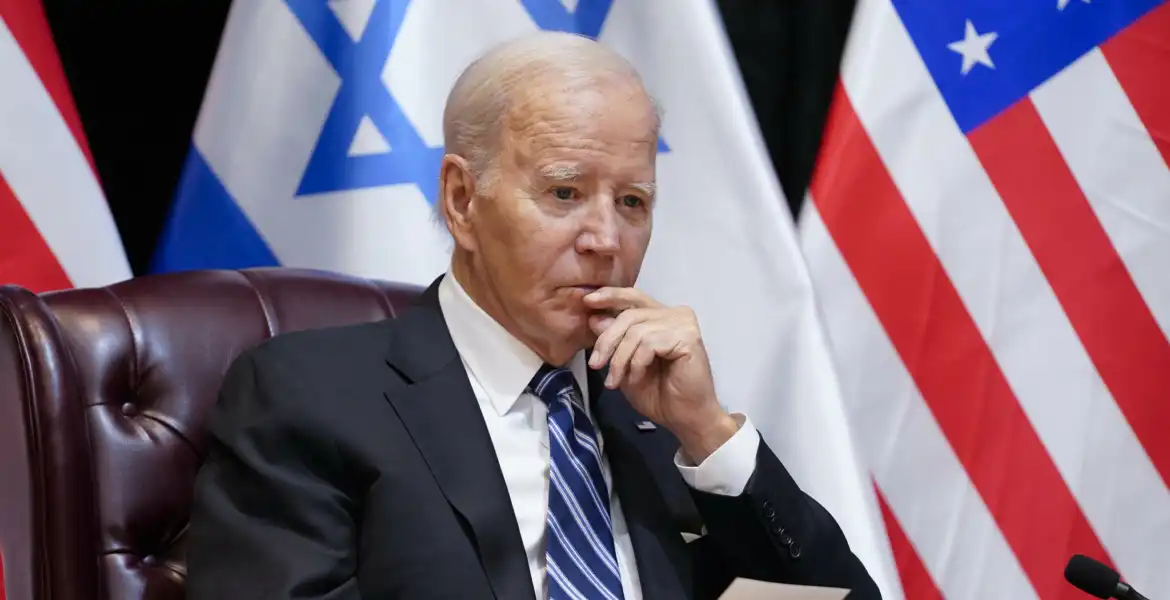
Biden's statements came after he spoke with Netanyahu by phone for the first time in nearly a month about the ongoing war in Gaza and the possibility of establishing a Palestinian state after the war. The president nodded when asked if Netanyahu's refusal to create an independent Palestinian state was included in the call.


The White House confirmed that the timing of the call was coincidental.

“The President continues to believe in the promise and possibility of a two-state solution. He recognizes that it will take a lot of hard work,” National Security Council spokesman John Kirby said at a White House news conference. “It's going to take a lot of leadership there in the region, especially on both sides of the issue, and the United States is deeply committed to seeing that outcome eventually,” Kirby added.


He added: “It is clear that we are actively talking to them about post-conflict (post-war) Gaza, what governance should look like there, and the importance of an independent Palestinian state for long-term security, not only for the Palestinian people, but for the Israeli people as well.” 


The Biden administration reiterates its commitment to the two-state solution, “but Netanyahu’s recent statements have cast serious doubt on the feasibility of this vision,” according to administration sources, putting Biden and Netanyahu on a collision course over the scope of the Israeli war and the future of Gaza, further complicating Biden’s efforts to manage the policy crisis. Sensitive external.

Democratic lawmakers, led by Senator Chris Van Hollen (D-Maryland), are pushing to amend the president's multibillion-dollar supplemental national security budget. The amendment, which now includes 18 countries, seeks to ensure that countries receiving US military aid - including Israel - use weapons in accordance with US law, international humanitarian law and the laws of armed conflict.

In November, Biden said conditional aid would be a "worthwhile idea," but the administration quietly ruled that out days after the president's comments. When asked whether the president's position on conditioning aid had changed amid recent developments, Kirby told reporters that the administration's approach had "achieved results."


He added: "We will continue this approach, which is clearly ensuring that Israel has the capabilities that it needs and that continues, but also urging them at every turn, to be more precise, more targeted, more deliberate in terms of harm to civilians." “We are urging increased humanitarian aid assistance, and of course we are trying to put in place other humanitarian laws so that we can conclude a hostage deal,” Kirby said, arguing that at the request of the United States, Israel had moved to less intensive operations and increased humanitarian aid flows.

Kirby also said Biden and Netanyahu also discussed ongoing efforts to secure the release of the remaining hostages held by Hamas, as well as operations to increase humanitarian aid to Gaza “while maintaining significant military pressure on Hamas and its leaders.”

OPINIONS

Sat 20 Jan 2024 9:12 am - Jerusalem Time

Israeli writer interview: Q&A on the hostage issue

Gershon Baskin

Gershon Baskin

Opinion Writer


Q&A on the Hostage Issue

Q: Is there a possible deal to be made with Hamas that could bring all of the hostages home – alive and those already dead?

A: Yes. This is the deal:1. An end to the war2.⁠ Israeli ⁠withdrawal to the international border3.⁠ ⁠All of the hostages in exchange for all of the Palestinian prisoners

Q: Isn’t the Hamas demand to first end the war, withdraw all Israeli forces from Gaza and only then begin negotiations on the Israeli hostages and Palestinian prisoners?

A: Yes, that is what they are currently demanding. I am putting out a proposal that eliminates the time wasted and while at this time is not acceptable to Israel, once Hamas indicates that it would be acceptable to them, there is a chance of increased public pressure in Israel to made this deal possible. The idea is that the all for all deal is agreed on together with the Israeli agreement to end the war and to redeploy its forces on the international border.


Q: How would it work?

A: Israel will propose the above deal to Qatar and Egypt. Negotiations with Hamas would be on the terms and places of release of the Palestinian prisoners. Israel will demand that the release of hostages and prisoners be done in one batch – all for all at once. It could take a whole day or even several days, but it should not be stretched over a longer period of time. Israel should insist that it be done quickly.

Q: What other technical details are important in the deal?

A: Israel and Hamas would cease fire at an agreed date and time. Israeli withdrawal of forces would not happen until the ceasefire is in place and is holding. Israel will begin to withdraw its forces from Gaza to the international border. While that is happening, Hamas will provide Egypt and Qatar with a list of all of the hostages – dead and alive – all of them. Israel will provide Egypt and Qatar with a list of all of the prisoners. When the withdrawal of Israeli forces from Gaza is completed, the exchange of prisoners and hostages will begin.

Q: Why would Sinwar agree to such a deal, aren’t the hostages his life insurance policy?

A: There are a lot of so-called experts sitting on the panels on Israel’s television stations all claiming to know exactly what Sinwar thinks and what he wants. The truth is that none of them know for sure. Everyone is basically guessing (including me) based on our own assumptions of who he is and how he thinks. It is not even 100% clear that the decision making is solely in his hands, although it seems very likely that he and Mohammed Deif have the final word. It is also fair to assume that Sinwar and the Hamas military command have surrounded themselves with hostages to serve as human shields, but we do not know that for sure.

Q: But if there is a deal, would they really free all of the hostages dead and alive or would they hold onto some as a kind of insurance policy?

A: Again, we have no way to know for sure. That will be the role of the mediators – the Egyptians and the Qataris and the International Red Cross. The exchange itself can be done in stages during the day or days designated and this would be monitored in real time by everyone involved. Prisoners would be released by Israel on an agreed to basis and schedule and would be staged in a way to increase the chances of complete implementation of the deal. For instance, the most valued prisoners by Hamas would be released last.

Q: What is Sinwar’s priority – his personal survival and the survival of the Hamas control of Gaza or the freeing of Palestinian prisoners?

A: We don’t know for sure. My assessment is as follows: Sinwar was the most important Hamas prisoner released in the Schalit deal in 2011, even though from the Israeli point of view, he was not that important, because he was imprisoned for killing Palestinian collaborators and not for killing Israeli Jews. Within Hamas, Sinwar was considered to be the most important prisoner. When he was freed and left many of his comrades behind in prison, he took an oath that he would free all of the Palestinian prisoners in Israel. He said that he would empty the Israeli prisons. He has repeated that promise in every important speech that he has made over the past 12 years. I have been negotiating with him, through Ghazi Hamad, since 2014, first for the bodies of Oron Shaul and Hadar Goldin and the for the release of Avera Mengisto and Hisham A-Sayed. From my experience with him, the only thing that interested him and the only thing that he was willing to discuss was the release of prisoners – especially those serving life sentences for killing Israelis. Israel offered money, electricity, water, jobs and more. Israel was willing to release several hundred prisoners, but not one who killed Israelis. For years the talks were deadlocked. Sinwar was uncompromising on this issue, and so was Israel. My analysis of Sinwar is that the keeping of his promise to release all Palestinian prisoners is his life’s mission – a holy mission as far as he is concerned. In my assessment, this is more important to him than his own life. He is prepared to die but he is not prepared to give up on the release of prisoners. Clearly, most people in the Israeli military-security establishment do not agree with me.

Q: If Sinwar’s survival is more important to him than the prisoners, can a deal be made?

A: From the Israeli point of view, the war cannot end with Sinwar alive and still in control of Gaza. That is what I understand from the Israeli officials. My assessment is that Sinwar believes that he will be alive at the end of the war, he will exit the tunnels and the bunkers and still be the leader of Hamas in Gaza. I hear from other Hamas spokespeople that they are convinced of their victory and of Israel’s defeat. Hamas believes that international pressure on Israel will bring about an end to the war before Israel has accomplished its war goals. Furthermore, they believe that the more Israel hits them and destroys Gaza, the more support Hamas will have in Palestine and in the neighboring Arab and Muslim countries. But it is also important to know that Sinwar has said, in his own words, that he knows he will die a shaheed (martyr) and it is important for him to die fighting Israel. This is why there has never been and there will never be deterrence against a force like Hamas. For them death as a martyr is the entrance to paradise, which is eternal. Life on earth is short and dying as a martyr for Palestine, for Allah, for Al Aqsa is the most important mission in life – it is the essence of life. People who view life in this way, the sanctification of death for a holy cause cannot be deterred and are not afraid of dying.


Q: Wouldn’t giving in to Hamas’ demands to end the war, withdraw from Gaza and release about 10,000 Palestinian prisoners be a victory for Hamas and isn’t that dangerous?

A: Yes, it would be a clear victory for Hamas. And a victory for Hamas is dangerous for Israel, for Palestine and even for Jordan and maybe for Egypt. Therefore, it must be a very short-lived victory. Bringing the hostages home is a victory for Israel, there is no victory for Israel if the hostages are not brought home. Ending the war and withdrawing from Gaza does not eliminate the possibility of Israel renewing the war the day after the hostages are returned. Certainly, it is easier to continue the war while it is ongoing and the Israeli army is in Gaza. Redeployment out of Gaza to the international border and then renewing the war is complicated and possibly can demoralize the army, the government and the country to remobilize the support and the energy need to complete the mission. But the motivation to complete the task of ensuring that Hamas will not continue to rule Gaza and will not have the military capabilities of ever attacking Israel again must be achieved. A victory for Hamas is existential for Israel, and therefore, Israel will be able to renew the war effort after the hostage deal is complete.

Q: Isn’t releasing so many Palestinian prisoners dangerous for Israel?

A: Yes, it is. Of the estimated 10,000 prisoners (more than 5,000 arrested in the West Bank since the beginning of the war) there are 559 prisoners convicted of murdering Israelis and serving life-sentences. There are also about 130 terrorists who were captured inside of Israel after October 7 and hundreds of Hamas and Jihad fighters have been captured inside of Gaza and brought into Israel since the beginning of the war. There is nothing that precludes the possibility of rearresting the released prisoners who continue to endanger Israel. There is nothing that prevents Israel from taking severe measures against any released prisoner that engages into terrorism action against Israel. That is why I propose the all of the released prisoners should be released to the West Bank where Israel has to ability to monitor and to rearrest any of the released prisoners that are dangerous to Israel. In the Schalit deal, all released prisoners were obligated to sign an undertaking that they would not return to terrorist activities. No one took that paper very seriously, but it did enable Israel to rearrest about 70 of those released prisoners in 2014. The same could be done now. The many employees of the Israeli Prison Authority along with the Shin Bet and the Israel Police can be deployed to monitor all of the released prisoners because so many of the prisons would be vacated and their jobs redundant.

Q: Wouldn’t rearresting the prisoners be a breach of the agreement between Israel and Hamas?

A: Yes, it would be a breach of the agreement, but so what? This is not a contract or agreement which has any validity in international law or common international relations. We have two parties, the State of Israel and Hamas that have absolutely no trust between them and no reason to trust each other. Why should we expect such an agreement to be unbreachable?

Q: Wouldn’t Hamas demand some form of guarantee that Israel would not renew the war after the deal is done and the hostages and prisoners are released?

A: Yes, but who would give such guarantees and why would Israel respect them? Who exactly would provide guarantees to Hamas that Israel would not renew the war? Egypt? Qatar? The US? Iran?? Why would Egypt provide such guarantees when Egypt also perceives Hamas as an enemy? And if they did, they would surely know that Israel cannot allow Hamas to continue to control Gaza and to threaten Israel. Such a situation is a danger to Egypt as well. The US would be in no position to provide guarantees to Hamas who is considered by the US to be a terrorist organization. Qatar is a country which has supported Hamas for years and hosts its leadership and has no diplomatic relations with Israel. So, I think we can remove the worries about guarantees.

Source: Times of Israel

OPINIONS

Sat 20 Jan 2024 9:01 am - Jerusalem Time

The pressure is building on Netanyahu over hostages – his only option is an ‘all for all’ deal

Gershon Baskin

Gershon Baskin

Opinion Writer

More than three months into a conflict that has claimed the lives of tens of thousands of people, it is clear there is only one way Israel can return all of the hostages from Gaza alive: an “all for all” deal with Hamas – all of the hostages, an estimated 129 of whom are believed to be alive, in exchange for all of the Palestinians in Israeli prisons.


There are about 8,000 Palestinian prisoners now in Israeli jails. Of these, 559 are serving life sentences for killing Israelis, and another 130 were caught in Israel in the two days after the 7 October Hamas attacks.

The difficulty for Israel in releasing these prisoners is made obvious by looking at previous negotiated swaps. Many of those responsible for the terrorist atrocities on 7 October had previously been released in an exchange for the Israeli soldier Gilad Shalit in 2011.

In recent days, there have been reports of a month-long humanitarian pause in which negotiations for the release of Israeli hostages can take place. An “all for all” swap would almost certainly be seen as an enormous victory for Hamas, but there is no victory for Israel if all the hostages are not brought home alive.

Of the 8,000 Palestinian prisoners, one in particular could play a pivotal role in achieving postwar stability. Marwan Barghouti, the former leader of the Fatah faction in the Palestinian Legislative Council, was arrested in 2002 and sentenced to five consecutive life sentences for five counts of murder, plus 40 years for leading the second intifada.

Barghouti refused to present a defence in his trial, maintaining that the process was illegal and illegitimate. In Palestinian public opinion polls over the last decades, he is the only candidate for Palestinian president who continually defeats every other potential candidate. Barghouti was behind the “prisoners’ document” written in May 2006 by all Palestinian factions, including Hamas. This document is still a potential basis for unifying Palestinian leadership in the postwar reality. Many believe only he is the only Palestinian leader who can build unity.

Before the second intifada, I spent hundreds of hours in dialogue with Barghouti. I have stayed in contact with him over the last 22 years through his lawyer, and I know that he supports the two-state solution and believes that the best outcome for Palestine and Israel would be reached through a negotiated agreement.

The question of who can govern Gaza after the war is one many are grappling with, but an interim period of stabilisation will have to be overseen by a combination of Arab countries and an international coalition.

The question will then turn to the withdrawal of Israeli troops. There is no good scenario for Israel after this war if its forces intend to remain in Gaza. Doing so would force Palestinians to create a local administration based on clan leaders, and uprisings against the Israeli occupiers would be guaranteed. Meanwhile, any Palestinian local administration seen to be collaborating with an Israeli occupying force would be labelled treacherous.

Source: The Guardian

PALESTINE

Sat 20 Jan 2024 8:54 am - Jerusalem Time

West Bank: Israeli forces storm most of West Bank cities

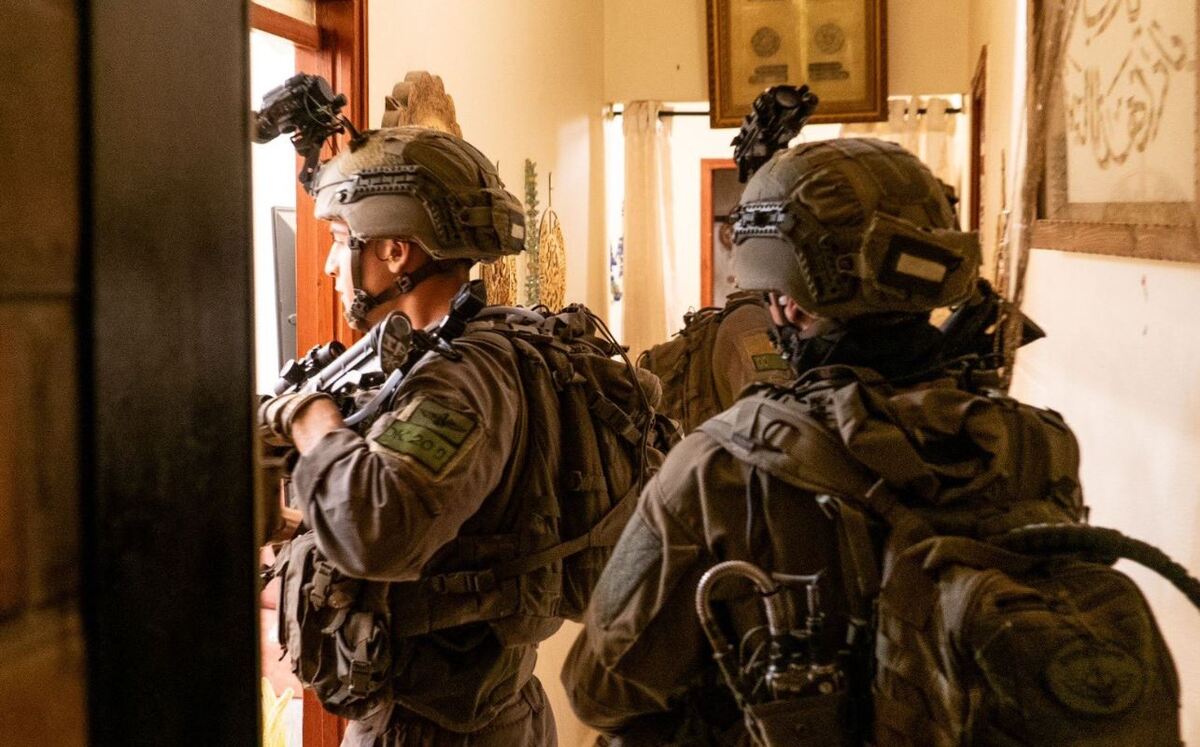
The Israeli forces stormed most of the cities of the occupied West Bank at dawn on Saturday. The Israeli soldiers deployed around homes and main roads and prevented the movement of Palestinian citizens.


Nablus

At dawn on Saturday, Israeli forces stormed Balata camp, east of Nablus.

Local sources reported that violent confrontations broke out with the occupation forces, who stormed several neighborhoods in the camp, led by a military bulldozer, which carried out acts of sabotage on the internal roads. The occupation soldiers also raided several homes and tampered with their contents.

Later, the occupation forces sent military reinforcements to the camp, amid continued violent clashes.


Bethlehem

At dawn today, Saturday, Israeli occupation forces stormed the city of Bethlehem, the Dheisheh and Al-Azza camps, and the town of Al-Khader in the Bethlehem Governorate.


Local sources reported that the occupation forces stormed the city and were stationed in the areas of Al-Quds Al-Khalil Street and Bab Al-Zaqaq, and also raided Manger Square in the city.


The sources reported that the occupation forces stormed the Dheisheh and Al-Azza camps, and drove their vehicles through the streets and alleys of the two camps, without any arrests being reported.


It confirmed that Israeli forces stormed the town of Al-Khader, south of Bethlehem, raided a house, searched it, tampered with its contents in the old town of the town, and arrested the freed prisoner, Ahmed Al-Qaisi.


Qalqilya


At dawn on Saturday, Israeli forces stormed the towns of Azzun and Kafr Thulth, east of Qalqilya.


Local sources reported that the occupation army sent its military vehicles through the streets of the two towns and carried out raids, without any arrests being reported.


PALESTINE

Sat 20 Jan 2024 8:54 am - Jerusalem Time

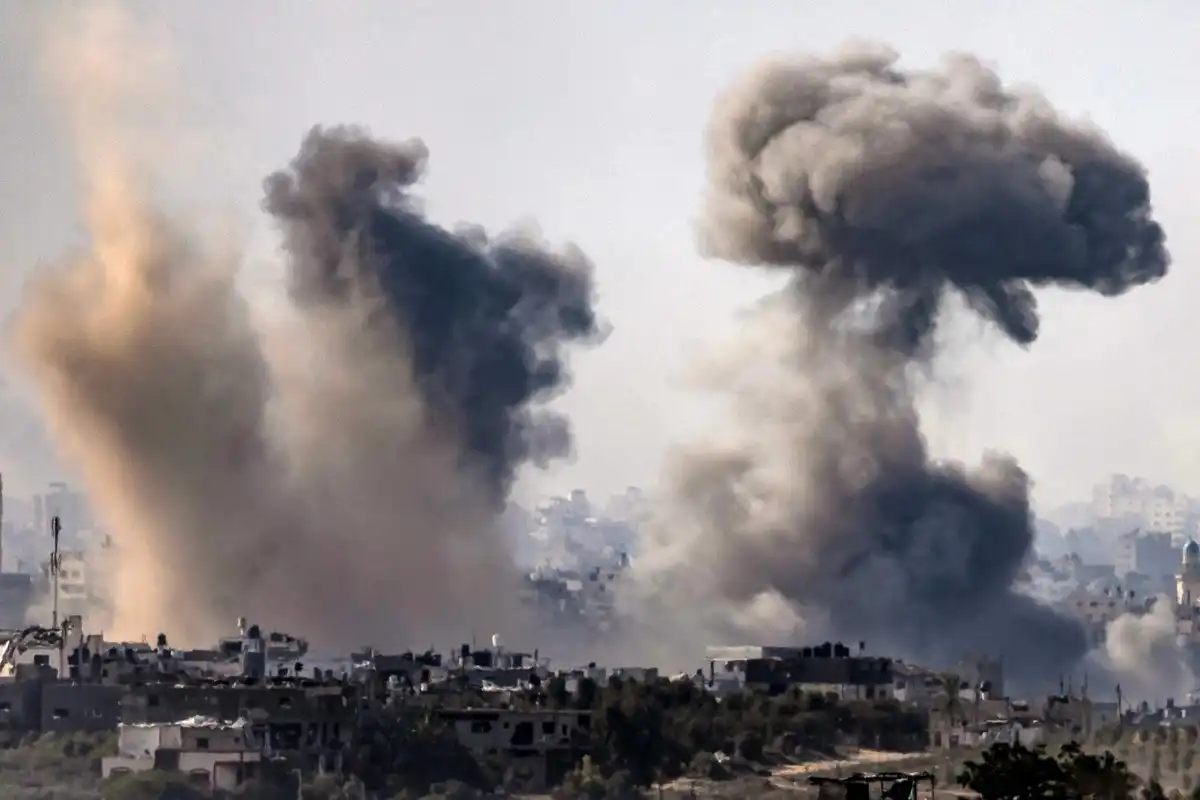
Israeli war on Gaza: Death toll recaches 25 thousand... 14 new massacres and victims under the rubble

The death toll from the Israeli aggression on Gaza since October 7 has risen to 24,927dead and 62,388 injured, according to what the Palestinian Ministry of Health in the Gaza Strip announced on Saturday.


The ministry said in a statement published on the Telegram platform: “The Israeli army committed 14 massacres against families in the Gaza Strip, claiming 165 dead and 280 injuries during the past 24 hours.”


The statement added: "A number of victims are still under the rubble and on the roads, and ambulance and civil defense crews cannot reach them."


On the 106th day of war: dead and wounded in the ongoing Israeli bombing of the Gaza Strip


Dozens of citizens, including children and women, were killed, others were injured, and dozens of homes, buildings, residential apartments, and public and private property were destroyed in the occupation’s continuous bombardment in various parts of the Gaza Strip, by air, land and sea, as the aggression entered its 116th day.


The Israeli forces blew up a number of homes in the town of Al-Qarara, northeast of Khan Yunis, south of the Gaza Strip, resulting in dead and a number of wounded.


Medical sources announced the death of a citizen, as a result of being targeted by a reconnaissance plane in Khan Yunis, while the areas of Bani Suhaila, Al-Zana, Abasan, and Batn Al-Sameen, east and south of the governorate, witnessed air strikes and artillery shelling.


The Israeli artillery also fired dozens of shells at the town of Jabalia, north of the Gaza Strip.


In an infinite toll, the number of dead since the start of the aggression has risen to more than 24,760 people, in addition to more than 62,100 wounded, and thousands of missing people.


ARAB AND WORLD

Sat 20 Jan 2024 8:40 am - Jerusalem Time

The first call between Biden and Netanyahu in a month... They discussed the Gaza war, and Biden: Netanyahu does not oppose the two-state solution!

The White House said that President Joe Biden, in a phone call with Israeli Prime Minister Benjamin Netanyahu, on Friday, January 19, 2024, discussed developments in Israel and the Gaza Strip, in their first conversation in nearly a month.


In a White House statement, he explained that Biden and Netanyahu “discussed the latest developments in Israel and Gaza,” adding that he would publish a briefing on the call soon.


There are reports of tensions between Netanyahu and Biden, due to the war that has been ongoing since last October in the Gaza Strip.


This call comes a day after Netanyahu apparently rejected the idea of establishing a Palestinian state, a statement that would put him at odds with Biden's position.


“Netanyahu does not oppose the two-state solution.”

In another statement in response to a question about whether the two-state solution is “impossible” with Netanyahu in office, the US President said that establishing an independent Palestinian state is not impossible with Netanyahu in power, adding that they discussed the matter on Friday.


He added that Netanyahu does not oppose all two-state solutions, noting that there are a number of possible patterns, as some UN member states do not have armed forces.


The Israeli website Ynet reported earlier, citing unnamed sources, that those close to US President Joe Biden advised him to announce a “loss of personal confidence” in Israeli Prime Minister Benjamin Netanyahu, because the latter is “slow in ending the war” for personal reasons, and avoids discussing the issue of managing matters. In Gaza after the end of the war.


The report, which was published on Thursday, January 18, 2024, indicated that Biden had begun to “get fed up” with Netanyahu’s decisions, and his “patience was about to run out,” as the latter’s behavior sparked frustration in the White House, and officials there began to see that he was not putting Prisoners are at the forefront of his war goals.


It is noteworthy that reports reported by the American network NBC News, on Thursday, spoke of the desire of the American administration to bypass Netanyahu and cooperate with Israeli opponents to end the war in Gaza.


In response, Netanyahu said in a press conference: “Those who talk about ‘the day after Netanyahu’ are actually talking about establishing a Palestinian state with the Palestinian Authority, and this is what they are actually saying. In fact, it is not ‘the day after Netanyahu’, but rather ( "The day after exceeding what the majority of Israeli citizens want."

On the other hand, US State Department spokesman Matthew Miller said that there is no way to solve the security problems facing the State of Israel, and restore stability in Gaza, except by establishing a Palestinian state.


Since last October 7, the Israeli army has been waging a devastating war on Gaza, which, as of Friday, left “24,762 martyrs and 62,108 injured, and an unprecedented humanitarian catastrophe,” and caused the displacement of about 1.9 million people, i.e. more than 85% of the population. Residents of the Gaza Strip, according to the Palestinian authorities and the United Nations.

ARAB AND WORLD

Sat 20 Jan 2024 8:38 am - Jerusalem Time

Families of Israeli prisoners in Gaza: We have lost confidence in the Netanyahu government

The families of Israeli prisoners in the Gaza Strip said on Friday that they had lost confidence in the government of Benjamin Netanyahu, according to official Hebrew media.


The Israeli Broadcasting Corporation (official) quoted the families of Israeli prisoners in Gaza as saying that they had “lost confidence in Netanyahu and his government, and that they would conduct their own moves,” without indicating what they were.


The authority quoted a relative of the disappeared as saying, “Any delay in the negotiations puts their lives in danger.”


On the same level, the Commission indicated that “dozens of the families of the prisoners went to the city of Caesarea (north) to stage a sit-in in front of Netanyahu’s house there, where they will stay overnight.”


Former head of the Israeli intelligence service (Mossad), Tamir Pardo, said in a statement to the authority: “If Netanyahu decides to give up the prisoners, let him say it publicly in front of the public.”


He added, "If we end the war with 136 coffins, Israel will lose for the first time. Care must be taken to correct the state's abandonment and betrayal of its citizens."

ARAB AND WORLD

Sat 20 Jan 2024 8:32 am - Jerusalem Time

EU Commissioner says: "Israel" funded the "Hamas" movement to Weaken PA

European Union foreign policy chief Josep Borrell claimed on Friday that Israel funded the creation of the Palestinian Islamic Resistance Movement (Hamas) in an attempt to weaken the Palestinian Authority.


Borrell stated in a speech at Valladolid University that "the government of Israel funded Hamas in an attempt to weaken the Fatah-led Palestinian Authority."


Israeli Prime Minister Benjamin Netanyahu denied accusations by his opponents in Israel and some international media that his government had spent years actively strengthening Hamas in Gaza.

Earlier, Borrell stressed that the military solution in the Gaza Strip would not be sufficient if it did not lead to a political project.

He explained in an article published by the French newspaper Le Monde that there are now three priorities: preventing the conflict from spreading to Lebanon at all costs, liberating the hostages, and paving the way for resolving the crisis.

Last December, the European Union's foreign policy official denounced the "gross lack of ability to discriminate", which is reflected in the Israeli army's operations in Gaza, which lead to the killing of Palestinian prisoners, worshipers and civilians.


ARAB AND WORLD

Sat 20 Jan 2024 8:28 am - Jerusalem Time

EU rejects Netanyahu's opposition to the establishment of a Palestinian state

On Friday, the High Representative of the European Union for Foreign Affairs and Security Policy, Josep Borrell, rejected Israeli Prime Minister Benjamin Netanyahu’s statements opposing the establishment of a Palestinian state.


In a speech at Valladolid University in Spain, Borrell considered that “Israel, by evading the establishment of a Palestinian state and trying to weaken it, established and financed the Hamas movement.”


He said, "Despite Israel's insistence on rejection, we believe that the two-state solution will achieve peace, under pressure from the international community," calling on the Arab world, Europe, the United States, and the United Nations to encourage the two-state solution.


He repeated his accusation of Israel of financing Hamas, and said, "Yes, Hamas has received funding for years from the Israeli government with the aim of weakening the Palestinian government led by the Fatah movement," as he claimed.


These allegations are not the first of their kind, but Hamas supporters categorically reject them, and Israeli officials also deny them.

Borrell pointed out that the current government in Israel “represents a clear obstacle to the two-state solution,” adding that “governments are temporary.”

A few days ago, Netanyahu confirmed his government's refusal to recognize the Palestinian state and the two-state solution.


In addition, on Friday, the European Union imposed an asset freeze and a travel ban on six individuals it said were linked to Hamas, as part of a new sanctions system targeting the movement.


The European Union already includes Hamas on its terrorist lists, but it moved to create a legal framework targeting the movement after its attack on October 7.


The European Council said that the list may be expanded to target "all those who provide support, materially or financially" to Hamas or Islamic Jihad.


The Council stated that the individuals subject to sanctions are the financier residing in Sudan, Abdel Basset Hamza Al-Hassan Muhammad Khair, Nabil Shoman and his son Khaled Shoman, Reda Ali Khamis, the major financier of Hamas, Musa Dudin, a senior leader in the movement, and the financier residing in Algeria, Ayman Ahmed Al-Dweik.


The Council said that among the reasons driving the sanctions were arms trafficking, support for movements that undermine Israel’s stability or security, and involvement in serious violations of humanitarian law or human rights.

The statement added, "This new system of sanctions will continue to be implemented until January 19, 2025. They will be placed under continuous review and renewed or amended when necessary."

A senior European Union official said on Friday that the first group of individuals subject to sanctions are linked to providing funding to Hamas.

The US Treasury says that Hamas has established a secret network of companies that manage investments worth $500 million in companies extending from Turkey to Saudi Arabia. The European Union and the United States classify the movement as a terrorist organization.

"Islamic Jihad" condemns European sanctions

For its part, the Islamic Jihad movement condemned, on Friday, the European Council’s decision to impose sanctions on members of the movement and Hamas.


Islamic Jihad said in a statement, “This decision is not surprising, has no value, and constitutes clear bias toward the occupying entity.”

It pointed out that "this European decision gives the Israeli occupation political cover for the holocaust it continues against our people, in addition to the cover and military and intelligence support it provides for the aggression against the Gaza Strip, ignoring the demands of its people to stop it immediately."

PALESTINE

Fri 19 Jan 2024 10:16 pm - Jerusalem Time

War on Gaza: 142 killed and dozens of injuries during past 24 hours

The death toll from the ongoing Israeli war on Gaza has risen to 24,762 people, while the toll of the wounded has exceeded 62,000, as a result of the continuous bombing of inhabited areas and homes across the Strip since October 7, 2023, according to what the Ministry of Health in the Strip reported.


The Ministry confirmed that 142 people were killed, while 278 were injured during the past 24 hours, noting that a number of victims are still under rubble and on the roads, and ambulance and civil defense crews are unable to reach them.


The Israeli forces continue the war on the Gaza Strip, for the 105th day in a row, by launching dozens of air strikes, artillery shelling, and fire belts, amid a tragic humanitarian situation and the displacement of more than 90% of the population.


The Israeli forces continued their intense artillery shelling in the vicinity of "Al-Amal" Hospital in Khan Yunis. The Israeli forces also targeted the city center, with several raids and artillery shelling.

ARAB AND WORLD

Fri 19 Jan 2024 9:53 pm - Jerusalem Time

UN expects Israel arrested thousands of Palestinians in Gaza in horrific conditions

The United Nations said on Friday that the Israeli forces arrested thousands of Palestinians in the Gaza Strip in conditions that may amount to torture.


The representative of the Office of the United Nations High Commissioner for Human Rights in the occupied Palestinian territories, Ajith Songhai, said during a regular UN press conference in Geneva that some of the detainees confirmed that the Israeli forces blindfolded and beat them, and when they released them, they were naked and wearing only diapers.


Songai added that the men were detained in generally appalling conditions, and in unknown locations for periods ranging from 30 to 55 days.


The UN official quoted some of the detainees as saying, "They were subjected to beatings, humiliation, and ill-treatment, and what may amount to torture. They were blindfolded for long periods, some for several days in a row."


He added, "A man said that he was only able to shower once during his 55-day detention period. There are reports that men were later released, but only while wearing diapers."


Songai said their testimonies are consistent with reports received by the UN Human Rights Office that Palestinians are being detained on a large scale, “including many civilians held in secret, often subject to ill-treatment,” without access to their families, lawyers or access to legal aid. No effective judicial protection.


Songai indicated that he could not give an accurate figure for the number of detainees, but he expressed his belief that the number was in the thousands.


He added that the detainees were later classified and some of them were interrogated, and they were not informed of their imminent release, but they were blindfolded and left at the Kerem Shalom crossing without the clothes, belongings, and money that they had when they were arrested.


Songai added that some of them were wearing prison uniforms and others in diapers, saying, "We are not sure exactly why."

ARAB AND WORLD

Fri 19 Jan 2024 5:43 pm - Jerusalem Time

Maariv weekly poll: The parties opposing Netanyahu still maintains 66 seats, compared to 44 seats for his supporters

An Israeli public opinion poll conducted by the Maariv newspaper yesterday (Thursday) showed that if the Israeli general elections were held now, each of the party camp lists supporting Prime Minister Benjamin Netanyahu would obtain 44 seats (the same number of seats they obtained in last week’s poll). While the lists of the parties camp opposing him will obtain 66 seats (the same number of seats they obtained in last week’s poll). The coalition list between Hadash [the Democratic Front for Peace and Equality] and Ta’al [the Arab Movement for Change], and the Ra’am list [the United Arab List] will each get 5 seats, and the Balad list [the National Democratic Rally] will not be able to exceed the electoral threshold (3.25%).


According to the poll, the Likud Party list headed by Prime Minister Benjamin Netanyahu will get 16 seats, the “Official Camp” list headed by Knesset member Benny Gantz will get 39 seats, and the “There is a Future” list headed by Knesset member Yair Lapid will get 13 seats.


The “Religious Zionism” party list headed by Minister Bezalel Smotrich gets 4 seats, while the “Otzma Yehudit” list [“Jewish Power”] headed by Minister Itamar Ben Gvir gets 9 seats, and the Shas party list of Haredi [religiously extremist] Eastern Jews gets 10 seats.  9 seats, the Haredi United Torah Judaism Party list gets 6 seats, the “Israel Our Home” party list headed by Knesset member Avigdor Lieberman gets 10 seats, the Meretz Party list gets 4 seats, while the Labor Party list will not be able to exceed the electoral threshold.


50% of the survey participants said that the head of the “Official Camp” coalition, Benny Gantz, is the most suitable to assume the position of Prime Minister of Israel, while 31% of them said that Prime Minister Benjamin Netanyahu is the most suitable.


The survey included a sample of 512 people, representing all categories of the adult population in Israel, with a maximum error rate of 4.3%.

OPINIONS

Fri 19 Jan 2024 5:38 pm - Jerusalem Time

Israeli writer: Israel is on its way to a secret and free ceasefire

Yedioth Ahronoth

Yedioth Ahronoth

Opinion Writer

By Shelly Yachimovich

Despite all the horrors, atrocities and terrible failures of October 7, there is no cowardice, blindness and failure greater and more dangerous than Benjamin Netanyahu's cowardice in these hours. In practice, and despite the reckless and arrogant statements, Israel is in the advanced stages of responding to Hamas' condition for the return of the kidnapped people: a ceasefire. But our leaders lack the courage to do something simple, say this publicly, return 136 kidnapped people, and put an end to this most cruel and humiliating tragedy since the establishment of the state.

We say this again: Israel is on its way to a ceasefire. Reducing the size of the forces is the first evidence in the field, reducing the fighting and confining it to the Khan Yunis area only, reducing air attacks, demobilizing the reserves, large-scale distribution of humanitarian aid, re-institutionalizing Hamas rule, and Defense Minister Yoav Galant announcing the transition to a less intense phase of combat. This all confirms that we are here. Everything Hamas wanted from the beginning, it got for free. This is crazy.

Why do we give Hamas the gift of stopping the fighting without getting anything in return that is considered the most precious to us? Kidnapped? The abandoned, the hungry, the sick, the beaten. They die, one after another, whether from disease or hunger. Some of them die at the hands of those who capture them, and others at the hands of Israeli soldiers, whether by chance or in failed operations. It must be made clear that a failed operation is one in which prisoners return as corpses, instead of returning alive, in addition to the loss of brave young soldiers, who are asked to do the same thing, over and over again, and sacrifice their lives for a war that ends in failure.

Instead of stopping at this point, and we still have remnants of momentum, we enter a stage of stagnation, and we lose on all fronts: We did not defeat Hamas, and we did not recover the kidnapped people. The Israeli army’s statement yesterday, addressed to the families of the dead kidnapped, leaves no room for illusion, and stated: “We cannot rule out, or confirm, that these soldiers were killed by suffocation, poisoning, or as a result of an attack by the Israeli army, or an operation carried out by Hamas.” .

If the release of the kidnapped people to the last of them had been set from the beginning as a goal of the war. If the Israeli government announced that it would stop the war when the last kidnapped person returned. If the government had placed the families of the kidnapped in a position of honor before the world, instead of silencing them, gagging them, and inciting against them, we would have been able to continue striking Hamas while maintaining international legitimacy, without The Hague, and without risking losing American support, which it can be said is the one that Save us from the destruction of the Third Temple.

We have not done that, but it is still possible, and it must happen through secret and public channels of dialogue as well. All that is required is for the Prime Minister to stand up without any nonsense or trickery, and to announce that we are ready for a ceasefire in exchange for all the kidnapped people. After the return of the last kidnapped person, we will have enough time to try to achieve all the goals, real and imaginary, of this rightful war, which loses its credibility every moment we abandon the kidnapped ones and leave them to face their death.

Meanwhile, childish arrogance, and the obsession with creating an “image of victory” that will never be achieved, and our blindness to seeing that we are losing in all arenas, and Netanyahu’s need to exploit time for his political survival, and adhere to the threatening, arrogant and condescending rhetoric that has no cover, which represents a disconnected and sad echo of past glories. All of this will make us expelled from Gaza City, and forced to eat all the rotten fruits that cannot be digested this time.

OPINIONS

Fri 19 Jan 2024 5:07 pm - Jerusalem Time

In Gaza, the West Is Enabling the Most Transparent Genocide in Human History

 Richard Falk

Richard Falk

Opinion Writer

This is extraordinary because the states supporting Israel, above all the United States, have claimed the high moral and legal ground and lectured the states of the Global South about the importance of the rule of law.

Recall Samuel Huntington’s controversial, yet influential, 1993 Foreign Affairs article, “The Clash of Civilizations,” which ends with the provocative phrase, “The West against the rest.” Although the article seemed far-fetched 30 years ago, it now seems prophetic in its discernment of a post-Cold War pattern of inter-civilizational rivalry. It is rather pronounced in relation to the heightened Israel/Palestine conflict initiated by the October 7 Hamas attack on Israeli territory with the killing and abusing of Israeli civilians and IDF soldiers, as well as the seizure of some 200 hostages.

Clearly this attack has been accompanied by some suspicious circumstances such as Israel’s foreknowledge, slow reaction time to the penetration of its borders, and, perhaps most problematic, the quickness with which Israeli adopted a genocidal approach with a clear ethnic cleansing message. At the very least the Hamas attack, itself including serious war crimes, served almost too conveniently as the needed pretext for the 100 days of disproportionate and indiscriminate violence, sadistic atrocities, and the enactment of a scenario that looked toward making Gaza unlivable and its Palestinian residents dispossessed and unwanted.

Despite the transparency of the Israeli tactics, partly attributable to ongoing TV coverage of the devastating and heartbreaking Palestinian ordeal, what was notable was the way external state actors aligned with the antagonists. The Global West (white settler colonial states and former European colonial powers) lined up with Israel, while the most active pro-Palestinian governments and movements were initially exclusively Muslim, with support coming more broadly from the Global South. This racialization of alignments seems to take precedence over efforts to regulate violence of this intensity by the norms and procedures of international law, often mediated through the United Nations.

Liberal democracies failed not only by their refusal to make active efforts to prevent genocide, which is a central obligation of the Genocide Convention, but more brazenly by openly facilitating continuation of the genocidal onslaught.

This pattern is quite extraordinary because the states supporting Israel, above all the United States, have claimed the high moral and legal ground for themselves and have long lectured the states of the Global South about the importance of the rule of law, human rights, and respect for international law. This is instead of urging compliance with international law and morality by both sides in the face of the most transparent genocide in all of human history. In the numerous pre-Gaza genocides, the existential horrors that occurred were largely known after the fact and through statistics and abstractions, occasionally vivified by the tales told by survivors. The events, although historically reconstructed, were not as immediately real as these events in Gaza with the daily reports from journalists on the scene for more than three months.

Liberal democracies failed not only by their refusal to make active efforts to prevent genocide, which is a central obligation of the Genocide Convention, but more brazenly by openly facilitating continuation of the genocidal onslaught. Israel’s frontline supporters have contributed weapons and munitions, as well as providing intelligence and assurance of active engagement by ground forces if requested, as well as providing diplomatic support at the U.N. and elsewhere throughout this crisis.

These performative elements that describe Israel’s recourse to genocide are undeniable, while the complicity crimes enabling Israel to continue with genocide remain indistinct, being situated in the shadowland of genocide. For instance, the complicity crimes are noted but remain on the periphery of South Africa’s laudable application to the International Court of Justice (ICJ) that includes a request for Provisional Measures crafted to stop the genocide pending a decision on the substance of the charges of genocide. The evidence of genocide is overwhelmingly documented in the 84-page South African submission, but the failure to address the organic link to the crimes of complicity is a weakness that could be reflected in what the court decides.

Even if the ICJ does impose these Provisional Measures, including ordering Israel to desist from further violence in Gaza, it may not achieve the desired result, at least not before the substantive decision is reached some three to five years from now. It seems unlikely that Israel will obey Provisional Measures. It has a record of consistently defying international law. It is likely that a favorable decision on these preliminary matters will give rise to a crisis of implementation.

The law is persuasively present, but the political will to enforce is lacking or even resistant, as here in certain parts of the Global West.

The degree to which the U.S. has supplied weaponry with U.S. taxpayer money would be an important supplement to rethinking the U.S. relationship to Israel that is so important and which is underway among the American people—even in the Washington think tanks that the foreign policy elites fund and rely upon. Proposing an arms embargo would be accepted as a timely and appropriate initiative in many sectors of U.S. public opinion. I hope that such proposals may be brought before the General Assembly and perhaps the Security Council. Even if not formally endorsed, such initiatives would have considerable symbolic and possibly even substantive impacts on further delegitimizing Israel's behavior.

A third specific initiative worth carefully considering would be timely establishment of a People’s Tribunal on the Question of Genocide initiated by global persons of conscience. Such tribunals were established in relation to many issues that the formal governance structures failed to address in satisfactory ways. Important examples are the Russell Tribunal convened in 1965-66 to assess legal responsibilities of the U.S. in the Vietnam War and the Iraq War Tribunal of 2005 in response to the U.S. and U.K. attack and occupation of Iraq commencing in 2003.

Such a tribunal on Gaza could clarify and document what happened on and subsequently to October 7. By taking testimony of witnesses, it could provide an opportunity for the people of the world to speak and to feel represented in ways that governments and international procedures are unable to given their entanglement with geopolitical hegemony in relation to international criminal law and structures of global governance.


The South African World Court Case, Pariah State, and Popular Mobilization

The South African initiative is important as a welcome effort to enlist international law and procedures for its assessment and authority in a context of severe alleged criminality. If the ICJ, the highest tribunal on a supranational level, responds favorably to South Africa’s highly reasonable and morally imperative request for Provisional Measures to stop the ongoing Gaza onslaught, it will increase pressure on Israel and its supporters to comply. And if Israel refuses to do so, it will escalate pro-Palestinian solidarity efforts throughout the world and cast Israel into the darkest regions of pariah statehood.

In such an atmosphere, nonviolent activism and pressure for the imposition of an arms embargo and trade boycotts as well as sports, culture, and touristic boycotts will become more viable policy options. This approach by way of civil society activism proved very effective in the Euro-American peace efforts during the Vietnam War and in the struggle against apartheid South Africa, and elsewhere.

Israel is becoming a pariah state due to its behavior and defiance exhibited toward legal and moral norms. It has made itself notorious by its outrageously forthright acknowledgement of genocidal intent with respect to Palestinian civilians whom they are under a special obligation to protect as the occupying power.

We know what we should be doing.to make amends, yet well-entrenched special interests preclude such rational adjustments, and the military malfunctions and accompanying geopolitical alignments persist, ignoring costly failures along the way.

Being a pariah country or rogue state makes Israel politically and economically vulnerable as never before. At this moment, a mobilized civil society can contribute to producing a new balance of forces in the world that has the potential to neutralize Western post-colonial imperial geopolitics.

It is also relevant to take note of the startling fact that the anti-colonial wars of the last century were in the end won by the weaker side militarily. This is an important lesson, as is the realization that anti-colonial struggle does not end with the attainment of political independence. It needs to continue to achieve control of national security and economic resources as the recent anti-French coups in former French colonies in sub-Saharan Africa illustrate.

In the 21st century weapons alone rarely control political outcomes. The U.S. should have learned this decades ago in Vietnam, having controlled the battlefield and dominated the military dimensions of the war, and yet having failed to achieve control over its political outcome.

The U.S. is disabled from learning lessons from such defeats. Such learning would weaken the leverage of the military-industrial-government complex, including the private sector arms industry. This would subvert the domestic balance in the U.S. and substantially discredit the global geopolitical role being played by the U.S. throughout the entire world.

So, it is a dilemma. We know what we should be doing to make amends, yet well-entrenched special interests preclude such rational adjustments, and the military malfunctions and accompanying geopolitical alignments persist, ignoring costly failures along the way.

We know what should be done, but do not have the political clout to get it done. But global public opinion is shifting, and demonstrations globally are building opposition to continuing the war.

Iran

There is a huge U.S./Israel propaganda effort to tie Iran to everything that is regarded as anti-West or anti-Israeli. It has intensified during this crisis, starting with the October 7 attack by Iran’s supposed proxy Hamas. You notice even the most influential mainstream print media as The New York Times routinely refers to what Hezbollah or the Houthis do as “Iran-backed.” Such actors are reduced misleadingly to being proxies of Iran.

This way of denying agency to pro-Palestinian actors and attributing behavior to Iran is a matter of state propaganda trying to promote belligerent attitudes toward Iran to the effect that Iran is our major enemy in the region, while Israel is our loyal friend. At the same time, it suppresses the reality that If Iran is backing countries and political movements, it obscures what the U.S. is doing more overtly and multiple times over.

It is largely unknown what Iran has been doing in the region to protect its interests. Without doubt, Iran has strong sympathies with the Palestinian struggle. Those sympathies coincide with its own political self interest in not being attacked and minimizing the U.S. role in the region. Additionally, Iran has lots of problems arising from opposition forces within its own society.

But I think dangerous state propaganda is building up this hostility toward Iran. It is highly misleading to regard Iran as the real enemy standing behind all anti-Israeli actions in the region. It is important to understand as accurately as possible the complexity and unknown elements present in this crisis situation that contains dangers of wider war in the region and beyond. As far as is publicly known, Iran has had an extremely limited degree of involvement in the direct shaping of the war and Israel’s all-out attack on the civilian population of Gaza.

Hamas and a Second Nakba

While I was special rapporteur for the U.N. on Israeli violations of human rights and international humanitarian law, I had the opportunity to meet and talk in detail with several of the Hamas leaders who are living either in Doha or Cairo and also in Gaza. In the period between 2010 and 2014, Hamas was publicly and by back channels pushing for a 50-year cease-fire with Israel. It was conditioned on Israel carrying out the unanimous 1967 Security Council mandate in SC Res 242 to withdraw its forces to the pre-war boundaries of “the green line.” Hamas had also sought a long-range cease-fire with Israel after its 2006 electoral victory for up to 50 years.

Neither Israel nor the U.S. would respond to those diplomatic initiatives. Hamas, Machel particularly who was perhaps the most intellectual of the Hamas leaders, told me that he warned Washington of the tragic consequences for both peoples if the conflict was allowed to go on without a cease-fire, which was confirmed by independent sources.


Where can Palestinians go as the population suffers from famine and continued bombing? What is Israel’s goal?

All indications are that Israel used the October 7 attack as a pretext for the preexisting master plan to get rid of the Palestinians whose presence blocks the establishment of Greater Israel with sovereign control over the West Bank and at least portions of Gaza.

I see the so-called commitment to thinning the Palestinian presence in Gaza and to a functional second Nakba. This is a criminal policy. I don’t know that it has to have a formal name. It is not a policy designed to achieve anything but the decapitation of the Palestinian population. Israel seeks to move Gazans to the Egyptian Sinai, and the Egyptians have already indicated that they don’t welcome this.

This is not a policy. This is some kind of a threat of elimination. The Israeli campaign after October 7 was not directed toward Hamas’ terrorism nearly as much as it was directed toward the forced evacuation of the Palestinians from Gaza and for the related dispossession of Palestine in the West Bank.

If Israel really wanted to deal with its security in an effective way, much more efficient and effective methods would have been relied upon. There was no reason to treat the entire civilian population of Gaza as if it were implicated in the Hamas attack, and there was certainly no justification for the genocidal response. The Israeli motivations seem more related to completing the Zionist Project than to restoring territorial security. All indications are that Israel used the October 7 attack as a pretext for the preexisting master plan to get rid of the Palestinians whose presence blocks the establishment of Greater Israel with sovereign control over the West Bank and at least portions of Gaza.

For a proper perspective we should remember that before October 7, the Netanyahu coalition government that took power at the start of 2023 was known as the most extreme government ever to govern the country since its establishment in 1948. The new Netanyahu government in Israel immediately gave a green light to settler violence in the Occupied West Bank and appointed overtly racist religious leaders to administer the parts of Palestine still occupied.

This was part of the end game of the whole Zionist project of claiming territorial sovereignty over the whole of the so-called promised land, enabling Greater Israel to come into existence.

The Need for a Different Context

We need to establish a different context than the one that exists now. That means a different outlook on the part of the Western supporters of Israel. And a different internal Israeli sense of their own interests, their own future. And it’s only when substantive pressure is brought to bear on an elite that has gone to these lengths that it can shake commitments to this orientation.

The lengths that the Israeli government has gone to are characteristic of settler colonial states. All of them, including the U.S. and Canada, have acted violently to neutralize or exterminate the resident Indigenous people. That is what this genocidal interlude is all about. It is an effort to realize the goals of maximal versions of Zionism, which can only succeed by eliminating the Palestinians as rightful claimants. It should not be forgotten that in the weeks before the Hamas attack, including at the U.N., Prime Minister Benjamin Netanyahu was waving a map of “the new Middle East” that had erased the existence of Palestine.

Undoubtedly, one of Hamas’ motivations was to negate the view that Palestine had given up its right to self-determination, and that Palestine could be erased. Recall the old delusional pre-Balfour Zionist slogan: “A people without land for a land without people.” Such utterances of this early Zionist utopian phase literally erased the Palestinians who for generations lived in Palestine as an entitled Indigenous population. With the Balfour Declaration of 1917, this settler colonial vision became a political project with the blessings of the leading European colonial power.

Given post-colonial realities, the Israeli project is historically discordant and extreme. It exposes the reality of Israel’s policies and the inevitable resistance response to Israel as a supremacist state. Israeli state propaganda and management of the public discourse has obscured the maximalist agenda of Zionism over the years, and we are yet to know whether this was a deliberate tactic or just reflected the phases of Israel’s development.

This may turn out to be a moment of clarity with respect not only to Gaza, but to the overall prospects for sustainable peace and justice between these two embattled peoples.

Source: common Dreams

ARAB AND WORLD

Fri 19 Jan 2024 4:57 pm - Jerusalem Time

‘We Can (Not) Do Whatever We Want’ – Lavrov Says ‘Holocaust Doesn’t Give Israel Impunity’

The Soviet people were also subject to Nazi genocide, but Russia doesn’t have carte blanche in the global arena, Lavrov said in a press conference today. 

Israel should not think that the suffering of Jews during World War II gives it free rein in foreign policy, particularly when it comes to the hostilities in Gaza, Russian Foreign Minister Sergey Lavrov has said, according to Russia Today.

Speaking at a press conference on the results of Moscow’s diplomacy in 2023 on Thursday, Lavrov reiterated his support for the creation of a Palestinian state. 

The decades-long failure to do this is one of the key reasons for the current instability in the Middle East and tensions between Palestinians and Israelis, he added.

The foreign minister noted that Russia had immediately condemned the attack on Israel by Hamas on October 7. However, after the war began, some Israeli officials went so far as to call the residents of Gaza “animals” without facing any backlash from the West, he added.

“Israelis can’t… now do anything they want because they suffered during World War II. Yes, there was the Holocaust, it was a terrible crime, but there was also the genocide of all peoples in the Soviet Union.”

Lavrov added that the Soviet people had suffered no less as they were exterminated in the same Nazi concentration camps as the Jews, with both people dying from starvation side-by-side in besieged Leningrad, RT reported.

“According to this logic, we can do whatever we want. That won’t work if we want to systematically uphold international law,” he added.

According to Gaza’s Ministry of Health, 24,700 Palestinians have been killed, and 61,830 wounded in Israel’s ongoing genocide in Gaza starting on October 7. Palestinian and international estimates say that the majority of those killed and wounded are women and children.

Russia has repeatedly called for a ceasefire while urging Israel to respect the laws of war and its responsibility under international law.

RT contextualized the story by saying that “The Holocaust claimed the lives of around six million Jews in Europe. Meanwhile, the Soviet Union lost some 27 million people during the war, including many Jews, with two-thirds of those losses among the civilian population.”

(PC, RT)