OPINIONS

Tue 23 Jan 2024 2:32 pm - Jerusalem Time

what is religious Zionism, this ideology that influences the Israeli government?

France info

France info

Opinion Writer

By Elise Lambert & Valentine Pasquesoone

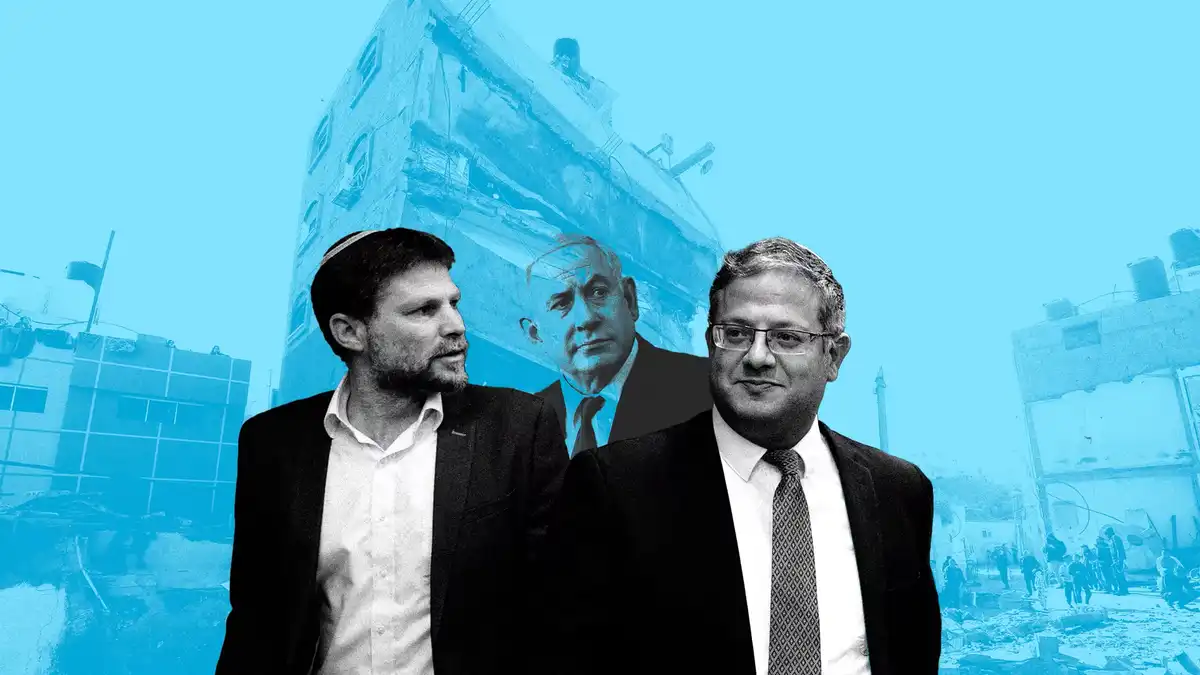
Since 2022, two Jewish supremacist ministers have joined Benjamin Netanyahu's government. They campaign for a state governed by religion where the Palestinians would be absent. They intend to take advantage of the war in Gaza to achieve their objectives.

What might Israel and the occupied Palestinian territories look like after the war? At the beginning of January, two far-right ministers in the Israeli government sparked controversy by advocating the return of Jewish settlers to Gaza and the "emigration" of Palestinians. “We will help rehabilitate these refugees in other countries,” assured Israeli Finance Minister Bezalel Smotrich. “It is a correct, just, moral and humane solution,” added the person in charge of National Security, Itamar Ben Gvir.


These statements have led to numerous condemnations around the world. According to the Rome Statute of the International Criminal Court (PDF document), "deportation or forcible transfer of population" is a crime against humanity.


Arriving in government at the end of 2022 thanks to a coalition between the right and the far right, Itamar Ben Gvir and Bezalel Smotrich are not their first anti-Palestinian outing. For years, these Jewish supremacists have campaigned for a state governed by their reading of religious texts, where the Palestinians and their territories would not exist. They embody a current, religious Zionism, which has gradually permeated Israeli institutions and politics after being in the minority at the beginning of the 20th century.


For the creation of a “Greater Israel” without Palestinians

Basically, Bezalel Smotrich and Itamar Ben Gvir are similar. The first, a 43-year-old Minister of Finance, was trained in a small yeshiva (Talmudic school) in the settlement of Beit El, near Ramallah, in the occupied West Bank. Beit El is a stronghold of the Hardal movement, which mixes nationalism and ultraorthodox thought, specifies Le Monde. Bezalel Smotrich is "a religious Zionist ideologue much more influenced by the rabbis than Ben Gvir. According to him, the 'Greater Israel' is a Jewish land, and its establishment will favor the coming of the messiah", explains for franceinfo Yoav Peled, political scientist at the Tel Aviv University.

At a very young age, Bezalel Smotrich fought against the dismantling of Jewish colonies in the Gaza Strip and then campaigned within Regavim, an organization opposed to Palestinian construction in the West Bank and in Israel. A lawyer, he was elected deputy to the Knesset in 2015. Father of seven children, he has increased his racist outings in recent years, for example deeming it necessary to separate Jewish and Arab patients in hospitals or even defining himself as a "homophobic fascist" , reports Le Monde. Bezalel Smotrich has previously said that Hamas was "an asset" for Israel because the Islamist group was preventing any peace process with the Palestinians. In March 2023, he went so far as to deny the very existence of Palestinians during a private visit to Paris.


Itamar Ben Gvir, 47, the Minister of National Security, is also a lawyer by training. Born in the suburbs of Jerusalem into a family of secular Iraqi Jews, he developed his anti-Arab ideology during the first intifada (1987-1993), within the Kahanist movement, summarizes La Croix. This movement, named after extremist Rabbi Meir Kahane, was banned in 1994 for terrorism and racism.


Convicted several times for inciting hatred and provocative, Itamar Ben Gvir went after his appointment to the government on the Esplanade des Mosques, in East Jerusalem. A passage on the third holiest site of Islam which provoked the indignation of the international community. “Ben Gvir cares less about ideology than about Jewish power. He is not interested in the messiah, but in the possibility of allowing settlers to settle wherever they want,” underlines researcher Yoav Peled.


A resident of the colony of Kiryat Arba, stronghold of the radical and supremacist movement of "Youth of the Hills", Itamar Ben Gvir has long displayed the portrait of Baruch Goldstein in his living room. In 1994, this religious fanatic murdered 29 Muslim Palestinians who were praying at the Tomb of the Patriarchs in Hebron, a holy site contested by Jews and Muslims. He has also never hidden his admiration for Ygal Amir, author of the assassination of former Israeli Prime Minister Yitzhak Rabin in 1995.


A minority ideology until the turning point of 1967

The religious Zionism in which these ministers are part is ancient, reports Philosophie Magazine. It dates back to the end of the 19th century, when theorist Theodor Herzl called for the establishment of a Jewish national home in Israel. At this time, Zionist ideology was not necessarily linked to religion, and rather infused into socialist and labor circles. “For the religious ultraorthodox, Zionism is even blasphemy, since they only believe in the establishment of a Jewish state after the arrival of the messiah,” explains to franceinfo Stéphanie Laithier, historian of Judaism at the Ecole Pratique des Hautes Etudes.


But Rabbi Abraham Isaac Kook, originally from Eastern Europe, helped to change the position of certain believers by calling for intervention in society to accelerate the coming of the messiah. The first Ashkenazi chief rabbi of Palestine, he created the Merkaz Harav yeshiva. This Talmudic school will convince more and more Orthodox people to adhere to Zionism.


The Six Day War of 1967 marked another turning point for religious Zionism. The lightning victory of the Jewish state against its Arab neighbors, Syria, Egypt and Jordan, is seen by Rabbi Kook and his young students as "the indisputable sign of a divine plan to make the Earth whole Israel to the people of Israel,” explains Yoav Peled in an academic article.


Therefore, occupying Palestinian territories such as the West Bank and Gaza is for these young religious Zionists “a divine command”. The Goush Emounim organization was created in their wake in the 1970s. It promotes the creation of Jewish colonies in the occupied territories and its vision gradually permeates all of religious Zionism, underlines in a recent study Alain Dieckhoff, research director at CNRS.

This current benefits from “a form of wear and tear of initial socialist Zionism”, adds Stéphanie Laithier. “Religious Zionists will present themselves as those who will regenerate the original Zionism. They highlight the fact that by settling in these territories, they are fulfilling biblical prophecy and securing Israel.” The Labor camp is more divided on the question of the occupied territories. With the Israeli failure of the Yom Kippur War in 1973, “Labor lost its grip on the territorial and security aspects of the Zionist project,” writes Yoav Peled. The left was ousted from power in 1977, replaced for the first time by Likud.


The third force in the 2022 legislative elections

In recent years, religious Zionism has gained ground at the heart of Israeli power. Former Education Minister Naftali Bennett became, in 2021, the first head of the religious Zionist government. During the legislative elections of November 2022, the current represented by the “Religious Zionism” list becomes the third force in the country, obtaining 11% of the votes and 14 seats in the Knesset.


Benjamin Netanyahu is forced to form an alliance with his members to return to power. This result was “the most significant fact of the last elections”, points out the study by Alain Dieckhoff.

Bezalel Smotrich is appointed Minister of Finance and gains significant power over the civil administration, responsible, among other things, for planning Jewish settlements in the West Bank. At the head of National Security, Itamar Ben Gvir aspires to use the police "to repress more harshly the Arab citizens of Israel (...), but also the Palestinians", according to Alain Dieckhoff.


This “political environment” encourages Jewish settler projects, in the opinion of the Israeli NGO Peace Now. The year 2023 was a record year, both in terms of settlement construction and violence against Palestinians in the West Bank. Religious Zionist influence has also been seen since the terrorist attacks of October 7. “Benyamin Netanyahu fears losing his government [by losing the support of religious Zionists] if he announces ways out of the current fighting,” analyzes Yoav Peled.

This political progression reflects a more marked presence in Israeli society. The community is experiencing "very significant demographic growth", because it is often made up of families "with many children", observes Stéphanie Laithier. It represents between 10% and 30% of the Israeli population, reports the New York Times.


Its influence also reaches the army and education. According to Yoav Peled, in 2019, religious Zionists made up half of the graduates in the combat sections of the IDF officer school. At the same time, the researcher notes "an increase in Jewish religious content in the secular school curriculum", as well as "a greater emphasis on the Jewish aspect of Israel's identity".


With the Hamas attacks in Israel and the stagnation of the conflict in Gaza, can this ideology gain further ground? “There is a before and after October 7,” explains Stéphanie Laithier. A significant part of the Israeli population remains opposed to religious Zionism, but with the Hamas attacks, "there is still the idea that an installation in the occupied territories would make Israel secure." For Yoav Peled, the war even “accelerates” the influence of religious Zionism within society. “Some people don’t see any other way to deal with this situation.”
ARAB AND WORLD

Tue 23 Jan 2024 2:24 pm - Jerusalem Time

UN reports "Thousands" of arrests in Gaza and denounces mistreatment of detainees

The Israeli army reacted on Friday by ensuring that its prisoners were treated “in accordance with international law”.

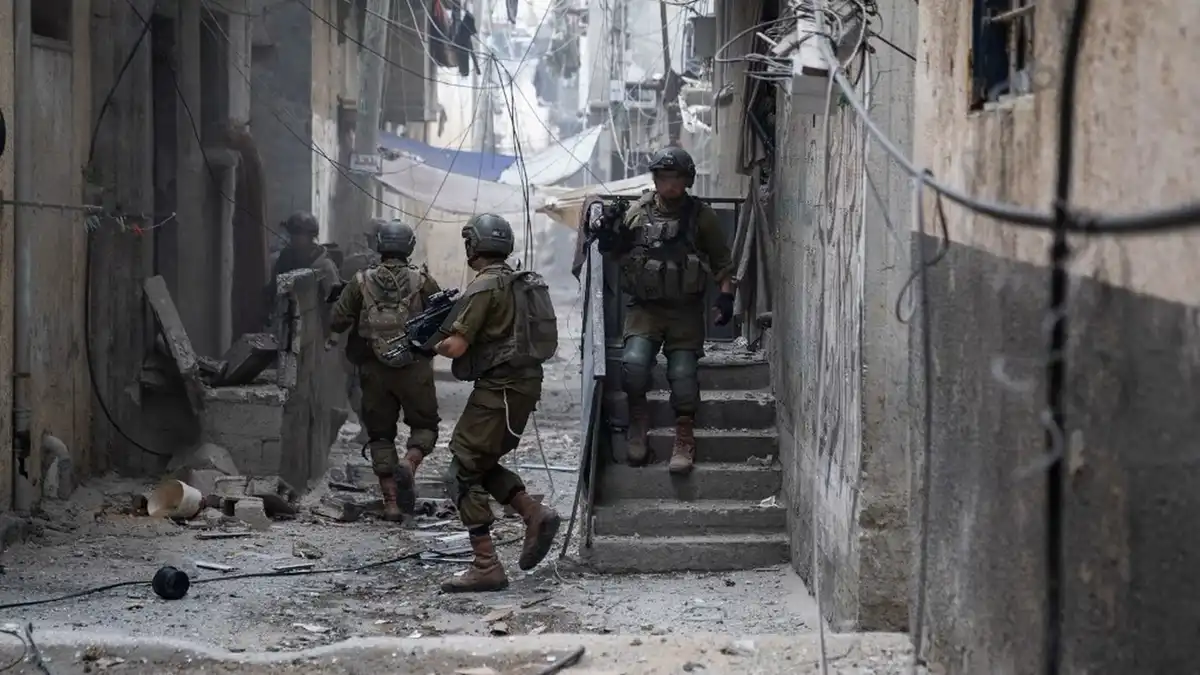
Detentions “in generally horrible conditions”. “Thousands” of men have been arrested by Israeli forces in the Gaza Strip since the start of the war against Hamas, the UN said on Friday, January 19, citing ill-treatment that could amount to the torture. In response, the Israeli military reiterated that "those detained [were] treated in accordance with international law."


Some "described being beaten, humiliated, subjected to ill-treatment and what could amount to torture", all in unknown locations and for periods ranging from 30 to 55 days, according to the representative of the Office of the United Nations High Commissioner for Human Rights in the Occupied Palestinian Territories, Ajit Sunghay. “They reported being blindfolded for long periods, some for several days in a row,” the official said. “One man said he had access to a shower only once during his 55 days of detention. There are reports of men who were later released, but only in diapers,” he added.


The Israeli army told AFP that individuals suspected of being involved in terrorist activities were being arrested and questioned. “Individuals who do not participate in terrorist activities are released,” said this source, adding that it is often necessary “for suspected terrorists to hand over their clothes so that they can be searched and to ensure that "They are not hiding explosive vests or other weapons." Clothing is returned when possible, the army further specifies.

PALESTINE

Tue 23 Jan 2024 1:23 pm - Jerusalem Time

Israeli settlers attacks in the West Bank

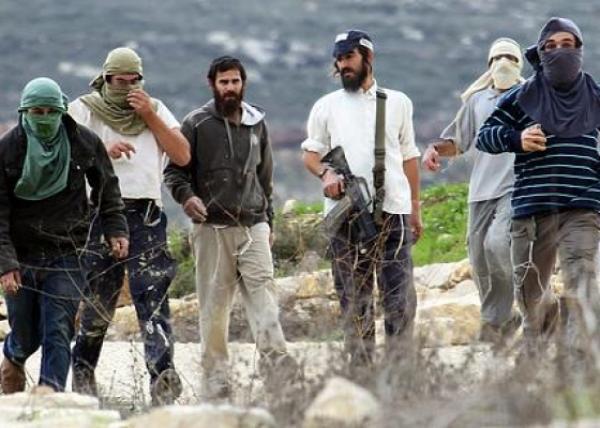
Today, Tuesday, settlers launched attacks on citizens and their property in the West Bank.


In Hebron, settlers damaged the tires of the vehicles of teachers of the Al-Tuwanah Mixed Basic School in Masafer Yatta, south of the city, and smashed their windows.


According to local sources, “Havat Maon” settlers, dressed as Israeli soldiers, damaged the tires of the school teachers’ vehicles with sharp tools and broke their windows with stones, while they were at the entrance to the village, which was closed by stones and earth mounds from the occupation forces.


In Jericho, colonists, protected by Israeli forces, carried out excavation and bulldozing work near the Al-Malihat Arab community on the Al-Marajat Road, northwest of the city.


It is noteworthy that in light of the war waged by the Israeli occupation on the Gaza Strip, human rights groups have documented an increase in settler-related violence and the forced displacement of Palestinians in the occupied West Bank.

PALESTINE

Tue 23 Jan 2024 12:19 pm - Jerusalem Time

War on Gaza: The death toll in the past 24 hours rose to 195 people

The Palestinian Ministry of Health in Gaza announced, on Tuesday, that the death toll from the Israeli war on the Strip had risen to 25,490 people and 63,354 injuries since October 7, 2023.


It added that on the 109th day of the war, “the Israeli occupation committed 22 massacres against families in the Gaza Strip, claiming 195 dead and 354 injuries during the past 24 hours.”


The ministry added, "There are still a number of victims under the rubble and on the roads, and ambulance and civil defense crews cannot reach them."

OPINIONS

Tue 23 Jan 2024 11:52 am - Jerusalem Time

Israel’s plans for Gaza’s future will only keep the flame of Hamas resistance burning

The Guardian

The Guardian

Opinion Writer

By Ahmad Samih Khalidi

 Attempts to excise the group and its leaders are unlikely to succeed and risk not only perpetuating the cycle of violence but spreading it wider


In late 1935, a small band of irregulars led by a Syrian-born Islamist cleric launched a guerrilla campaign against the British mandatory government that had the establishment of a Jewish “national home” in what was then predominantly Arab Palestine, as part of its purview. The campaign was swiftly suppressed by British forces, and its leader, Izz ad-Din al-Qassam, was killed as were the majority of his men.

But Qassam’s readiness to take up arms and die in the service of the Palestinian cause made a deep and lasting impression on Palestinian society, and his “martyrdom” became a symbol of sacrifice that has continued to resonate throughout the past 90 years, eventually providing both inspiration and a name to Hamas’s armed wing in the late 1980s. The fact that Qassam failed was essentially irrelevant. More important was his embodiment of the spirit of dogged and selfless resistance to foreign domination despite the imbalance of power and the unlikely prospects of success. Qassam also set the Palestinian national movement down the path of “armed struggle” that was eventually adopted by Yasser Arafat’s “mainstream” Fatah movement from the late 1950s onwards but whose role has diminished since the 1993 Oslo accord with Israel.

The past 30 years have witnessed an accelerating competition between Hamas’s claim to embody national resistance to Israeli rule, and Fatah’s collapse into discord, corruption and collusion under the banner of the Palestinian Authority’s “security cooperation” with the Israeli occupation. This race culminated in Hamas’s 7 October assault that was designed as much to shock and terrorise Israel as it was to discredit Fatah/ Mahmoud Abbas’s Palestinian Authority and consolidate Hamas’s position as the primary inheritor and embodiment of the Palestinian national movement and its liberationist cause.

Israel’s post 7/10 resort to massive force, dropping an unprecedented total of about 30,000 bombs by mid-December 2023 (equivalent to two Hiroshima-sized nuclear bombs), has so far failed to eradicate the military force established by Hamas amid the torrent of bloodshed, 25,000 Palestinian dead and the 62,000 wounded, and the mass displacement of 1.9 million Palestinian civilians in Gaza (85% of the population), easily exceeding the toll of the ethnic cleansing that accompanied Israel’s establishment in 1948.

The issue of how and when the war will end remains shrouded in the fog of Israel’s opaque intentions and the US’s increasingly desperate diplomatic manoeuvrings, hoping for a clear Israeli victory over Hamas, while fearing the worst consequences of a regional conflagration as evident from the slow spread of hostilities from Bab-el-Mandeb to Irbil. US hopes of leveraging the moment into a redesigned Middle East living in peace and harmony must not only contend with the sheer contagion of the current conflict but with the political capital needed, especially in an electoral year, to shift Israel away from its current semi-consensual refusal to countenance any substantial change in the status quo of occupation, settlement and domination.

Hamas’s brutal tactics have been washed out of Palestinian consciousness by the mass erasure of civilian lives

Meanwhile, as “day after” scenarios pile up, ranging from the utopian vision of a region speeding towards peace and stability thanks to an as yet invisible “pathway to Palestinian statehood” dreamed up by US secretary of state Antony Blinken, to Israeli defence minister Yoav Gallant’s fantasy of an Arab/international consortium taking over the Gaza Strip on Israel’s behalf, to Israeli PM Benjamin Netanyahu’s promise that there will no Palestinian state and that the war will continue at least into 2025: in all these, one thing is missing: Hamas’s likely survival and its potentially growing influence both despite and because of the enormous damage inflicted on the movement itself and the people of the Gaza Strip.

Hamas’s brutal tactics in its 7 October assault have been washed out of Palestinian political consciousness by the subsequent indiscriminate and mass erasure of Palestinian civilian lives, and the US/west’s complicity in supporting, arming and allowing this onslaught to continue under the guise of Israel’s right to self-defence with no evident expiry date attached. Rather than crush Hamas, its most likely effect will be to remythologise the notion of resistance and sow the seed for future iterations that may be inspired by Hamas but have no necessary connection to its history, ideology or organisational structure.

With Israeli leaders openly talking of pursuing the war against Hamas and its leaders across national boundaries, another potentially dangerous turn could take the form of Hamas’s transformation from a national-religious movement focused on the conflict in the land of Israel/Palestine into a more global movement ready to take the war to arenas that Hamas has hitherto avoided.

With regard to re-establishing a viable political authority in the Gaza Strip and reconstituting a Palestinian representative body that is capable of taking and sustaining decisions whether relating to a future political horizon with Israel or any legitimate governance and reconstruction process, the real issue is how to incorporate Hamas and its associated “spirit of resistance” into a new Palestinian authority, rather than how to quash or excise it. Within or associated with such an authority, Hamas could be part of the solution; outside, it would remain both a spoiler and an opposite pole of attraction.

Netanyahu and other Israeli officials have made it clear that they will seek to impose a strict and indefinite Israeli-determined security regime over the Gaza Strip for the foreseeable future; in other words, to reinstitute what amounts to a long-term occupation. This, in turn, will not only keep the flame of Hamas alive and galvanise Hamas-inspired resistance but will ensure that Israel’s “right of self-defence” will only produce the very insecurity that Israel and its allies claim to be addressing. If the past 55 years of occupation have taught us anything, it is that this cannot be the path to a genuine and lasting peace. It took Israel and the US approximately 35 years to talk to what was then seen as the terrorist PLO, just as it took years for the ANC and IRA to be recognised as partners to a resolution. All those threatened or rightfully concerned about what may happen next, simply cannot afford the price of waiting that long.


ARAB AND WORLD

Tue 23 Jan 2024 11:22 am - Jerusalem Time

Washington: We do not support a comprehensive ceasefire in Gaza, but rather “humanitarian breaks”

The US administration affirmed its support for the Israeli approach to eliminating the Islamic Resistance Movement (Hamas), reiterating its rejection of a comprehensive ceasefire in the Gaza Strip, and expressed its support for what it called “humanitarian breaks only.” "With the aim of extracting the prisoners and delivering aid to the region."


In a press conference held yesterday evening, Monday, in Washington, DC, the Strategic Communications Coordinator for the National Security Council in the White House, John Kirby, said in response to a question about the increase in Israeli attacks on the Gaza Strip, “This is the military plan of the Israeli administration.”


He added, "The American administration supports the Israeli approach to eliminating Hamas, but also urges the need to protect Palestinian civilians." Given that Israel is fighting against Hamas, it has the right to defend itself.


For 109 days, the Israeli occupation army has been waging a devastating war on the Gaza Strip, which as of yesterday left: 25,295 killed and 63,000 injured, most of them children and women, according to the Palestinian authorities, and caused massive destruction and an unprecedented humanitarian disaster, according to the United Nations.

ARAB AND WORLD

Tue 23 Jan 2024 10:54 am - Jerusalem Time

OCHA report: Since October 7th, Israeli colonists committed 444 attacks against Palestinians in West Bank

The United Nations Office for the Coordination of Humanitarian Affairs (OCHA) has said that Israeli colonists committed 444 attacks against Palestinians in the occupied West Bank since 7 October 2023.

OCHA said in its report that as 22 January 2024, it has "recorded 444 Israeli settler attacks against Palestinians, resulting in Palestinian casualties (45 incidents), damage to Palestinian-owned property (344 incidents), or both casualties and damage to property (55 incidents). This reflects a daily average of four incidents. "One-third of the settler attacks against Palestinians after 7 October 2023 have involved firearms, including shootings and threats of shootings. 


In nearly half of all recorded incidents after 7 October, Israeli forces were either accompanying or reported to be supporting the attackers.

In 2023, 1,229 incidents involving Israeli settlers in the West Bank, including East Jerusalem (with or without Israeli forces), resulted in Palestinian casualties, property damage or both. Some 913 of these incidents resulted in damage, 163 resulted in casualties and 153 resulted in both. 


This is the highest number of settler attacks against Palestinians in any given year since OCHA started recording incidents involving settlers in 2006.

ARAB AND WORLD

Tue 23 Jan 2024 10:49 am - Jerusalem Time

Supreme court in Washington rejects attempt to silence Palestinian human rights advocacy

A U.S.-based Palestinian rights organization prevailed when the Supreme Court refused to take up a lawsuit brought by the Jewish National Fund (JNF) and several U.S. citizens who live in Israel.


Citing the speech and expressive activities of the US Campaign for Palestinian Rights (USCPR), including its support for the Boycott, Divestment, and Sanctions (BDS) movement, the lawsuit argued that the group provided “material support” for terrorism.  The dismissal by the district court had been unanimously affirmed by the D.C. Circuit Court of Appeals.

This lawsuit is just one example of a long line of efforts to silence Palestinians for advocating for their freedom – in this case, by wielding the accusation of support for terrorism to discredit and dehumanize Palestinians for their advocacy, including their support for boycotts, said the Center for Constitutional Rights in a statement.

Multiple organizations with histories of seeking to silence Palestinian rights filed their briefs to have the Supreme Court of the United States endorse their suppression effort.


USCPR’s attorneys said today’s decision to let the lower court rulings stand is an important win for the movement and definitively sets the record straight. As the D.C. Circuit Court of Appeals found, “[a]advocating and coordinating a boycott of Israel – ‘economically, academically [,] and diplomatically,’... – is not unlawful.”

In dismissing the suit in March 2021, the lower court said the arguments were, “to say the least, not persuasive.” Advocates say the suit is part of a broader effort to criminalize and silence the political activities of supporters of Palestinian rights, a threat that has only increased as Israel’s genocide of Palestinians in Gaza intensifies. “USCPR’s message is justice for all and an end to funding genocide. There’s no lawsuit in the world that can stop us from pushing our demands for human rights,” said Ahmad Abuznaid, Executive Director of the US Campaign for Palestinian Rights. “We will remain focused on opposing Israel’s genocide of the Palestinian people and pursuing justice and freedom for the Palestinian people.”

Headquartered in Jerusalem, the JNF is a quasi-state institution that acquires and administers land for the sole benefit of Jewish Israelis. The JNF’s lawsuit alleges that USCPR bears responsibility for “incendiary terror balloons and kites” sent from Gaza onto JNF land during the 2018 Great Return March.

At issue were USCPR’s fiscal sponsorship of the Boycott National Committee and expressions of support for the rights and demands of Palestinians participating in the Great Return March, when Palestinians protested to demand respect for their right to return to the villages from which Israeli settlers expelled them in 1948. These two activities, the lawsuit claimed, amount to a violation of the U.S. Antiterrorism Act, which prohibits “material support” for terrorism. “The JNF’s prolonged and egregious pursuit of a fishing expedition to silence and intimidate urgent advocacy for Palestinian rights has been definitively put to rest by the Supreme Court,” said Diala Shamas, a Senior Staff Attorney at the Center for Constitutional Rights. “The JNF’s accusations were baseless, as recognized by the district court, the court of appeals, and now confirmed by the Supreme Court. Now, as the government of Israel is carrying out an unfolding genocide against Palestinians in Gaza, it is more important than ever that activists be free to speak out without fear. This is an important victory, but USCPR shouldn’t have been subjected to these smears in the first place.”

.

ARAB AND WORLD

Tue 23 Jan 2024 10:40 am - Jerusalem Time

Military and political failure forces Netanyahu to propose a new deal

Israeli media reported details of what they said were the broad outlines of a possible exchange deal with the Islamic Resistance Movement (Hamas), which was drafted in cooperation with the Israeli security services, Mossad chief David Barnea, and Shin Bet head Ronen Bar.


Under the weight of protests in the Israeli street demanding the release of those detained by Hamas, strengthening convictions of the Israeli failure to achieve the goals of the war on Gaza, and disagreements in the “war cabinet,” Prime Minister Benjamin Netanyahu admitted that he had presented broad outlines for a possible exchange deal, refusing to go into details.


According to these lines, 136 Israeli detainees will be released in 3 stages:

- Civilian detainees.

- Then the female soldiers and the bodies of dead detainees.

- Finally, the soldiers and men who serve in the Israeli army are regular and reserve, which is the condition that Hamas has insisted on from the beginning.


In return, Israel will release at every stage thousands of Palestinian prisoners, male and female, including veteran prisoners, the sick, the elderly, people with high sentences, and prisoners who the occupation says “have blood on their hands,” and the army will gradually withdraw from the Gaza Strip.


Allegations

Netanyahu claimed that there was no serious offer by Hamas for an exchange deal, and he appeared contradictory during his meeting with a delegation of the families of Israeli detainees held by the Palestinian resistance, as he stated that he rejected the movement’s demands to end the war and reach an agreement that he says also includes the release of “elite forces” militants from Hamas. Who were arrested by Israel for allegedly participating in the "Al-Aqsa Flood" battle.


Israel recently handed over to the Qatari and Egyptian mediators a new framework for a possible exchange deal that includes preparing for a two-month truce in exchange for the return of all those detained by Hamas in Gaza, according to two senior Israeli officials.


According to Barak Ravid, a political analyst on the Walla website, this proposal is the most important that Tel Aviv has put forward since the beginning of the war, in an attempt to bring about a breakthrough in the negotiations to release the detainees.


Although the proposal rejects Hamas's request to stop the war, it includes preparations for the longest ceasefire agreed to by Israel so far, according to Ravid.


The analyst quoted two senior Israeli officials as saying that the “war cabinet” agreed about 10 days ago on a “framework” that includes the principles of what Israel wants and does not want to implement within the framework of the detainee release deal.


Ravid says that the deal includes the release of all living detainees and the return of all bodies held by Hamas in several stages.


The first phase will include the release of Israeli women who are still in captivity, men over the age of 60, and detainees who are in serious health condition.


In the next stages, men under the age of 60, female soldiers, male soldiers, and guard team members will be released, and the bodies will be returned.


According to the same proposal, Israel and Hamas would agree in advance on the number of Palestinian prisoners to be released for each Israeli detainee in each of the categories, and then the names of the Palestinian prisoners to be released would be negotiated separately at each stage.


Cautious optimism

Ravid explained that the Israeli proposal includes preparations to begin redeploying army forces in the Gaza Strip, so that they gradually withdraw from large population centers, as well as allowing a “gradual and controlled” return of the Palestinian population to Gaza City and the northern Strip during the implementation of the agreement.


According to Ravid, the framework of the potential deal approved by the “War Cabinet” indicates that Israel will not agree to end the war after releasing the detainees and releasing all 6,000 Palestinian prisoners in its prisons.


He stressed that Israel is still waiting for Hamas’ response to the proposal, but the Israeli side expressed cautious optimism about the possibility of moving forward with negotiations on the basis of this proposal, and acknowledged that if the deal is implemented, the activity of the occupation army in the Gaza Strip two months after the truce will be significantly less in scope and intensity. .


In reading the implications of Israel's drafting of a proposal for a new exchange deal and what was reported about Hamas showing some kind of flexibility in negotiating the deal, Amos Harel, a military analyst for the Haaretz newspaper, believes that the gap in positions is still large, but there is a willingness on both sides to discuss the broad outlines of this deal.


Harel estimated that the United States, Qatar and Egypt are exerting pressure on both sides to enter into a process of negotiations that will lead to the conclusion of an exchange deal in stages, in the first stage of which some Israeli detainees will be released, and in the final stage the occupation army will withdraw from the Gaza Strip, and thus the end of the war will be declared.


Escalation and frustration

Harel added that it appears that no breakthrough has been achieved yet in the talks, but “for the first time in a long time there is a willingness from Israel and Hamas to discuss - and seriously - the broad lines of the deal, and it is expected that one of the channels of talks will resume this week in Cairo.”


The military analyst pointed out that Israel, in light of the widening circle of protests denouncing the government’s handling of the file of detainees held by Hamas, is seeking to move forward with another stage to release them in exchange for the release of Palestinian prisoners it holds in prisons, while agreeing to a two-week ceasefire.


He pointed out that the Egyptian mediators are seeking to reach a ceasefire for a period of 90 days, and to eventually move to a final stage of the agreement to end the war.


In this context, Harel points out that the families of the detainees have escalated their protests against the backdrop of frustration “with what appears to be the laxity of the political level regarding the deal.”

PALESTINE

Tue 23 Jan 2024 10:22 am - Jerusalem Time

Israel’s war on Gaza: List of key events, day 109

Dozens of Palestinians have been killed over the past 24 hours in Khan Younis as Israel expands its ground offensive there.


Latest updates

  • The Israeli military fired artillery shells at the headquarters of the Palestine Red Crescent Society in Khan Younis in southern Gaza, the organization said on Tuesday.
  • Israeli media reported that Israel is offering Hamas a two-month truce in return for a phased release of Gaza captives.

  • On Monday, the United States Supreme Court decided not to take up a lawsuit brought by the Jewish National Fund (JNF) against the US Campaign for Palestinian Rights (USCPR), the Center for Constitutional Rights said. JNF had alleged that the USCPR was providing “material support” for “terrorism” for activities including the Boycott, Divestment, Sanction (BDS) movement and the 2018 Great March of Return in Gaza.

  • German shipping group Hapag-Lloyd announced on Monday that it will continue to reroute its vessels around the Cape of Good Hope in response to Houthi attacks on Red Sea vessels while also implementing land corridors through Saudi Arabia to minimize the impact on business.

Human impact and fighting

  • Israeli forces killed at least 65 people in attacks on Khan Younis on Monday, according to medical sources.
  • The World Health Organization, the International Federation of Red Cross and Red Crescent Societies have said they are “deeply concerned” by reports of “intense shelling” in the vicinity of El Amal City Hospital in Khan Younis on Monday.

  • The Israeli Air Force said on Monday that it struck Hezbollah infrastructures and observation posts in the villages of Leida and Itarun in southern Lebanon.

  • On Monday, Hezbollah also said it fired rockets at a gathering of Israeli troops around the town of Even Menachem, achieving “direct hits”.

  • Israeli settlers stormed Al-Aqsa Mosque in Jerusalem on Tuesday under the protection of Israeli police, Wafa news agency reported.

  • Diplomacy
  • France’s Foreign Minister Stephane Sejourne will chair a United Nations Security Council (UNSC) ministerial meeting on Palestine at 2pm New York time (17:00 GMT) on Tuesday. The council’s 15 members have been unable to agree on a draft presidential statement before the meeting, according to the Security Council Report (SCR), which monitors the UNSC’s activities.

  • After visiting Egypt, senior adviser to US President Joe Biden, Brett McGurk, will be travelling to Qatar this week. He is expected to discuss Israel’s proposal for a two-month pause, according to Al Jazeera correspondent Stefanie Dekker.

  • Biden held a phone call with the United Kingdom’s Prime Minister Rishi Sunak on Monday. The two discussed the “Houthi attacks against merchant and naval vessels transiting the Red Sea”, according to the White House.

  • The US and the UK have been carrying out attacks on Houthi positions in Yemen. Australia, Bahrain, Canada and the Netherlands supported the latest US-UK air strikes targeting Houthi-controlled areas in Yemen on Monday, reported Reuters news agency.
  • Aljazeera

OPINIONS

Tue 23 Jan 2024 10:08 am - Jerusalem Time

Lebanon, Iran, and Forms of Solidarity with Gaza

Hazem Saghieh

Hazem Saghieh

Opinion Writer

After many Lebanese officials voiced similar positions, Prime Minister Najib Mikati took things further than his colleagues and seemed less embarrassed about his embarrassing position. Besides implicitly acknowledging that Hezbollah is the actual negotiator at the table in which the situation in Lebanon and its future are being discussed, Mikati echoed the party’s theory about linking developments in Lebanon to developments in Gaza.

Fear of death and destruction, which is justified, was not the only reason that broad segments of the population met his rhetoric with indignation, nor was the fact that he ignored those segments and sidelined their opinions and sensitivities regarding a matter of life and death. In addition to both, there is a history of “linking” that has cost and continues to cost the Lebanese dearly.

Indeed, since the mid-1960s, Lebanon has been linked to Palestinian militancy, with the 1969 Cairo Agreement granting this link “legal” justification. Successive wars erupted as a result, culminating in the Israeli invasion of 1982.

After that, with Lebanon under the influence of the Syrian police state and with Hezbollah’s power growing, Hafez al-Assad came out with his famous theories about the shared destiny and path of "one people in two countries." Once again, disasters whose repercussions continue to reverberate, and whose consequences continue to add up, ensued. Mind you, Assad’s theories did nothing to help the Palestinians and their cause, however one interprets that cause; rather, these theories went hand in hand with policies that wreaked havoc on the Palestinians in Lebanon.

Today, with the “unity of arenas,” we are looking at one people in five or six countries that supposedly share the same path and destiny, but instead of being led by Damascus, this time, they are led by Tehran.

The most dangerous aspect of all of that might be this nihilistic - militia perspective that is being broadly promoted in some environments. This view makes light of doing away with states, borders, and national sovereignty, not to mention the interests and opinions of the population. It is an idea that can be partially traced back to an imperial consciousness that preceded the emergence of modern states.

At that time, for example, many “mujahideen” who did not recognize borders emerged, going from Syria to fight in Iraq or from Lebanon to fight in Syria or Palestine... It is obvious that this is no longer part of the global zeitgeist, just as the mood of the times is no longer favorable to the emergence of forces like the “International Brigades,” the 40,000 volunteers who fought in the Spanish civil war of the 1930s. Nowadays, a group like ISIS has been left to present the perfect image of pasting everything on everything else over a geographical area that “unified” western Iraq and eastern Syria.

One consequence of the times and its novelty is that religious, national, and ideological wars have become a thing of the past, and with them, so has the epic image of “nations,” “peoples,” or “masses” rising up as one in defense of a cause, be it just or unjust. The consolidation of states and societies has given rise to a clear distinction between transnational moral and humanitarian solidarity, like that of the people around the world expressing their solidarity with Gaza or with victimized groups like the women of Afghanistan, and political solidarity that goes as far as direct military intervention, which is now contingent on a particular country whose parties are drawn together by a life cycle and common interests.

Today, we see this distinction between degrees of engagement even among the Palestinians themselves, depending on their different circumstances. The West Bank, for example, with the exception of pockets here and there, did not take its solidarity so far as to announce a mass insurgency, to say nothing about the Arab population inside Israel. As for those searching for epics “between the Atlantic and the Gulf,” or in the vast “Muslim lands,” their disappointment with the times turns them back cursing their luck and carrying crushing frustrations.

On the other hand, there is good reason to be extremely skeptical about the meaning of solidarity with Gaza as it is expressed by today’s solidarity specialists. It does not take a genius to refute, based on knowledge and experience, the prevailing militant narrative about these new solidarity experts.

The Houthis’ social environment in Yemen had sided with Imam Al-Badr and against Nasserism and Arab nationalism in the Yemeni civil war of the 1960s, at a time when the slogan of liberating Palestine had been tied exclusively to Nasser. As for the Shiite parties in Iraq, their social environment launched attacks of retribution against the Palestinians in Iraq after 2003, because they considered them to be Saddamists and Baathists. Meanwhile, the environment of Lebanese Hezbollah crystallized politically through its clashes with Palestinian armed groups in the 1960s and 1970s, before it wiped out the Lebanese affiliated with those armed groups.

That is not to criticize or glorify those past choices, but to ask by what miracle that their descendants became “enamored of Palestine”? In all likelihood, they have fallen under the spell of Iran, not Palestine.

Using Gaza as a pretext, what they want is to turn their countries into militias and impose their control over their societies and central authorities. They want to turn their countries into part of Iran’s imperial domain, and of course to cast as a traitor anyone who does not buy into this hypocrisy in the name of Gaza, or who refuses to exchange his homeland and patriotism for Iran. In turn, the latter acts in solidarity through Arabs bodies, countries, and societies, and it avenges Gaza in Iraqi Kurdistan and Idlib, or on the border with Pakistan, while Gaza’s fate is left to God.

Alsharq Alawsat


PALESTINE

Tue 23 Jan 2024 8:13 am - Jerusalem Time

West Bank: A Palestinian teenager was killed by Israeli soldiers in Arraba, south of Jenin

The child, Yamen Muhammad Hasiti (17 years old), was killed yesterday evening, Monday, during confrontations with the Israeli occupation forces in the town of Arraba, south of Jenin.


Local sources reported that the confrontations broke out after the Israeli occupation forces stormed the town, amid heavy live bullets being fired at citizens, which led to the child Hasiti being injured in the stomach.


It added, quoting eyewitnesses, that Israeli soldiers left the child Hasiti bleeding on the ground and prevented the ambulance from reaching him. They fired bullets at it, and after they confirmed his death, they left the area.


OPINIONS

Tue 23 Jan 2024 8:10 am - Jerusalem Time

Why the United States Can’t Ignore the ICJ Case Against Israel

Carnegie Endowment

Carnegie Endowment

Opinion Writer

By ZAHA HASSAN

Summary:  Too much is at stake: too many Palestinian and Israeli lives, too much U.S. credibility, and too high the risk of regional conflagration.


Last week, South Africa presented a well-argued case before the International Court of Justice (ICJ), the UN’s judicial arm, alleging Israel is committing genocide in Gaza. Israel denies the charges and claims its actions in Gaza are self-defense. A state-to-state complaint about “the crime of crimes” should be a big deal to the administration of U.S. President Joe Biden, particularly when it involves a close ally receiving around $4 billion per year in U.S. security assistance (and fast-tracked for more). Yet the response of U.S. officials has been milquetoast, dismissing the case as meritless and without any factual basis. At the same time, the White House has also asserted that it has made no legal assessment about Israel’s conduct in Gaza or how U.S. weapons may have been misused.


How can both things be true? Either the United States has information about whether Israel is acting within the constraints of international law, including the 1948 Genocide Convention, or it is completely in the dark. The United States cannot have it both ways. Too much is at stake: too many Palestinian and Israeli lives, too much U.S. credibility, and too high the risk of regional conflagration.

Of course, the Biden administration knows what is taking place inside Gaza. It knows because it has had surveillance drones flying above Gaza since October 7. It knows because U.S. intelligence analysts are likely following journalists who are risking their lives to report and the Palestinians in Gaza who are live-streaming via TikTok, Instagram, and Telegram. It knows which types of munitions Israel has been dropping, firing, and shooting into Gaza’s densely populated cities and refugee camps because it is Israel’s principal supplier, and it knows what kind of damage these munitions do when used in such areas.

Numerous reports and accounts from UN special rapporteurs, the United Nations Children’s Fund, the World Food Program, Human Rights Watch, Save the Children, the Norwegian Refugee Council, and others explain the impacts of Israel’s war inside Gaza. Their reports are all public, as are the statements of their representatives. These organizations also report that civilians and civilian infrastructure are being targeted, that the vast majority of those killed are women and children, that the bombing is indiscriminate and not in proportion to the threat posed, and that hundreds of thousands of the 2.3 million Palestinians in Gaza are being forcibly displaced, starved, and deprived of water and medical treatment. They say that Palestinians are being killed in their homes and shelters, they are being killed when they try to flee, and they are being killed in the so-called safe zones that Israel has designated. They say 100,000 more Palestinians could die in the days and weeks to come if the bombing does not stop and a massive amount of humanitarian aid is not allowed in.

But knowing the facts on the ground is not the same as assessing them. And an assessment is needed in order to get to a legal conclusion that would require the United States to act to put in place a ceasefire. As a party to the Genocide Convention, the United States is required to “undertake to prevent and punish” the crime of genocide. That commitment becomes meaningless if the United States can simply look away when the party accused of international crimes is an ally or if the outcome of an assessment is inconvenient. As Biden has stated, preventing genocide is both a “moral duty and a matter of national and global importance.” That is why the White House has an atrocity prevention and response strategy and why the Elie Wiesel Genocide and Atrocities Prevention Act requires the State Department to monitor for such events around the world and prepare annual reports on what it is doing to prevent them. The act also requires foreign service officers to be trained to spot the early warning signs for such grave human rights violations and an all-of-government approach to prevent genocide from happening. 

The United States may want to maintain its certainty that Israel is not committing any grave human rights violations in Gaza by avoiding an assessment, but the ICJ case—which is supported by at least fifty countries, the Arab League, and the Organization of Islamic Cooperation—may force its hand, even if a decision on the case’s merits takes years. South Africa’s request for provisional relief, which includes a call for an immediate ceasefire and entry of humanitarian aid, may be only days away. The burden of proof required for provisional relief —“plausibility” that a violation of the Genocide Convention has occurred—is less than what is required for a final ruling.

The ICJ will likely rule that the provisional relief burden has been met, because the Israeli acts in Gaza are so well-documented, as is the apparent genocidal intent of Israeli officials leading the war. The most egregious of these statements includes directives to military personnel about starving Gaza, expressions of support for “voluntary immigration” of Palestinians, and the use of biblical analogies in speeches to soldiers about the permissibility of killing all innocents in war.


For Palestinians, the “Day After” Starts With a Plan for Ending Israel’s Occupation

Time is running out for Palestinians in Gaza. But it is also running out for the Biden administration. South Africa is reportedly preparing to file a complaint against the United States for complicity in the commission of genocide. Attempts to quietly coax and cajole Israel into opening up one more crossing for humanitarian aid or to allow one more truckload of supplies in from Egypt will not make for a convincing argument at the ICJ.


The United States must make an assessment about Israel’s actions in Gaza and act accordingly. The Biden administration must lead a renewed effort at the UN Security Council for a resolution calling for an immediate ceasefire, and it must be willing to back up the resolution with the full measure of its resolve, including suspending military assistance to Israel. U.S. inaction would continue to jeopardize Palestinians’ lives, risk an outbreak of regional war, and carry the permanent stain associated with a possible ICJ finding that the United States was complicit in or failed to prevent genocide. The U.S. response to the ICJ cannot be that it never made an assessment.


ARAB AND WORLD

Tue 23 Jan 2024 8:08 am - Jerusalem Time

AXIOS: Israel proposes two-month fighting pause in Gaza for release of all hostages

Israel has given Hamas a proposal through Qatari and Egyptian mediators that includes up to two months of a pause in the fighting as part of a multi-phase deal, Axios reported on Monday.


The deal would include the release of all remaining hostages held in Gaza, the report added citing two Israeli officials.

ARAB AND WORLD

Tue 23 Jan 2024 8:04 am - Jerusalem Time

EU insists on two-state solution for Israel-Palestine conflict

EU foreign ministers on Monday pressed Israel for an eventual two-state solution with the Palestinians after the war in Gaza, at meetings with the top diplomats from the two sides and key Arab states in Brussels.

The surprise Hamas attack on October 7 on Israel and the subsequent devastating military response from Israel has plunged the Middle East into fresh turmoil and sparked fears of a broader conflict.

For all the latest headlines, follow our Google News channel online or via the app. But while the bloodshed appears to have driven a long-term solution further out of sight, EU officials insist the time is now to talk about finally resolving the Israeli-Palestinian conflict. 

The 27 EU ministers met first with Israel’s foreign minister Israel Katz before they were due to sit down separately with the Palestinian Authority’s top diplomat, Riyad al-Maliki.

The foreign ministers of Egypt, Jordan and Saudi Arabia were also holding talks with the European ministers.

Israeli Prime Minister Benjamin Netanyahu has drawn condemnation from the United Nations and defied key backer the United States by rejecting calls for a Palestinian state.

Israel’s assault on Gaza has left over 25,000 Palestinians dead, the vast majority women and children, according to the Hamas-run health ministry.

Netanyahu has vowed “complete victory” over Hamas after the attacks by the militant movement’s fighters on October 7 that resulted in the deaths of about 1,140 people, mostly civilians, according to an AFP tally based on official Israeli figures.

Hamas militants also seized about 250 hostages and Israel says around 132 remain in besieged Gaza.EU foreign policy chief Josep Borrell told Israel that “peace and stability cannot be built only by military means.” “Which are the other solutions they have in mind? To make all the Palestinians leave? To kill […] them?” Borrell said.


"The Only solution"

Katz ignored questions from journalists over a future two-state solution and said Israel was focused now on returning the hostages and ensuring its own security. 

The EU has struggled for a united stance on the conflict in Gaza as staunch backers of Israel such as Germany have rejected demands for an immediate ceasefire made by the likes of Spain and Ireland. But there is overall backing in the bloc for a two-state solution. “The two-state solution is the only solution, and even those who don’t want to know about it have not yet come up with any other alternative,” said German foreign minister Annalena Baerbock. 


Borrell circulated what he called a “comprehensive approach” towards finding peace involving the international community holding a conference that would come up with a plan to be put to both the Israelis and the Palestinians.

The paper said the international community should then eventually “set out the consequences they envisage to attach to engagement or non-engagement with the peace plan” by either side.


Jordan’s Foreign Minister Ayman Safadi said Israel’s “continuation of measures to undermine the two-state solution is dooming the future of the region to more conflicts and more war.” “The whole world is saying the only way out of this misery is the two-state solution. So, the party who’s standing against the rights of all peoples of the region, including Israelis, to have peace cannot just be left unaccountable,” he said. 

AFP

PALESTINE

Tue 23 Jan 2024 8:02 am - Jerusalem Time

Israeli Army: 24 officers and soldiers killed in the Gaza battles

The Israeli army announced, on Tuesday, that 24 officers and soldiers were killed during the past 24 hours in the battles in the Gaza Strip, including 21 soldiers from the reserve forces who were killed in the bombing of two buildings in the Maghazi camp in the center of the Strip, which was described as the most violent day of combat since the start of the ground invasion on October 27. First past.


Al-Quds correspondent Dot said: “Yesterday morning, reserve soldiers from the 261st Brigade, who carry out security duties in the fence area in the south of the Gaza Strip, went on a mission to blow up buildings in the buffer zone near the fence. The soldiers entered a distance of about 600 meters from the fence in the Al-Maghazi camp area.” They were asked to destroy 10 buildings using mines, accompanied by engineering teams.”


Our correspondent said, "At the end of the operation, militants fired two RPG missiles. The first was fired at a tank, causing two wounded. A second RPG missile was fired at one of the buildings that already contained explosive materials ready to be detonated."


He added, "Both buildings collapsed and the site turned into complete destruction. The forces began rescue operations and many forces were sent to the scene to begin and rescue the victims from under the rubble."


He added, "In the first hours, there were also missing people who were not found among the rubble. The rescue operations continued for very long hours until the night. During the past few hours, the process of rescuing the victims was completed, there were no longer any missing people, and the event ended."


Since October 7, 2,665 Israeli soldiers have been wounded, according to Israeli army data, and of these, 1,207 were injured in the ground operation in Gaza.


ARAB AND WORLD

Tue 23 Jan 2024 8:02 am - Jerusalem Time

Biden’s close ally says Netanyahu isn’t aligned with Middle East peace quest

President Joe Biden’s reelection campaign co-chairman portrayed Israeli Prime Minister Benjamin Netanyahu as an obstacle to peace in the Middle East and suggested he’s wrong to reject calls by the US and Arab countries for movement toward a Palestinian state.


“This wouldn’t be the first time that there is some tension between Prime Minister Netanyahu, his personal, political goals and aims, and the challenges of crafting a positive, peaceful path forward for the Israeli and Palestinian people,” Chris Coons, a US senator from Delaware who’s a close ally of Biden, said on CNN’s State of the Union.

For the latest headlines, follow our Google News channel online or via the app.

Coons’ comments also hint at tension between Biden and Netanyahu, who spoke on Friday for the first time in almost four weeks. A day earlier, Netanyahu dismissed US calls to position the Palestinian Authority for eventual control of postwar Gaza, saying an Israeli leader must be able to oppose even “the closest of friends.”Netanyahu’ comments vowing to maintain Israeli control over the West Bank and Gaza Strip for the foreseeable future after the war prompted a rebuke by the US State Department.


Netanyahu has a history of weakening the Palestinian Authority in the West Bank and accepting Iranian-backed Hamas as rulers of Gaza, which had “tragic consequences when Hamas militants at-tacked Israel on October 7,” Coons said. That attack prompted an Israeli military assault on Gaza with the declared goal of wiping out Hamas, which the US and the European Union have designated a terror group.

Civilian casualties and suffering in Gaza have prompted outrage in Arab countries, increasingly sharp calls for Israeli restraint among US allies and divisions in the US that have played out in election-year politics, at elite universities and in the streets. At the same time, the Biden administration has backed Israel’s right to self-defense against Hamas.

“This is a moment where the Israeli public needs to choose what is the best path forward,” Coons said. “And I know it would be a significant step for them to accept that the creation of a Palestinian state is the right path forward.”

Biden’s call with Netanyahu wasn’t a direct response to his dismissal of Palestinian statehood, John Kirby, spokesman for the National Security Council at the White House, said Friday.

Biden “still believes in the promise in the possibility of a two-state solution,” which will require hard work and “a lot of leadership in the region,” Kirby said.


Hamas’s attack in southern Israel killed about 1,200 people. Israel’s counterstrikes have killed more than 25,000 people in the Gaza Strip, according to the Hamas-run health ministry.

ARAB AND WORLD

Tue 23 Jan 2024 7:20 am - Jerusalem Time

Israel proposed that Hamas leaders leave Gaza in exchange for a ceasefire

CNN, on Tuesday, quoted two informed sources as saying that the Israeli occupation suggested that Hamas leaders leave the Gaza Strip as part of a broad ceasefire agreement.


CNN linked this to the failure of the Israeli occupation to achieve its declared goal of eliminating Hamas, noting that after about four months of war on Gaza, Israel was unable to arrest any of Hamas’ senior leaders or assassinate any of them in the Strip. While the occupation army estimates indicate that Hamas has lost only about 30 percent of its combat capabilities.


In details, the report said that the proposal to allow Hamas leaders to leave Gaza was discussed during broader talks that include a ceasefire at least twice in recent weeks.


Israeli media, including Channel 13, had previously promoted that Qatar had made a new offer to the Israeli occupation state regarding a deal that included the release of all Israeli detainees in the Gaza Strip and the evacuation of Hamas leaders in exchange for the Israeli withdrawal from the Gaza Strip. However, the American network confirmed This offer was put forward for the first time by the head of the Israeli Mossad, David Barnea, in Warsaw last December, when he met with the Director of the US Central Intelligence Agency, Bill Burns, and the Prime Minister and Foreign Minister of Qatar, Sheikh Mohammed bin Abdul Rahman Al Thani, adding that its source was an informed official. Regarding the discussions that took place during the meetings, he said that Blinken presented the proposal again when he visited the Qatari capital at the beginning of this month.


The same official indicated that the Qatari Foreign Minister told his American counterpart that this Israeli idea “will never succeed.”


The website also revealed, citing American and international officials familiar with the mediation efforts, that the involvement of the Israeli occupation and the Hamas movement in the talks appears encouraging, but they stressed that reaching an agreement on a ceasefire and prisoner exchange “is still a long way off.”


On the other hand, the CNN report pointed out that pressure is increasing on Israeli Prime Minister Benjamin Netanyahu to accomplish something, after it was confirmed that his goal of “achieving complete victory” over Hamas has not been achieved, neither from near nor from afar, and because of his government’s inability. To recover prisoners detained in Gaza.


According to a comment by Carnegie Institute researcher Aaron David Miller, Israel “is not achieving its military goals,” noting that the pressure on Netanyahu and his government to return the detainees created a situation that made the occupation ready to accept the departure of Hamas leaders from the Gaza Strip.


A two-month truce in exchange for the release of all prisoners

For its part, the American news site Axios reported that the occupation proposed to Hamas, through the Qatari and Egyptian mediators, a two-month truce in the war, in exchange for the movement’s release of all its prisoners and detainees.


This proposal does not mean the end of the war on Gaza, but rather a second truce after the one that lasted a week and allowed the release of about a hundred prisoners and detainees.


According to Axios, the Israeli proposal stipulates the release of all detainees in Gaza in stages, initially including civilian women and men over the age of 60.


As for the subsequent stages, female soldiers are released, then civilian men under the age of 60, then soldiers, and finally the bodies of prisoners.


Within the framework of the plan, Israel and Hamas must agree in advance on the number of Palestinian prisoners who will be released in exchange for Israeli detainees.


This plan does not foresee an end to the war on Gaza or even a long-term political solution, but rather a redeployment of Israeli occupation forces outside the main cities in the Palestinian Strip and the gradual return of hundreds of thousands of Palestinians who were displaced from the north to the south of the Strip.

OPINIONS

Tue 23 Jan 2024 7:08 am - Jerusalem Time

Israel and Gaza, a Few Years From Now

Amira Hass - Israeli Haaretz

Amira Hass - Israeli Haaretz

Opinion Writer

A few years from now, a new father will hug his baby, his first son, and all of a sudden he will be rocked by a memory: a father carrying a baby in his hands, beside him a woman with her hair covered with a hijab and two or three children, all walking south with hundreds of others among shards of asphalt, piles of sand, blurred by the dust being kicked up as they march. Smoke rises from a distance, a drone hums relentlessly above, bombs explode one after the other.

The new father will remember how he – a soldier at the end of his compulsory service – called out over a loudspeaker to order that father (“You, in the green shirt, with the child”) to walk toward the soldiers behind the mounds of earth, standing alongside tanks. Through the clouds of dust, he sees the father handing over his baby to the woman, and with his arms raised in the air, approaching the soldiers.

It’s a silent movie. If they said something to each other, the new father who was a soldier back then couldn’t hear it. Perhaps at that moment of recollection he will tighten his embrace of his first son. Or perhaps, slightly alarmed, he will hurriedly place his son in the stroller and drink a glass of water as he wipes away the beads of sweat that suddenly dot his forehead. Or maybe he’ll just smile and say to himself: We showed those sons of bitches what it means to slaughter us like sheep. And he’ll kiss his son’s forehead.

Three or four years from now, a military correspondent will receive classified materials. At an editorial meeting, they’ll wonder if their competitors also received the same documents, and what the military censor will allow them to publish: For the past two and a half years, the military advocate general has been investigating about a dozen cases of point-blank executions of civilians in their homes, after they were separated from their wives and children, and further cases where women were shot at close range as they walked amid the rubble. Some of the names of the suspects who allegedly violated the rules of engagement are particularly embarrassing. The son of someone famous, an officer who was trumpeted by the media.

The advocate general has not yet decided whether to file indictments. The identity of some of those killed is also an embarrassment for Israel: One is a British citizen, and the United Kingdom has asked for clarification; another is a well-known anti-Hamas senior member of Fatah whom the CIA had pinned their hopes on. A senior editor will recall that there were reports in the Palestinian and Arab media at the time about such executions, but it was impossible to verify them – what else could one expect from the mobilized media, and who could believe the director of a Hamas-run public hospital?

A few years from now, the veterans anti-occupation group Breaking the Silence will map all the former soldiers who came to testify after the war: three young people suffering from post-traumatic stress disorder, four reservists who fought in Jabalya, two conscripts stationed at the detention center at the Sde Teiman base, and one female soldier from the IDF Spokesperson’s Unit. There are no pilots or drone operators on the list.

Three years from now, activists will erect a monument in memory of the families who were wiped out in the bombings during the war (it will be a four-figure number). The names of the families and all those killed will be etched on a large rock that will be placed in the dead of night in Drancy, a suburb of Paris where the Nazis rounded up Jews before sending them to the death camps. The monument will be unveiled by one of the survivors of the bombings. The Jewish community will protest "antisemitism and Holocaust denial," and municipal employees will be sent to smash the rock. Or alternatively, the mayor will attend the unveiling ceremony and kiss the survivor, and the Jewish community will shout, "A collaborator, just like the Vichy."

Two years from now, USAID will start inviting bids for a contractor to remove the debris from Gaza and recycle it. The winning bid will be from a company jointly owned by the Egyptian intelligence apparatus, former senior officials at the Coordinator of Government Activities in the Territories and a Palestinian contractor from Hebron.

Four years from now, a special committee composed of representatives of the Quartet, Israel, Jordan and Egypt will complete the specification for the reconstruction of Gaza. Until work begins, the Pleasant Travel company from Petah Tikva will win the bidding process to supply 280,000 rainproof tents of various sizes to the remaining residents, and the Empty Out company from Raanana will win the bidding for installing mobile toilets.

USAID will still be drafting the bidding process for the design and reconstruction of the entire sewage and water infrastructure that was completely destroyed in the war. It will also review a proposal by Holy Land Enterprises, Ltd. to create real-size plaster models of all the historical buildings and archaeological sites that the Israel Air Force destroyed in the bombings.

Six years from now, Hamas will win the majority of votes for the Palestinian National Council of the Palestine Liberation Organization in an election held in the Palestinian diaspora and a secret election in their West Bank self-rule enclaves.

Seven years from now, a former senior defense official will say: “We shouldn’t have been tempted to launch this war. We fell into Hamas’ trap, tens of thousands of people left the country, and now we have a severe shortage of medical and high-tech personnel.”


Asked by an interviewer from an international TV station if that isn’t what former senior officers always say once they’re no longer in the system, he’ll shrug. The security official holding his former job will condemn his remarks, and the Knesset will expedite the passage of a law to seize the pensions of former officials who speak out against the policies of the governments they had served.

ARAB AND WORLD

Tue 23 Jan 2024 7:02 am - Jerusalem Time

Israeli historian: We are facing a bi-national state, but with an apartheid regime

Israeli historian Shlomo Sand, author of the controversial book “How Were the Jewish People Invented,” has published a new work entitled “Two Peoples for One State?” It supports the idea, which has been defended by many Zionist intellectuals since the end of the 19th century, which is the establishment of a bi-national state for Israelis and Palestinians.


Sand said - in an interview with him, summarized by Julie Conan for the French newspaper La Croix - that what is happening in the Gaza Strip is dangerous because no one in the Israeli authority knows what to do, and because aimless wars are dangerous, and almost turn into genocide.


When asked why he specifically rejects the term “genocide”? He explained that he believes that Israel is committing murders in the Gaza Strip, but genocide is an act aimed at eliminating an entire people, and this is a very rare phenomenon.


He gave an example of what the Nazis committed when they decided to eliminate the Jews and gypsies,, and what happened in Rwanda when the Hutus decided to eliminate the Tutsis and almost succeeded.


But he pointed out that the French liquidated half a million Algerians, and this was not considered genocide, but rather war crimes, and what Israel is doing now are war crimes in Gaza, in which it makes little distinction between civilians and soldiers.


A Suicide

The historian highlighted what he said was adopted by the philosopher Hannah Arendt in 1948, when she said that if there was an exclusive Jewish state, there would be a war every 10 years.


This is what Sand commented on by saying that Israel, after 75 years of almost continuous war, must realize that trying to continue living as a Jewish state in the Arab Middle East is suicide.


The Israeli historian explained that he never supported a bi-national state and was not against it, but after the 1967 war, he supported the two-state solution.


But after all these years of settlement, the idea of a two-state solution has become more and more hollow, because we have been living for half a century in a bi-national state under a clear apartheid system, in which people live side by side but with different rights, as he put it.


Hamas leaders from the Land of Israel

When asked about the two-state solution, Sand said, “I do not believe in love between Palestinian Arabs and Jewish Israelis, but the historical situation forces them to live side by side. I believe in a federal state more than an independent Palestinian state, as defended by French President Emmanuel Macron and American Joe Biden.”


Sand believed that it was Europe that vomited the Jews onto the Arabs of Palestine, and for this reason “the behavior of the Europeans bothers me a lot.”


Speaking to the Europeans, he added, "You are responsible for long-term tragedies. For all my life, I have been surprised that people who claim that they were taken from their land two thousand years ago do not recognize the rights of those who were taken from their land 75 years ago. Israel does not want to recognize this, despite the fact that all Hamas leaders, such as Yahya Al-Sanwar and Sheikh Ahmed Yassin come from the ancient land of Palestine, from Ashkelon and Ashdod, which is considered the land of Israel.”


Source: Lacroix

ARAB AND WORLD

Tue 23 Jan 2024 6:59 am - Jerusalem Time

News of a deal between Israel and Hamas does not end the war

Israeli and American media reported that Israel submitted a proposal to the Islamic Resistance Movement (Hamas) to conclude a deal to release detainees in Gaza in exchange for a temporary halt to the war on the Strip, amid cautious Israeli optimism.


Israeli Channel 13 reported - yesterday evening, Monday - that Tel Aviv had finished formulating the principles of a deal consisting of 3 to 4 stages, which includes changing the army’s deployment in the Gaza Strip and withdrawing from some areas without ending the war.


The American website Axios quoted two Israeli officials as saying that the proposal presented by Tel Aviv to Hamas through Qatari and Egyptian mediators includes a two-month cessation of war during which all Israeli detainees in Gaza will be released.


According to Israeli officials, there are more than 130 detainees still in Gaza, and many of the detainees were either killed on October 7 or in the subsequent weeks of the war.


Axios said that Brett McGurk, advisor to President Joe Biden, went to Egypt on Sunday and will later move to Qatar in order to conduct negotiations to secure the release of those detained by the resistance. The site added that the Qatari and Egyptian mediators have been trying for weeks to bridge the gap between the two parties to achieve progress in concluding a deal.


American officials told Axios that reaching such an agreement may be the only way to stop the war in Gaza.


According to the website, Israeli officials said that they were awaiting Hamas' response, but stressed that they felt cautiously optimistic about achieving progress in the coming days.


Stages of the deal

Channel 13 reported that the deal includes, in the first phase, Hamas releasing its remaining women and elderly men, although it is not clear whether they will be released all at once.


The channel said that in the second phase, younger detainees and youth will be released, while the third phase includes the release of soldiers and bodies held by Hamas.


Axios quoted Israeli officials as saying that the deal includes the redeployment of Israeli forces from the main residential areas, and the gradual return of Palestinians to the areas from which they were displaced in the northern Gaza Strip.


Israeli officials confirmed that the deal confirms that Tel Aviv will not agree to end the war and will not agree to release all Palestinian prisoners as demanded by the Palestinian resistance.


According to Israeli officials, military operations will decrease in number and intensity after two months, if Hamas agrees to the deal.


The channel quoted Israeli sources - which it did not name - that Tel Aviv received during the past few days messages from mediators indicating that Hamas seemed more flexible regarding its demand that the end of the war be part of a possible deal.


Earlier Monday, Israeli Prime Minister Benjamin Netanyahu said - during a meeting with the families of detainees in Gaza - that he is working on a deal to release their relatives, but he added, “I will not go into its details,” according to the Israeli newspaper Yedioth Ahronoth.


A group of families of Israeli prisoners detained in Gaza stormed a meeting of the Finance Committee in the Knesset in Jerusalem yesterday, demanding that representatives make more efforts to try to release their relatives.


On October 7, 2023, Hamas unleashed the “Al-Aqsa Flood,” after which Israel launched a devastating war on Gaza that, as of yesterday, left 25,295 killed and 63,000 injured, most of them children and women, according to the Palestinian authorities.


During a temporary humanitarian truce that lasted for 7 days and ended in early December, Hamas released 105 civilians detained by it, including 81 Israelis, 23 Thai citizens, and one Filipino, in exchange for the release of 240 Palestinian prisoners from Israeli prisons (71 female prisoners and 169 children).


Tel Aviv estimates that there are about 136 Israelis still detained in the Gaza Strip, according to identical media reports and statements by Israeli officials.


Source: Axios + Anadolu Agency

ARAB AND WORLD

Tue 23 Jan 2024 6:44 am - Jerusalem Time

The Guardian: The West’s contempt for the lives of Palestinians will have serious repercussions

The Guardian newspaper published an article by Owen Jones, who began by asking this question: “What is the value of a Palestinian’s life?” Then he answered his question by saying: “For those who maintain illusions that have not yet been buried under the rubble of Gaza, along with entire families - such as the Zorob family, the Qashtan family, and the Atallah family - Joe Biden gave a specific answer last week...in the statement he issued on the occasion of the 100th day since the start of the war. In the current horror, he rightly showed sympathy for the plight of the hostages – whose kidnapping by Hamas represents a serious war crime – and their traumatized families. However, there was no mention of the Palestinians.”


Jones stressed that “the lack of interest by politicians and the media alike in concealing their disdain for Palestinian life will be of great importance.” The truth is that this phenomenon is not new, and these repercussions are now being felt violently. If the powerful countries of the world had not so impudently ignored three quarters of a million Palestinians who were expelled from their homes 76 years ago, accompanied by an estimated 15,000 who were violently killed, the seeds of today’s bitter harvest would not have been sown.” The writer wondered: “How many people know that last year, before the inexcusable atrocities committed by Hamas on October 7, 234 Palestinians were killed by Israeli forces in the West Bank alone, more than thirty of whom were children?” They say life is cheap. “It seems meaningless if you are Palestinian.”


He pointed out that if there had been some value attached to Palestinian life, perhaps decades of occupation, siege, illegal colonization, apartheid, violent oppression and mass massacres would not have occurred, as oppressing others becomes difficult when their humanity is accepted.


He said that even some who had succumbed to Western indifference towards Palestinian lives might have expected that after this deadly massacre, the dam would eventually collapse. Certainly, the violent killing of 10,000 children, or 10 children having one or both of their legs amputated every day, often without anesthesia, would arouse strong emotions. Certainly, the 5,500 pregnant women giving birth every month – many of them undergoing caesarean sections without anesthesia – or the deaths of newborns from hypothermia and diarrhea would arouse unstoppable revulsion.


He added that it is certain that projections that a quarter of Gaza's population may die, within one year, due to Israel's destruction of the health care system alone, would lead to urgent demands to end this obscenity. It is certain that the endless stories of aid workers, journalists and medics being slaughtered along with many of their relatives – or even their entire families – by an Israeli missile will eventually spark condemnations in Western society to stop this madness.


But this did not happen, and therefore the consequences will be dire, stresses Jones, who says that undervaluing Palestinian lives is not an assumption, but rather a statistical fact.


According to a new study of coverage in major American newspapers, for every Israeli death, Israelis are mentioned eight times — or 16 times more often than Palestinian deaths. An analysis of BBC coverage by data specialists Dana Najjar and Jan Litava found a similarly devastating disparity, and that humanitarian terms such as “mother” or “husband” were used far less often to describe Palestinians, while emotional terms such as “massacre” or “Carnage” was only used for Israeli victims of atrocities committed by Hamas.


The writer warned that all this would have a profound impact. “First, we must forget any future Western claims regarding human rights and international law,” he said. Much of the world has already viewed this self-justification with disdain, as merely the latest ploy to advance the strategic interests of countries that have grown rich at the expense of the rest of the world: centuries of often genocidal colonialism have generated lasting cynicism, as have more pigeons. Recent bloodshed such as the Iraq War, or active support for resilient authoritarian regimes across multiple continents.” He added, “After the West armed and supported Israel while imposing mass death on Gaza through bombs, bullets, hunger, thirst, and the destruction of medical facilities, no one but the naive will listen to such claims again.”


Then he said, but it is not only other countries that Western political and media elites should be terrified of. They are facing moral collapse at home as well. Younger generations in countries such as the United States and Britain have grown up taking racism much more seriously than those before them, and opinion polls show that they are more sympathetic to Palestinians than older citizens.


He points out that they are avid users of social media, watching footage of the seemingly endless atrocities in Gaza, and Israeli soldiers happily presenting war crimes as fodder for public amusement. Irish lawyer Blaine Ni Graleigh, while presenting South Africa's case against Israel at the International Court of Justice, described what happened as "the first genocide in history, with its victims broadcasting their destruction in real time amid desperate hope... that the world will do something." For the younger generations who have watched numerous videos of mothers screaming while cradling the bodies of their newborn babies, these entire events have proven to be instructive.

Then he wonders: “So what do these young people think of the media coverage, or the statements of politicians, which do not seem to treat Palestinian life as having any value at all?” What conclusions are drawn about the growing minority populations in Western countries whose media and political elites make so little effort to hide their contempt for Palestinian lives as they are exterminated on such a biblical scale?


The writer concludes that this treatment of the lives of Palestinians will certainly constitute a turning point with repercussions that will not be understood until it is too late. He says: “Yes, we have seen how the refusal to treat Palestinians as human beings has made today’s nightmare inevitable.” We can see how the moral claims used to justify Western world domination are being permanently shredded. But little thought has been given to how political and media elites in Western countries set their moral authority on fire, leaving it to fester alongside the thousands of unidentified Palestinian bodies buried under the rubble. “It is certainly a turning point, with consequences that will not be understood until it is too late.”

Source: Sama News

PALESTINE

Mon 22 Jan 2024 7:32 pm - Jerusalem Time

25,295 killed since the start of the aggression... and a real famine struck Gaza Strip

The government media office in Gaza warned today, Monday, of what it described as “a real famine in northern Gaza after the quantities of flour and rice ran out. We hold the “Israeli” occupation and its allies responsible for the death of 400,000 Palestinian citizens from hunger,” while the Ministry of Health announced that the number of martyrs since the start of the aggression had reached 25,295 martyrs.


The government journalist announced in a statement issued by him, received by the Palestinian Information Center, that the quantities of flour and its derivatives, rice and canned food that had remained in the northern Gaza Strip governorate since before the genocidal war on Gaza had run out, and this confirms the beginning of a real famine facing 400,000 citizens of our Palestinian people. They are still present in the governorate.


The statement added: Israel has forced our people in the North Gaza Governorate to grind animal feed and grains instead of the lost wheat, and they are facing real famine in light of the continued aggression and in light of the occupation tightening the siege on our Palestinian people.


The statement pointed out that both the North Gaza Governorate and the Gaza Governorate are subject to a severe siege imposed in conjunction with the continuation of the genocidal war waged by the “Israeli” occupation army, as the occupation prevents any aid from reaching those two governorates since the start of the brutal war, and dozens of cases of executions and field killings have been recorded. Which was carried out by the occupation army for dozens of martyrs who tried to obtain food in the Gaza and North Gaza governorates.


The government media office held the “Israeli” occupation fully responsible for the famine in the northern Gaza Strip governorate. We also hold the international community, the American administration, and President Biden personally responsible for this crime, which violates international law and international humanitarian law and violates all international agreements and treaties that guarantee the right to obtain food. For any human being, they gave the occupation the green light to commit these crimes, and refused to stop this brutal war on the Gaza Strip.


It also appealed to all countries of the free world and various international organizations to work seriously, immediately and urgently in order to provide food aid and food supplies to all our Palestinian people, especially in the North Gaza Governorate and the Gaza Governorate. We also call on the whole world to stop the genocidal war against our Palestinian people in the Gaza Strip, and to stop the bloodshed. Stop killing and targeting civilians, children and women.


25,295 killed since the start of the war

In a related context, the Ministry of Health in Gaza announced that the toll of the Israeli aggression had risen to 25,295 killed and 63,000 injuries since the start of the aggression on the seventh of last October.


The Ministry of Health said that the occupation committed 20 massacres against families in the Gaza Strip, leaving 190 killed and 340 injured during the past 24 hours.


It explained that there are still a number of victims under the rubble and on the roads, and that ambulance and civil defense crews are unable to reach them.


OPINIONS

Mon 22 Jan 2024 6:30 pm - Jerusalem Time

A "STATE and A HALF SOLUTION"

Ali Al-Jarbawi

Ali Al-Jarbawi

Opinion Writer

“With the escalation of the intensity of the Israeli war on the Gaza Strip, and multilateral calls for the necessity of ending it, there has been a return to square one regarding the political settlement of the conflict, represented by the re-emergence of the principle of the “two-state solution,” after it had been absent from circulation for nearly a decade. 

This principle was the basis on which the “Oslo Agreement” was built, and it is based on mutual recognition of the rights of the Palestinian and Israeli parties, and ending the conflict by establishing a Palestinian state alongside Israel. 


However, despite the Palestinian recognition of the State of Israel and the guarantee of its safe existence, the establishment of the promised and hoped-for Palestinian state has not been achieved during the past three decades. The main reason for the failure is due to the international community’s acknowledgment of subjecting the establishment of this state to the restrictive Israeli vision for it, under conditions that made Palestinian acceptance of it, result in nothing for the Palestinian people except the transformation of Israeli control over them due to the occupation, into permanent control hidden under the bright title of “the Palestinian state”, but a fat free one.


There is nothing wrong if the Palestinians consider that the strong return of the “two-state solution” project as a basis for a political settlement of the conflict, and the support of this project by various regional and international parties, most notably the current American administration and the European Union, is a positive matter. This return proves that continuing to ignore Palestinian rights and marginalizing the Palestinian issue cannot achieve stability in the region, which means that “resolving the conflict,” and not simply continuing to “manage the conflict,” has become more acceptable in influential regional and international capitals. However, it is necessary not to exaggerate the importance of this return, and to raise Palestinian expectations from it, as if a different breakthrough from what the situation was previously had occurred, and this time it will result in a real and serious effort to establish a state acceptable to Palestinians. 

Although statements about the necessity of finding a settlement according to the principle of the “two-state solution” are coming from all sides, they have not yet departed from the regulating conceptual framework (the paradigm) for implementing this principle, which has governed the actions of these parties since the beginning of its introduction and its demarcation in the “Oslo Accords.” 


This framework can be summarized in the following points:

First, the conceptual framework of the “two-state solution” by the countries of the Western coalition that guarantees the existence and security of Israel, led by America, is not based on the centrality of the necessity of direct and absolute recognition of the right of the Palestinian people to self-determination. By ending the occupation and obtaining freedom and independence, as an inherent part of the natural right that must be enjoyed like the rest of the peoples of the world. Rather, this framework is based on the centrality of Israel, and the guarantee of its existence and security, as a Jewish and democratic state, which necessitates the establishment of a “Palestinian state” that will rid it of the continuity of loss of security and the foundations of democratic rule in the future. The establishment of a Palestinian state, according to this conceptual framework, comes from achieving the Israeli interest, and not to achieve the Palestinian right.


Secondly, because the Palestinian right is subordinate to the Israeli interest, the Western coalition countries have given Israel the exclusive right to define the “Palestinian state” it wants, and have exerted pressure at times, and neglect at other times, on the Palestinian side to accept what Israel wants. Here it must be remembered that Netanyahu is not the only Israeli obstructionist of the existence of an independent and sovereign state “another one west of the river,” but rather all Israeli governments, since the “Oslo Accords” until now. Rabin, a partner in “Peace of the Braves” who was assassinated on charges of neglecting Israeli rights and interests, was not prepared to accept anything more than an “incomplete state” for the Palestinians, lacking sovereignty, space, and demilitarized. As for Netanyahu, who was and still is at the top of the political pyramid in Israel during the past quarter century, he restricted the “two-state solution” to conditions that are still in effect until now, which are: Israel maintaining full security control over the entire geographical area west of the river, and no sovereignty for any other state west of it. No return to the 1967 borders, no division of Jerusalem, no cessation of settlements, no right of return for the Palestinians to Israel, in addition to the necessity of recognizing Israel as a Jewish state. According to these conditions, Netanyahu is ready to accept expanded autonomy for the Palestinians, which he called “autonomy+” or even “autonomy++.” It is worth noting the fact that with some “cosmetic” modifications to these conditions, a broad majority in Israel, which has been moving toward the right for decades, agrees to them.


Third, as a result of the previous two points, the successive American administrations, which stand at the head of the Western coalition and monopolize the political settlement of the conflict, did not exert any effective and meaningful pressure on Israel to change its position on the desired “Palestinian state” capable of resolving the conflict. Rather, these administrations assumed the role of the agent protecting Israel’s vision, and began defending this vision on a path that focused on “conflict management,” so that it remained a disciplined and low-paced conflict. These administrations and their allies accepted Israel’s imposition of separating the West Bank from the Gaza Strip, its continuation of a systematic process of Judaizing Jerusalem and the West Bank, and the ongoing annexation of Palestinian land, and began talking about “a ‘contiguous’ Palestinian state.” Thus, the international ceiling for this “state” began to align itself not only with the Israeli conditions related to its establishment, but also with the Israeli practical steps on the ground, which actually prevented the possibility of its establishment. It should not be overlooked that the former US president’s recognition of the annexation of Jerusalem to Israel, and the deal of the century he announced that gives the Palestinians a “remnant state” consisting of confined and besieged ghettos, are an expression of submission to the Israeli position.


Fourth, the current dispute between the Biden administration and Netanyahu is a tactical dispute, not a strategic one. It is not related to differences in visions about the common goals that unite America and Israel, but rather it stops at the limits of American dissatisfaction with the methodology followed by Netanyahu and his current right-wing government. The American administration, despite its criticism of Israel due to the large number of civilian casualties as a result of its campaign on the Gaza Strip, still rejects the mounting calls for a ceasefire, and supports the continuation of the war, but at a different pace. As for its demand to activate the “two-state solution” and establish the “Palestinian state,” it is still governed by the same old and continuing conceptual framework. This is evidenced by the statements made by President Biden two days ago, after he made a phone call with Netanyahu, which took place after a break in direct communication between them that extended over a period of three weeks. It is clear from these statements that the US President lowered the ceiling of his demands and accepted Netanyahu’s vision of the expected “Palestinian state.” Biden said that “the two-state solution is not impossible with Netanyahu in power,” adding that “there are several types of solutions based on two states,” as there are “countries that are members of the United Nations that do not have their own armies.” Although he neglected to mention the reasons that led those countries to abandon the presence of an army, and whether they were forced to do so, he used an incorrect approach to justify the most important Israeli condition for the establishment of a Palestinian state, which is depriving it of sovereignty.

Finally, the American side emphasizes that it is aware that the time gap between its demand to activate the two-state solution and the implementation of this demand will take a long period of time, and will require the Palestinian side to adhere to the implementation of many conditions, required for rehabilitation as a party that is capable and acceptable to Israel and the Western coalition to undertake the task. After achieving this, there will be the possibility of moving towards implementing the “two-state solution.” Since America will from now on be engaged in the presidential election campaign, and because the possibility of Trump returning to the White House is high, the greatest thing in the American arsenal will be the “Deal of the Century.” This deal seeks to resolve the conflict not on the basis of a “two-state solution,” but rather on the basis of a “state and a half solution.”

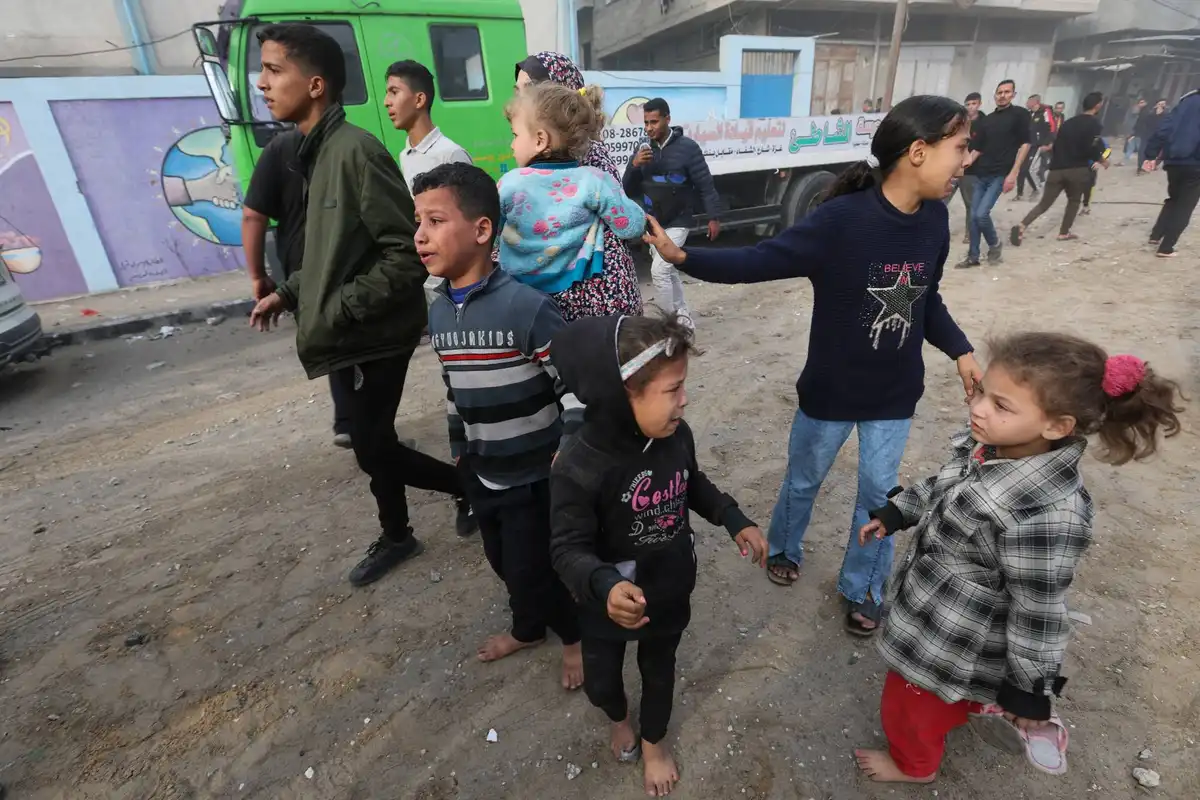
OPINIONS

Mon 22 Jan 2024 6:26 pm - Jerusalem Time

Trigger a political move: This is the time to set an additional goal for the war

Israeli Maariv

Israeli Maariv

Opinion Writer

By Yoel Guzinsky

The government of Israel has established two central goals for ending the war - dismantling the military and governmental capabilities of Hamas; and return the hostages. It must add another goal that is no less important. Now, an American-sponsored initiative is being worked on that has not yet fully matured, but at its center is the link between Arab aid for the reconstruction of Gaza and the institutionalization of an alternative authority from Hamas, and normalization between Jerusalem and Riyadh.

In exchange for normalization, the Saudis, along with the Americans, demand the establishment of a Palestinian state alongside Israel. Even in the normalization talks that took place before October 7, the Saudis talked about a political horizon, but in a less clear way. Now, in the wake of the anti-Israel wave that is rising in the region, Riyadh has become more committed to a Palestinian state. It must be said clearly that Hamas has succeeded in putting the Palestinian issue back in the headlines.

The Saudi media, which is consistent with the approach of Mohammed bin Salman, the de facto ruler of the Kingdom, is proposing a deal that includes these frameworks. Also, the statements of the Saudi ambassador to Washington, Rima Bint Bandar, at the Davos Forum reflect support for Israel’s “integration” into the region, which is a different model from the Abraham Accords. When Saudi Foreign Minister Faisal bin Farhan was asked, during the Davos Forum, would Saudi Arabia recognize Israel within the framework of such a deal? He replied, "Of course."

Even after nearly four months of war and images of devastation in Gaza, the Saudis are leaving the door open for an agreement. The interests and motivations of theirs and of the United States remain the same, even strengthened, and the end of Hamas' rule in Gaza will be an opportunity to renew this path.

A Saudi-Israeli normalization agreement would be the appropriate answer to Hamas and Iran, which wanted to stop the path of normalization. Such an agreement would give Israel better economic profits and legitimacy in the Arab and Islamic worlds, strengthen the position of the United States in the region, and strengthen Saudi policy and security as an opposition force against Iran. Israel will appear to be opening doors to peace, reaping many fruits from the American administration, and benefiting from Arab aid and the international community for the reconstruction of Gaza.

Serious challenges remain before dialogues on normalization are renewed; First, the general regional mood is not in Israel's favor, and it appears that we will need a post-war “transition period” that includes political change in Israel. This is in addition to the start of the election year in the United States, which makes it difficult for it to focus on leading the move. To this, Saudi demands must be added, most notably the construction of infrastructure that includes uranium enrichment on its territory. If the Saudi position on enrichment changes, Israel will have to adhere strongly to the American initiative.

The Saudis are not keen on taking responsibility for the Gaza Strip. They do not want this preoccupation and headache. But they want a security agreement with the United States, and therefore, they will invest their time and their economic, religious and political weight, in cooperation with other countries, to shape the new reality in Gaza.

This goal must be part of the war goals. It will be difficult for Israel to achieve the original war goals - which are still far from being achieved - if it does not adopt complementary political goals. Adopting these goals will constitute a good response to Iran and Hamas, strengthen relations with the United States, and help integrate Israel into the regional system that curbs Iran.

ARAB AND WORLD

Mon 22 Jan 2024 6:12 pm - Jerusalem Time

Wall Street Journal: US, Egypt, and Qatar are pressuring Israel and Hamas to accept a comprehensive plan to end the war and release the kidnapped

The American Wall Street Journal reported yesterday (Sunday) that the United States, Egypt and Qatar are pressuring Israel and the Hamas movement to accept a comprehensive plan that would end the war, release the kidnapped Israelis detained in Gaza, and ultimately lead to normalization between Israel and its neighbors. , and talks to establish a Palestinian state.


According to what the newspaper reported, the plan, which will take 90 days to fully implement, requires a cessation of fighting of all kinds for a long period, and during this period, the Hamas movement will, in the first phase, liberate all kidnapped civilians, and Israel will at the same time release hundreds of Palestinian security prisoners, withdrawing from Gaza cities, allowing freedom of movement in the Strip, stopping reconnaissance drone flights, and doubling the amount of aid entering the Strip.


The next stage will see Hamas release the Israeli female soldiers and the bodies of the kidnapped Israelis, while Israel will release more Palestinian prisoners.


As for the third stage, Israel will withdraw its forces to the borders of the Gaza Strip, while Hamas will release the last of the kidnapped, who are soldiers and men of fighting age whom it considers to be soldiers.


Egyptian officials told the American newspaper that after that, talks will take place regarding a permanent ceasefire, the normalization of relations between Israel and Saudi Arabia, in addition to other Arab countries, and a new process leading to the establishment of a Palestinian state, an idea that the current Israeli government strongly opposes.


Egyptian officials added that Israeli officials are pushing for a two-week ceasefire instead, and are avoiding talk of a permanent ceasefire.


The American newspaper reported that negotiations on a ceasefire are scheduled to begin in Cairo in the coming days.


The Israeli Prime Minister's Office in Jerusalem refused to comment on this report.

It is noteworthy that the American website "Axios" reported yesterday that the White House envoy to the Middle East, Brett McGurk, will visit Egypt and Qatar this week, to talk about the war and negotiations to release the kidnapped people.


Other American reports spoke of attempts by the White House to end the fighting. According to a previous report in the Wall Street Journal, the administration of US President Joe Biden has begun to lower its expectations regarding the conflict with the Hamas movement, as it believes that removing the movement as a security threat is considered a more achievable goal than the goal of eliminating the movement, which is the goal which is Israel's declared goal.


According to the newspaper, Washington is greatly increasing the pressure on Israel, to push it to quickly reduce its military campaign and shift away from high-intensity war, but it has not asked for the fighting to stop.

ARAB AND WORLD

Mon 22 Jan 2024 6:05 pm - Jerusalem Time

Israeli bombing with phosphorus shells and raids on homes in Lebanon

On Monday, the Israeli army targeted residential buildings in several towns and villages in southern Lebanon with air strikes and artillery shelling using phosphorous shells, while Hezbollah announced that it had targeted gatherings of Israeli soldiers near the Lebanese border.


The party said in a statement that its members targeted "a force from the Israeli military forces on the Abu Dajj heights (off the Lebanese town of Ramieh) with appropriate weapons, and they were directly hit."


The party announced earlier today that its members targeted “a gathering of Israeli soldiers in the vicinity of the Al-Raheb site opposite the town of Aita al-Shaab in southern Lebanon, with appropriate weapons and achieved a direct hit,” while there was no immediate comment from the Israeli side.


At dawn on Monday, Hezbollah reported that it had repelled an attack by Israeli forces off the southern border, “which intended to strike targets inside Lebanese territory.”


For its part, the official Lebanese News Agency reported that Israeli army artillery targeted the town of Kafr Kila with phosphorous shells, amid a sweeping operation with machine guns from Metulla towards the town.


It pointed out that "the Israeli raid on the town of Taybeh earlier today caused major damage to the town's high school, and the high school director and members of the educational staff survived the aggression."


The agency indicated that "an Israeli drone fired a missile at a residential room inside an agricultural project in the Abel al-Qamh locality in the outskirts of the town of Wazzani, without recording any casualties."


It also stated that "an Israeli drone fired a missile behind the Khiam detention center (its name dates back to the days of the Israeli occupation of the south) - Wadi Al-Asafir, and enemy artillery bombed Al-Awaida Hill from the Taybeh side."


Eyewitnesses reported to Anadolu's correspondent that an Israeli raid targeted a house in the town of Taybeh, while artillery shelling targeted the eastern outskirts of the town of Mays al-Jabal in southern Lebanon.


In the wake of a devastating war on the Gaza Strip, since October 8, the Israeli-Lebanese border has witnessed tension and intermittent exchange of fire between the Israeli army on the one hand, and Hezbollah and Palestinian factions on the other hand, which led to deaths and injuries on both sides, in addition to It led to deaths and injuries among Lebanese civilians.


For 108 days, the Israeli army has been waging a devastating war on the Gaza Strip, which as of Monday morning left “25,295 dead and 63,000 injured, most of them children and women,” according to the Palestinian authorities, and caused “massive destruction and an unprecedented humanitarian catastrophe,” according to the United Nations.

ARAB AND WORLD

Mon 22 Jan 2024 6:00 pm - Jerusalem Time

Wall Street Journal: Biden is at risk of failing to win an electorally significant term due to Gaza war

An opinion poll showed that US President Joe Biden enjoys weak support in most of the major electoral districts in the state of Michigan, especially in light of the alienation of some young voters and Arab Americans in Michigan due to his position on the Israeli war on Gaza, while his expected rival, Donald Trump, is gaining support among Black voters, according to what the American newspaper The Wall Street Journal reported on Sunday, January 21, 2024.

The newspaper said that warning signs are looming in the US state of Michigan threatening the election of President Joe Biden to a new term, and added that Biden is likely to benefit from improved economic indicators related to inflation and wage growth, the availability of abortion rights in the state, and the expansion of mail-in voting and early voting.


However, the American newspaper says that the war waged by the Israeli occupation on the Gaza Strip and the American President’s position on the war and his support for Israel have alienated some young voters and Arab Americans in Michigan from him, and opinion polls show that Trump is gaining support among black voters.

A poll conducted by The Glengariff Group for The Detroit News and WDIV-TV in early January showed Trump leading Biden by 47% to 39%. The poll shows that Joe Biden has weak support in most key Democratic constituencies.


When a question was asked about whether Biden deserves a new term, the poll found that the US president’s popularity is noticeably weak among black voters, voters between the ages of 18 and 29, and those with university degrees. The vast majority of independent voters in the poll believed that Biden did not deserve to be elected to a new term, while about a third of those surveyed saw that Trump deserved a second term.


While a poll conducted by CNN last December showed that Trump was ahead of Biden in the state by 50% to 40%. These differences are striking considering that in 2022, Michigan's Democratic governor, Gretchen Whitmer, was re-elected by 54.5%, more than 10 points behind her Republican rival, and Democrats took control of the state legislature for the first time in four decades.


As Adrian Hemond, a Democratic strategist based in Lansing, said: “The level of anxiety is increasing, and that makes sense. The problem is not the policy, it is the person himself.”


The war on Gaza affects the president's fortunes

Meanwhile, US President Joe Biden's support for Israel in the wake of the October attacks launched by Hamas aroused dissatisfaction with the Arab-American community in the state and at universities, which increases the possibility that a long-term war in Gaza will lead to a decline in the voting percentage and support for Biden among these voters.


Democratic leaders in Michigan say Biden has time to improve his image. “What I'm hearing from people dictates the need for immediate action and how dangerous this moment is in this country,” Whitmer said in an interview Sunday, January 21, with CBS' "Face the Nation."


Rep. Dan Kildee (D-Mich.) also said he is urging the White House and the campaign to do more in the state, saying the campaign is "not where it needs to be." Kildee said he spoke with Joe Biden a few weeks ago and encouraged him to visit Michigan frequently. "I told him, 'Come to Michigan. We need you there.' And he said he would," he said.

The war on Gaza caused a rift in the race for votes in the 15 electoral districts in Michigan, because the state includes large numbers of Arab and American Jewish voters in the state. More than half of the population of Dearborn, a city with a population of more than 100,000, is of Arab American or North African origin.


Even outside the state's pro-Palestinian community, Democratic Party activists point to a multi-ethnic coalition in support of the Palestinians in Gaza and fear that the continuation of the conflict will hurt Biden's chances.


“This is costing him a lot here in Michigan,” said David Heiner, a Democrat from New Boston, Michigan. “I hope he realizes that he is losing a huge demographic.”


ARAB AND WORLD

Mon 22 Jan 2024 5:53 pm - Jerusalem Time

Germany: Israel cannot live in security unless the Palestinians do

German Foreign Minister Annalena Baerbock stressed that the two-state solution is the only way to resolve the Israeli-Palestinian conflict.


Birbock said that Israel cannot “live in a safe atmosphere unless the Palestinians live a safe and dignified life,” and called for an urgent humanitarian truce in the Gaza Strip, to deliver aid to the Palestinians there.


This came in press statements she made today, Monday, before a meeting of European Union foreign ministers in Brussels, which discusses preparations for holding an international peace conference to establish the principle of a “two-state solution in the Middle East” during the coming months.


For 108 days, the Israeli occupation army has been waging a devastating war on the Gaza Strip, which has so far left 25,295 martyrs and 63,000 injured, most of them children and women, and caused massive destruction and an unprecedented humanitarian catastrophe, according to the United Nations.

PALESTINE

Mon 22 Jan 2024 5:32 pm - Jerusalem Time

Epidemic diseases kill the children of Gaza amid the absence of medicines

Epidemic diseases are spreading among children in the Gaza Strip due to the ongoing Israeli aggression and the resulting lack of medicine, food and water. The Ministry of Health in Gaza describes the health situation in the Strip as catastrophic and extremely painful.


The official spokesman for the Ministry of Health in Gaza, Ashraf Al-Qudra, confirms that epidemics, infectious diseases, and respiratory diseases are spreading among the displaced in particular, confirming that 10,000 cases of hepatitis A have been detected.


He attributed the spread of hepatitis among the displaced to severe overcrowding and lack of personal hygiene due to the lack of water and sanitary facilities.


For her part, pediatrician Rawan Al-Habbash confirmed that diseases spread among children, such as intestinal infections, hepatitis, and chest and respiratory infections, due to the overcrowding of people and displaced people in schools, the lack of hygiene, sterilization, and unhealthy food, in addition to a major shortage of medicines and the unavailability of antibiotics and vitamins.


For his part, Imad Kabaja, a Palestinian doctor, indicated that a thousand sick cases are recorded daily in the children’s department, stressing that they are losing lives due to the lack of medicines in hospitals.