PALESTINE

Wed 24 Jan 2024 2:24 pm - Jerusalem Time

On International Education Day: Israel deprives 625,000 students in Gaza of education

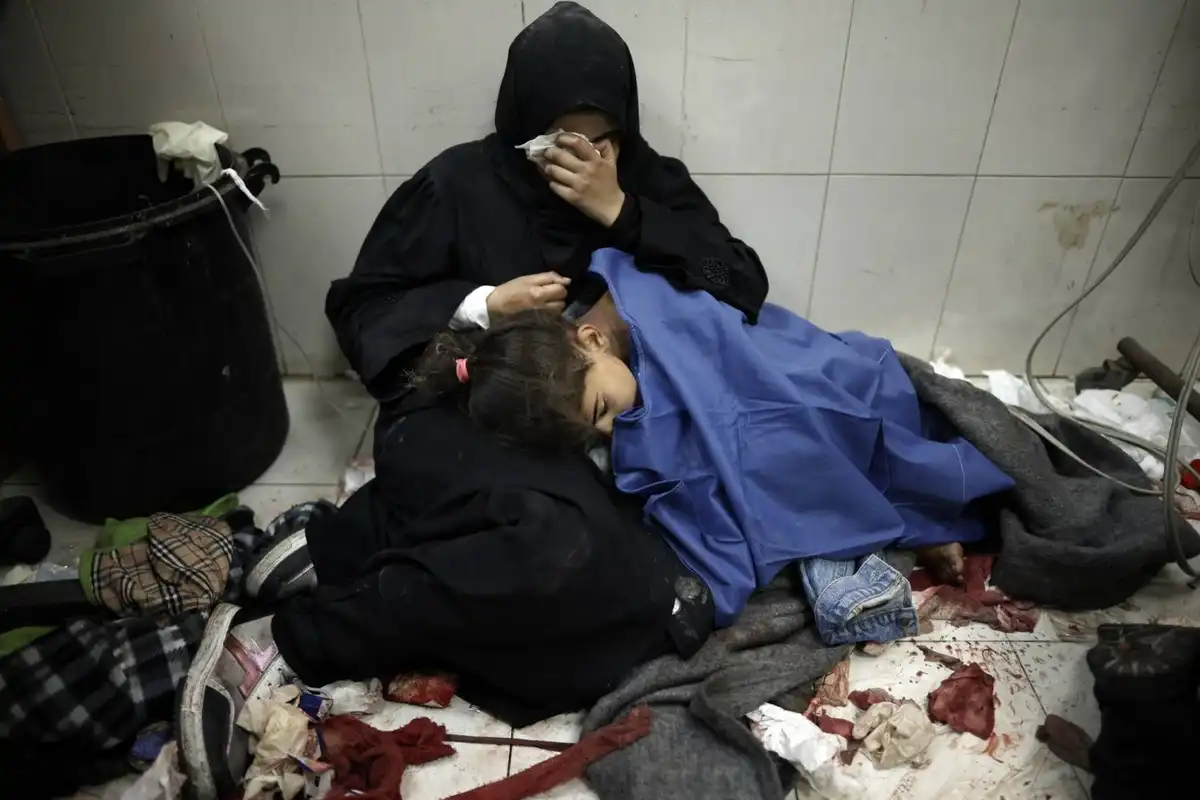
On the International Day of Education approved by the United Nations General Assembly, on January 24 of each year, to celebrate the role that education plays in achieving peace and development, Israel deprives more than 625,000 students in Gaza of education, due to its ongoing aggression against the Strip.


According to what was reported by the official Palestinian News Agency, since the beginning of the aggression, the educational system has lost 4,551 students and 8,193 were injured, including more than 4,510 killed and 7,911 wounded in the Gaza Strip. It indicated that 41 students were killed and 282 others were wounded in the West Bank, in addition to the arrest of 85.


PALESTINE

Wed 24 Jan 2024 1:00 pm - Jerusalem Time

United Nations: Israel demands that half a million Palestinians leave Khan Yunis

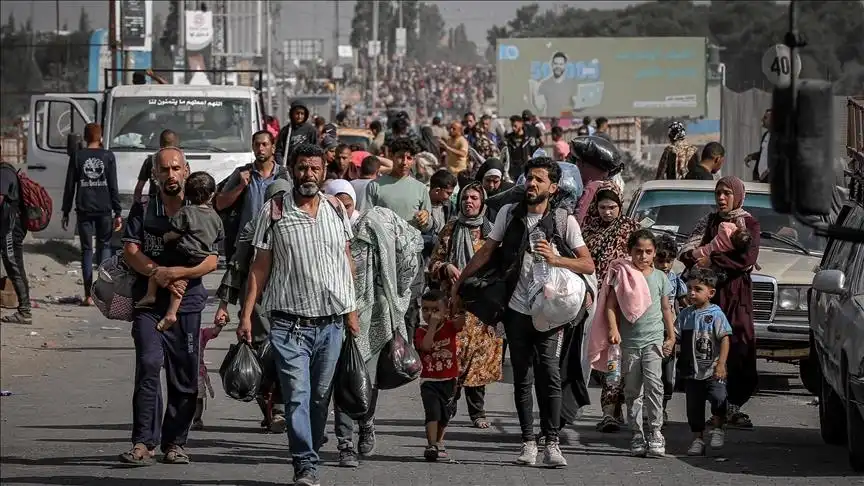
Israeli army forces asked more than 500,000 Palestinians to leave the city of Khan Yunis, south of the Gaza Strip, after previously declaring it a “safe zone.”


According to a report by the United Nations Office for the Coordination of Humanitarian Affairs (OCHA), on Wednesday, Israel called on civilians living in the city of Khan Yunis, south of the Gaza Strip, to evacuate the area.


The report indicated that at least 500,000 Palestinians live in the city, including 425,000 internally displaced people, and about 88,000 city residents.


It pointed out that civilians who were displaced due to Israeli attacks took refuge in the city's three hospitals.


The Israeli army had previously repeatedly warned residents of the northern Gaza Strip against heading to the south, which it claimed was safe, and forcibly deported them, causing major destruction of civilian infrastructure, including hospitals.

ARAB AND WORLD

Wed 24 Jan 2024 10:51 am - Jerusalem Time

With increasing military losses...the Gaza war puts Netanyahu before a complex “dilemma.”

As Israeli military losses in Gaza increase, Israeli Prime Minister Benjamin Netanyahu finds himself in a dilemma, The Guardian reported. His popularity has declined, and opinion polls indicate that the right-wing Likud Party led by Netanyahu will lose half of its seats in immediate elections to a renewed centrist opposition.


The newspaper points out that voters have not forgotten the blatant failures that allowed Hamas to attack southern Israel from Gaza on October 7, killing 1,200 people, including 311 soldiers, according to Israeli reports, and kidnapping about 240. But the lack of tangible results from the Israeli attack On Gaza, which was supposed to lead to “complete victory” over Hamas, has now also become important.


The declared Israeli military losses rose to 221 soldiers killed and thousands wounded, and no strategic breakthrough occurred. “Although Hamas has lost seriously, its senior leadership remains intact, and rockets were fired at Israel from Gaza again last week,” according to the newspaper.


The newspaper notes that "political differences", which froze in Israel following the October 7 attacks, have now begun to return to the forefront again, and the Israeli media have begun to talk about "renewed opposition" to Netanyahu. Seasoned observers caution against exaggerating any appeasement, noting the lack of any mass mobilization and how most Israelis remain immersed in their personal grief, or fears about their relatives in uniform.


But there are signs of change. Relatives of hostages still in Gaza have become more vocal. In recent days, they closed a highway and disrupted a committee hearing in Parliament.


Last week, Gadi Eisenkot, the former army chief of staff and a member of the small war cabinet that Netanyahu formed after the October attack, accused the prime minister of misleading the public into believing a quick victory in Gaza was possible. The criticism has resonated, not least because Eisenkot's son, a soldier, was killed there in December.


The newspaper quotes Professor Gideon Rahat, from the Hebrew University of Jerusalem, as saying: “In the long term, the human toll becomes great because people begin to wonder what return they are getting for this high price.” "Politicians have declared that victories will come too quickly and this is problematic."


Analysts point out that Netanyahu could get a boost in the polls - albeit in the short term - if he agrees to a deal with Hamas to release the hostages. But even agreeing to a short halt to the offensive in Gaza could cause Netanyahu to lose the support of far-right politicians who are important to his coalition government. This will not end his rule, but it will seriously undermine it.


There are multiple scenarios for what will happen over the coming months. Many of which saw Netanyahu leave office.


Some analysts believe that early elections are possible. Others say that no politician would risk an election in wartime, but admit that the parliamentary calculations for a successful vote of no confidence do not currently correspond to reality. Netanyahu's opposition is also hopelessly divided.


Netanyahu has been in power longer than Israel's founding father, David Ben-Gurion, and faces possible imprisonment on corruption charges. He has been in difficult situations before, and survived, and even if elections were called tomorrow, it could take six months before a new government is formed.


There are estimates that the overthrow of Netanyahu is not inevitable and certainly not immediate. “He (Netanyahu) is in a different class than anyone else in the current political landscape and he thrives under pressure,” one political insider told the newspaper, but Israeli public opinion is divided. Protesters in recent days, including veterans discharged from combat in Gaza, with a tougher commitment to the attack that killed 25,000 Palestinians in the Strip, most of them women and children. The families of the hostages also have different views.


“Netanyahu’s decision is not to make a decision and to stall in the hope that something will happen,” Merav Zonszin, an Israeli analyst at the International Crisis Group, told the newspaper. He added: "There is still a consensus that war is justified, but people increasingly want someone else to take over the leadership and believe that Netanyahu should go, not at an unclear later date but now."


Supporters and relatives of hostages detained in Gaza stormed a meeting in the Israeli parliament, on Monday, to demand that lawmakers take greater measures to secure the release of their relatives from Gaza.


The protest reflects the “growing frustration” of the hostage families, who have become “increasingly concerned about the fate of their family members as the war, which has already entered its fourth month, continues,” according to the New York Times.


“You will not sit here while they die there,” he wrote on banners raised by some demonstrators who boycotted the Finance Committee meeting in the Knesset.


Last week, current and former Israeli security officials indicated that a deal with Hamas would be the only way to return the hostages to Israel safely.

ARAB AND WORLD

Wed 24 Jan 2024 10:22 am - Jerusalem Time

Israeli denial of progress in negotiations. An Israeli source: The differences with Hamas are very large and the negotiations will take a long time

An Israeli political official denied reports that preliminary agreements had been reached between Israel and Hamas within the framework of negotiations on a prisoner exchange deal. The source said, "Reports that Israel and Hamas have agreed in principle to a ceasefire are incorrect."


According to him, "There are very big gaps and there is no progress in the talks. They are very complicated and there is a continuing hardening of positions on the part of Hamas. No one should be deceived - it will take a long time."


Egyptian sources told the American Wall Street Journal this morning that Hamas is open to discussing a prisoner agreement in exchange for a large truce of up to a month.


Today, Wednesday, Israeli sources denied news suggesting that there would be substantial progress in prisoner exchange negotiations with Hamas and a temporary ceasefire, according to what Reuters and American newspapers reported, which reported in their reports that Israel and Hamas had agreed in principle to an exchange deal.


Israel and the Hamas movement agreed, in principle, on the possibility of conducting an exchange deal in stages, during which the Israelis kidnapped by Hamas would be exchanged for Palestinian prisoners in Israeli prisons, during a truce that would last a month, according to Reuters and American newspapers.


In response to a question about the negotiations, a senior Hamas official, Sami Abu Zuhri, told Reuters that the movement is open to discussing ideas, but no agreement has been reached yet.


Abu Zuhri said, "We are open to all initiatives and proposals, but any agreement must be based on ending the aggression and complete withdrawal of the occupation from the Gaza Strip."


Reuters quoted three sources as saying, "The framework plan was delayed due to differences between the two sides regarding how to reach a permanent end to the war in Gaza."


The sources said, "There is difficulty in going beyond the broad outlines of the framework presented after a disagreement over the continuation of the war at the end of the deal."


But the negotiations, according to the sources, have already achieved progress and reduced differences over the duration of what was described as the “initial ceasefire,” which Hamas initially demanded to continue for several months.


Hamas refuses to move forward with negotiations until there is agreement on the future terms of the permanent ceasefire it demands as part of the deal.


Reuters quoted two Egyptian security officials as saying: “There are attempts to persuade Hamas to agree to a ceasefire for a month, followed by a permanent ceasefire, but the movement is demanding guarantees to implement the second phase of the deal.”


A senior Hamas official told Reuters, "One of the proposals put forward by Israel is to end the war by removing six senior Hamas officials from the Gaza Strip, which means exiling them from there. This proposal has been categorically rejected."


The Hamas official added, "The list presented by Israel included the leader of Hamas in Gaza, Yahya Al-Sinwar, and the commander of the military wing, Muhammad Al-Deif."


Intensive mediation efforts, led by Qatar, Washington and Egypt in the past few weeks, focused on a gradual approach to releasing different categories of kidnapped Israelis, starting with civilians and ending with soldiers, in exchange for a cessation of hostilities, the release of Palestinian prisoners, and the entry of more aid into Gaza.


In turn, the American newspaper "Wall Street Journal" reported, citing Egyptian sources, that Hamas informed the mediators that it was open to discussing an agreement to release all kidnapped civilian women and children in exchange for a ceasefire for a significant period.


The Washington Post reported that a proposal is being negotiated that includes the release of all Israeli prisoners in exchange for thousands of Palestinian prisoners, including those involved in serious attacks and senior leaders of Palestinian factions.


The newspaper reported that the deal to release the abductees being formed will consist of 3 to 4 stages. First, Hamas will release about 10 women and children who were supposed to be released in the previous arrangement. In the second phase, about 40 sick, wounded, elderly and kidnapped people will be released.


In the remaining stage, Hamas will release the remaining prisoners, including soldiers and its corpses, and for every Israeli there will be 3 Palestinian prisoners.

ARAB AND WORLD

Wed 24 Jan 2024 10:21 am - Jerusalem Time

“What coffee are you talking about when Gaza is burning?” Zakharova comments on the talk of a Swiss expert..

Russian Foreign Ministry spokeswoman Maria Zakharova commented on Swiss expert Hubert Keller’s assertion that coffee causes the emission of carbon dioxide into the atmosphere, and reminded him that “Gaza is burning.”


Zakharova wrote on Telegram: “I have never seen greater hypocrisy than environmental political hypocrisy, and even human rights are less hypocritical,” in an implicit reference to the West and its officials exploiting human rights and environmental issues to serve their narrow financial interests.


She added: “What coffee are you talking about when Gaza is burning and has become uninhabitable?”, referring to the humanitarian, economic and environmental repercussions of the Gaza war.

Earlier, Keller said at the Davos Economic Forum: “Coffee consumption causes a significant increase in the emission of carbon dioxide into the atmosphere, which poses a threat to the climate and ultimately causes climate change.”


He added: "The coffee we all drink emits 15 to 20 tons of carbon dioxide per ton of coffee."

ARAB AND WORLD

Wed 24 Jan 2024 10:15 am - Jerusalem Time

The New York Times: Israel is planning a kilometer-deep buffer zone in Gaza

The New York Times said, citing Israeli officials: Israel wants to demolish buildings on the outskirts of the Gaza Strip to create a buffer zone.


It added that Israel wants to create a one-kilometer-deep buffer zone along the Gaza border.


The US administration rejects Israel’s plan to create a “buffer zone” in Gaza.


The US administration said today that it does not support Israel’s idea of establishing a “buffer zone” in Gaza and that Gaza’s borders should be preserved.

This was stated by the Strategic Communications Coordinator for the National Security Council at the White House, John Kirby, in his daily press conference.

Kirby stressed that Washington does not support Israel's plan to create a "buffer zone" around Gaza.


He said: “Our view on this issue has not changed. We do not want to see the territory of Gaza reduced in any way, and we do not support that.”

Kirby stated that they spoke with the Israeli side about this issue, whether in open or closed meetings, and they expressed this position clearly in open meetings to the press.

Kirby stated that the United States does not support any change of borders in Gaza.

Israeli media said that the army began demolishing buildings in some places to create a “buffer zone” along the Gaza border.

The countries of the region rejected the idea, and the American administration also expressed its opposition to any potential plan that would lead to reducing the territory of Gaza.

PALESTINE

Wed 24 Jan 2024 10:03 am - Jerusalem Time

War on Gaza: 50 people were killed in Israeli raids west of Khan Yunis

Voice of Palestine Radio said today (Wednesday) that 50 people were killed in Israeli army raids on the western areas of the city of Khan Yunis in the southern Gaza Strip, according to what was reported by the Arab World News Agency.


Earlier today, the Palestinian Shehab Agency said that the Israeli army carried out a fire belt on Khan Yunis. The agency did not provide further details.


Yesterday (Tuesday), Israeli army spokesman Avichai Adraee revealed that army forces had completely encircled the Khan Yunis area in the southern Gaza Strip, expecting the fierce battles there to intensify in the coming hours.


Adraee explained in statements to the Arab World News Agency that “the forces have completed the entire encirclement of the Khan Yunis area, while forces from the commando squad are attacking the heart of the Khan Yunis area, which is a pivotal and important center of gravity for Hamas militants.”


He pointed out that the Israeli forces called on the residents of some neighborhoods of Khan Yunis and its camp to leave for the Al-Mawasi area, west of Khan Yunis, as it is considered a safe area. Because the army “will expand the scope of the ground operation in Khan Yunis in the coming hours.”


OPINIONS

Wed 24 Jan 2024 9:51 am - Jerusalem Time

An End to War in Gaza and an Independent Palestinian State

Common Dreams

Common Dreams

Opinion Writer

No lasting progress is made when guns and tanks, missiles, and bombs undermine and displace diplomacy. All of humanity suffers. And no peace will be possible without the promise of a safe and secure home for all the people of Palestine.

The virtual obliteration of Gaza and Palestinians by Israeli military forces threatens to provoke a broad regional war. In addition to Israel's present leveling of Gaza to dismantle Hamas, Hezbollah in Lebanon, Houthis in Yemen, Iran's Revolutionary Guard and the United States and Britain have all launched missile attacks against targets across much of the Middle East. A ceasefire in Gaza and an end to Israel's military campaign are the essential keys to avoiding a potential regional conflagration, but the swift conclusion to the war and the immediate withdrawal of Israeli troops must also be accompanied by massive humanitarian assistance and movement toward an independent Palestinian state.

Even U.S. president Biden has indicated the need for a two-state solution throughout the course of Israel's bombing and artillery campaign in Gaza. His words have been severely compromised, however, by his steadfast military and political support for Israel's war objectives. Now, with Saudi Arabia offering to normalize relations with Israel if it agrees to a ceasefire and a path toward a Palestinian state, the idea has gained some tentative footing. The economic benefits for Israel in establishing constructive ties with Saudi Arabia could be enormous. Still, Israeli prime minister Netanyahu vehemently opposes a Palestinian state, but it is clear that inflicting so much death and suffering destabilizes the entire region and radicalizes future generations of Palestinians. His stated goals of dismantling Hamas, freeing hostages and achieving future security for Israelis founder on these realities. The pathway to a Palestinian state, even with enormous hurdles to overcome, is absolutely needed and may achieve the first steps toward peaceful relations between the two peoples.

After Israel ceases its ruinous military assault on Gaza and withdraws its troops, Palestinians will need broad international support to achieve their independence from Israel and build a state. The considerable humanitarian assistance already underway will need to be dramatically increased. They will need significant financial investment and technical assistance in the monumental task of reconstruction in Gaza, at least $15 billion according to the Palestine Investment Fund. Just as importantly, the international community will need to hold leaders on both sides accountable for the unprecedented violence of the last four months. Untold crimes against humanity have been committed. In its horrific attack on October 7 of last year Hamas terrorists committed unspeakable crimes. According to Israeli authorities, 1200 were slaughtered, tortured and raped. Another 400 or more were kidnapped and taken into Gaza. Since then, the Israeli military has committed atrocities beyond imagination, relentlessly pounding Gaza with bombs and artillery, killing more than 25,000, two-thirds of them women and children, and leaving 85 percent of the Gaza population displaced and homeless. More than a quarter of the 2 million people residing in Gaza now faces “catastrophic hunger,” according to the World Food Programme.

The Biden administration has come to Israel's defense time and again, repeatedly affirming Israel's right to defend itself. All people have a right to defend themselves against war crimes. The Palestinians, as well as the Israelis, have this right. But that right stops at self-defense. It does not extend to wanton disregard for human life. The Preamble to the Rome Statute that established the International Criminal Court (ICC) explicitly states that genocide, crimes against humanity, war crimes and crimes of aggression are “most serious crimes of concern to the international community as a whole...[and]...must not go unpunished.” Hamas' attack on civilians on October 7, 2023 is a war crime at the very least, but it does not justify the deaths of tens of thousands of Palestinians. South Africa has accused Israel of genocide, and while Israel adamantly denies it, South Africa has presented a persuasive case before the International Court of Justice (ICJ), asserting that Israel's military campaign in Gaza violates the 1948 Genocide Convention.

The viability of a Palestinian state is weakened if the leadership on both sides of the current Israeli-Palestinian conflict do not appear before an international tribunal. The ICC was established to try individuals for such war crimes. The language each side uses to justify its position starkly illustrates the need for international legal intervention. They have framed their intentions in apocalyptic terms. The international community must condemn such dreadful visions and compel individuals to stand trial for such provocative and dangerous rhetoric. Many nations will oppose this course of action, including the U.S. which does not recognize the authority of the ICC and has withdrawn its support for the ICJ. At the same time, if the international community countenances these nihilistic declarations, the prospects of peaceful co-existence between Israel and a nascent Palestinian state are dim.

On the Israeli side, prime minister Benjamin Netanyahu has invoked dark biblical injunctions in his projection of all-out war against Hamas. At the end of October, in the early days of Israel's invasion, he turned to religious scripture to justify the bombardment of densely populated Gaza. “The Bible says that 'There is a time for peace and a time for war.' This is a time for war.” A few days later, referring to Hamas, Netanyahu said that Israelis “are committed to completely eliminating this evil from the world.” He continued, “You must remember what Amalek has done to you, says our Holy Bible. And we do remember.” With the use of 2000-pound bombs in Palestinian neighborhoods in Gaza, his reference to Amalek is nakedly foreboding. In the Old Testament, or in the Jewish Tanakh, God (Elohim in Hebrew) commands the Israelites to “attack the Amalekites and totally destroy all things that belong to them. Do not spare them, put to death men and women, children and infants, cattle and sheep, camels and donkeys.”

Hamas considers Israel a “settler colony,” an occupying force that denies Palestinians' self-determination. Israel's occupation of Palestinian territories (West Bank, Gaza and East Jerusalem) is illegal under international law and the right to Palestinian resistance by armed conflict is protected under international law. But Hamas' leaders assert in the Hamas Doctrine that “[resisting the occupation with all means and methods is a legitimate right....” International humanitarian law , however, prohibits indiscriminately targeting and killing civilians who are not directly involved in military conflict. Hamas' bombing of crowded public buses in Israeli cities at the end of the 20th century and the massacre that occurred on October 7 are clearly acts in violation of international law. The taking of hostages is another violation of international rules of military engagement.

Hamas' leaders, though, characterized the events of October 7 in glorious acclamations. Political leader Ismail Haniyeh said that “we shall crown it [Oct. 7 massacre], with the grace of God, with a crushing defeat that will expel it [Israel] from our lands...” He went on to say that “This is the goal that is worthy of this battle, worthy of this heroism, worthy of this courage...,” calling it a “grand and blessed incursion” and an “epic presence of men who write history with their blood and their guns.” A year earlier Yahya Sinwar , the reputed mastermind of the October 7 assault, proclaimed in a speech, "We will come to you, God willing, in a roaring flood. We will come to you with endless rockets, we will come to you in a limitless flood of soldiers, we will come to you with millions of our people, like the repeating tide.”

Such stark, frightening language and vision from the combatant's leadership give rise to the nihilism that characterizes October 7 and the succeeding four months of war in Gaza. In their own words since October, the leadership of both sides are blinded by their mutual indifference to human suffering. Nevertheless, a ceasefire and movement toward a Palestinian state may be gaining a little more traction. In addition to Saudi Arabia's conditional overture, Israeli, Arab and U.S. officials are now considering further arrangements to free the hostages. Though officials warn that no deal is imminent, diplomatic efforts may achieve progress, especially since some Israeli military commanders reportedly believe that Israel cannot defeat Hamas and free the hostages through continued war. A split in the Israeli Defense Forces, coupled with growing desire among Israelis to free the hostages through diplomacy, could advance an end to the war.

At this juncture in history, it is also critically important to recognize that Palestinians everywhere see the present war in Gaza as another Israeli military campaign to deny their right to exist on their own land in an independent state. From this perspective it seems apparent that Israel is committed to driving Palestinians from their homes and lands, especially when they stand in the way of Israel's expansionist designs. While Hamas has declared that it wishes to “drive Israel into the sea,” Netanyahu recently claimed that “In the future, Israel has to control all of the entire territory west of the river [Jordan] to the sea.” In the context of decades of Israel's illegal annexation and occupation of Palestinian territories, Palestinians see no alternative to continued armed resistance and civilian protest actions.

The continuous oppression of Israel's government is seared into the collective memory of l.5 million Palestinians in 58 refugee camps in Jordan, Syria, Lebanon, West Bank, Gaza and East Jerusalem. (In all, the UN estimates that 5.9 million Palestinian refugees around the world are descendants of scores of thousands who were forced from their ancestral land in Palestine in 1948.) They comprise the largest stateless community in the world. Palestinians still commemorate al-Nakba, “the catastrophe” as they call it, when 750,000 of their people were driven from their homes and towns at the founding of the state of Israel in 1948. Some 15,000 Palestinians were killed, some 70 massacres carried out and over 500 villages destroyed. The refugees have never been allowed to return to their land. As a result of 1948 and numerous conflicts since then, Israel exercises military control over the West Bank and Gaza as well as East Jerusalem. It has imposed a suffocating blockade of Gaza for three decades and long encouraged the settlement of Jews in Palestinian territory, both in violation of international law.

From dispossession of land and property to the fragmentation of Palestinian territory (i.e. West Bank, Gaza and East Jerusalem) to the denial of social and economic rights, Israel has prevented Palestinians from forming a state of their own. Daily, ordinary Palestinians in the West Bank must negotiate a reported 565 “movement obstacles” obstructing their free travel, according to a 2023 report of the UN Office for Coordination of Humanitarian Assistance. These obstacles included checkpoints, roadblocks, earth mounds, road gates, earth walls, road barriers and trenches. In addition, 450,000 Jewish settlers live in 144 West Bank settlements and another 220,000 in East Jerusalem. Since 1967 when Israel annexed the West Bank (along with Gaza and East Jerusalem), as many as 700,000 Jewish citizens have settled in the West Bank. All are considered illegal under international law since no state is allowed to resettle its own nationals in occupied territories under the Fourth Geneva Convention.

The forced migration of more than a million Palestinians since 1948 and Israel's illegal occupation of Palestinian territories since 1967 continue to engender grave insecurity and profound emotional and psychological distress. Additionally, Palestinians have suffered enormous economic losses over generations. Recognizing these realities, a 2023 United Nations (UN) study delineated the many causes of the pain and losses and called for “Full and commensurate reparations...[to]...Palestinian individuals, corporations and entities for the generational harm caused by Israel’s land and property appropriations, house demolitions, pillage of natural resources, denial of return, and other war crimes and crimes against humanity orchestrated for the colonialist, annexationist aims of an illegal occupant.” Just reparations will restore lost wealth and provide a grassroots economic foundation for building a healthy and peaceful society.

If Israel refuses to accept the creation of a Palestinian state, then the cycle of violence will undoubtedly continue. Its standing in the world and, quite frankly, the standing of the U.S. - its closest ally – diminish daily. And, with the armed factions and powerful nations already drawn into the present conflict, the prodigious bloodshed and destruction unfolding each day that Israel pursues the war in Gaza will continue to escalate, risking a disastrous regional war. Its simmering confrontation with Iran, the nation in the region it fears most, will spiral downward more rapidly. As difficult as it may be for Israelis, if they genuinely seek security they must acknowledge the glaringly apparent inequities and disparities endured by Palestinian in the occupied territories. Only then will they have a realistic opportunity to actually secure their society and state, to prosper next to Arab nations who no longer need to placate their many citizens who support Palestinian self-determination.. As for the Palestinians themselves, they will have finally achieved the self-governing state for which they have sacrificed so much. Under these fresh circumstances, negotiations between and among states offers a real chance to dampen further hostilities and move toward greater regional stability.

No lasting progress is made when guns and tanks, missiles, and bombs undermine and displace diplomacy. All of humanity suffers. A genuinely independent and economically healthy Palestinian state will bring new possibilities of negotiation and diplomacy between Israelis and Palestinians. It is a difficult path and there will be numerous obstacles to overcome and setbacks to be endured. But it is a just and constructive alternative to endless war and thousands more dead and suffering, displaced, homeless and hungry.


 

OPINIONS

Wed 24 Jan 2024 9:48 am - Jerusalem Time

Will President Biden do it...a Palestinian state?

Dr.. Hassan Abu Talib

Dr.. Hassan Abu Talib

Opinion Writer

Big wars are the key to big transformations. What is happening in the Gaza Strip and other fronts outside it is, in one way or another, an example of a major war, between a regional state supported by the major power in the international system and many allies, facing armed organizations that believe in the absolute right to resist the occupation. Despite the power difference between the parties to the conflict equation, the war lasted for about 110 continuous days, making it a major war that must lead to major changes. The dilemma lies in determining the direction of these changes, and to what extent they will lead to a new Middle East in its interactions and paths.


Throughout the days of war and Israeli aggression, and despite the pressures coming from different directions for a ceasefire, and the opportunity to address the problems of exchanging prisoners and starting a new phase in Gaza in terms of securing the life requirements of the people, the nature of the new administration and reconstruction, and the political process that might follow between the Israelis and the Palestinians, the United States still believes that the time has not yet come for a complete ceasefire, but for various reasons, including what is internal affecting the course of the US presidential elections, and what is international and regional, especially the manifestations of the expansion of the conflict that portend uncalculated explosions, it has begun to talk about a comprehensive process that leads to major changes, combining the two-state solution as required by the Arabs, with the security of the Hebrew state on the one hand and its integration into the Arab and Middle Eastern surroundings through a specific normalization methodology on the other hand.


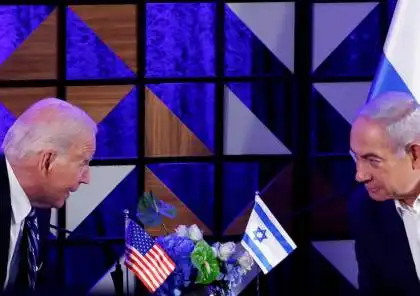
The phone conversation between President Biden and the Israeli Prime Minister four days ago, which the US President summarized in a significant sentence stating that the two-state solution in the presence of Netanyahu is not impossible, adding that there are types of countries that do not have armies, and before Blinken’s speech in “Davos” about the importance of the two-state solution to Israel's security, which suggests, although it is not entirely reliable, that the White House succeeded in changing the conviction of the Israeli Prime Minister, who rejected that idea in principle, by accepting a two-state solution, one of which has all the elements of military power, and the other has none of it, and thus is achieved. The promised security of Israel, which is taking root more and more according to the relatively new American indicators, through its integration regionally through a major process of normalization with the Arab countries, and it does not necessarily include everyone, but rather Arab symbols with great and influential political and moral weight are sufficient, opening the door to an expanded process for the reconstruction of Gaza. With Arab and European participation, without responsibility for those who caused the destruction and sabotage of the Strip and the tragedy of its people.


What is certain here is that President Biden faces major problems, especially the trends of the angry young university generations, which daily expose Israeli violations and delve into the tragedy of the people of Gaza via social media, as well as within his Democratic Party that rejects the policy of unconditional support for Israel. Both of these reasons prompted President Biden to focus on On a new, old equation, which includes Israel offering some concessions regarding the Palestinian state, in exchange for integration into the region. And then contain the repercussions of any decisions that may be issued by the International Court of Justice against the State of Israel, or by the International Criminal Court in the future against the Israeli war leaders.


The White House’s transformations came gradually. It began with pressure to change Israeli military “tactics” that lead to the killing of civilians with extreme indiscrimination. It led to thinking about getting out of the Gaza crisis by achieving goals beyond simply eliminating “Hamas” and its like, and building a geo-political situation different from what was previously. It has the region before the war, rebuilds new equations that achieve Israel's security, and contains the reasons for the regional reluctance, even partially, to accept it as a state like others in the region.


The biggest American bet is unrestricted normalization, even if it is gradual and based on a very unstable political hypothesis, which is that the prize for normalization will besiege the Israeli right, and will push symbols of moderation to prominence again. Which weakens any opposition to the two-state solution. The main weakness here lies in the fact that Israeli society has become right-wing to the core, extremely inclined to violence against everything Palestinian, laden with illusions of invincible power, unable to comprehend the humanitarian catastrophe that the Gaza Strip has reached, and immersed in a state of schizophrenia between possessing mighty military power that
 did not deter an armed resistance movement, limited in number and armament, and did not fall after all the attacks directed at it, imbued with an unprecedented desire for unlimited revenge to overcome the state of inability to achieve the declared goals. In addition to the complete absence of any rational, influential voice calling for a review of the causes of incapacity despite the power, and often, if it exists, only a limited handful will be found who might respond to it and appreciate what it calls for.


This unprecedented state of tendency towards violence among elites and society could not have reached this degree of collective illness except as a result of the American and European positions, politically, propaganda and media, and their support for what was described as Israel’s right to self-defense, and giving it a document of acquittal in advance of all human violations that occur in the Gaza Strip. In particular, the complete disregard for all aspects of human rights, the unjustified defense of the continuation of aggression and the rejection of a ceasefire, under the pretext that it may only benefit Hamas, and ignoring the other humanitarian dimensions of the Palestinian people, are all factors that contributed to the escalation in the degree of violence and revenge in Israeli behavior in Gaza. And in the West Bank together. Let us not forget the Israeli educational curricula, which breed racism and rejection of the Palestinian other in the hearts of Israelis since childhood, and which the West completely ignores.


The state of Israeli society is in dire need of something resembling a behavioral and moral revolution, a reversal of the obsession with unchecked revenge, to a state of rationality and political rationality that believes that the right to security is for all parties, with the Palestinians at the forefront, and that in turn needs time and effort if the United States does not grant it. It has the right to be given attention according to the strategy of changing national behavior, such as the one followed in the cases of Germany and Japan after World War II. It is impossible to see the White House’s ambition for a Palestinian state alongside the Hebrew entity present before the eyes.
In agreement with Asharq Al-Awsat

ARAB AND WORLD

Wed 24 Jan 2024 9:43 am - Jerusalem Time

Reuters: It includes a month-long truce. Hamas and Israel agreed in principle to conduct a prisoner exchange deal

Three sources told Reuters on Tuesday, January 23, 2024, that Israel and the Islamic Resistance Movement (Hamas) had largely agreed in principle to the possibility of exchanging Israeli hostages for Palestinian prisoners during a month-long truce, and the sources stated that the framework plan was being delayed. It was proposed due to differences between the two sides regarding how to reach a permanent end to the war in Gaza.


Intensive mediation efforts, led by Qatar, Washington and Egypt in the past few weeks, have focused on a gradual approach to releasing different categories of Israeli detainees, from civilians to soldiers, in exchange for a cessation of hostilities, the release of Palestinian prisoners, and the entry of more aid into Gaza.


This comes a few days after a Hebrew channel published, on Monday evening, that Israel is preparing a new deal that includes the release of its detainees in Gaza and a temporary cessation of fighting without committing to ending the war in the Palestinian Strip.


The private Channel 13 reported that Tel Aviv “has finished formulating the principles of a deal consisting of 3 to 4 stages, which includes changing the deployment of Israeli army forces in the Gaza Strip and withdrawing from some areas without ending the war.”


According to the channel, the deal being prepared also includes “Israel’s agreement to release a large number of Palestinian prisoners and a long-term ceasefire,” without further clarification.


According to the same source, the crystallized deal includes Hamas releasing its remaining women and elderly men, although it is not clear whether they will be released in one lump sum.


The channel said, "In the second phase, the youngest detainees and youth will be released, while the third phase includes the release of soldiers and bodies held by Hamas."


The channel quoted Israeli sources - which it did not name - that Tel Aviv "received during the past few days messages from mediators indicating that Hamas seemed more flexible regarding its demand that the end of the war be part of a possible deal."


Netanyahu talks about a prisoner exchange deal

At the same time, Israeli Prime Minister Benjamin Netanyahu said on Monday that there is an "Israeli initiative" to exchange detainees in the Gaza Strip for Palestinian prisoners, without revealing its details.


This came during Netanyahu's meeting with representatives of the families of Israeli detainees in Gaza, denying that there was an initiative presented by the Hamas movement in this regard, according to a statement issued by Netanyahu's office.


The statement, a copy of which was obtained by Anatolia, stated that Netanyahu "told the families of the kidnapped Israelis held by Hamas during his meeting with them: There is no real proposal by Hamas. This is not true."


He added: "I say this as clearly as I can, because there are many untrue things that are tormenting you. On the contrary, there is an initiative on our part and I will not divulge its details."


In recent days, no Israeli official has ever announced the existence of an “Israeli prisoner exchange initiative,” but the media reported disagreements within the government regarding ways to return detainees from Gaza, and Netanyahu’s rejection of proposals presented by various parties, due to his adherence to not a ceasefire, which is the condition. The main leader of the Hamas movement.


A sit-in by the families of prisoners

On Sunday, the families of the prisoners set up tents near the Prime Minister’s house in West Jerusalem to demand that the government reach a deal to return the prisoners from the Gaza Strip.


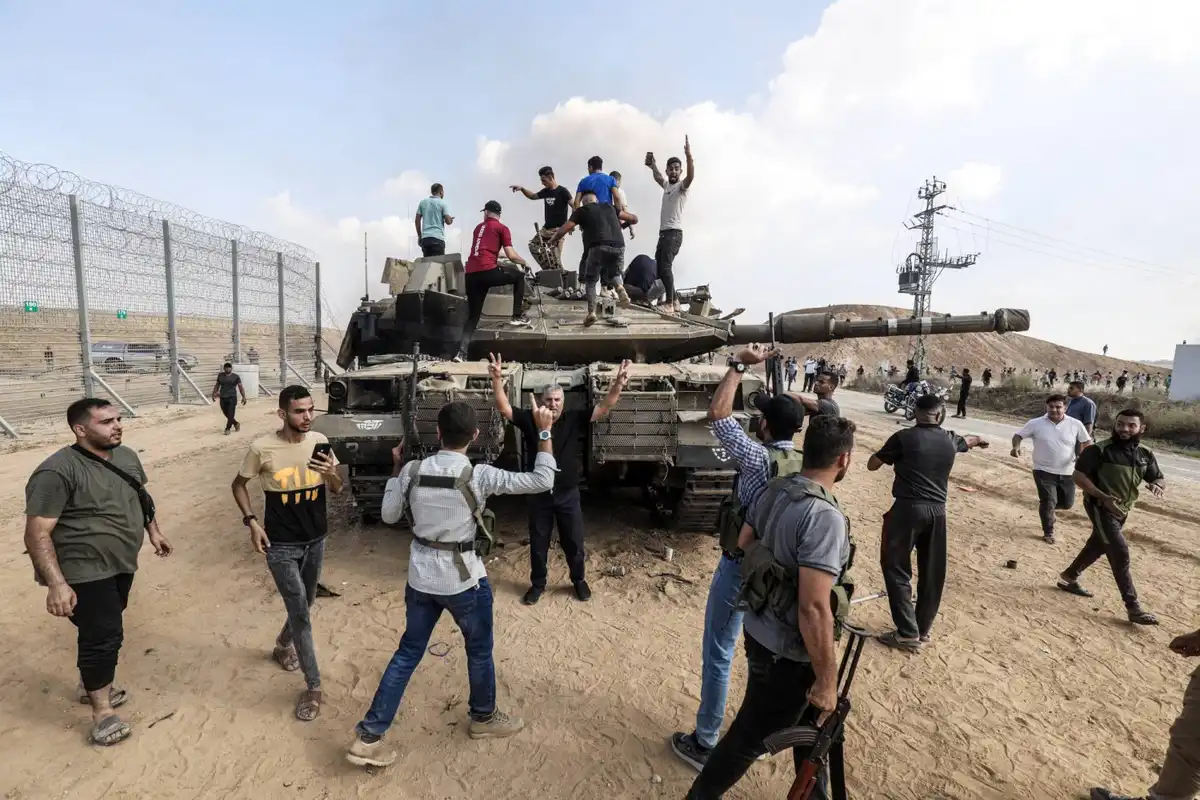
It is worth noting that, on October 7, 2023, Hamas launched an attack on Israeli military points and settlements adjacent to the Gaza Strip, during which about 1,200 Israelis were killed, about 5,431 were injured, and the movement captured at least 239.


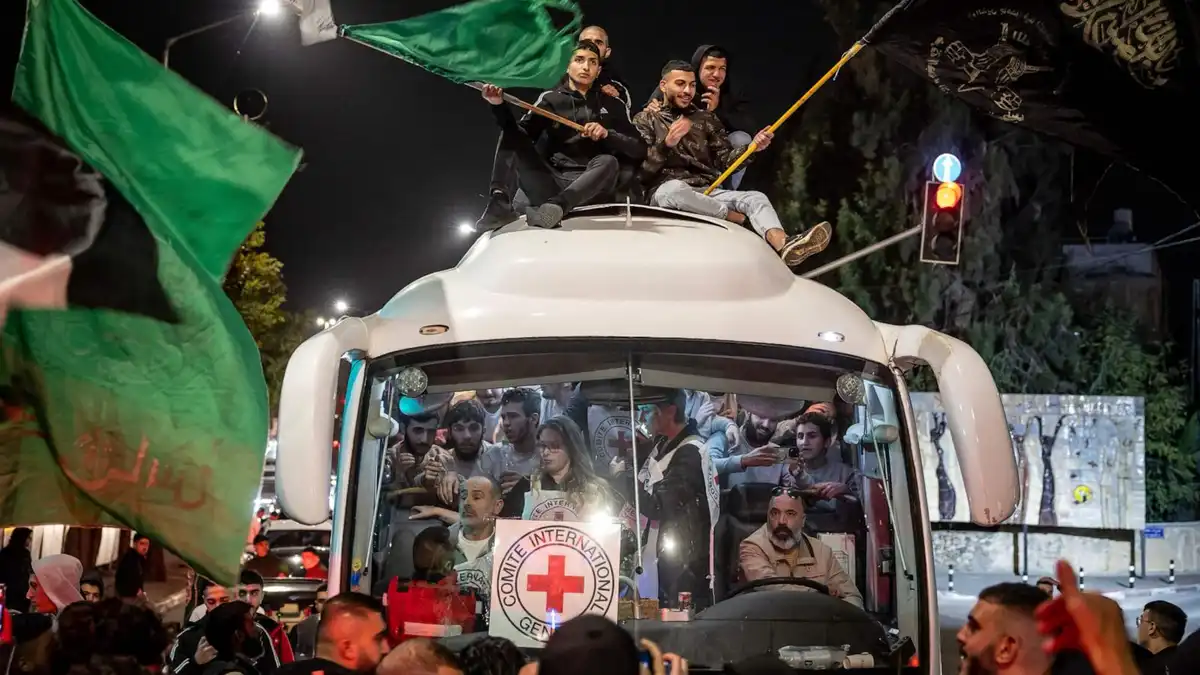
Hamas exchanged 105 civilians detained by it, including 81 Israelis, 23 Thai citizens, and one Filipino, during a temporary humanitarian truce that lasted 7 days and ended in early December 2023, in exchange for the release of 240 Palestinian prisoners from Israeli prisons (71 female prisoners and 169 children). ).


Israel estimates that there are about “136 hostages still being held in the Gaza Strip,” according to identical media reports and statements by Israeli officials.

ARAB AND WORLD

Wed 24 Jan 2024 9:28 am - Jerusalem Time

Prime Minister of Belgium: The number of casualties in Gaza has reached a level that requires stopping the war

Belgian Prime Minister Alexander De Croo stated that the number of casualties in Gaza had reached a level that required a ceasefire.


This came in response to questions from students at an event held at the London School of Economics and Political Science on Tuesday.


He added: "In the past 20 years, now is the best time to work for a two-state solution. Now let us use this solution. Please let us stop the violence."


He added: "In such conflicts, you are pulled to one side or another. I do not support one side. The side I support is human life."


He continued: "In Gaza, if this number of people die, and if 10,000 children die, which is the equivalent of hundreds of children every day, within 100 days, then this situation requires a ceasefire, and this is Belgium's position."


De Croo stated that thanks to the humanitarian truce to the conflict last November, many prisoners were released, and humanitarian aid entered Gaza.


“The violence must stop, humanitarian aid must enter, and the prisoners must be released,” he said.

PALESTINE

Wed 24 Jan 2024 9:24 am - Jerusalem Time

Gaza Health: 25,700 killed since the start of war against the Strip

The Ministry of Health in Gaza announced in a statement that 210 Palestinians were killed and 386 others were injured as a result of the Israeli bombing of the Strip during the past 24 hours.


It pointed out that the number of Palestinian killed in Gaza since the start of the Israeli aggression on the Strip last October has risen to 25,700, in addition to 63,740 injured.


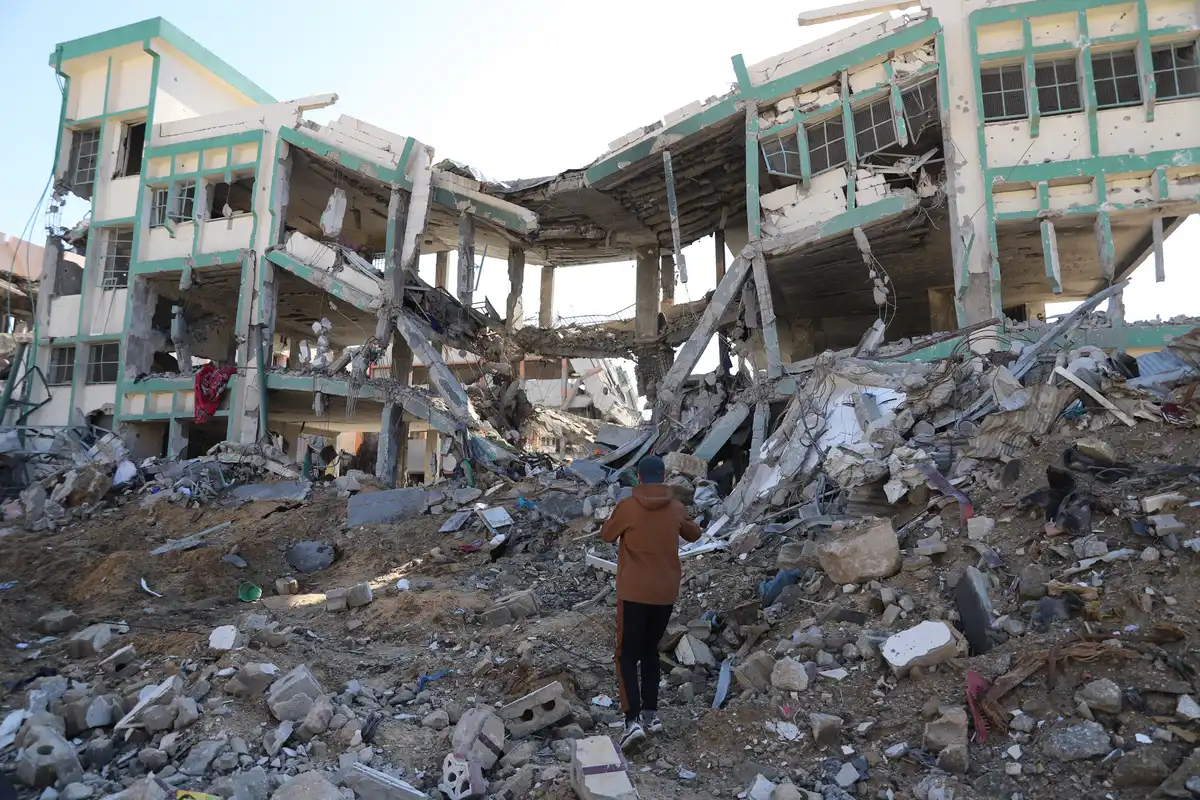
On the 110th day of the Israeli aggression against Gaza, Israel continues intense bombardment on various areas in the Gaza Strip, including Khan Yunis, which is being completely wiped out, while several countries called for an end to the aggression against Gaza and an end to the suffering of the Palestinians.


Palestinian Ministry of Health spokesman Ashraf Al-Qudra said that the Israeli occupation has completely isolated Nasser Medical Complex, and that medical teams are unable to transfer serious cases from the complex to the Jordanian field hospital next to it as a result of the continuous bombing.


Dozens of displaced people's tents were flooded due to the depression hitting the Gaza Strip, which led to double the suffering, in addition to displacement under the weight of continuous bombing and lack of water and food.


On the other hand, Hebrew media revealed that Tel Aviv presented a proposal to stop the fighting for two months in Gaza in exchange for the release of all detainees. However, the resistance announced its rejection of the proposal and confirmed that it had repeatedly stipulated that the aggression be completely halted before talking about an exchange deal.


For his part, the United Nations rapporteur on housing, Balakrishnan Rajagopal, said that the systematic destruction of Palestinian homes on the Gaza border could constitute a war crime.

ARAB AND WORLD

Wed 24 Jan 2024 9:21 am - Jerusalem Time

Netanyahu in a leaked recording: Qatar’s mediation role is problematic

Israeli Prime Minister Benjamin Netanyahu considered that Qatar's mediation role in the exchange deal with the Islamic Resistance Movement (Hamas) was problematic.


Channel 12 reported - based on a leaked recording of Netanyahu meeting with the families of prisoners detained in Gaza - that Qatar is more problematic than the United Nations and the Red Cross.


He added that he was disappointed that Washington was not putting more pressure on Doha, and that it had extended its presence at the military base in Qatar.


Netanyahu indicated that he did not thank Qatar publicly because it did not exert more pressure on the Hamas movement, which Doha is believed to be financing.


Haaretz newspaper reported from informed sources that Netanyahu informed the families of the prisoners that Israel is ready to make concessions for the sake of a new deal, and an Israeli channel published general principles for the deal that do not include an end to the war, which is one of Hamas’ conditions.


Israeli media confirmed that the negotiations are continuing and that Israel has not received any response from Hamas through mediators, at a time when US envoy Brett McGurk is touring the region, including Egypt and Qatar, to hold “serious” talks regarding reaching an agreement to release the prisoners held by Hamas in Gaza and a humanitarian truce, according to White House spokesman John Kirby.


Qatar - along with Egypt and the United States - played a role in reaching a truce between Hamas and Israel last November, and the two sides exchanged the release of numbers of prisoners.


Source: Israeli press

PALESTINE

Wed 24 Jan 2024 9:18 am - Jerusalem Time

West Bank: Israeli occupation army blows up the family home of a Palestinian prisoner near Nablus

On Wednesday, the Israeli occupation army blew up the walls of the family home of Palestinian detainee Wael Shehadeh, south of the city of Nablus in the northern West Bank.


According to local sources, an army engineering unit blew up Shehadeh's house in the town of Urif.


According to other local sources, confrontations broke out between dozens of Palestinians and the Israeli army in the town, in which the latter used live and metal bullets and tear gas bombs, while protesters threw stones at the forces.


Dozens of Israeli military vehicles stormed the town of Orif early on Wednesday.


The Israeli army usually blows up and demolishes the homes of Palestinians, accusing them of carrying out "operations and killing Israelis."


Prisoner Basil Shehadeh has been detained since June 21, 2023, and is accused of assisting the perpetrators of the “Eli” settlement operation south of Nablus, which resulted in the killing of 4 settlers at that time.

ARAB AND WORLD

Wed 24 Jan 2024 8:53 am - Jerusalem Time

Agencies: Latest developments regarding the prisoner exchange deal between Israel and Hamas

The American Wall Street Journal, citing Egyptian sources: Hamas informed the mediators that it is open to discussing an agreement to release all kidnapped civilian women and children in exchange for a ceasefire for a long period. 19 Israeli women and two children are still in Hamas captivity. This is an important shift in Hamas’ position. Which was opposed to any negotiations before the ceasefire, according to the newspaper.

The American newspaper, citing the same sources, said: Despite the positivity in Hamas’ position, the agreement is still far from reach and the talks could still collapse.

The American Washington Post newspaper: A proposal is being negotiated that includes the release of all Israeli prisoners in exchange for thousands of Palestinian prisoners, including those involved in serious attacks and senior leaders of Palestinian organizations.

The process will be in several stages, the first of which will be the release of 10 women and children who were supposed to be released by Hamas in the first deal. In the second stage, about 40 prisoners will be released, including the sick, wounded, and the elderly, along with soldiers. In the remaining stage, Hamas will release the rest. Of the prisoners, including soldiers and its corpses. For every Israeli, there will be 3 Palestinian prisoners.


Reuters, citing several sources: An agreement has been reached in principle, according to which an agreement will be reached to exchange prisoners during a ceasefire period that will last for one month.

The sources said that there is difficulty in going beyond the broad outlines of the framework presented after a dispute over the continuation of the war at the end of the deal... but the negotiations have already achieved progress and reduced differences regarding the duration of what was described as the “initial ceasefire,” which Hamas initially demanded to continue for several months, but the movement It refuses to move forward until there is agreement on the future terms of the permanent ceasefire it demands as part of the deal.


Reuters quoted two Egyptian security officials as saying: There are attempts to persuade Hamas to agree to a ceasefire for a month followed by a permanent ceasefire, but the movement is demanding guarantees to implement the second phase of the deal.

A Palestinian official familiar with the negotiations said: Hamas is demanding a “comprehensive deal” in which there would also be an agreement on a permanent ceasefire before the release of the kidnapped people, while Israel is interested in interim negotiations.

A senior Hamas official told Reuters that one of the proposals put forward by Israel was to end the war by “removing” six senior Hamas officials from the Strip, which would mean exiling them from there. This proposal was categorically rejected.


He added: The list presented by Israel included the leader of Hamas in Gaza, Yahya Al-Sinwar, and the commander of the military wing, Muhammad Al-Deif.

Five sources said that Israel is not ready to discuss any scenario for ending the war that does not include dissolving Hamas.

ARAB AND WORLD

Wed 24 Jan 2024 8:47 am - Jerusalem Time

The Economist: America and Iran are approaching the brink of war

During more than 100 days since the Al-Aqsa Flood operation on October 7, US President Joe Biden sought to help Israel win its war on Gaza and prevent the conflict from turning into a regional war with Iran and its proxies. This has become more difficult as the Iranian “axis of resistance,” Israel, and America launch more serious strikes on each other, including assassinations.


A report by the British magazine The Economist stated that Iran’s allies in Iraq and Syria have launched about 140 missile and drone attacks against American forces since the beginning of the Gaza war, and perhaps the most violent of them came on January 20, with the launch of a barrage of “multiple ballistic missiles and missiles” at the Al-Assad base west of the country. Iraq, according to US Central Command.


The magazine added that the United States launched its seventh raid in Yemen “against a different Iranian ally,” the Houthi group, which controls a large part of the country, in an attempt to stop the missiles it launches at ships passing through the Bab al-Mandab Strait.


Biden himself admits that American strikes will not stop the Houthis. However, the Washington Post reports that his administration is formulating plans for a “sustained military campaign” in Yemen despite the concerns of some officials.


The magazine continued, saying that Hezbollah in Lebanon, on the other hand, was regularly exchanging fire with Israeli forces. He expressed his support for Hamas, but did not involve himself in a war against Israel, according to the magazine, as the Biden administration helped dissuade Israel from launching a pre-emptive attack on Hezbollah immediately after the October 7 attacks, but Israel threatens to take action in Lebanon if diplomacy fails to convince Hezbollah to cease fire and move away from the border area.


The British magazine believes that America and Iran are playing a balancing role fraught with risks. Iran has helped its allies in the “Axis of Resistance” launch attacks aimed at weakening Israel, distracting America, and discrediting the Arab countries that have signed peace agreements or normalized their relations (or are seeking to do so) with Israel. For its part, America has engaged in “limited retaliatory operations,” and both have avoided a direct clash, but this balance may not hold.


The Economist hinted that Israel is waging a non-secret war against Iran and its allies, in addition to public confrontations with Hamas and Hezbollah.


Strategic patience

However, Iran's Supreme Leader Ayatollah Ali Khamenei has called on Iranian forces to exercise "strategic patience", while Ali Vaez of the International Crisis Group says the Iranian regime now feels it needs to "restore deterrence" and has taken matters into its own hands.


The British magazine reported that, during the past week, Iran fired missiles at alleged “terrorist” targets in Syria and Pakistan, and at “an alleged Israeli spy base in Iraqi Kurdistan.” The attack on Pakistan led to a retaliatory missile strike against Iran, and it appears that both countries Now step back from the brink.


Fayez says, "The Iranians are still risk averse; they want to change the perception that they are on the defensive. But at the same time, there is a perception that Israel has set a trap for them, either to justify extending the war or to drag the United States into it."


According to the magazine, Biden was cautious, as he did not want to be drawn into a war in the Middle East at a time when America was already exhausted due to supporting Ukraine in its war against Russia, and was trying to prevent another war against China because of Taiwan. Moreover, Biden is seeking re-election this year.


In Iraq and Syria, US forces respond much less frequently to the attacks they are exposed to. Likewise in Yemen, Washington initially limited its response to destroying missiles and drones that threatened Israel or passing ships.


The magazine quoted Aaron David Miller, of the Carnegie Endowment for International Peace, as saying, “The American administration knows that it has a problem that has no solution, and it can only try to manage it.”


She noted that Biden’s best hope is that Israel will soon win, or at least end its war in Gaza, thus reducing anger throughout the region, “but Israel has not succeeded in suppressing Hamas and has not recovered its hostages, and has shown little sign of its willingness to stop.” The number of Palestinian deaths has exceeded 25,000.”


The magazine concluded its report by saying that while Biden is struggling to control the scene in the Middle East, Miller says that he may be away from an “unfortunate accident or terrorist attack” that ignites a regional war. He added: "If this continues, and one of these strikes actually ends with the killing of a large number of Americans, the administration will have no choice but to strike the Iranian Revolutionary Guard."


Source: The Economist + Al Jazeera

OPINIONS

Wed 24 Jan 2024 8:43 am - Jerusalem Time

Israel and Hamas probe for a pause that both sides need

Washington Post

Washington Post

Opinion Writer

By David Ignatius

Israel and Hamas are groping toward a resumption of negotiations to trade Israeli hostages for Palestinian prisoners, accompanied by an extended pause in fighting, as well as a sharp increase in aid for desperate civilians in Gaza.

These deadlocked issues are the blood knot in this war. For a traumatized Israel, release of the hostages is a paramount aim. For a Palestinian population on the edge of famine and pandemic disease, a new cease-fire is an existential requirement. For Hamas leaders trapped underground, the deal offers the possibility of political survival.


There isn’t yet a breakthrough. But recent progress in framing issues is the first opening since December in an impasse that has turned Gaza into a nightmare of death and disease. If the indirect negotiations resume — with mediation from Qatar and Egypt aided by the United States — it could open a path toward a major de-escalation of the war.

The move to resume negotiations was outlined this week by knowledgeable Israeli and U.S. sources, who spoke anonymously because of the sensitivity of the issues. Like every other aspect of the Gaza conflict, the bargaining is bounded by deep mistrust and internal political divisions. But officials who were bleak about progress a week ago are more hopeful now.


The main obstacle to resuming the indirect talks is Hamas’s demand for a long-term cease-fire. Israel refuses to grant that, but its negotiators are ready to accept a pause that would last weeks and could perhaps be extended as conditions evolve. Israel is pressing Egyptian and Qatari mediators to persuade Hamas to accept the negotiating framework, so bargaining over the details of swapping hostages and prisoners can begin.

Israeli Prime Minister Benjamin Netanyahu thunderously rejected Hamas’s demand for a permanent cease-fire on Sunday. “I reject outright the terms of surrender of the monsters of Hamas,” Netanyahu said. But he faces growing domestic pressure to free the estimated 136 hostages who remain in Hamas control, so he badly needs a release plan.


Negotiators envision several stages in the hostage-release process. First, Hamas would free about 10 women and children who were supposed to be released under a previous agreement that collapsed last month. In a second “humanitarian” phase, Hamas would free about 40 sick, injured and elderly hostages along with female Israeli soldiers. In the remaining group of roughly 86, Hamas would hand over male hostages, including soldiers, and finally the bodies of those who died during the Oct. 7 attack or in subsequent months of captivity.

Each departure of Israeli hostages from Gaza would be accompanied by release of Palestinian prisoners. Sources say the ratio would probably be more than three Palestinians for every Israeli. Among the hundreds of Palestinians to be freed would be some whom Israelis view as terrorists and killers, which would make this a bitter bargain.

The final swap lists wouldn’t be agreed on until shortly before release, but one Palestinian detainee who might be freed is Marwan Barghouti, who led the first and second intifadas. Barghouti is probably the most popular political leader in the West Bank and Gaza and potentially could unite Palestinians in a push toward statehood.

The renewed swap agreement would be accompanied by a lengthy cease-fire. This would allow humanitarian assistance that’s desperately needed in Gaza but blocked by continuing violence and Israeli intransigence. For example, a U.N. team that was supposed to enter northern Gaza 10 days ago to assess water, housing, food and sanitation needs has been blocked by continued skirmishing between Israeli forces and remnants of Hamas.


Such a pause in fighting could open new routes for aid, including ships unloaded at floating docks offshore. Doctors and medicines are urgently needed as infectious disease spreads in the crowded, dirty camps into which Palestinian refugees have been driven. Gazans are experiencing “unspeakable suffering,” wrote Leonard Rubenstein and J. Stephen Morrison, two prominent public health specialists, in a recent report published by the Center for Strategic and International Studies.

If negotiators can address the two most anguishing issues — Israel’s Oct. 7 hostages and the suffering of Palestinian civilians — that might open the way to progress on other problems that now seem irreconcilable. Netanyahu insists he won’t allow a Palestinian state with full sovereignty, seemingly blocking the outcome the United States favors and Saudi Arabia demands. But diplomacy is about bridging such gaps.

State Department officials are exploring sovereignty models that might satisfy both sides, such as the “compacts of free association” that allowed statehood for Pacific island nations such as Micronesia and Palau, with restrictions on defense and other sensitive issues. U.S. officials stress to their Israeli counterparts that the best guarantee for long-term security is a regional structure of cooperation that unites Israel, Saudi Arabia and other Arab states against Iran and its proxies — but the Arabs demand that, as part of the deal, Israel accept a Palestinian state.

Israel needs this cease-fire and prisoner swap as badly as Hamas does. The endgame of the tunnel war could go on for many months. But aboveground, Gaza is becoming a version of warlord-dominated Somalia. Israel and Hamas need to start moving toward de-escalation of this conflict now, while they still have a chance.


ARAB AND WORLD

Wed 24 Jan 2024 8:35 am - Jerusalem Time

A 10-point plan.. Does the European Union support the establishment of a Palestinian state?

The European Union seeks to play a greater role in “bringing peace to the Middle East,” with the Union’s Foreign Affairs Council calling for a 10-point plan, one of the goals of which is the establishment of a Palestinian state, and holding a “preparatory conference for peace” organized with Arab, American, and international participation, which also supports achieving comprehensive normalization between Israel and the Arabs.


Among the goals of the plan, which was circulated before the meeting of foreign ministers of the EU countries, yesterday, Monday, is the establishment of “an independent Palestinian state living side by side with Israel,” as well as “full normalization” of relations between Israel and the Arab world, and building a “political alternative” to the Hamas movement. The plan acknowledges the "unrealism" of Palestinian-Israeli negotiations in the near term.


Kawa Hassan, a non-resident researcher at the Stimson Center, told Al Jazeera Net, "The plan shows a growing awareness in Brussels, even from countries that support Israel, that the current situation is unsustainable."


The expert in Middle East and North African affairs stresses “the failure of the Oslo and Abraham Accords in their objectives, especially establishing a Palestinian state and providing security for Israel,” and that “the attack of last October 7, and then the destruction of Gaza, confirmed that patchwork solutions will not help in solving the problem.” 


"A solution to the continent's problems"

However, the plan has not yet been approved and remains unofficial. Daniel Gerlach, a German expert in the Middle East, confirms that there are "many divisions within the European Union over the current situation, including the vote on the ceasefire and the Israeli military operations in Gaza."


Gerlach, who is also the editor-in-chief of Zenit magazine, added to Al Jazeera Net, "Therefore, the Union presented a very general approach to include everyone in the discussion and focus on the long-term vision, specifically the vision of the two-state solution, which is supported by all the countries of the Union."


Gerlach continues that there are details that were not mentioned, including “the necessity for all European countries to recognize the Palestinian state before starting the plan, especially since some countries still refuse to do so,” highlighting also that the plan seeks to solve the continent’s problems in relation to the conflict, and not a solution to the conflict itself.


In turn, Kawa Hassan points out that the size of the European Union (27 countries) makes any agreement take time, but the size of the impact on Europe, the size of the tragedy in Gaza, the European Parliament’s call for a sustainable ceasefire, and then the increasing popular pressure in Europe, are all things that push the union to search for “real change and a comprehensive solution.”


The spokesman confirms that the Union has come to believe that the creation of a true Palestinian state will not be achieved except through comprehensive Arab normalization with Israel, especially from Saudi Arabia.


"Dishonest broker"

The final results of the meeting confirmed that the situation in Gaza is “catastrophic” and that it constitutes a priority in the talks. The statement said, "More deaths, more destruction, and more hardships to the Palestinian people will not help defeat Hamas and its ideology, nor will it bring more security to Israel."


The statement also pointed to the need to support UNRWA (the United Nations Relief and Works Agency for Palestinian Refugees), talked about the post-war reality, and supported a plan for a two-state solution. The ministers affirmed “the Union’s strong support for the Palestinian people and the Palestinian Authority,” as well as the continuation of sanctions against extremist settlers, and also touched on tensions on the Lebanon-Israel border and in the Red Sea.


However, there are those who doubt the possibility of the European Union playing any role, and consider it “part of the problem, not part of the solution, because of its unlimited cover for the occupying state and its double standards,” as Majed Al-Zeer, CEO of the European-Palestinian Council for Political Relations, put it to Al-Jazeera Net. 


Al-Zeer continues that the European Union recognizes “the existence of the Israeli occupation,” but nonetheless “provides legitimacy to the settlements” and has a strong partnership with Israel, pointing out that the core of the problem is “ending the occupation, dismantling the settlements, and implementing international law,” describing the presented plan as a “relations campaign.” from a union that has powerful tools to influence Israel, but does not do so for reasons including dependence on Washington's decisions.


An obstacle to the Netanyahu government

One of the biggest obstacles facing the plan is Prime Minister Benjamin Netanyahu's refusal to establish a Palestinian state, which escalated his dispute with Washington, which supports this goal. A number of European officials also criticized Netanyahu's statements, and the French Foreign Ministry described them as disturbing.


“The plan does not need to rely on Netanyahu’s government because it is a long-term plan, and it is not directed at him, but rather at Israeli public opinion, the Arab world, and the United States,” Daniel Gerlach points out, adding, “In my opinion, a number of European decision-makers want the fall of this government in order to advance the plan.” 


Gerlach continues, "The Union is trying to find support from the Palestinian population in Gaza and the West Bank, and does not focus on the Palestinian Authority. The Union believes that Hamas should not be a political actor in the future, not only for the war and the October 7 attack, but also because no Israeli government will accept dealing with it, explains the expert.


For his part, Majed Al-Zeer believes that there is a European attempt to portray the Palestinians as a “deficient people,” while “it is their will that should rule.” He continues, "When extremists are chosen in the Israeli government, such as Itamar Ben Gvir, and are given the opportunity to rule, no one interferes, while guardianship is exercised over the Palestinian people," adding that the Palestinian people under the PLO are the ones who determine the political path.


Source: Al Jazeera

ARAB AND WORLD

Wed 24 Jan 2024 8:17 am - Jerusalem Time

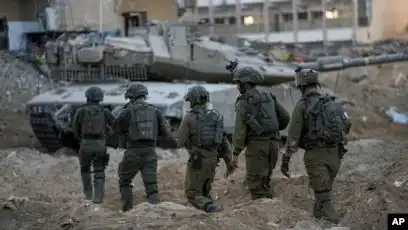
Jerusalem Post: The Israeli army can no longer achieve strategic achievements in Gaza

The Jerusalem Post said in an analysis that the Israeli army can no longer achieve greater achievements at the strategic level in Gaza than it has already achieved.


The Israeli newspaper added that continuing in this manner would ultimately lead to the loss of the lives of hundreds of soldiers without a clear strategic goal.


According to the Jerusalem Post, seeing 21 soldiers killed in one incident (in reference to the resistance operation east of Al-Maghazi last Monday) reinforces fears that the number of army deaths will double significantly at this stage, with the army’s presence reduced and its movement declining, making it an easy target.


According to the Israeli newspaper's analysis, the killing of 21 soldiers will strengthen the position of the wing demanding a deal that returns the prisoners, even without completely eliminating the Islamic Resistance Movement (Hamas).


Despite the large number of soldiers killed, especially the operation carried out by the Al-Qassam Brigades east of Al-Maghazi, where 21 soldiers were killed in the bombing of two buildings booby-trapped by the occupation forces and targeting a vehicle near them, Prime Minister Benjamin Netanyahu pledged to continue the war until achieving what he called absolute victory.


The Israeli Broadcasting Corporation quoted Netanyahu - during a closed cabinet meeting - that the third phase of the Gaza war will take about 6 months.


But the Wall Street Journal confirmed - citing American officials - that intelligence estimates indicate that Hamas still possesses enough ammunition to strike Israel for several more months.


The American newspaper quoted Israeli officials as admitting that the goal of destroying Hamas during the war on Gaza “was not achieved,” despite the air and ground campaign and the massive destruction.


An analysis by the military and security affairs editor of the Israeli newspaper "Haaretz" (Amos Harel) concluded that Israel is immersed in the mud of Gaza, and this may last for many years without finding anyone to rescue it from it, while the risk of a confrontation in the West Bank is increasing.


Source: Al Jazeera + foreign press

PALESTINE

Tue 23 Jan 2024 10:10 pm - Jerusalem Time

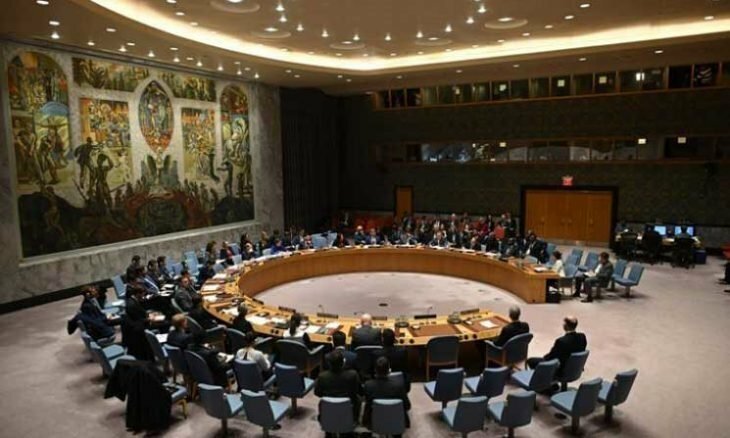
United Nations: The residents of Gaza are exposed to unprecedented destruction in history

The United Nations confirmed on Tuesday that the residents of Gaza are being subjected to destruction on a scale and speed unprecedented in history, stressing that Israel's rejection of the two-state solution is "unacceptable."


The Secretary-General of the United Nations, Antonio Guterres, said: “The entire population of Gaza is being subjected to destruction on a scale and speed unprecedented in history, and nothing can justify the collective punishment of the Strip.”


He added, "Everyone is hungry in Gaza, and more than half a million people are now inside Rafah, and there is a spread of diseases."


He stated that "the quantities of humanitarian aid entering Gaza are completely insufficient," stressing that he faces "very difficult inspections of aid and rejections of essential materials."


The Secretary-General of the United Nations said: “We need to reach the areas of northern Gaza.” He called for "rapid and sustainable humanitarian aid access to Gaza."


He stressed that “the war in Gaza is fueling unrest outside the Gaza Strip.” “The risk of the conflict expanding regionally has become a reality.”


He said, "The United Nations is facing a cumbersome aid screening process and unjustified rejection of urgently needed items," stressing that "there is a need for more crossing points into Gaza, and the entry of aid from the port of Ashdod must resume."


He stated that "dozens of aid workers have been waiting for months to obtain visas from Israel."


He stressed that "the two-state solution is the only way to address the aspirations of Palestinians and Israelis," adding that "the clear and repeated rejection of the two-state solution from the highest levels of the Israeli government is unacceptable."


The Secretary-General added, "This rejection and denial of the right of the Palestinian people to have a state would indefinitely prolong a conflict that has become a grave danger to international peace and security."


He stressed that this would "exacerbate polarization and encourage extremists everywhere."


Guterres said that "everyone must recognize the right of the Palestinian people to build their completely independent state," and pointed out that "any rejection by any party of the two-state solution must be firmly rejected," explaining that "it is the only way to achieve a lasting and just peace in Israel, Palestine and the entire region." .


Guterres said, "It is necessary to reduce the escalation in the Red Sea and Yemen, and attacks on ships must stop immediately."


He pointed out that "the violence of Israeli settlers in the West Bank is one of the concerns."


The Secretary-General of the United Nations welcomed "the agreement facilitated by Qatar and France to deliver shipments of medicines to Gaza."


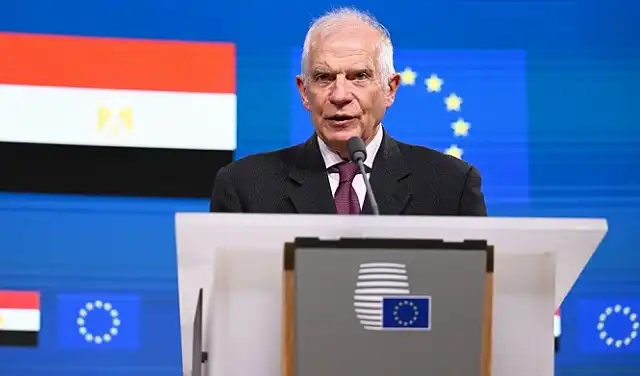
Earlier Tuesday, the European Union High Representative for Foreign Affairs and Security Policy, Josep Borrell, said that Israel does not have a veto against the Palestinians’ right to self-determination.

ARAB AND WORLD

Tue 23 Jan 2024 10:02 pm - Jerusalem Time

Netanyahu is ready to make concessions for the sake of a new deal, and Biden’s envoy visits the region

Haaretz newspaper reported from informed sources that Israeli Prime Minister Benjamin Netanyahu informed the families of prisoners held by the Palestinian resistance in Gaza that “Israel is ready to make concessions for the sake of a new deal,” while an Israeli channel revealed what it said were general principles for concluding the deal, while an American envoy visits the region to investigate the issue.


The newspaper indicated that Netanyahu informed the families that Israel would not announce a halt to the war as part of a deal, as requested by the Islamic Resistance Movement (Hamas).


Haaretz reported that Netanyahu said that if he agreed to end the war, international guarantees must be signed that cannot be violated. According to the newspaper, Netanyahu denied the existence of a real proposal from Hamas, but said that there was an initiative without going into details.


In the same context, an Israeli official said that negotiations with Hamas regarding a ceasefire in Gaza in exchange for a prisoner exchange are still ongoing.


The Israeli Broadcasting Authority quoted an unnamed Israeli official as saying that the negotiations “are still ongoing, and we have not received a negative response.”


It pointed out that the Israeli official's statements came after Western reports about Hamas rejecting the Israeli offer.


White House spokesman John Kirby said that US envoy McGurk is in Cairo on Tuesday to hold "serious" discussions regarding the release of prisoners held by Hamas in Gaza and reaching a humanitarian truce.


Kirby added that the White House would certainly support a longer humanitarian truce.


Israeli principles

In the same context, on Tuesday, Israeli Channel 12 revealed the content of an Israeli offer for a prisoner exchange with Hamas and a ceasefire in Gaza.


Channel 12 said, "The mediators' answer is expected to come today or tomorrow after hearing from Hamas about whether it is possible to move forward, and if it shows flexibility in its declared demand to stop fighting and withdraw all forces from the Gaza Strip."


The channel explained what it said were the general principles set by Israel regarding the deal, including that it include the release of all detainees in 3 stages, with women, the elderly, and the wounded being released first, then non-recruited men, and finally the soldiers and corpses.


Among the principles are that Israel adhere to a rest period (ceasefire) lasting several weeks, ranging from two to three months, and that Israel work to change the deployment of its forces in the Gaza Strip and withdraw from population centers.


Israel also expressed its willingness to allow the return of residents to specific areas in the northern Gaza Strip, according to the channel.


The channel also confirmed that Tel Aviv will not commit to ending the war at any stage.


Hamas had stipulated a ceasefire in Gaza, the withdrawal of all Israeli forces from the Strip, the release of Palestinian prisoners, and a pledge not to return to war or pursue Hamas, in exchange for the release of Israeli prisoners, which Israel rejected, according to Netanyahu on Monday.


For his part, Israeli government spokesman Elon Levy said on Tuesday that Israel will not agree to an agreement with Hamas regarding a ceasefire that would allow the continued detention of prisoners in Gaza or for Hamas to remain in power, as he put it.


On October 7, Hamas launched an attack on Israeli military points and settlements around the Gaza Strip, during which about 1,200 Israelis were killed, about 5,431 were wounded, and at least 239 were captured, of whom Tel Aviv regained about 105 in an exchange and temporary truce deal with Hamas that lasted 7 days, ending in early December 2023. 

Since October 7, 2023, the Israeli army has been waging a devastating war on the Gaza Strip, which as of Tuesday morning left 25,490 dead and 63,354 injured, most of them children and women, according to the Palestinian authorities, and caused devastation. A massive and unprecedented humanitarian catastrophe, according to the United Nations.


Source: Al Jazeera + agencies + Israeli press


It

PALESTINE

Tue 23 Jan 2024 9:56 pm - Jerusalem Time

Hamas rejects an Israeli proposal to free detainees

A leader of the Hamas movement said that talking about any deals to exchange prisoners without a comprehensive agreement on a ceasefire is completely unacceptable, and that there is consensus on it among the various levels of Hamas, stressing that the talk is about an Israeli proposal to release detainees in exchange for a long truce that will last for two months without a decision to cease-fire is unacceptable.


He explained that to begin any negotiations, they must start from the basis of a comprehensive ceasefire in its final stage, and not to resume fighting.


On the other hand, Egyptian sources familiar with Cairo’s movements related to the Israeli aggression on the Gaza Strip said that the Egyptian role currently focuses more on perceptions after the end of the war, and that the Qatari mediator has become, at the present moment, more concerned with the perceptions and proposals of the prisoner exchange deal and the broad lines for cease-fire.


The sources revealed, in exclusive conversations with Al-Araby Al-Jadeed, that the discussions that took place with US administration officials and the leadership of the Hamas movement during the past few days witnessed agreement on the necessity of associating the ceasefire decision with the scene on the day following the war, indicating that there is great agreement. Between the Hamas leadership and Egyptian officials to establish clear frameworks and mechanisms for reconstruction.


The sources pointed out that Egypt considers the Gaza reconstruction file a major priority for it after the war stops, since a ceasefire without an agreement on how to rehabilitate and rebuild the Strip will be like a time bomb ready to explode at any time, considering that the mechanisms and conditions for reconstruction, following the previous rounds of war, It no longer fits the status quo.


The same sources revealed a new development related to the presence of the Hamas movement on the scene, after the end of the war, saying that in light of the conviction that has been generated throughout the current war in the impossibility of eradicating the movement from the Gaza Strip, it would not be unlikely for it to participate in any unity government that will be formed after ending the outstanding matters with the Gaza Strip. 


Source: Al-Arabi Al-Jadeed

ARAB AND WORLD

Tue 23 Jan 2024 8:01 pm - Jerusalem Time

Israel is preparing to enact a special law to try thousands of Hamas detainees and wants to deal with them like the Nazis

At a time when the Israeli Ministry of Justice, the legal advisor to the government, and the Public Prosecution began taking rapid legislative measures to enact a new law related to the arrest and trial of thousands of Palestinians from the Gaza Strip who were arrested on suspicion of participating in the Hamas attack on October 7, it was reported that judicial officials Israelis held consultations with a number of prosecutors and legal institutions in European countries regarding judicial prosecutions against members of the Palestinian movement. In parallel, Israeli fears have emerged of a counter-reaction by human rights institutions that also intend to prosecute Israeli leaders on charges of committing crimes against humanity during the war on Gaza.


Legal sources in Tel Aviv said that the High Court of Justice convening in The Hague to deliberate on South Africa’s lawsuit against Israel, accusing it of committing the crime of genocide, opened a counter-channel that could confuse Israeli efforts against Hamas members. Therefore, the Israeli Ministry of Justice decided to proceed slowly in its efforts and seek advice from Western experts. In this context, Ghali Behrav Meara, the legal advisor to the Israeli government, met with a number of senior judicial advisors and prosecutors in the United States, Germany, the Czech Republic, Portugal and Estonia, countries whose citizens were killed or captured by Hamas during an attack. October 7, as well as representatives of the embassies of Japan, Australia and Denmark, to hear their opinions on the matter. They were informed of the materials of the investigation that took place with the detained Hamas members and other participants in the attack. Video clips of the killing of Israeli and foreign civilians in that attack were shown to them. The Israelis asked their guests to help hold exceptional trials for these defendants, saying, “This is not only an internal Israeli issue, but should concern all human rights supporters in the world.”


The heads of foreign prosecutors met with members of the legal team that represented Israel before the International Court of Justice in The Hague to respond to South Africa’s lawsuit in which Israel was accused of committing genocide against the Gazans. They also met with officials in the Ministries of Security and Foreign Affairs and in the Israeli police, and listened to reports about the Israeli story. of the “Al-Aqsa Flood” attack and around the “Hamas” movement, and they participated in a tour of the towns of the “Gaza envelope.”

ARAB AND WORLD

Tue 23 Jan 2024 7:52 pm - Jerusalem Time

Borrell: Israel does not have a veto against the Palestinians’ right to self-determination

The European Union's High Representative for Foreign Affairs and Security Policy, Josep Borrell, said that Israel has a veto against the Palestinians' right to self-determination.


Borrell's statements came during a joint press conference with the Egyptian Foreign Minister, Sameh Shoukry, and the European Commissioner for Neighborhood and Enlargement Affairs, Oliver Varhelyi, after the EU-Egypt Association Council was held in Brussels.


Borrell pointed out that Egypt is one of the important actors in the Middle East, and cooperation with it will continue to increase.


Borrell pointed out that an agreement had been reached between the European Union and its allies in the Middle East on a “two-state solution,” which Israel announced that it opposes.


He pointed out that the United Nations has repeatedly recognized the right of the Palestinians to self-determination, and no party can deny or oppose that.


He stressed that Israel does not have the right to veto the right of the Palestinians to self-determination.


In press statements following the meeting of European Union foreign ministers in Brussels on Monday, Josep Borrell said that negotiations for a “two-state solution” in the Middle East will continue, whether Israel likes it or not.


He said, "If Israel does not want this solution, it will be difficult for it to find a place in the negotiations to build a solution. But this does not prevent other (actors) from doing so."


He added, "If the international community can prepare a solution together, propose it and agree on it, there will be a certain negotiating power."

ARAB AND WORLD

Tue 23 Jan 2024 7:45 pm - Jerusalem Time

Amnesty International: Indicators warning of genocide in Gaza

Amnesty International reported today (Tuesday) that there are indicators warning of genocide in the Gaza Strip. Including the deaths of more than 25,000 people in Israeli attacks, according to the Arab World News Agency.


The organization said that among the indicators of genocide are “the deliberate deprivation of civilians in Gaza from humanitarian aid by Israel, and the adoption of racist and inhumane rhetoric against the Palestinians by some Israeli officials.”


It added on the “X” platform that among the indicators was what she described as “historic discrimination and oppression against Palestinians under the apartheid regime.”


Amnesty International stressed that there are no signs of an end to the collective human suffering, destruction and devastation in Gaza until the International Court of Justice issues a final ruling on the truth about the commission of genocide and other crimes under international law.


The organization stressed that “issuing an urgent order to implement temporary measures” is an important means of preventing further deaths, destruction and suffering of civilians and providing protection for them. It also helps warn other countries of the need not to contribute to committing crimes and grave violations.

OPINIONS

Tue 23 Jan 2024 7:36 pm - Jerusalem Time

Until Israel rids itself of Netanyahu, forget a two-state solution

inews UK

inews UK

Opinion Writer

By Michael Day

As the more powerful actor in a two-party conflict, the onus is on Israel to turn to compromise and political discourse


The deaths of 24 Israel Defence Forces (IDF) soldiers in Gaza in a single day may pale in comparison to the vast total death toll of this three-month war. But it will add disproportionate pressure on Israeli premier Benjamin Netanyahu to compromise in a conflict in which he has been utterly deaf to calls for restraint or reason.

Many Israelis and moderate voices in Netanyahu’s war cabinet want to prioritise the release of hostages in Gaza over a sustained bombardment that appears more effective in causing humanitarian disaster than annihilating Hamas, the group responsible for the 7 October mass killings.

Netanyahu has been resisting calls for a ceasefire. Far-right ministers in his coalition oppose a deal to gain the hostages’ release from Gaza as it would require the release of all or many incarcerated Hamas members. And Netanyahu needs the extremists’ support for the coalition to survive. He is widely blamed by the Israeli public for the catastrophic security failings that allowed Hamas to attack with impunity on 7 October.

The press has been quick to remind Netanyahu of his comments to a Likud party meeting in 2019: “Anyone who wants to foil the establishment of a Palestinian state needs to support the strengthening of Hamas and the transfer of funds to Hamas.” We know how that ended.

Netanyahu would probably be comprehensively defeated in a general election. And out of power he would be more vulnerable to the prosecutors trying to nail him on corruption charges.

On all sides, pressures are growing on Netanyahu – from the US and its allies, from the Israeli public and from within his war cabinet. These will only increase if, as expected, a formal proposal delivered by the Egyptian government for the release of the hostages in exchange for Palestinian prisoners and a long-term cease-fire emerges.

In an attempt to pre-empt this, the Israeli government has reportedly suggested a pause in its military offensive against Hamas for up to two months, in exchange for a phased release of the remaining 100-plus hostages in Gaza.

Without an end to the fighting, the Arab states will not begin to even discuss the Strip’s reconstruction. Arab leaders, under pressure from their own public, also need signs that Israel is prepared to change course from the past two decades and start to discuss a long-term political solution to its interminable conflict with the Palestinians.

A post-war peace settlement with the Palestinians – let alone a genuine attempt to allow them their own state – is probably the last thing on Netanyahu’s mind. Despite the chaos and horror, he appears more concerned with his own political survival, which perversely is guaranteed only for as long as the current conflict continues. 

On Sunday, the UK Defence Secretary Grant Shapps said it was “disappointing” that Netanyahu has announced he is not in favour of a Palestinian state. But in his very next breath Shapps underlined why neither he nor anyone should be surprised or disappointed by Netanyahu’s intransigence. “In fairness, he [Netanyahu] has said that all of his political career, as far as I can tell,” Shapps told Sky News. Shapps’ comments encapsulate Western cant and complacency towards the Israel-Palestine conflict.

The US makes periodic murmurings about the need for Palestinian statehood. But its one-sided role as protector and funder of Israel has undermined this (although even Washington’s patience must have limits). Biden is now under fire from Democrats for supporting Israel’s demolition of Gaza, which has killed over 1 per cent of the population and is effectively recruiting the next generation of antisemitic militants.

Reports suggest Netanyahu told Biden that he has not entirely ruled out the creation of a Palestinian state. But Netanyahu’s office then noted that any such development would revolve around a Palestinian state without full sovereignty – and therefore not a state at all.

It was the token nature of statehood offered in Clinton-era peace plans that saw them ultimately collapse in 2000. Almost a quarter of the century on, the status quo hasn’t changed. And Israel is relying on the same defence strategy of deterrence, surveillance and ruthless retaliation. But it failed spectacularly on 7 October, as Israeli security expert Uri Bar Joseph has noted in a thorough dismantling of Israel’s strategic failure.

“What’s missing is the political component, whose role would be to reduce our enemies’ motivation to go to war against us,” he says. “The only answer to the security problems in the West Bank and the Gaza Strip is a peace agreement and the two-state solution.”

Israel needs to accept reality. As the more powerful actor in a two-party conflict, the onus is on it to turn to compromise and political discourse. But it can’t begin the long slog towards the light while the political considerations of Israel’s prime minister stand in the way.

The decades-long Israel-Palestinian conflict needs a political solution. But until Israel rids itself of Netanyahu, that conversation can’t even begin.

ARAB AND WORLD

Tue 23 Jan 2024 7:23 pm - Jerusalem Time

Financial Times: What does South Africa’s lawsuit against “Israel” mean for justice in the world?

The Financial Times published a report prepared by James Shooter in which he questioned the importance of the call submitted by South Africa to the International Court of Justice against Israel. He said that the International Court of Justice heard legal arguments in important cases, but the case presented by South Africa was the most important because it accused Israel of committing genocide against the Palestinians in Gaza.


A decision on the lawsuit, whose allegations Israel denies, will not be issued until years later. However, the court, with its 17 judges, will decide, in the coming days, whether it will accept the South African demand, which includes measures meant to limit the Israeli attack against Gaza.


  Even before the judges issued their decision, a country, which the writer says is democratic and supported by the West, was accused before the highest international crimes court, which led to global attention.


For Israel and its allies, the claim is baseless and arouses discontent.


For the Palestinians and their supporters, especially in the Global South, the situation is a test of the international system, which they see as always working against them.


“Few conflicts around the world have caused shocks like this,” says Dalia Scheindlin, a pollster in Tel Aviv. And all over the world, people have positions on it,” he said, so “I imagine that any decision from the court will ignite both parties, one way or another.”


In Israel, which the writer says was subjected to a Hamas attack on October 7, South Africa’s decision to bring it to court is incomprehensible and angering, especially since the 1948 Genocide Law, against which South Africa filed its lawsuit, appeared after the Nazi crimes against the Jews. During World War II.


Israeli Prime Minister Benjamin Netanyahu said that a terrorist group committed the worst crime against the Jewish people since the Holocaust, and one party is defending it, and in the name of the Holocaust? “What insolent bitterness.” He described the South African lawsuit as “a cry of hypocrisy that reaches the heavens.”


But the Palestinians see the situation in a different way: they hope that the international community will put pressure on Israel and stop its devastating attack on Israel, which has so far killed more than 25,000 Palestinians and displaced more than one million of the 2.3 million people in the Gaza Strip. It is also an opportunity to hold Israel responsible for the oppression and oppression it has carried out against the Palestinians over the past 75 years. The Palestinian Ambassador to Britain, Hossam Zomlot, says: “This is the first serious international effort to end the horrific situation and demand accountability, after 75 years of denial of basic, equal rights for all people.” He said: “This is an important moment, and if the International Justice Organization adheres to its legal mandate and succeeds in its governance, it will succeed for itself and for the law-based international system.” If it fails, it will have failed itself, its mandate, and the entire international system based on law.”


In order to make a decision, the court's judges must decide whether Israel's actions are covered by the Genocide Charter and whether urgent measures are necessary to protect the rights of Palestinian citizens of Gaza, a lower threshold than that required to support the case presented by South Africa.


  If the court decided that the South African request was compatible with the provisions of the Genocide Charter, it might decide to approve all demands, from a ceasefire to preventing it from incitement to commit genocide or an act chosen by Israel. The decision will have a clear impact on the Gaza war.


  Legal analysts doubt the court’s decision is binding on Israel, as they say that Hamas is not covered by the case, and is still holding 130 hostages. The result may have been a compromise in terms of increasing humanitarian aid and opening the way for independent investigations.


Analysts say that if Israel decides to ignore the court's decision, any reprehensible decision will affect the way countries deal with Israel, such as not selling weapons to it, or preparing to impose sanctions on it.


Others believe that the decision will have an impact on other cases submitted to the Criminal Court, which deals with cases against individuals, not states. “The Genocide Charter is the Summit Charter, it is the crime of crimes,” says Sheila Bellan, an expert in international law and human rights. “So this is an explosive moment,” but there is a lot at stake, as there are many cases that have been paralyzed by the UN Security Council. States are willing to resort to the Court against other countries, and it carries opportunities and risks for the International Court of Justice, and may ultimately strengthen it and its influence, but there are also risks of dragging it into situations that expose it to accusation and politicization.

ARAB AND WORLD

Tue 23 Jan 2024 7:21 pm - Jerusalem Time

New US lawmakers support plan to limit aid to Israel

More US senators decided to sign an amendment that could impose conditions on military aid to Israel, amid growing demands for a ceasefire in Gaza, after Prime Minister Benjamin Netanyahu categorically rejected the establishment of a Palestinian state, according to what the British website Middle East Eye reported on Monday January 22, 2024.


Five Democratic members of the US Senate, Tina Smith, Raphael Warnock, Lavonza Butler, Tammy Baldwin, and Jon Ossoff, announced on Friday, January 19, that they would support an amendment presented by Senator Chris Van Hollen, requiring countries that receive US weapons to use them in a manner that... Complies with humanitarian law and US law.


With these five members, total support for the Van Hollen Amendment reaches 18 members, more than a third of the Democratic Caucus in the US Senate.


Van Hollen said, in an interview on Sunday, January 21: “Here is Prime Minister Netanyahu once again directly and publicly repelling the President of the United States.” He added: "It is time for a ceasefire. Biden must take a big and bold step. He must present the vision of a two-state solution."


A dispute has arisen between the Biden administration and Israel over the post-war plan in Gaza since the start of the Israeli aggression on the Strip, after the “Al-Aqsa Flood” operation. These differences worsened after Netanyahu publicly opposed the Biden administration's call to take steps to create a Palestinian state.


But growing support for Van Hollen's bill shows how opposition to Netanyahu is causing Israel to lose allies within the Democratic Party.


The Van Hollen Amendment also requires the administration to report within 30 days if recipients of US weapons are using them in compliance with US terms of use, as well as US and international law.


Van Hollen also directed sharp criticism at Israel, due to what he says is its lack of cooperation with the administration to provide more humanitarian aid to Gaza and reduce civilian casualties.


But the amendment allows the president to issue a waiver not to pressure recipients of US weapons to cooperate in humanitarian aid if doing so is in the interest of US national security.


While the Middle East Eye website indicated that this amendment will also not apply to air defense systems, or “other systems that the President determines will be used for purely defensive purposes.”

OPINIONS

Tue 23 Jan 2024 7:04 pm - Jerusalem Time

Required solution: Gazans must be allowed to emigrate voluntarily

Israeli News Paper - Maariv

Israeli News Paper - Maariv

Opinion Writer

By Lemur Malik

There is a lot of talk about voluntary migration. And about Israel's need to allow hundreds of thousands of Gazans to immigrate to other countries, and even give them and the countries ready to receive them incentives. This idea, which was previously limited to the “Jewish Power” party and appears in its political program, became so prevalent after October 7 that even representatives from the left were not afraid to present it as a realistic idea.

In an article written by Representative from the “There is a Future” Party, Ram Ben Barak, with the participation of Representative Danny Danon, he said that the countries of the world must help the people of Gaza to immigrate and settle again. He wrote, "This can be done through an international coordination system, the goal of which is to help the residents of Gaza. In order to facilitate the adaptation of Gazans, the international community will have to help them with an economic facilitation package, which will allow every Gazan family to begin the process of assimilation with ease and comfort."

They added in the article, “A smaller number could be a start, 10,000 Gazans in each country, which will greatly reduce the suffering of the Gazan community and improve the conditions of those who remain in the Strip. There are 193 countries in the world, according to voting in the United Nations, that strictly support the Palestinians, "It can be assumed that, in the majority, they will not oppose helping them. What is required is that a number of countries respond to these demands and accept the Gazans. This is not only a moral duty, but an opportunity for the countries of the world to mobilize and show their commitment to a workable solution that helps push the entire Middle East to stability."

It is true that Ben Barak later tried to clarify the difference between himself and the Knesset members from the right, indicating that he only wants to allow whoever wants to emigrate, unlike the right-wingers who are concerned about displacement. However, a review of the political program of the “Jewish Power” party reveals that its proposal is similar to the party’s proposal that is deeply rooted in the Israeli right, a proposal that was written before the elections and stems from an understanding of the future.

The idea of voluntary immigration and settling in other countries that is open to those who want a new and dignified life is not new, especially since Israel finds itself, time after time, in a state of danger from these residents. It is the most ethical solution for the residents of Israel, and also for the residents of Gaza who are concerned about a better life. And to be far from their neighbors from the Hamas movement, who were the cause of destruction, destruction and death.

The idea of immigration is not unique to Israel, and when we discover, time after time, that there is no other solution, we have to allow whoever wants to do it. Moreover, the lack of possibility of immigration is immoral. We cannot force any child to live in an “environment that sanctifies death,” and to be educated in schools that foster “anti-Semitism and hatred of Jews,” where rockets are fired “from the classrooms” into Israel.

I know that there are those who will try to distort my statements and present them as a call for displacement. This is not the case. I want to kill Israel's enemies, not displace them, and I certainly do not want to push them into voluntary emigration. Past experience indicates that displacing enemies does not help in eliminating “terrorism.” On the contrary, the enemy becomes stronger away from our eyes, and when he returns, he is stronger and more trained. I want to open the door for those who want to choose a life away from “terrorism,” who want to stay away from the bad life full of death and evil in Gaza, and who want to develop their lives in another country of their choice.

OPINIONS

Tue 23 Jan 2024 6:56 pm - Jerusalem Time

51% of the Israeli public supports the establishment of a demilitarized Palestinian state in exchange for the return of all the kidnapped and normalization with Saudi Arabia.

Haaretz

Haaretz

Opinion Writer

Against the backdrop of ongoing discussions regarding the “day after” the war in the Gaza Strip, the international community is concerned about the Israeli public’s opposition to the two-state solution, taking into account the bias of this public toward the right since the October 7 attack. But a new public opinion poll showed that the Israeli public could support a settlement that includes the establishment of a Palestinian state.


Meanwhile, the political echelon has assessed in recent weeks that the Israeli public is leaning towards the right in its positions, and it will be difficult for it to accept pressures for a political settlement. According to these estimates, the public is likely to see the negotiations on establishing a Palestinian state in Gaza as an achievement for Hamas. Among Netanyahu's circles, there are those who warned against calling the current war in historical consciousness the "Palestinian War of Independence."


  A foreign diplomat with intimate knowledge of international efforts to reach a viable regional solution after the war said that the public in Israel would oppose pushing forward such a solution, and added: “We have the impression that the Israeli public has lost confidence in the settlement with the Palestinians, and must be encouraged to see that there is hope.” "With such steps." In the opinion of this diplomat, the establishment of a Palestinian state can be linked to the normalization agreement between Saudi Arabia and Israel. He said: “Saudi Arabia has made clear that it will not move towards an agreement with Israel without making real progress with the Palestinians, but it did not demand the establishment of a Palestinian state first.” He explained: “The American president has a limited time to pay attention to this, and he needs a major political achievement in the Middle East in his campaign for the presidential elections. If it is possible to reach a settlement with Saudi Arabia in exchange for a serious Israeli willingness to discuss the establishment of a Palestinian state, then this will be considered an achievement.” .


However, despite estimates that the Israeli public is biased towards the right, an opinion poll of 500 people showed that this public could support the establishment of a demilitarized Palestinian state within the framework of a settlement that includes the return of all kidnapped persons and normalization with Saudi Arabia. According to the poll conducted by the “Medgham” Center for Research and Consultation, headed by Manu Geva, at the request of the “Geneva Initiative” [a movement founded on 12/1/2023 that supports a permanent Palestinian-Israeli agreement], 51.3% of the public in Israel supports an agreement supported by the United States. , returns the kidnapped people, within which a demilitarized Palestinian state is established in the West Bank and Gaza, and a normalization agreement is reached between Israel and Saudi Arabia, while 28.9% opposed the agreement, and 19.8% said that they had no opinion.


In response to the question: What situation do you prefer after 3 years in the Gaza Strip? 50.5% responded that they prefer not to have Israeli soldiers in the Gaza Strip, while 32% said that they prefer the presence of Israeli forces in the Gaza Strip, and 17.5% have no opinion. The question was also raised: Did their relationship with the United States change after October 7, and how? 65% responded that the relationship with the United States since October 7 is good; 38.2% saw that it has not changed, and is still good; 26.3% said that the relationship became better after October 7, and 17.1% said that it became worse.


The Director General of the Geneva Initiative, Gadi Baltiansky, considered that the results of the poll clearly prove that the Israeli public is ready to accept a demilitarized Palestinian state in exchange for regional security and the return of all the kidnapped.